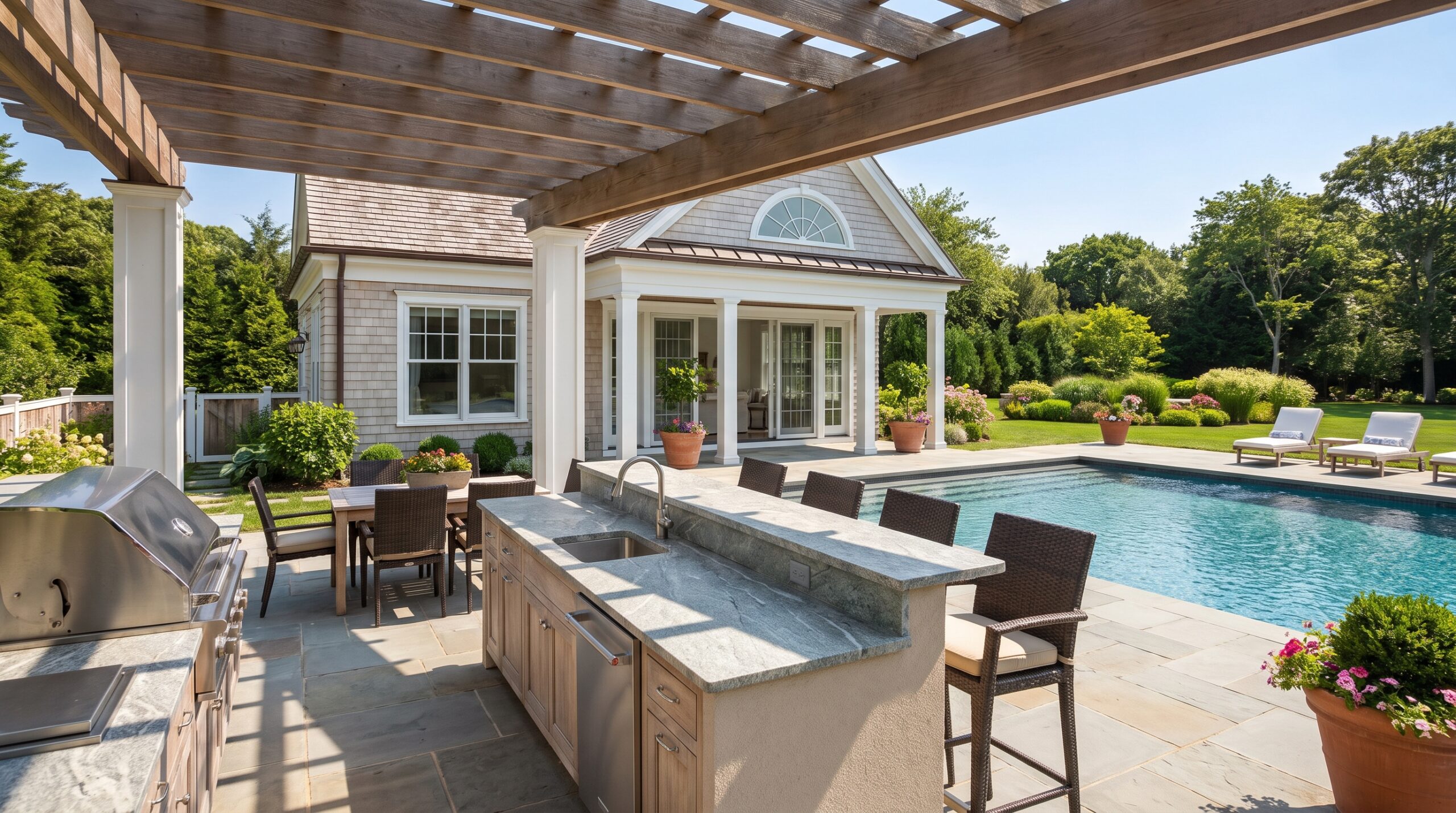
21+ Outdoor Kitchen Countertop Ideas Worth Copying

The countertop is the one surface in an outdoor kitchen that touches every part of the experience — prepping food, setting down drinks, and just leaning on while you talk to whoever’s manning the grill. It also takes the most punishment: sun, rain, heat, and constant use. Getting the material and design right pays off in a space that looks sharp for years instead of one that needs replacing after a rough winter. Here are 22 countertop ideas that balance durability with real style.
1. Go With Proven Durable Materials
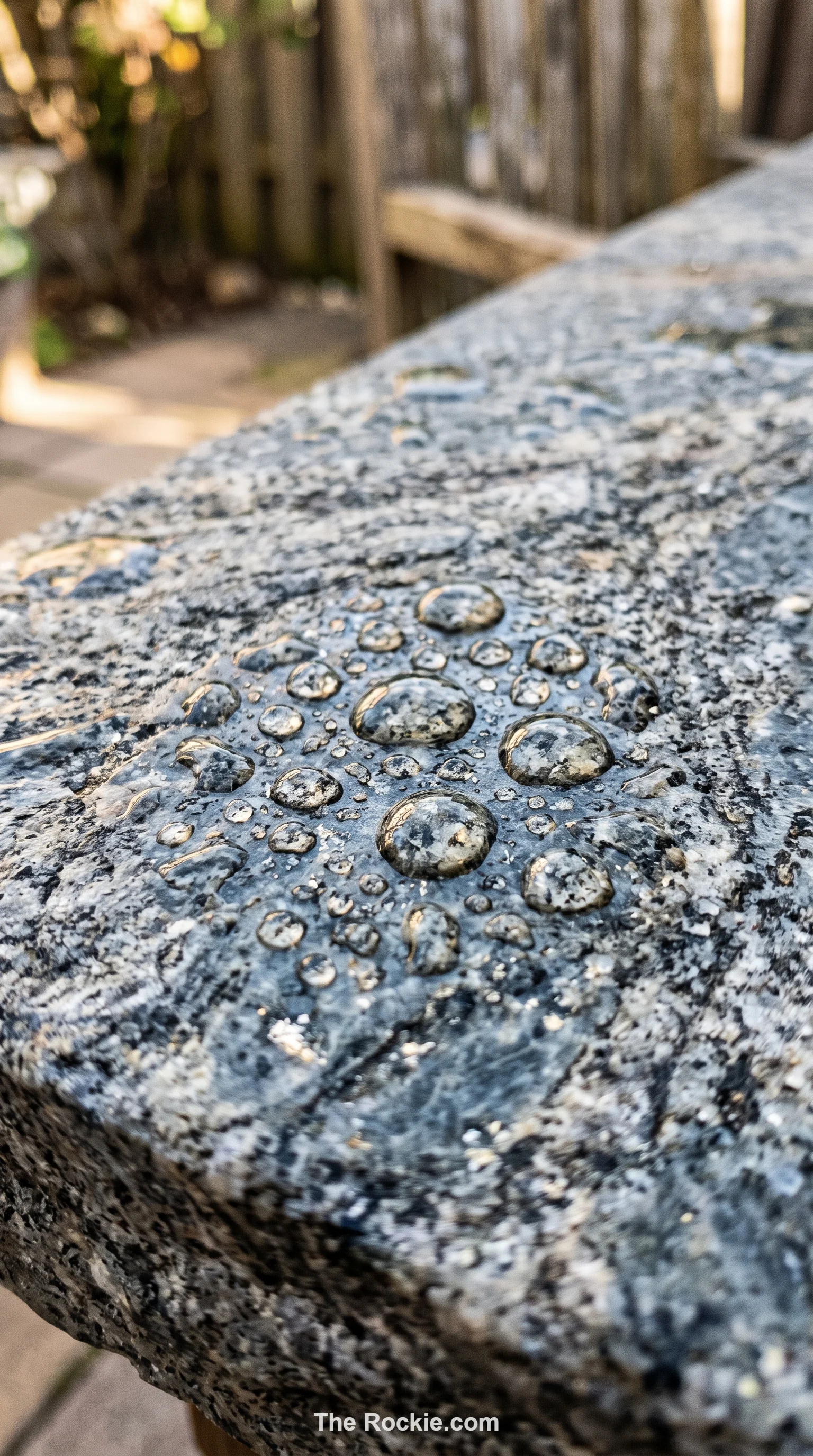
Granite, concrete, and quartz remain the standard for a reason — they shrug off scratches, stains, and heat without losing their finish. Each brings its own texture and character, so durability doesn’t mean settling for something plain. If you want a countertop you won’t be thinking twice about in five years, start here.
2. Let Marble Bring the Elegance
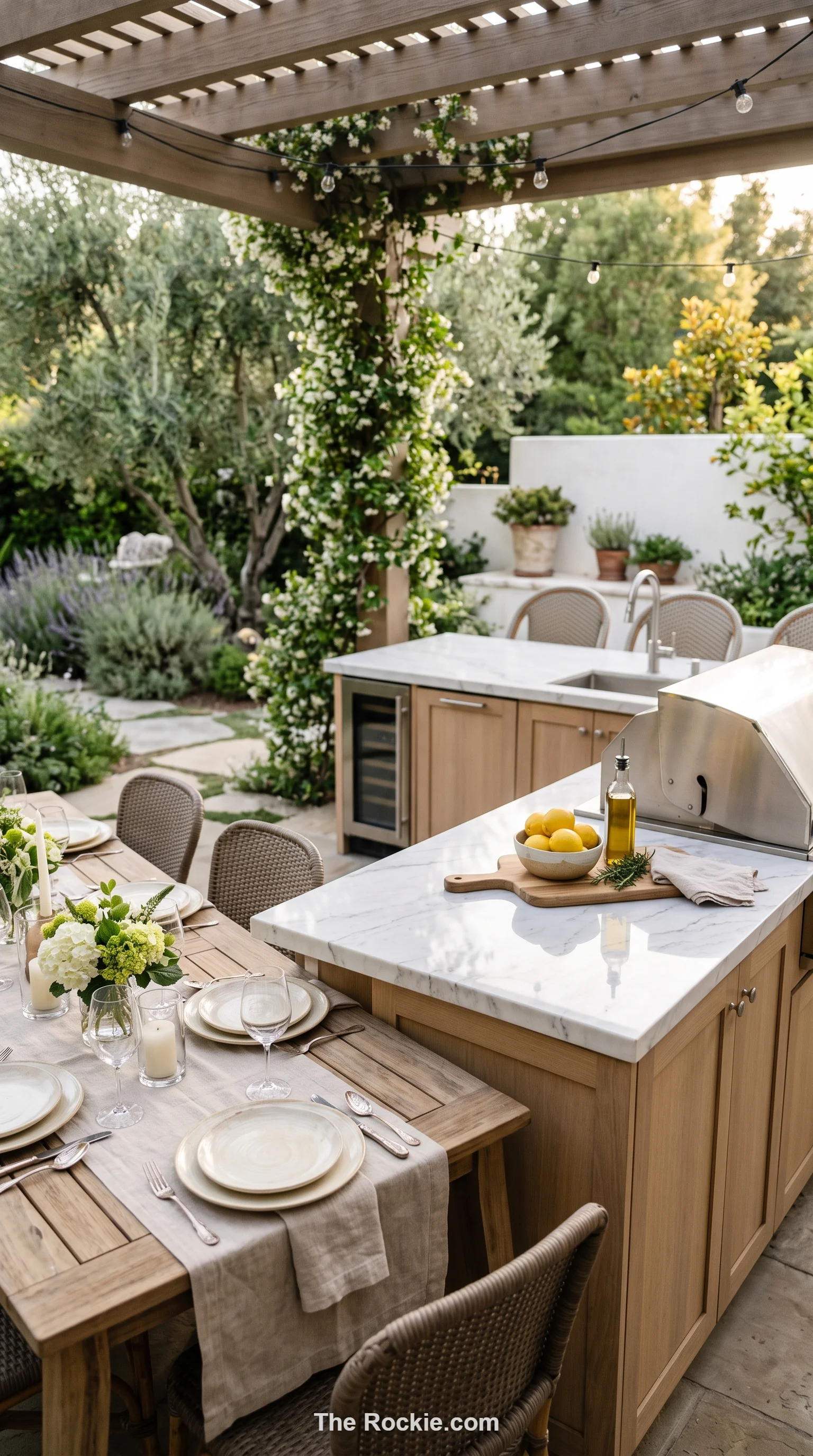
Marble has a reputation for being fussy indoors, but modern sealants have made it a genuinely workable outdoor option. Its soft veining and light-catching surface add a level of polish that’s hard to match with anything else. Reseal it on schedule and it holds up better than most people expect.
3. Granite for Color and Toughness
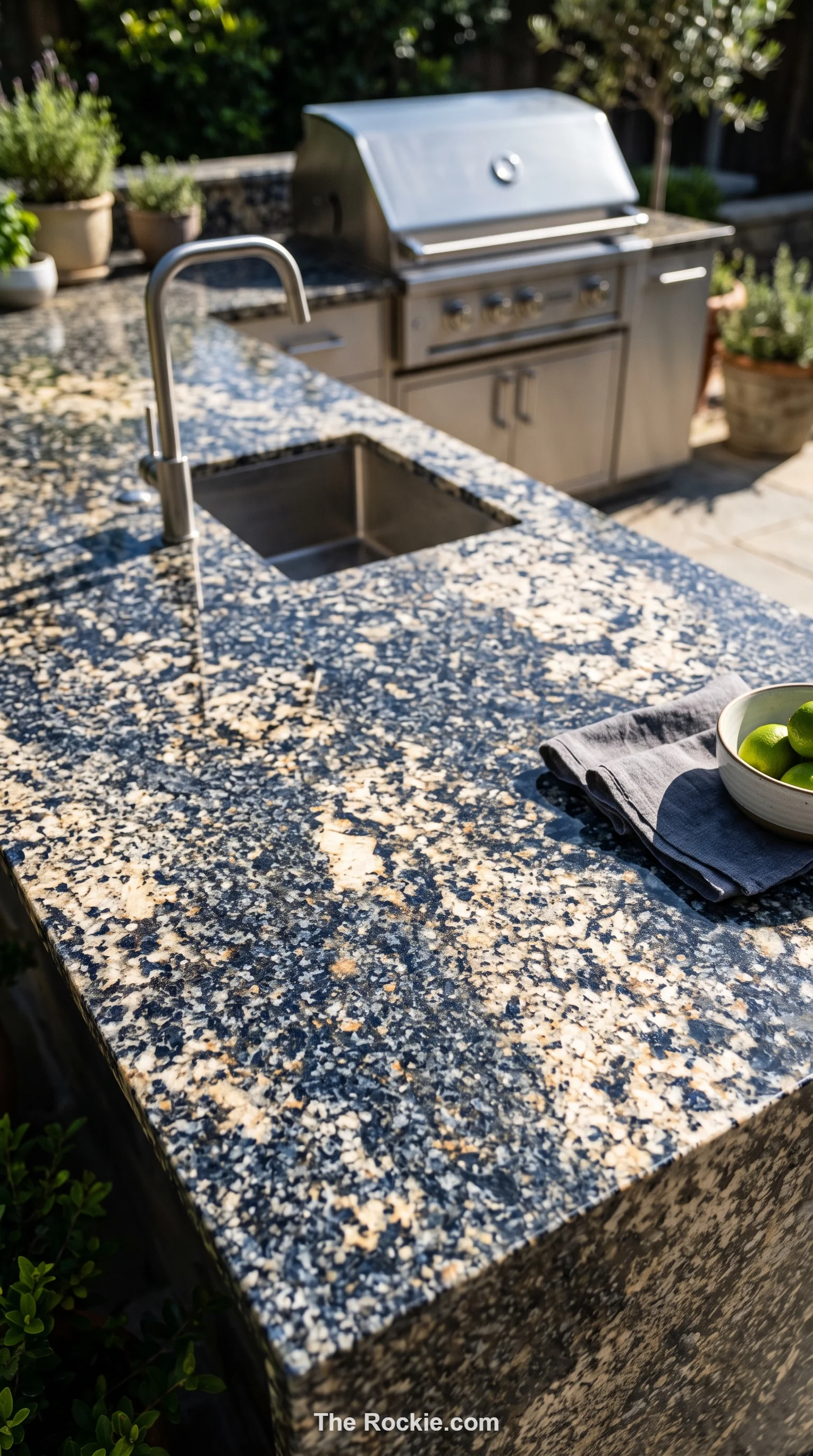
Beyond durability, granite brings genuine visual variety — deep charcoals, warm golds, cool blues, all with natural speckled patterning that no engineered material quite replicates. It resists heat and stains without any special babying, making it one of the lowest-maintenance premium options available.
4. Try Stainless Steel for a Modern Edge
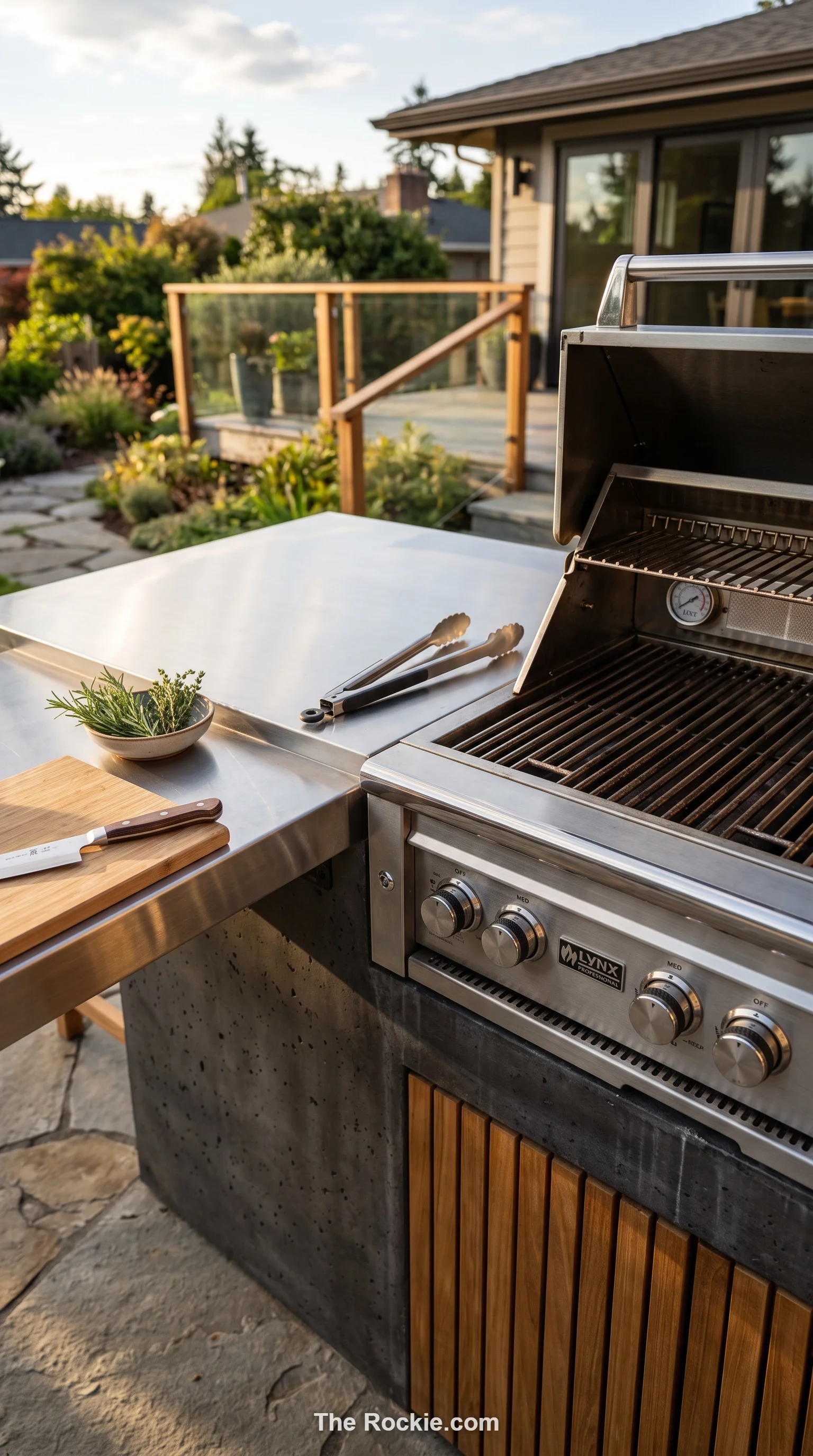
A stainless steel counter reads clean and industrial in the best way — bright, reflective, and easy to keep spotless. It resists corrosion and heat better than almost anything else on this list, which makes it a favorite for the zone right next to the grill. Pair it with warmer materials elsewhere to keep the whole space from feeling cold.
5. Mix Materials for Visual Interest
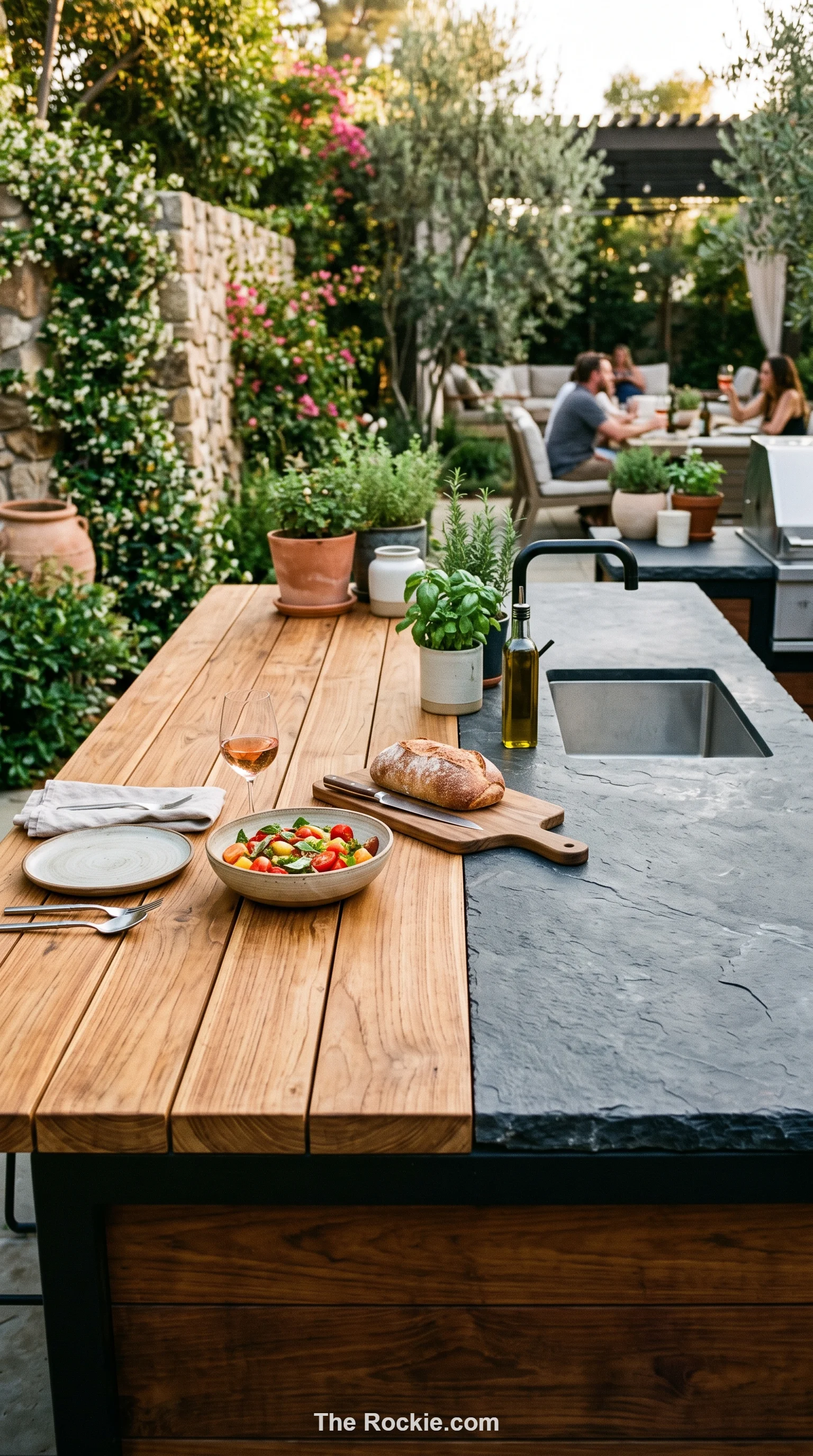
Pairing stone with wood, or metal with tile, breaks up a countertop run and gives each zone its own identity — a warm wood ledge for casual seating next to a cool stone prep surface, for example. It takes a bit more planning to pull off cleanly, but the payoff is a counter that feels custom rather than off-the-shelf.
6. Go Fully Custom
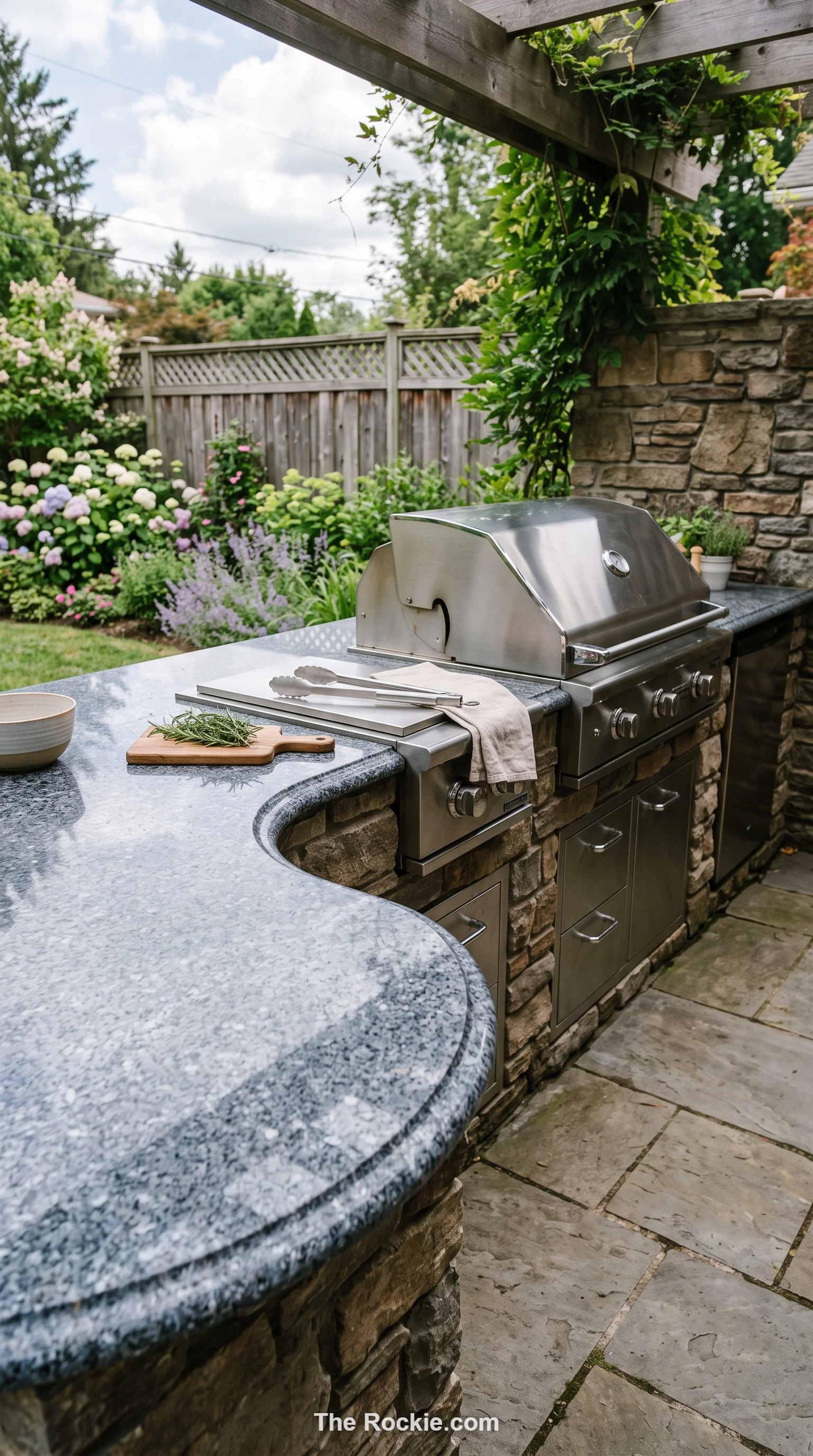
A custom countertop lets you dial in exact dimensions, edge profiles, colors, and finishes to match your specific deck or patio — no compromises for a standard size. It costs more upfront, but for an oddly shaped space or a very particular design vision, it’s often the only way to get it right.
7. Build In Multi-Functional Zones
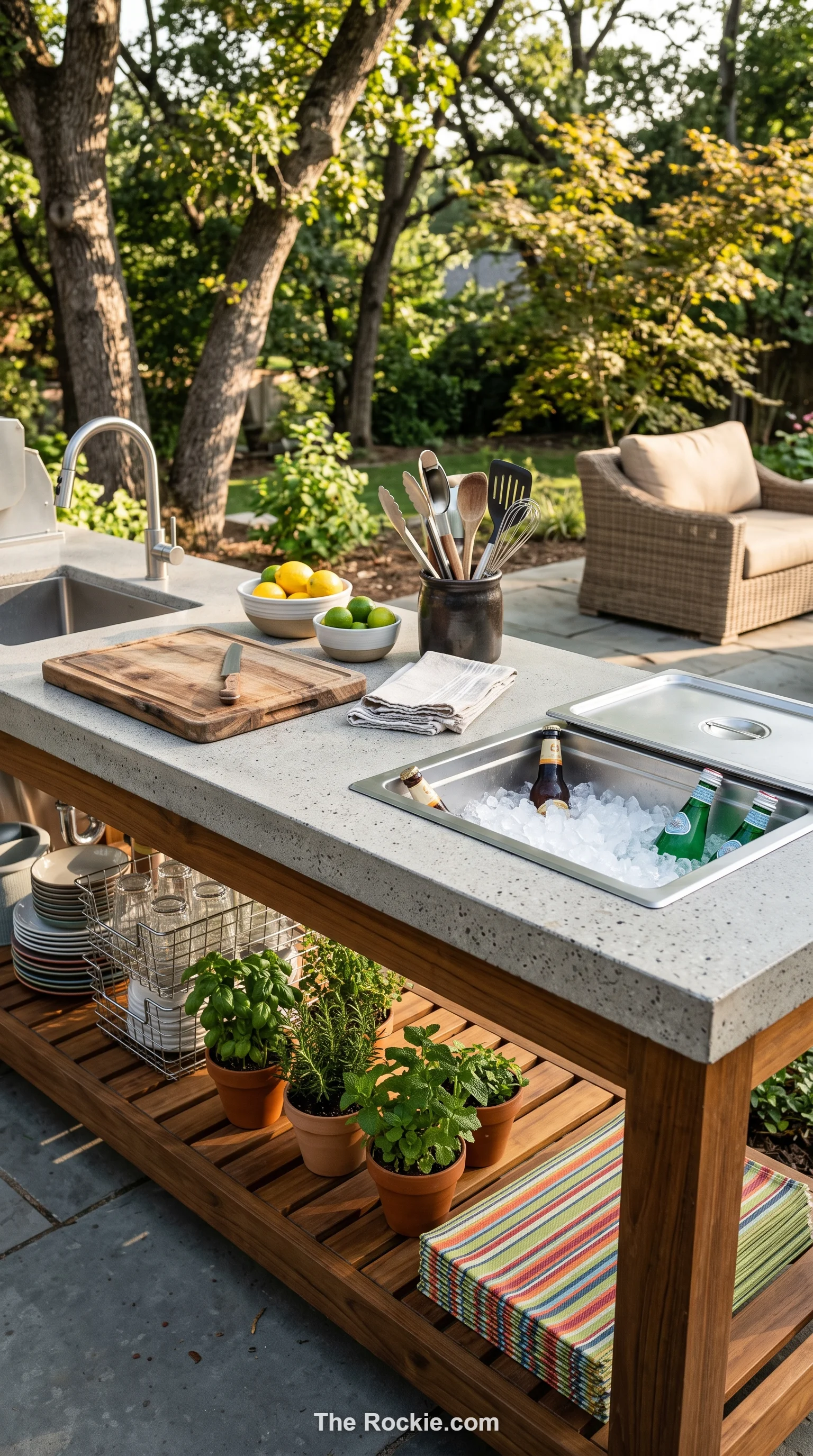
A countertop that also houses storage cutouts, a dedicated prep zone, or a built-in cooler does more with the same footprint. This kind of layout is especially valuable on smaller patios where every inch needs to earn its keep.
8. Consider Eco-Friendly Materials
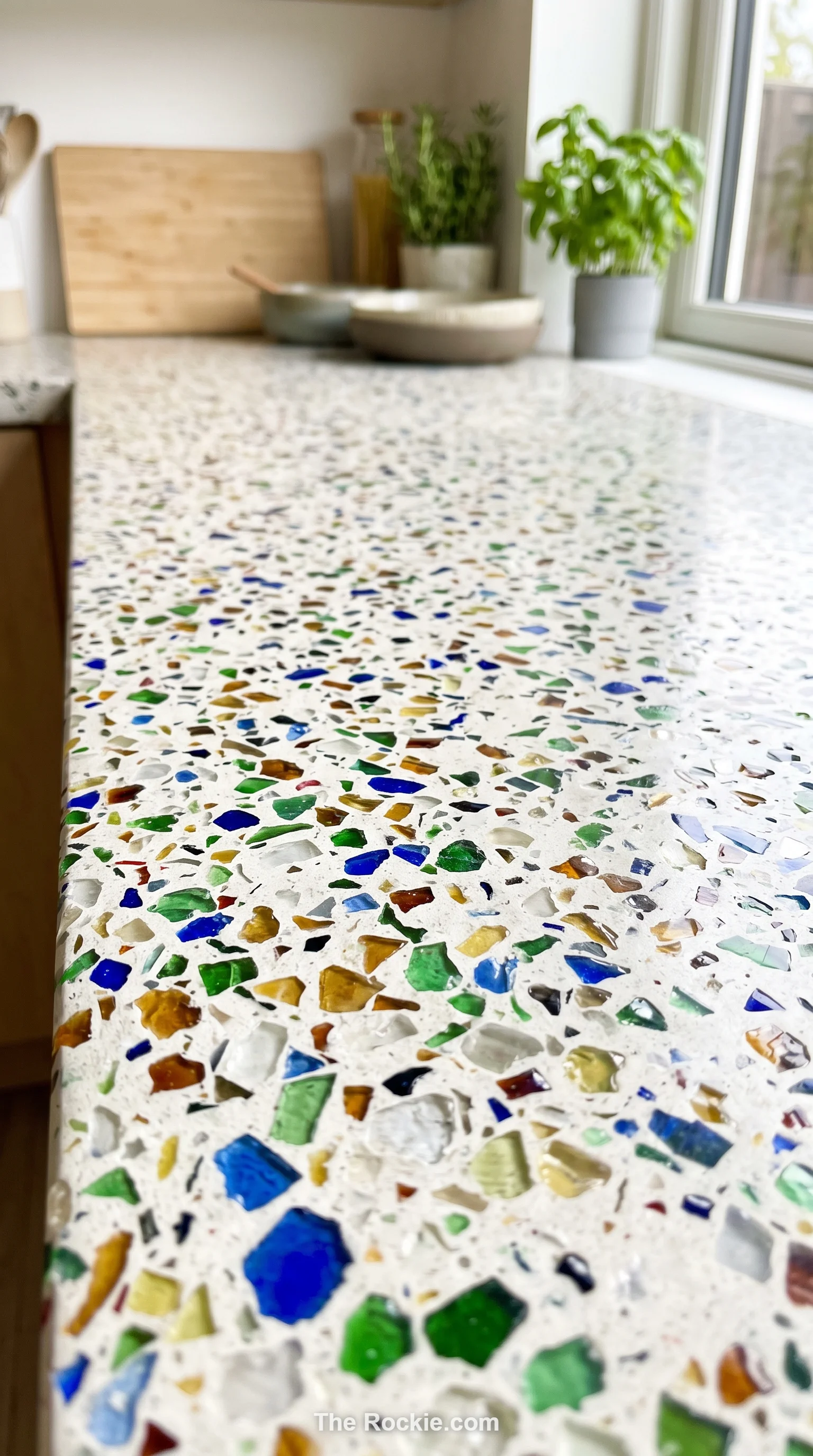
Recycled glass composites, reclaimed stone, and sustainably sourced surfaces give you the same durability as traditional options with a lighter environmental footprint. Many of these materials also bring genuinely unique textures — flecks of recycled glass or reclaimed patina you won’t find in standard slabs.
9. Integrate Your Appliances
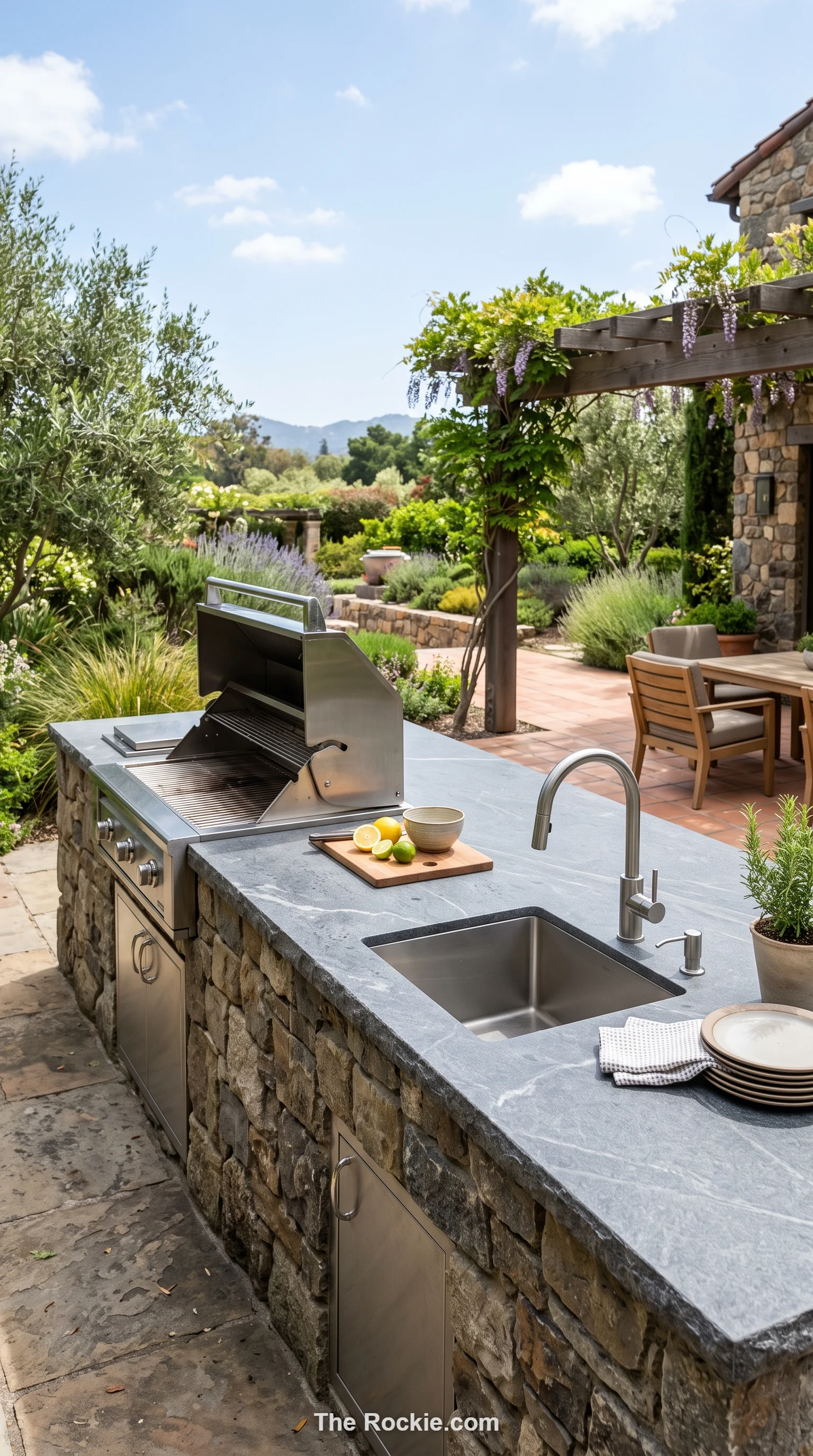
Building the grill, sink, and storage directly into the countertop line removes visual clutter and creates one continuous, functional surface instead of a patchwork of separate units. It takes more upfront planning but results in a noticeably cleaner-looking kitchen.
10. Don’t Overlook Budget-Friendly Options
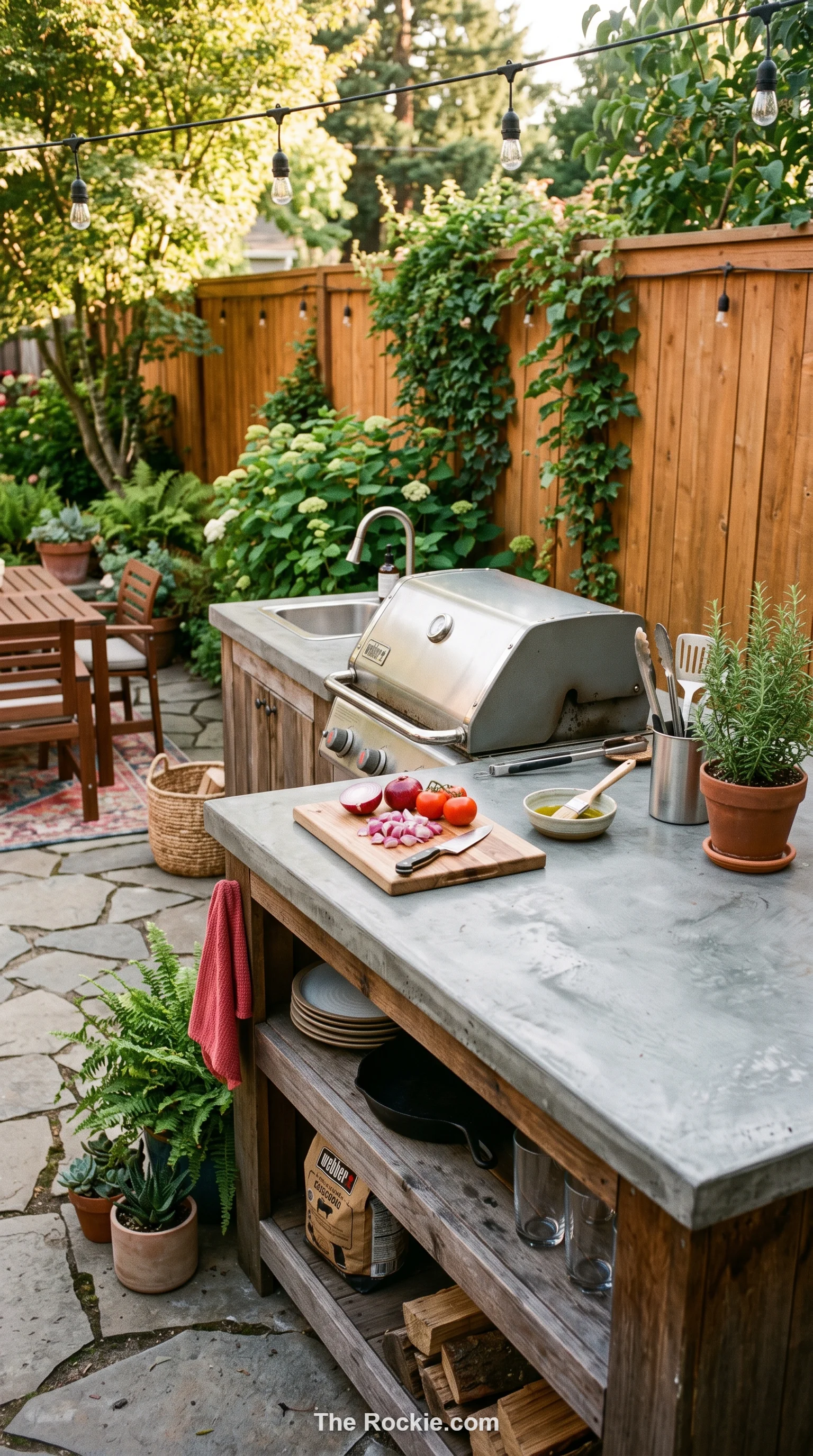
Concrete, soapstone, and engineered stone can deliver a high-end look without the high-end price tag. These materials handle outdoor conditions well and can be finished to mimic pricier natural stone, making them a smart choice if you’re working with a defined budget.
11. Splurge on High-End Stone When You Can
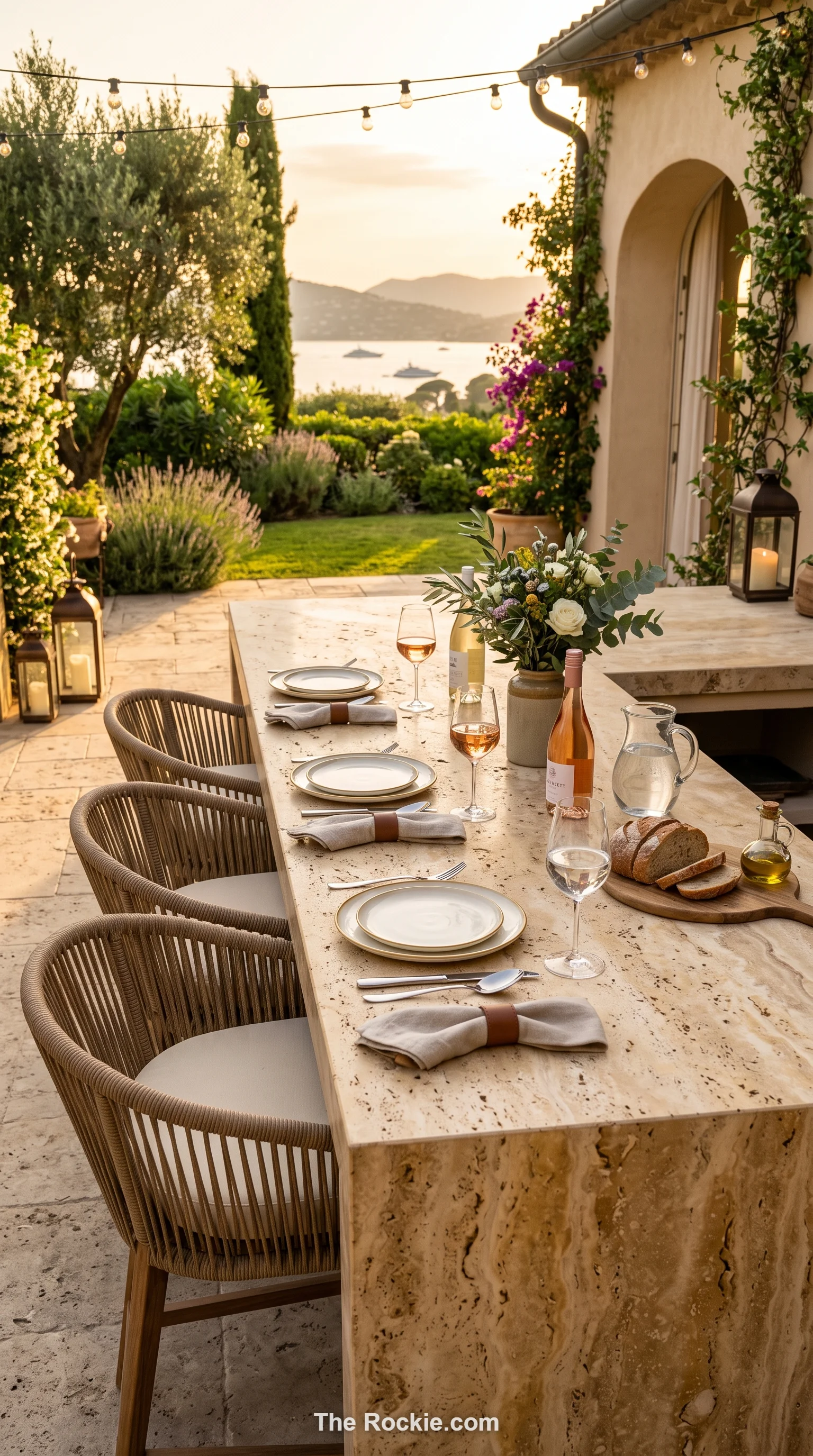
Slate, travertine, and premium-grade granite bring depth and texture that’s hard to replicate with engineered alternatives. If your budget allows for one splurge in the outdoor kitchen, the countertop is often where it shows the most.
12. Prioritize Weather-Resistant Surfaces
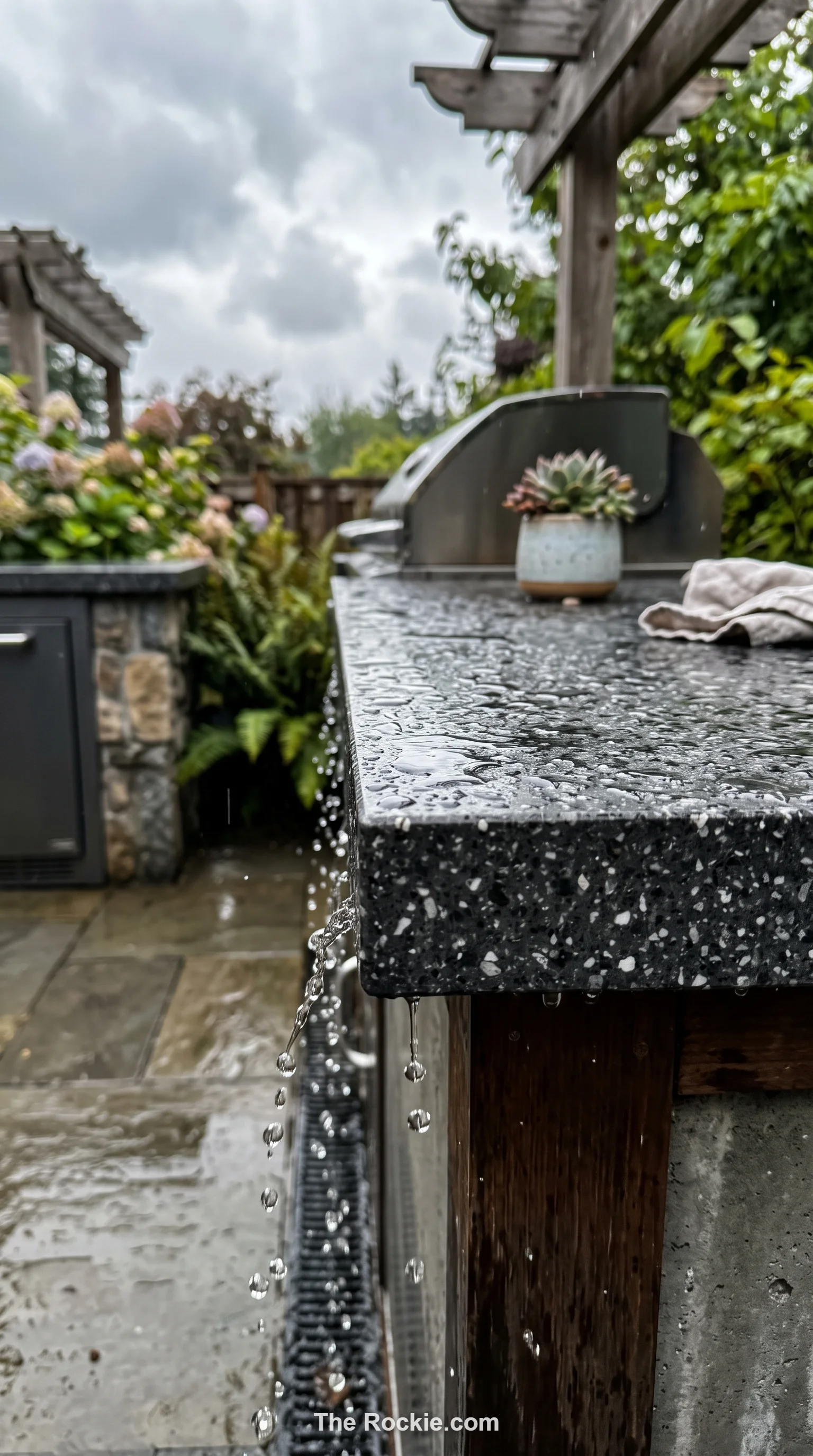
Sealed natural stone and engineered composites are built to resist UV fading, moisture absorption, and temperature swings, which matters more than color or pattern in climates with real weather extremes. A surface that holds its finish through freeze-thaw cycles or intense sun will always outperform one chosen for looks alone.
13. Add Heated Elements for Cooler Nights
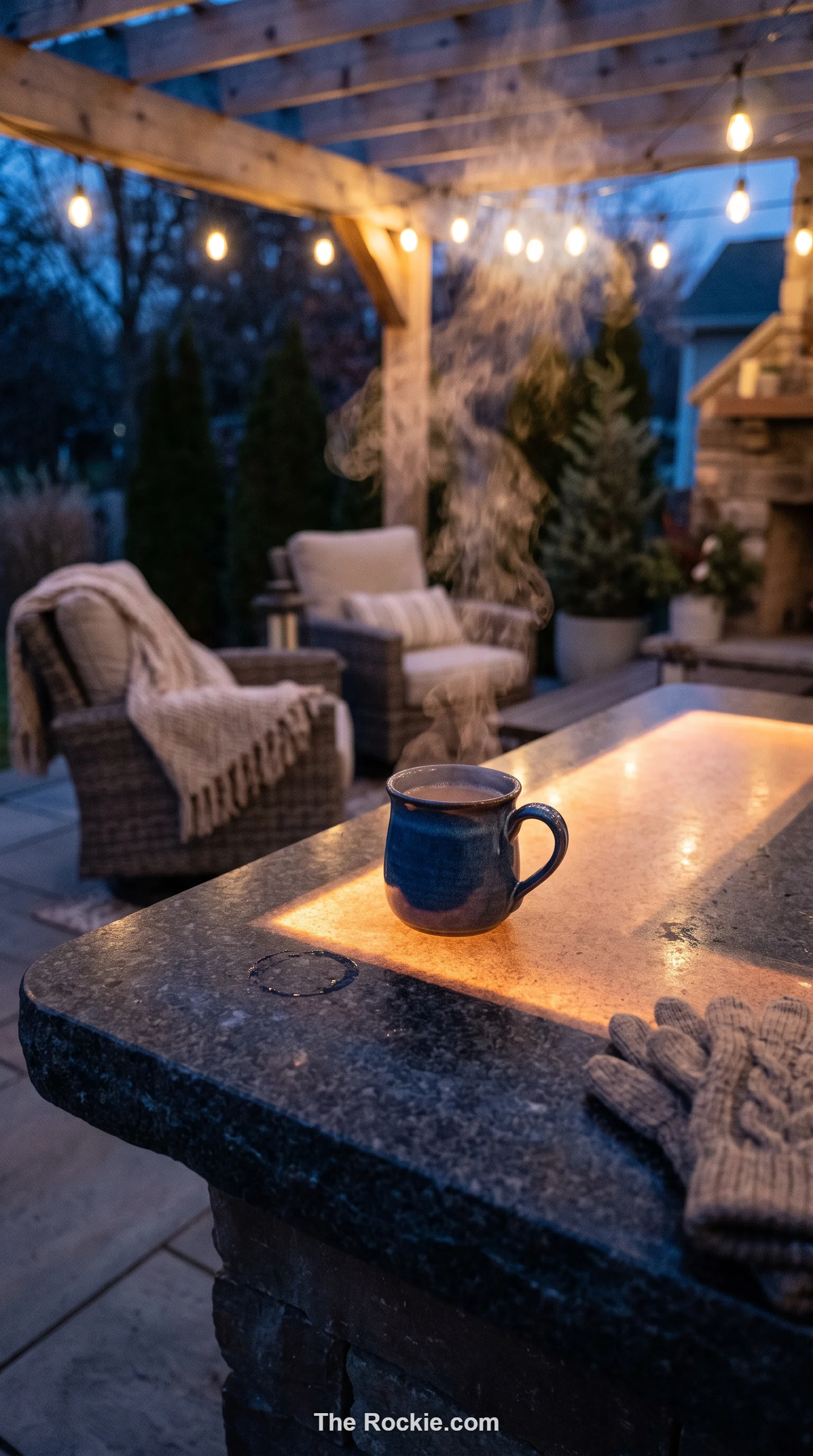
A countertop with embedded heating elements keeps things comfortable during shoulder-season evenings, extending how long you can actually use the space each year. It’s a niche upgrade, but for anyone in a cooler climate, it can be the difference between a kitchen used three seasons or one used year-round.
14. Lean Into Vintage Character
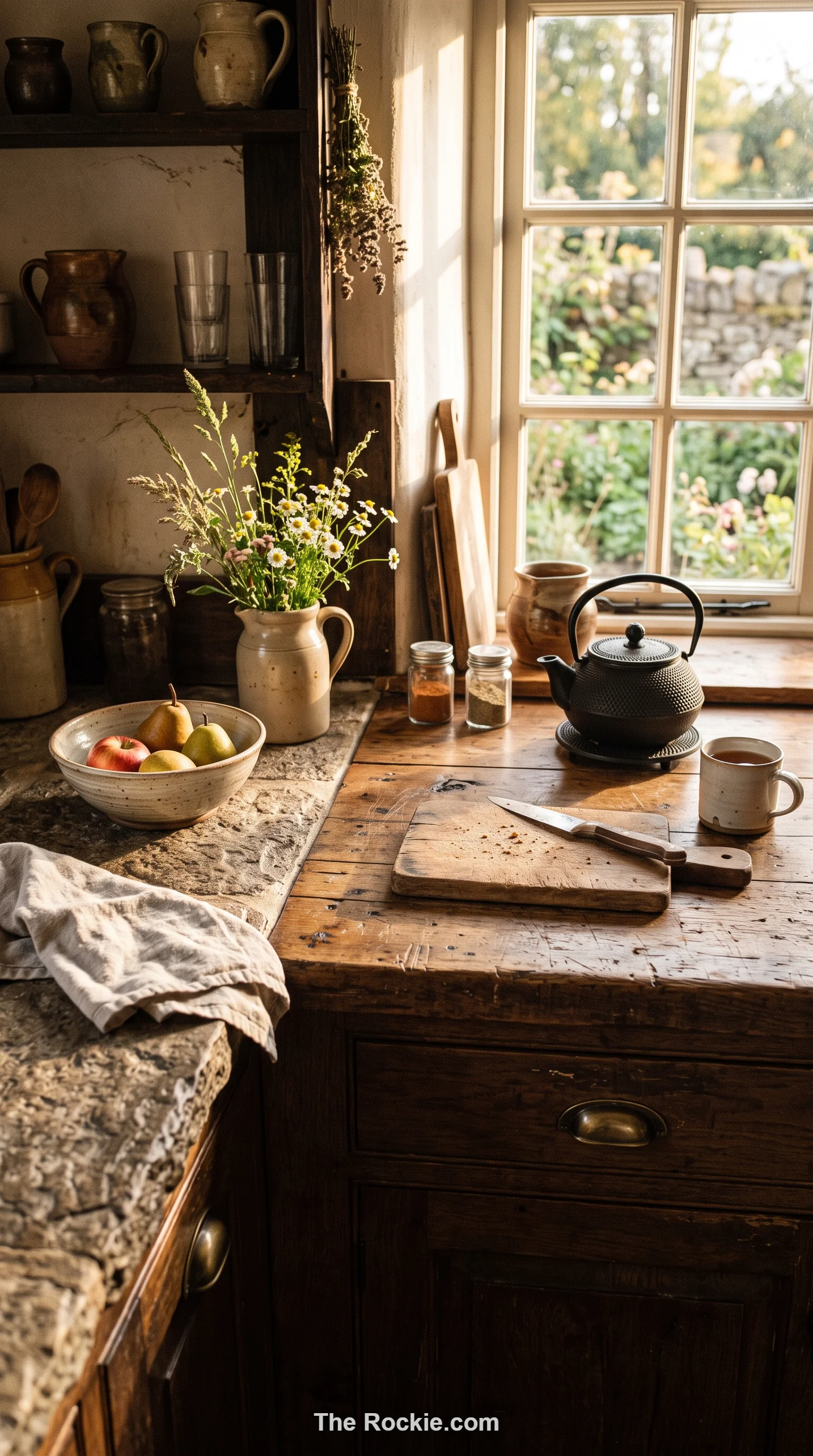
Reclaimed wood accents, weathered stone, or retro-inspired finishes give a countertop a sense of history that brand-new materials can’t fake. Modern sealing techniques mean you can get that lived-in look without sacrificing outdoor performance.
15. Consider a Modular Setup
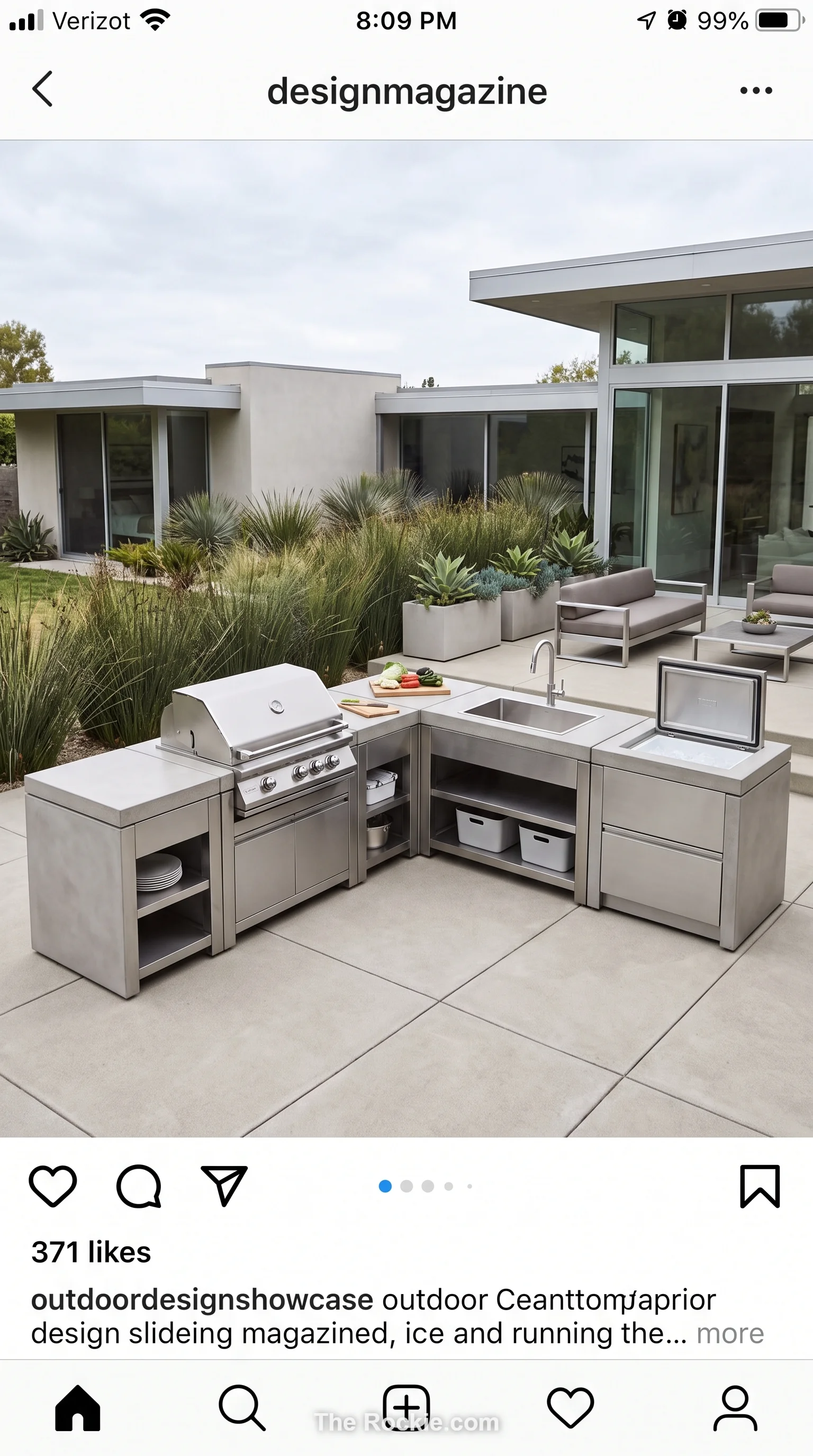
Modular countertop systems can be reconfigured or expanded as your needs change — useful if you’re not 100% sure of your final layout, or if you host different-sized groups throughout the year. Clean lines and interchangeable sections keep the design flexible without looking unfinished.
16. Pay Attention to Edge Details
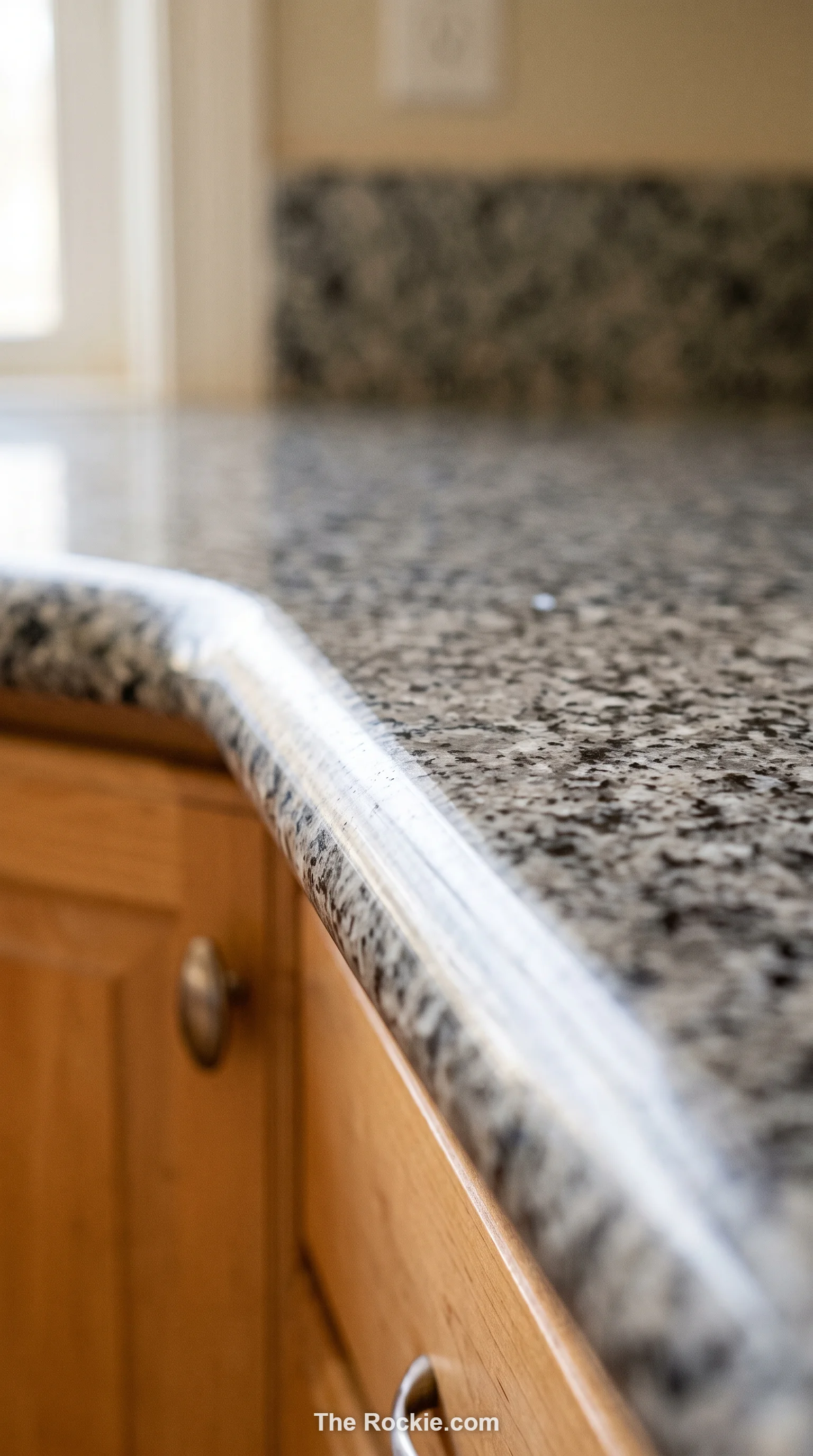
A beveled, bull-nosed, or rounded edge does more than look nice — it also softens a hard corner in a busy cooking space. These small details are inexpensive relative to the whole project but noticeably elevate the finished look.
17. Choose a Look With Broad, Lasting Appeal
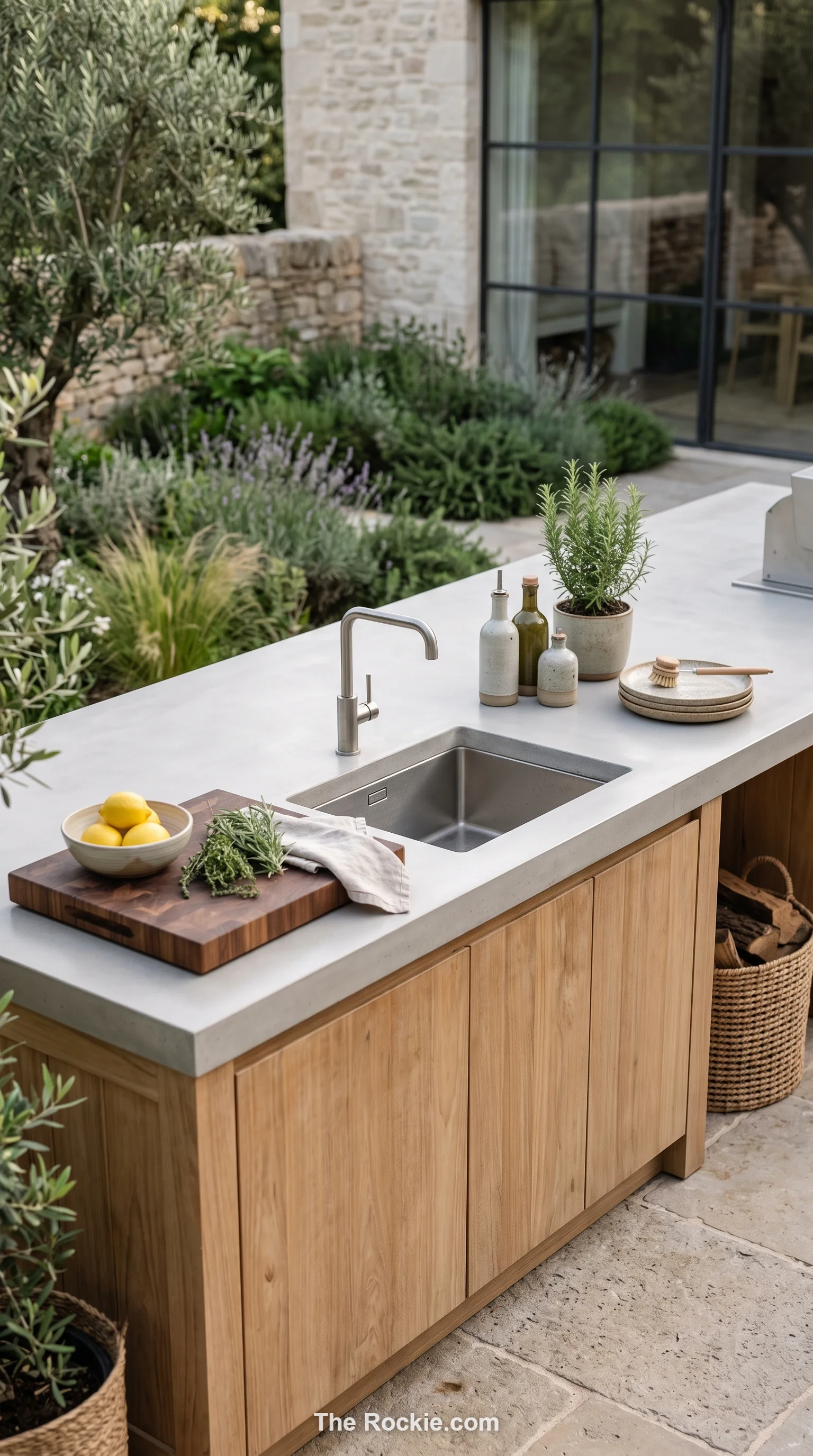
Clean lines and neutral tones age well and don’t lock you into a specific design trend that might feel dated in a few years. A countertop with universal appeal also makes it easier to update surrounding decor down the line without a full kitchen overhaul.
18. Factor In How Much Upkeep You Actually Want
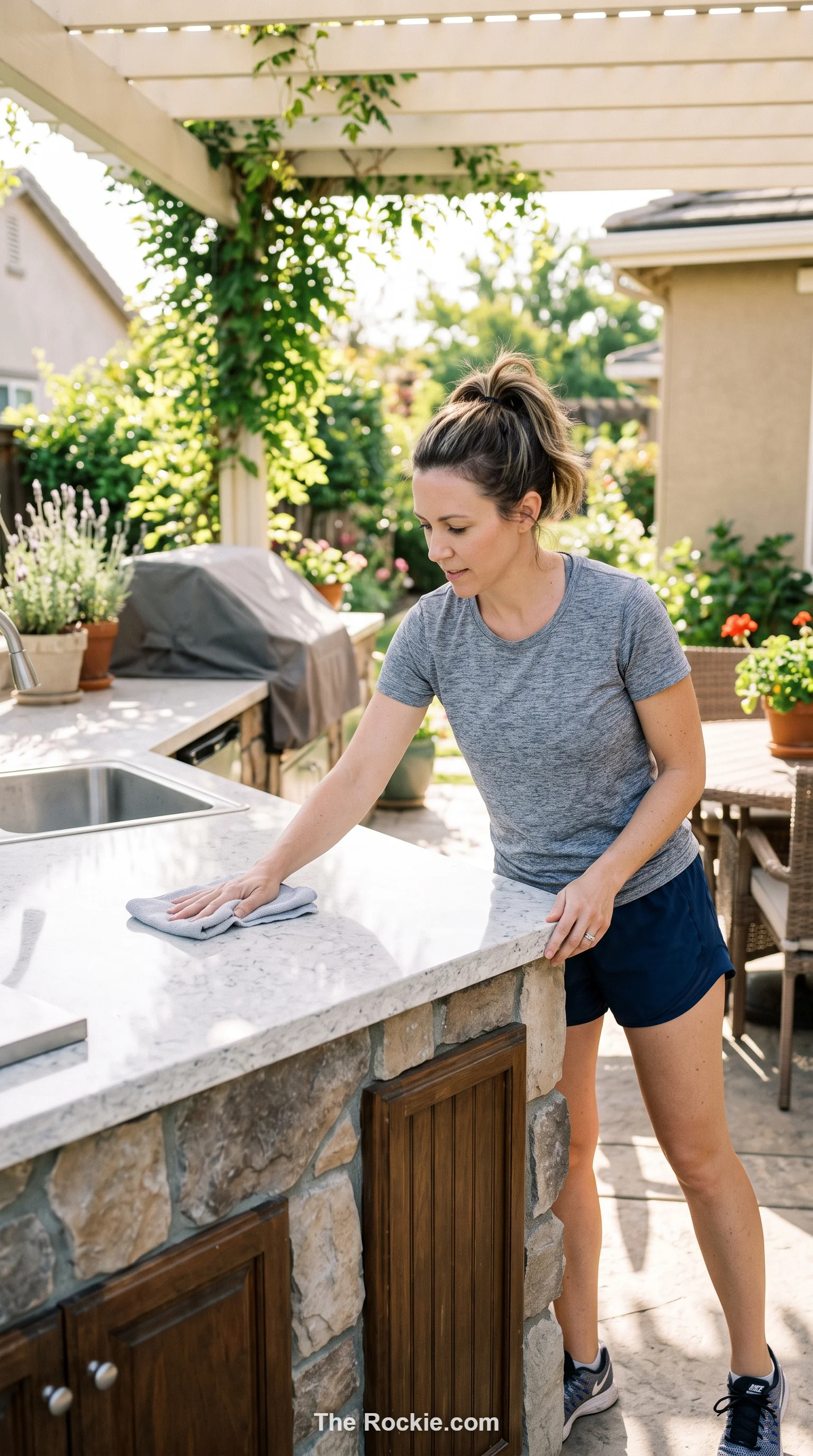
Sealed stone and engineered quartz need far less babying than porous, untreated materials — a real consideration if you’d rather spend your weekend cooking than maintaining surfaces. Low-maintenance doesn’t have to mean low-style; several of the easiest-care materials also happen to look the most polished.
19. Aim for a Flawless, Seamless Finish
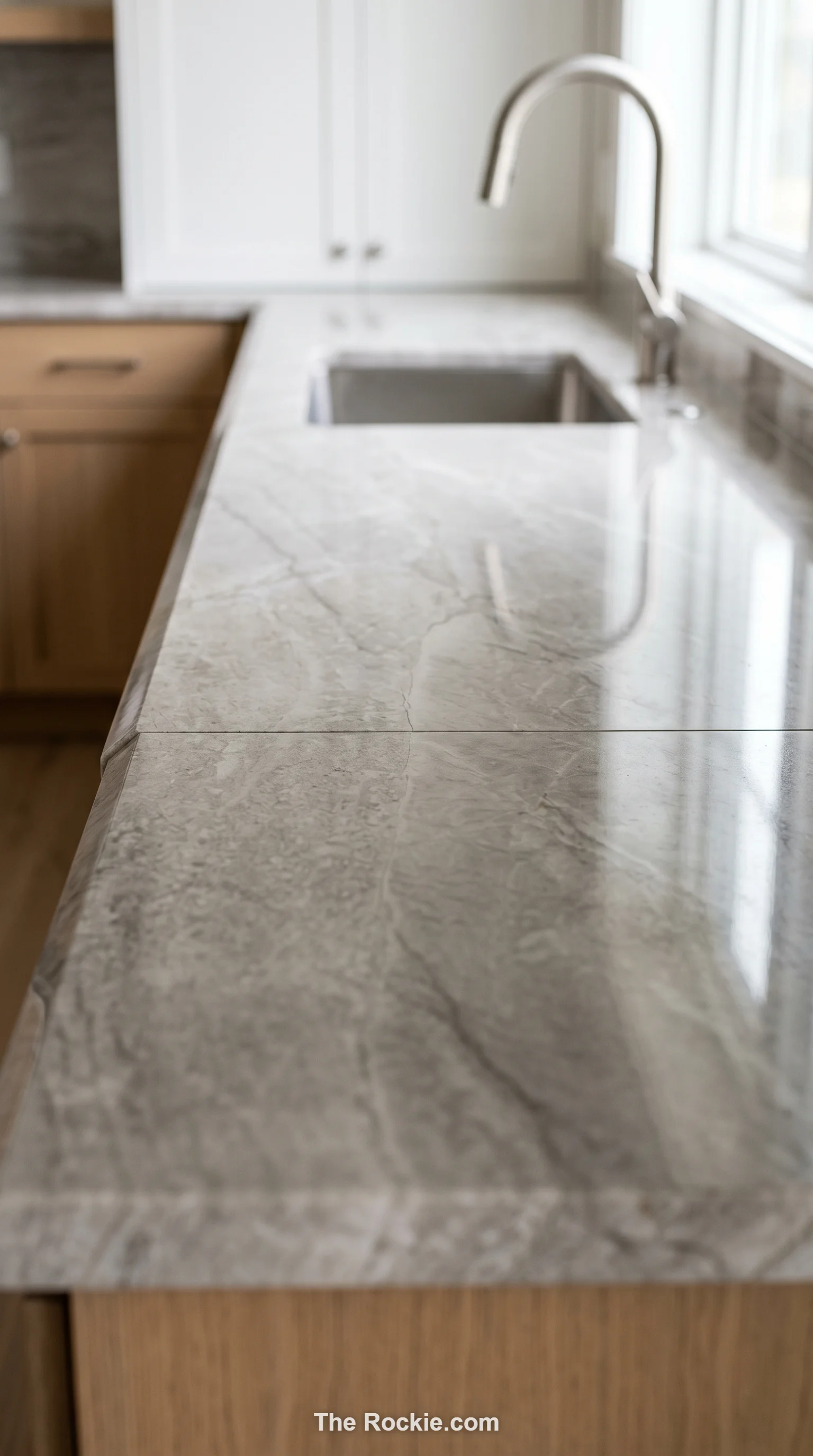
Tight seams and careful joinery make a countertop look like one continuous surface instead of pieced-together slabs. Beyond the visual payoff, fewer seams also mean fewer places for debris and moisture to collect over time.
20. Match Your Countertop to the Whole Kitchen
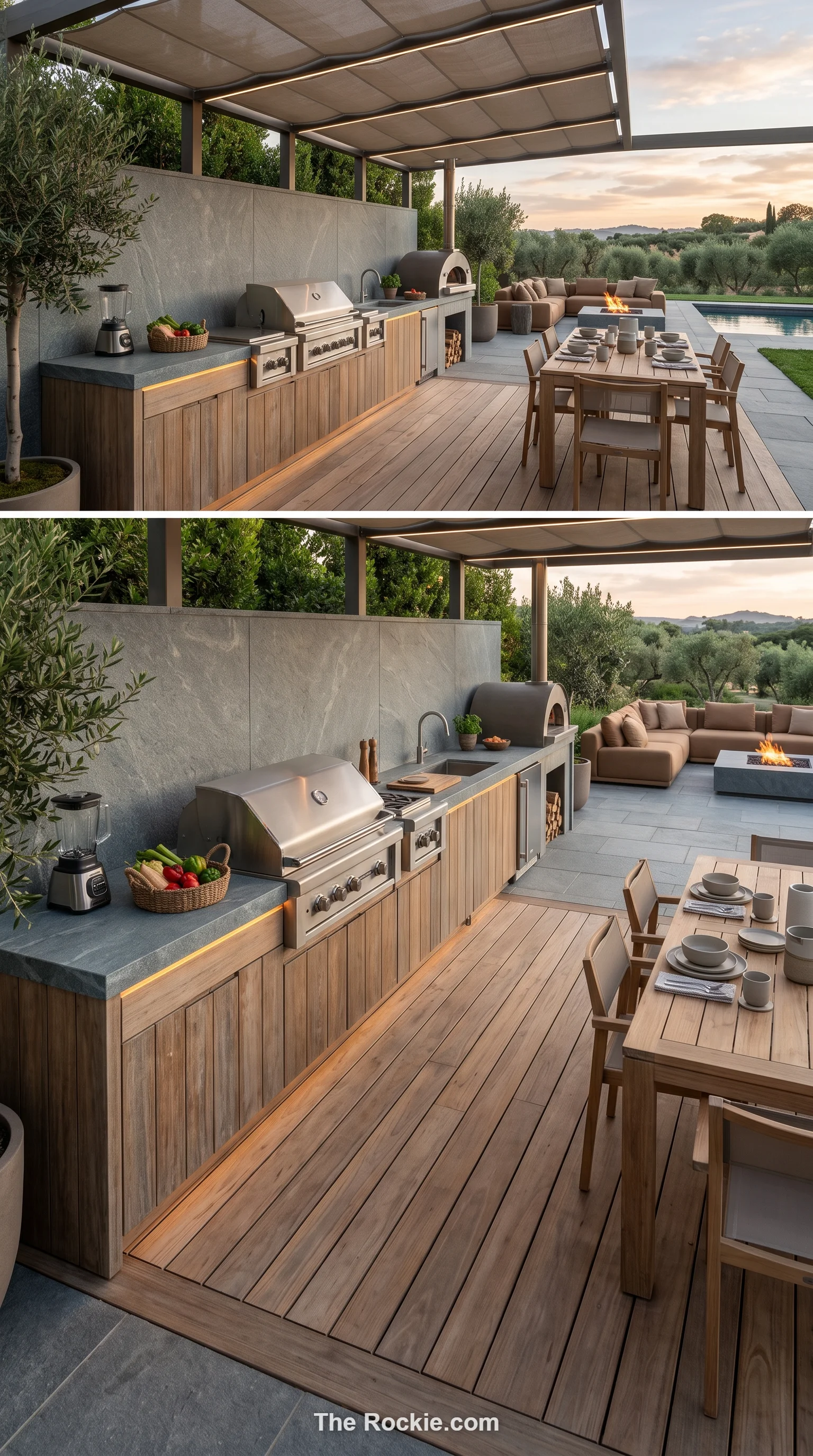
A countertop chosen to complement your cabinetry, flooring, and grill finish makes the whole space feel considered rather than assembled piece by piece. This kind of cohesion is often what separates a kitchen that looks professionally designed from one that looks thrown together.
21. Use Bold Color as an Accent
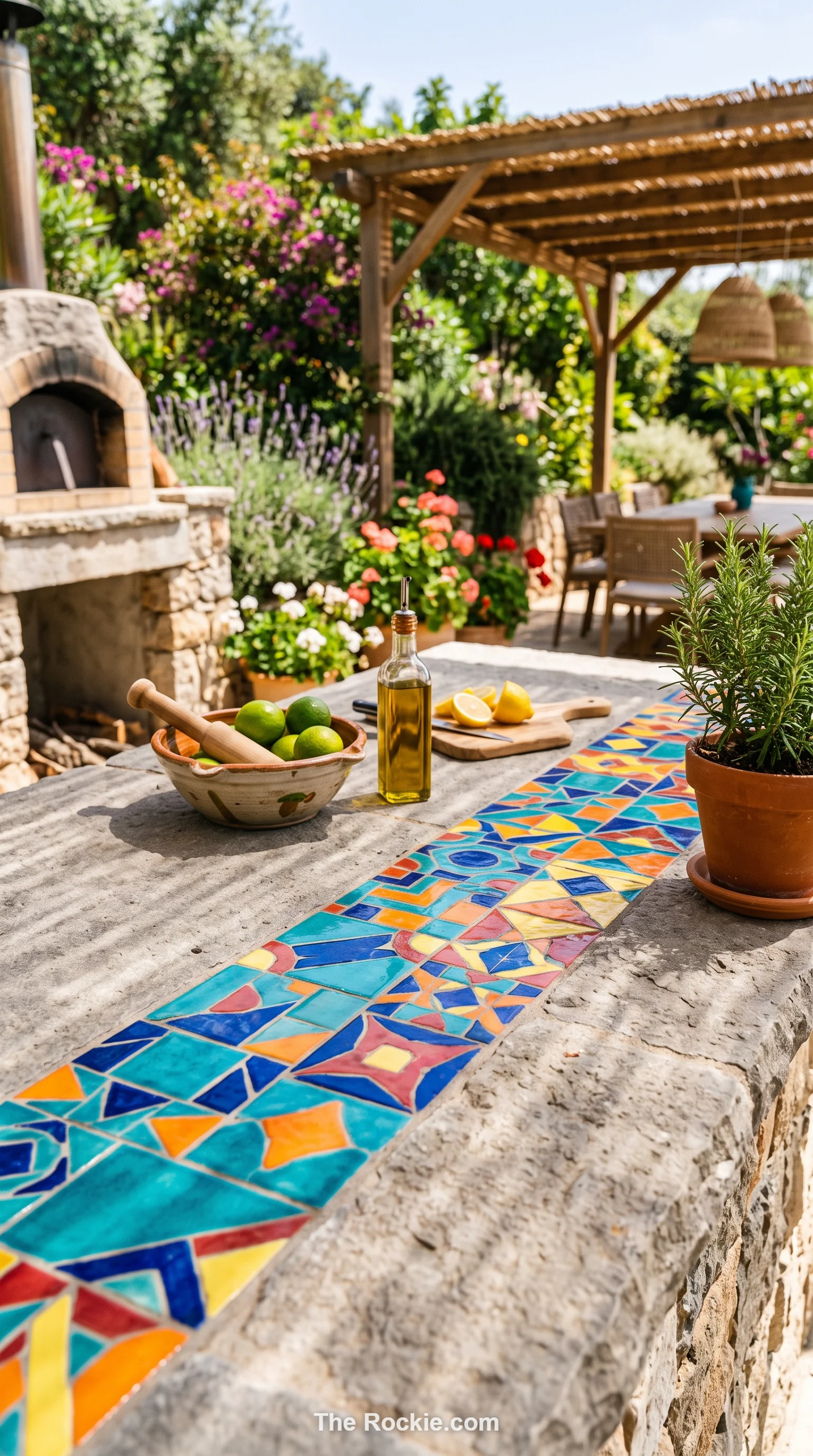
A vibrant inlay, colored edge, or patterned section can break up an otherwise neutral countertop and give the space some personality. Used sparingly, a bold accent draws the eye without overwhelming the practical parts of the design.
22. Go Artistic With Custom Inlays
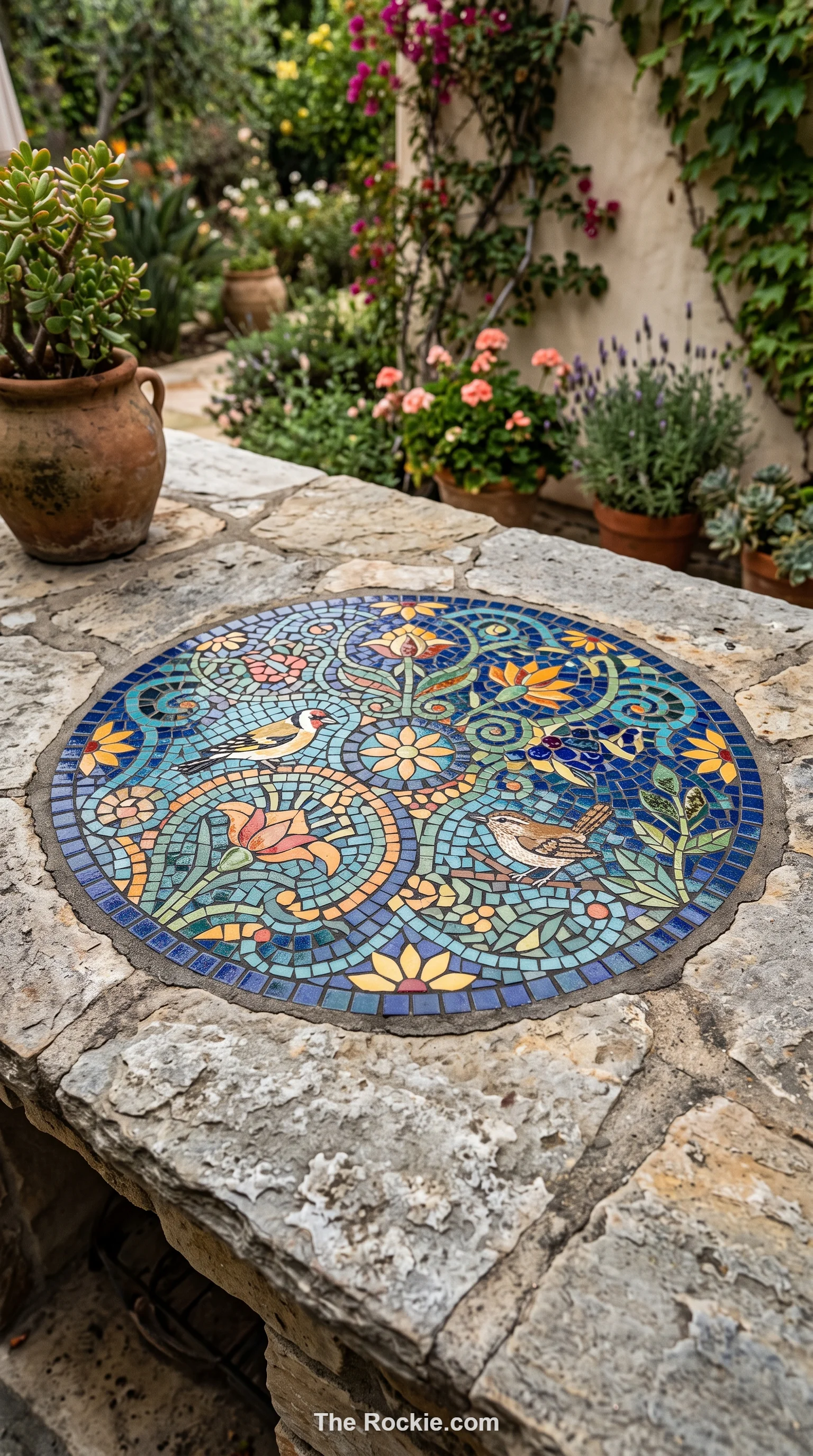
Mosaic patterns, embedded tile work, or contrasting material inlays turn a countertop into something closer to a piece of art than a plain work surface. It’s a bigger investment of time and craftsmanship, but the result is genuinely one-of-a-kind.
The Takeaway
The right countertop does double duty — it needs to survive years of sun, spills, and heat while still being the surface that anchors the whole kitchen visually. Whether you go all-in on premium stone or build something budget-conscious with concrete or engineered quartz, the materials on this list all deliver a legitimate mix of durability and style.