
23+ Stunning Tropical Bedroom Decor Ideas that Feel Calm and Not Kitschy in 2026

I’ll be honest with you – the first tropical bedroom I ever designed looked like a cruise ship gift shop, and I have the photos to prove it. Turquoise walls, three different palm prints, a flamingo pillow I still can’t explain. What I’ve learned in the decade since is that real tropical rooms, the ones in Bali guesthouses and old Key West cottages, are almost entirely neutral – warm plaster, woven wood, white cotton – with green showing up as an accent, not a mood. Get that ratio right and the room feels like a deep breath instead of a theme park.
Tropical Bedroom Decor Ideas
1. A Cane-and-Rattan Headboard as the One Big Move
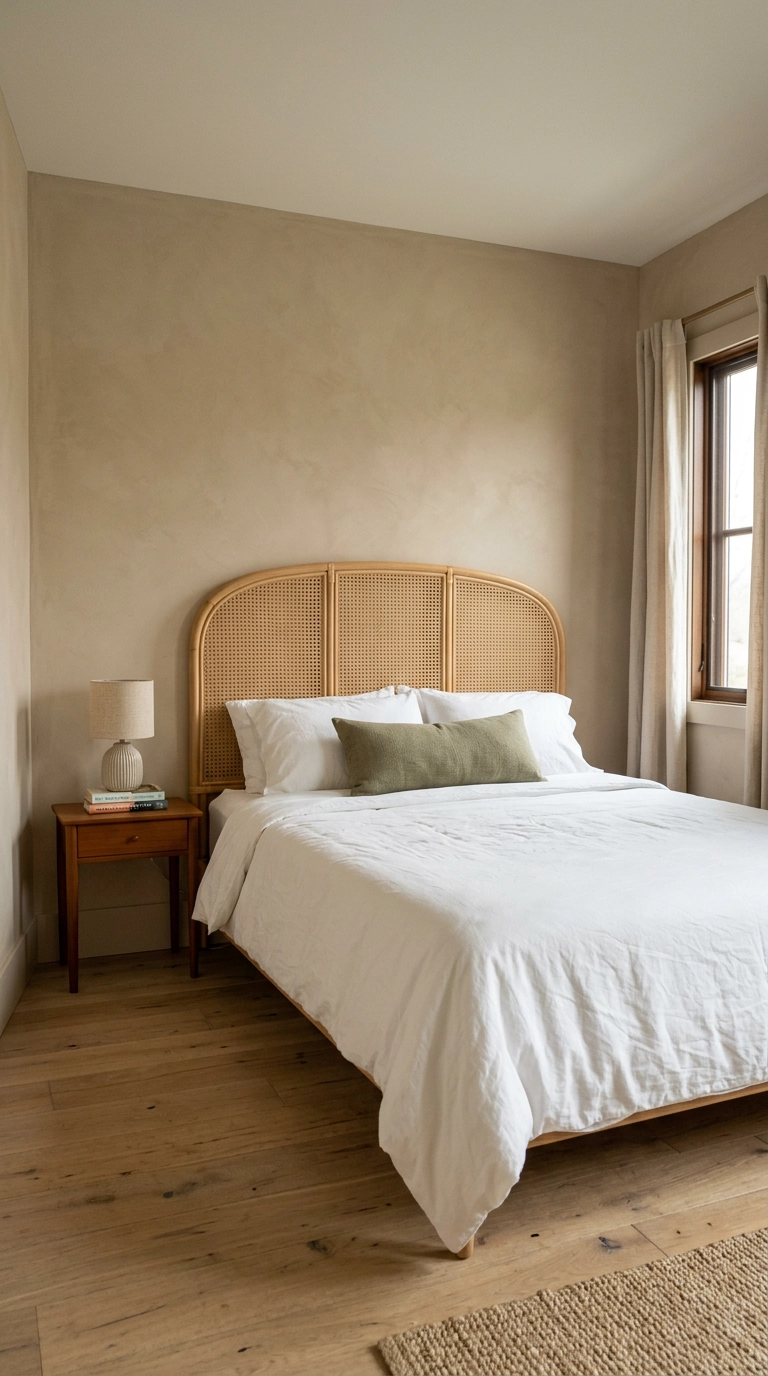
If you only do one thing, do this. A cane or rattan headboard carries the entire tropical story on its own, which means the rest of the room gets to stay quiet – and quiet is the whole trick.
2. Warm Plaster Walls Instead of Saturated Turquoise
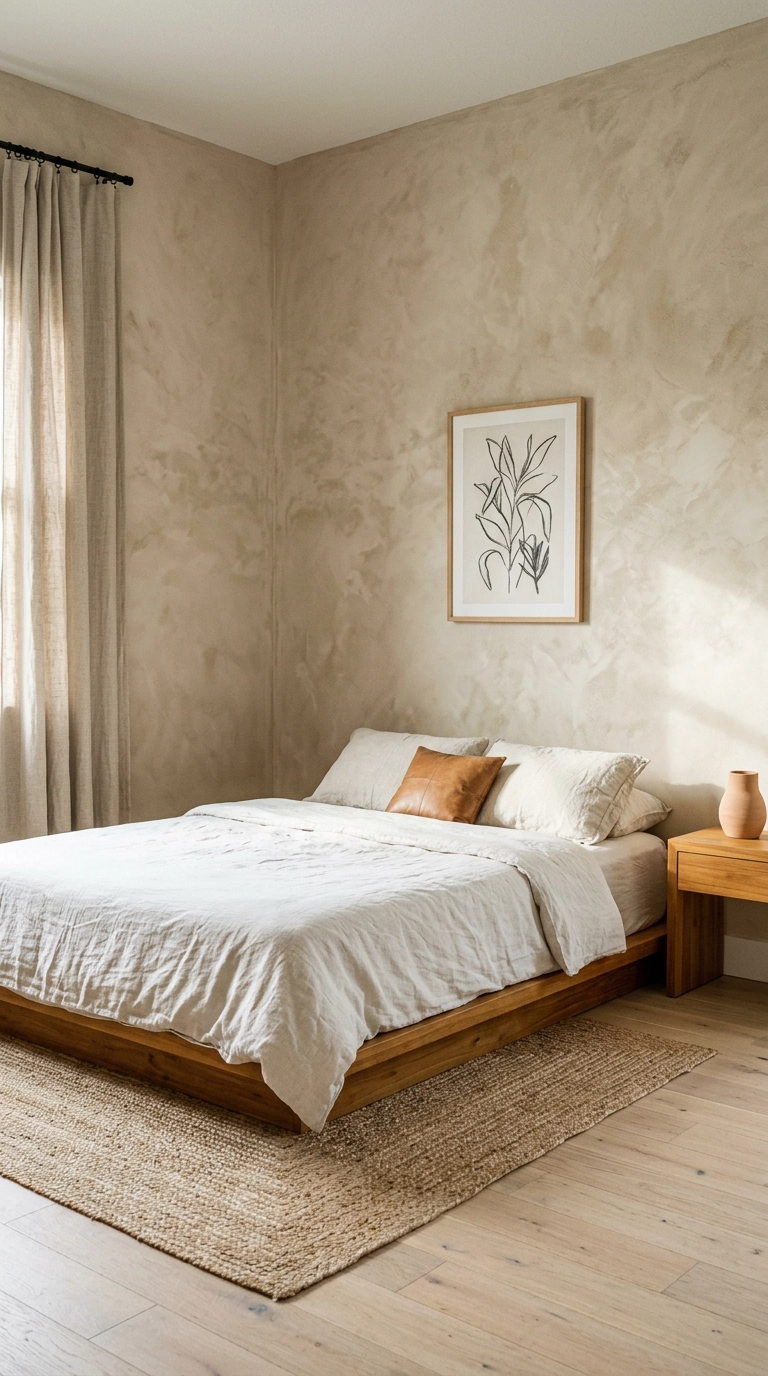
Here’s the correction most tropical bedrooms need: the walls should be the color of sand and shade, not the water. Warm off-whites and mottled clay tones let woven wood and green foliage read properly, because a beige-to-tan wall is the same background those materials have outdoors.
3. Banana Leaf Print at One Scale, and One Scale Only
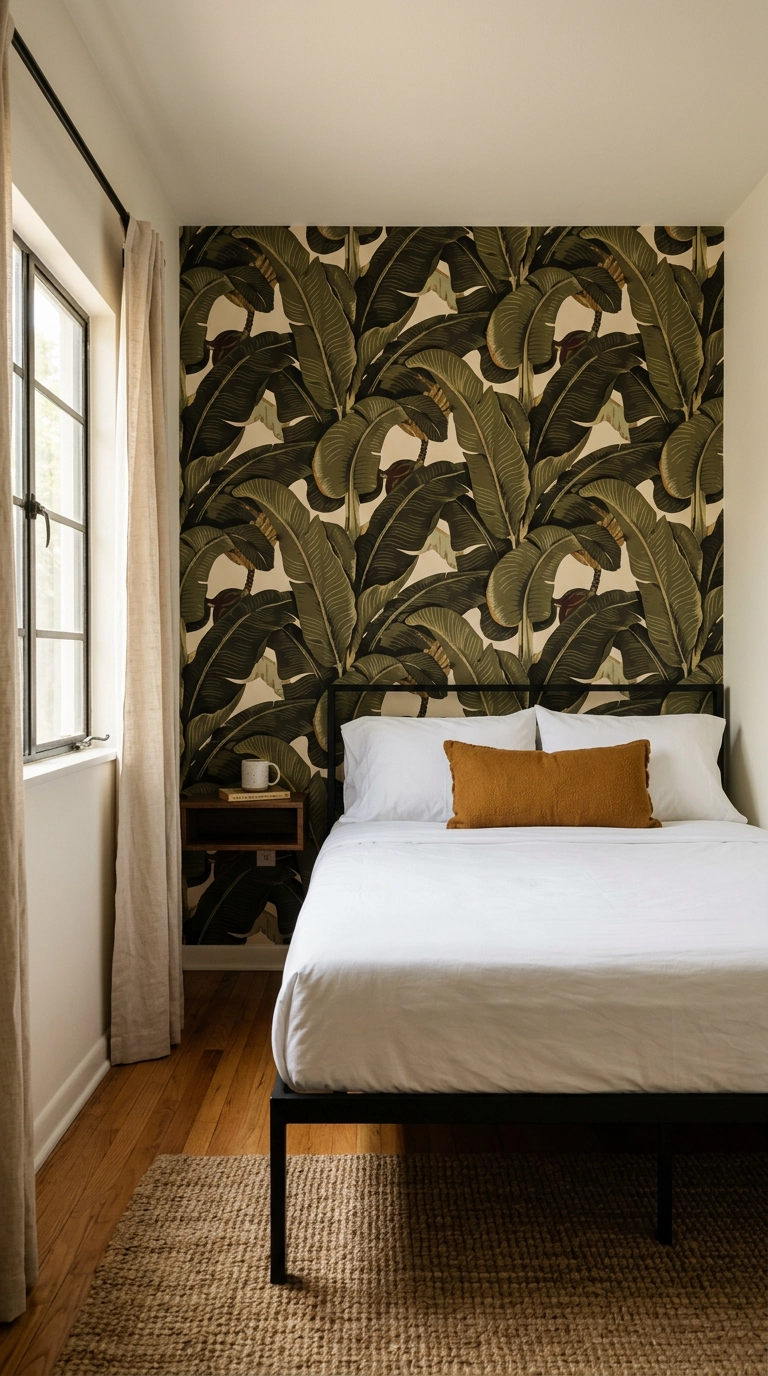
This is where most people lose it: they wallpaper the whole room, then add a botanical duvet, then a palm-print rug, and suddenly they’re sleeping inside a rainforest diorama. Pick one surface. One. Let the banana leaf or palm print be the hero, and make everything else a supporting player in solids and neutrals.
4. Know the Line Between Tropical and Theme-Park Resort
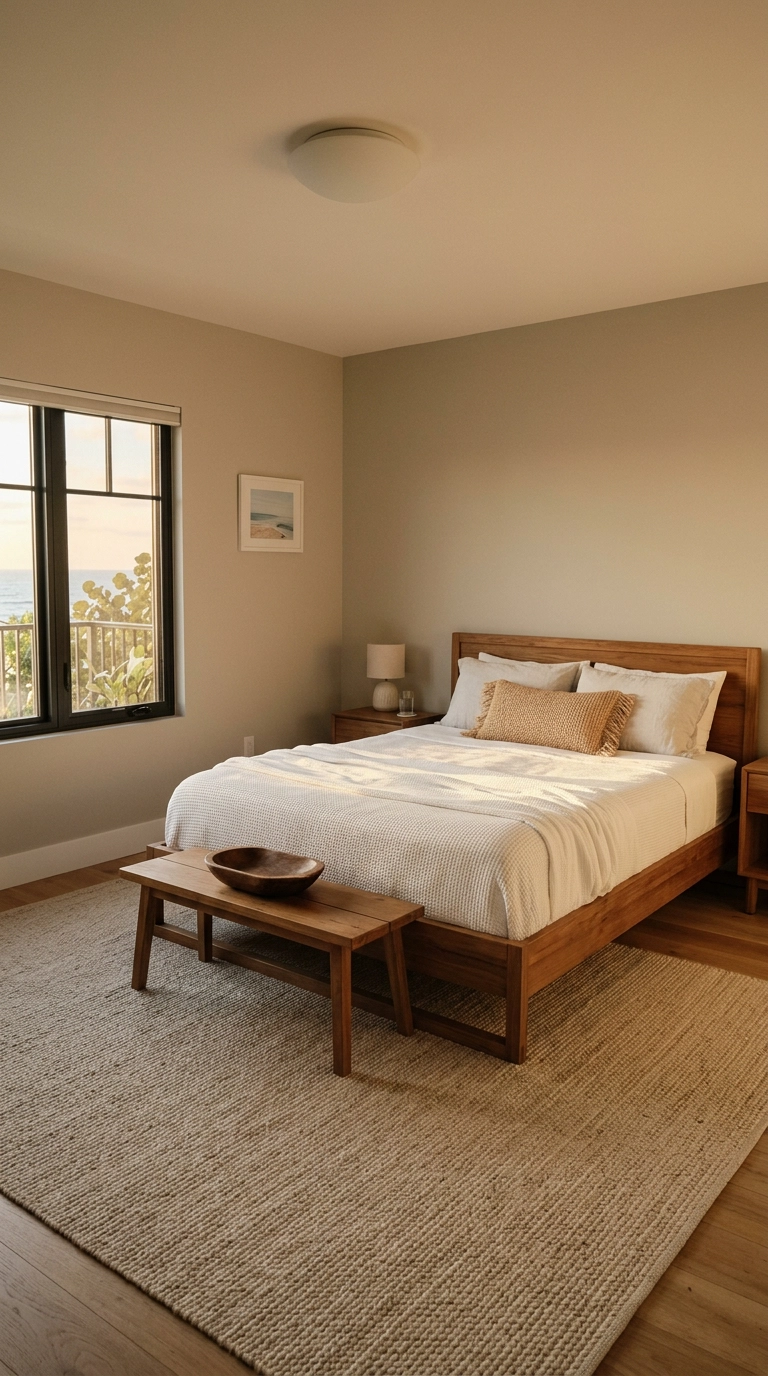
The tell is always novelty. Tiki masks, flamingos, monkey lamps, anything shaped like a pineapple, and stacked prints in more than two directions – that’s resort gift shop, not tropical. Real tropical interiors are built from materials, not motifs.
5. Rearrange the Bed for Airflow and a Better Sightline (Free)
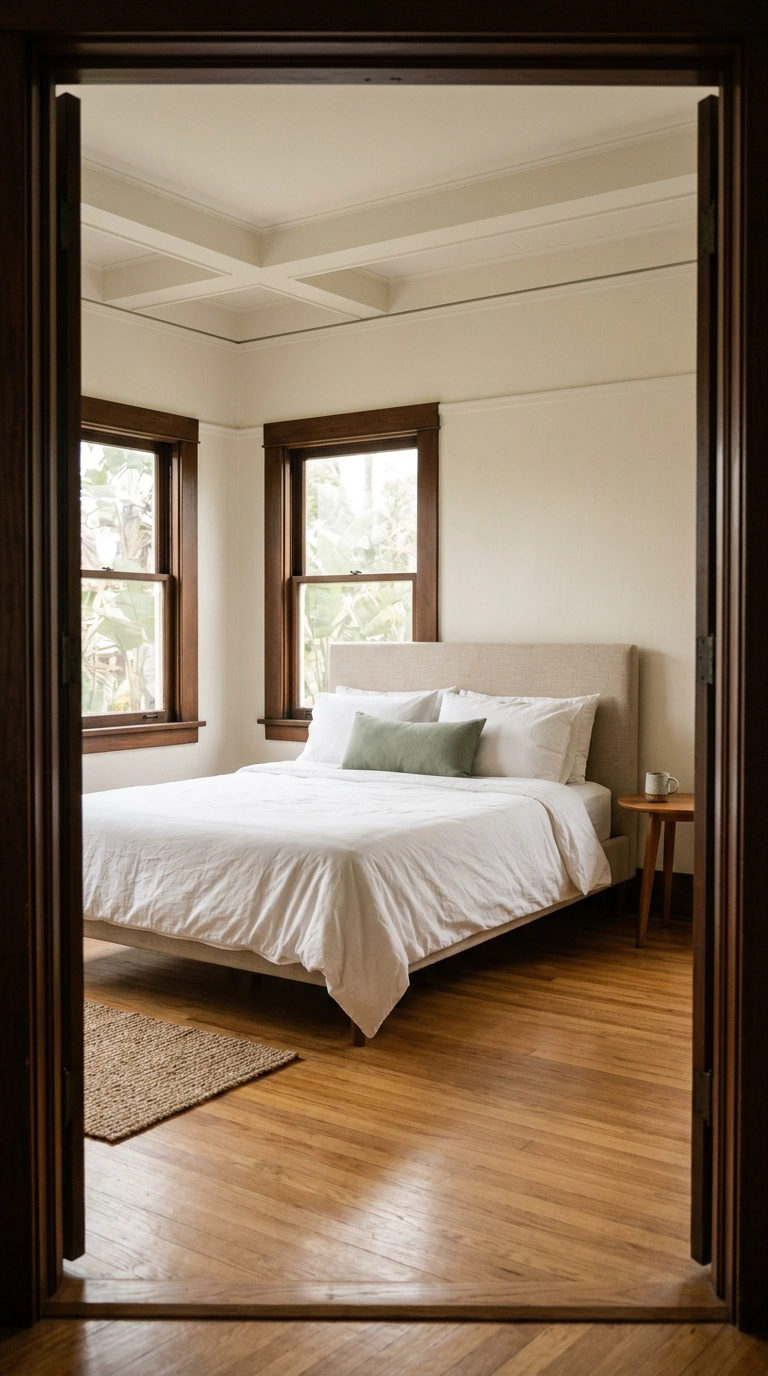
Tropical design started as climate design, so airflow is the actual root of the aesthetic. Put the bed on the longest solid wall with windows to either side rather than blocking one, and you get real cross ventilation plus the calmest view from the doorway.
6. Swap to Crisp White Cotton Bedding in 20 Minutes
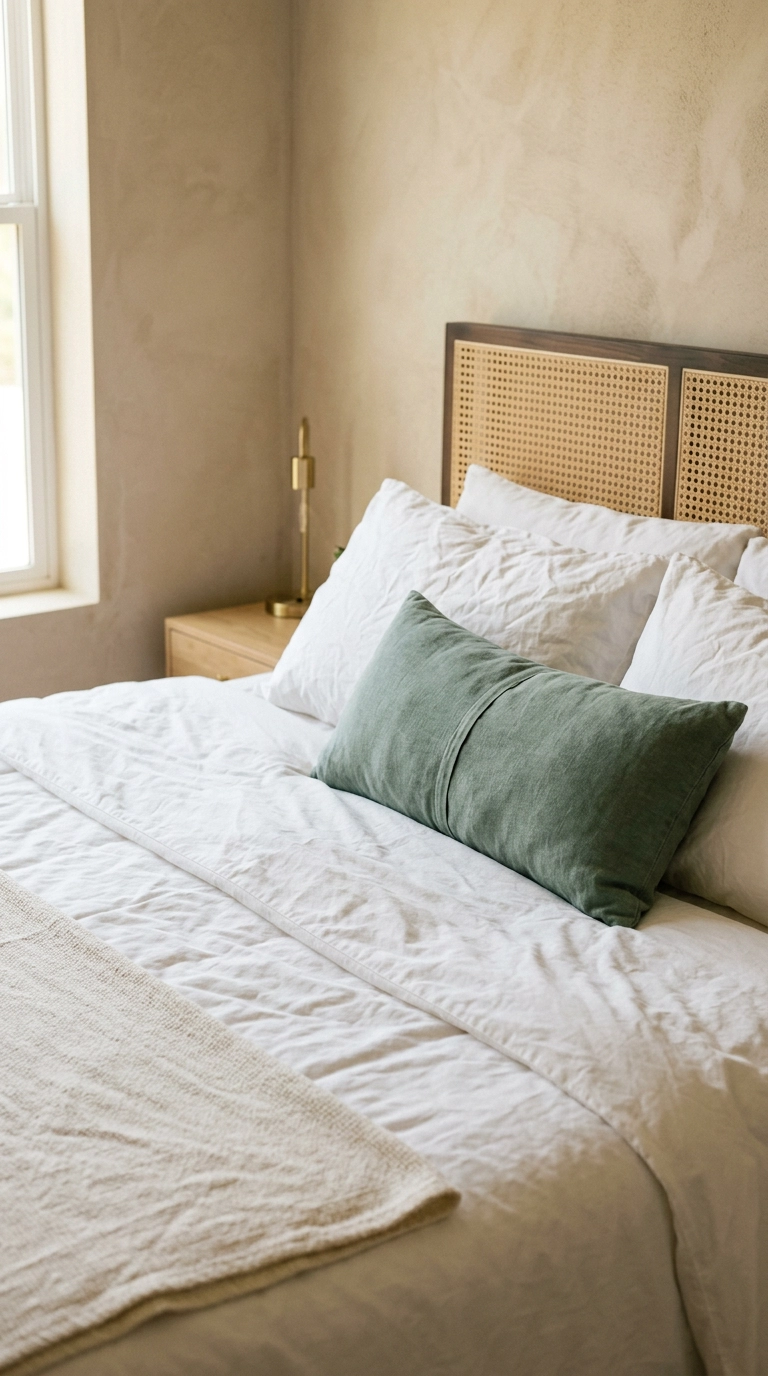
Nothing reads tropical faster than white cotton that breathes. Skip the sateen and go percale or waffle weave – the matte, slightly crumpled finish is what makes a bed look like a linen-service guesthouse rather than a hotel chain.
7. Layer Two Natural Rugs Instead of Buying One Huge One
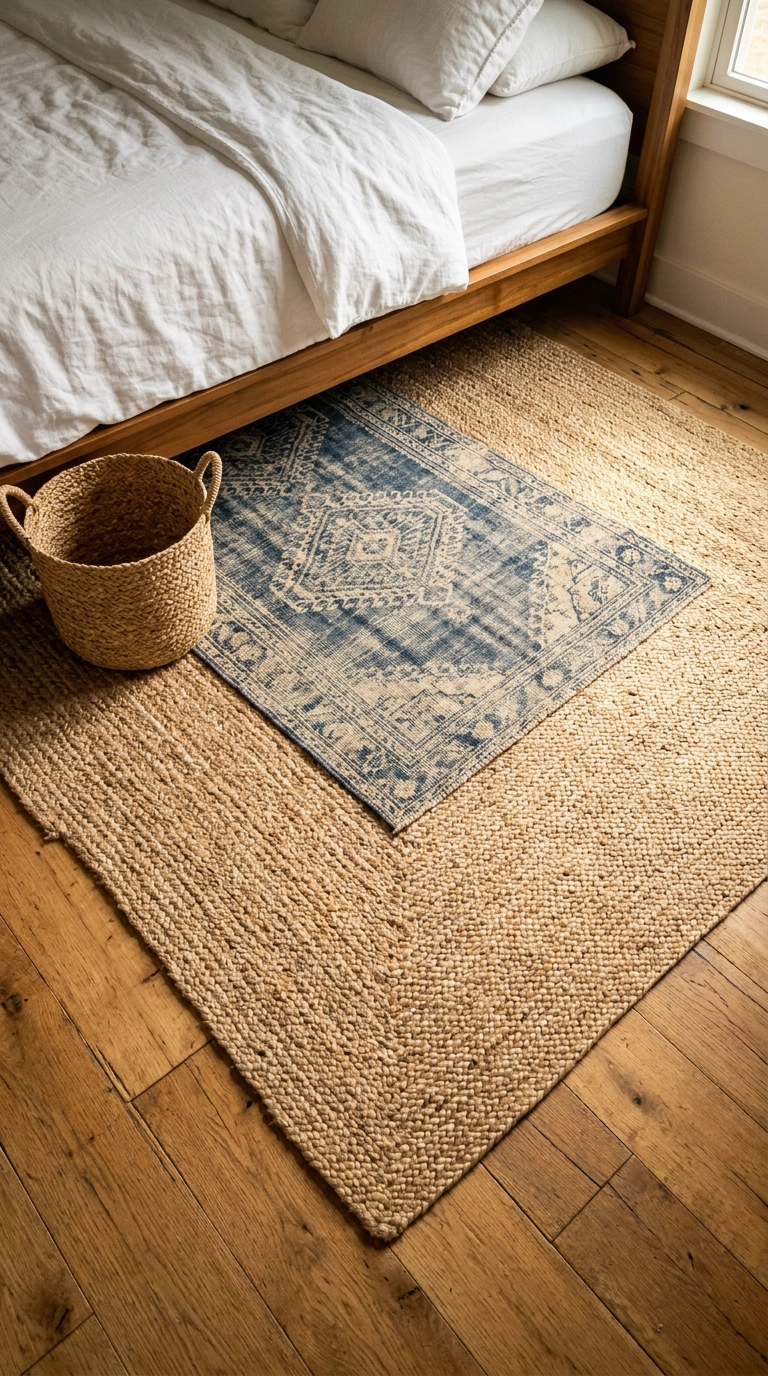
An 8×10 jute rug runs a fraction of what a wool one costs, and layering a smaller flatweave or vintage cotton runner on top gives you the pattern and softness jute can’t. It’s also the honest way to fake a big-budget floor.
8. A Mosquito-Net Canopy, Hung from a Single Ceiling Hook
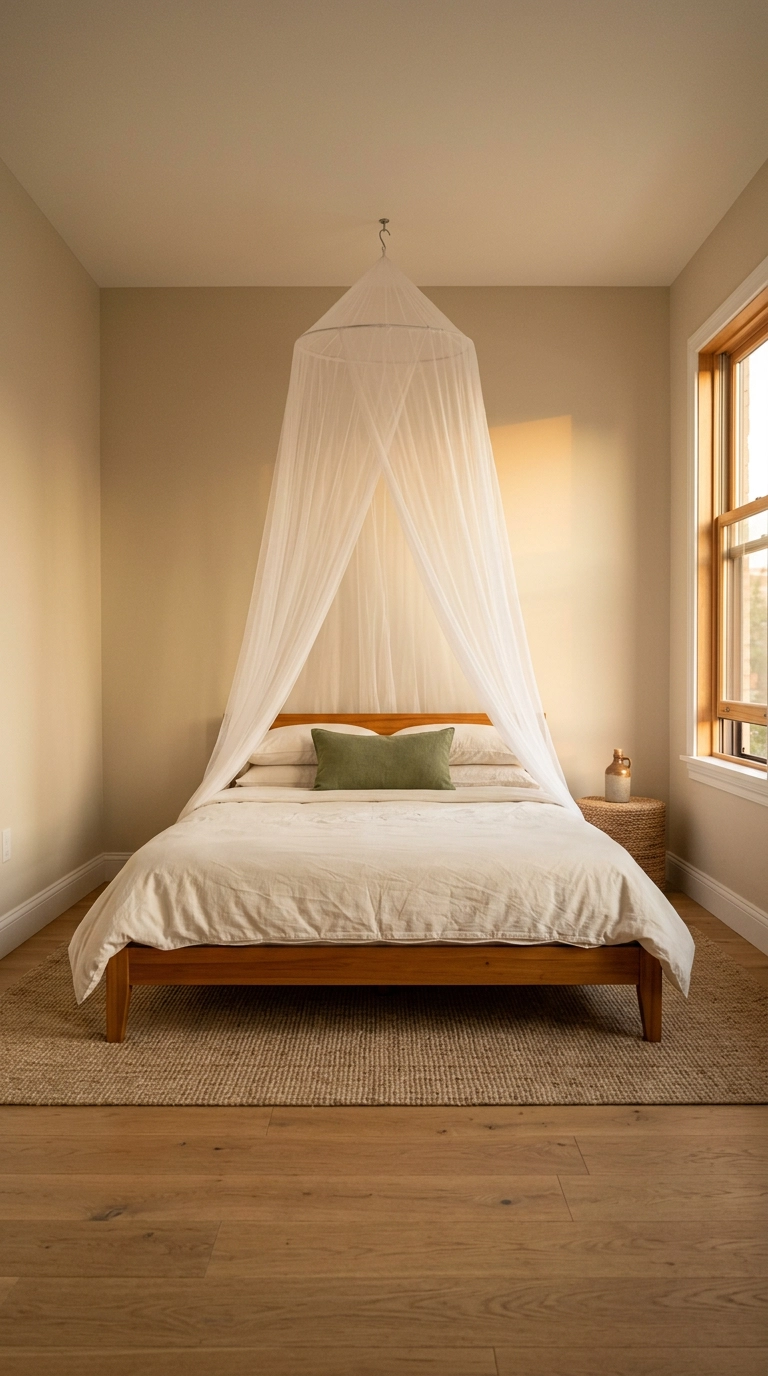
A mosquito net is the most convincing tropical detail you can buy for around $40, and it works because it’s functional history rather than decoration. Get the plain undyed cotton kind, not the sparkly ones sold for kids’ rooms.
9. One Real Teak Piece to Anchor Every Other Wood Tone
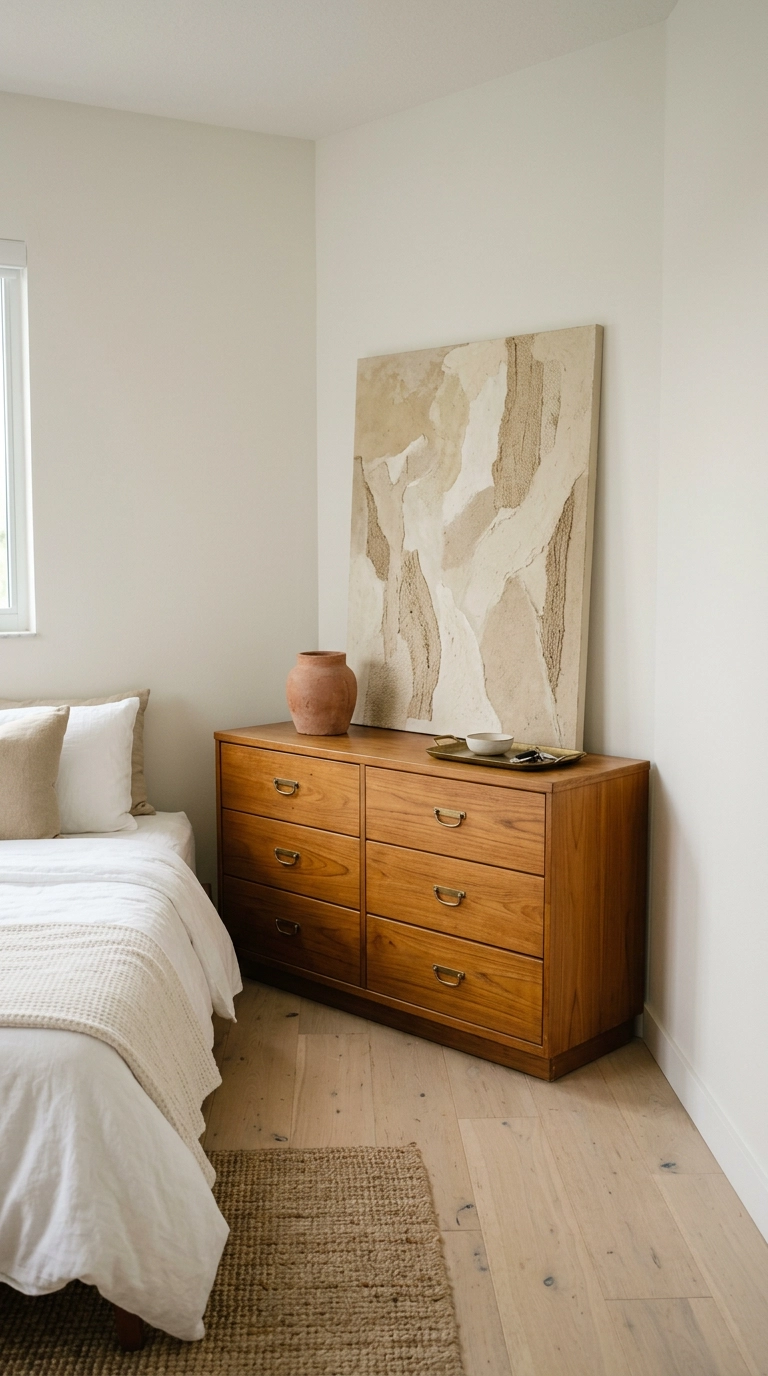
Teak is the material that makes a tropical room read as authentic instead of assembled, because its warm reddish honey tone is the reference point everything else borrows from. Buy one piece, not a matching set – a dresser or a bench is plenty.
10. A Ceiling Fan That Actually Looks Good
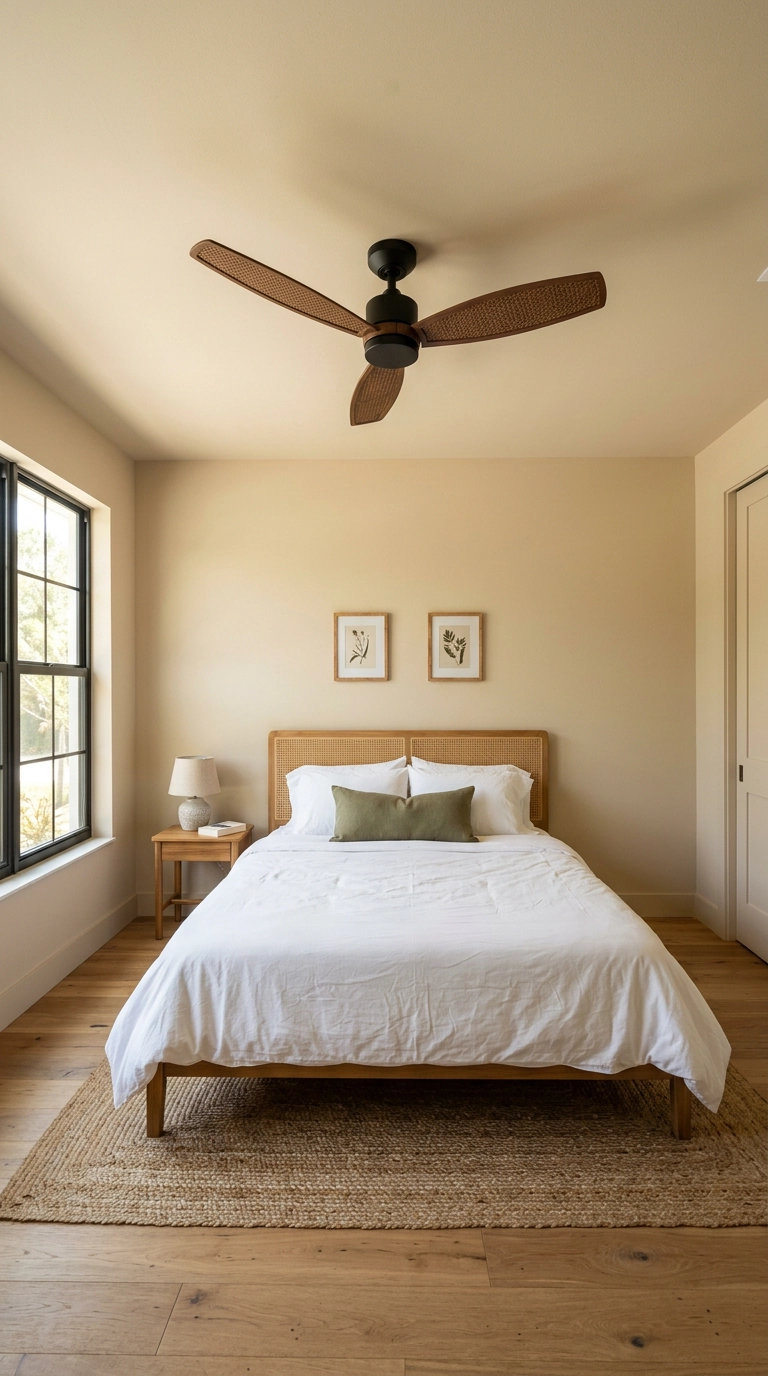
Most ceiling fans are ugly because they have five skinny blades and a bowl light stuck underneath. The tropical version you want is three wide flat blades in a dark wood or woven finish, no integrated light, small motor housing – it reads like a plantation-house fan rather than a builder special.
11. Sheer Linen Curtains Hung High and Long
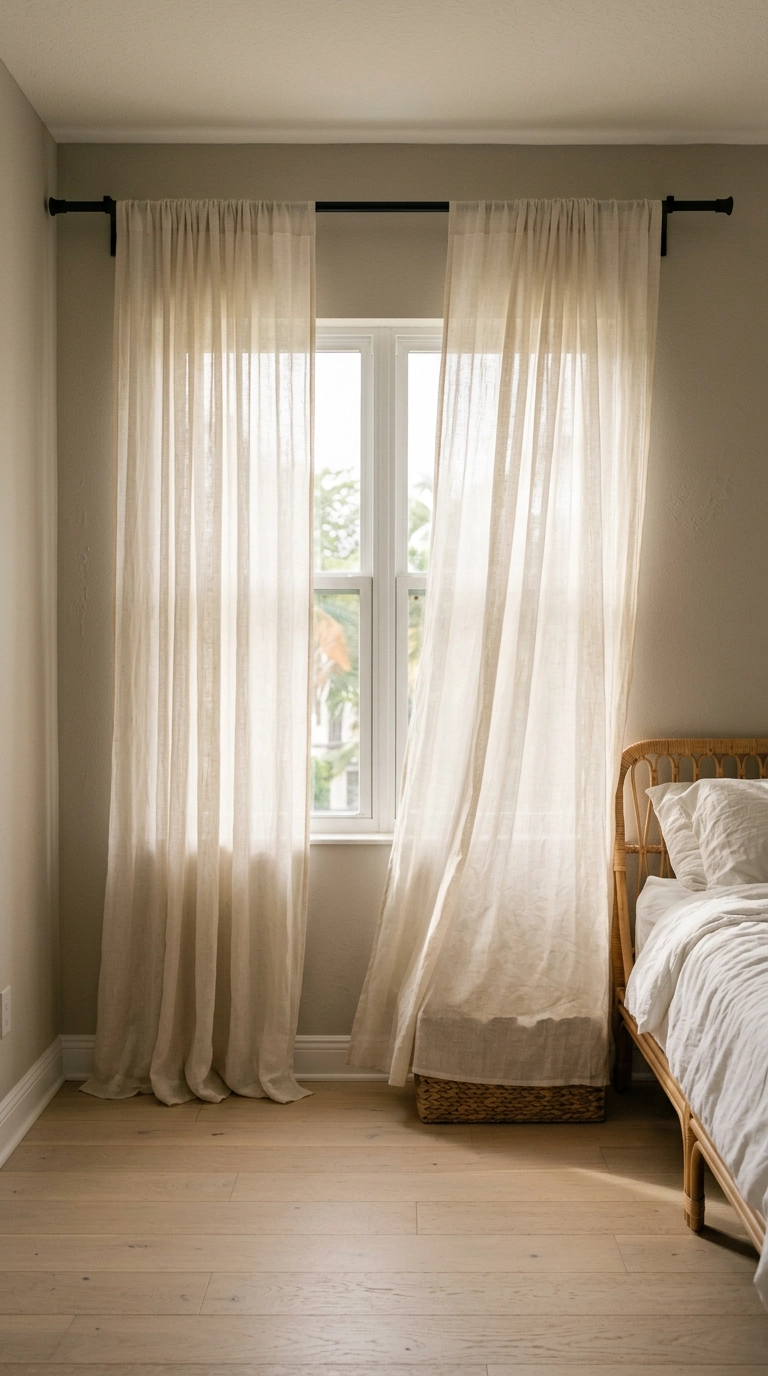
Tropical light is filtered light, so the goal is fabric thin enough to glow. Mount the rod 4 to 6 inches below the ceiling and extend it 8 to 10 inches past each side of the window – the eye reads the whole height as window, which is why the ceiling suddenly feels taller.
12. Exactly Three Green Things, Nothing More (Free to Rearrange)
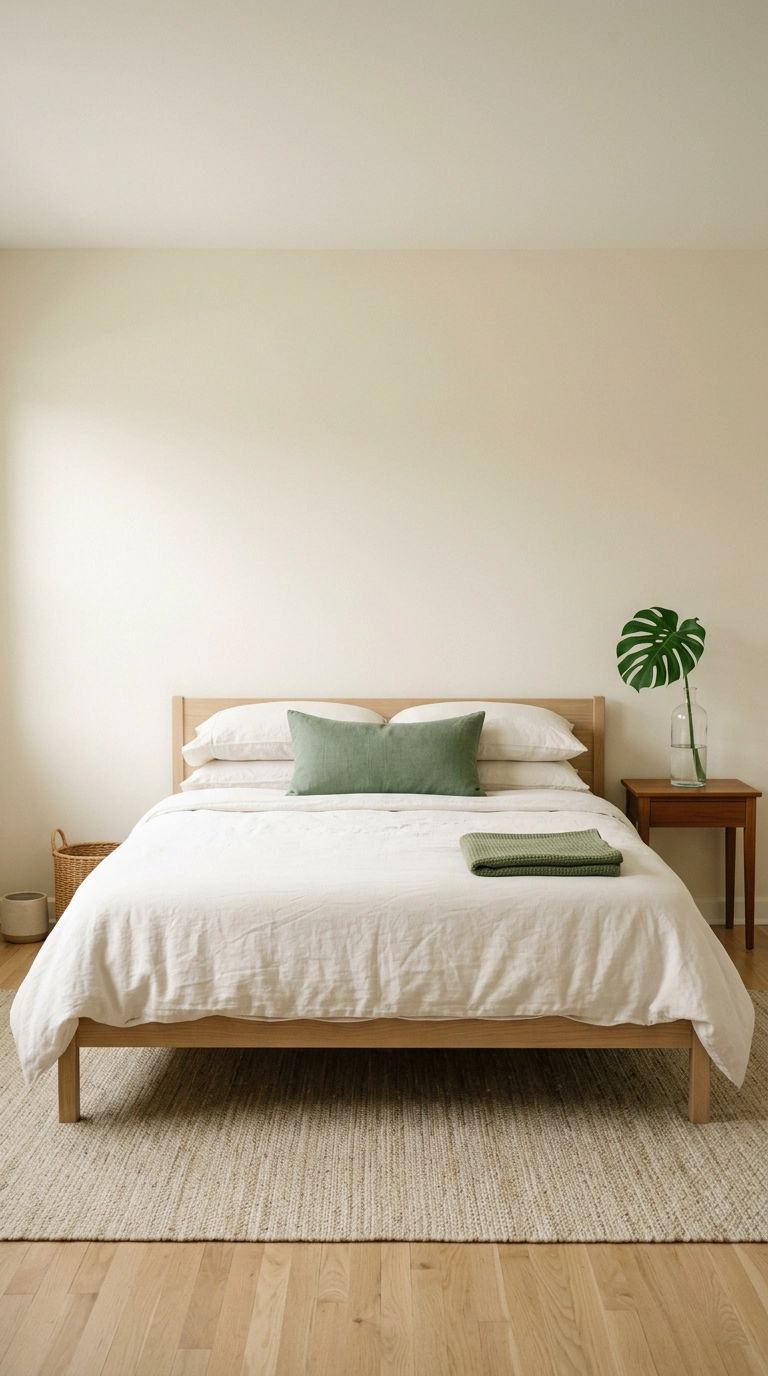
Here’s the ratio I keep coming back to: roughly 80% warm neutrals, 15% wood and woven texture, 5% green. In practice that means three green objects in the whole room, and one of them can be an actual leaf in a bottle of water.
13. Bamboo Roman Shades for Dappled Afternoon Light
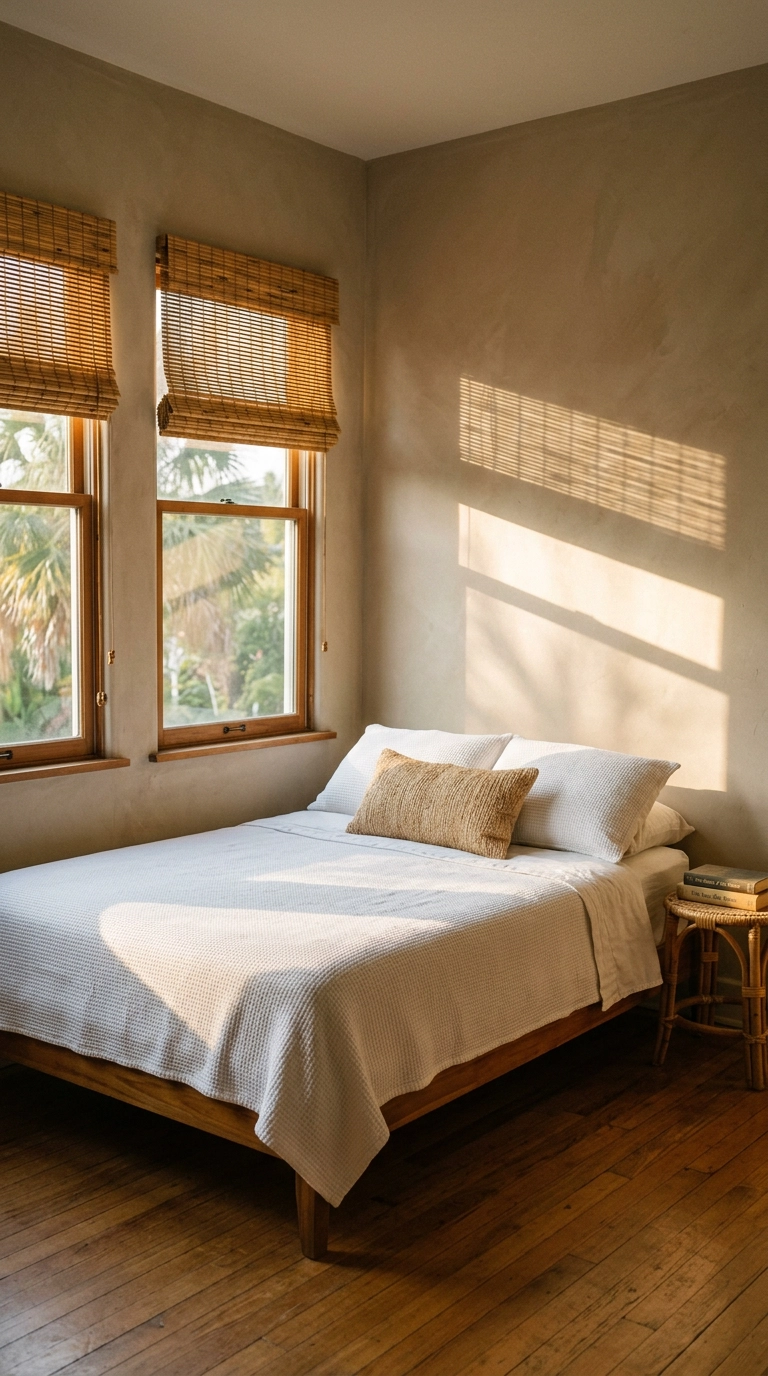
Woven bamboo shades are the highest return per dollar in this whole article, usually $30 to $60 a window at the big-box stores. They matter because they don’t block light, they break it up, and that shifting dappled pattern is what actually feels tropical.
14. A Weathered Wood Bench at the Foot of the Bed
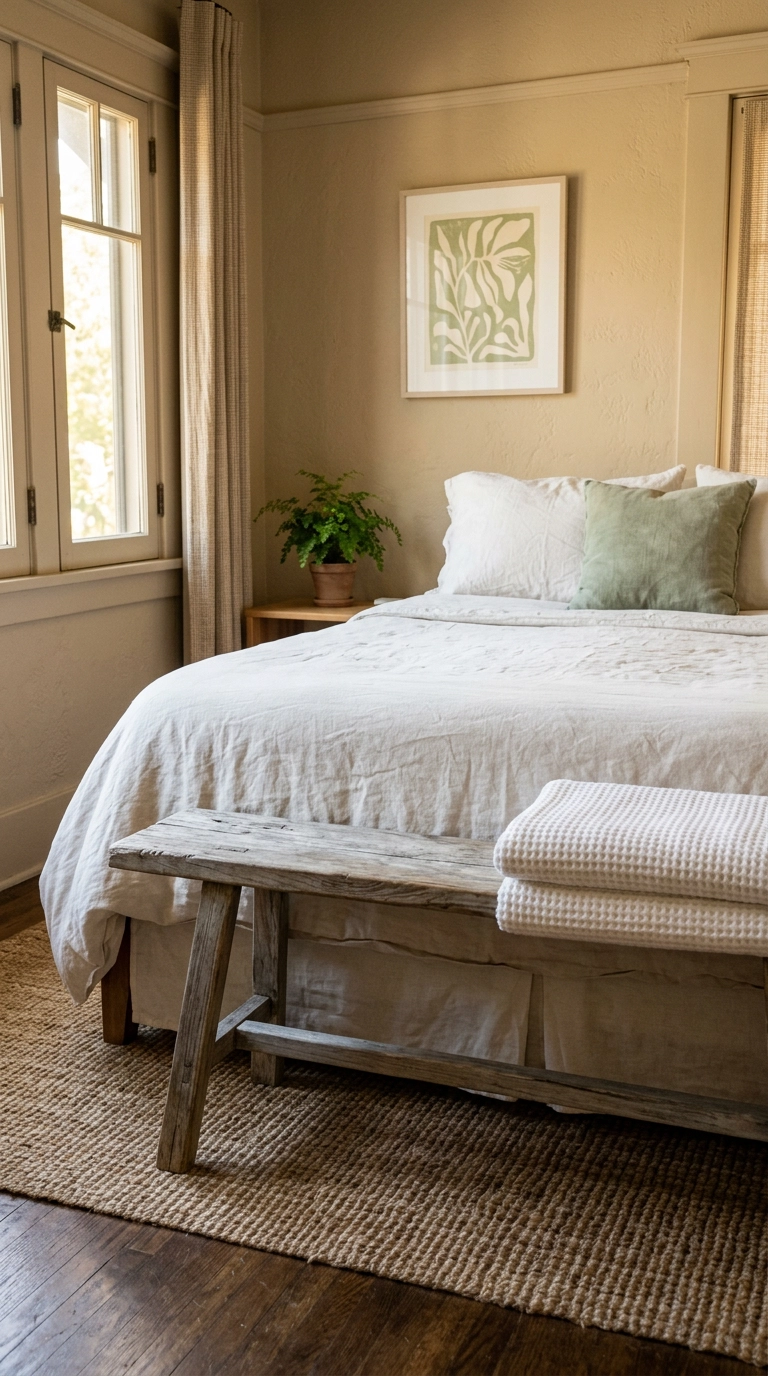
A bench at the foot of the bed does what a plant shelf can’t: it gives you somewhere to sit and lace shoes while quietly holding the whole tropical palette in one piece of furniture. Look for one with a clearly weathered patina rather than something shiny.
15. Swap the Flush Ceiling Light for a Woven Basket Pendant
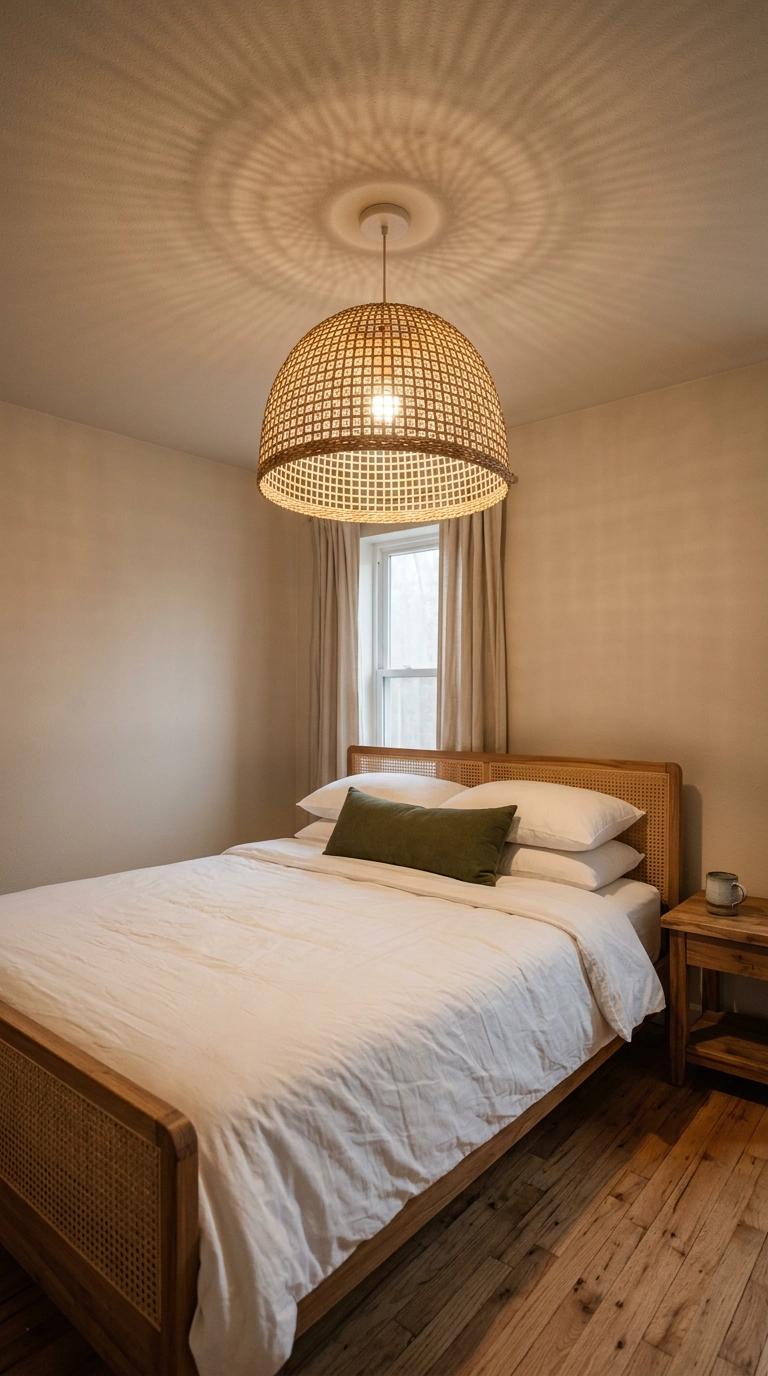
Builder-grade flush domes are the single most dated thing in most bedrooms, and a woven seagrass or rattan pendant fixes it for $60 to $120. The reason it works so well at night is the shadow – an open weave throws pattern across the ceiling once the bulb is on.
16. Grasscloth on One Wall for Texture Without Pattern
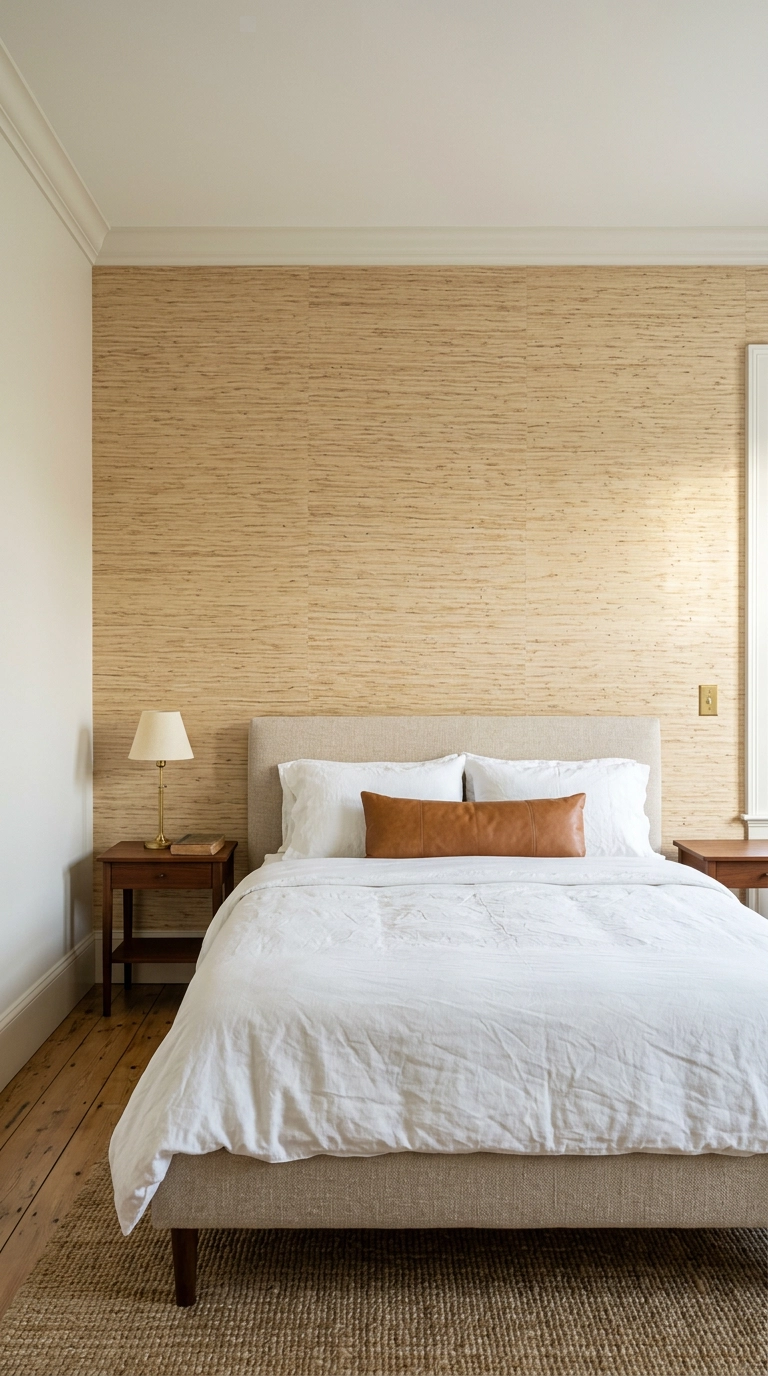
If banana leaf print feels like too much commitment, grasscloth gives you the tropical read with zero motif – it’s pure texture, which means it never goes out of style or fights your bedding. Under raking side light the fiber strands practically glow.
17. Add Cane Webbing to a Plain Dresser or Closet Door (Weekend DIY)
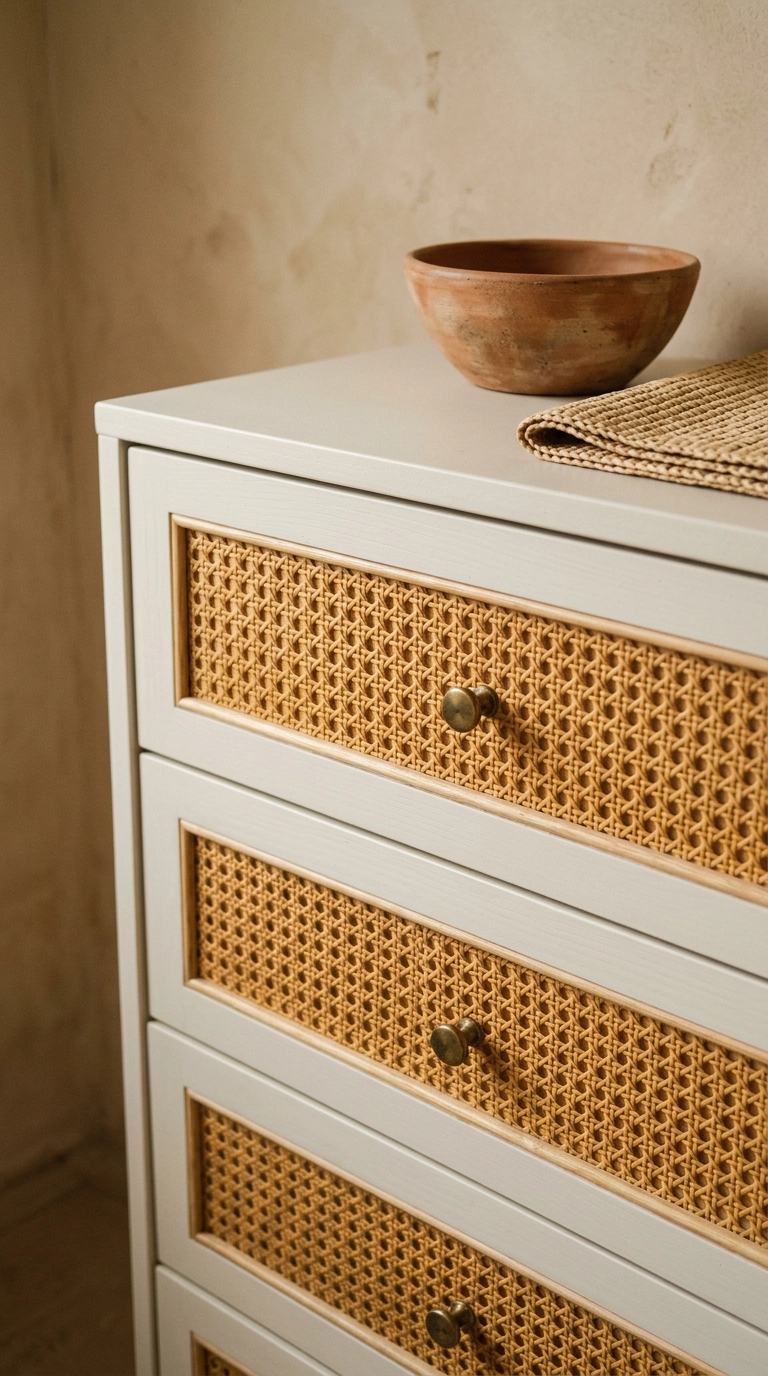
Cane webbing comes on a roll for about $30 a yard, and gluing it onto flat drawer fronts or a hollow closet door turns a $50 secondhand dresser into something that looks like a $900 one. This is my favorite Saturday project in the whole tropical playbook.
18. One Big Palm, in a Woven Basket, and That’s It
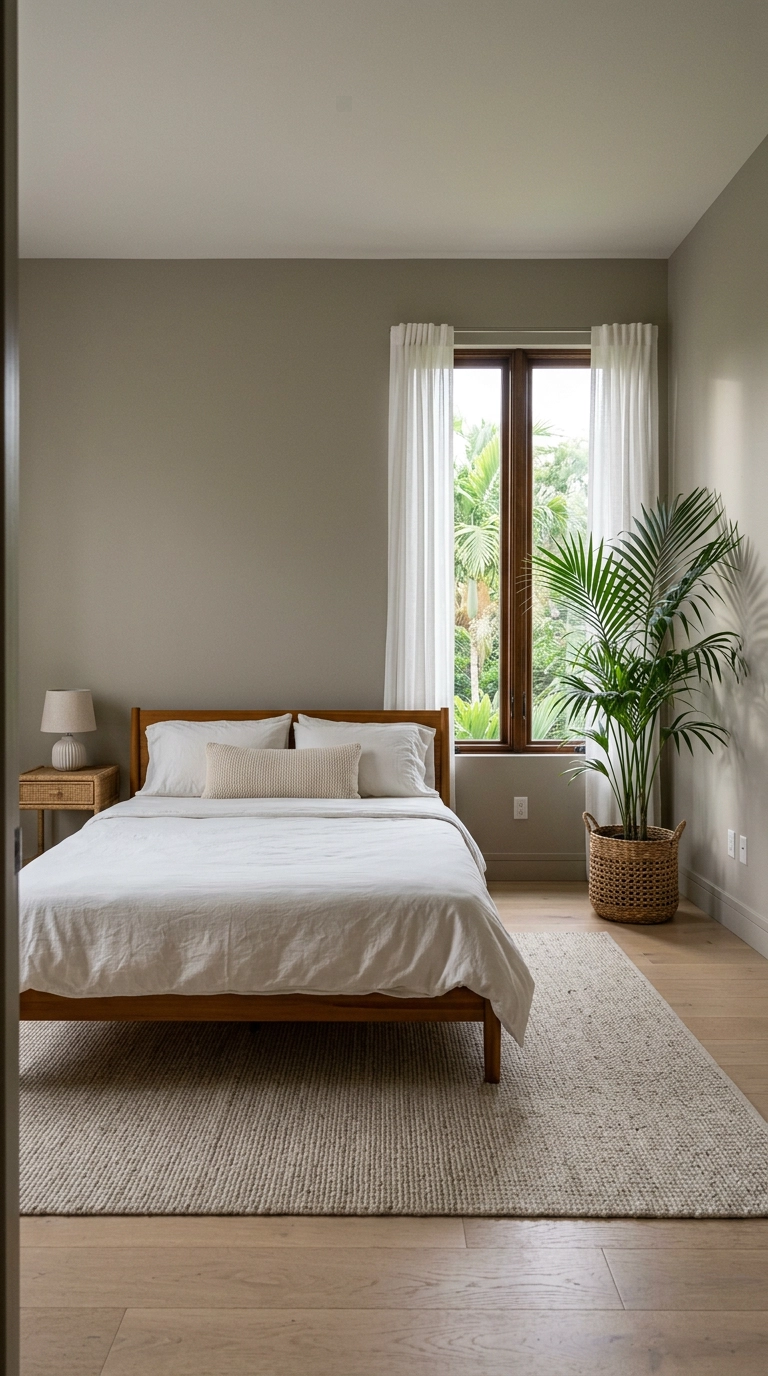
One large plant beats seven small ones every time, and in a bedroom the plant you want is a kentia palm or a bird of paradise – tall, architectural, and forgiving about indoor light. The magic is the shadow it throws on the wall in morning sun.
19. Change the Knobs and Outlet Plates in 20 Minutes
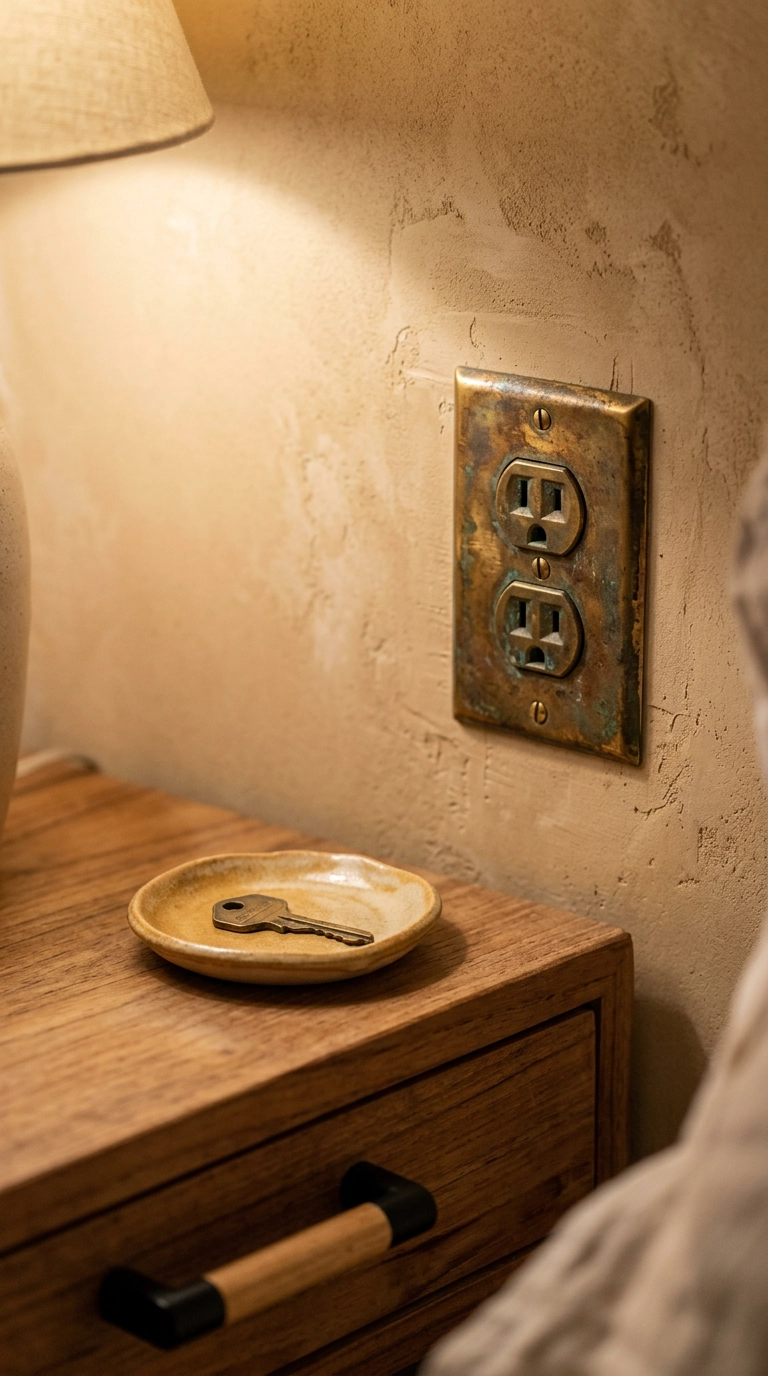
Shiny chrome and glossy white plastic are the two finishes that quietly wreck a warm room, and both are $4 fixes. Swap builder knobs for unlacquered brass, dark bronze, or turned wood, and replace the white outlet and switch plates with brass or a paint-matched color.
20. Louvered Shutter Doors on the Closet (The Splurge)
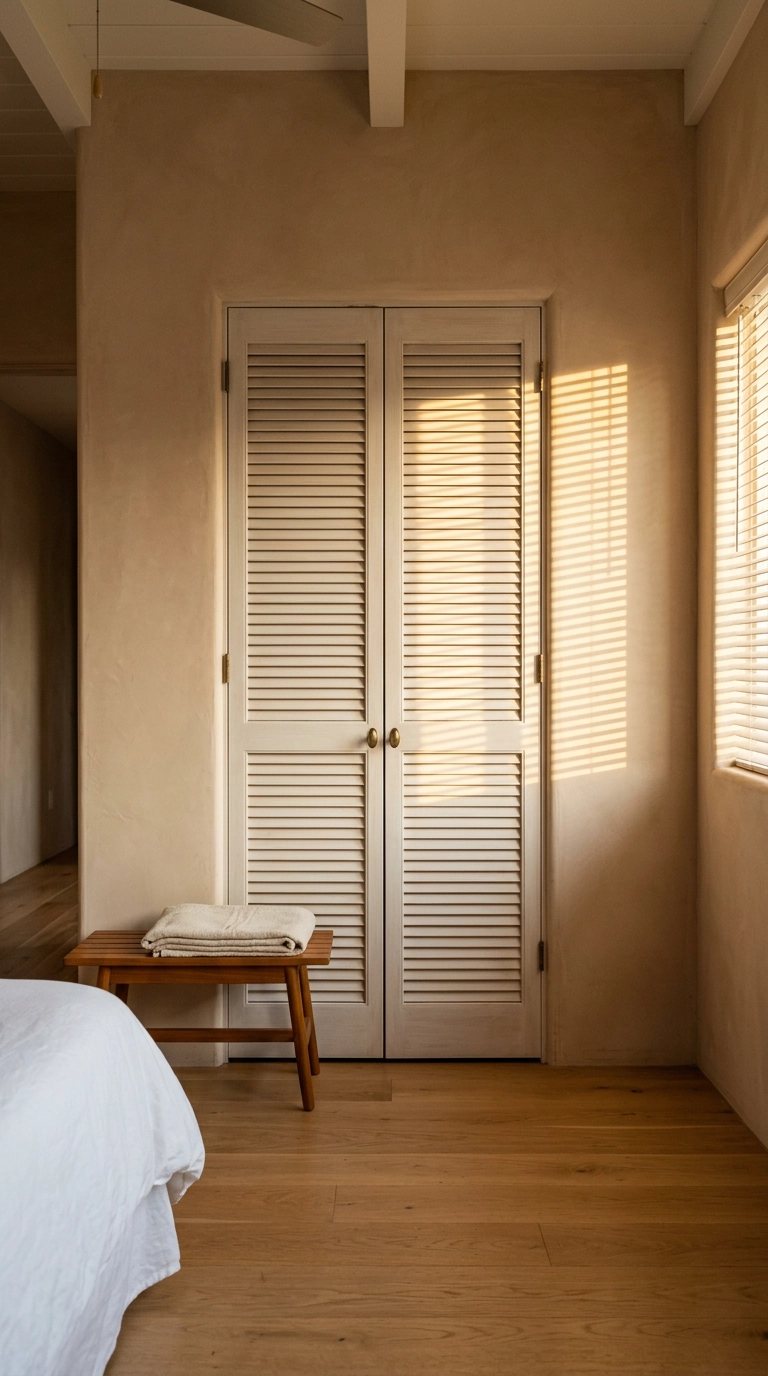
Louvered doors are the architectural move that separates a decorated tropical room from a built one. They come from real climate design – slats let closets breathe in humid air – and that honesty is why they never read as costume.
21. Unglazed Terracotta and Stoneware from the Thrift Aisle
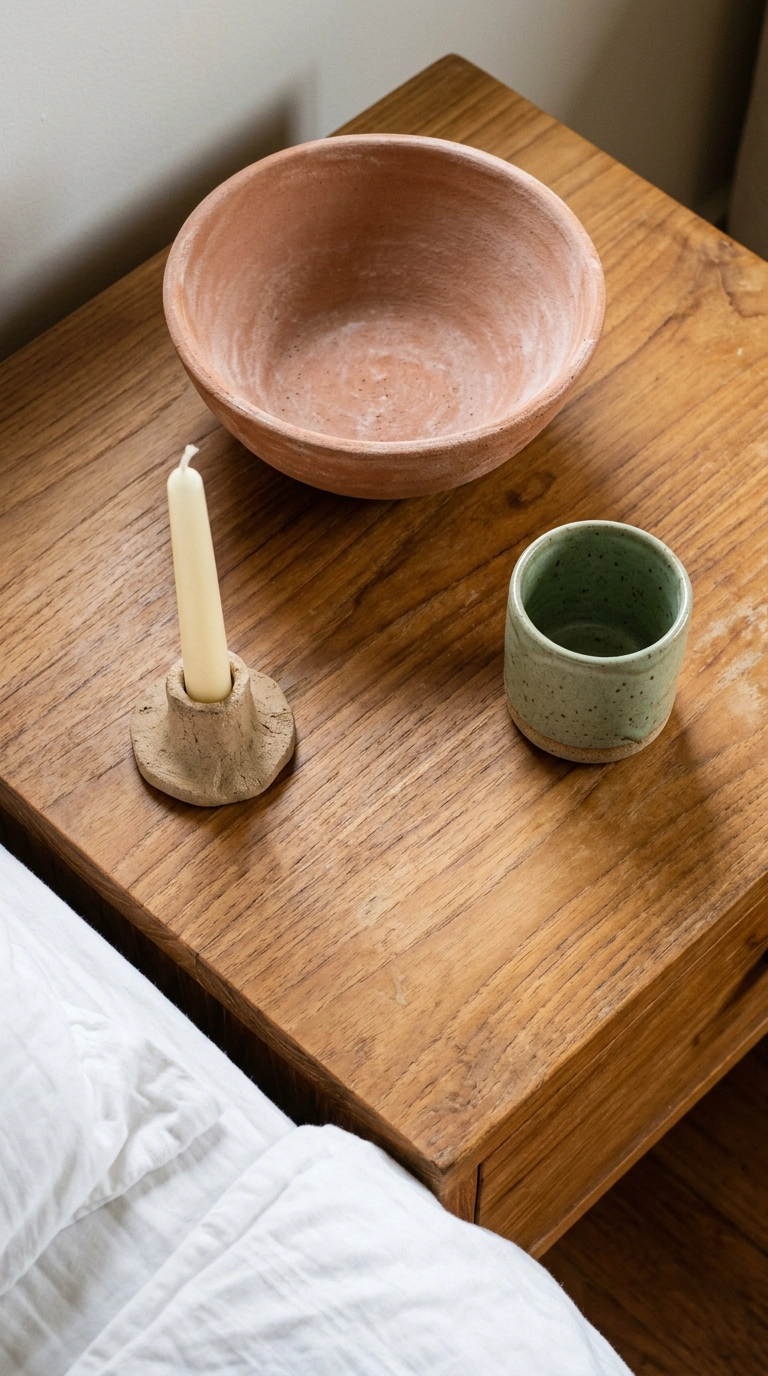
Raw unglazed clay is the material that reads warm-tropical rather than beach-coastal, and it costs almost nothing secondhand. Thrift stores are full of matte terracotta and heavy stoneware from the 70s, usually under $5 a piece.
22. Kill the Overhead Light After Sunset
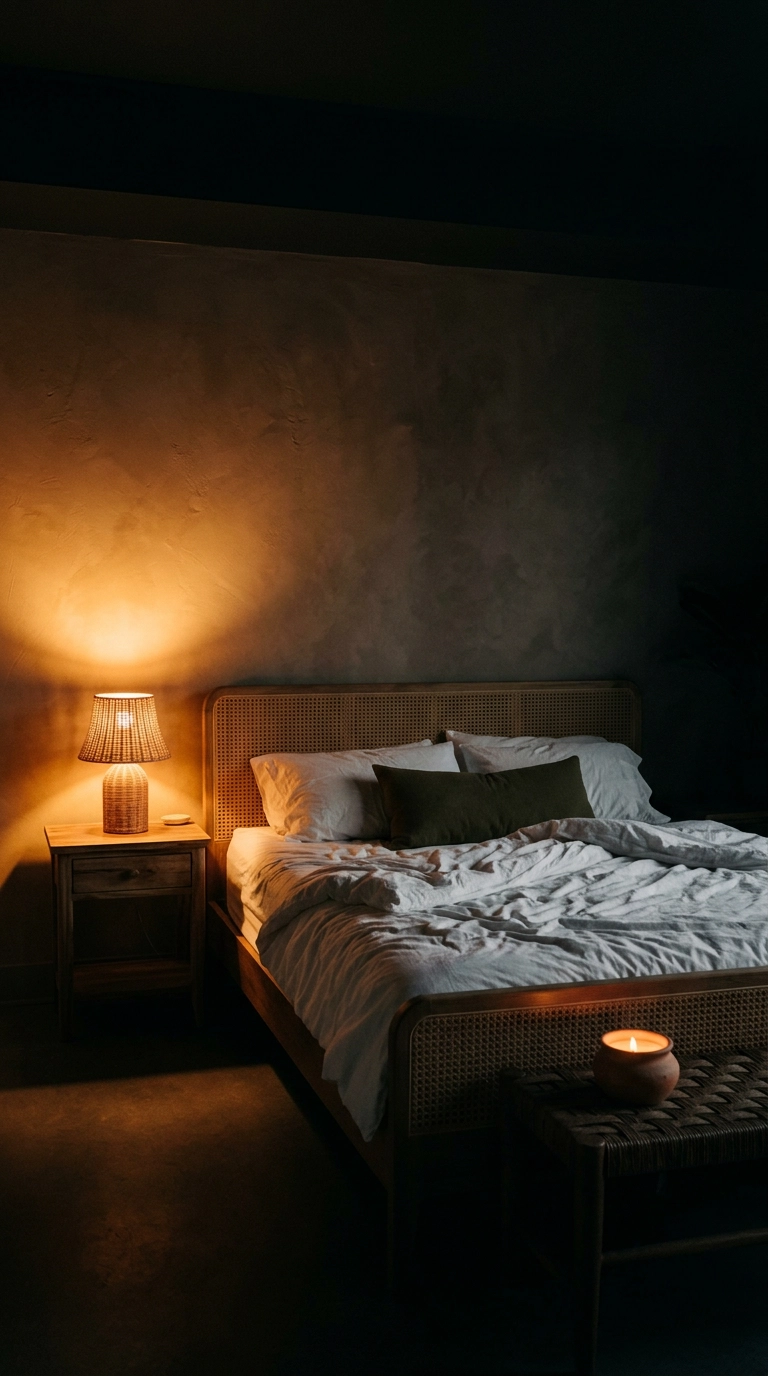
Every tropical room I’ve loved was lit from below eye level after dark. Overhead light flattens texture, and texture is the entire point of a room built from cane, plaster, and woven fiber – so put the ceiling fixture on a dimmer and mostly leave it off.
23. Leave One Wall Completely Empty
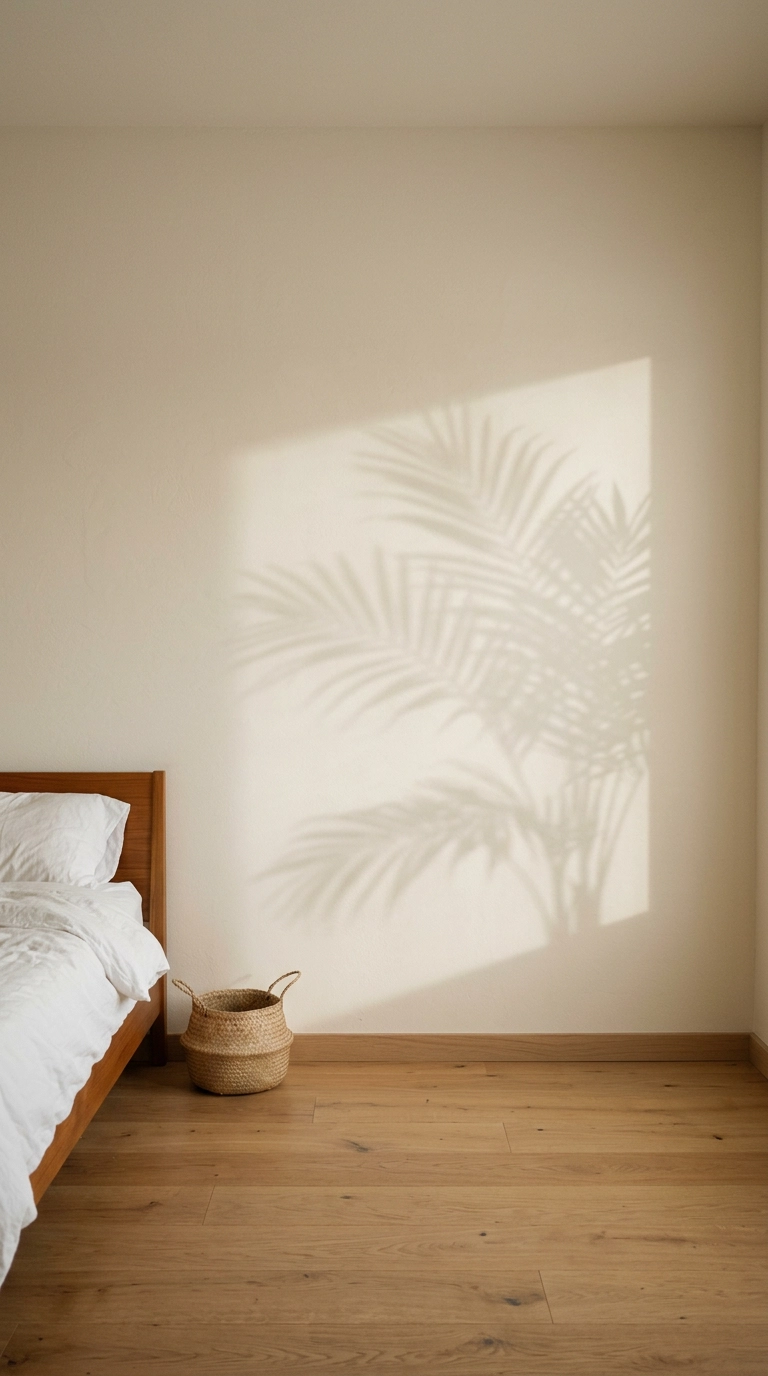
This is the hardest one and the one that makes everything else work. Pick a wall, take everything off it, and leave it alone – because a room full of texture needs somewhere for the eye to rest, and shadows moving across bare plaster are better than anything you could hang there.
Bringing the Warm Green Calm Home
If you take one thing from all of this, make it the ratio. Warm neutrals do the heavy lifting, woven wood and teak carry the texture, and green shows up three times at most – that’s the difference between the rattan headboard rooms I love and the flamingo-pillow disaster I started with a decade ago.
What I’m seeing everywhere in 2026 is the quiet version of this style winning: limewash and plaster-effect walls instead of turquoise, bamboo roman shades instead of blackout panels, one enormous kentia palm instead of a shelf of little pots. Bunny Williams has been doing warm woven rooms in Caribbean houses for years without a single palm print, and that restraint is exactly what’s finally trickling down to the rest of us. The louvered closet doors and the woven basket pendant are the two upgrades I’d budget for first, but honestly the empty wall costs nothing and changes the most.
Start with whatever’s free this weekend – move the bed for the cross breeze, pull out the extra green things, strip one wall bare – and let the bigger pieces come later as you find them secondhand. If you’d like more room-by-room breakdowns like this one, along with the sourcing finds I don’t post anywhere else, come join our weekly newsletter and I’ll send the good stuff straight to your inbox.


