
23+ Gothic Bathroom Decor Ideas that are Dramatic and Gorgeous in 2026

I’ll let you in on a secret that gets me funny looks at dinner parties: the rooms I love designing most are the ones people are scared of. And a bathroom is the perfect place to be brave — it’s a private stage, so you get all the drama of a gothic interior without having to eat dinner under it every night. Gothic decor is romantic, layered, and unapologetically moody — think candlelight, dark stone, arched mirrors, and wrought iron — and these 23 gothic bathroom decor ideas cover everything from 20-minute swaps to the two splurges genuinely worth saving for.
Gothic Bathroom Decor Ideas
1. Black Walls Done Right (With a Finish That Can Handle Real Life)
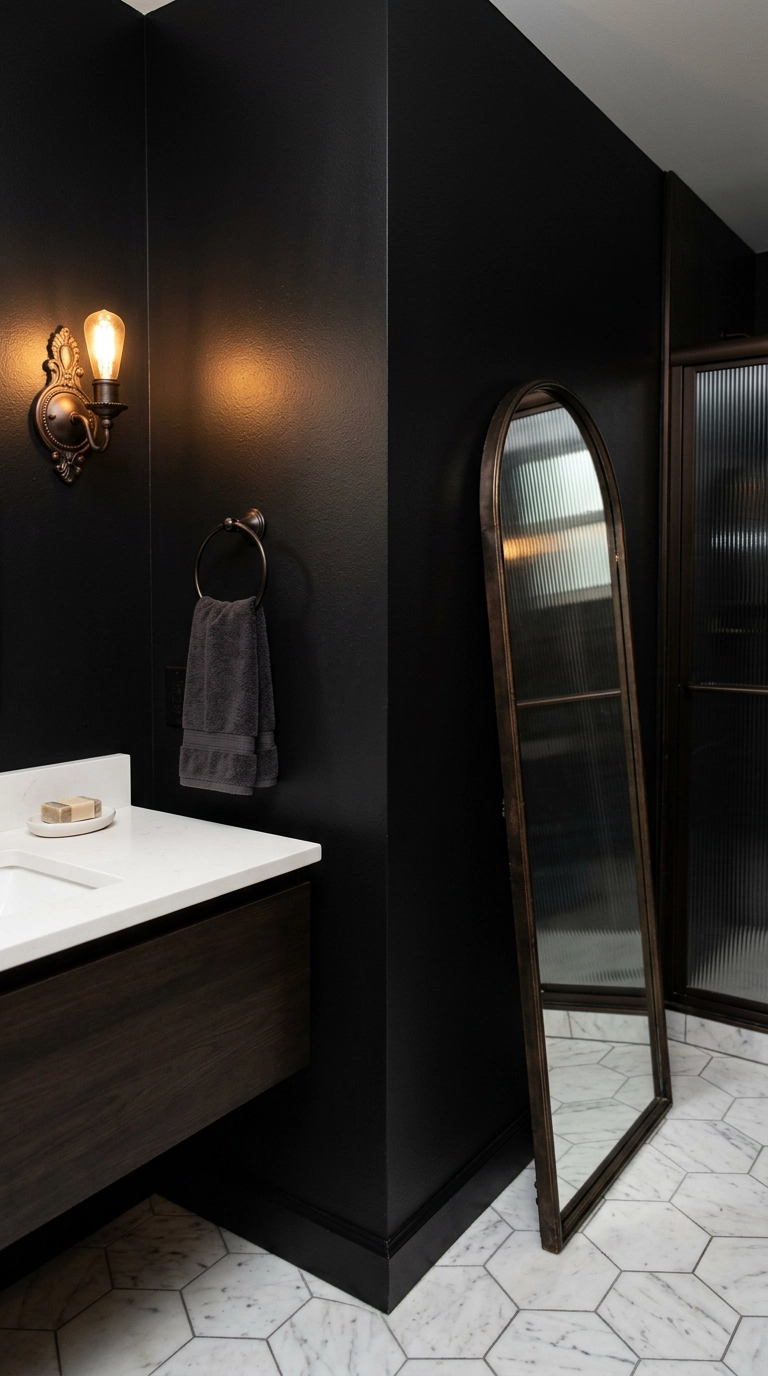
Here’s the thing nobody tells you about black bathroom walls: the color isn’t the risky part, the finish is. Use a satin or eggshell black — Sherwin-Williams Tricorn Black is my default — because flat matte paint and hot steam are sworn enemies, and you need walls you can actually wipe down. Pair the black with warm metals and at least one big mirror so the room reads moody instead of cavernous. Renters, a peel-and-stick black wall covering gets you 80% of the drama with zero paint commitment. In a windowless powder room, keep black to one wall and let the mirror do the heavy lifting.
2. Color Drench in Ink or Charcoal-Plum Instead of Pure Black
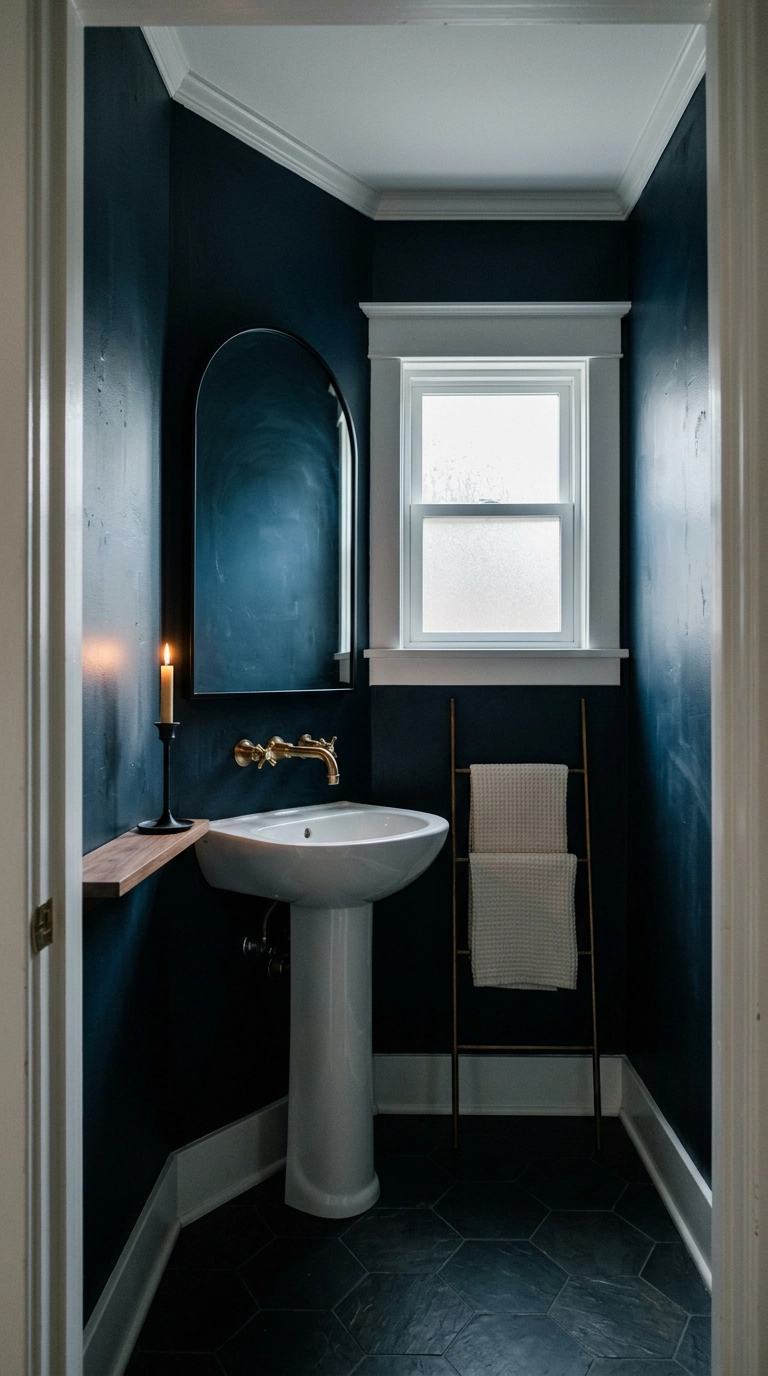
Pure black can read flat; near-blacks keep the drama and add depth. Color drenching — painting walls, trim, and ceiling all in the same shade — erases the visual breaks that make a small room feel smaller, so the room wraps around you like a velvet-lined box. My two favorite drench shades for a gothic bathroom are a deep ink navy like Sherwin-Williams Inkwell and a charcoal-plum, because both throw warm color back into candlelight instead of swallowing it. Take the color all the way to the ceiling — stopping at the trim line breaks the spell. It’s a weekend project, two coats, and it works hardest in the smallest rooms.
3. An Arched Mirror Over the Sink (Gothic’s Greatest Hits)
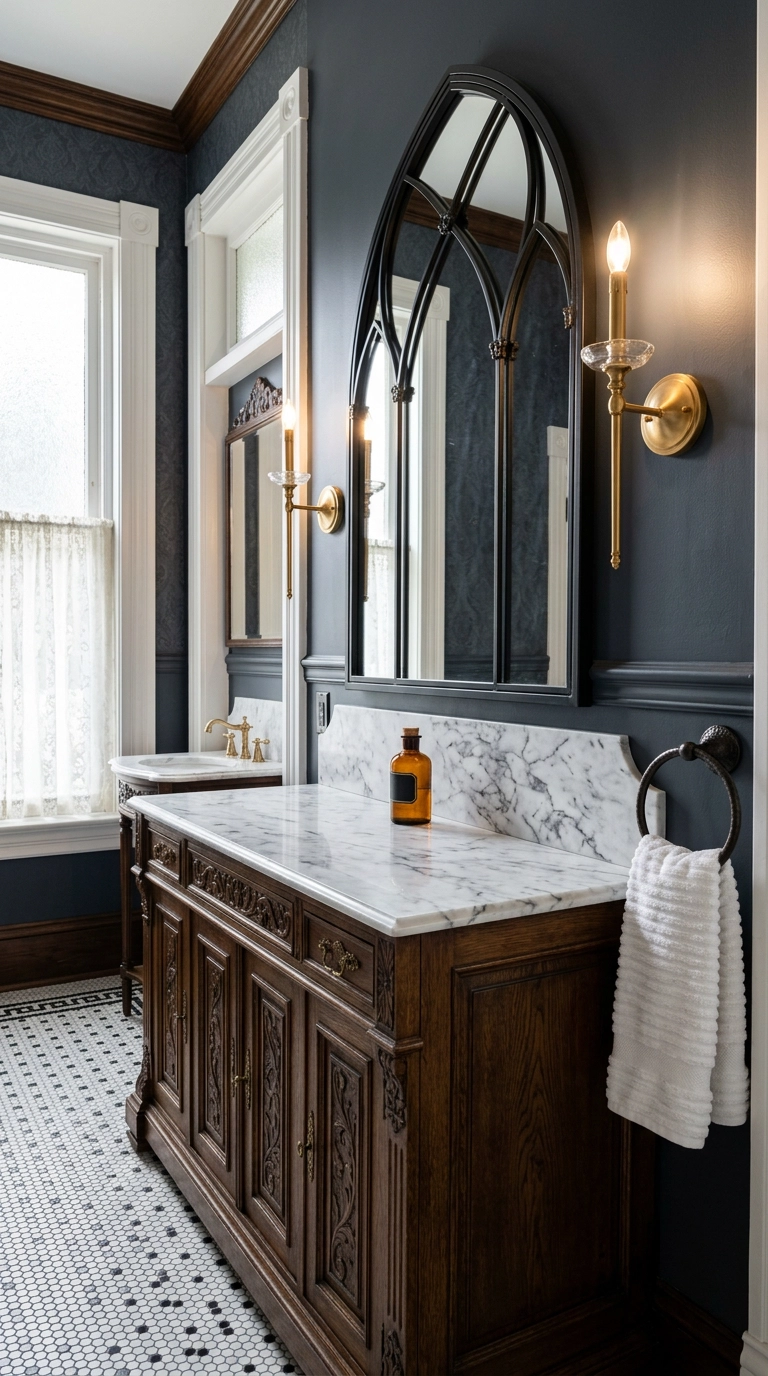
The arch is the most recognizable gothic silhouette there is, and one arched mirror gives you that look in a single piece. The rounded top draws the eye up, making an 8-foot ceiling feel taller, and it softens all the hard angles of a boxy vanity. If your mirror is flush-mounted, a weekend DIY is a dark, gently distressed wooden frame built around it — but the faster win is simply swapping your round or rectangle mirror for an arched one, which is a 20-minute job you can do with a renter-friendly adhesive mount. Best placement rule: the arch should clear the faucet by at least six inches so it reads as a deliberate shape, not a cramped accident.
4. Oxblood Walls for Warmth Without Losing the Drama
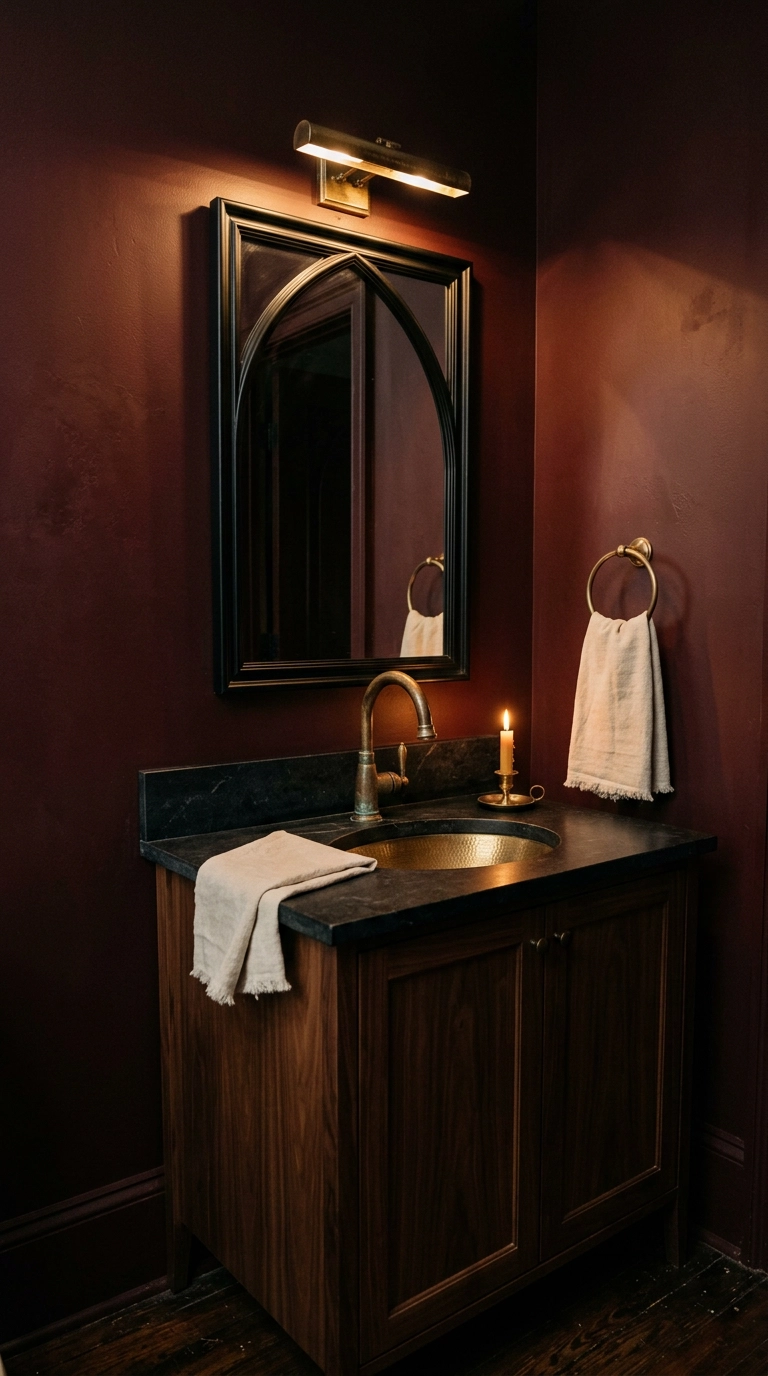
Oxblood is my answer for anyone who wants gothic but panics at black. It’s a deep, blood-red brown that photographs almost black at night and glows warm under lamplight, so the room shifts mood with the hour — Farrow & Ball Preference Red is the classic here. Red-based darks have more visual weight than cool ones, meaning they advance toward you and make a cavernous bathroom feel intimate rather than empty. This is the shade I’d pick for a north-facing bathroom where cool grays go dreary and lifeless. One gallon, one weekend.
5. Black-and-White Checkerboard Floors
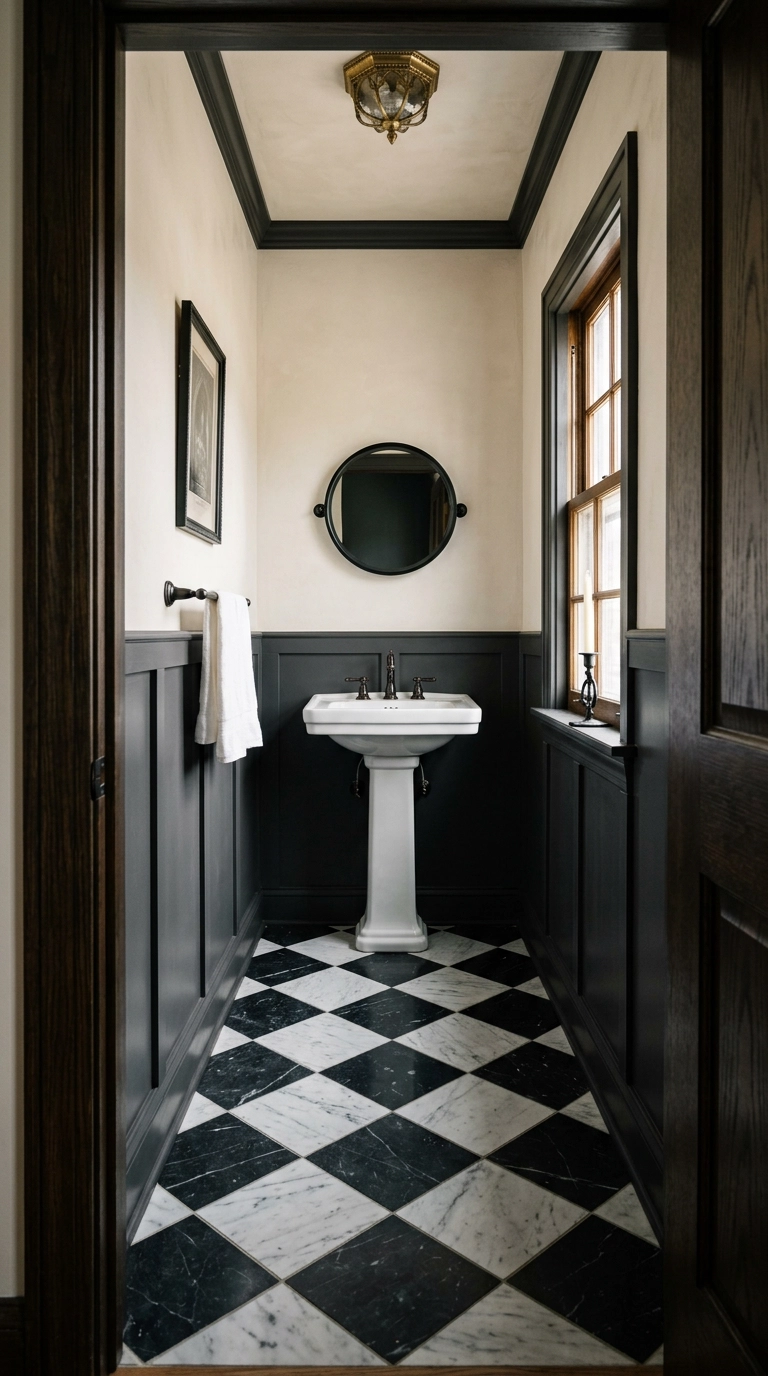
Checkerboard is the floor pattern that makes a bathroom feel like it has been there for a hundred years, which is exactly the historic-romantic note gothic needs. Lay it on the diagonal in a narrow bathroom — the diagonal lines pull your eye corner to corner, so the room reads wider than its actual width. Real marble tile is a splurge and porcelain look-alikes are genuinely convincing now, but the cheapest real version is vinyl checkerboard flooring, which comes as peel-and-stick planks that renters can pull up at move-out. Keep the squares 8 to 12 inches; anything smaller turns into visual static in a small room.
6. Candlestick Wall Sconces Instead of a Vanity Light Bar
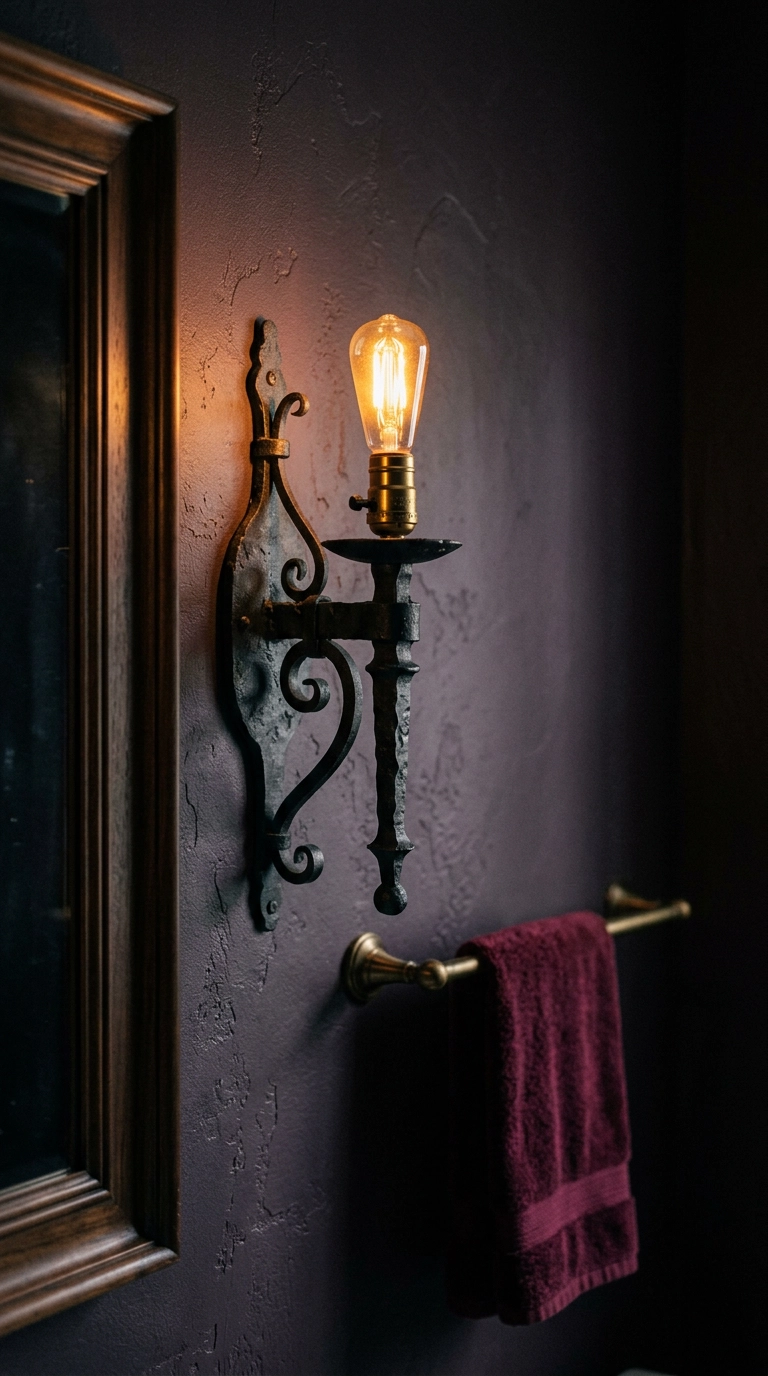
If you change one thing in this whole article, make it the light. That builder-grade bar of four bulbs above the mirror throws flat, downward light that kills every shadow — and shadows are the entire point of a gothic room. Swap it for a pair of candlestick-style sconces mounted at eye level on either side of the mirror, about 36 to 40 inches apart, which also happens to be the most flattering lighting for your face. It’s an electrician’s afternoon or a confident DIY, and it’s the single highest-impact change on this list.
7. Dim Everything to Candlelight Quality
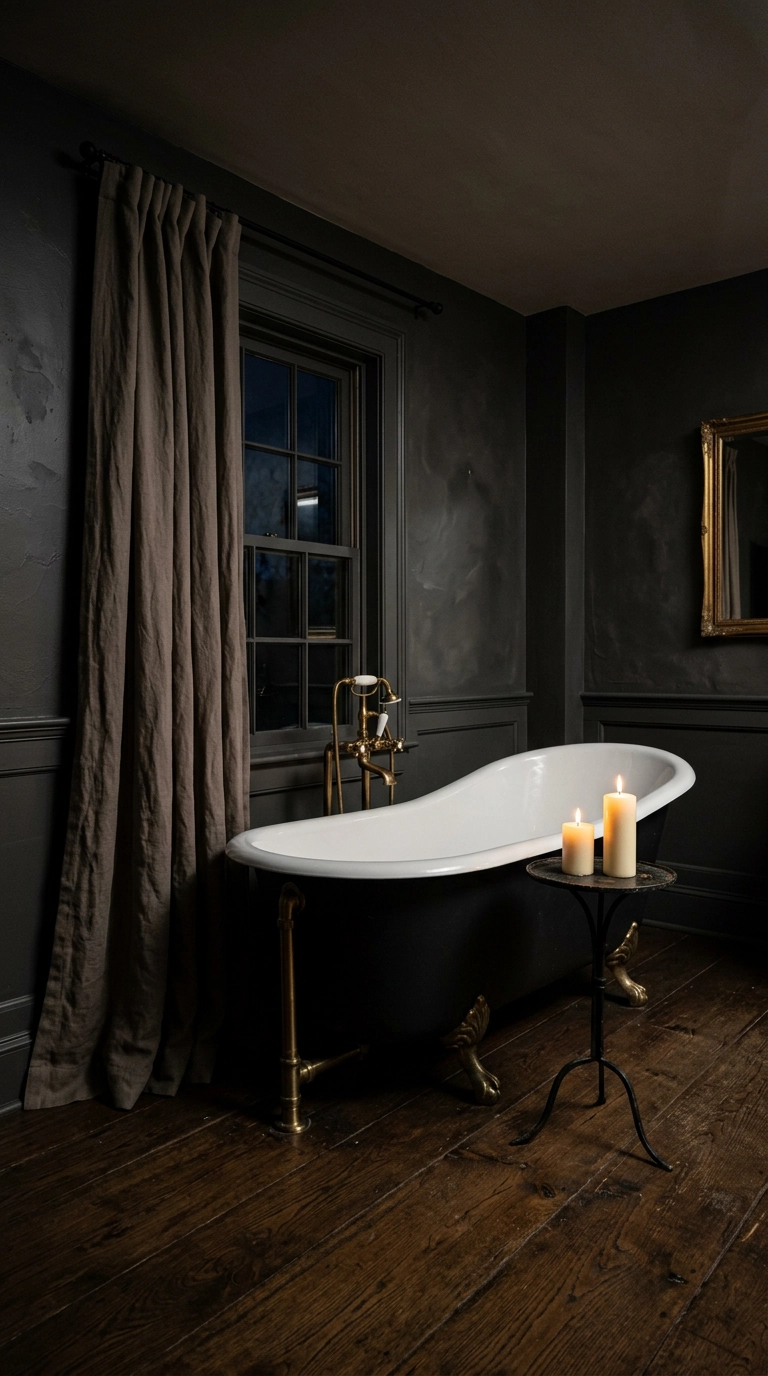
Gothic lives or dies on light level, and most bathrooms are lit like a dentist’s office. Put every fixture on a dimmer — a smart dimmer switch runs about the price of two lattes and installs in 20 minutes with the breaker off — and swap to 2200K to 2700K warm bulbs so the glow reads like flame, not fluorescent. Renters, plug-in dimmer cords and warm smart bulbs get you there without touching the wiring. The reason this works: warm, low light makes dark surfaces look like velvet instead of like a cave, and it’s the cheapest luxury in the whole room.
8. Splurge on a Honed Dark Marble Vanity Slab
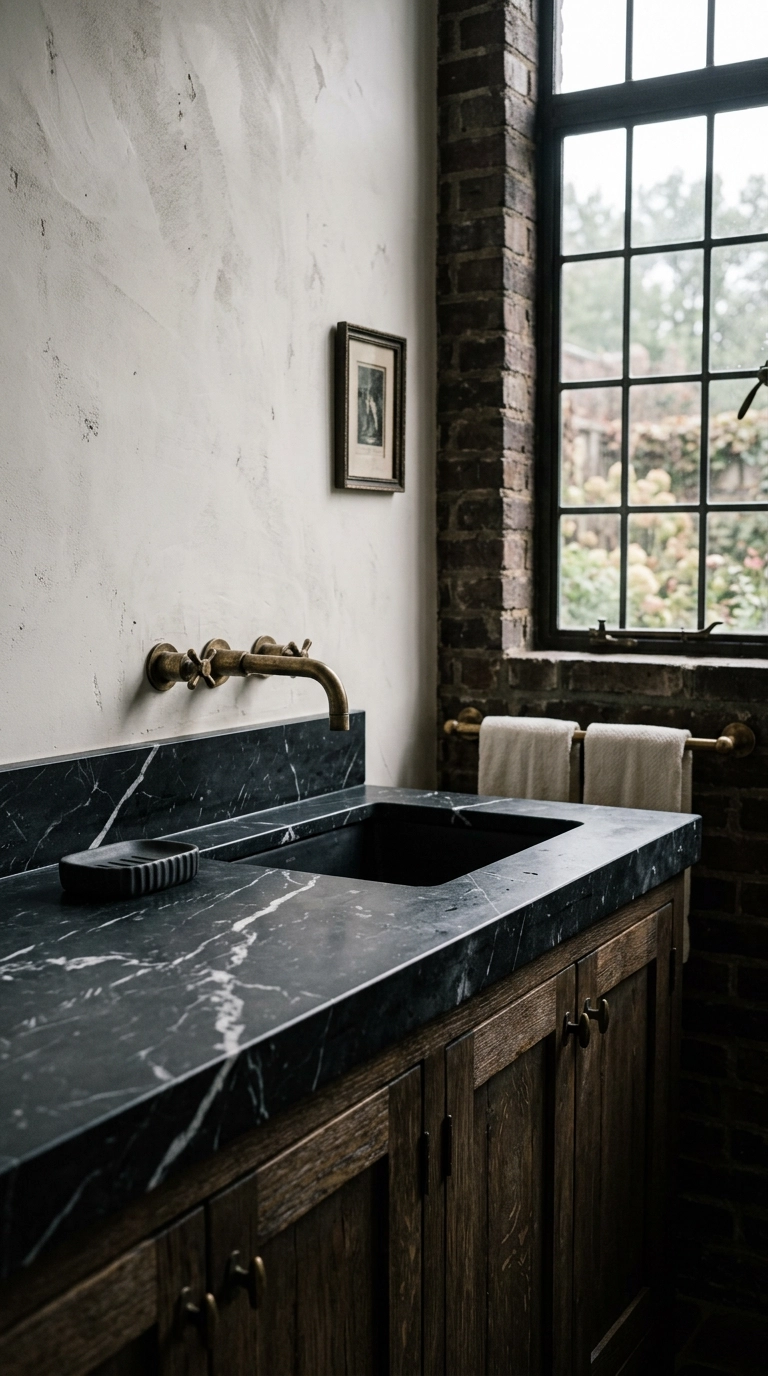
This is splurge number one, and I’d spend here before anywhere else. A honed — meaning matte, not polished — black marble slab with dramatic white veining is the single most expensive-looking surface you can put in a gothic bathroom, and a small vanity top uses so little material that it’s the rare place where real stone is genuinely attainable. Honed matters for two reasons: it kills glare so the stone reads deep and velvety, and it hides water spots that would show constantly on a polished black surface. Budget for sealing it once a year, and know that marble does etch — a bottle of nail polish remover will leave a mark, and I’d argue that patina is part of the romance.
9. Wrought Iron Hardware on Every Hook and Bar
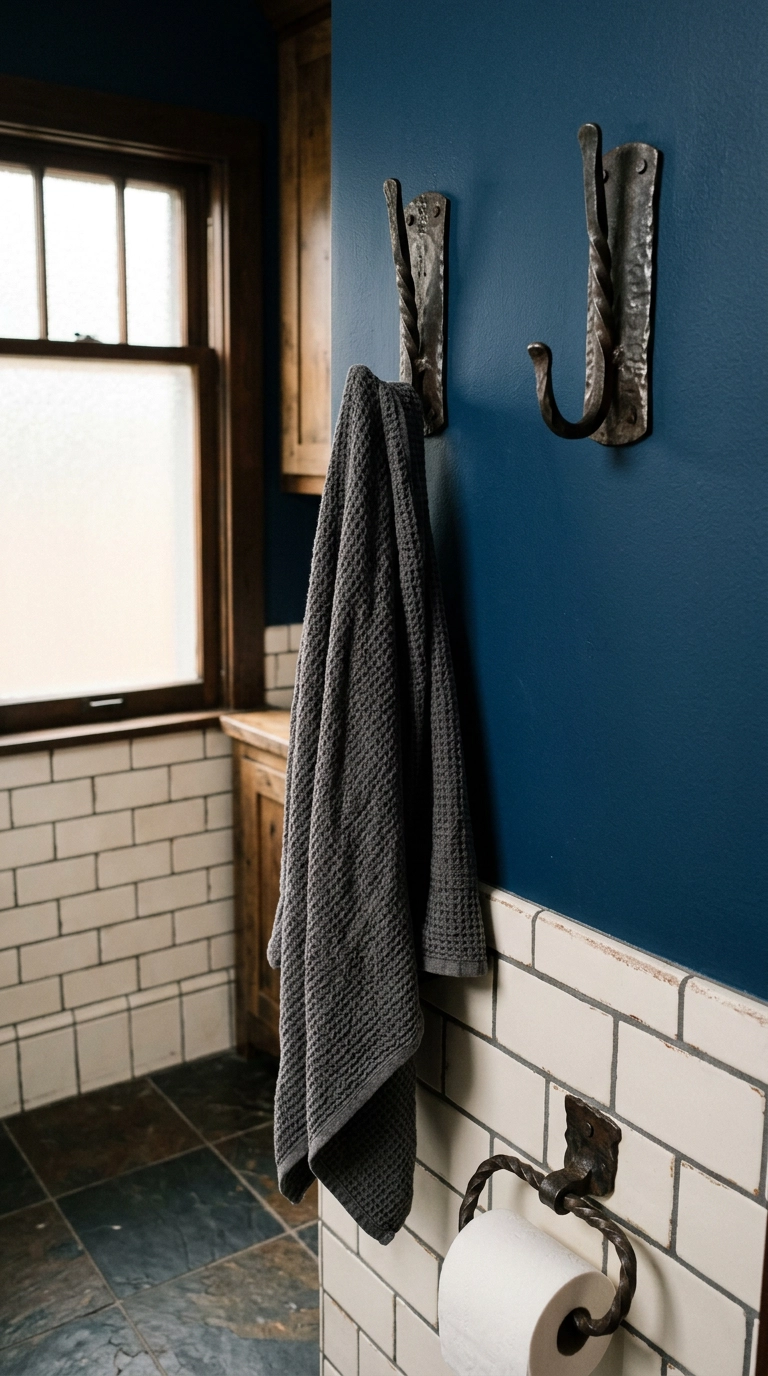
Hardware is the jewelry of a bathroom, and swapping shiny chrome hooks for hand-forged wrought iron is the fastest gothic upgrade under $40. Look for pieces with visible hammer marks and a twisted or scrolled stem — the irregularity is what makes iron read handmade and old rather than mass-produced. This is a 20-minute swap with a screwdriver, and renters can use the same hooks in existing screw holes or go with heavy-duty adhesive versions rated for a wet towel. Match your hooks, towel bar, and toilet paper holder in the same finish; mismatched metals in a room this small read as accidental instead of collected.
10. Oil-Rubbed Bronze Fixtures for Instant Age
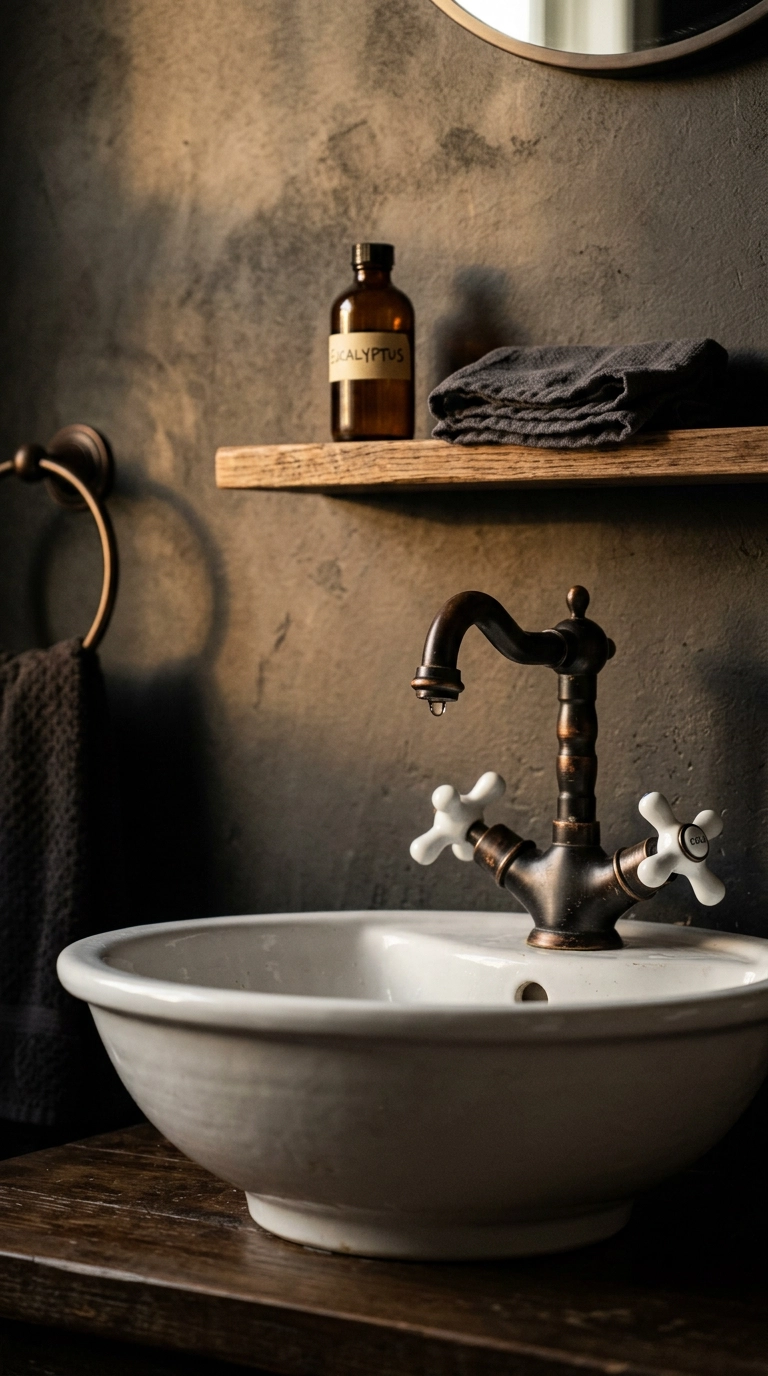
Oil-rubbed bronze is nearly black with warm brown undertones, and it’s the finish that makes a brand-new faucet look like it has been in the house since 1890. It wears in beautifully — the high points rub down to copper over the years, which is a feature, not a defect. A faucet swap is a genuine weekend DIY if you’re comfortable under a sink, but the no-plumbing version is swapping just the visible accessories: towel ring, robe hook, cabinet knobs, shower curtain rings. Skip it if your bathroom is very dim and very small, though, because dark fixtures on dark walls can disappear entirely — that’s when I’d use brass instead.
11. Antique Brass as the Counterpoint to Black
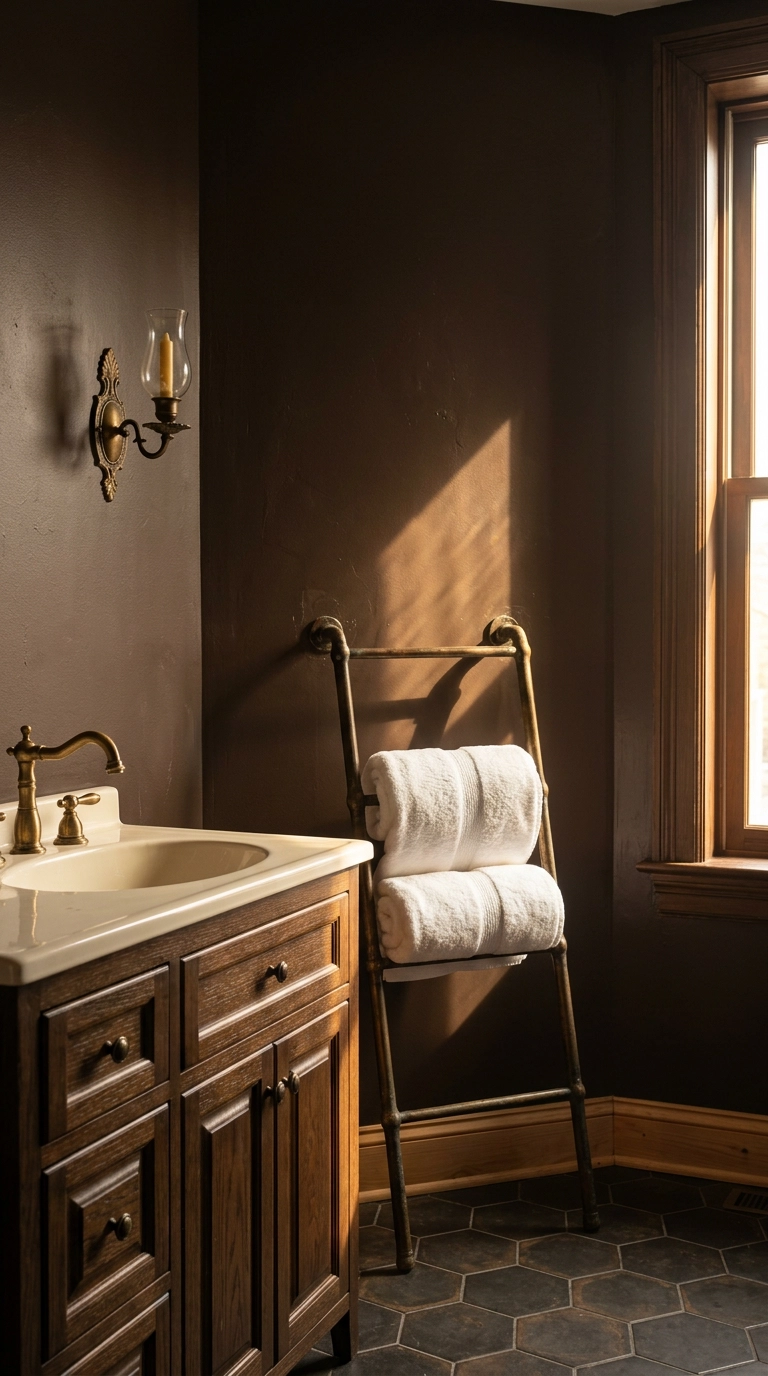
If oil-rubbed bronze is the quiet route, antique brass is the statement. Brass catches light the way candlelit rooms love, and it’s the historic metal of the gothic era — think cathedral candle holders and locks. The trick is to buy it aged: genuine antique brass with tarnish and worn edges, not shiny polished brass that reads 1970s. You can fake the age honestly by letting real unlacquered brass patina naturally, which takes a year and is free. This is an accent-metal strategy, so keep brass to hardware, a small shelf, and one accessory, and let the walls stay dark and quiet.
12. Gothic Pattern Wallpaper on One Focal Wall
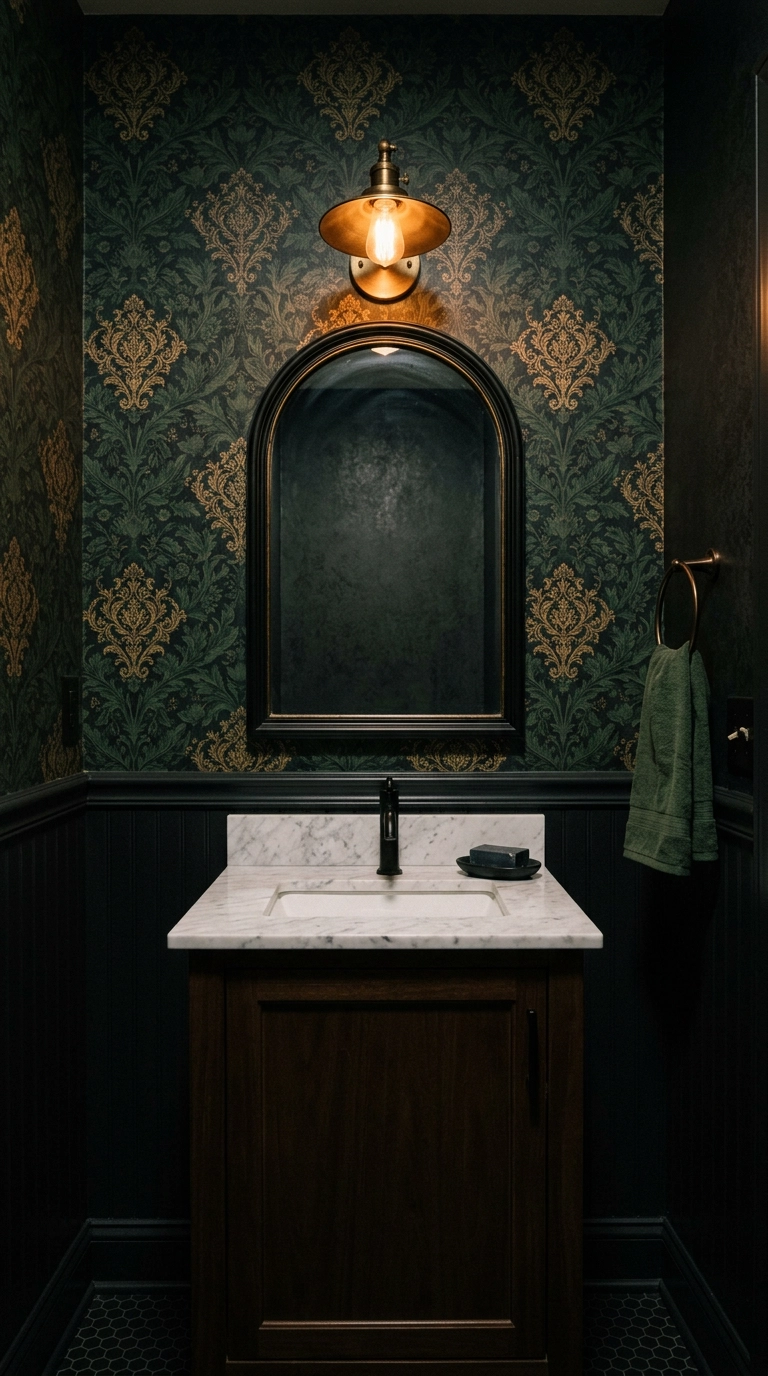
A single wall of dark, dense gothic wallpaper gives you all the pattern drama with none of the overwhelm, and it’s the fastest way to prove you’re doing gothic and not just dark. Think damask, flocked velvets, or deep botanical repeats in forest green, oxblood, or midnight blue, and keep the pattern on one wall — the other walls stay solid so the paper stays the hero. This is the place to go removable, too: today’s peel-and-stick wallpaper is genuinely good, survives bathroom humidity if the wall is prepped right, and comes off clean for renters. In a tiny powder room, paper the wall facing the door so it’s the first thing anyone sees.
13. Dark Grout Turns Any Tile Gothic
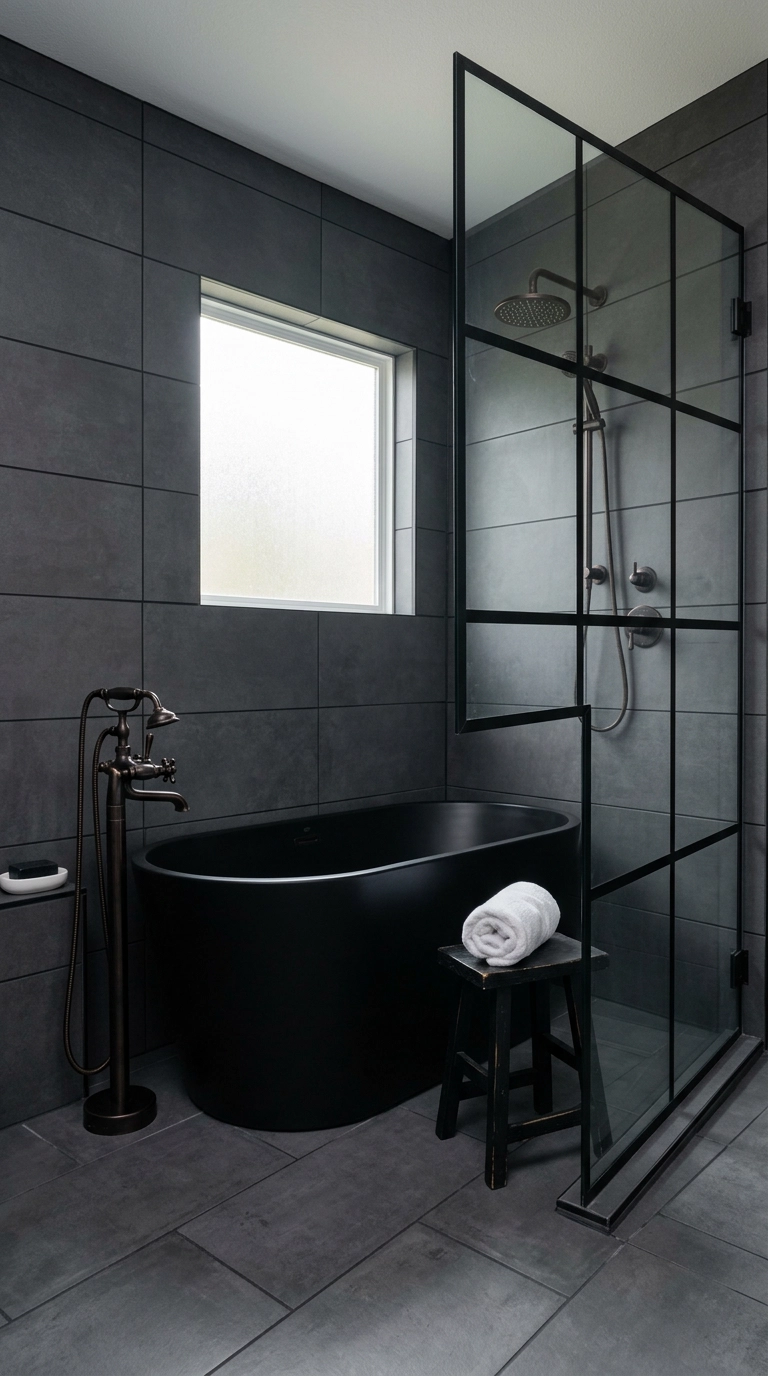
You can gothic-fy tile you already have for the price of a $15 tube of grout. Dark grout on white or light tile draws out the grid and gives it that crisp, etched, chapel-window look; on gray or black tile it makes the whole surface read as one continuous dark stone. If you’re re-grouting a wall, match the grout shade to the tile so the grid recedes instead of shouting, or go a few shades darker for contrast. Renters, pick up a grout paint pen instead — it’s a weekend’s worth of careful tracing and it washes off with the right stripper at move-out. Just know dark grout demands more cleaning than light; it hides dirt longer but shows soap scum whiter.
14. An Ornate Vintage Vanity Rescued From a Thrift Store
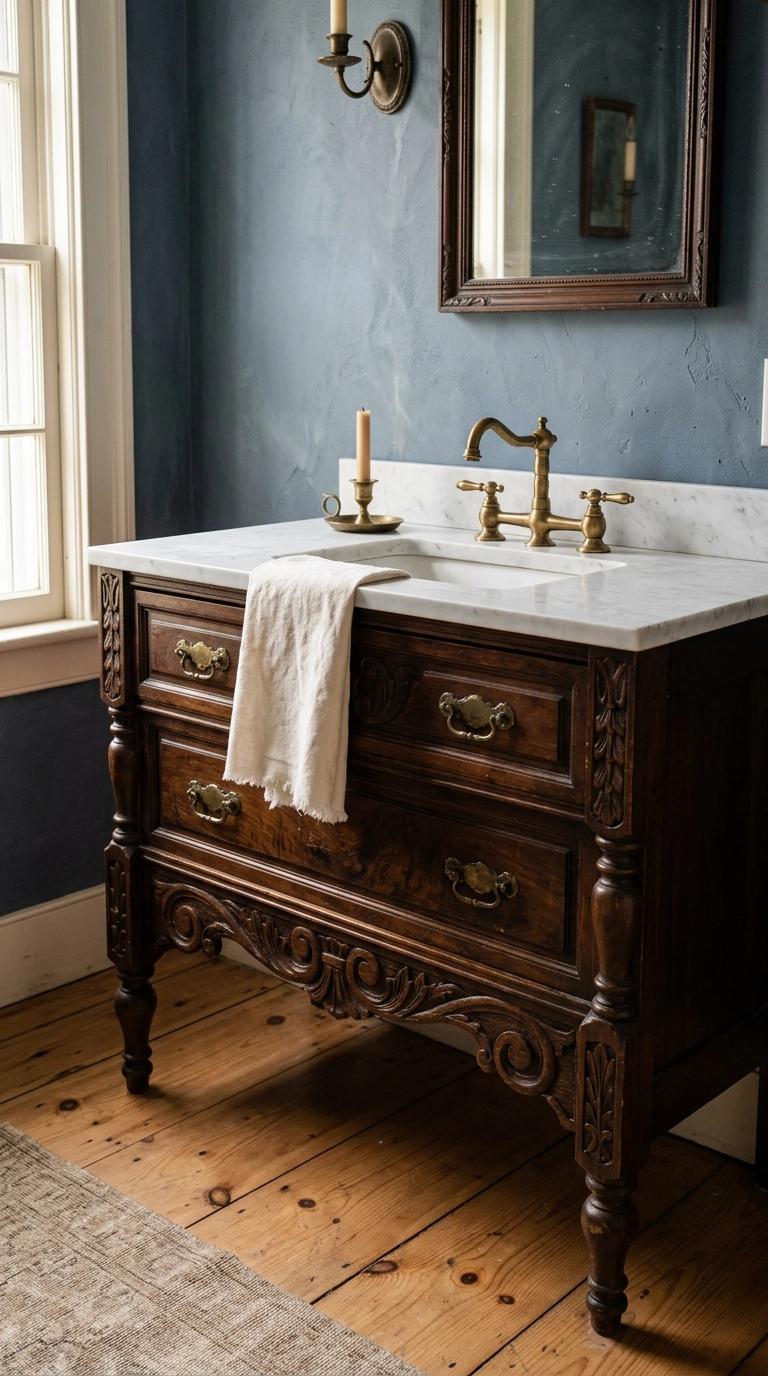
Nothing in a big-box store will ever look as gothic as a genuinely old piece of furniture, and a carved Victorian dresser converted into a vanity is my favorite move in this entire style. Look for turned legs, scrolled aprons, and dark walnut or mahogany — Facebook Marketplace and estate sales are full of these for less than a builder vanity costs. Plan for a real weekend project: you’ll need to cut the top for a sink, seal the wood against water, and possibly reroute the drain around a drawer. If you rent or don’t want to cut into anything, a vessel sink sits on top of an unmodified dresser with only a hole for the drain, and a marble remnant protects the surface.
15. A Stained-Glass Window Panel for Colored Light
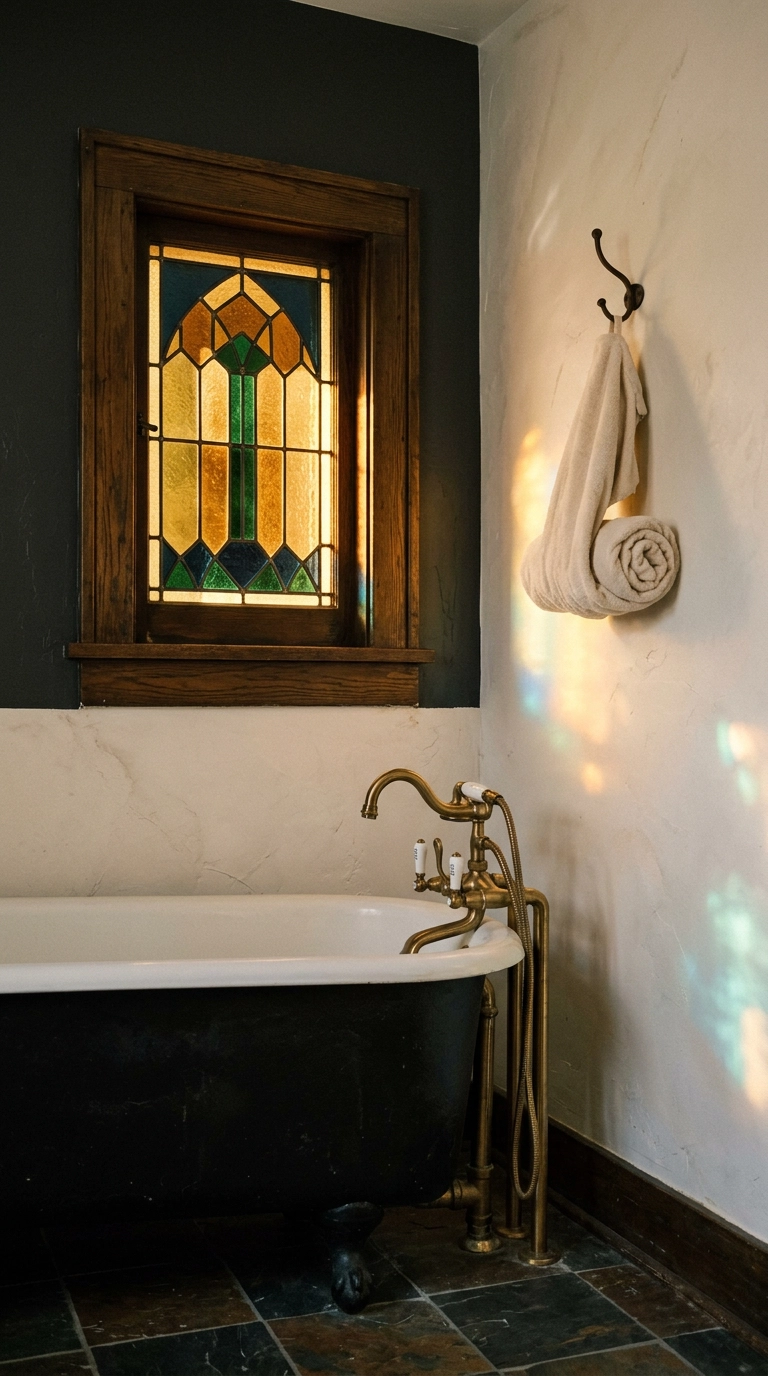
Colored light is the most under-used gothic tool there is. A small leaded-glass panel turns afternoon sun into shifting patches of amber and green on your wall, and it solves bathroom privacy at the same time, which is a rare two-for-one. Antique salvage yards sell old panels for less than you’d expect, and you can hang one on chain in front of an existing window rather than replacing the glass — that’s the renter-safe version, no demo required. If you want the effect for under $30, decorative stained-glass window film gets surprisingly close, especially on a window that gets direct sun. Keep the palette to two or three glass colors so it stays historic rather than carnival.
16. Heavy Velvet and Linen Textiles in a Wet Room
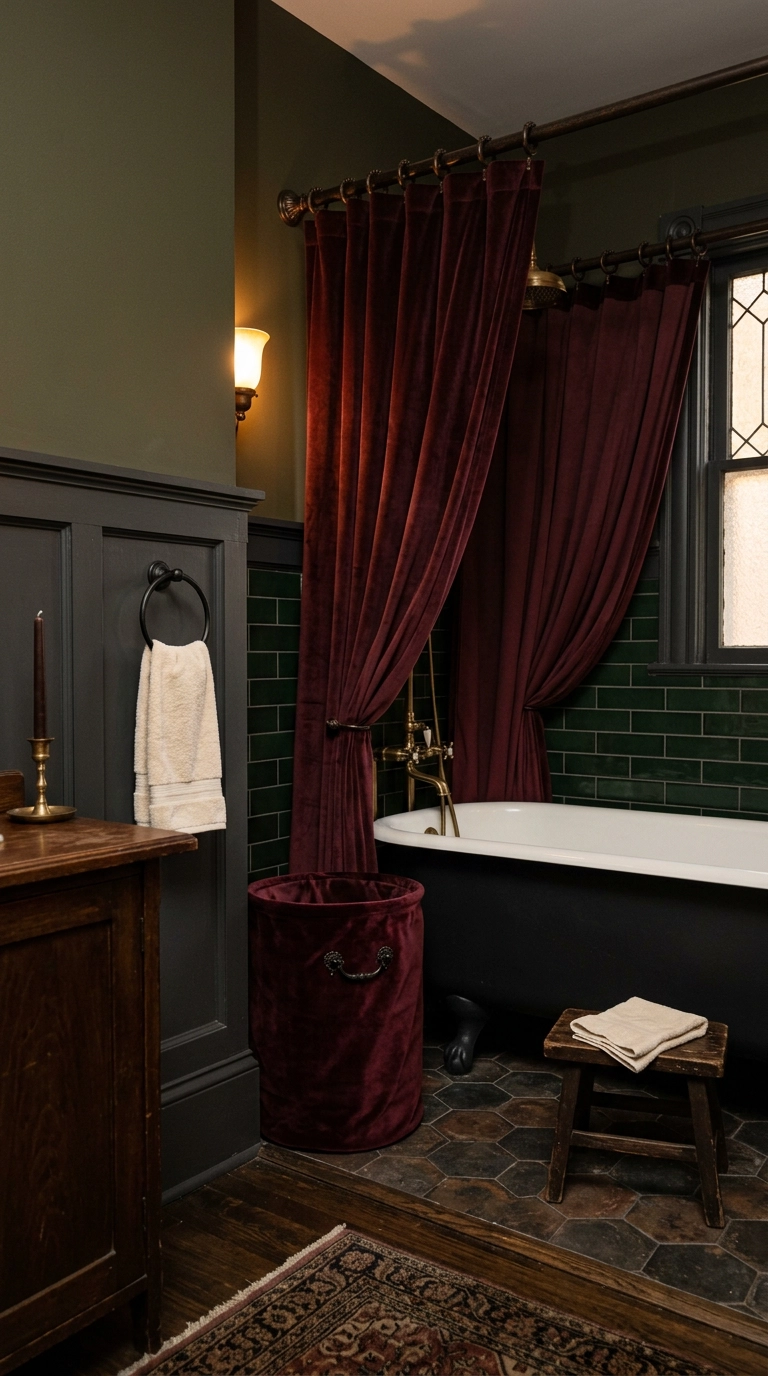
Yes, velvet in a bathroom — hear me out. A velvet shower curtain is treated with the same water-repellent finish as your rain jacket, it hides water spots better than any cotton shower curtain liner does, and it gives the room a gravity that nothing else can match. Run it on a dark bronze rod and add a clear vinyl liner behind it so the velvet never touches the water. Bathroom-grade velvet in a 12-foot length runs about the price of a good dinner out, so it’s an affordable way to test the gothic waters. Dried splashes just shake off; just hang it fully open after a shower so it airs out.
17. Arched Niche Shelves in the Shower
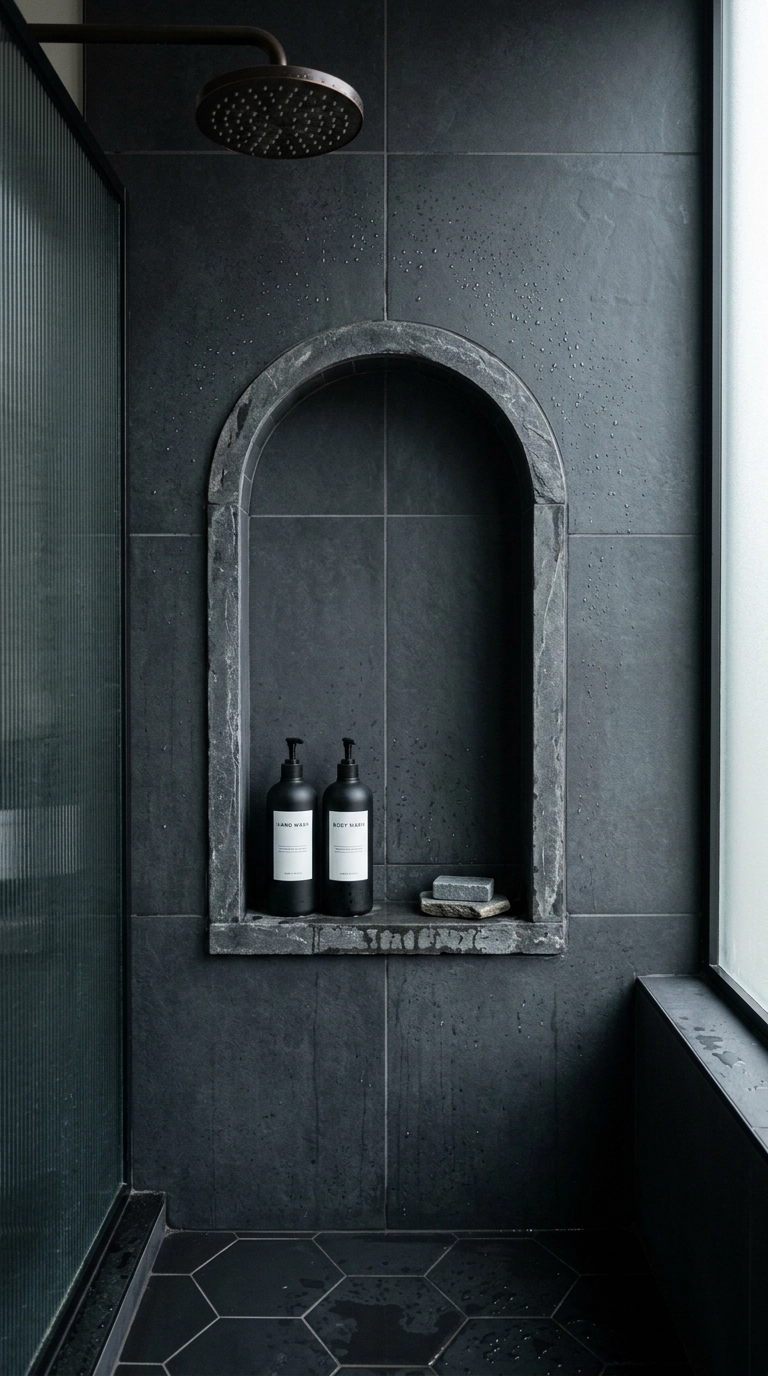
The gothic arch shows up in the most unexpected places if you let it. An arched recessed niche in the shower replaces the plastic caddy entirely — no rusting shelves, no suction cups falling at midnight — and the arch gives a square shower corner the same cathedral energy as the mirror on the wall. This one is a tile project, so it belongs on the list for a remodel or a serious weekend with a wet saw. The no-demo shortcut: a freestanding arched shelf in the corner of the shower does most of the visual work, and a resin or metal one is fine because it lives behind a curtain. Keep the niche styling to two or three bottles so the negative space stays part of the design.
18. Skip Overhead Lights Entirely and Go Layer by Layer
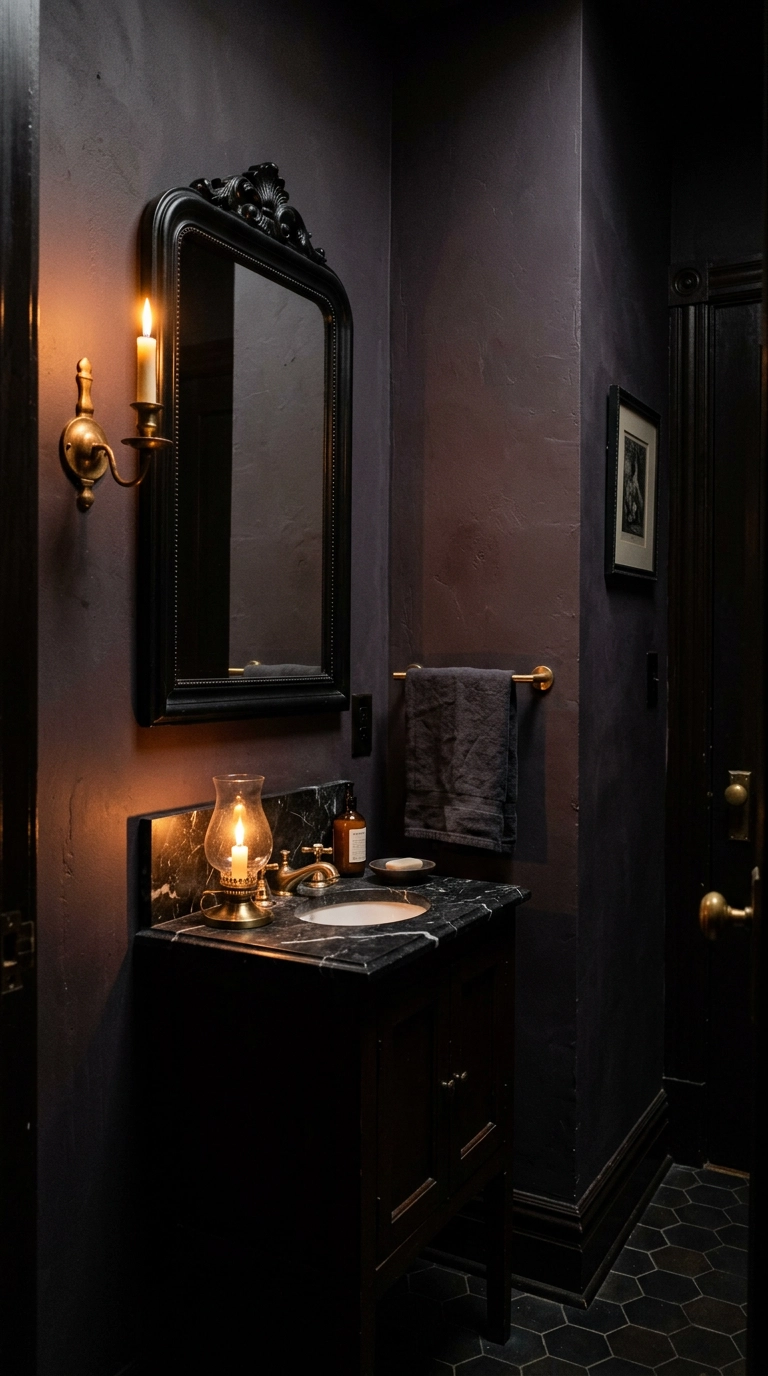
Here’s the controversial one: in a small gothic powder room, the best overhead light is none at all. Overhead light flattens everything from above and turns dark rooms flat and dingy, but eye-level and low light makes every surface glow. Layer it the way you’d light a dining room — a sconce or two at mirror height, one table lamp on the counter, and a real candle for the final layer — then skip the ceiling fixture except for cleaning. If your only switch controls an overhead light, a smart bulb with a warm dim setting gets you 90% of the way there for $15 and no wiring.
19. Keep a Small Dark Bathroom From Feeling Like a Closet
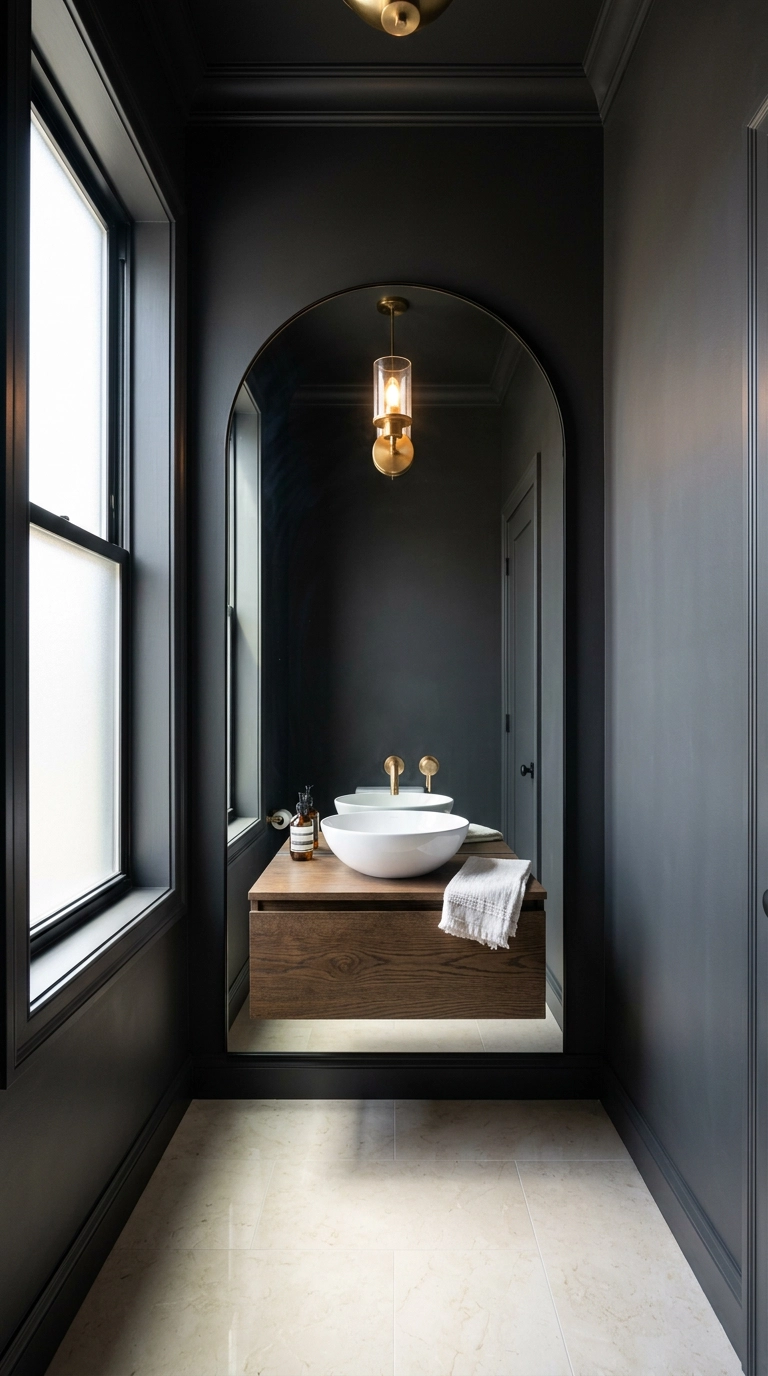
Everyone’s fear about dark bathrooms is the same: won’t it feel like a coffin? It only does if you get the reflectivity wrong. Three rules save a small dark bathroom — go oversized on the mirror so it bounces every bit of light back, keep the floor lighter than the walls so the room has a visual floor to stand on, and never break the darkness with a random white patch, because contrast is what makes small rooms feel chopped up. Consistent dark tones actually blur where the corners are, so the room reads as endless rather than tight. Add one reflective element — polished stone, a glass sconce shade, a mirrored tray — and the space breathes.
20. A Soaking Tub as the Gothic Centerpiece
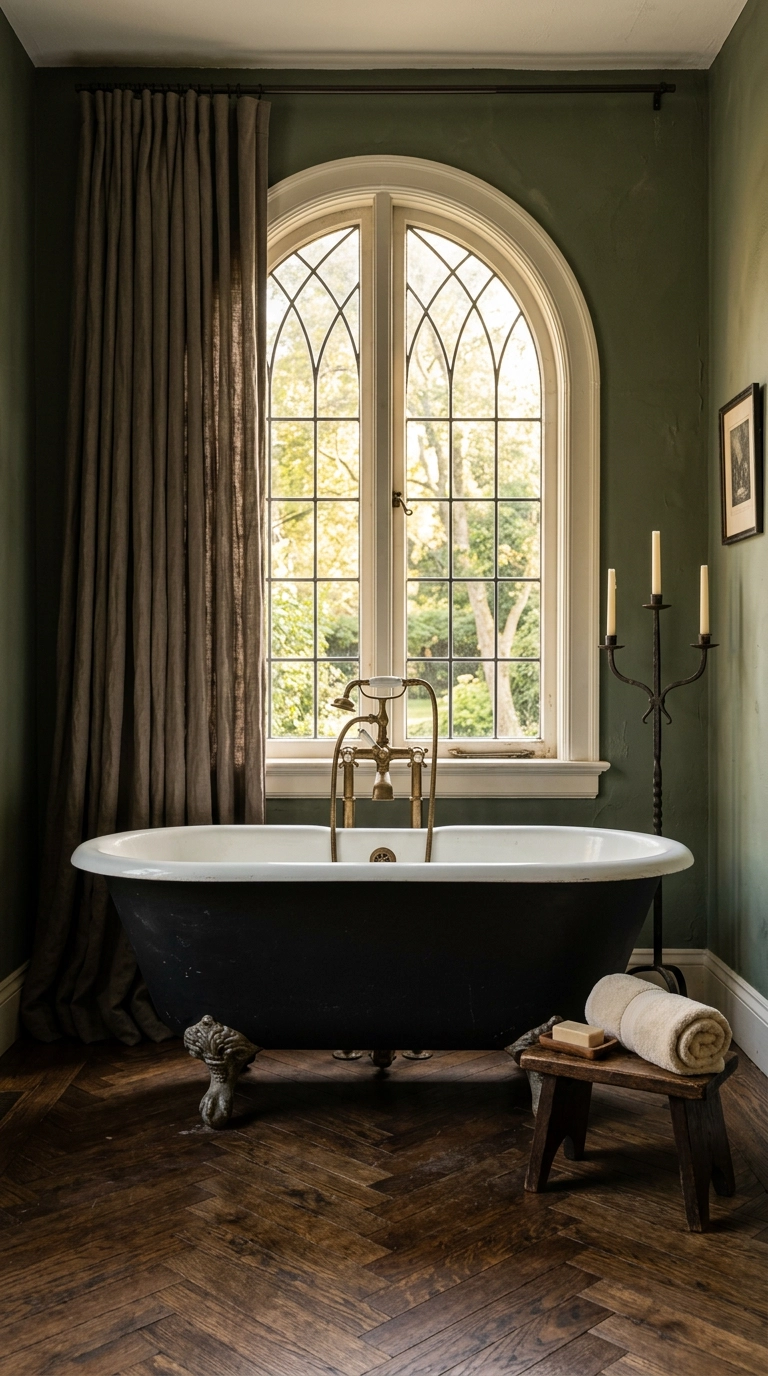
A clawfoot tub is the piece that makes a bathroom feel like a castle’s bathing chamber, and it’s splurge number two — worth it because it’s the one object everyone notices the second they walk in. New reproductions run a significant sum, but vintage tubs at salvage yards go for a fraction and just need reglazing. Place it on the wall opposite the door so it’s the sightline — the first thing the eye lands on — and put it beneath a window if you have one, because natural light on the water is half the romance. If a tub swap is out of reach this year, a classic clawfoot-shaped tub skirt or even a deep enameled soaking tub does the visual work at a tenth of the price.
21. Dark Wood Paneling on the Lower Wall
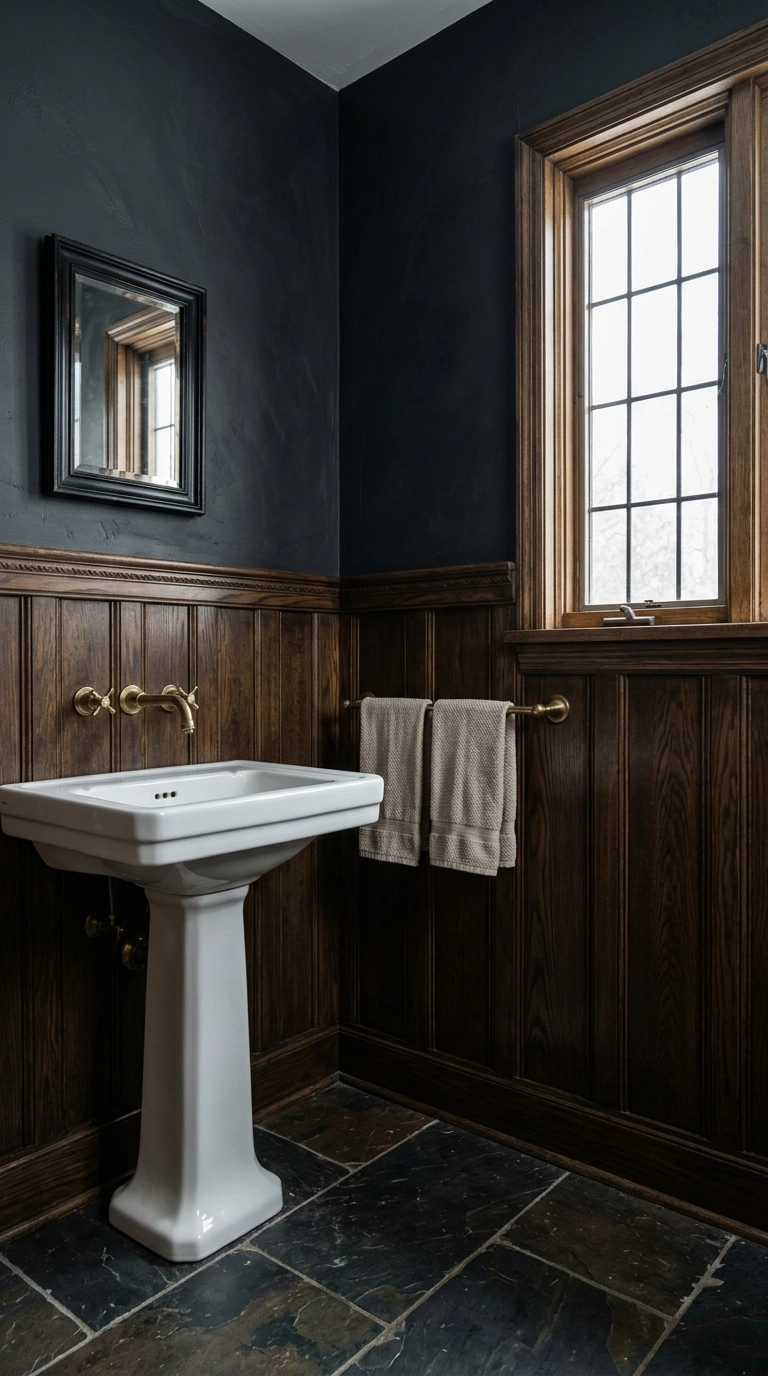
Dark wood paneling on the lower wall is the detail that separates a gothic bathroom from a bathroom that’s just painted dark. It brings in the library-and-manor-house feeling, adds real depth and shadow you can’t paint on, and — practically speaking — protects the wall behind the sink from splashes. A weekend project with pre-primed panel molding strips, wood glue, and a nail gun runs a couple hundred dollars for a small bathroom. Renters can fake it with removable adhesive wood-look panel strips, or simply paint the lower third of the wall a deeper shade with a peel-and-stick trim strip as the cap rail.
22. Solve Ventilation Before You Go Dark (The Unglamorous Truth)
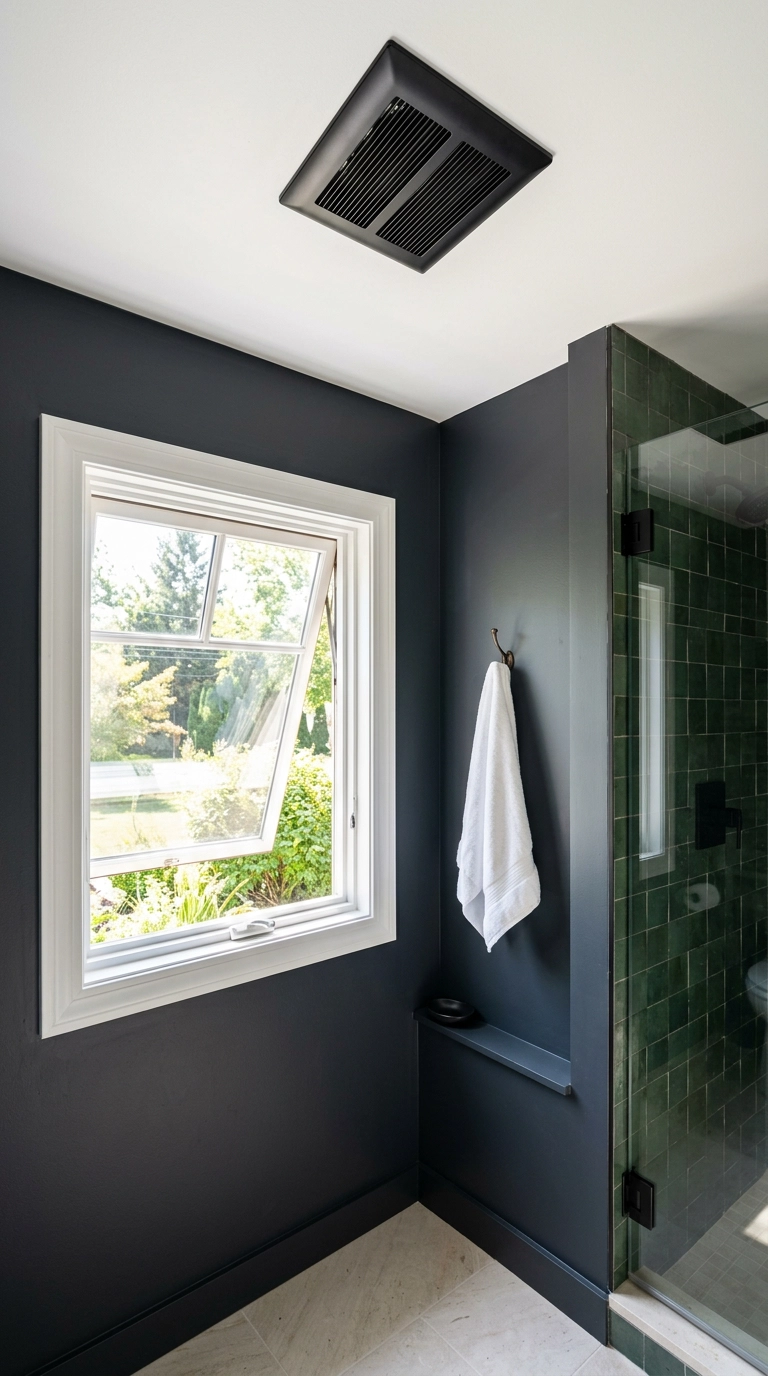
Let me be the friend who tells you the boring thing: dark surfaces show mildew and hard-water spots far more than white ones, and a gothic bathroom without good ventilation becomes a maintenance nightmare within a season. Check your exhaust fan’s CFM rating against your square footage — the rough rule is one CFM per square foot, with a minimum of 50 — and run it for a full 20 minutes after every shower, which a $20 timer switch handles automatically. Choose satin or semi-gloss finishes on dark walls rather than flat, and use a mildew-resistant bathroom paint. Swapping a white fan cover for a matte black one is a 10-minute, $25 detail that keeps the ceiling from interrupting all that lovely darkness.
23. Black Furniture-Style Details as the Final Bow
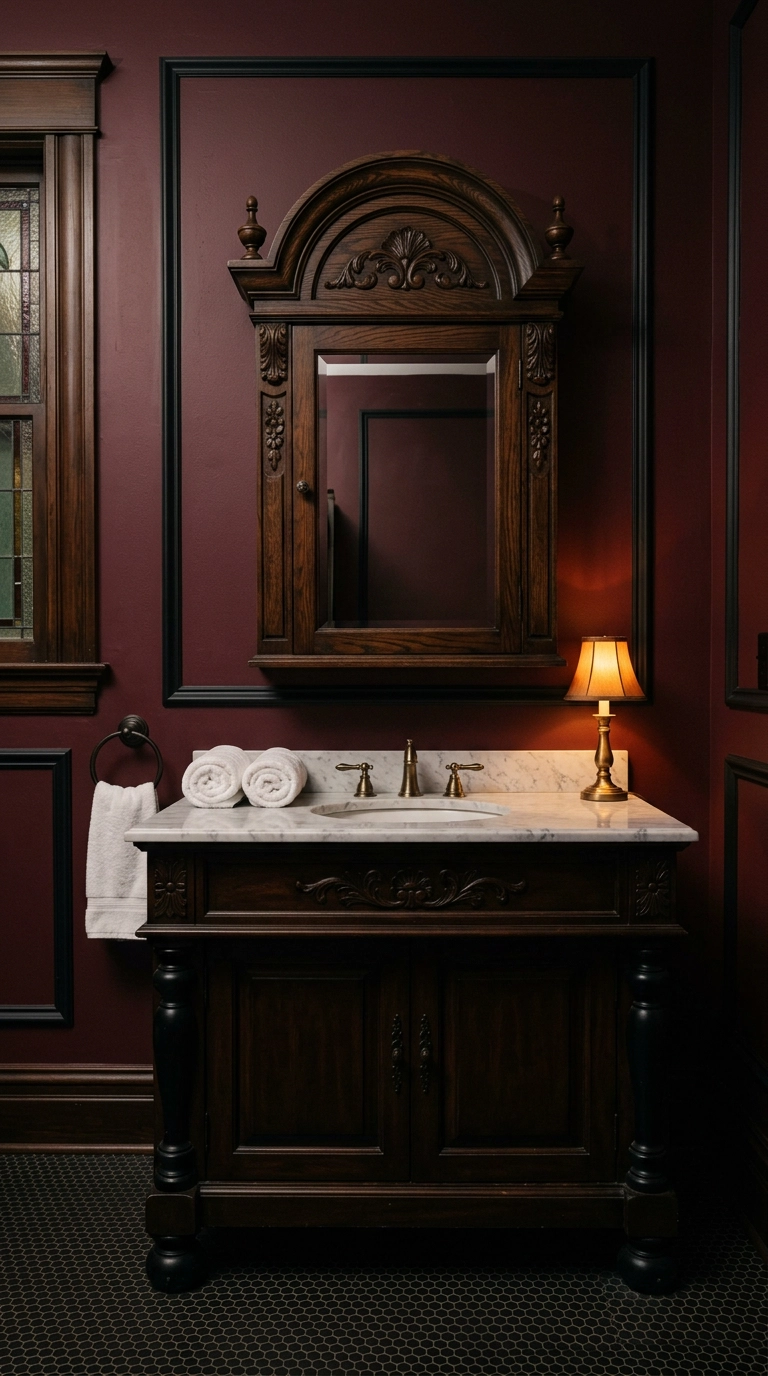
Gothic is a furniture style before it’s a wall treatment, so the finishing move is treating the room’s own pieces as furniture. A dark wood medicine cabinet with a carved crown, turned wooden legs on the vanity, even a black-framed picture rail molding on the upper wall — every piece starts looking like it was built for a parlor rather than a plumbing closet. These are typically weekend projects: refinishing a free dresser, painting a builder vanity black and adding turned feet, or hanging molding strips. Work top to bottom, and finish with small hardware — a brass keyhole-style escutcheon plate and porcelain pull — because in this style, the details are the point.
Turn Down the Lights and Let It Be Dramatic
If you take nothing else from this list, take the two ideas that cost the least and change the most: dim the light and warm it up. I’ve watched a plain builder-grade bathroom turn into something people actually comment on with nothing but a pair of candlestick sconces, a dimmer switch, and a satin coat of Tricorn Black. The arched mirror and the wrought iron hooks are what I’d add next, in that order, because shape and metal carry the gothic story faster than any other detail.
What I’m seeing everywhere right now is the shift away from pure black toward those deeper, warmer near-blacks — oxblood, ink, charcoal-plum — and toward honed stone instead of polished. It’s the same instinct behind the dark, layered rooms Ken Fulk builds and the moody saturated interiors Abigail Ahern has been championing for years: darkness that feels warm and collected rather than cold and severe. Farrow & Ball’s deep reds and blue-blacks have become the shorthand for it, and even the big-box retailers now carry arched mirrors and oil-rubbed bronze in every store.
Start with one thing this weekend. Paint the powder room, or just swap the hooks and hang a stained-glass panel in the window — and please, sort out the exhaust fan before you fall in love with dark grout. If you want more moody, historic, slightly dramatic rooms like these landing in your inbox every week, sign up for my newsletter and I’ll send you the projects I’m actually working on, mistakes included.


