
23+ Stunning High Ceiling Bedroom Decor Ideas that Feel Cozy and Grand in 2026

I’ll be honest with you – high ceilings are the design gift nobody teaches you how to unwrap. I’ve walked into so many 14-foot bedrooms that felt like hotel lobbies, all that gorgeous volume sitting empty above eye level while the furniture huddled on the floor like it was scared of heights. The fix isn’t filling the space, it’s giving the eye a reason to travel up and then something warm to come back down to, and after a decade of doing exactly that I’ve got opinions.
High Ceiling Bedroom Decor Ideas
1. Hang Your Curtains at the Ceiling Line, Not the Window
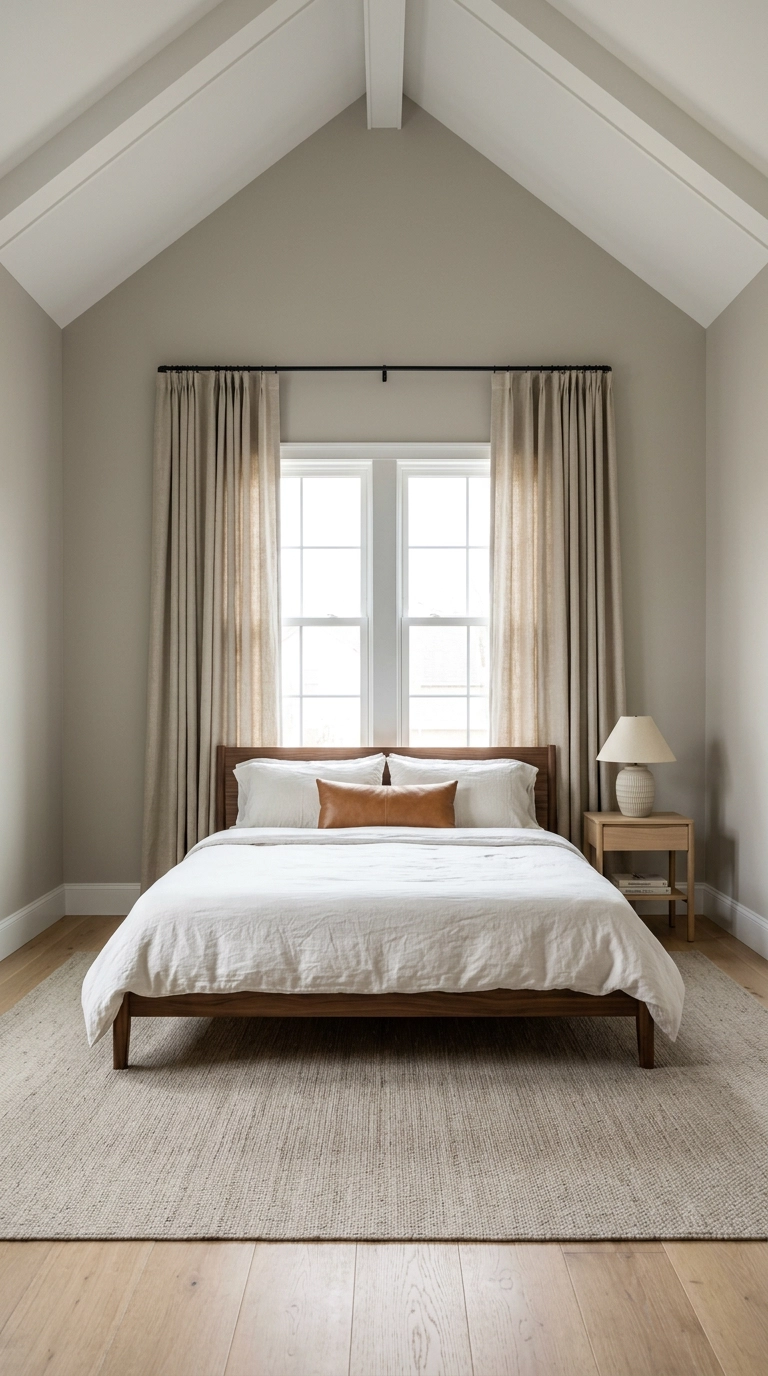
This is the cheapest, highest-impact move in the whole article, so I’m leading with it. Mount the rod within 4 to 6 inches of the ceiling and let the panels break just at the floor, even if your window stops six feet short – the eye reads the fabric as the window, so the whole wall gains height.
2. Color Drench the Walls and Ceiling in One Deep Shade
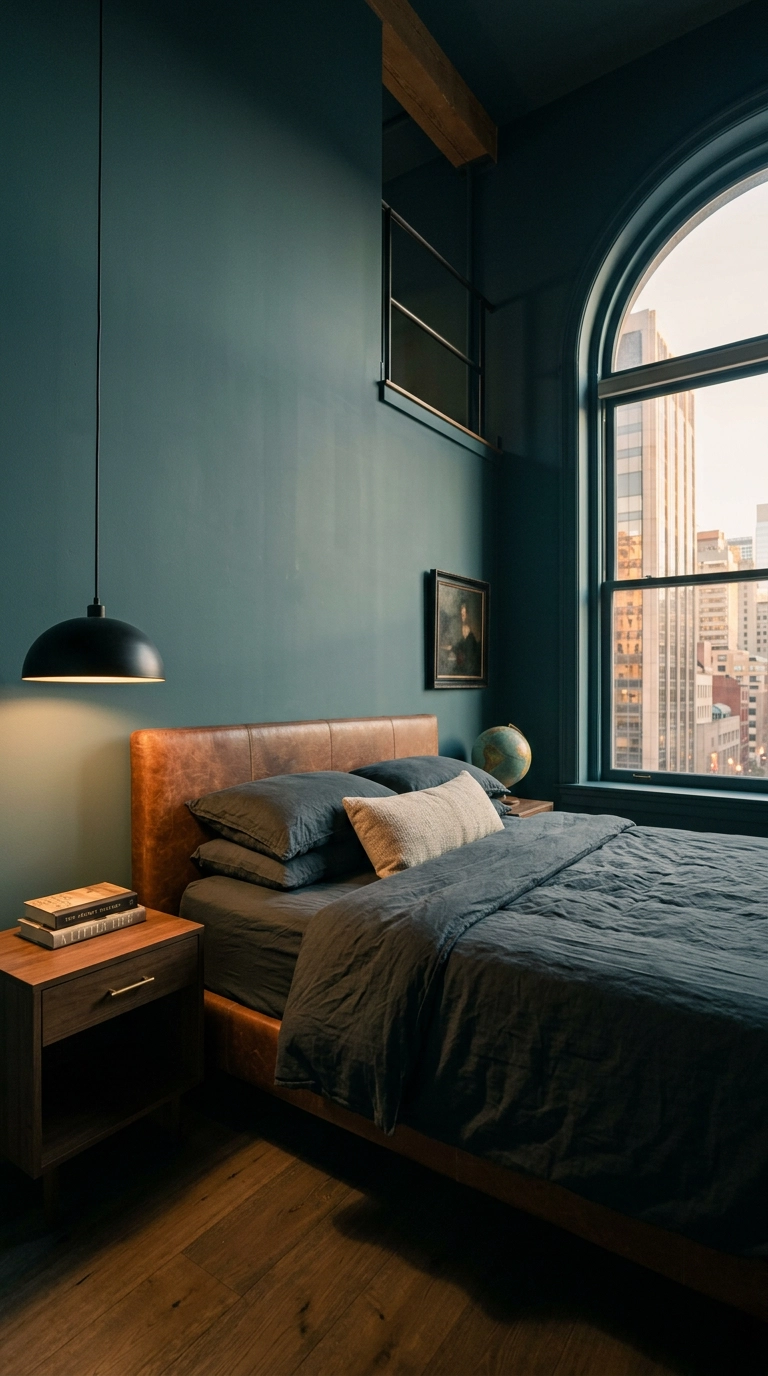
Color drenching means painting walls, trim, and ceiling the same shade so there are no visual breaks. In a tall room this is counterintuitive magic – instead of shrinking the space, it erases the line where the wall stops and makes the volume feel deliberate rather than accidental.
3. Build a Floor-to-Ceiling Slat Wood Wall Behind the Bed
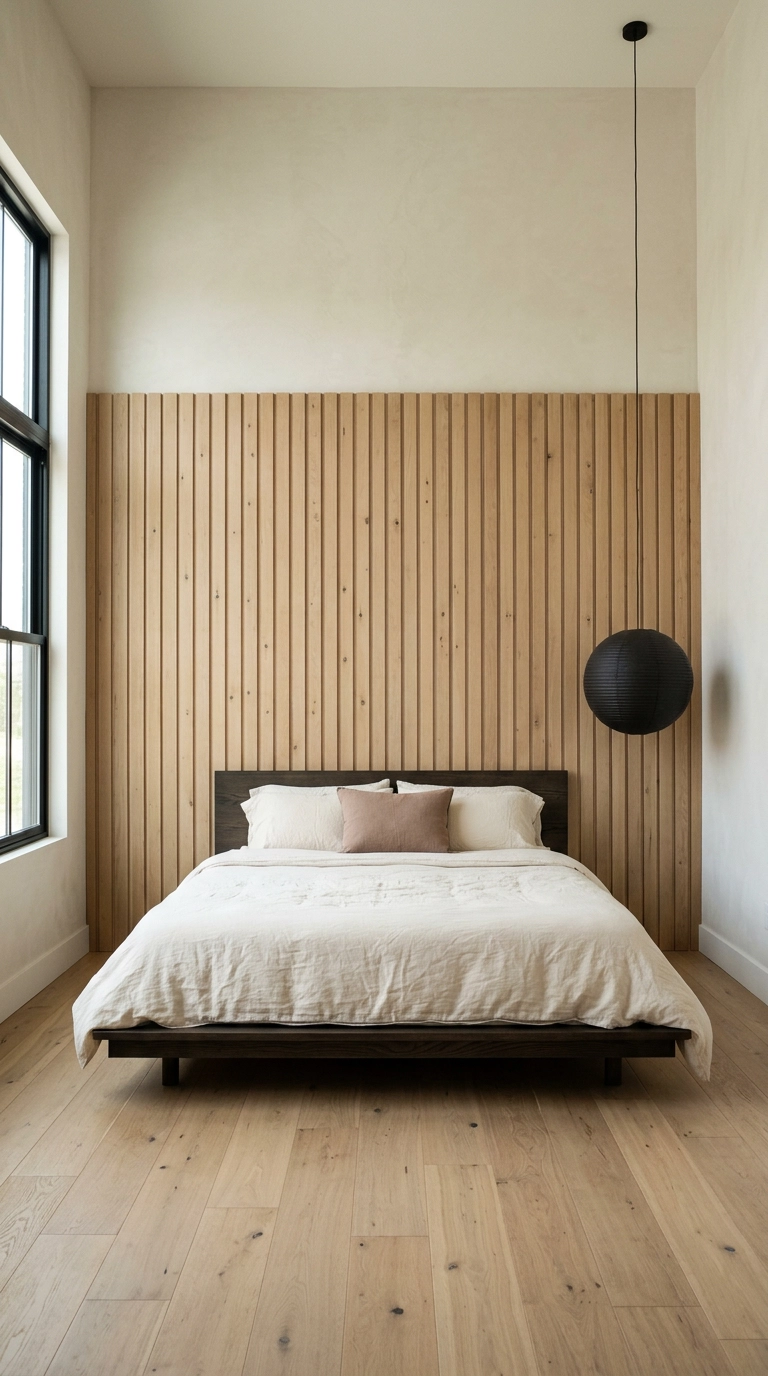
Vertical slats are the most efficient way to solve a tall blank wall because the repetition gives your eye a rhythm to climb instead of a void to stare at. Run them the full height – stopping at eight feet is the single most common mistake and it reads as an unfinished wainscot.
4. Choose an Oversized Headboard, Not a Standard One
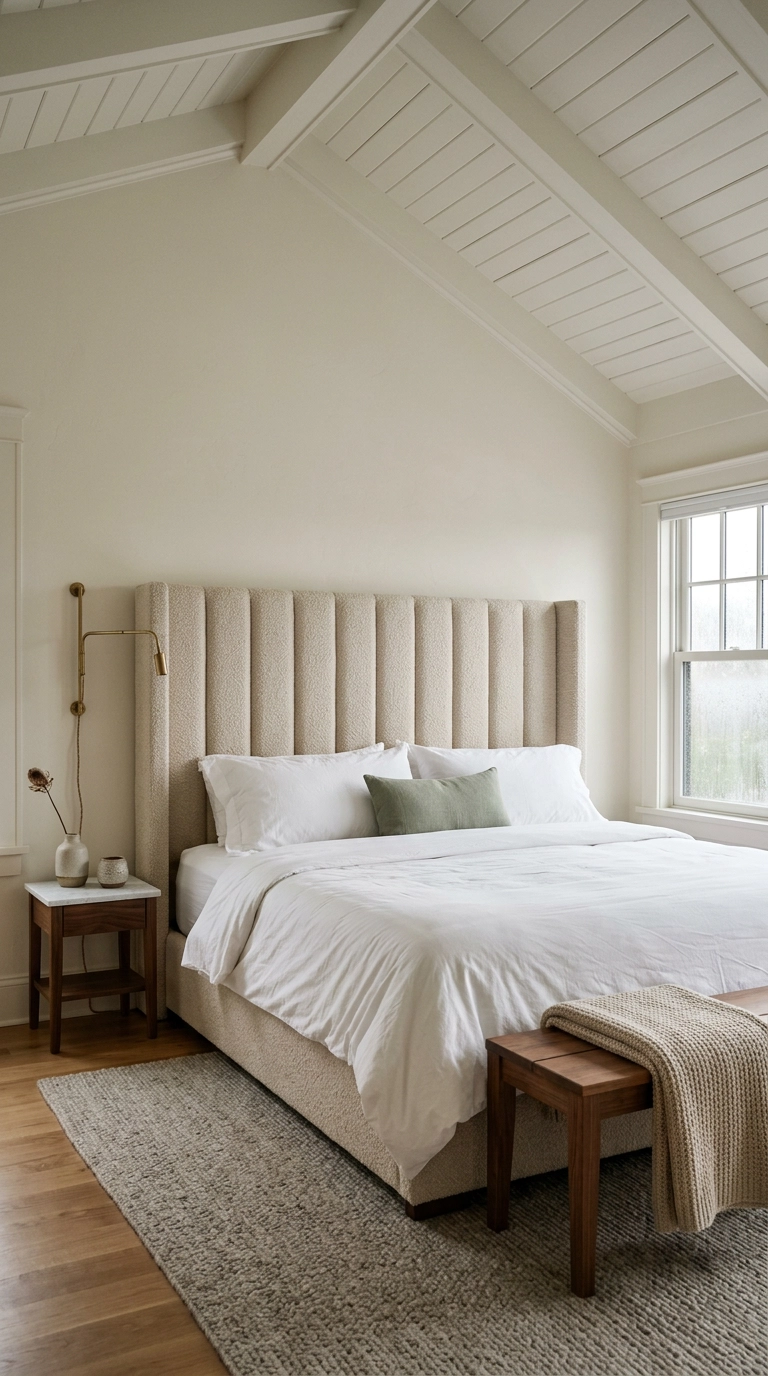
Visual weight is just how heavy an object looks – and in a tall room a standard 48-inch headboard looks like a postage stamp. Go 65 to 80 inches tall so the bed can hold its own against all that vertical wall.
5. Drop a Single Simple Drum Pendant Low Over the Bed
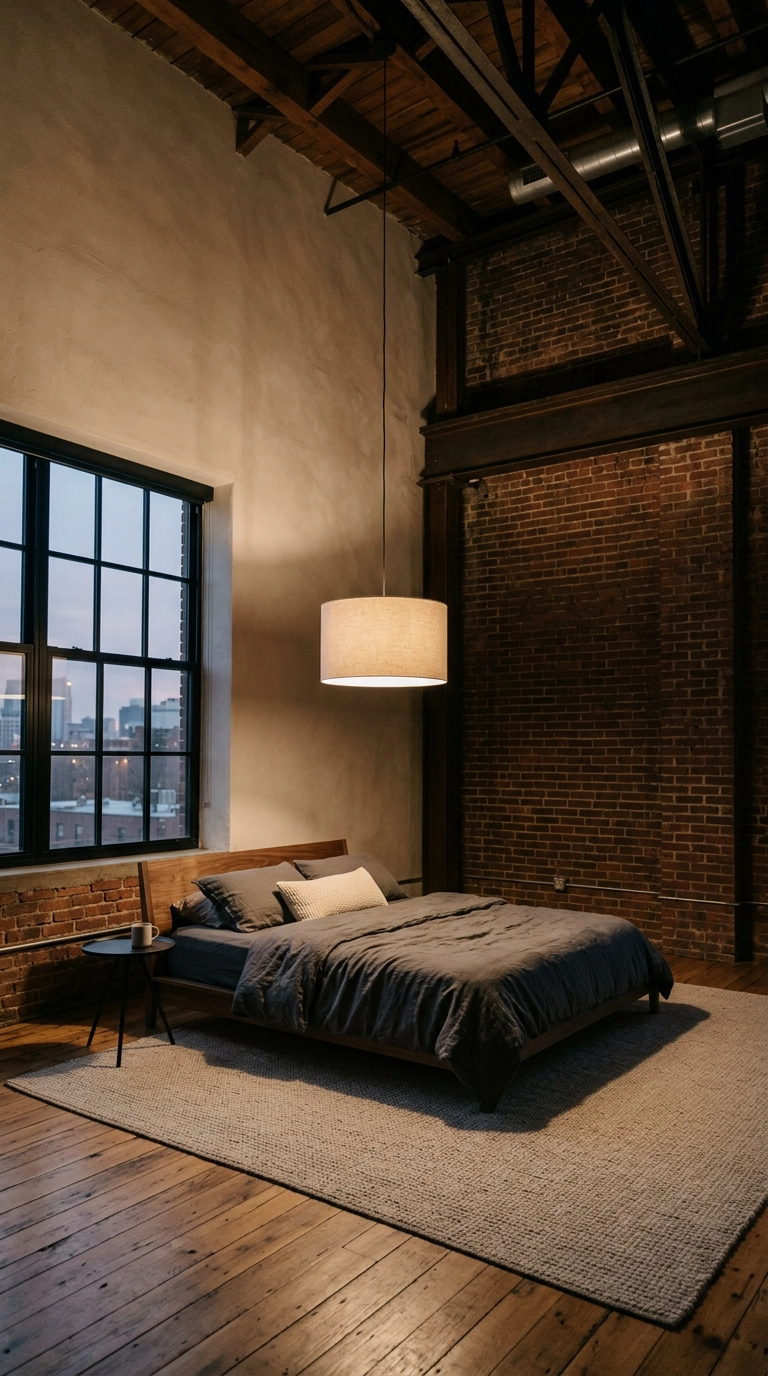
A flush-mount fixture on an 18-foot ceiling lights nothing and looks like a smoke detector. Drop a simple drum or dome pendant on a long cord until it hangs about seven to eight feet off the floor – it creates a lower “ceiling” of light that makes the bed zone feel enclosed.
6. Paint the Ceiling a Shade Darker Than the Walls
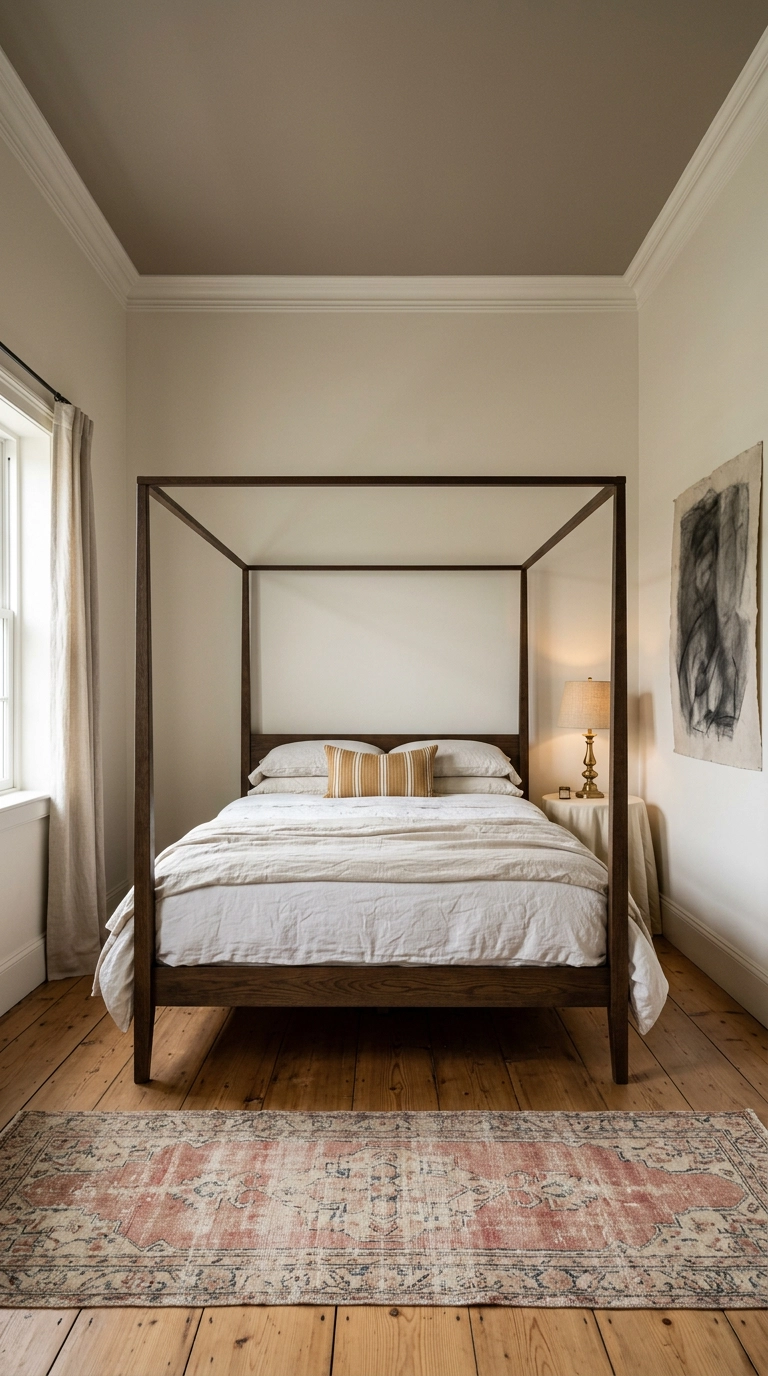
A ceiling two or three shades deeper than the walls visually lowers it just enough to feel intimate without losing the drama. Think of it as putting a lid on the room – the darker plane stops your eye from floating off into nowhere.
7. Stack Art in a Vertical Column Instead of a Horizontal Row
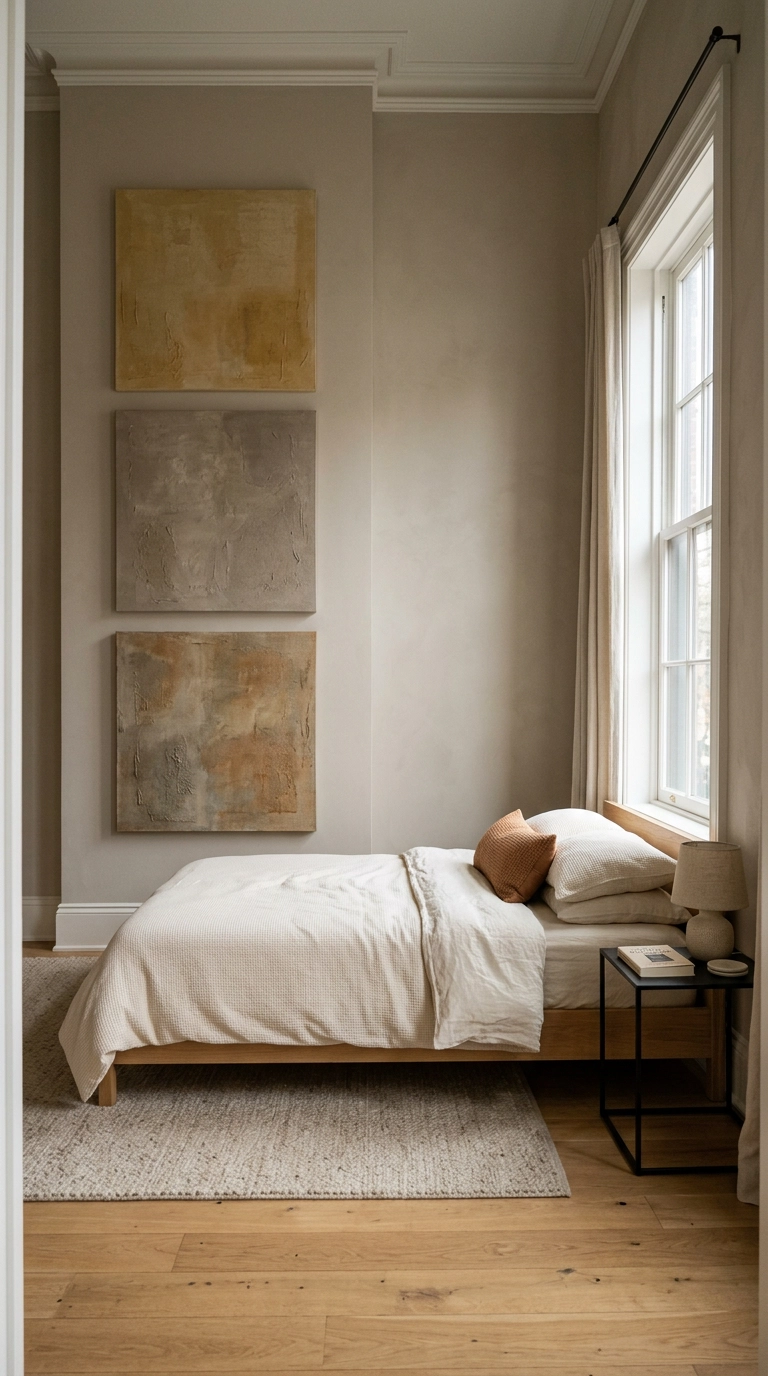
Most people hang art in a horizontal row out of habit, which wastes every inch above it. A vertical stack of two or three large pieces, spaced 4 to 6 inches apart, uses the wall the way the architecture intended.
8. Add a Picture Rail Molding to Break the Wall Height
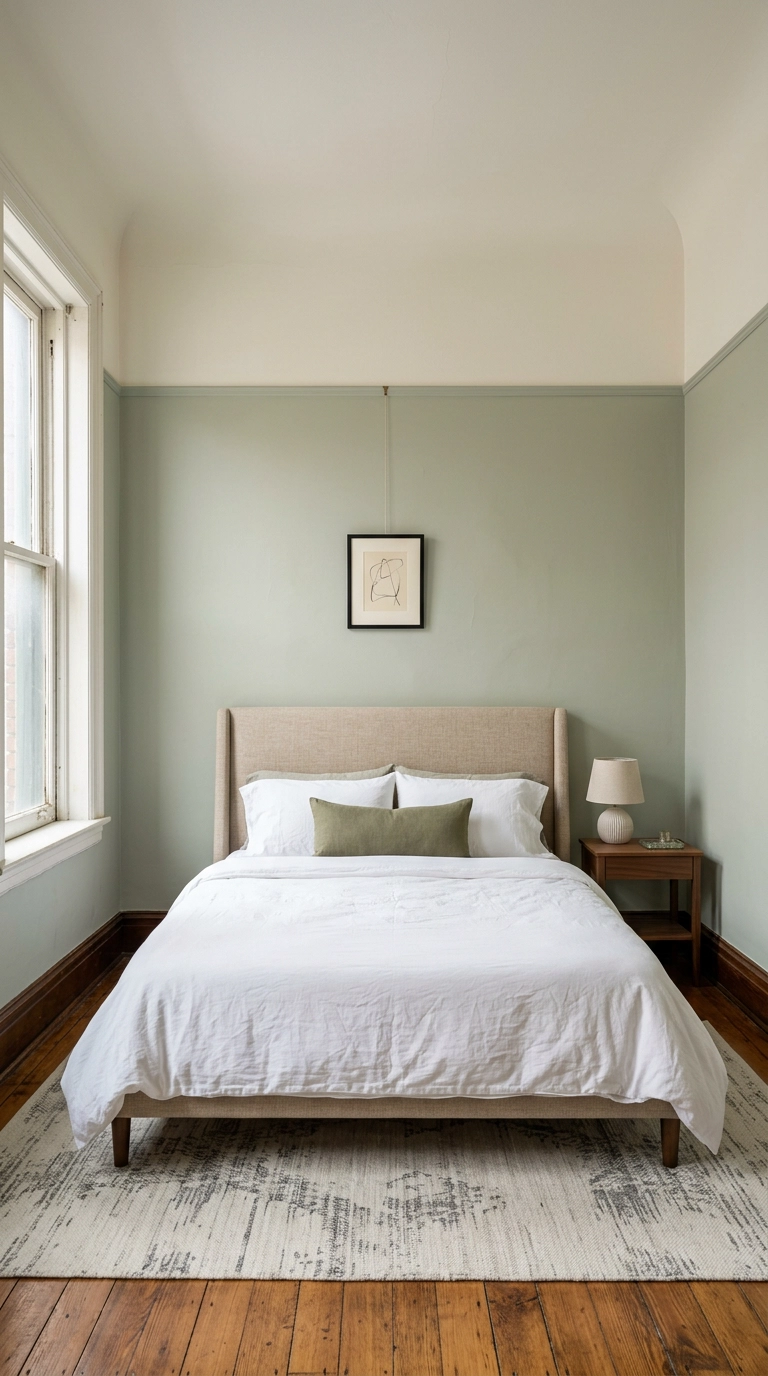
A picture rail is a slim horizontal molding strip mounted high on the wall, traditionally used to hang art from cords. Run it at about eight or nine feet and paint the band above it a lighter shade – you get two proportional zones instead of one endless wall.
9. Layer a Big Wool Rug to Fix the Echo
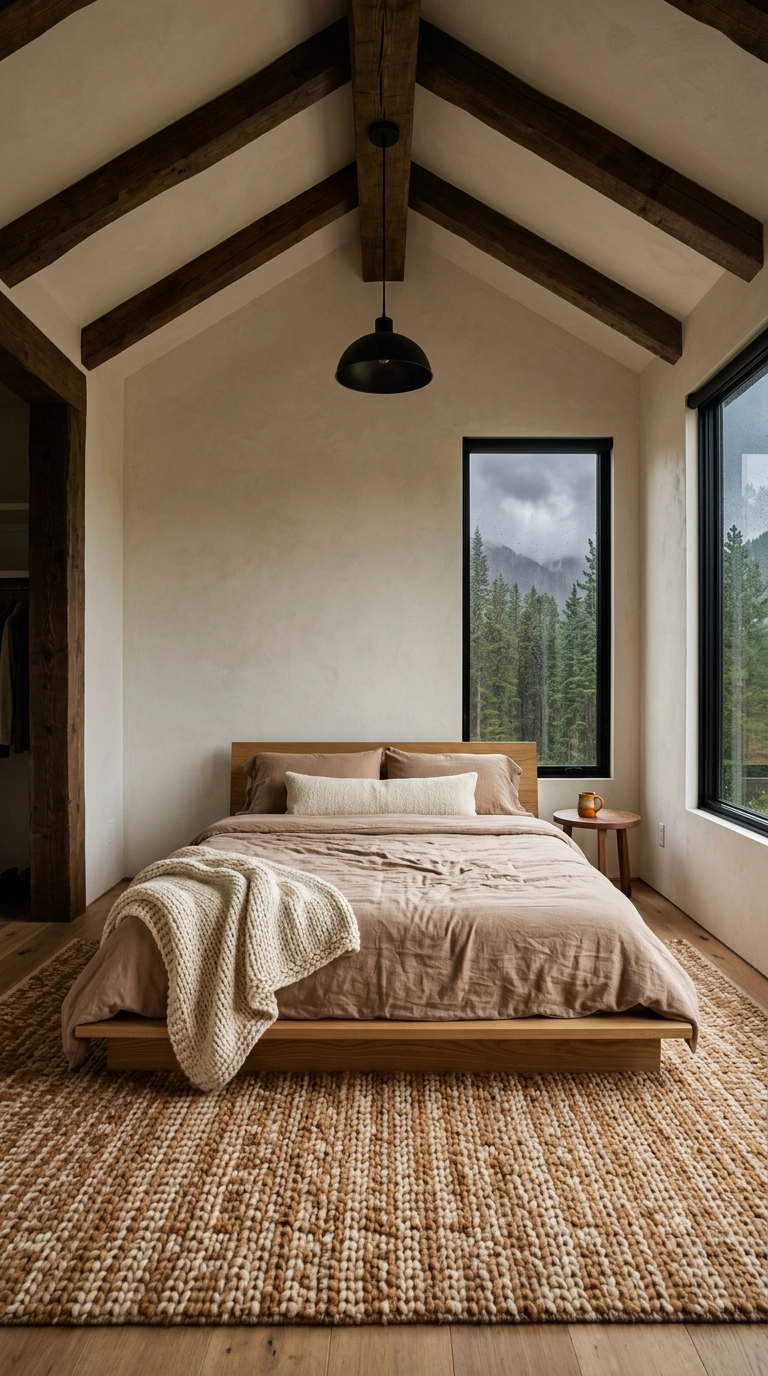
Tall rooms have terrible acoustics because sound bounces between hard parallel surfaces with nothing to absorb it. A thick wool rug is the single most effective fix, and it needs to be genuinely large – go one size up from what you think, so at least the front two feet on each side of the bed sit on it.
10. Install Long Sconces High to Wash the Upper Wall
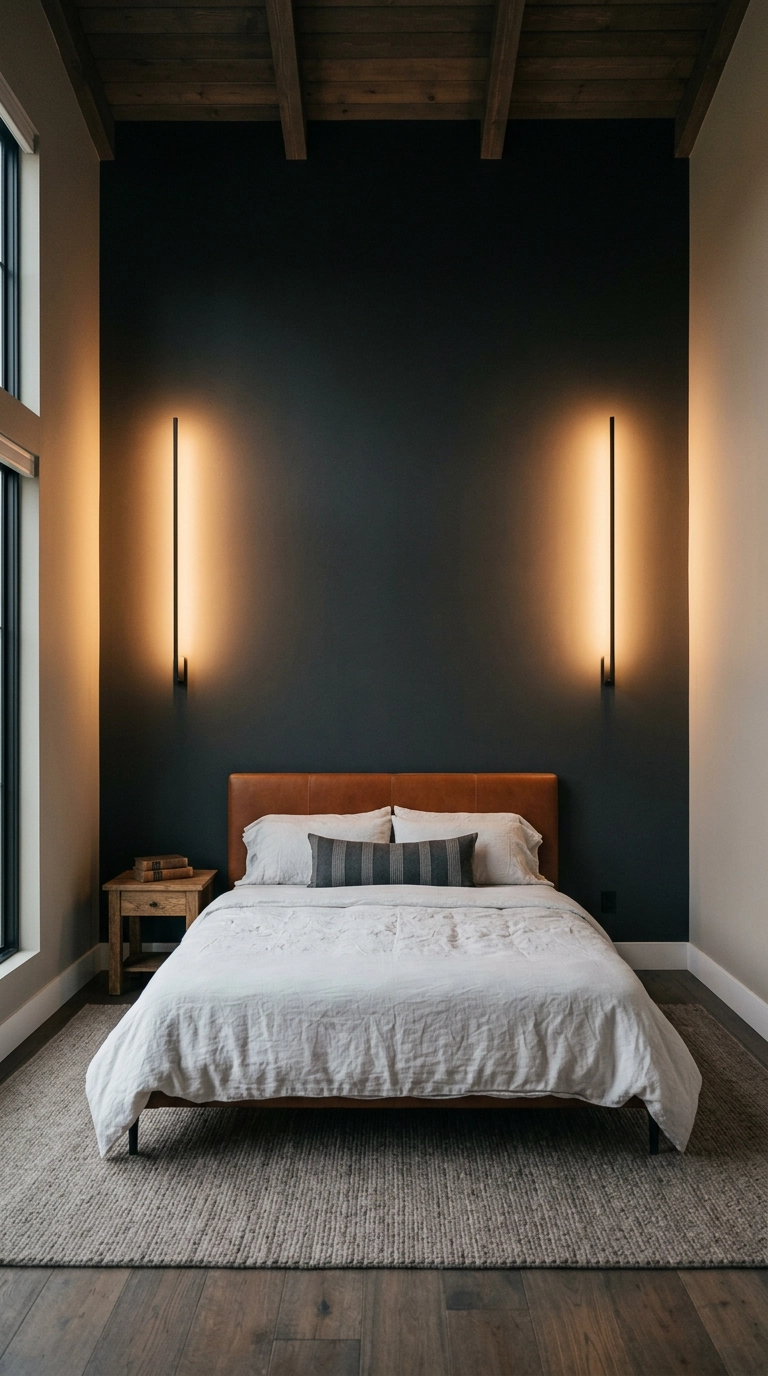
Uplight on the upper wall gives that dead zone above eye level something to be. It also softens the harsh transition where wall meets ceiling, which is what makes tall rooms feel cavernous.
11. Run a Tall Bookcase All the Way to the Ceiling
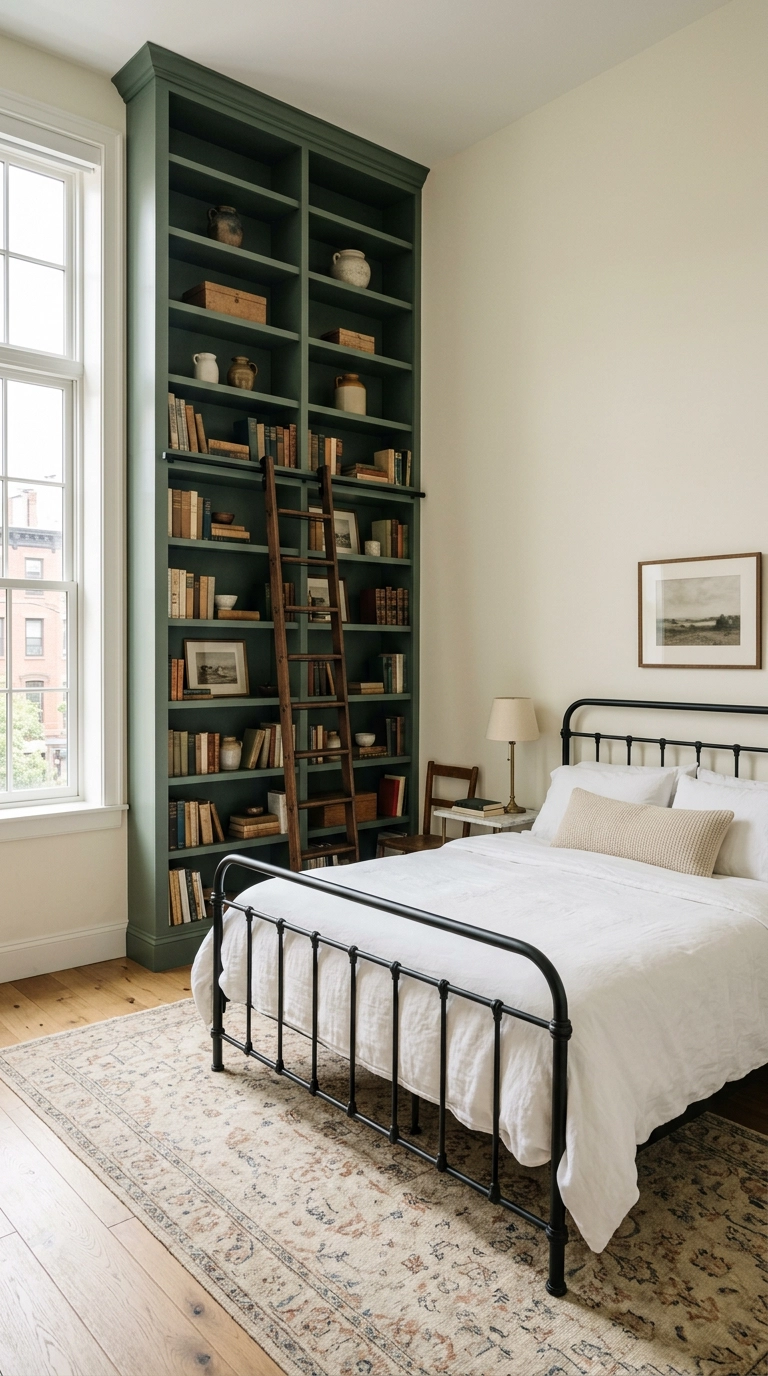
If you have the height, use it for storage that doubles as architecture. A bookcase carried all the way up reads as built-in even when it isn’t, and the vertical lines reinforce the room’s proportions instead of fighting them.
12. Lean an Oversized Mirror Against the Tall Wall
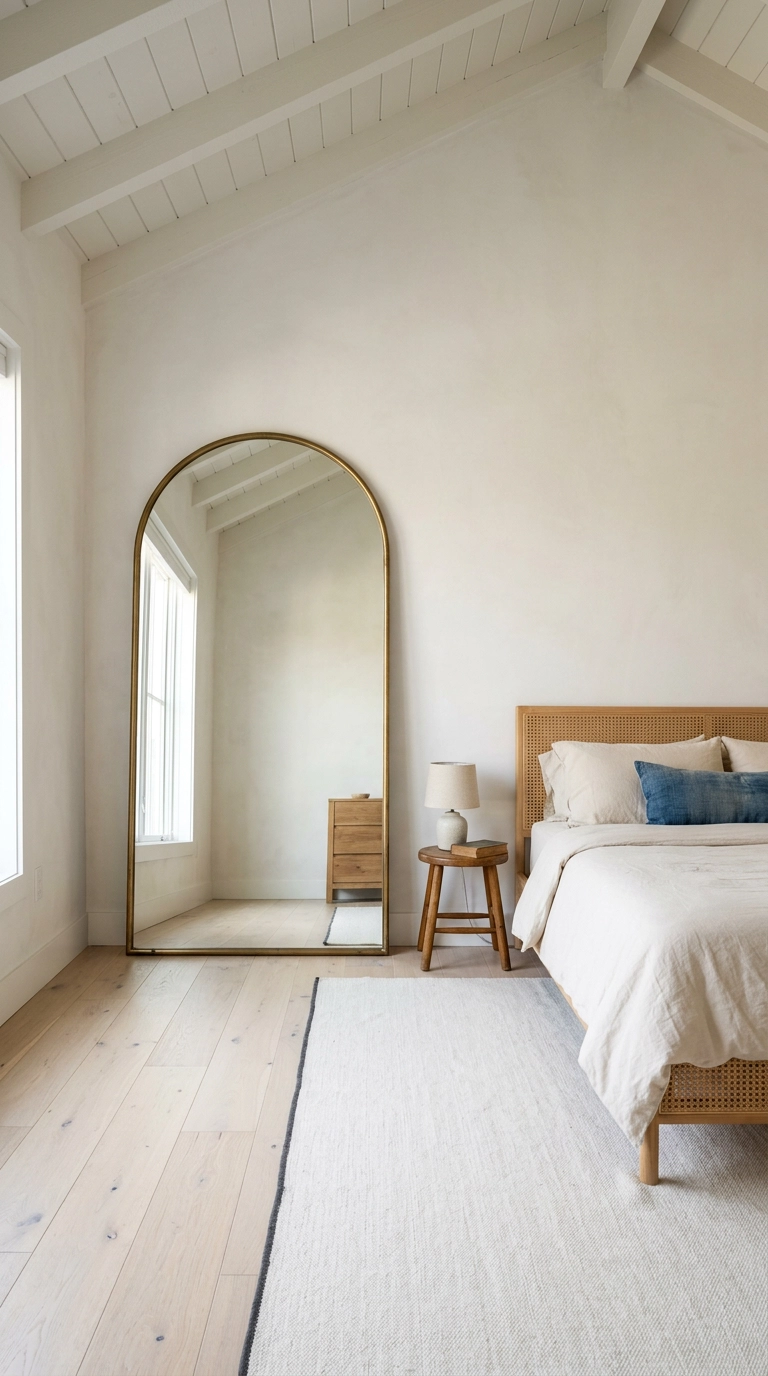
A tall room usually has one wall of dead vertical space with nothing to do, and a leaning mirror at seven feet or more fills it while doubling whatever light you’ve got. Angle it a few degrees off the wall so it catches the window instead of staring straight back at the bed.
13. Wrap the Walls in Grasscloth for Texture and Quiet
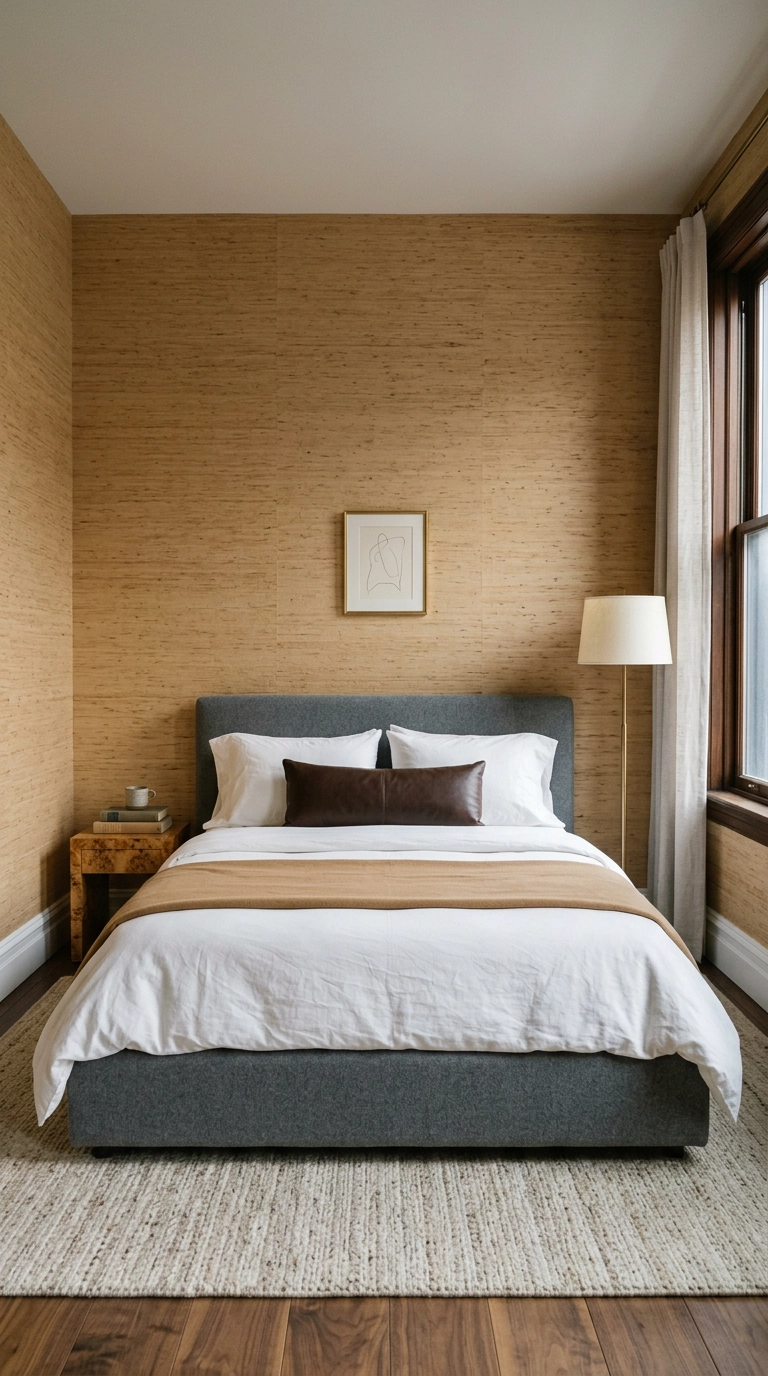
Paint on a huge wall is just a big flat plane, and flat planes are what make tall bedrooms feel like conference rooms. Grasscloth adds a fine woven texture that catches light differently at every height, so the wall stays interesting all the way up.
14. Add a Canopy Bed to Build a Room Within the Room
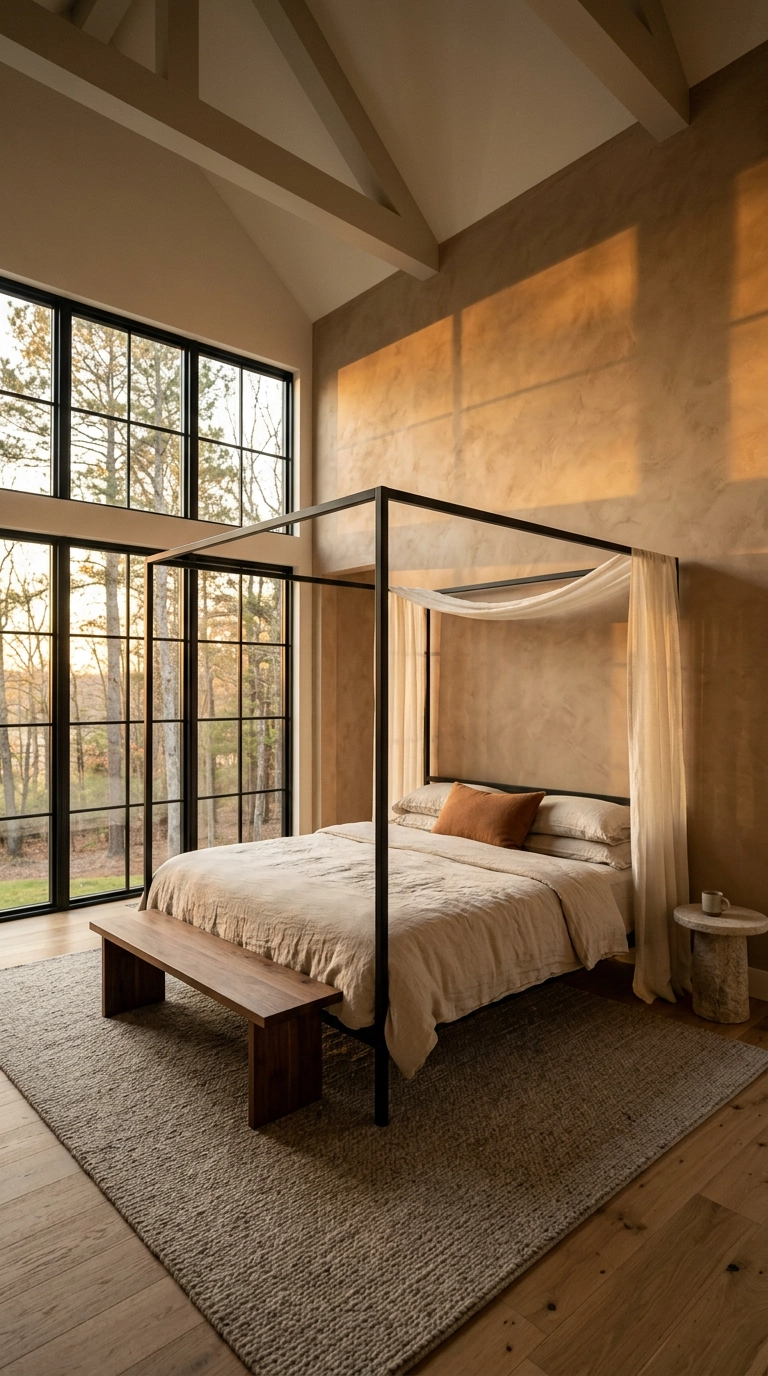
A canopy frame draws a ceiling at eight feet that your brain accepts as the sleeping zone, while the real ceiling stays overhead as drama. It’s the most direct answer to “this bedroom feels like a gymnasium” that I know.
15. Run Wood Beams Across the Vault to Bring the Ceiling Down
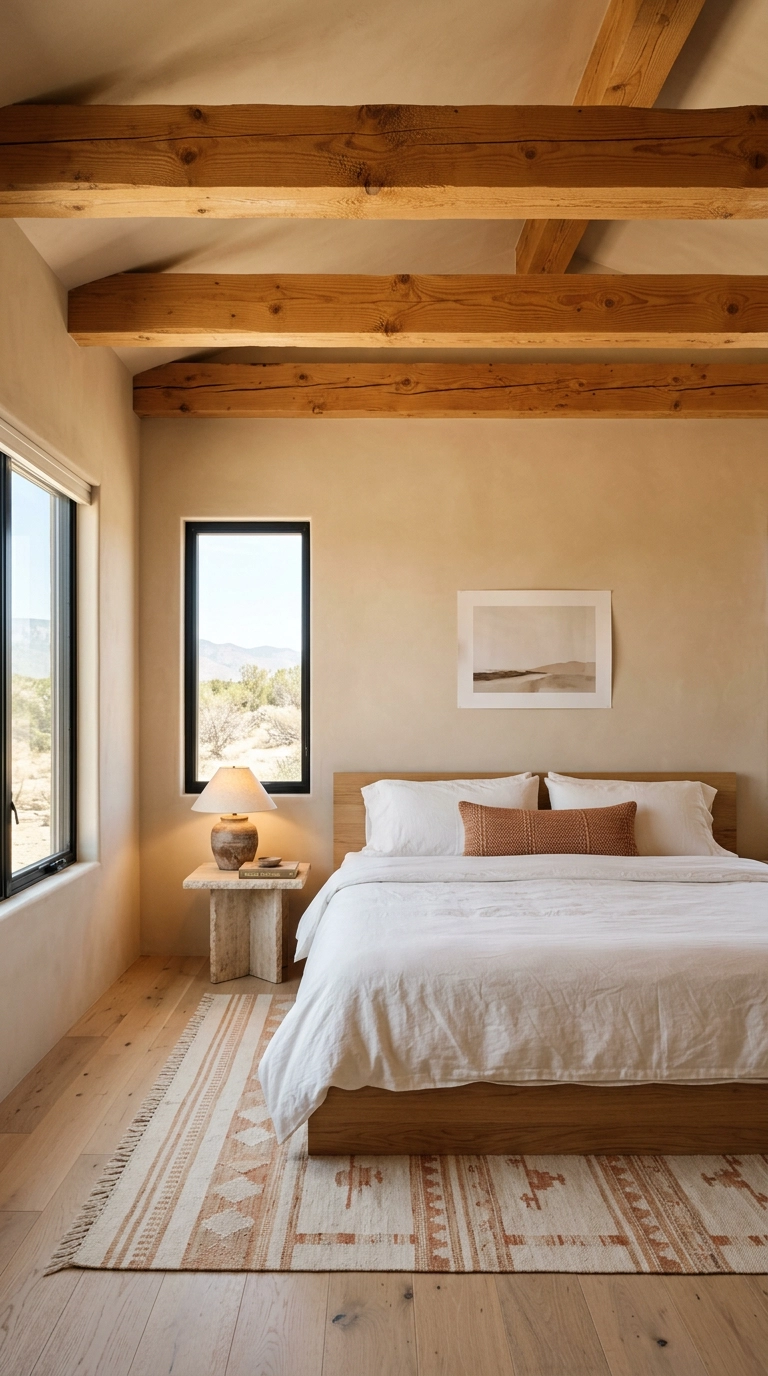
Beams running across a vault give the eye a series of stopping points on the way up, so the ceiling reads as structure instead of sheer altitude. Space them roughly four feet apart and the warm wood tone does double duty, softening all that cool drywall.
16. Hang a Large Textile or Woven Wall Piece to Kill the Echo
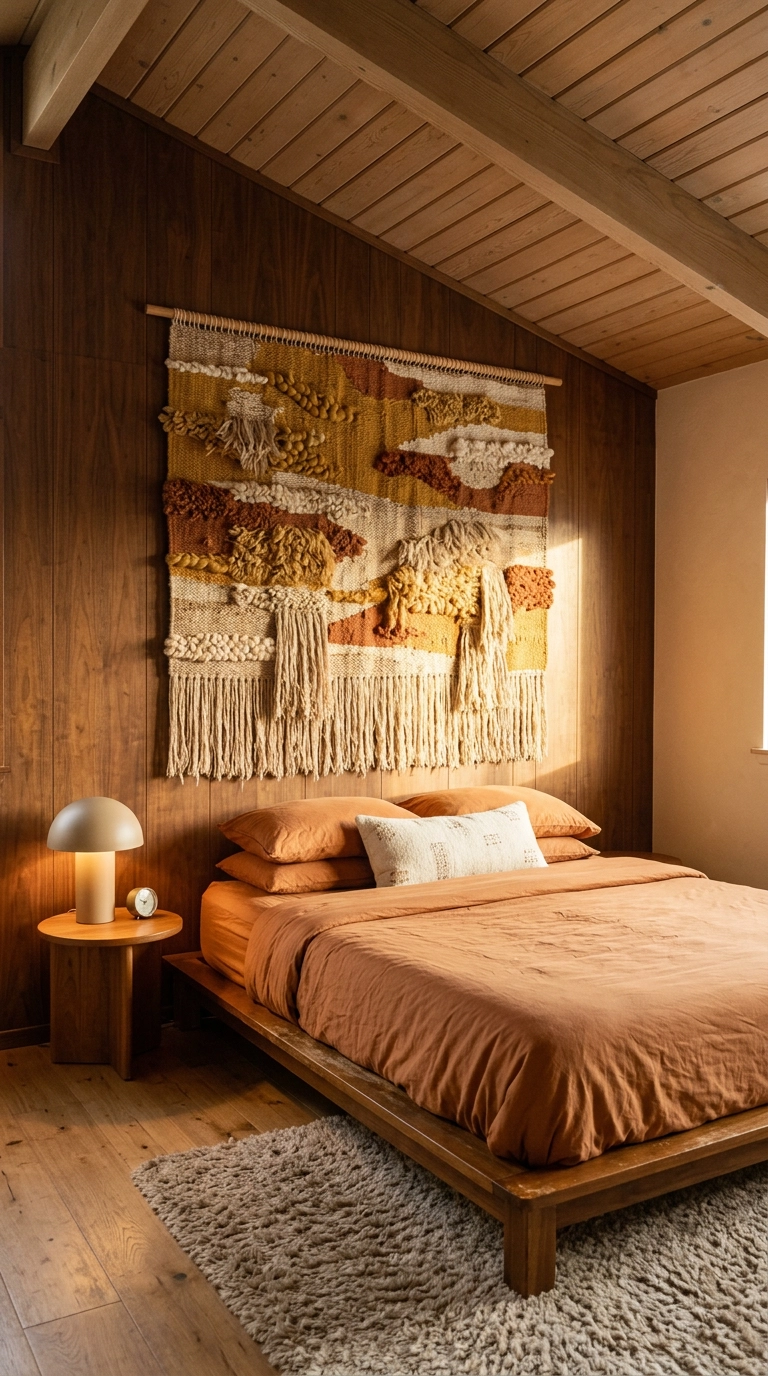
Soft goods on the wall are the acoustic fix nobody talks about. A big woven piece absorbs the mid-range frequencies that make tall bedrooms sound hollow, and unlike a rug it works on the vertical surfaces where most of the bounce happens.
17. Build a Sleeping Loft or Reading Nook Overhead
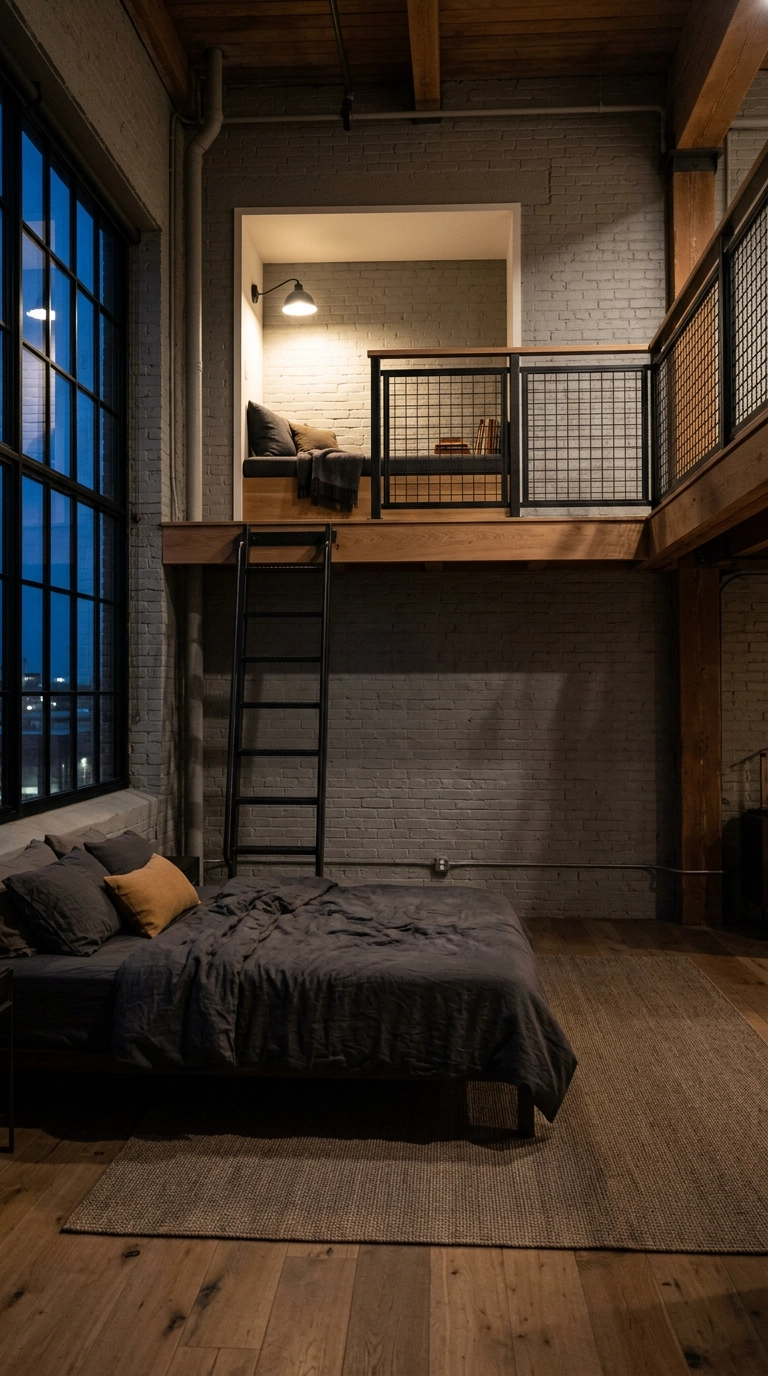
If you genuinely have 16 feet or more, the boldest move is to claim that air as usable square footage. A small mezzanine nook turns dead volume into the best seat in the house, and it makes the room below feel intentionally layered instead of vertically stranded.
18. Use Board and Batten Wall Molding Up to Eight Feet
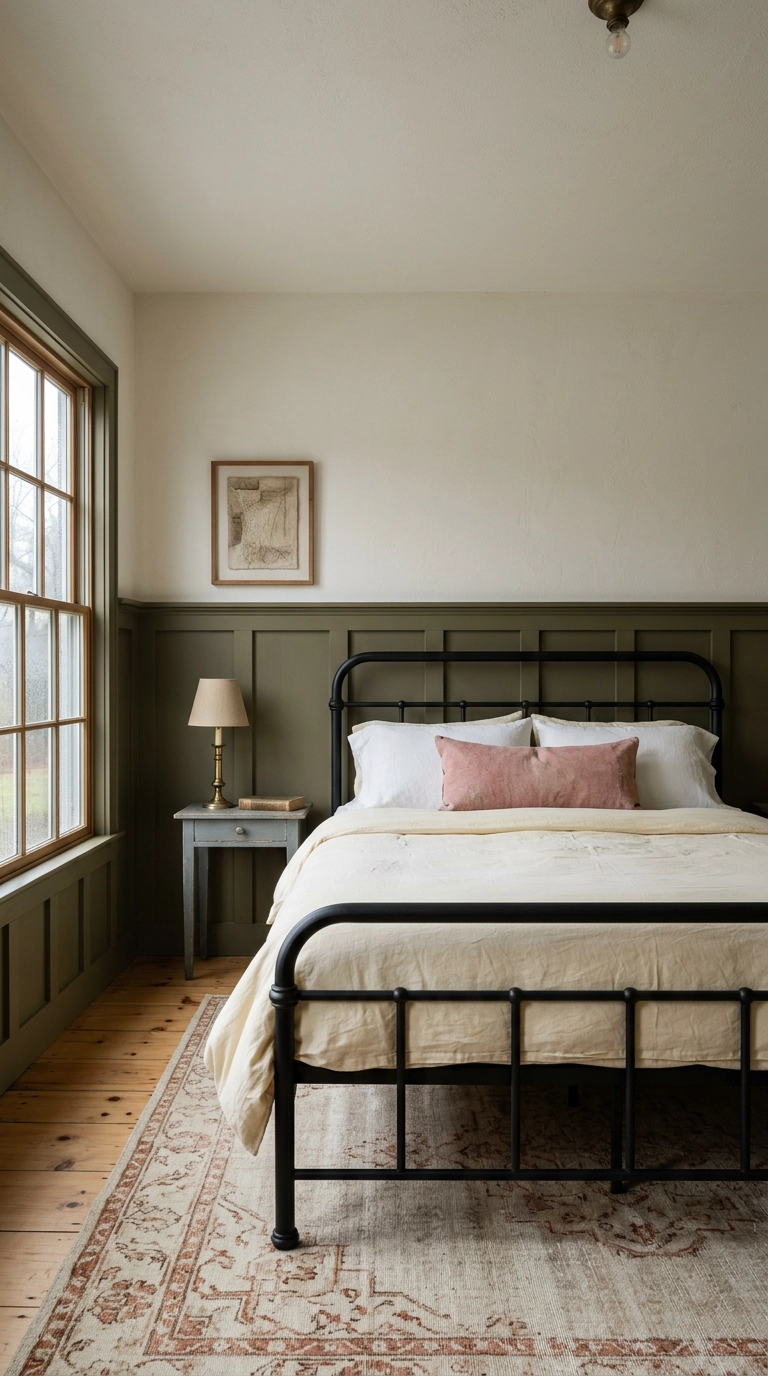
Board and batten is just flat vertical trim strips applied over the wall with a horizontal cap rail on top. Stopping it around eight feet splits a 13-foot wall into a solid lower two-thirds and a light upper third, which is close to the rule of thirds your eye already likes.
19. Choose One Tall Statement Plant Instead of Small Ones
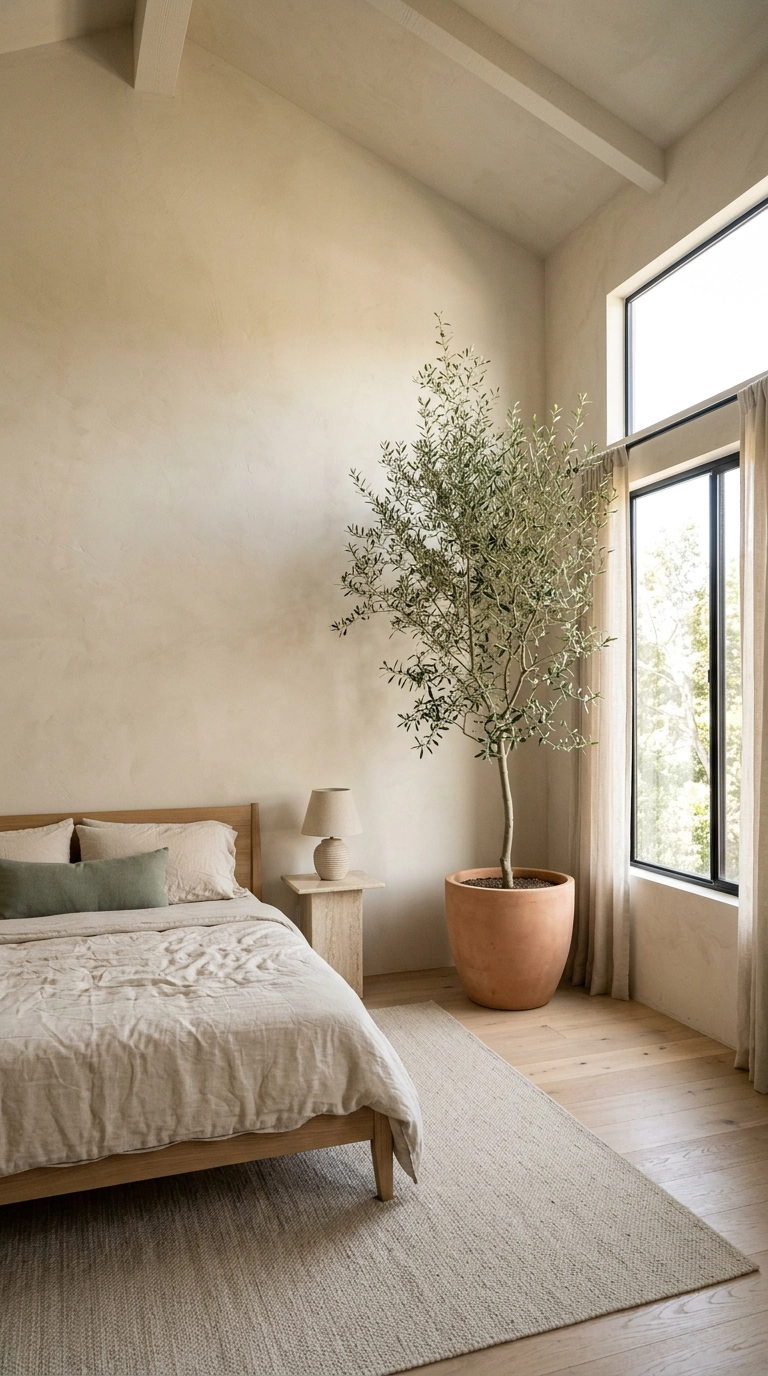
Three medium plants scattered around a tall room read as clutter. One genuinely large tree, eight feet or more, reads as architecture and gives a soft vertical line in the corner where the walls feel most bare.
20. Add Motorized Shades for the Windows You Can’t Reach
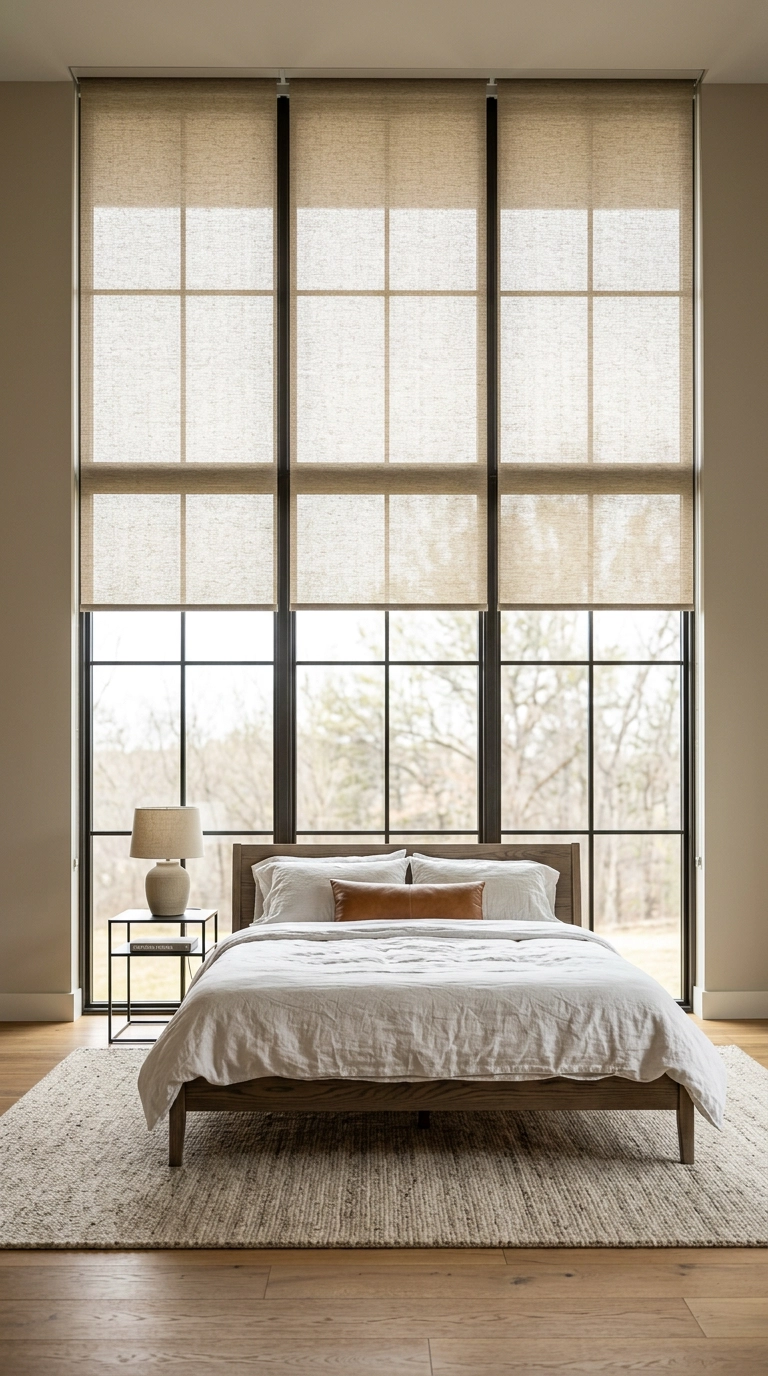
Every double-height bedroom I’ve worked in has the same problem: a beautiful upper window nobody can cover, blasting 6am light onto the bed. Motorized roller shades on a remote or app solve it permanently, and a recessed ceiling pocket hides the hardware so the window wall stays clean.
21. Paint a Two-Tone Wall with a Broken Color Line
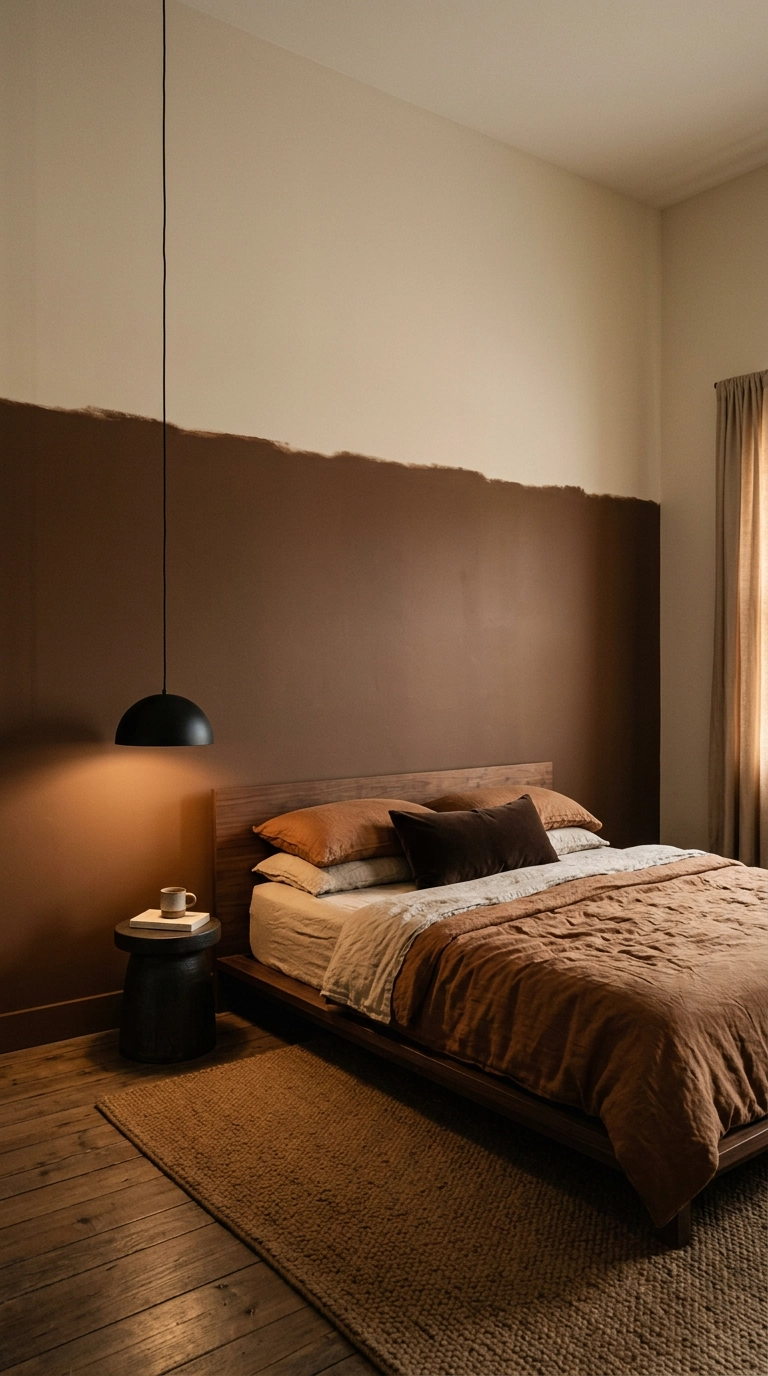
No trim, no budget, no landlord permission for construction – just a line of paint at about seven feet with the deeper shade below. The darker lower band grounds the room at human height while the pale band above lets the ceiling float, which is the whole trick in one afternoon.
22. Finish the Ceiling Itself with Plank or Plaster Texture
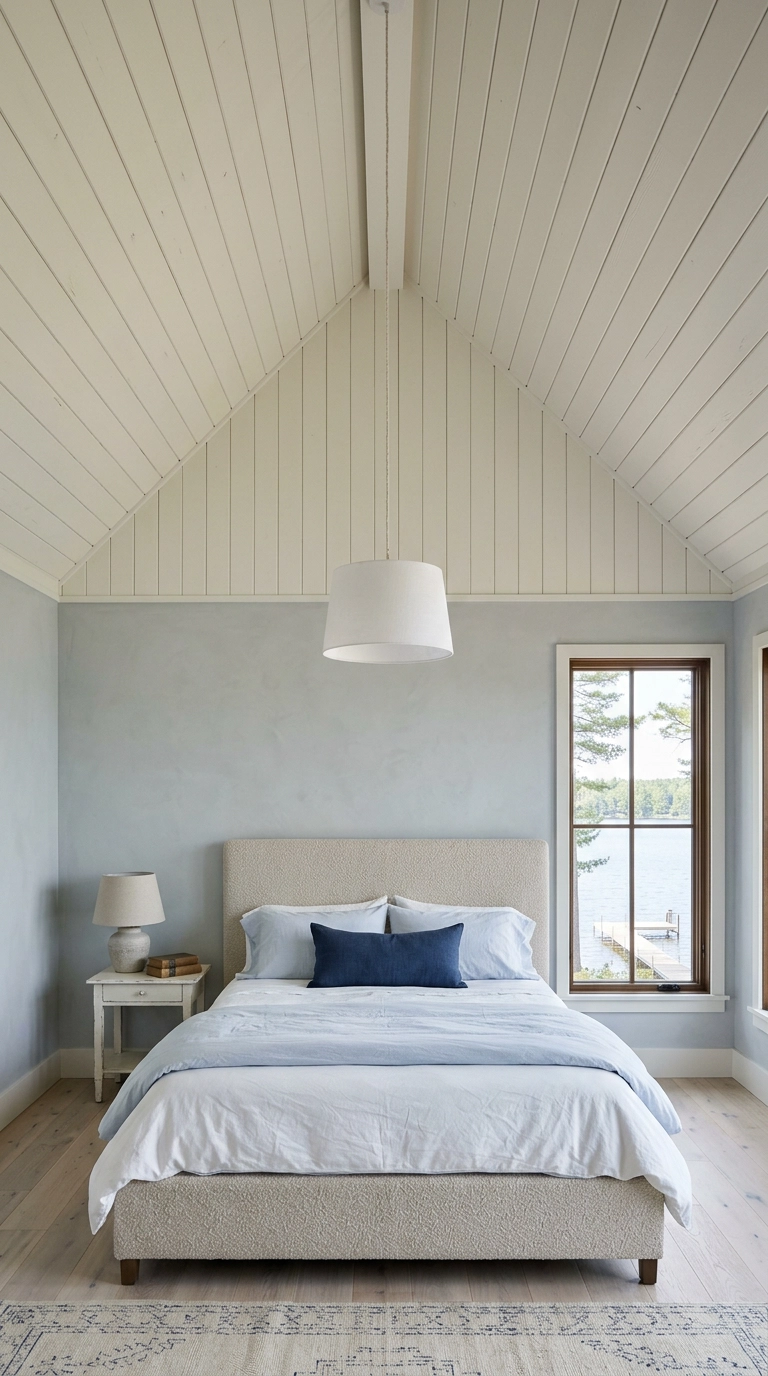
Everyone decorates the walls and leaves the biggest surface in a tall bedroom completely blank. Cladding the ceiling in narrow planks or troweling on a lightly textured plaster gives it a material identity, and I’d end an article on this because it’s the move people never consider and always notice.
Living With All That Air
If you take one thing from this list, make it the curtain rod. I’ve watched a $40 hardware swap and a pair of 120-inch linen panels do more for a 14-foot bedroom than an entire furniture order, simply because the eye finally had a line to follow. Everything else here builds on that same logic – give the height a reason to exist, then put something warm and human back at eye level.
What I’m seeing most this year is people getting braver about the ceiling as a fifth wall. Color drenching a tall room in Farrow & Ball Hague Blue would have terrified my clients five years ago, and now it’s half my requests, right alongside vaulted ceilings clad in pale plank and the low-hung simple drum pendant that Kelly Wearstler’s more theatrical rooms made everyone want. The slat wall and the floor-to-ceiling bookcase are still the two ideas readers save the most, and honestly they deserve it – both solve a tall blank wall for the price of nice wallpaper.
My genuine advice is to start with the two-tone paint line or the leaning mirror this weekend, live with it a bit, and let the bigger projects like beams or motorized shades wait until you know how the room actually feels at 7am and 10pm. Rooms tell you what they need if you give them a minute. If you want more of this – real fixes, honest costs, no filler – sign up for my weekly newsletter and I’ll send the next batch straight to your inbox.


