
23+ Clever Dark Living Room Decor Ideas that Feel Warm and Bright in 2026

Let me save you the mistake I made in my first apartment – a north-facing living room with one window and a neighbor’s brick wall eight feet away, which I promptly painted bright white and somehow made worse. A room that doesn’t get real daylight doesn’t need more white, it needs warmth, layers of artificial light, and surfaces that hand light back to you. I’ve fixed a lot of these rooms since, from garden-level condos to deep railroad apartments, and the wins are usually cheaper than people expect. Here are 23 dark living room decor ideas that actually work on a room the sun forgot.
Dark Living Room Decor Ideas
1. Stop Painting It White and Go Warm Mid-Tone Instead
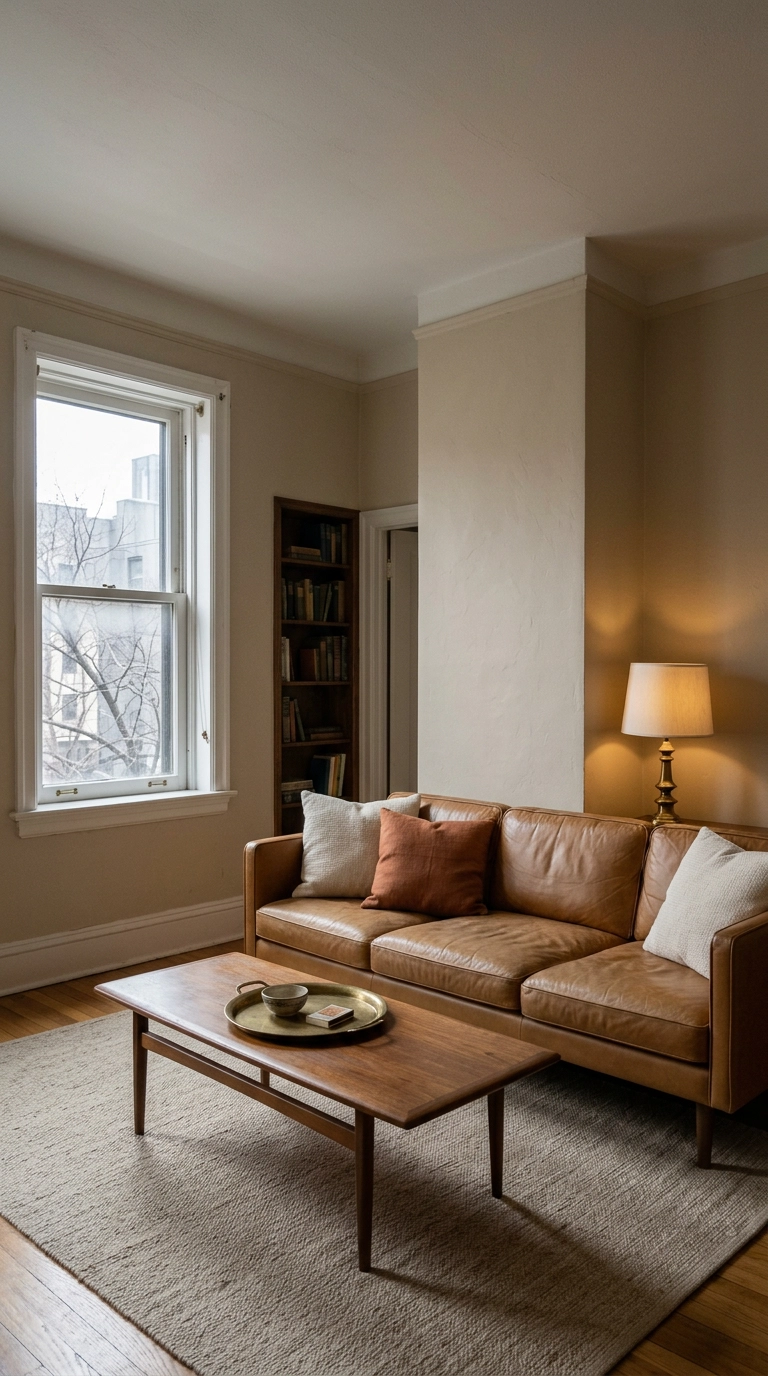
Here’s the counterintuitive part everyone gets wrong: bright white paint in a room with no direct sun reads grey. White has nothing of its own to give – it only reflects the light it receives, so if the light arriving is cold and thin, you get a room the color of a rain cloud.
2. Change Every Bulb to 2700K and Check the CRI Number
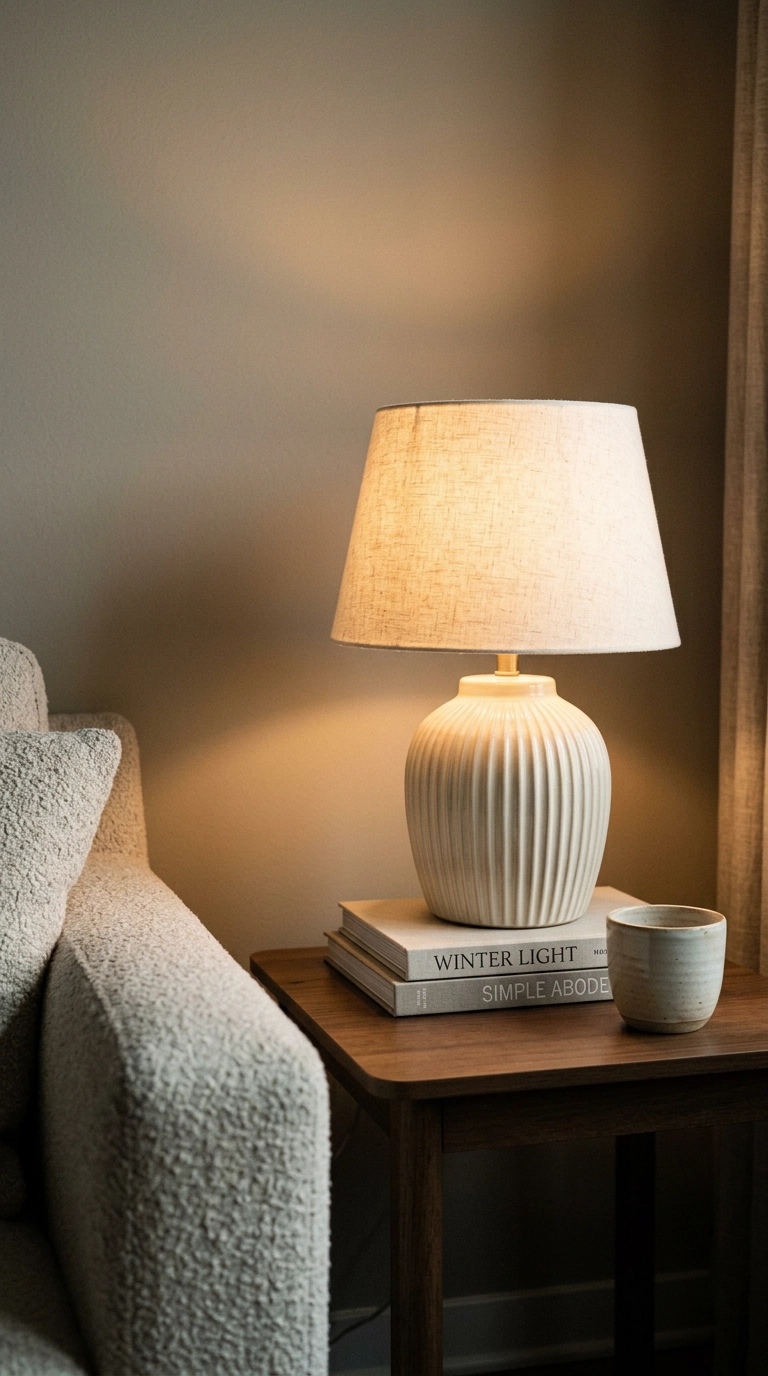
This is the twenty-minute, under-$40 fix and it changes a dark room more than any furniture purchase. Cool 4000K bulbs in a daylight-starved room look like a dentist’s waiting area after 3pm, because you’re adding blue light to a space that’s already reading cold.
3. Light the Room at Three Different Heights
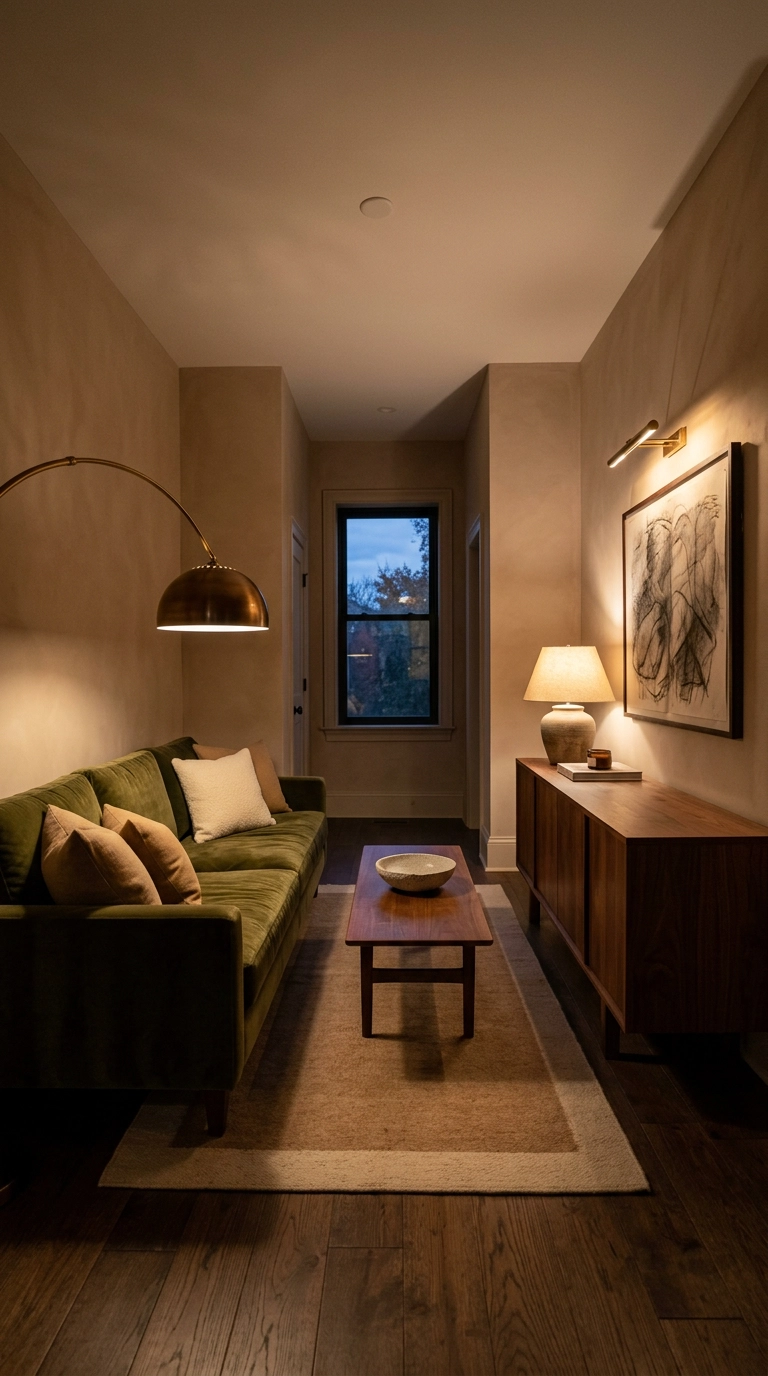
One ceiling fixture in a dark room is the single most common failure I see. Overhead light comes from one direction, flattens everything, and leaves the corners looking like caves, which makes the whole room feel smaller and gloomier than it is.
4. Hang the Mirror Opposite the Window, Not Facing It Head-On
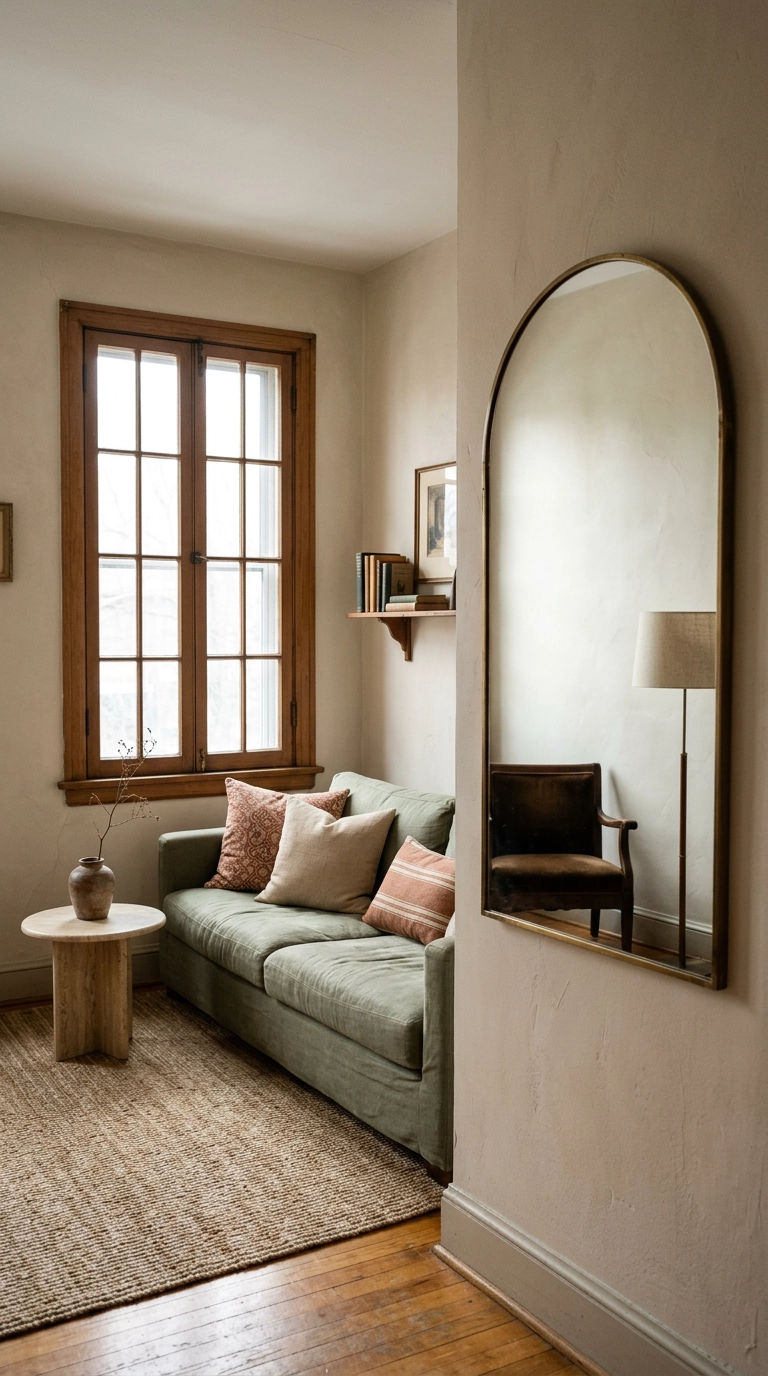
Mirrors do genuinely add light to a dark room, but only if you place them to catch it. A mirror hung directly across from a window mostly just shows you the window and a bright rectangle; a mirror on the adjacent wall, angled a few degrees toward the glass, actually throws daylight deeper into the room.
5. Put the Overhead on a Dimmer and Stop Using It as Your Main Light
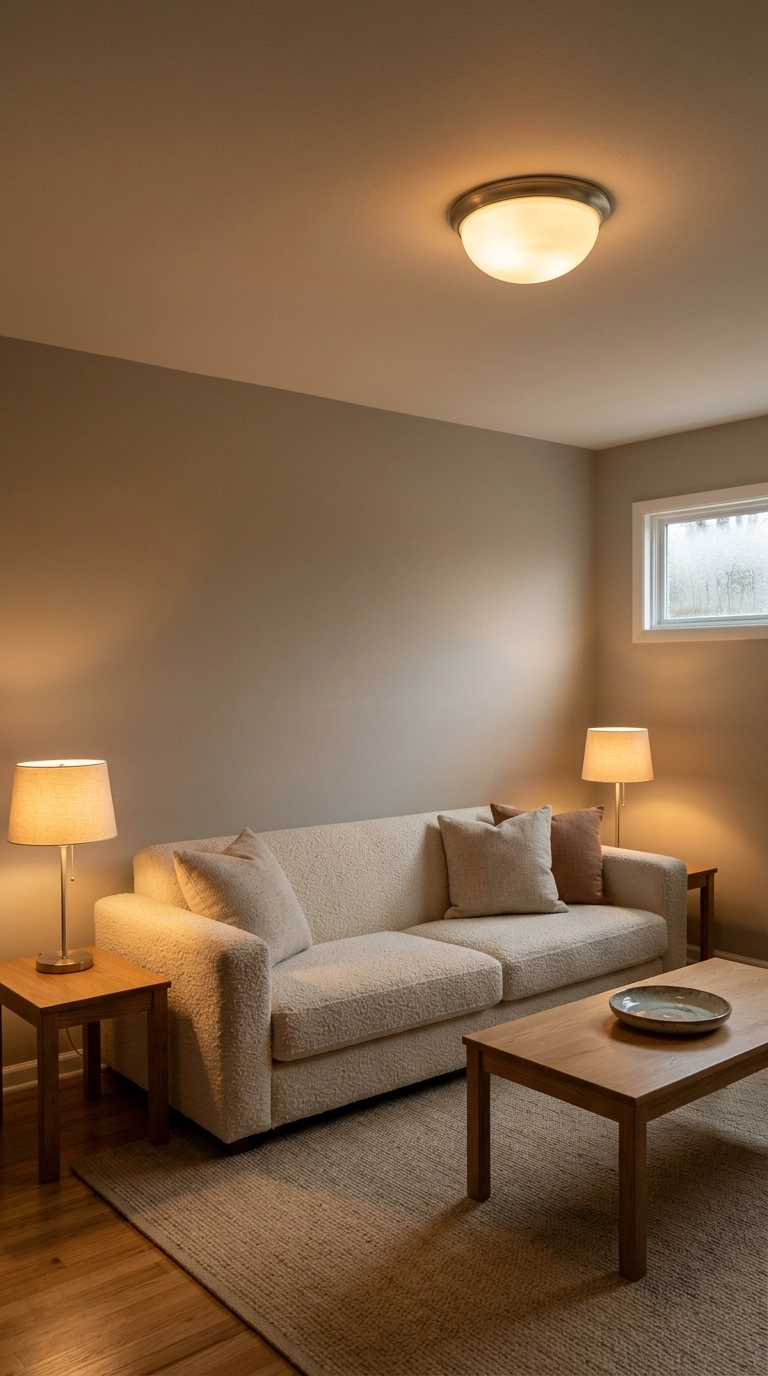
A dark room needs its ceiling light, it just shouldn’t be the star. Run it at full brightness and everything else you’ve done disappears – the lamps stop registering and the room goes flat, which is exactly the problem you were trying to solve.
6. Swap Flat Paint for Eggshell so the Walls Bounce Something Back
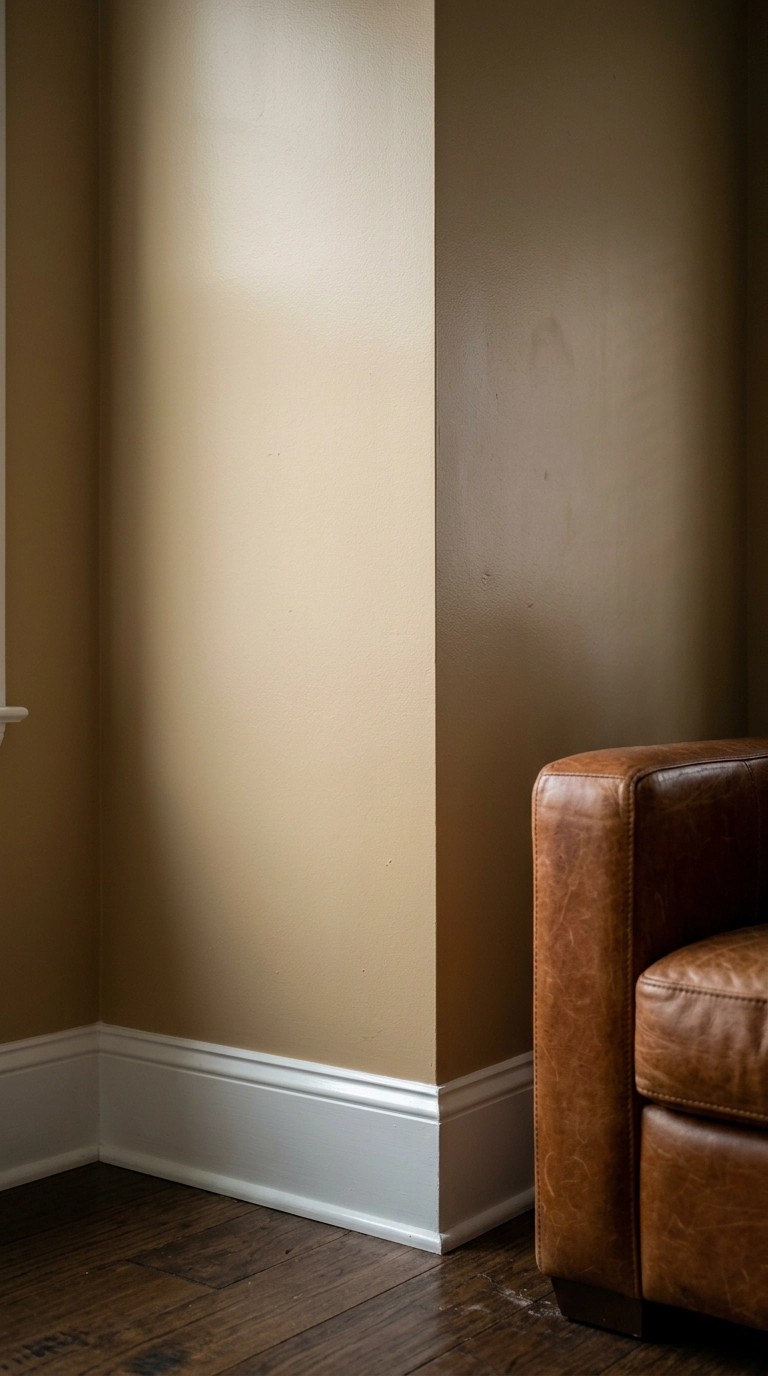
Flat and matte paint absorbs light. It’s beautiful in a sunny room where you’re trying to take the edge off, and it’s the wrong choice in a room where every photon counts.
7. Hang the Curtains Wide Enough to Fully Clear the Glass
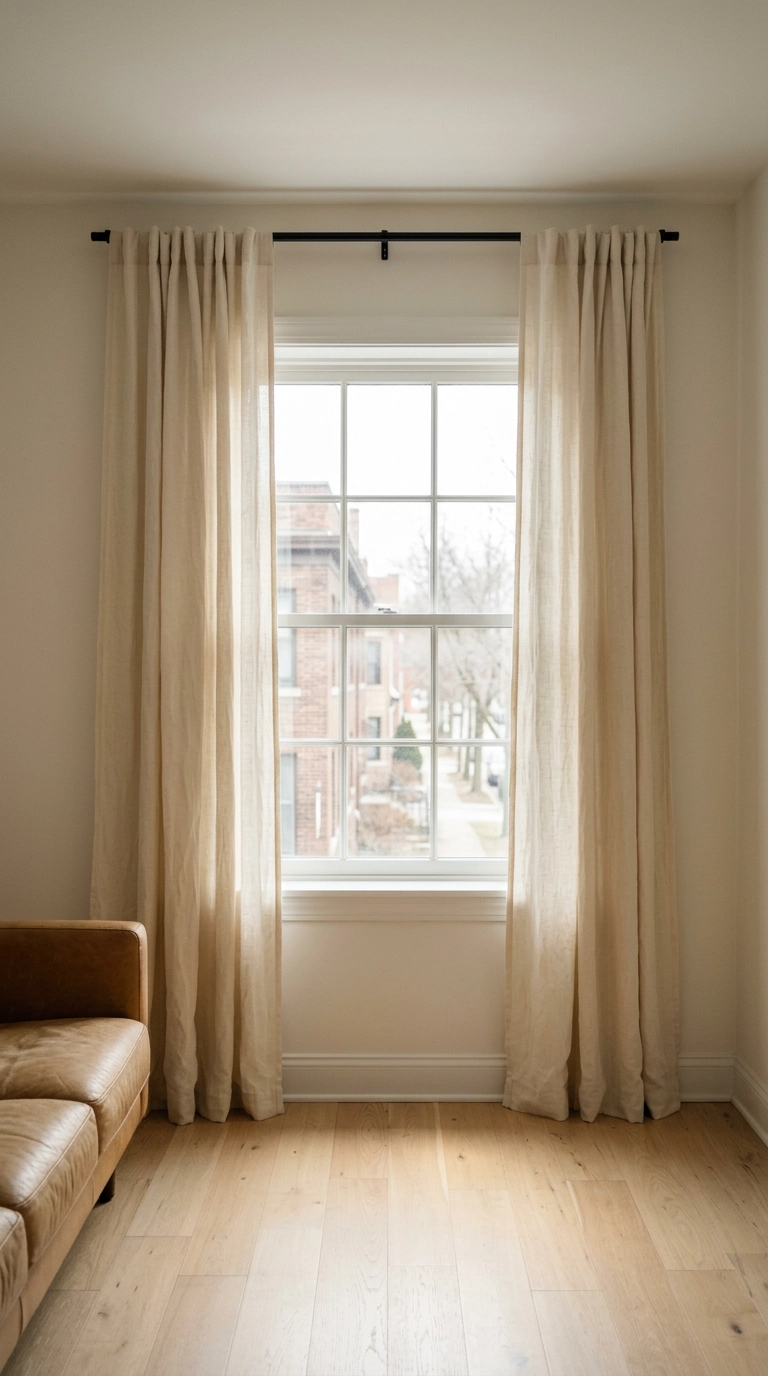
In a room with one small window, curtain panels resting over the edges of the glass can eat a quarter of your daylight. That’s not a rounding error – it’s the difference between needing lamps at 2pm and making it to 5pm.
8. Add One Genuinely Reflective Metal Finish and Repeat It Three Times
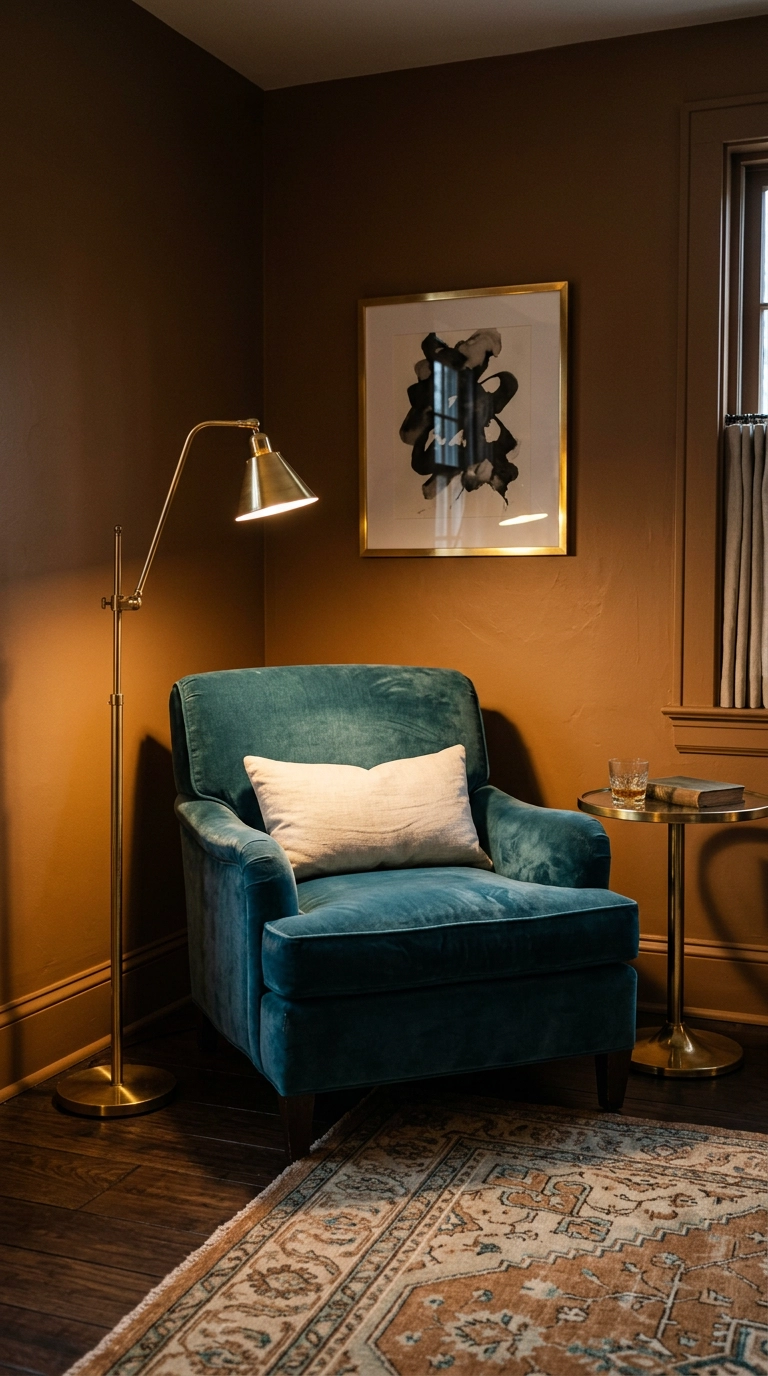
In a dark room, shine is not tacky, it’s functional. A polished or lightly antiqued metal catches whatever light exists and turns it into a bright point, and those points are what make your eye read the room as lit.
9. Choose White or Ivory Lampshade Linings, Never Dark Ones
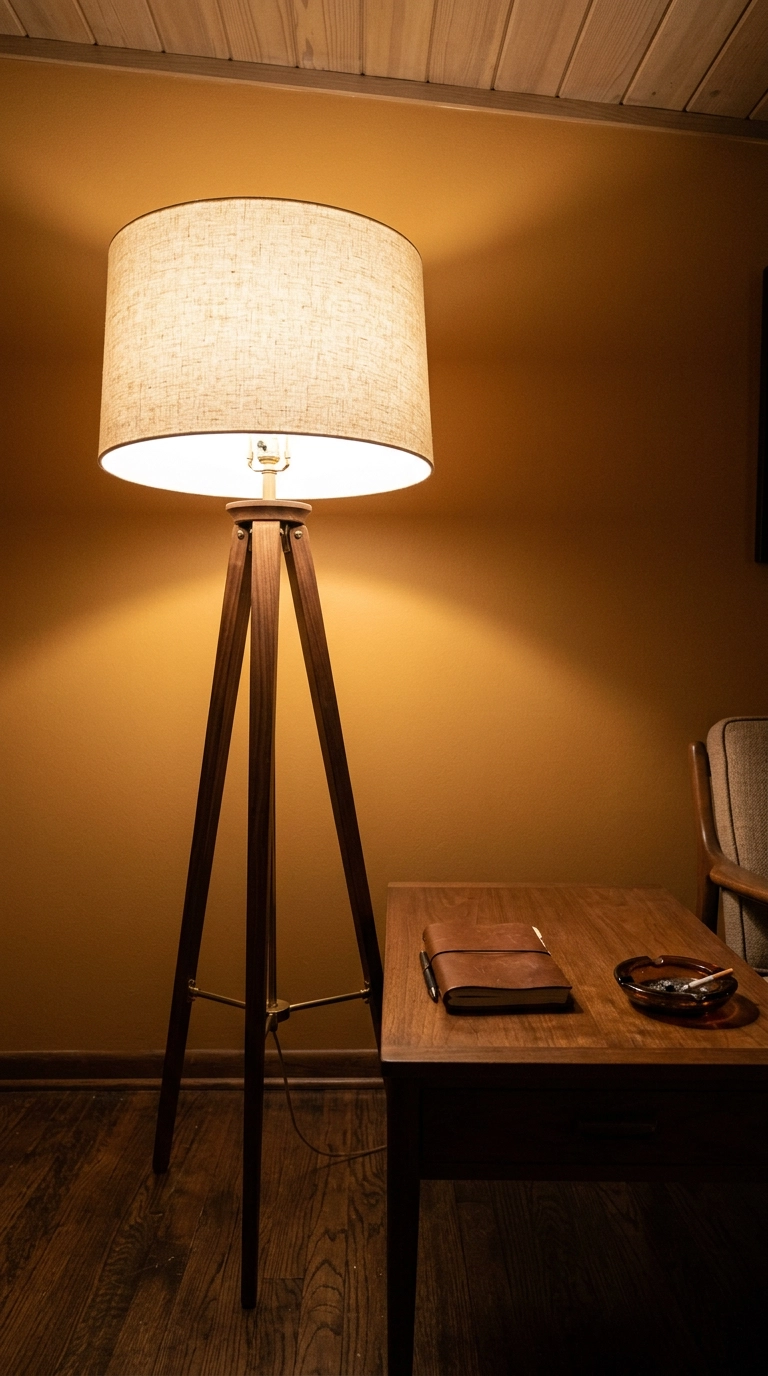
This is the detail nobody checks. A shade lined in black, gold-black, or dark fabric contains the light and gives you a small moody pool, which is a lovely effect if the room already has plenty of daylight and a real problem if it doesn’t.
10. Trade the Dark Rug for a Pale One and Reclaim the Floor
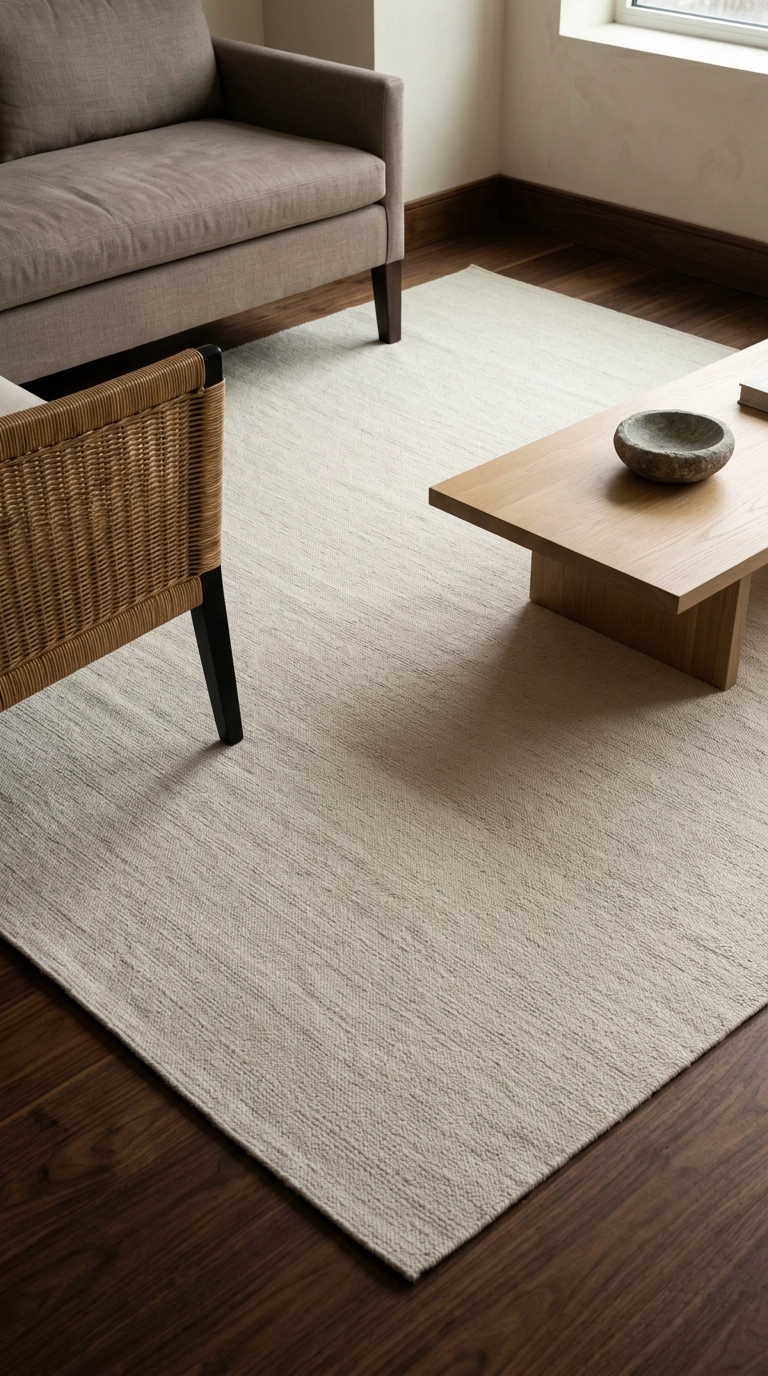
Floors are the biggest single surface in a living room and dark ones absorb a shocking amount of light. If you’re stuck with builder-grade espresso laminate or old dark-stained oak, a large pale rug is the fastest fix short of refinishing.
11. Use Plug-In Sconces to Light the Walls Without Wiring
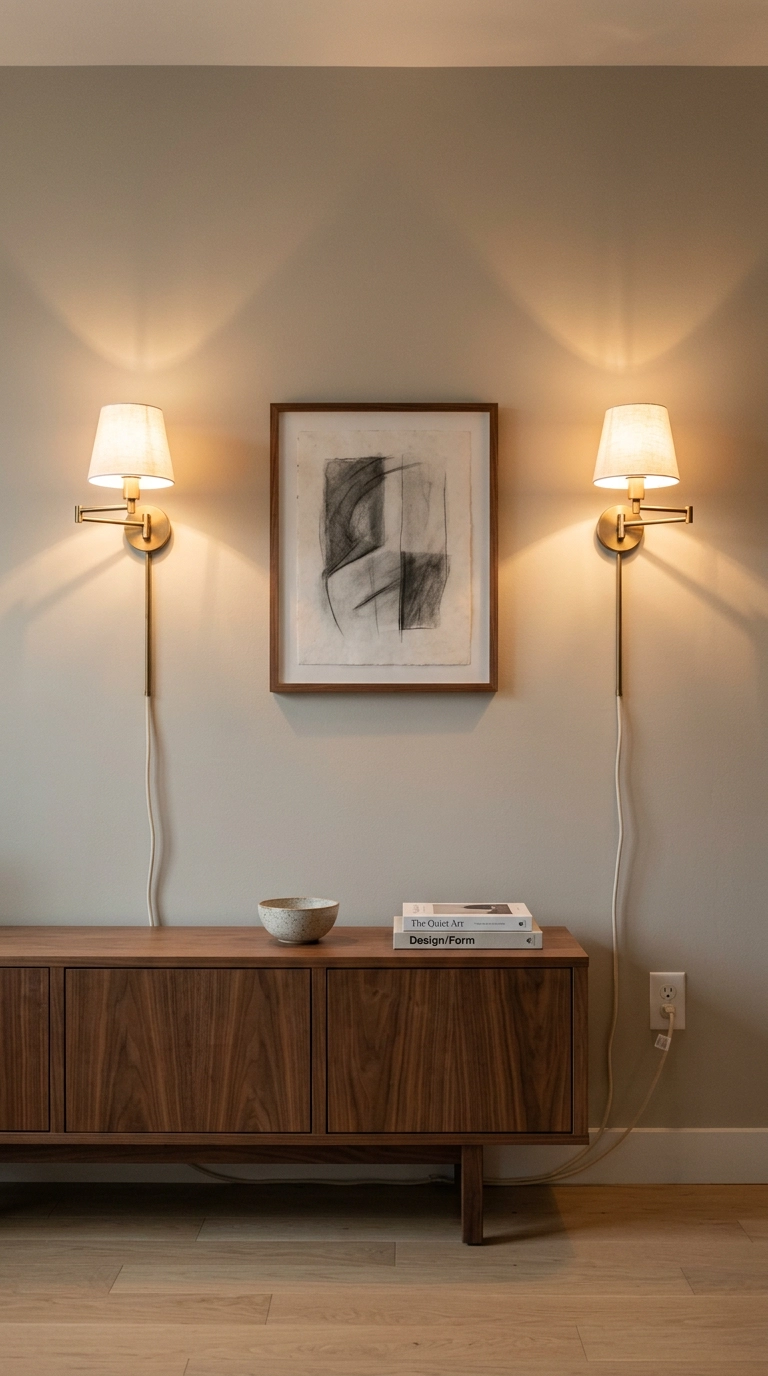
Washing a wall with light is the trick that makes a dark room feel bigger, because a lit vertical surface reads as space rather than a boundary. Most people skip it because they assume it means an electrician.
12. Pick Leggy Furniture and Let Light Travel Underneath
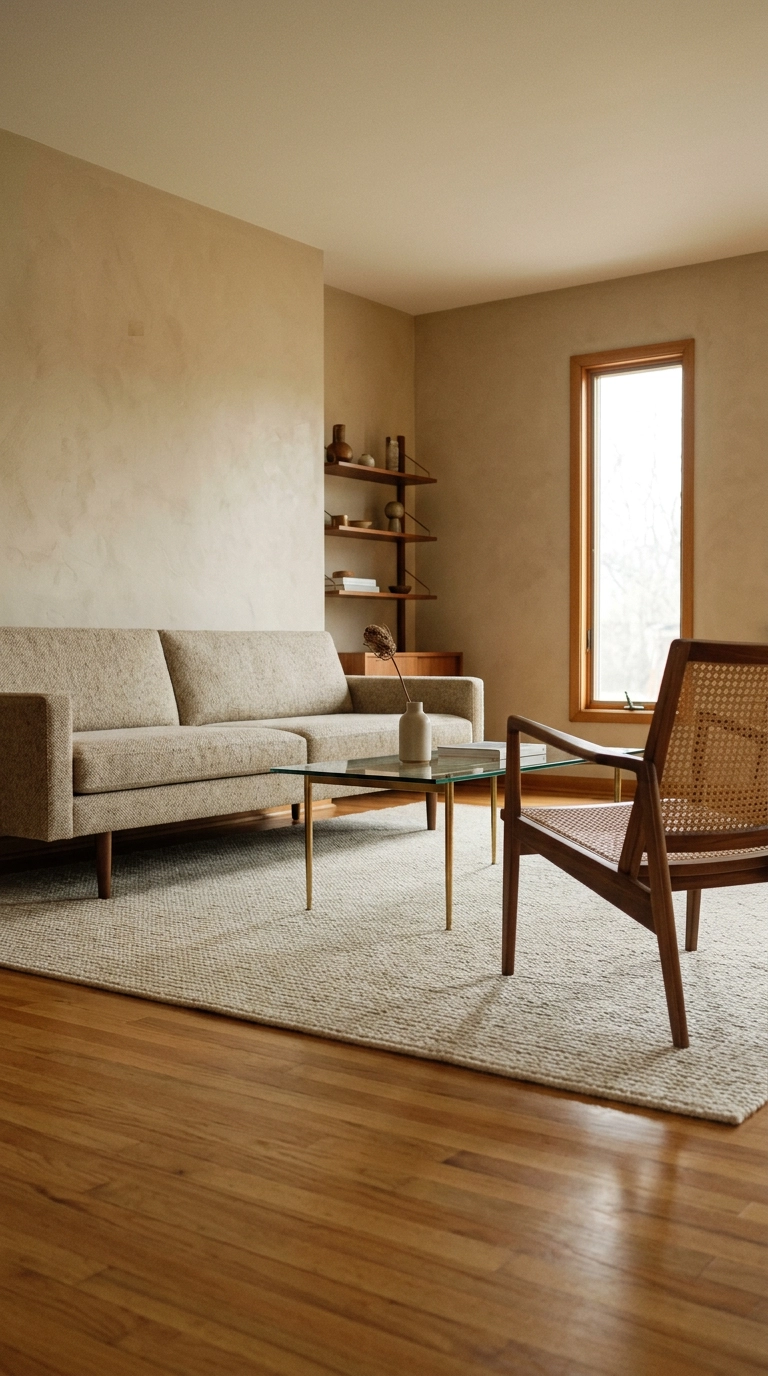
Skirted sofas, chunky ottomans, and solid-base cabinets all sit on the floor like blocks, which visually chops a dim room into pieces. Furniture on visible legs lets your eye – and whatever light you have – run continuously across the floor, and a continuous floor plane always reads bigger.
13. Paint the Ceiling a Warm Off-White, Not Builder Flat White
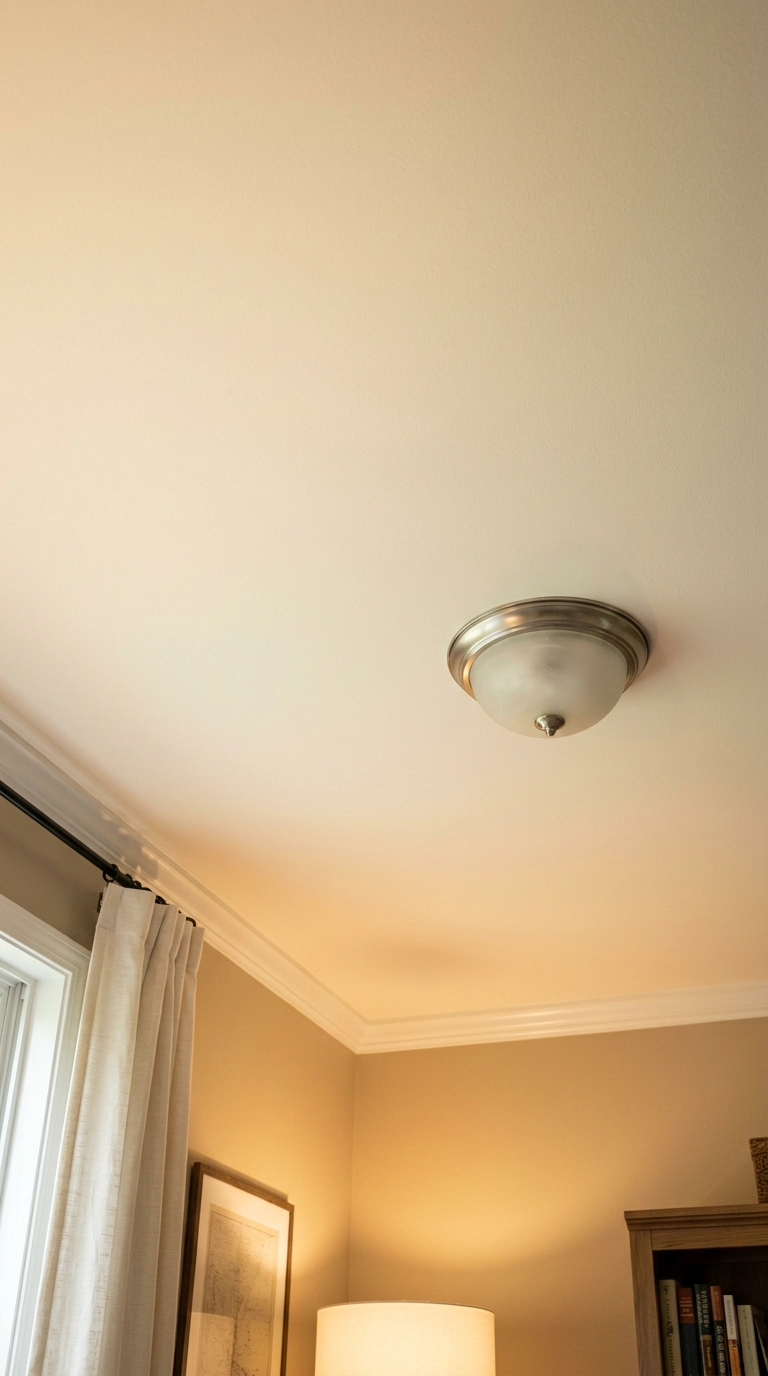
In a dark room, the ceiling is your reflector. It’s the one big surface you can make brighter than everything else without making the room feel cold, because you’re not looking directly at it.
14. Move the Sofa Off the Window Wall
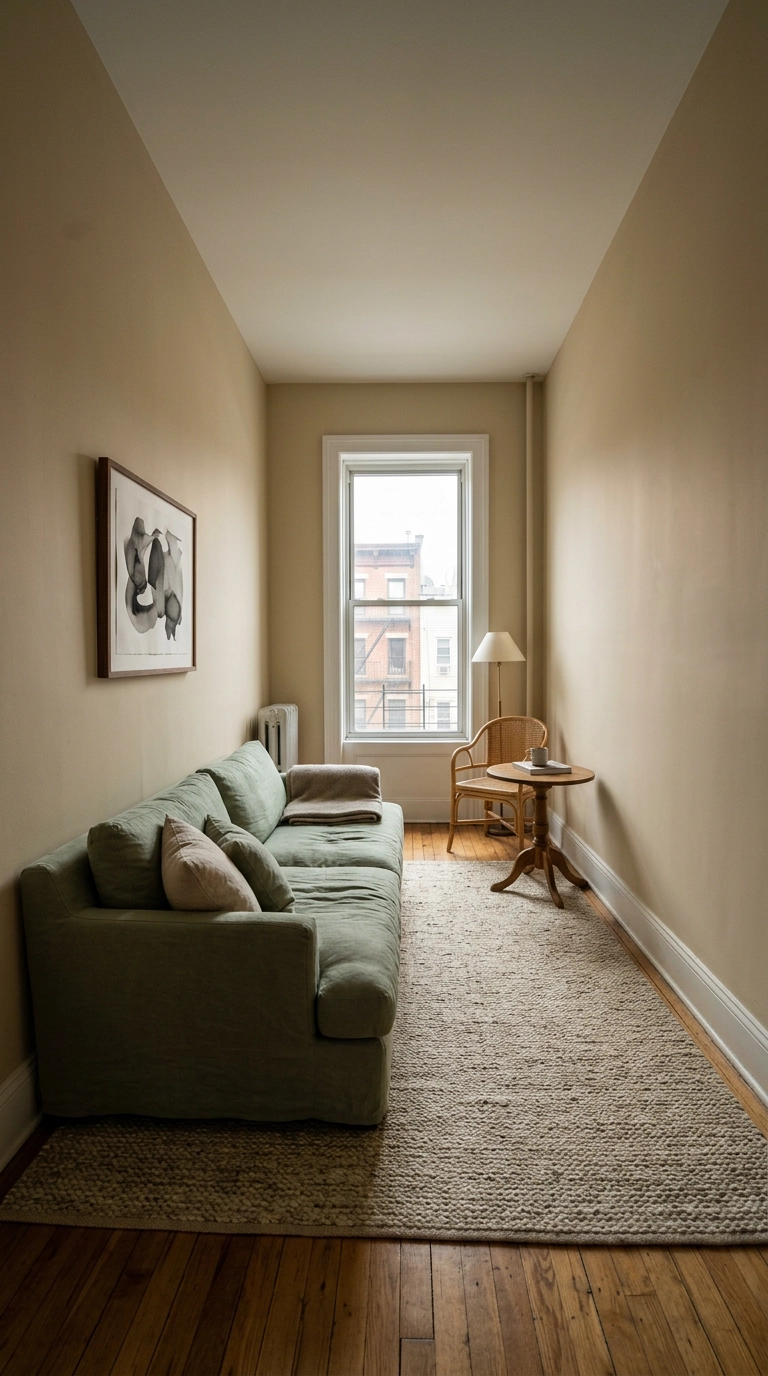
We shove sofas under windows out of habit, and in a deep room with one window that’s the worst place for the biggest object you own. It sits in the light path and blocks daylight from reaching the rest of the room.
15. Add a Glass, Lucite, or Mirror-Topped Table
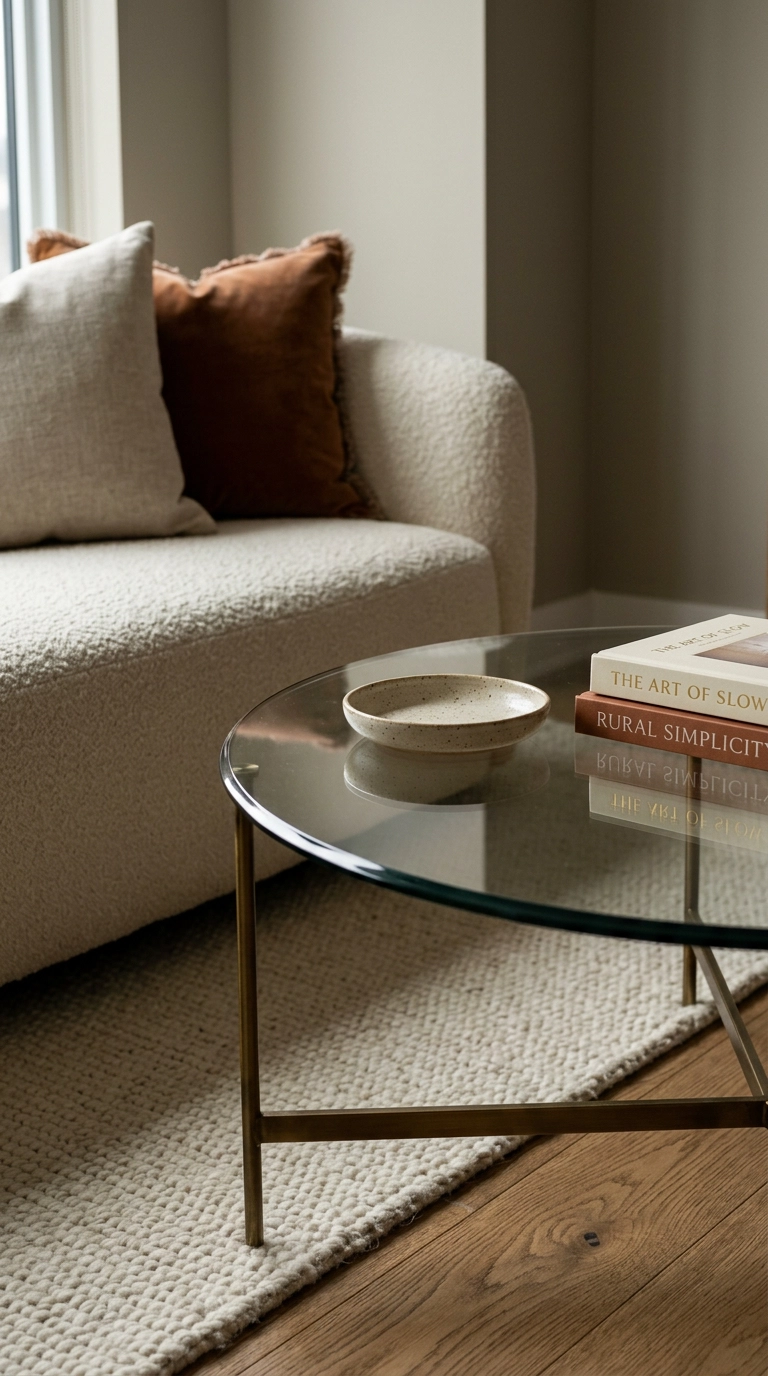
A big solid coffee table in the middle of a dark room is a mass your eye has to work around. A transparent one occupies the same functional space while visually disappearing, so the pale rug you just bought keeps working.
16. Use Silk, Satin, and Velvet for Sheen Instead of Gloss Paint
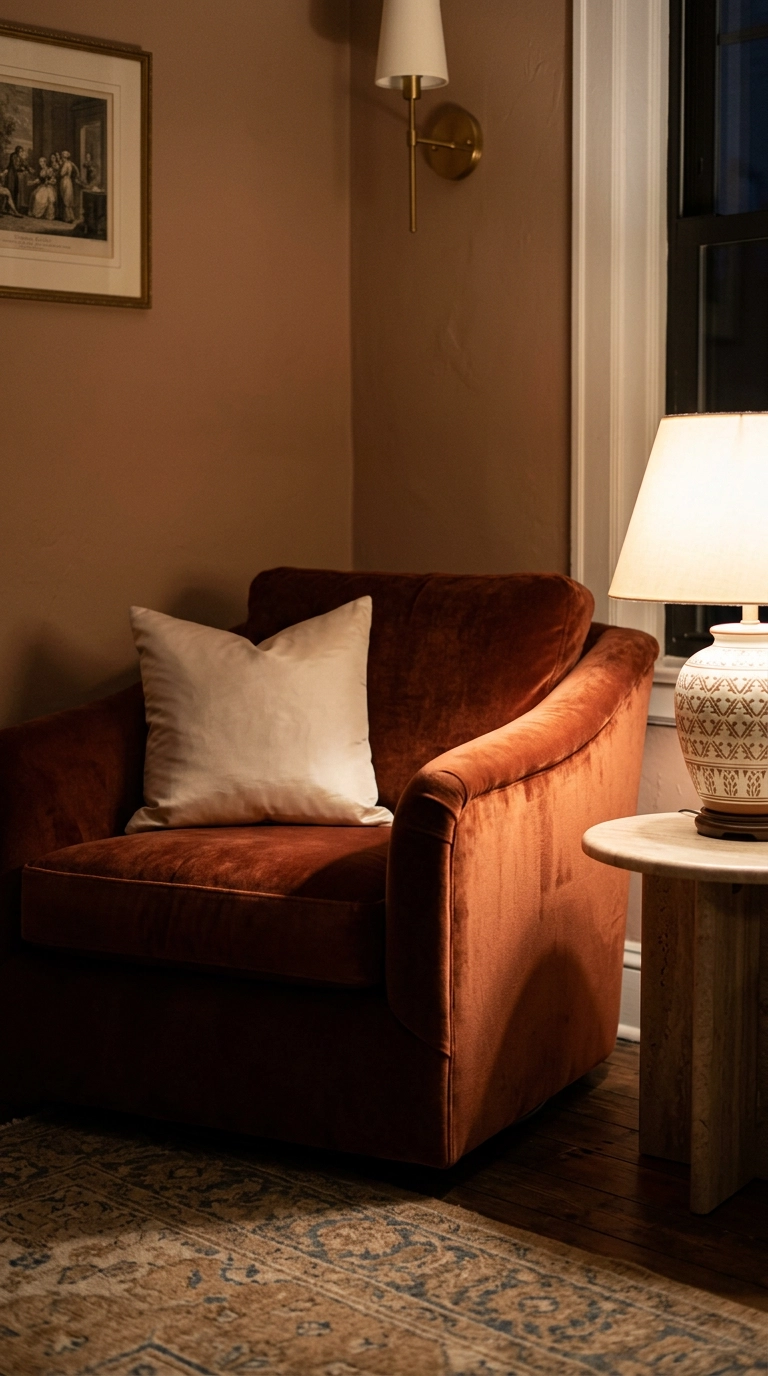
High-gloss walls are the internet’s favorite dark-room advice and I rarely use them, because gloss shows every drywall imperfection and most American walls are not that flat. Get the same light-catching effect from textiles instead.
17. Keep Wood Tones Warm and Mid-Range, Not Grey or Espresso
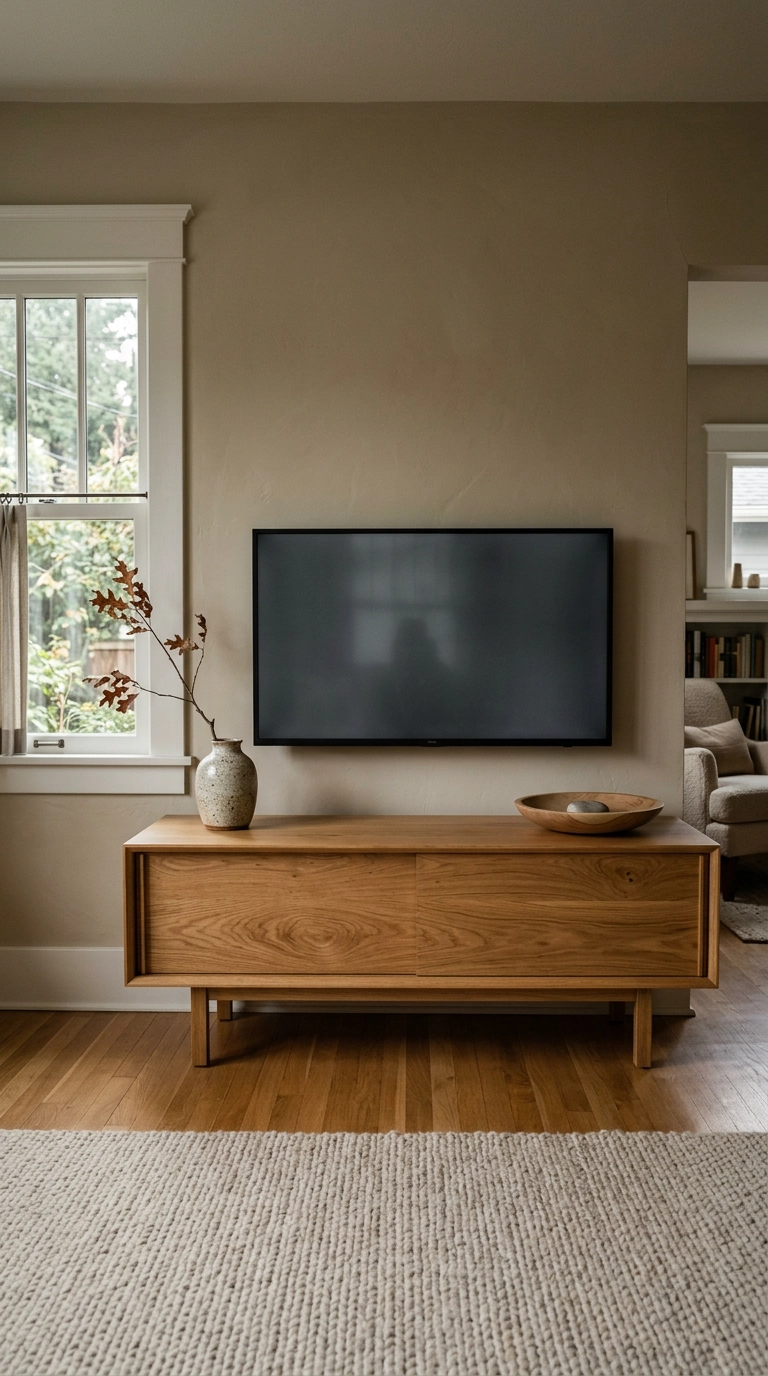
Grey-washed and espresso wood finishes were everywhere for a decade and they’re brutal in a daylight-poor room. Grey wood has no warmth to contribute, and near-black wood just reads as a hole in the wall.
18. Style Around Light-Catching Materials: Glazed Ceramic, Alabaster, Polished Stone
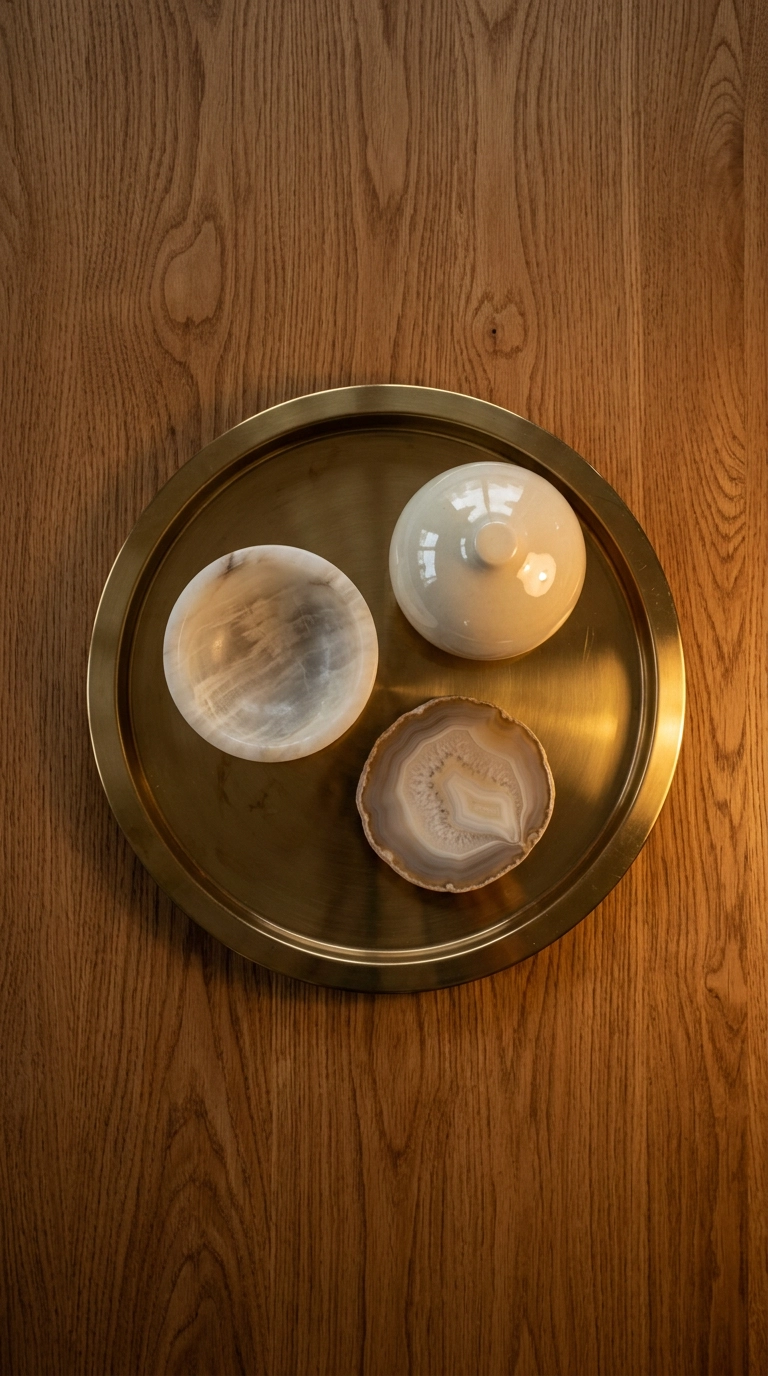
Matte stoneware is having a long moment and it’s the wrong instinct here. In a room with limited light, a matte surface gives you nothing back, while a glazed or polished one creates a small bright specular highlight – a tiny point of reflected light – and your eye reads those points as sparkle.
19. Choose Art With a Pale Field, and Light It
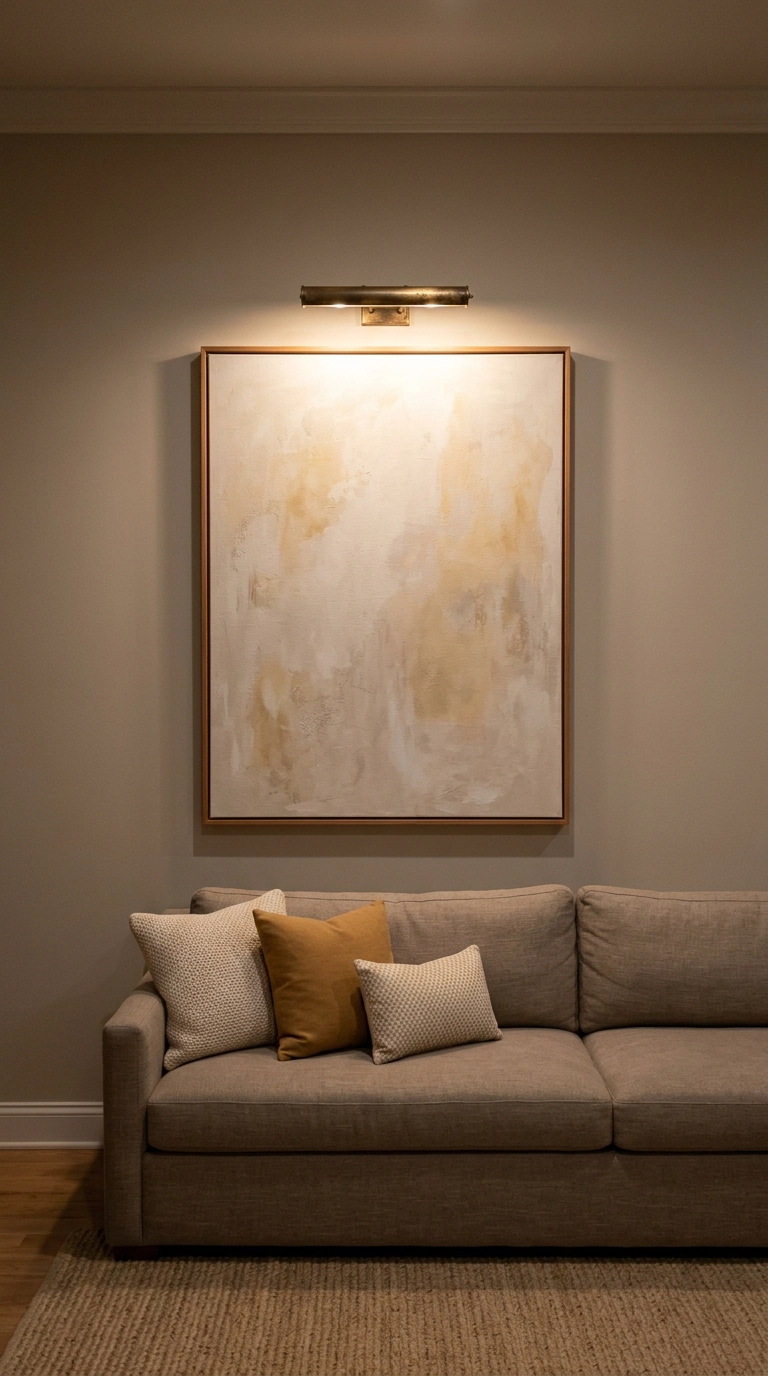
Dark, dense art in a dark room is a double negative. A big piece with a pale field – bone, sand, soft ochre, a light abstract wash – acts almost like a second window because it holds a large area of light value at eye level.
20. Put the Lamps on Smart Plugs and Turn Them On Before Dusk
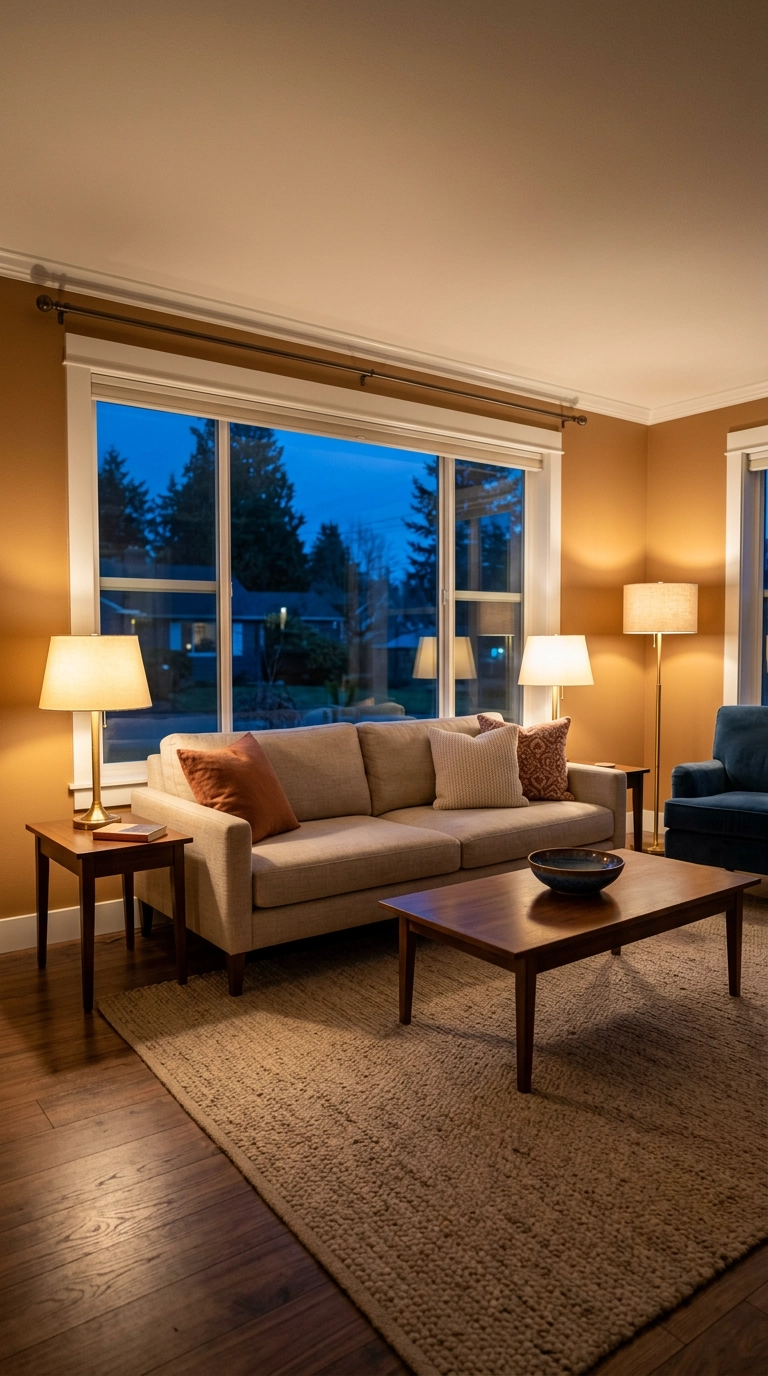
The worst hour in a daylight-starved living room is the transition – roughly 30 to 60 minutes before sunset, when your eyes have adjusted down and the room feels genuinely bleak. Most people wait until it’s fully dark to turn on lamps, and sit through the grim part.
21. Wash the Ceiling With Uplight From Behind the Furniture
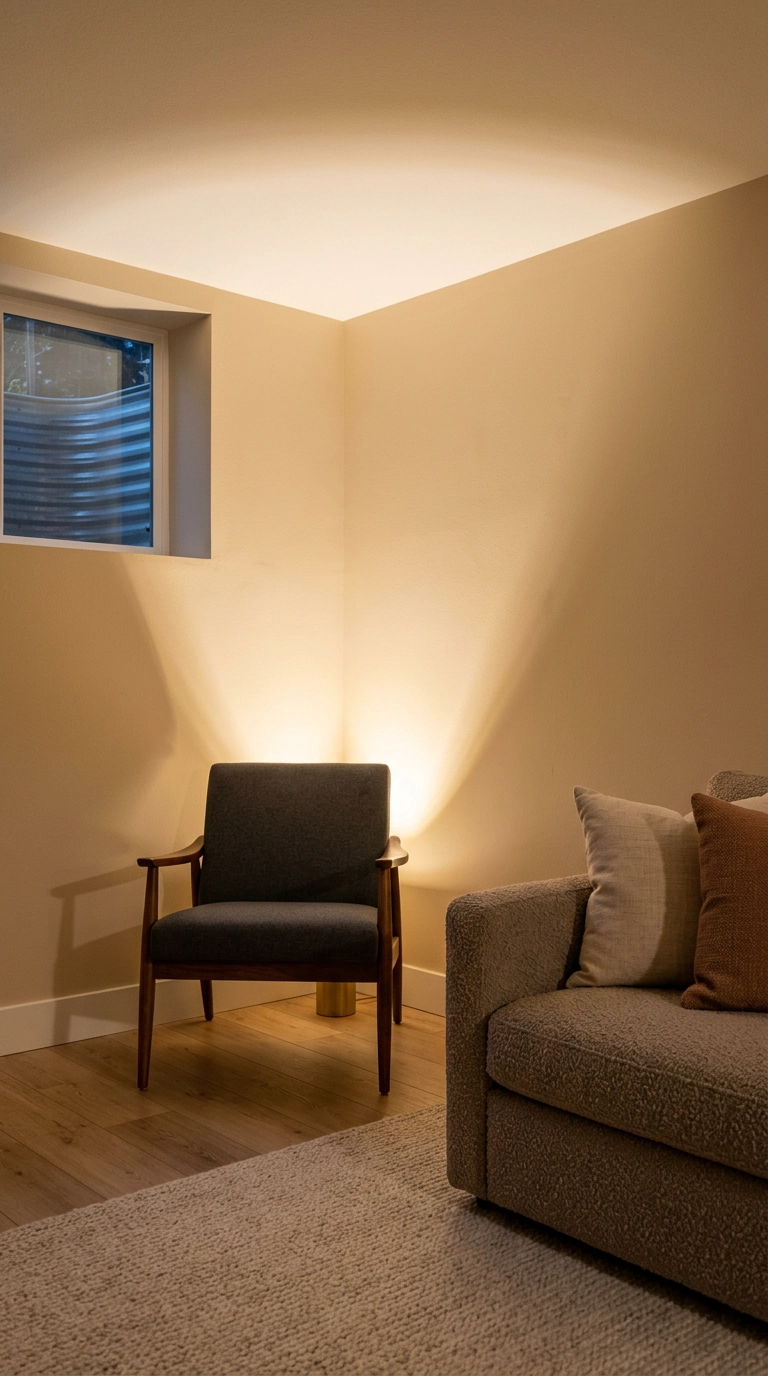
This is the professional move that reads as expensive and costs about $60. A small can uplight sitting on the floor behind a chair or plant stand throws light up the wall and across the ceiling, and because you can’t see the source, the room just seems to be glowing from somewhere.
22. Steal Light From the Next Room With a Glass or Transom Door
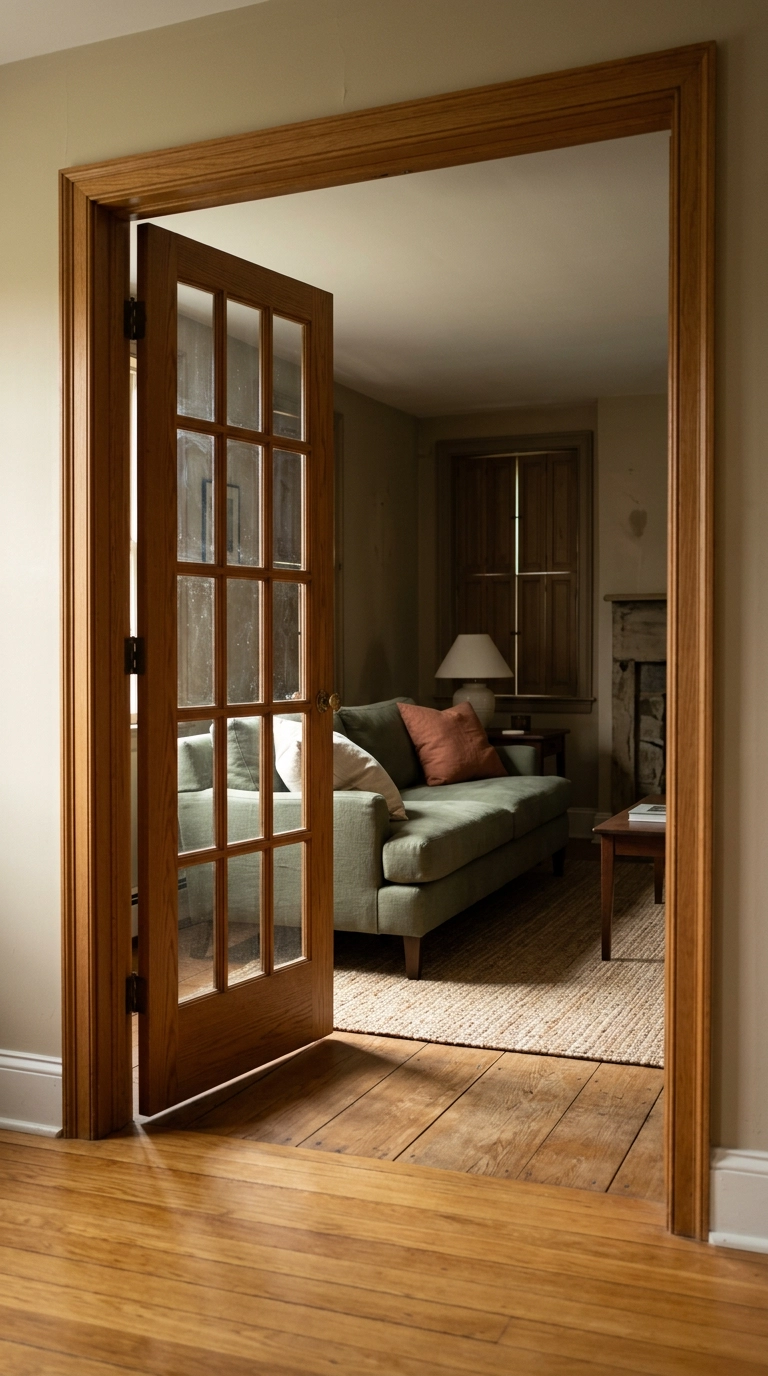
If the room next door gets better light than yours, take some. Swapping a solid interior door for a glazed or reeded-glass one, or adding a transom window above the frame, moves real daylight between rooms without touching an exterior wall.
23. When the Room Will Never Be Bright, Stop Fighting and Go Deep
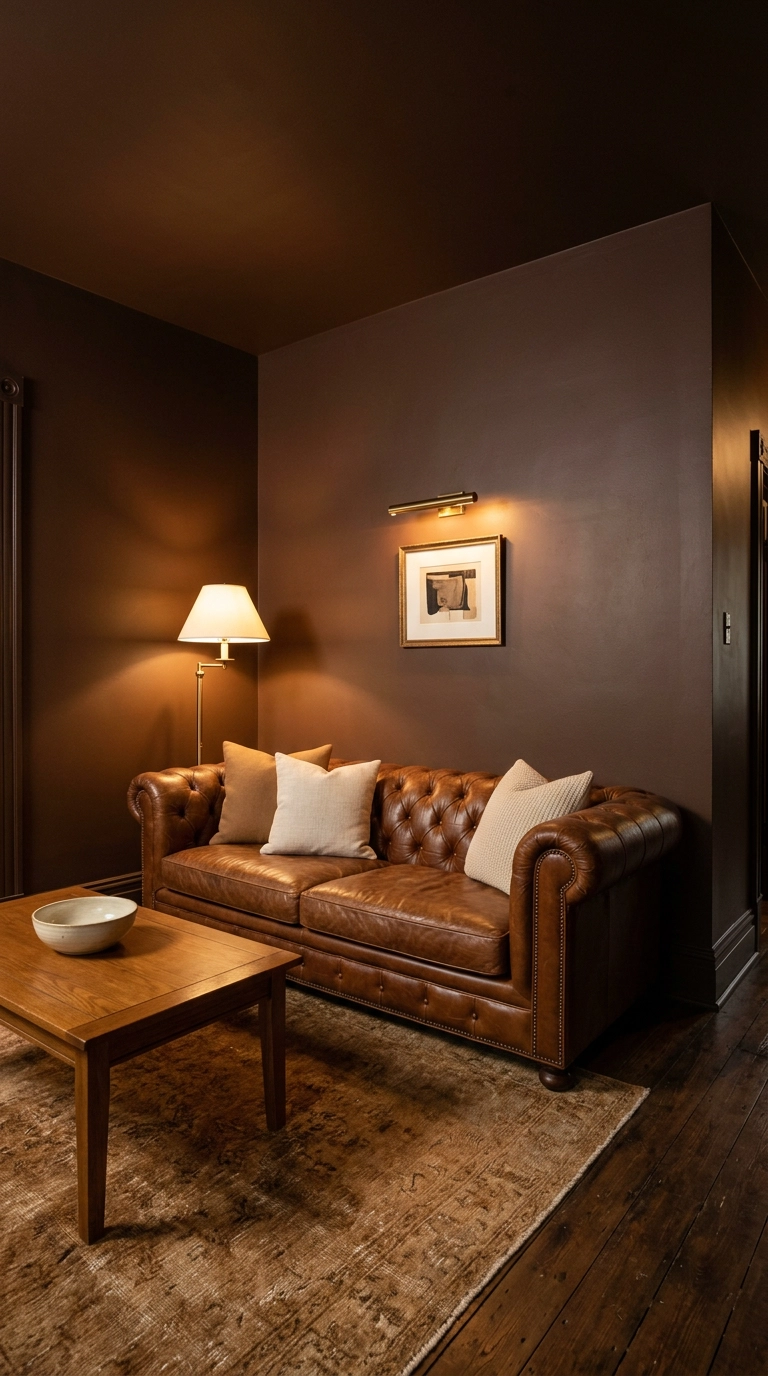
Sometimes there is no fixing it. A garden-level room with a light well, or a den with one window facing a fence, is never going to be airy, and every pale scheme you try will just look washed out and disappointed in itself.
Where I’d Actually Start
If this list feels like a lot, the honest shortcut is three things that cost under $100 combined: 2700K bulbs with a CRI of 90 or better in every socket, ivory-lined shades with open tops, and a third lamp somewhere you don’t currently have one. That trio fixes the majority of dark living rooms I walk into, and none of it needs a landlord’s permission. Do it before you buy a single piece of furniture.
What’s genuinely changed is that designers stopped prescribing white for dark rooms. The advice now runs the other way – warm mid-tones, saturated envelope colors, and layered lamplight instead of one bright overhead. Farrow & Ball has been saying for years that a north-facing room needs pigment rather than pale paint, and you can see the same logic in the way Beata Heuman and Nate Berkus light small dim rooms: several warm sources, one reflective metal repeated, and a pale piece of art doing the work a window can’t. The dark-and-warm den is the most-saved room type on my feed right now, and half of those rooms started as somebody’s problem corner.
Pick the version that matches your situation – bulbs, a leaned floor mirror, and plug-in sconces if you’re renting, eggshell paint and a warm ceiling if the walls are yours, and the full chocolate-drenched treatment if the room is genuinely hopeless and you’re ready to enjoy that. If this helped, sign up for my weekly newsletter and I’ll keep sending the paint names, bulb specs, and lighting sources I’m using in real client homes.


