
23+ Southwest Living Room Decor Ideas that are Warm and Gorgeous in 2026

I spent a winter styling a client’s adobe-inspired ranch outside Tucson, and it permanently rewired how I think about warm rooms — every material out there is doing something, the clay walls hold heat, the leather softens, the wool weaves cut the glare. Southwest style gets flattened into cactus throw pillows and orange everything, and honestly, that version deserves the eye-roll it gets. The real thing is quieter: terracotta and sand, saguaro green, a hit of turquoise, all of it warmed up with leather and raw wood. Here’s how I’d actually build that room in 2026, whether you own a bungalow in Phoenix or rent a fourth-floor walkup in Chicago.
Southwest Living Room Decor Ideas
1. Anchor the Room with a Limewashed Terracotta Wall
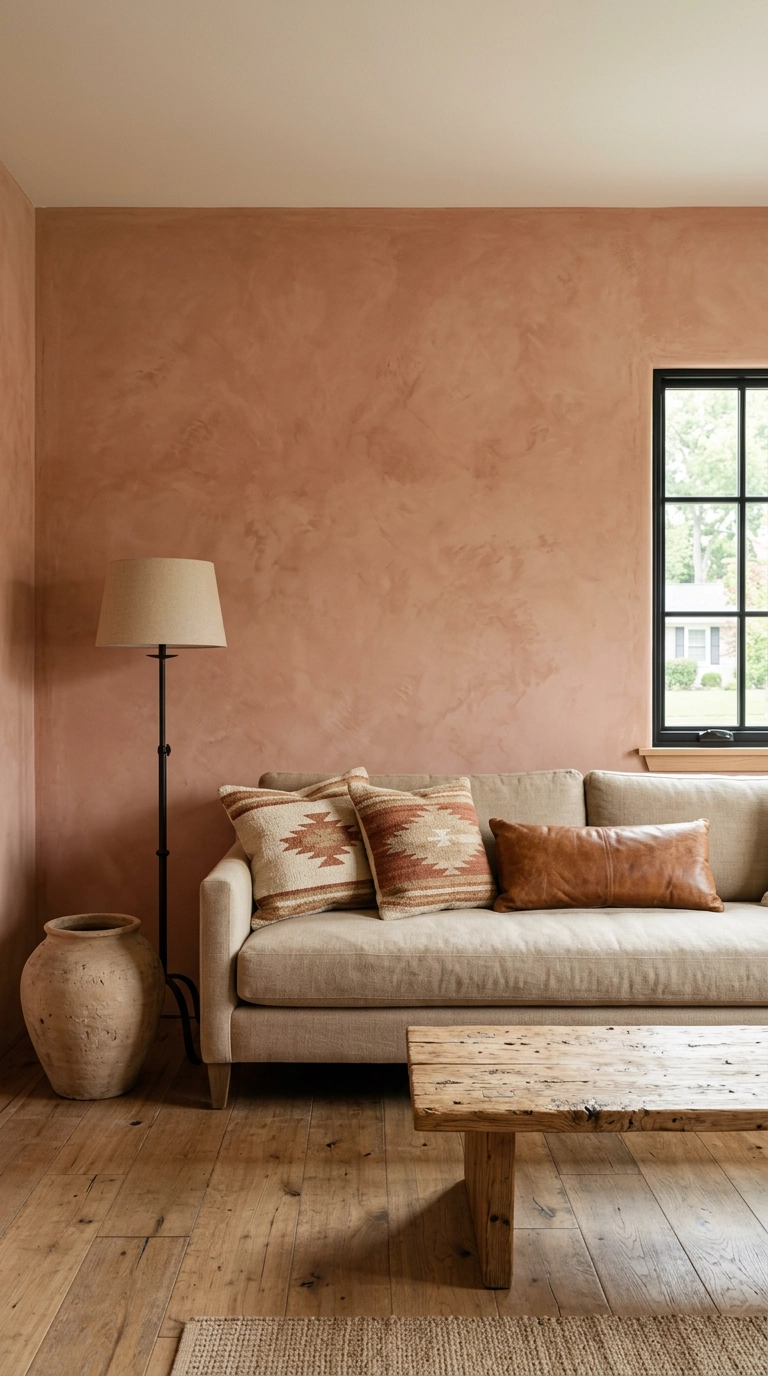
Limewash is the single highest-impact move in this whole article, and it’s about a $90 gallon plus one Saturday. The reason it beats flat paint is texture — the mineral finish dries unevenly, so the wall shifts from clay to dusty rose as the light moves across it, which is exactly what real adobe does.
2. Layer a Vintage Kilim Over a Big Jute Base
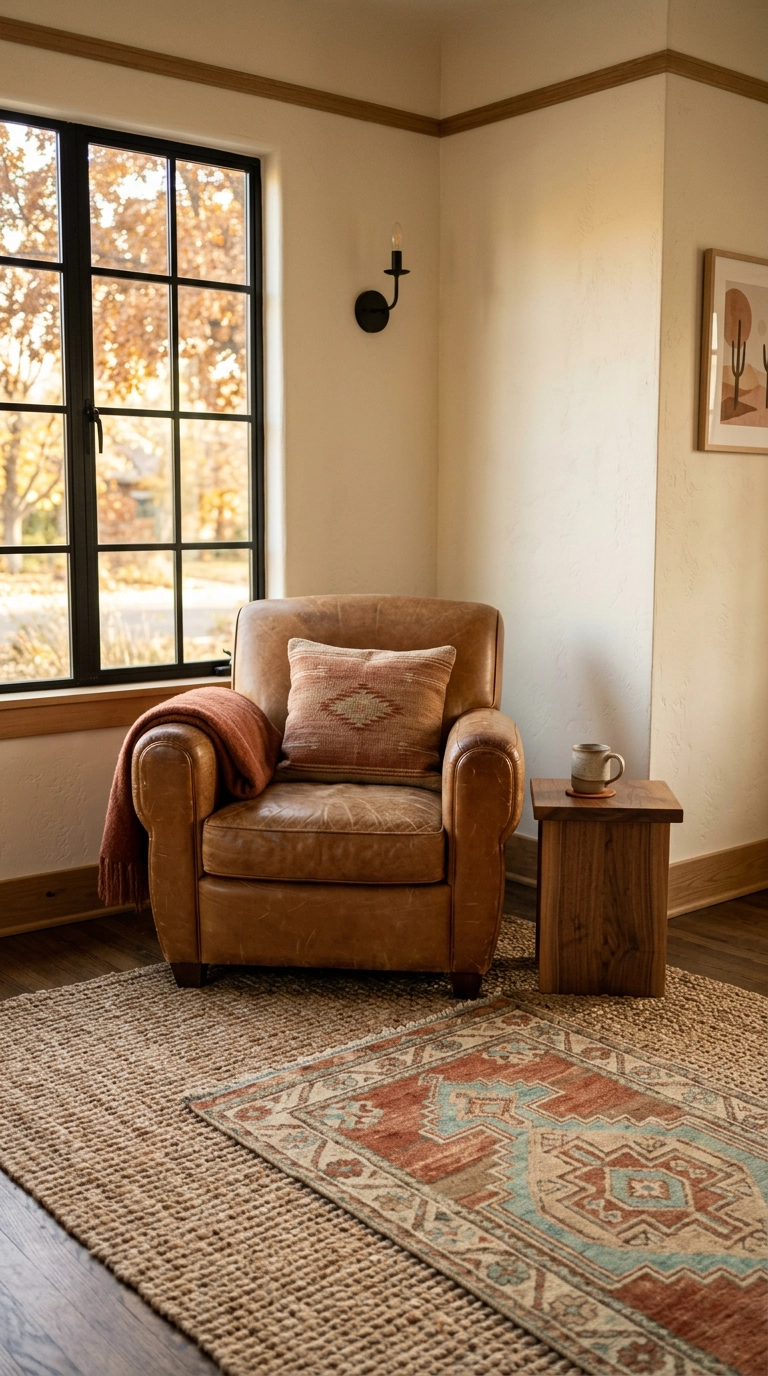
Buy the jute one size bigger than feels reasonable — in most American living rooms that’s an 8×10 minimum, 9×12 if you have a sectional. The rule I never break: the front legs of every single seat land on the rug, otherwise the furniture looks like it’s drifting apart.
3. Bring In a Saltillo Tile Floor or Its Convincing Fake
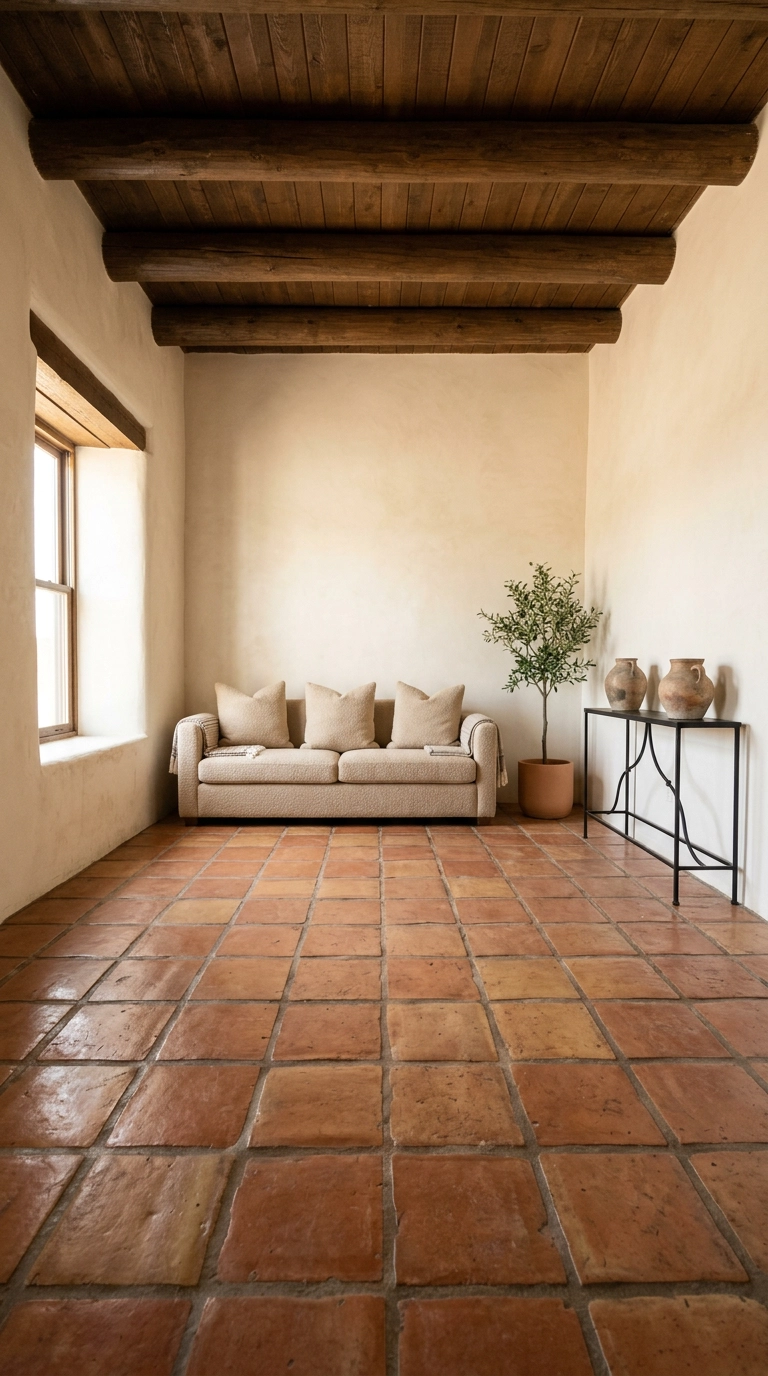
Saltillo is the floor that makes a room read Southwest before you put a single object in it. Real unglazed Saltillo runs about $3 to $6 a square foot, but it’s porous and needs sealing, so budget the labor honestly — this is a full weekend with a wet saw, not an afternoon.
4. Commission a Weave from a Native Artisan Instead of Buying a Knockoff
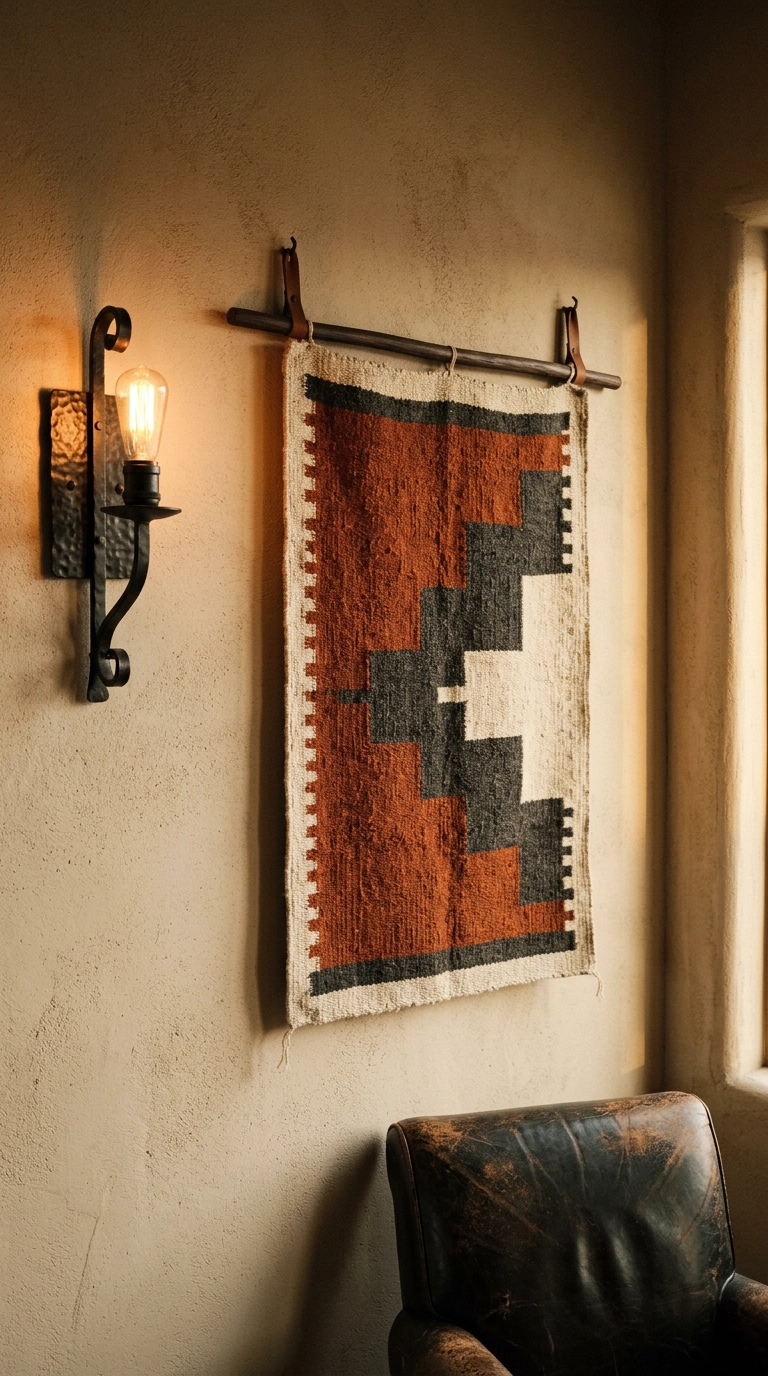
This is the one I’ll get on a soapbox about. Navajo-inspired geometric weaves are everywhere in mass-market decor, and the mass-market version is a machine-printed rectangle that funds nobody — meanwhile actual Diné weavers sell directly through trading posts, tribal marketplaces, and the Santa Fe Indian Market every August.
5. Swap One Sofa for a Cognac Leather Chesterfield
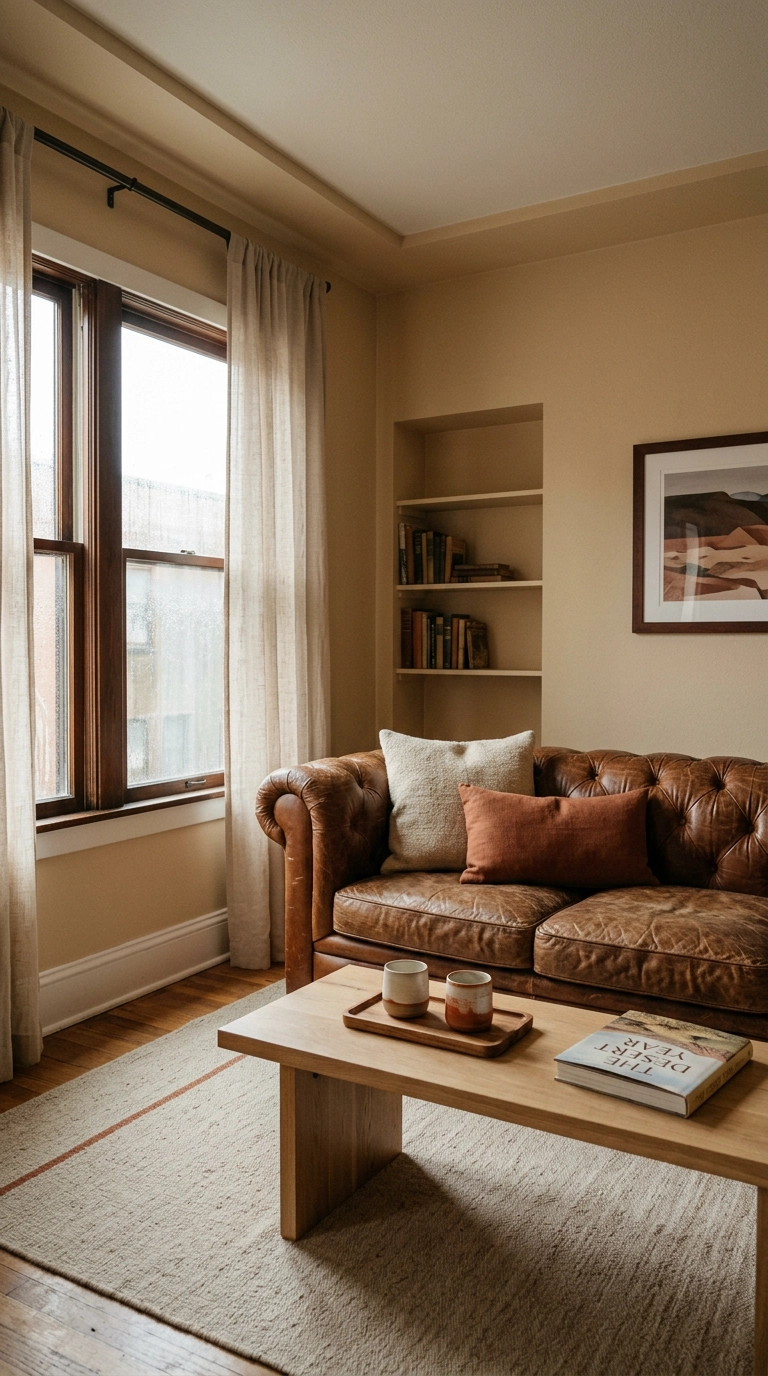
Leather is what keeps a terracotta room from tipping into theme-restaurant territory. It adds visual weight — meaning your eye reads it as heavy and substantial — which balances all the soft woven texture happening elsewhere.
6. Paint the Built-Ins Saguaro Green
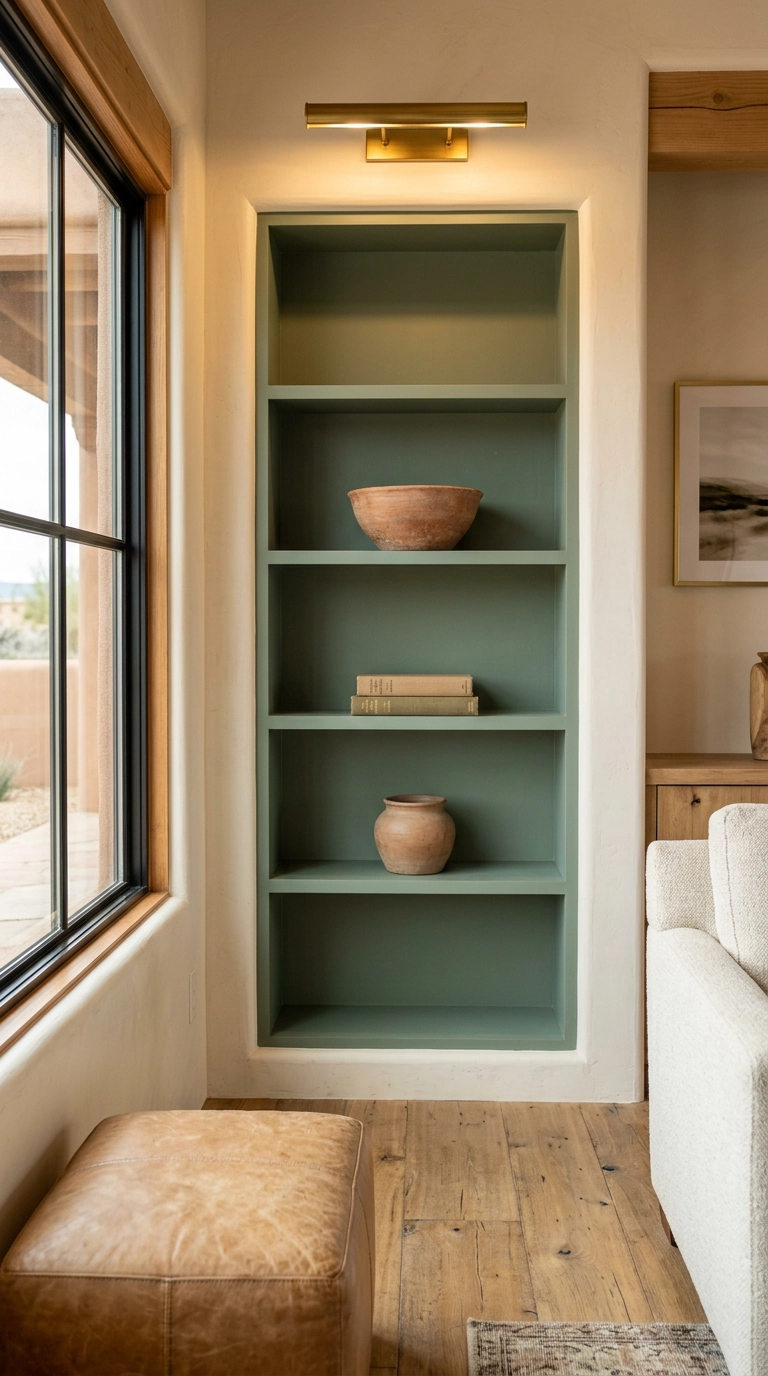
Saguaro green is the color people forget in Southwest palettes, and it’s the one that keeps the room from reading all-orange. Think dusty and grey-leaning, not kelly — Farrow & Ball Lichen and Benjamin Moore Sage Mountain both land in the right neighborhood.
7. Group Hand-Thrown Pottery in Odd Numbers
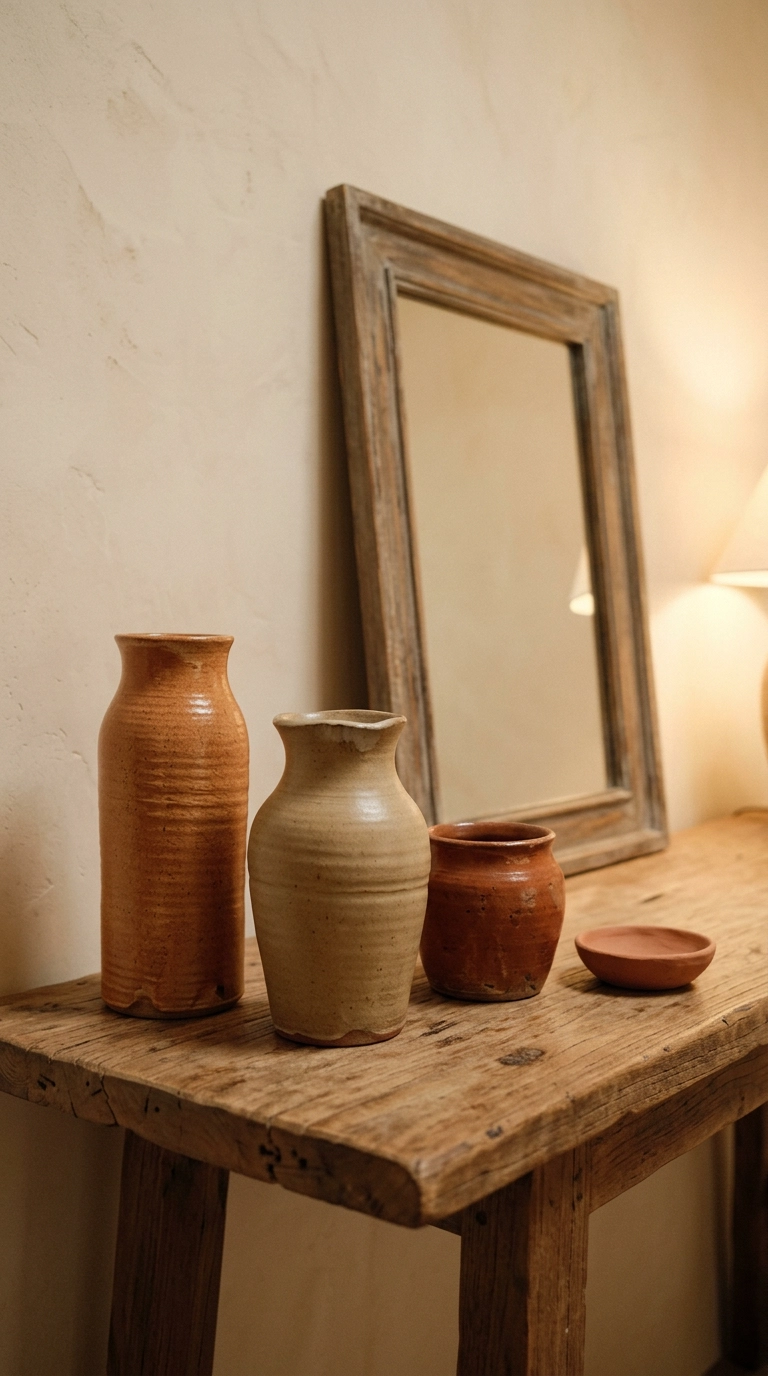
Odd numbers read better because your eye can’t split them into pairs, so it keeps moving across the group instead of stopping. Three vessels at genuinely different heights — say 12 inches, 8 inches, and 4 inches — beats five matching ones every time.
8. Use Turquoise Like a Spice, Not a Base
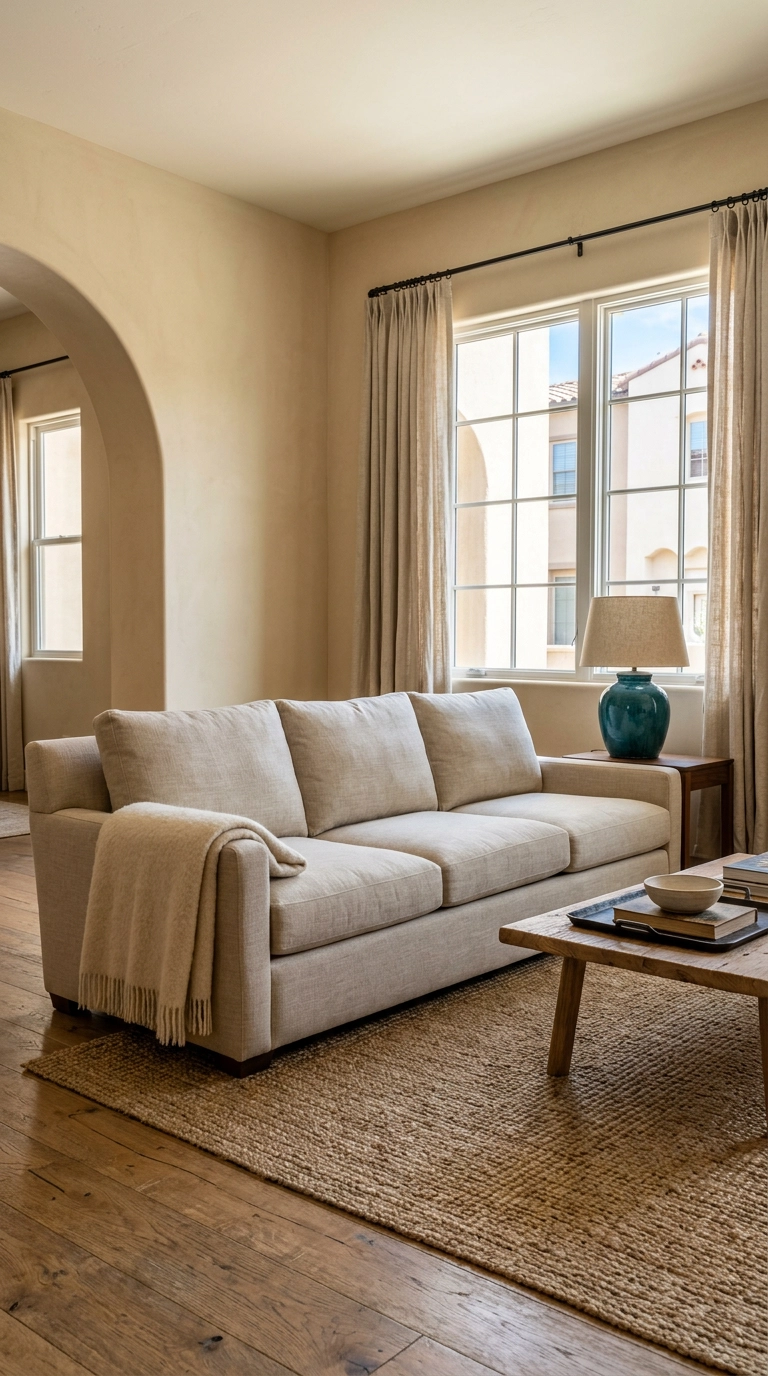
The fastest way to make a Southwest room look like a souvenir shop is treating turquoise as a main color. Give it maybe five percent of the room — one lamp base, one pillow, a single glazed bowl — and it stays jewel-like instead of loud.
9. Hang a Wrought Iron Fixture with Simple Lines
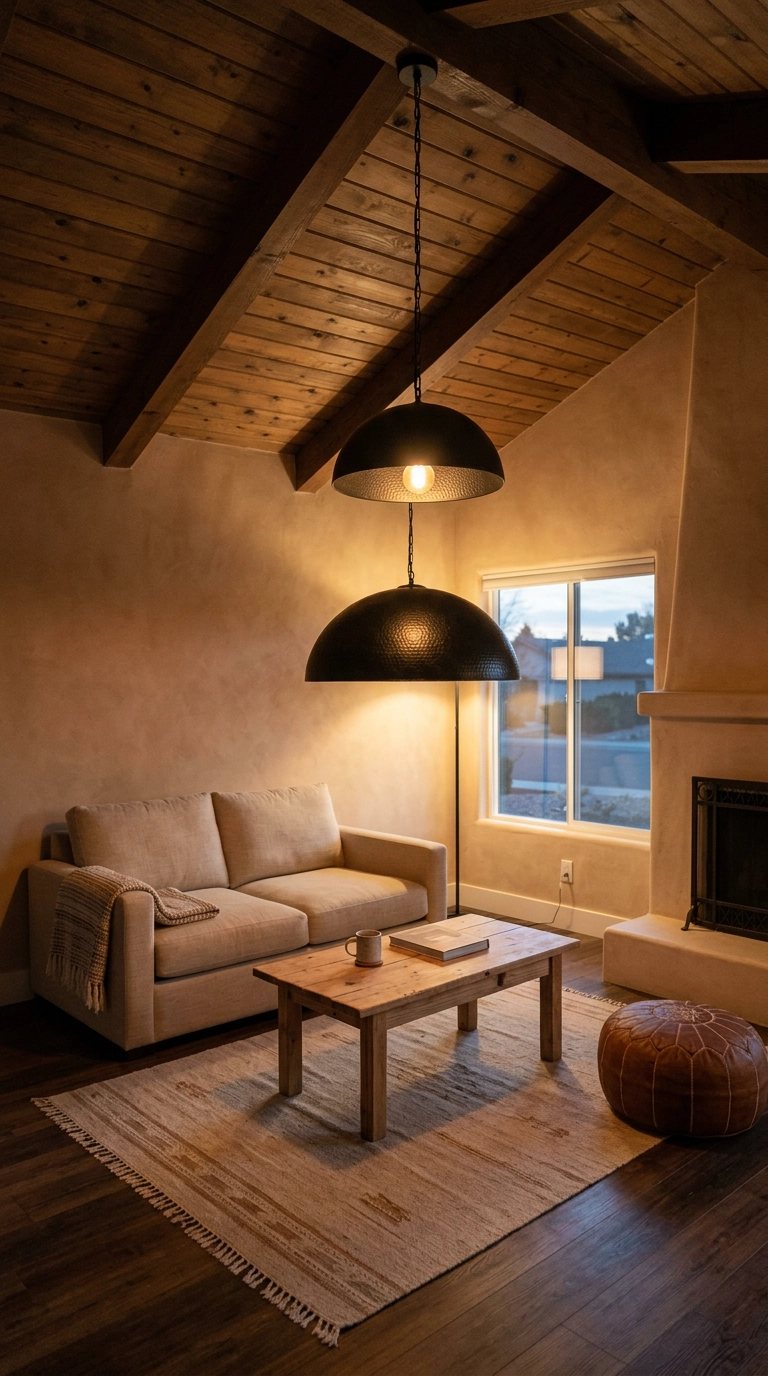
Wrought iron is the Southwest’s structural jewelry, but the skinny multi-arm chandeliers you see in every rustic catalog look busy and collect dust. A single hammered dome or lantern shape gives you the same weight with a cleaner sightline — the path your eye travels across the room.
10. Build a Bench Seat Out of Raw Wood and Sheepskin
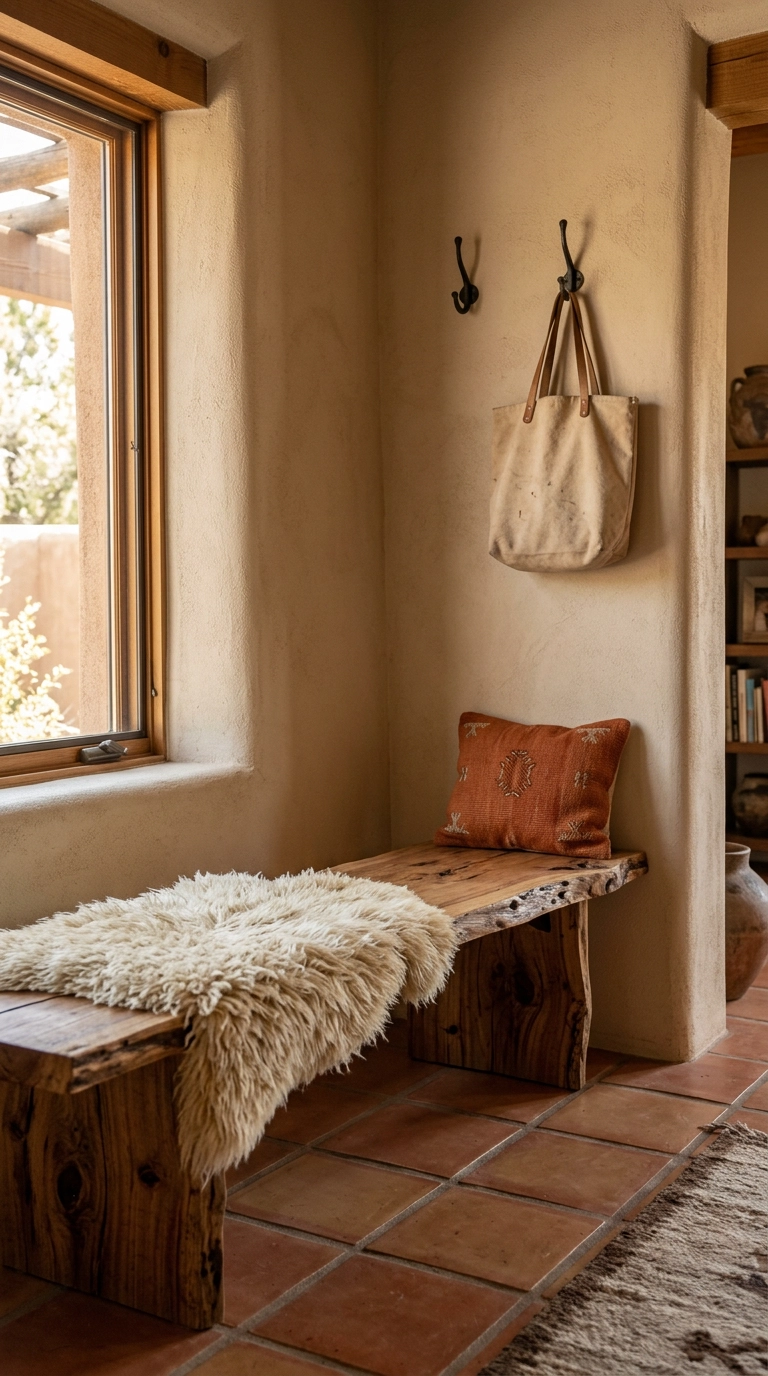
A bench solves the awkward dead corner most living rooms have, and it doubles as overflow seating when six people show up. Keep it low — 16 to 18 inches — so it sits below the sofa line and doesn’t crowd the room visually.
11. Color Drench the Whole Room in Clay
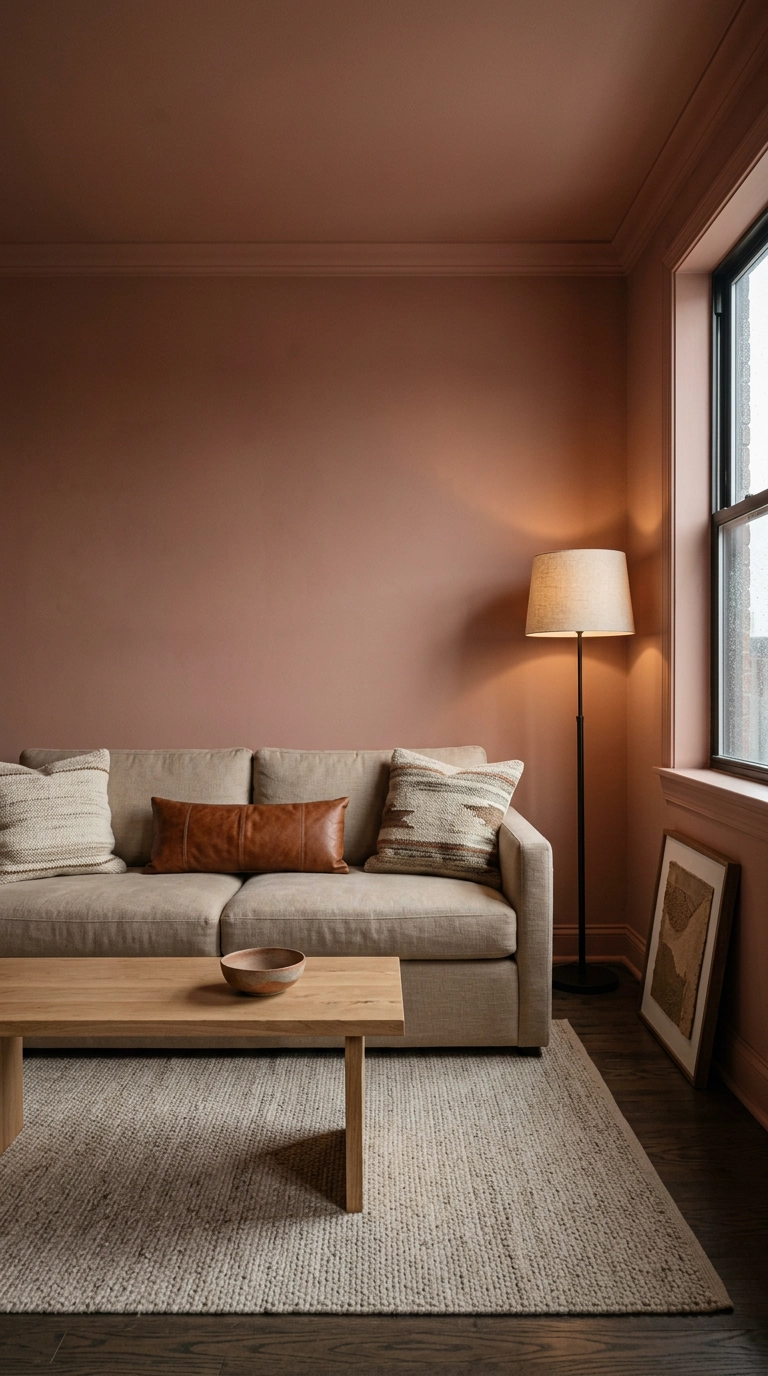
Color drenching means walls, trim, and ceiling all in one shade, and it works because it erases the visual breaks that make a small room feel chopped up. In a dark north-facing living room this is genuinely transformative — the clay tone bounces warm light back instead of going grey the way white walls do.
12. Hang Raw Linen Curtains High and Let Them Puddle Slightly
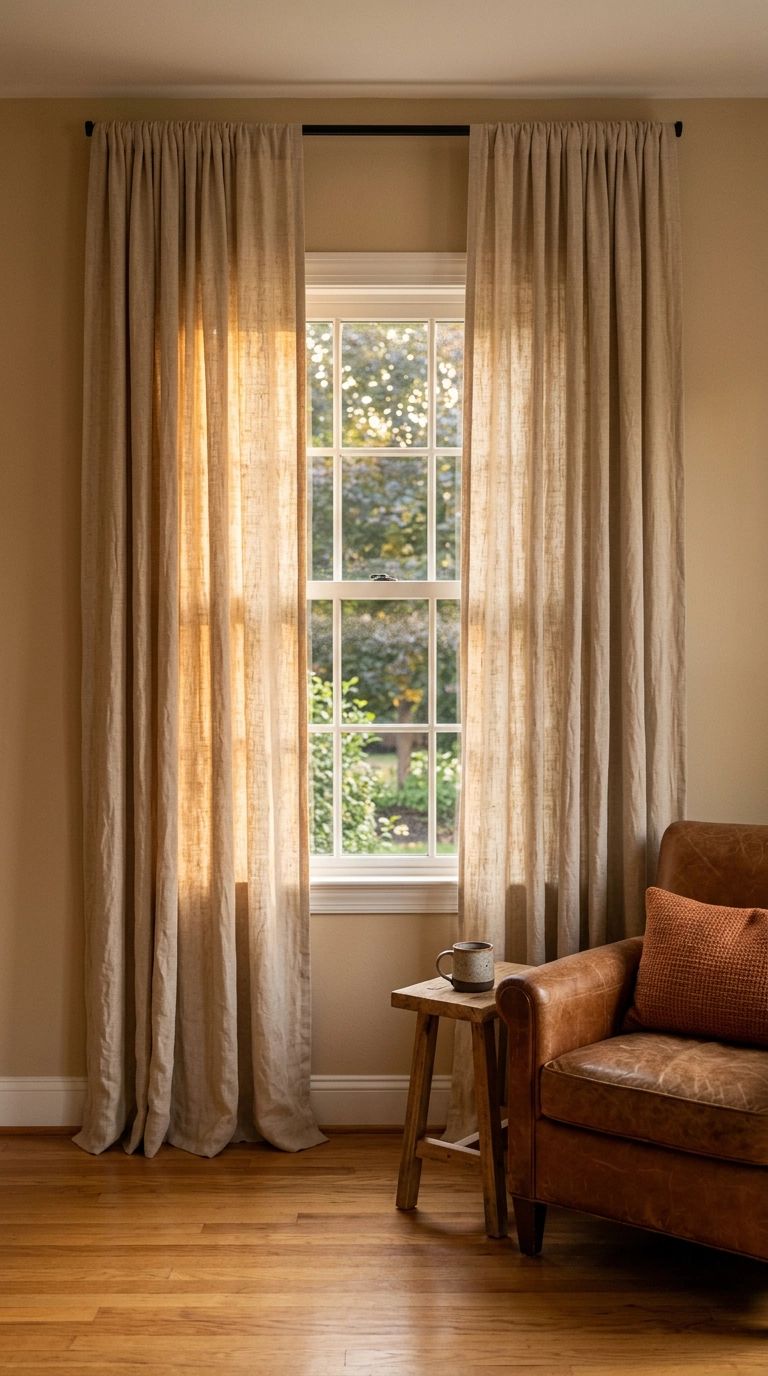
Mount the rod 4 to 6 inches below the ceiling and extend it 8 to 10 inches past the window on each side. Your eye reads the whole curtain height as the window height, so an average 8-foot ceiling suddenly feels taller and the glass looks twice as wide.
13. Layer Three Levels of Warm Light Instead of One Ceiling Fixture
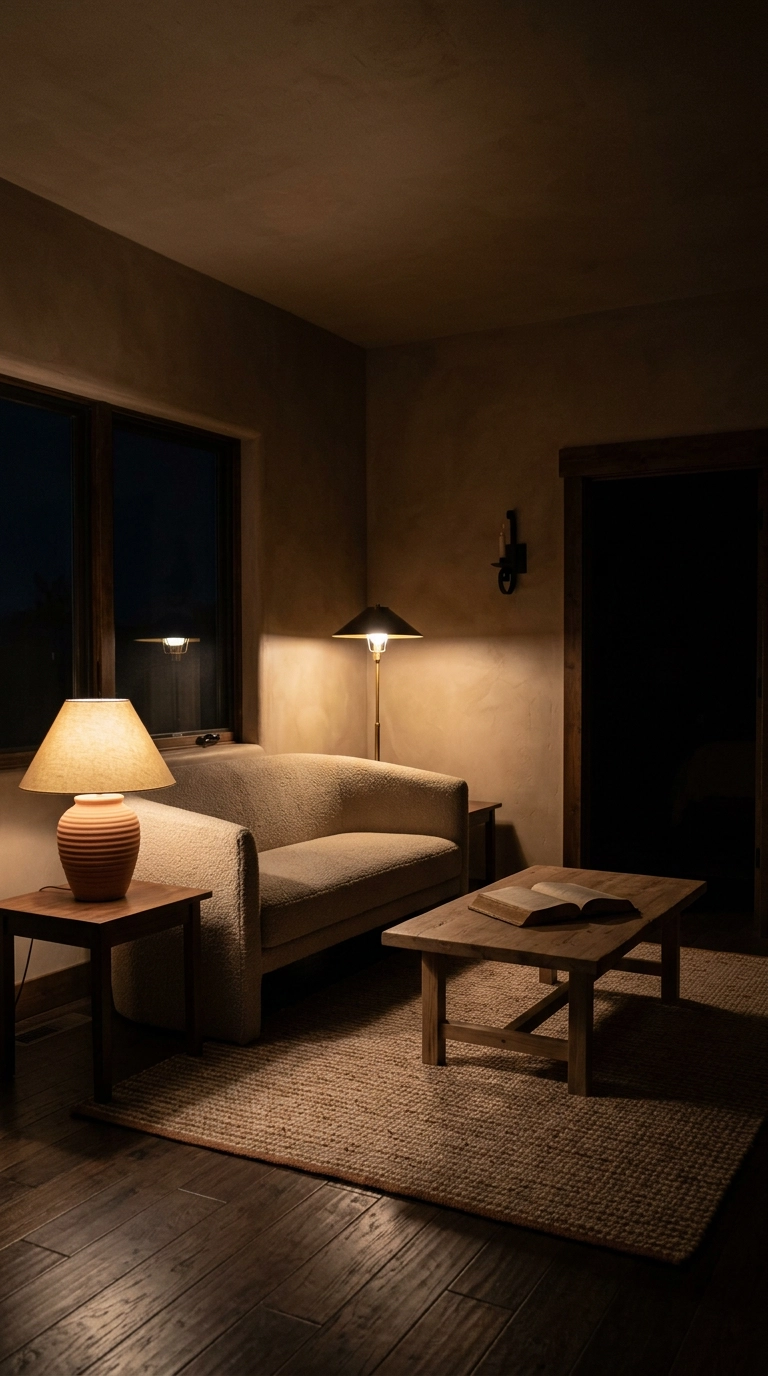
One ceiling light flattens a clay room into cardboard. You want at least three sources at different heights — roughly knee, elbow, and eye level — so the plaster and leather catch light from multiple angles and actually show their texture.
14. Layer Woven Wood Shades Underneath the Linen
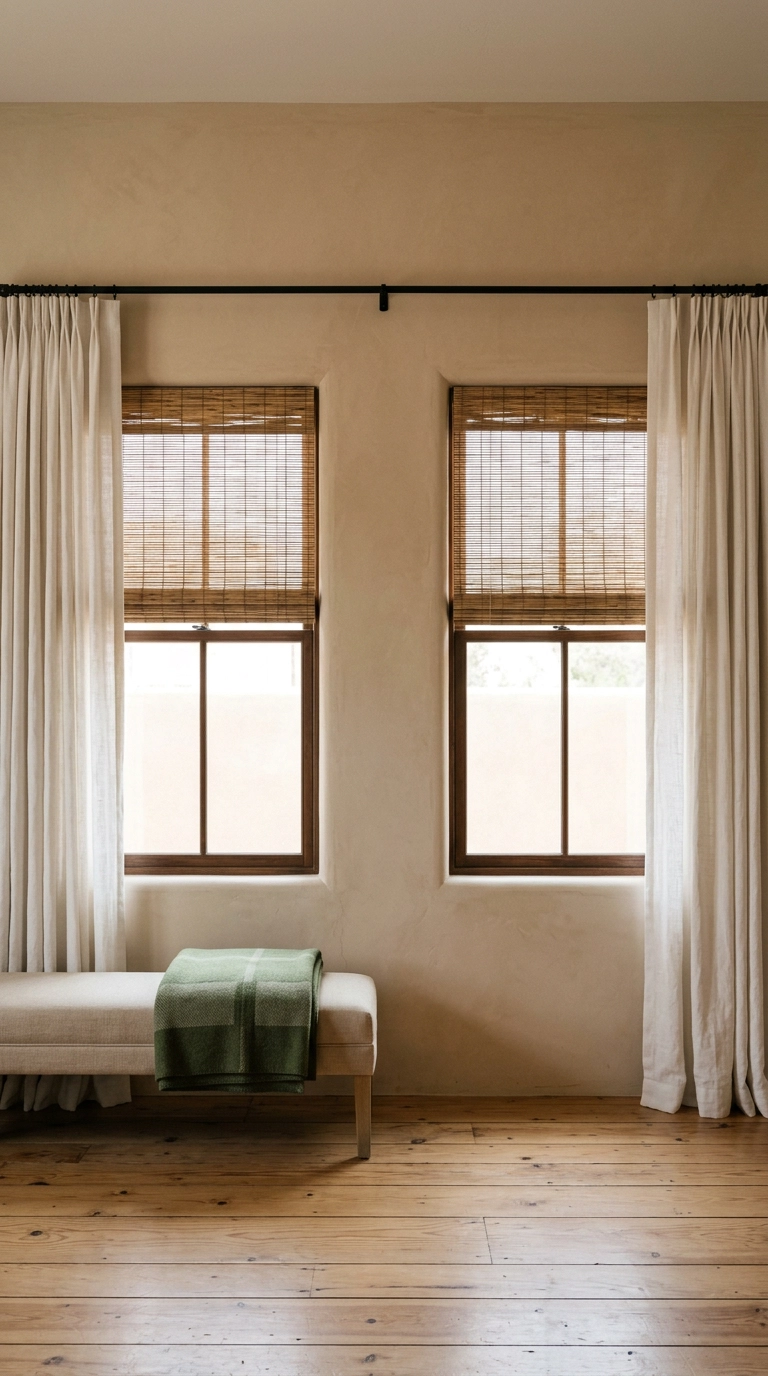
Curtains alone leave a Southwest room either blazing or blacked out. A woven reed or bamboo shade underneath gives you the middle setting — it breaks hard afternoon sun into soft striped light that moves across a plaster wall all day, which is honestly half the reason this style photographs so well.
15. Style the Coffee Table with a Tray, Three Objects, and Restraint
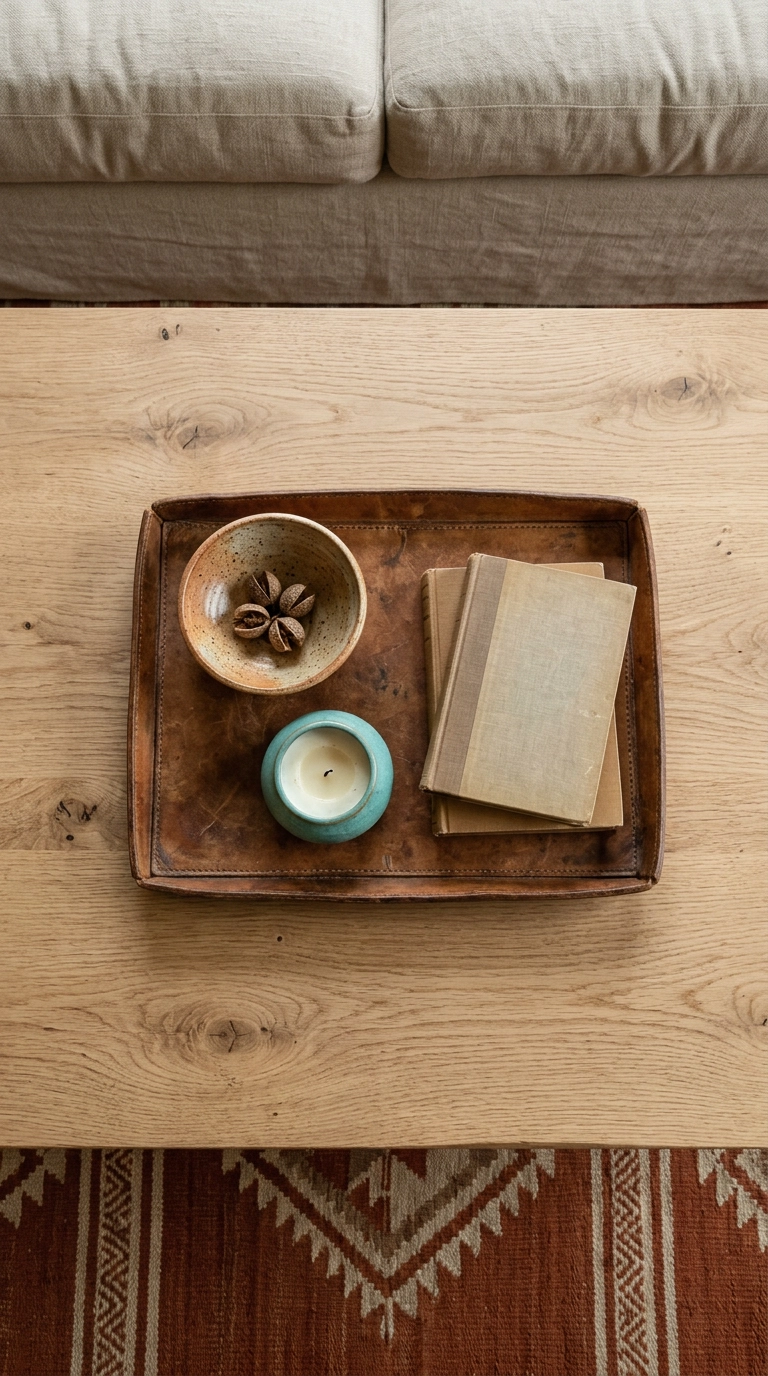
The rule I give every client: one tray, three objects, varying heights, and then stop. Odd numbers read as intentional because your eye can’t split them into pairs, so it keeps moving instead of settling — that’s the whole trick behind why stylists group in threes.
16. Give the Console Table a Long, Low, Asymmetric Story
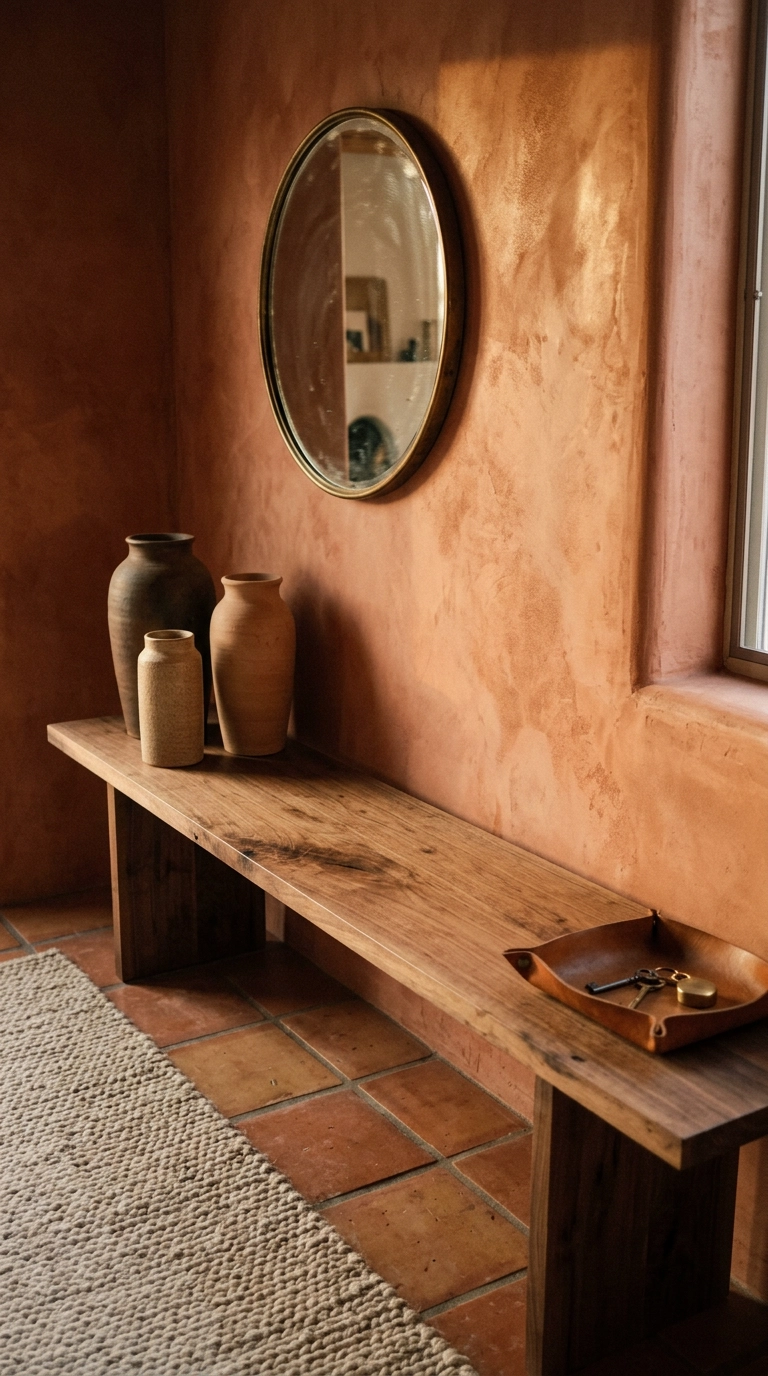
Most people center everything on a console and end up with a symmetrical little altar. Push your grouping to one third of the length and leave the rest bare — the asymmetry gives the surface visual weight on one side, which reads as collected rather than staged.
17. Hang One Large Abstract Landscape Instead of a Gallery Wall
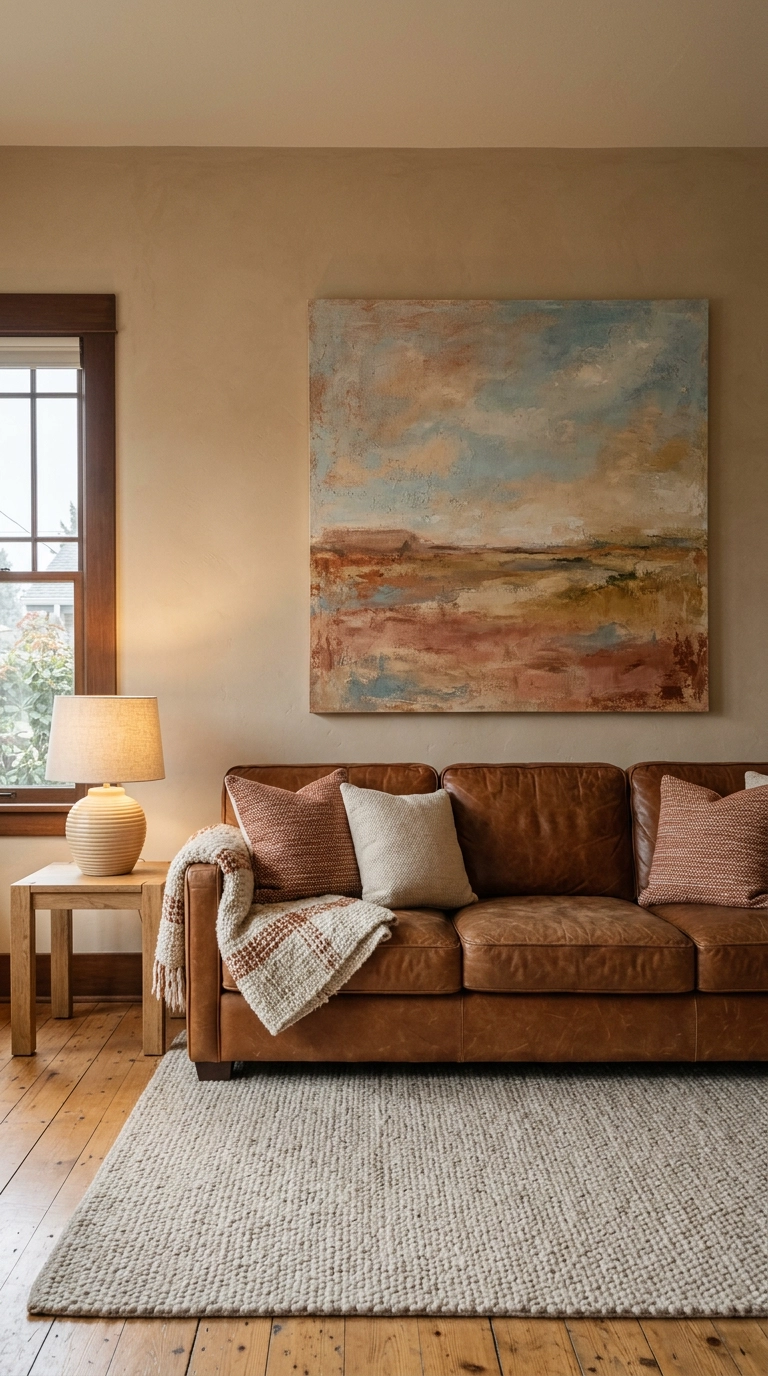
Southwest rooms are already busy with texture, so a twelve-frame gallery wall turns into noise. One big piece — roughly two thirds the width of your sofa, bottom edge six to eight inches above the back cushions — settles the whole wall down.
18. Lean an Aged Brass Mirror to Stretch a Dark Room
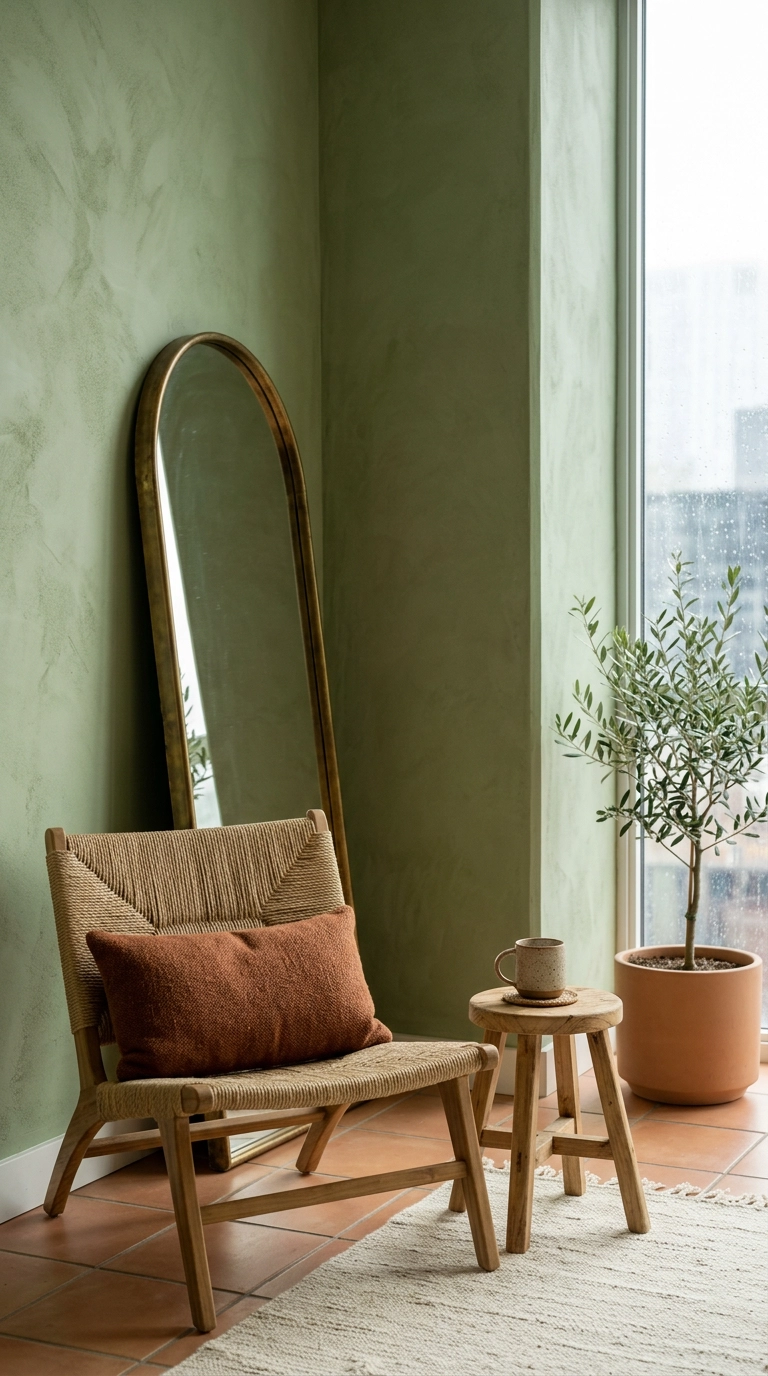
A leaning mirror is the renter’s answer to a dark living room, and it beats hanging one because you can angle it. Tilt it to catch a window rather than facing it straight at the room — you bounce actual daylight onto the opposite wall instead of just reflecting your own furniture back at you.
19. Use One Sculptural Plant and Nothing Else
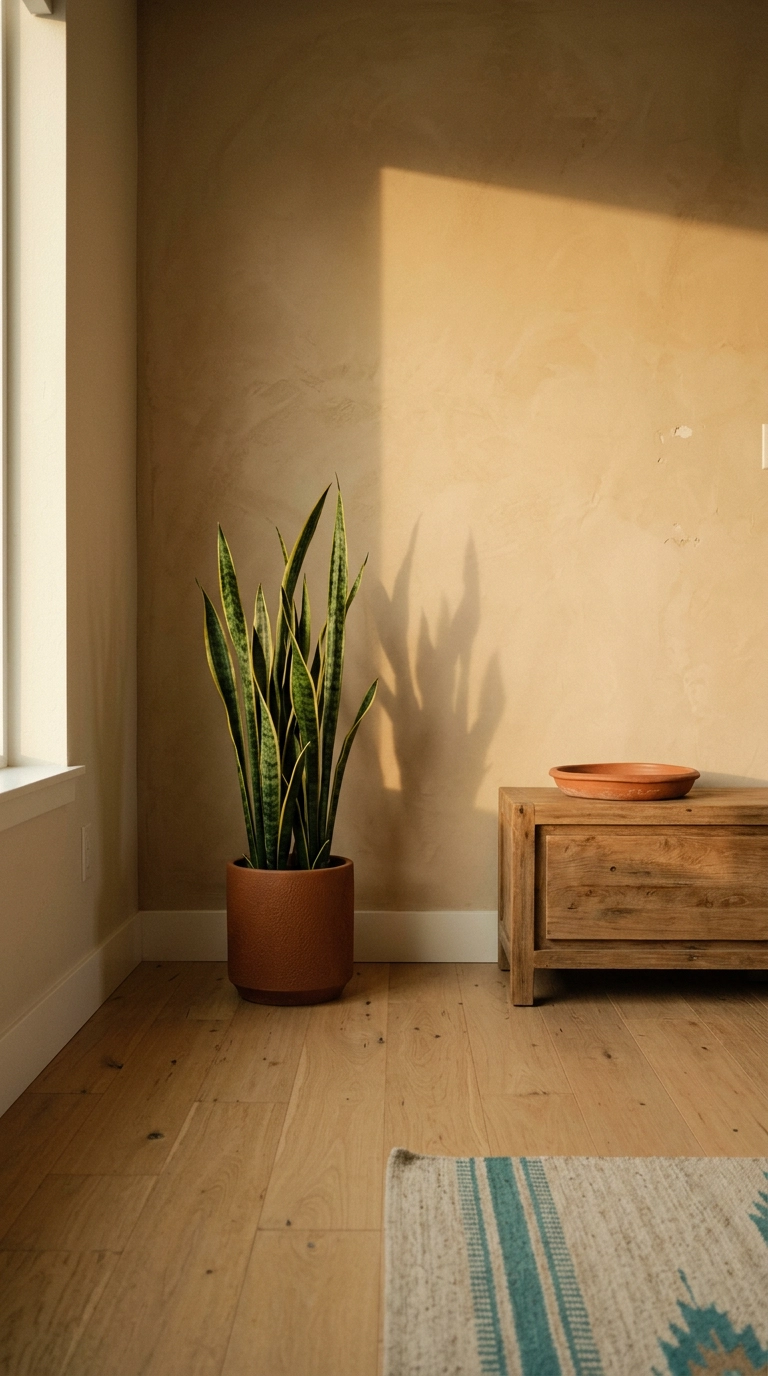
Desert style is defined by sparseness, so a room stuffed with trailing pothos fights the whole idea. Pick one plant with real architecture — snake plant, a young olive tree, a single yucca — put it in a clay pot, and let the empty floor around it do the work.
20. Round Off a Corner with a Plaster Kiva-Style Fireplace
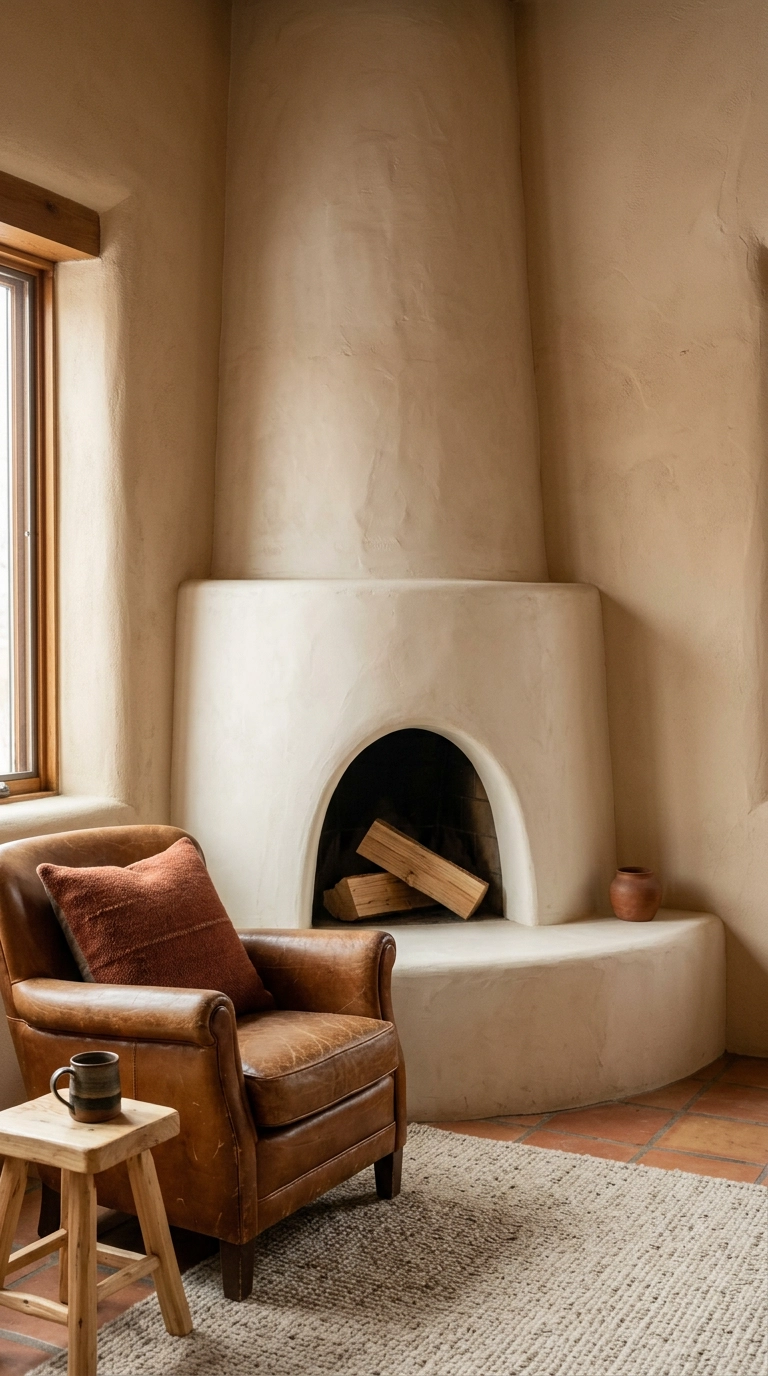
A kiva fireplace is the one Southwest element with no straight lines, and that curve is exactly why it works — every other thing in the room is a rectangle, so the soft shape becomes the focal point without needing color or pattern to get there. Corner placement also frees up your good wall for seating, which most living rooms desperately need.
21. Warm the Ceiling with Rough-Sawn Wood Beams
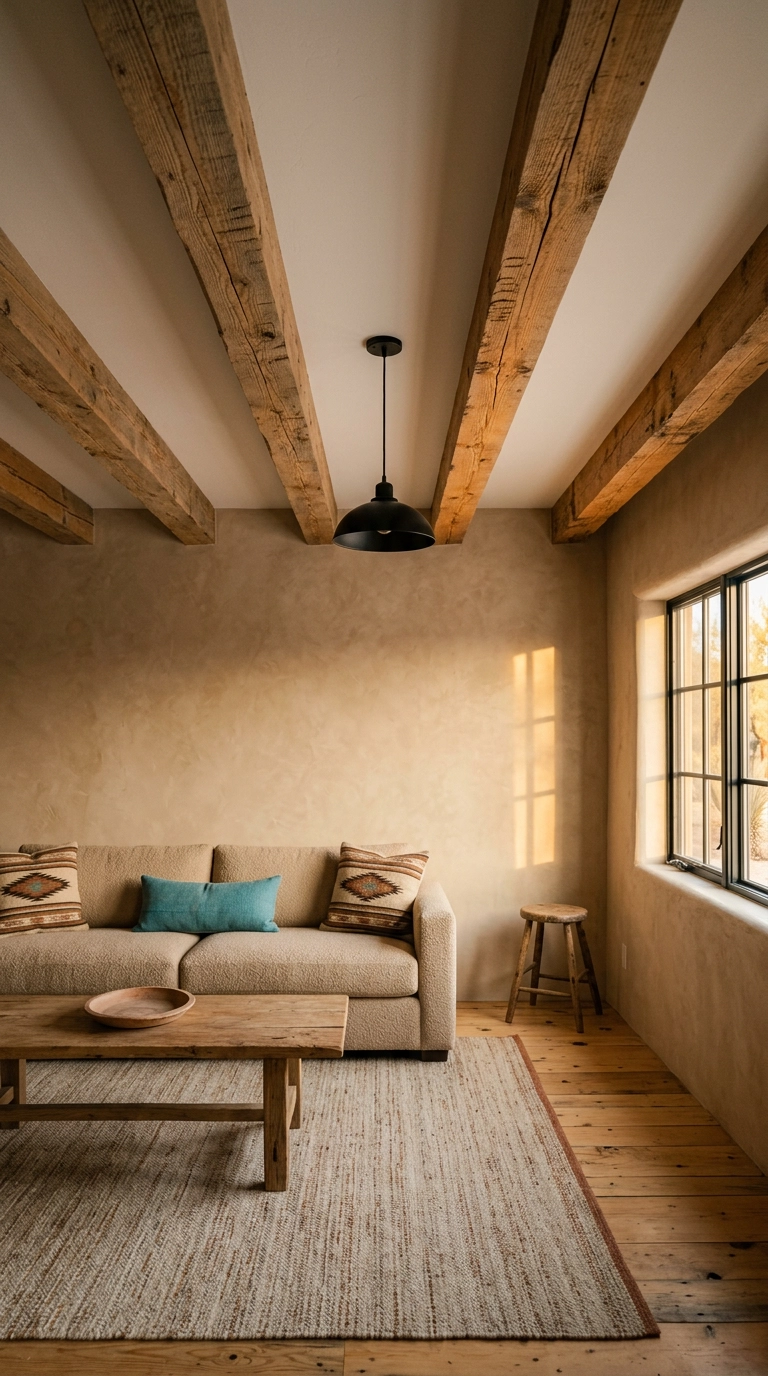
Beams are what stop a flat drywall ceiling from reading as builder-default, and they pull the eye up, which makes a wide low-slung room feel less like a shoebox. Space them 3 to 4 feet apart and run them across the room’s short dimension — running them the long way makes a narrow room feel like a bowling alley.
22. Carve an Arched Nicho into the Wall for Your Three Best Objects
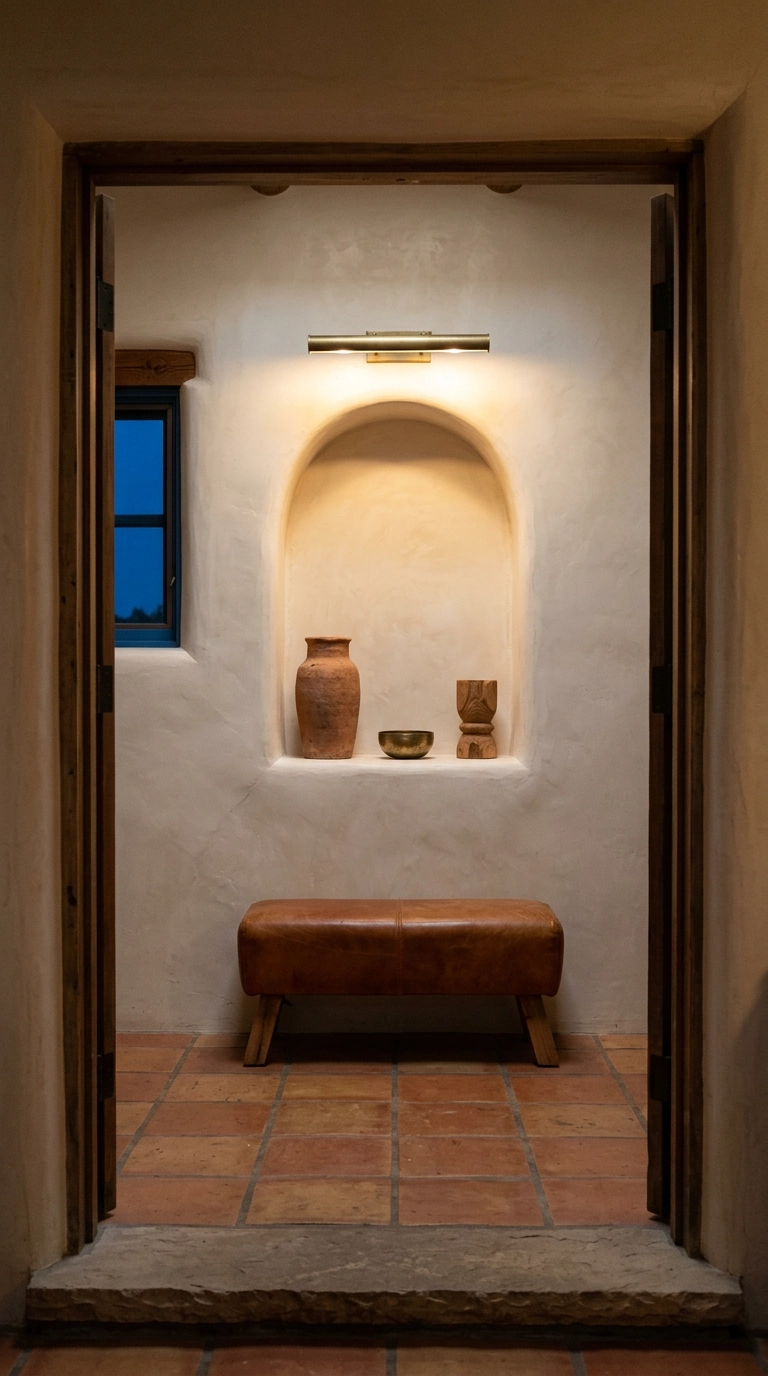
A nicho is the oldest trick in Southwest architecture and still the most satisfying — instead of putting a shelf on the wall, you take space out of it. The recess creates its own shadow line, so three simple objects suddenly look like they belong in a small museum.
Bringing the Desert Home
What I love about Southwest style in 2026 is how far it has moved from the turquoise-and-cactus cliche. The rooms getting saved and shared right now are the restrained ones — a limewashed clay wall, a faded kilim over jute, one cognac leather chesterfield doing all the heavy lifting, and a whole lot of bare plaster left alone to catch the light.
If you only take three things from this list, make them the limewash, the layered rug, and the three-source lighting plan. Those are the moves that carry the whole look, and none of them require a contractor. The bigger swings — the kiva fireplace, the rough-sawn beams, the arched nicho — are worth saving for when you own the walls. And please, if you buy one woven piece, buy it from an actual Diné or Pueblo weaver rather than a big-box shelf; Commune Design and the late Alexander Girard both built entire reputations on treating that craft as art rather than a print motif, and it holds up decades later in a way a mass-market throw never will.
I’m still tinkering with my own version of this room — currently arguing with myself about whether the ceiling beams are one beam too many, which is a very normal Tuesday over here. If you want the rest of that experiment, plus the sourcing lists and paint colors I’m testing before they ever make it into an article, sign up for my weekly newsletter and I’ll send it straight to you.


