23+ Smart Laundry Closet Decor Ideas that Make a Tiny Space Look Gorgeous in 2026

I’ll be honest with you – the laundry closet is the least glamorous six square feet in an American home, and it’s also the one I get asked about most. Mine lives behind a set of louvered bifold doors in a hallway, it holds a stacked washer and dryer with about four inches of breathing room behind them, and for years I just shut the doors and pretended it wasn’t there. Then I papered the back wall on a Saturday, and suddenly I was leaving the doors open on purpose. That’s the whole trick with a closet-sized laundry: the space is too small to hide bad decisions, so every single inch has to earn its footprint.
Laundry Closet Decor Ideas
1. Wallpaper Just the Back Wall Behind the Machines
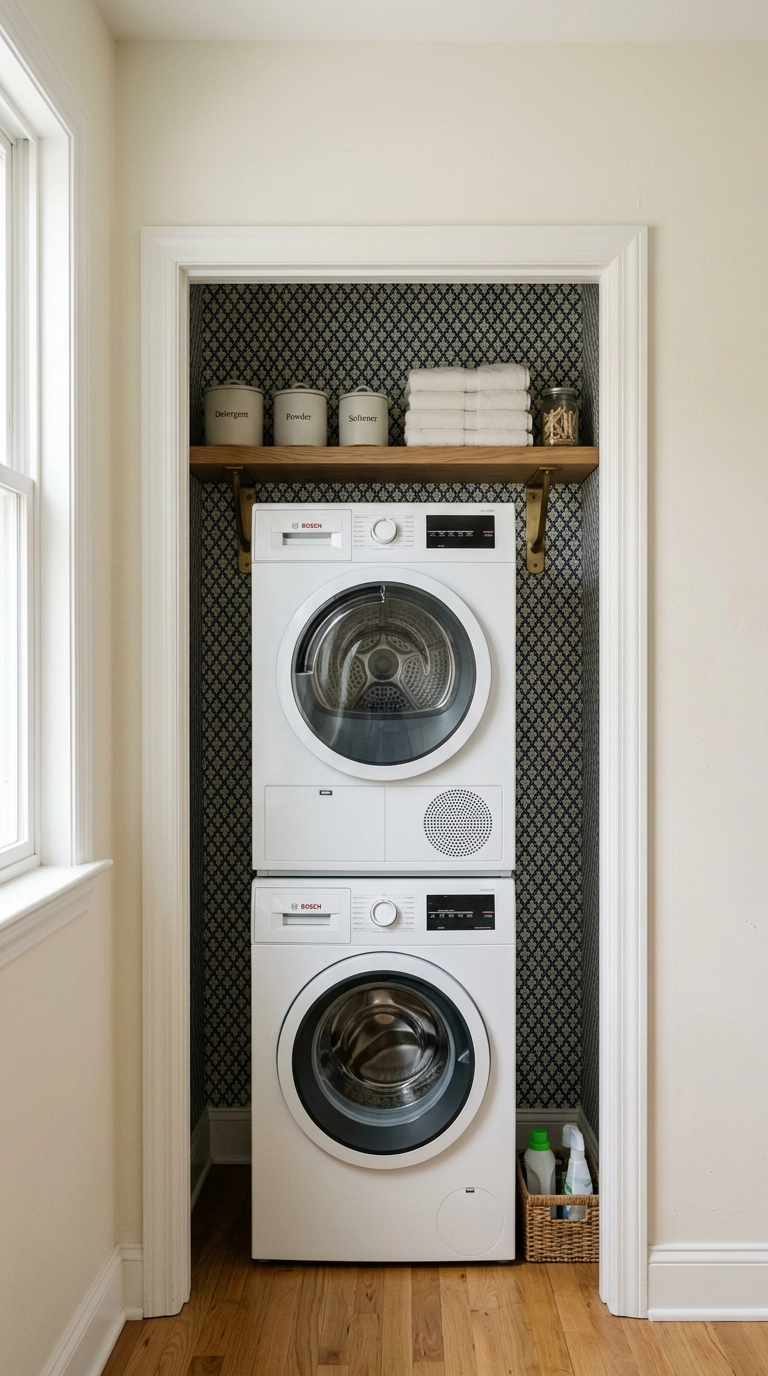
The back wall of a laundry closet is usually a 30 to 36 inch strip of sad builder drywall, and it’s the cheapest high-impact surface in your house. One roll of peel-and-stick covers it with paper left over, which makes this a genuine 90-minute project and completely rental-safe.
2. Add a Counter Over Front-Loaders for an Actual Folding Surface
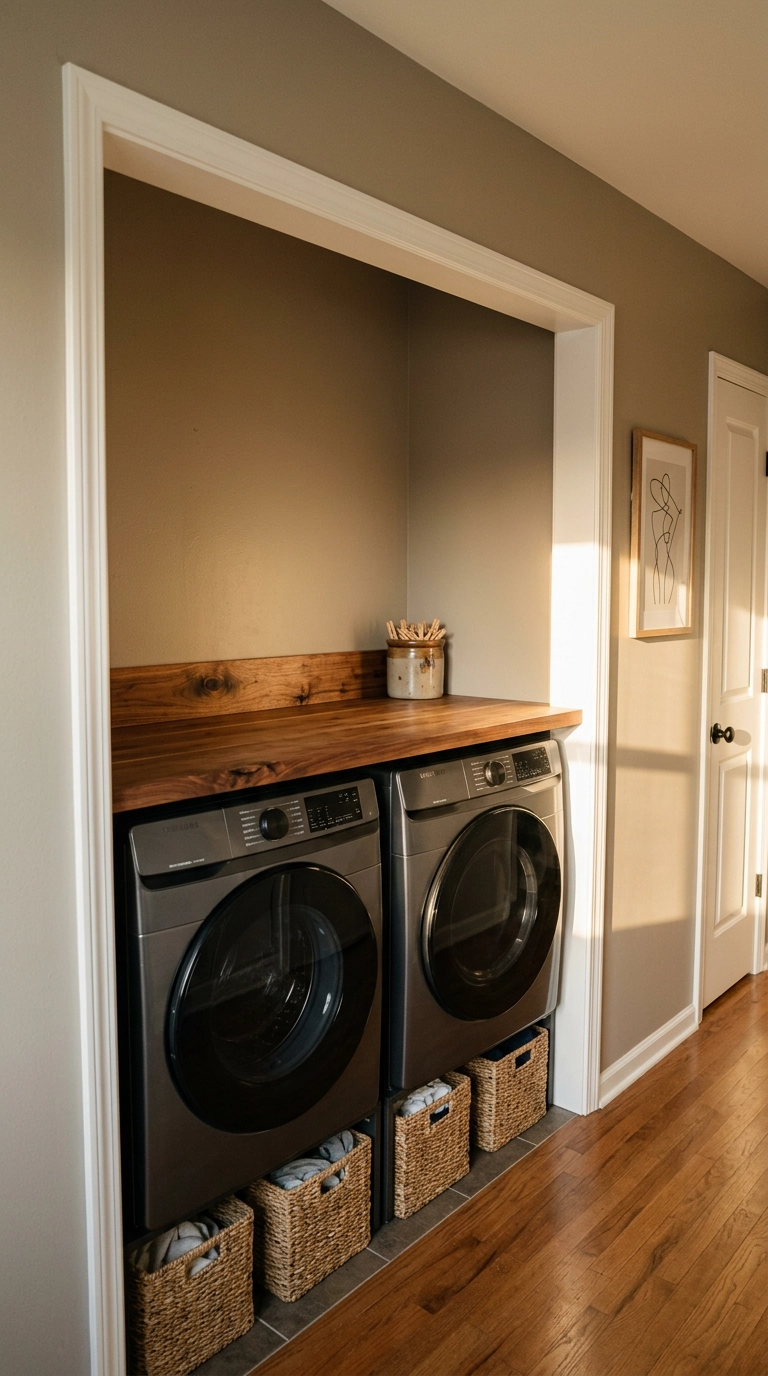
If your machines are front-loaders sitting side by side, you have roughly 54 inches of dead space on top begging for a counter. Standard machines land at about 36 inches tall, which is exactly kitchen counter height, so a stock butcher block slab dropped over the pair gives you a folding station without a single custom cut.
3. Swap the Bifold Doors for a Café-Style Curtain
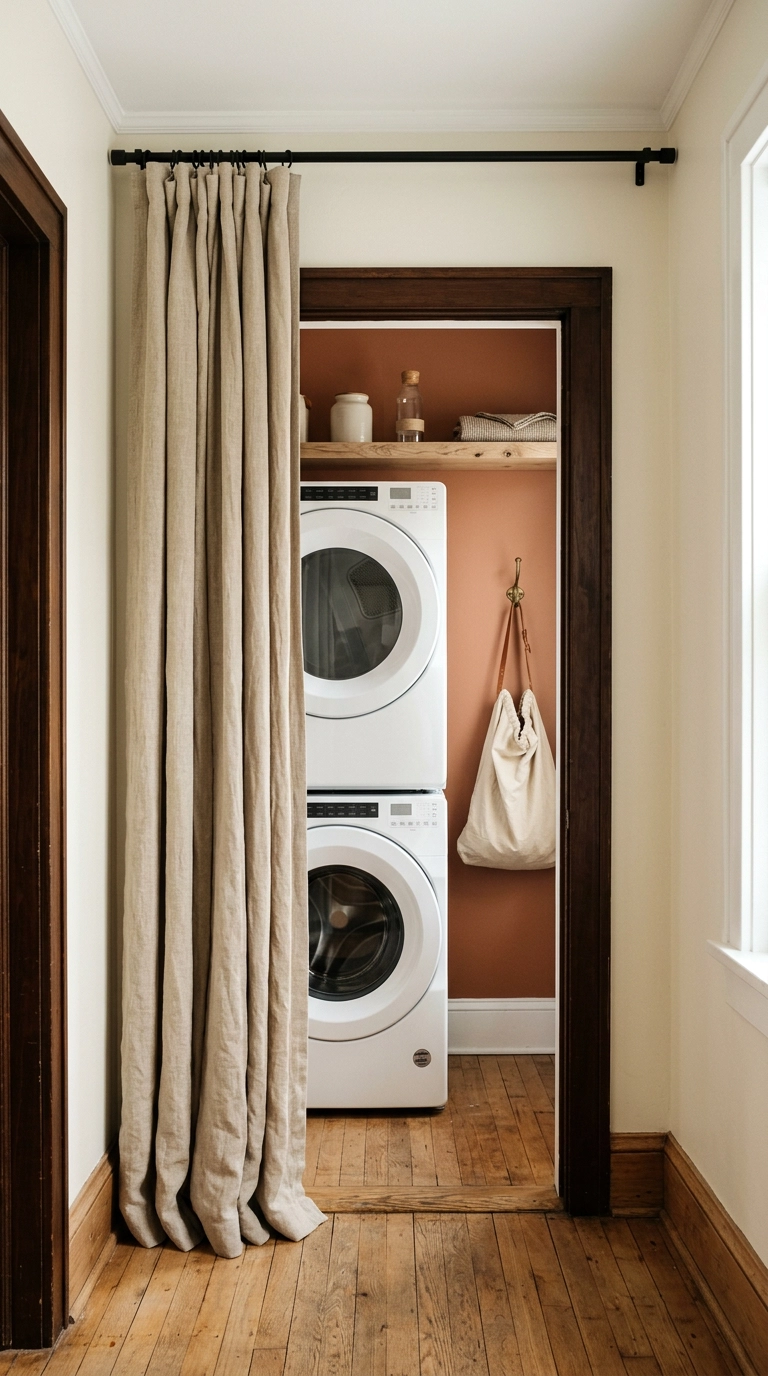
Bifold doors are the worst part of most laundry closets. They eat 3 to 4 inches of depth on their own track, they never fully clear the opening, and they bang into the machine door every time you unload. Pulling them off and hanging a curtain instead is a 20-minute swap with a screwdriver, and the doors go in the garage for when you move out.
4. Paint the Interior a Real Color, Not Builder White
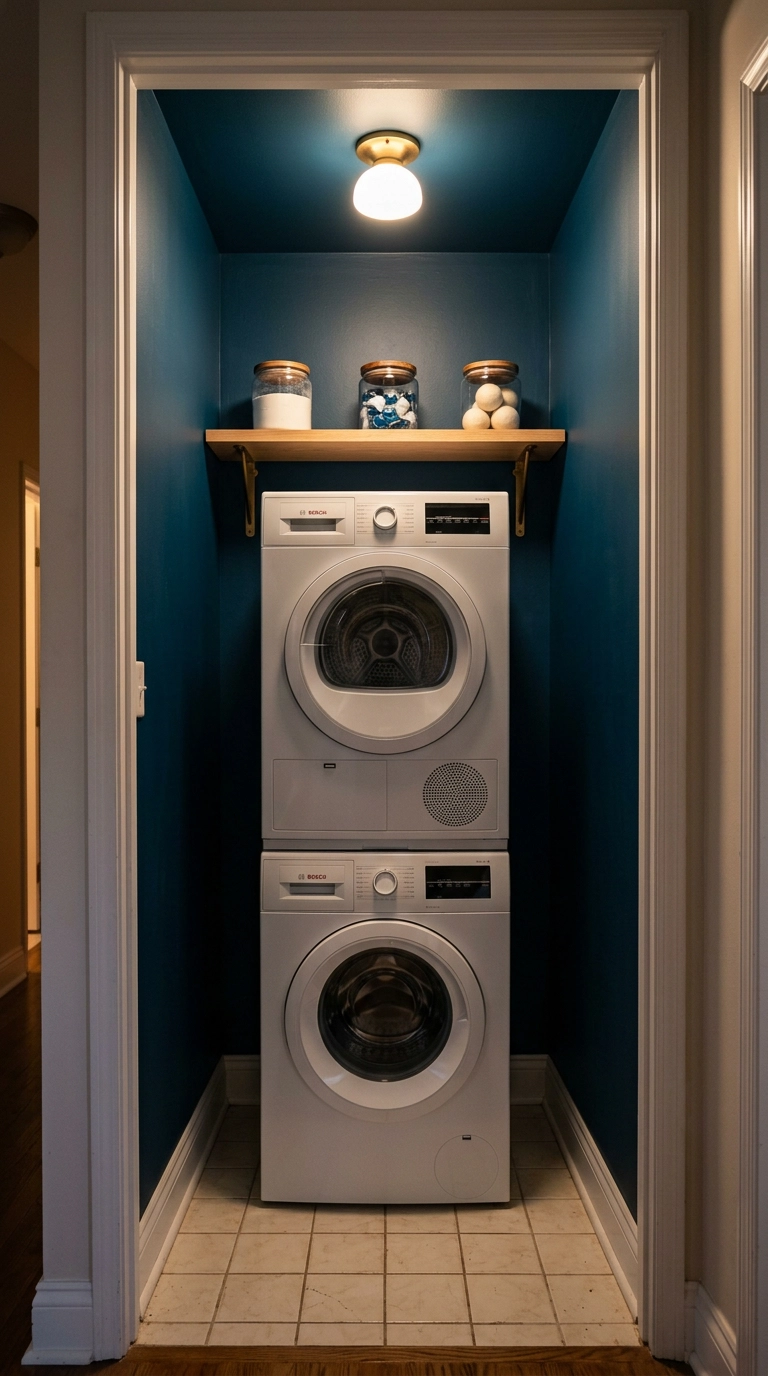
A laundry closet takes about a quart of paint and 40 minutes, which makes it the lowest-stakes place in your home to try a color you’d never commit to in a living room. I color drench these – walls and ceiling in the same shade – because painting a tiny box multiple colors chops it into even smaller pieces, while one saturated shade erases the corners and the space reads as a deliberate jewel box.
5. Get the Shelf Height Right Above the Machines
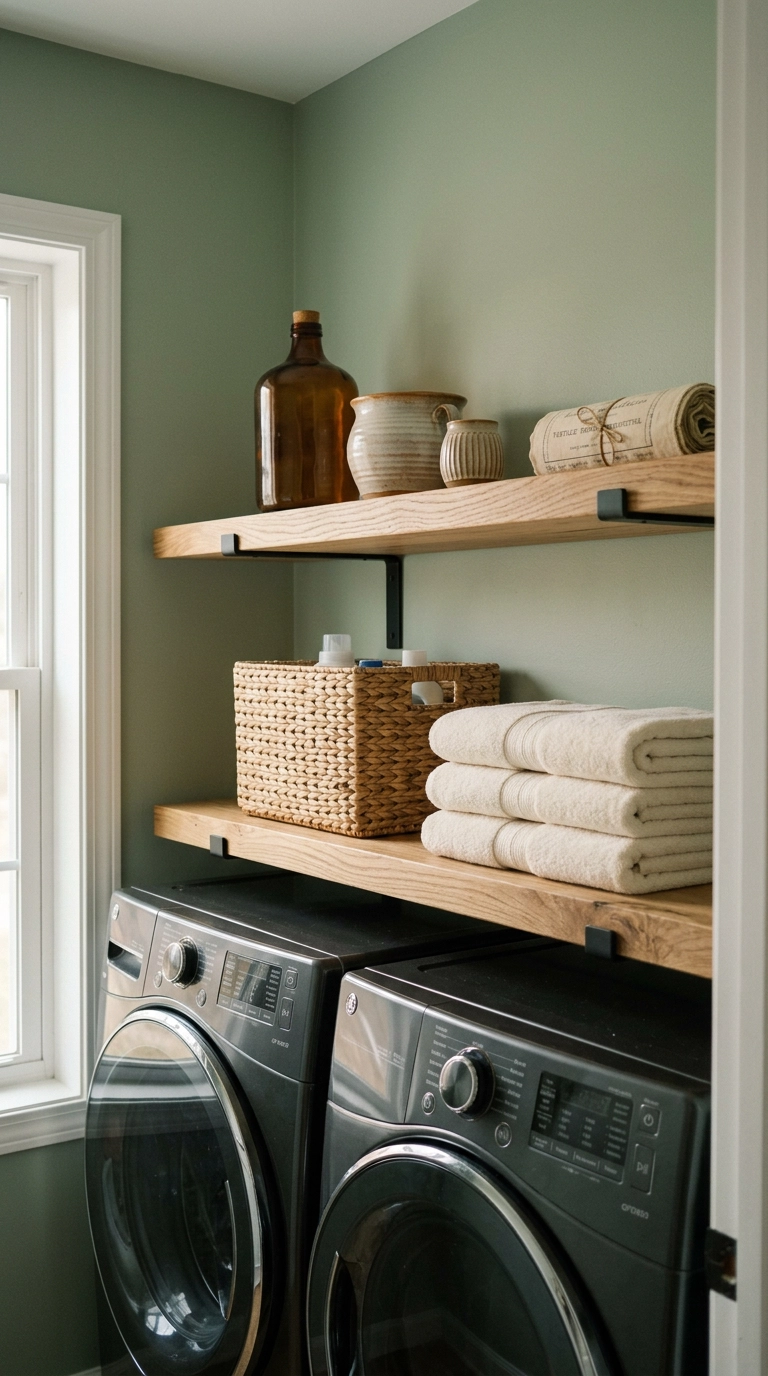
This is where most laundry closets go wrong. A stacked pair typically tops out around 76 to 79 inches, so you may only have a foot of usable wall left – and if you have a top-loader, the first shelf needs to sit at least 18 inches above the lid so it actually opens. Measure with the lid fully raised, not closed. I’ve watched a client learn that lesson the expensive way.
6. Replace the Single Bulb With Light You Can Actually Sort By
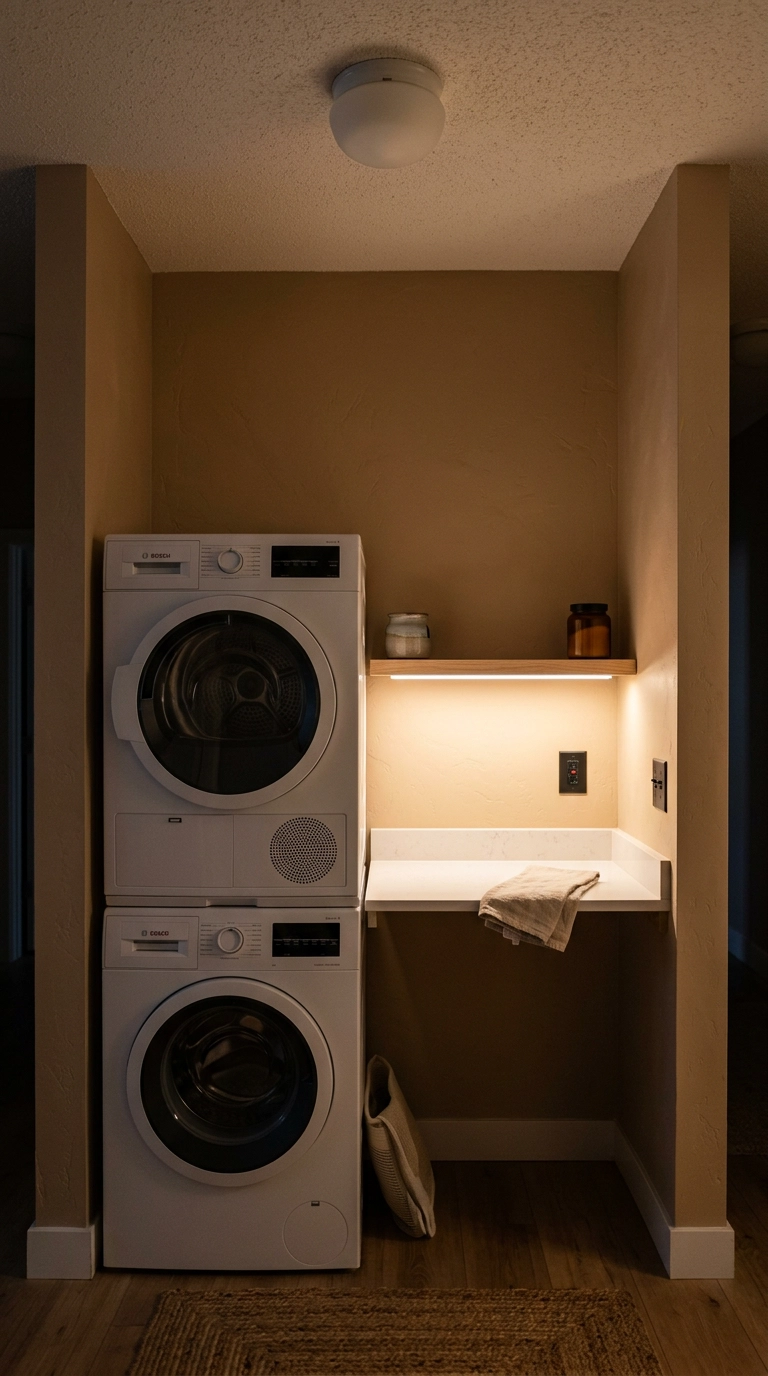
Most laundry closets get one bare bulb on a pull chain, mounted behind the doors so the machines cast a shadow over the exact spot you’re standing. The easy fix is a plug-in or rechargeable LED strip stuck under the lowest shelf, aimed down at the counter – no wiring, about 20 minutes, and it’s the single biggest quality-of-life upgrade on this list.
7. Install a Retractable Drying Rod Instead of a Folding Rack
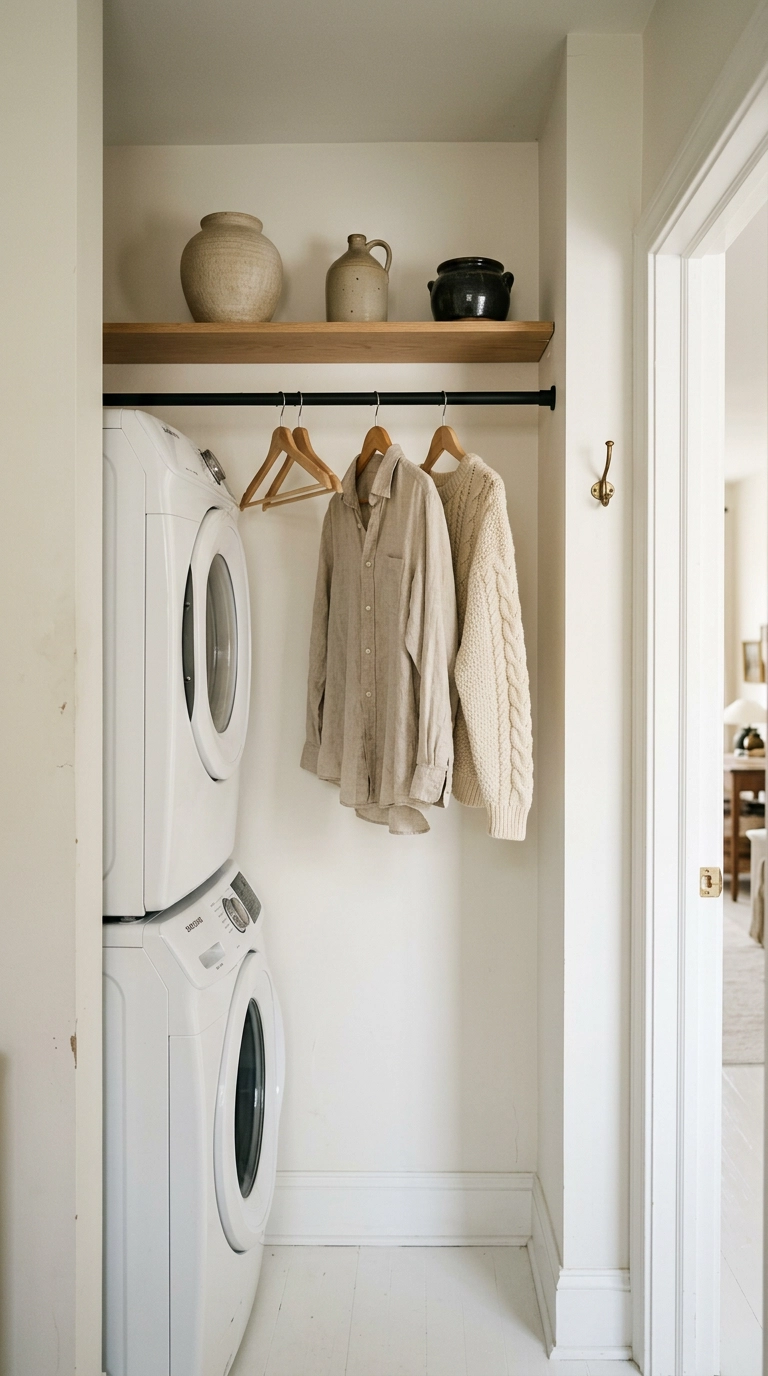
A floor drying rack is a non-starter in a closet – there’s no floor. A retractable rod or a slim wall-mounted bar spanning the closet width gives you 30-something inches of hang-drying space that disappears when you’re done, and it doubles as the spot you hang shirts straight out of the dryer before they wrinkle.
8. Handle the Unglamorous Stuff Before You Style Anything
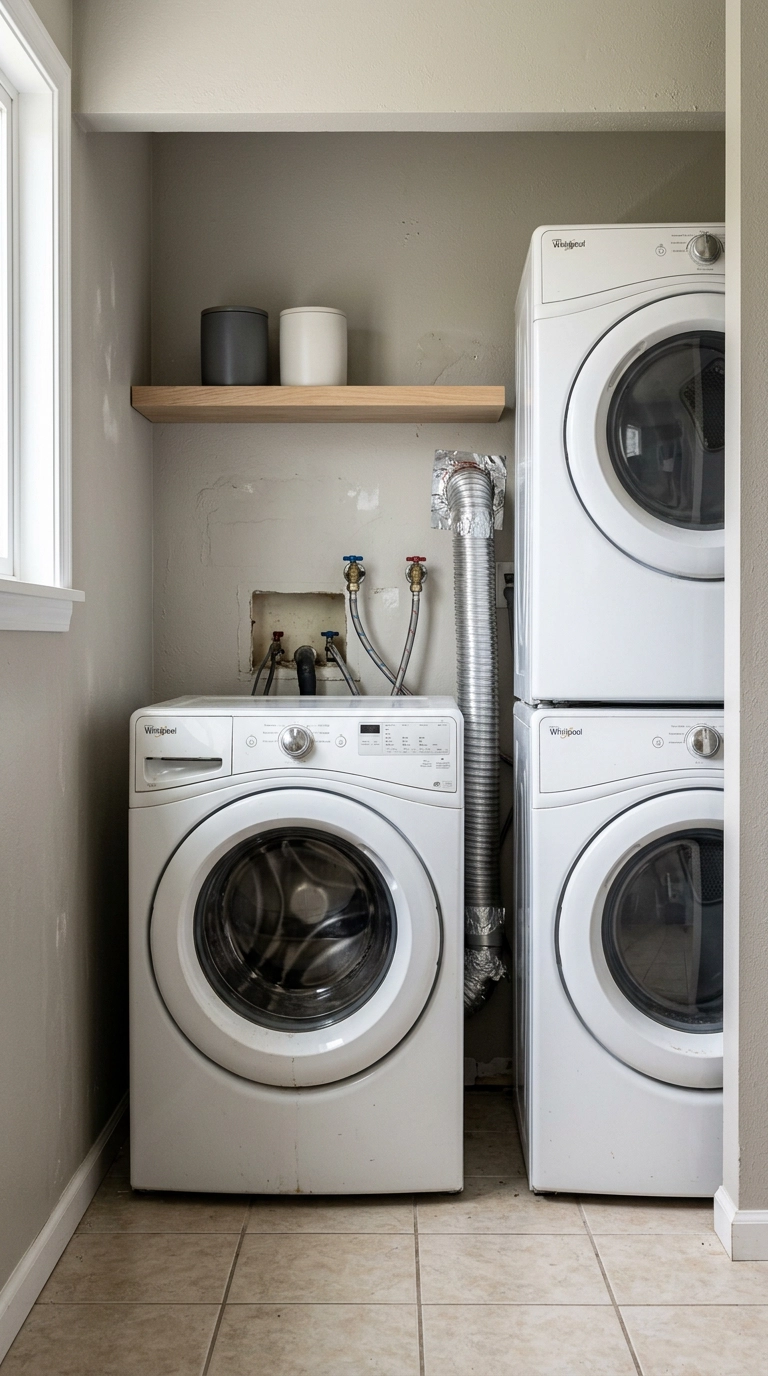
Here’s the honest part. Before the wallpaper and the matching jars, your closet needs a real dryer vent running to the outside – not into the wall cavity, not a lint trap bucket – kept as short and straight as you can manage, with rigid or semi-rigid duct rather than that crushable foil sleeve. Plan for a 4-inch gap behind the machines for the duct and the hoses, and never bury the water shutoff valves behind a permanent panel.
9. Decant Detergent Into Glass and Ditch the Plastic Jugs
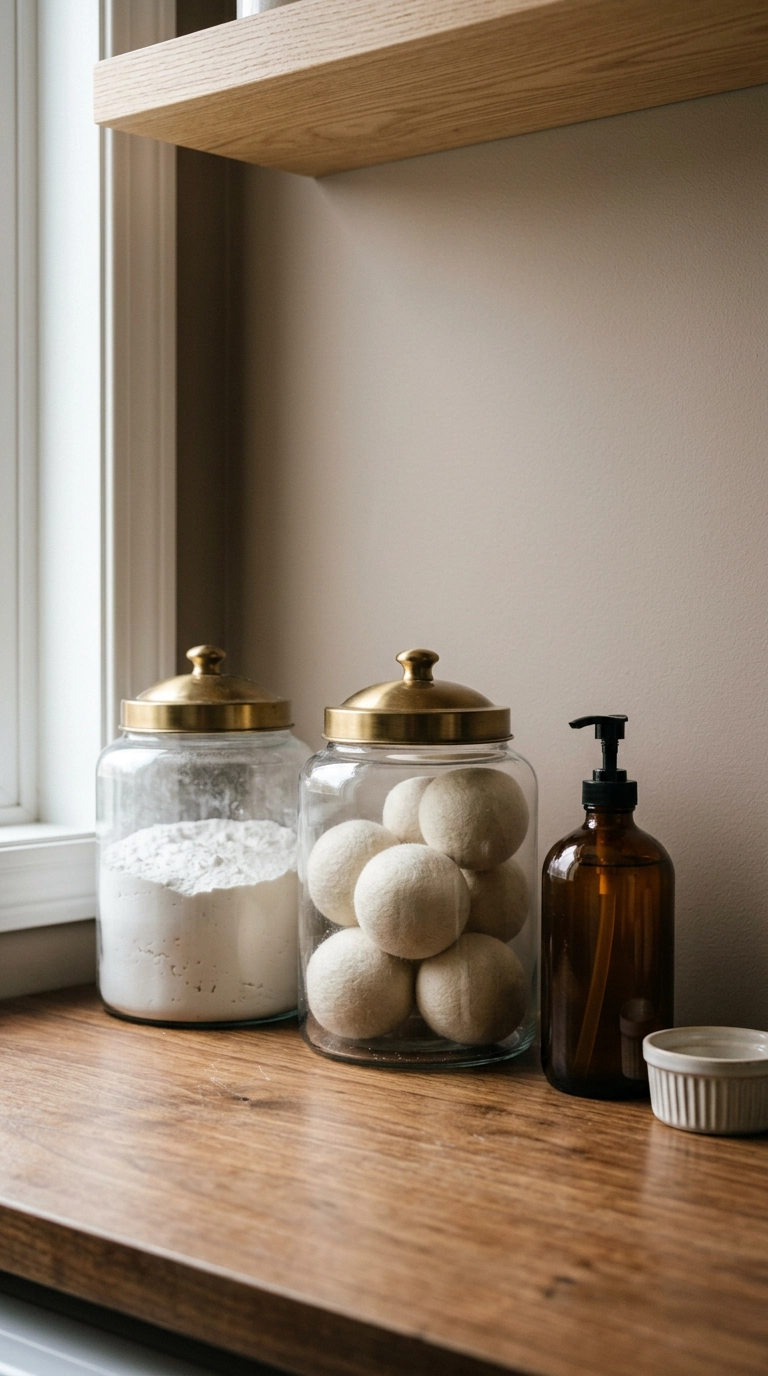
Detergent packaging is designed to scream at you from a store shelf 20 feet away, which is a disaster in a space you view from three feet. Moving powder into two clear glass jars and liquid into an amber pump bottle costs maybe $30 and instantly does more visual work than anything else on this list.
10. Use Vertical Wall Space With a Slim Pegboard or Rail System
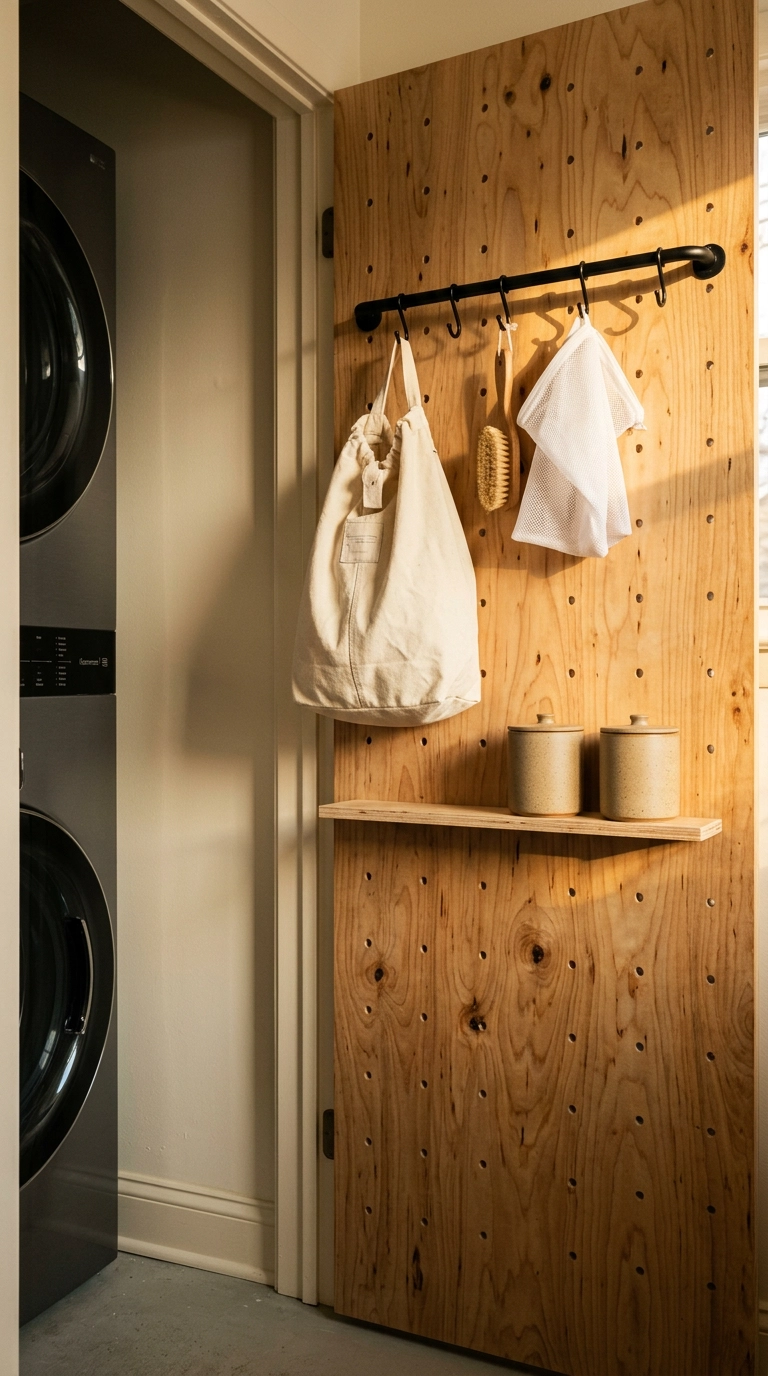
The side walls of a laundry closet are almost always wasted, and they’re the only surface a machine isn’t blocking. A pegboard panel or a single Shaker-style peg rail turns that dead strip into hooks for laundry bags, a lint brush, mesh bags, and the ironing board nobody has room for.
11. Build a Sorting System That Actually Fits the Footprint
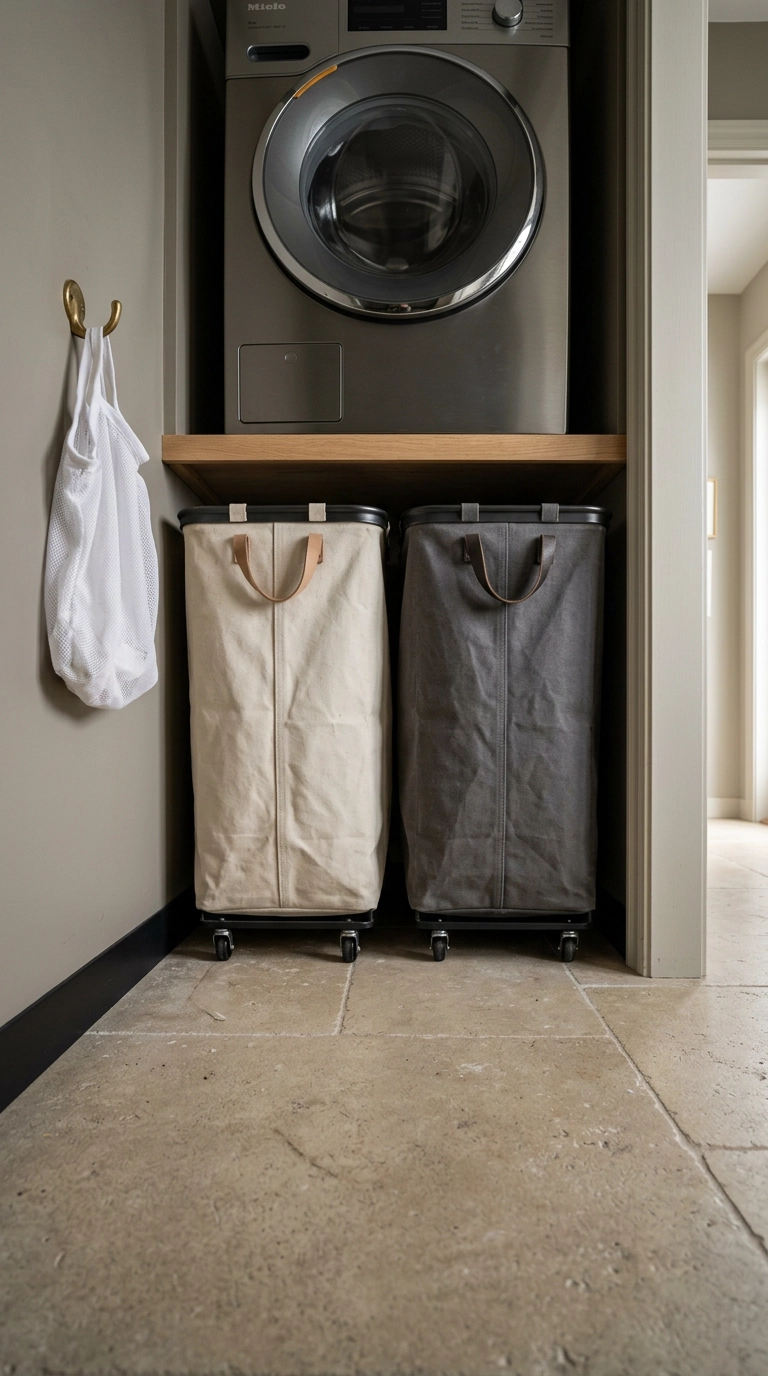
Everyone wants the three-bin sorting station they saw on Pinterest, and almost nobody has 48 inches of floor for it. In a closet you get the cavity under the counter or the strip beside the machines, so measure that opening first and buy hampers to fit it – not the other way around. Two bins that slide out beat four that don’t.
12. Lay Peel-and-Stick Tile Over the Sad Vinyl Floor
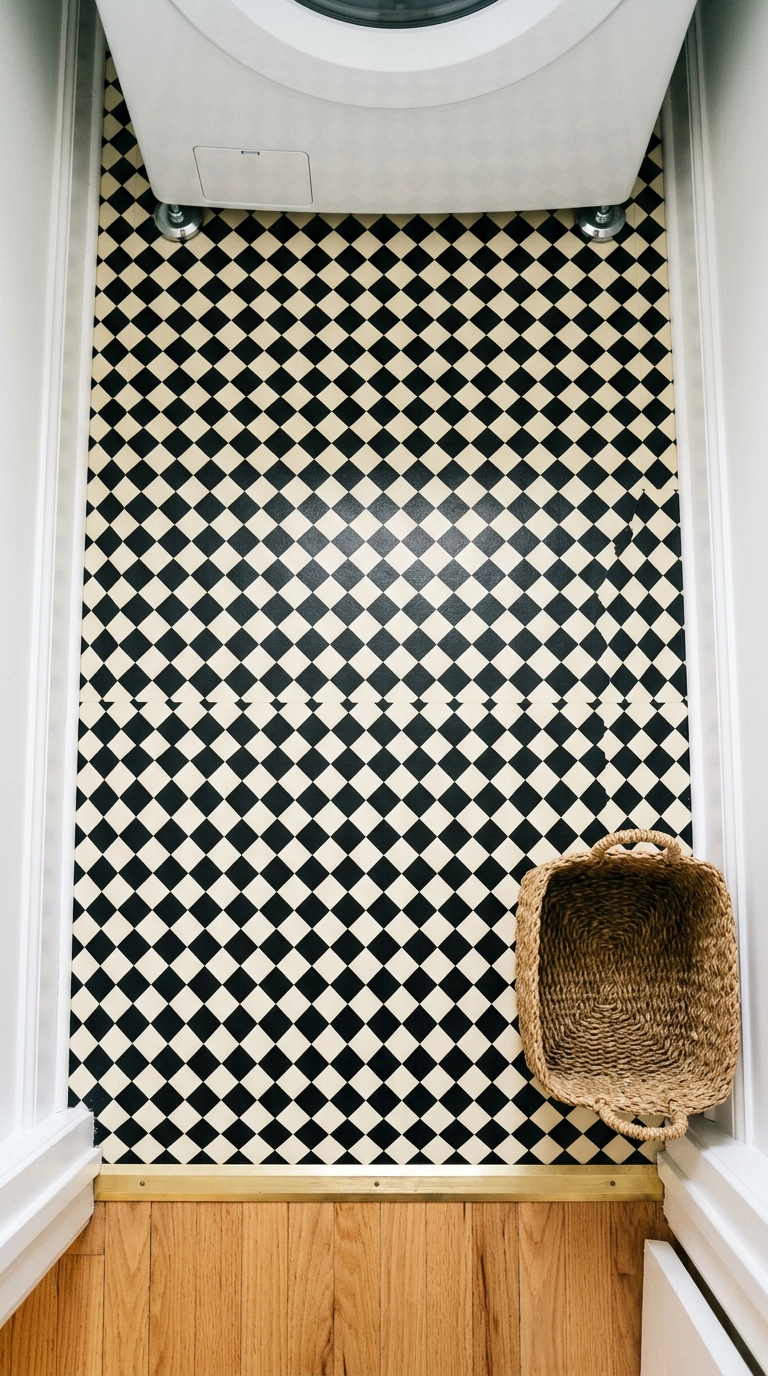
The floor of a laundry closet is usually whatever sheet vinyl the builder had left over, and it’s about nine square feet – which means a pattern that would be overwhelming anywhere else is perfect here. Small-scale checkerboard, a tight terrazzo, a simple encaustic look; go bold, because the machines cover most of it anyway and you’re only ever seeing a border of it.
13. Slide a Skinny Rolling Cart Into the Gap Beside the Machines
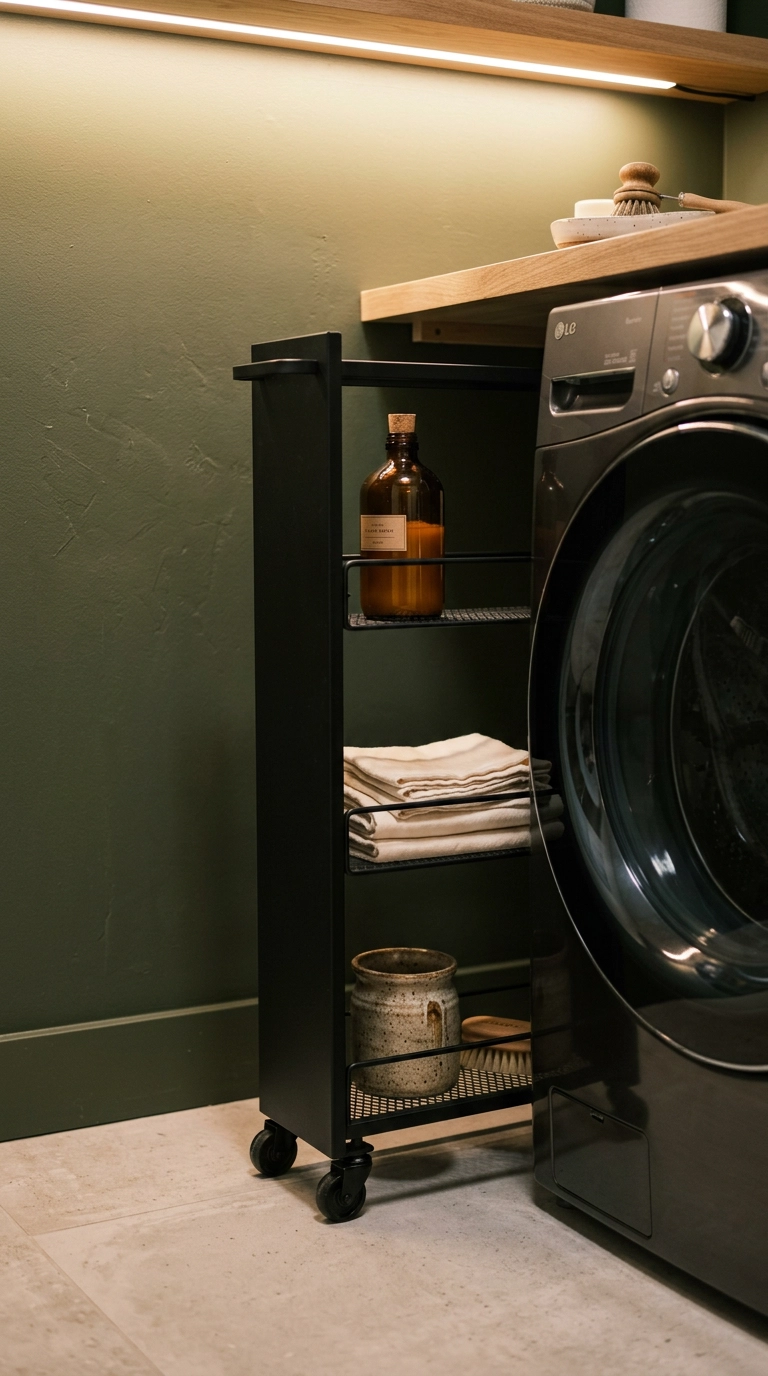
Almost every laundry closet has an awkward 6 to 12 inch gap on one side of the machines where nothing fits and everything falls. A skinny rolling cart – the kind sold as a kitchen slim cart – turns that gap into three shelves of stain sticks, dryer sheets, and the single sock graveyard, and it rolls out with one hand.
14. Case the Opening With Trim So It Reads Like a Built-In
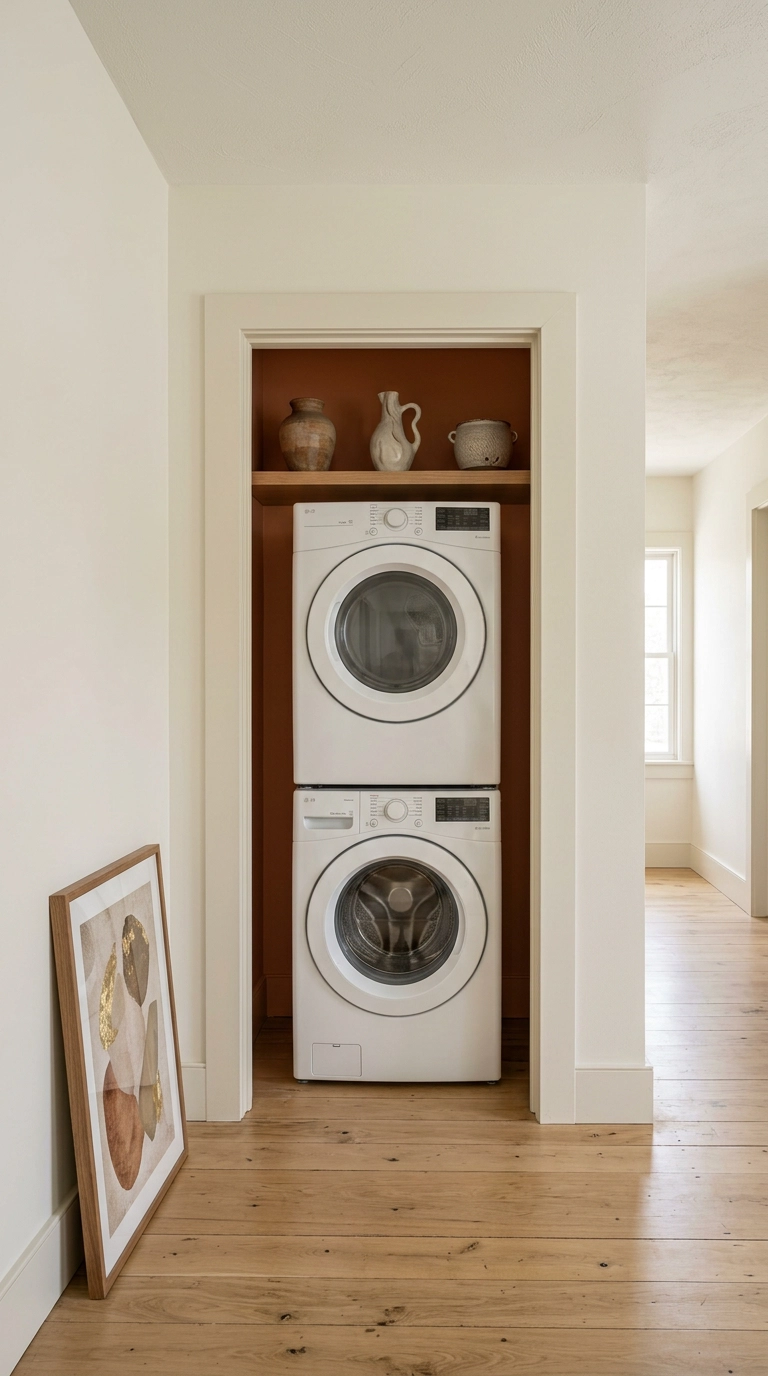
This is the detail that separates a laundry closet from a laundry nook, and nobody thinks of it. Most builder closets are a raw drywall hole with a bullnose edge, and adding flat 1×4 casing around the opening – with a slightly deeper header board across the top – instantly makes the whole thing look like it was designed into the house rather than left over.
15. Hang One Real Piece of Art Where Nobody Expects It
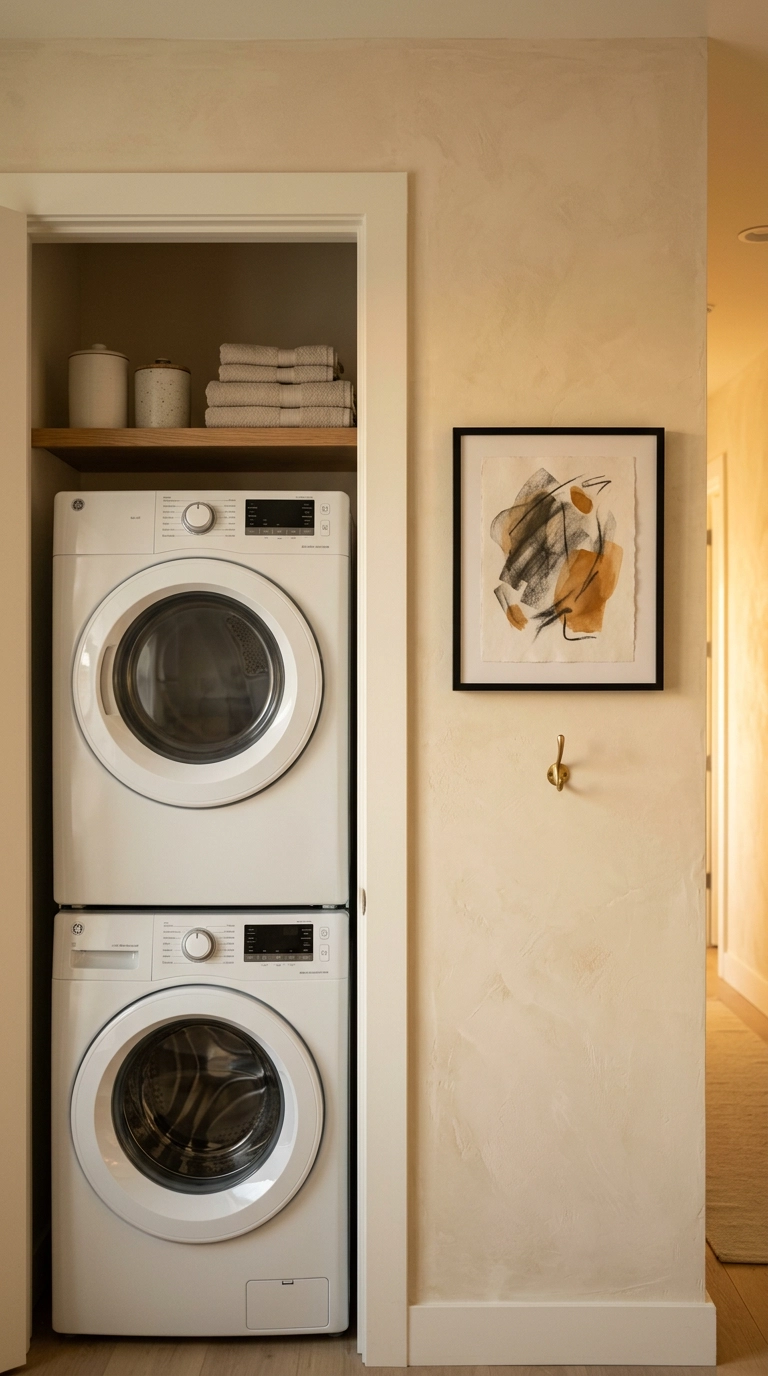
Art in the laundry closet sounds absurd until you do it, and then it’s the thing every guest comments on. One framed piece around 11×14 or 16×20 on the side wall is enough – hang it with the center at roughly 57 to 60 inches, the same eye-level rule you’d use in a hallway, so it doesn’t float up near the shelf.
16. Pick One Basket Style and Buy Enough of Them
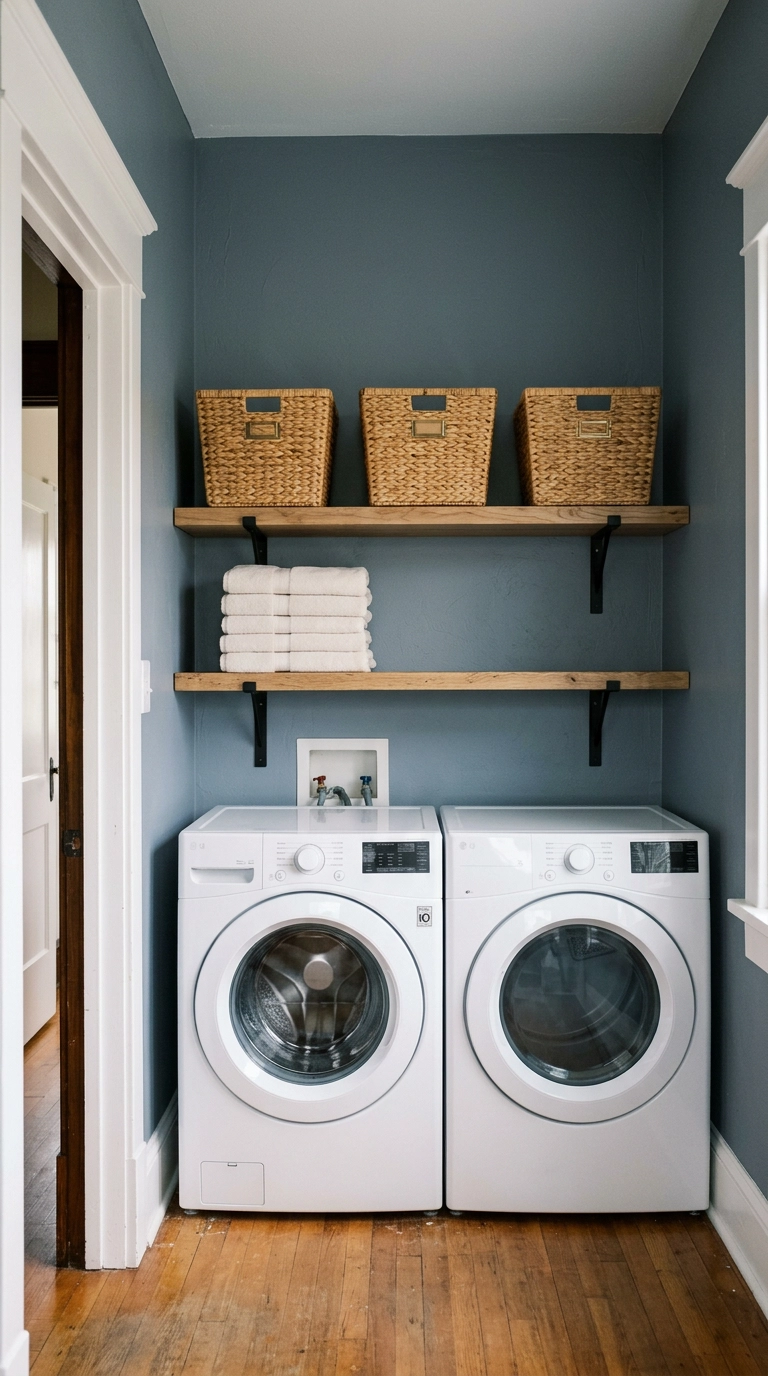
The fastest way to make a tiny space feel chaotic is five containers that don’t match, which is exactly what a laundry closet accumulates. Measure your shelf depth, subtract an inch, then buy three or four identical baskets in that size and let repetition do the work – visual weight settles when shapes repeat, and your brain stops counting objects and reads one calm row instead.
17. Line the Back Wall With Beadboard for Texture Instead of Pattern
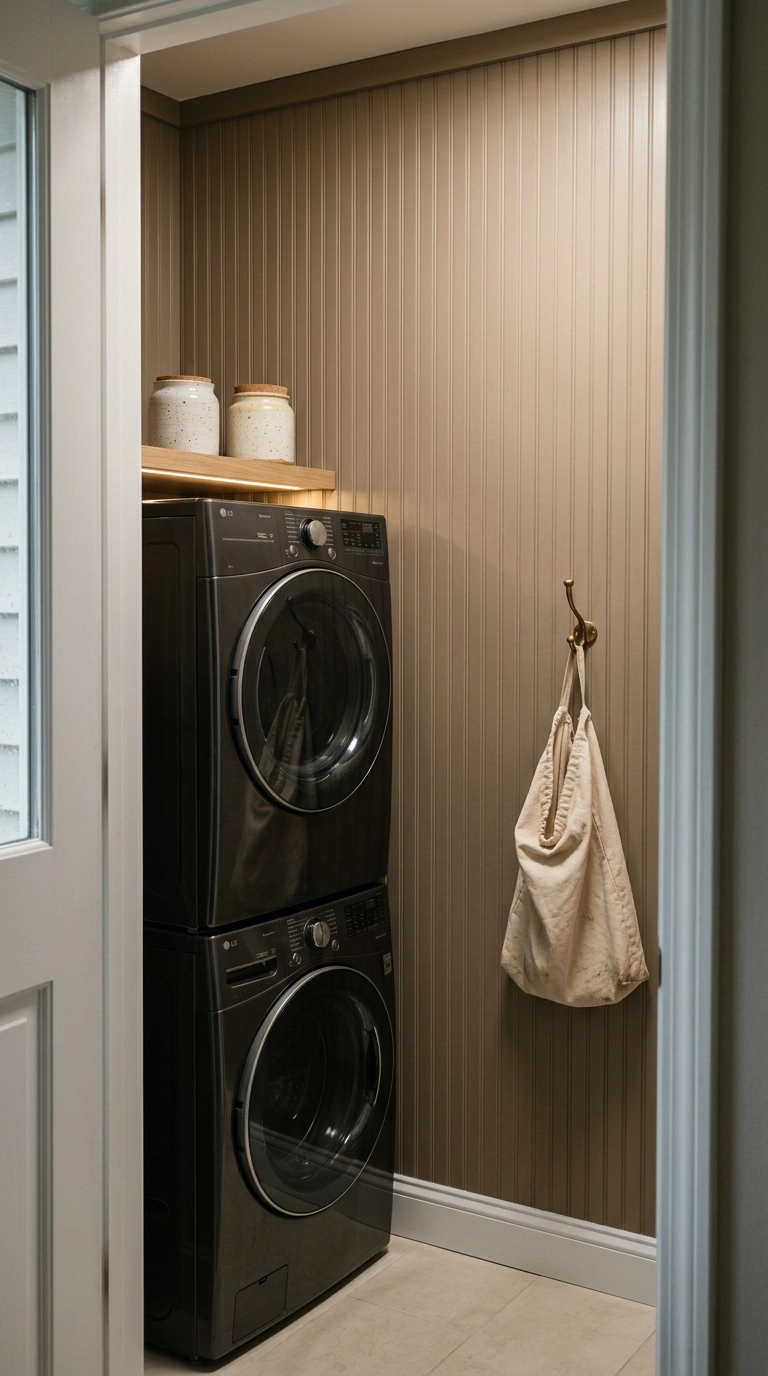
If wallpaper feels like too much commitment, texture gets you the same interest without a pattern to get sick of. Beadboard panels come in 4×8 sheets for around $30, cut down with a circular saw, and glue up with construction adhesive plus a few brad nails – a genuine Saturday project even if you’ve never paneled anything.
18. Upgrade the Hardware and the Outlet Plates
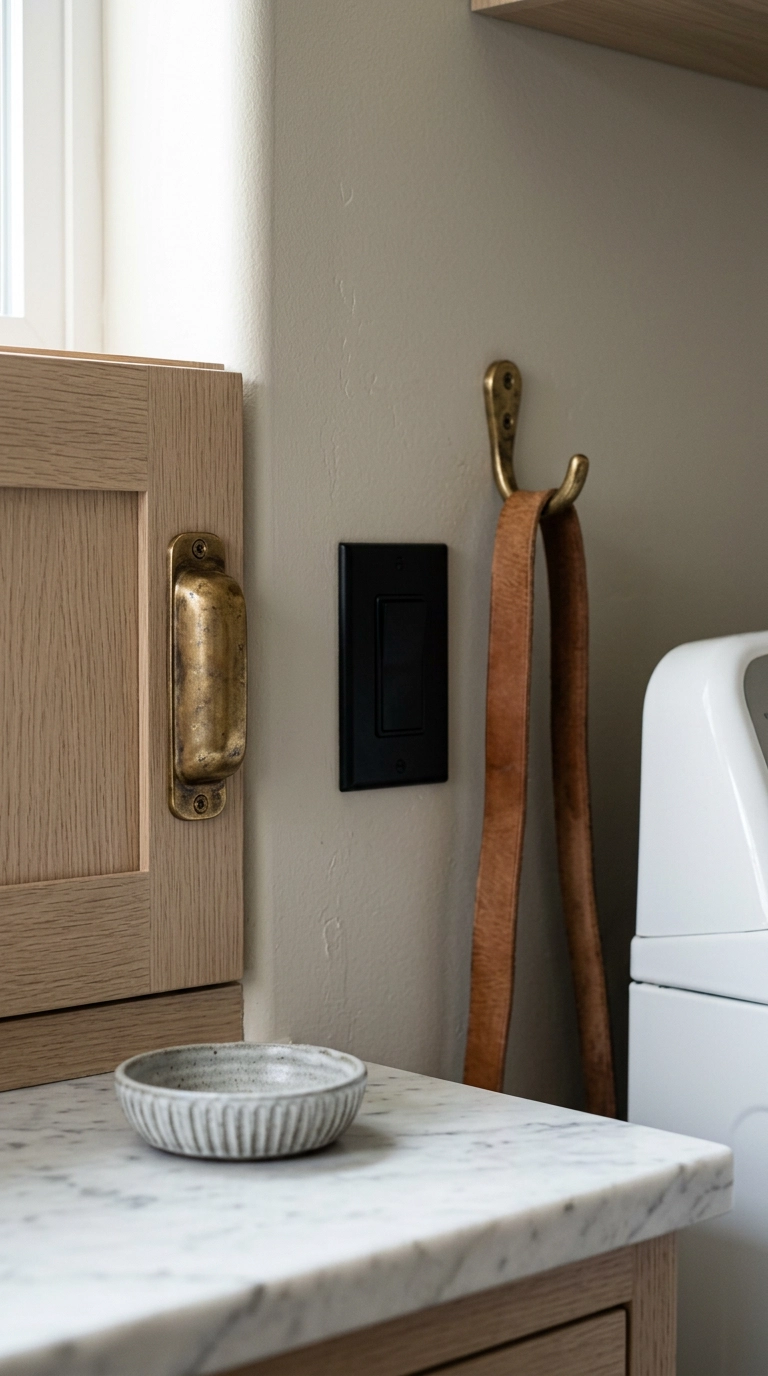
This is the 20-minute, under-$40 idea, and it punches way above its cost in a space this small. Builder-grade almond outlet plates, a beige light switch, and a plastic bifold knob are three separate ugly objects sitting at eye level in a six-square-foot room, and swapping them for screwless matte black or unlacquered brass takes a screwdriver and no skill at all.
19. Mount a Fold-Down Ironing Board on the Side Wall
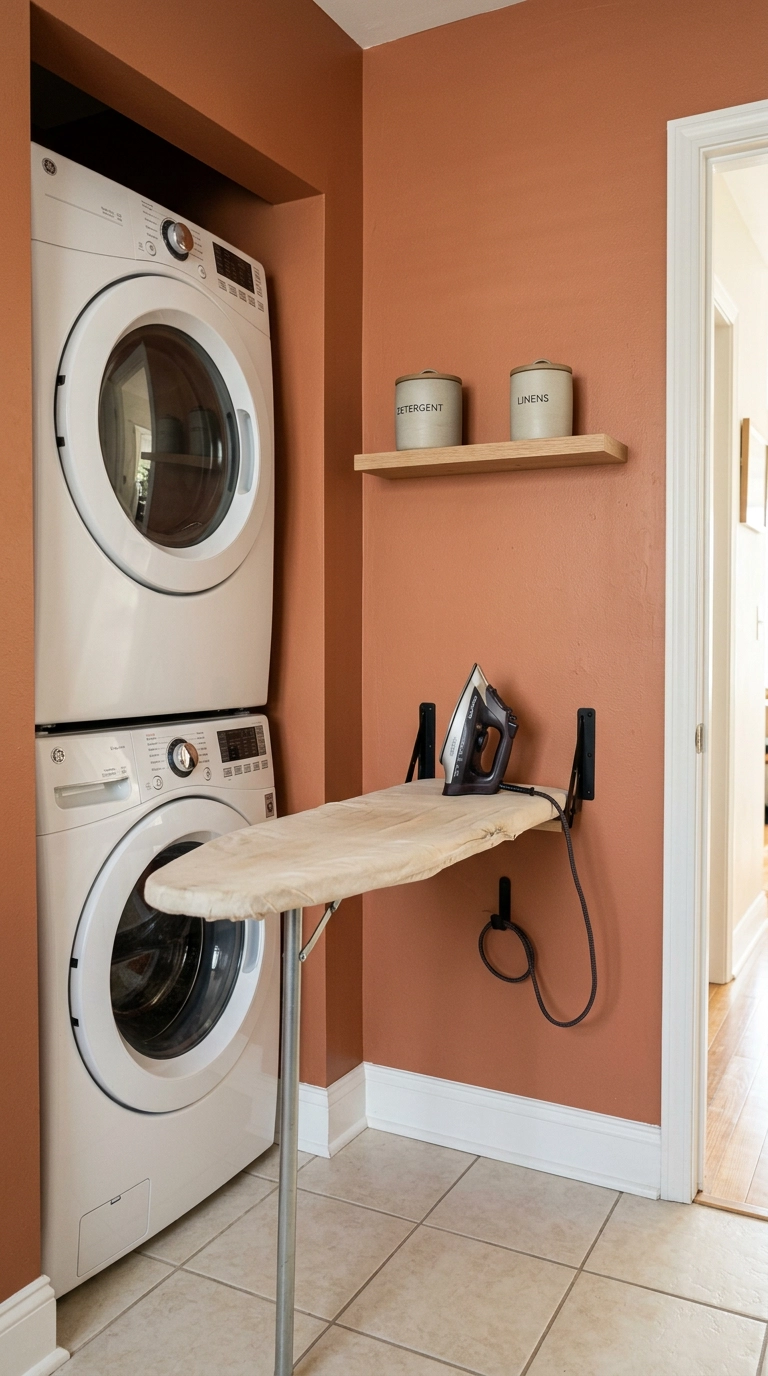
Nobody irons on the floor, and nobody has a spare corner for a full-size board – so it lives behind a door for a decade and never comes out. A wall-mounted fold-down board hinges flat against the side wall at about 3 inches deep and drops to roughly 32 to 35 inches when you need it, which is standing height for pressing without hunching.
20. Wallpaper the Inside of the Doors for a Hidden Surprise
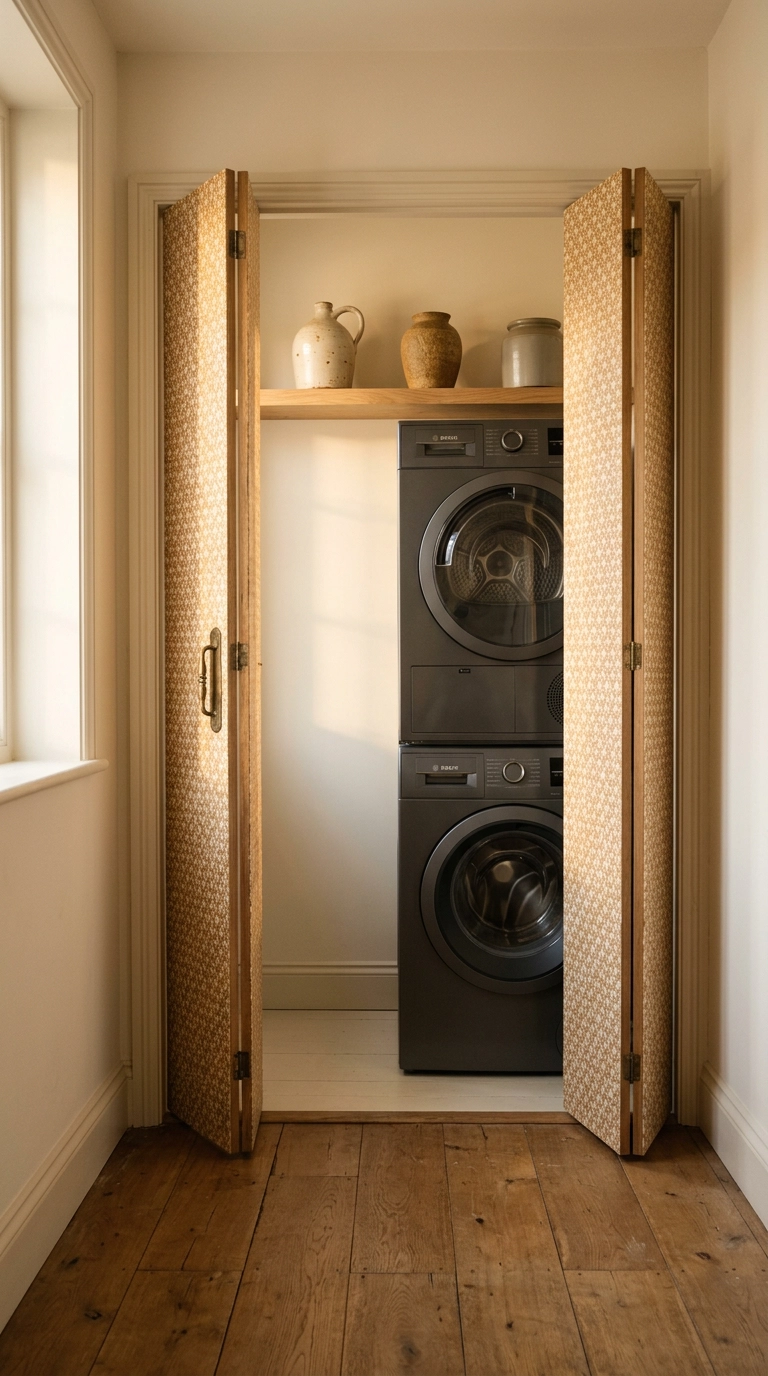
If you’re keeping your doors, the inside faces are two blank panels facing you every single time you do a load, and they’re the best hidden-pattern moment in the house. Peel-and-stick on a flat slab door goes up in under an hour; on a paneled door, paper only the flat recessed centers and let the stiles stay painted.
21. Tuck a Pull-Out Drying Screen Under the Counter
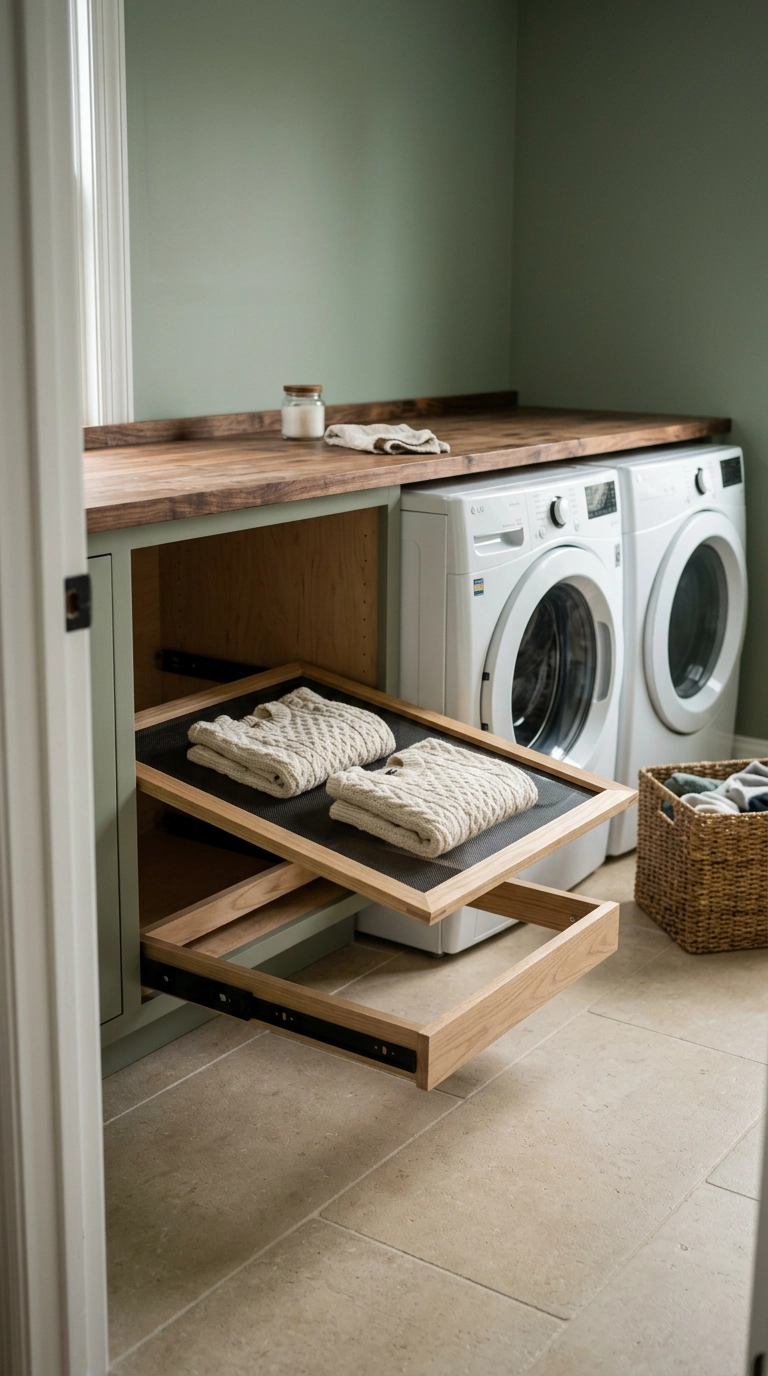
Sweaters and anything wool need to dry flat, and a hanging rod ruins them by stretching the shoulders. A shallow mesh screen on drawer glides in the bay under your counter gives you a flat drying surface that vanishes when it’s not in use – roughly 24 by 18 inches is enough for two sweaters, and airflow comes from both sides because there’s nothing solid under it.
22. Add a Slim Sink If Your Plumbing Will Allow It
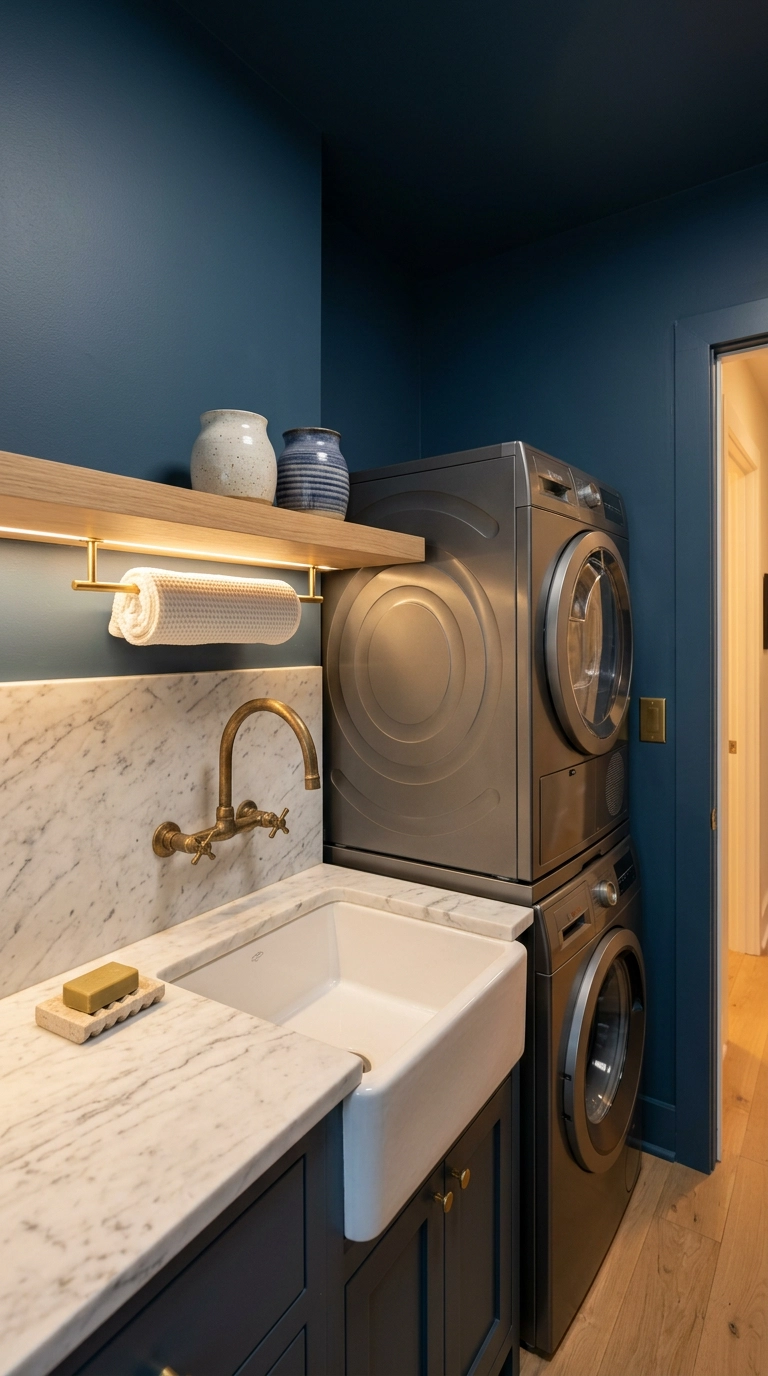
This is the splurge on the list, and the one worth saving for. A 15 to 18 inch bar-depth sink fits beside a stacked pair in about 20 inches of width, and it changes what the room can do – hand-washing, soaking a stain, filling a bucket, rinsing a paint roller without carrying it through the house.
Six Square Feet, Finally Pulling Its Weight
Here’s what I hope you take away from all of this: a laundry closet doesn’t need square footage to feel considered, it needs a plan for every vertical inch. If you only do three things, paper the back wall, get a real counter over your front-loaders, and fix the lighting – that trio alone changes the room from a utility hole into a space you don’t mind standing in on a Tuesday night.
What I’m seeing everywhere in 2026 is the small-scale pattern moment, tight geometrics and ticking stripes in places nobody used to bother decorating, plus color-drenched interiors in shades like Farrow & Ball Hague Blue that make a tiny box feel deliberate instead of cramped. The swap from plastic jugs to glass dispensers has gone fully mainstream too, and honestly, brands like The Container Store built half a category on people finally admitting they care what their detergent looks like. Nate Berkus has been preaching the same idea for years – that the unglamorous rooms deserve the same attention as the ones guests see – and a laundry closet is the purest test of that.
Pick one idea from this list and do it this weekend. Start with the curtain swap or the peel-and-stick floor if you’re renting, save the sink for when the budget allows, and don’t skip the trim casing, because it’s the cheapest thing here that makes the whole closet look built-in. If you want more small-space ideas like these landing in your inbox every week, along with the projects I’m testing in my own home before I recommend them, sign up for my weekly newsletter – I’d love to have you along.