
22+ Bedroom Floating Shelves Decor Ideas that are Easy and Gorgeous in 2026

I’ll be honest with you – floating shelves are the most misused thing in bedroom decor, and I say that with love. I’ve hung dozens of them, and the difference between a shelf that looks custom and one that looks like a Sunday afternoon regret comes down to three things: hitting a stud, picking the right depth, and resisting the urge to fill every inch. Get those right and a $30 board does more for your bedroom than a $900 headboard.
Bedroom Floating Shelves Decor Ideas
1. Two Staggered Floating Shelves Above the Bed
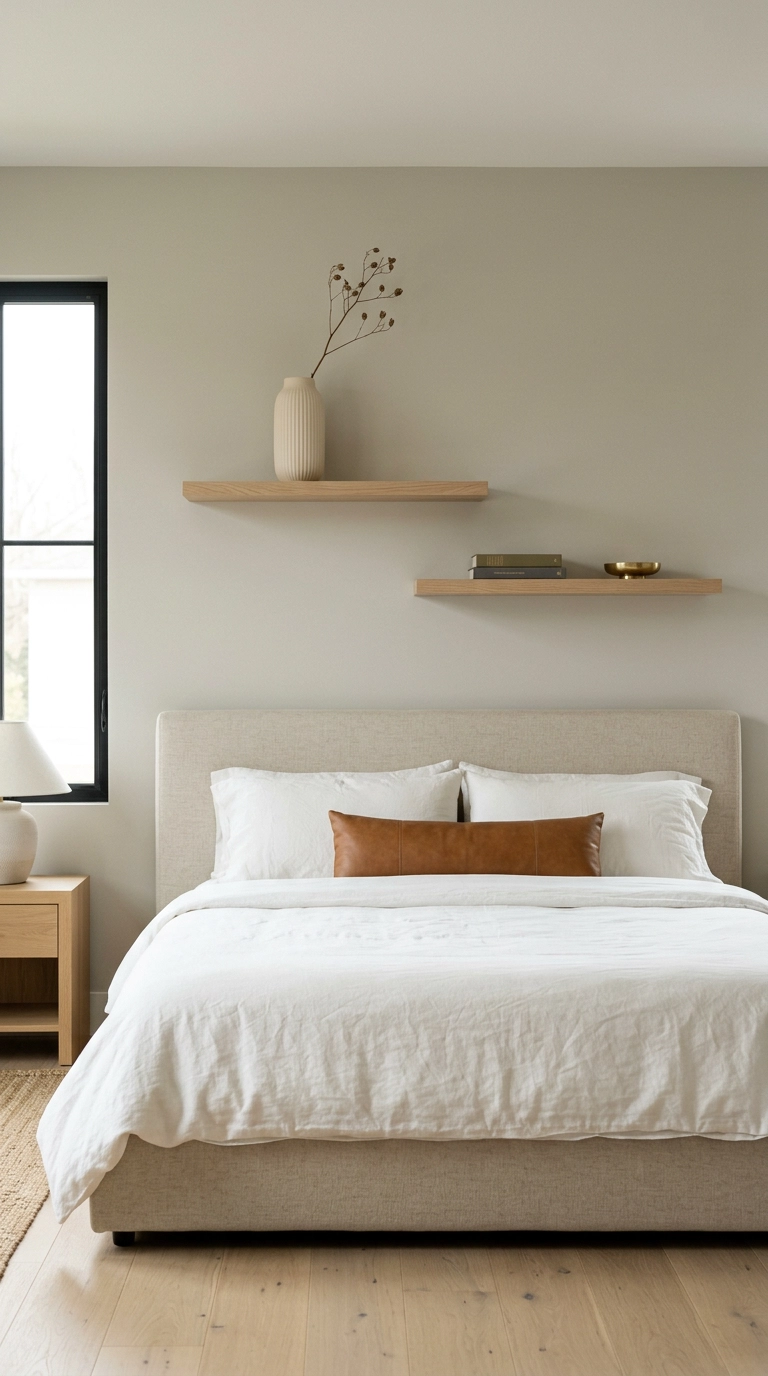
Two shelves at different lengths, offset rather than perfectly aligned, is the single most pinnable move in this whole article. Center the pair on the bed, not the wall, and start the lower shelf about 10 to 12 inches above the top of your headboard so nobody cracks their skull sitting up.
2. One Long Picture Ledge Above the Headboard
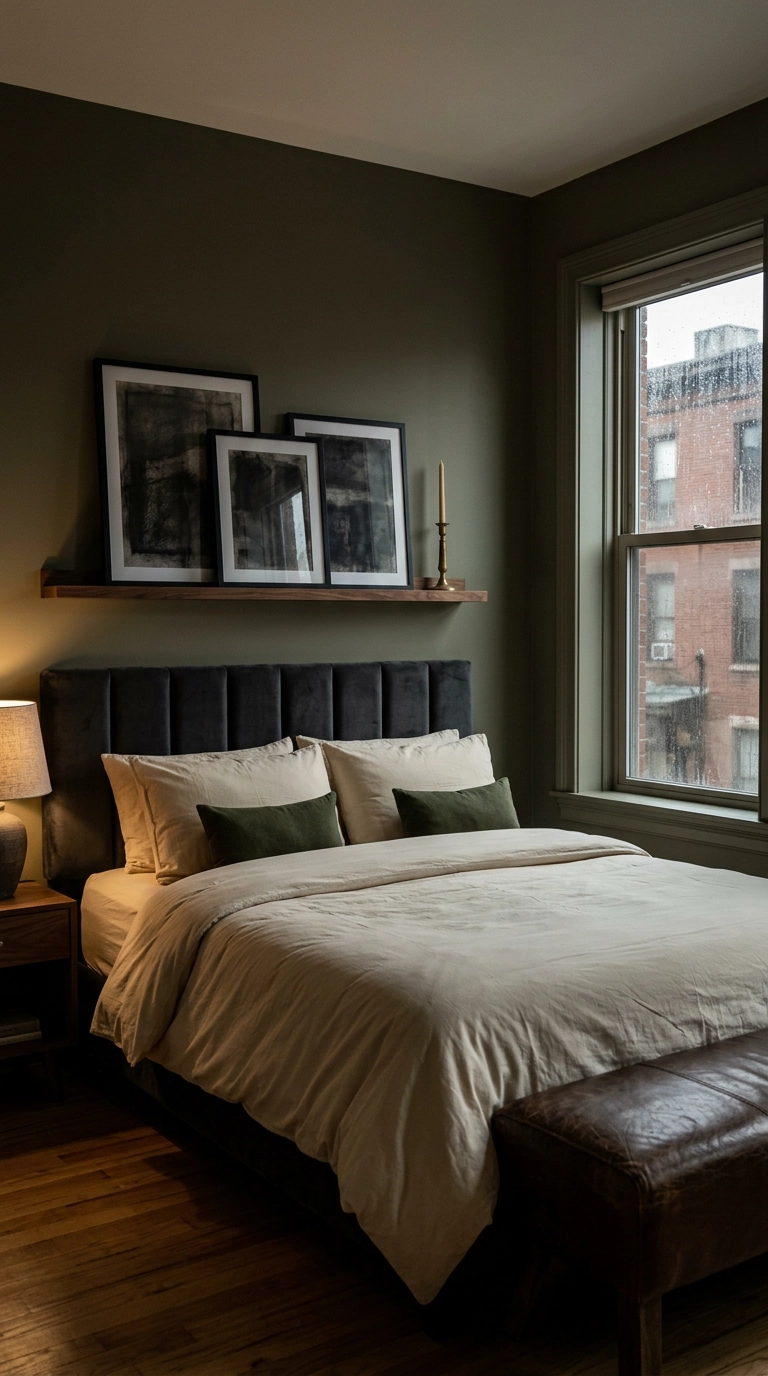
A picture ledge is a floating shelf at 3 to 4 inches deep instead of the standard 8 to 10, and that shallow depth is the whole point. Art leans back at a comfortable angle, nothing sticks out into the room, and you can swap the whole arrangement in five minutes without patching a single hole.
3. Floating Shelves as Nightstand Replacements Beside the Bed
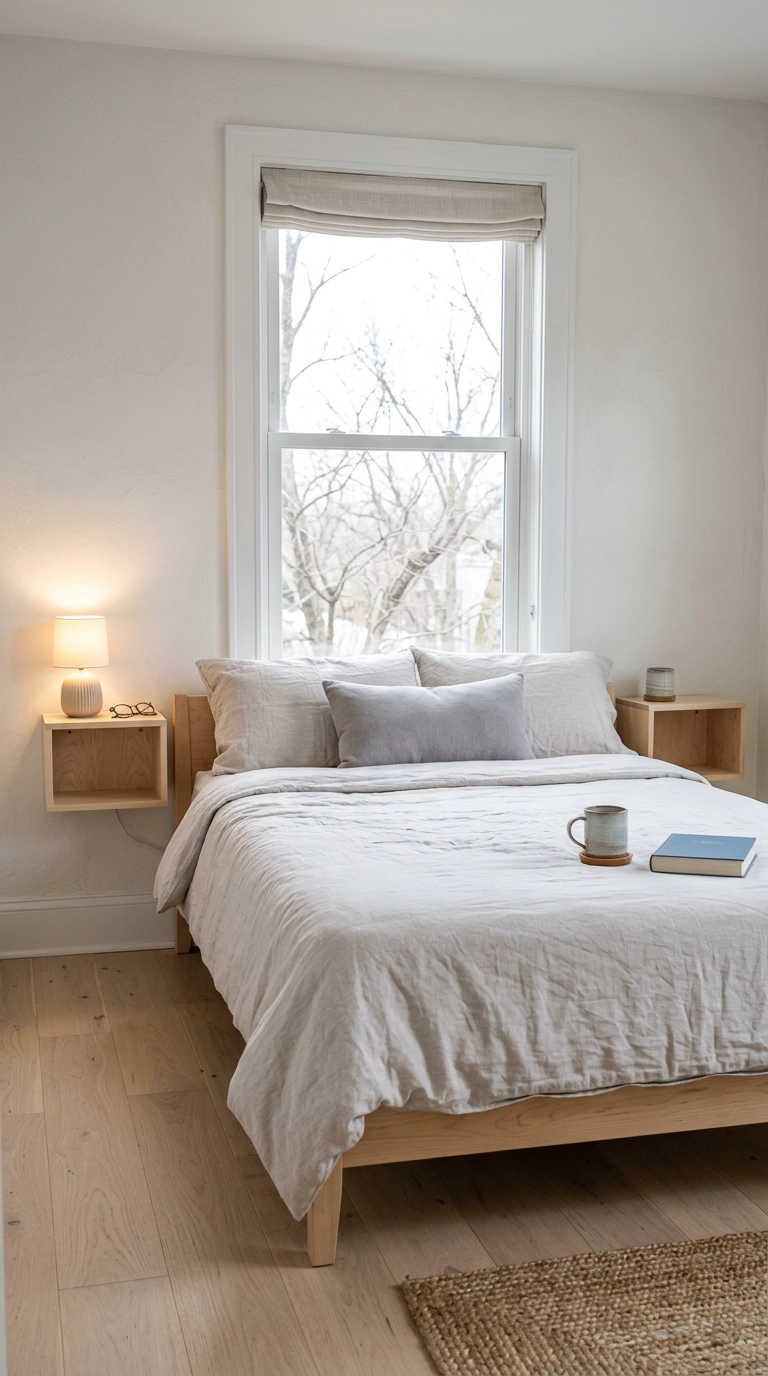
If your bedroom is under 120 square feet, ditching two nightstands for two small floating shelves buys you back real floor space and makes the room read wider, because you can see the baseboard run uninterrupted. Mount them so the top surface lands 24 to 28 inches off the floor, roughly level with the top of your mattress.
4. A Trio of Stacked Shelves Above the Dresser
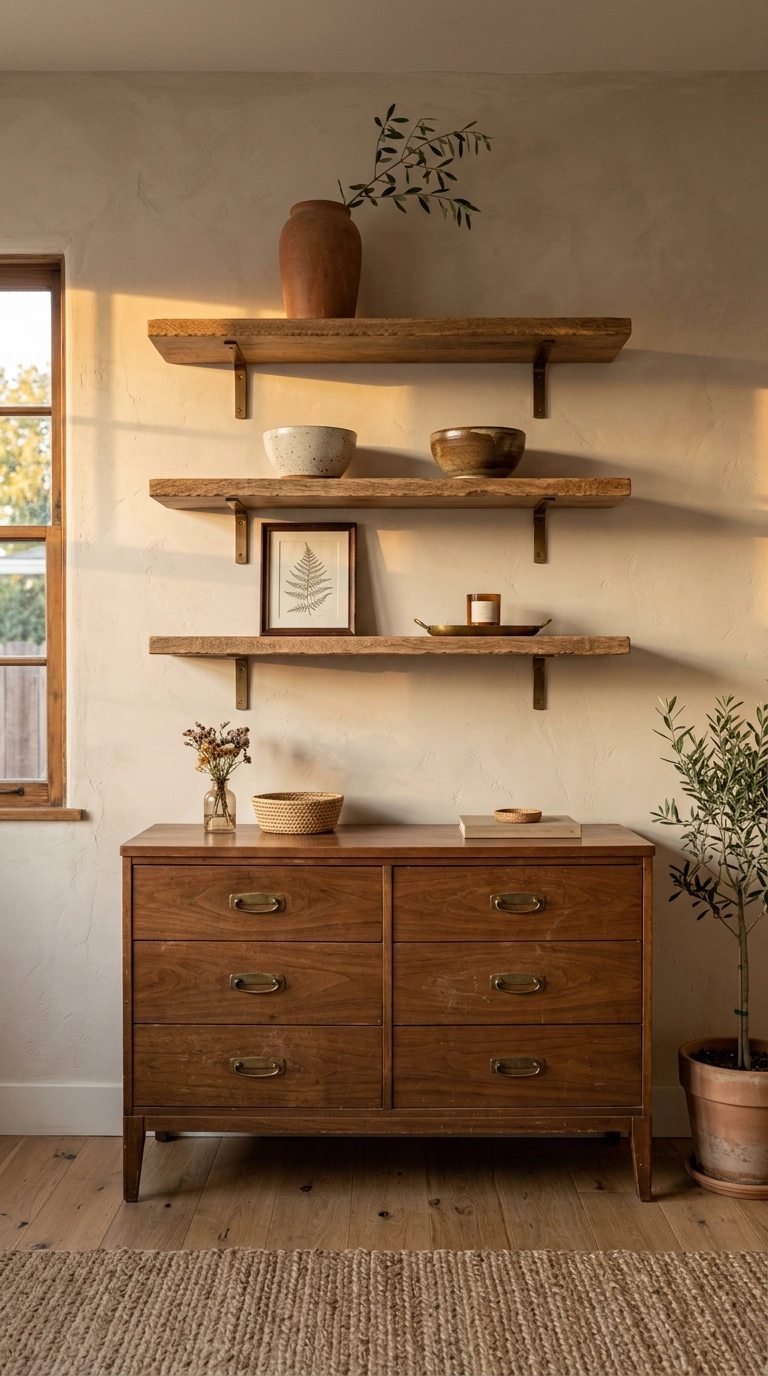
Above a dresser is the easiest place to start with floating shelves, because there’s no bed underneath to make you nervous. Space stacked shelves 12 to 15 inches apart vertically, and leave 10 to 12 inches between the dresser top and the first shelf so you can actually set a lamp down.
5. Clear Glass Floating Shelves in a Dark North-Facing Bedroom
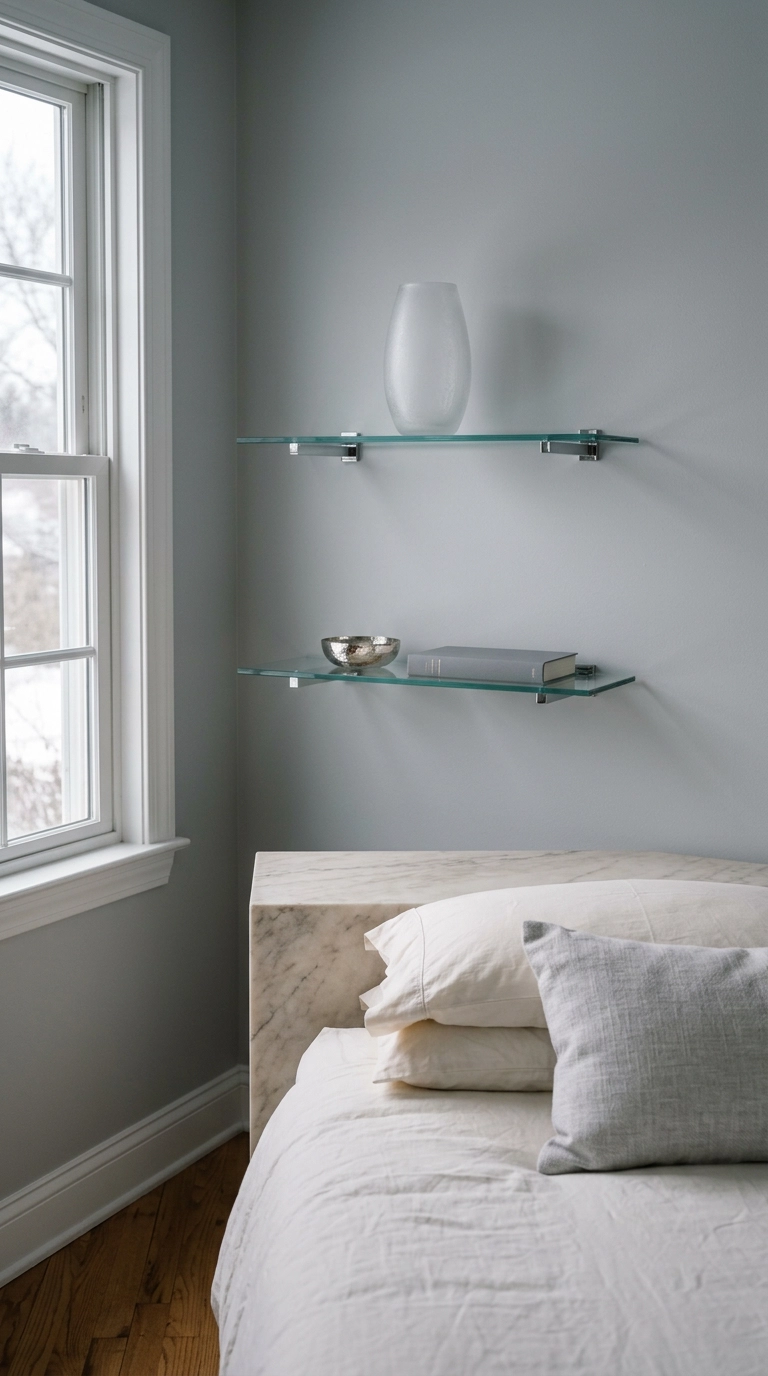
In a north-facing bedroom that never gets direct sun, a solid wood shelf reads as a dark horizontal bar across the wall. Glass shelves let what little light you have pass straight through, so the wall stays bright and the shelf almost vanishes.
6. One Long Shelf Above the Bed, Mounted Into Studs
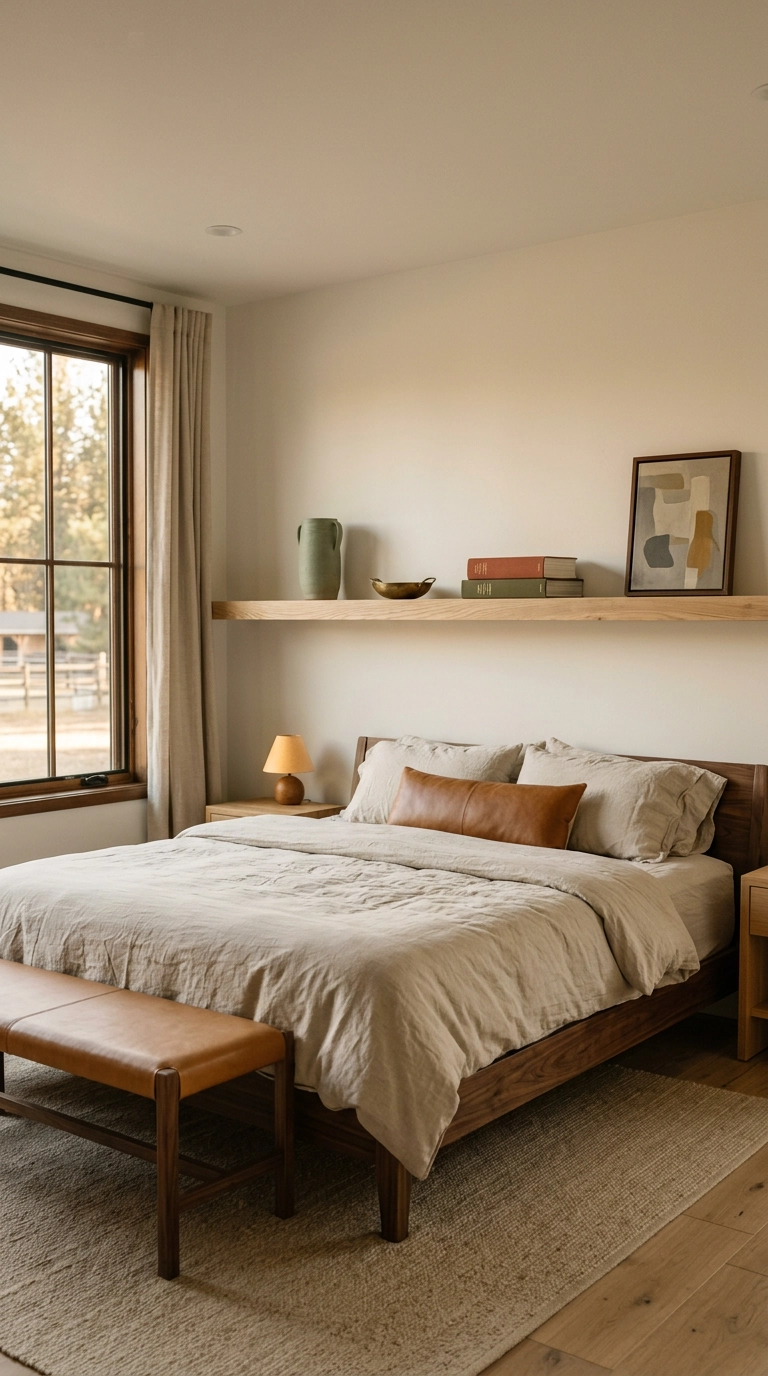
Here’s the honest truth about shelves above a bed: people are nervous about them for good reason, and the fix is mechanical, not decorative. Find your studs with a magnet or a stud finder, mark the centers at 16 inches on center, and drive the shelf bracket lag screws into at least two of them. Stud-mounted, a floating shelf bracket rated for 50 pounds actually holds 50 pounds.
7. Corner Floating Shelves in an Awkward Nook
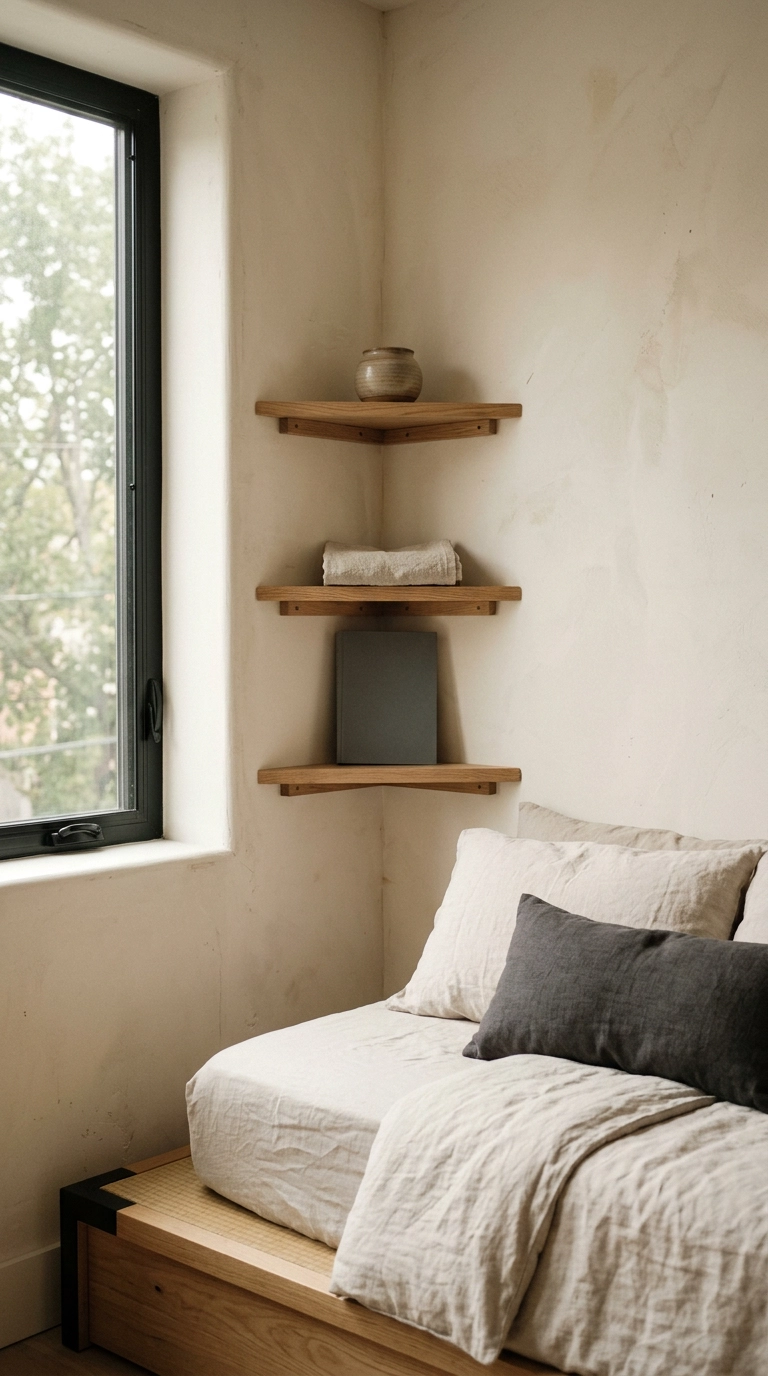
Every bedroom has a dead corner, usually the one behind the door or the sliver next to a closet. Corner shelves cut in triangles claim that space without eating into the walkway, and because they mount into two walls at once you get built-in rigidity from the geometry alone.
8. Command Strip Shelves for Renters Who Cannot Drill
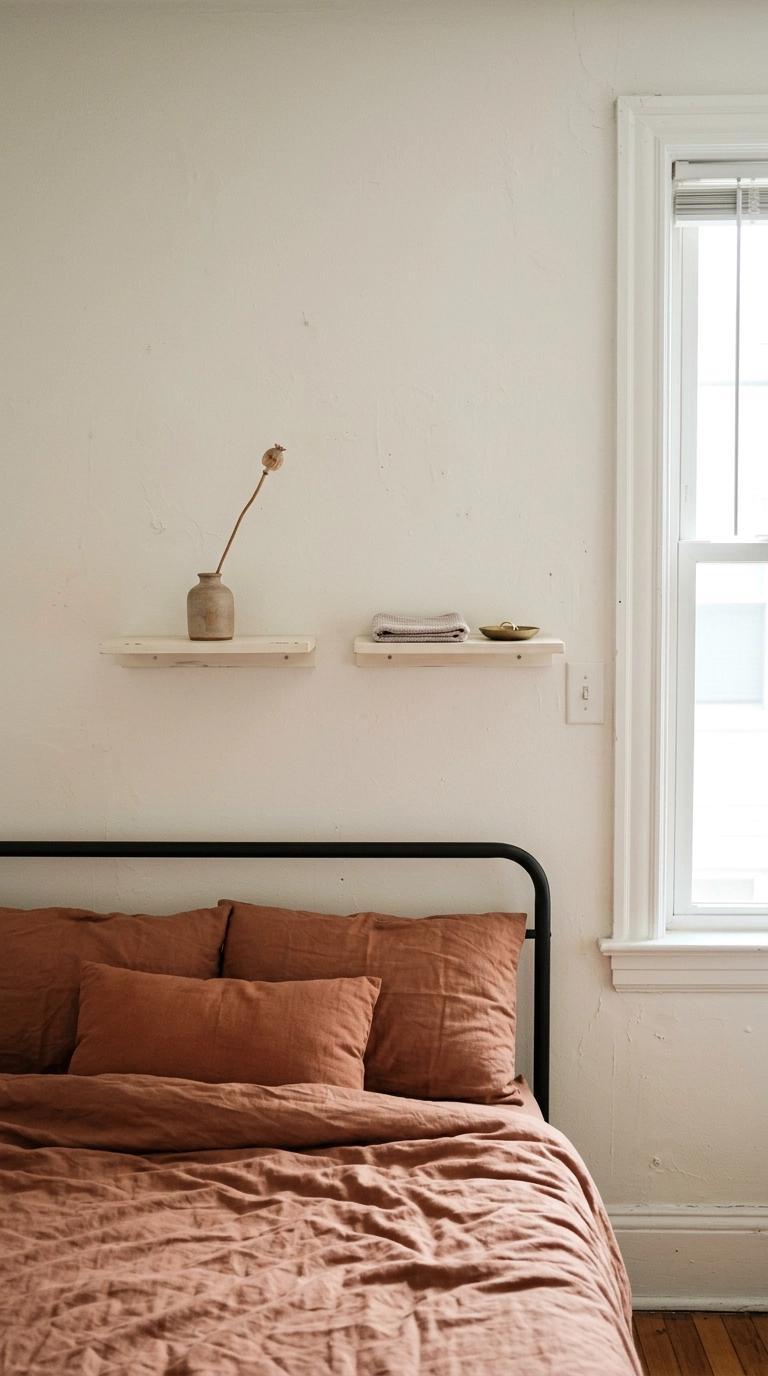
Let’s be specific, because vague renter advice gets people charged for wall damage. Command strips are rated by the pair, and the largest picture-hanging strips hold about 16 pounds when you use enough of them. That’s a lightweight 12 to 18 inch shelf plus maybe three pounds of decor, not a solid oak plank loaded with books.
9. A Narrow Bedroom Solved With Shallow Shelves on the Long Wall
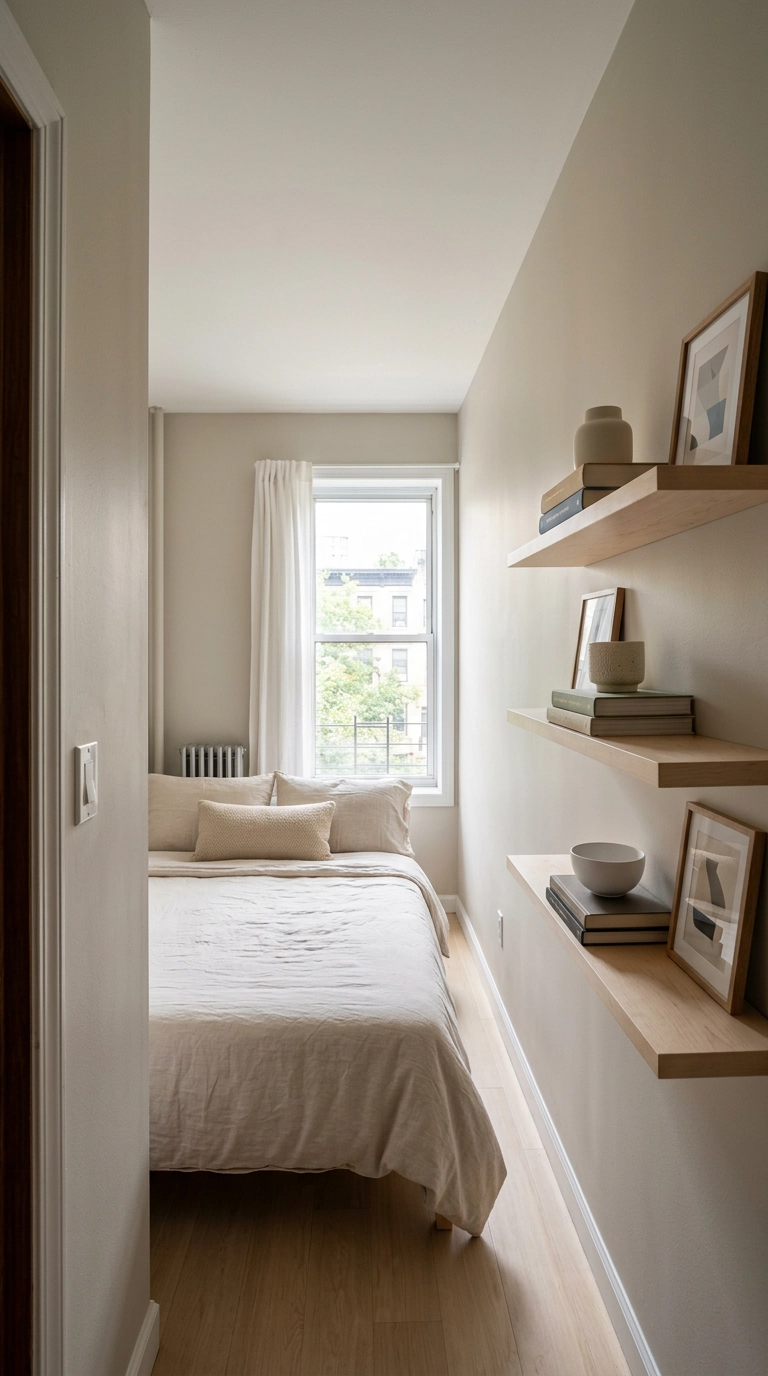
In a narrow bedroom the enemy is depth, not width. Anything projecting more than 6 inches off the long wall makes the walkway feel like a hallway in a submarine, so drop to a 6-inch shelf instead of the standard 8 to 10 and you’ll barely register it.
10. The Two-Thirds Fill Rule in Action
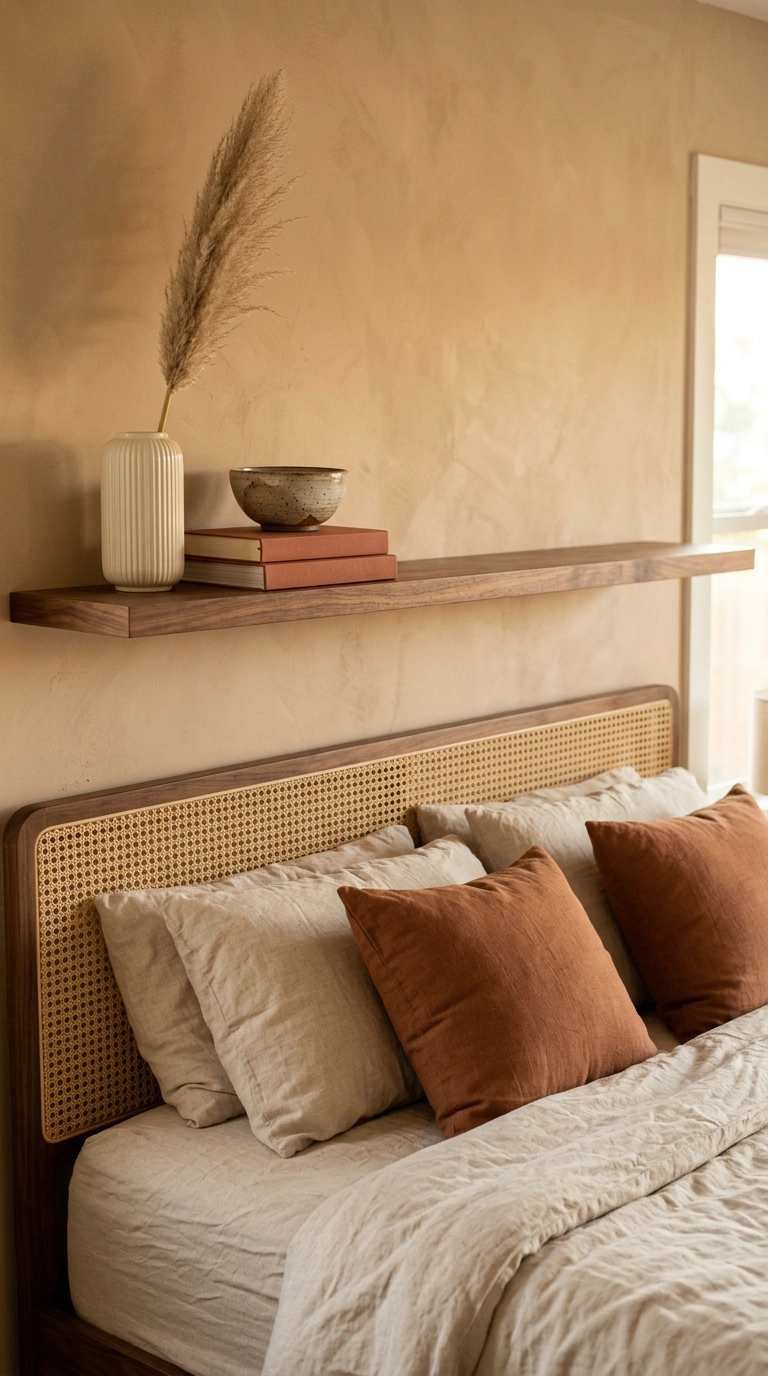
Fill about two-thirds of the shelf and leave one-third empty. That negative space, meaning the deliberately blank area, is what makes a shelf read as styled instead of stored. It’s the single rule I repeat most to clients.
11. Painted Shelves That Disappear Into the Wall
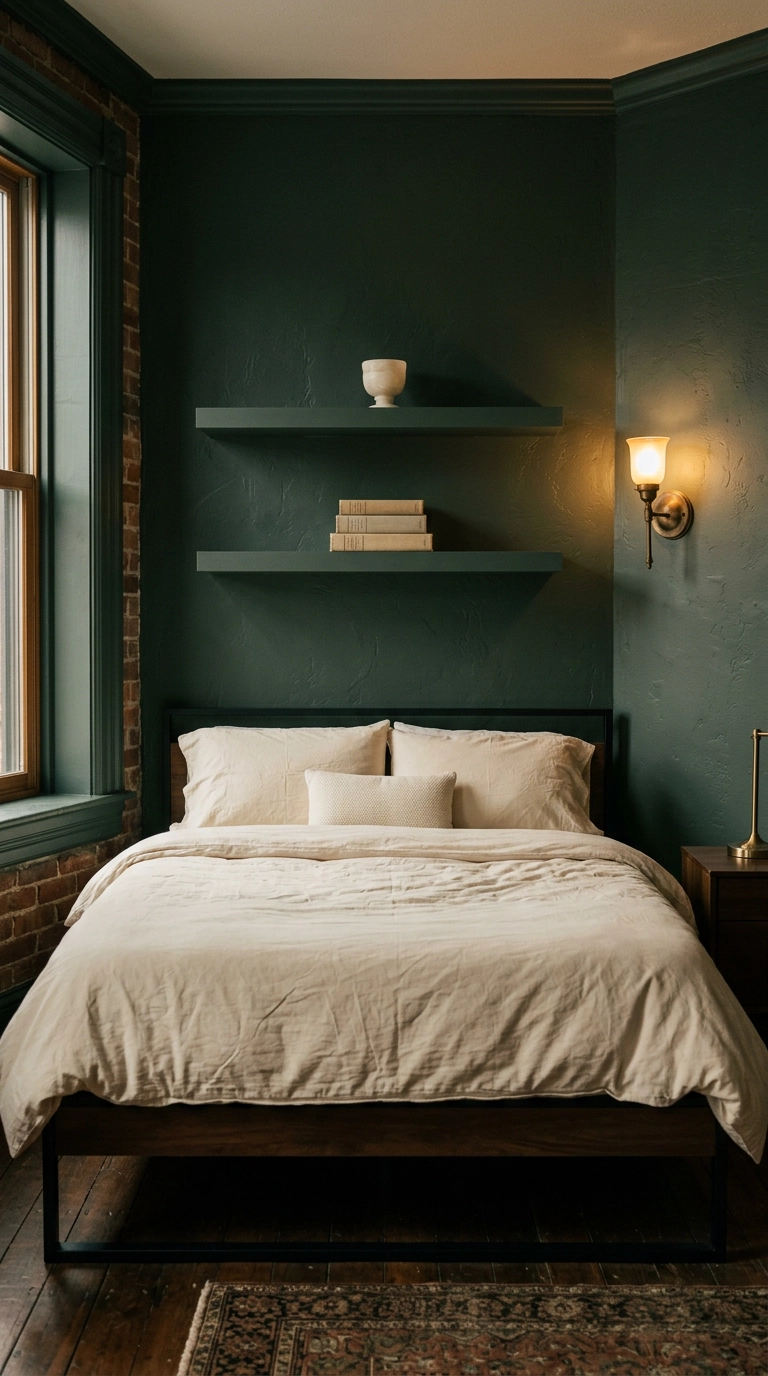
Paint the shelves the exact wall color and they stop being objects and become architecture. This is color drenching, meaning you carry one shade across walls, trim, and now the shelves, and it works because you’ve erased the visual breaks that chop a small room into pieces.
12. A Single Floating Shelf Instead of a Headboard
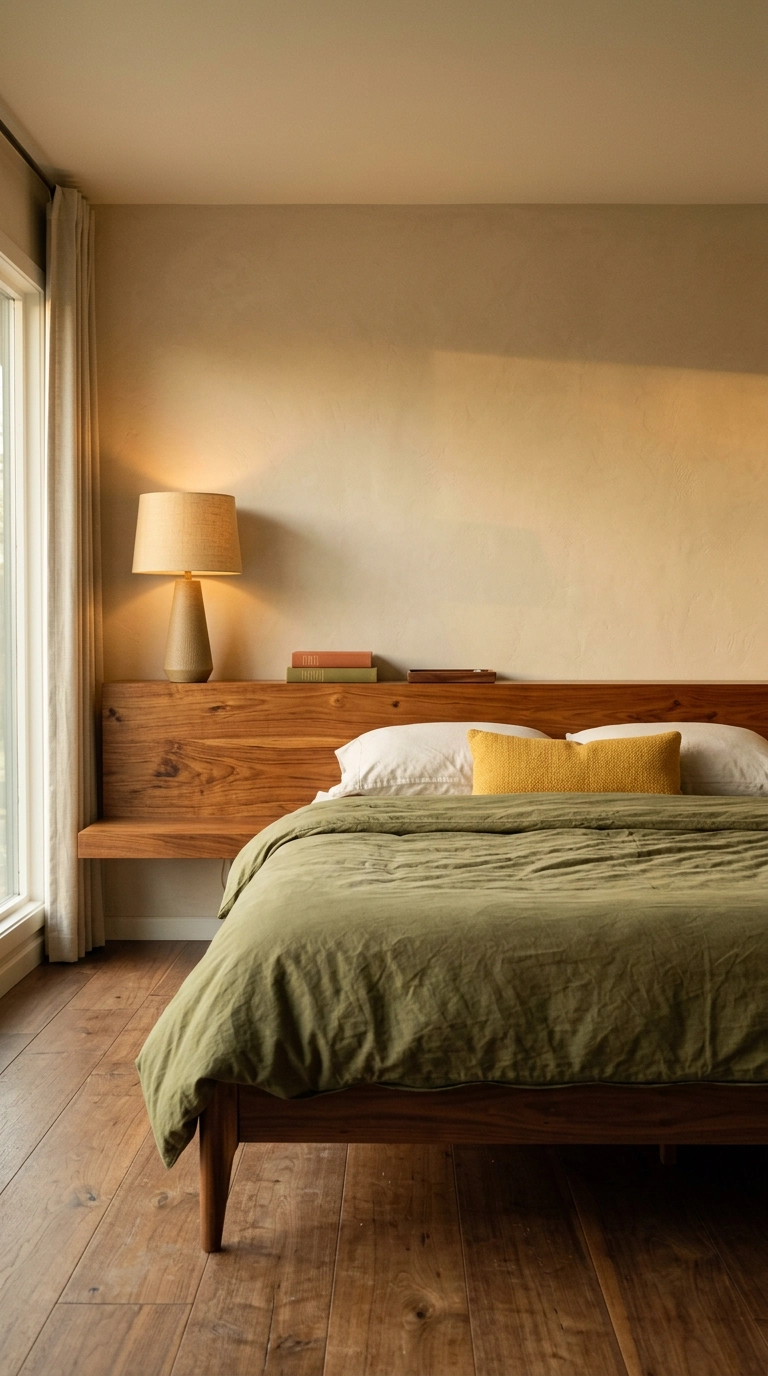
Mount one 10-inch-deep shelf so its top surface sits about 26 to 30 inches off the floor, right where a headboard would be, and it does double duty as both backrest ledge and nightstand for both sides. This one absolutely must go into studs, because you’ll lean against it.
13. Book Spines Turned Inward for a Calmer Shelf
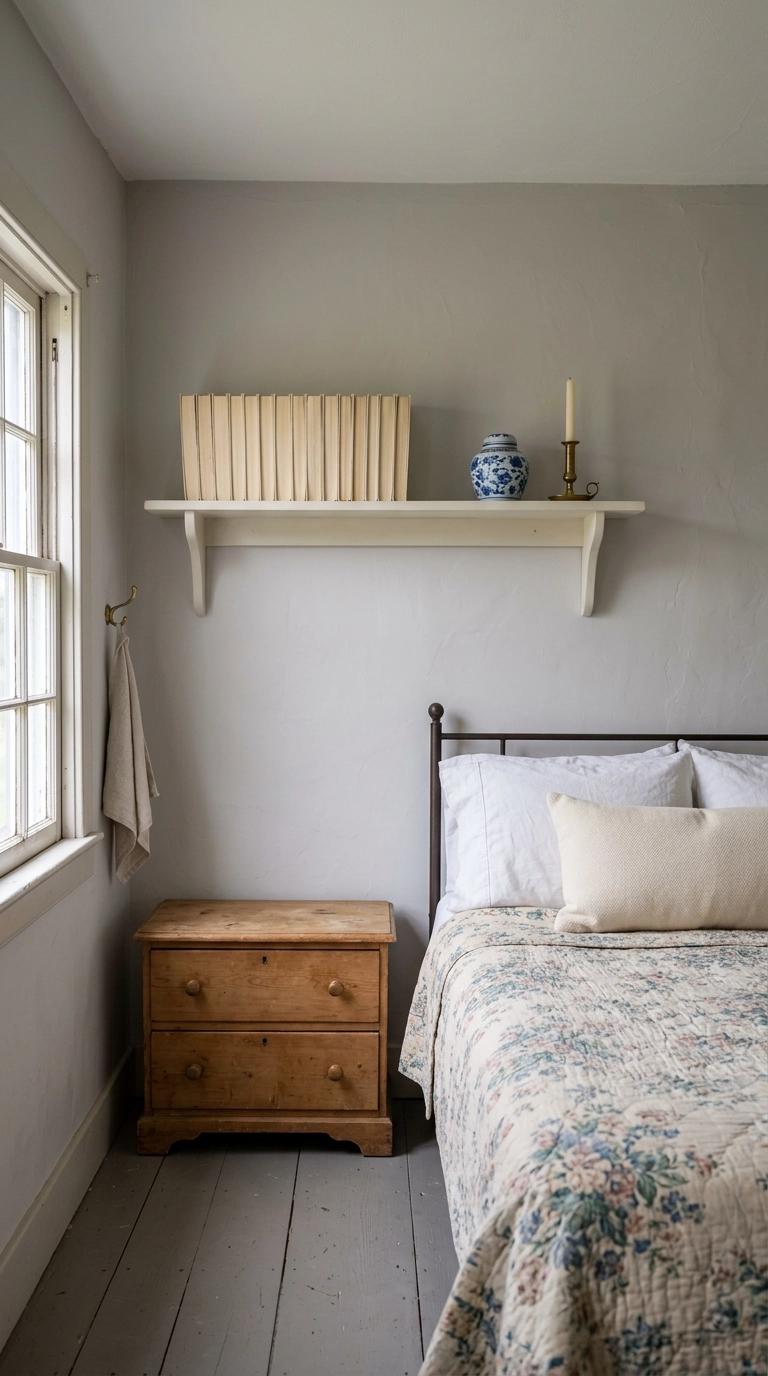
Turn your books so the page edges face out and the shelf goes instantly quieter, because you’ve traded 20 competing spine colors for one soft cream block. Purists hate this and I get it, but in a bedroom where you want calm, it works.
14. Asymmetric Shelves Flanking a Window
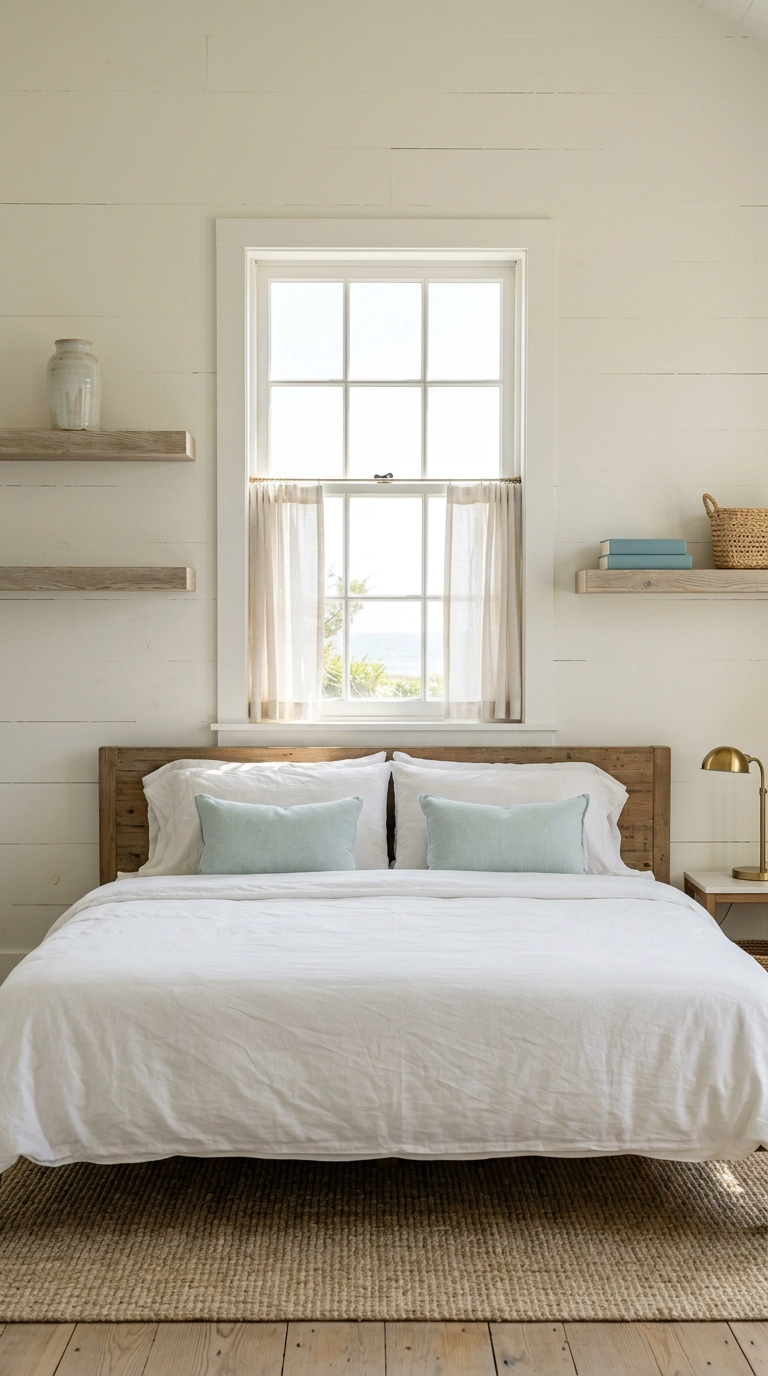
Perfect symmetry around a window is fine but a little sleepy. Offsetting the two shelves by 8 to 10 inches vertically creates a diagonal sightline, meaning the path your eye travels, and diagonals make a static wall feel alive.
15. A Floating Shelf With an Integrated LED Strip Underneath
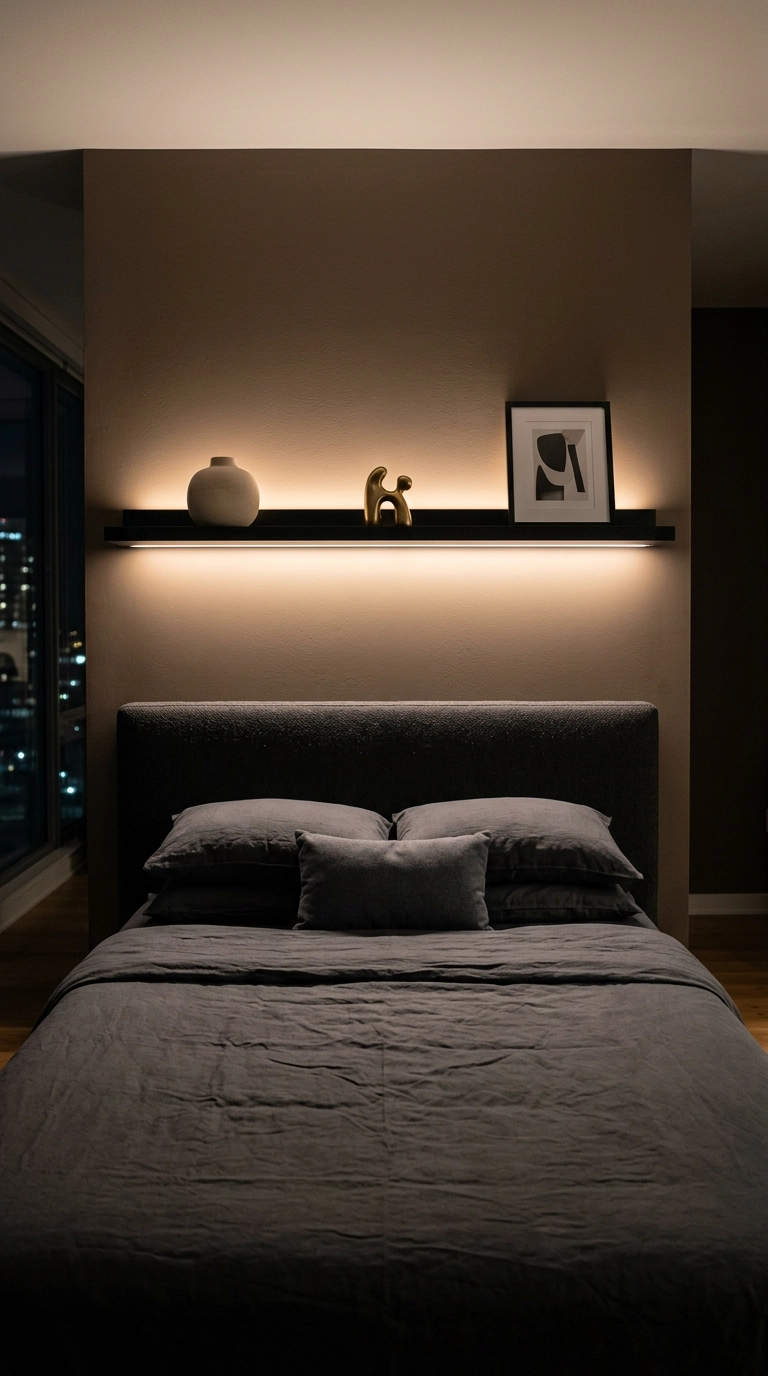
Stick a warm-white LED tape strip, 2700K not 5000K, along the underside front edge of the shelf and you get a wash of light down the wall that reads like an expensive architectural detail. A plug-in strip with a dimmer runs about $20 and takes 15 minutes.
16. Stacked Shelves in a Tight Vertical Column
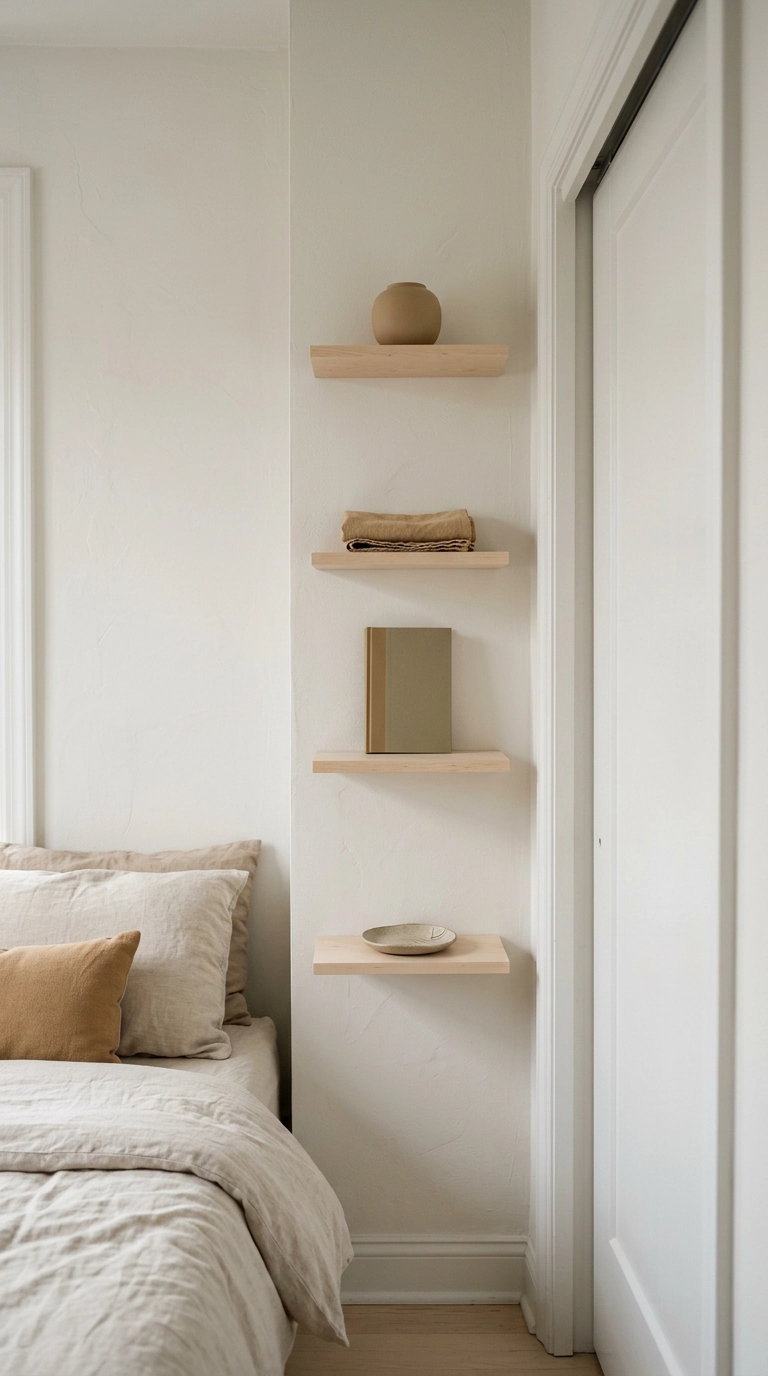
Got a 20-inch strip of wall next to a closet or a door? Stack four short shelves in a column, spaced 11 to 13 inches apart, and that dead sliver becomes a deliberate feature. Vertical stacking draws the eye up, which makes an 8-foot ceiling feel taller.
17. Thick Chunky Shelves for Visual Weight
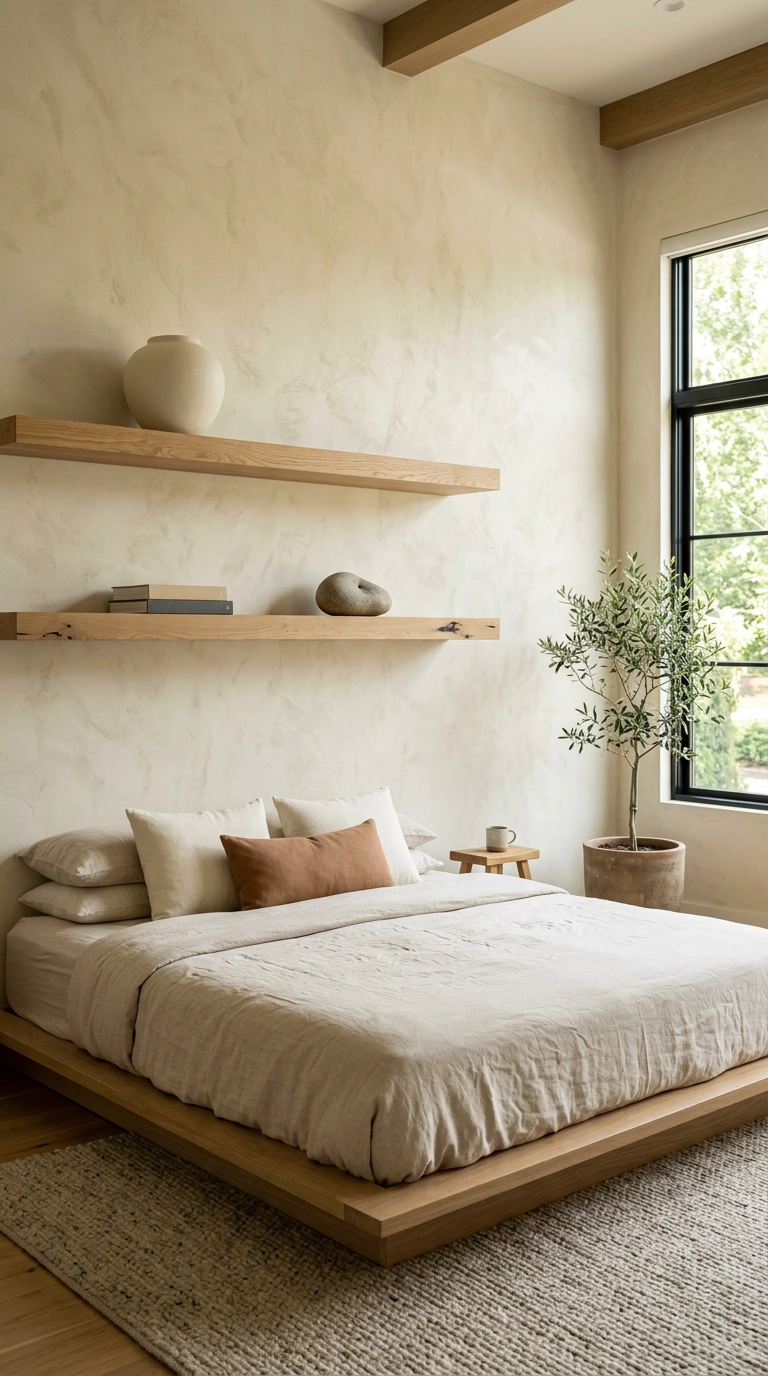
A 3-inch-thick solid wood shelf carries real visual weight, meaning how heavy an object looks rather than what it weighs, and that heft is what makes a shelf look custom-built instead of flat-packed. Thin 3/4-inch shelves read cheap above a big bed.
18. A Shelf Above the Bed With Nothing Breakable On It
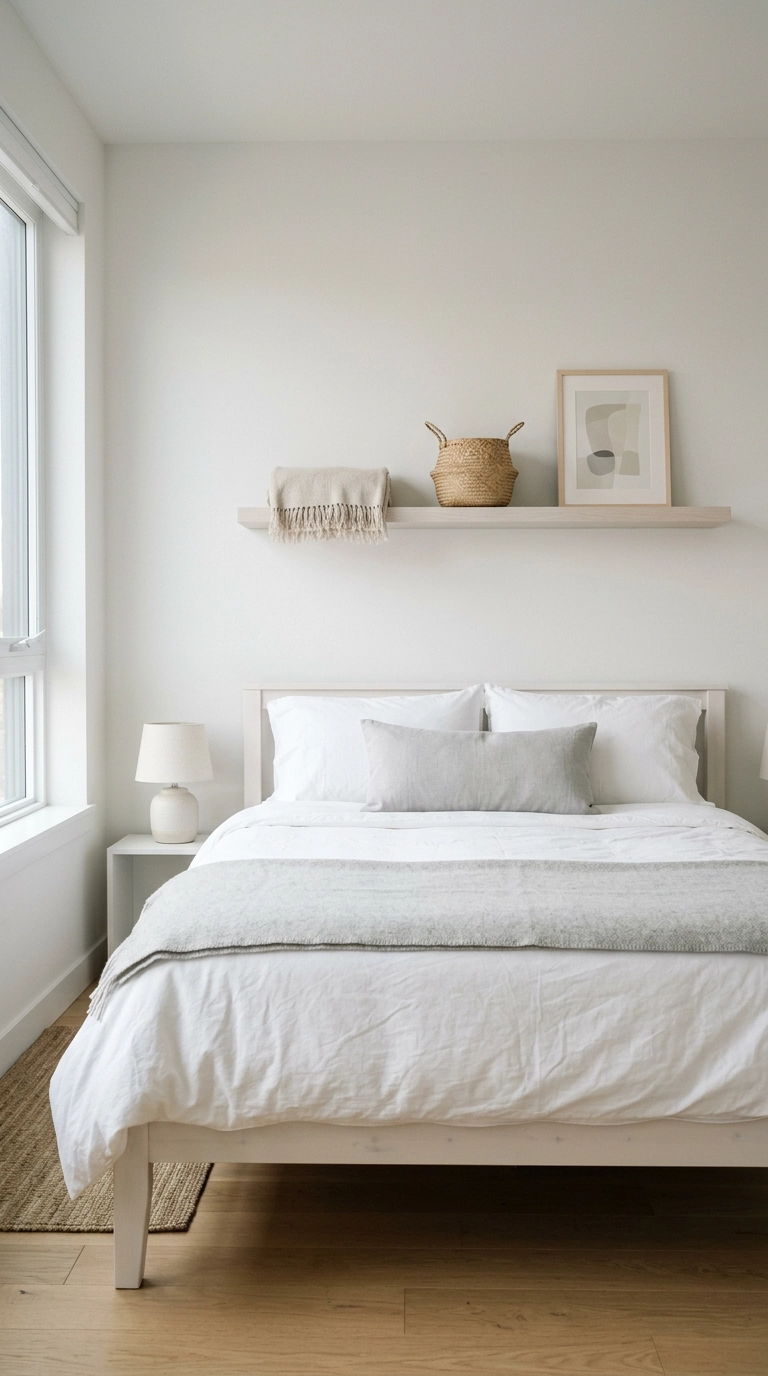
If a shelf above your bed genuinely keeps you up at night, style it with things that can’t hurt you. A folded throw, a soft basket, a lightweight framed print in a plastic-glazed frame. Everything soft, nothing ceramic, nothing glass.
19. A Floating Shelf Nightstand With a Swing-Arm Sconce Above It
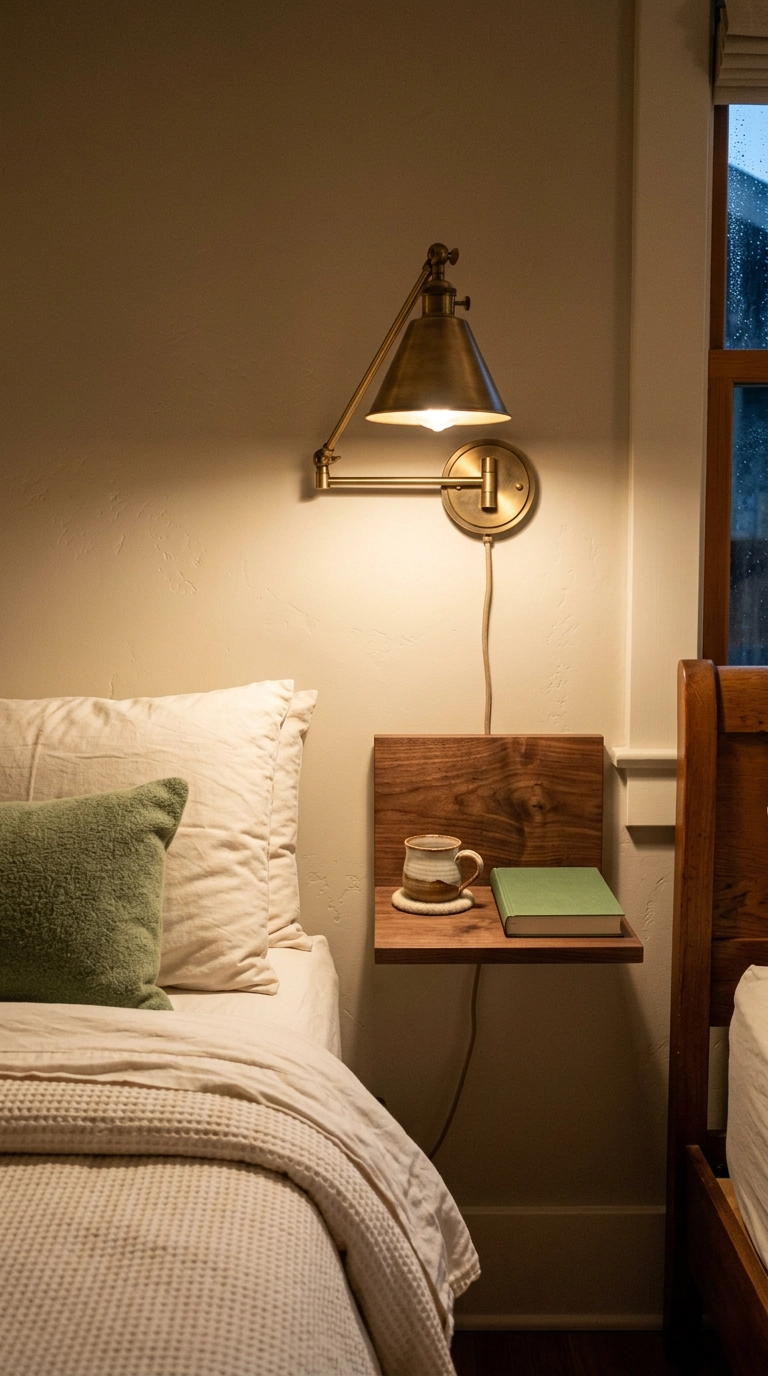
The problem with a floating shelf nightstand is that a lamp eats the entire surface. Move the light to the wall with a plug-in swing-arm sconce and you get the shelf back for a mug and a book, which is all you actually need at midnight.
20. A Honed Marble Slab Floating Shelf as a Splurge Nightstand
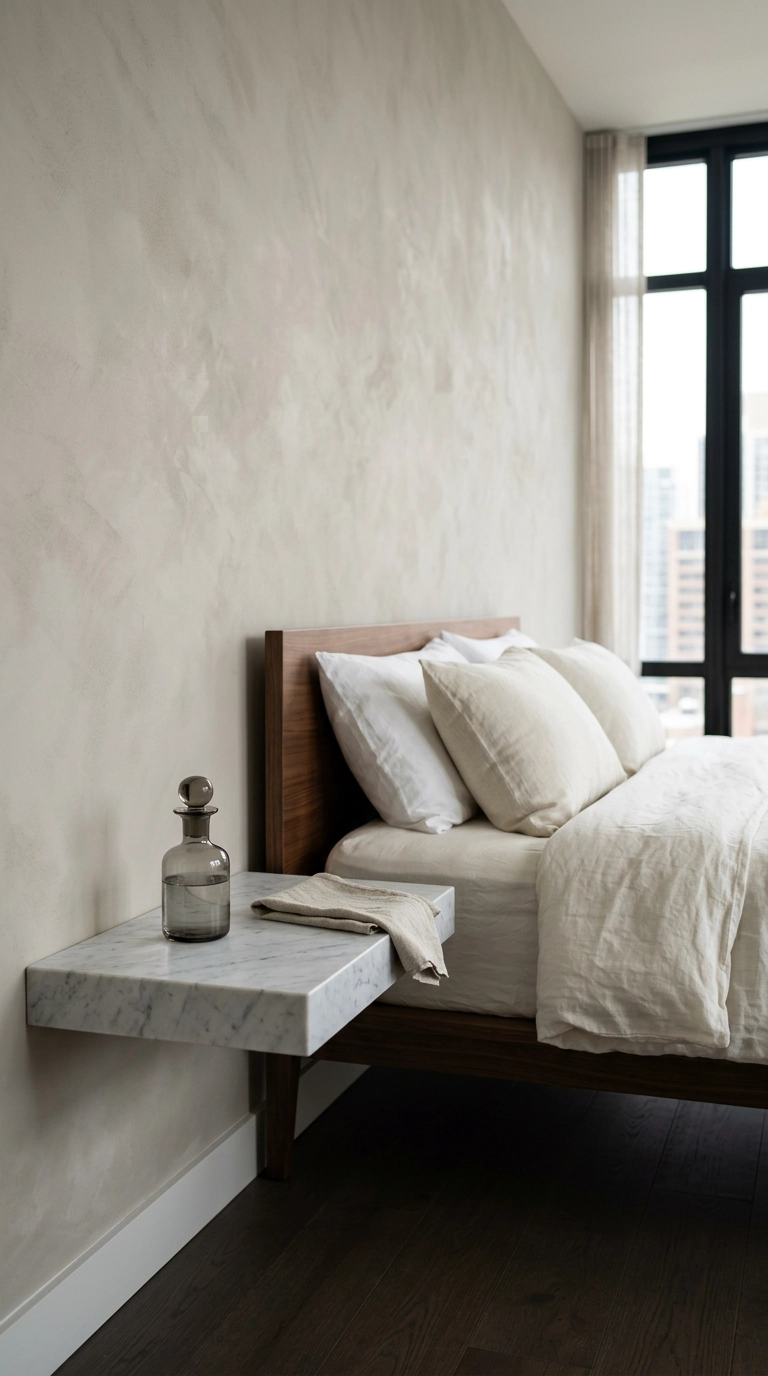
This is the splurge in the article, and I’m not going to pretend otherwise. A remnant slab of honed marble runs $150 to $400 from a local stone yard, and you’ll want them to drill it for the pins because cracking it yourself is a genuine risk.
21. A Long Low Floating Shelf as a Bedroom Bench and Display Ledge
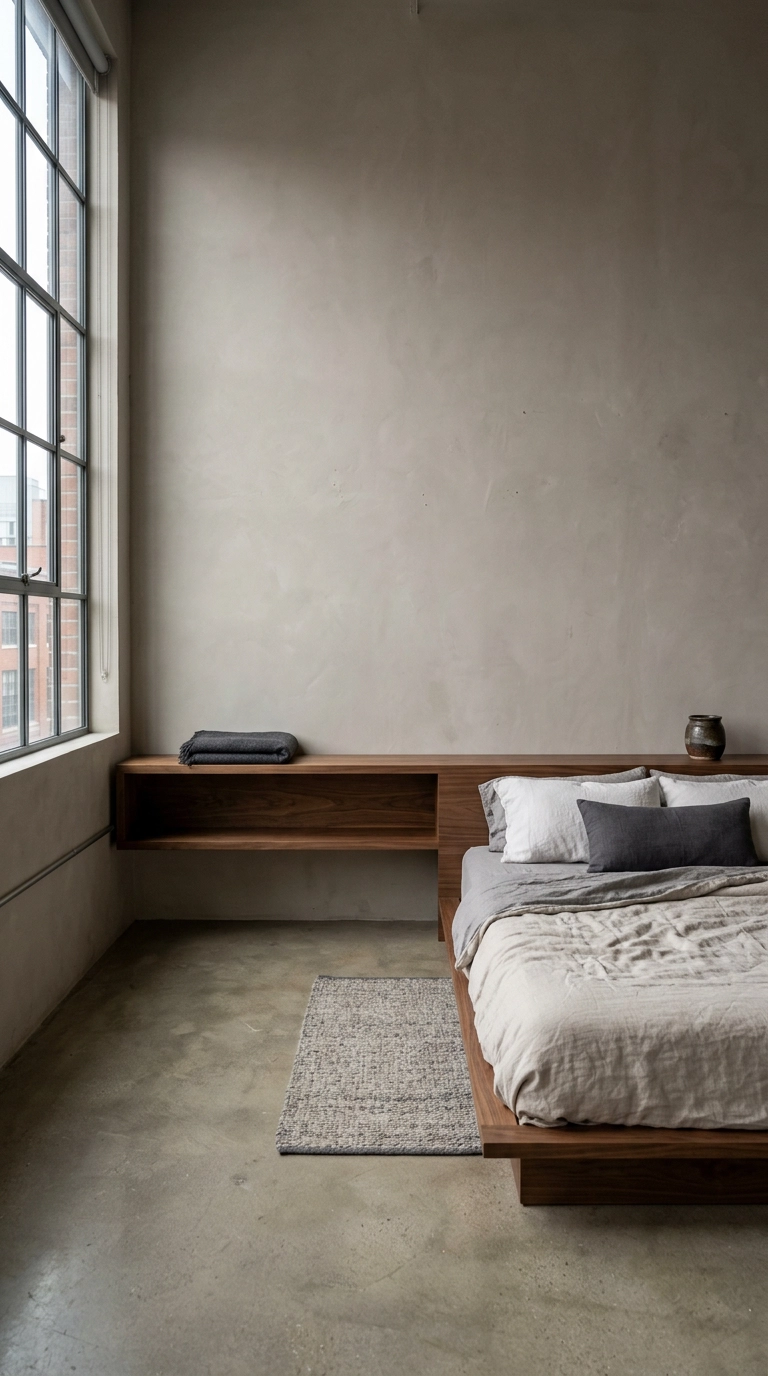
Mount a deep 12-inch shelf 18 to 20 inches off the floor and it becomes a bench you can actually sit on to tie your shoes, plus a ledge for a folded throw. The open floor underneath is why it works, because seeing the floor run unbroken makes the room read larger.
22. Mixed Metal Brackets Left Deliberately Exposed
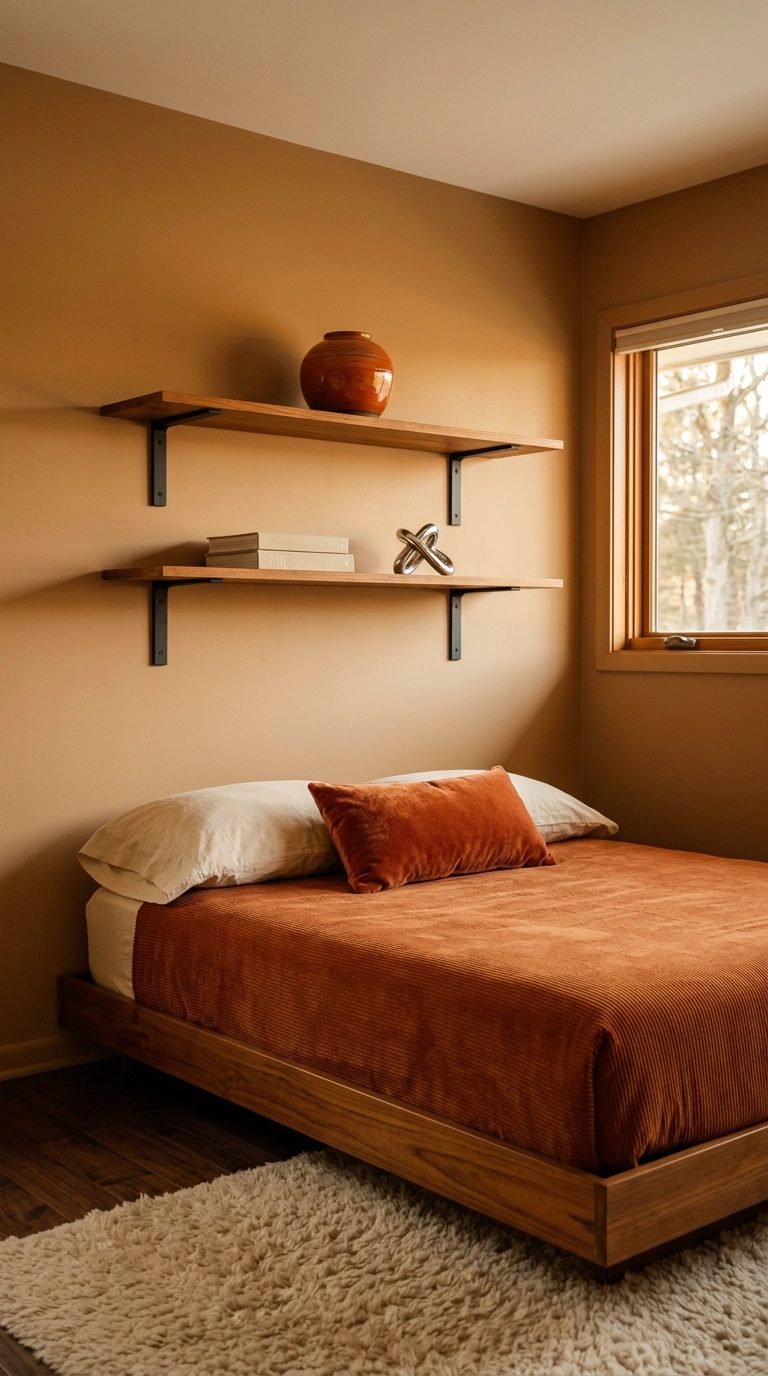
Not every shelf needs to look like it’s levitating. Exposed matte black or brass L brackets are cheaper than hidden-hardware floating brackets, far easier to install, and they carry more weight because the load sits on a visible arm rather than a cantilevered pin.
Where I’d Start If This Were My Bedroom
If you only do one thing from this list, make it the staggered pair above the bed or the slim picture ledge. Both take an afternoon, both cost under $60 if you buy a pine board and stain it yourself, and both completely change the wall that you look at last thing at night. The picture ledge in particular is the idea I keep coming back to for clients who move every two years, because leaning art means you never commit to a nail hole you’ll regret.
What I’m seeing everywhere in 2026 is the thick chunky oak shelf paired with a color-drenched wall, shelves painted right into the wall color so the whole plane reads as one surface. It’s the Kelly Wearstler instinct of treating a shelf as architecture rather than an accessory, scaled down for a normal bedroom and a normal budget. The other quiet winner is the floating shelf nightstand, which showed up in small-space apartments first and has now taken over new builds because it frees up the floor and makes a queen bed look intentional in a 10×12 room.
Whatever you pick, please buy the stud finder. Every horror story I’ve heard about a shelf coming down above a bed traces back to plastic drywall anchors and optimism. Two lag screws into framing, three to five objects with real gaps between them, and one-third of the shelf left empty is the whole recipe. If you want more of this, ideas I’m testing in my own house, honest notes on what did not work, and the occasional hardware recommendation that actually holds, sign up for my weekly newsletter and I’ll send it straight to your inbox.


