
21+ Bedroom Hallway Decor Ideas that Make a Narrow Upstairs Feel Designed in 2026

I’ll be honest, the hallway outside the bedrooms is the single most neglected stretch of square footage in the American home, and I say that as someone who ignored her own for four years. It’s a corridor you walk through half-asleep at 6am, so it gets a builder-grade flush mount, a scuffed baseboard, and nothing else. But a bedroom hallway is short, low-traffic for furniture, and mostly wall, which makes it the cheapest room in the house to make beautiful. Here’s everything I do to turn that dead upstairs stretch into the part of the house guests actually comment on.
Bedroom Hallway Decor Ideas
1. A Nine-Frame Grid That Turns the Long Wall Into the Main Event
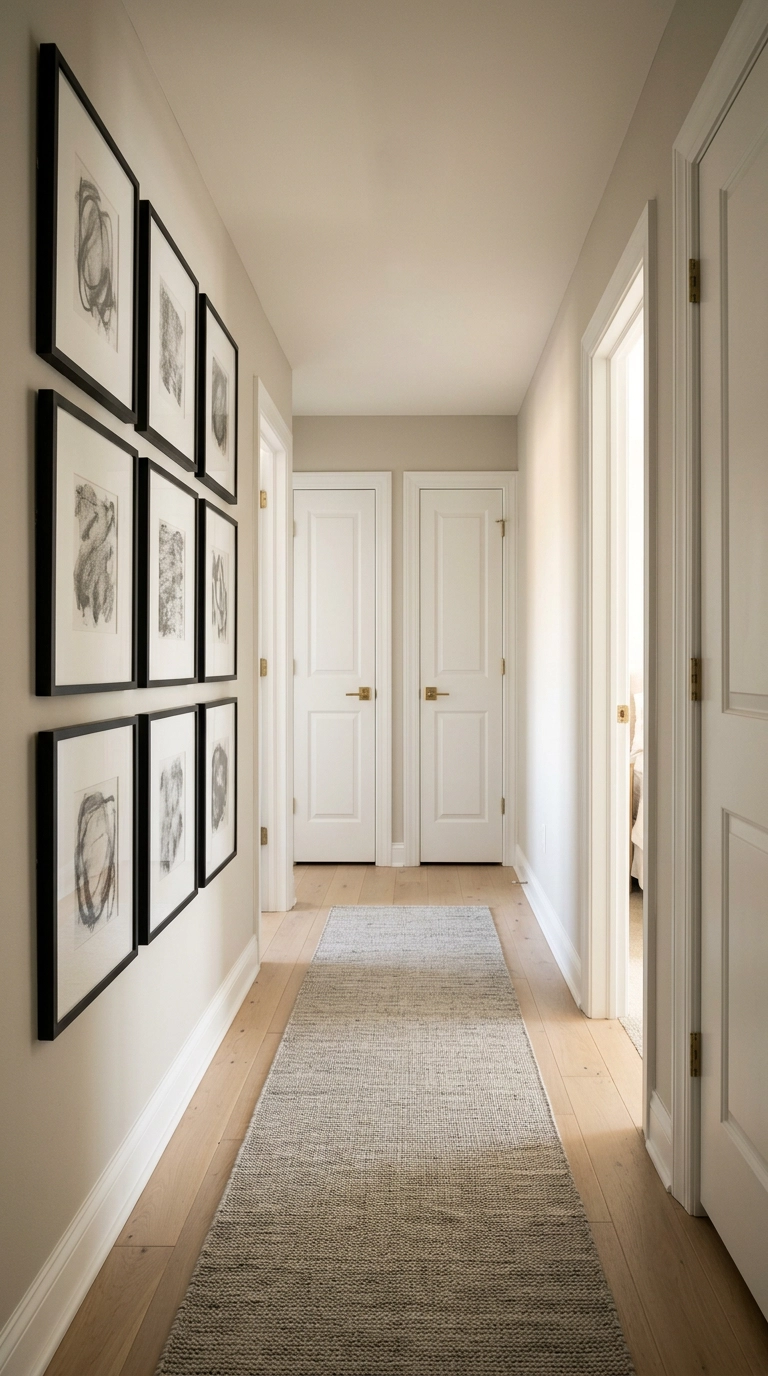
A grid beats a scattered gallery wall in a hallway, and it’s not a style preference, it’s physics. You view a corridor wall at a sharp angle while walking, so an organized repeating shape reads clearly in your peripheral vision while a random salon arrangement just looks like visual noise.
2. A Runner Sized Right, With Four Inches of Floor Showing on Every Side
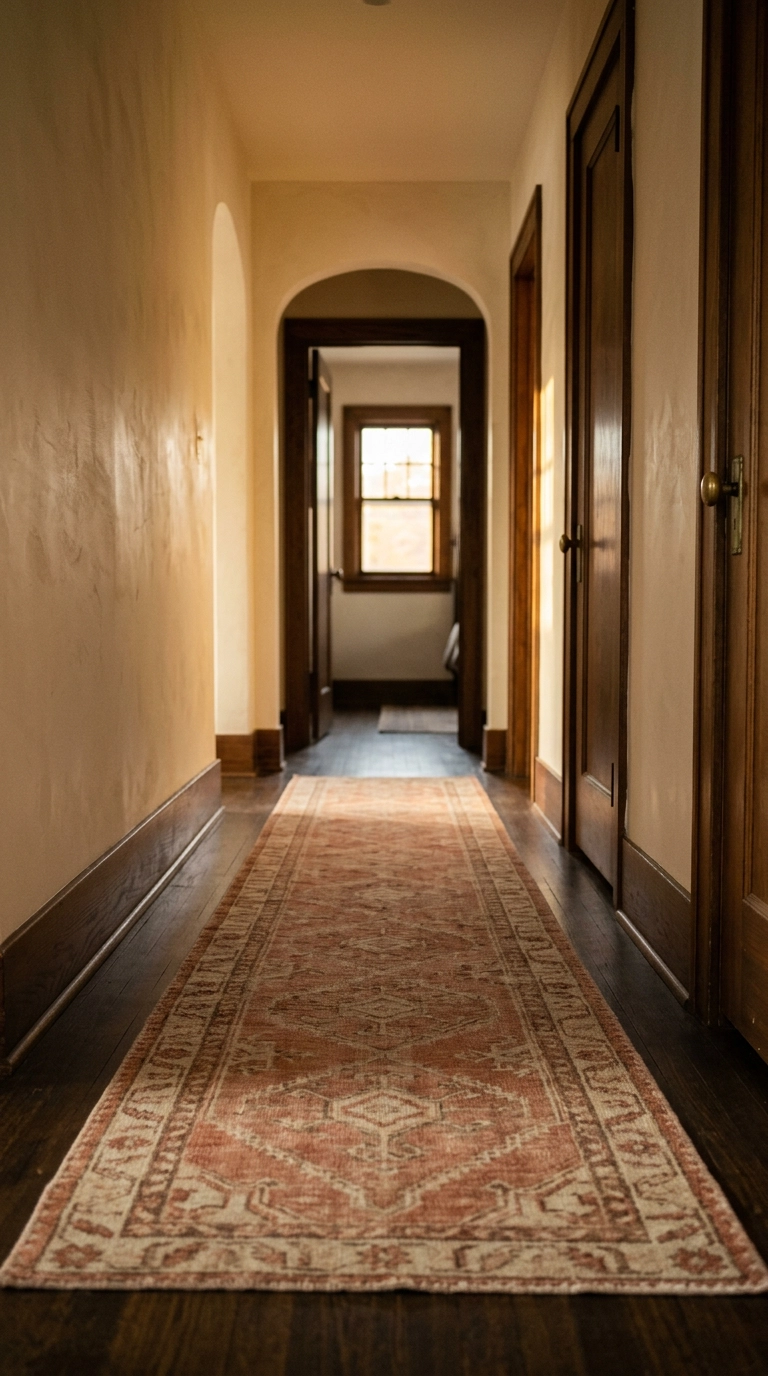
Runner sizing is where most people lose the hallway. The rule is simple: leave 4 to 6 inches of bare floor on each long side, and stop the runner 6 to 12 inches short of the wall at each end. A runner that touches the baseboards reads like wall-to-wall carpet you forgot to install properly.
3. Hardwired Sconces at 66 Inches, or the Plug-In Version That Fakes It
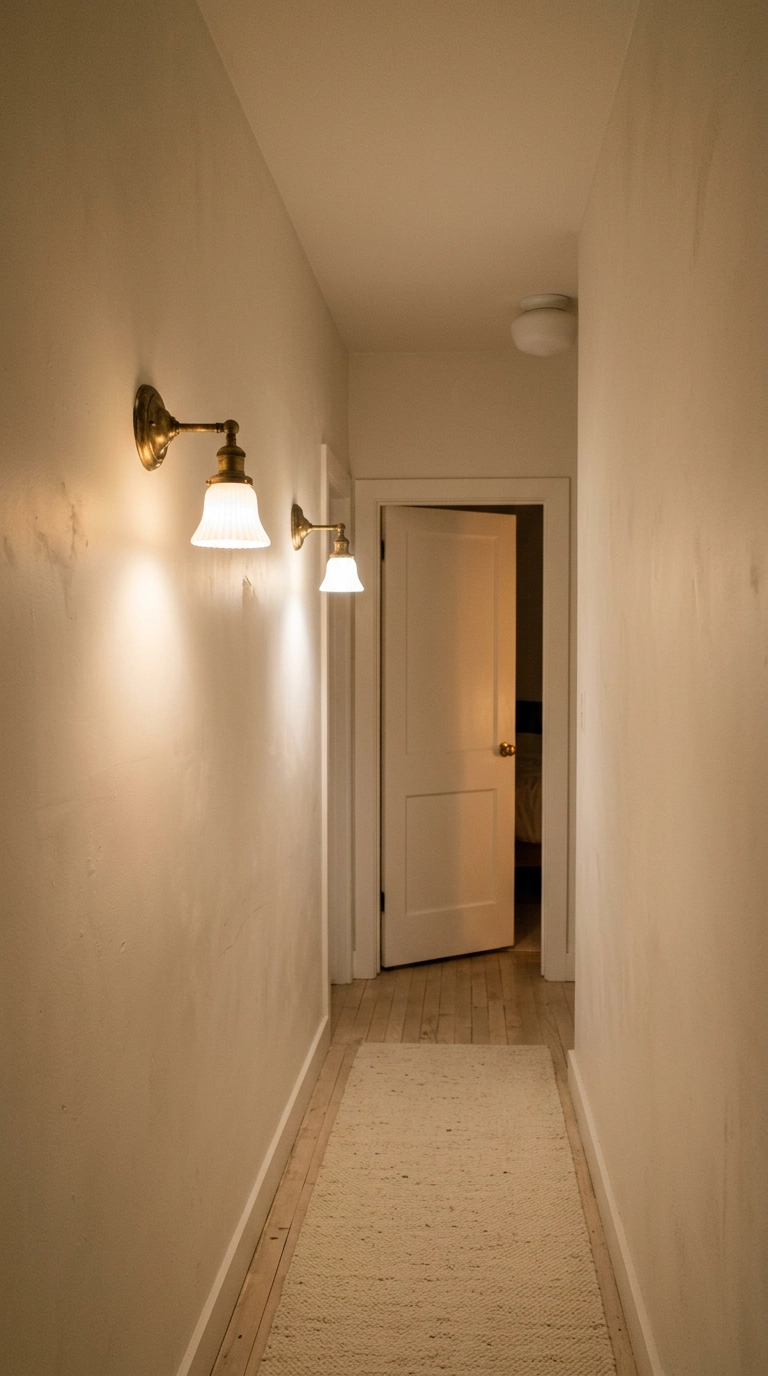
Overhead lighting in a corridor is unflattering because it casts everything downward. Sconces throw light sideways onto the wall, which is what makes a hallway feel like a room instead of a tunnel. Mount them at 66 inches to center, spaced 6 to 8 feet apart, and choose a shade that’s shallow so nobody clips a shoulder on it.
4. Paint Only the Bedroom Doors a Deep Color and Leave the Walls Alone
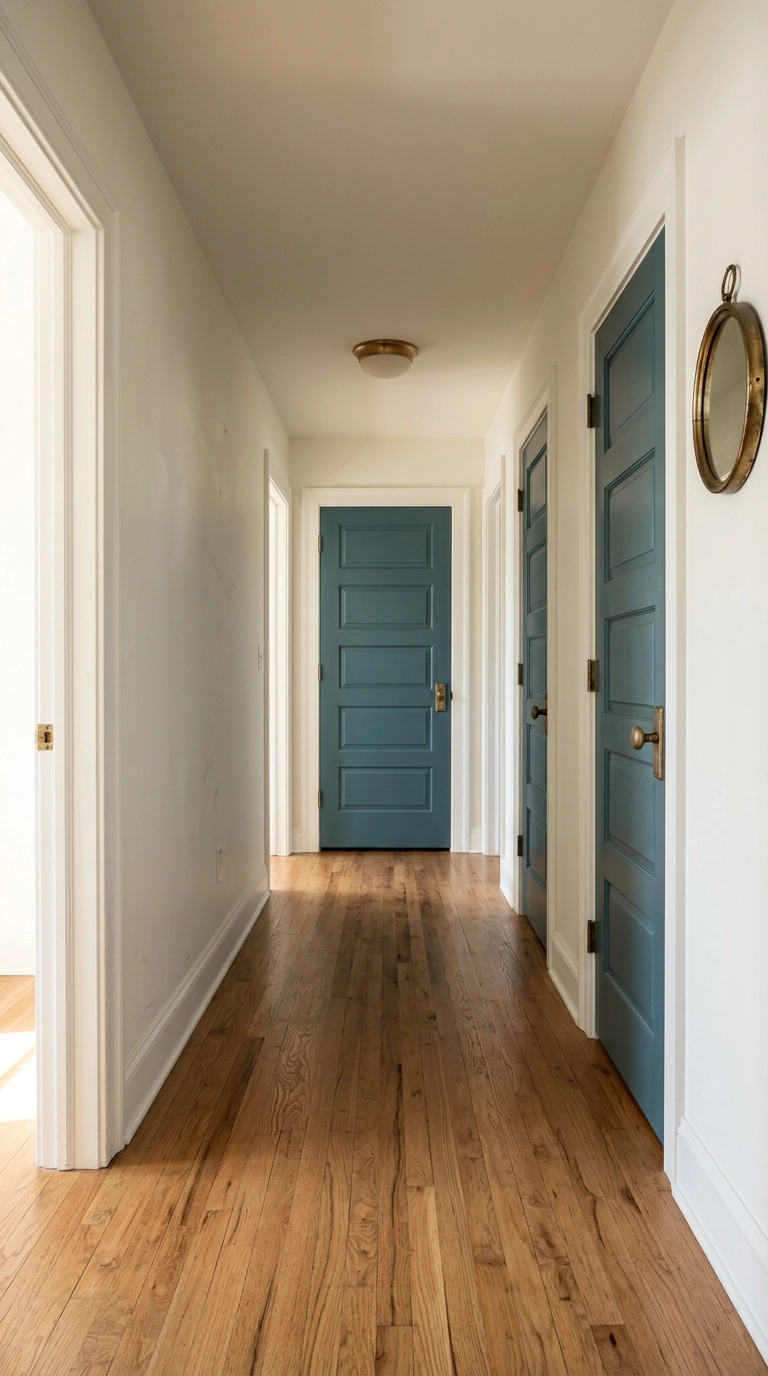
This is my favorite low-commitment hallway move of the last few years. A bedroom hall is mostly doors, so painting just the door slabs a saturated color gives you a rhythm of color down the corridor while the walls stay bright and the space stays wide. Farrow & Ball Hague Blue and Inchyra Blue both look expensive against a warm white wall.
5. A Slim Console Table That’s Under 12 Inches Deep
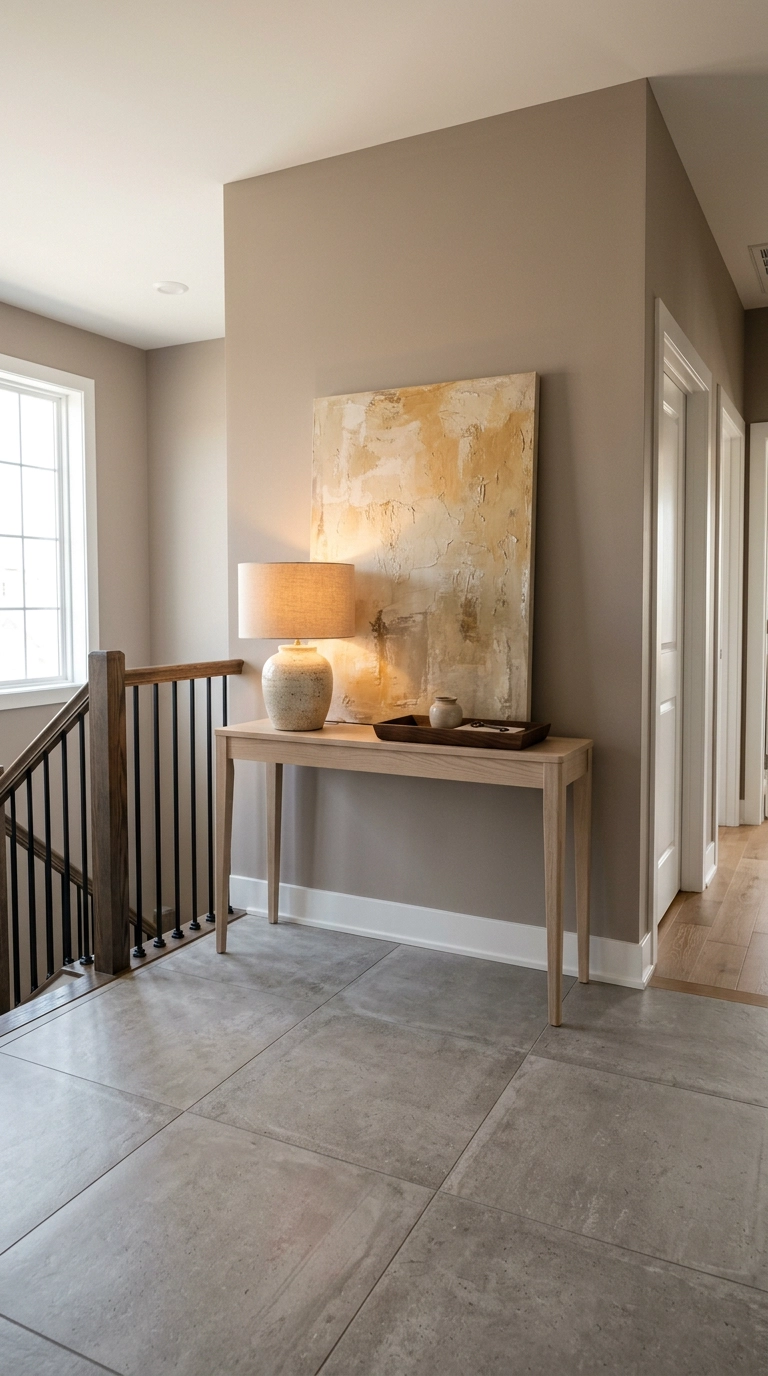
Most people assume a hallway can’t hold furniture. It can, as long as you respect the clearance rule: you need 36 inches of walking width left over, so measure your hall and let that number pick the depth. In a 42-inch hall, that’s a console no deeper than 6 inches. In a 48-inch hall you get up to 12, which is where the good ones live.
6. Picture Rail Molding So You Can Rehang Art Without Ever Patching a Hole
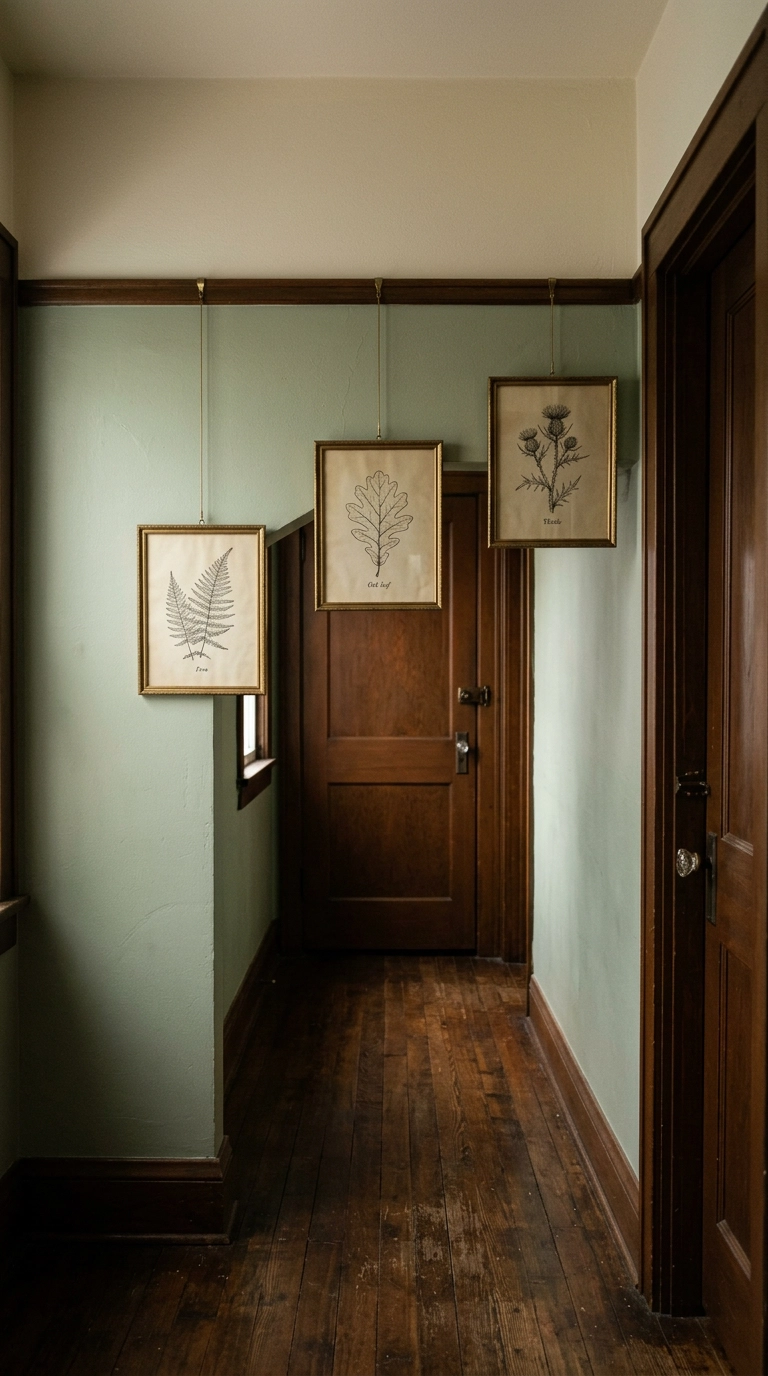
A picture rail is a thin strip of molding run horizontally near the ceiling, and you hang art from it on hooks and wires instead of driving nails into the wall. It solves the exact problem hallways have, which is that you never get the arrangement right on the first try and every adjustment costs you another patch-and-touch-up.
7. Color Drench the Whole Hall, Ceiling Included, to Kill the Tunnel Effect
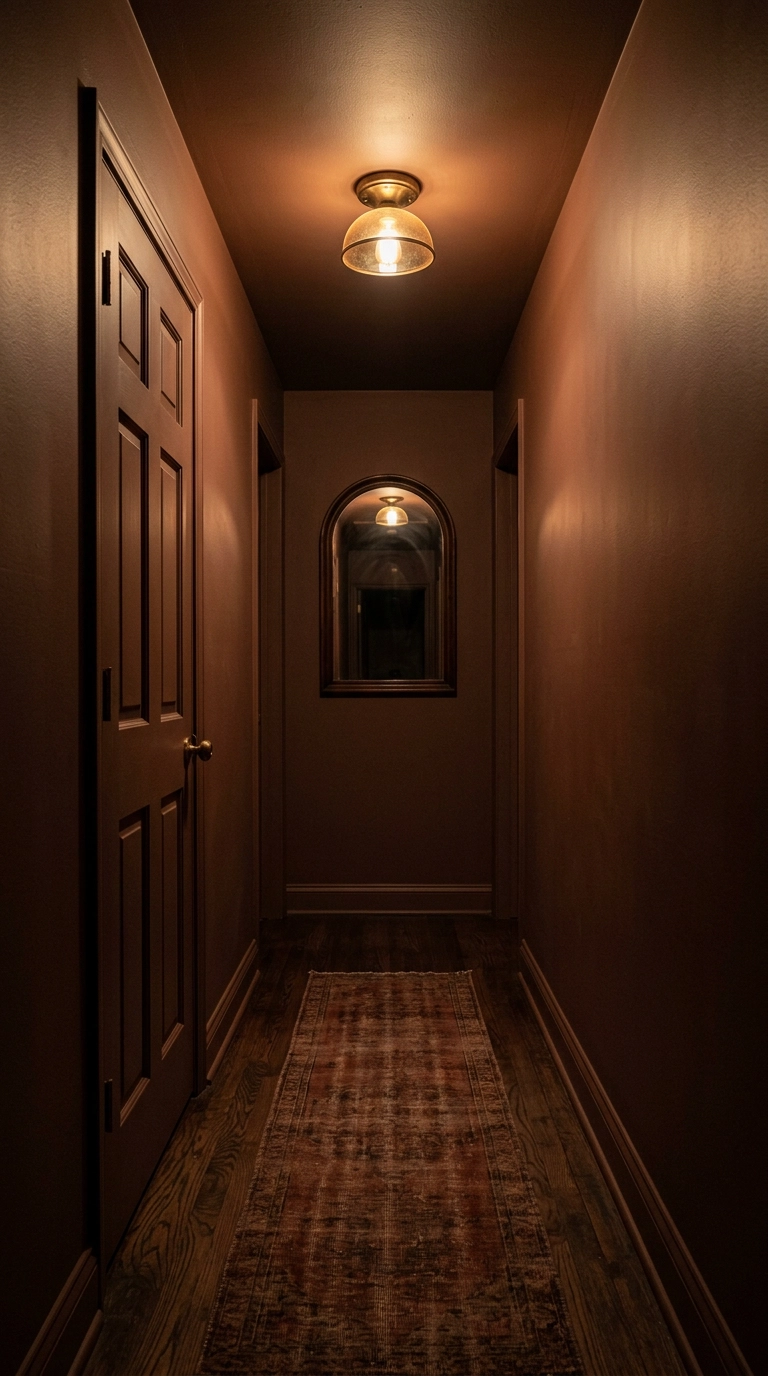
Color drenching means painting walls, trim, doors, and ceiling the same shade so there are no visual breaks. Everyone’s instinct in a dark hallway is to go bright white, and it backfires, because white walls next to white trim next to a white ceiling create hard edges that show you exactly how narrow the space is. Erase the edges and the boundaries blur.
8. A Full-Length Mirror at the End of the Hall to Steal Light From the Bedrooms
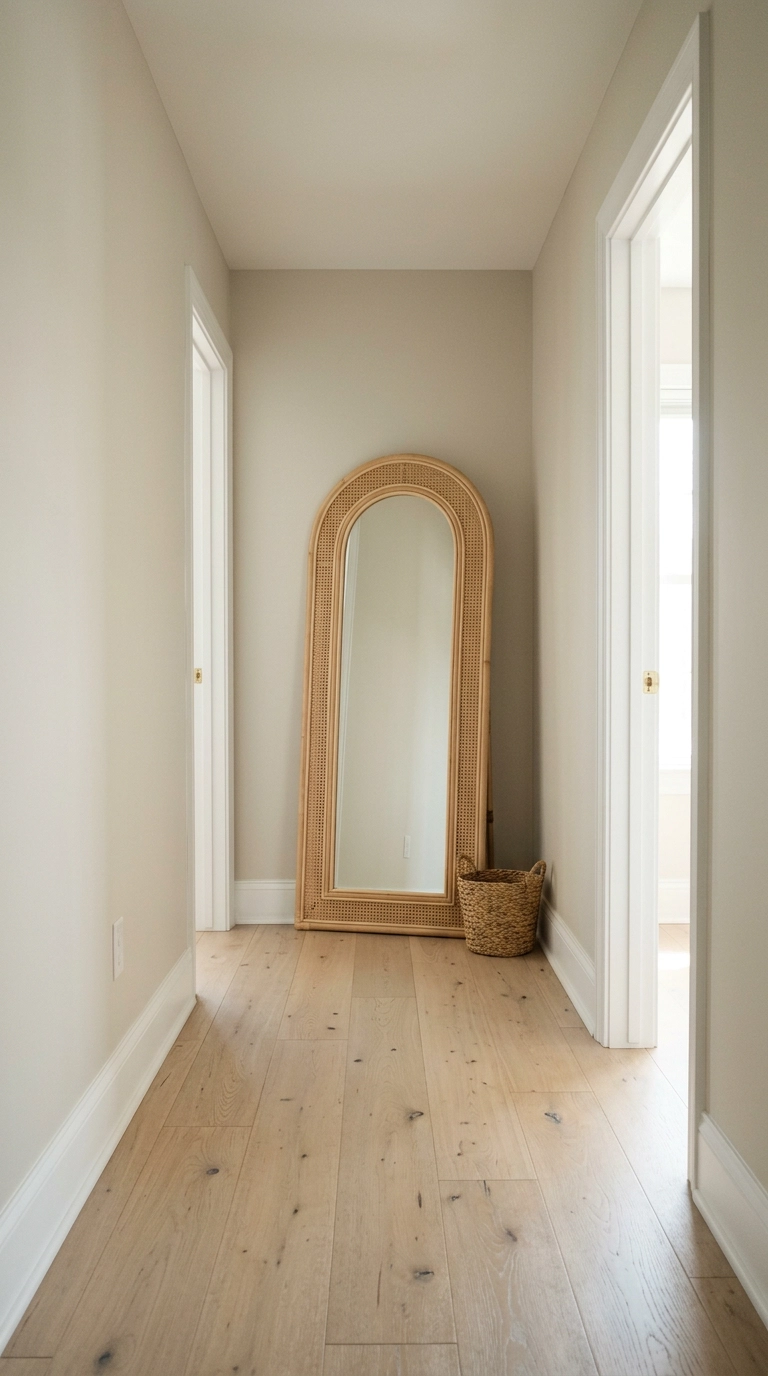
Almost every bedroom hallway dead-ends into a blank wall, and that blank wall is why the space feels like a tunnel. A full-length mirror there does two jobs at once: it bounces borrowed light from the open bedroom doors back down the corridor, and it gives the eye somewhere to land instead of stopping short.
9. Replace the Builder-Grade Flush Mount With Two or Three Smaller Fixtures
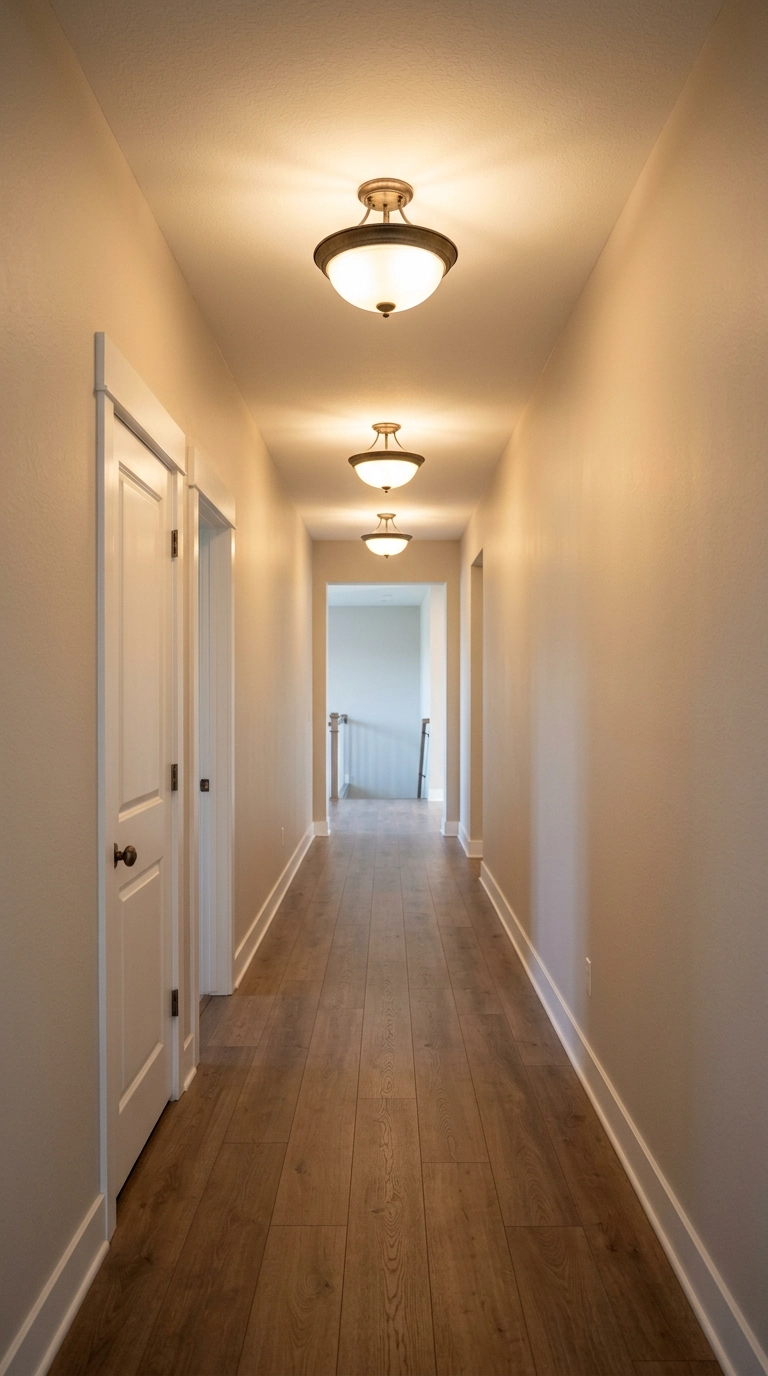
One sad dome fixture in the middle of a 20-foot hall lights the middle of a 20-foot hall. The ends stay dim, which is exactly what makes a corridor read as a tunnel with dark mouths at both ends. Two or three smaller fixtures spread the light evenly and the repetition itself becomes a design element.
10. Peel-and-Stick Wallpaper on the Ceiling Instead of the Walls
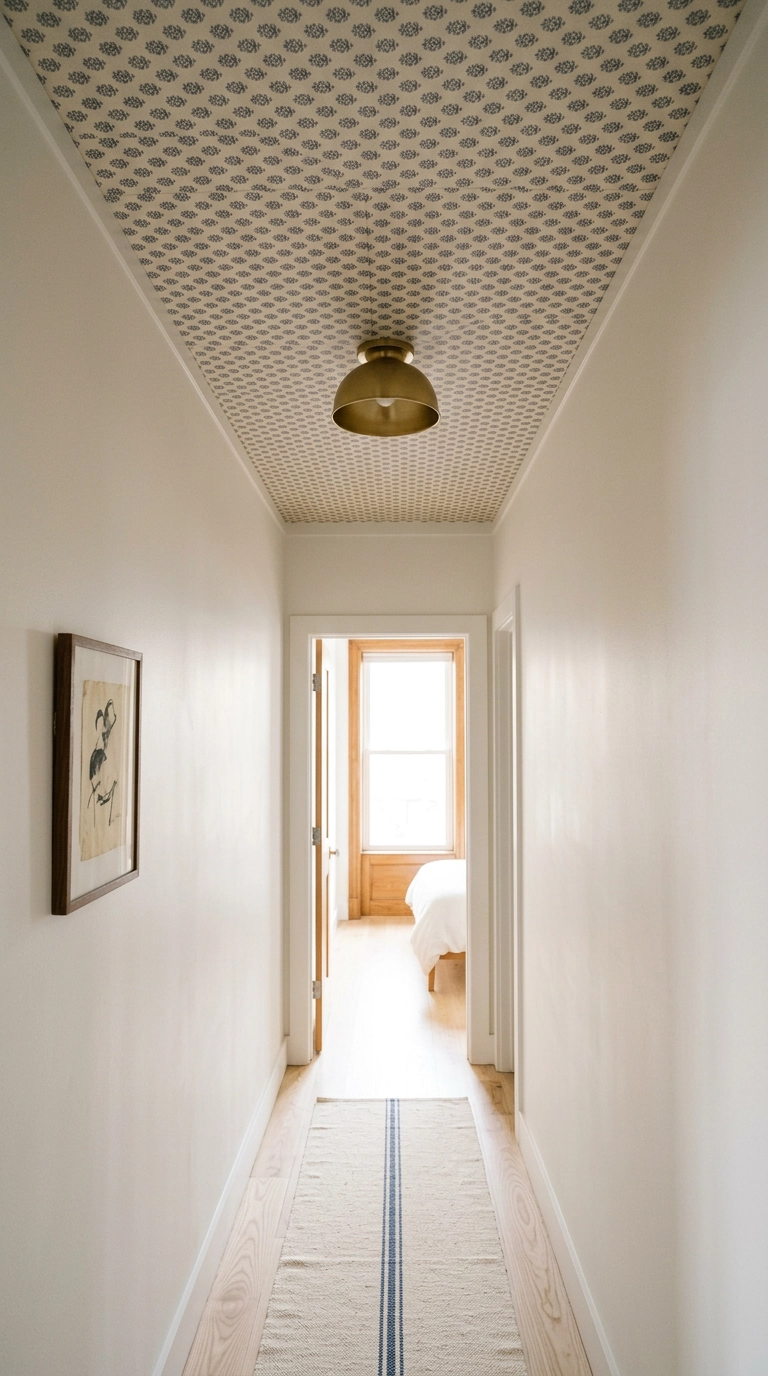
The ceiling is the biggest uninterrupted surface in a hallway and nobody uses it. Papering it instead of the walls gives you all the pattern with none of the narrowing, because the walls stay pale and the eye reads the width as unchanged while something unexpected happens overhead.
11. A Single Oversized Piece of Art Instead of Six Small Ones
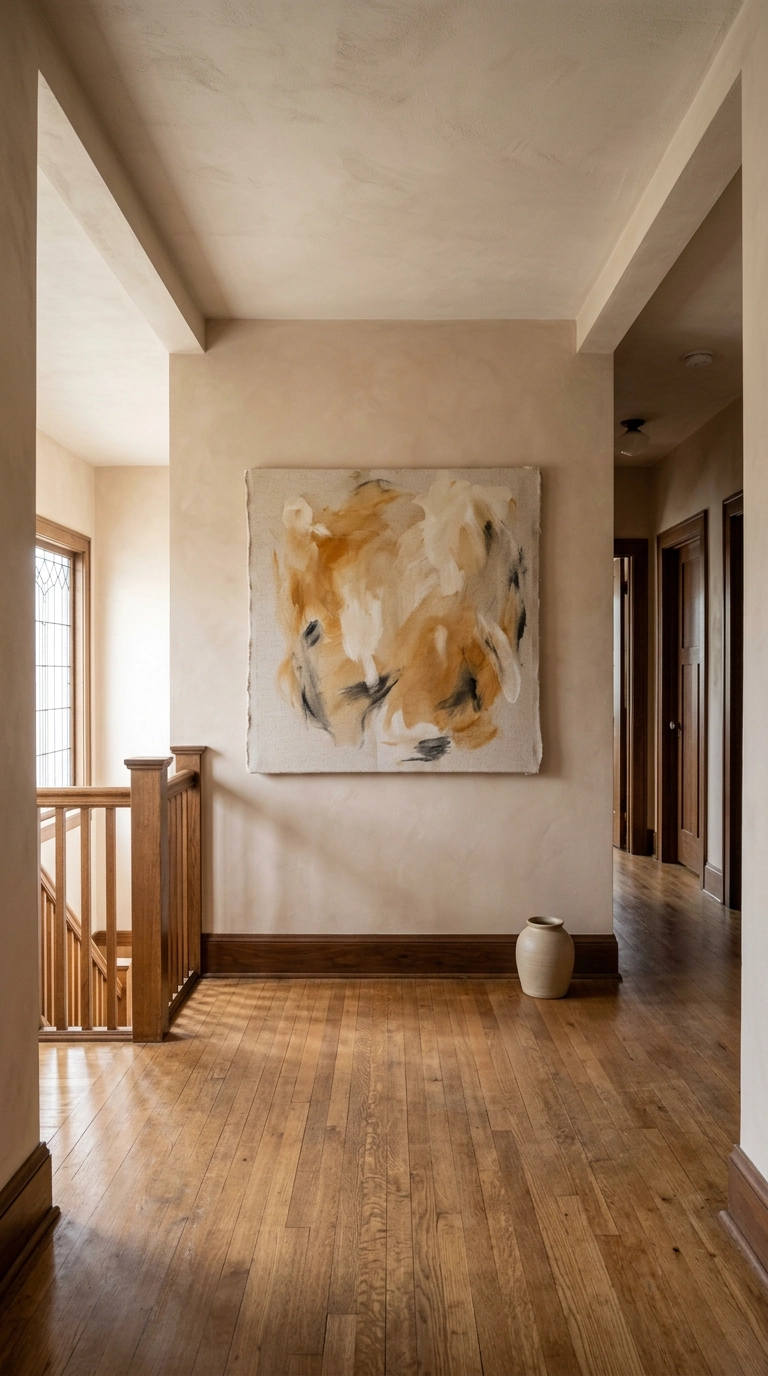
A gallery wall isn’t the only answer. In a hall where you’re always viewing the wall from three feet away, small art disappears and one big piece hits, because you can take in a large simple shape at close range but you can’t step back far enough to read a busy arrangement.
12. Board and Batten Wall Molding on the Lower Third to Take the Scuffs
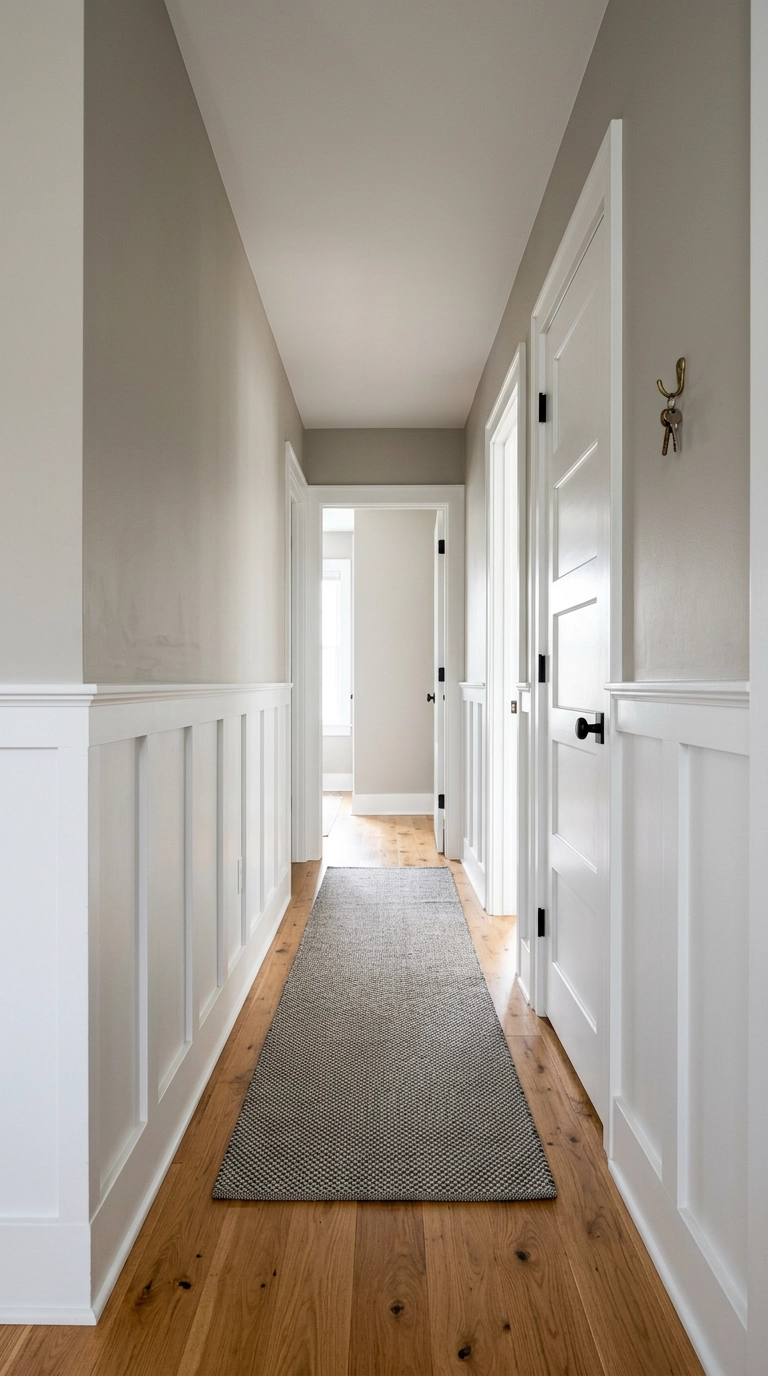
Board and batten is flat vertical wood strips applied to the wall with a horizontal cap on top, and in a bedroom hallway it earns its keep twice. It adds the architectural detail builder homes skipped, and it puts a durable satin-painted surface exactly where shoulders, suitcases, and vacuum cleaners hit the wall.
13. A Reading Nook in the Wide Spot Nobody Knows What to Do With
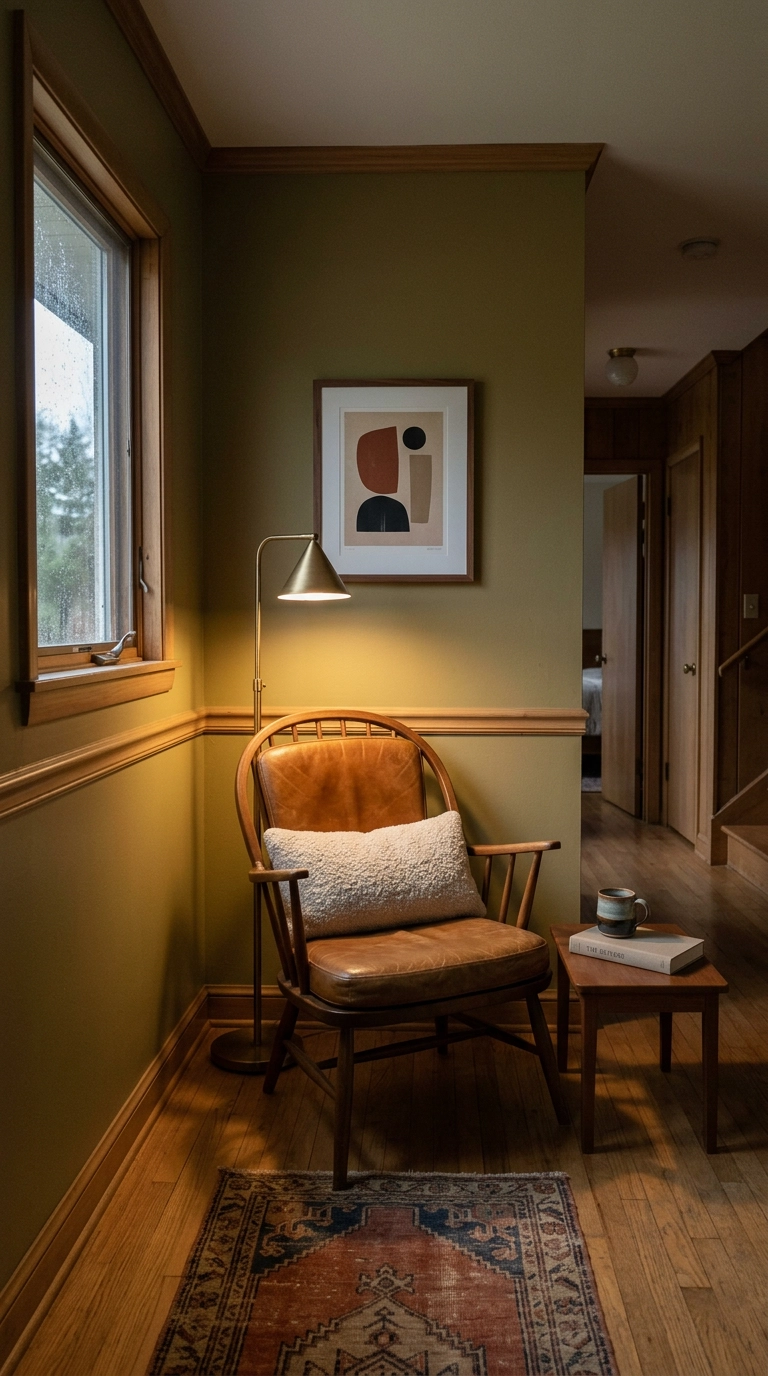
Most upstairs halls have one spot that’s wider than the rest, usually the landing or a dead-end bump-out, and it almost always sits empty because it’s not quite a room. Put a single chair and a lamp there and you’ve invented a room, which is a strange kind of magic for about $300.
14. A Row of Vintage Mirrors in Mismatched Frames, All the Same Finish
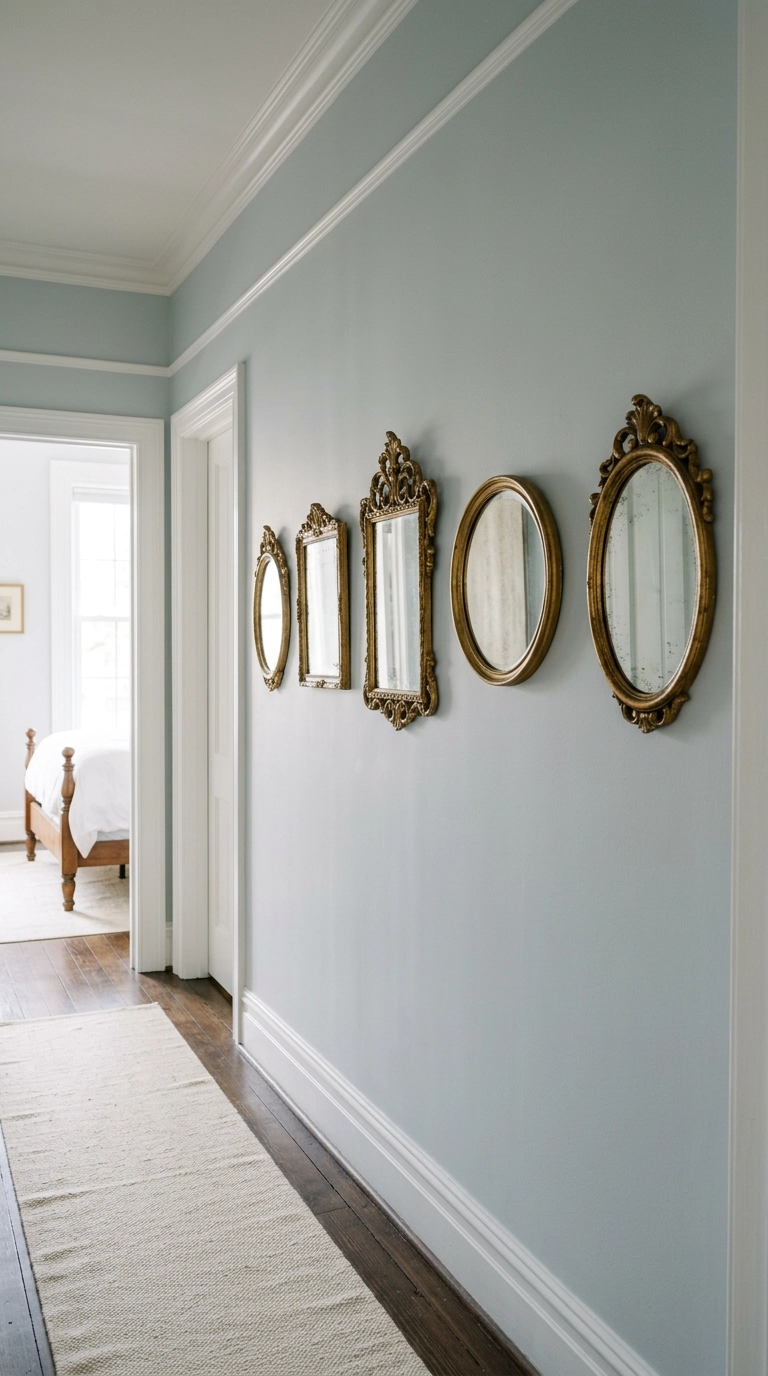
Five small mirrors in one line beat one big mirror for light, because each one catches a slightly different angle and throws it back into the corridor. The trick that keeps it from looking like a flea market booth is unifying the finish: let the shapes and sizes vary wildly, but every frame has to be the same metal or the same wood tone.
15. Vertical Wood Slat Paneling on the Dead-End Wall So the Hall Has a Destination
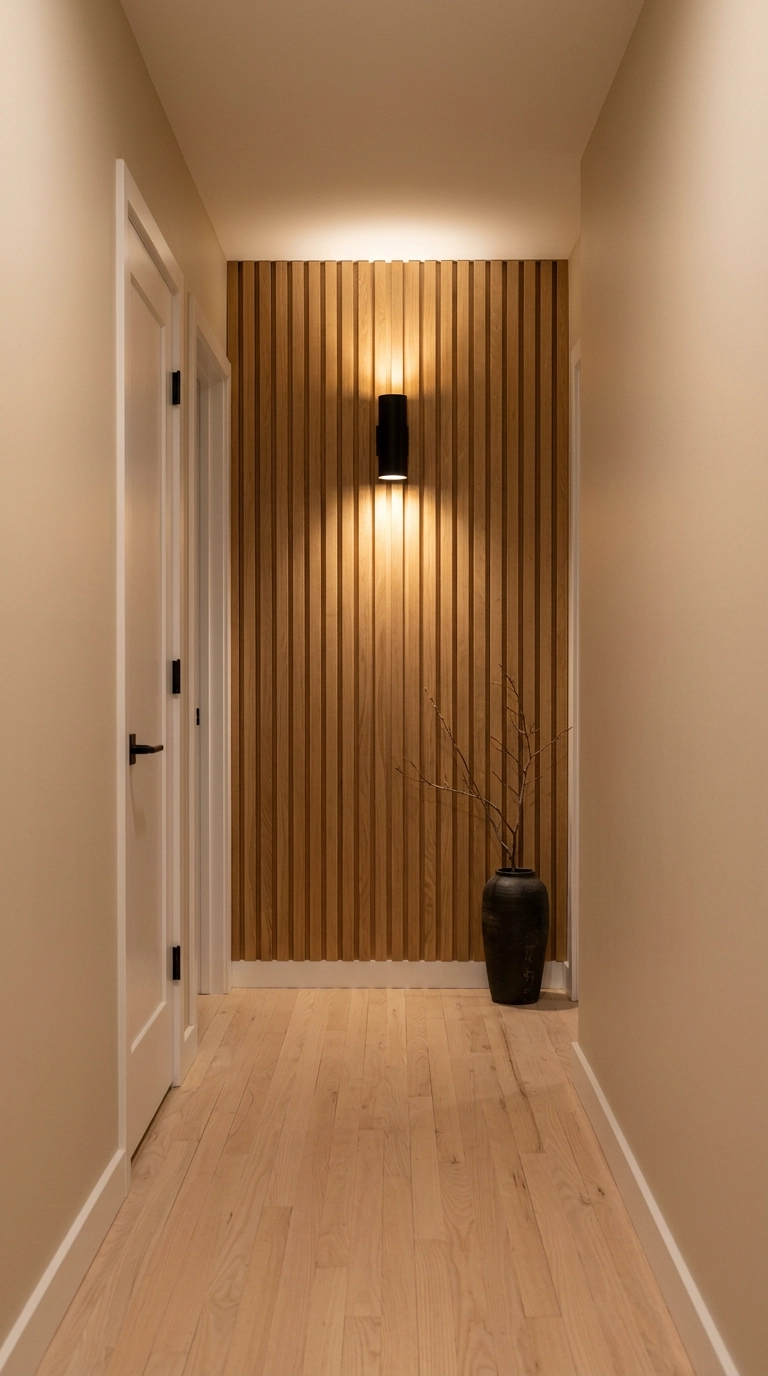
A corridor needs a destination, and slats on the end wall give the eye something to arrive at. Vertical lines also pull the height up, which is the correction a hallway actually needs, since the problem was never that the ceiling was too high.
16. A Peg Rail at 60 Inches That Handles Robes, Totes, and Backpacks
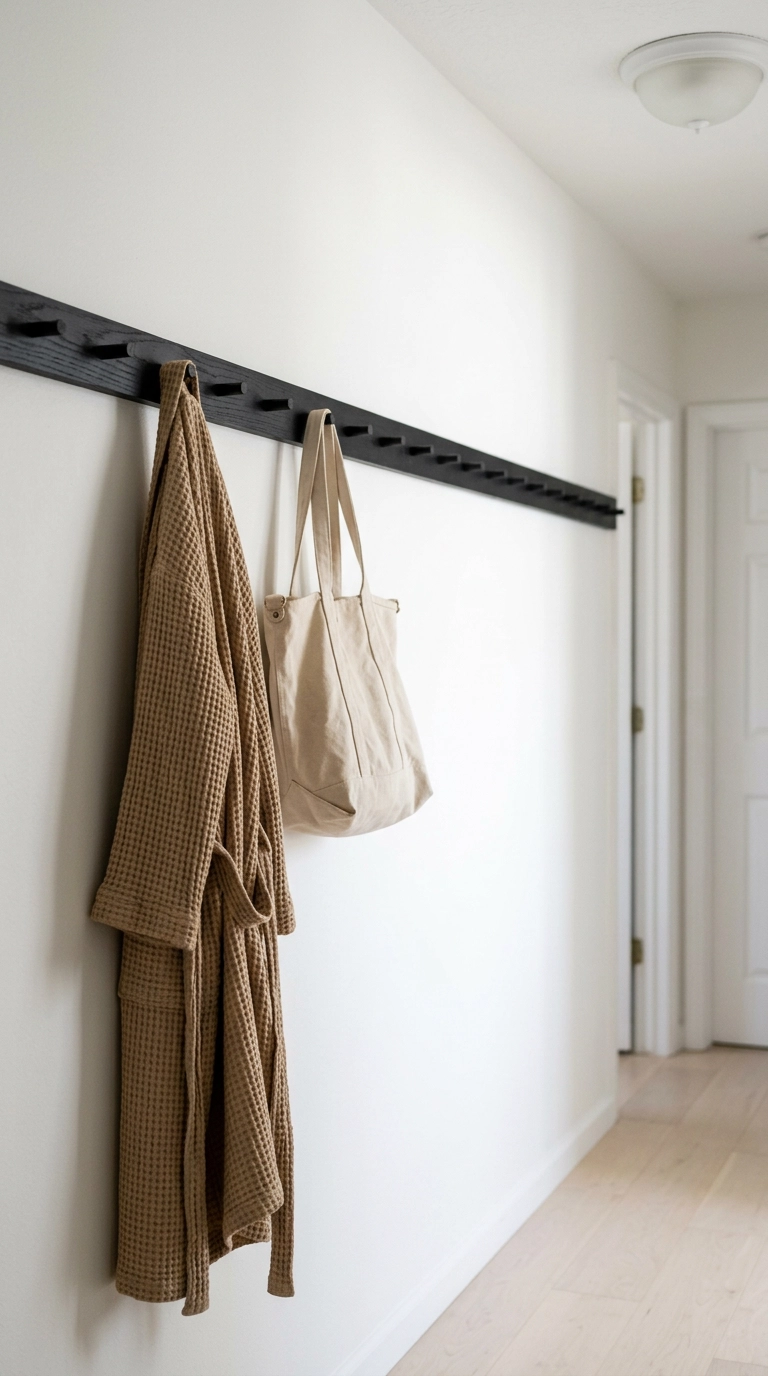
A bedroom hallway is where things get dropped, so give them a vertical home and the floor stays clear. That matters more here than anywhere else in the house, because you cannot afford to lose a single inch of the 36-inch walking path.
17. Runner Stripes Painted Straight Onto the Floor for Under Thirty Dollars
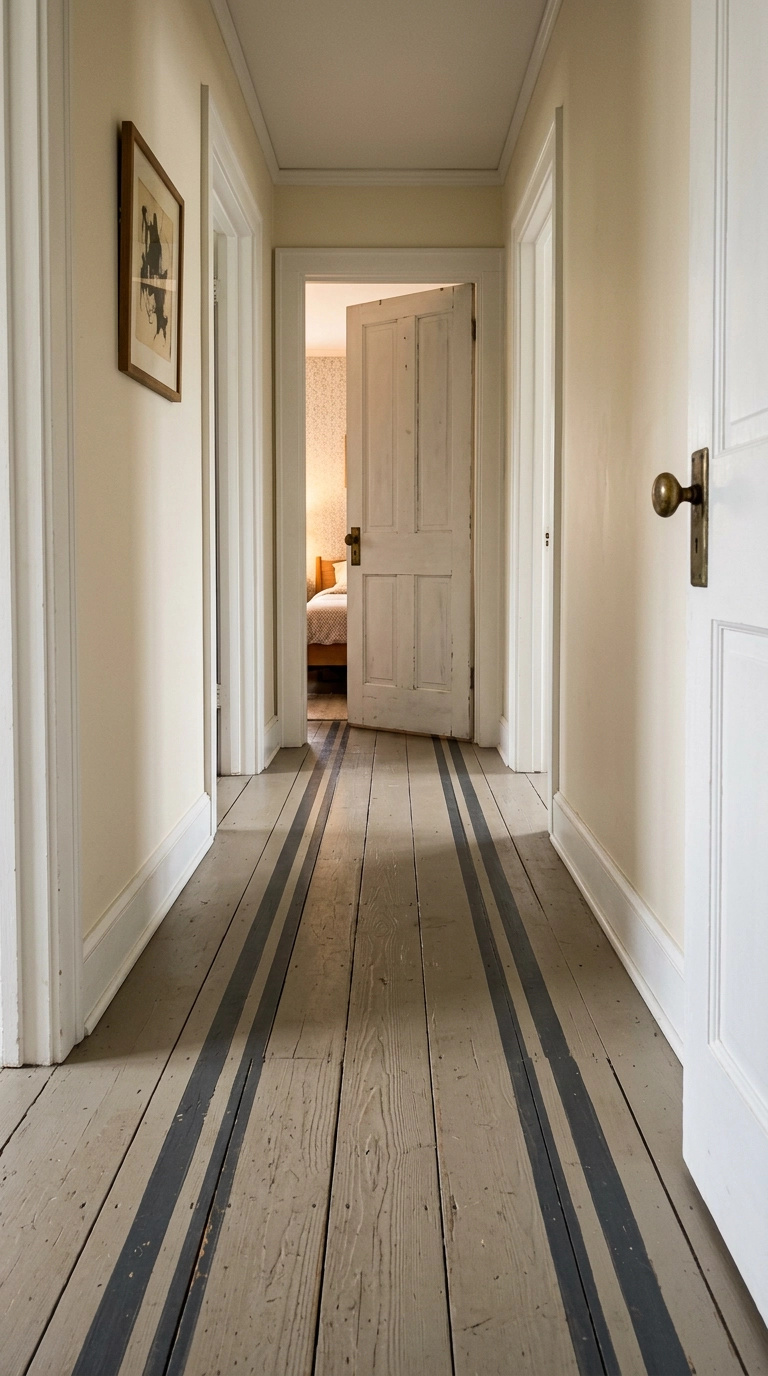
If your hallway floor is already painted or in rough shape, skip the rug and paint the runner on. Two long stripes down the length of the corridor read as a floorcloth, and because there’s no actual pile to trap dust, it’s the most practical flooring decision you can make in a space that sees this much traffic.
18. Motion-Sensor Toe-Kick Lighting So Nobody Blinds Themselves at 2am
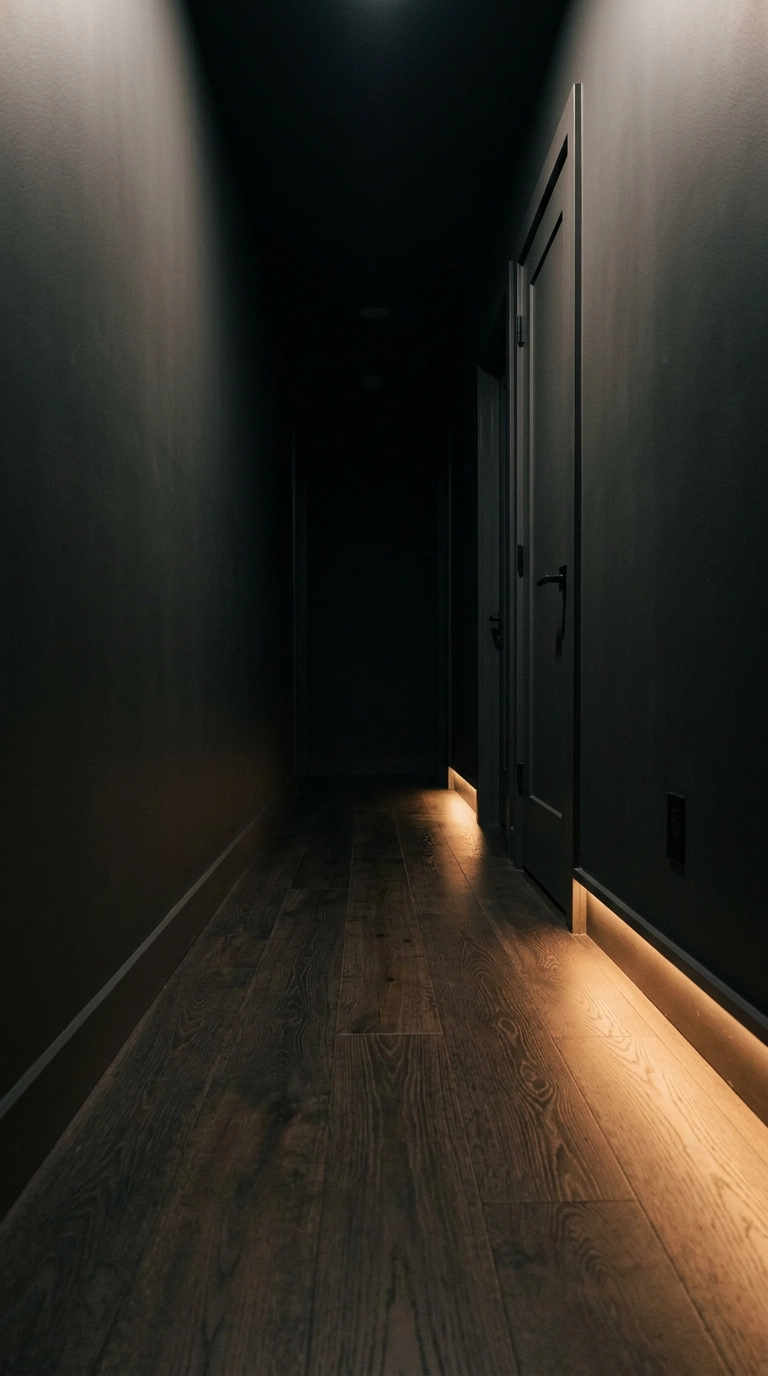
This is the single most useful thing on this list and it barely counts as decor. A warm LED strip tucked behind the baseboard or under a toe-kick, wired to a motion sensor, lights the path without waking anyone up, because your eyes at 2am need about one percent of what the ceiling fixture throws at them.
19. Applied Molding on Flat Hollow-Core Doors to Fake Five-Panel Millwork
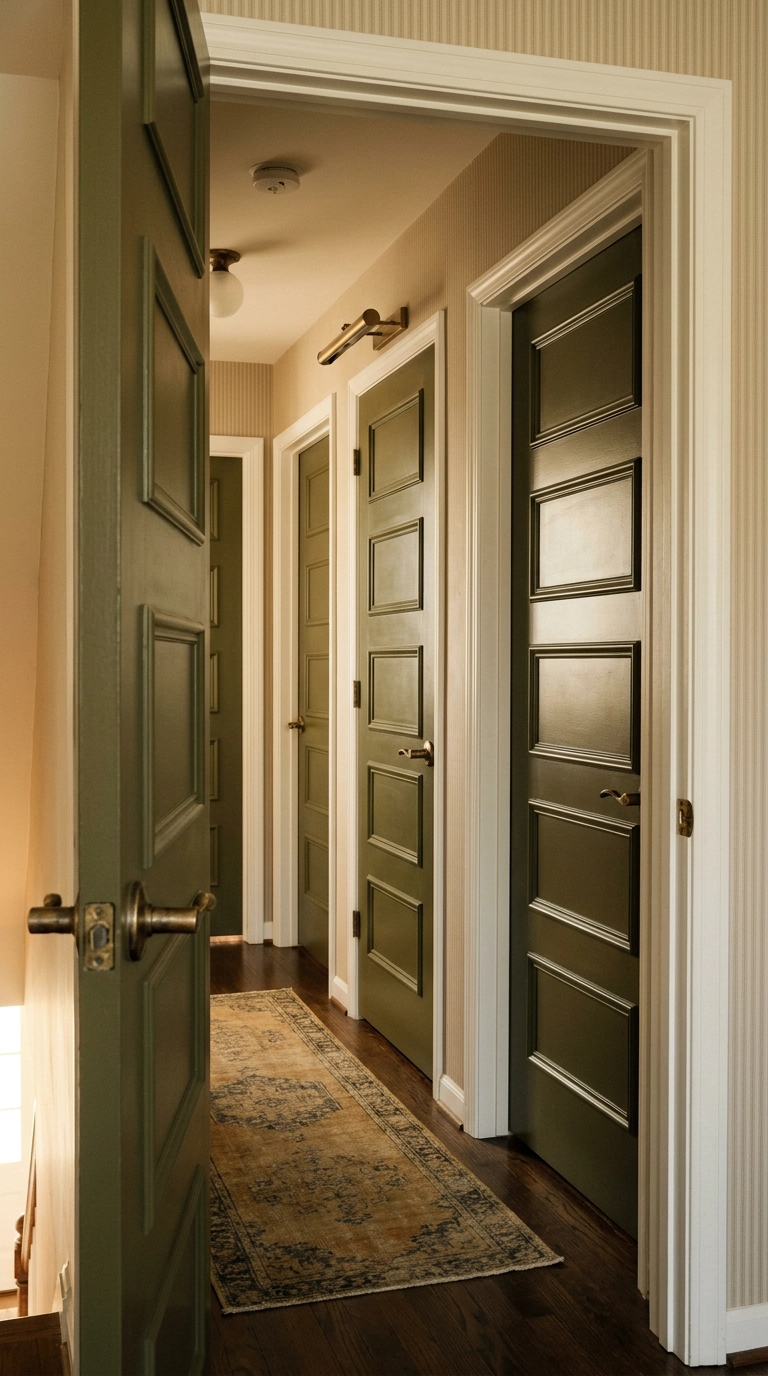
Flat slab doors are the single biggest giveaway of a builder-grade hallway, and you can fix them without replacing anything. Glue rectangles of thin wood molding onto the face of each door, caulk the seams, prime and paint, and from four feet away it reads as real five-panel millwork.
20. Swap Every Knob and Hinge to the Same Finish, All at Once
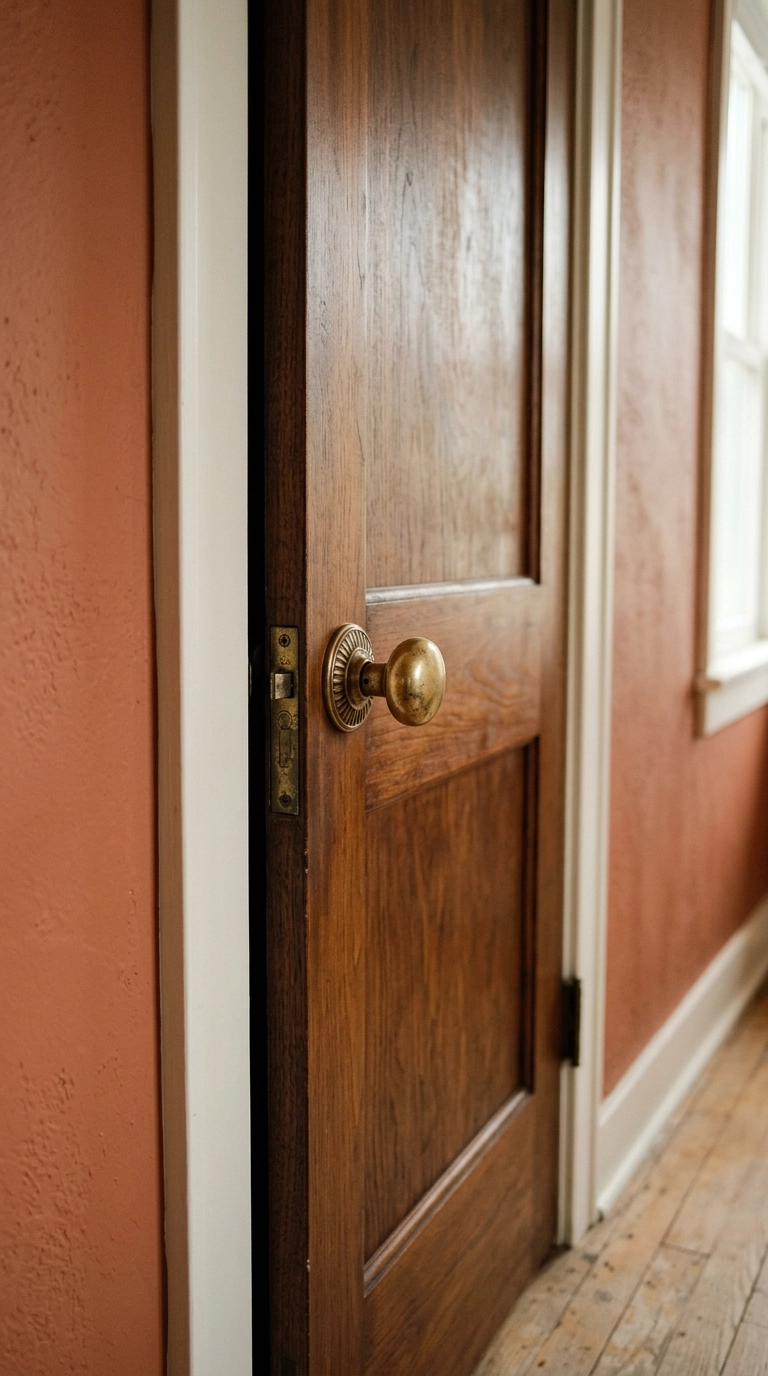
Here’s what actually makes a hallway look unfinished: three bedroom doors with builder chrome knobs, satin nickel hinges, and one brass one from a previous repair. Mixed metals work as a deliberate choice across a room, but not on identical hardware in a six-foot sightline, where the eye reads it as a mistake.
21. A Vintage Quilt or Woven Textile Hung Flat to Soften the Echo
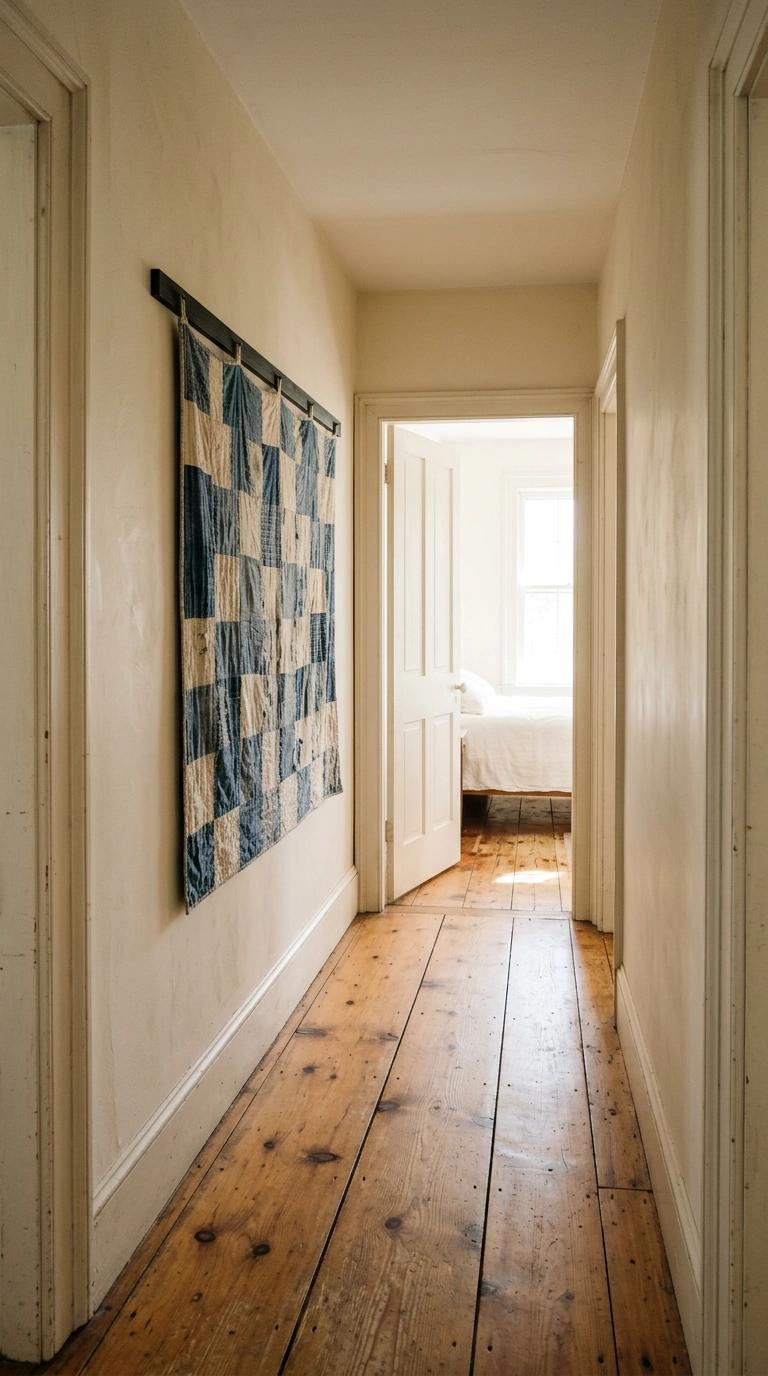
Hallways are hard surfaces on all six sides, which is why footsteps and doors sound so loud upstairs at night. A large textile on the long wall absorbs that echo, and it’s the only wall treatment on this list that improves how a hallway sounds as well as how it looks.
22. Arch the Opening Into the Hallway and Change the Shape of the Whole Space
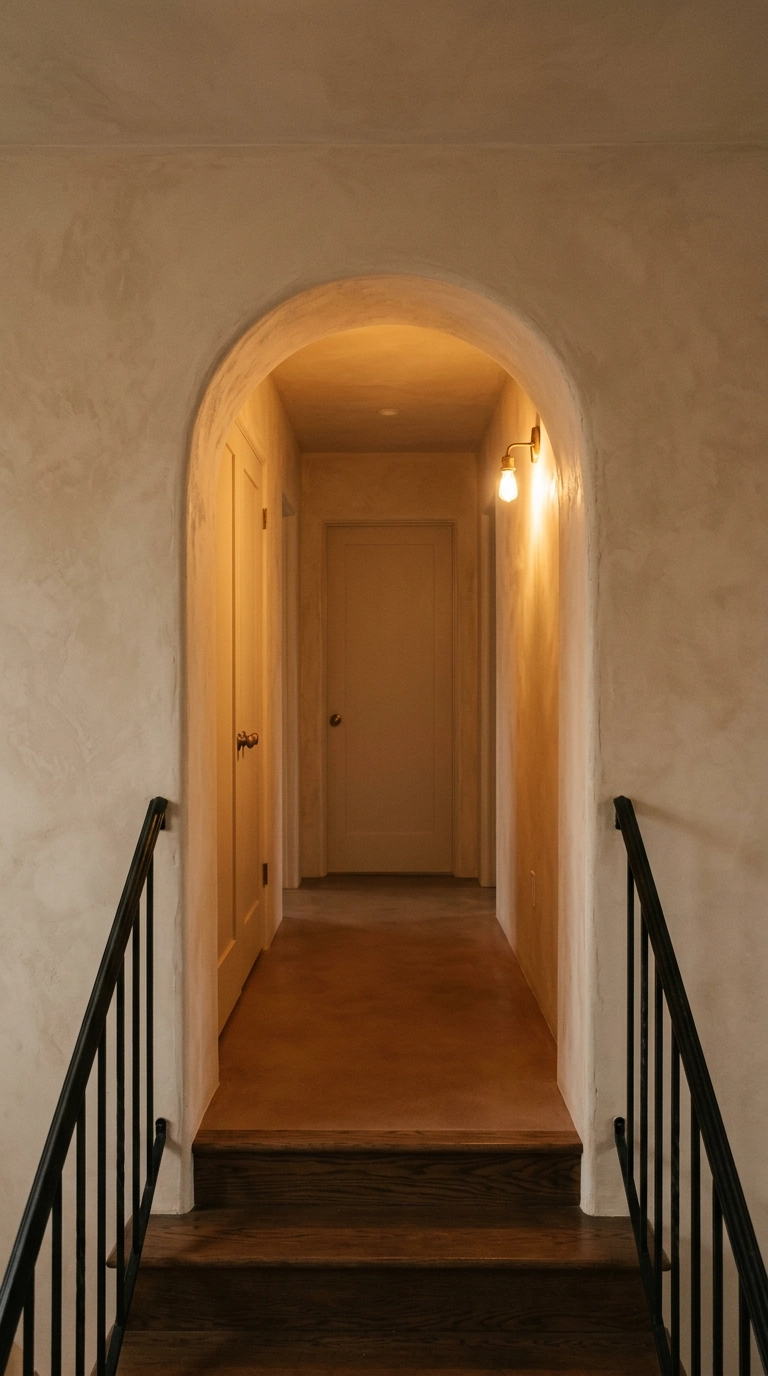
I saved my favorite for last, because this is the one that stops feeling like decorating and starts feeling like architecture. Rounding the square opening into an arch changes the shape of every glimpse you get of that hallway, and a curve at the entry makes the straight corridor behind it feel deliberate instead of leftover.
The Best Six Feet in Your House
Here’s the thing about a bedroom hallway: it’s the last thing you walk through at night and the first thing you see in the morning, and for most of us it’s been a beige tunnel with one sad dome light doing all the work. Fixing it doesn’t take a renovation. It takes a runner sized correctly, one big piece of art instead of six small ones, and a couple of sconces throwing light sideways instead of straight down.
If you only do one thing from this list, make it the color drenched hall or the arched opening, because those two are what’s genuinely moving right now. The whole design world has spent the last couple of years falling for curves and saturated matte paint, and hallways are where that’s landed hardest for 2026. Designers like Athena Calderone have been treating passageways as real rooms for years, and the Farrow & Ball deep-shade corridor is officially no longer a risky choice. My personal soft spot is still the peg rail and the toe-kick lighting, which cost almost nothing and change how the hall actually functions at 2am.
Start with the free stuff. Take everything off the hallway floor, look at the space with fresh eyes, and pick the one idea above that fits your width and your light. If you want more of this kind of thing, room by room and no fluff, sign up for my weekly newsletter, where I send one real project, one honest cost breakdown, and whatever I’m currently obsessed with in my own house.


