
22+ Gorgeous Bathroom Ceiling Decor Ideas that are Easy and Stunning in 2026

Here’s the thing nobody tells you about bathrooms: it’s the one room where people spend real time lying down, leaning back, or staring straight up while the shower warms. I ignored bathroom ceilings for the first six years of my career, slapping flat white on them like everyone else, until a client asked me why the nicest surface in her powder room was the only one I hadn’t touched. She was right, and I’ve been treating the ceiling as the fifth wall ever since. Fair warning though, bathrooms are wet, and I’m going to be annoyingly honest about paint sheens, exhaust fans, and which of these you should absolutely hire out.
Bathroom Ceiling Decor Ideas
1. Color Drench the Powder Room So Walls and Ceiling Match
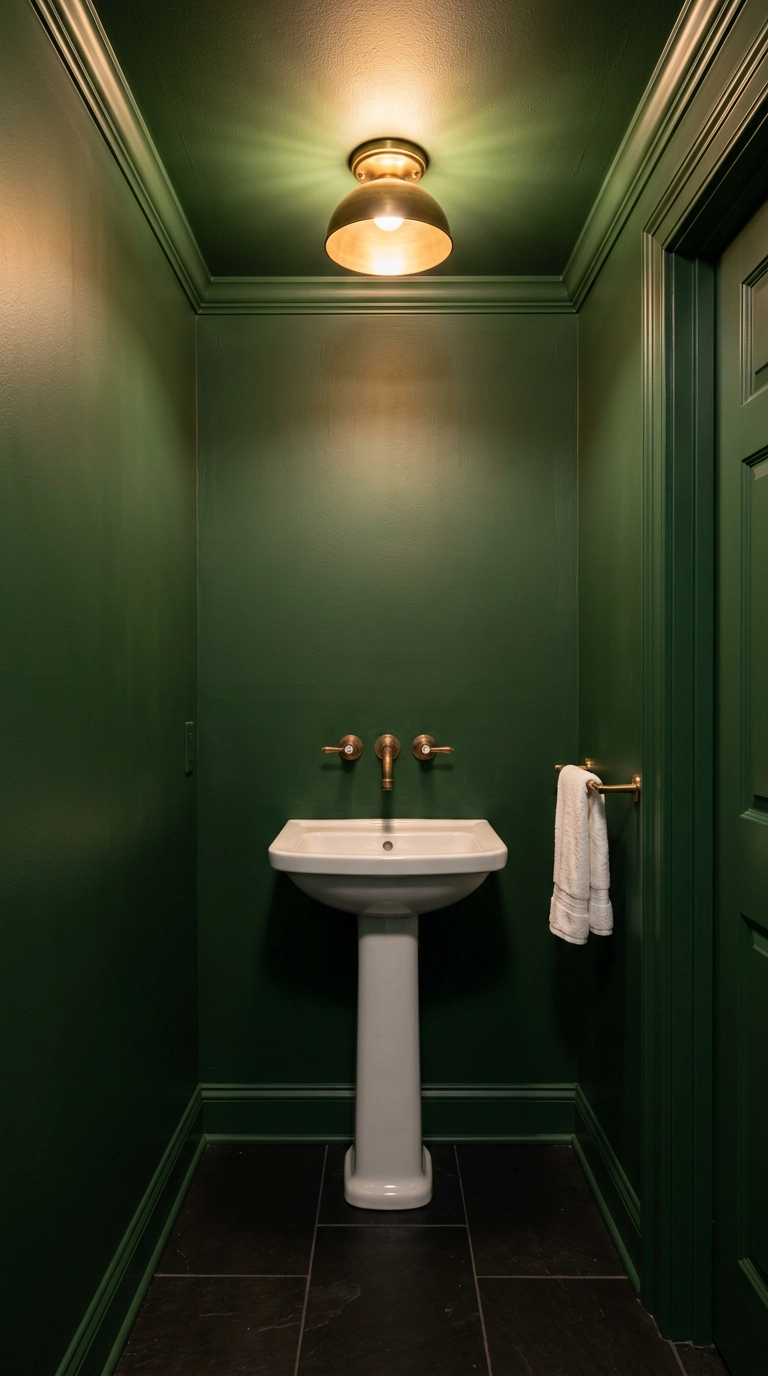
Color drenching just means painting the walls, trim, and ceiling all one shade so your eye never hits a stopping point. In a tiny powder room that has no windows to argue with, it’s the single most dramatic thing you can do for the price of a gallon and a half of paint. Farrow & Ball Studio Green or Benjamin Moore Black Forest Green both read almost black in low light and jewel-toned when the sconces come on.
2. Swap the Builder Boob Light for a Real Flush Mount
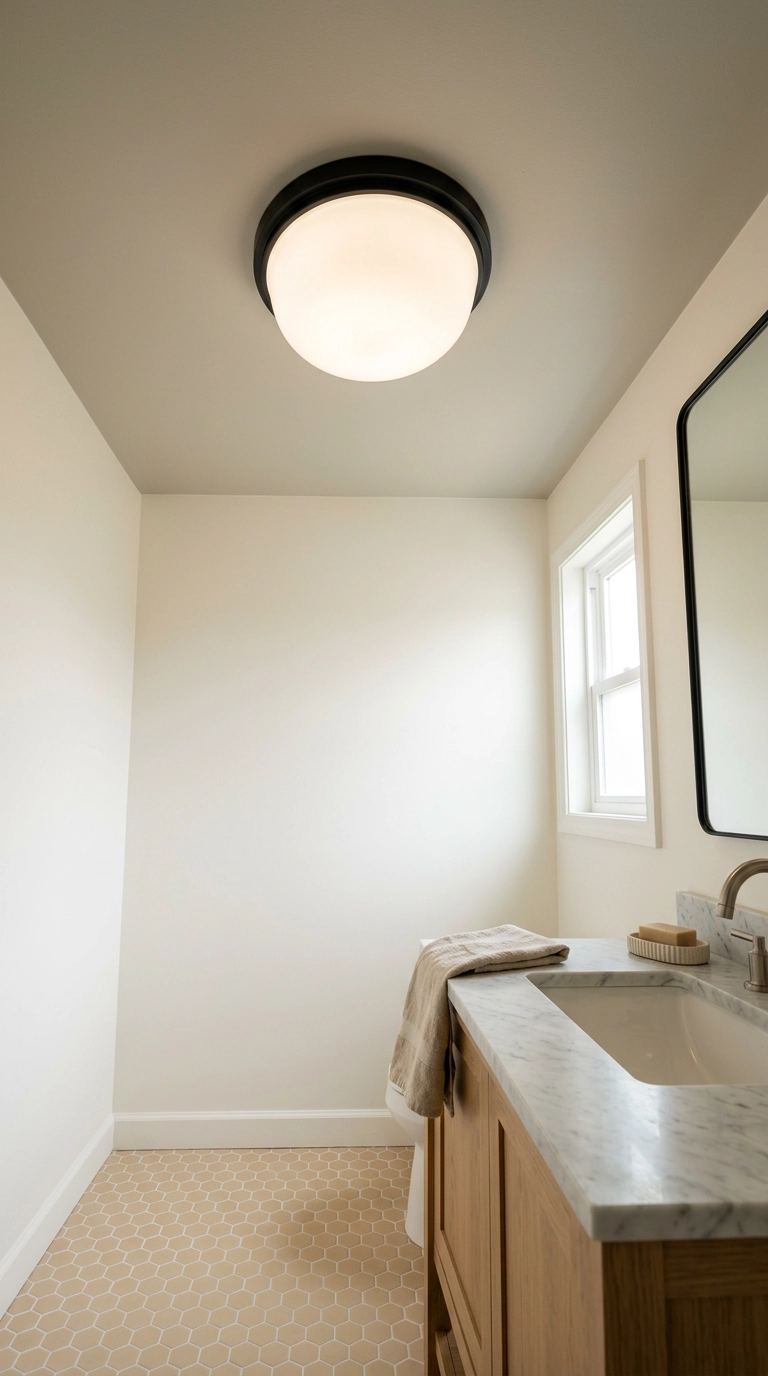
If your bathroom still has the frosted glass dome that comes standard in every builder home in America, this is your twenty-minute upgrade. Go bigger than feels right, a 12 to 14 inch fixture reads intentional where a 7 inch one reads like an afterthought. Look for a damp-rated label, which is all you need outside the shower spray zone.
3. Peel-and-Stick Wallpaper Overhead for a Rental You Can Undo
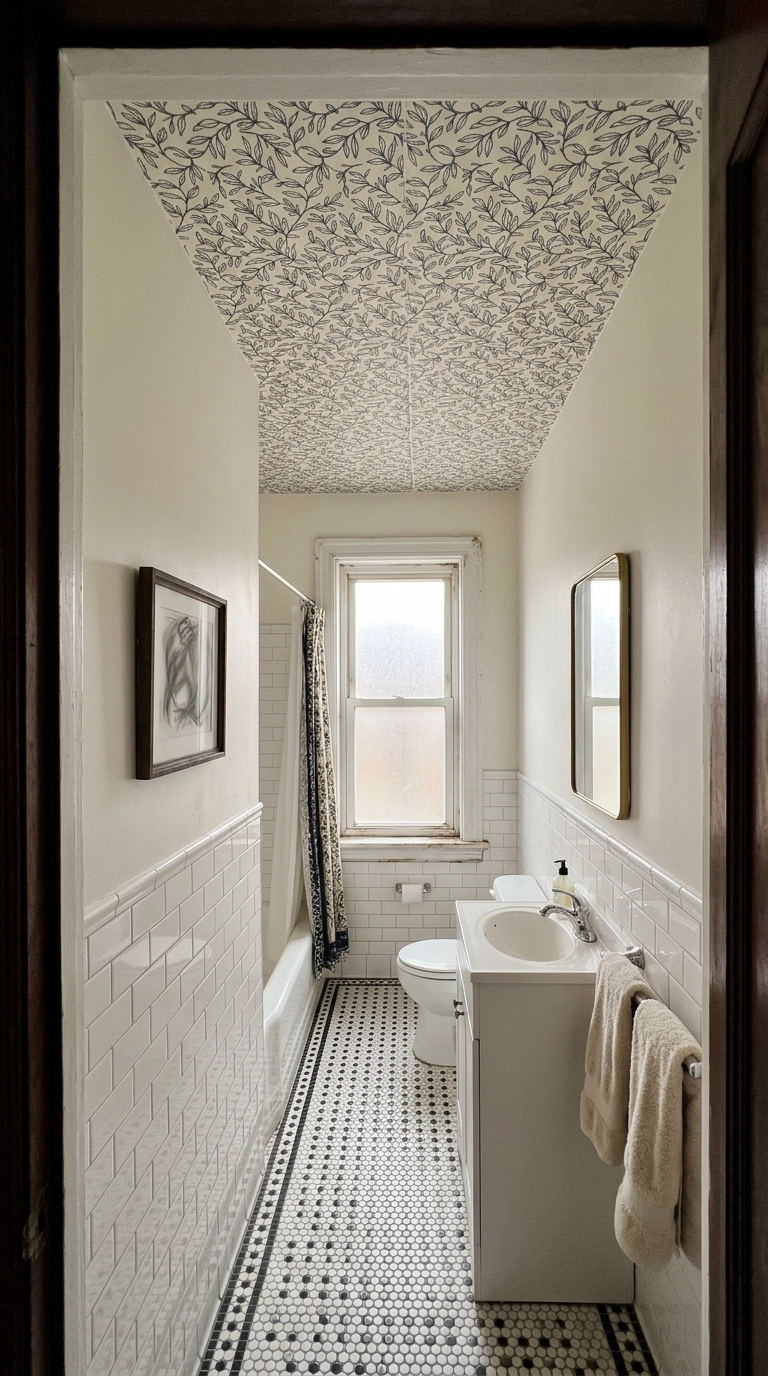
Peel-and-stick on a ceiling is absolutely doable, and absolutely a two-person job. One of you holds the roll while the other smooths from the center out with a felt squeegee, and you will both have sore shoulders by panel three. Prime any glossy ceiling paint first with a bonding primer or the adhesive will let go in a month.
4. Real Wallpaper, But Only If Your Bathroom Actually Breathes
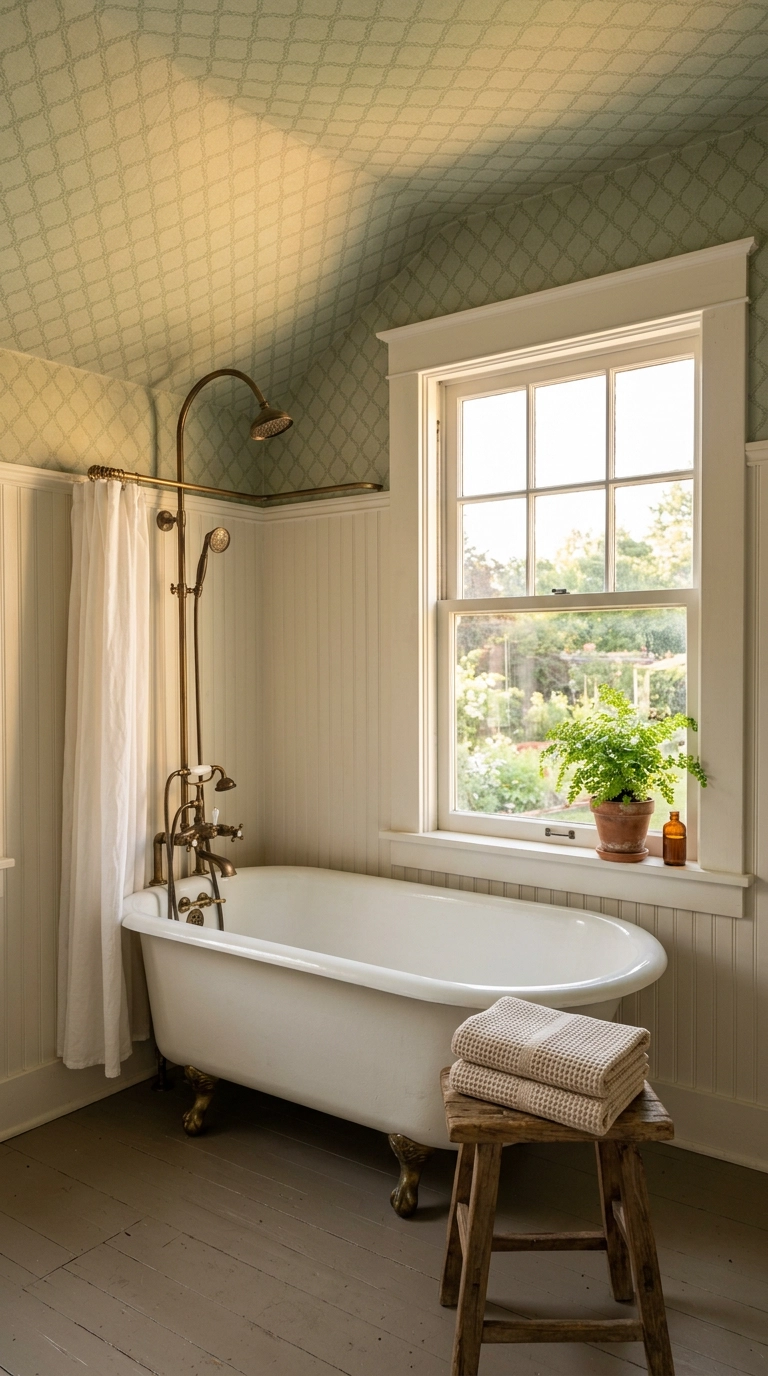
I’ll be blunt: traditional wallpaper on a bathroom ceiling fails in windowless rooms with a weak fan. Steam rises, condenses on the coldest surface in the room, and the seams start curling. If your bathroom has an operable window or a properly sized fan you actually run, you’re fine.
5. Beadboard Panels Overhead for Instant Cottage Character
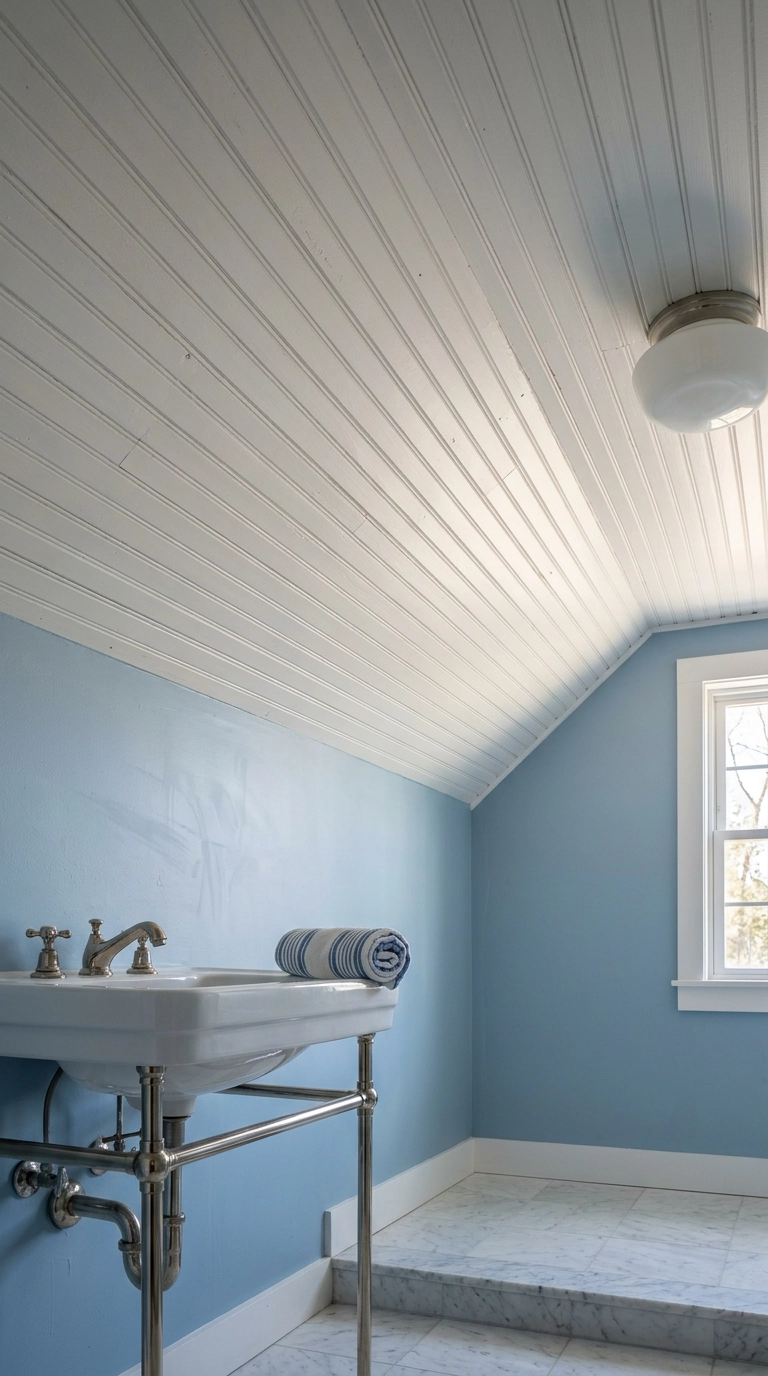
Beadboard comes in 4×8 sheets for around thirty dollars each, which makes this the cheapest way to add real texture overhead. Run the grooves along the room’s longer dimension because the repeating lines stretch the space visually, the same reason pinstripes work on a jacket. Glue plus a few finish nails into the joists is all it takes.
6. Shiplap Across the Ceiling in a Warm Off-White
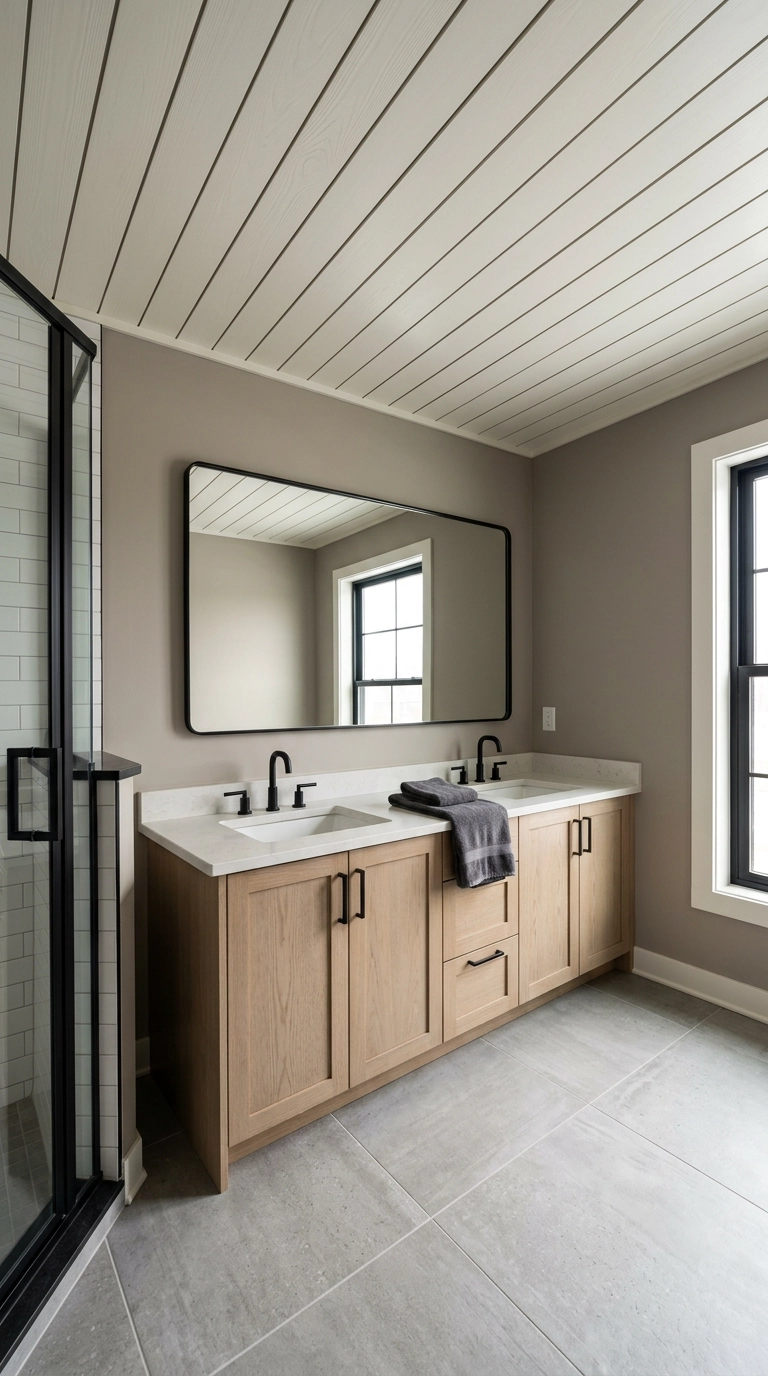
Shiplap overhead gives you the shadow lines of paneling without the fussiness of trim work, and painted a warm off-white like Benjamin Moore White Dove it stays current rather than reading 2016. The nickel gaps between boards are what create the shadow, so don’t caulk them shut, that’s a mistake I see constantly.
7. Tongue and Groove Cedar Left Natural for a Spa Feel
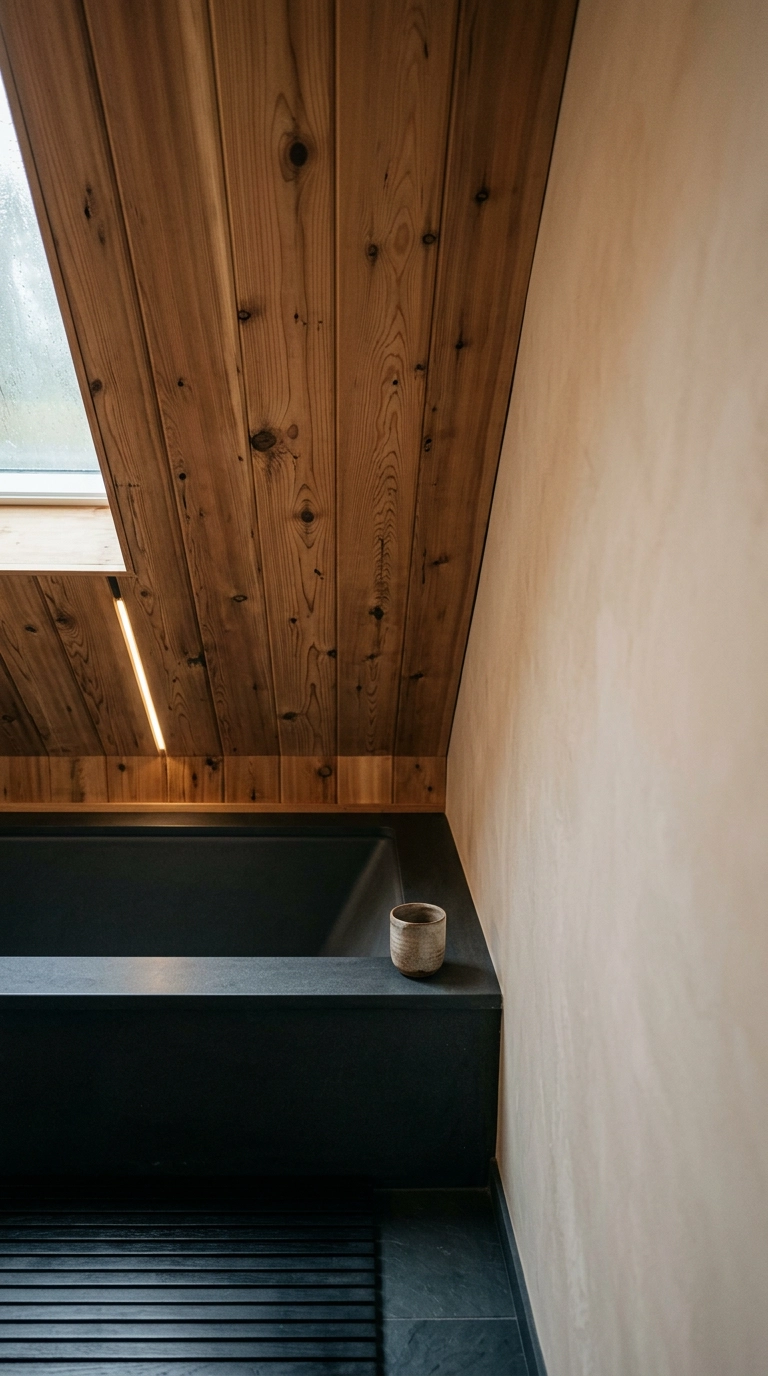
Cedar handles humidity better than almost any affordable softwood, which is exactly why saunas are built from it. Left natural with a matte penetrating sealer it warms up a cold tiled bathroom instantly, because the eye reads wood grain as comfort in a room that’s otherwise all hard surfaces.
8. Stain-Grade Wood Planks in a Dark Walnut Tone
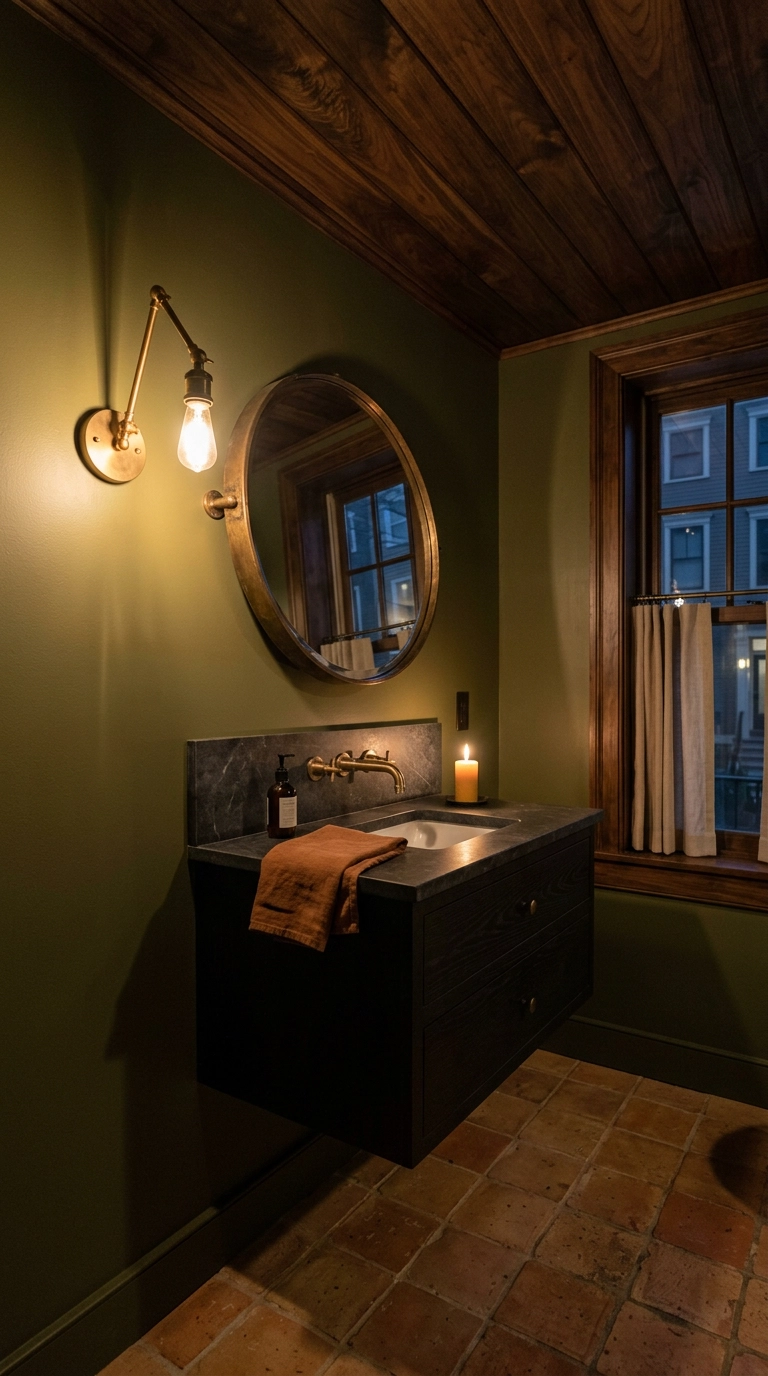
A dark stained ceiling makes a small bathroom feel like a jewel box rather than a shoebox, because the eye stops trying to measure the boundary. This works best in a room you use at night, a powder room or a windowless guest bath, and I’d avoid it in a bright south-facing bathroom where the contrast fights the sunlight.
9. A Shallow Coffered Grid for a Formal Powder Room
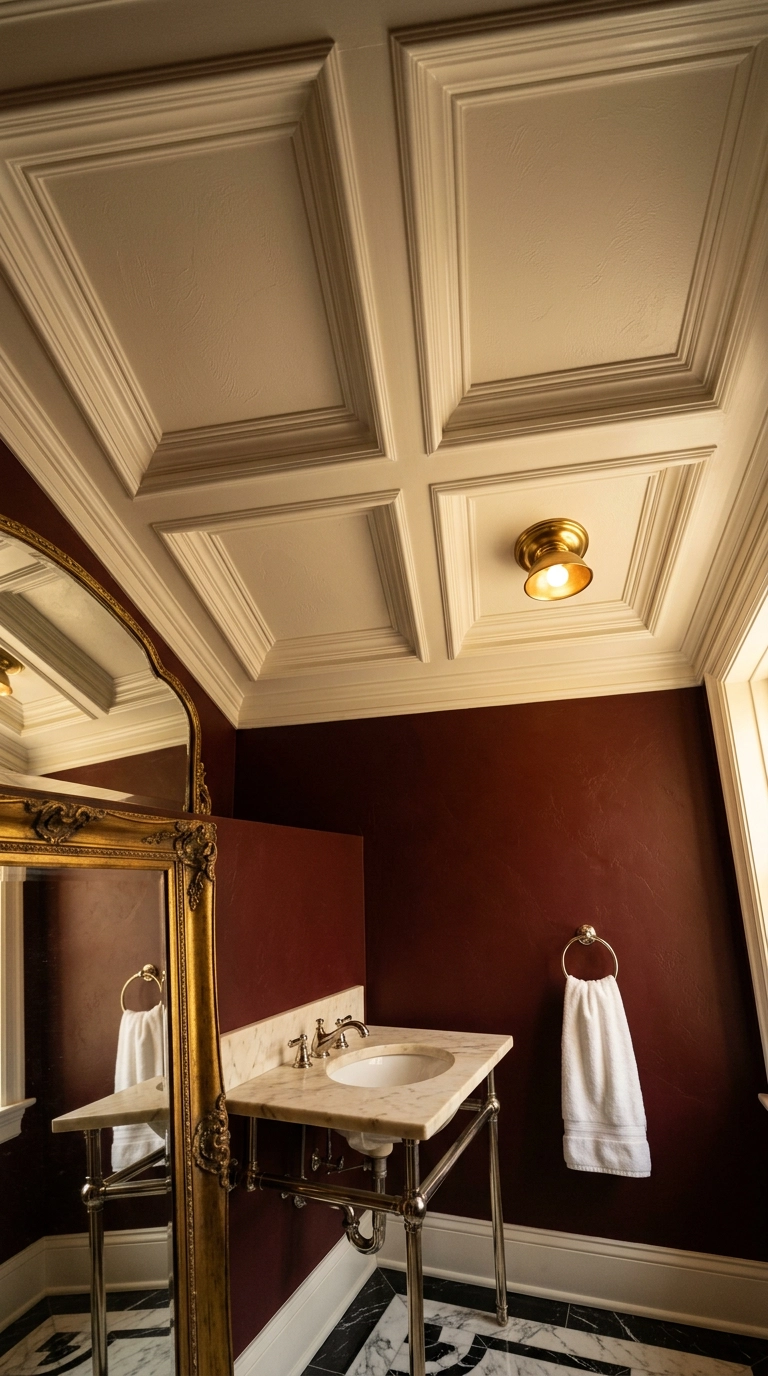
Coffers usually eat headroom, but a shallow version built from 1×4 stock and simple cap molding drops only about two inches and still throws real shadow lines. In a powder room where nobody showers, you get all the architecture with none of the moisture worry.
10. Expose or Add Rough-Hewn Beams Above the Tub
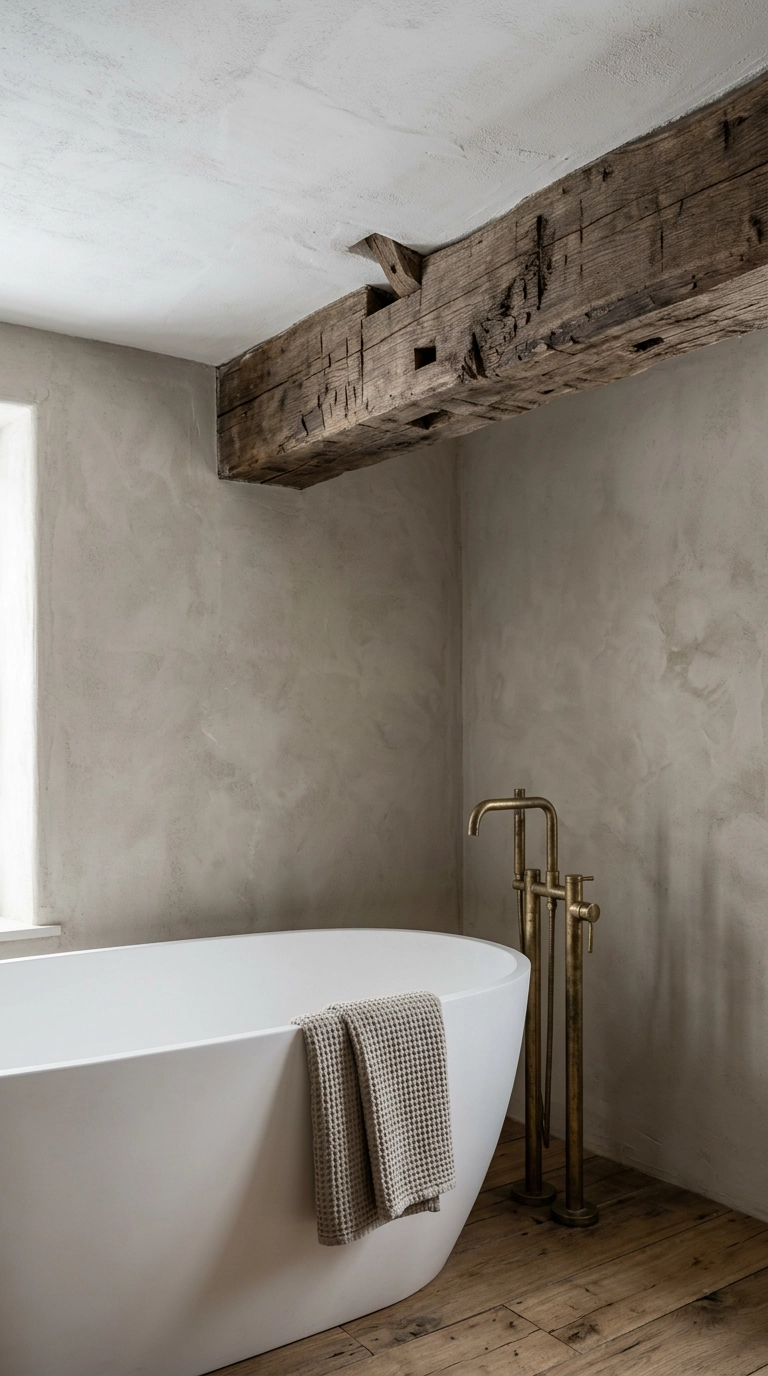
If your bathroom has real structural beams hiding above drywall, exposing them is a gamble worth investigating with a small inspection hole first. If it doesn’t, hollow box beams made from three boards and reclaimed-look stain weigh almost nothing and screw into a cleat.
11. A High-Gloss Lacquered Ceiling in Deep Peacock Blue
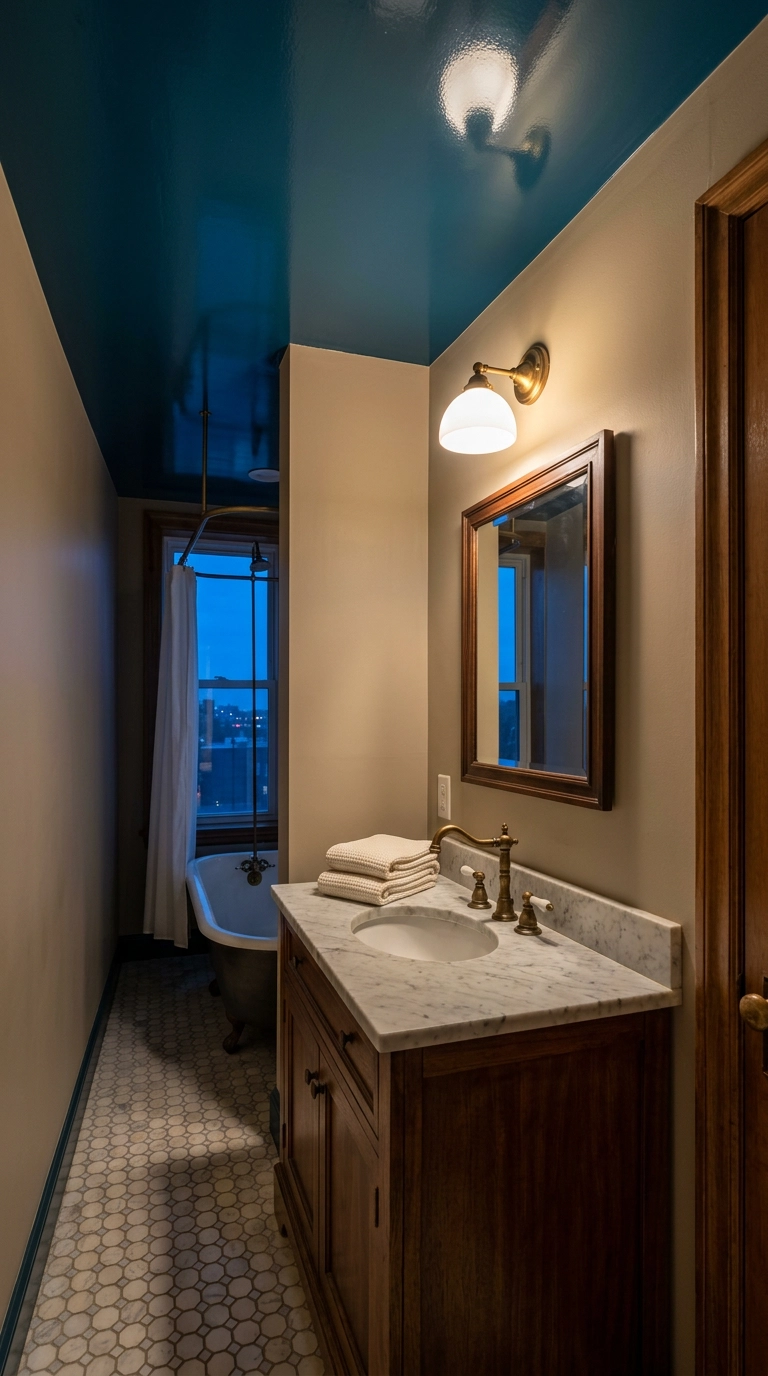
Lacquer is the one finish that makes a ceiling behave like a mirror without any mirror. The gloss bounces light back down and visually doubles a narrow room, which is why decorators have been lacquering small ceilings since long before Instagram found out about it. Deep peacock, oxblood, or espresso all work, but stay away from mid-tone beiges, which just look like an accident.
12. Tile the Ceiling Too in a True Wet Room
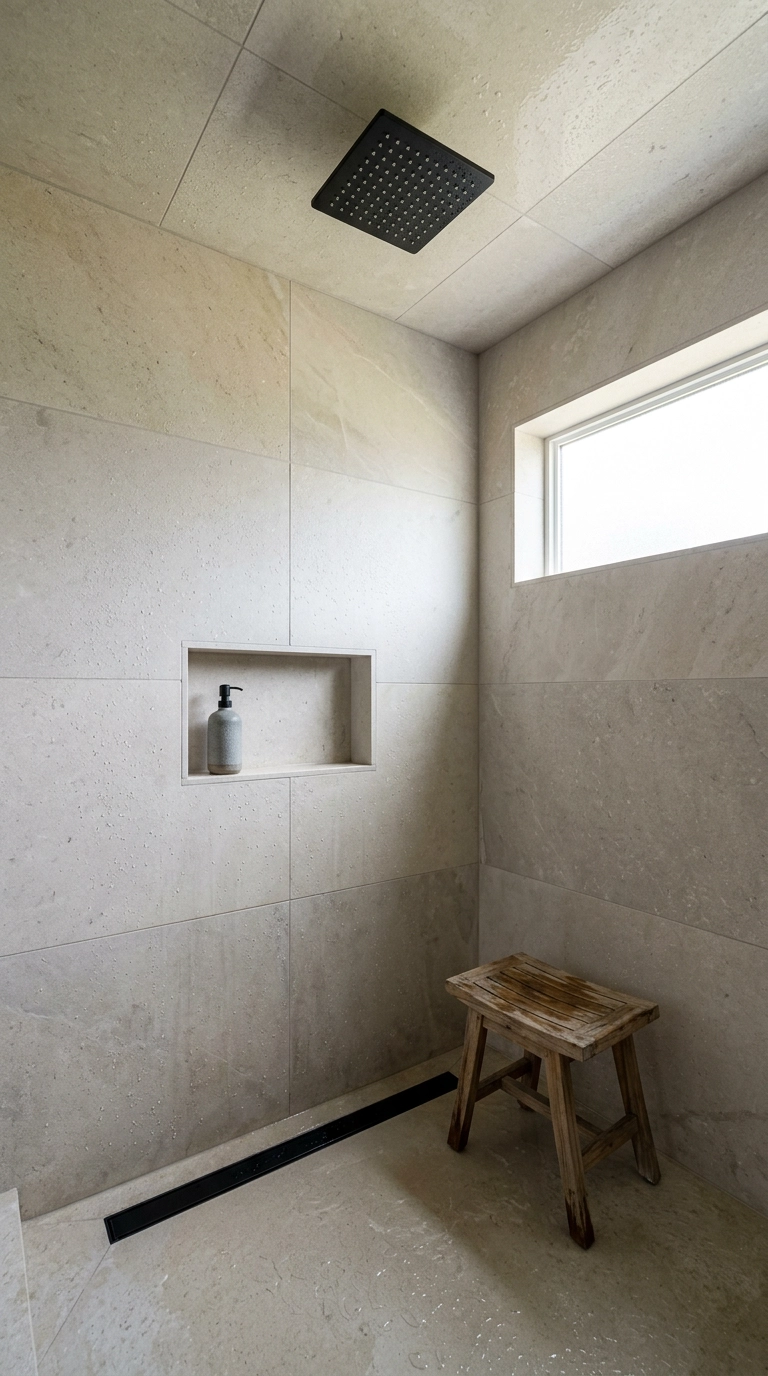
Carrying tile up and across the ceiling is the move that makes a wet room read as one carved volume instead of a box with a shower stuck in it. It also solves a real problem, because a tiled ceiling shrugs off the steam that would eventually blister paint above a rainfall head. Match the tile to the walls and keep the grout joints tight so the eye reads a continuous surface.
13. Add a Skylight Above the Tub for Free Daylight
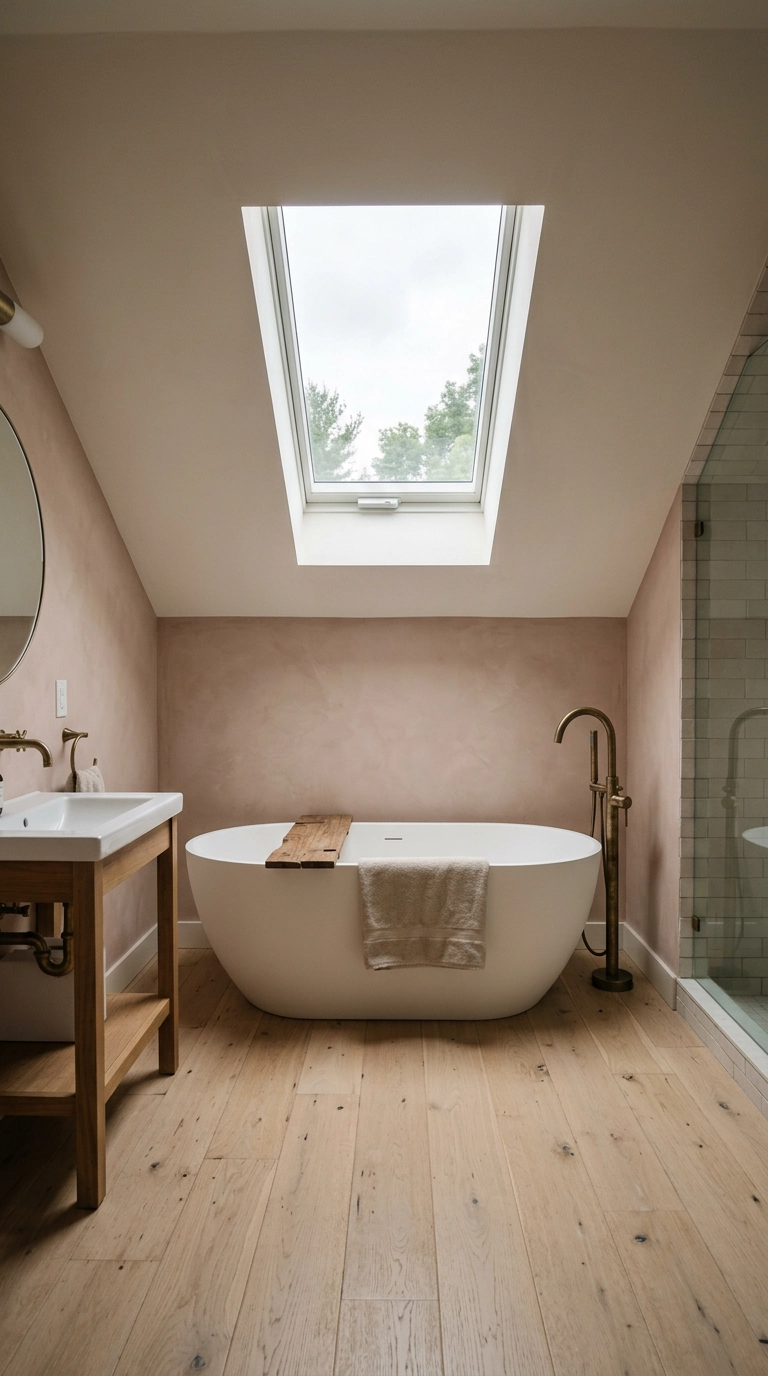
Nothing you buy will do what a skylight does. Overhead light lands evenly instead of raking across a face, which is why a bathroom with a skylight is the only place I trust a mirror for putting on makeup. Center it over the tub rather than the vanity so you get the drama without the glare in your eyes.
14. Run a Solar Tube Into a Windowless Interior Bathroom
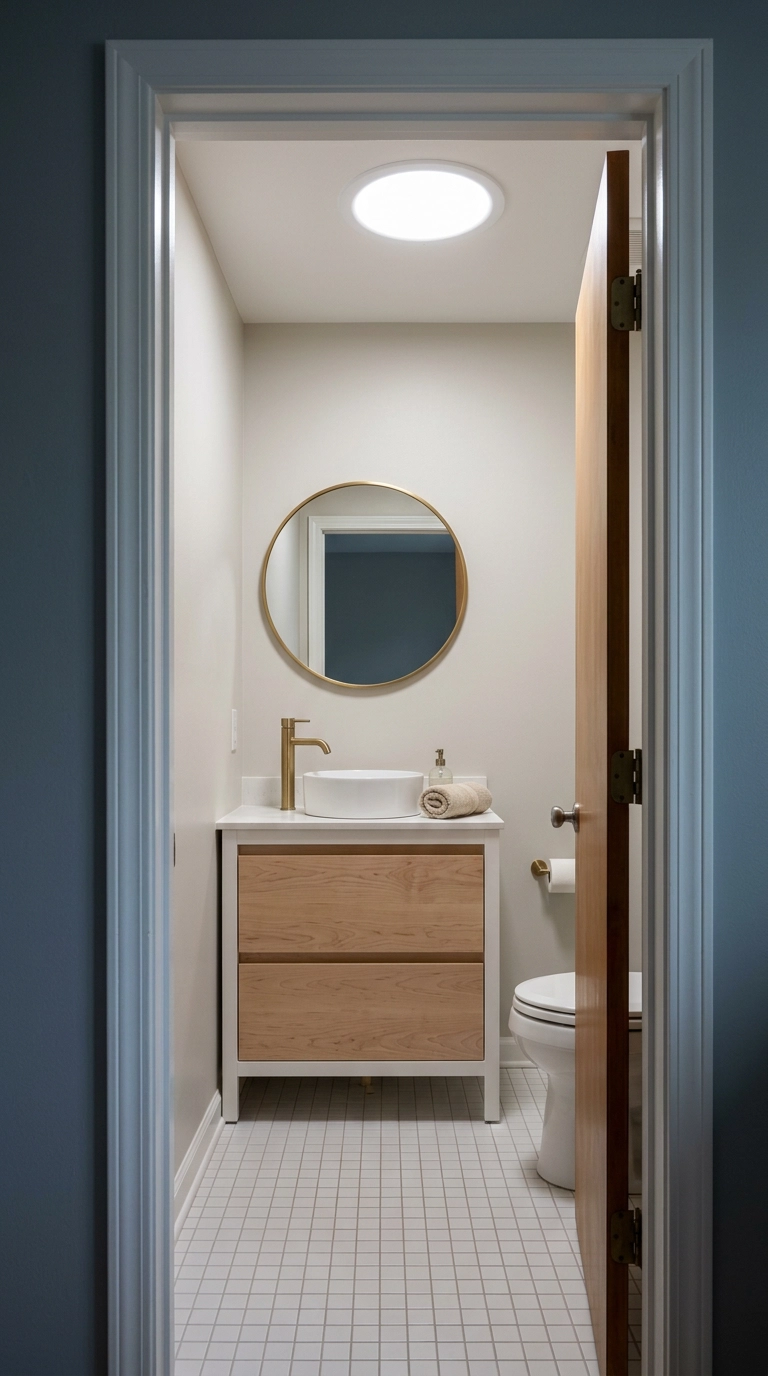
A solar tube is a reflective duct that pipes real daylight from your roof to a diffuser in the ceiling, and in a windowless interior bathroom it is close to magic. A ten inch tube throws roughly the light of a couple of bulbs on a clear day, and the color shifts with the weather, which somehow makes a small room feel connected to outside.
15. A Semi-Flush Fixture When You Have the Height to Spare
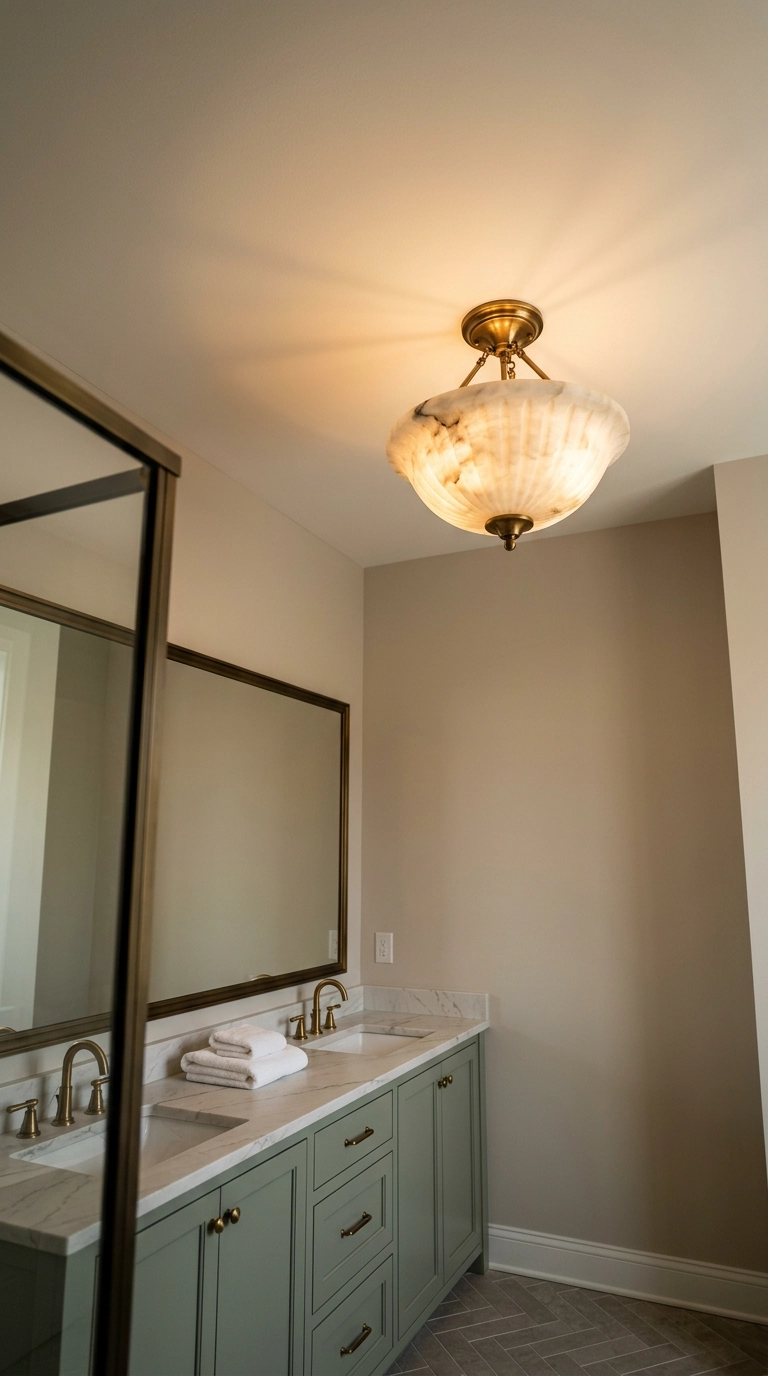
A semi-flush hangs six to twelve inches down, which is enough to cast a shadow line on the ceiling and make the fixture read as a real object rather than a plate. The rule I use: anything over eight-foot ceilings can take one, under that stay flush or you’ll clip it with the shower door. Alabaster, fluted glass, and simple opal domes all age better than anything with a dozen thin arms.
16. Lay Out Recessed Cans Like a Designer, Not an Electrician
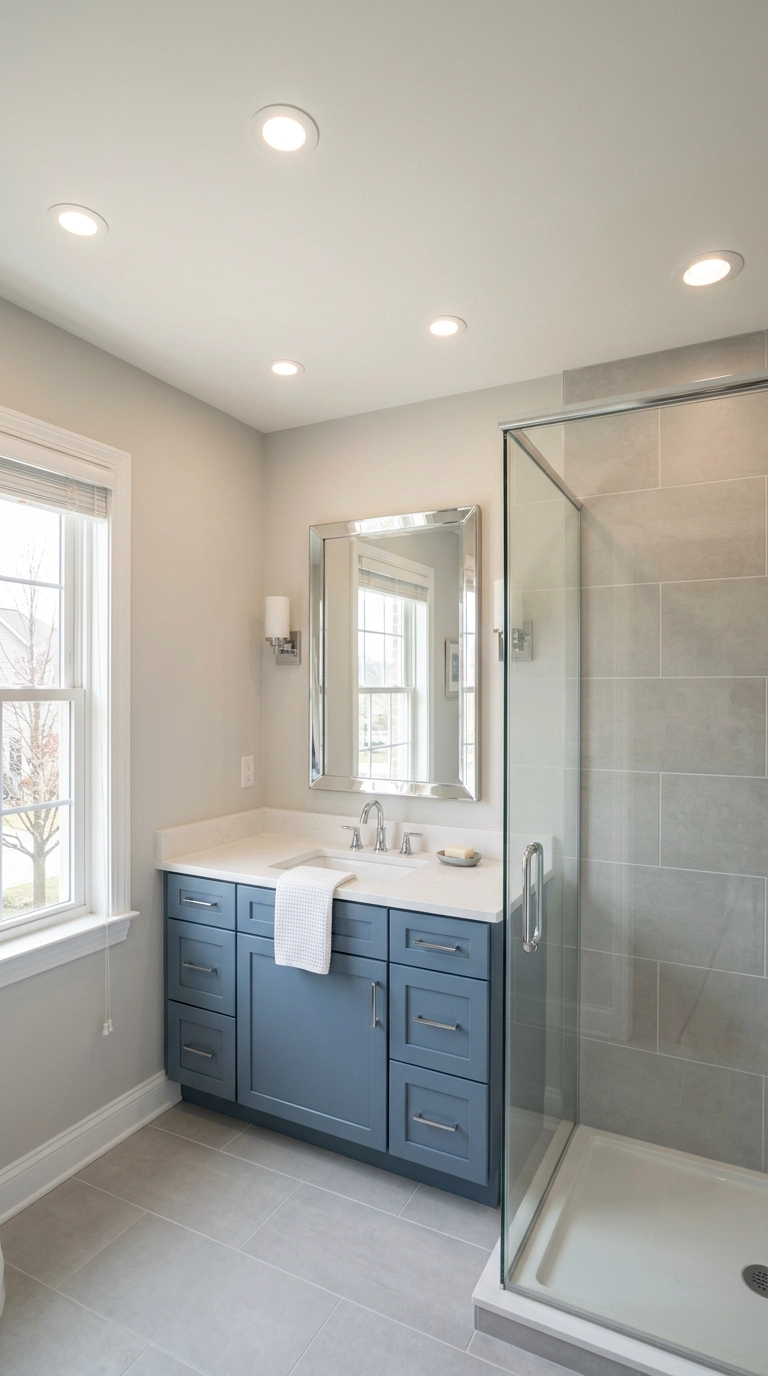
Most builder bathrooms get one sad can in the middle of the room, which puts your own shadow directly on the mirror. Pull the cans off the walls by about two feet, space them roughly four to five feet apart, and put a pair in front of the vanity rather than above your head. Use 4 inch trims instead of 6 inch, they look far less like an office ceiling.
17. Hide a Cove of Indirect Light Around the Perimeter
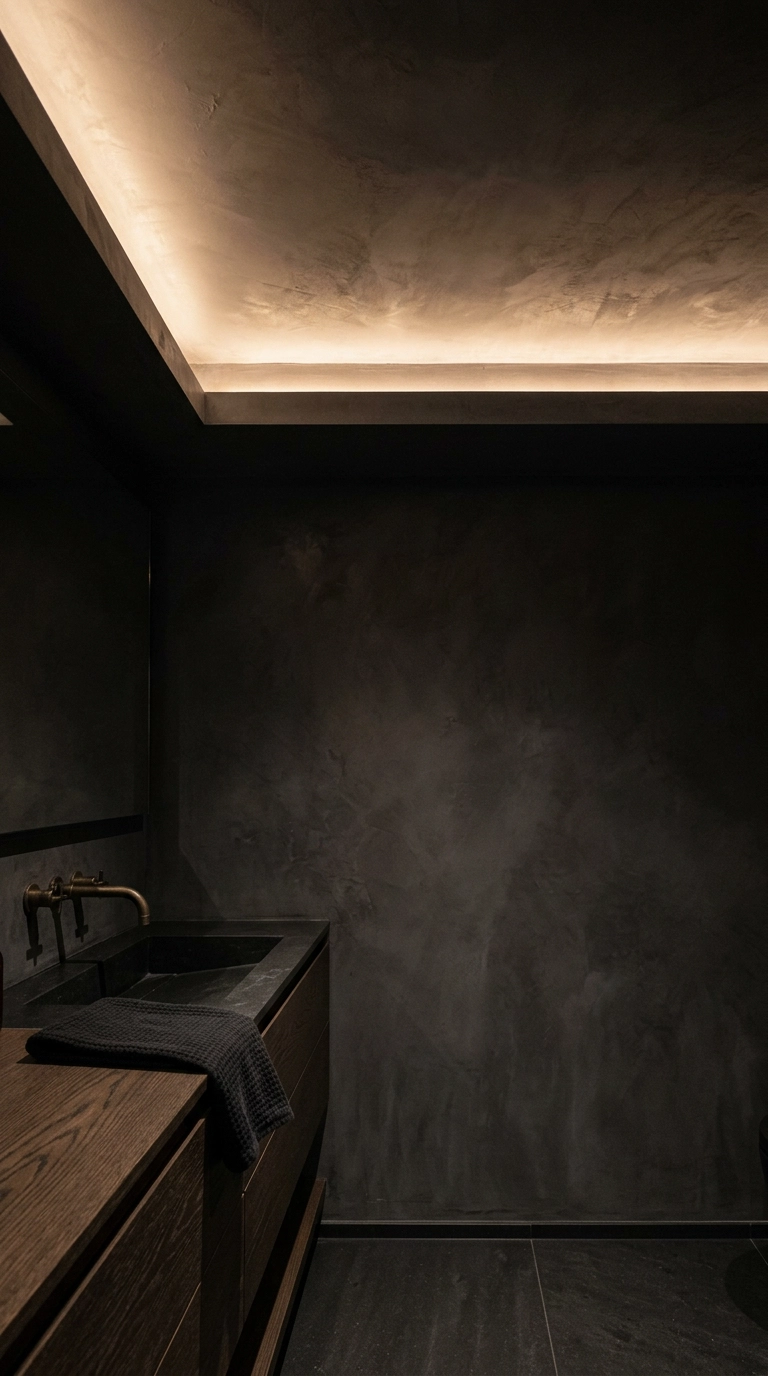
Cove lighting means the bulb is hidden and only the glow shows, and it does something no downlight can: it makes the ceiling itself look like it’s floating. Wash light across a matte plaster ceiling and the room reads twice as tall, because your eye follows the gradient up instead of stopping at a hard fixture.
18. Let a Sloped Ceiling Stay Slanted Above the Tub
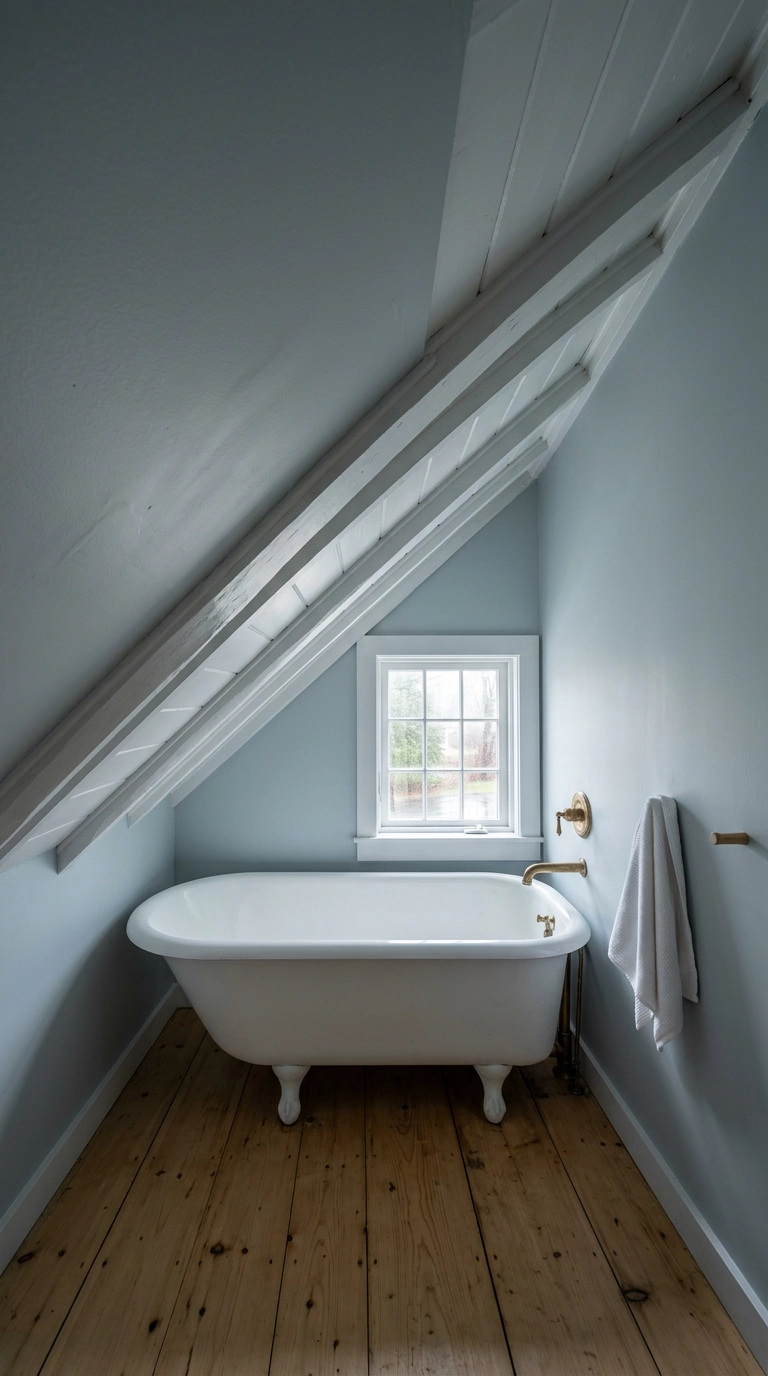
Everyone’s instinct with a slope is to fight it with boxed-in soffits, and every time I’ve talked a client out of that they’ve thanked me. Paint the slope and the knee wall the same color so the angle stops announcing itself as a problem and starts reading as architecture. Pale blue-grey, warm greige, or clay all work.
19. Turn a Dormer Nook Into the Best Seat in the Bathroom
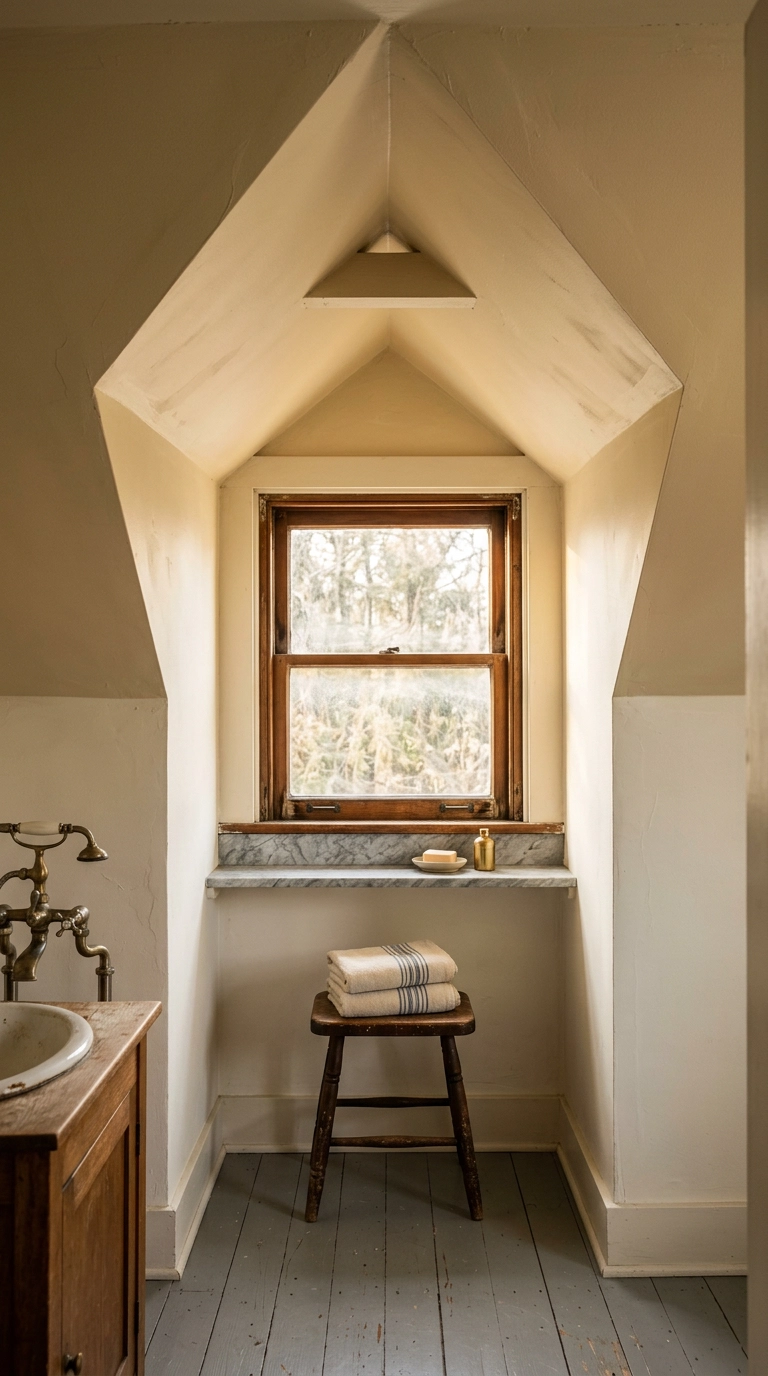
A dormer creates a little ceiling cave, and painting that pocket a warmer or deeper shade than the main ceiling turns an awkward bump into a deliberate nook. I like a soft ochre or a muted clay in there, since the color gets amplified by the light bouncing between three angled surfaces.
20. Paint the Powder Room Ceiling a Color the Walls Aren’t
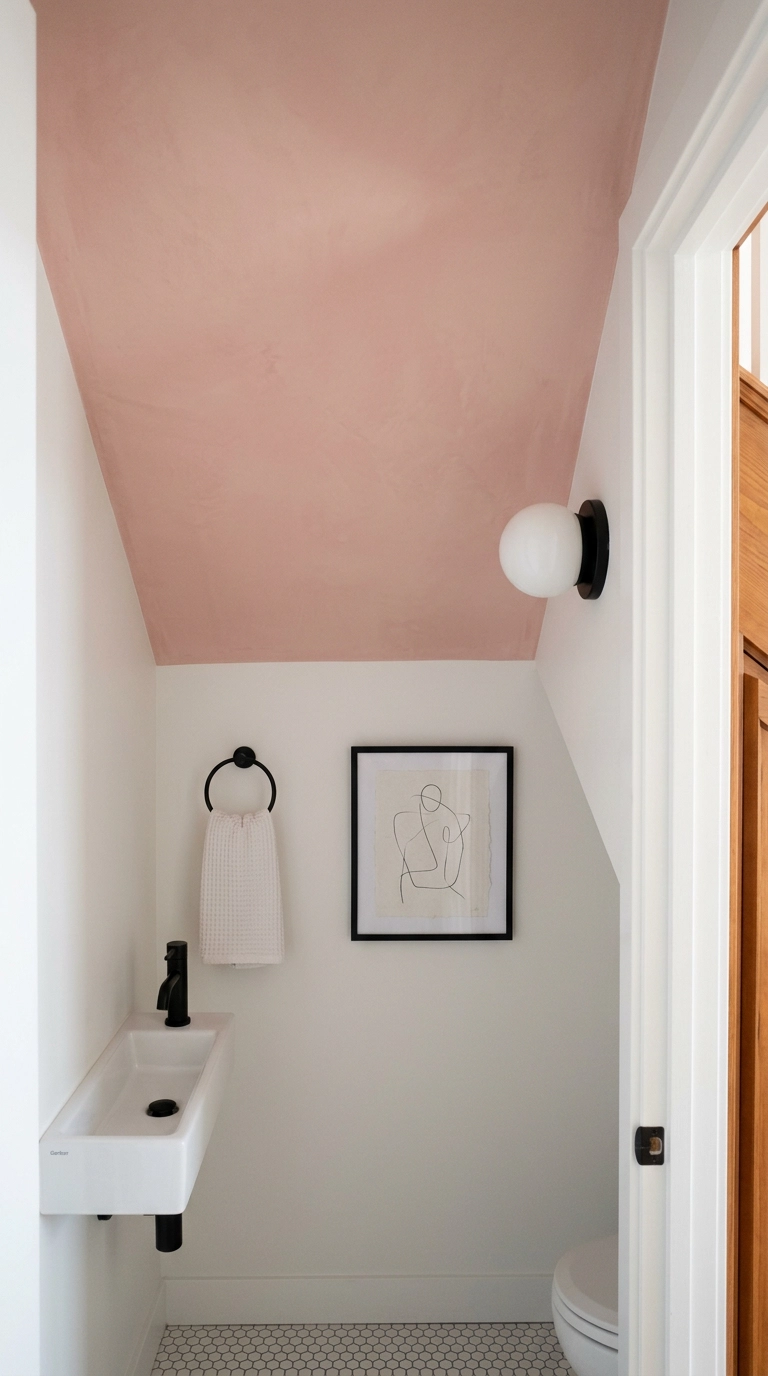
The fifth wall argument is easiest to win in a powder room, because it’s small, it’s low-stakes, and guests notice everything in there. A blush pink, a pale butter yellow, or a soft sky blue overhead against white walls costs one quart and reads as confident rather than loud. Pick something two or three steps softer than what you’d put on a wall, since ceiling color always intensifies in shadow.
21. Upgrade the Exhaust Fan and Make It Disappear
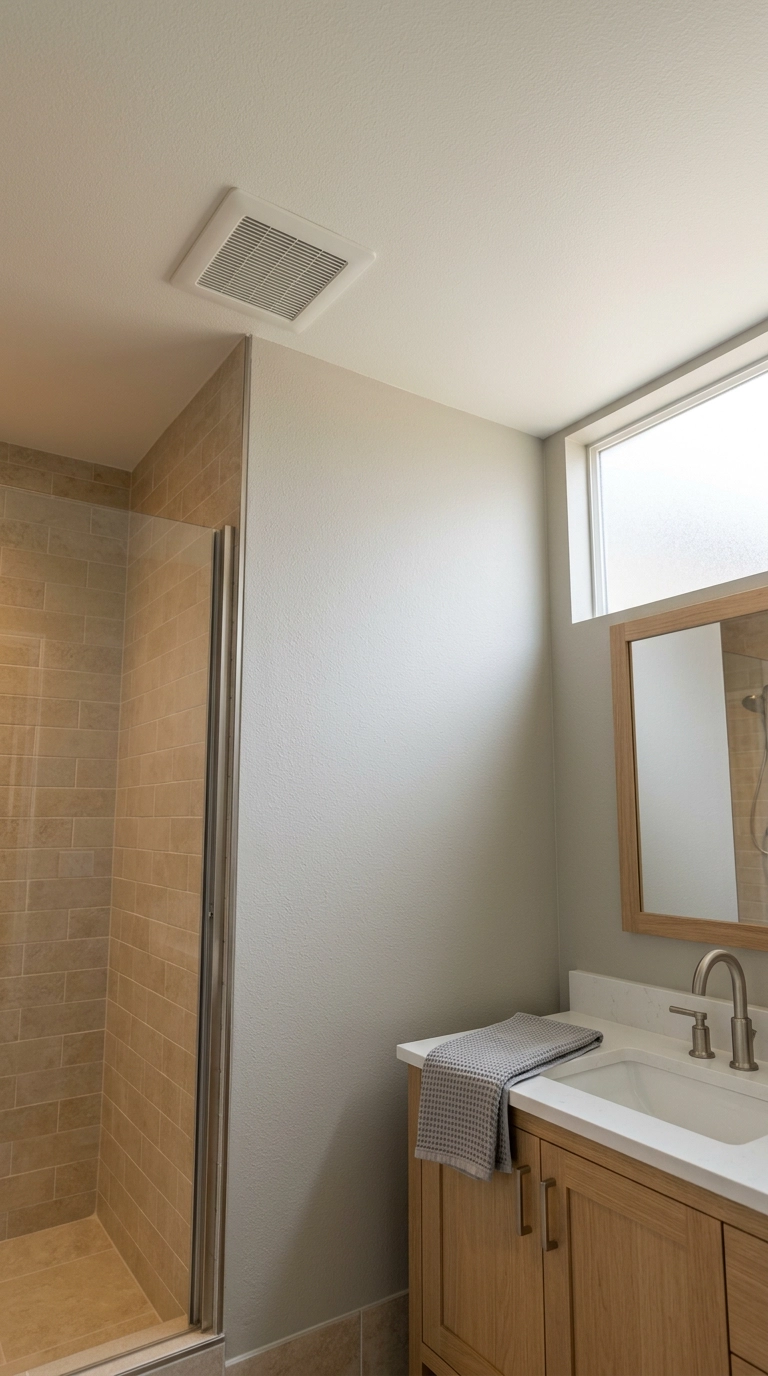
Every pretty ceiling in this article depends on this one. Size the fan at roughly one CFM per square foot of bathroom, bump it up for a tall ceiling or a jetted tub, and run it for twenty minutes after the shower with a timer switch so it actually clears the moisture. A quiet unit rated around 1 sone or less is the difference between using it and never touching the switch.
22. Removable Fabric or Panel Canopy Over the Tub for Renters
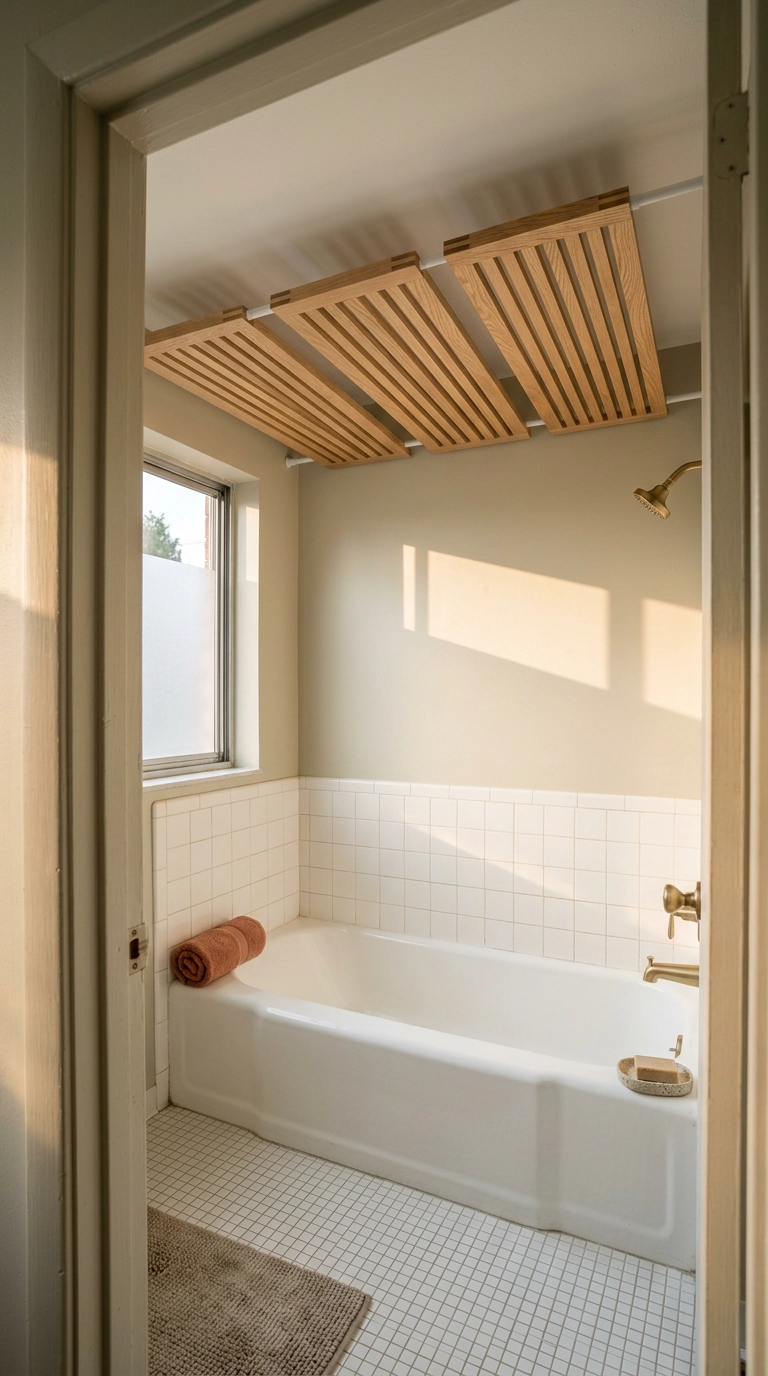
This is the renter’s answer to every wood ceiling above. Light slatted panels or a stretched linen canopy over just the tub zone gives you warmth and shadow overhead, mounted on tension rails or a pair of cleats fastened with removable hardware, and it comes down in ten minutes when you move.
Look Up Before You Look Anywhere Else
If you take one thing from all of this, let it be that the bathroom ceiling is the largest uninterrupted surface in the room and almost nobody uses it. Color drenching a powder room, painting a slope so it stops looking like a mistake, or swapping that builder dome for a proper 14 inch flush mount are all afternoon decisions with next-morning payoff. The bigger swings, the lacquered ceiling, the tiled wet room, the skylight over the tub, are worth saving for, and I’d rather you do one of them properly than four of them halfway.
What I’m seeing everywhere heading into 2026 is the ceiling treated as part of the color story rather than a default white lid. Farrow & Ball has been quietly pushing ceiling drenching for years, and you can see the same instinct in Kelly Wearstler’s glossy lacquered rooms and in nearly every boutique hotel bathroom that made you pull out your phone. The rustic beam and cedar plank looks owe a lot to the modern farmhouse wave, but the versions holding up now are the restrained ones, three beams instead of eight, matte sealer instead of shine.
Whatever you choose, get the boring part right first. Mildew-resistant paint in satin or semi-gloss, a fan sized for the room and vented outside, and a moisture-rated fixture over anything wet. Do that and the pretty part lasts a decade instead of a season. If you want more ideas like these, plus the occasional honest warning about what not to do, sign up for my weekly newsletter and I’ll send the good stuff straight to your inbox.


