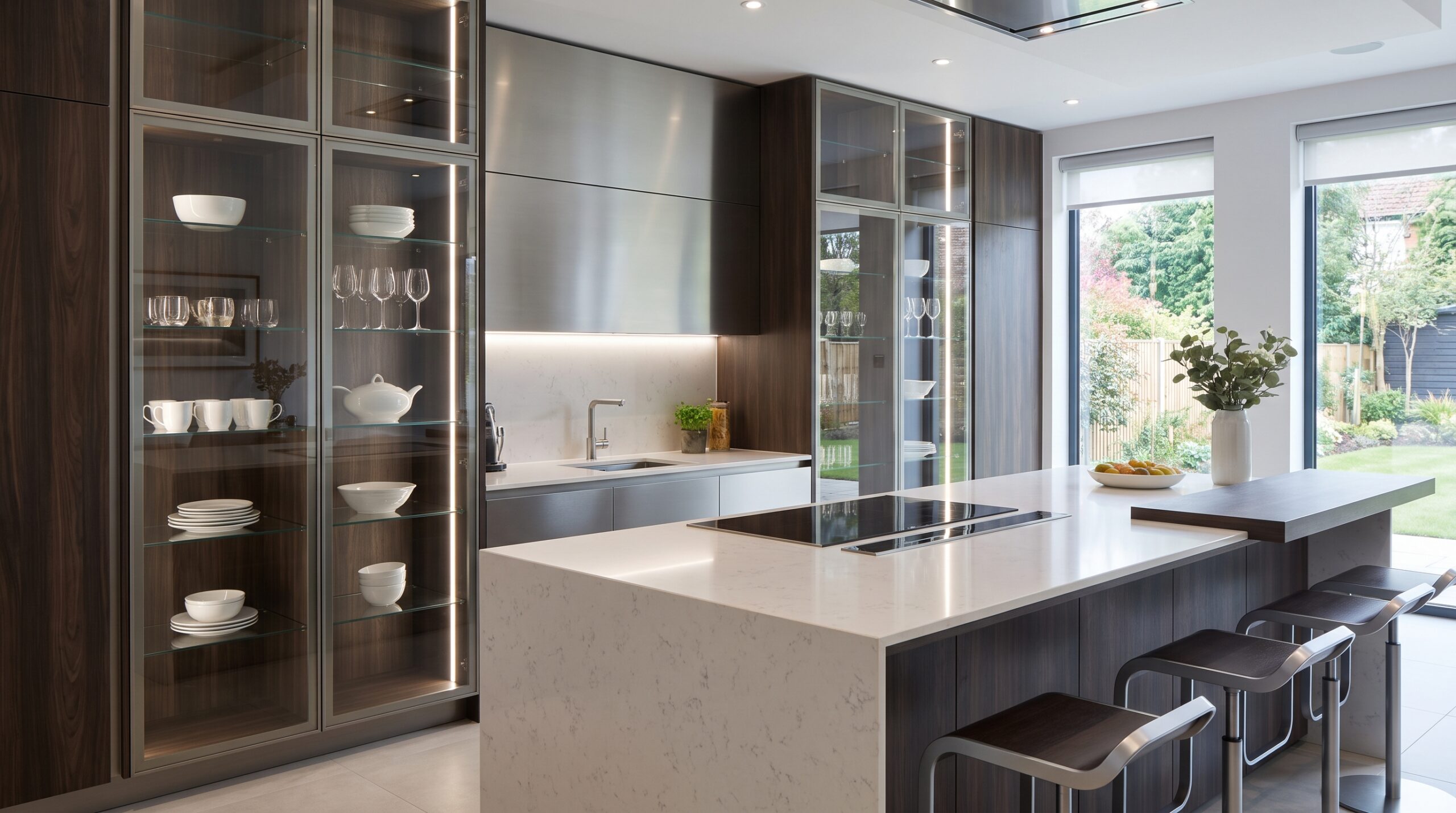
20+ Waterfall Kitchen Island Ideas That Will Make You Rethink Your Countertops

There’s a reason waterfall countertops have taken over kitchen renovation boards everywhere. That uninterrupted sheet of stone or wood cascading straight down the side of an island isn’t just a design flourish — it’s the kind of detail that makes a kitchen feel finished, expensive, and intentional, even if nothing else in the room changed. Once you notice a waterfall edge, you start noticing its absence everywhere else.
What makes this trend stick around instead of fading like so many others is how flexible it actually is. You can dress it up in polished marble for a formal, showroom feel, or pair it with reclaimed wood and matte concrete for something that feels lived-in and warm. It works in a 200-square-foot city kitchen just as well as it does in a sprawling farmhouse layout. Below are 22 different takes on the waterfall island, each with its own personality, so you can figure out which version actually fits the way you cook, gather, and live.
1. The Minimalist Waterfall Island
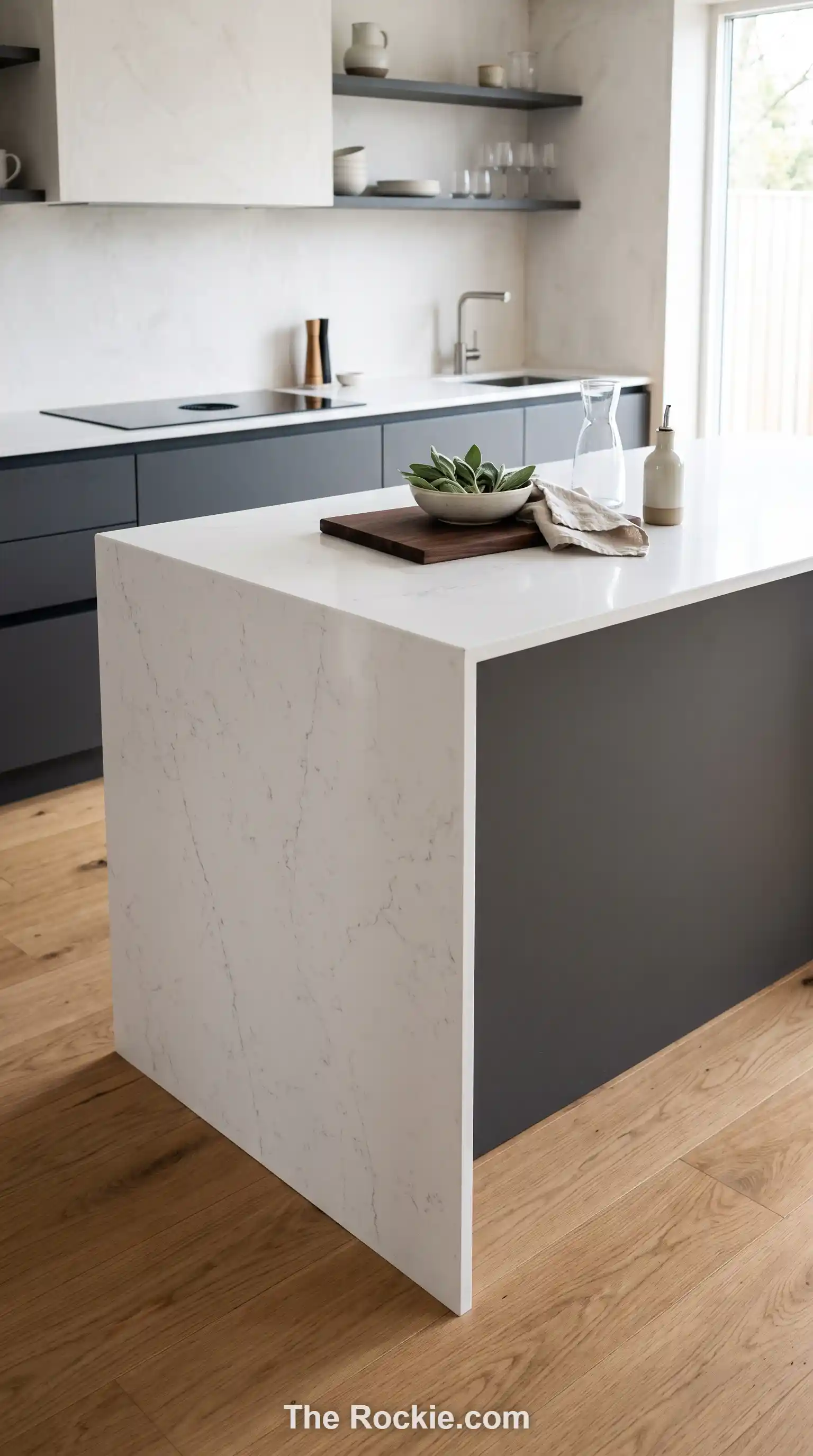
If you want your kitchen to feel calm the second you walk in, this is the direction to go. A minimalist waterfall island strips everything back to one continuous plane of stone that wraps from the counter straight down the side, with no trim, no seams, no visual noise to distract from it. The neutral tone does a lot of the heavy lifting here — it reads as quiet and expensive rather than empty. Because there’s nothing jutting out or catching debris, wiping it down takes seconds, which matters more than people expect once they’re living with it daily. It’s the kind of island that doesn’t try to impress you, and somehow that’s exactly why it works.
[NEW_IMAGE_PROMPT: Close-up photograph of a minimalist white quartz waterfall kitchen island, clean unbroken edge flowing to the floor, matte cabinetry, soft diffused studio lighting, Scandinavian-inspired interior, high-end architectural digest style photo, crisp shadows, 4k]
2. Glossy Quartz for Maximum Shine
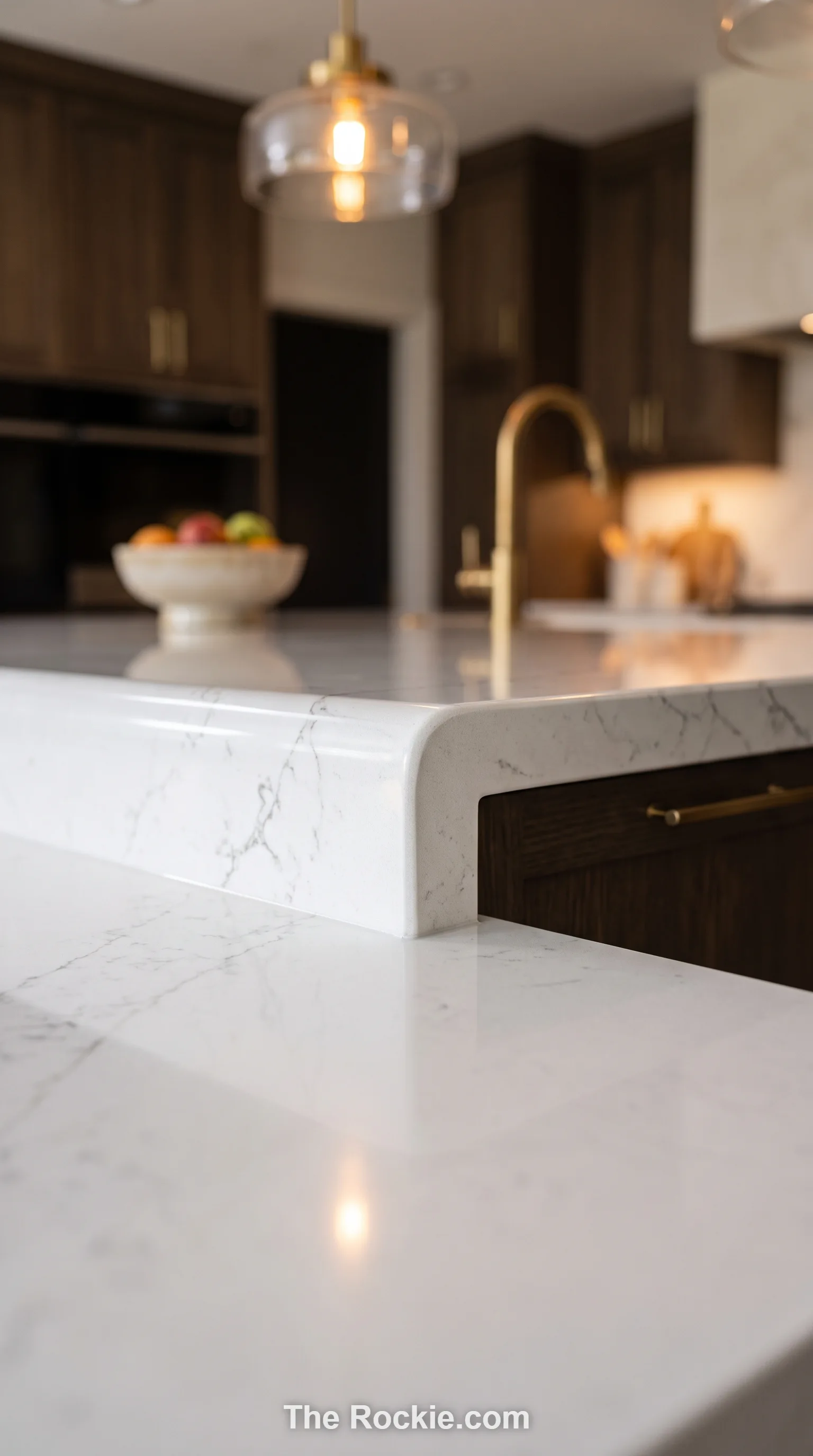
Quartz earns its spot in nearly every kitchen renovation conversation, and the waterfall treatment is where it really shows off. The glossy surface catches light in a way that stone alternatives sometimes can’t, so the whole island practically glows under pendant lighting. Beyond looks, quartz is engineered to shrug off heat, stains, and scratches — a real advantage if your island doubles as prep station, homework table, and buffet line most weeks. The seamless drop to the floor keeps the eye moving in one smooth line instead of stopping at an abrupt edge, which is part of why this look photographs so well for anyone selling a home down the road.
[NEW_IMAGE_PROMPT: Macro-detail photograph of glossy white quartz waterfall countertop edge, reflective surface catching warm pendant light, subtle veining pattern, luxury kitchen interior blurred in background, professional product photography lighting, 4k, hyper-realistic]
3. A Punch of Bold Color
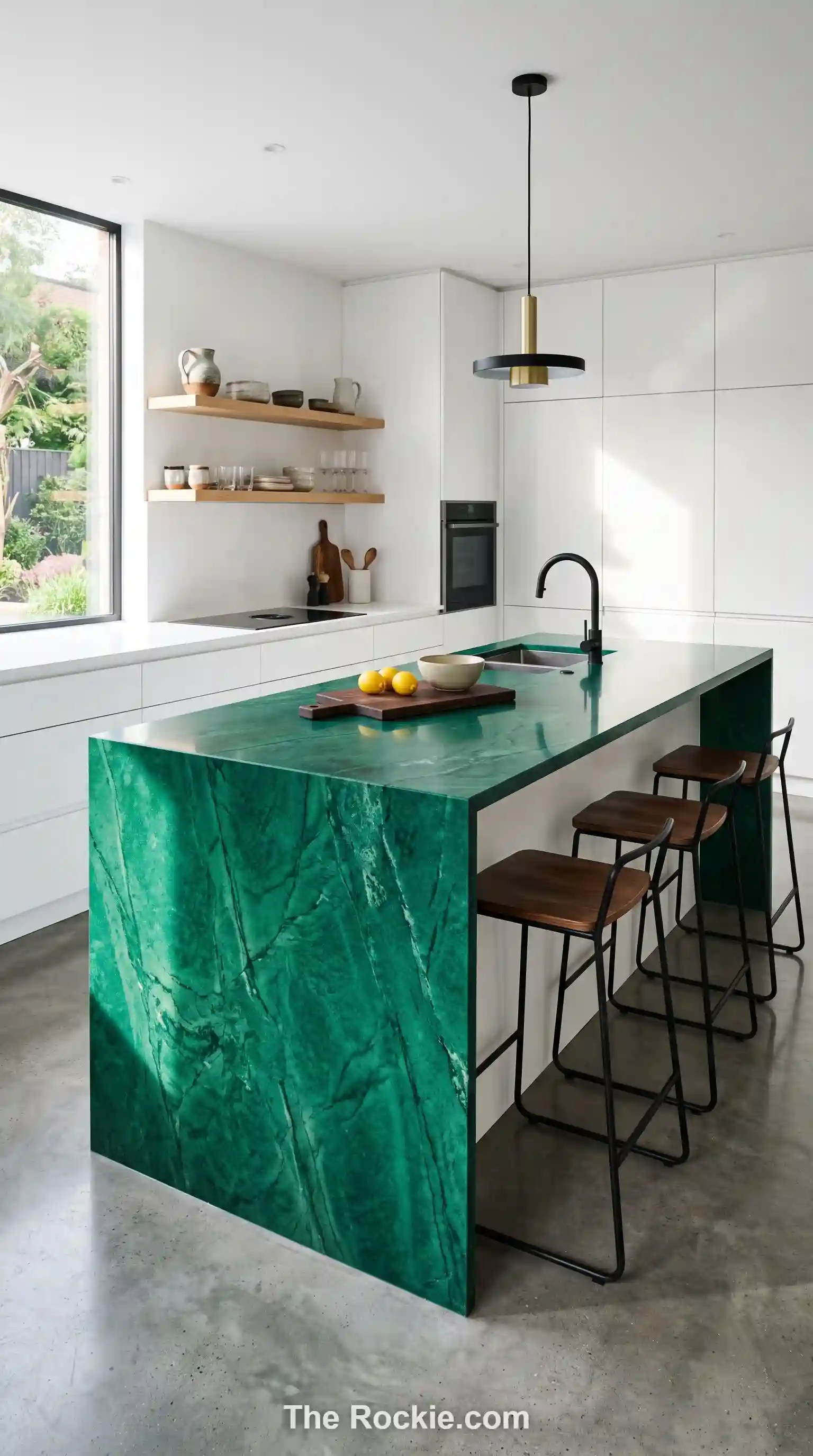
Not every kitchen needs to whisper. A waterfall island in a saturated color — think deep emerald, cobalt, or burnt terracotta — turns a functional surface into the actual focal point of the room. It works best surrounded by otherwise neutral cabinetry and walls, letting the island do all the talking. What’s easy to overlook is that color doesn’t have to mean compromise: today’s pigmented quartz and lacquered surfaces hold up just as well as their beige counterparts. The result is a kitchen that feels personal and a little unexpected, instead of looking like it was pulled from a catalog.
[NEW_IMAGE_PROMPT: Vibrant photograph of a bold emerald-green waterfall kitchen island against white minimalist cabinetry, dramatic side lighting emphasizing color saturation, modern architectural kitchen, editorial photography, rich color contrast, 4k]
4. Sustainable Materials, Same Sleek Look
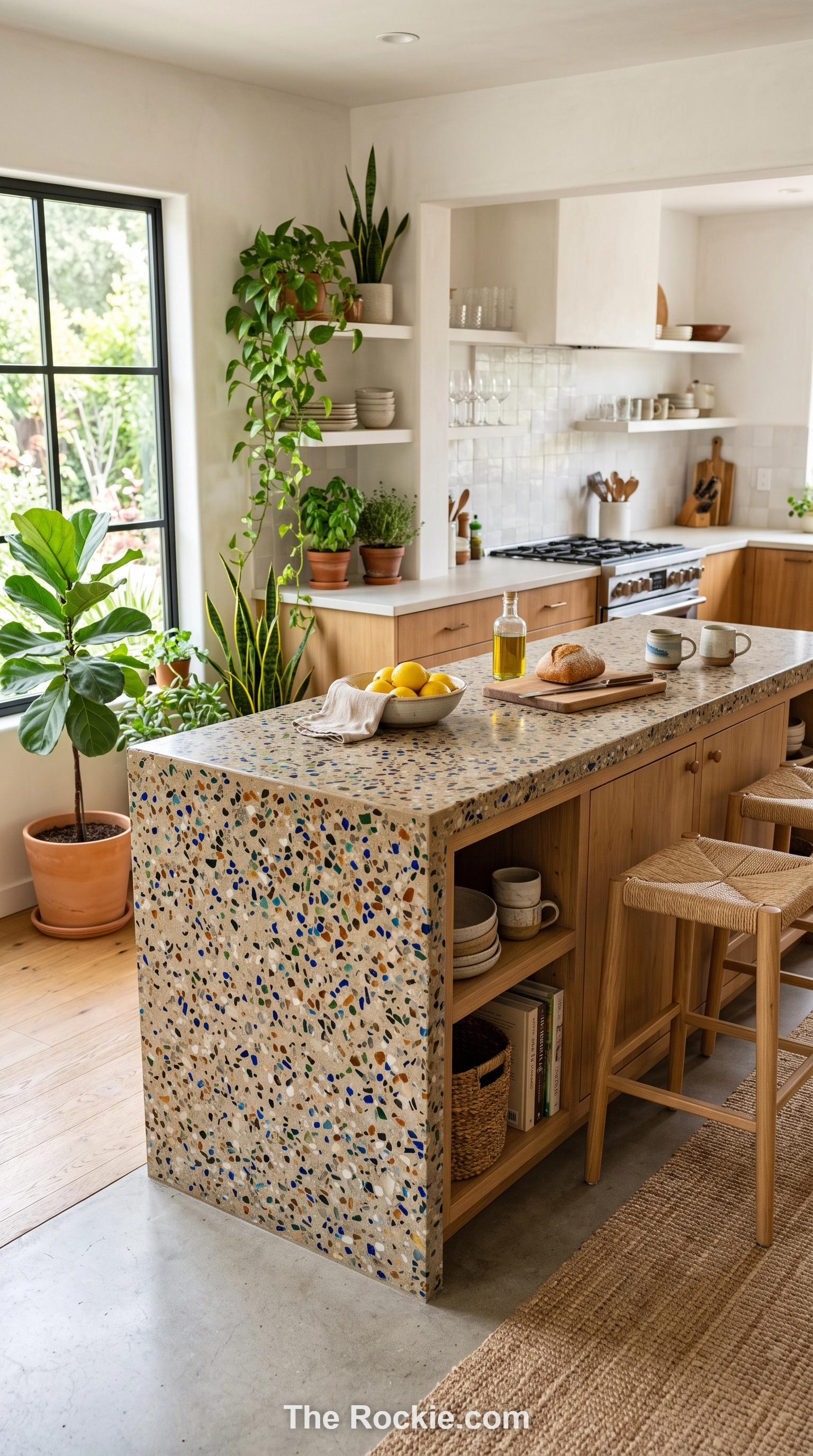
For anyone renovating with an eye on their environmental footprint, waterfall islands don’t have to mean quarrying new stone. Recycled glass composites, reclaimed timber, and responsibly sourced surfaces can all be shaped into that same continuous cascade, so you’re not sacrificing the look to make a greener choice. These materials have come a long way — many recycled composites are just as durable as traditional quartz, with the added bonus of a story behind them. It’s proof that a design built on sustainability doesn’t have to look like a compromise; sometimes it looks better because of the texture and character recycled materials bring.
[NEW_IMAGE_PROMPT: Natural light photograph of an eco-conscious kitchen island with recycled terrazzo-style waterfall countertop, visible flecks of recycled glass and stone, potted greenery nearby, warm sustainable design aesthetic, editorial interior photography, 4k]
5. Rustic Wood Paired With Stone
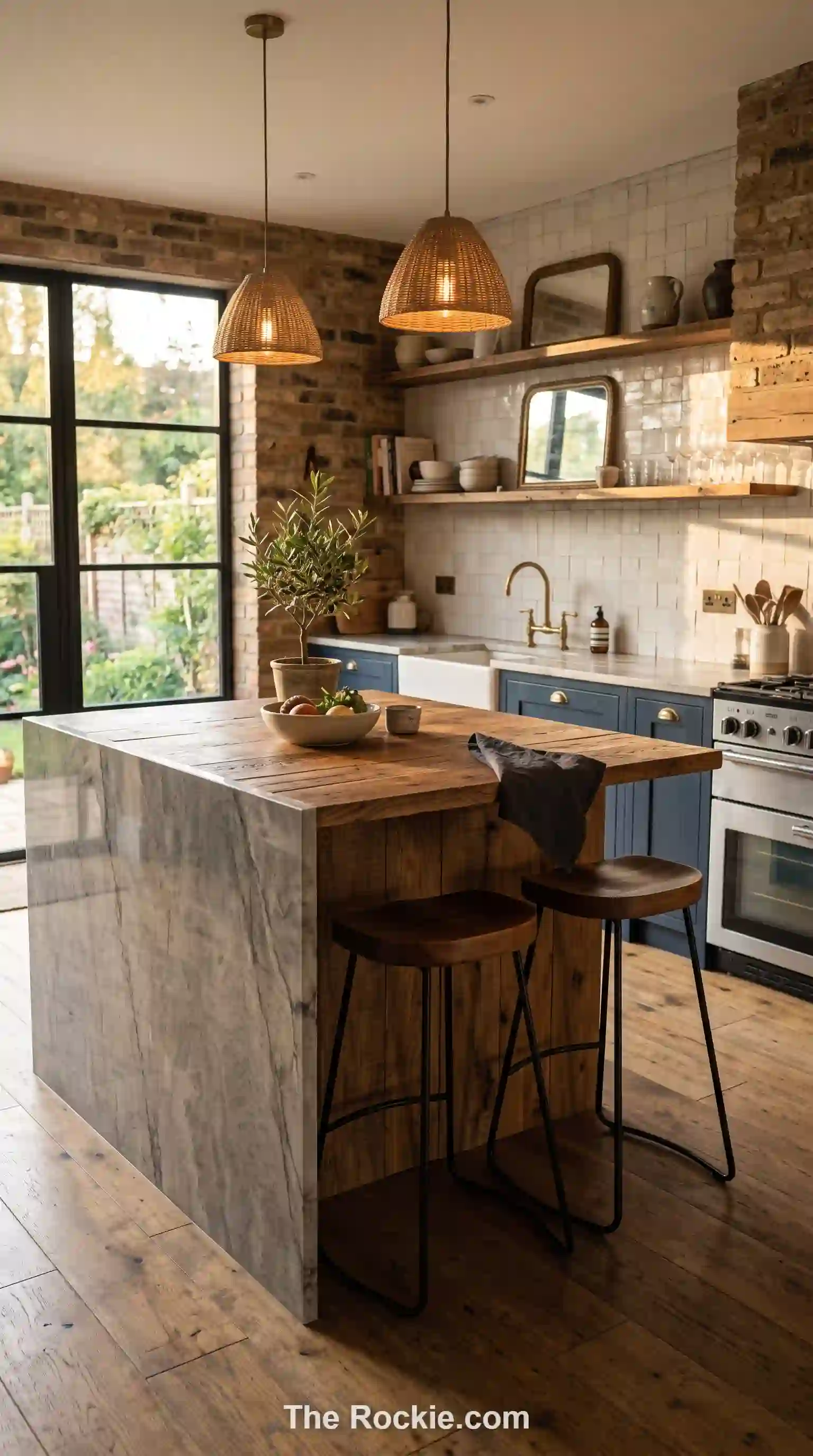
There’s something grounding about mixing raw wood with a polished stone waterfall edge — it keeps a kitchen from feeling too slick or showroom-perfect. Reclaimed timber on the surface, paired with stone cascading down the sides, gives you two textures working together instead of competing. This combination ages well, too; wood picks up character over the years instead of just wearing out, which is part of the appeal for anyone who wants their kitchen to feel more collected than curated. It’s a strong choice if your home leans toward farmhouse, cabin, or anything with a little more soul than a strict modern build.
[NEW_IMAGE_PROMPT: Rustic-modern kitchen photograph featuring a waterfall island combining reclaimed wood countertop with polished stone side panels, warm golden hour lighting through windows, natural textures, cozy farmhouse-meets-contemporary style, 4k, photorealistic]
6. High-Gloss for a Futuristic Feel
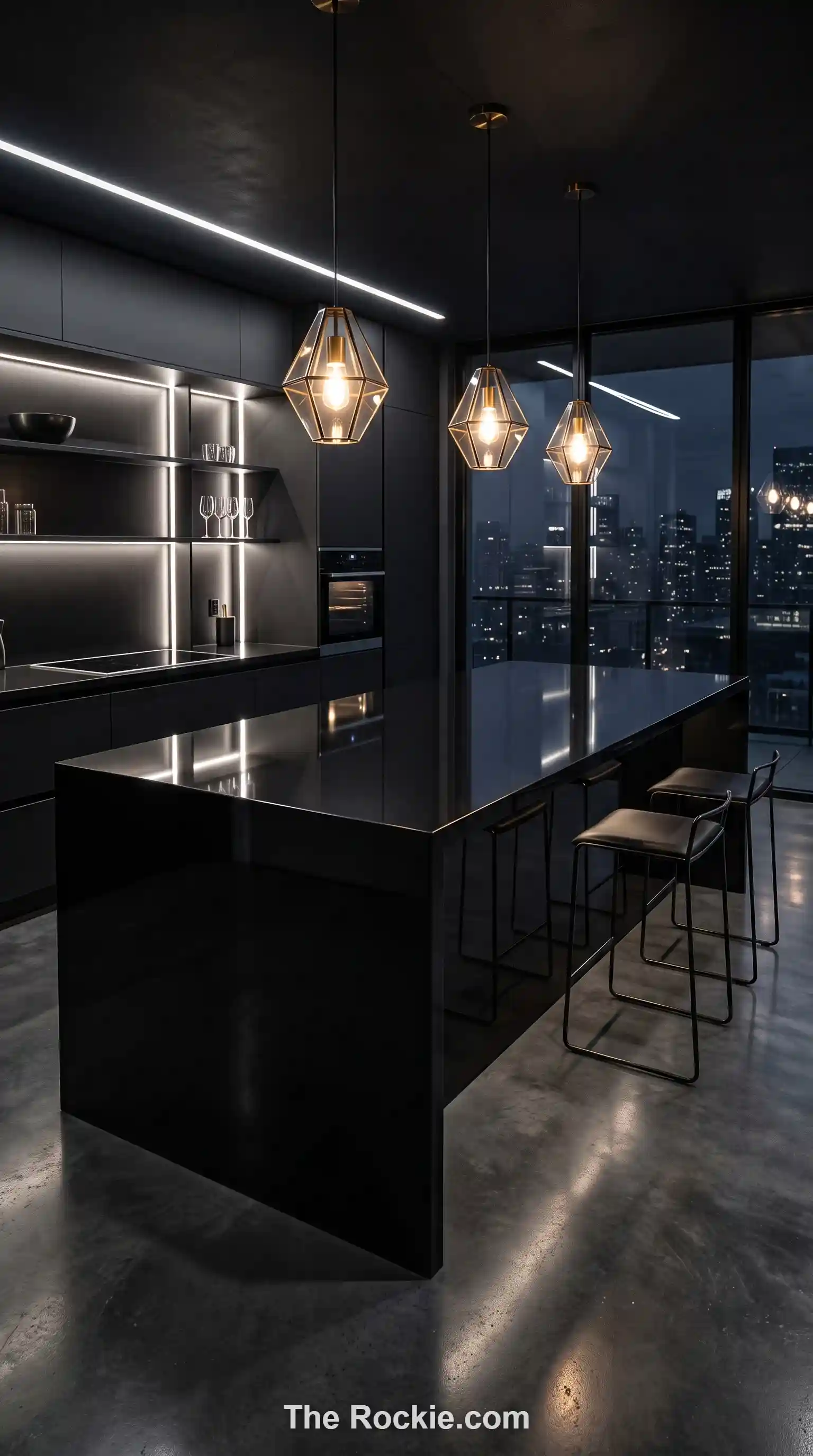
If your kitchen leans contemporary already, a high-gloss waterfall finish pushes it further into that sleek, almost showroom territory. The reflective surface bounces light around the room, which can make even a modestly sized kitchen feel larger and brighter. Maintenance is refreshingly low — smudges and spills lift off with a wipe, no scrubbing required. The trade-off is that fingerprints and water spots show up more visibly than on matte finishes, so it’s worth considering how much daily traffic your island sees. For anyone chasing a polished, magazine-ready look, though, this is one of the fastest ways to get there.
[NEW_IMAGE_PROMPT: High-gloss black waterfall kitchen island reflecting overhead pendant lights, ultra-modern kitchen interior, mirror-like polished surface, night-time ambient lighting, futuristic architectural photography, dramatic reflections, 4k]
7. Industrial Edge With Raw Materials
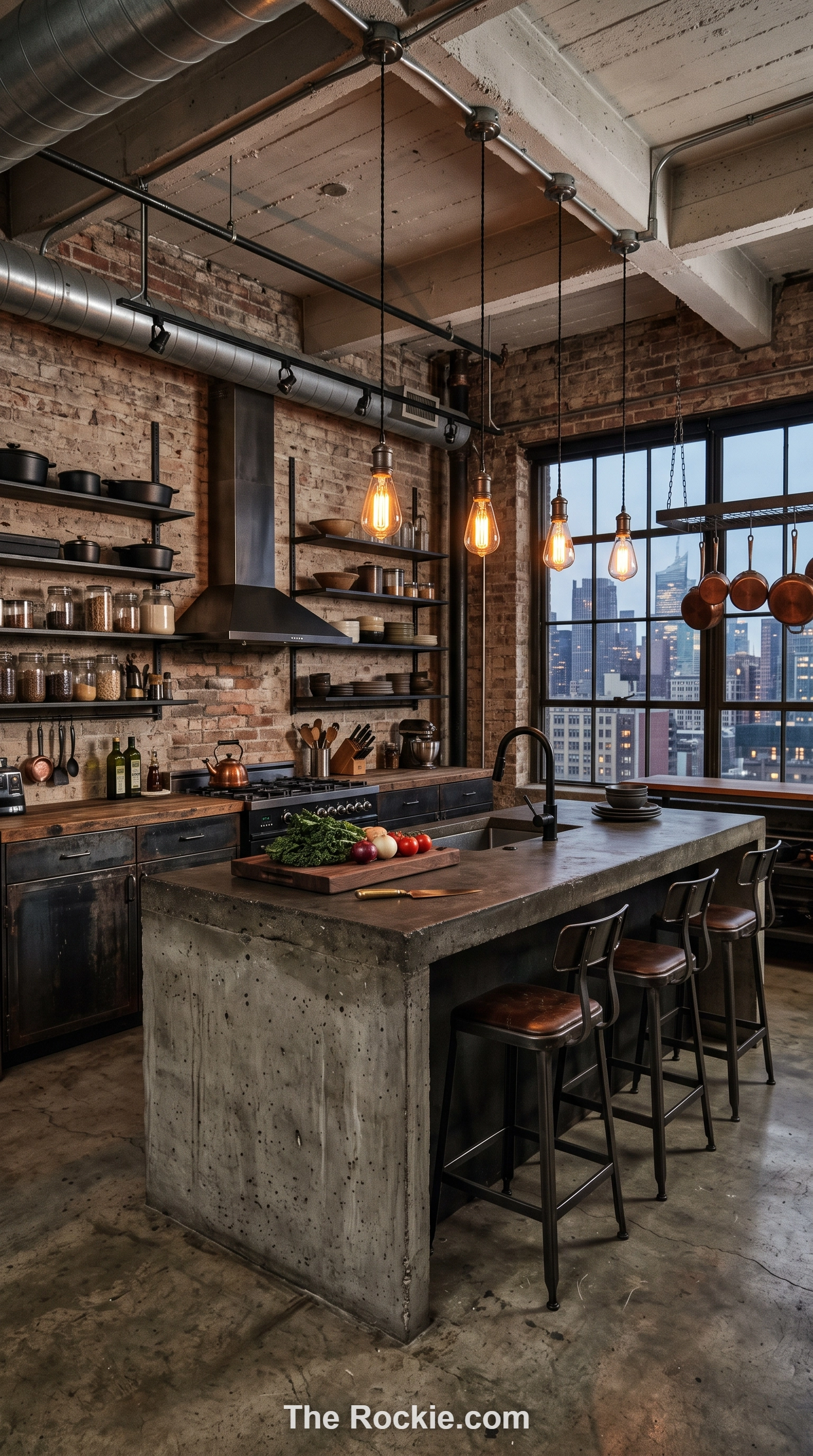
Pair exposed metal, poured concrete, and a smooth waterfall countertop, and you get a kitchen that feels more like a converted warehouse loft than a traditional home. This combination leans into imperfection — visible texture in the concrete, a bit of patina on the metal accents — while the continuous countertop keeps things from feeling too rough around the edges. It’s a favorite for open-concept city apartments and anyone who wants their kitchen to feel a little tougher, more architectural, less precious. Despite the raw materials, these surfaces are built to take a beating, which makes the look as practical as it is striking.
[NEW_IMAGE_PROMPT: Industrial-style kitchen photograph with concrete waterfall island edge, exposed black metal shelving, Edison bulb pendant lights, urban loft interior, moody atmospheric lighting, gritty architectural photography, 4k]
8. Marble for Timeless Luxury
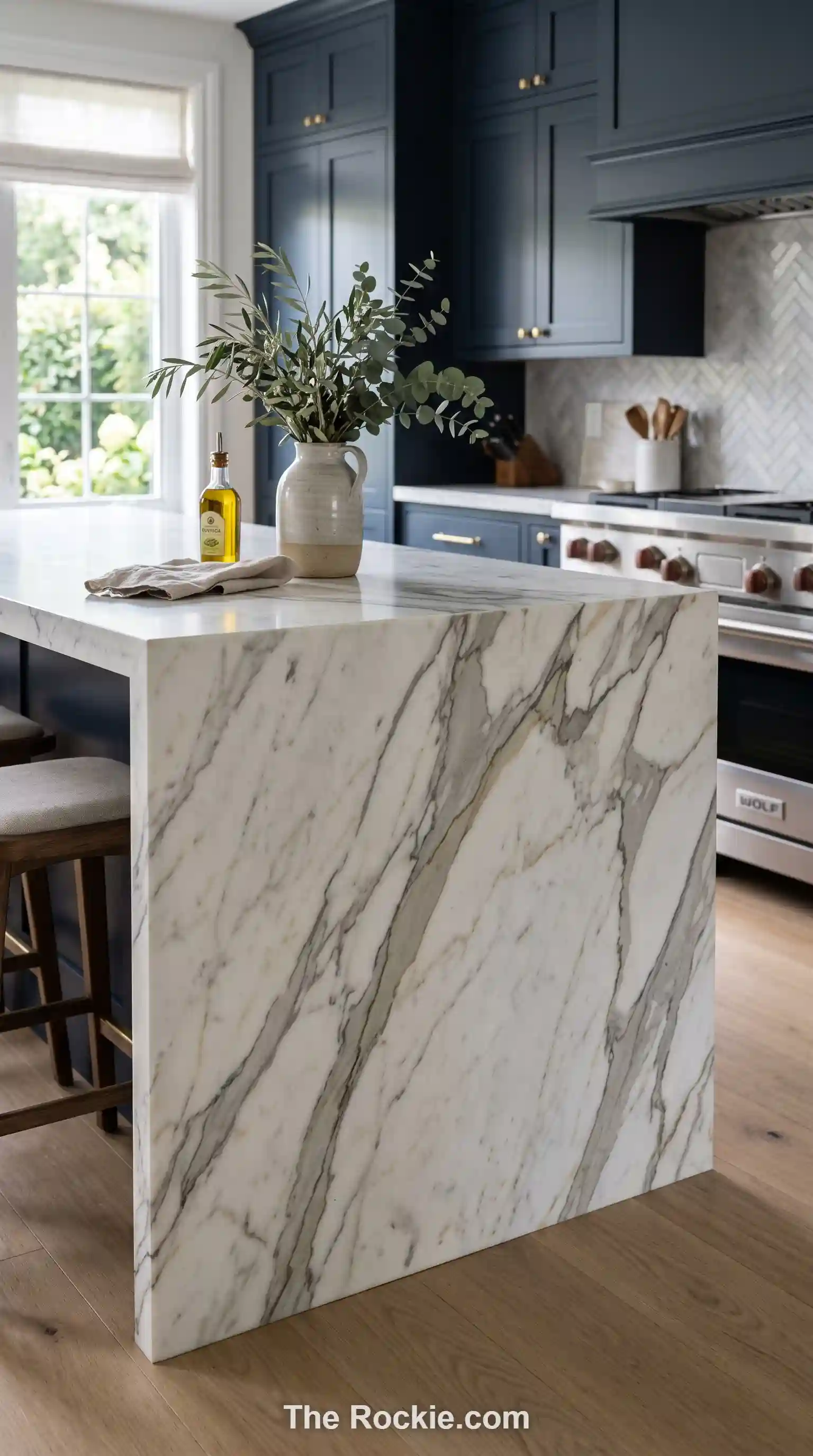
Marble has been the go-to for elegant kitchens for centuries, and the waterfall treatment only amplifies that. The natural veining running down the side of the island turns the countertop into something closer to art than a work surface. It handles heat impressively well, which chefs and home cooks alike appreciate, and no two slabs look exactly alike, so your kitchen ends up with a detail that’s genuinely one of a kind. Yes, it requires a bit more upkeep than engineered surfaces, but for many homeowners, that trade is worth it for the payoff in sheer visual impact.
[NEW_IMAGE_PROMPT: Elegant close-up photograph of white Calacatta marble waterfall kitchen island, dramatic natural veining flowing down the edge, soft morning light, luxury gourmet kitchen setting, fine architectural photography, 4k, richly detailed]
9. Compact Waterfall Islands for Smaller Kitchens
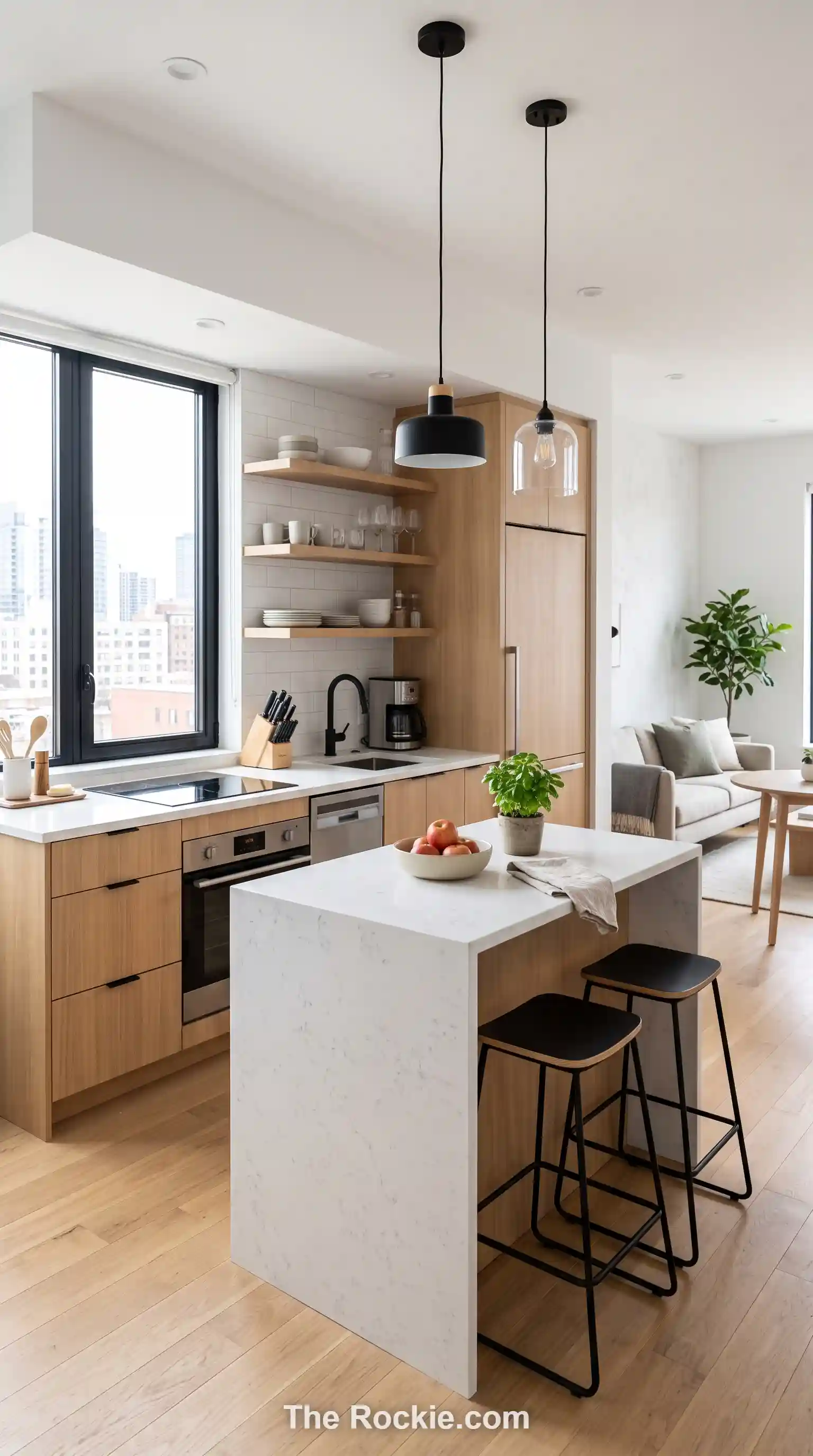
You don’t need a sprawling floor plan to pull off this look. A compact waterfall island proves the design scales down just as gracefully as it scales up, giving smaller kitchens extra prep space and storage without eating up the room. This is especially useful in city apartments and starter homes, where every square foot has to earn its place. The continuous edge still delivers that polished, custom feel — it just does it in a smaller footprint, which makes it one of the more practical entries on this list for anyone working with a tighter layout.
[NEW_IMAGE_PROMPT: Compact modern kitchen photograph featuring a small waterfall-edge island, efficient space-saving layout, bright airy studio apartment kitchen, natural window light, clean minimalist styling, architectural photography, 4k]
10. Multi-Function Islands Built for Real Life
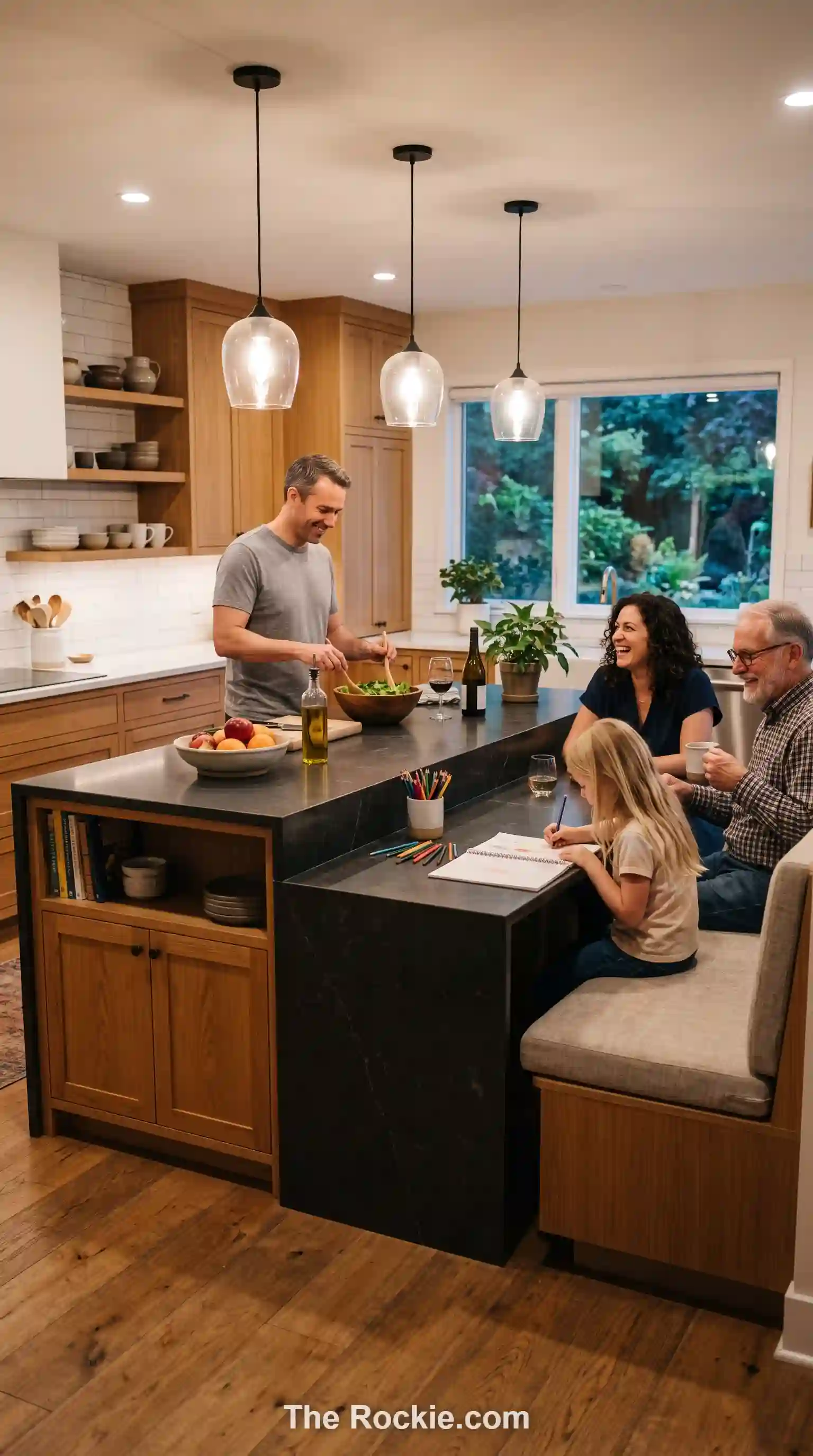
For households where the island does everything — homework station, wine bar, breakfast counter, prep zone — a multi-function waterfall design earns its keep. The same continuous surface that flows into the sides can also wrap around built-in storage, a cooktop, or bar seating, so the whole thing reads as one cohesive piece instead of a patchwork of add-ons. This is the island for people who actually live in their kitchens rather than just cooking in them occasionally. It takes more planning upfront, but the payoff is a space that adapts to whatever the day throws at it.
[NEW_IMAGE_PROMPT: Multi-functional kitchen island photograph showing waterfall countertop flowing into built-in seating and storage, family gathered casually around island, warm inviting lighting, lifestyle interior photography, candid composition, 4k]
11. Family-Friendly, Rounded Edges
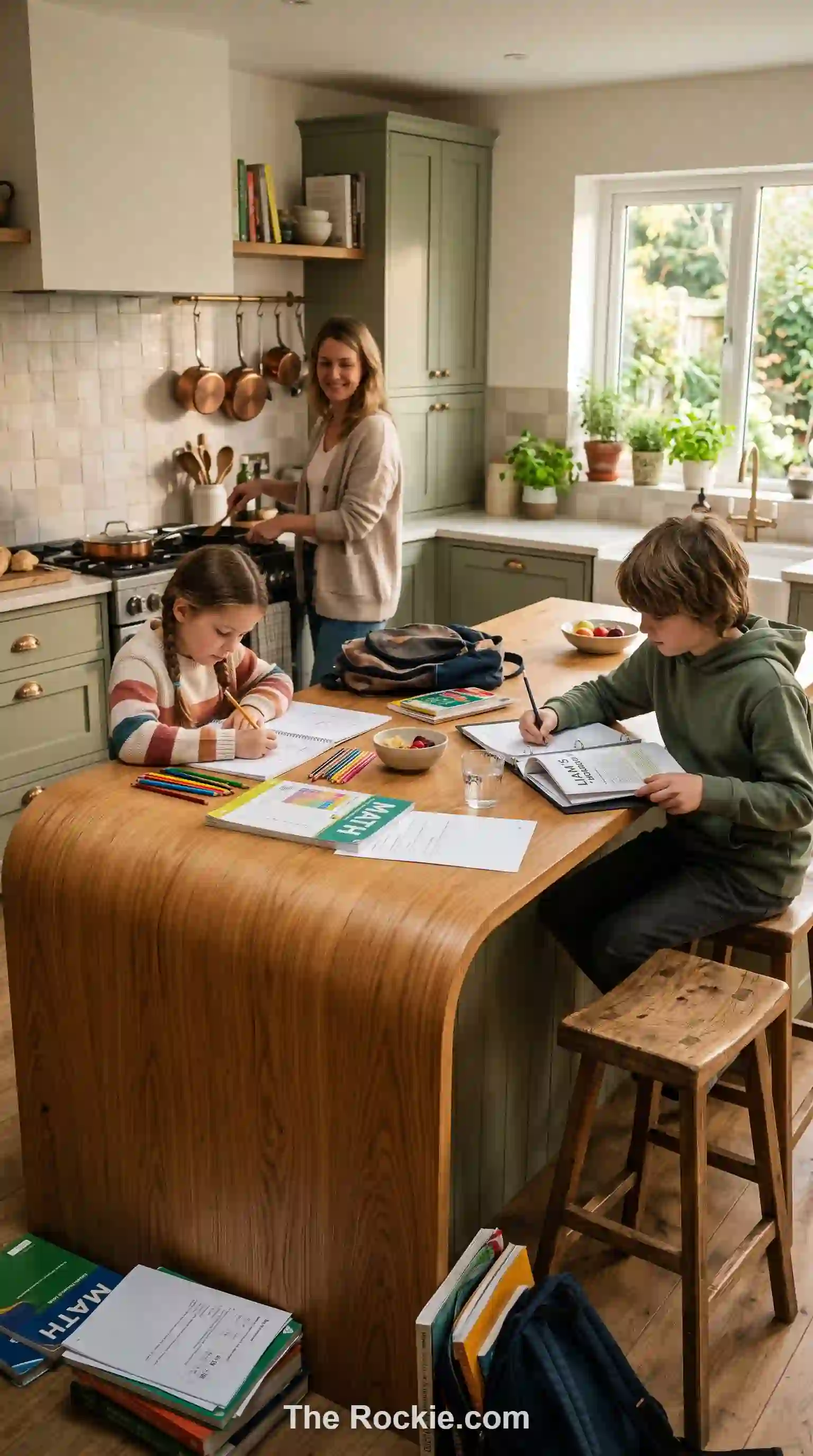
Safety doesn’t have to mean sacrificing style. A family-oriented waterfall island softens the transition with rounded corners and a continuous surface that’s easy to wipe clean after every spill, art project, or science-fair volcano. The generous seating area turns the island into the actual gathering spot for the household — the place where homework gets done and snacks get eaten while dinner’s cooking. It’s a design that quietly prioritizes the people using it every day over pure visual drama, which is exactly why it tends to be the busiest spot in the house.
[NEW_IMAGE_PROMPT: Warm lifestyle photograph of a family-friendly kitchen island with softly rounded waterfall edge, children doing homework at the counter, cozy afternoon light, candid documentary-style interior photography, natural color grading, 4k]
12. An Integrated Sink for a Cleaner Look
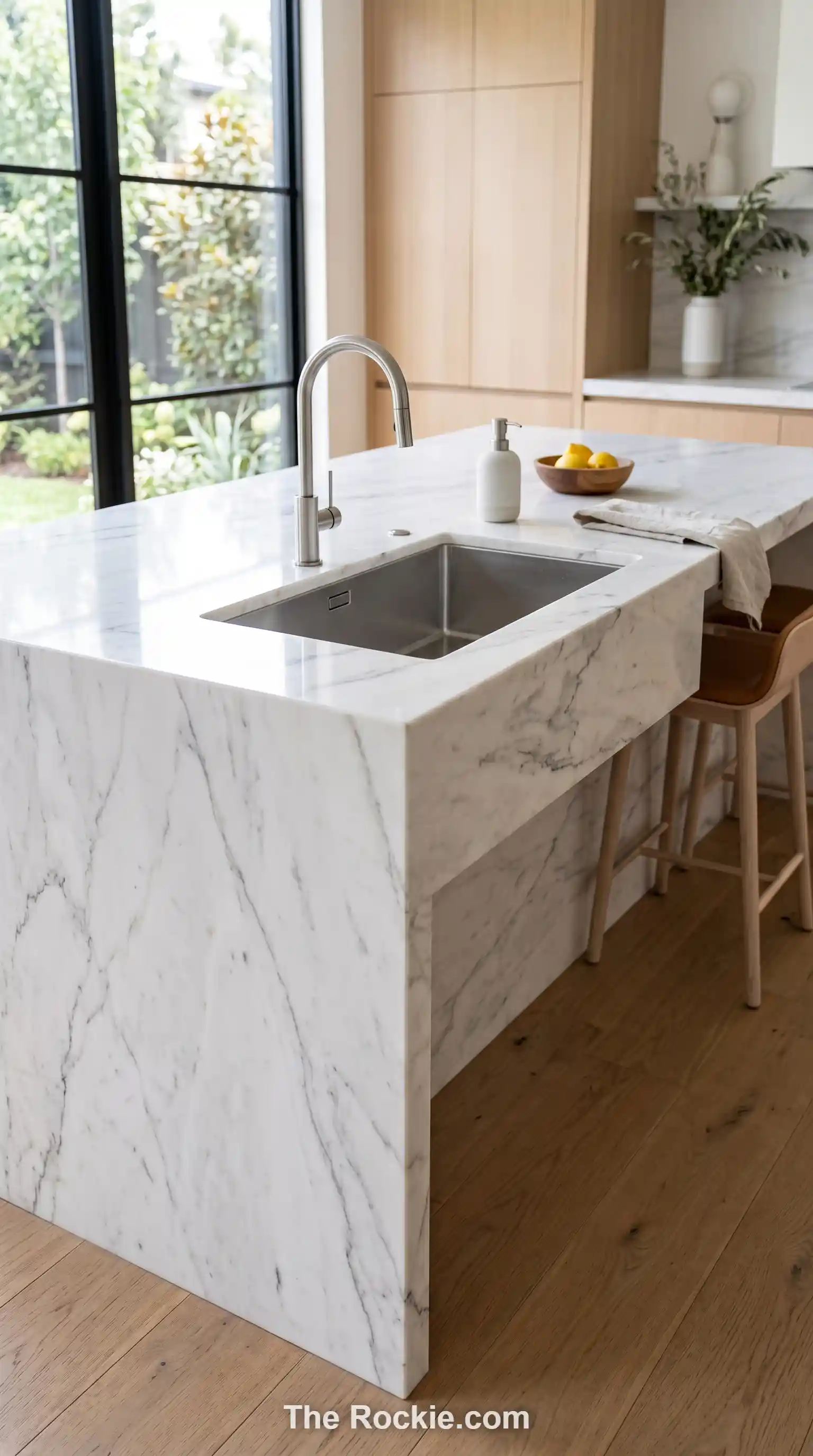
Dropping the sink directly into the waterfall countertop eliminates one more seam, one more spot for grime to collect, and one more visual interruption. The whole island reads as a single sculpted piece, with the sink feeling almost carved out rather than installed. Beyond the aesthetics, it genuinely speeds up the rhythm of cooking — less shuffling between separate zones, more of a continuous flow from prep to cleanup. It’s a small structural decision that ends up having an outsized effect on how the kitchen actually functions day to day.
[NEW_IMAGE_PROMPT: Sleek photograph of an integrated undermount sink seamlessly built into a waterfall kitchen island countertop, polished stone surface, minimal fixtures, bright natural lighting, high-end interior design photography, 4k]
13. Open-Concept Islands That Open Up the Room
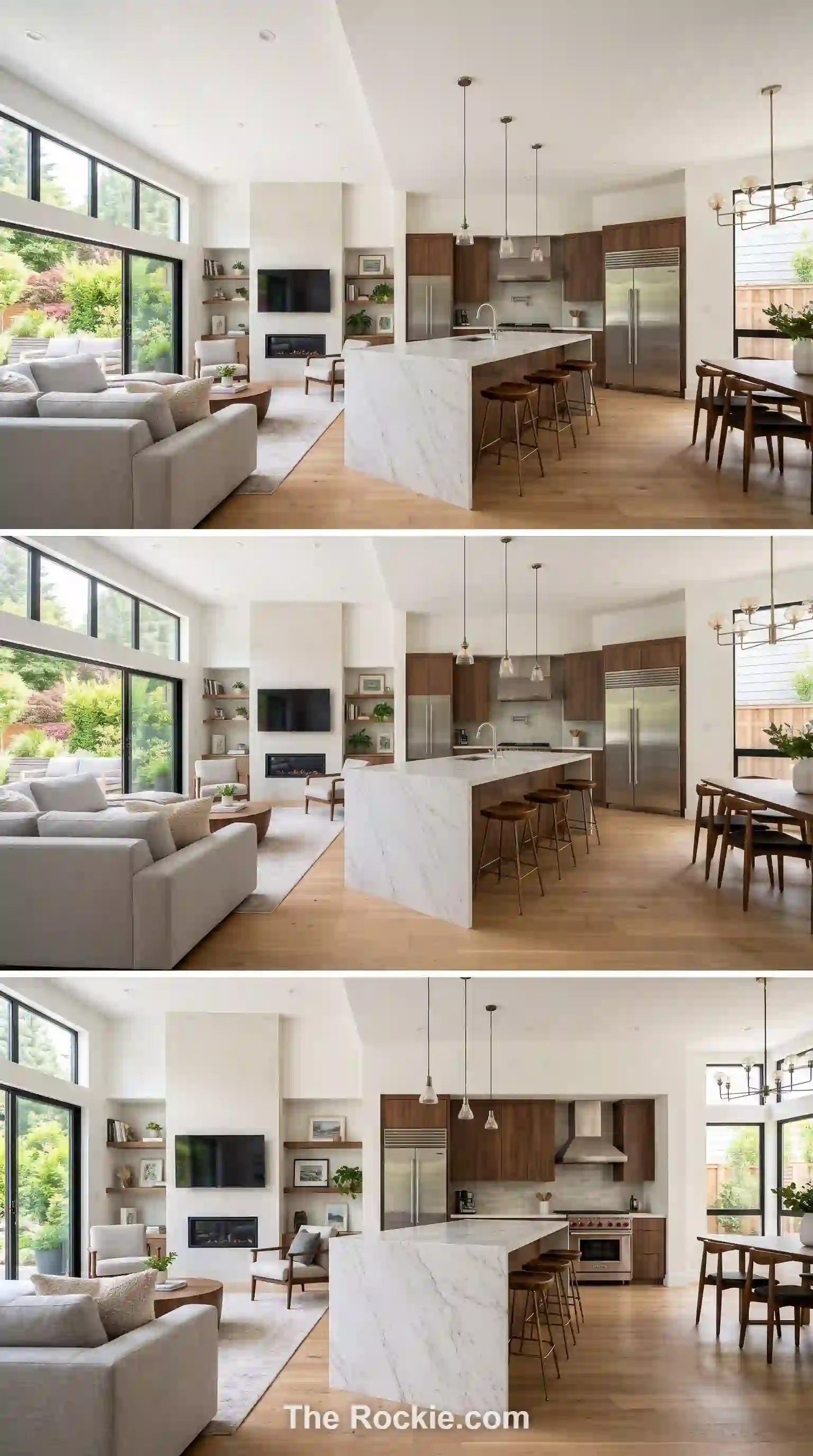
In open-concept homes, the island often becomes the dividing line — sometimes literally — between kitchen and living space. A waterfall design keeps that boundary from feeling harsh. The continuous surface reads as sculptural rather than like a wall, so conversation and sightlines flow right past it instead of stopping at it. This layout works especially well for anyone who wants to cook without missing what’s happening in the next room over, whether that’s kids doing homework or guests settled in on the couch.
[NEW_IMAGE_PROMPT: Bright open-concept living space photograph with waterfall kitchen island as central dividing element, seamless flow between kitchen and living room, large windows, contemporary architectural interior photography, airy natural light, 4k]
14. Mixed Materials for Texture and Depth
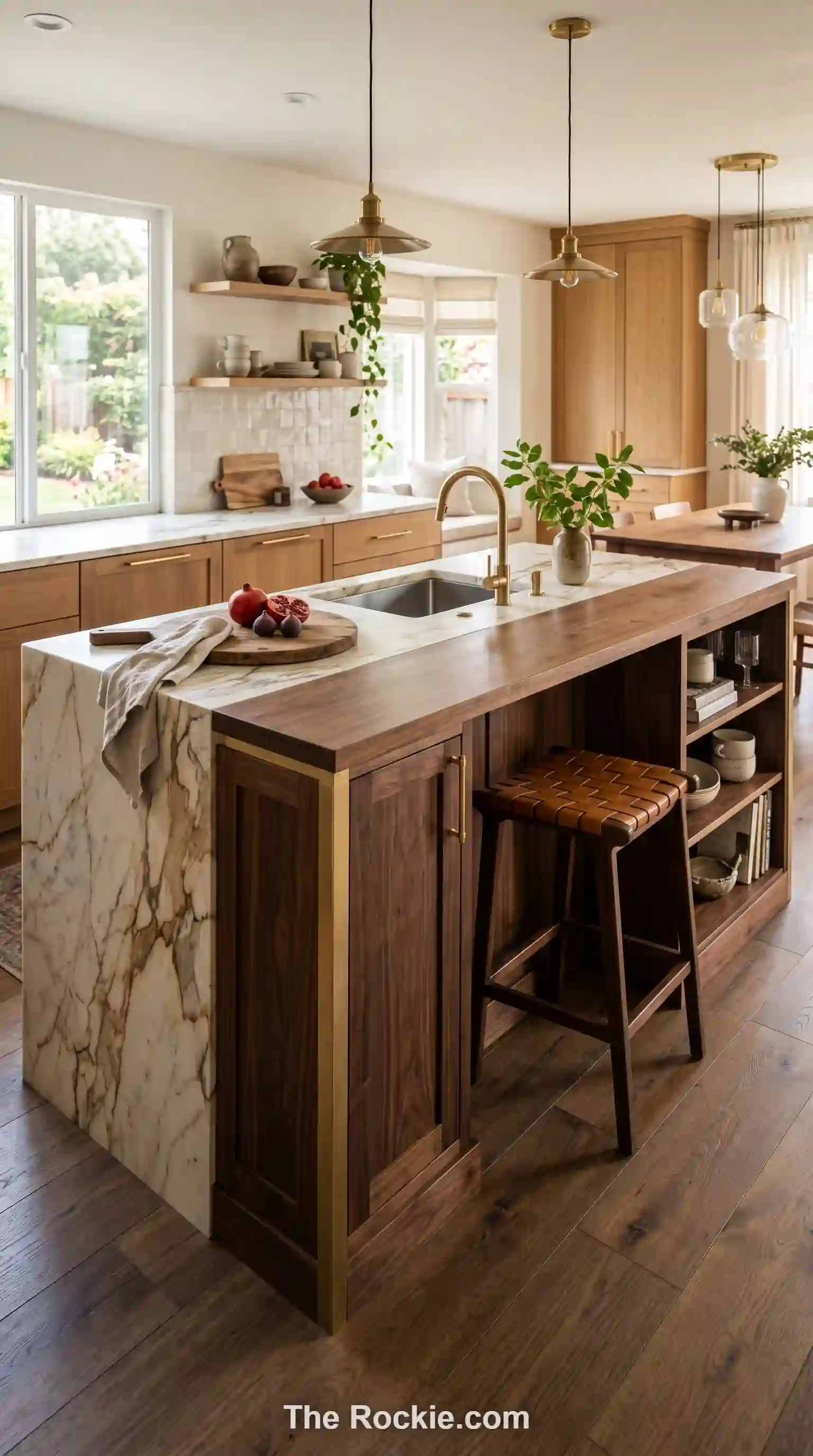
Combining stone, wood, and metal within a single waterfall island sounds like it could get busy fast, but done well, it creates depth instead of clutter. The trick is letting the waterfall edge unify everything — one continuous line running through multiple materials keeps the whole piece feeling intentional rather than mismatched. This approach rewards a closer look: from across the room it reads as one clean shape, but up close there’s texture and contrast that a single-material island just can’t offer.
[NEW_IMAGE_PROMPT: Detailed photograph of a mixed-material waterfall kitchen island combining wood, stone, and brushed metal accents, warm layered textures, artistic interior styling, natural side lighting, architectural digest photography, 4k]
15. Adaptable Islands for Busy Households
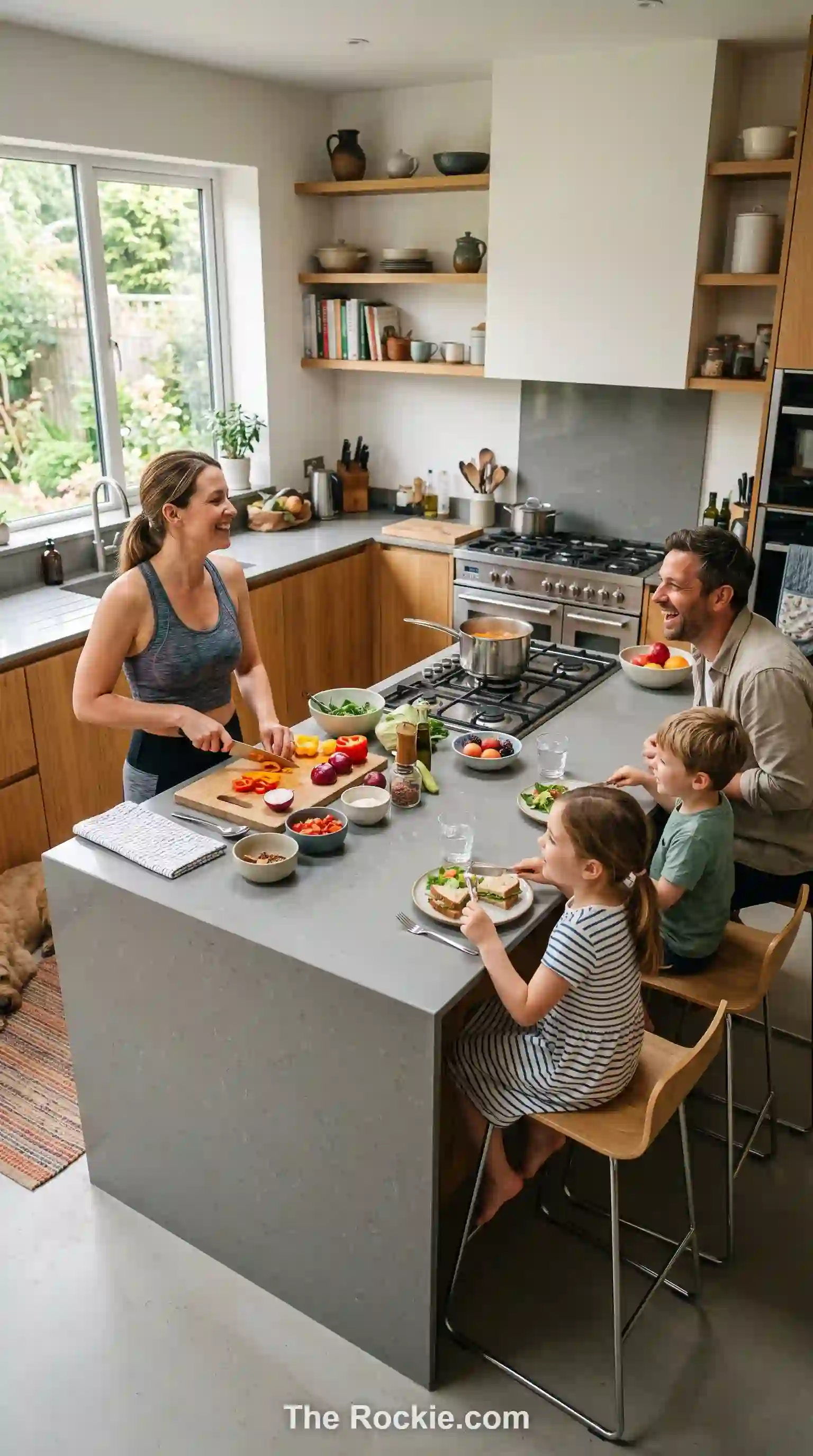
Some kitchens need to shape-shift throughout the day — prep station in the morning, homework zone by afternoon, dinner buffet by evening. A flexible waterfall island, built with a mix of open counter space, storage, and seating, handles all of it without feeling overdesigned for any single task. What makes it work is restraint: the design doesn’t try to be everything visually, just functionally, letting the clean waterfall line hold it all together no matter what’s happening on top of it.
[NEW_IMAGE_PROMPT: Dynamic lifestyle photograph of a versatile waterfall kitchen island transitioning from meal prep to casual dining setup, natural candid lighting, modern family kitchen, documentary-style interior photography, 4k]
16. The Ultimate Seamless Edge
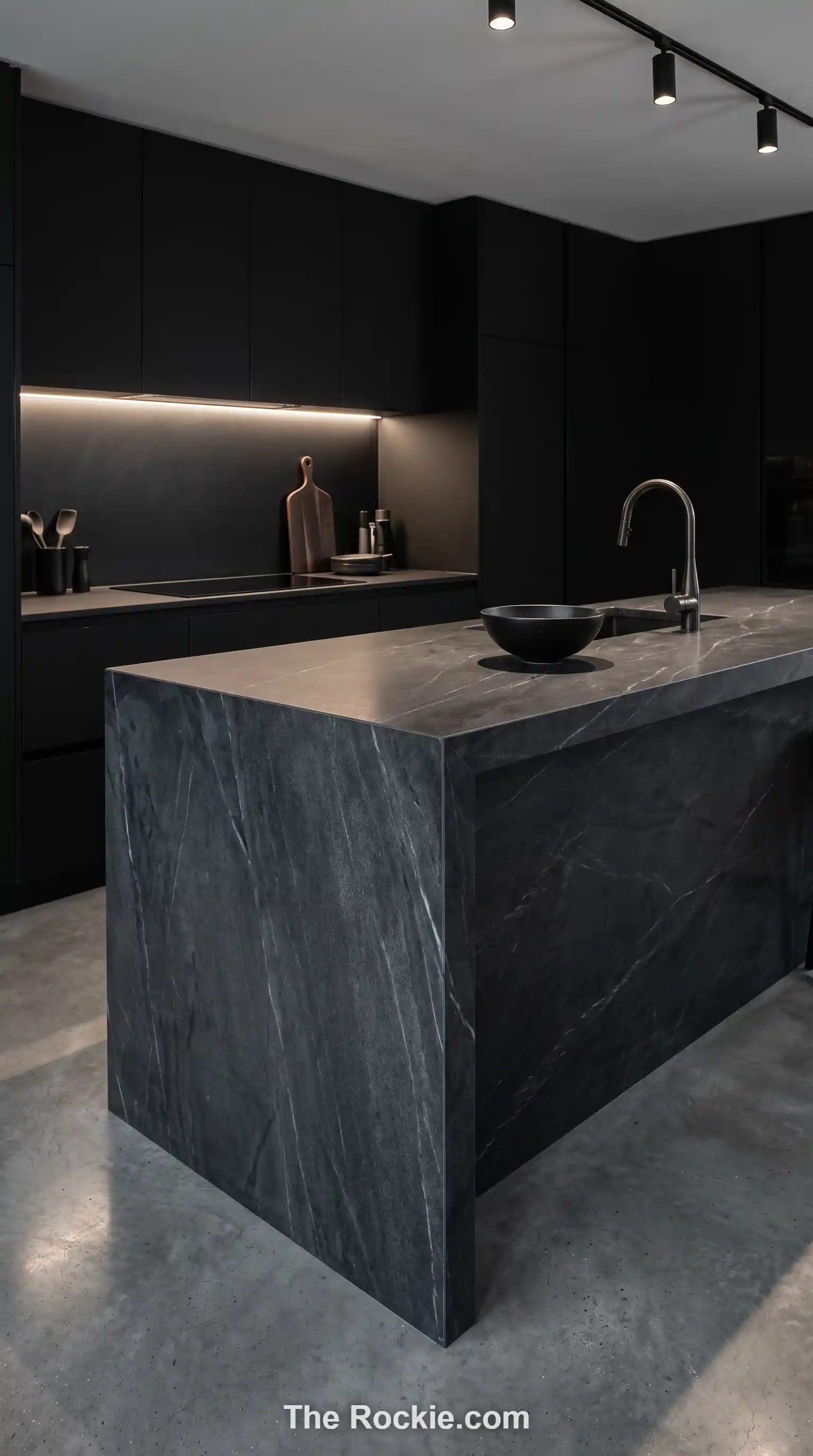
For homeowners who want the waterfall look taken to its purest extreme, this is it — a countertop that flows into the sides with zero visible seam, creating something closer to a single sculpted block than an assembled piece of furniture. It’s a technically demanding installation (getting that seam invisible takes real skill from the fabricator), but the payoff is a surface that’s almost impossible to look away from. It’s also one of the easiest to keep clean, since there’s no gap or edge for crumbs and grease to hide in.
[NEW_IMAGE_PROMPT: Dramatic photograph emphasizing a perfectly seamless waterfall kitchen island edge, monolithic stone form, minimal styling, museum-quality lighting, ultra-clean architectural photography, 4k, sharp focus]
17. Organic Curves Instead of Sharp Lines
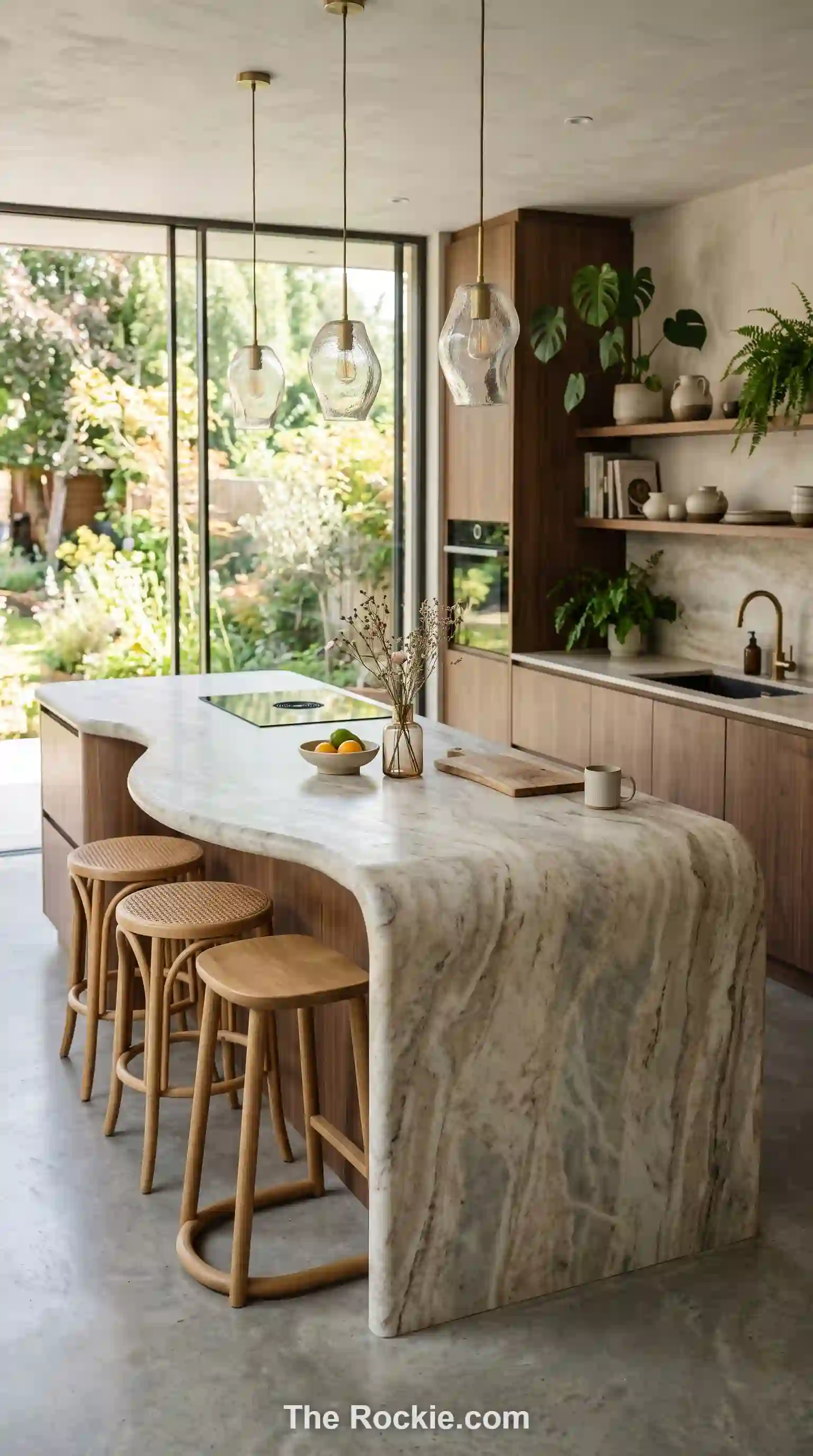
Not every waterfall island has to be a hard rectangle. Softer, contoured shapes bring a more organic feel into the kitchen, with edges that curve rather than cut. This style tends to feel calmer and more inviting than its angular counterparts, and it’s genuinely more comfortable to move around — fewer sharp corners to navigate in a busy kitchen. The continuous surface still delivers on easy cleaning, just with a shape that feels more like it grew there than got installed.
[NEW_IMAGE_PROMPT: Organic-shaped waterfall kitchen island with soft flowing curves, contoured stone edges, biophilic modern kitchen design, natural light filtering through, artistic architectural photography, calming atmosphere, 4k]
18. Statement Islands Built to Impress
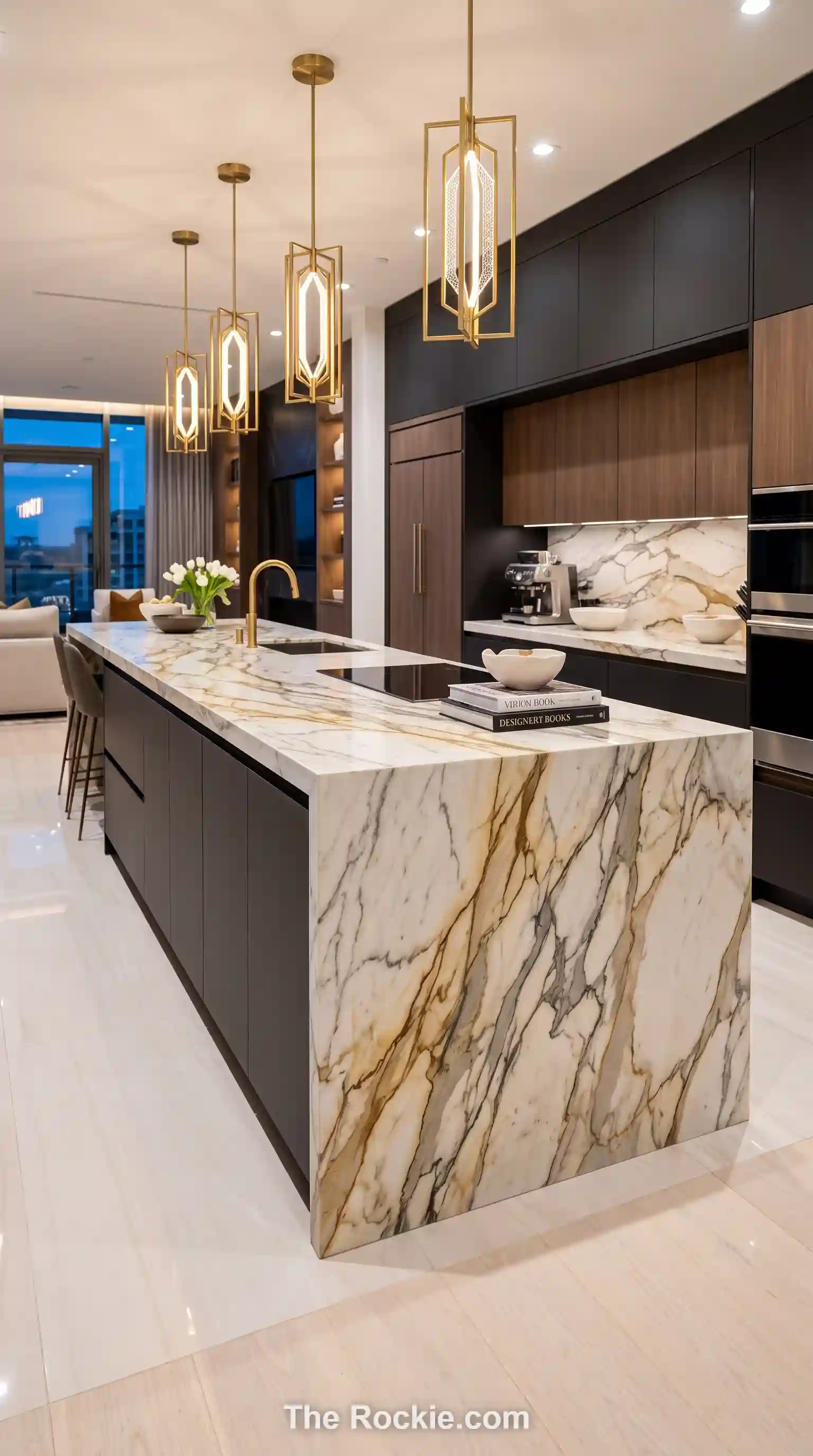
Sometimes you just want the island to be the showstopper. A statement waterfall island leans into premium materials — think book-matched stone or richly patterned quartz — paired with meticulous detailing that turns a functional surface into a genuine centerpiece. This is the version for households that entertain often, where the island isn’t just a workspace but a stage. It’s not a subtle choice, and it isn’t trying to be.
[NEW_IMAGE_PROMPT: Luxurious photograph of a statement waterfall kitchen island with book-matched dramatic stone pattern, gold accent fixtures, opulent lighting, high-end designer kitchen, glossy magazine-style architectural photography, 4k]
19. Quiet, Understated Elegance
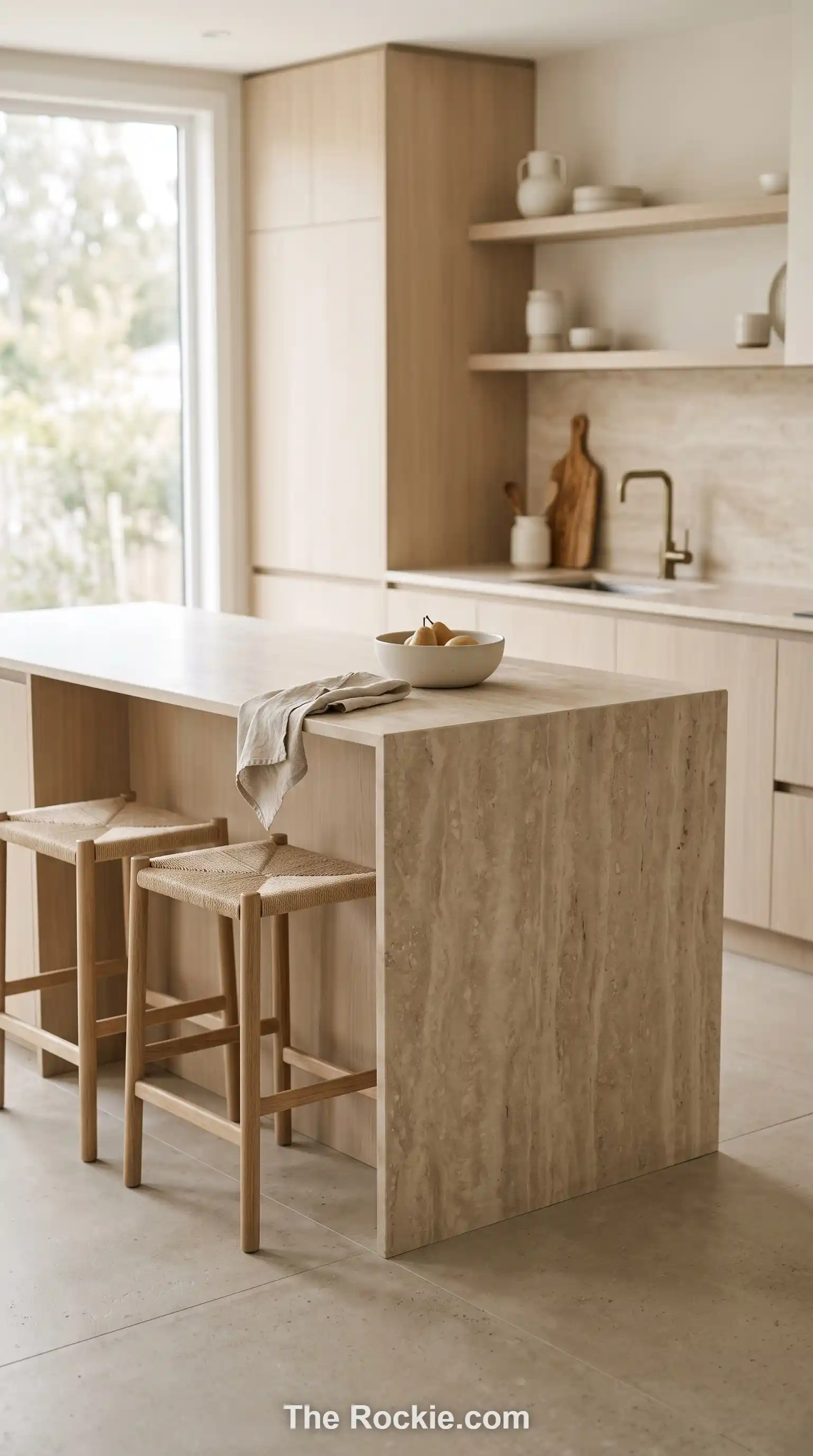
At the opposite end of the spectrum is the understated waterfall island — soft, muted tones, minimal detailing, and a design that lets the room’s natural light do most of the work. It’s an easy pairing with airy, open layouts, since nothing about the island competes with the space around it. This is the choice for anyone who wants their kitchen to feel serene rather than showy, where the waterfall edge is felt more than noticed.
[NEW_IMAGE_PROMPT: Soft muted photograph of an understated waterfall kitchen island in warm beige tones, minimalist cabinetry, gentle natural daylight, serene calming kitchen interior, editorial photography, soft focus background, 4k]
20. Modern Industrial, Refined
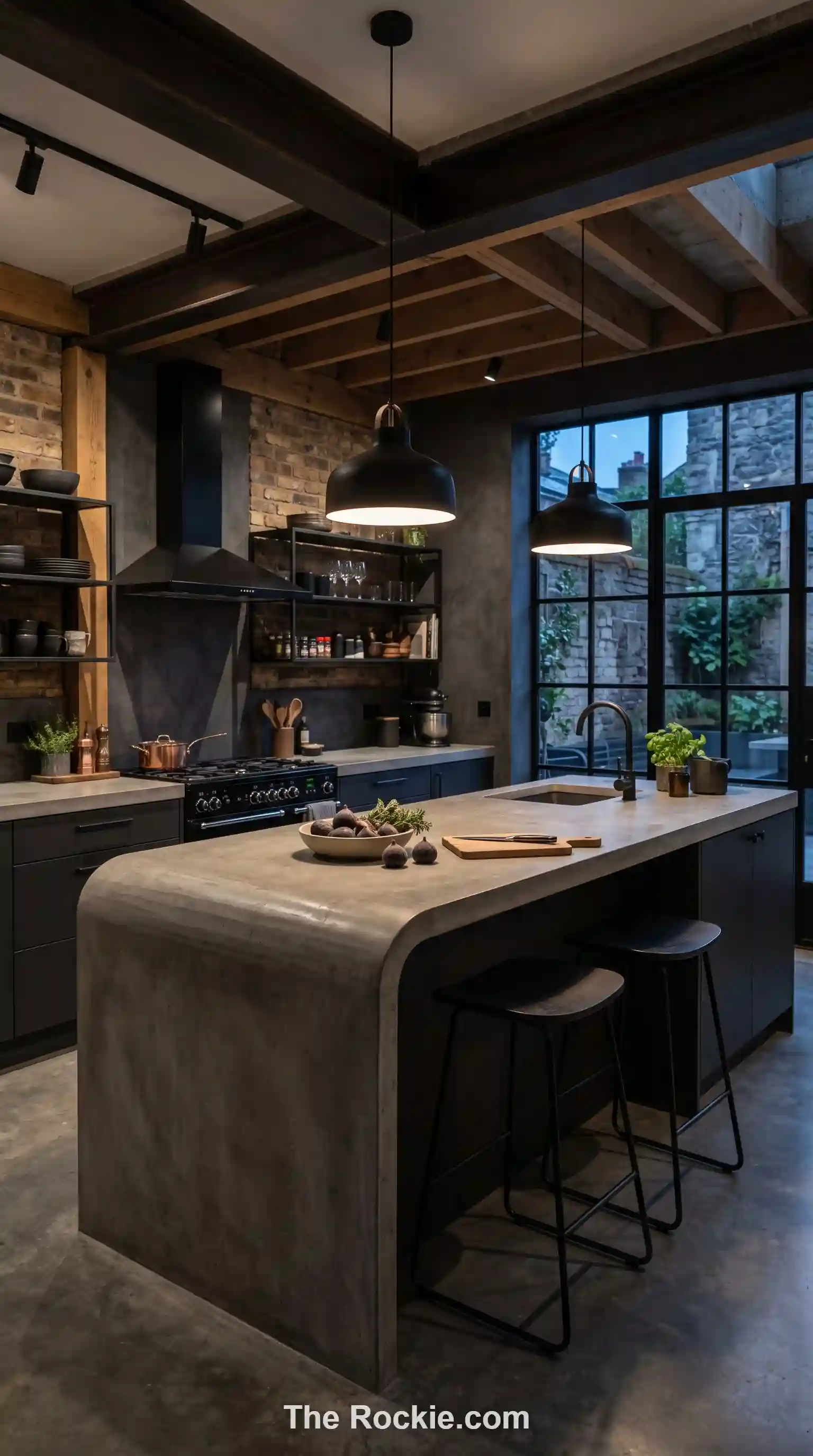
A step beyond the raw industrial look, this version pairs exposed structural details with a noticeably smoother, more polished countertop finish. Metal accents and concrete textures still bring the edge, but the waterfall surface itself feels more considered, less rough. It’s a good middle ground for anyone drawn to industrial style but not ready to commit to an entire loft-like aesthetic — durable, easy to maintain, and still visually bold.
[NEW_IMAGE_PROMPT: Refined industrial kitchen photograph with polished concrete waterfall island edge, matte black metal fixtures, structural exposed beams, moody yet elegant lighting, contemporary architectural photography, 4k]
21. Geometric Patterns for a Bolder Statement
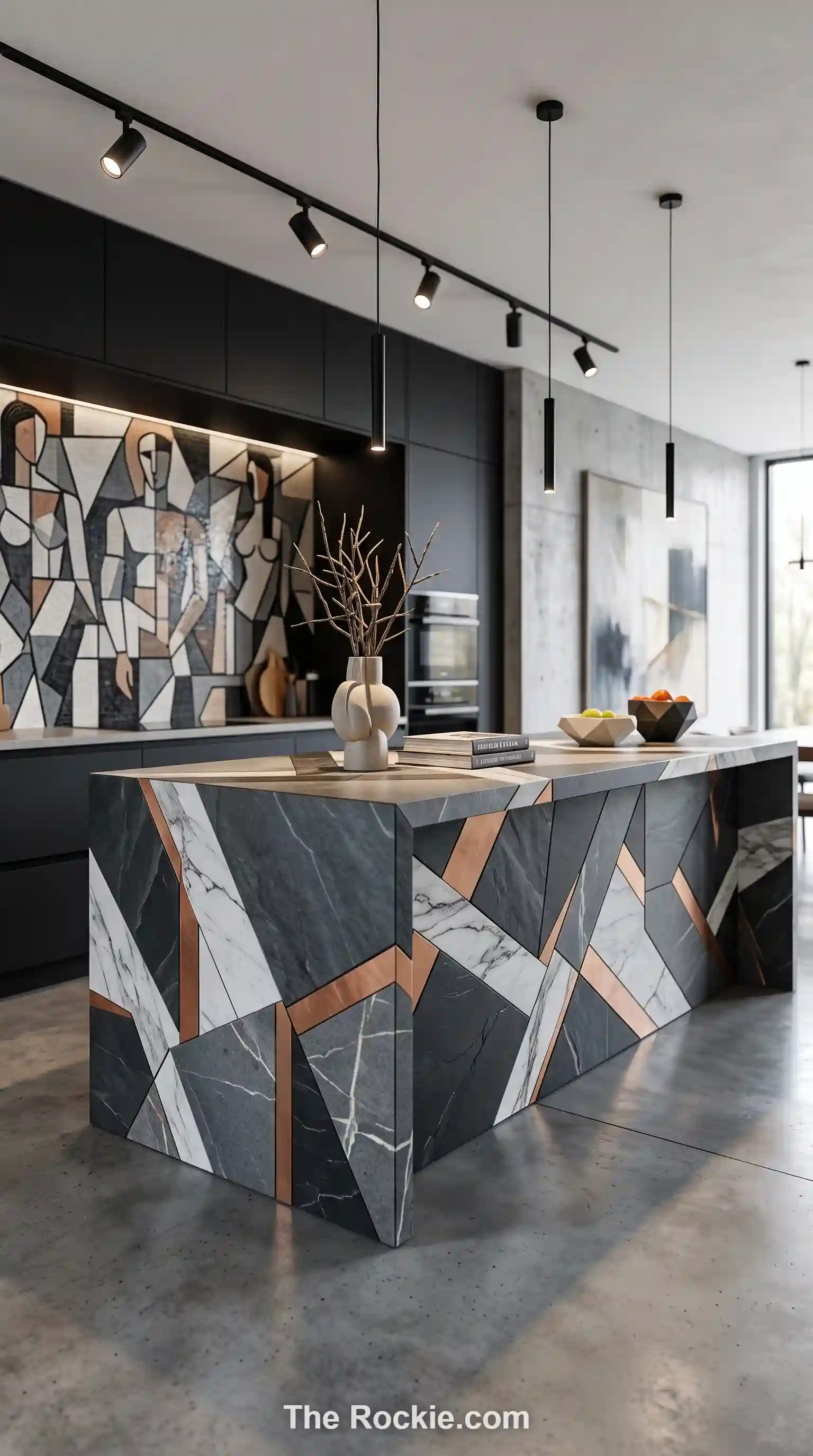
Angular, patterned stone brings graphic energy to the waterfall format, with crisp geometric lines running down the side of the island instead of a single continuous color. It’s a design that rewards a closer look and gives the kitchen a more artistic, gallery-like quality. The pattern does need to be planned carefully around the corner transition to keep the lines lining up, which is part of why this version tends to turn heads — it’s clearly custom, clearly intentional.
[NEW_IMAGE_PROMPT: Bold geometric-patterned waterfall kitchen island, angular stone inlay design, crisp architectural lines, gallery-style lighting, modern art-inspired kitchen interior, sharp editorial photography, 4k]
22. Timeless Classic Styling
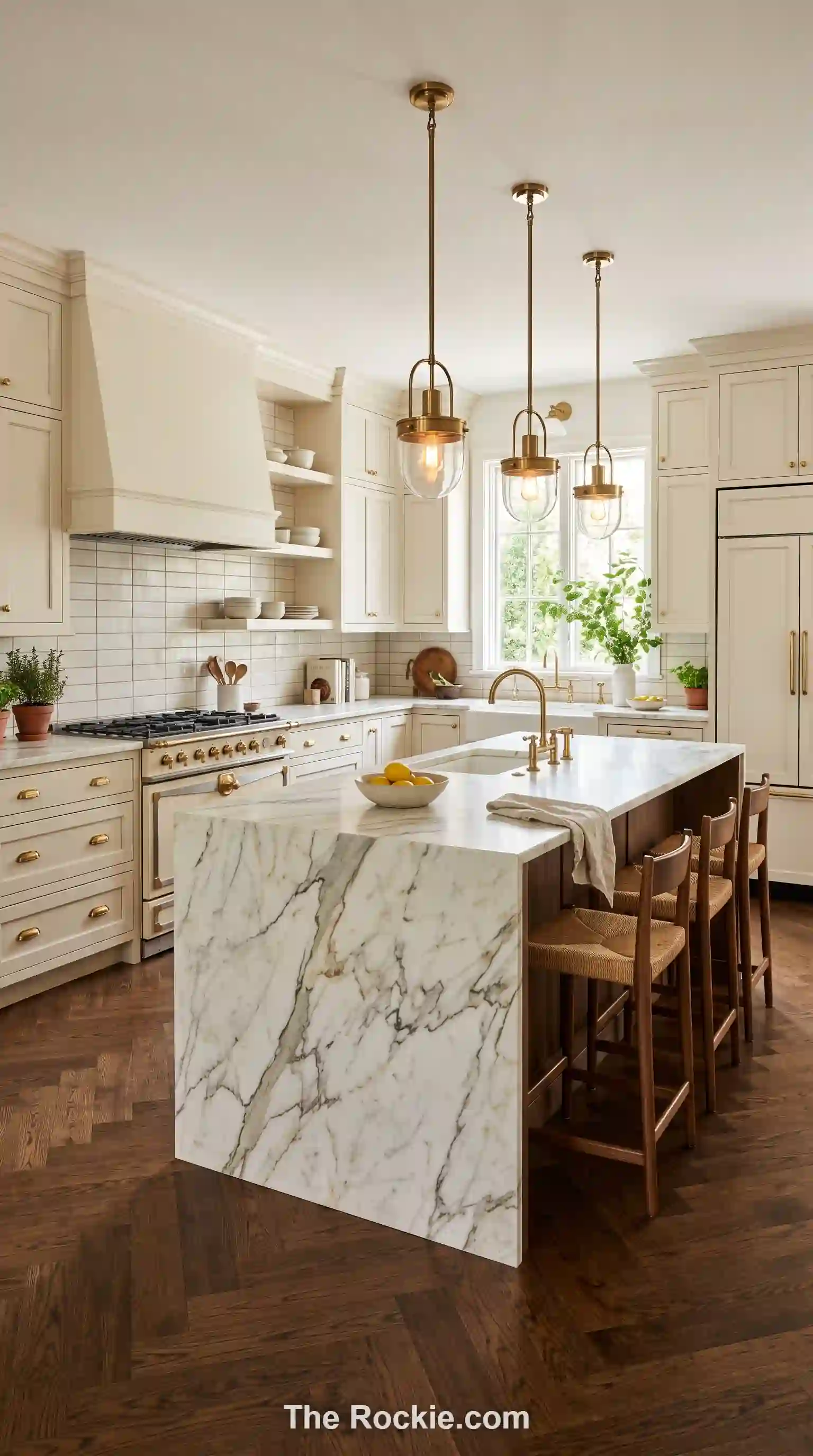
To close things out, there’s the classic approach — traditional cabinetry details and warm, familiar materials updated with a modern continuous countertop. It’s proof the waterfall trend doesn’t have to feel ultra-modern to work; it can just as easily soften into a more timeless kitchen without looking out of place. This is often the safest long-term choice for resale, since it blends contemporary function with a look that won’t feel dated in a decade.
[NEW_IMAGE_PROMPT: Timeless classic kitchen photograph with traditional cabinetry paired with a modern waterfall countertop island, warm inviting lighting, elegant transitional interior design, architectural digest style photography, 4k]
Final Thoughts
Twenty-two different takes on one idea, and still barely scratching the surface of what’s possible with a waterfall island. Whether you’re drawn to the quiet confidence of minimalist quartz, the warmth of rustic wood and stone, or the drama of a book-matched marble slab, the common thread is the same: a seamless edge that turns a countertop into a genuine architectural feature. Pick the direction that fits how your household actually uses the kitchen, and the rest of the design tends to fall into place around it.