
23+ Victorian Bathroom Decor Ideas that are Moody, Timeless and Gorgeous in 2026

I fell hard for Victorian bathrooms after gutting a 1901 rowhouse powder room and finding the original hex floor under three layers of vinyl — and I’ve been chasing that feeling ever since. The trick is that real Victorian style is not fussy, it’s layered: dark paint, honest materials, a little bit of drama, and one gleaming brass moment. Below are the ideas I actually use on clients, from twenty-minute swaps to full weekend projects, with the renter-friendly workarounds where they exist.
Victorian Bathroom Decor Ideas
1. Deep Green Paneled Walls with a Clawfoot Tub
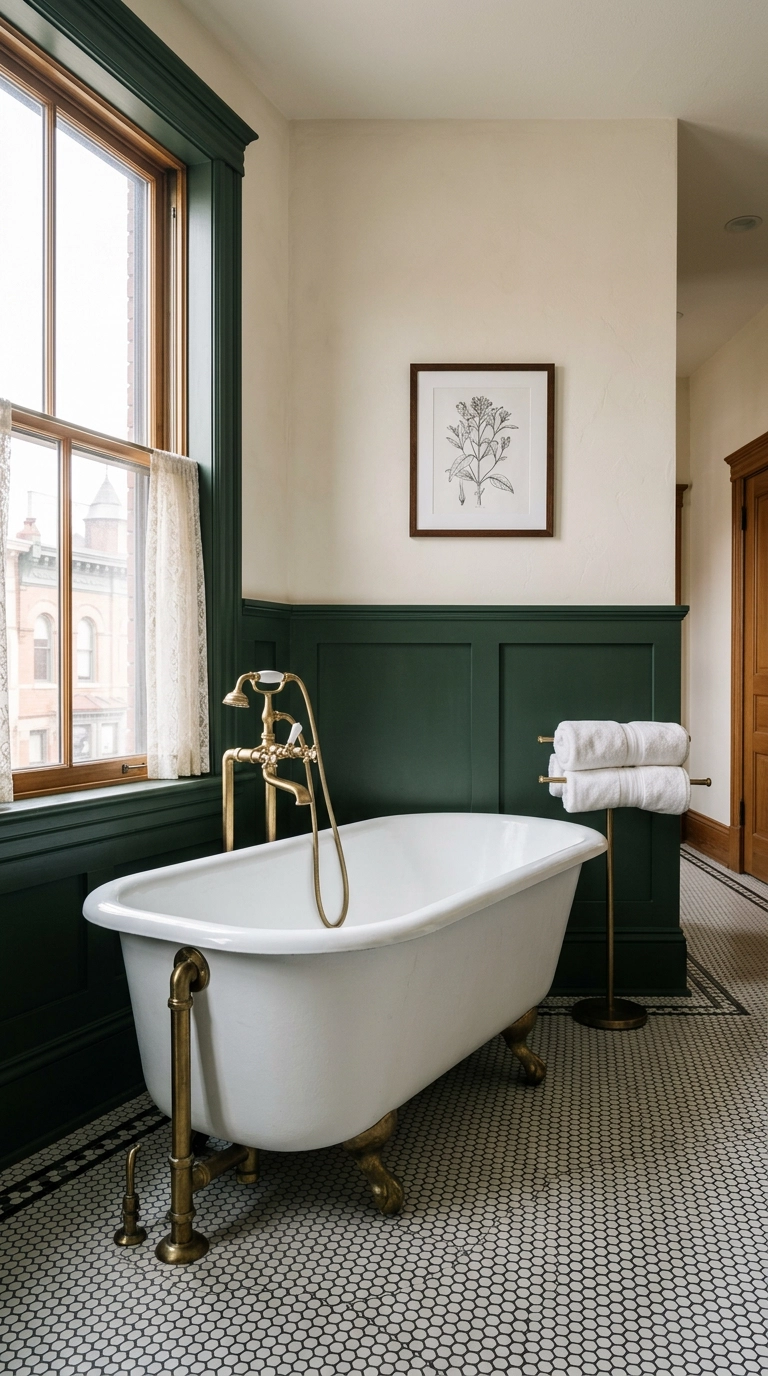
This is the single highest-impact Victorian move you can make, so I’m leading with it. Paint the lower two-thirds of the wall in something saturated like Farrow & Ball Green Smoke or Benjamin Moore Hunter Green, keep the top creamy, and let the tub be the white sculpture in the room.
2. Black and White Hexagon Floor Tile
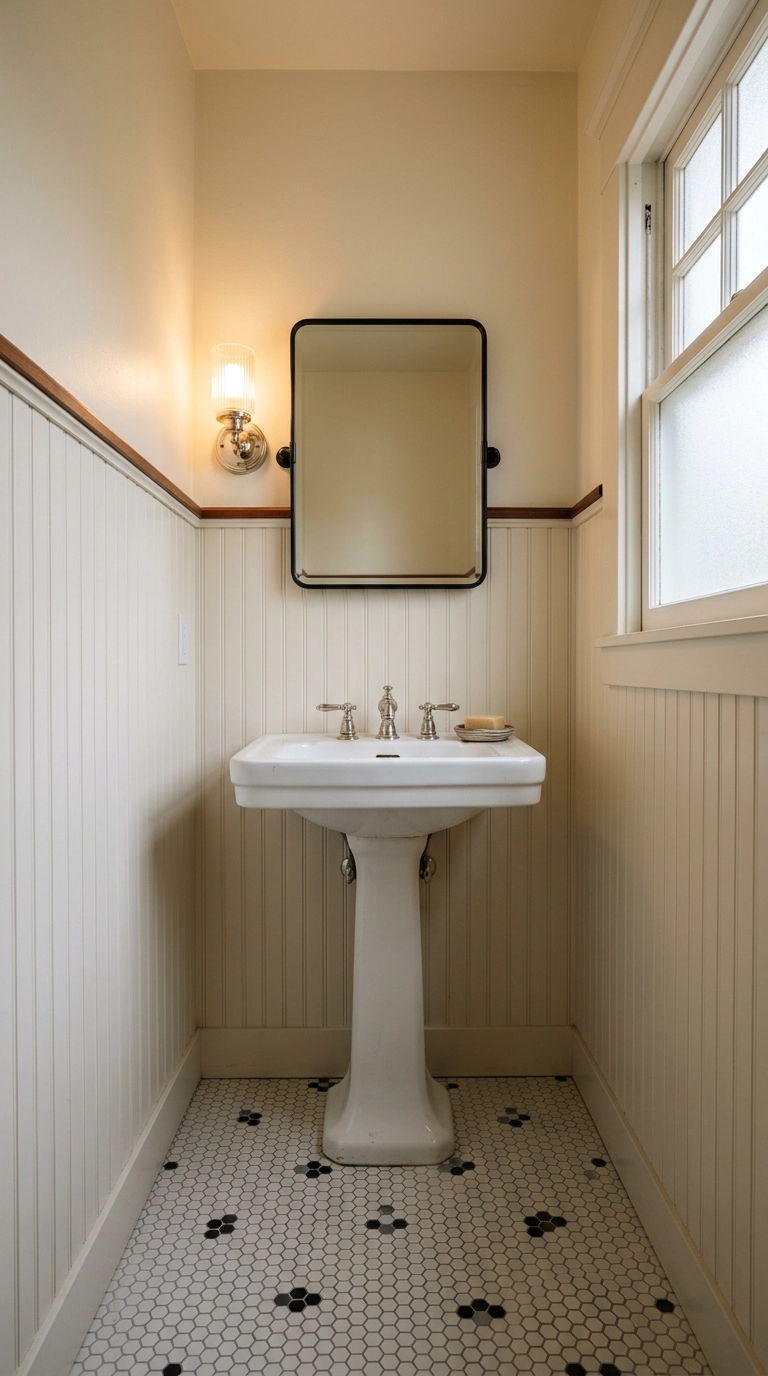
If I could only change one thing in a builder-grade bathroom to make it read Victorian, it would be the floor. Small-format hex in white with a scattered black accent is period-correct, cheap per square foot, and it makes even a 5×7 room look intentional.
3. William Morris-Style Dark Floral Wallpaper
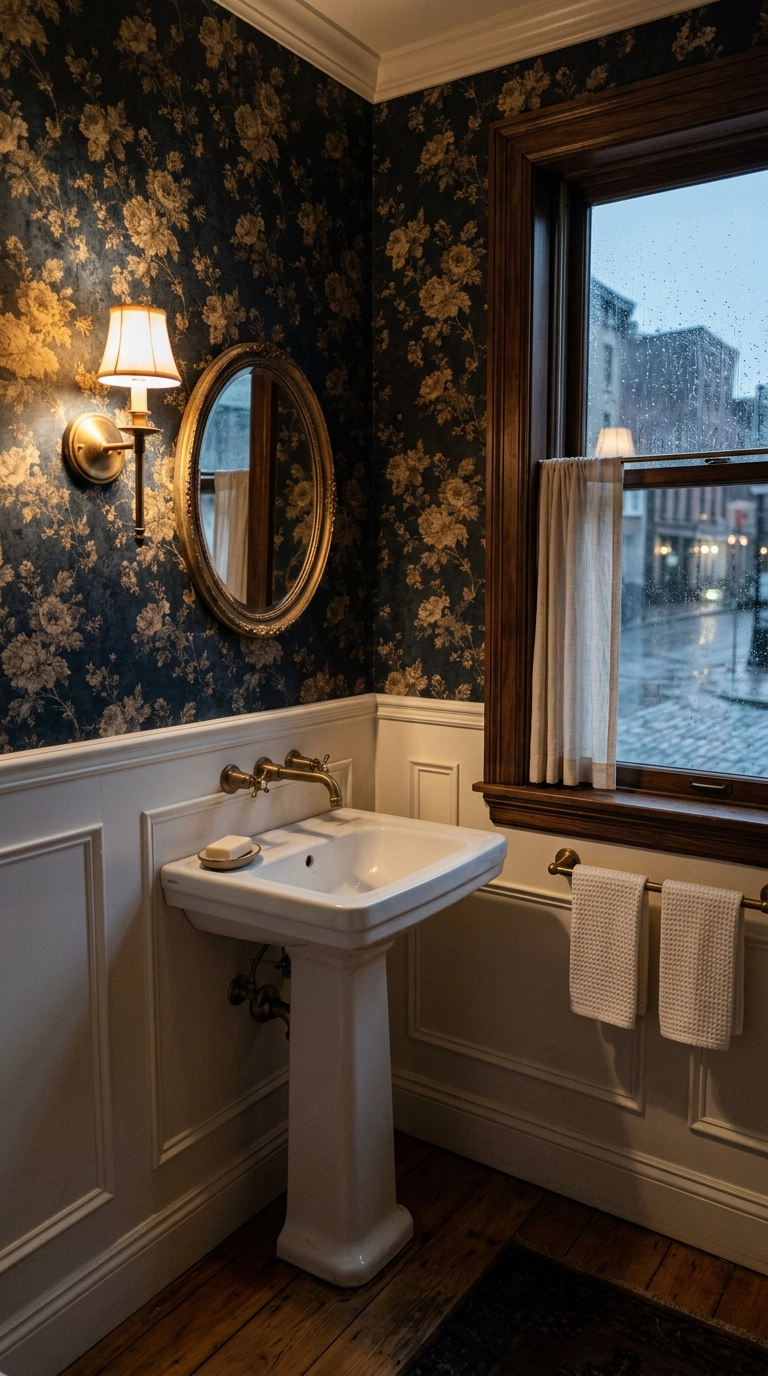
Nothing says Victorian faster than a proper botanical damask, and Morris-style prints are having a genuine moment again in 2026. Keep it to the wall above the wainscot so the pattern doesn’t swallow a small room.
4. A Marble-Topped Washstand Instead of a Vanity
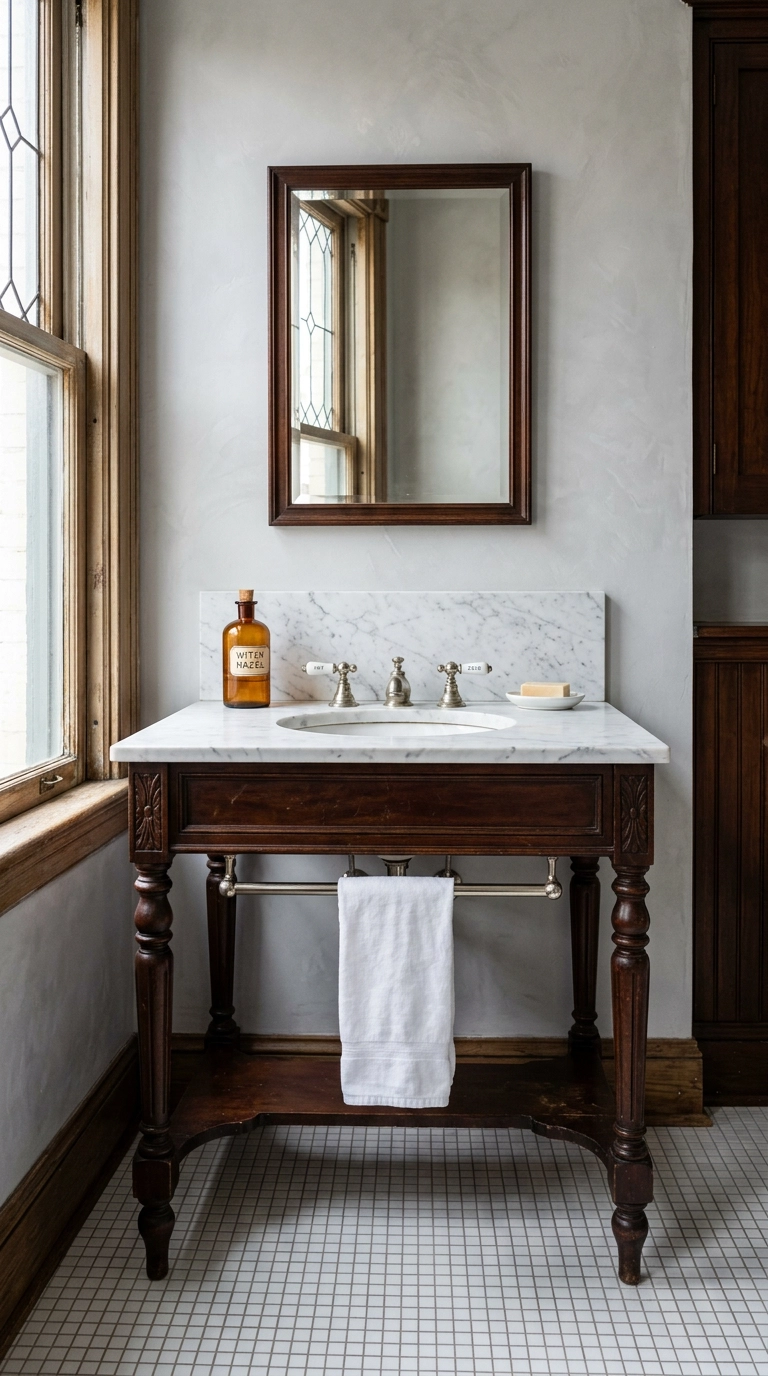
Swapping a boxy modern vanity for a furniture-style washstand is the fastest way to make a bathroom feel like it has history. Look for a real antique console or dresser around 30 to 34 inches tall, then have a plumber cut the top for the basin.
5. Unlacquered Brass Fixtures That Are Allowed to Age
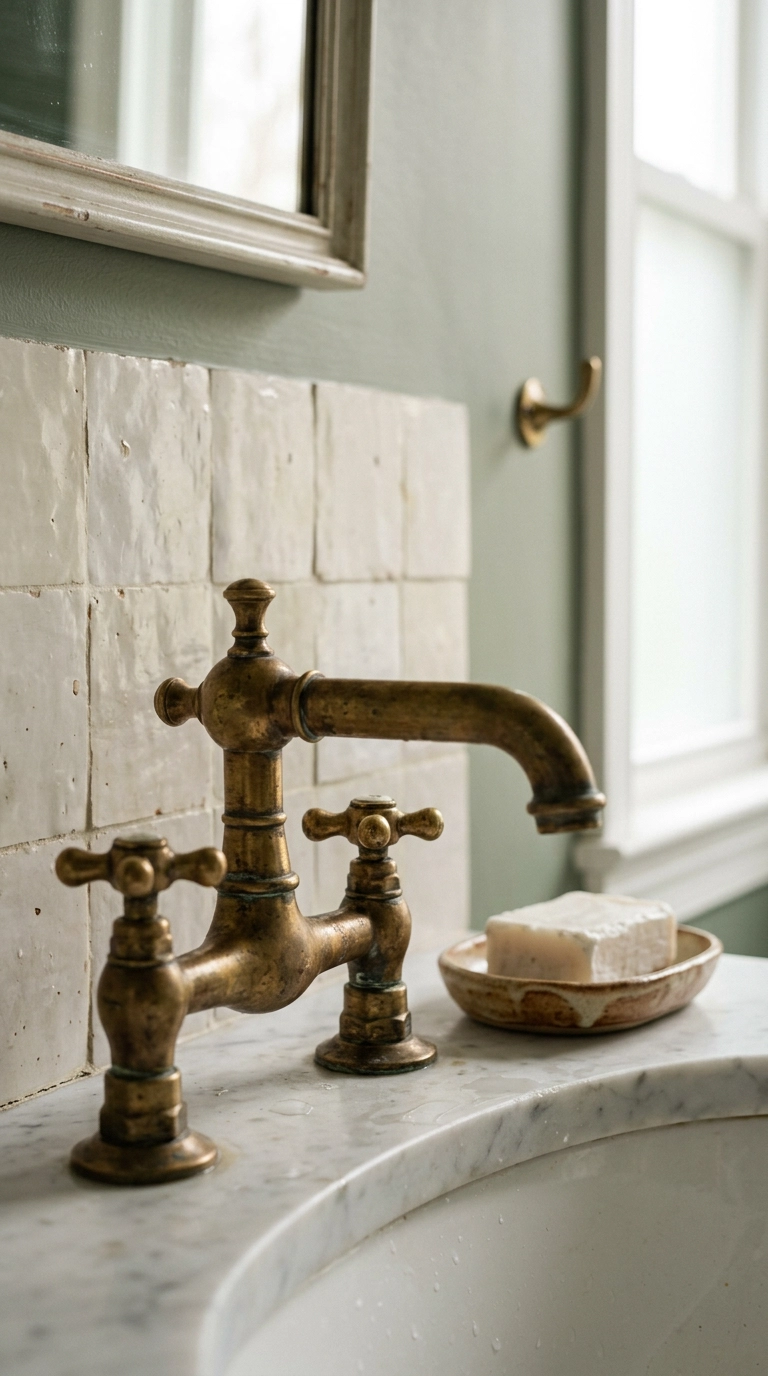
Chrome reads modern, polished nickel reads transitional, but unlacquered brass reads Victorian because it does what real 1890s hardware did — it darkens and mottles with use. Cross handles instead of levers seal the period look.
6. A High-Tank Toilet with a Pull Chain
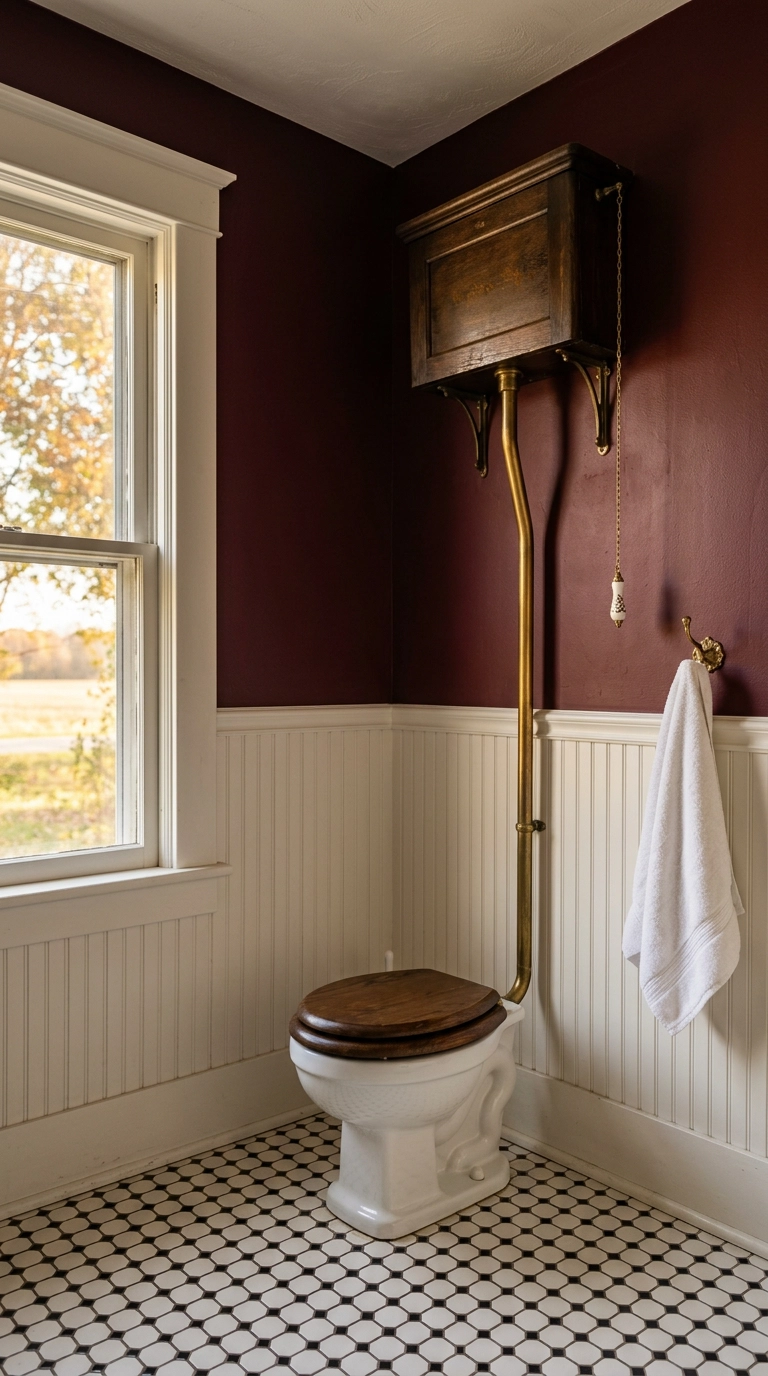
This is the detail guests always comment on. A high-tank toilet with the cistern mounted near the ceiling is authentically Victorian, and reproduction models from period-plumbing specialists are readily available in white porcelain with oak or mahogany tanks.
7. Dark, Moody Paint From Waistcoat to Ceiling
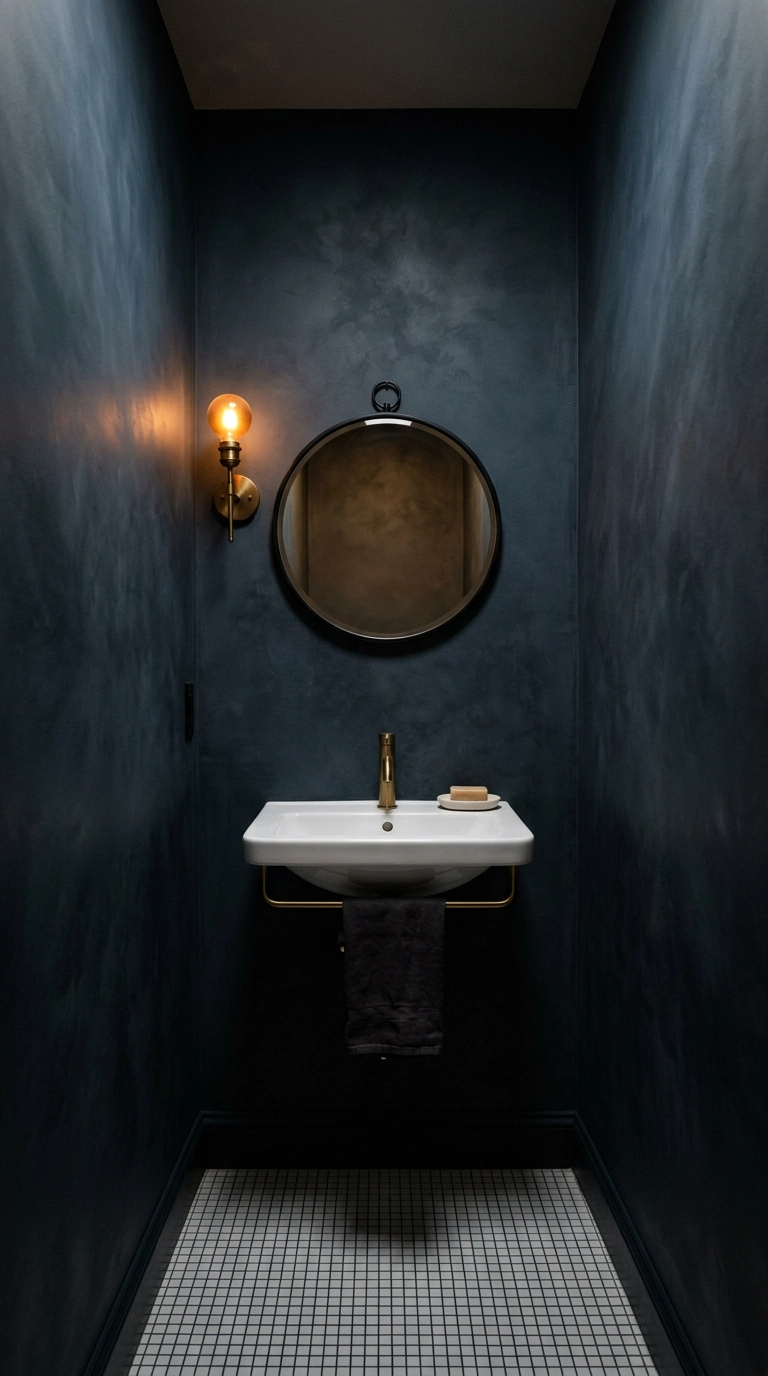
I used to be afraid of dark paint until an older client told me her 1890s bathroom had always been deep navy, because real Victorians loved a moody jewel tone. She was right: a dark room with one good light source feels warm and enveloping, not small. Farrow & Ball Hague Blue or Benjamin Moore Kendall Charcoal are my go-to shades here.
8. A Single Over-Scaled Gilded Mirror
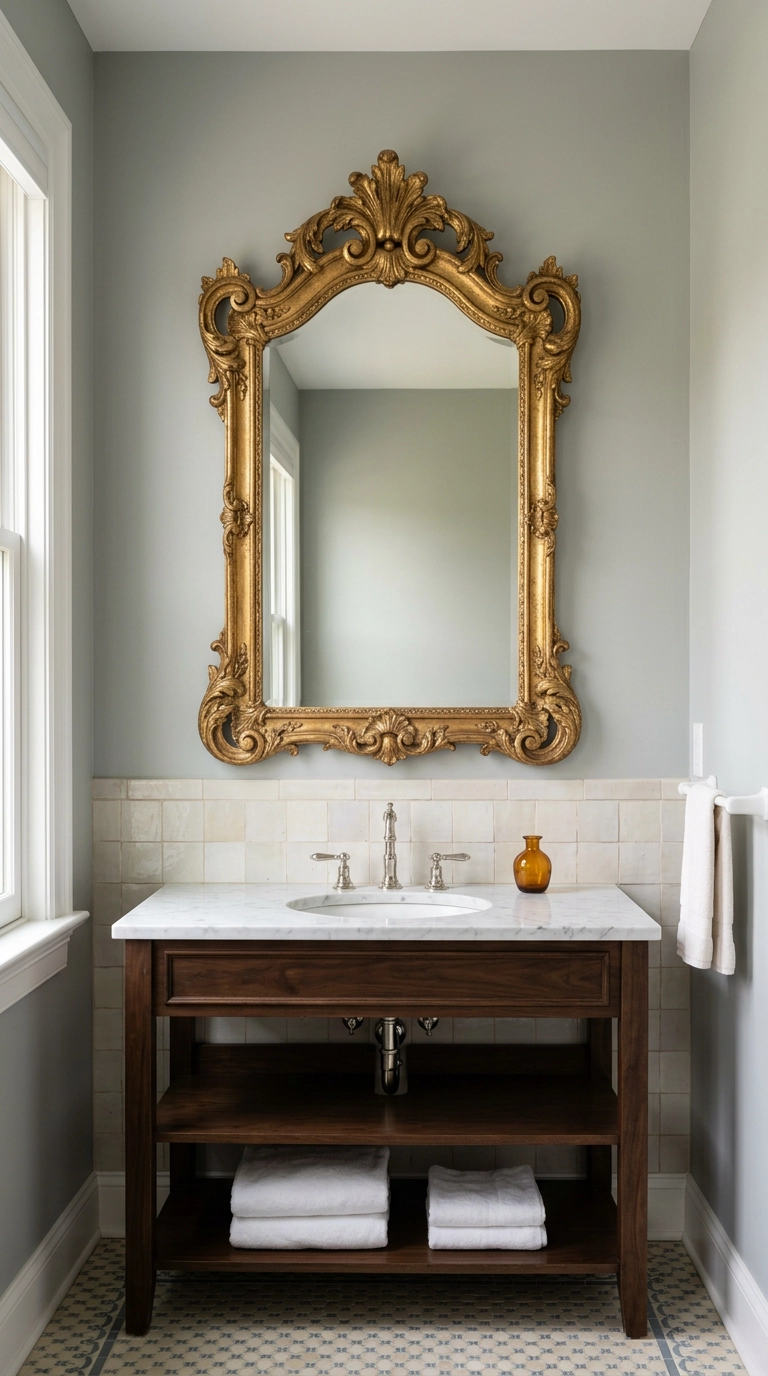
A giant gilded mirror — think 36 inches wide minimum, even in a small powder room — reads as a piece of art above the sink. Skip the builder-grade medicine cabinet and hit a flea market or thrift shop for something with a little genuine tarnish.
9. Encaustic Cement Tile in a Period Pattern
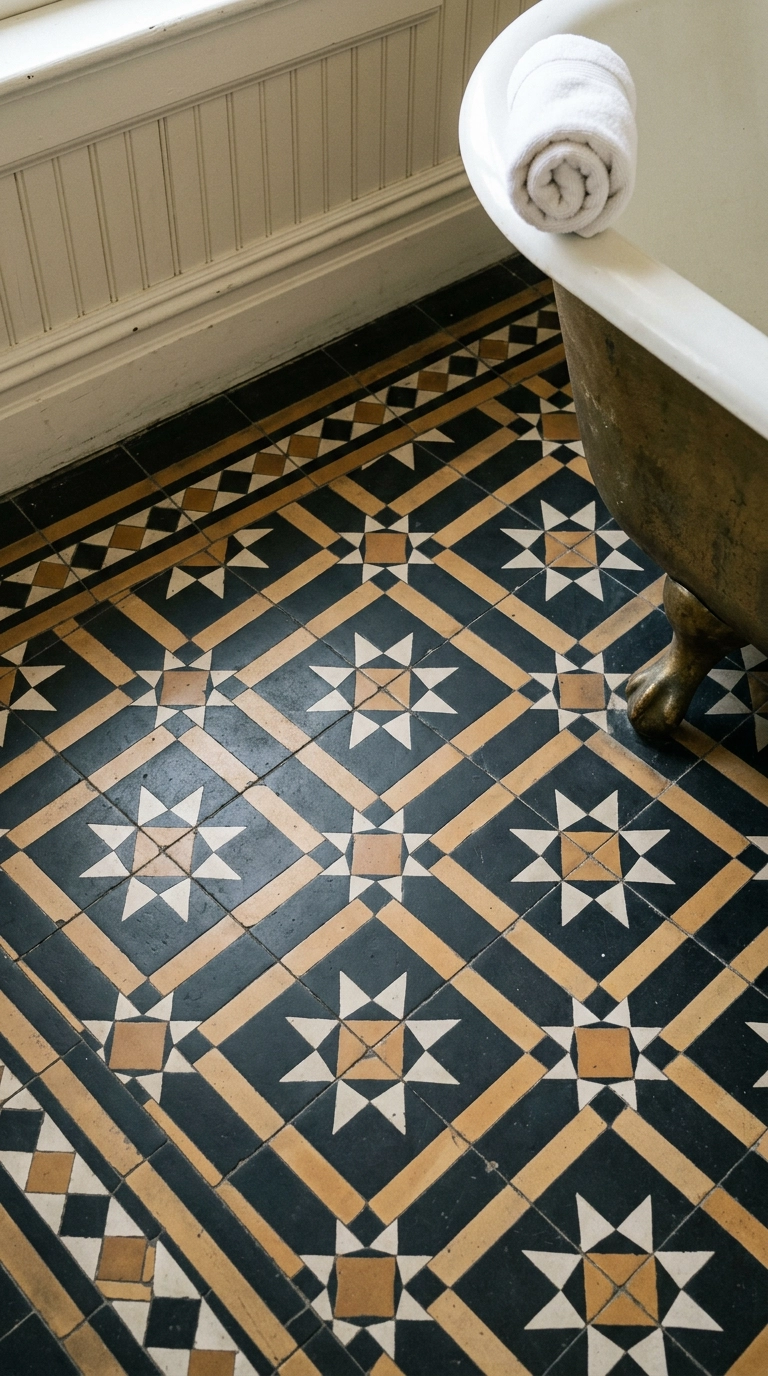
Encaustic cement tile is what a wealthy Victorian household would have installed, and the geometric patterns still look fresh 130 years later. Stick to a two or three color palette so it doesn’t fight the rest of the room.
10. Beadboard Wainscoting Painted Bone White
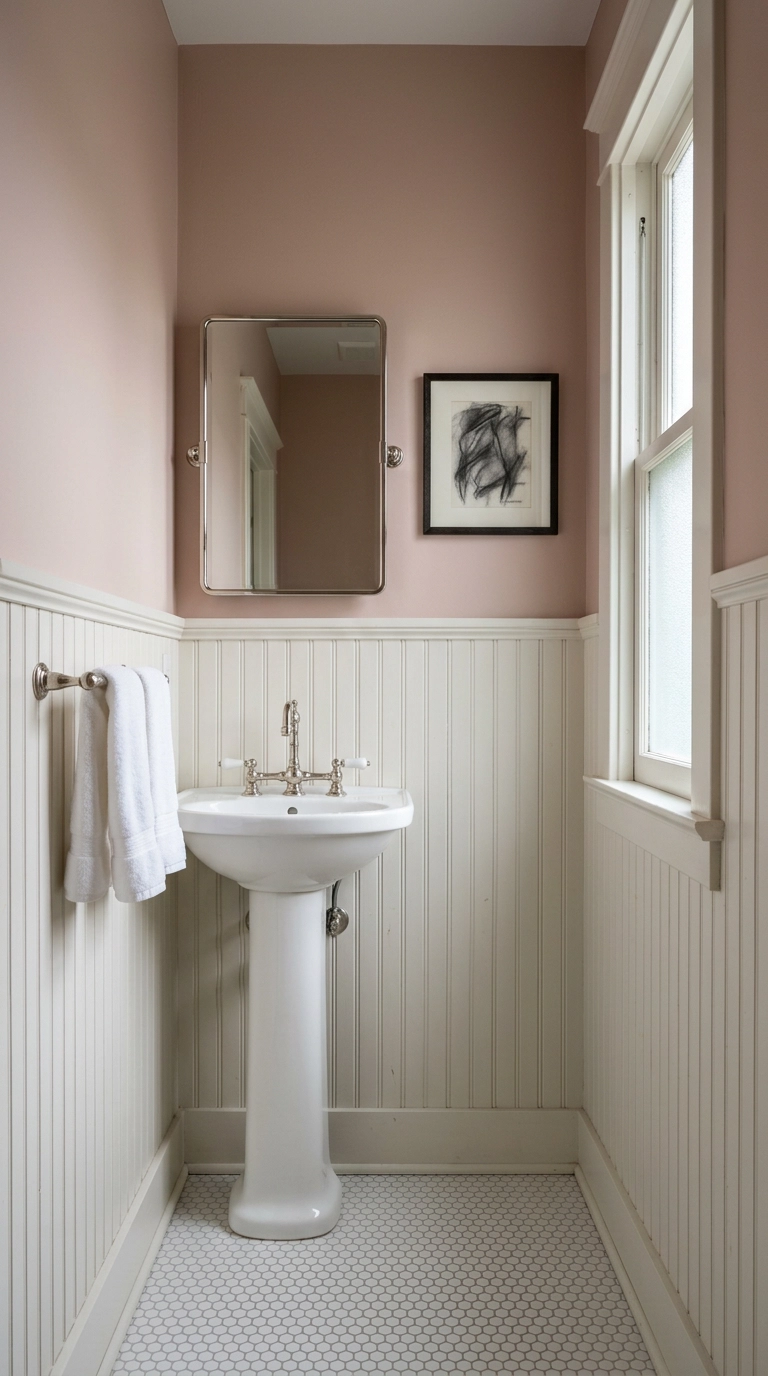
Beadboard is the workhorse of Victorian bathrooms — it was originally practical, protecting plaster from splashes, and it happens to look wonderful. Run it to about 36 inches with a simple cap rail on top.
11. An Antique Persian Rug on the Bathroom Floor
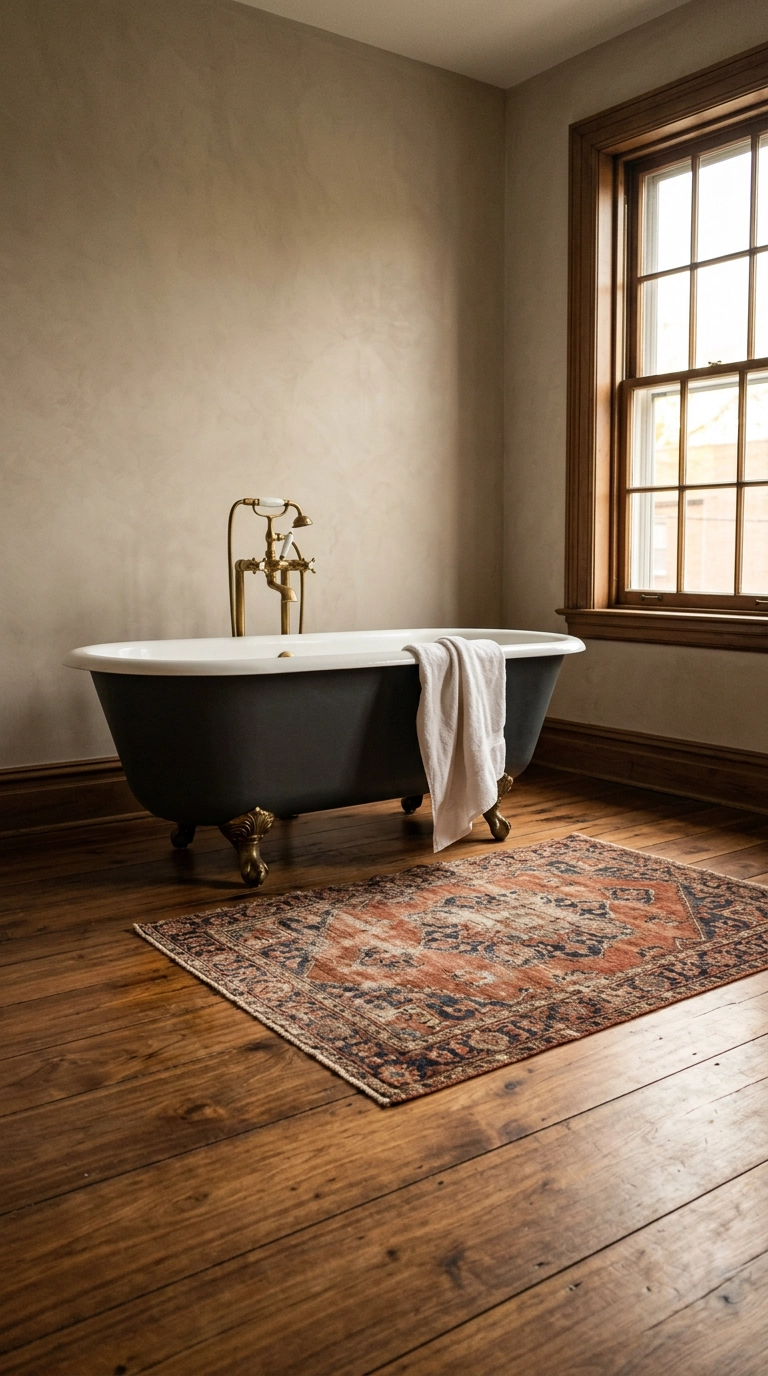
A worn Persian or Turkish rug in a bathroom feels slightly rebellious, and it is exactly what old houses actually did. The faded ones are better here — you want something already softened by a century of feet, not a pristine investment piece.
12. Picture Frame Molding on the Upper Walls
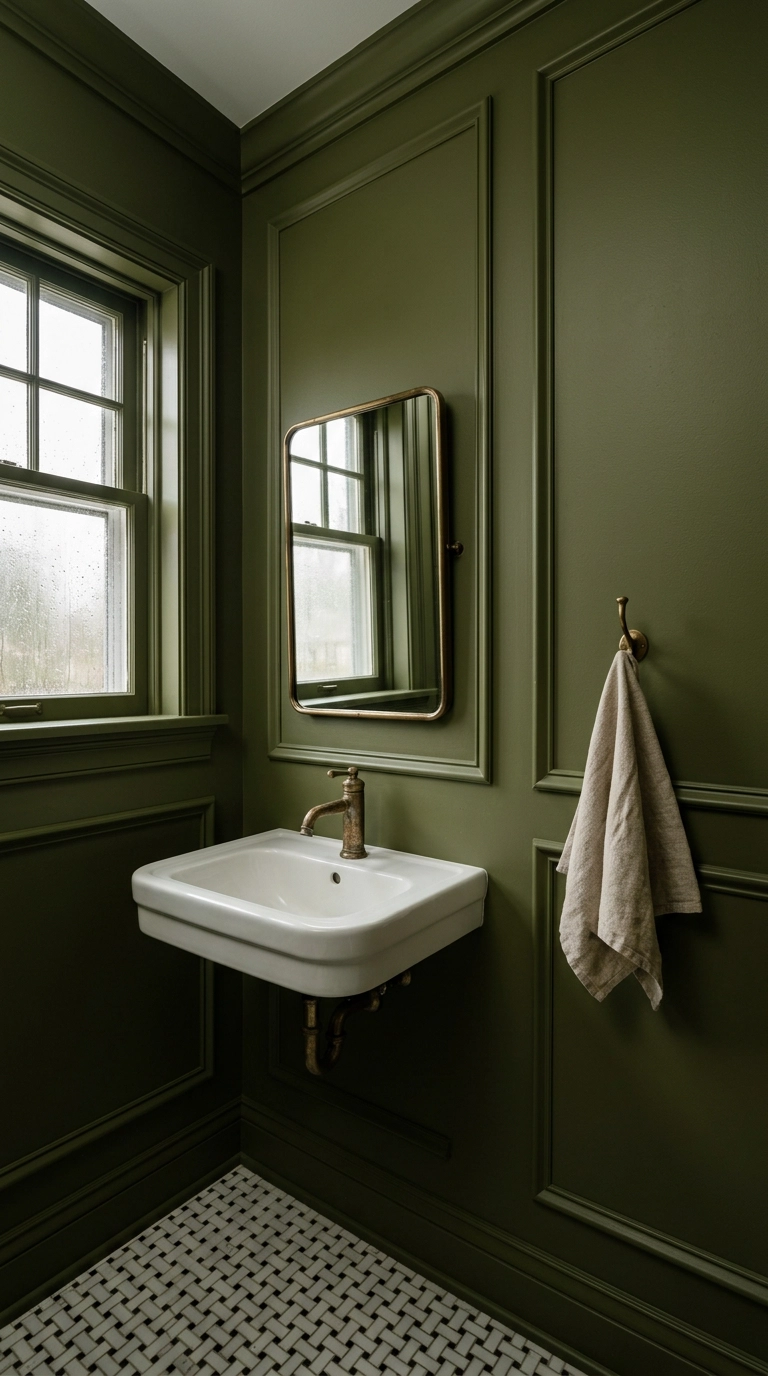
Picture frame molding — thin decorative rectangles applied to the wall surface — gives you Victorian architectural detail for the price of some primed pine and a nail gun. Paint the molding, wall, and trim all one color for what designers call color drenching, meaning the whole surface reads as one continuous plane.
13. A Wall-Mounted Bridge Faucet in Aged Nickel
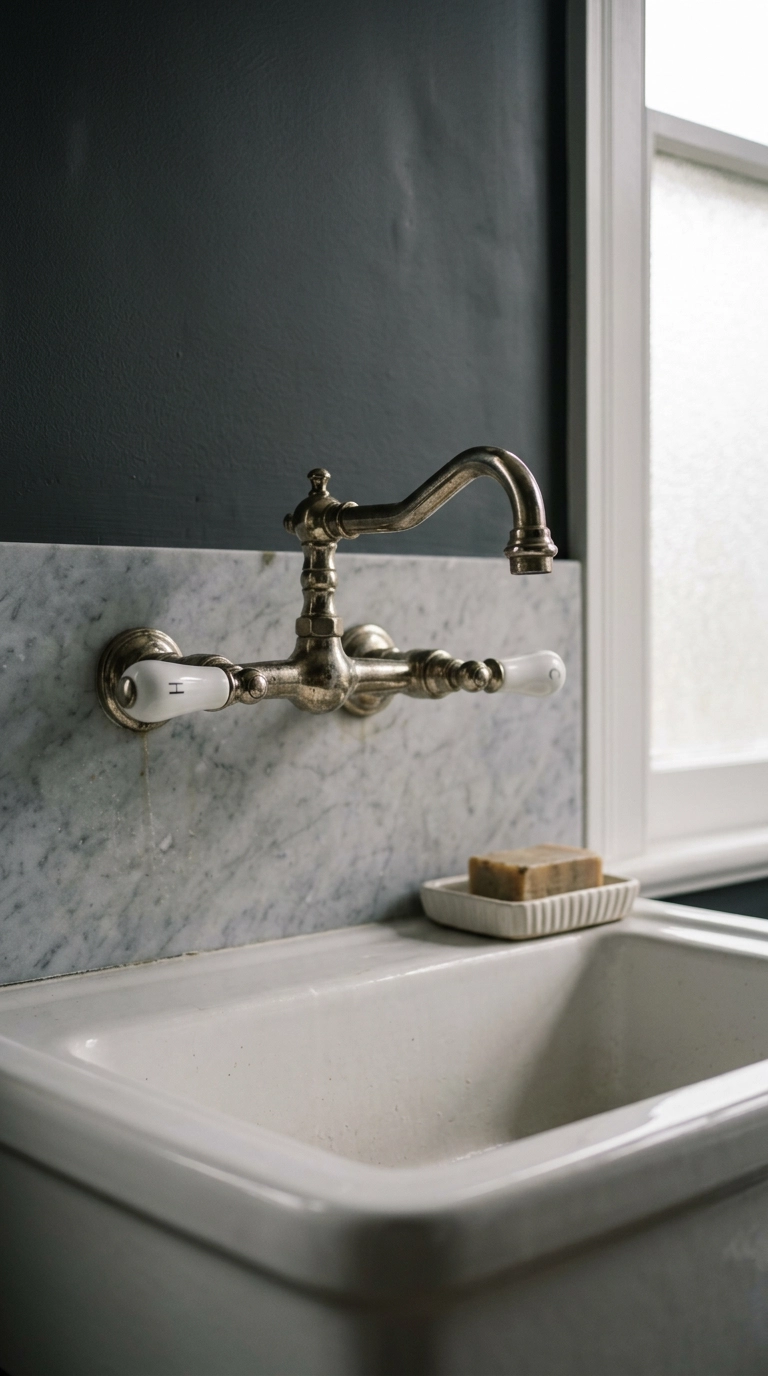
A bridge faucet — where the hot and cold lines arc together above the basin — is one of the few period details that reads instantly Victorian without any explanation. Mounting it on the wall rather than the deck also frees up the entire basin surround, which matters in a small bathroom.
14. Dark Wood Tones Against the Cool Tile
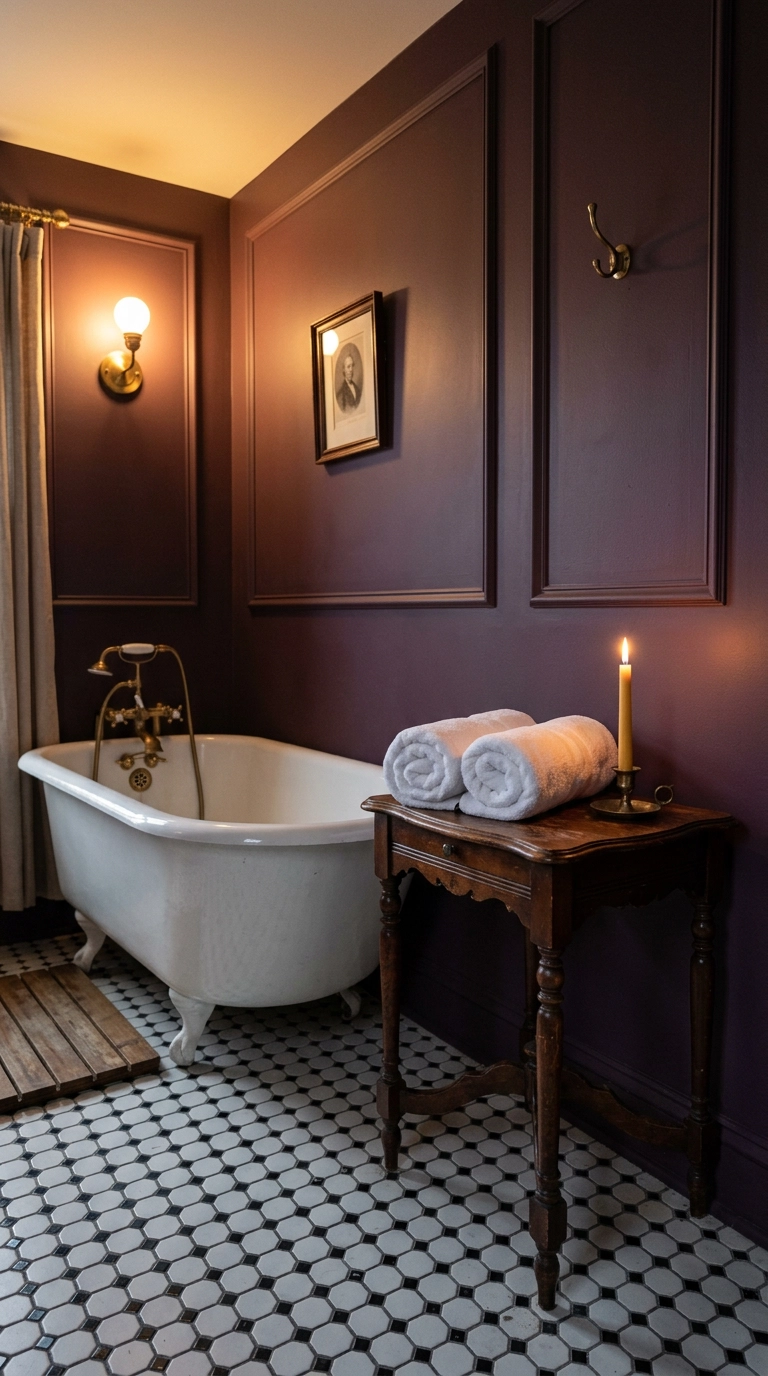
Victorian bathrooms go cold fast, because tile, porcelain, and marble are all hard cool surfaces. One piece of genuinely dark wood — mahogany, walnut, aged oak — warms the whole room in a way no textile can, since it adds visual weight rather than just softness.
15. A Pair of Candle Sconces Flanking the Mirror
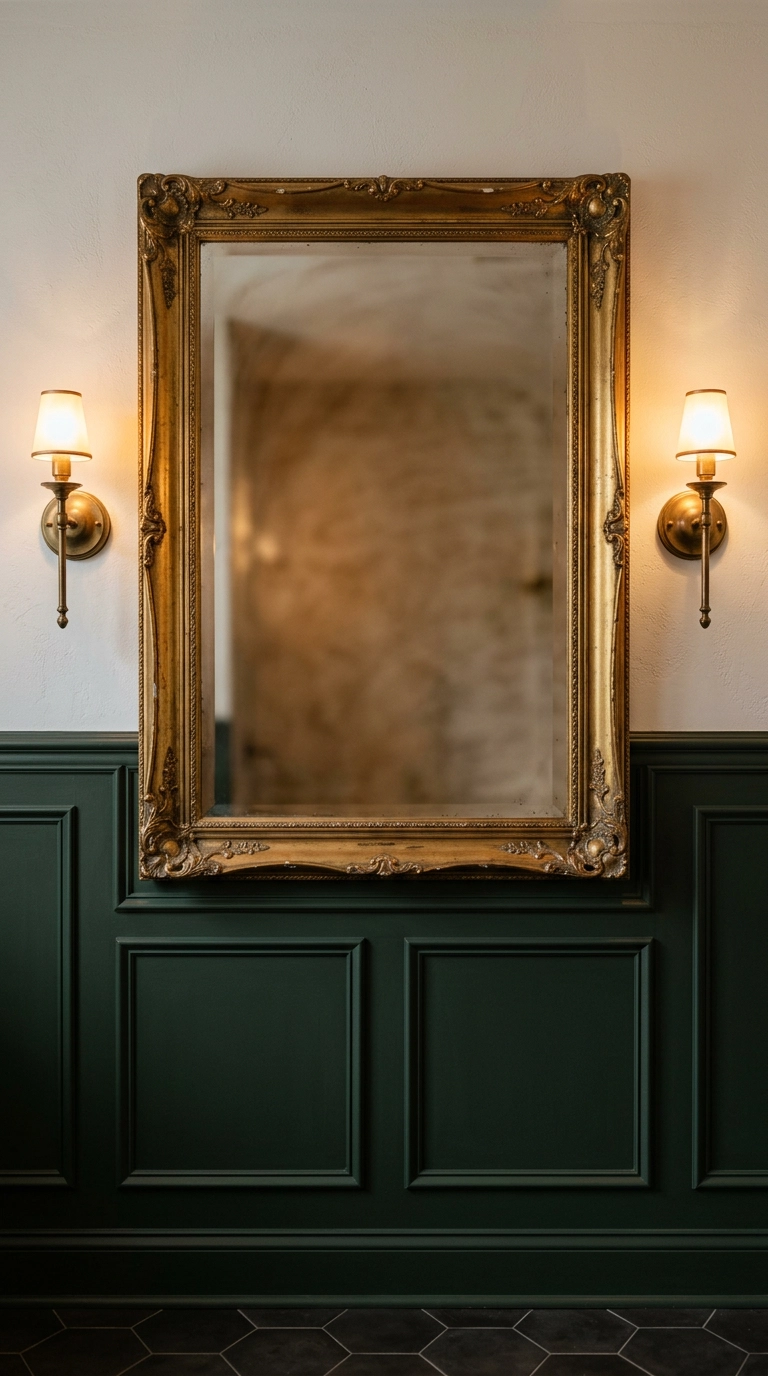
Overhead lighting is the fastest way to undo everything else in a Victorian bathroom — it flattens the room and turns the tile grey. A pair of sconces at roughly eye level, one on each side of the mirror, lights your face from the sides instead and throws the moody shadow the style depends on.
16. A Deep Skirted Roll-Top Tub if Clawfoot Feels Too Expected
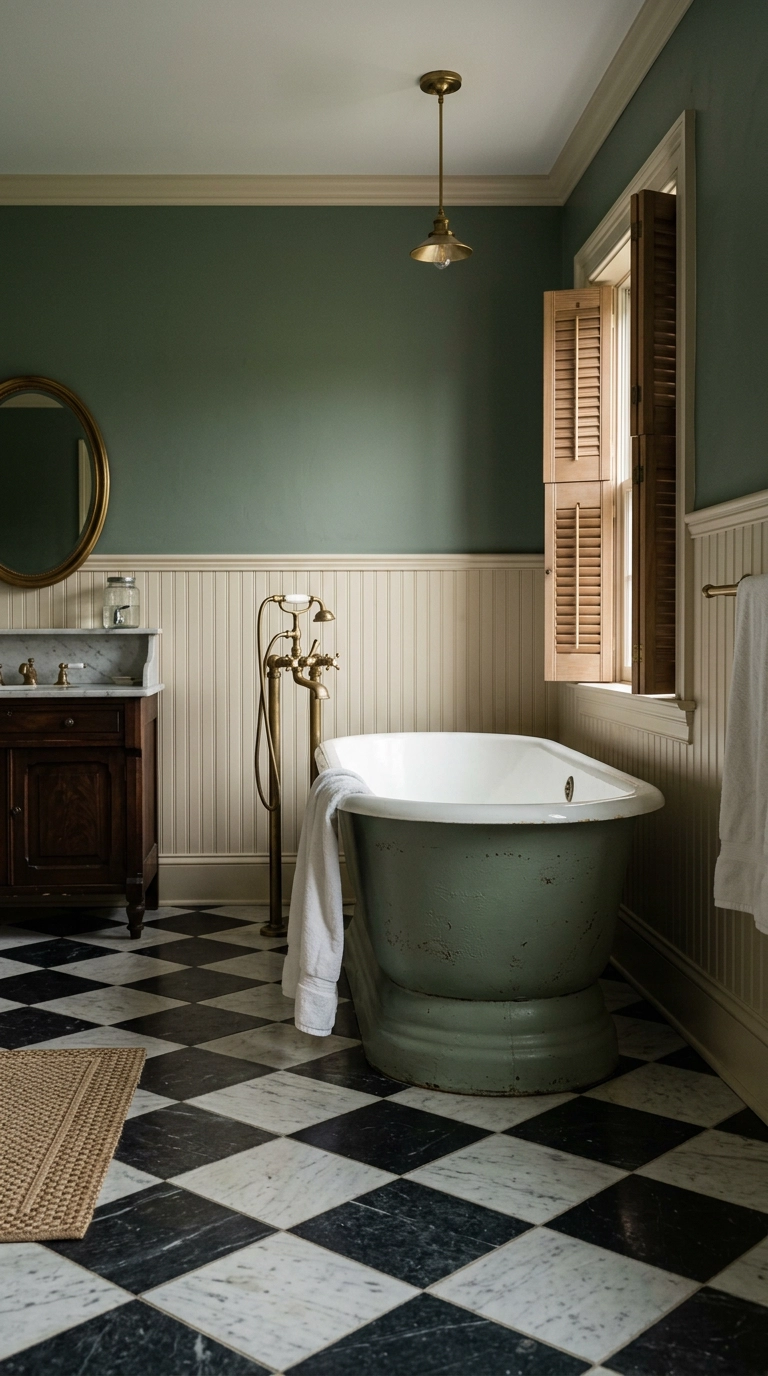
Everyone reaches for the clawfoot, and there are good reasons to — but a skirted roll-top tub reads just as period and gives you a solid painted mass instead of visible plumbing and a floor you have to mop under. In a small bathroom that solid base actually calms the room down.
17. Etched or Frosted Glass in the Window Instead of a Curtain
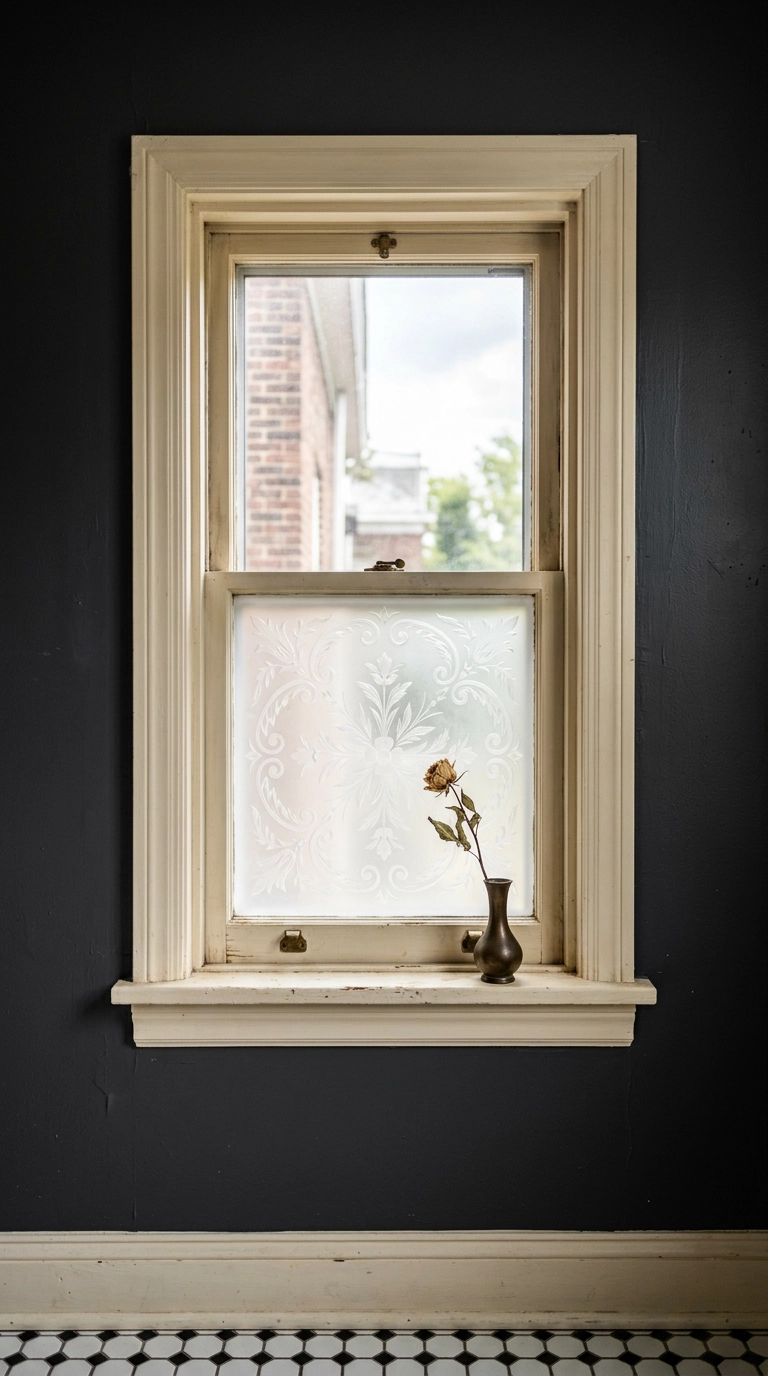
A fabric curtain in a bathroom absorbs damp and reads as a modern fix. Etched glass in the lower sash solves privacy permanently, keeps the natural light, and is exactly what a Victorian house would have done.
18. A Pull-Chain Wall Light Over the Washstand
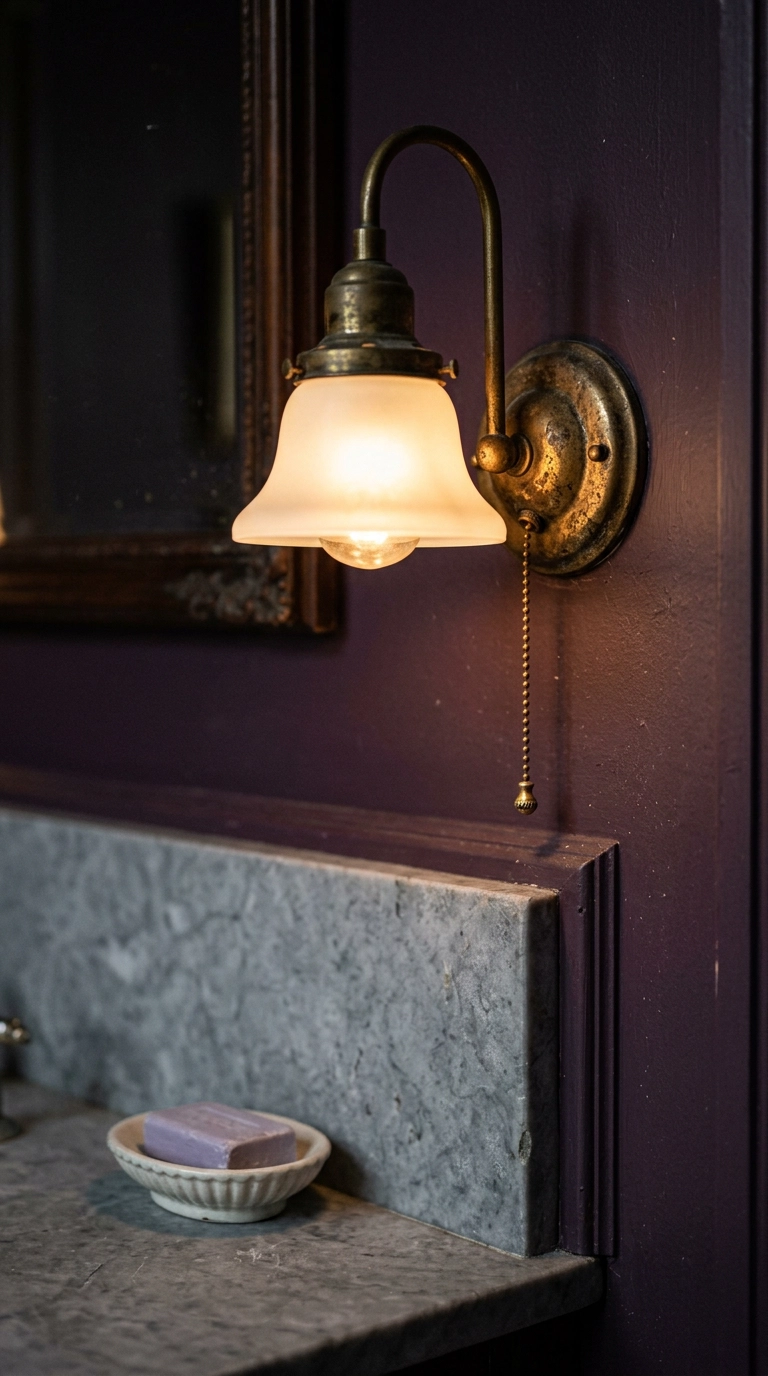
The pull chain is a small thing that does a disproportionate amount of work, because it dates the fitting immediately — no modern switch plate, no smart bulb, just a chain you tug. It’s the kind of detail people notice without being able to say why.
19. Oxblood or Deep Burgundy as the Unexpected Wall Colour
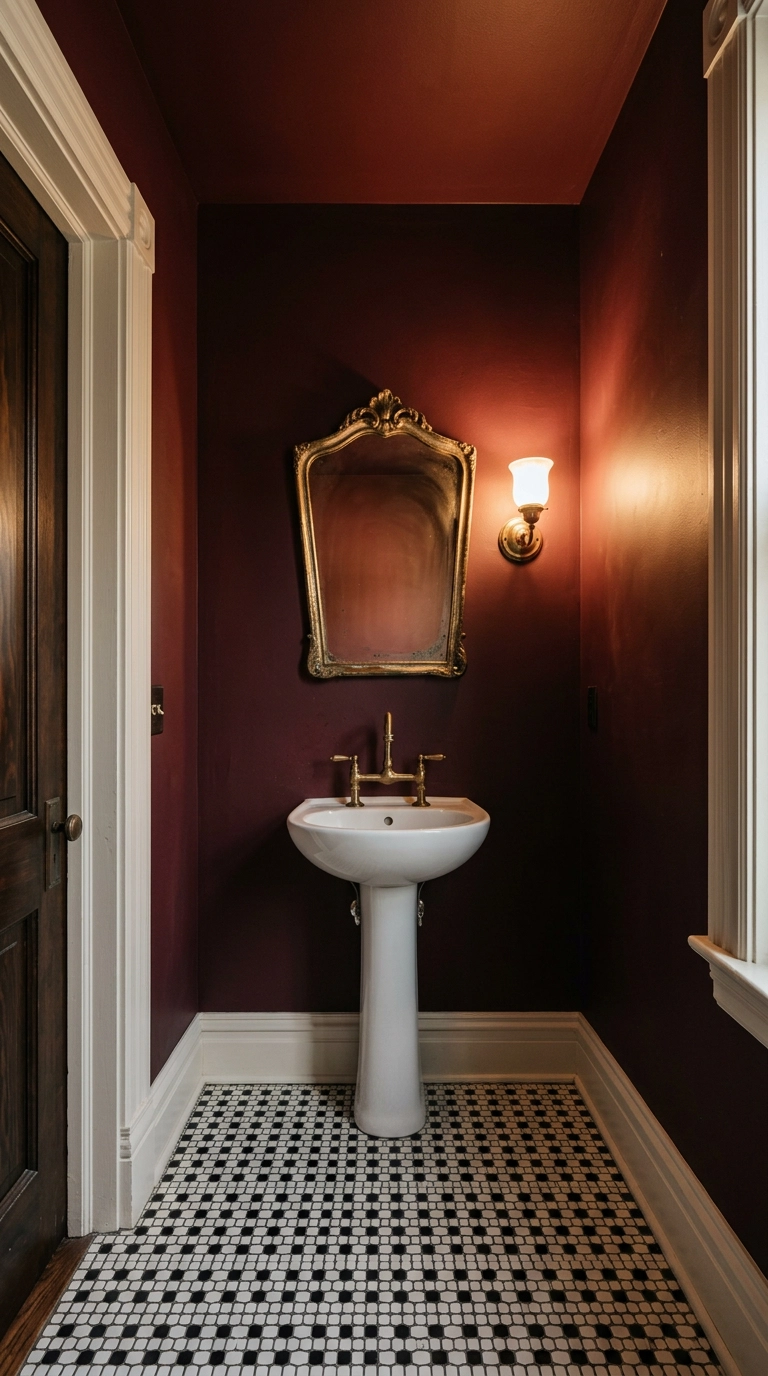
Hunter green and charcoal are the safe Victorian darks. Oxblood is the one that looks like you knew what you were doing — it was genuinely period-accurate, and it flatters skin tones in a way green never quite manages.
20. A Freestanding Towel Rail Instead of Wall Hooks
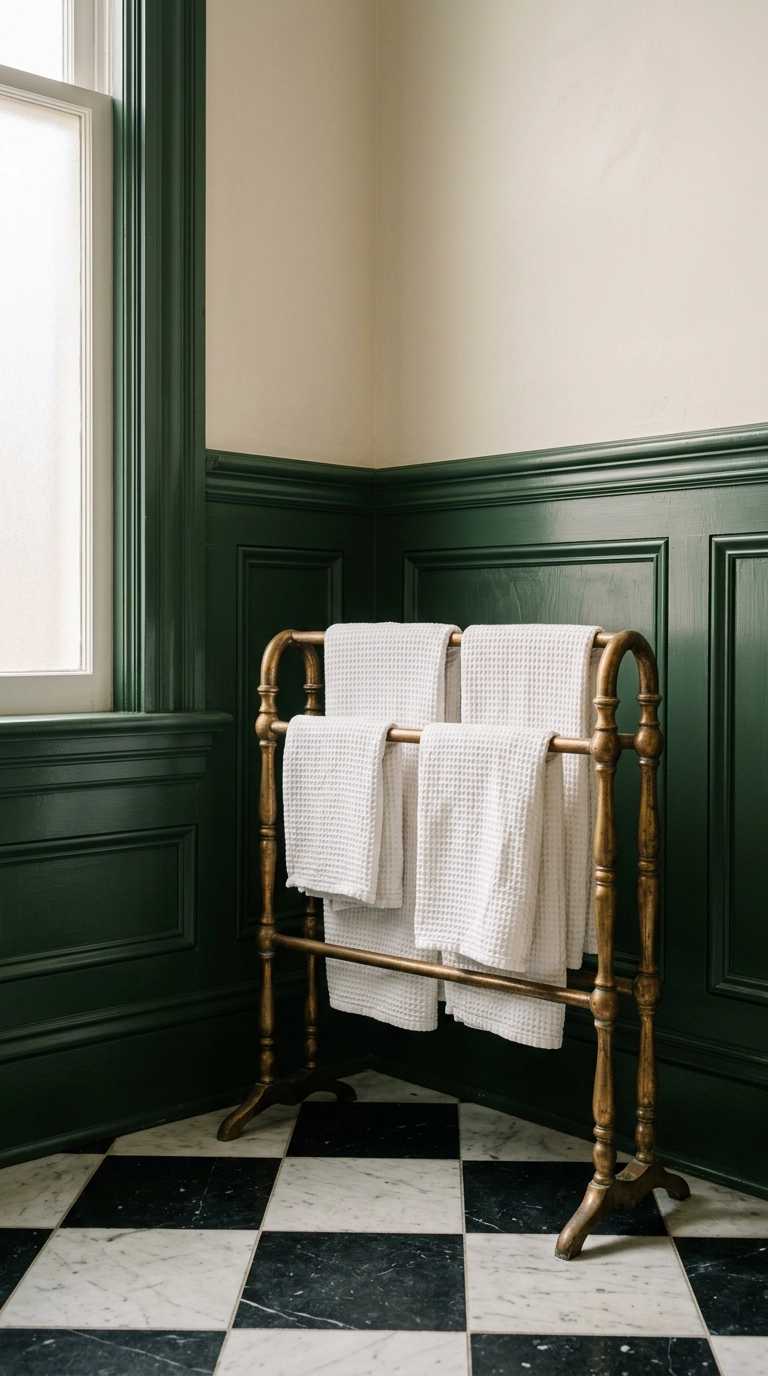
Wall-mounted bars mean drilling through tile, which is both permanent and nerve-wracking. A freestanding rail moves with you, holds more than a hook, and reads as furniture — which is precisely the Victorian instinct, where a bathroom was a room with things in it rather than a fitted unit.
21. Leave One Wall in Bare Lime Plaster
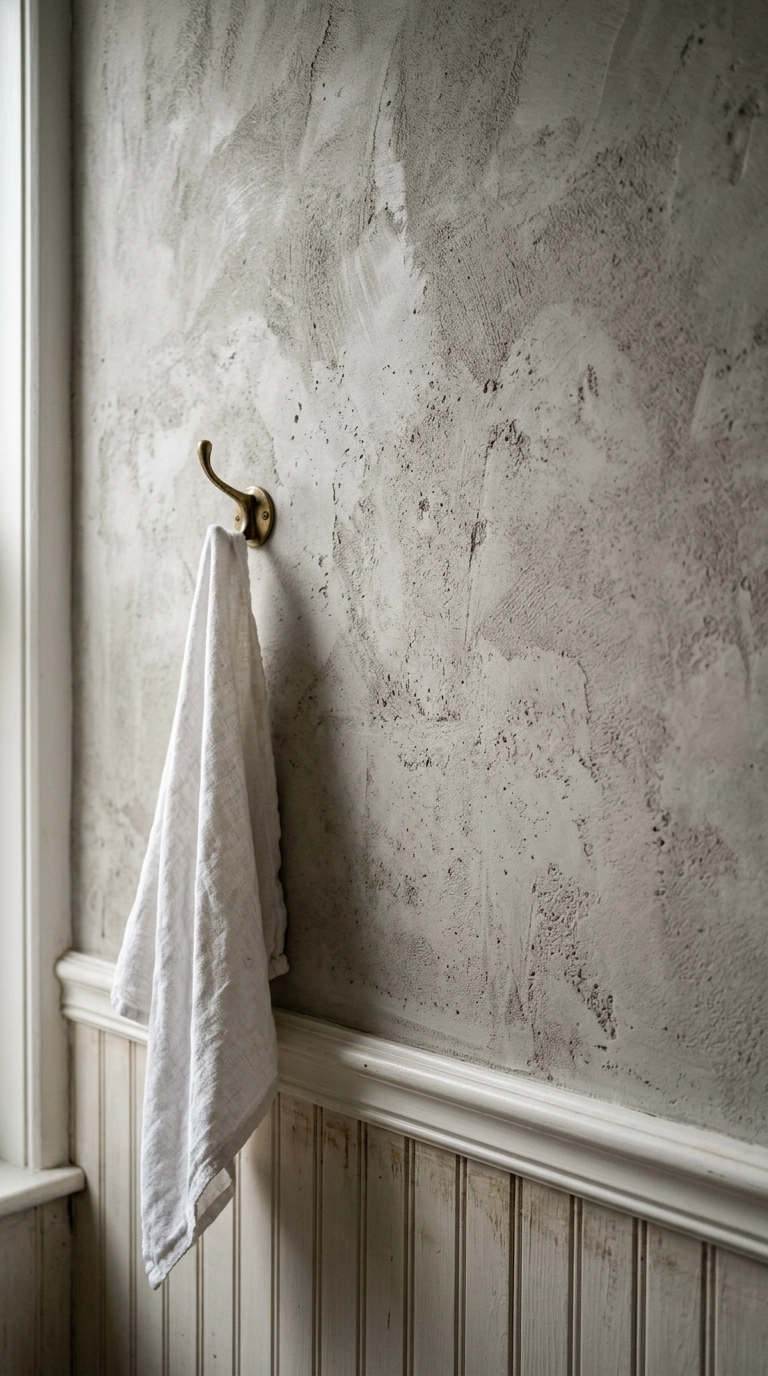
This is the one that divides people. Leaving a wall in unfinished lime plaster — mottled, patchy, trowel marks showing — looks like an accident until it suddenly looks like the best thing in the room. It’s also honest to how these houses were actually built.
22. One Piece of Framed Botanical Art, Hung Low
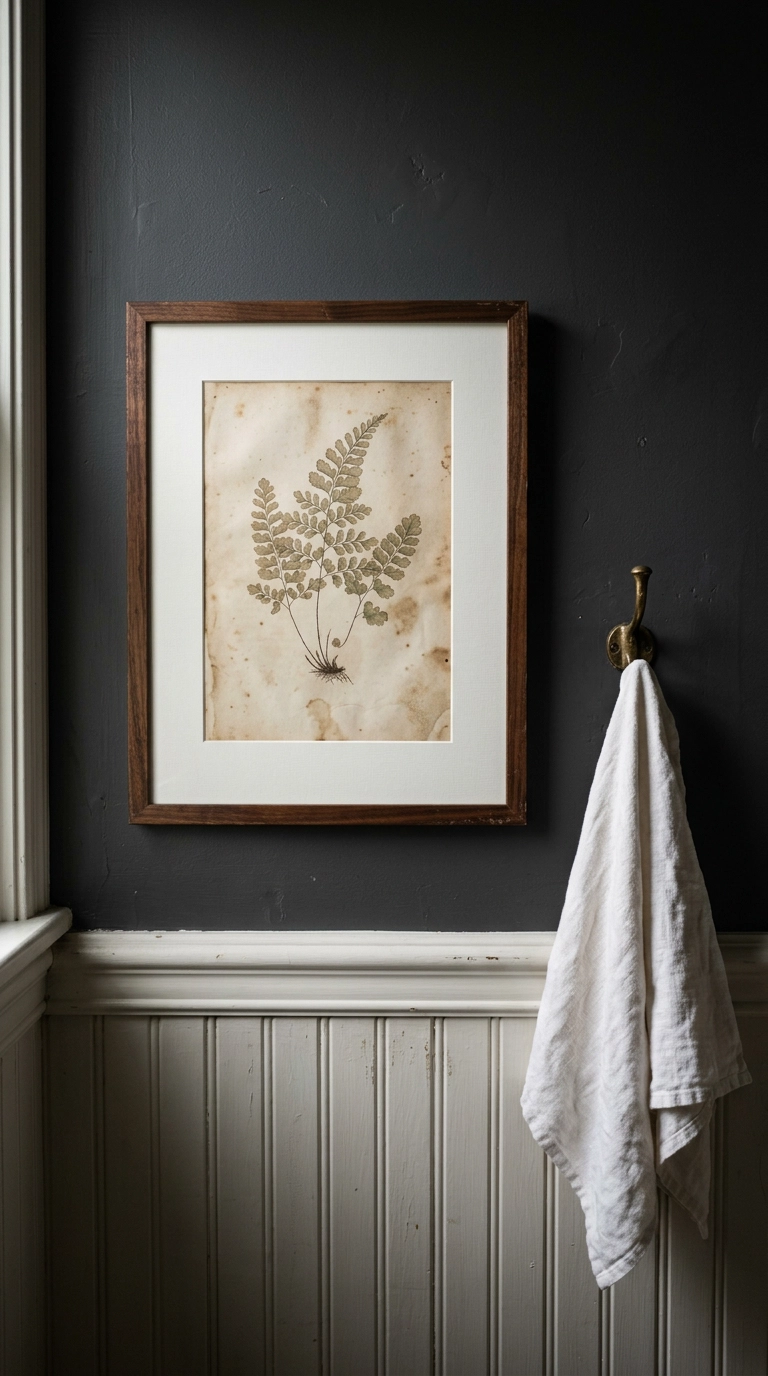
Bathroom art is usually hung too high, at hallway height, which leaves it floating. Drop it to shoulder height — around 54 to 58 inches to centre — so it relates to the wainscoting rather than the ceiling. Victorians hung pictures low and in relation to the furniture, not the cornice.
23. A Marble Threshold and a Proper Cast Iron Radiator
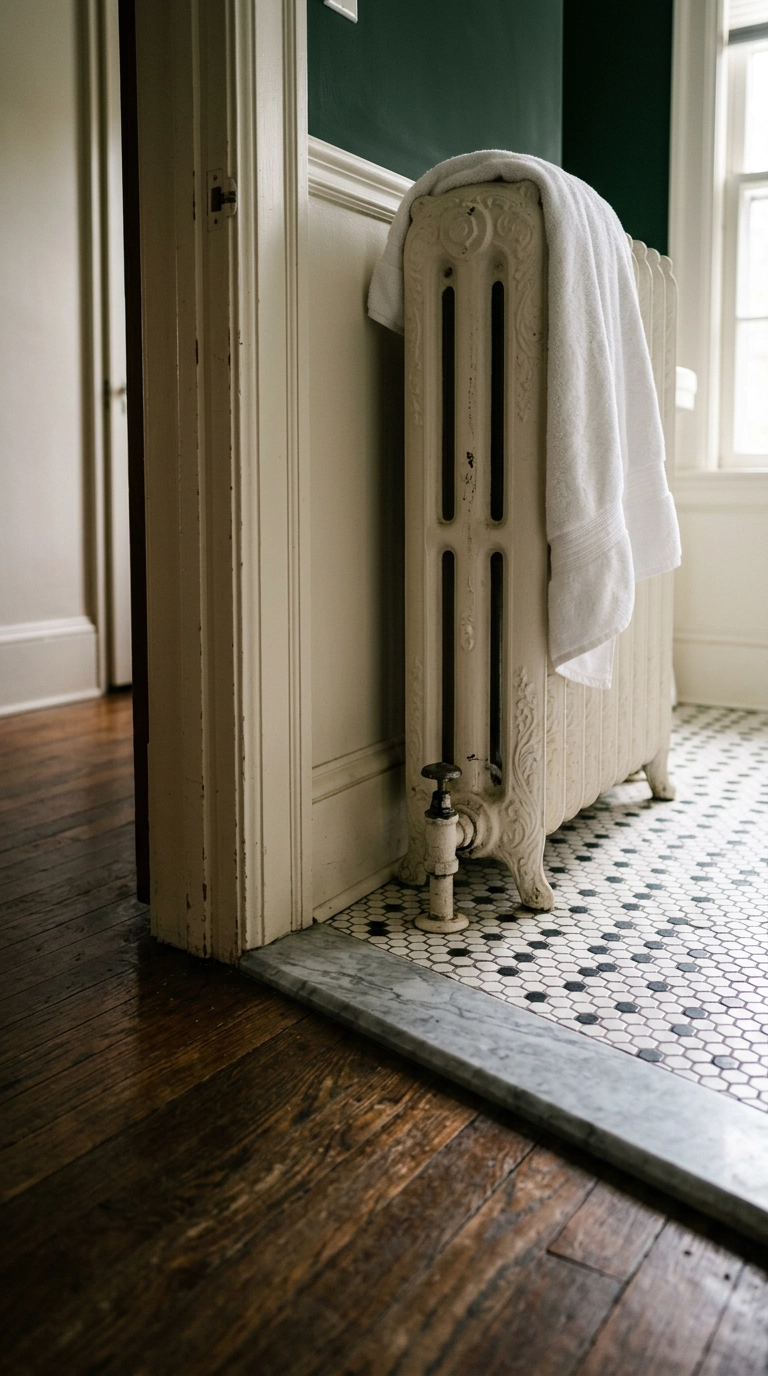
I’m ending on the two details nobody photographs and everybody feels. A honed marble threshold instead of a plastic or aluminium strip is maybe $40 to $90 and it’s the difference between a finished doorway and a builder’s afterthought.
Dark Rooms, Long Baths, No Regrets
What makes a Victorian bathroom work is committing to the darkness. The instinct in a small windowless room is to go pale and bright, and it always ends up feeling like a cheap ensuite — whereas the oxblood powder room in idea 19 or the charcoal-to-ceiling paint in idea 7 turn the smallness into an asset. Pair that with warm side lighting rather than an overhead fixture and the room stops apologising for itself.
The trend I’m genuinely pleased about in 2026 is unlacquered brass finally going mainstream, which means fixtures that are allowed to patina instead of being sealed under a coat of clear lacquer forever. Farrow & Ball’s Hague Blue and Studio Green are still the reliable dark paints for this look, and if you want to see the maximalist end done properly, Beata Heuman’s bathrooms are worth an evening of scrolling. Morris & Co. still print the original William Morris patterns from idea 3, which is about as authentic as a wallpaper reference gets.
Start where your budget actually is. Etched window film is $20 and an afternoon. An antique side table, a botanical print, and a freestanding towel rail are all thrift-and-swap territory. The high-tank toilet, the roll-top tub, and the lime plaster wall are real projects with real invoices, so plan those properly rather than starting them on a Saturday whim. And if you’d like more of this — period detail that’s actually worth the money, seasonal styling swaps, and the occasional honest account of a renovation that went sideways — sign up for my weekly newsletter. I’d love to have you along.


