
27+ Gorgeous Bedroom Feature Wall Decor Ideas that are Easy and Stunning in 2026

I’ll be straight with you – the wall behind your bed is doing almost nothing right now, and it’s the one surface in the whole house that gets looked at from a horizontal position for eight hours a night. I’ve built, painted, papered, plastered, and upholstered more bedroom feature walls than I can count, and the thing I’ve learned is that the treatment matters way more than the color. A weekend of battens does something a gallon of paint never will, and a single sheet of grasscloth can outperform a whole furniture upgrade. So below are 28 genuinely different executions – not 28 shades of beige – with honest costs, renter workarounds, and the reasoning behind each one.
Bedroom Feature Wall Decor Ideas
1. Color Drench the Bed Wall in a Deep Warm Clay
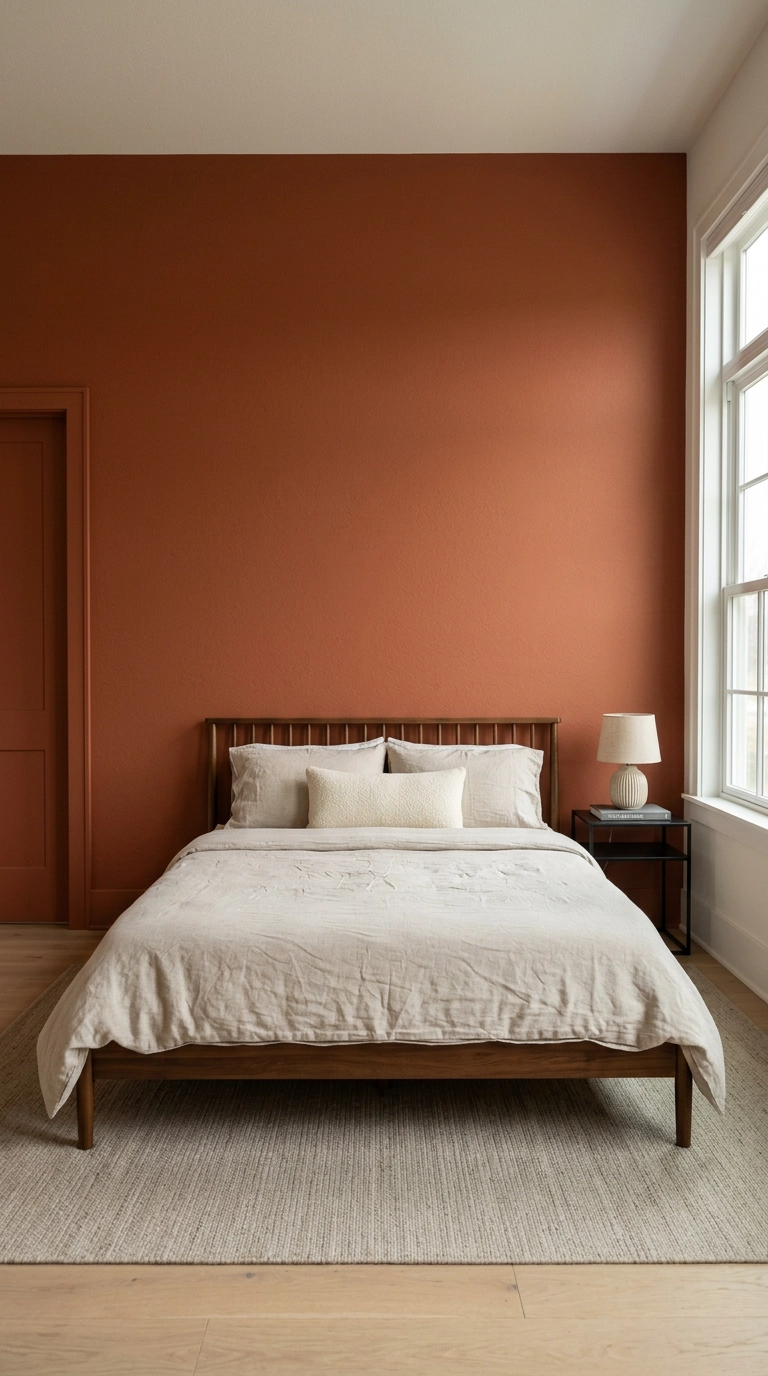
Color drenching just means painting the wall, its baseboard, and any trim on it the same shade instead of leaving white trim as a border. That border is a visual break, and when you delete it the wall stops looking like a rectangle of paint and starts looking like architecture. Farrow and Ball Red Earth or Sherwin-Williams Cavern Clay both land in the right family.
2. One Oversized Canvas Instead of a Headboard
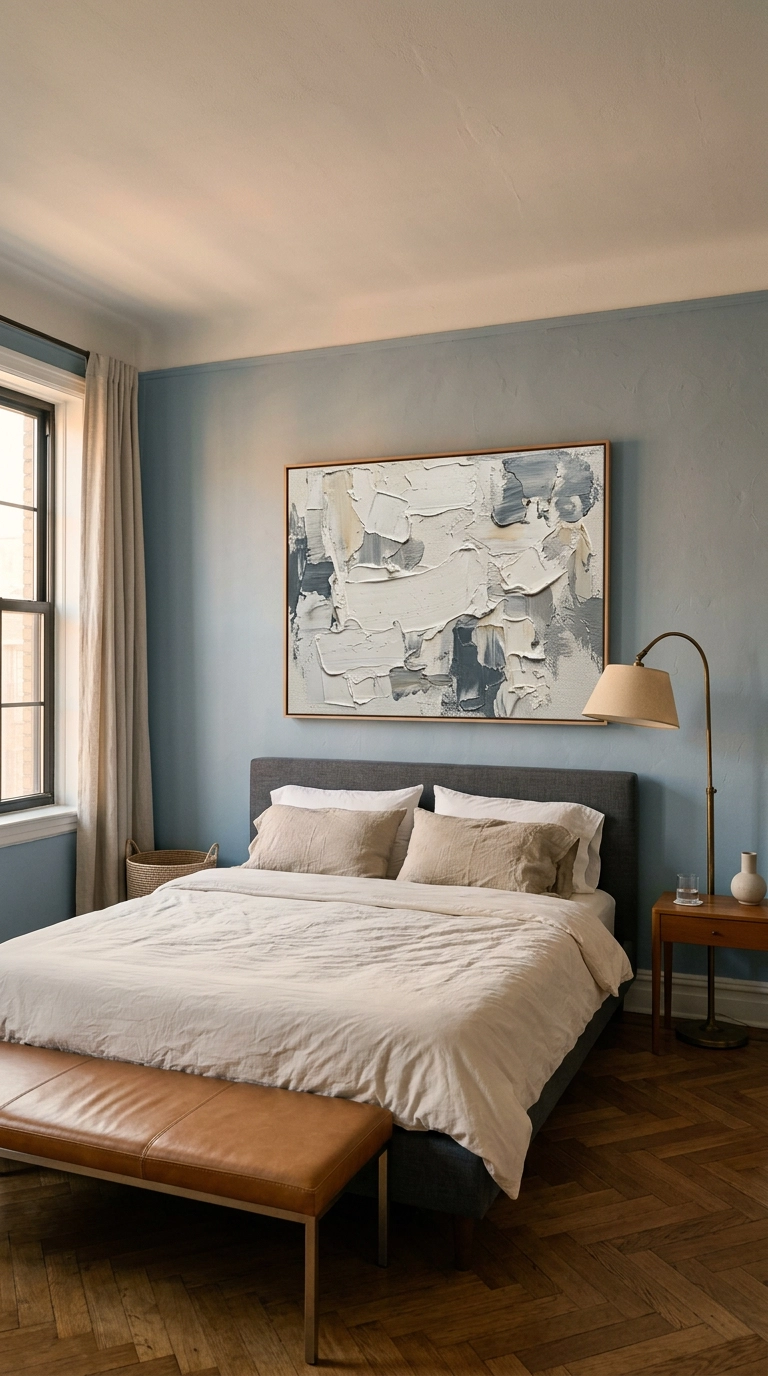
Scale is the whole trick here. Most people hang art that’s roughly two thirds too small, so aim for a piece about two thirds the width of the bed and hang the bottom edge only 6 to 8 inches above the headboard so the art and bed read as one mass.
3. Limewash Plaster for a Wall with Movement
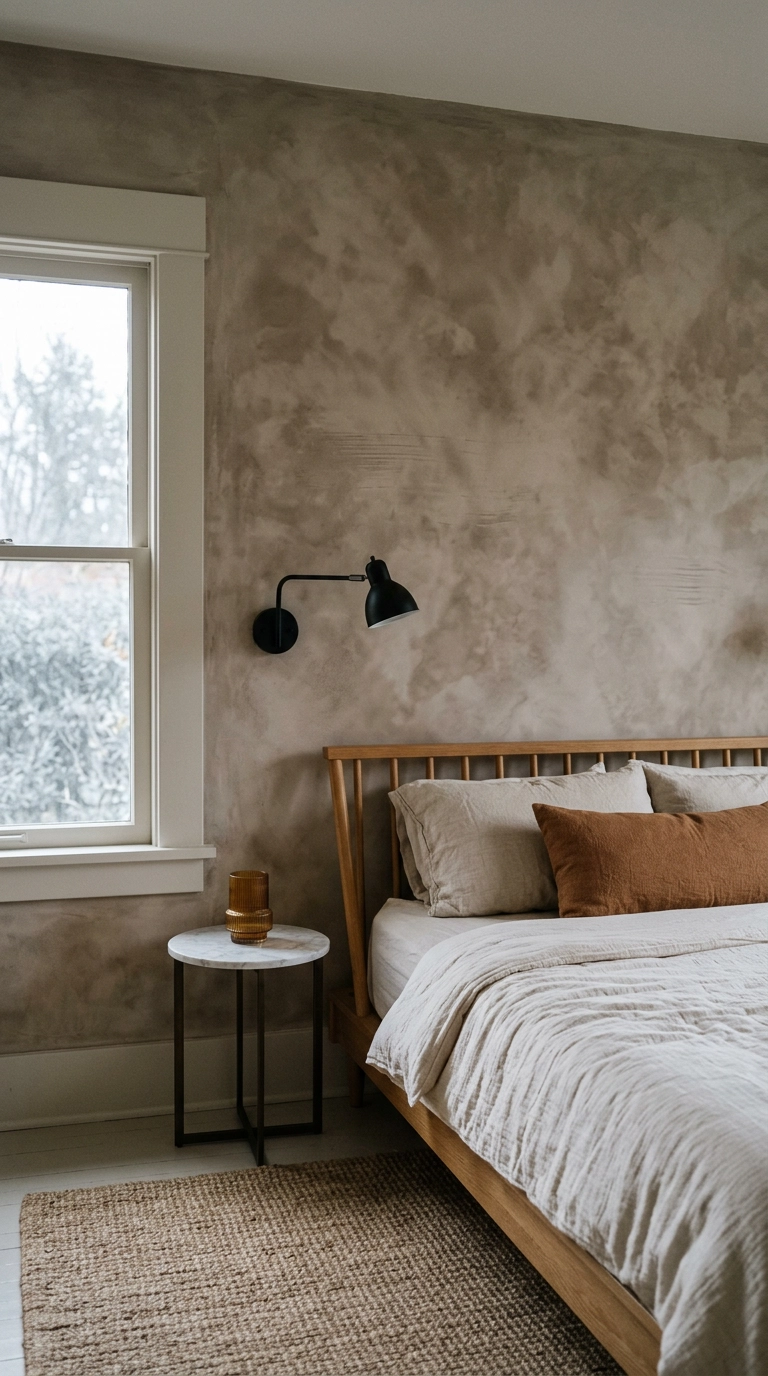
Limewash is a mineral paint that dries unevenly on purpose, so the wall shifts from light to dark as the sun moves across it. That movement is why it beats flat paint in a dim room – a solid color goes dead under overcast light, while limewash keeps depth.
4. Full-Height Vertical White Oak Slat Wall
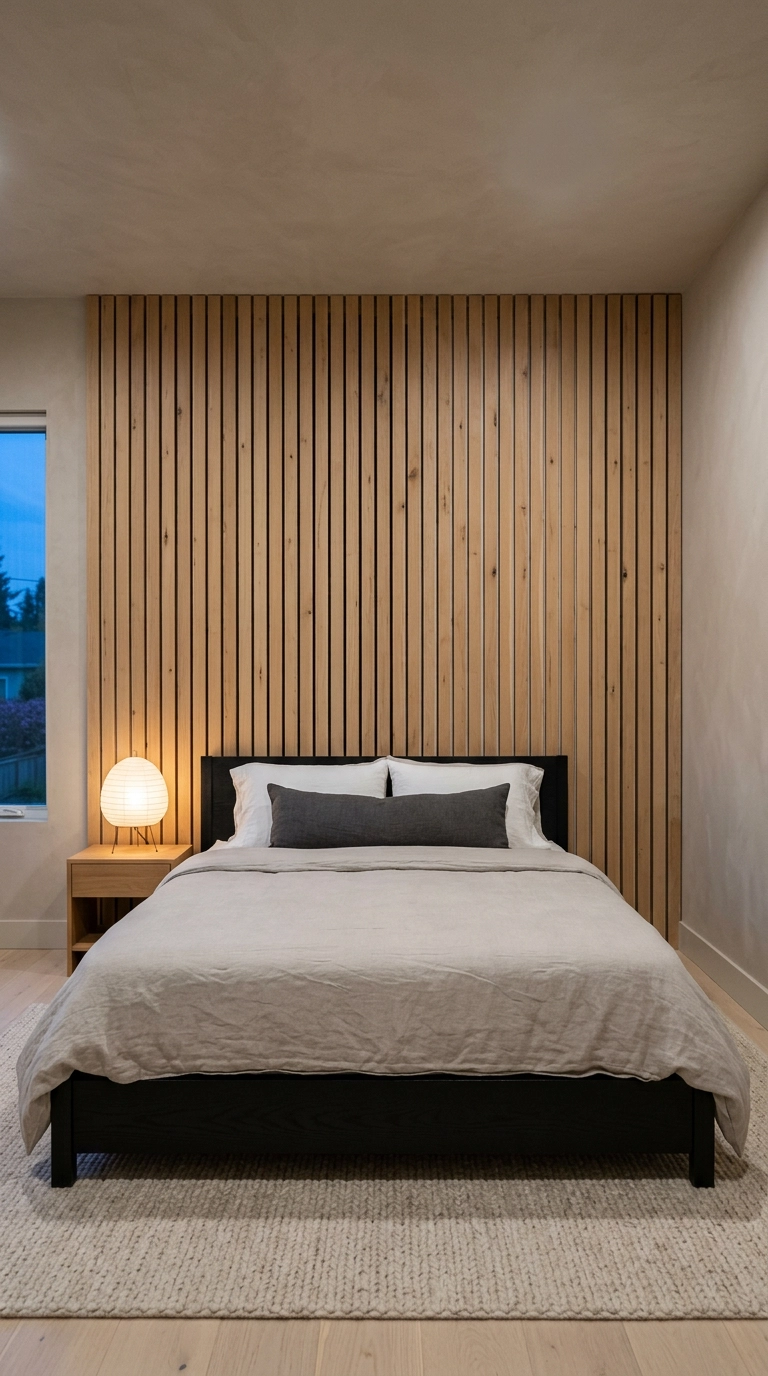
Slat walls read as expensive because the repeating vertical lines pull your eye upward, which makes an 8 ft ceiling feel taller than it is. Keep slats around 1.5 to 2 inches wide with a consistent gap, and glue them to a painted backer board in a dark tone so the shadow gaps stay crisp.
5. Board and Batten in a Moody Olive
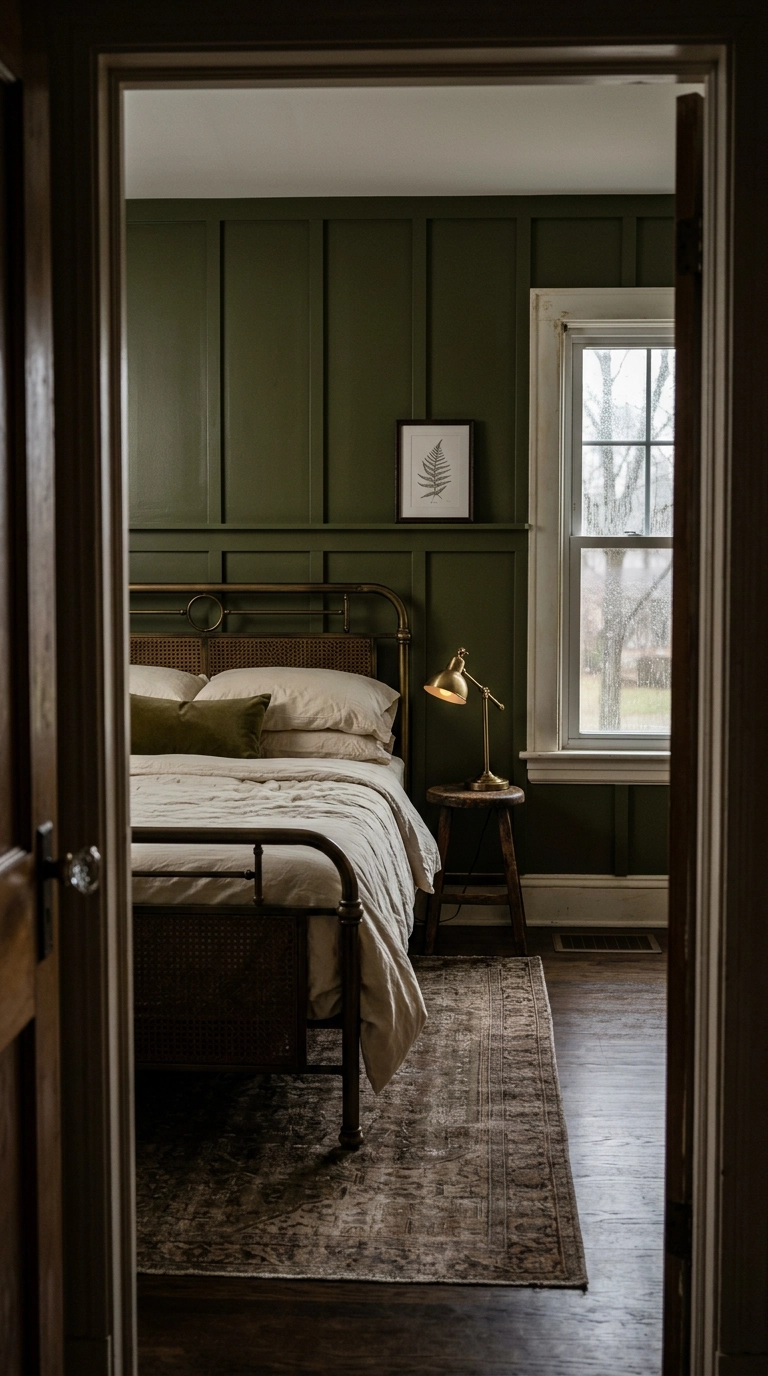
Board and batten adds shadow lines, and shadow lines are what make a flat drywall wall look built rather than decorated. Space the vertical battens 14 to 18 inches apart and cap the whole thing with a horizontal rail at about 60 inches so it doesn’t cut the wall in an awkward place.
6. Picture Frame Molding in a Tone-on-Tone Cream
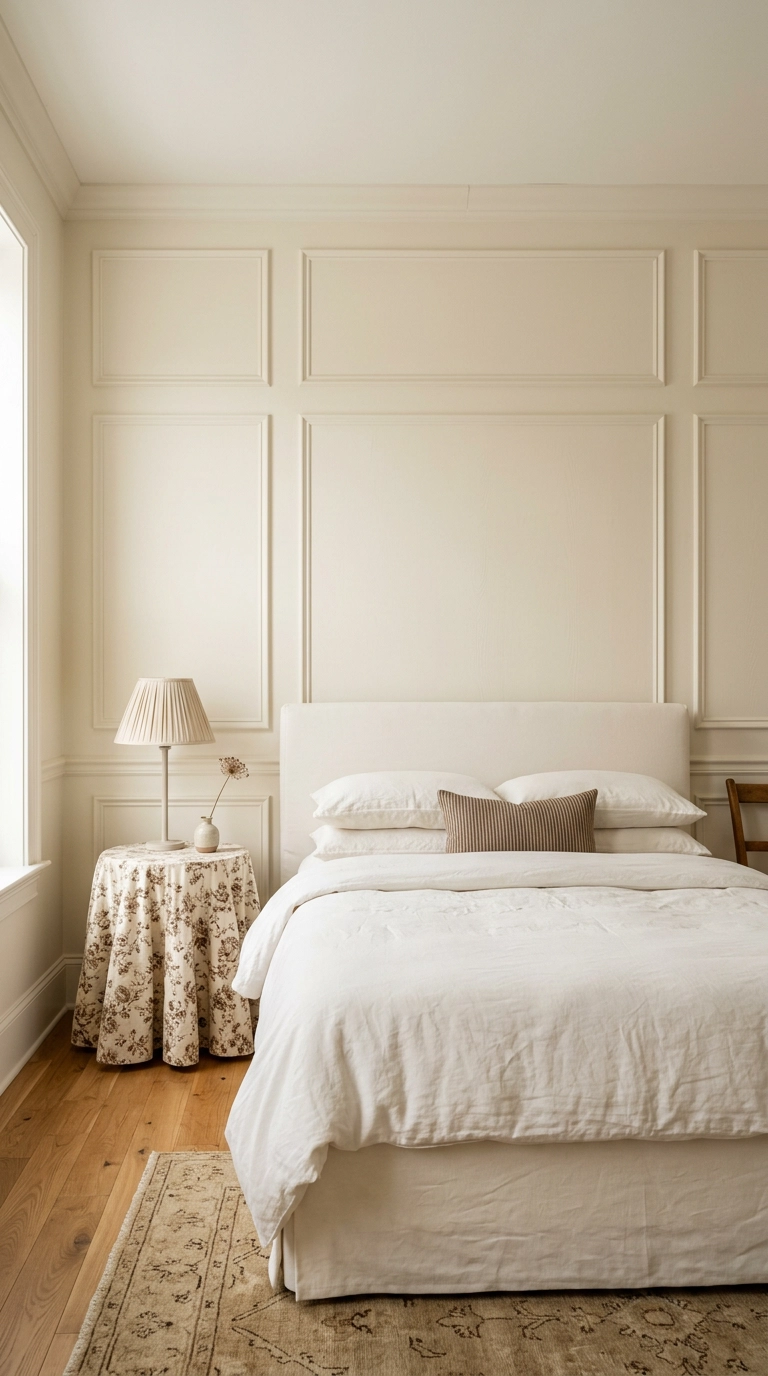
Painting the molding the same color as the wall is the move that keeps this from looking like a rental hallway. You get texture from shadow instead of contrast, which is quieter and ages better than a two-tone version.
7. Shiplap Done Right, Painted a Soft Bone
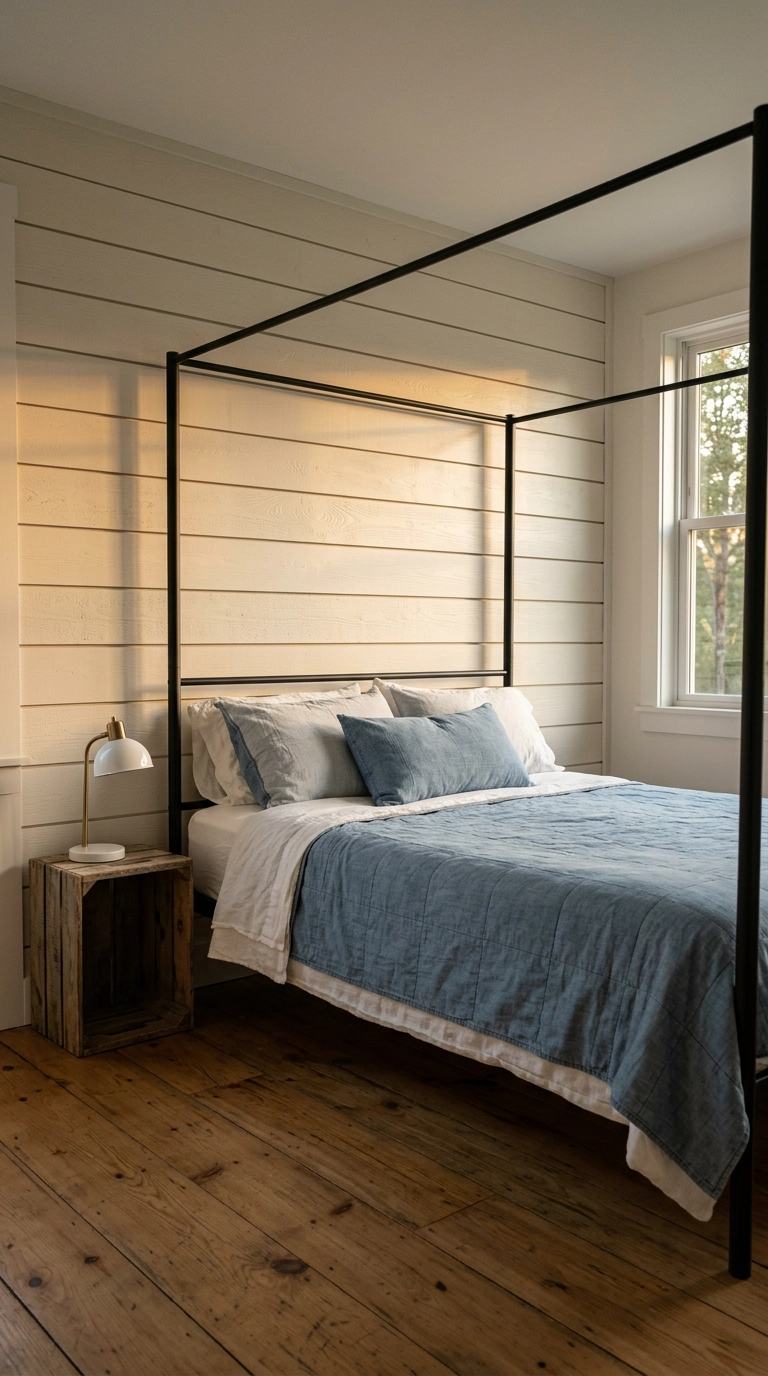
Shiplap got overexposed because people ran it everywhere in a bright white. Keep it to one wall, pick a warm bone like Benjamin Moore White Dove instead of a stark white, and let the light rake across it sideways so the gaps actually cast shadows.
8. Half-Wall Paint with a Crisp, Confident Line
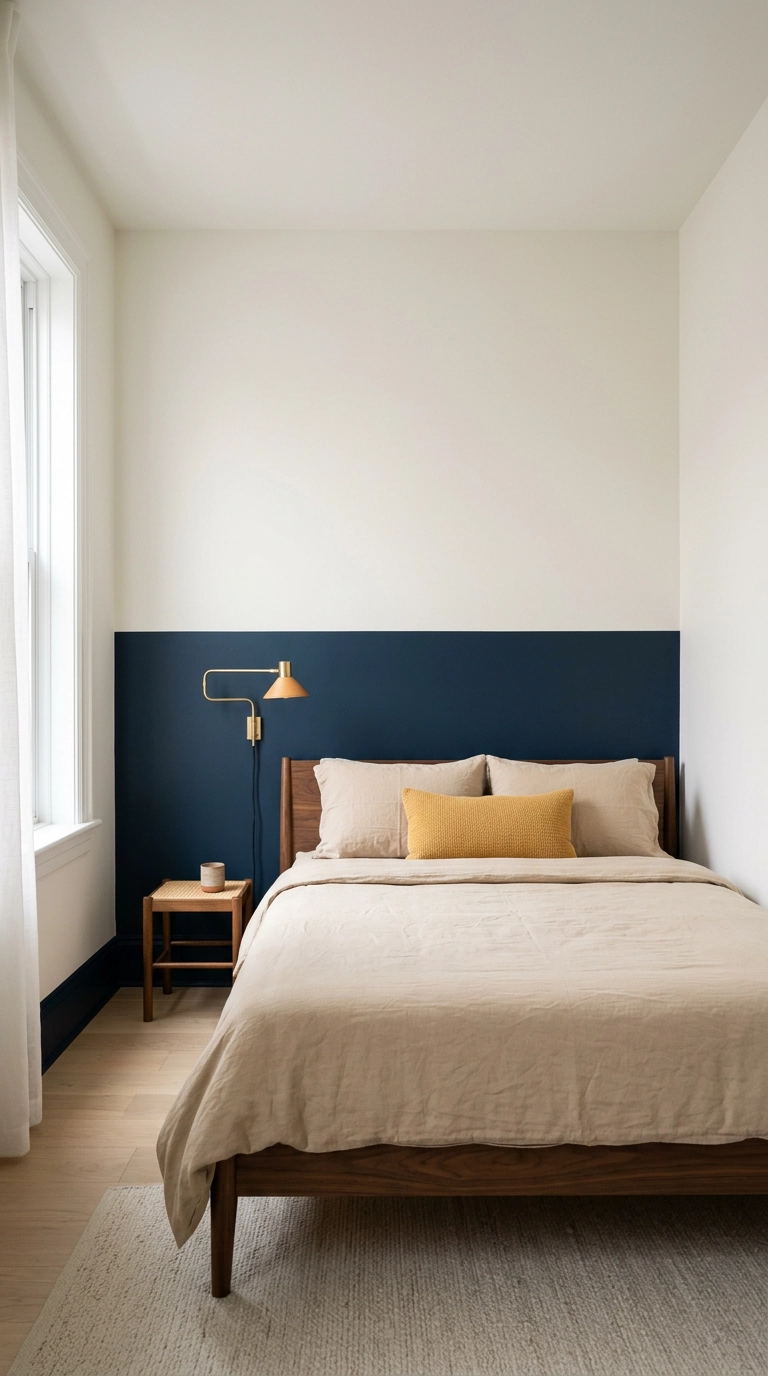
The whole idea lives or dies on the line, so run painter’s tape, seal the edge with the top color first, then paint the bottom color over it. That seal step is what stops bleed, and it takes ten extra minutes.
9. Arched Paint Shape Behind the Bed
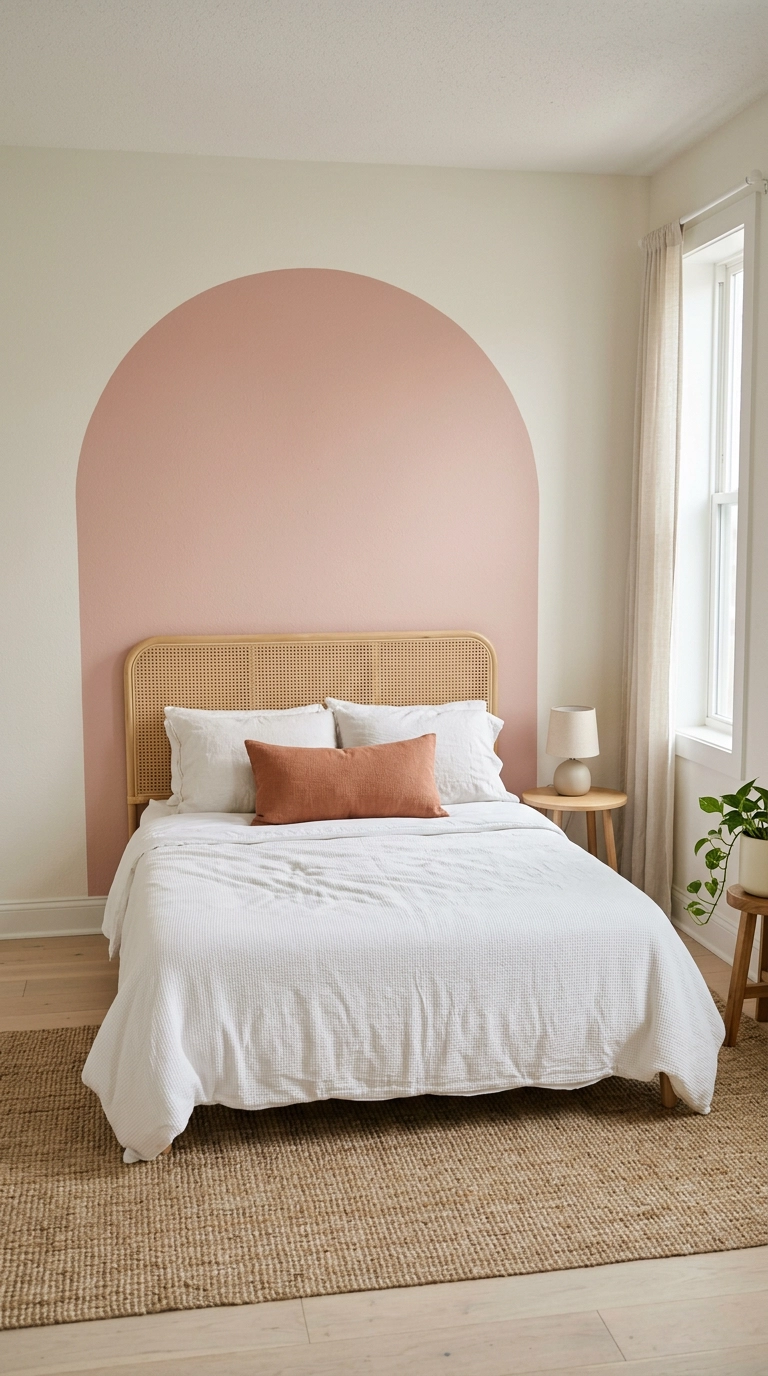
A painted arch works because it borrows the visual authority of a real architectural niche without any construction. Make it wider than the bed by about 8 inches on each side, and stop the top around 10 inches shy of the ceiling so it reads as a shape and not a mistake.
10. Scenic Mural Wallpaper on the Wall Opposite the Bed
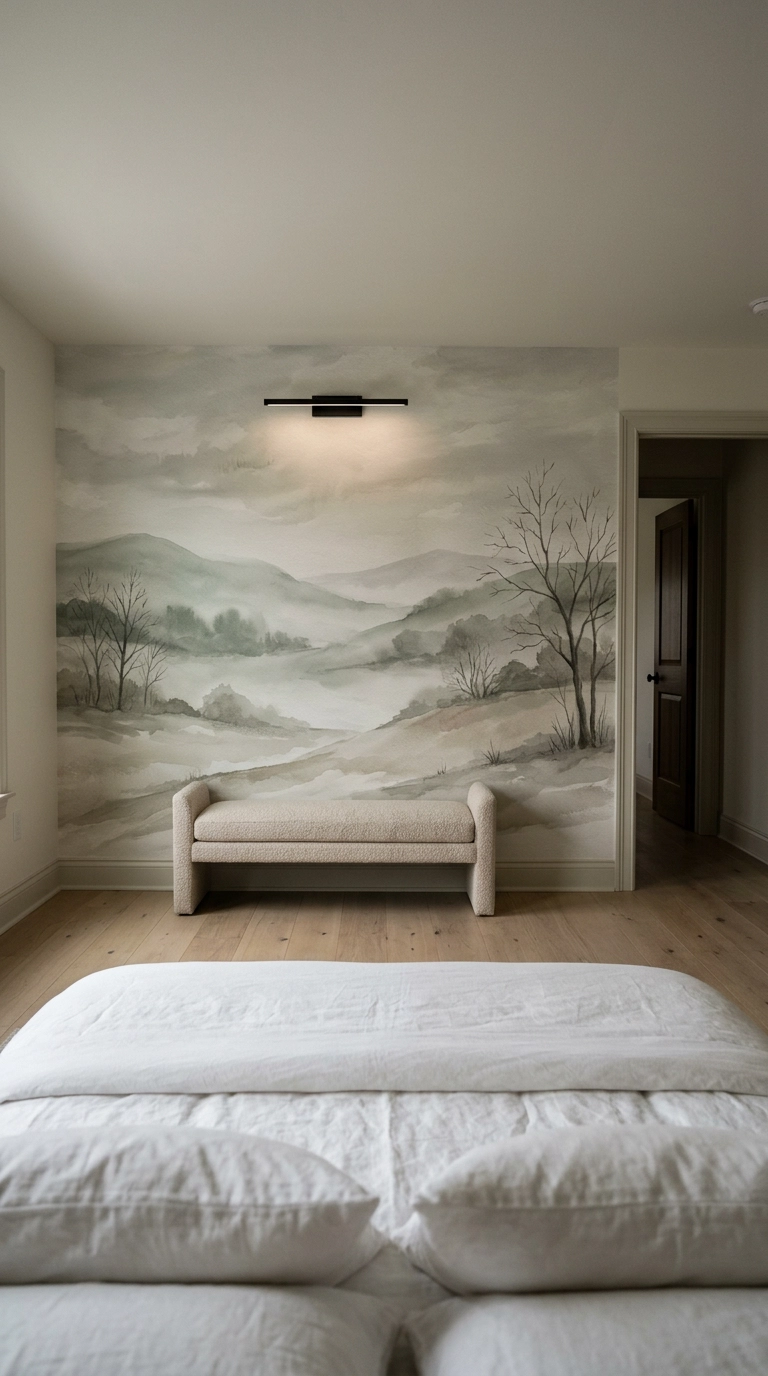
Putting the mural opposite the bed is the smarter placement almost nobody chooses. You actually see it when you’re lying down, and the bed no longer competes with the pattern for attention.
11. Peel-and-Stick Geometric Pattern for Renters
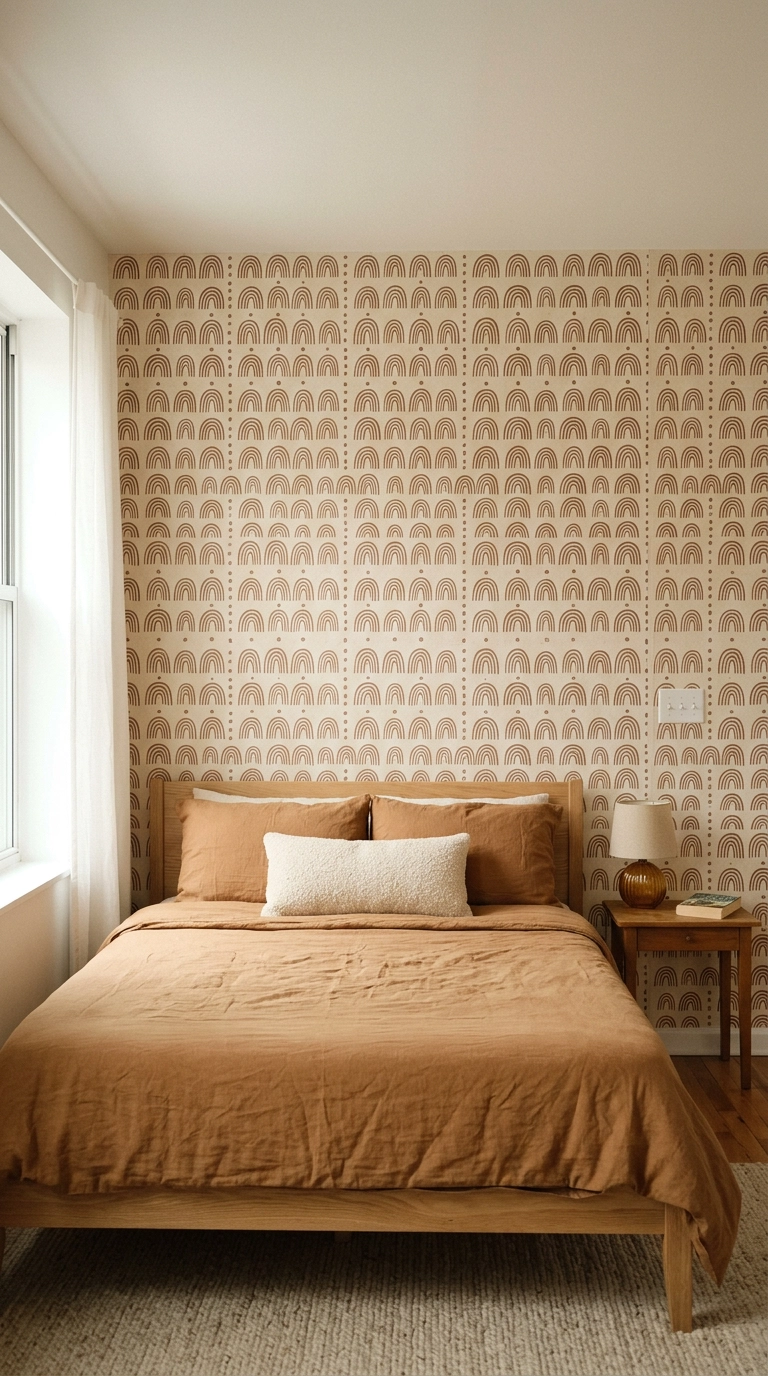
Modern peel-and-stick has gotten genuinely good, and a small-scale repeat forgives seam misalignment far better than a big botanical does. Wipe the wall down with a damp cloth first, because the adhesive fails on dust more than on paint.
12. Grasscloth for Texture Without Pattern
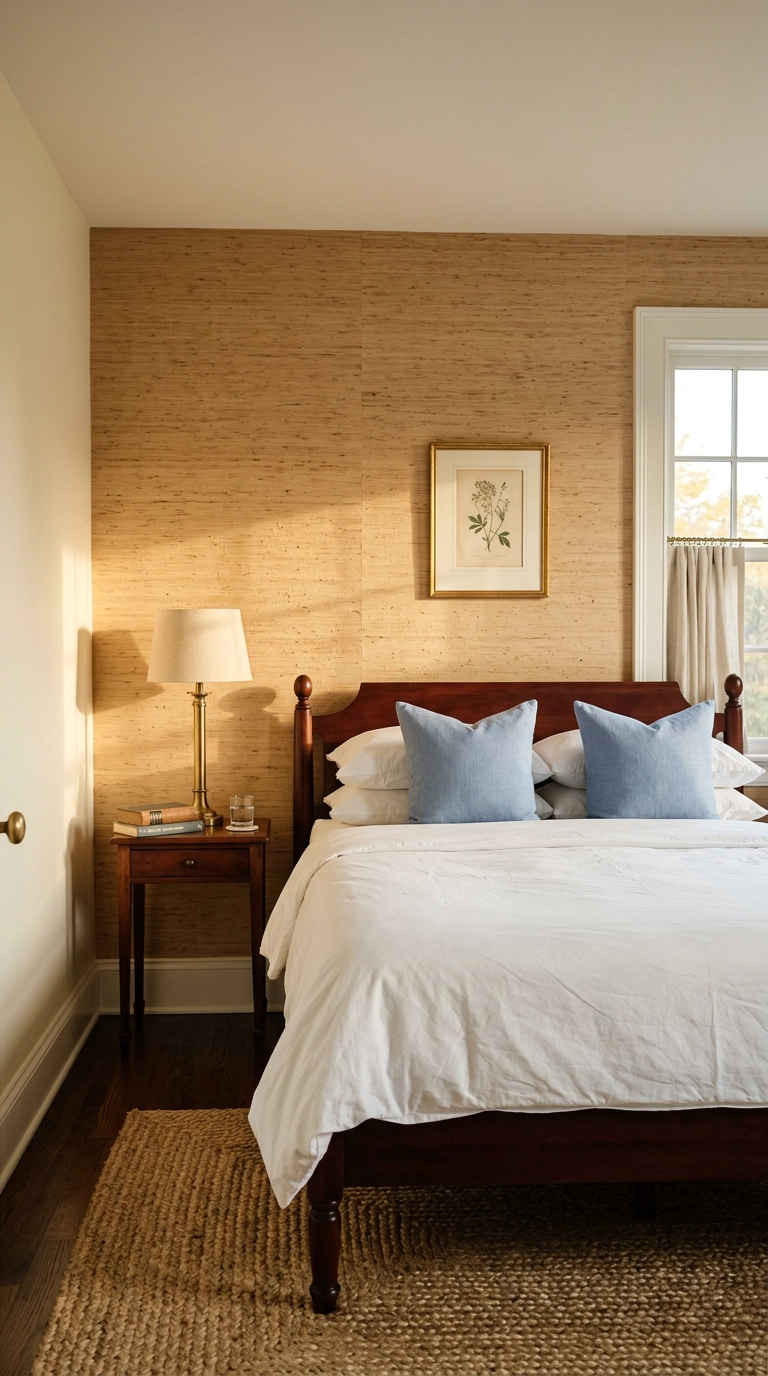
Grasscloth gives you texture with zero pattern, which is exactly what you want if the rest of the room already has a rug or curtains doing something. The seams are visible by design – that’s the material, not a mistake, and fighting it will only make you miserable.
13. Fluted and Reeded Panels in a Small Bedroom
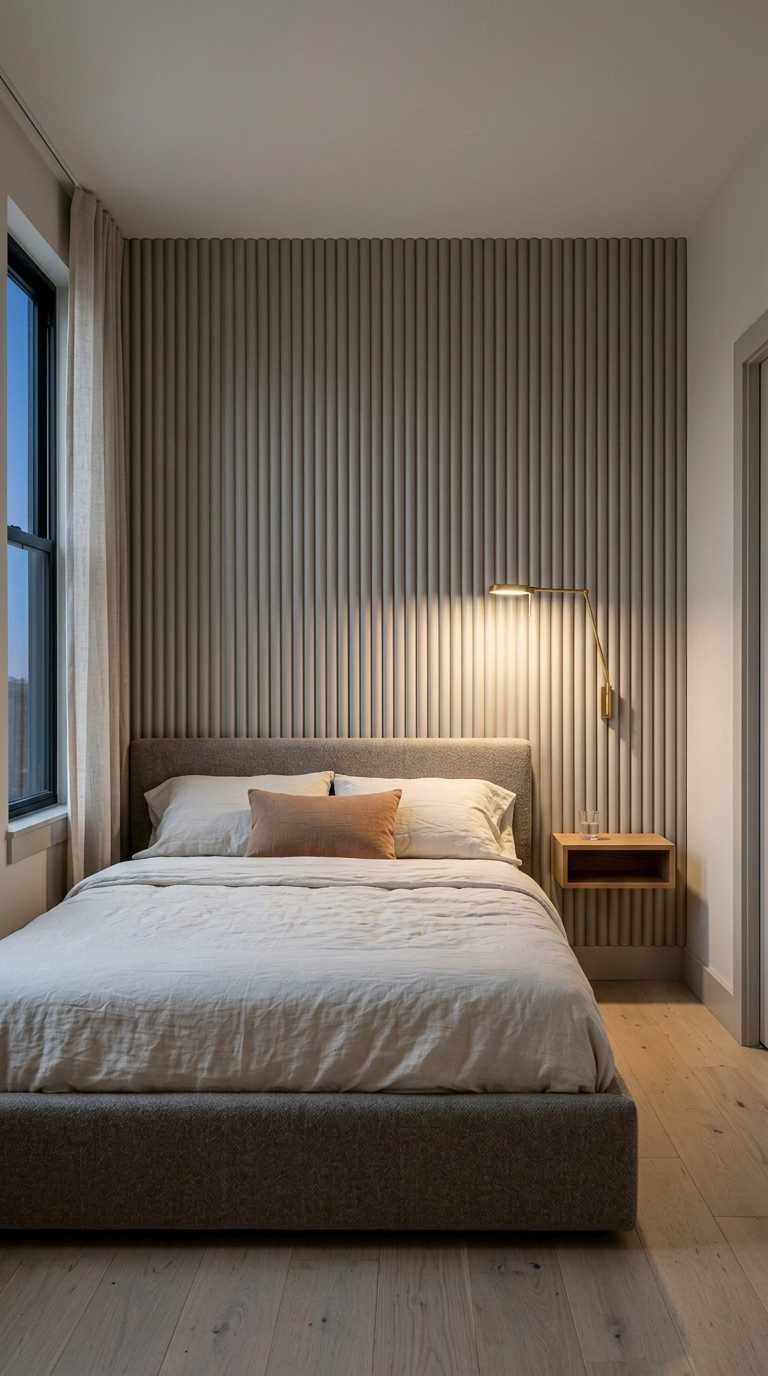
Fluting is the softer cousin of a slat wall – rounded ribs instead of sharp gaps, so the shadows gradient instead of striping. That softness is why it works in a genuinely small bedroom where a high-contrast slat wall would feel busy.
14. Upholstered Padded Wall Behind the Bed
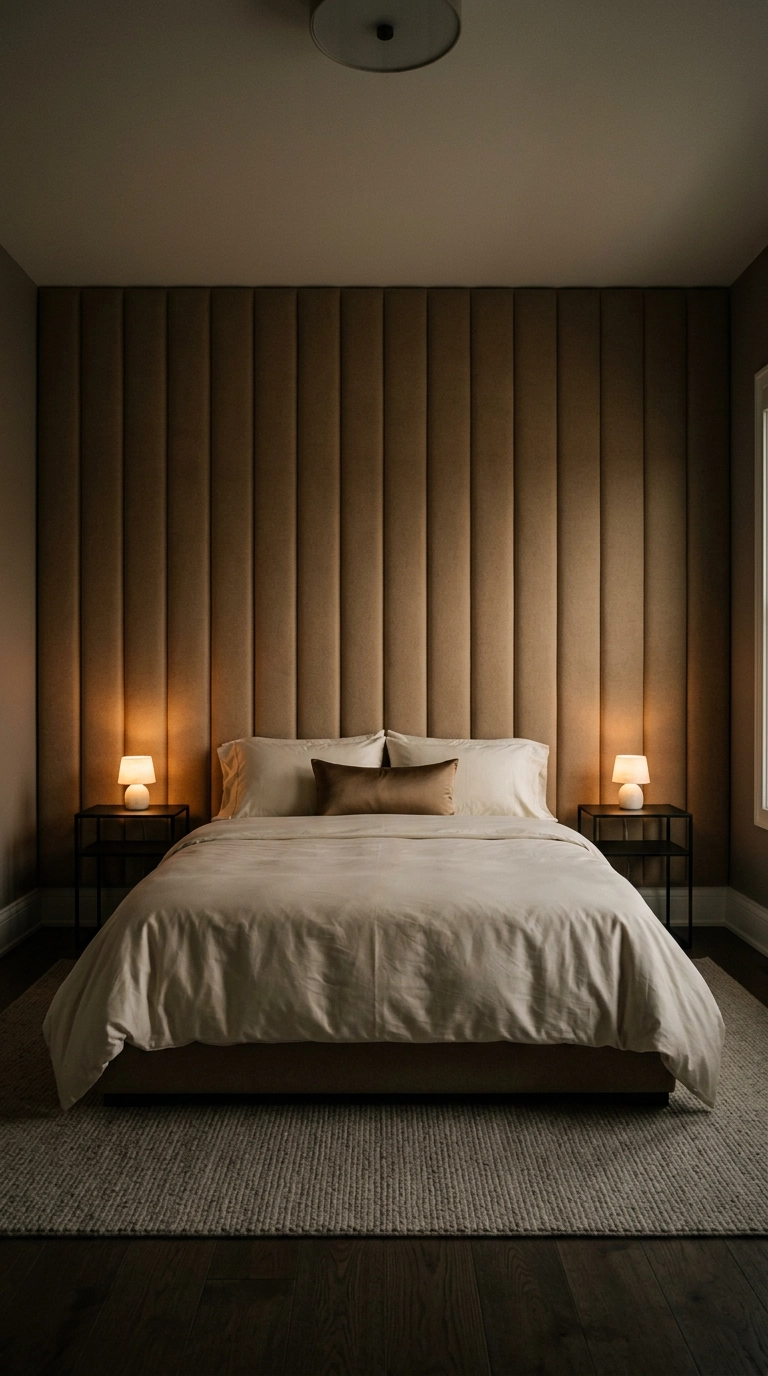
An upholstered wall absorbs sound as well as it looks, which is why it turns up in hotel rooms and city apartments with thin party walls. Run it wider than the bed by at least a foot on each side or it just reads as a headboard that got confused.
15. Painted Tongue-and-Groove on a Sloped Attic Wall
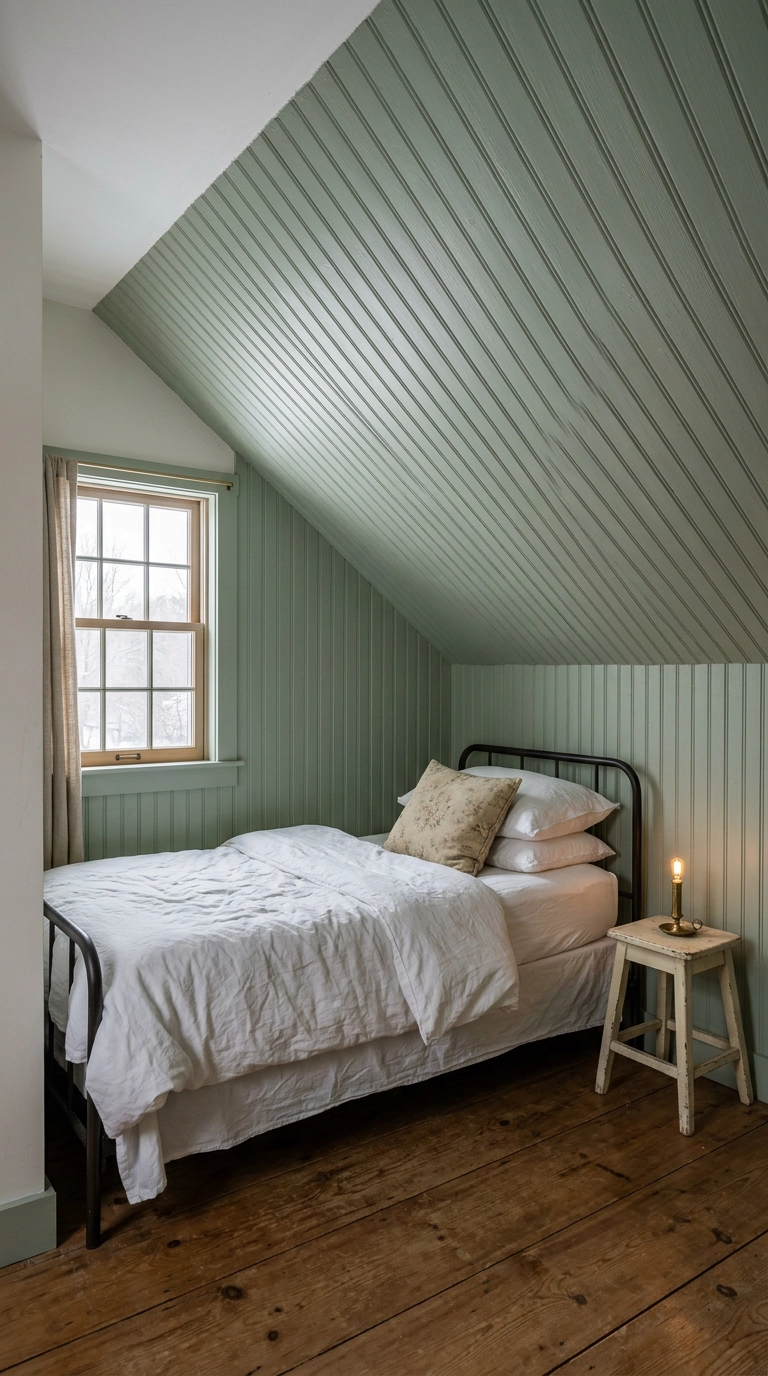
On a sloped ceiling, running the paneling from the wall up over the slope in one unbroken color solves the awkward angle instead of highlighting it. The eye stops looking for where the wall ends.
16. Exposed Brick, Sealed and Left Alone
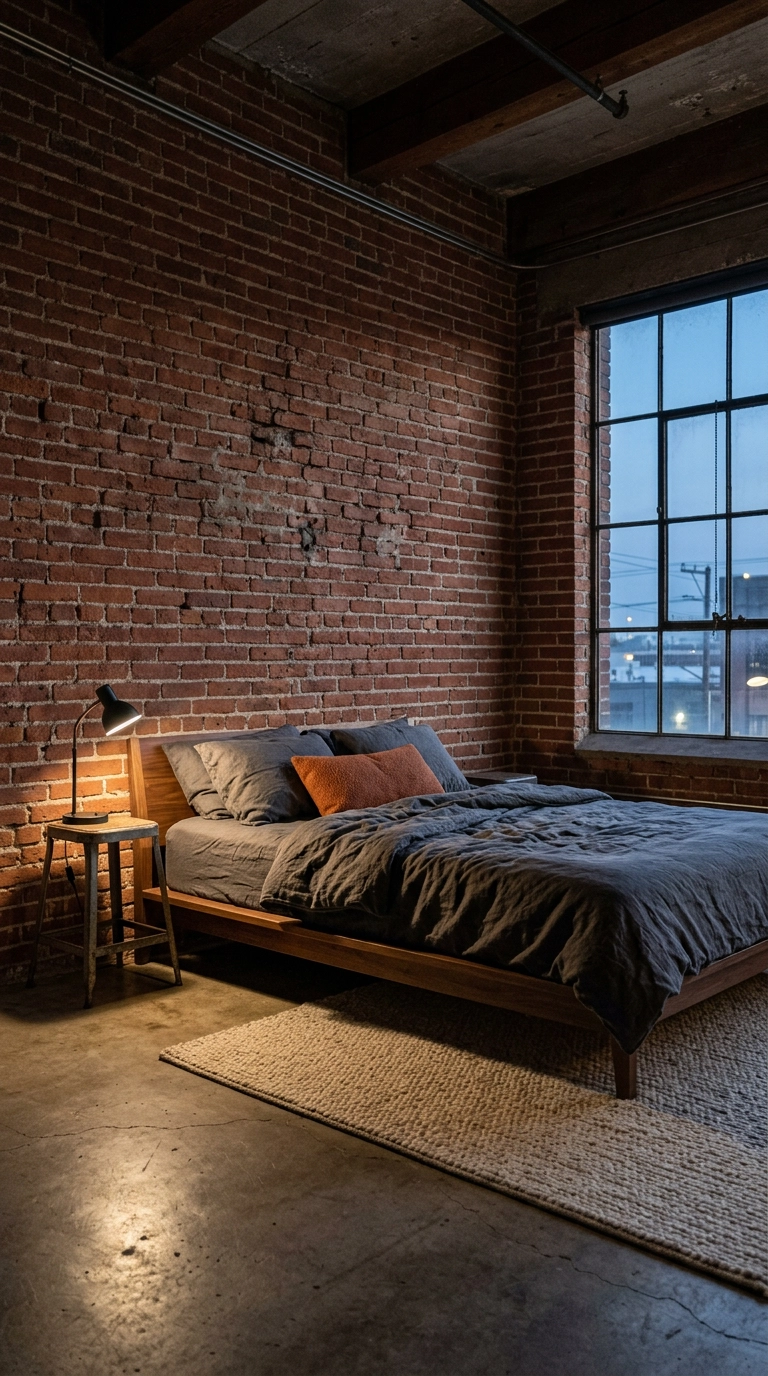
If you’re lucky enough to already have brick, the design work is restraint. Seal it with a matte masonry sealer so it stops shedding dust, then keep every textile in the room solid, because brick is already a pattern.
17. Microcement Tadelakt-Look Wall
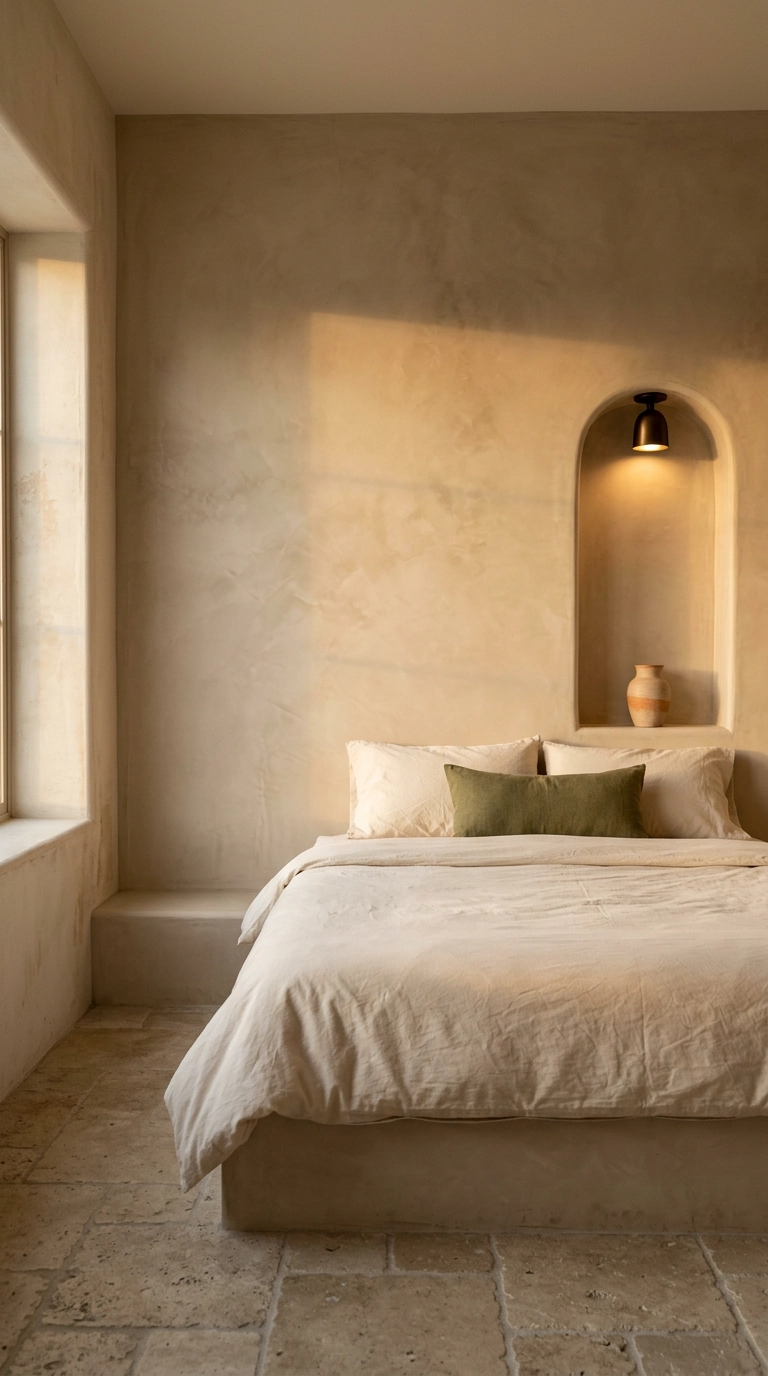
Microcement is a thin troweled cement coating that goes over drywall, so you get the look of solid plaster without touching structure. It reads seamless, which is why it’s worth wrapping into a niche or around a corner rather than stopping at a hard edge.
18. Wood Slat Wall with Integrated Linear Lighting
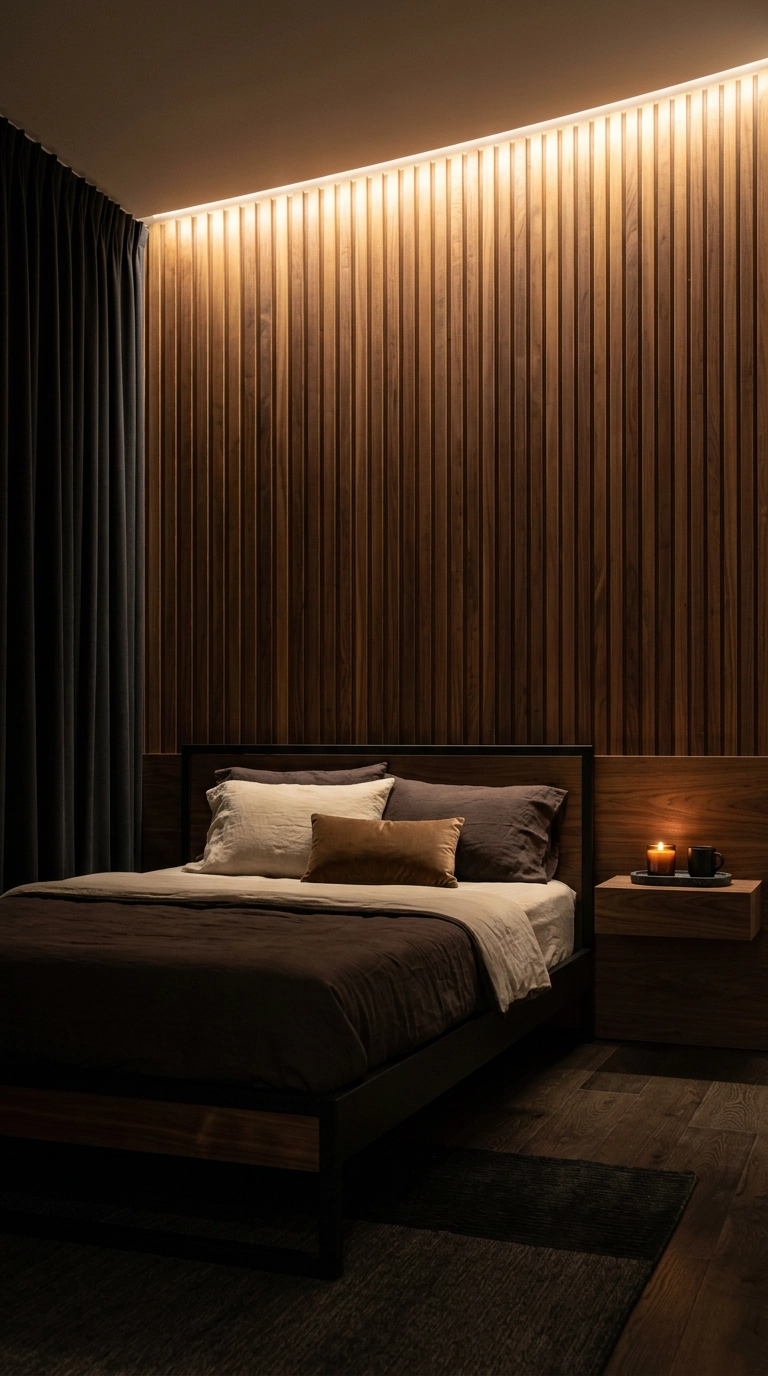
Hiding a warm LED strip behind the top of a slat wall gives you indirect light that grazes the wood, and grazing light is what makes texture visible at night. Pick 2700K or lower – anything cooler makes walnut look grey and dead.
19. Floating Picture Ledge Wall Above the Bed
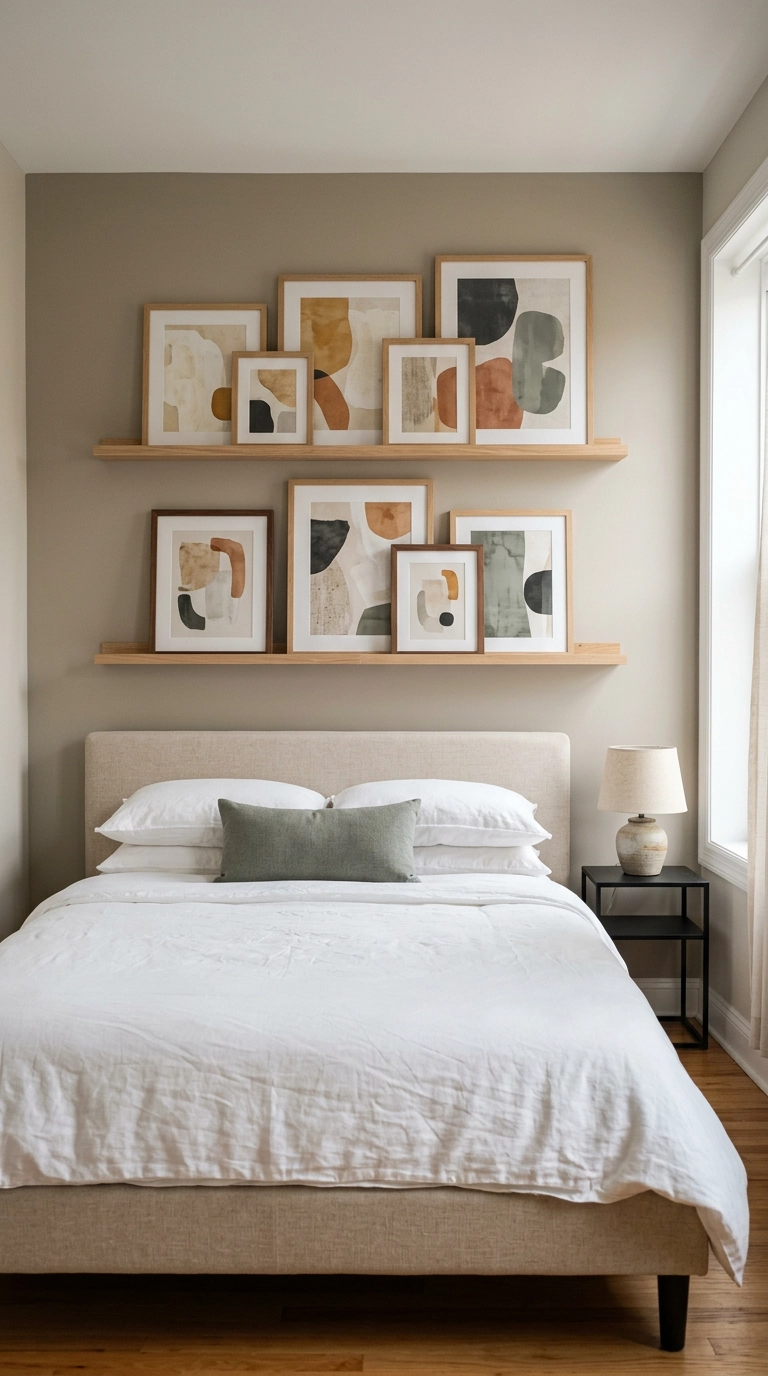
Ledges give you a gallery wall you can rearrange in thirty seconds, which matters because most people get the layout wrong the first time and then live with it out of spite. Mount the lower ledge about 12 inches above the headboard and the second about 14 inches above that.
20. A Tight Gallery Grid on the Wall Opposite the Bed
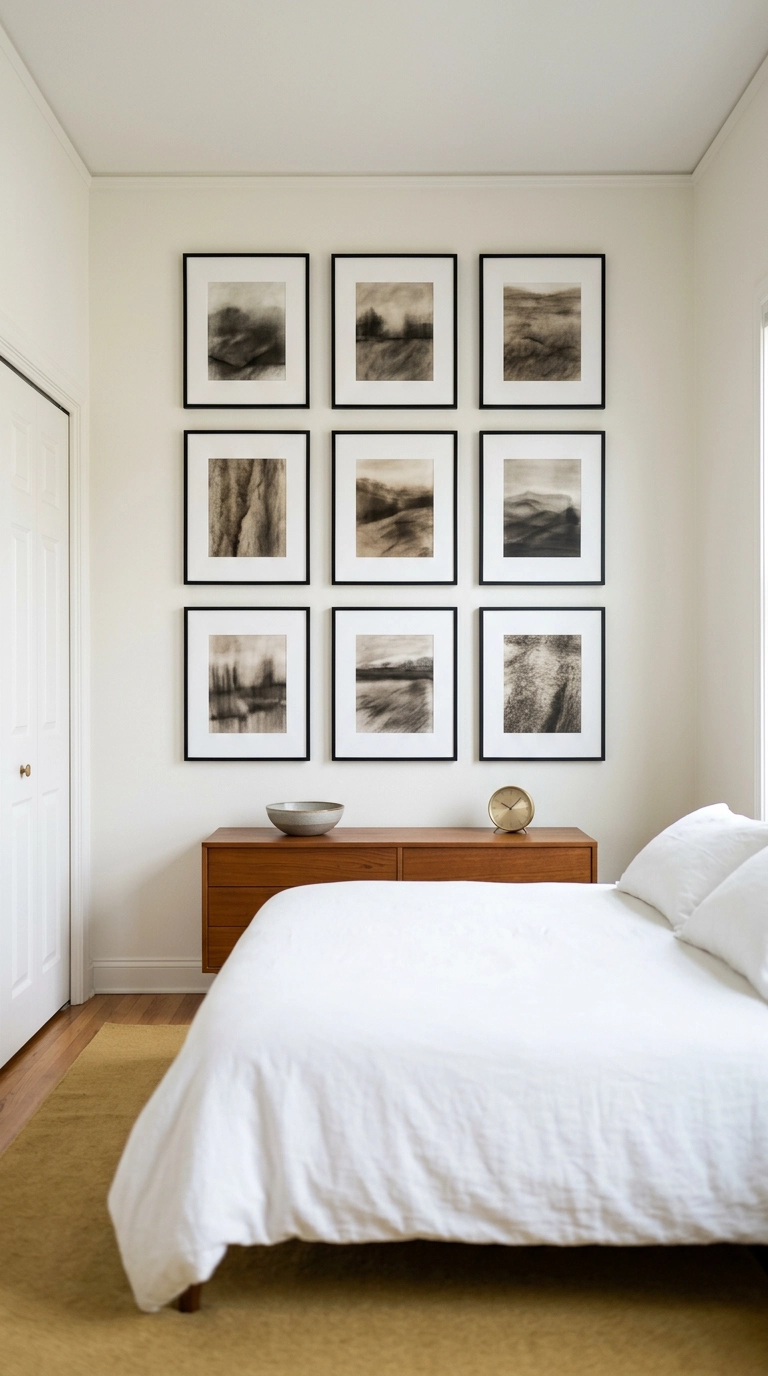
A grid is the easy-mode gallery wall. Identical frames, identical gaps, and the whole cluster reads as one big rectangle instead of nine small decisions, which is exactly what a bedroom needs when you want calm.
21. A Mirror-Clad Section to Steal Light
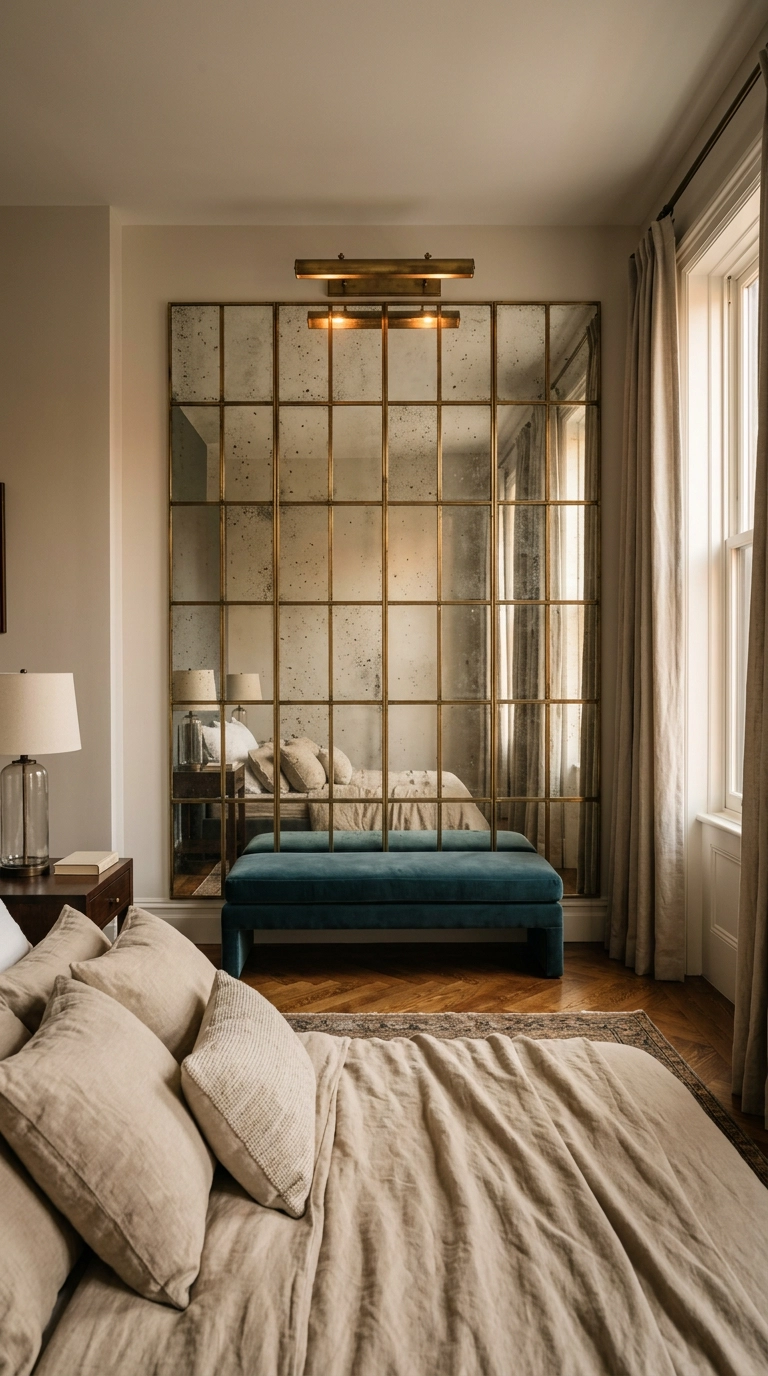
Mirror on the wall opposite the window nearly doubles the usable daylight in a dark bedroom, which is why old brownstones are full of it. Use antiqued or foxed glass rather than a clean mirror – it bounces light without turning the room into a fitting room.
22. Stone or Tile on the Bed Wall
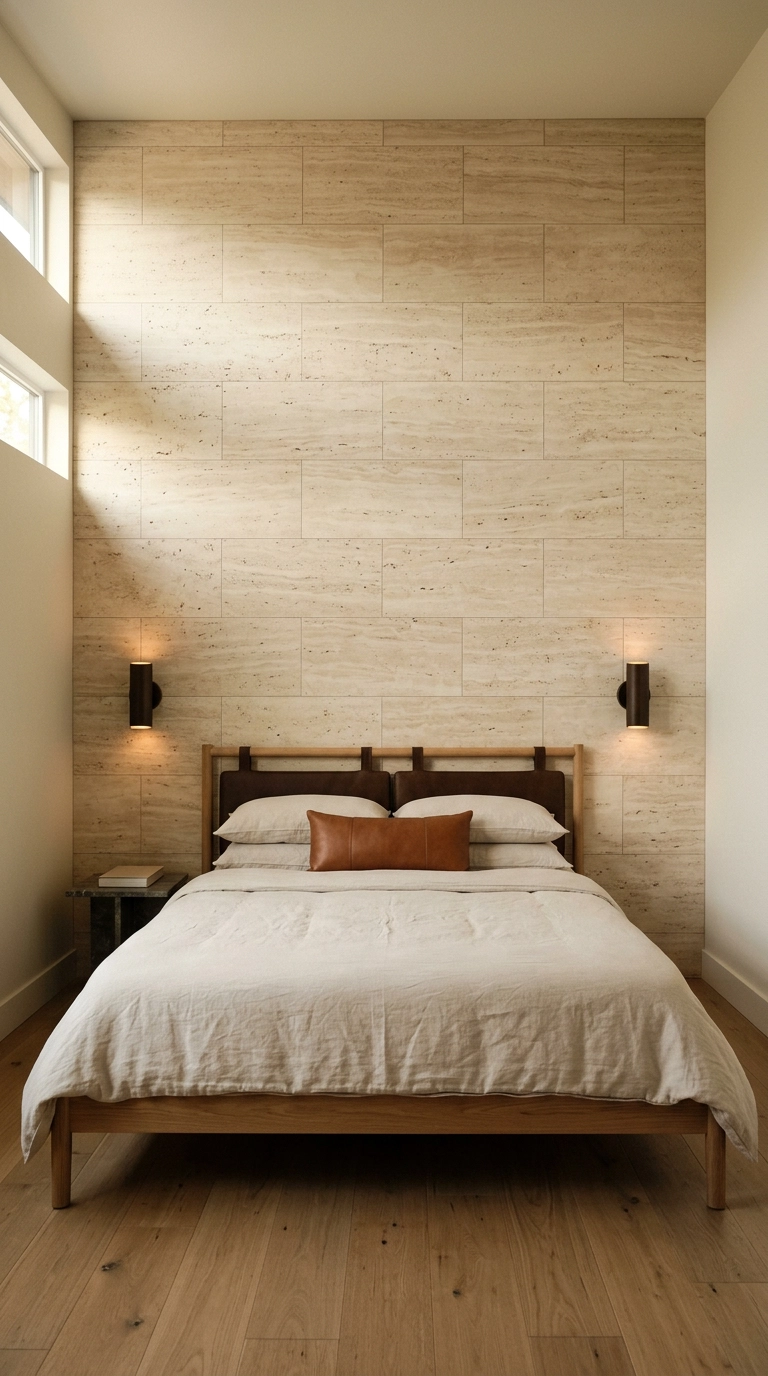
Stone in a bedroom sounds cold on paper and reads warm in person, as long as you pick a honed finish in a beige or ivory family and skip anything polished. The temperature-shifting trick is light washing down it from above, which makes the pitting visible.
23. Batten Grid Painted the Exact Same Color as the Wall
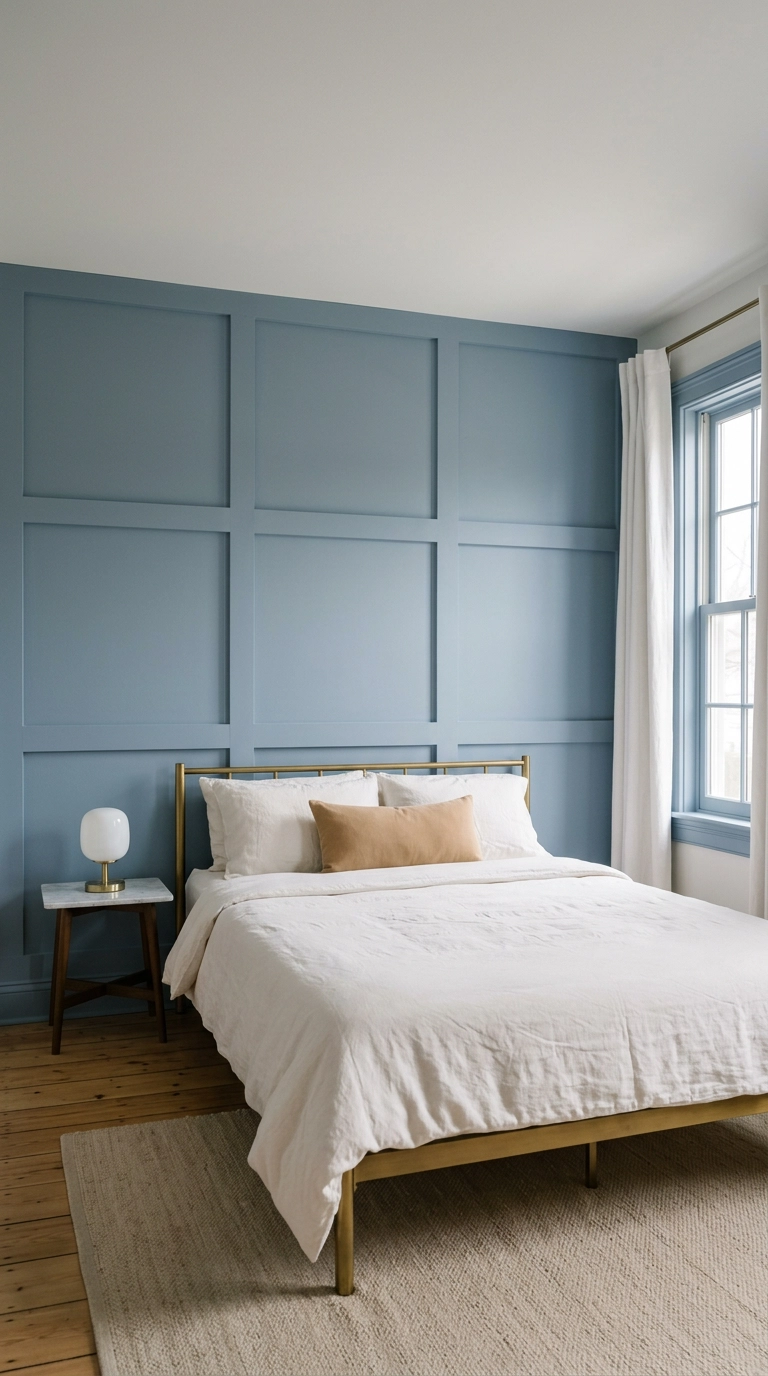
Painting the grid and the wall the same shade removes all contrast, so what you notice is depth rather than lines. It’s the quietest millwork on this list and the one that photographs best in a plain overcast room.
24. Wallpaper the Nook Behind the Bed Only
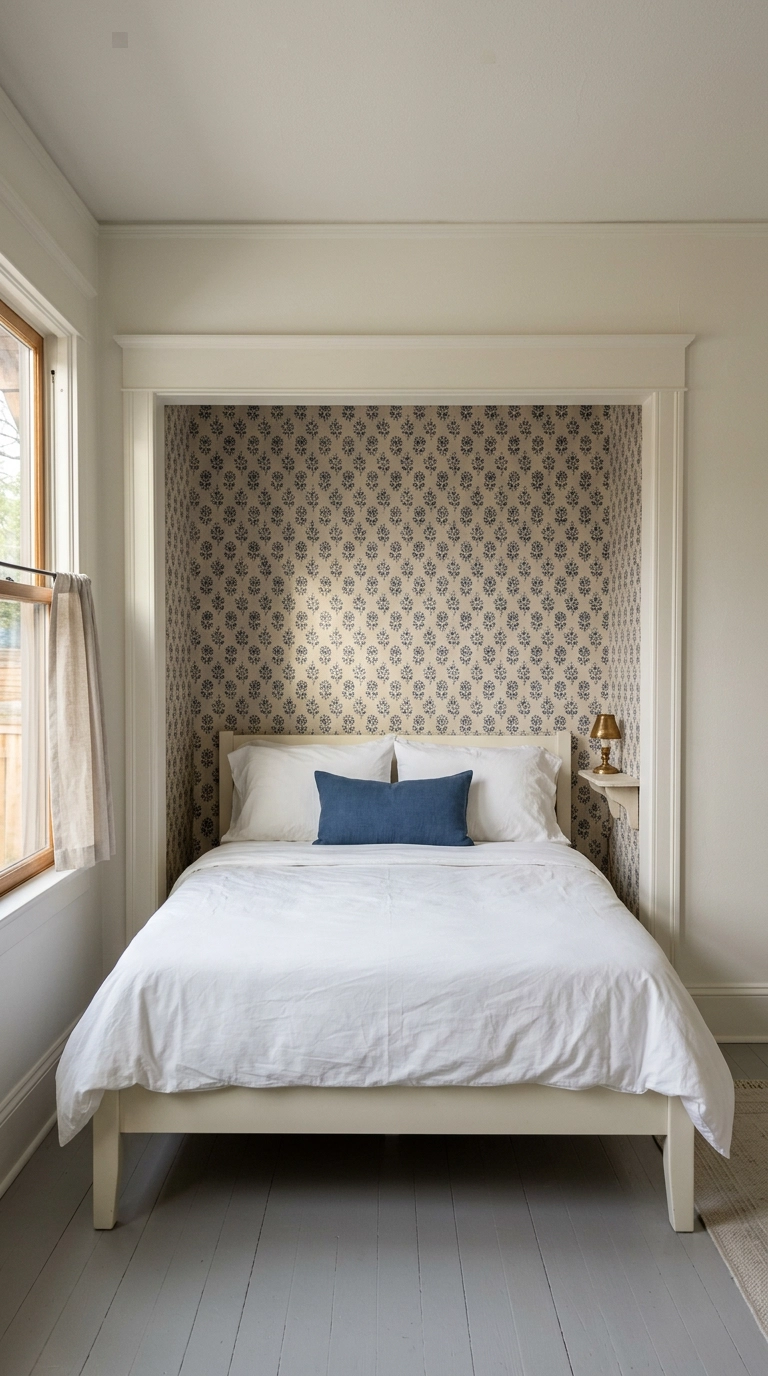
Papering only the alcove costs you one or two rolls instead of six, and the surrounding white wall acts like a mat around a picture. If your bedroom has any recess – an old chimney breast, a bumped-out closet wall – that’s the spot.
25. Plate and Woven Basket Wall
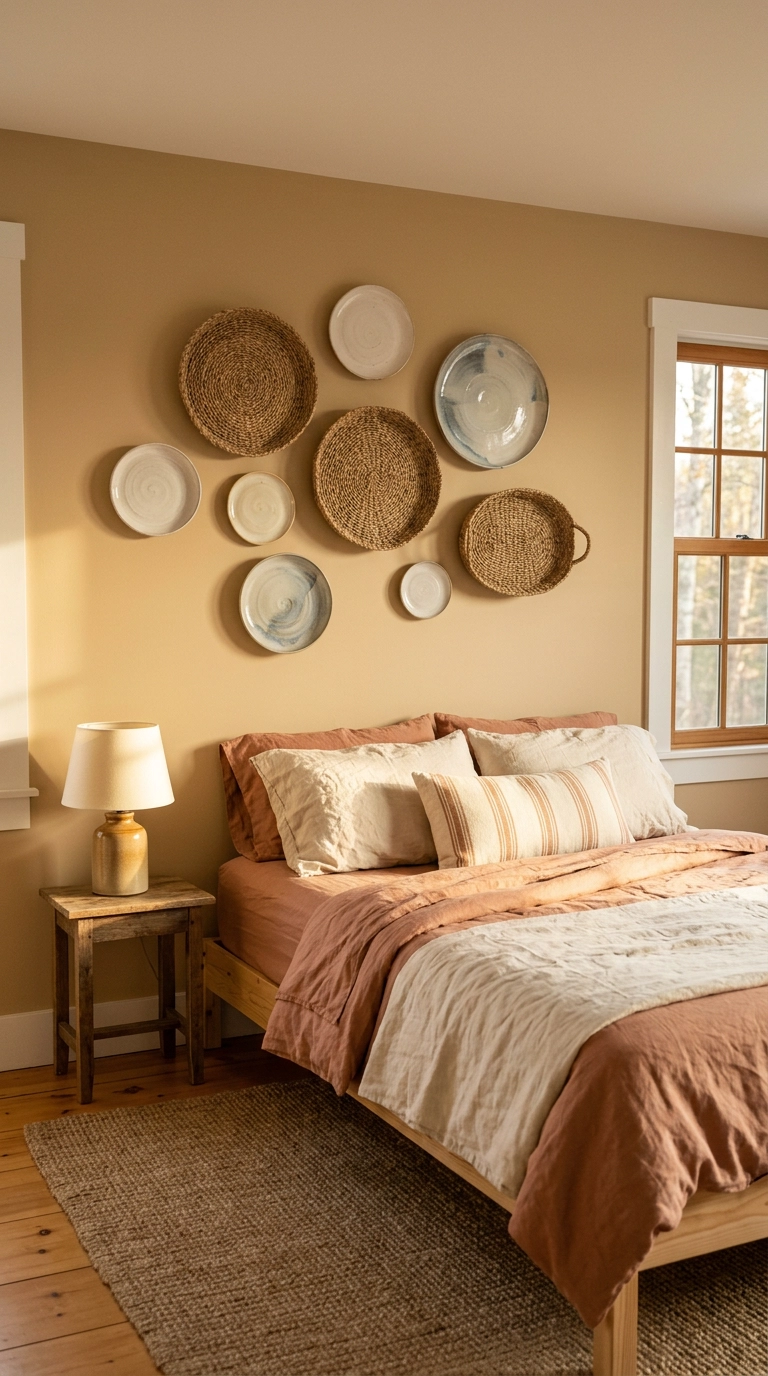
Baskets and plates give you a textural wall with almost no weight, which is the practical answer for plaster walls that hate anchors. Work in odd numbers and vary the sizes – an odd count reads as arranged, an even count reads as a chart.
26. A Large Textile Hanging Instead of a Headboard
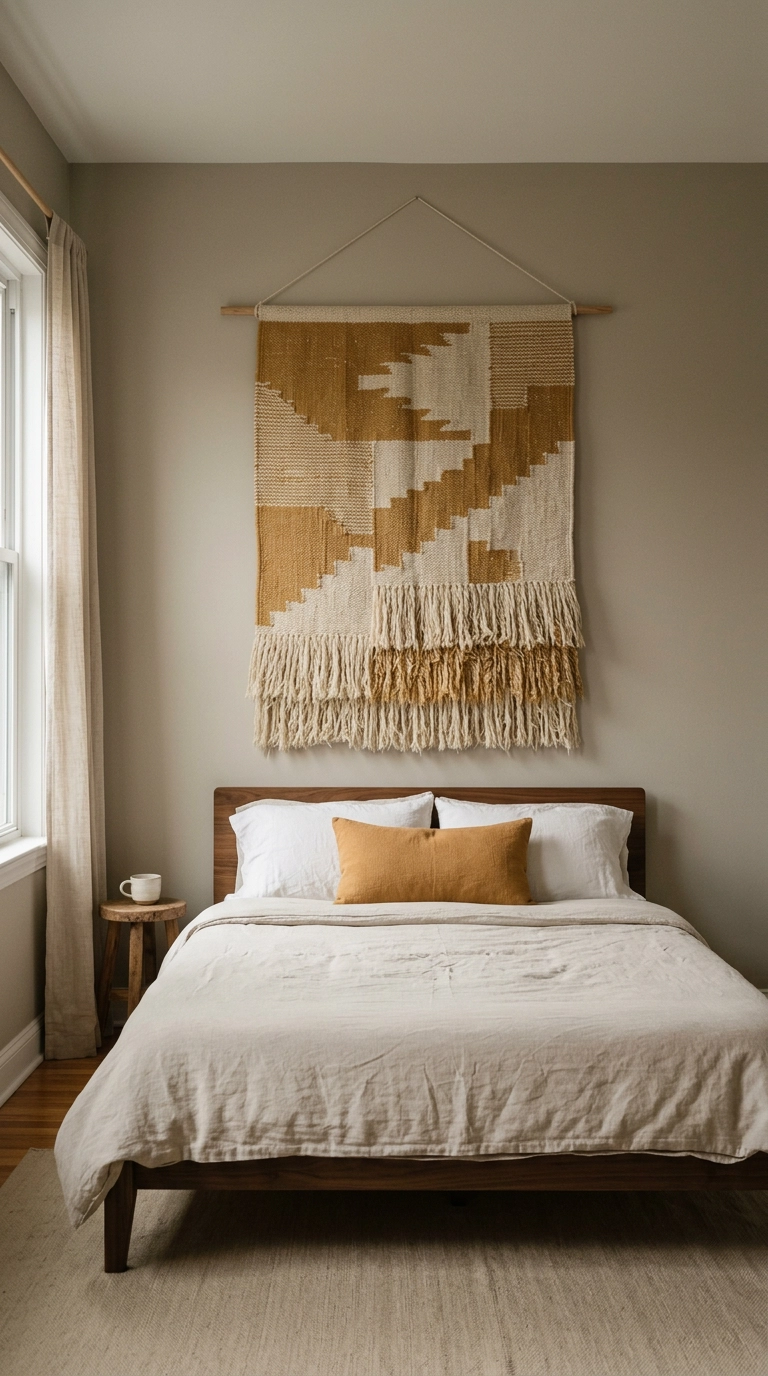
Textile softens both the look and the acoustics, and it’s the single best answer for a bedroom that echoes. Hang it from a dowel with the bottom edge landing above the pillow line so nobody’s head rubs it.
27. Fabric Curtain Backdrop Across the Whole Wall
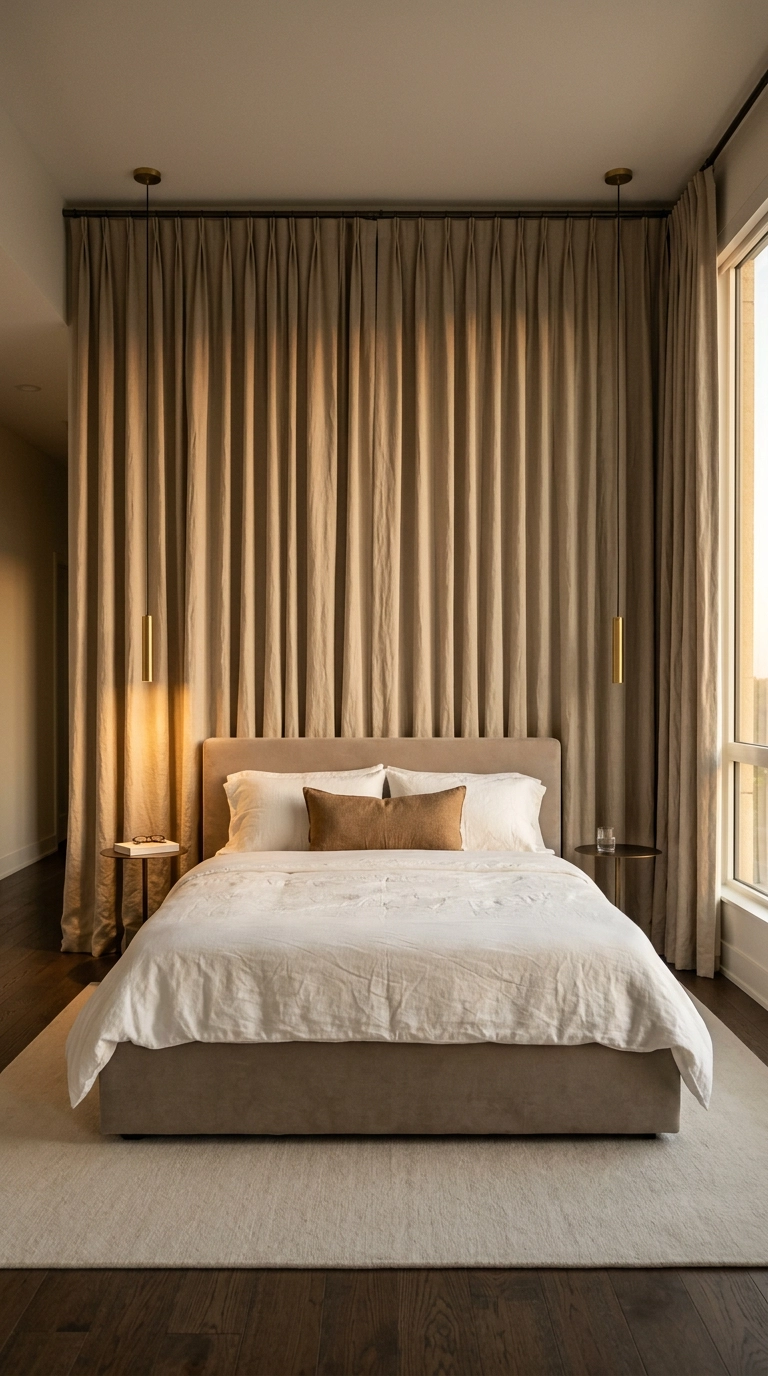
Running curtains across a whole wall, window or not, gives you softness and height in one move, and it hides bad drywall, an off-center window, or an ugly radiator. Mount the rod within a few inches of the ceiling – the higher rod is what makes the wall feel tall.
28. Dark Drenched Wall with Twin Plug-In Sconces Behind a Reading Nook
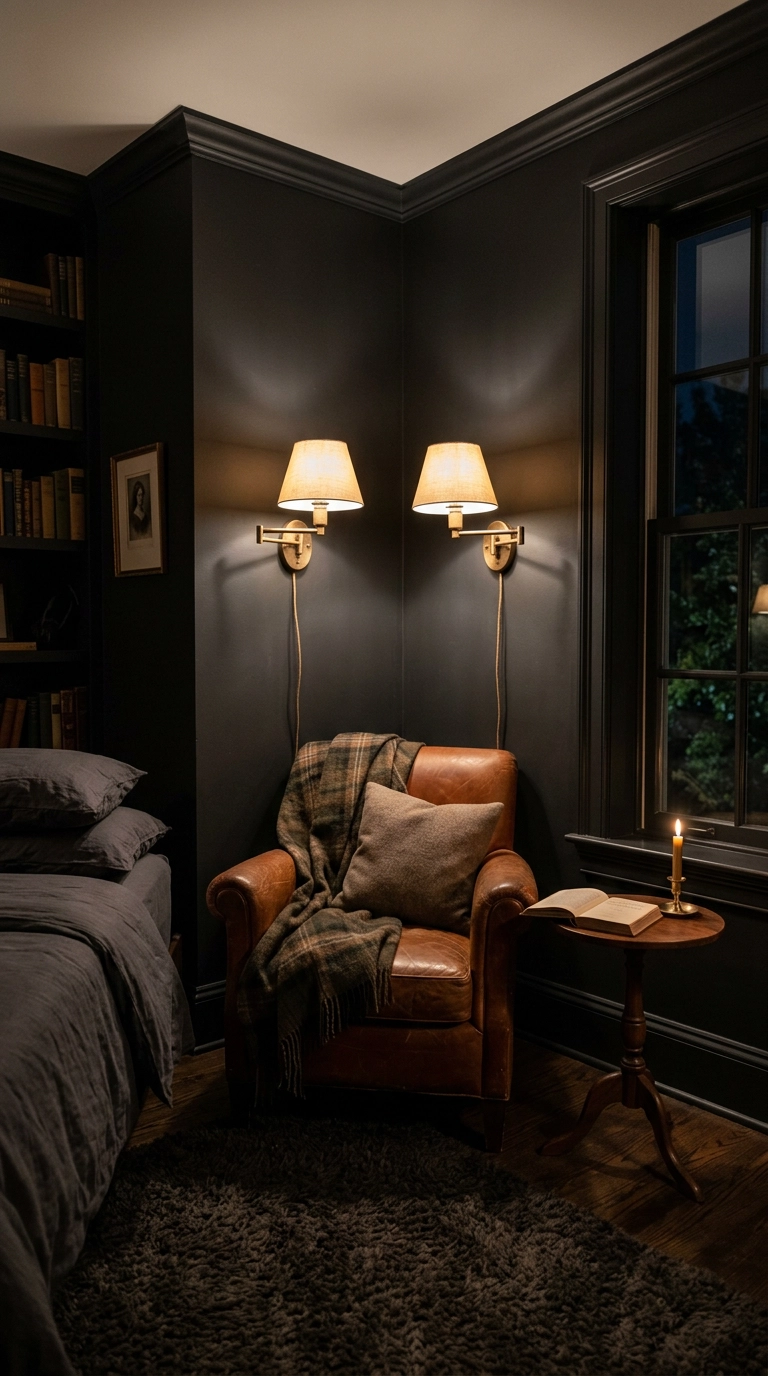
A near-black wall works best where it can be lit locally rather than evenly, because the pools of warm sconce light are what give the darkness depth. Farrow and Ball Railings or Benjamin Moore Soot both stay soft instead of going flat.
Where I’d Actually Start If This Were My Bedroom
If you only do one thing from this list, color drench the bed wall. It’s two gallons, one Saturday, and it changes the room more than a new bed frame would – and unlike millwork, you can undo it. If you’ve got a little more ambition, the vertical white oak slat wall and the tone-on-tone batten grid are the two that make people ask who designed your bedroom.
What I’m seeing everywhere right now is texture instead of color. Limewash and troweled microcement have completely taken over from flat accent paint, and Amber Lewis has a lot to answer for there in the best possible way. Farrow and Ball’s earthy neutrals keep showing up in bedrooms that would have been grey five years ago, and fluted panels have quietly gone from a millwork detail to a full wall treatment. The upholstered padded wall is the one I’d call genuinely on the rise – it started in boutique hotels and it’s landing in real primary bedrooms now.
Honestly, the mistake I see most is going too small. A skinny stripe of paint behind a king bed, four little frames floating in a big wall – the treatment has to commit or it looks accidental. Whichever one you pick, run it wider and taller than feels comfortable, keep everything else in the room solid and quiet, and let one thing be the hero. If you want more of this, sign up for my weekly newsletter – I send one room breakdown every week, with the actual paint names and what it really cost.


