
21+ Cozy Bedroom Bookshelf Decor Ideas that Look Calm and Collected in 2026

I have styled more bedroom bookshelves than I can count, and I’ll tell you the honest truth up front: the problem is almost never the shelf, it’s that we treat it like storage instead of like a wall of art. A bedroom is the one room where books are already doing emotional work, so the shelving should feel soft, a little imperfect, and half-empty in the best way. Below are the ideas I keep coming back to, from ten-minute restyles to the built-ins I’d happily spend a weekend on.
Bedroom Bookshelf Decor Ideas
1. Color-Drench the Built-In Shelving and the Wall Behind It
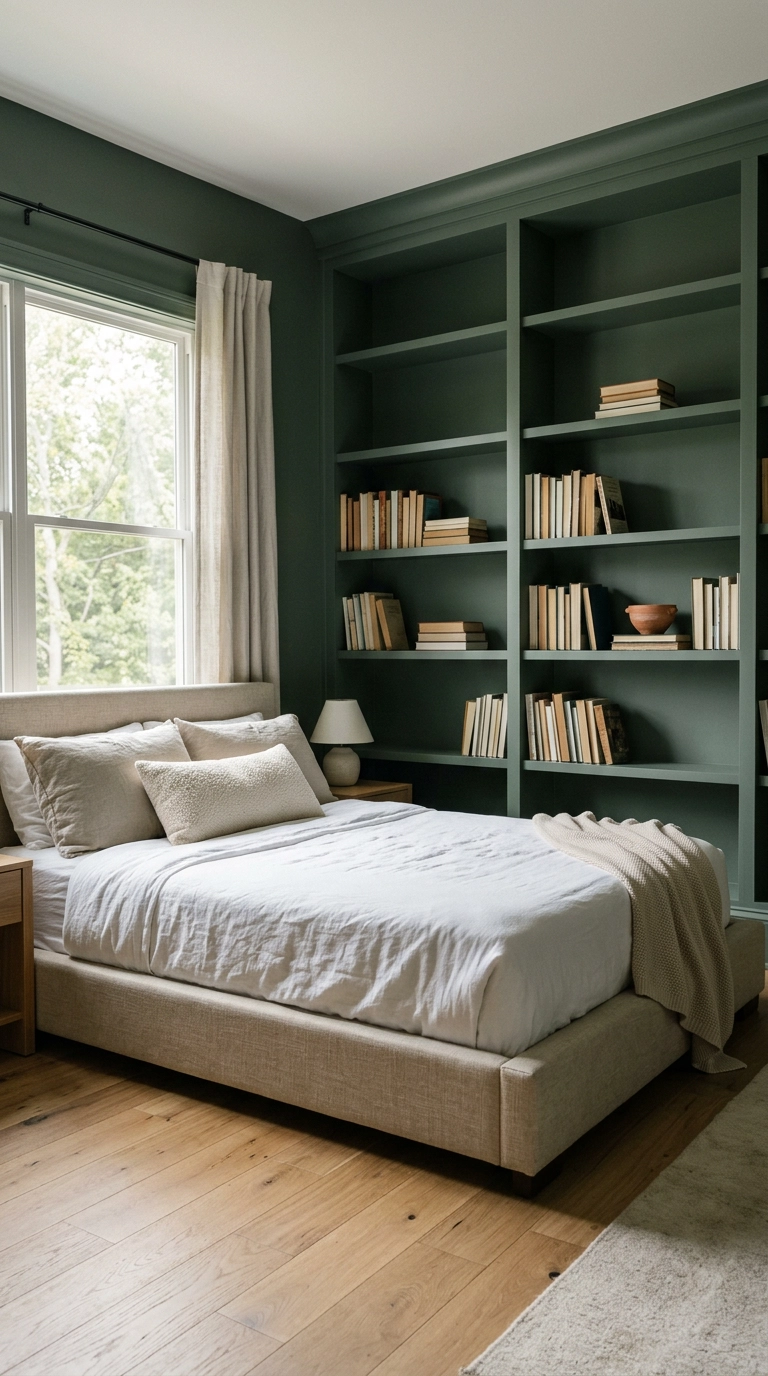
This is the single highest-impact thing you can do to a bedroom bookshelf, and it costs about two gallons of paint. Paint the shelves, the back panels, the trim, and the wall the same shade in a matte or eggshell finish, and the whole unit stops reading as furniture and starts reading as architecture.
2. Float Two Slim Oak Ledges Above the Nightstand
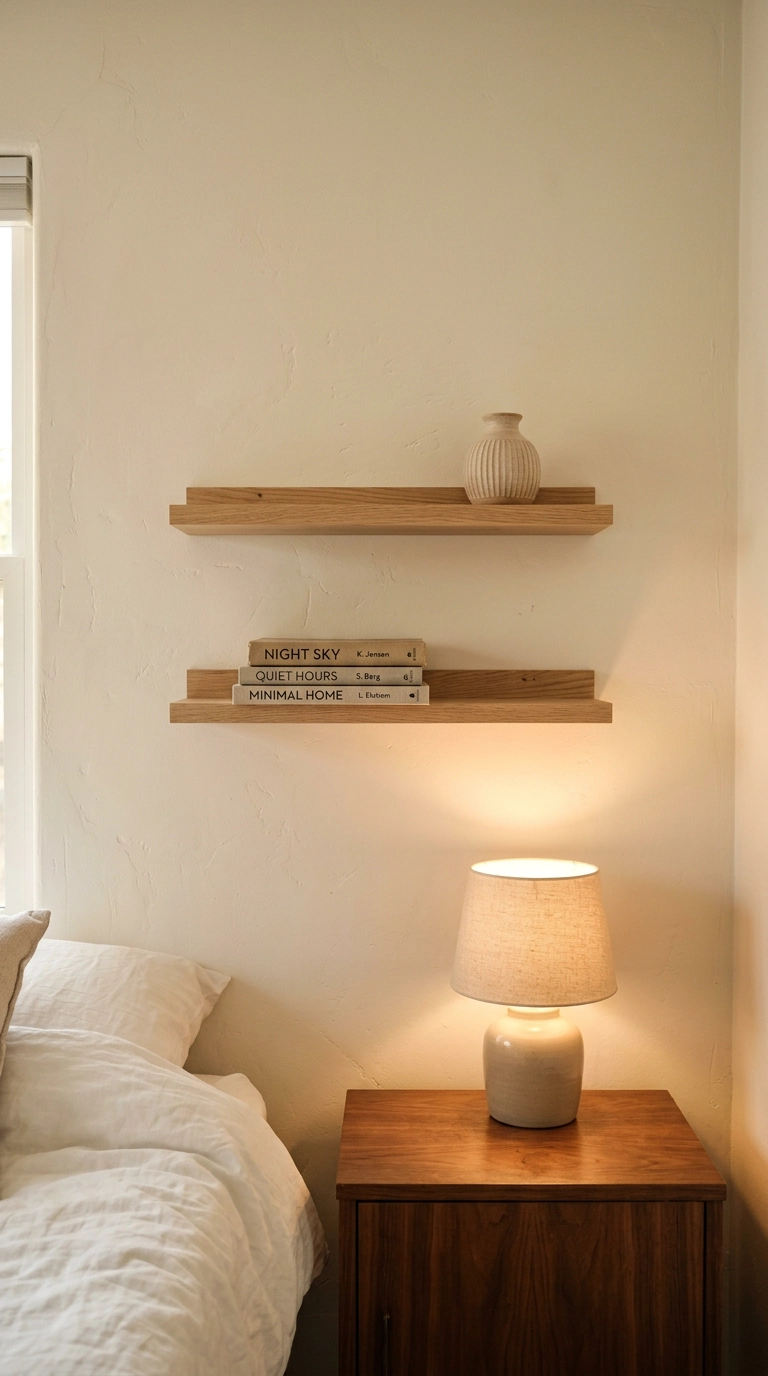
Not every bedroom has room for a bookcase, and honestly most don’t need one. Two ledges about 24 inches wide, mounted 10 to 12 inches apart with the lower one roughly 16 inches above the nightstand, hold your current reads without eating a square inch of floor.
3. Turn a Whole Shelf Into a Layered Art Ledge
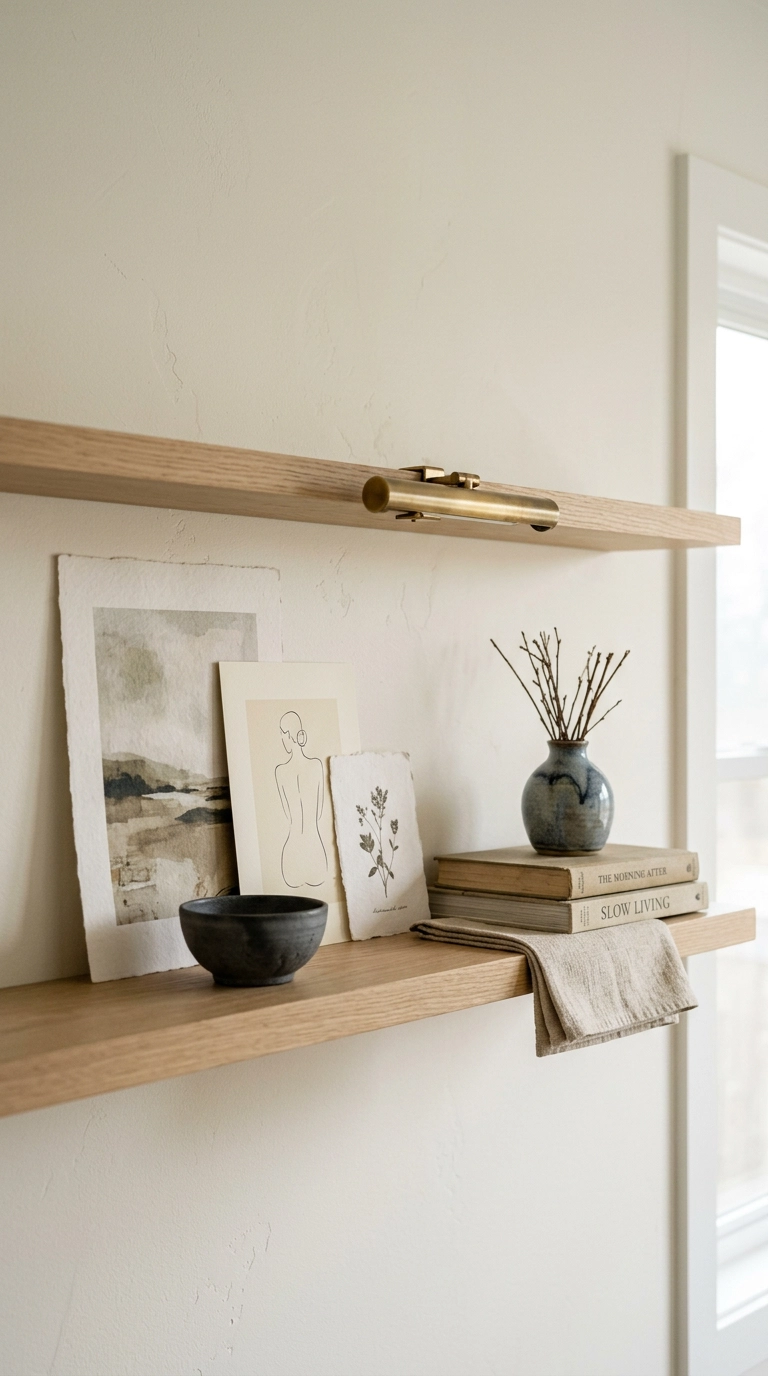
Designate one shelf as a no-books zone and lean three or four pieces of art directly against the back wall instead of hanging them. The layered depth you get, one piece overlapping another by two inches, reads as intentional and collected, not cluttered.
4. Wallpaper the Back Panel With a Low-Contrast Grasscloth
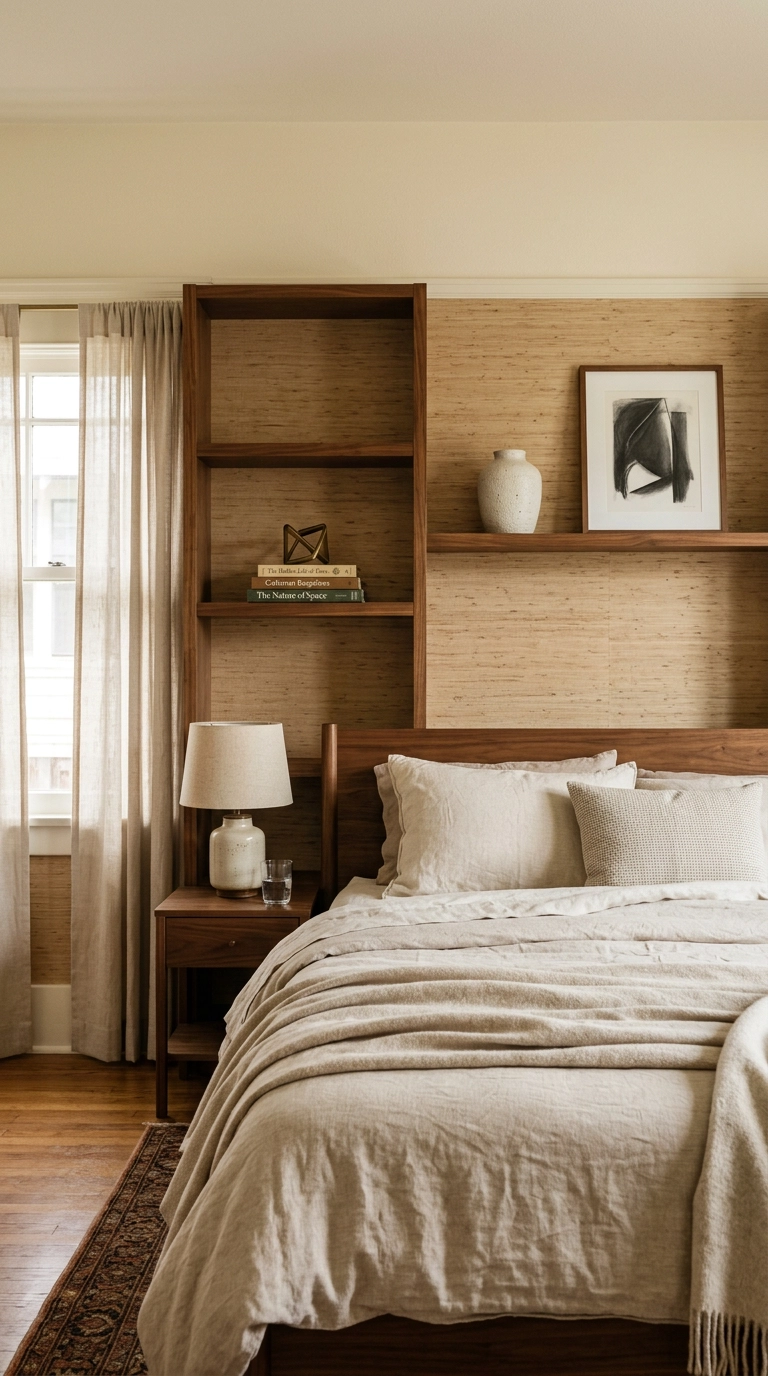
Grasscloth in a low-contrast tone like flax or sand gives the back of a shelf a warmth that paint cannot fake, and it adds texture without competing with your books. Peel-and-stick grasscloth has gotten genuinely good, so renters can get the same look in about two hours and remove it cleanly.
5. Style in Threes With Odd-Number Groupings
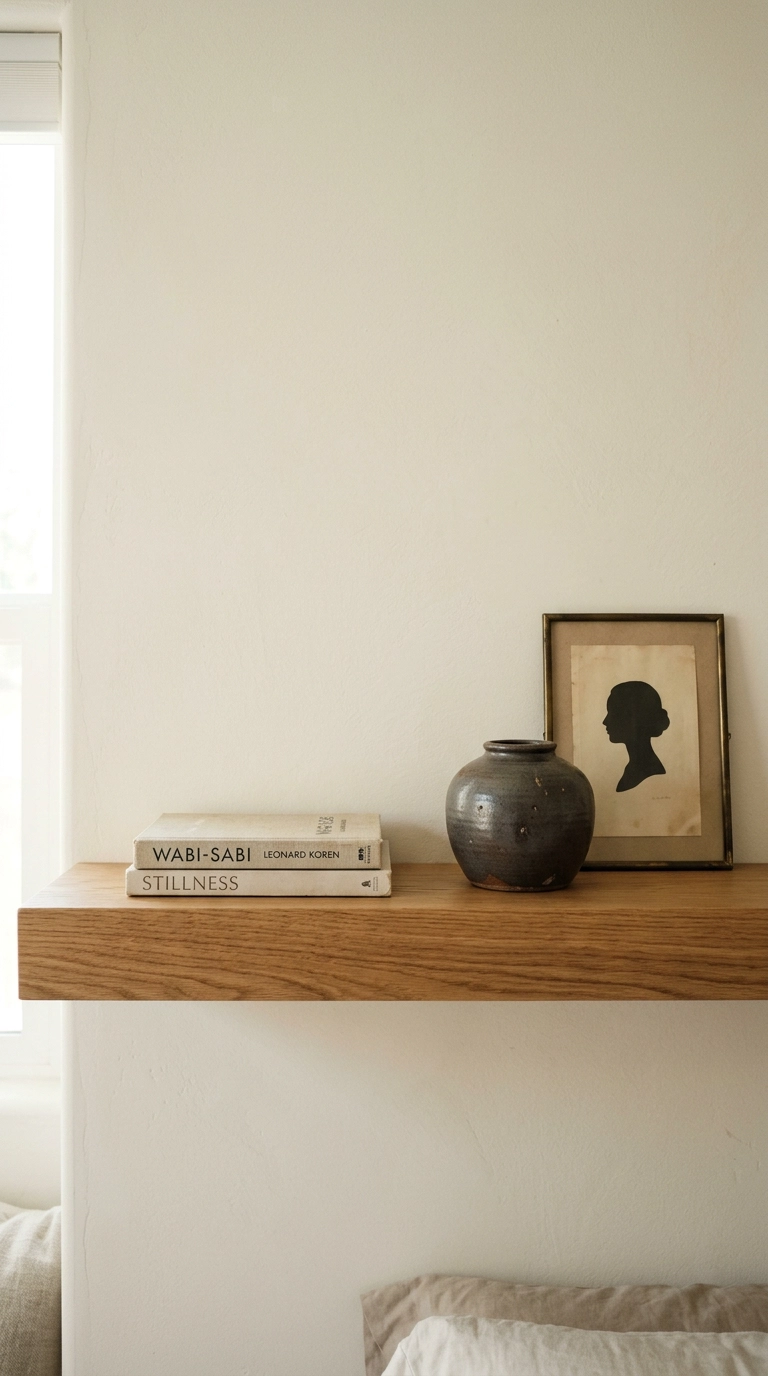
A trio always reads better than a pair, and it’s the simplest styling rule I use every day. On each shelf, aim for one vertical element, like a few upright books or a tall vase, one horizontal element like stacked books, and one sculptural object that bridges the two.
6. Hang a Small Framed Print on the Face of a Floating Shelf
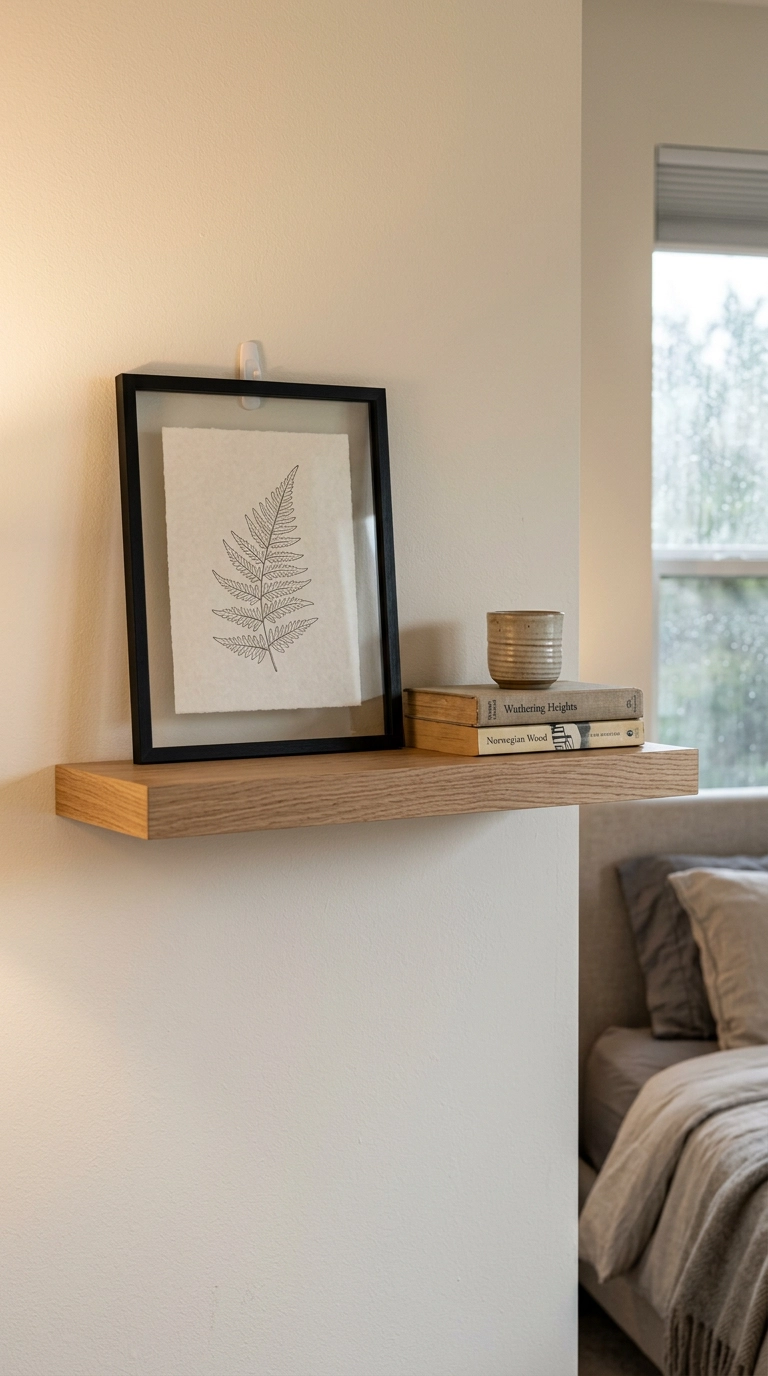
Most people only decorate the top surface of a shelf, and that is a missed opportunity. Clip or adhere a very small framed piece, think 5×7 or 8×10 inches, to the front face of a floating shelf and it reads as a gallery moment without taking up wall real estate.
7. Install Picture Ledge Rails Across the Whole Wall
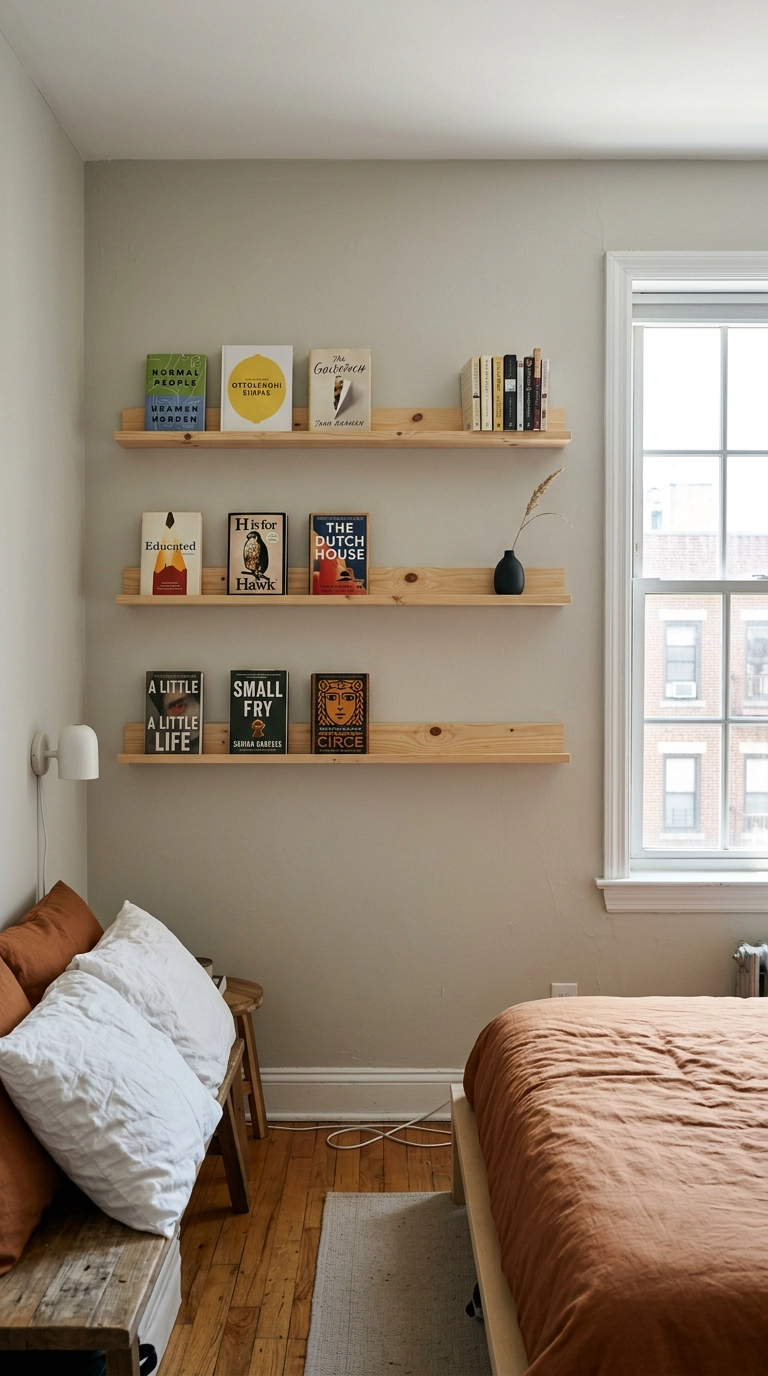
Picture ledges, the very shallow shelves with a small front lip, are the renter’s answer to a full bookcase. Three rails at about 36 inches wide, spaced 14 to 16 inches apart vertically, give you a whole wall of books using six small anchors total.
8. Run Low Bookcases Under the Window as a Bench
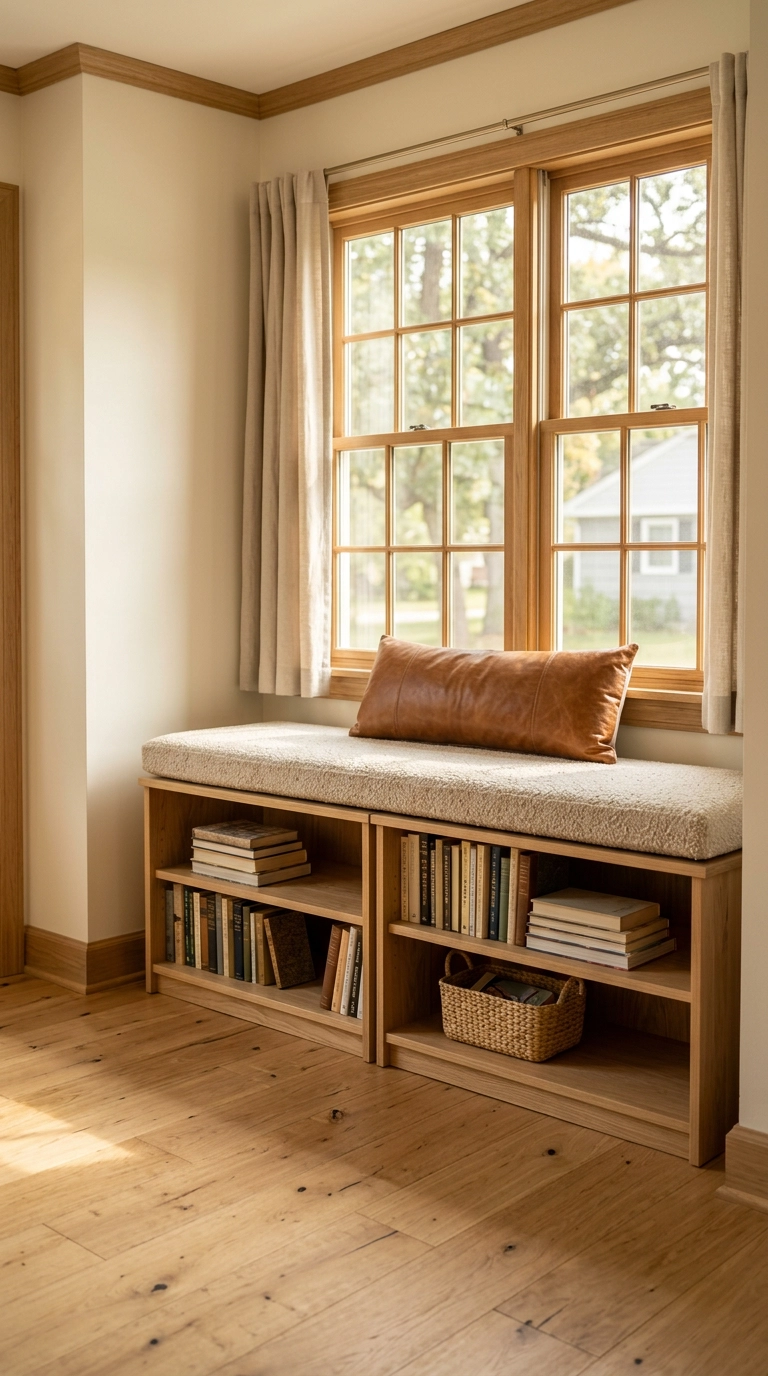
Two low bookcases pushed together under a window, topped with a single long cushion, give you storage and a reading seat in the same footprint. Keep the total height at 30 inches or under so you never block the window light.
9. Add a Slim Brass Picture Light Above the Shelving
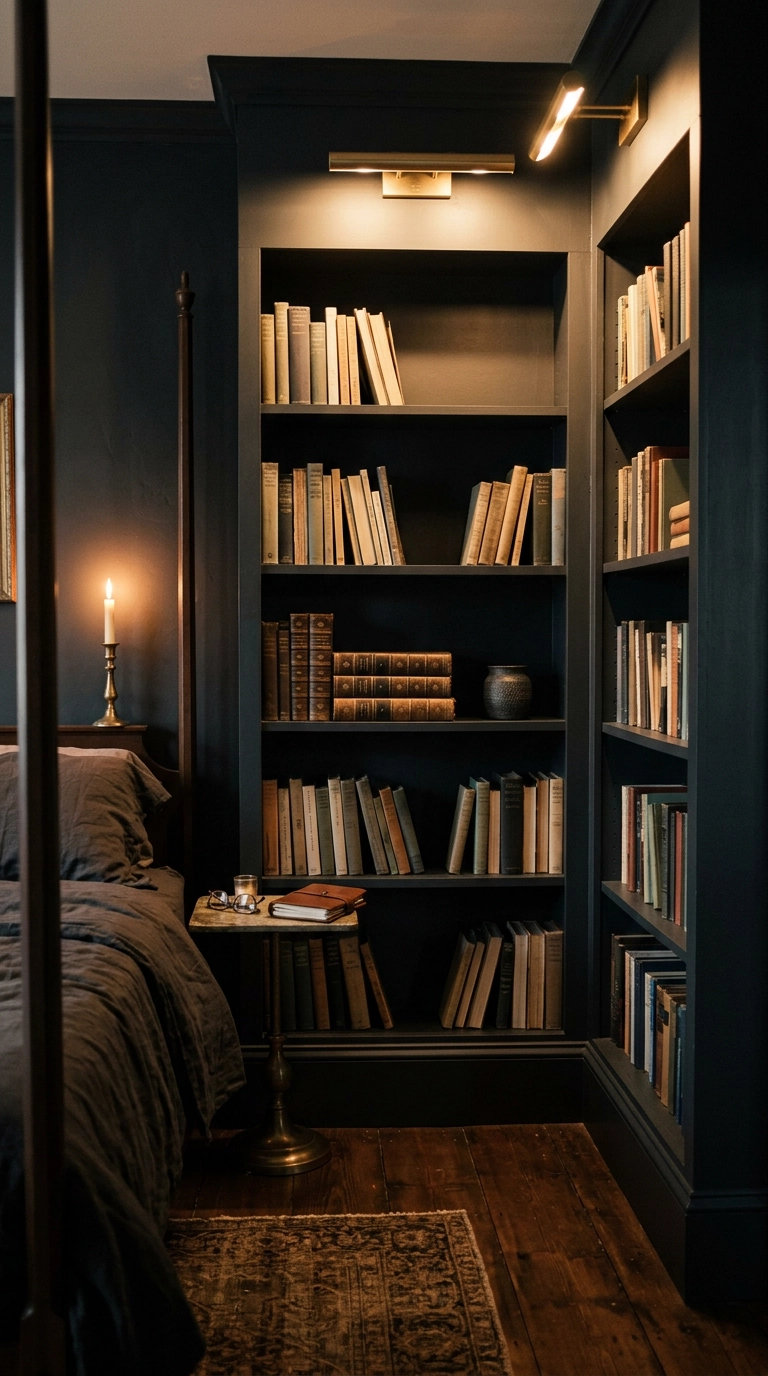
Shelf lighting is the detail that separates a styled bookshelf from a great one. A single slim brass picture light above the unit, or small puck lights tucked under each shelf, turns the whole thing into a glowing focal point at night.
10. Sort Books by Spine Tone Instead of Full Rainbow Color
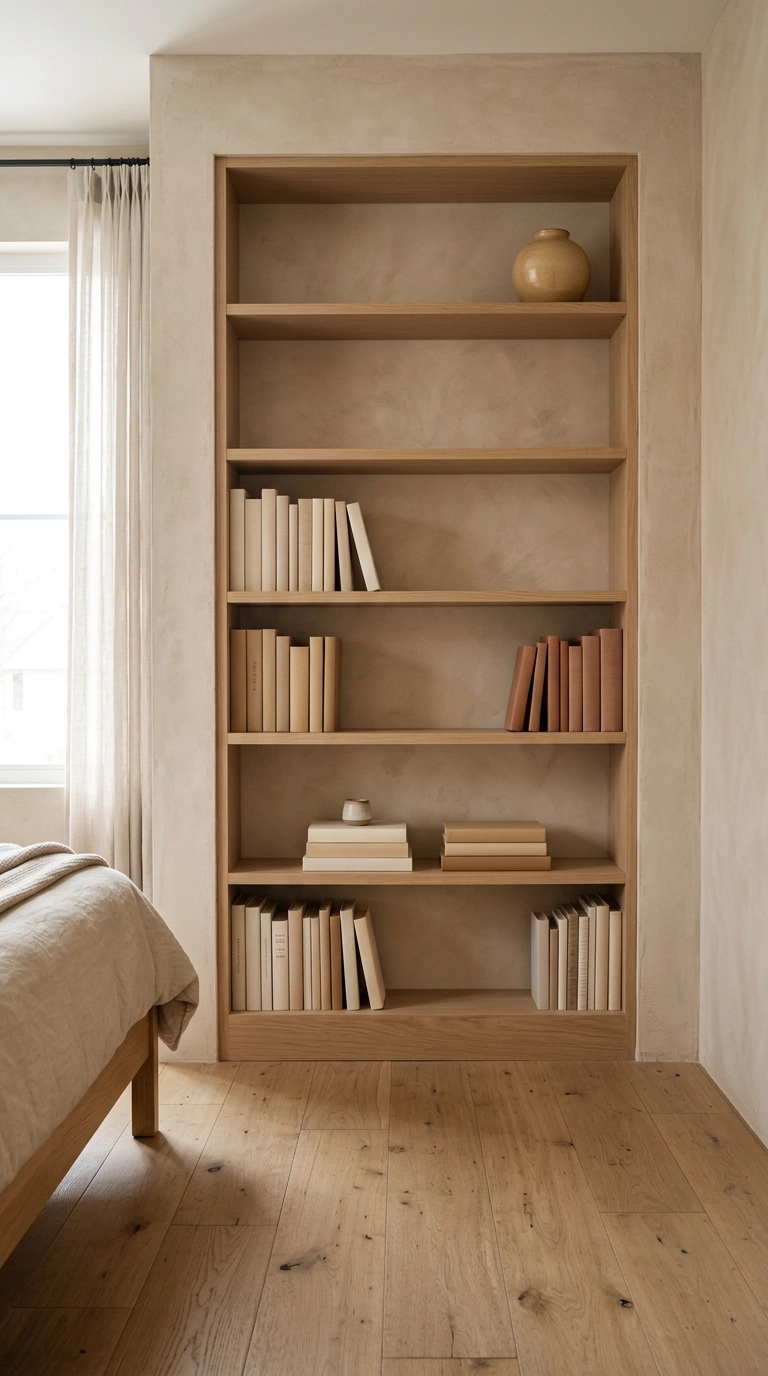
Full rainbow shelves peaked years ago and they fight with everything else in a bedroom. Instead, group books into two or three tonal families that already live in your room, creams and tans, or deep greens and navies, and turn any loud outliers backward or move them elsewhere.
11. Build Symmetrical Shallow Alcoves Flanking the Bed
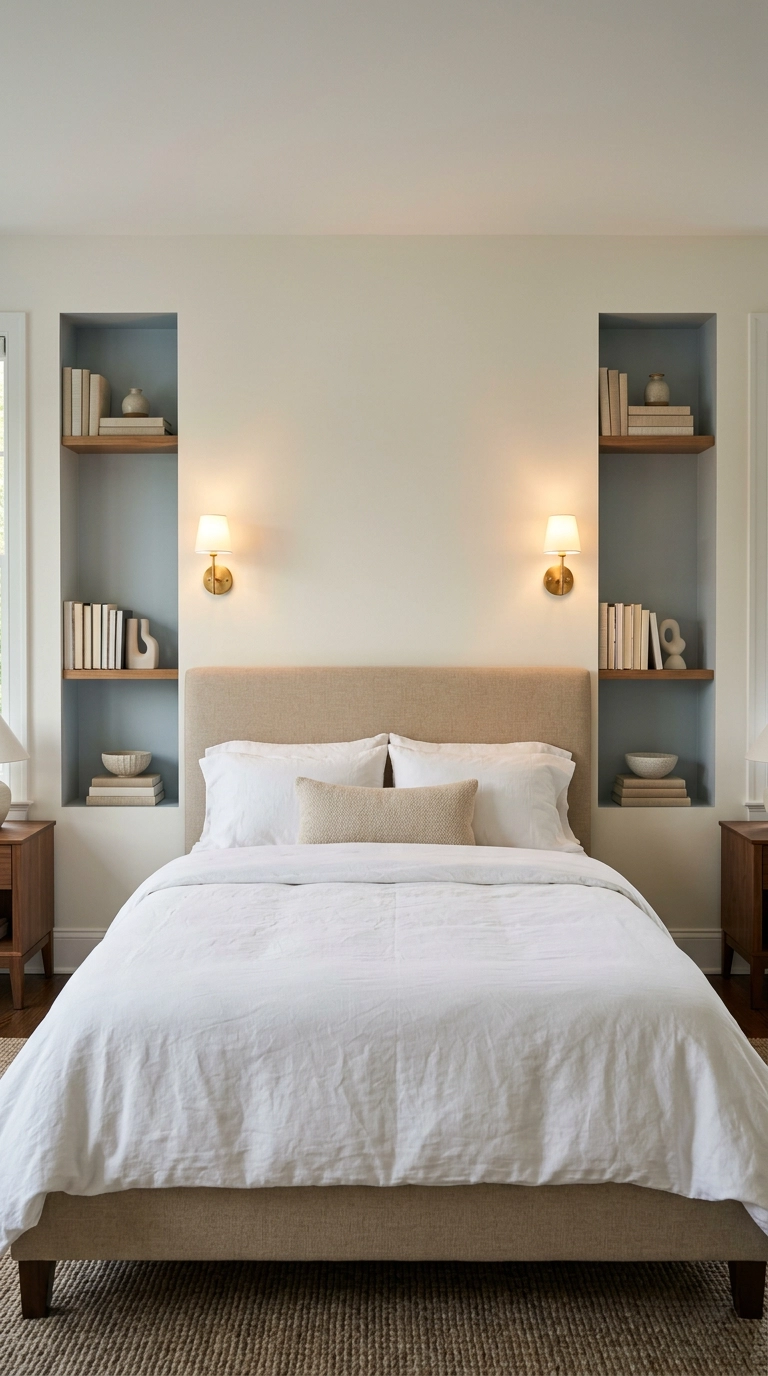
Symmetry does something specific in a bedroom: it lowers your heart rate. Two matching shallow alcoves, roughly eight inches deep and 24 to 30 inches wide, flanking the headboard replace nightstands and give you display space at the same time.
12. Lean a Ladder Shelf in an Unused Corner
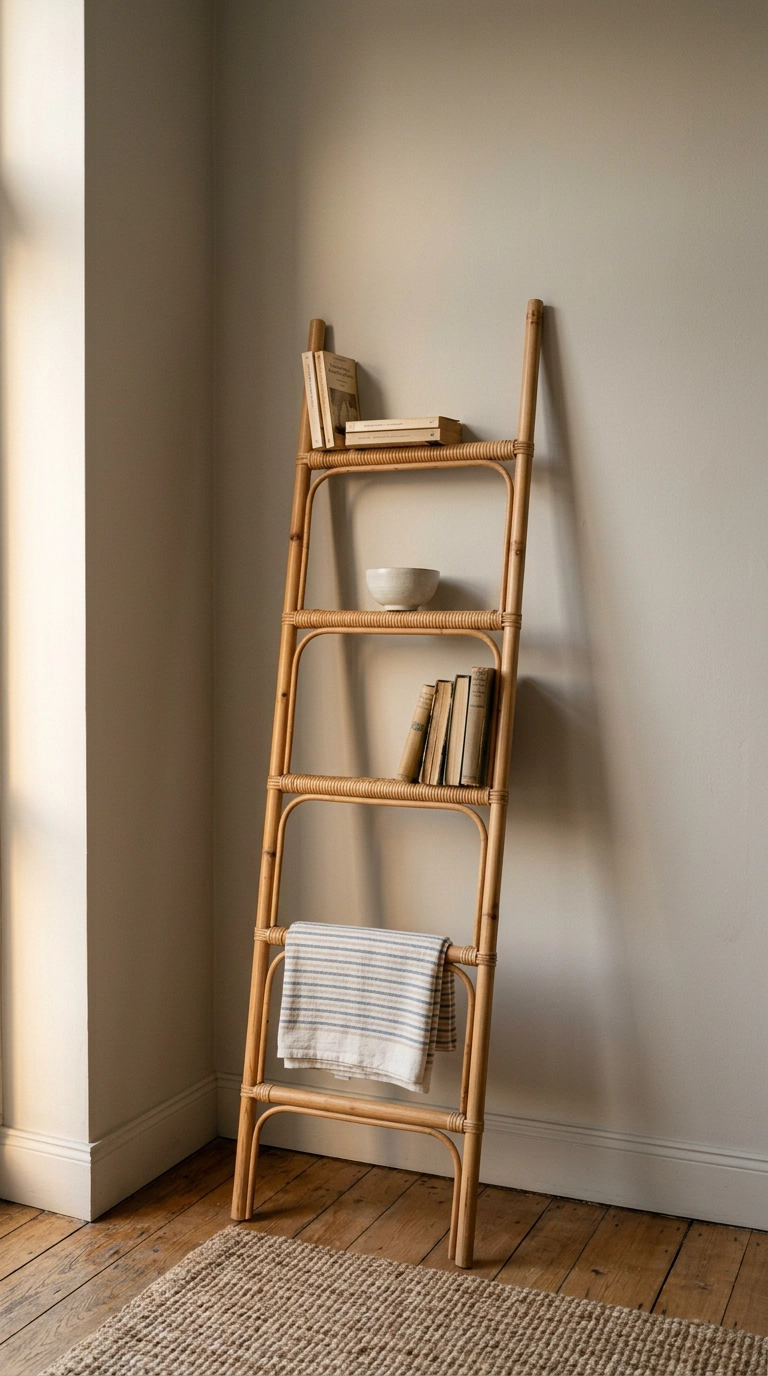
A leaning ladder shelf takes up about a foot of floor and needs zero hardware, which makes it my go-to for renters and awkward corners. The tapering tiers naturally force you to store fewer books, which keeps things from getting heavy.
13. Frame the Doorway With Shelving Over the Top
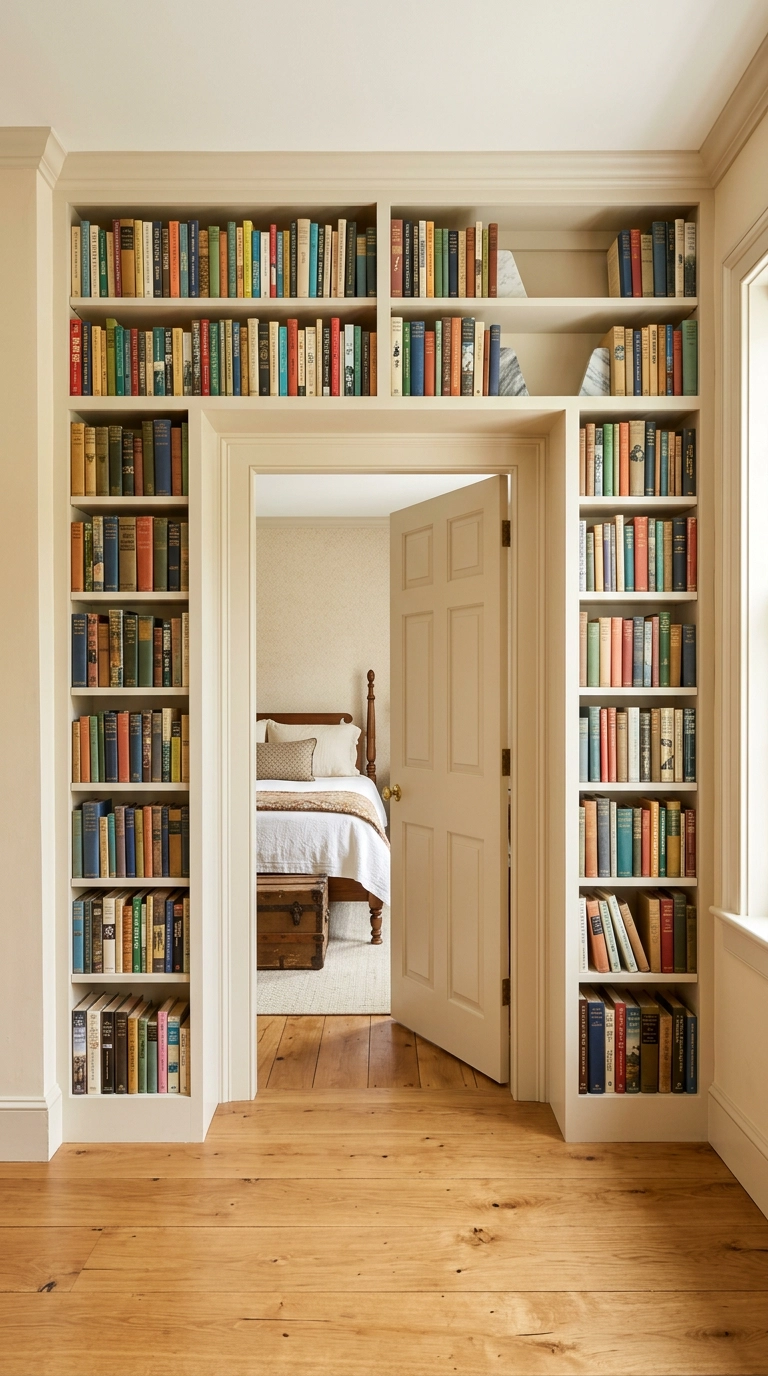
The wall space above a door is dead real estate in almost every bedroom, and a shelf bridging the doorway turns it into the most architectural moment in the room. Keep the bridge shelf 10 to 12 inches deep and paint it to match your trim so it reads as built-in.
14. Mix In Closed Storage at the Bottom
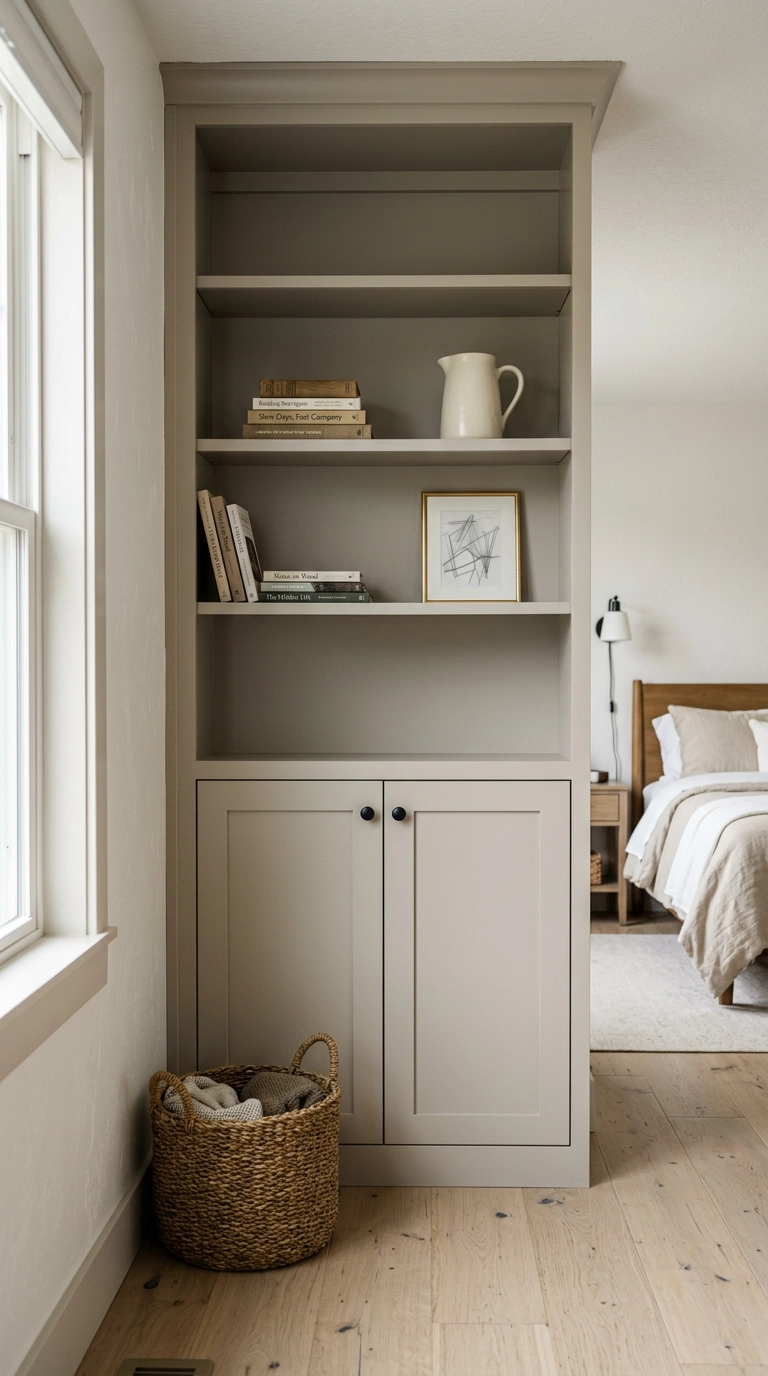
A bedroom bookshelf that is open top to bottom will always end up looking chaotic, because life happens at the bottom. Closed doors or drawers on the lower third hide chargers, paperwork, and the reading glasses graveyard while the top stays curated.
15. Use a Freestanding Etagere as a Room Divider
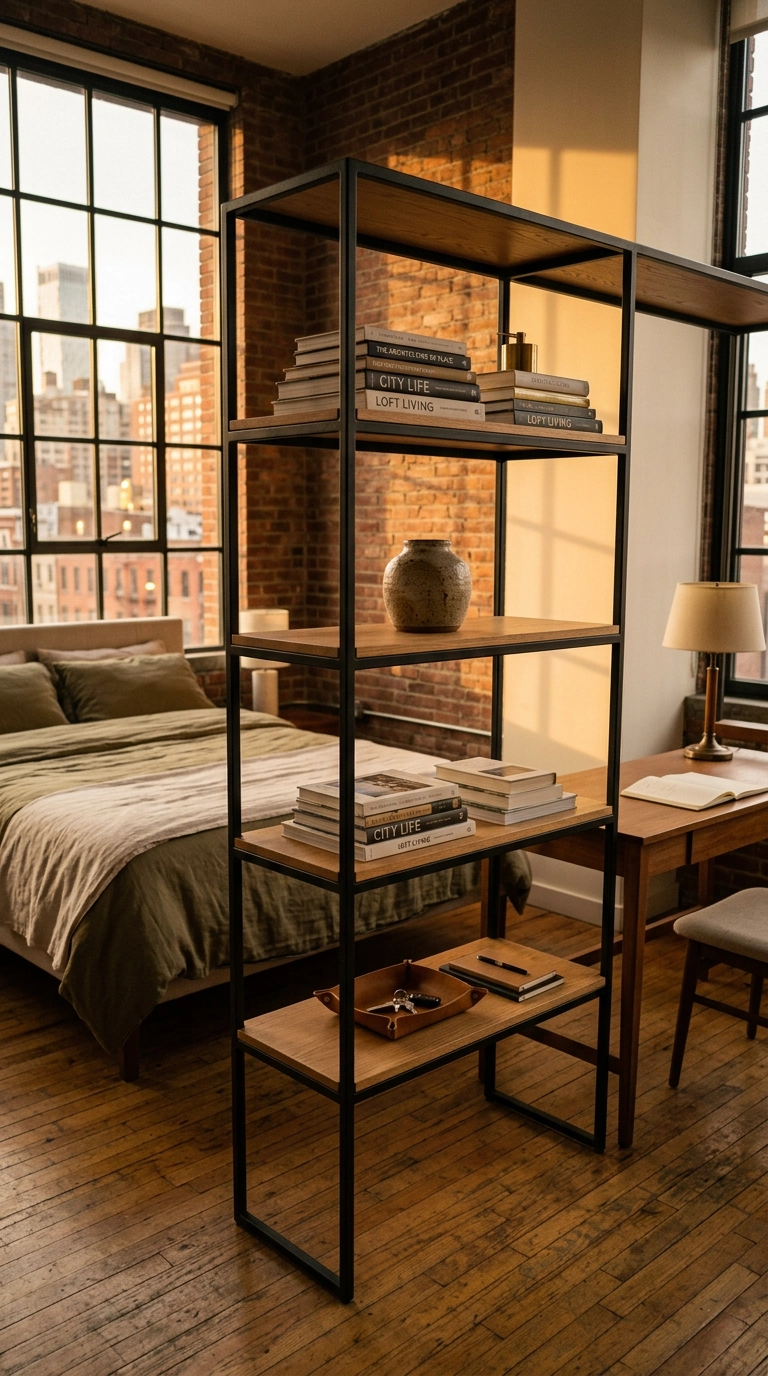
In a studio or a bedroom that also needs to work as a home office, a freestanding etagere gives you a visual divider without blocking light. The open-back design is the whole point: you get a soft, see-through room divide that feels architectural but does not wall anything off.
16. Wrap Shelving Around a Corner on Two Walls
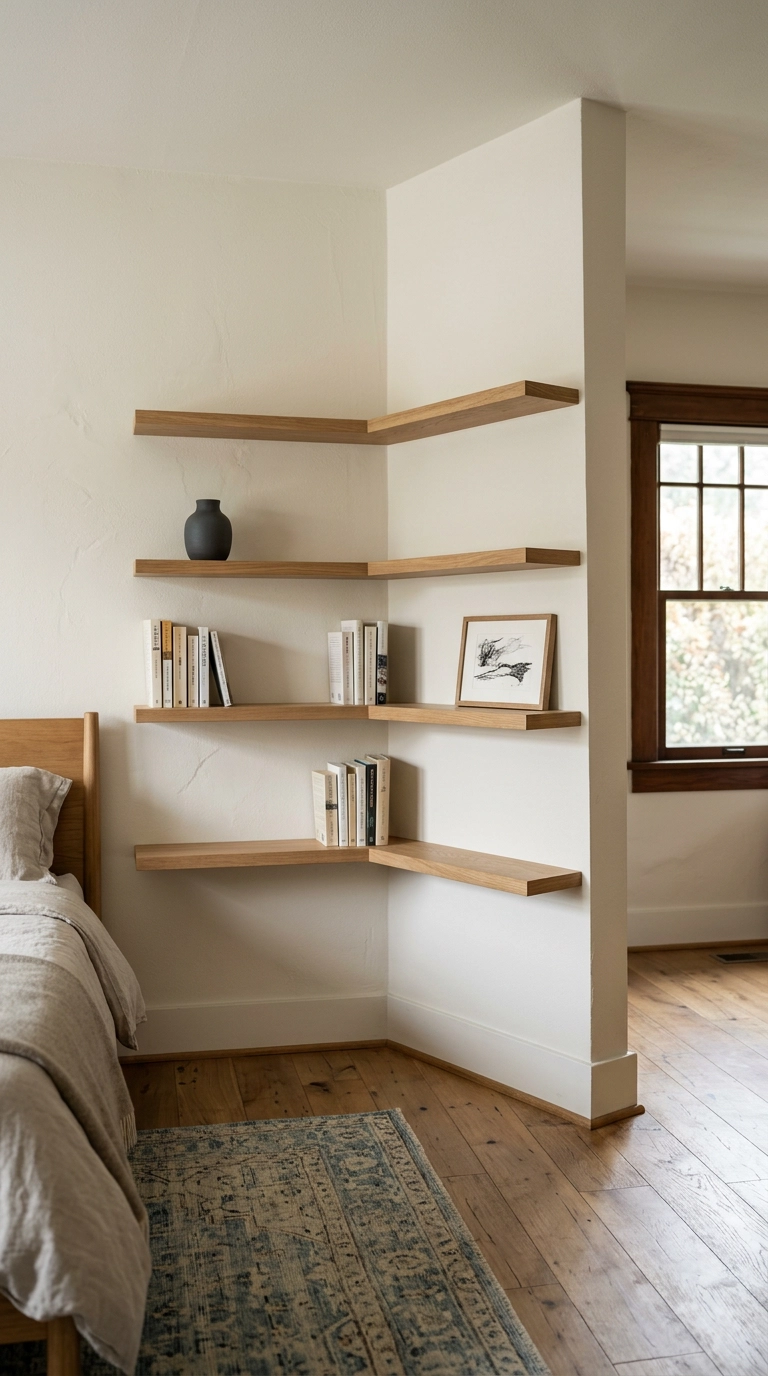
A corner shelf run turns a dead architectural junction into the most visually interesting spot in the room. Stagger the shelves at different heights on each wall rather than mirroring them, so the eye travels naturally through the corner instead of hitting a hard stop.
17. Lay Books Flat in Short Stacks to Break the Vertical Rhythm
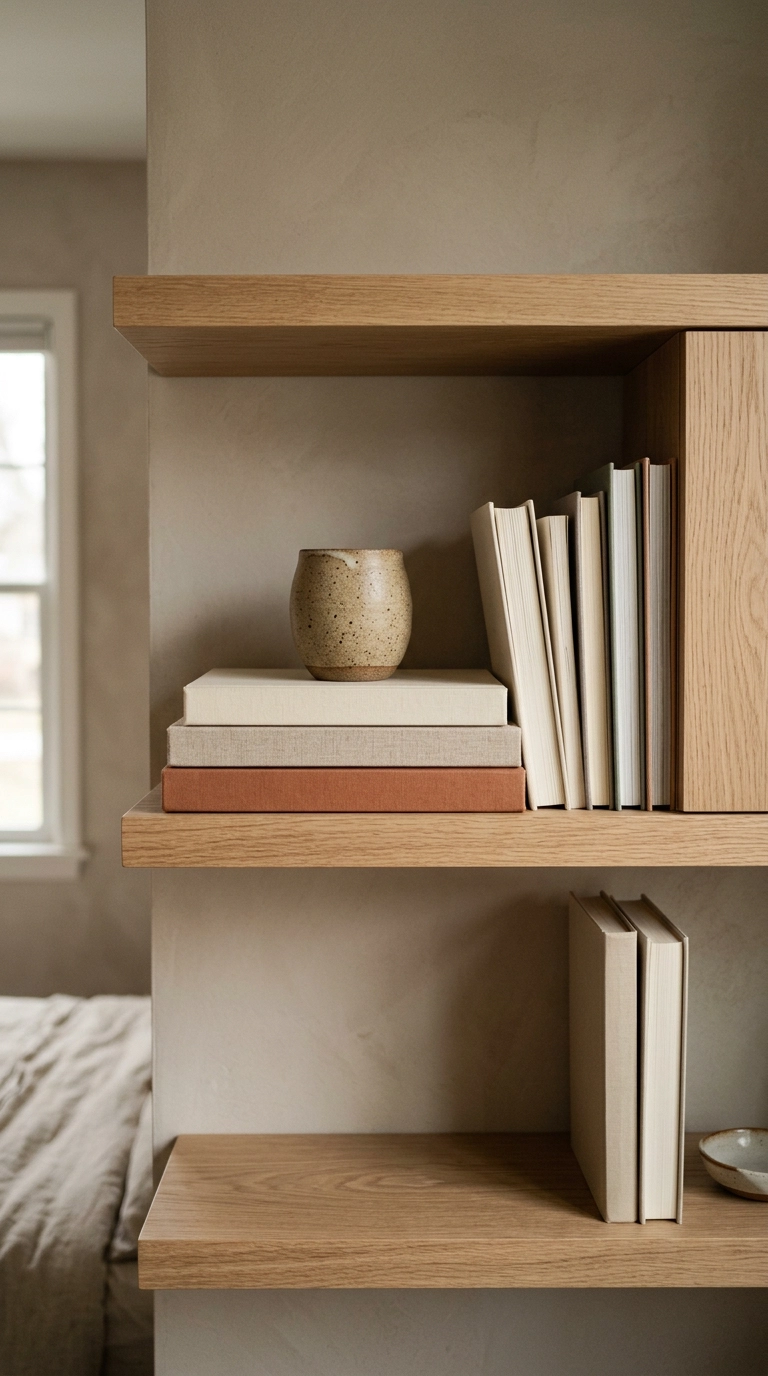
A wall of spines all standing at attention reads as a library, not a bedroom. Laying three or four books flat every other shelf interrupts that vertical rhythm and gives you a pedestal for one small object — the horizontal line is what makes the whole arrangement feel considered.
18. Leave One Shelf Almost Completely Empty
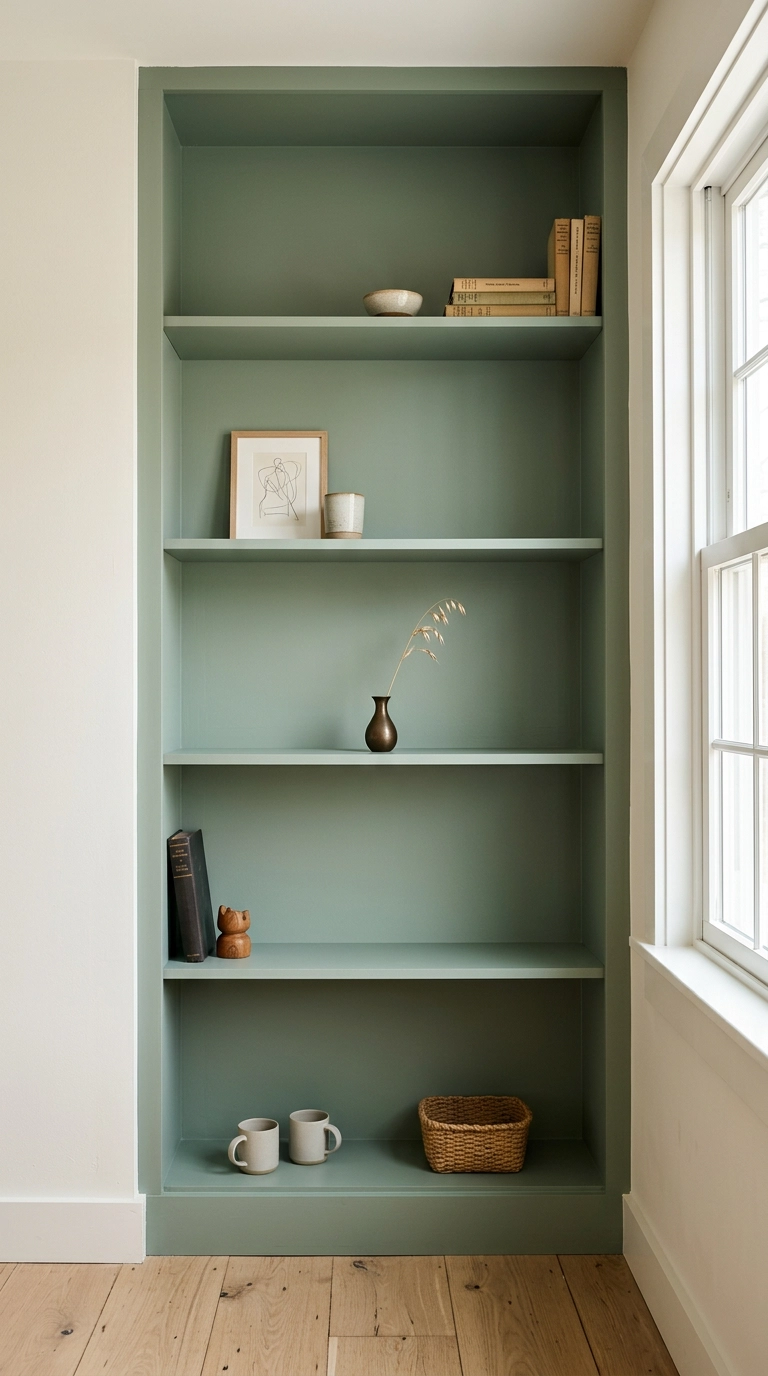
This is the hardest one to actually do, because an empty shelf feels like an unfinished job. It isn’t — negative space is what lets the eye rest, and without it every object competes and none of them win.
19. Tuck Two Woven Baskets on the Lowest Shelf
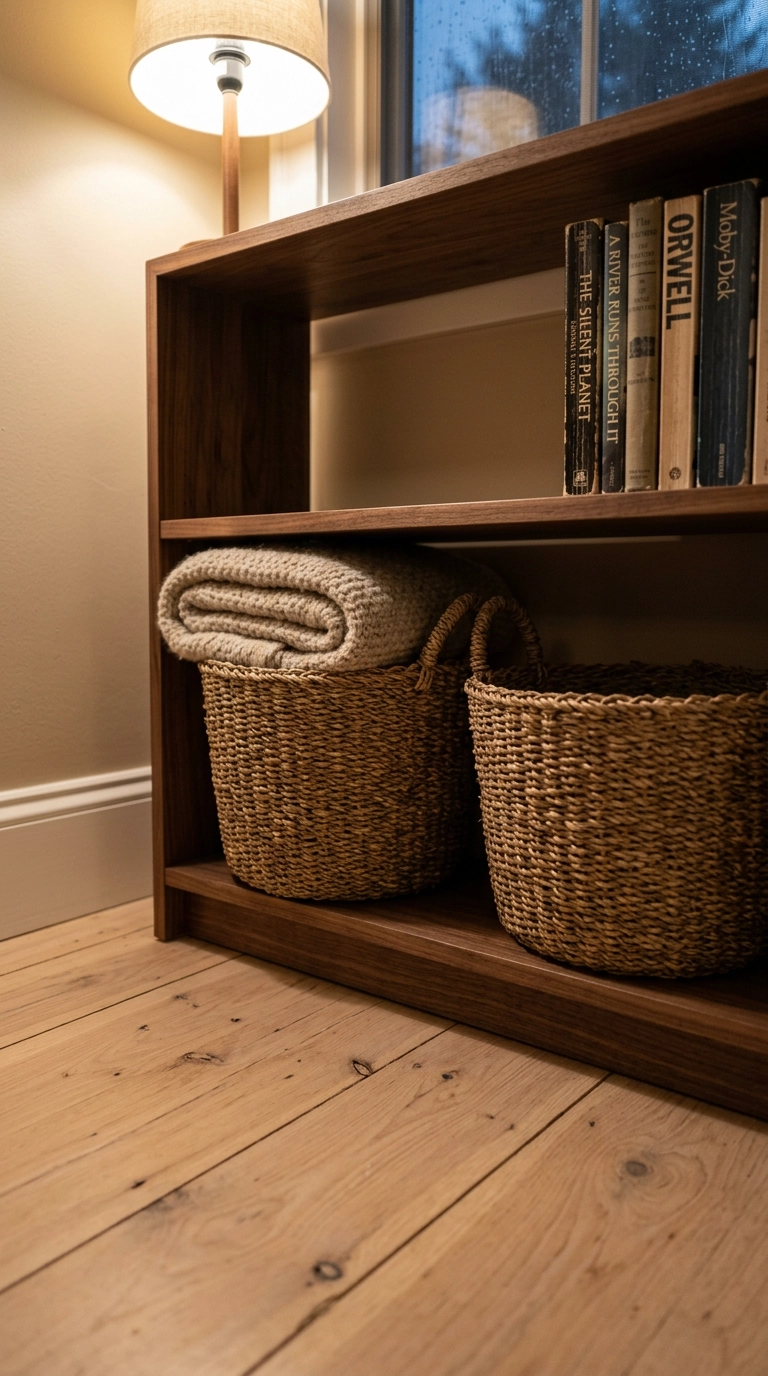
The bottom shelf is the one you see least and reach for most, which makes it the right place for the things that have no home — chargers, extra blankets, the paperback you’re halfway through. Two baskets, not five, or the base of the unit turns into visual clutter.
20. Match the Shelf Trim to the Baseboard, Not the Wall
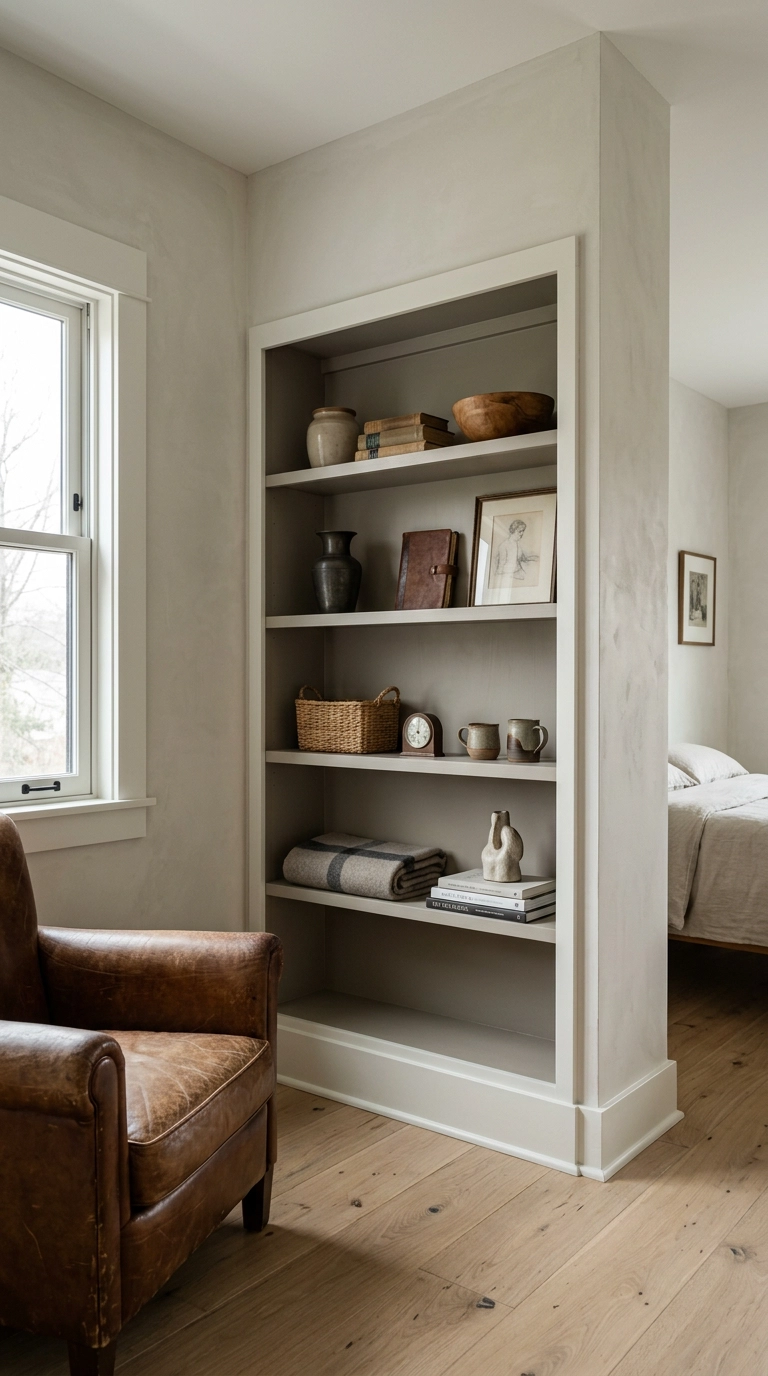
Painting the shelf face frame to match your existing baseboard and window casing is what makes built-ins look original to the house rather than added later. The eye reads the repeated trim color as architecture.
21. Wire In a Warm Dimmable LED Strip Under Each Shelf
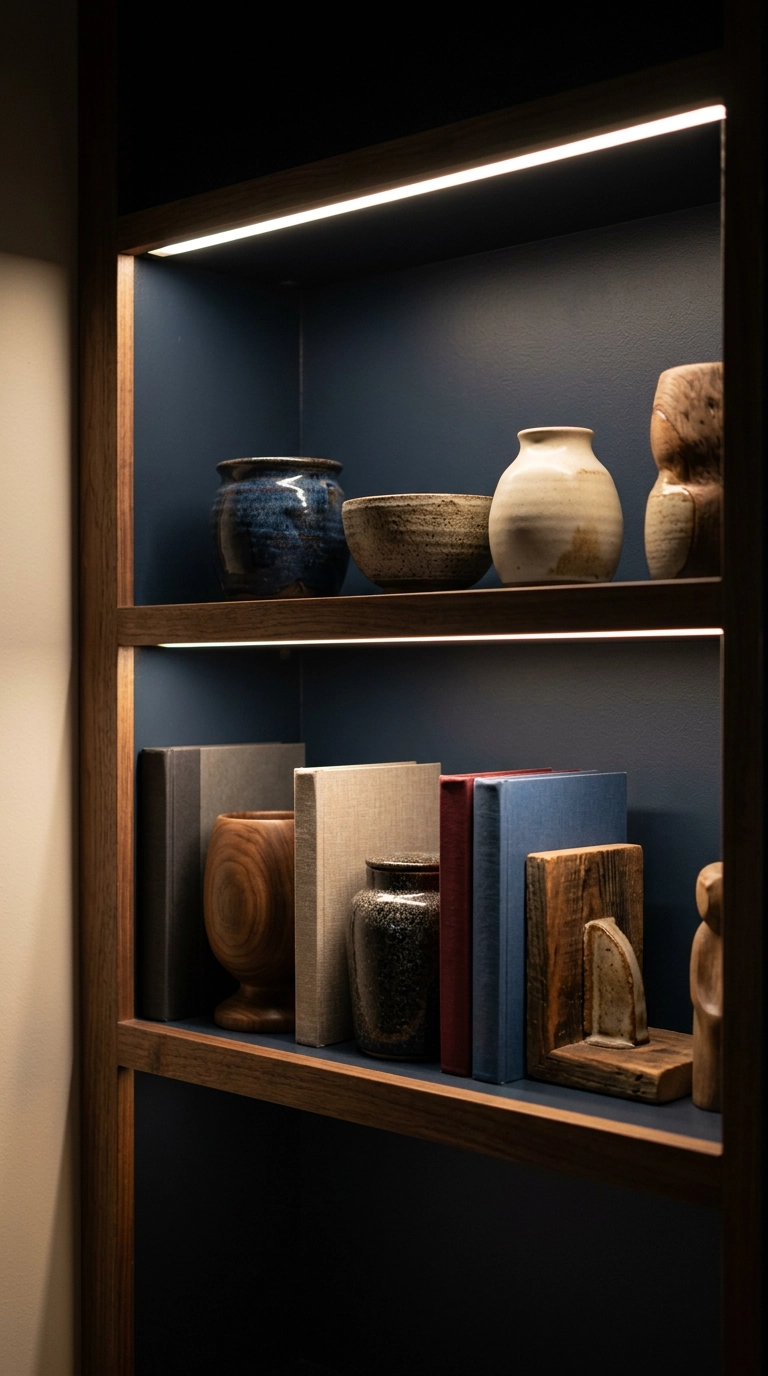
Shelving without its own light source disappears after sunset, which is exactly when you’re in your bedroom. A concealed strip under each shelf lip turns the whole unit into a soft glowing feature and doubles as ambient light you can read by.
22. Prop One Large Piece of Art in Front of the Books
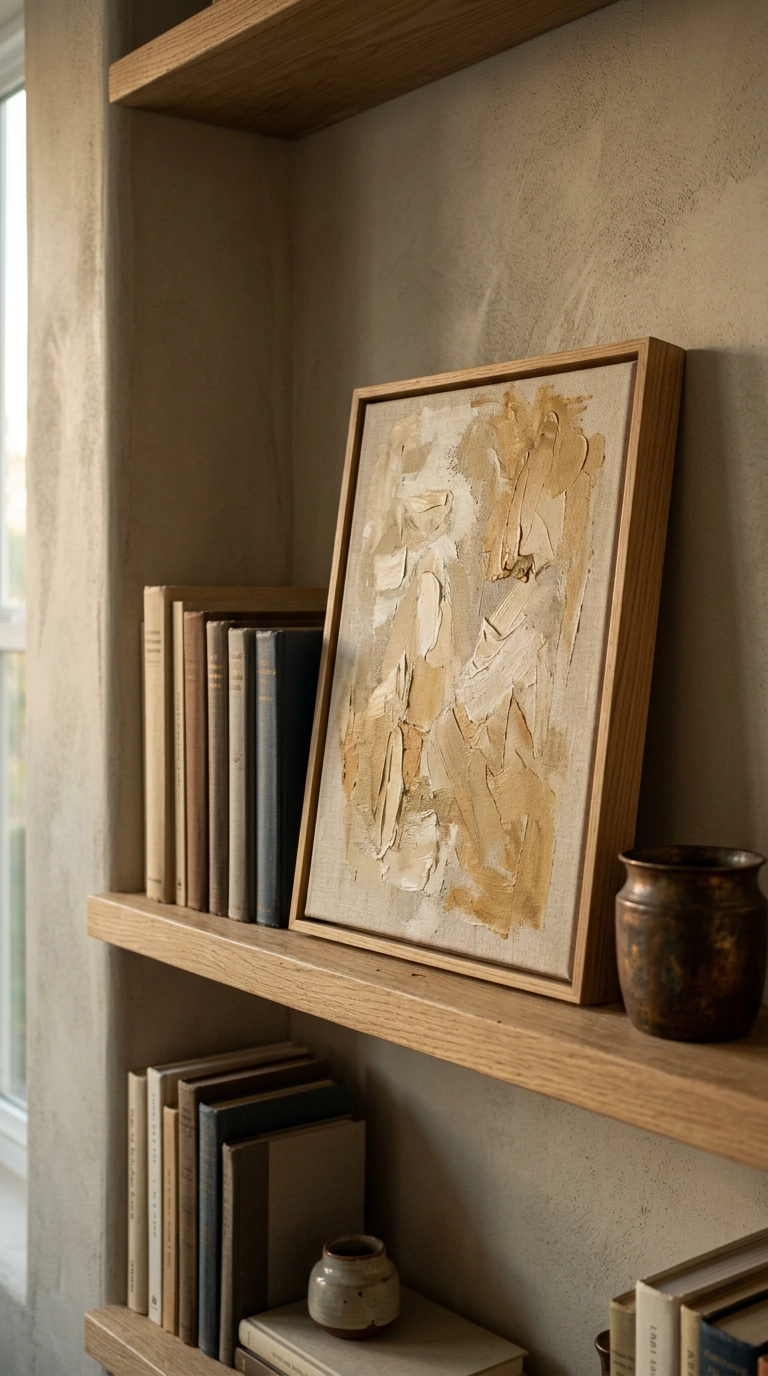
Layering art in front of books adds depth that a flat row of spines can’t, and it hides the section of paperbacks you’d rather not look at. The overlap is the point — it makes the shelf read as three dimensional rather than as a grid.
Shelves That Earn Their Keep
If there’s one idea here I’d push you toward, it’s the empty shelf. Everything else on this list is additive, and the instinct with shelving is always to add — but the arrangements that actually look calm are the ones with a gap you left on purpose. Pair that with the flat book stacks in idea 17 and the odd-number groupings in idea 5, and you’ve got most of what separates styled shelving from stored shelving.
The direction I keep seeing in 2026 is shelving treated as architecture rather than as furniture: color-drenched units where the shelves, the back panel, and the wall all wear the same shade, which is idea 1 and still the highest-impact thing on this list. Farrow & Ball more or less invented the mainstream appetite for this with shades like Hague Blue and Pigeon, and Athena Calderone’s built-ins are worth studying if you want to see how far restraint can carry a wall of objects. Neither look requires a big budget, just commitment to one color.
Start with whatever matches the time you’ve actually got. Restacking books flat and pulling a third of your objects off the shelves is a twenty-minute Tuesday and costs nothing. Adhesive LED strips are an afternoon. The built-in alcoves flanking the bed and the shelving over the doorway are real carpentry, so save those for a weekend with help. And if you want more of this — seasonal styling swaps, honest takes on what’s worth the money, and the occasional confession about a project that went sideways — sign up for my weekly newsletter. I’d love to have you along.


