
22+ Clever Small Nursery Decor Ideas that Make Every Inch Count in [year]

I have styled nurseries in 60-square-foot bonus rooms, in converted closets, and in one memorable case, inside a bay window alcove that the client swore was “basically a hallway.” Here is what I learned: a small nursery is not a compromise, it is a forcing function that makes you buy less and choose better. Everything below is stuff I have actually used in tight rooms, with the real cost and the renter workaround included, because you deserve to know what you are getting into before you order the paint.
Small Nursery Decor Ideas
1. Paint a Soft Arch Behind the Crib Instead of Buying a Headboard Wall
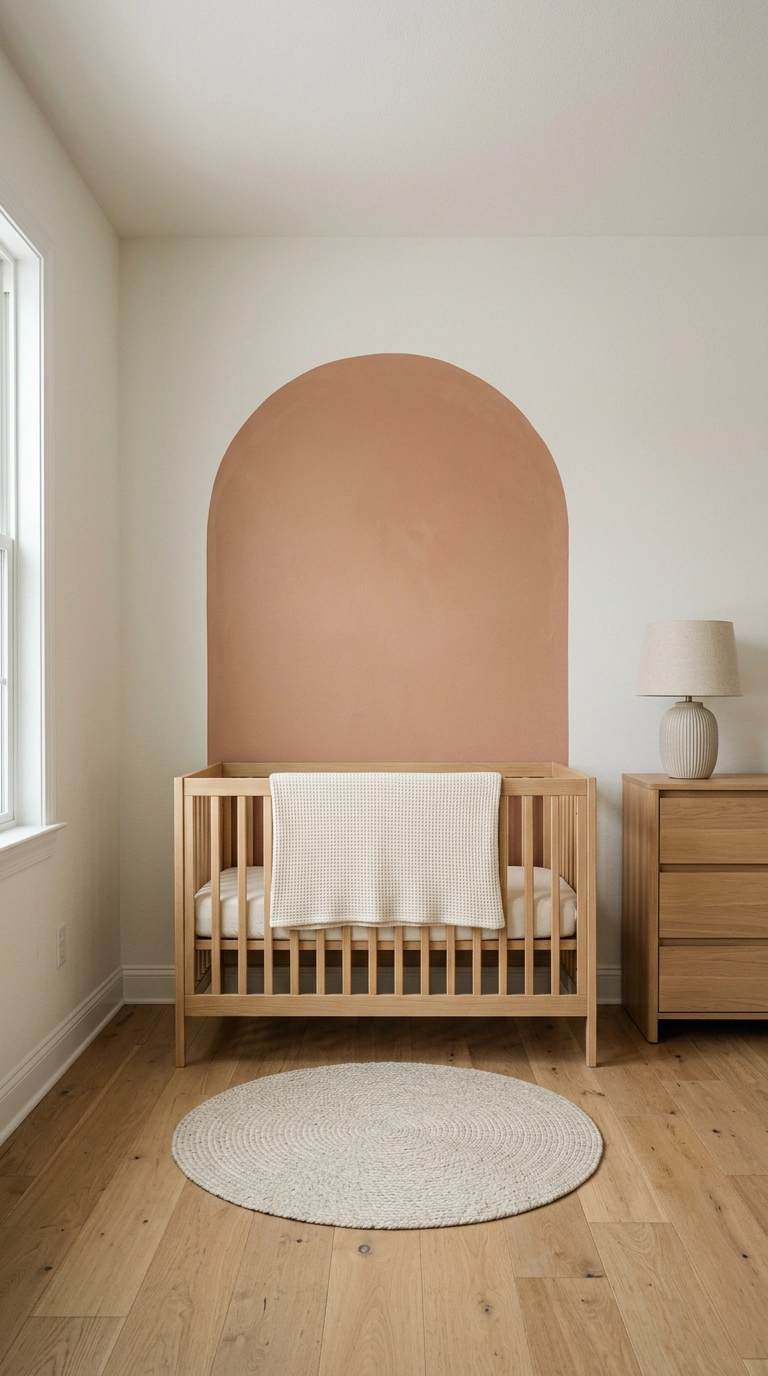
A painted arch gives you the focal point a big upholstered headboard would, without stealing a single inch of floor. Tape it out with a length of string and a pencil as your compass, keep the top of the arch about 12 inches below the ceiling line, and make it roughly six inches wider than the crib on each side so the crib reads centered.
2. Steal the Wall Above the Dresser, Not the Floor Beside It
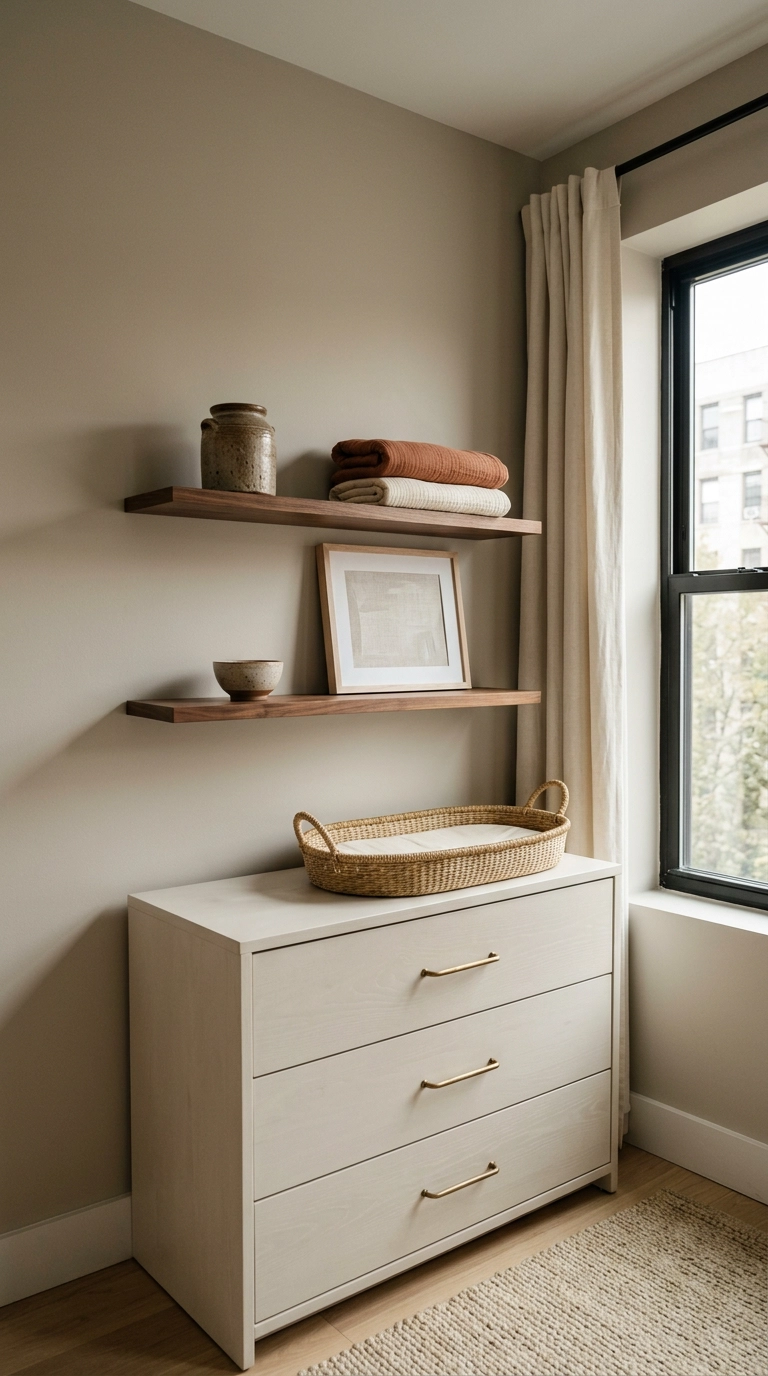
In a nursery under about 100 square feet, floor space is the currency and wall space is free. Two floating shelves above the dresser hold everything a second piece of furniture would, and they keep the sightline to the floor open so the room reads larger.
3. Turn a Reach-In Closet Into the Changing Station
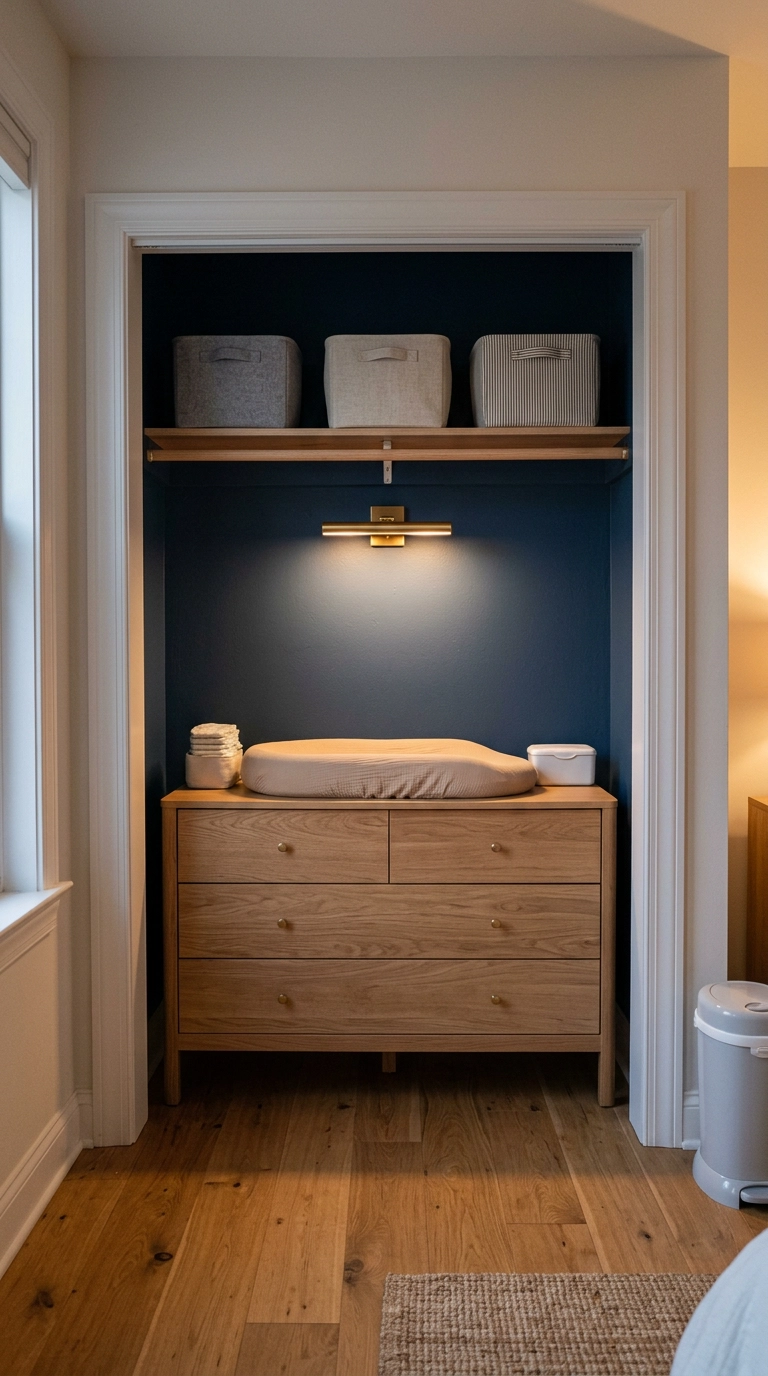
Pull the bifold doors, paint the closet interior a deep color, and slide a standard 5-drawer-wide dresser into the opening. You just gained a full changing station without adding a single piece of furniture to the room proper.
4. Hang the Curtain Rod at the Ceiling, Not the Window
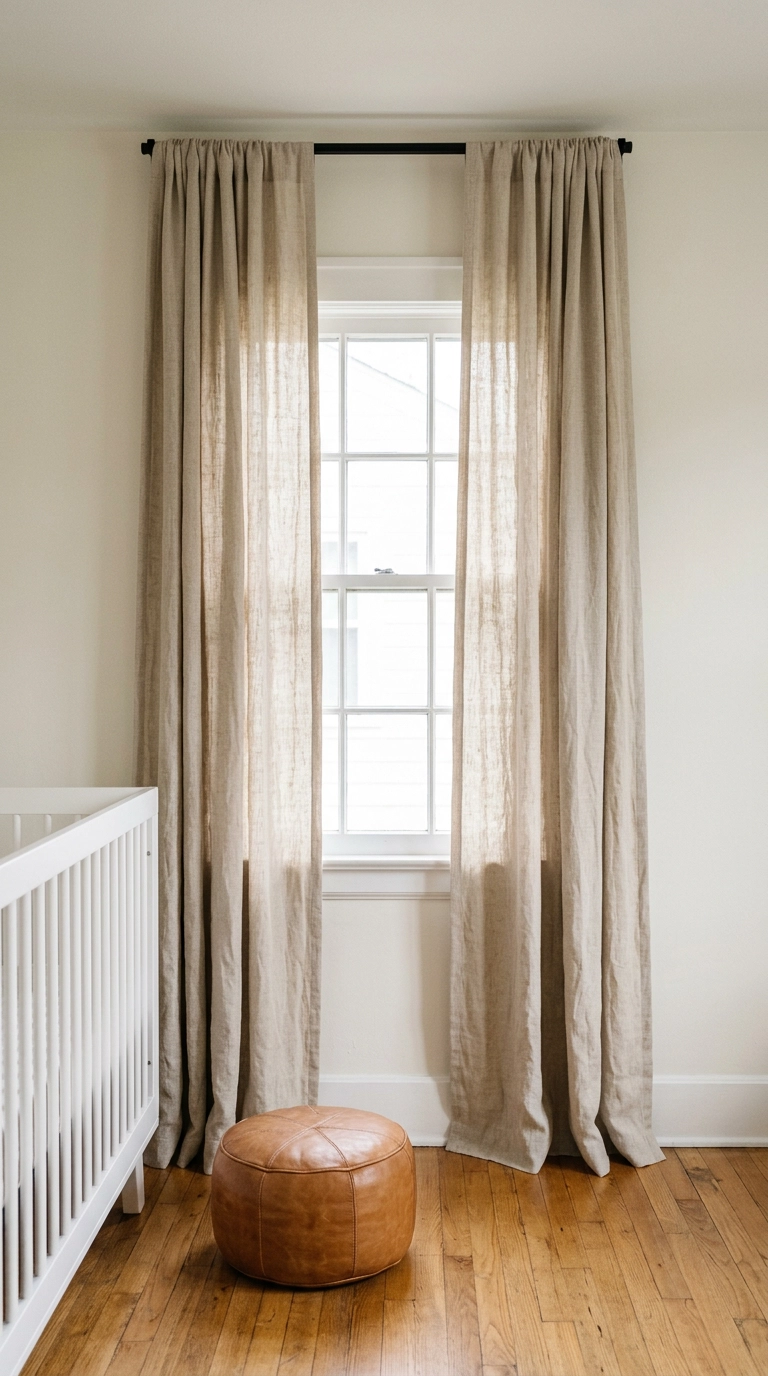
Mount the rod within an inch or two of the ceiling and let the panels break at the floor. Your eye follows the unbroken vertical line all the way up, so an 8-foot ceiling reads closer to nine, and the window looks twice its actual size.
5. Choose a Mini Crib and Give the Room Back Two Feet
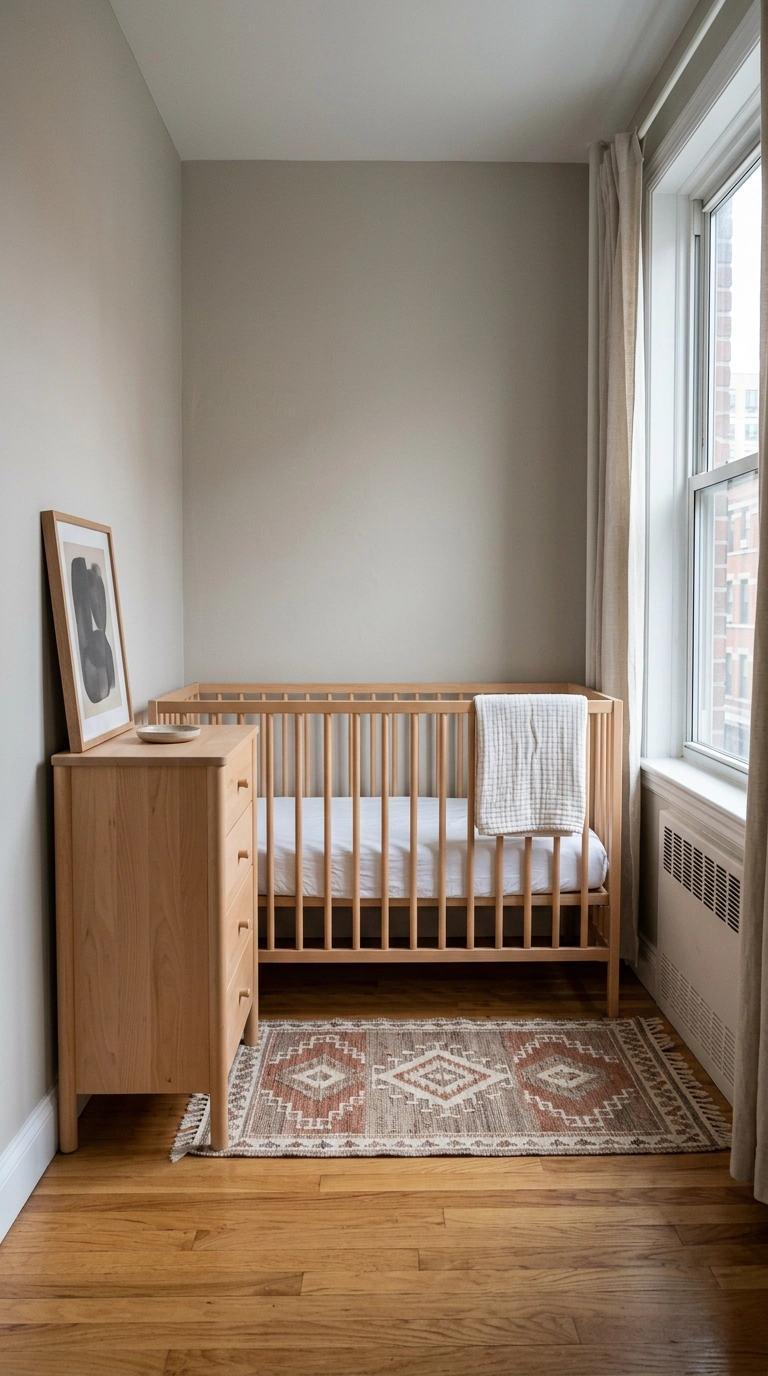
A standard crib is about 54 inches long. A mini crib is roughly 38. That 16 inches is the difference between a room you can walk through and a room you shuffle around sideways.
6. Color Drench the Whole Room in One Soft Shade
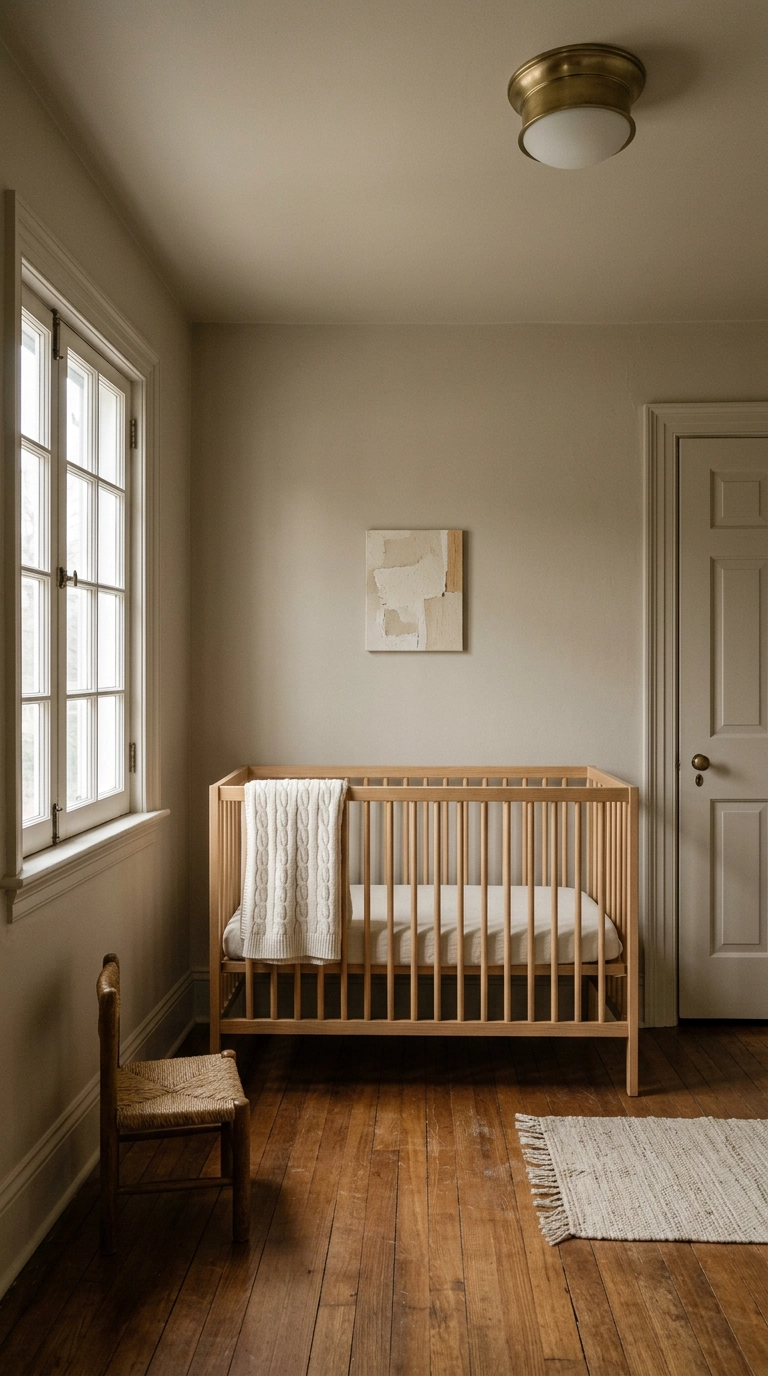
Color drenching means painting the walls, trim, door, and ceiling in one shade. It works in small rooms because every white trim line is a visual break, and breaks tell your eye exactly where the room stops.
7. Swap the Glider for a Small-Scale Armless Chair
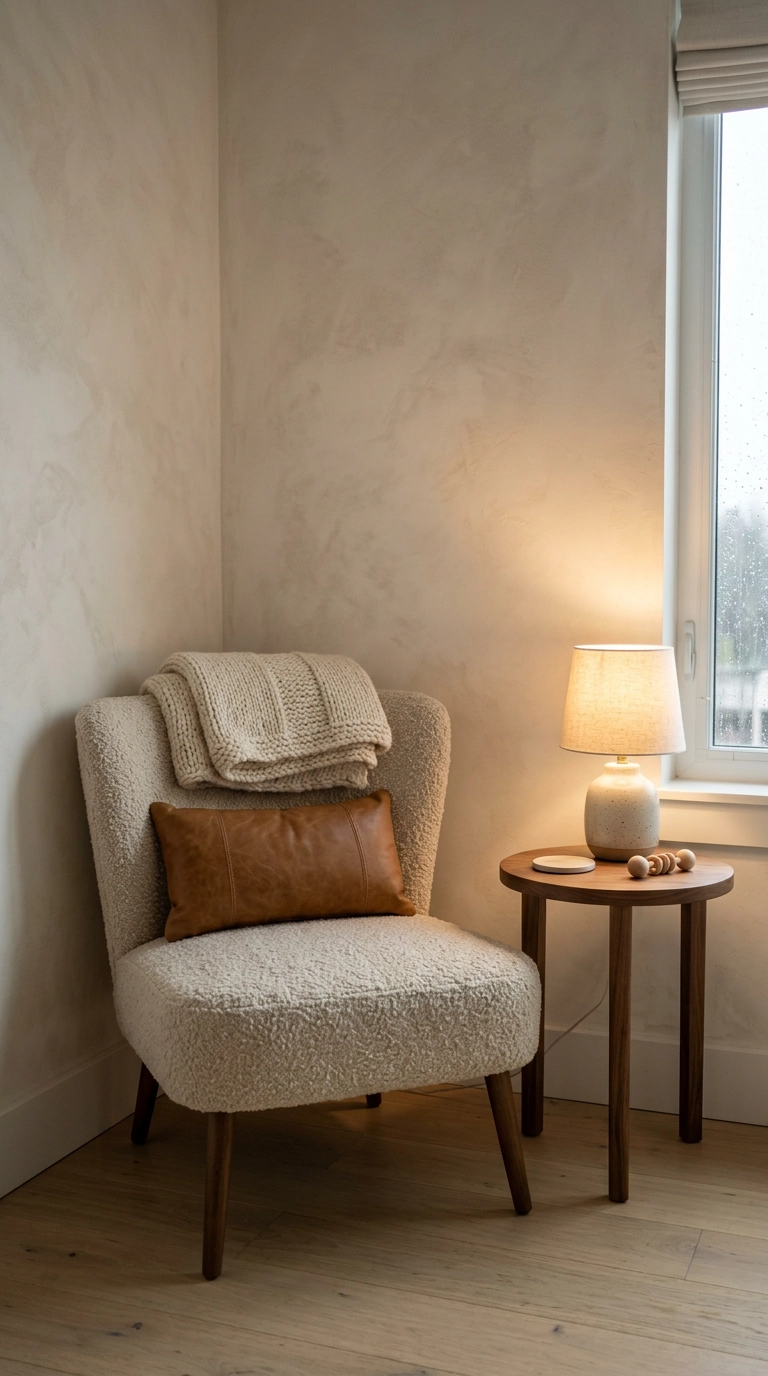
A traditional glider eats about 32 by 36 inches of footprint, and most of that is arms. An armless or slim-arm chair does the same job in roughly 26 inches wide, and it does not visually block the corner.
8. Run a Picture Ledge Instead of a Gallery Wall
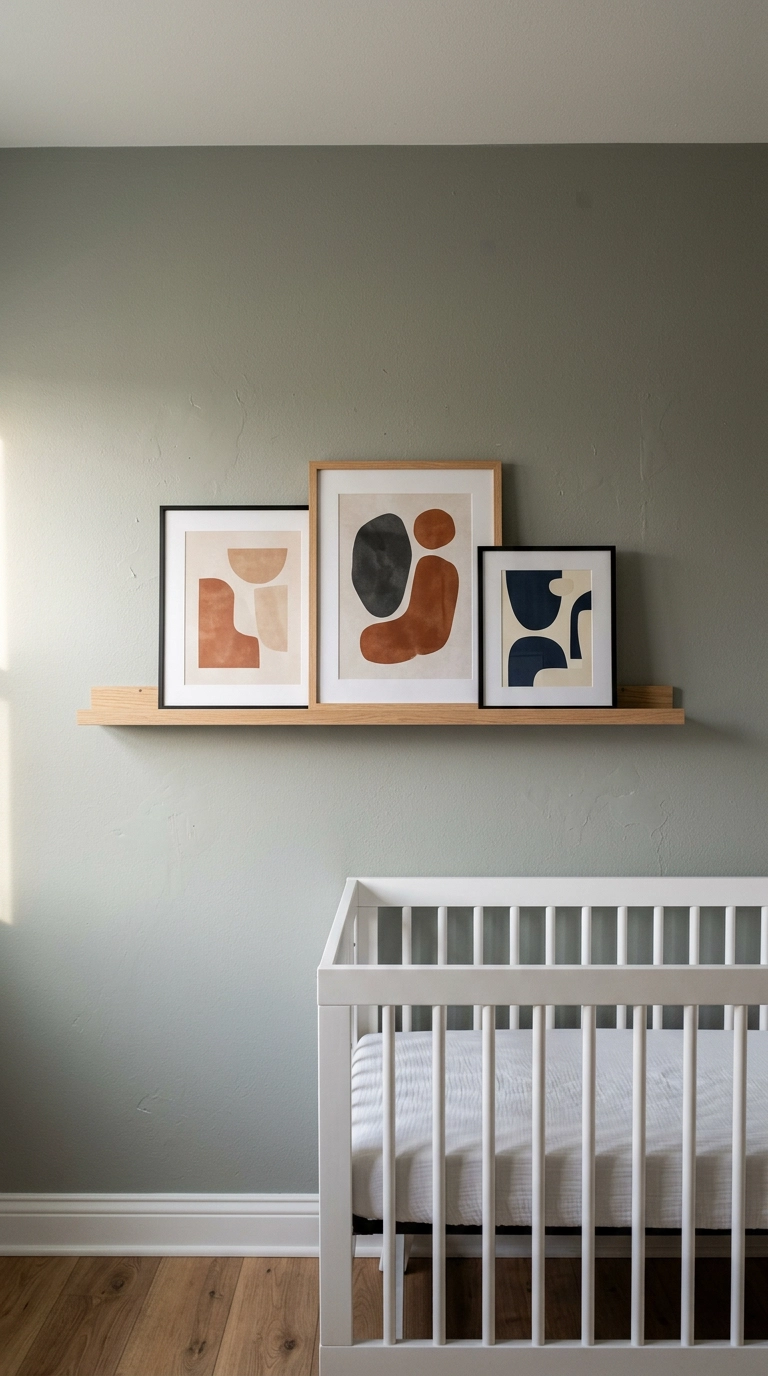
A ledge gives you gallery-wall impact with four screws instead of fourteen, and you can restyle it in a minute when the art starts feeling babyish around age three. Overlap the frames slightly so they read as one composition rather than three lonely rectangles.
9. Divide a Shared Room With an Open Shelf Unit
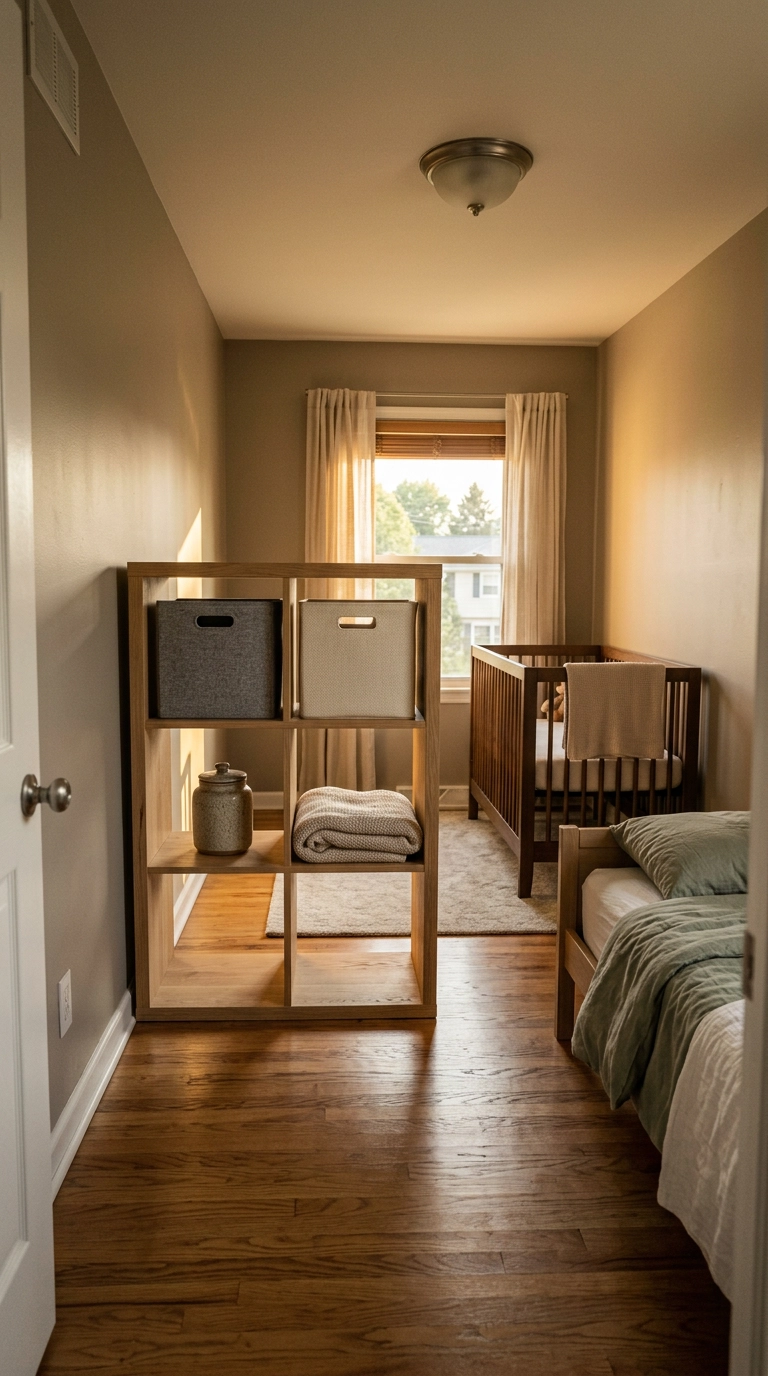
When the baby shares with a sibling, a solid divider makes both halves feel like closets. An open-back shelf unit at about four feet tall gives each kid a defined zone while light and sightlines still pass through.
10. Mount a Swing-Arm Sconce and Reclaim the Table
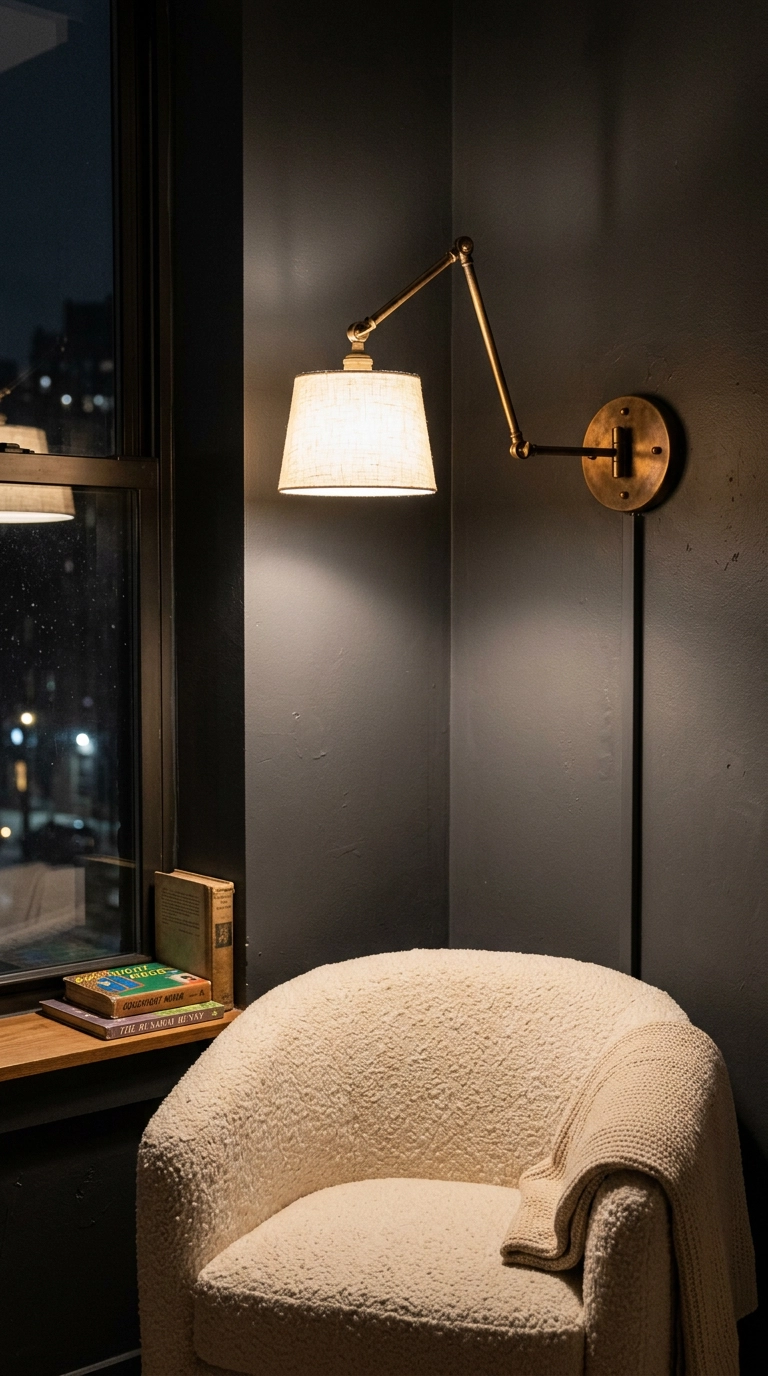
A floor lamp needs about a square foot of floor and a base you will kick in the dark. A plug-in swing-arm sconce hangs on the wall, swings out of the way, and directs light exactly where you need it for a 2 a.m. feed.
11. Use the Dead Space Under the Crib
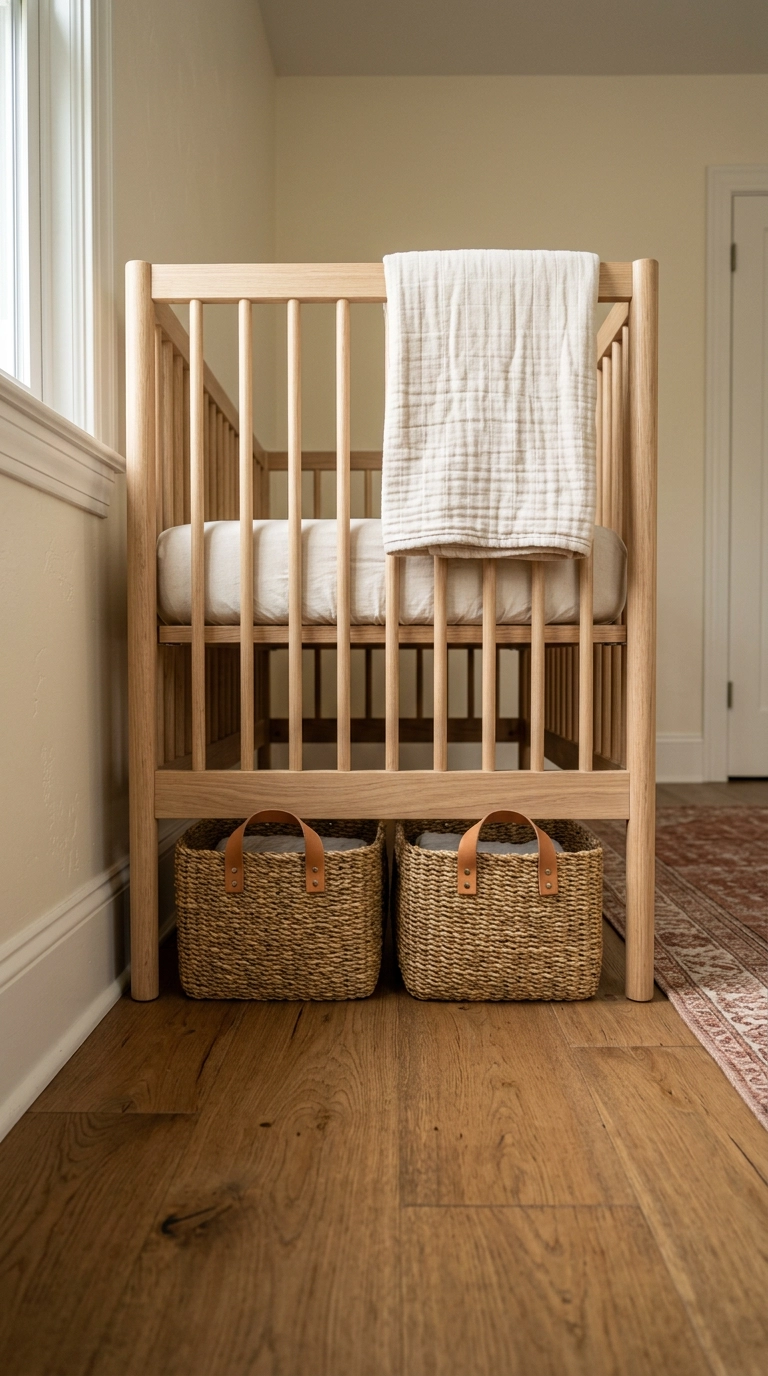
There are roughly nine cubic feet of dead air under a standard crib, and most people fill it with dust. Two flat woven baskets on that floor swallow the entire out-of-season clothing stash.
12. Float the Changing Table on the Wall
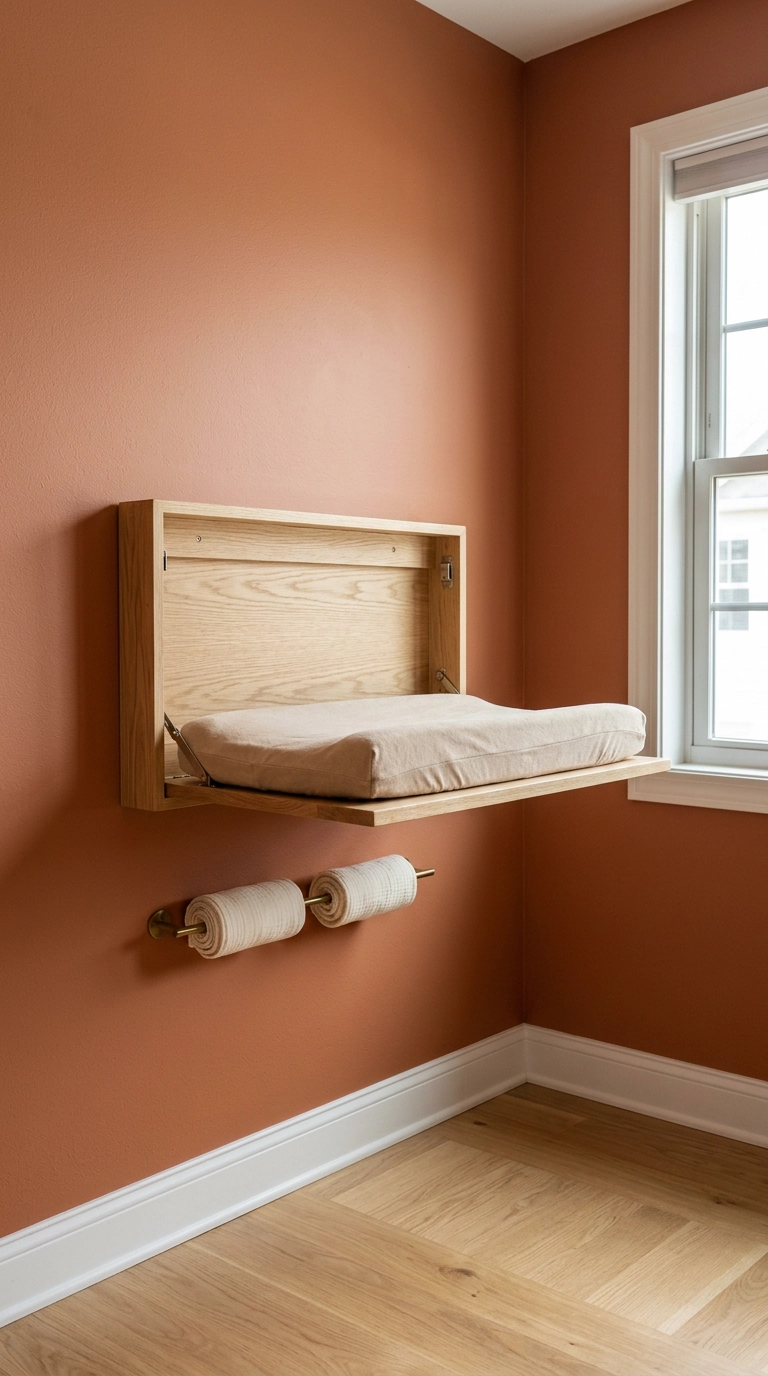
A fold-down wall changer is the smallest possible changing surface, and when it is folded up the floor beneath it is completely clear. In a room where the door swing already eats a corner, this can be the only workable spot.
13. Add Vertical Slat Wood Paneling to One Short Wall
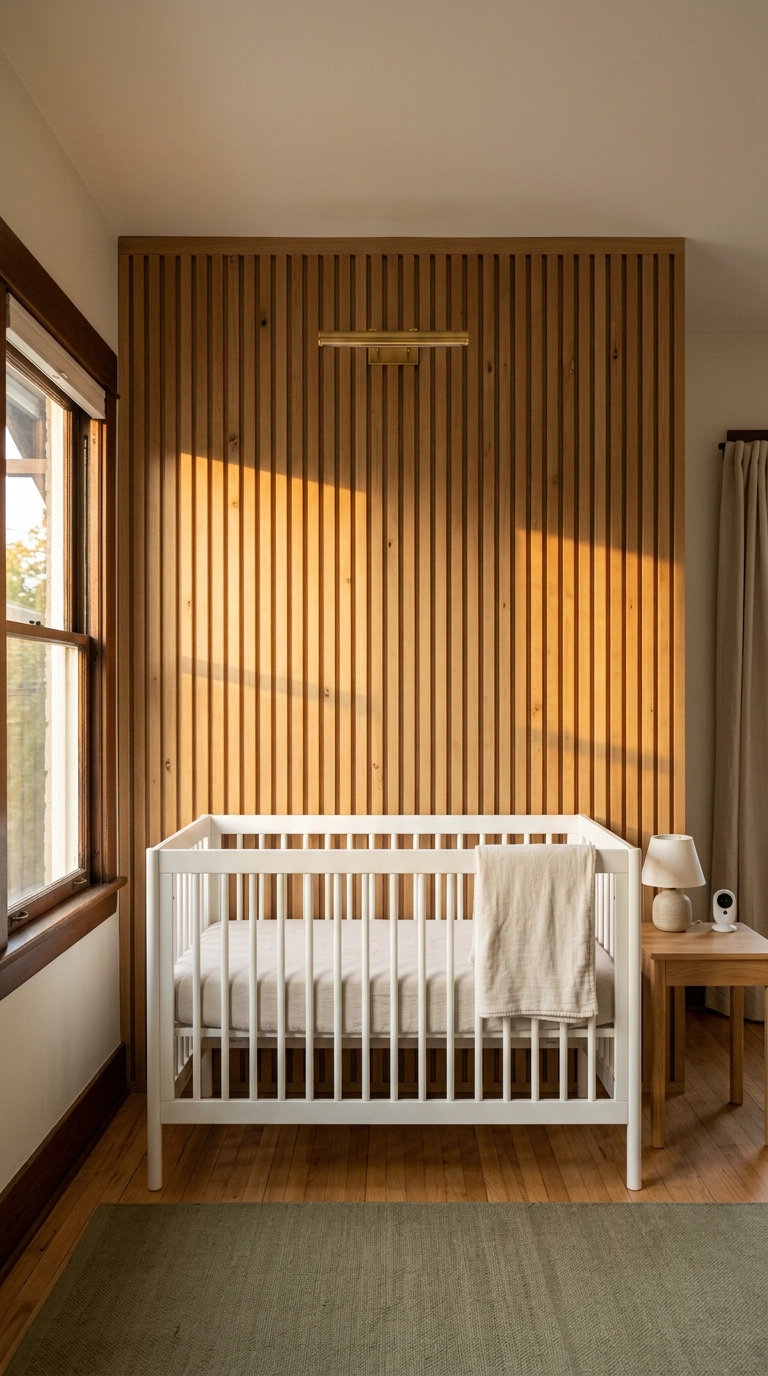
Vertical slats do for a wall what pinstripes do for a suit. The repeated up-and-down lines pull your eye toward the ceiling, which is exactly what a short small room needs.
14. Choose One Small-Scale Wallpaper and Keep Everything Else Solid
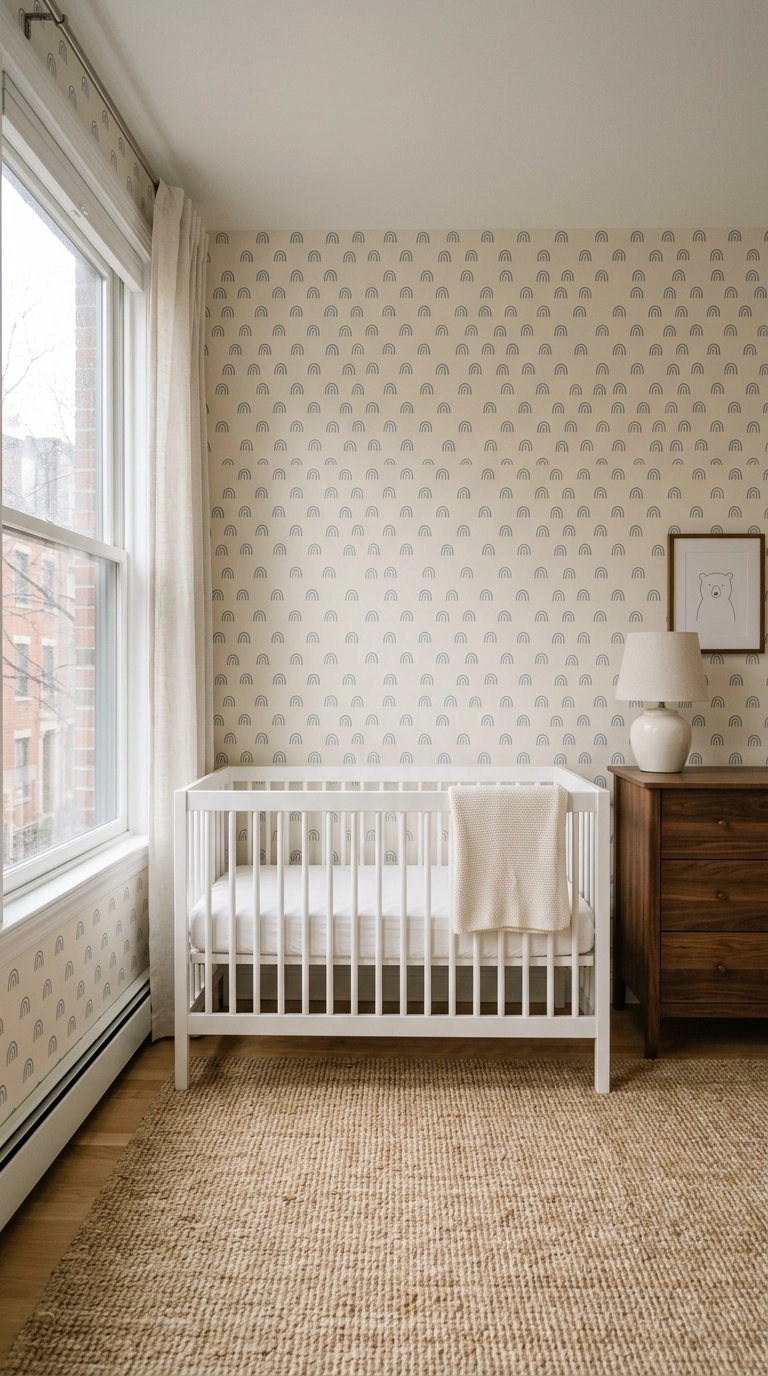
Small rooms can absolutely take pattern, they just cannot take a big one. Keep the motif under about three inches in repeat and it reads as texture from across the room rather than as a mural closing in on you.
15. Hang an Over-the-Door Organizer You Actually Want to Look At
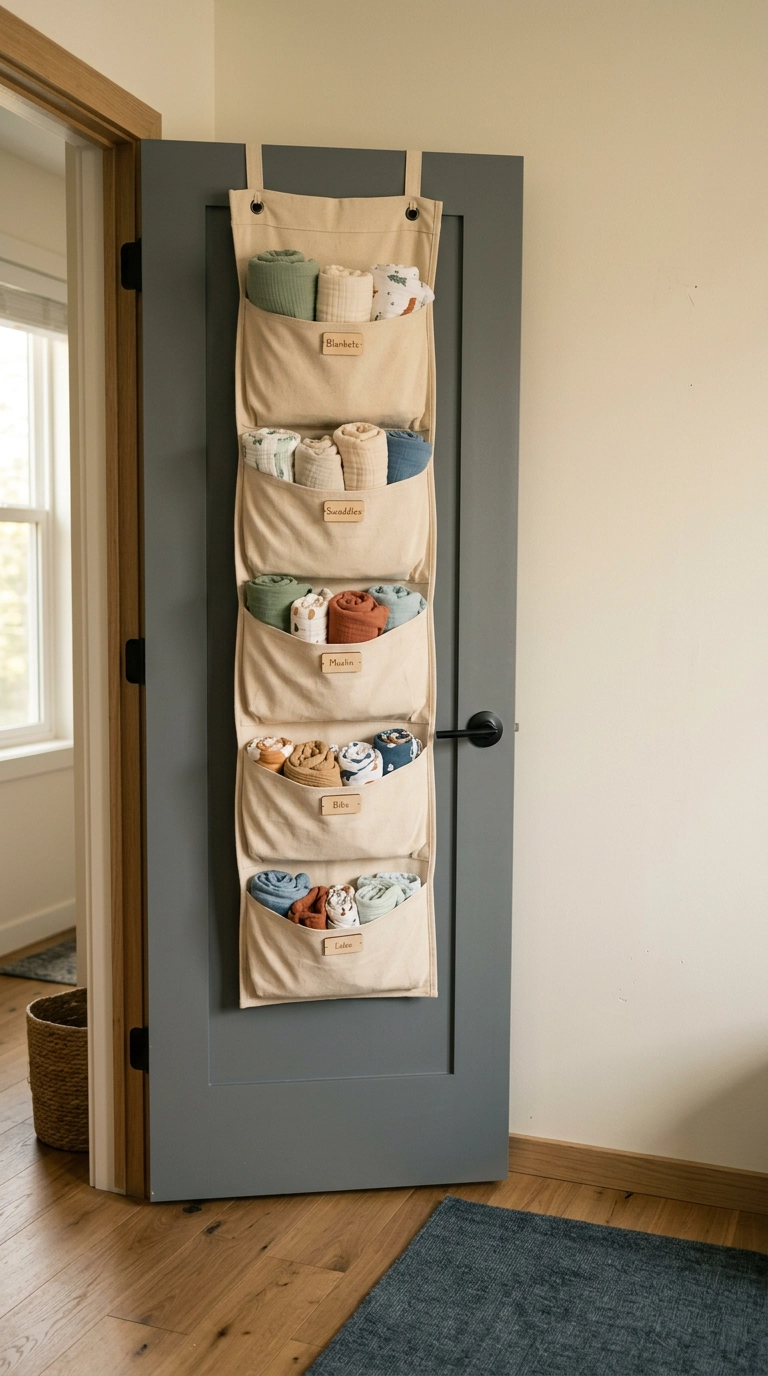
Every door in your home has a vertical storage plane you are not using. A canvas organizer on the back of the closet door holds diapers, creams, and the eighteen pacifiers you will lose anyway.
16. Go One Rug Size Bigger and Round
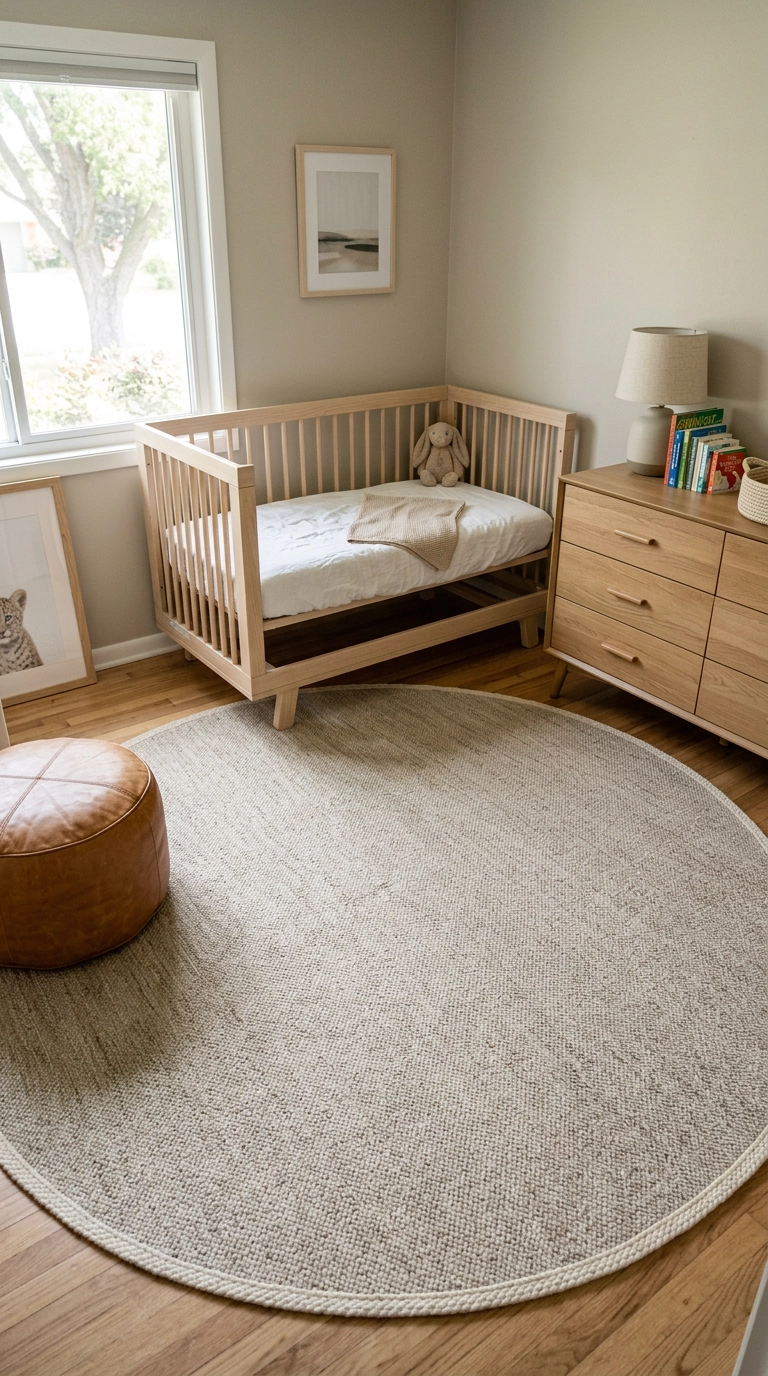
The most common mistake I see in small nurseries is a tiny rug marooned in the middle of the floor. A postage-stamp rug draws a hard little box and makes the room look smaller than the bare floor would.
17. Tuck the Nursery Into a Bedroom Alcove With a Curtain Track
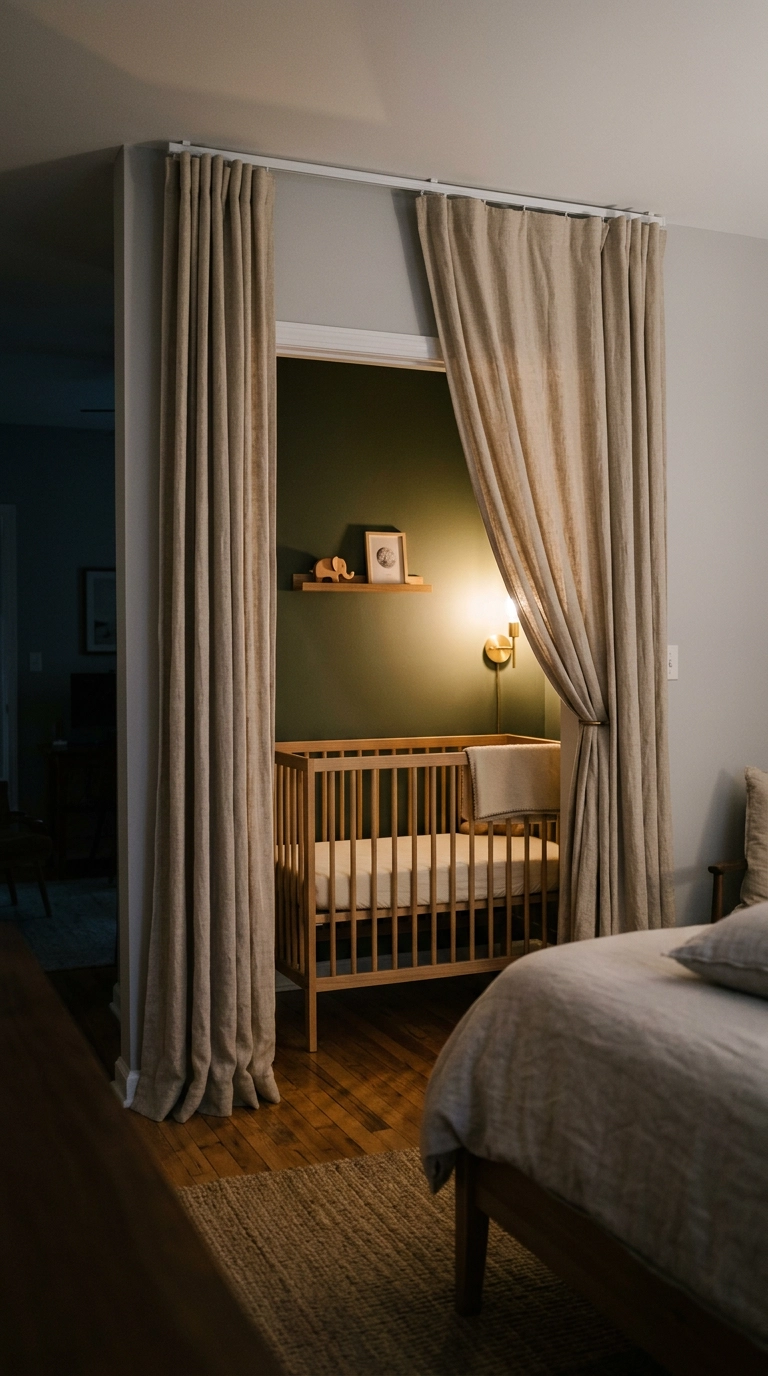
If the baby is in your room, a ceiling-mounted curtain track across an alcove or a corner buys everyone a little psychological privacy for about a hundred dollars. A heavy linen or velvet panel also muffles sound better than you would expect.
18. Put a Slim Bookcase Where Nobody Thinks to Look
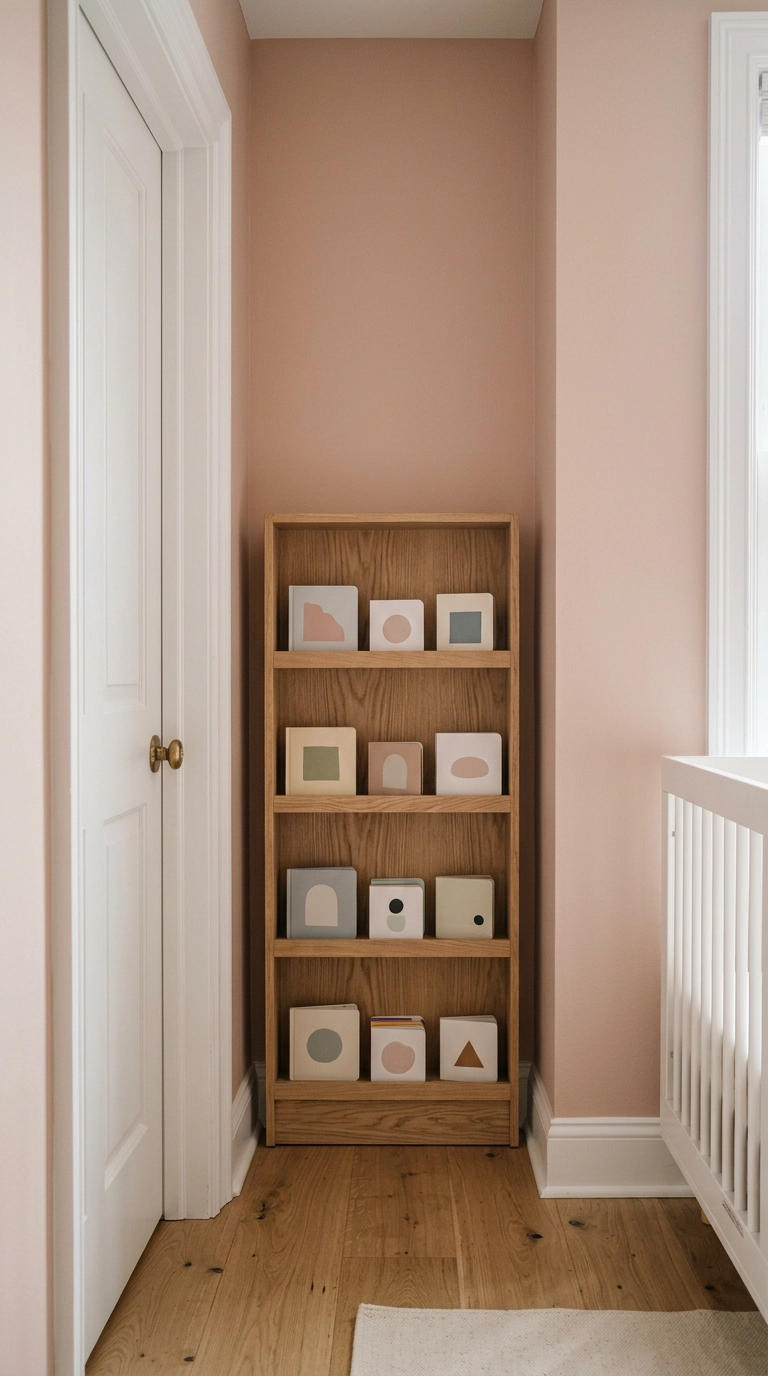
Measure the gap between your door casing and the corner. In most American homes it is eight to fourteen inches, and a 10-inch-deep bookcase drops right in as if it were built for it.
19. Choose Furniture With Legs You Can See Under
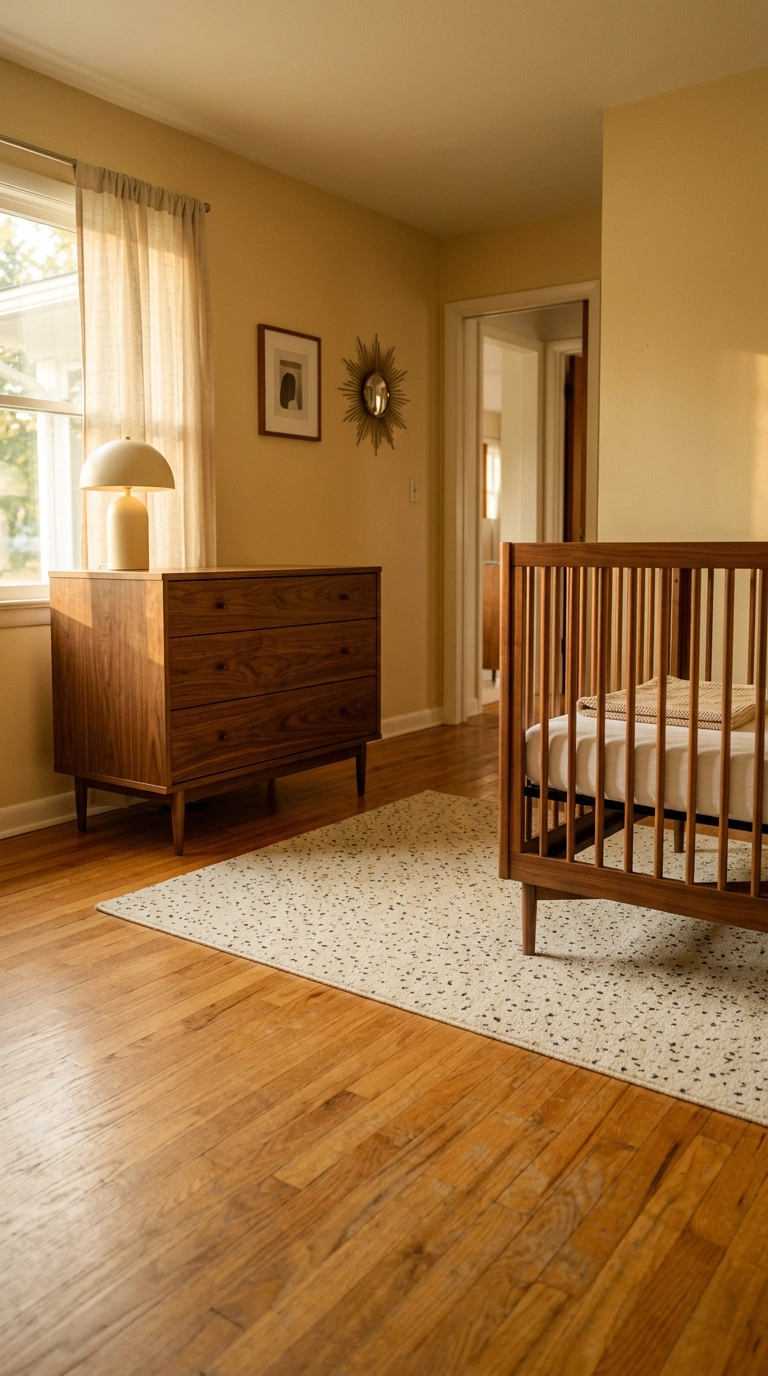
Furniture that sits flat on the floor blocks the floor plane, and your brain measures room size largely by how much floor it can see. Raise everything on four visible legs and the same square footage reads noticeably bigger.
20. Skip the Mobile and Hang a Soft Fabric Canopy Instead
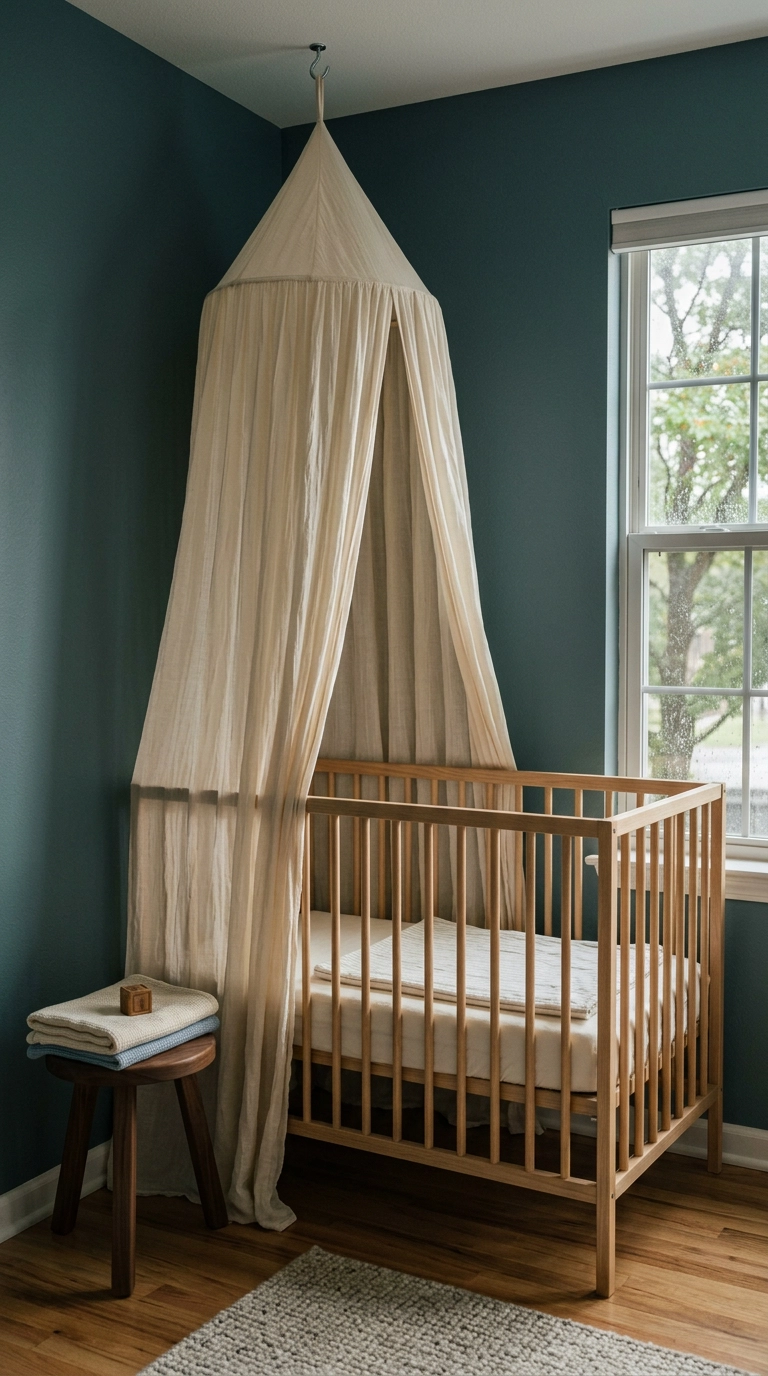
A canopy adds height and softness without occupying an inch of floor, and unlike a mobile it still looks good when the kid is four. One ceiling hook, one length of cotton gauze, about twenty minutes.
21. Lean a Tall Mirror to Bounce Light Into a Dark Room
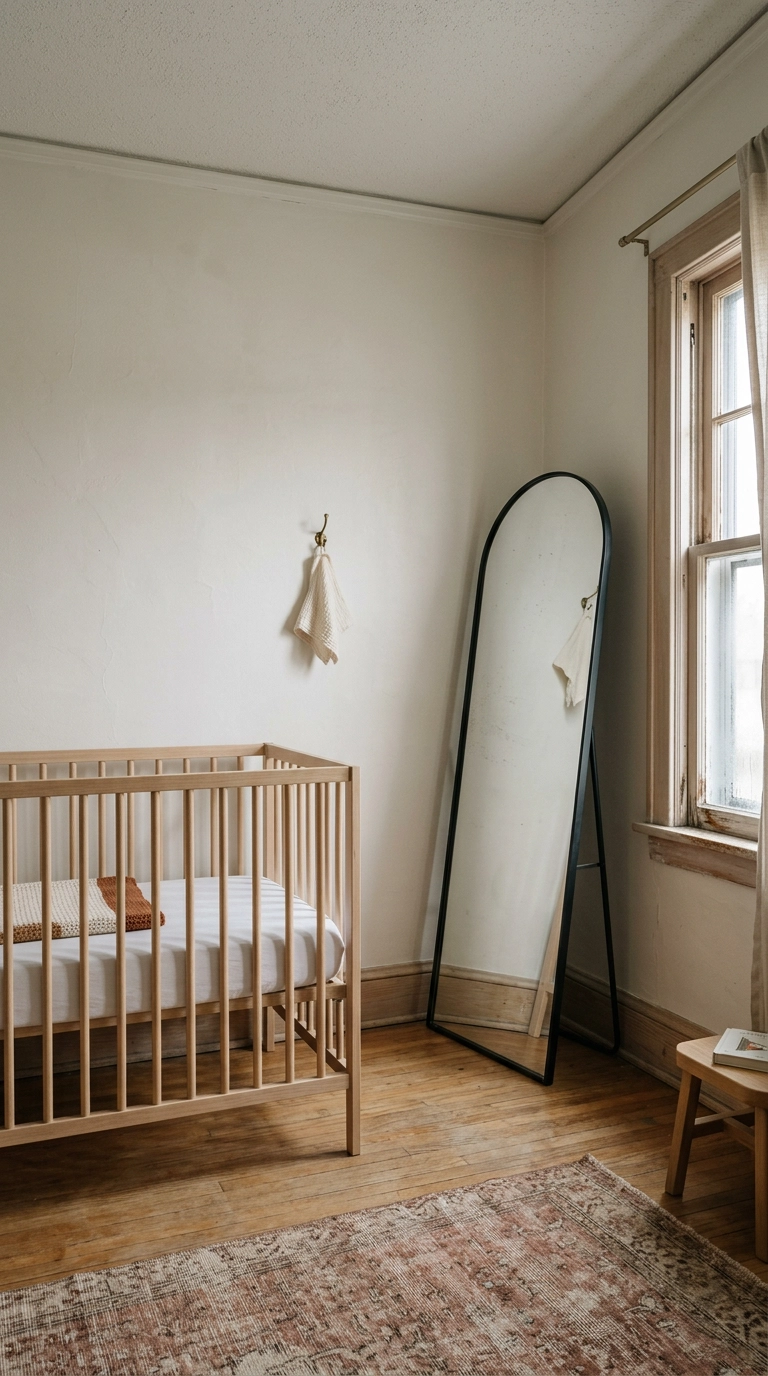
A north-facing nursery gets flat, cool light all day. A tall mirror placed on the wall perpendicular to the window catches that light and throws it back across the room, which is cheaper than adding a window.
22. End on a Deep Painted Ceiling
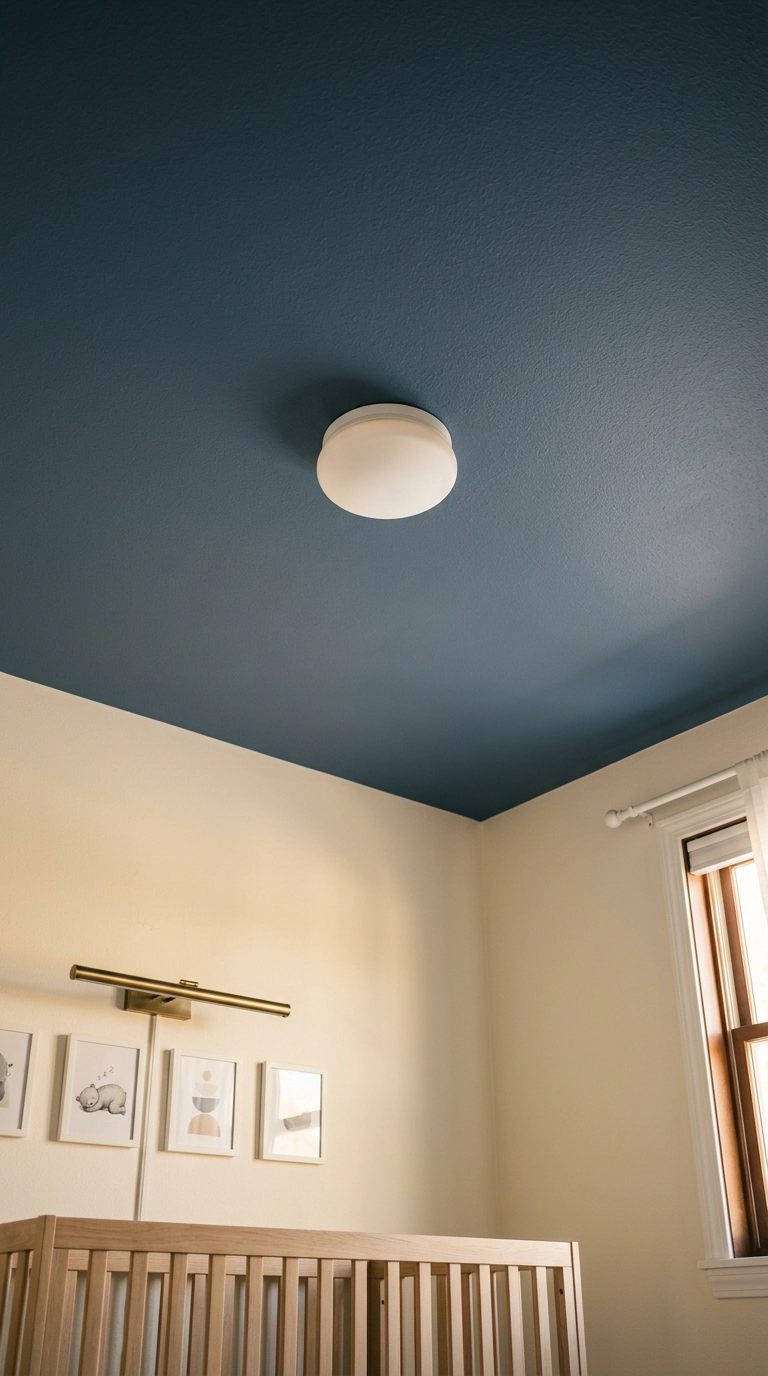
The ceiling is the one surface in a tiny nursery that is guaranteed to be empty, and it is the surface a baby stares at most. Painting it a deep, soft shade draws the eye up and gives the room a lid that feels intentional rather than forgotten.
Before You Order the Paint
If I could hand you only three ideas off this list, it would be the ceiling-mounted curtains, the color-drenched walls, and the round rug that is one size bigger than feels reasonable. Those three cost the least, need the fewest tools, and change how the room reads more than any furniture purchase will. The rest are refinements, and refinements are the fun part.
What I keep noticing in [year] is that small nurseries have stopped apologizing for themselves. The painted arch, the slat wood wall, the deep ceiling color, these are all moves that used to live in grown-up rooms, and designers like Kelly Wearstler have spent years proving that a saturated envelope makes a small space feel deliberate instead of cramped. Meanwhile the mini crib has quietly become a normal purchase rather than a compromise, and half the closet-conversion nurseries I see on Pinterest are working with a standard dresser and a can of paint. Nobody needs a 200-square-foot room and a custom millwork budget to get this right.
My honest advice: live in the room for a week before you commit to a layout. Sit in the chair, walk the path from the door to the crib in the dark, and notice where you keep bumping your hip. That is the corner that needs a fix, not the wall you were planning to wallpaper. If you want more of this kind of thing, sign up for my weekly newsletter and I will send you the small-space projects I am actually testing in real client homes, one email at a time.


