
22 Warm Terracotta Kitchen Floor Ideas for Rustic Charm

Terracotta has one of the longest track records of any kitchen flooring material, and it’s not hard to see why it keeps getting rediscovered. The color alone does a lot of the work — that warm, sun-baked red-orange reads as inviting the moment you walk in, no extra styling required. It’s also a material that was practically built for kitchens: durable underfoot, easy to maintain, and better looking with a bit of age rather than worse.
What keeps terracotta from feeling like a one-note choice is how many directions it can take a kitchen. Laid in traditional patterns, it leans classic and European. Cut into geometric shapes or mixed into a mosaic, it turns into something much more contemporary and artistic. Here are 22 ways to bring terracotta into a kitchen floor, whatever mood you’re going for.
1. Classic Terracotta, Done Simply
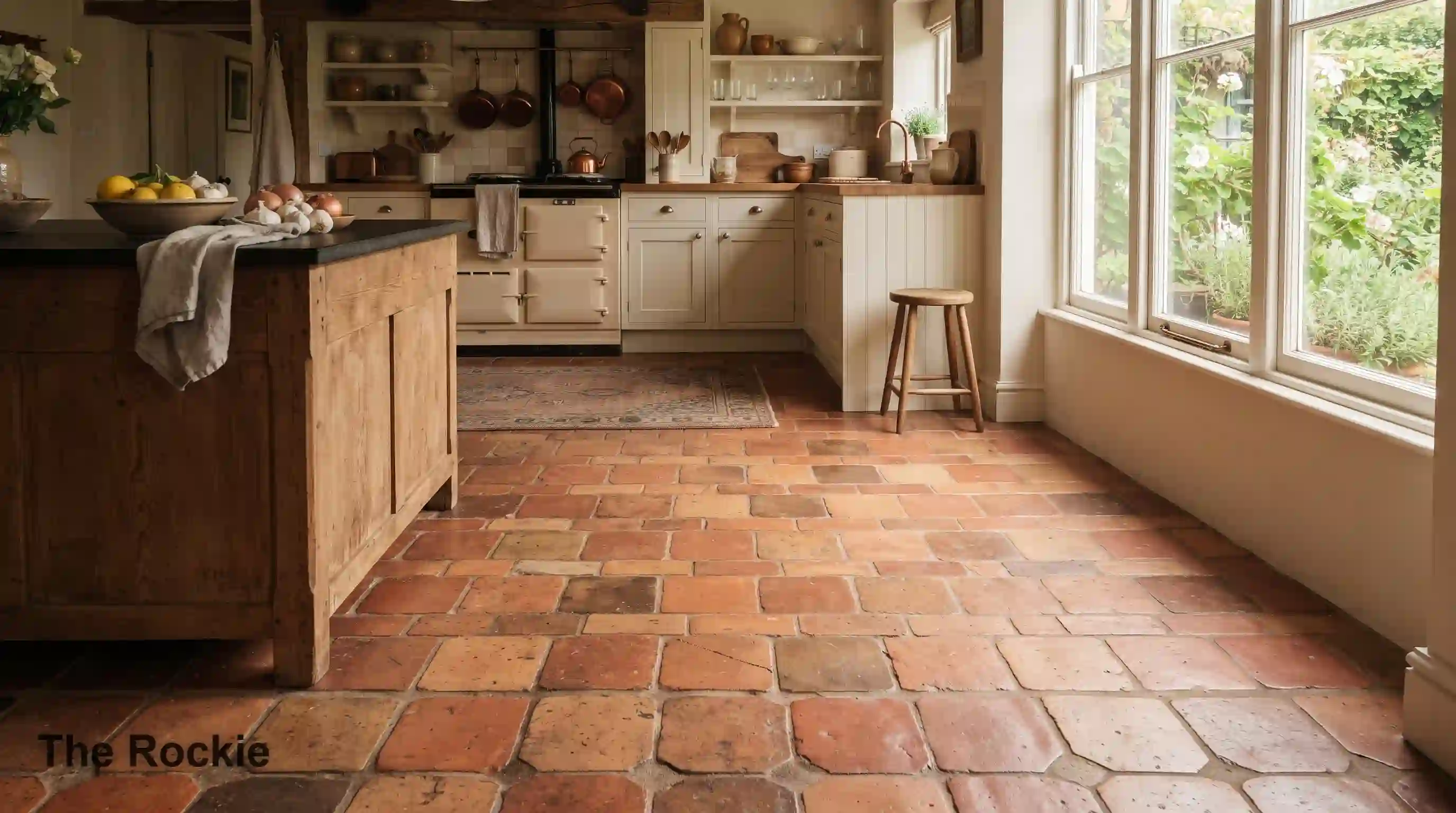
There’s a reason traditional terracotta tile patterns have stuck around for centuries — the natural earthy tones and rich color variation do most of the visual work on their own. Laid in a classic arrangement, the material brings genuine warmth and a sense of history to the room without needing much else. It’s a straightforward, timeless choice that pairs easily with almost any cabinetry style layered on top.
2. Rustic Farmhouse Simplicity
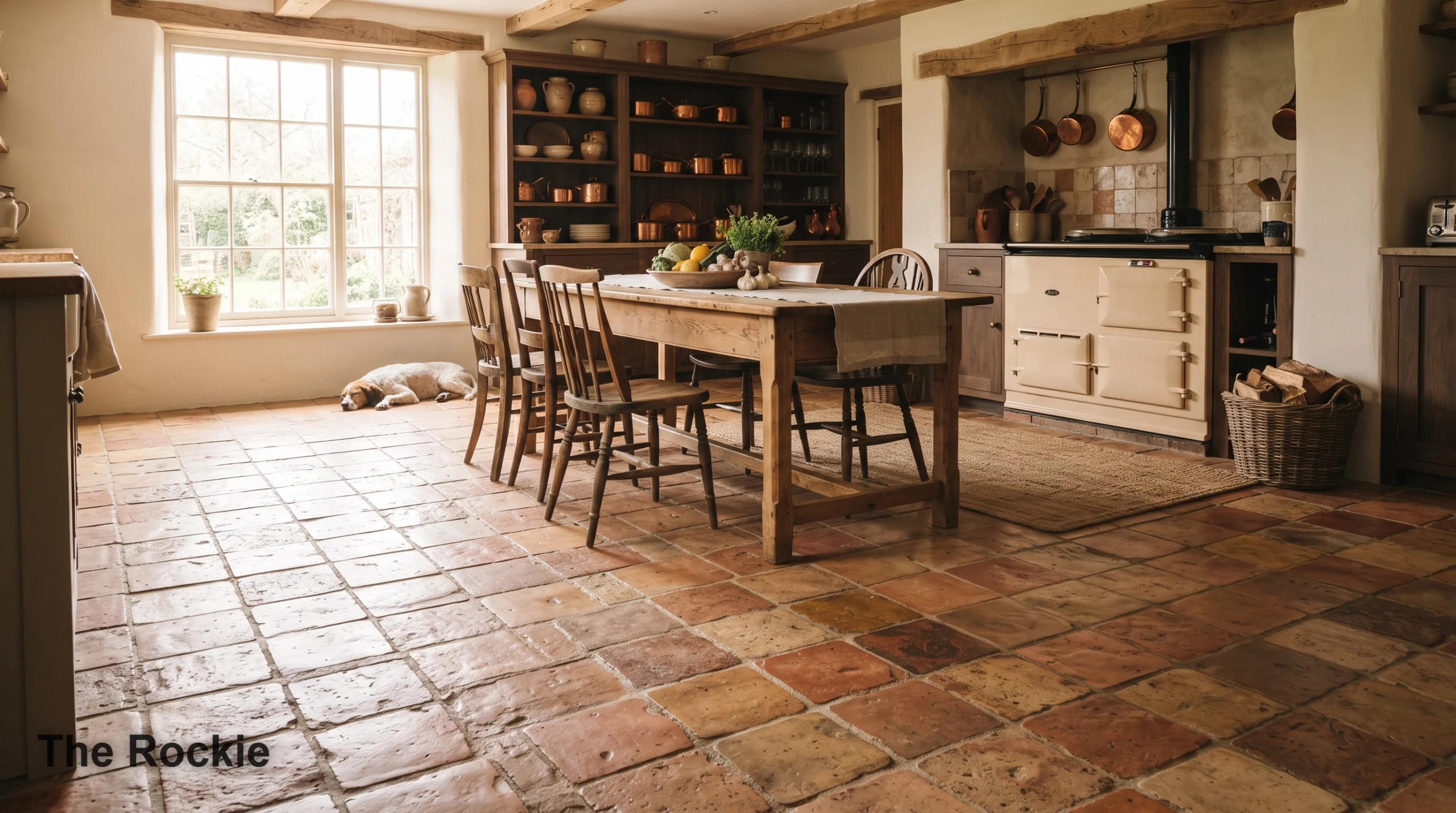
Handmade, slightly imperfect terracotta tiles bring an honest, cozy quality to a farmhouse-style kitchen that flawless manufactured flooring can’t replicate. The rugged finish and soft, natural color palette evoke a genuine sense of home, especially paired with simple wood cabinetry and warm lighting. It’s a floor that feels lived-in from day one, which is exactly the point.
3. Geometric Terracotta for a Contemporary Twist
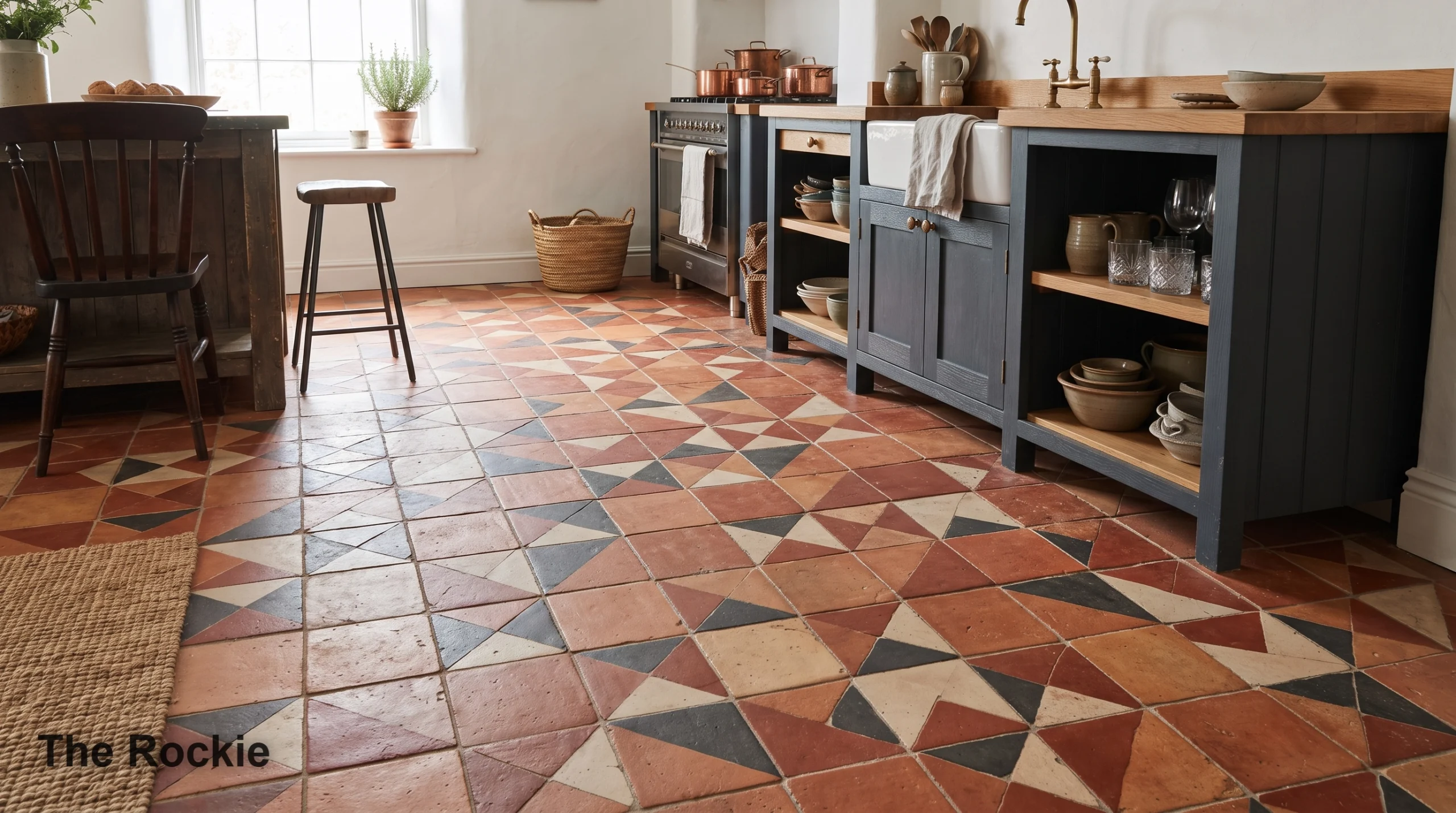
Interlocking geometric patterns give terracotta a much more modern edge, using bold lines and symmetrical layouts to energize the floor without losing the material’s inherent rustic warmth. It’s a design choice that turns the floor into a genuine focal point rather than a neutral backdrop, adding real dimension underfoot.
4. Mediterranean Warmth and Sunlight
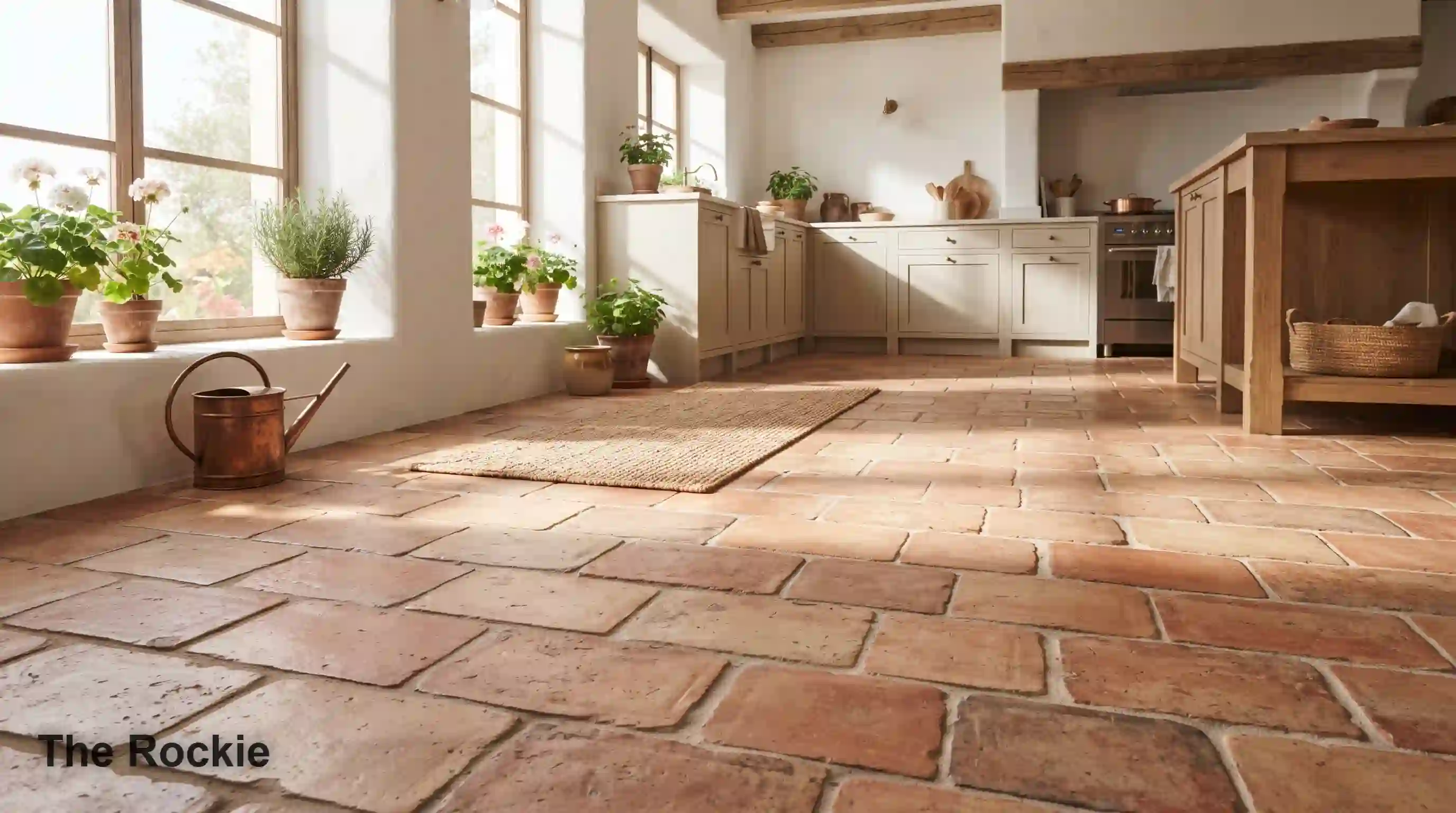
Terracotta tiles arranged in overlapping, traditional patterns instantly evoke sun-drenched coastal kitchens and centuries of Mediterranean craftsmanship. The warm hues and organic texture create a relaxed, breezy ambiance, especially when paired with natural light and simple, sturdy furnishings. It’s a floor that brings a sense of vacation into everyday cooking.
5. Texture That Feels Genuinely Natural
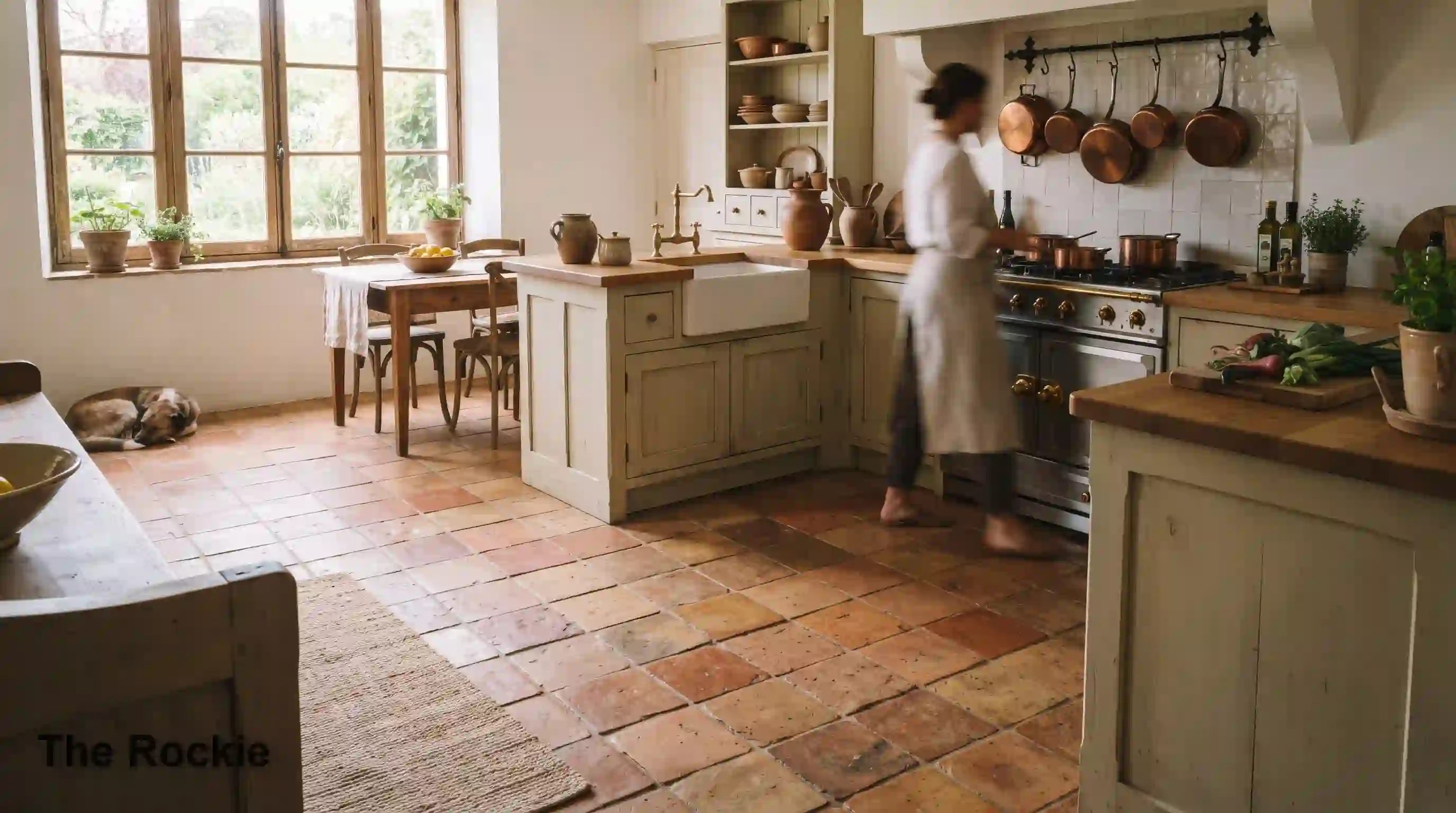
Unpolished edges and natural variation from tile to tile give terracotta a tactile warmth that more uniform materials simply can’t match. This approach leans into the material’s raw character rather than smoothing it over, creating a floor that feels like it belongs to an earthen path as much as a kitchen. It’s understated, durable, and full of quiet character.
6. A Vintage Revival, Gently Modernized
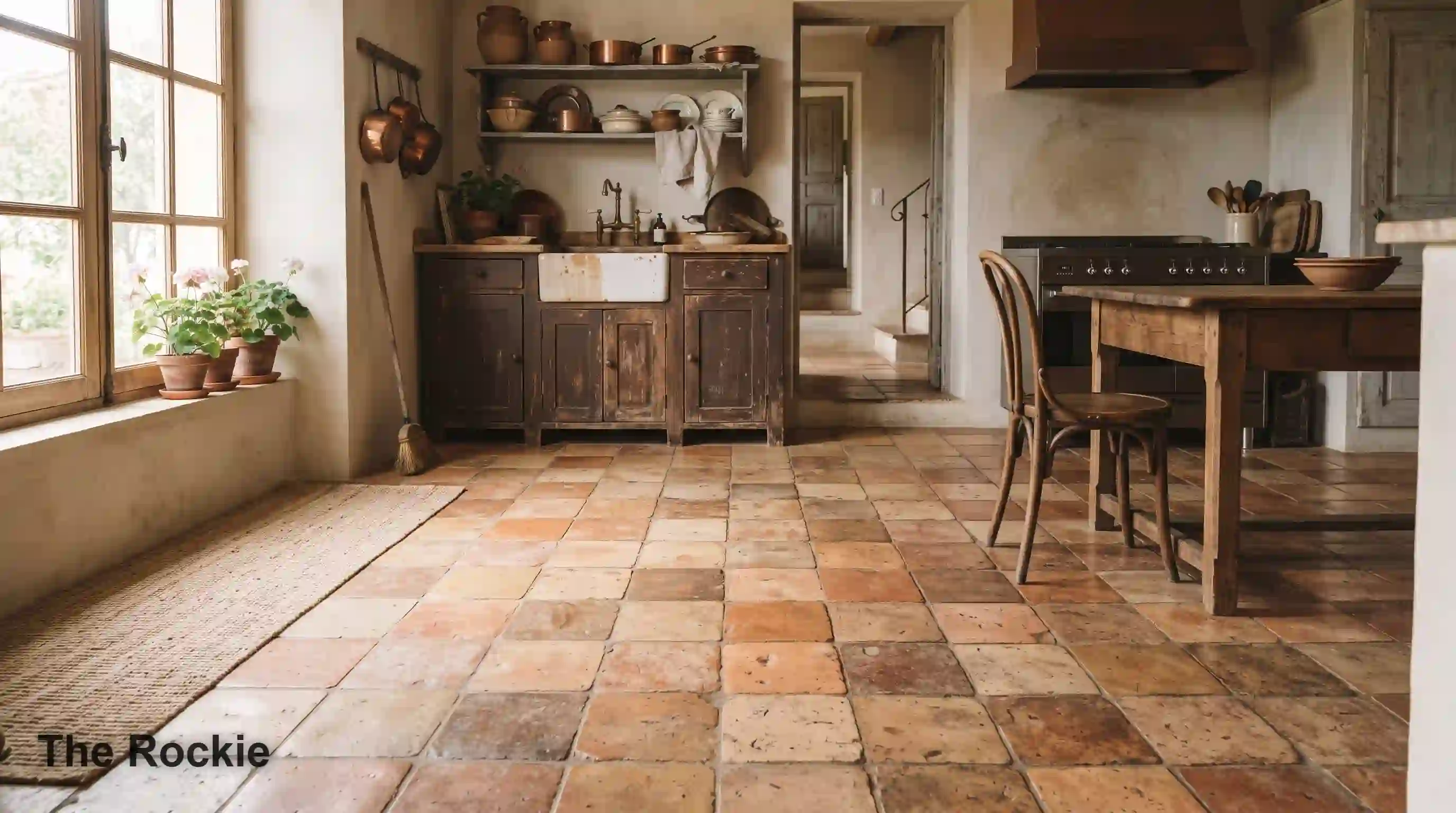
Time-worn terracotta tiles paired with a few subtle modern updates strike a genuine balance between old and new. The gentle distressed finish tells its own story of heritage and age, while the surrounding kitchen stays fully current and functional. It’s a floor that rewards a closer look, with real character built into every tile.
7. Mosaic Magic in Small-Format Tile
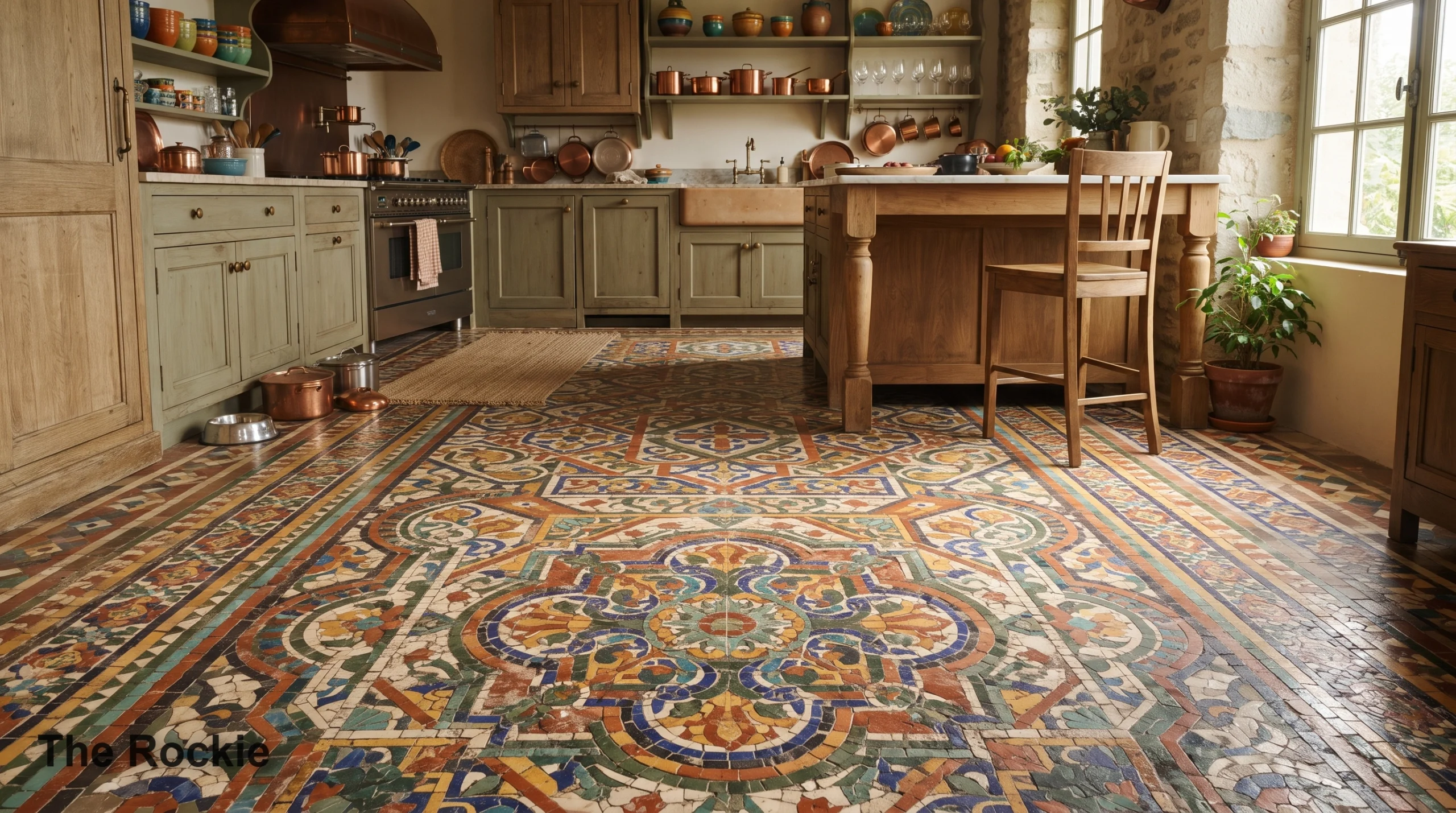
A playful assembly of small, colorful terracotta tiles arranged into intricate mosaic patterns turns a kitchen floor into a genuine work of art. The detailed craftsmanship adds real personality while still delivering the material’s natural warmth. It’s a design choice for anyone who wants their kitchen floor to be a conversation piece, not just a surface.
8. Large-Format Tile for Modern Minimalism
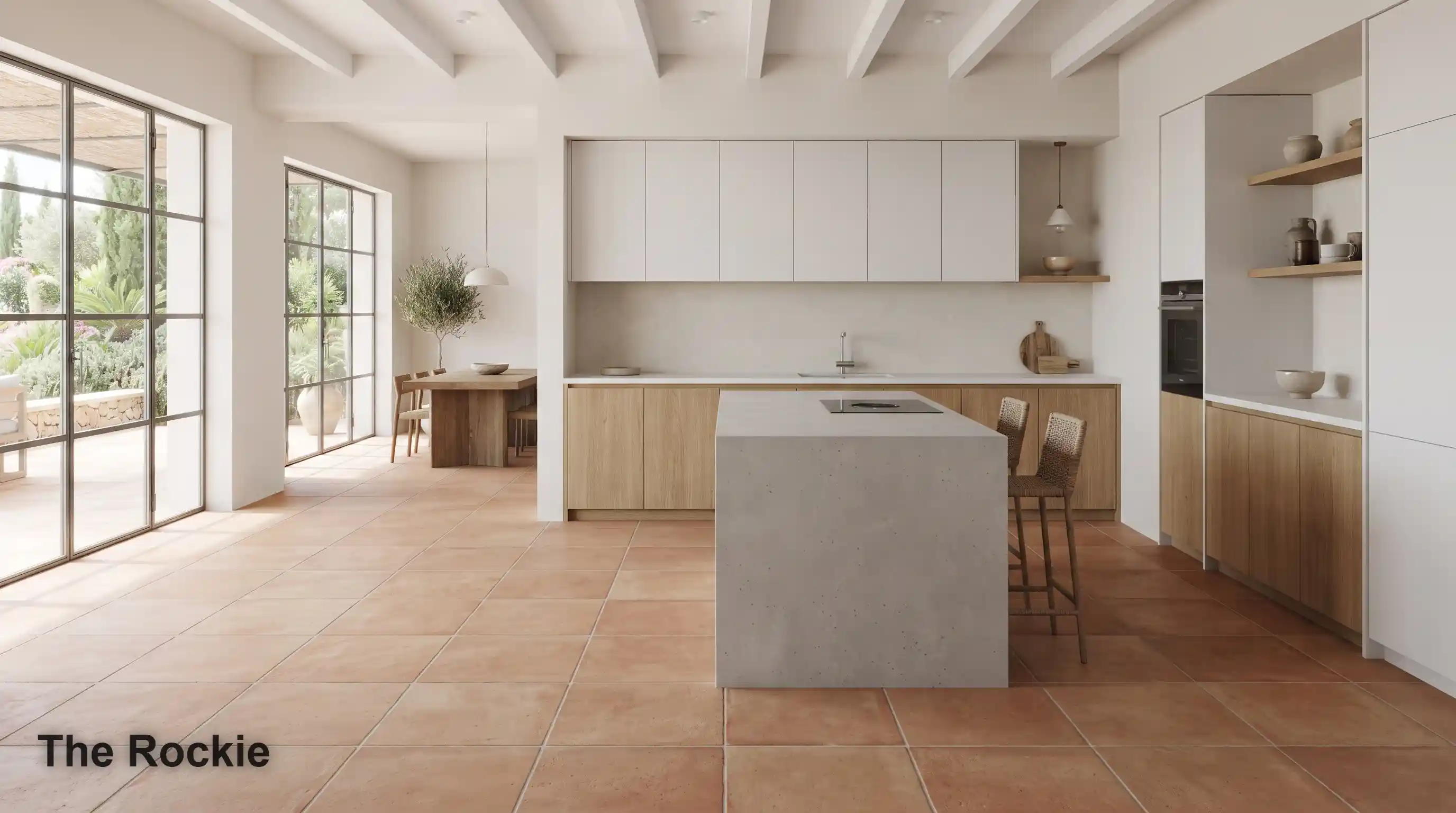
Large-format terracotta tiles with clean lines and a neutral hue give a kitchen a sleek, uncluttered feel while still keeping the material’s inherent warmth. The bigger format makes the space read as more open and cohesive, pairing especially well with modern appliances and simple cabinetry. It’s proof that terracotta doesn’t have to mean rustic or busy.
9. The Handcrafted, Artisan Look
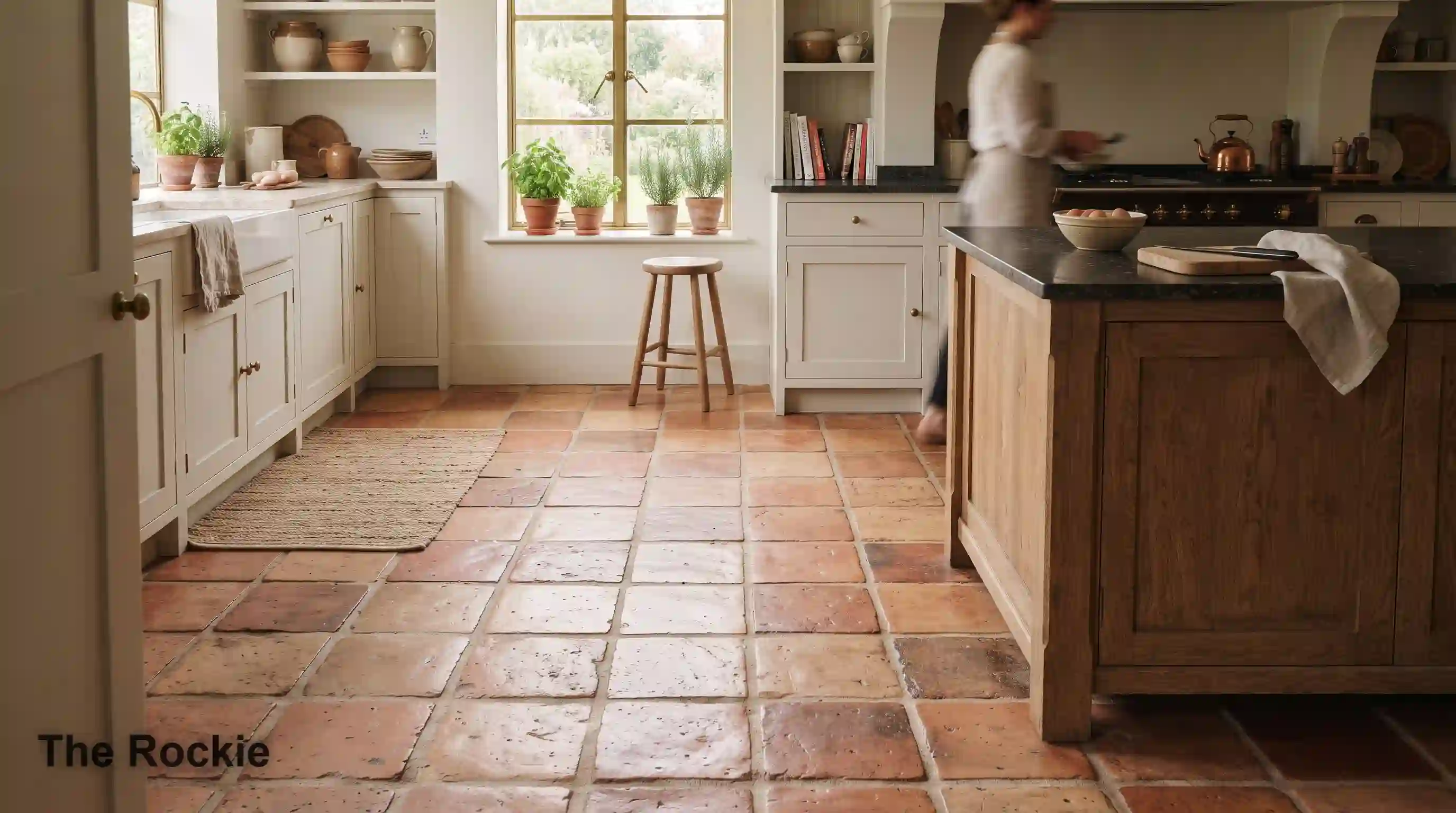
Terracotta tiles with unique, hand-finished details bring a genuinely personal touch to a kitchen floor. The small imperfections read as evidence of real craftsmanship rather than flaws, making each tile feel like a distinct piece rather than a mass-produced unit. It’s a floor built to tell its own story, one that only gets richer with time.
10. Bold Color Paired Against Terracotta
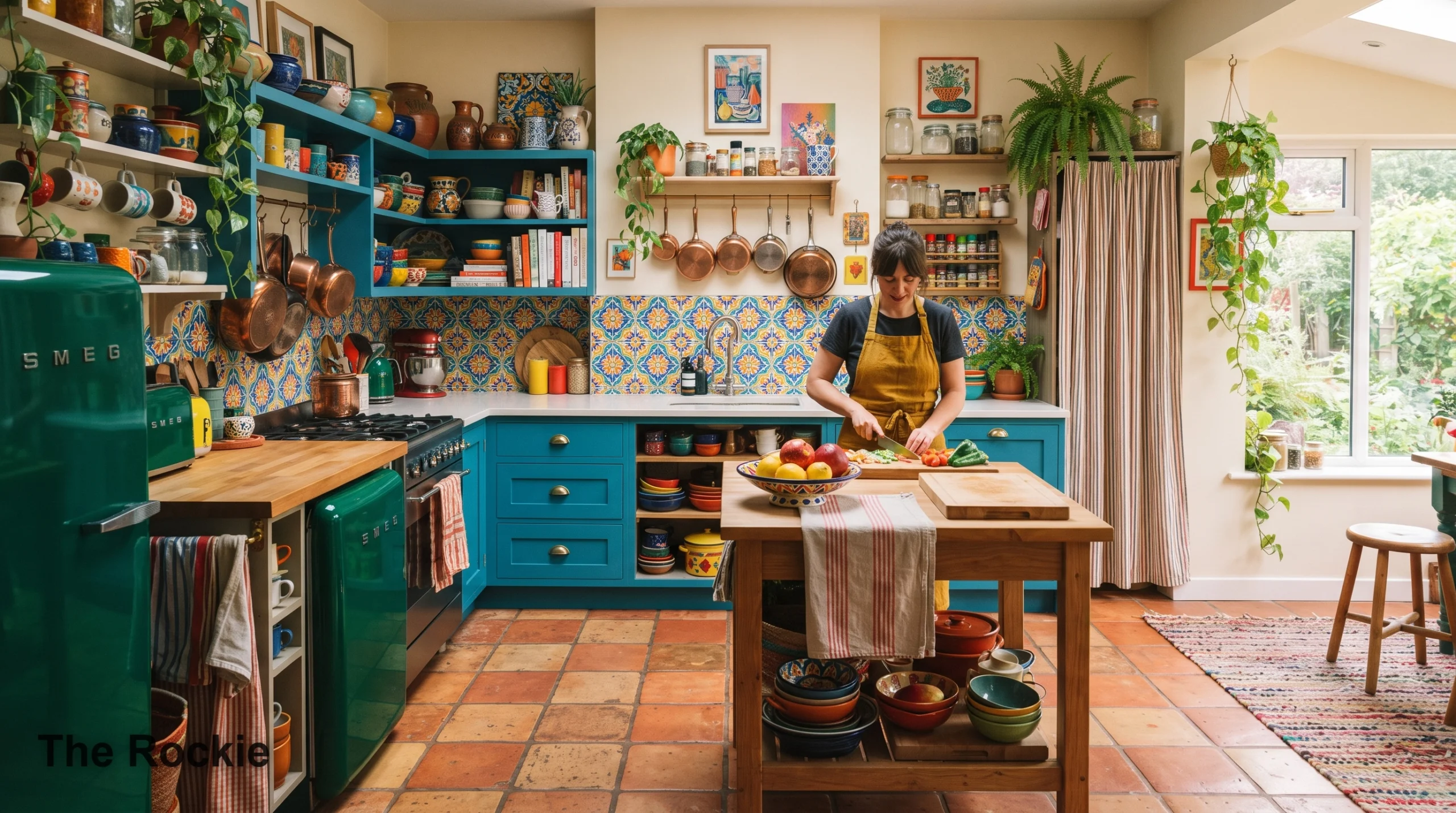
Contrasting or complementary bold hues layered against a classic terracotta base create an energetic, unexpected pattern that stands out without abandoning the material’s earthy foundation. It’s a lively way to modernize a traditional material, balancing durability with a real sense of visual play underfoot.
11. Mixing Multiple Tile Patterns
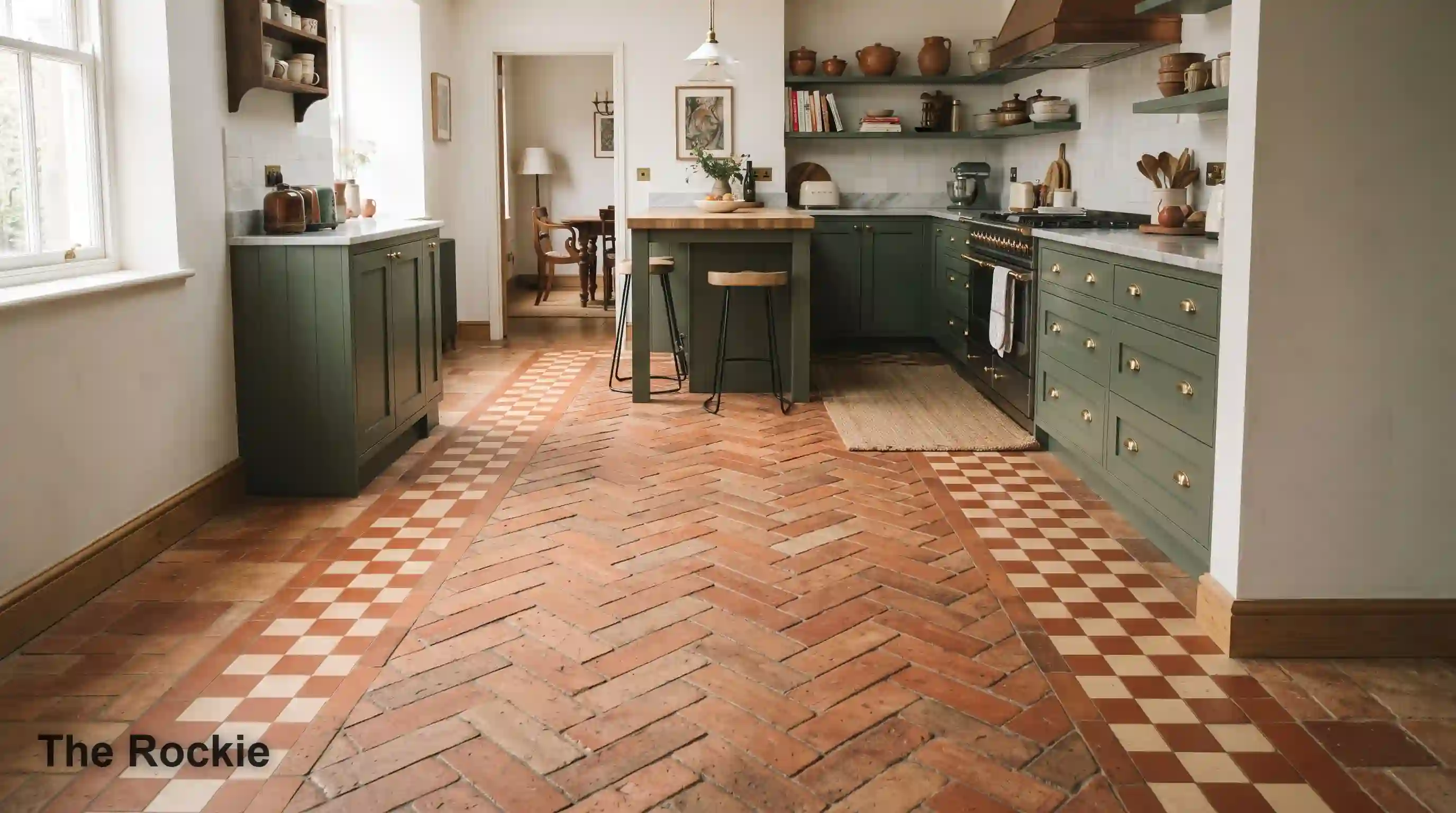
Combining several layouts — herringbone here, checkerboard there — within the same terracotta floor creates a genuinely dynamic, adaptable design. This kind of pattern mixing celebrates individuality and gives homeowners real room for personal expression, while still keeping the overall warmth of the material intact throughout the space.
12. Earthy Meets Contemporary
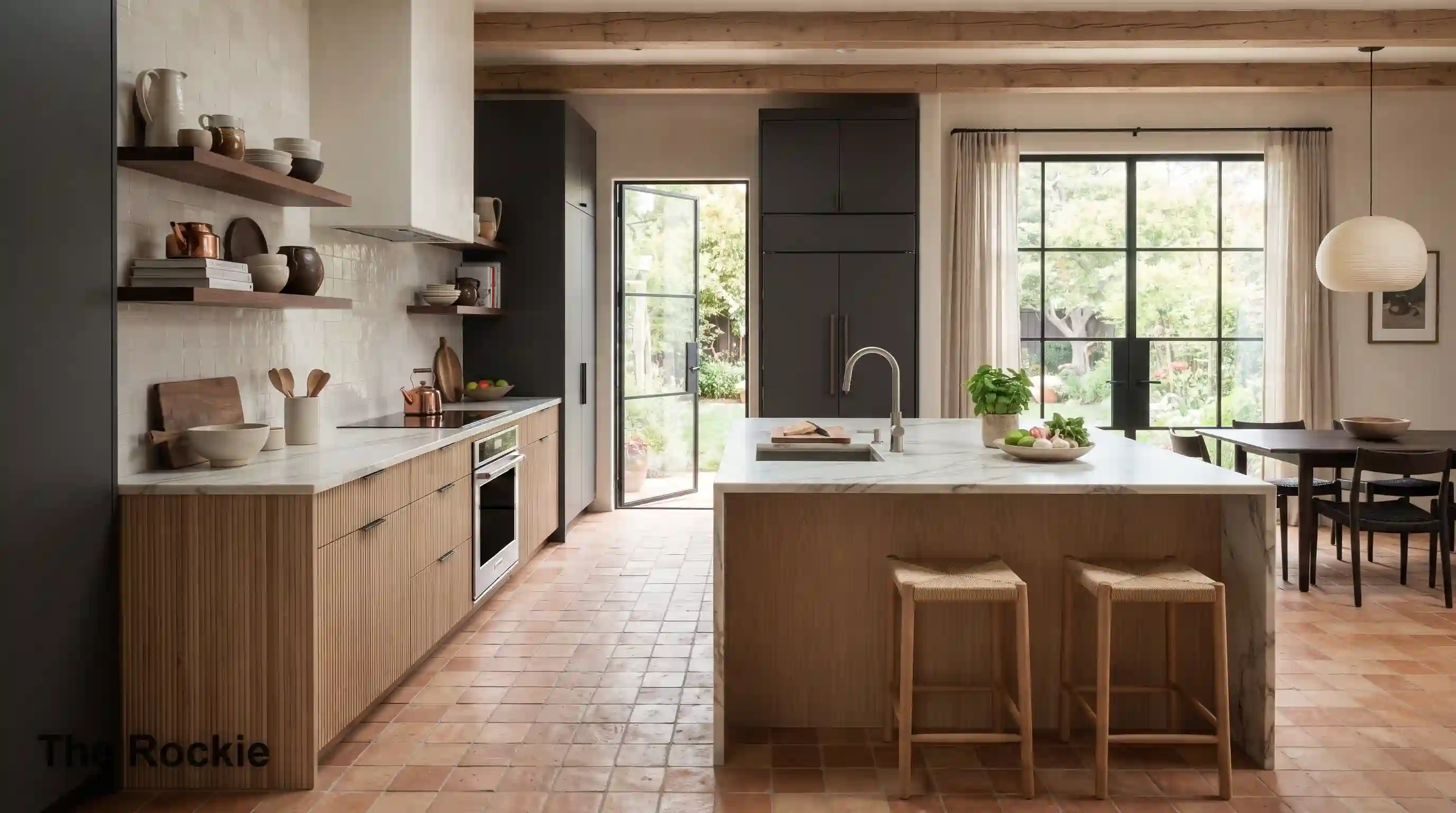
Pairing terracotta’s organic texture and warm hue with sleek, contemporary lines elsewhere in the kitchen creates a balanced, grounded-but-modern look. The natural material adds real warmth, while clean layouts and simple cabinetry keep the overall feel current rather than purely rustic. It’s a combination built to handle daily wear without losing its polish.
13. Terracotta Paired With Natural Stone
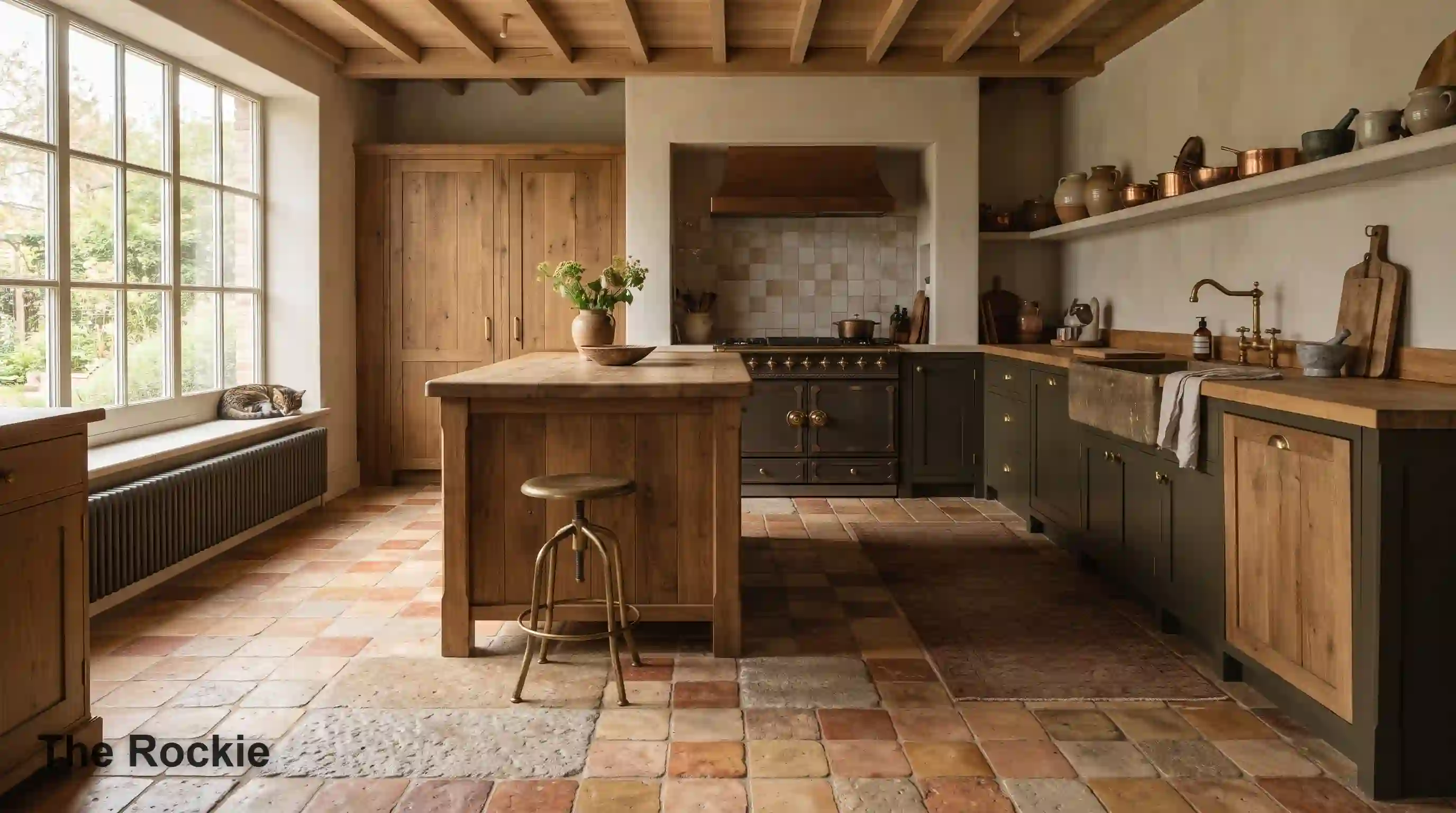
Combining terracotta with a complementary natural stone creates a layered, visually interesting floor that benefits from the contrast between two different textures. The pairing adds both durability and depth, giving the kitchen a richer, more considered look than a single material could achieve on its own.
14. Industrial Edge, Terracotta Warmth
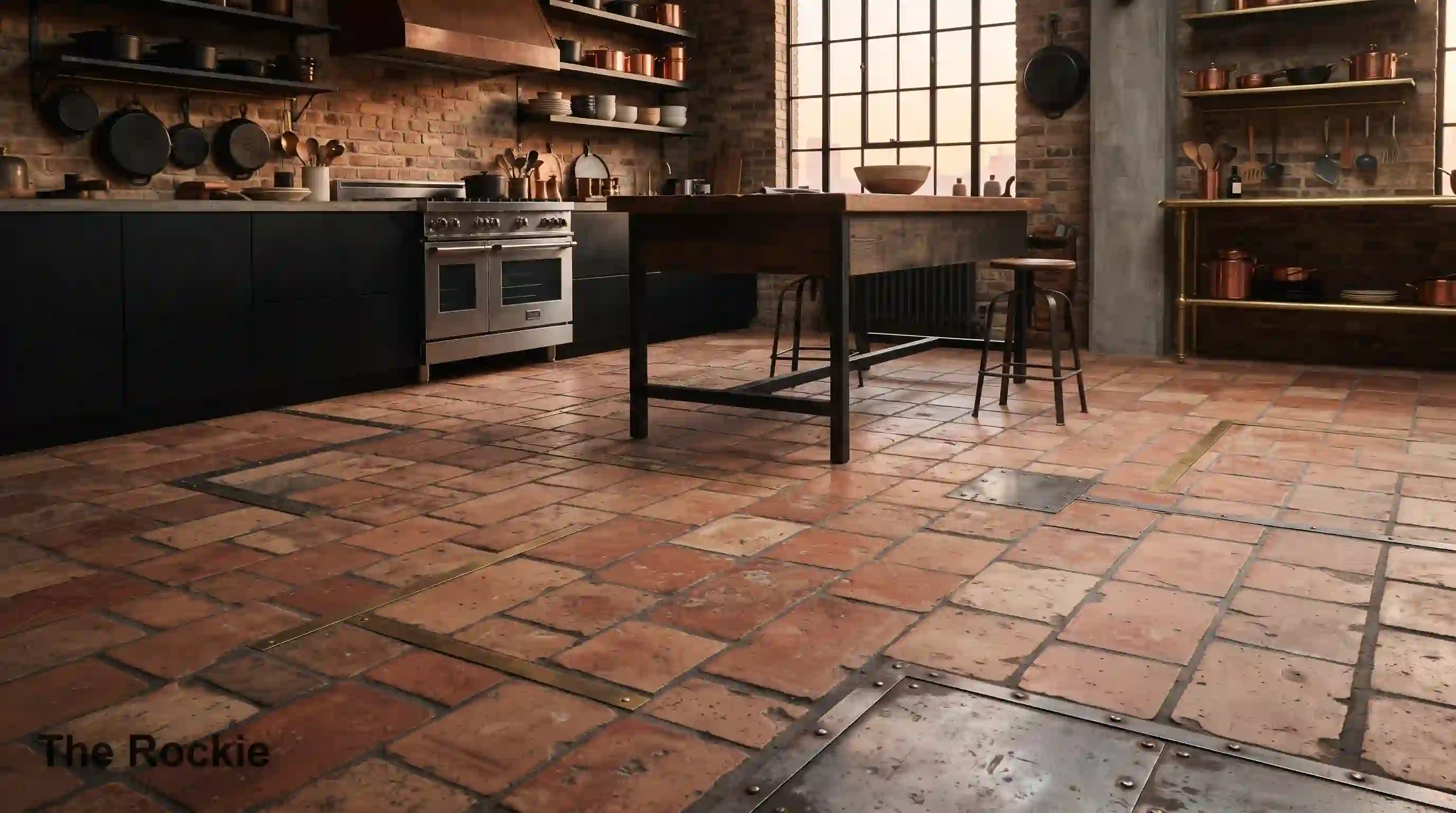
Robust terracotta tiles with a slightly distressed finish, paired with minimalist metal accents, bring together industrial edge and rustic warmth in a single floor. The combination reads as both strong and homey, suiting anyone who wants an urban-leaning kitchen that doesn’t feel cold or sterile underfoot.
15. A Layout Built to Last
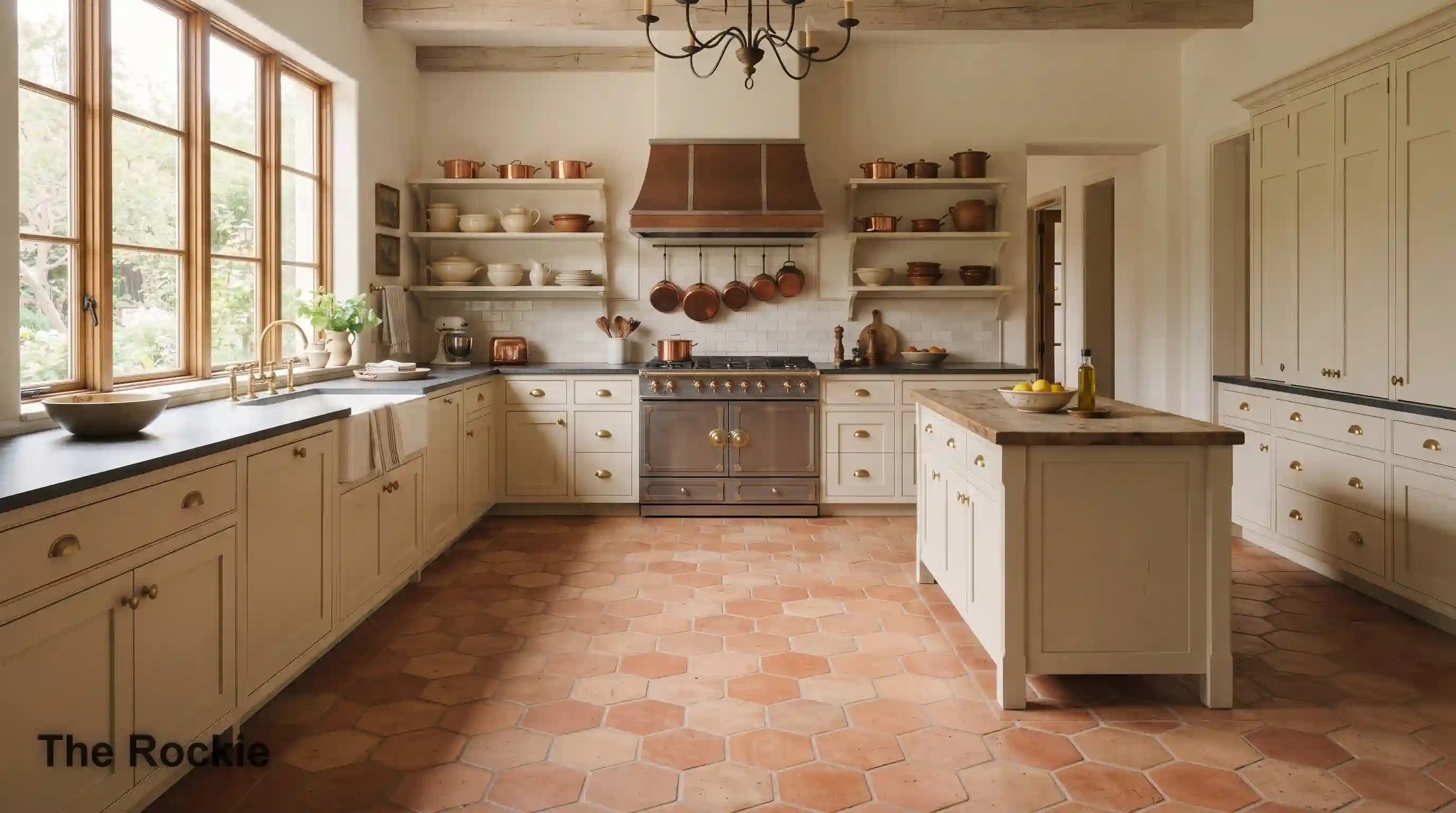
Symmetrical, traditional terracotta patterns have endured for a reason — they offer a seamless blend of function and style that doesn’t chase trends. This kind of timeless layout gives a kitchen a resilient foundation that adapts easily to whatever decor changes happen around it over the years, without ever needing to be reconsidered.
16. An Eco-Conscious Terracotta Floor
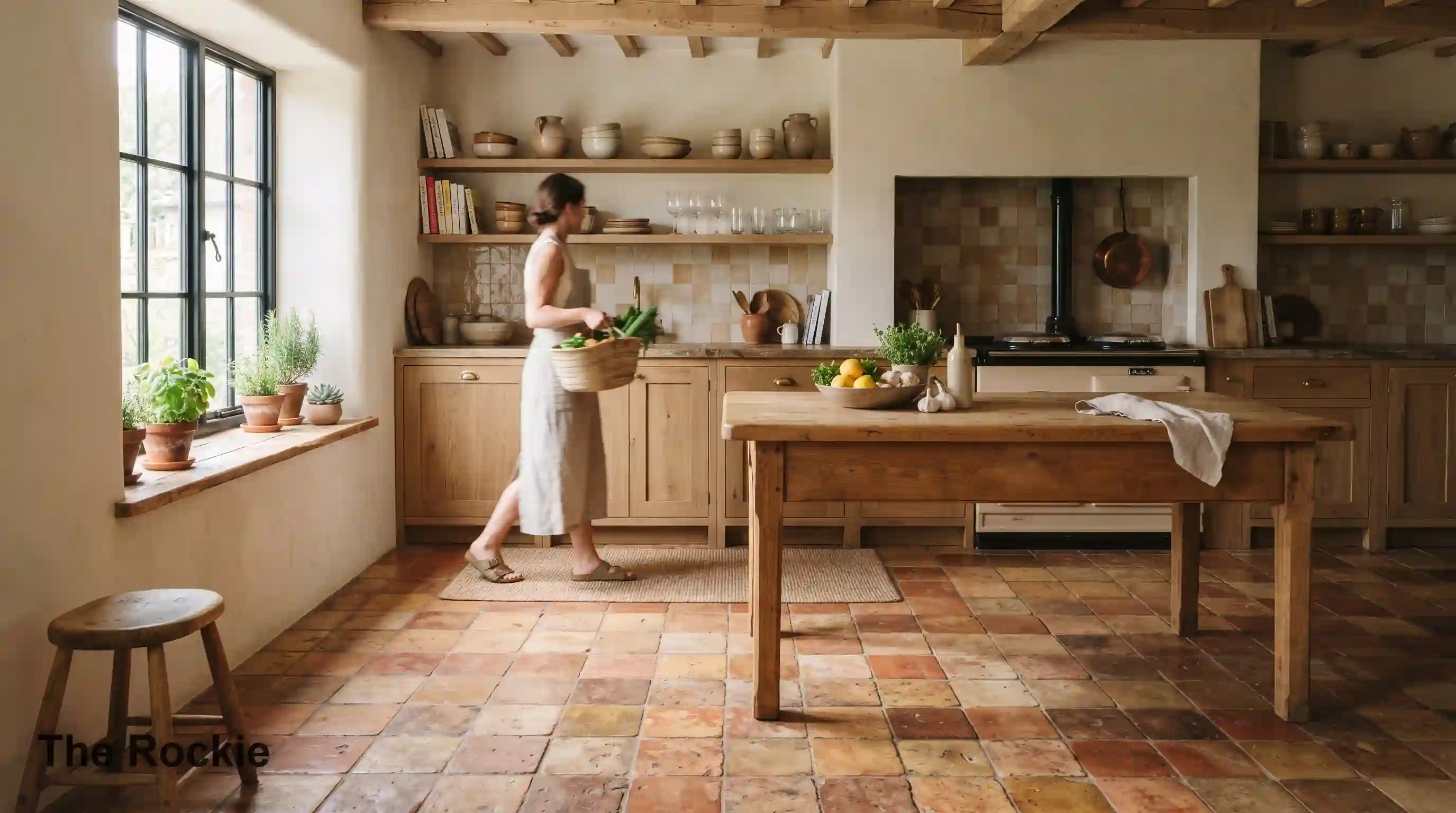
Reclaimed or locally produced terracotta reduces the environmental impact of a renovation while still delivering all of the material’s natural warmth and durability. This approach appeals to anyone thinking about sustainability without wanting to compromise on style, proving eco-friendly choices can still look genuinely striking underfoot.
17. Custom Tile Arrangements
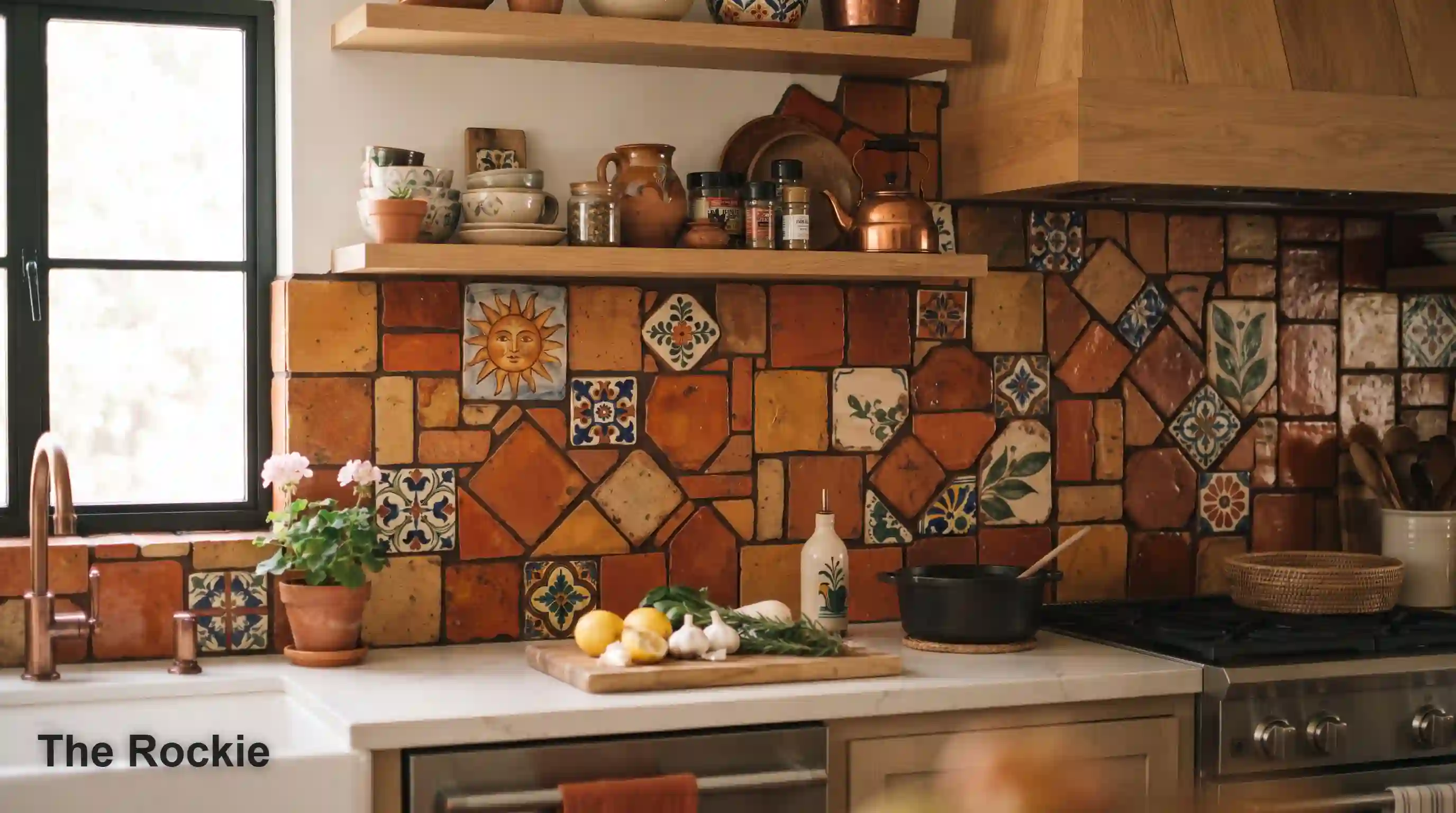
Mixing tile sizes and orientations lets homeowners design a genuinely one-of-a-kind terracotta floor, tailored to their own taste and the specific dimensions of their kitchen. This kind of customization adds real visual interest while still delivering the practical durability terracotta is known for — a floor that feels personal rather than off-the-shelf.
18. Artistic Expression Underfoot
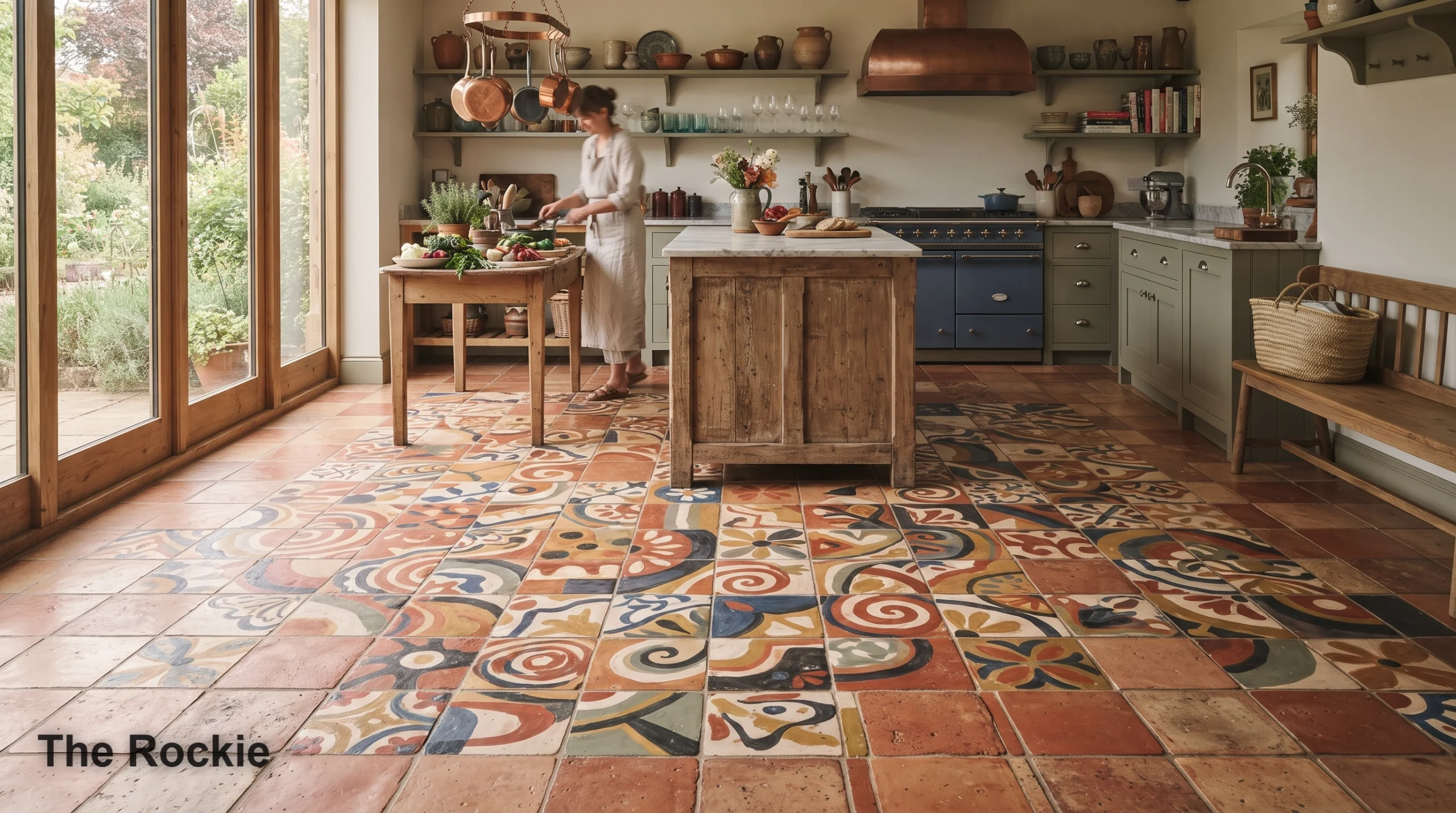
Varying terracotta hues and textures can be arranged into genuinely expressive designs — abstract patterns, detailed motifs, whatever tells the story you want. Each tile contributes to a larger visual narrative, turning a purely functional surface into something with real artistic intent, without sacrificing any of the material’s everyday durability.
19. Terracotta That Flows Outdoors
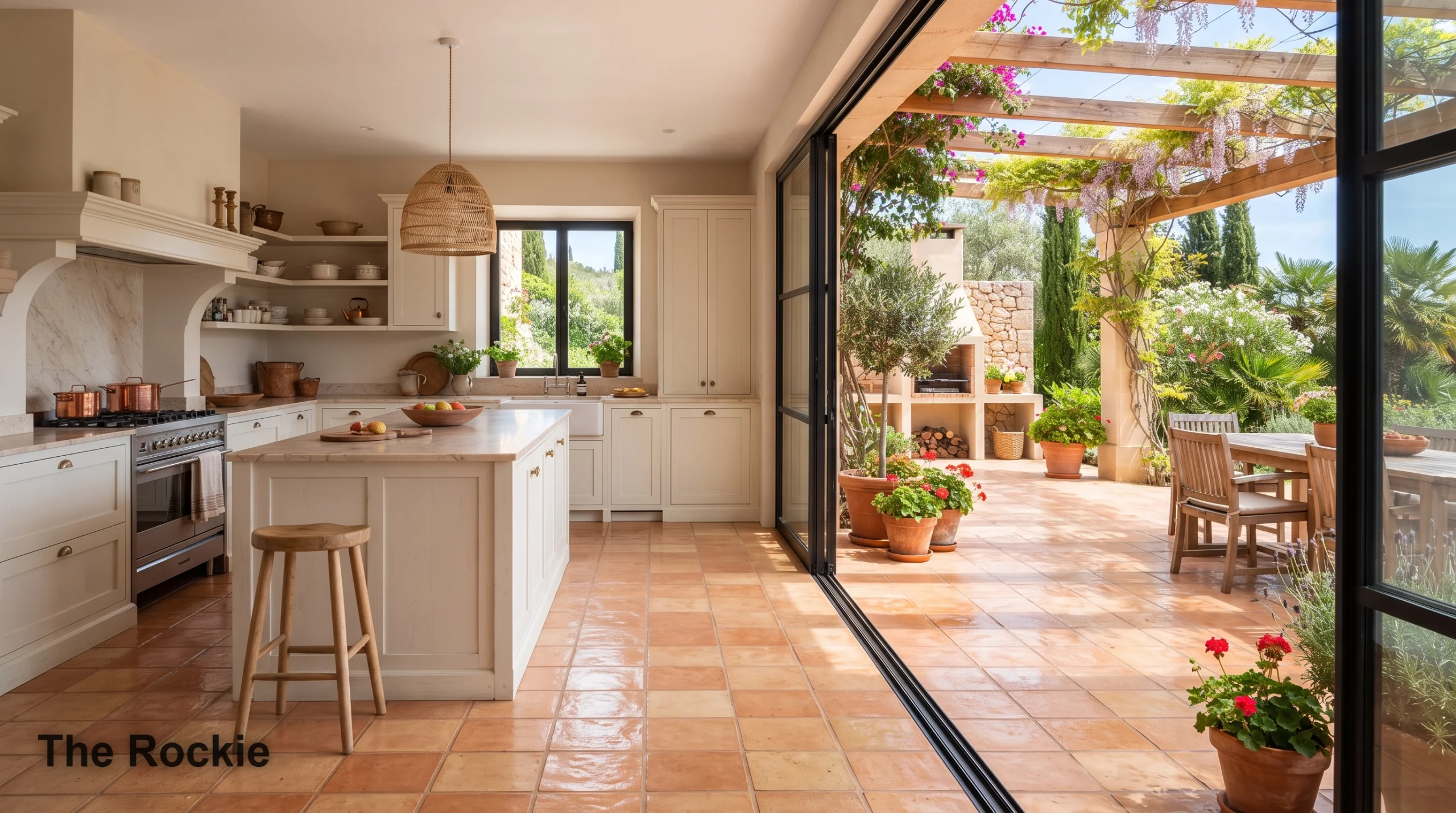
Using consistent terracotta flooring both inside the kitchen and on an adjoining patio or courtyard creates real visual continuity, making the whole space feel larger and more connected. The material’s natural durability holds up well against outdoor elements too, making this kind of indoor-outdoor flow both beautiful and genuinely practical.
20. Luxurious Detailing Within a Rustic Material
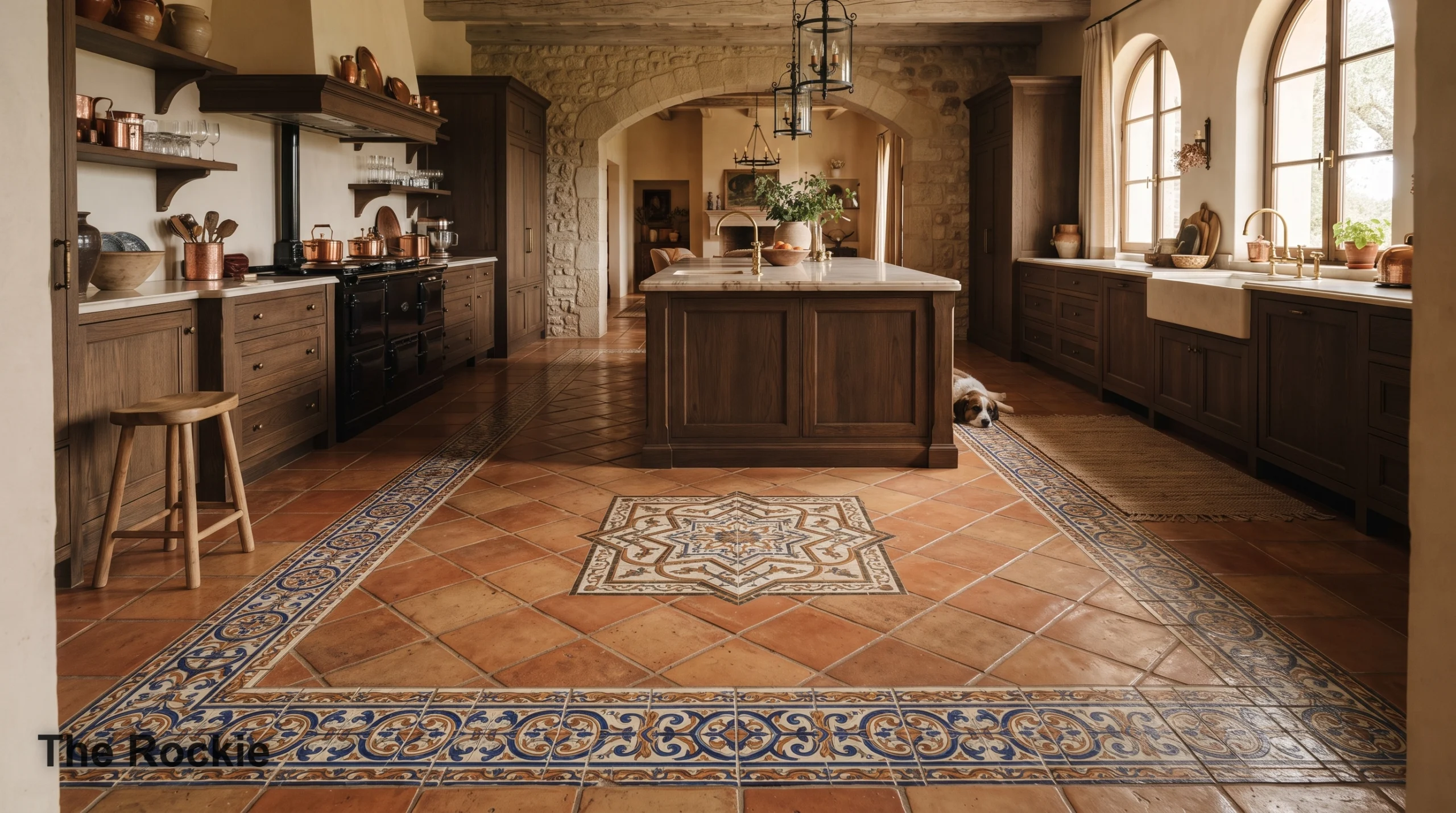
Intricate tile borders, subtle inlays, and custom texture treatments elevate terracotta into something more refined without losing its inherent rustic warmth. This kind of detailing appeals to homeowners who want the material’s natural character but with an extra layer of considered, upscale craftsmanship built in.
21. A Softer, Quieter Terracotta Palette
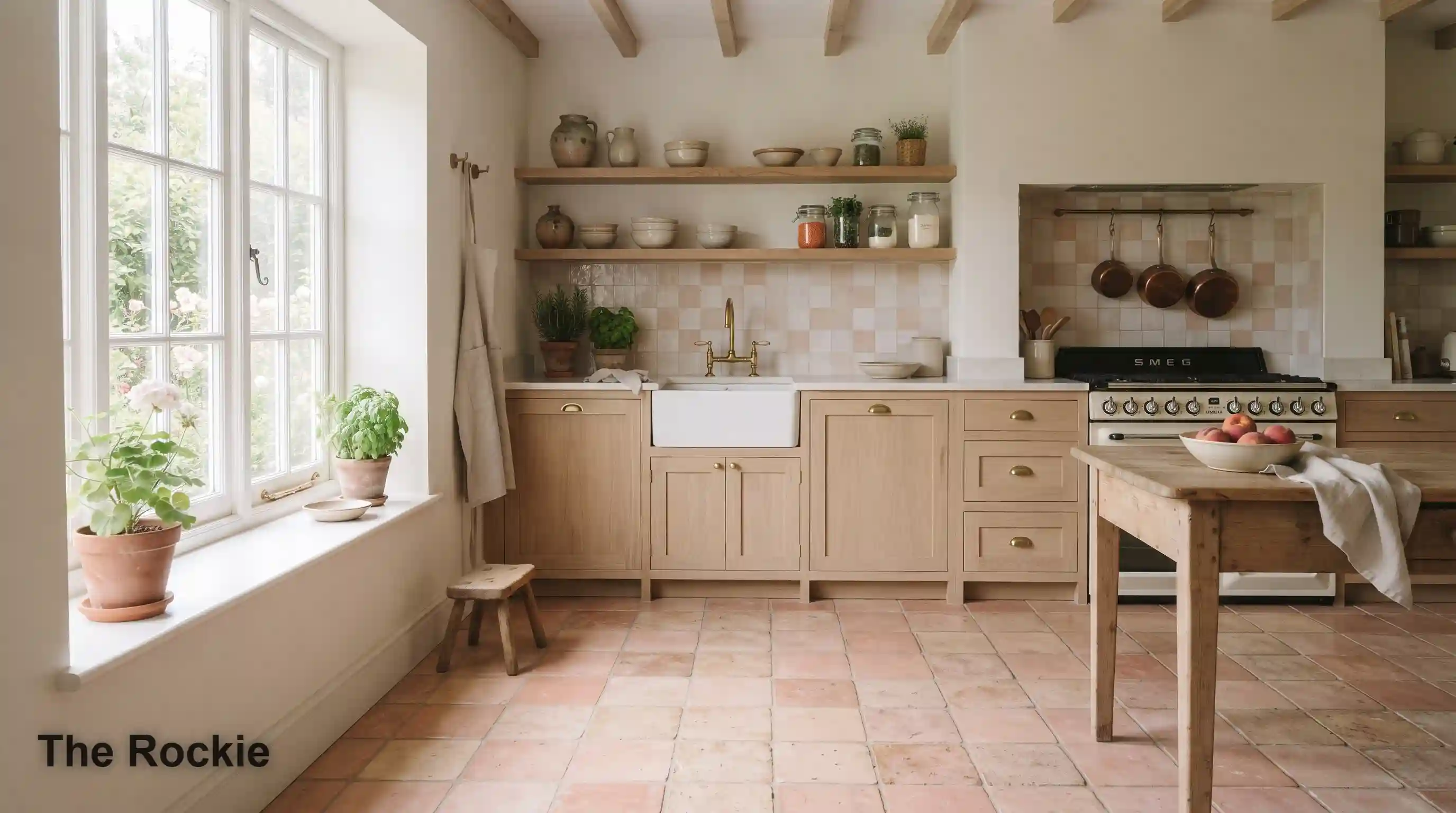
Muted terracotta tones create a genuinely calm, soothing kitchen floor, especially when paired with plenty of natural light. This softer approach still delivers all the material’s warmth, just dialed back for a more serene overall atmosphere — ideal for a kitchen meant to feel restful as much as functional.
22. Pushing Terracotta Into New Territory
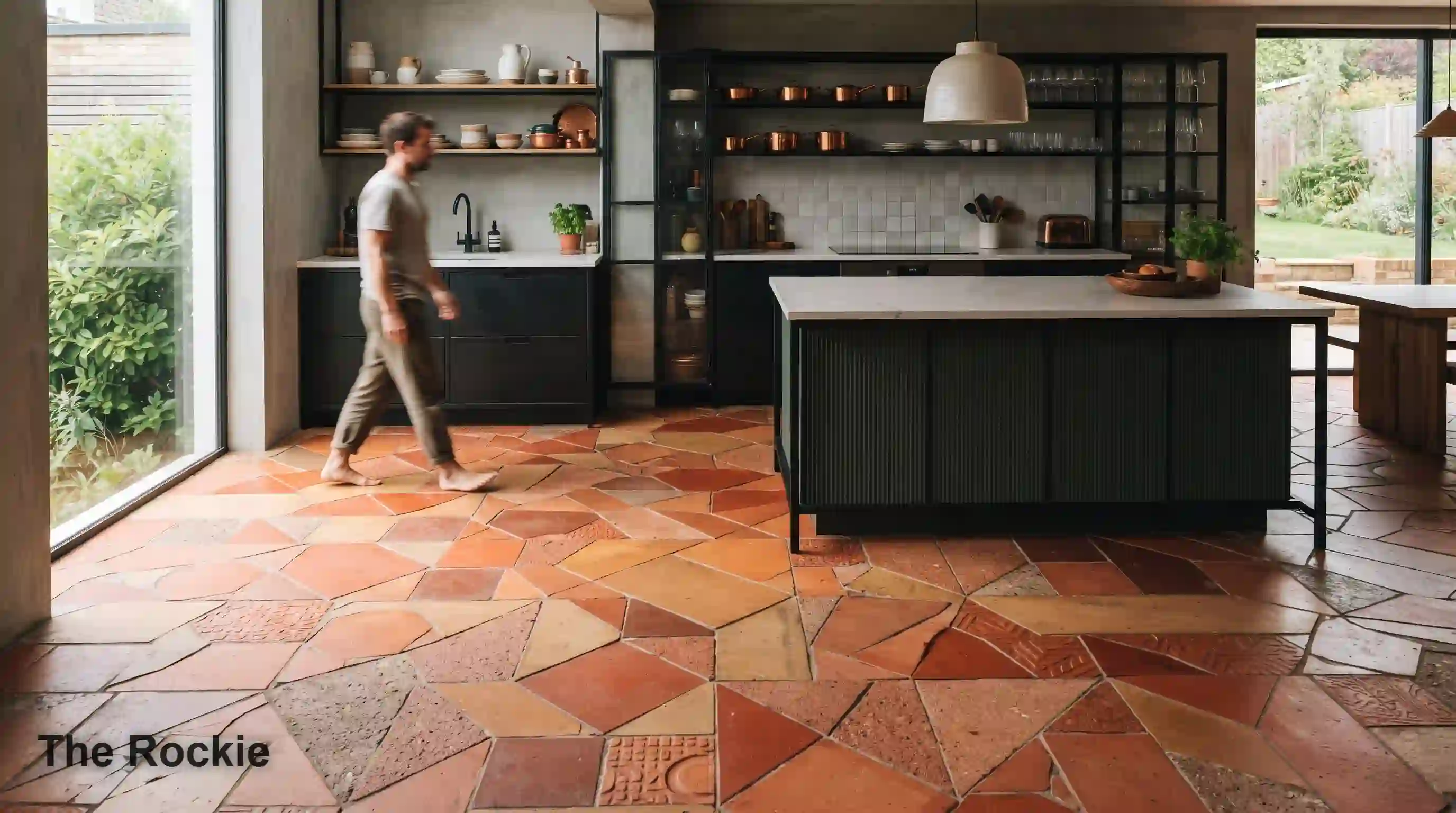
Unconventional layouts, mixed textures, and bold geometric experimentation prove terracotta isn’t limited to traditional applications. This kind of forward-thinking approach treats the material as a genuine medium for contemporary design, encouraging homeowners to experiment and make the floor distinctly their own.
Final Thoughts
Twenty-two takes on one material, and terracotta still comes out looking remarkably versatile — equally comfortable in a classic farmhouse kitchen, a sleek modern space, or something entirely more experimental. Whatever direction you choose, the material brings the same fundamental strengths: real warmth, real durability, and a floor that only gets more characterful the longer you live with it.


