
23+ Gorgeous Outdoor Shower Decor Ideas that Feel Like a Spa in 2026

I built my first outdoor shower out of stubbornness — I was tired of tracking half the beach through my house every summer — and I have been slightly obsessed ever since. What I learned the hard way is that the pretty part is easy and the boring part (privacy, drainage, and what happens the first night it drops below freezing) is what decides whether you love it in year three. So I’m giving you both here: the looks I’d actually build, plus the honest notes on cost, rot, and when you need to call a plumber.
Outdoor Shower Decor Ideas
1. Vertical Cedar Slat Enclosure with a Matte Black Rain Head
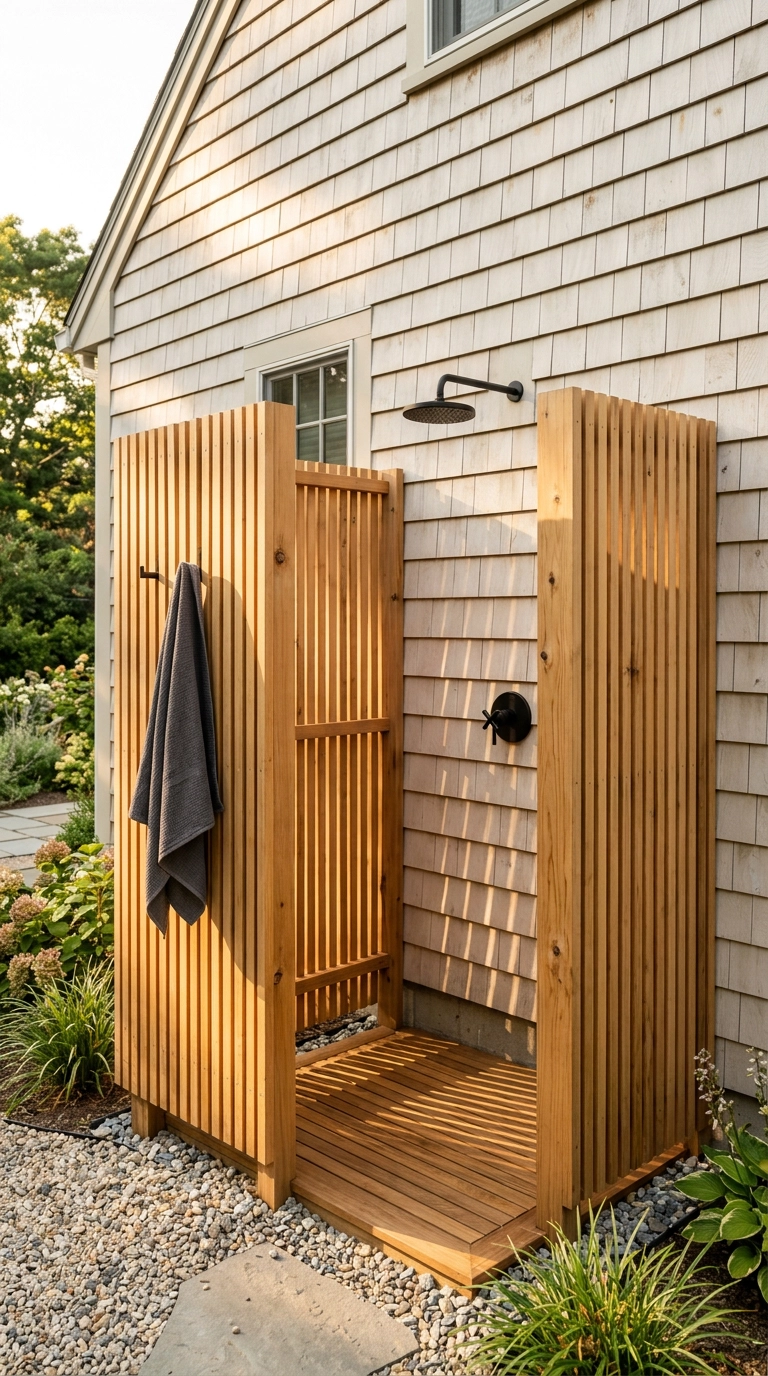
This is the build I recommend most, and it’s the one my contractor friends actually enjoy making. Vertical cedar slats with a quarter-inch gap give you privacy at eye level while still letting air move through, which is the whole trick to a screen that doesn’t rot or grow mildew.
2. Coastal Teak Shower Deck Over a Gravel Drainage Bed
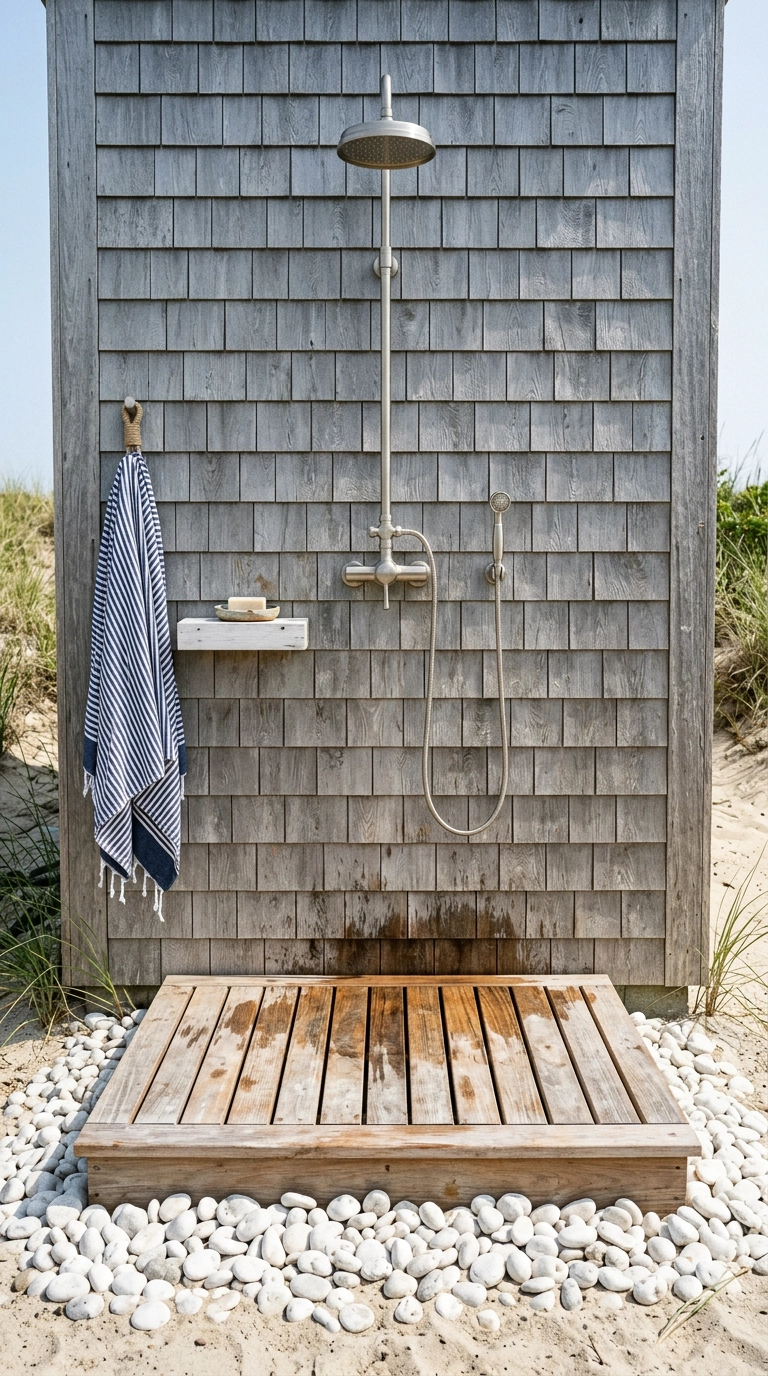
Here’s the drainage answer nobody tells you: for a simple garden shower you usually don’t need a drain at all. Dig down about 18 inches, fill with washed drainage rock, and set a removable teak platform on top so the water simply percolates away.
3. Unlacquered Brass Exposed Riser Against Limewashed Stucco
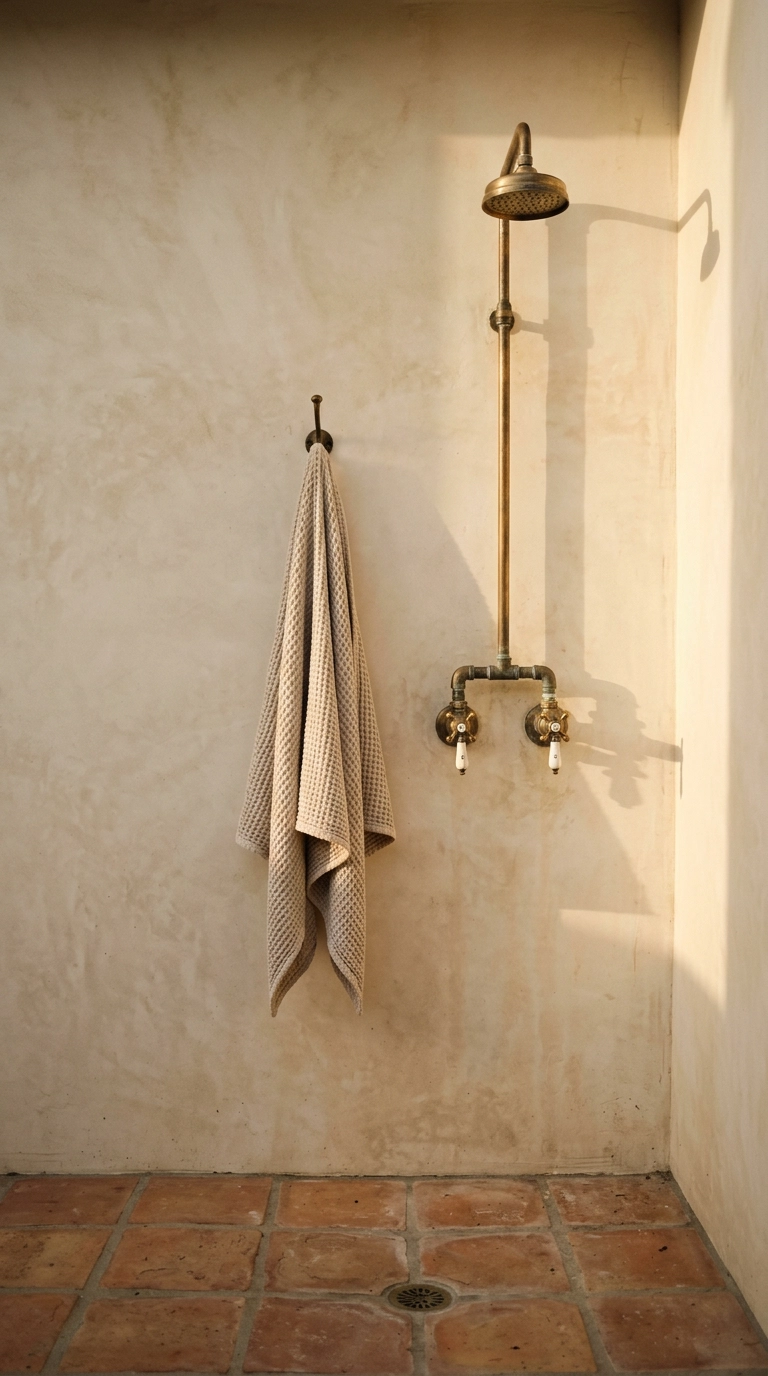
Unlacquered brass is the single best material choice for an outdoor shower because it’s supposed to age. It goes from bright gold to a mottled bronze over a year, and every water spot you’d fight on a chrome fixture just becomes part of the finish.
4. Corrugated Metal Privacy Panels with a Weathered Wood Frame
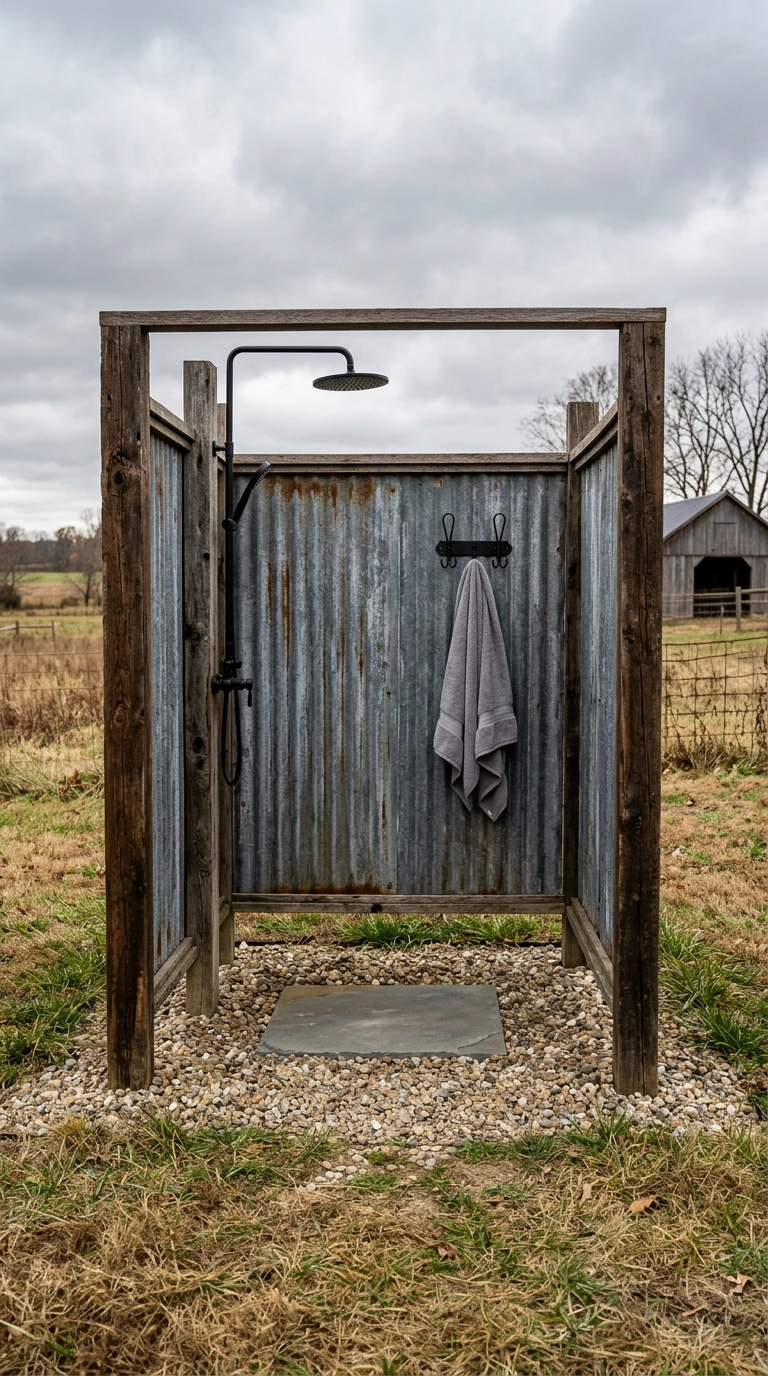
Corrugated metal is the cheapest good-looking enclosure you can build — panels run a fraction of what cedar costs and they will outlive all of us. The ridges also add real visual texture, which keeps a flat metal wall from looking like a toolshed.
5. Renter-Friendly Freestanding Shower with a Garden Hose Hookup
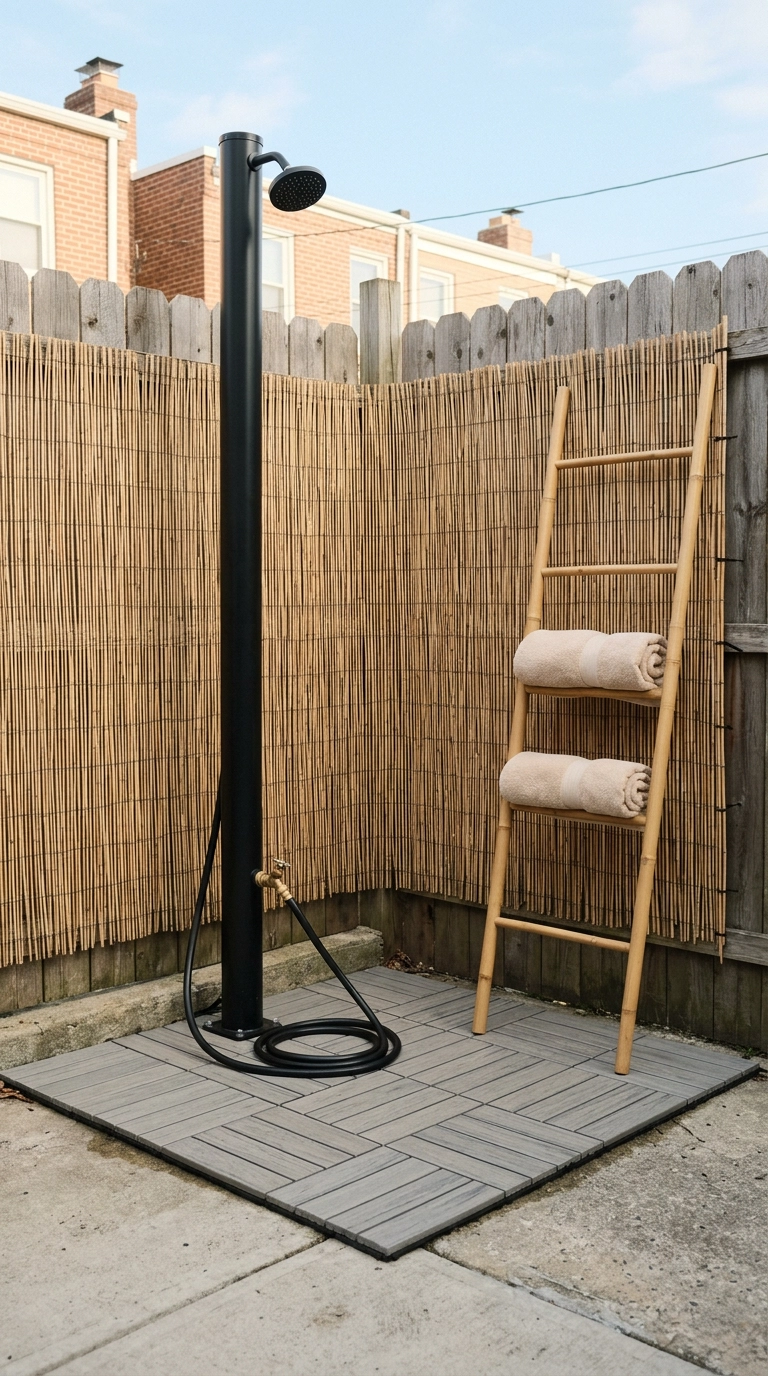
If you rent, this is your version, and it takes about twenty minutes. A freestanding hose-fed shower post plus interlocking deck tiles plus a roll of reed fencing zip-tied to the existing fence gives you a real shower with zero holes drilled and nothing to restore when you move.
6. Sculptural Boulder Wall in a Desert Xeriscape Yard
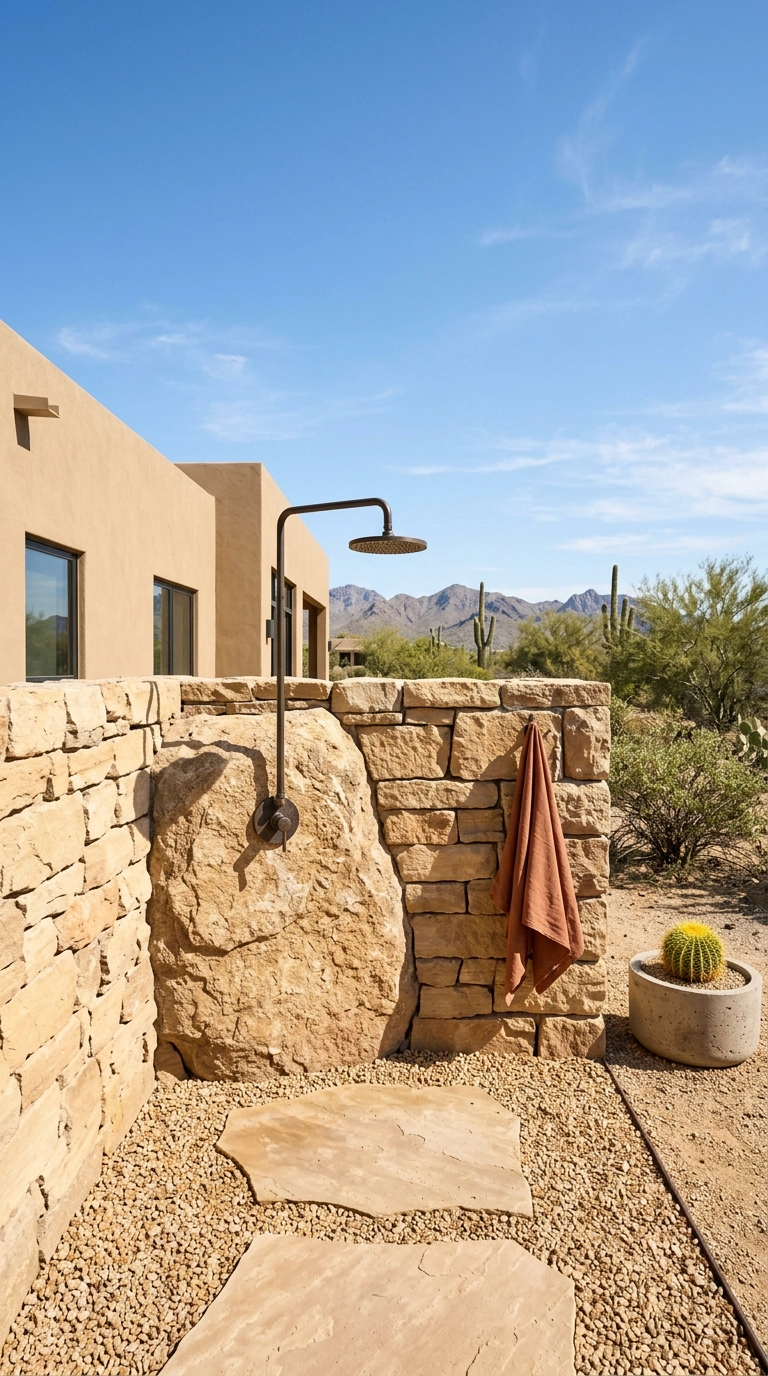
In dry climates the stone does double duty — it screens you and it holds heat, so the enclosure stays warm well past sunset. I like a rough boulder wall because the irregular edge reads as landscape rather than construction.
7. Black Zellige Tile Alcove Off the Primary Bathroom
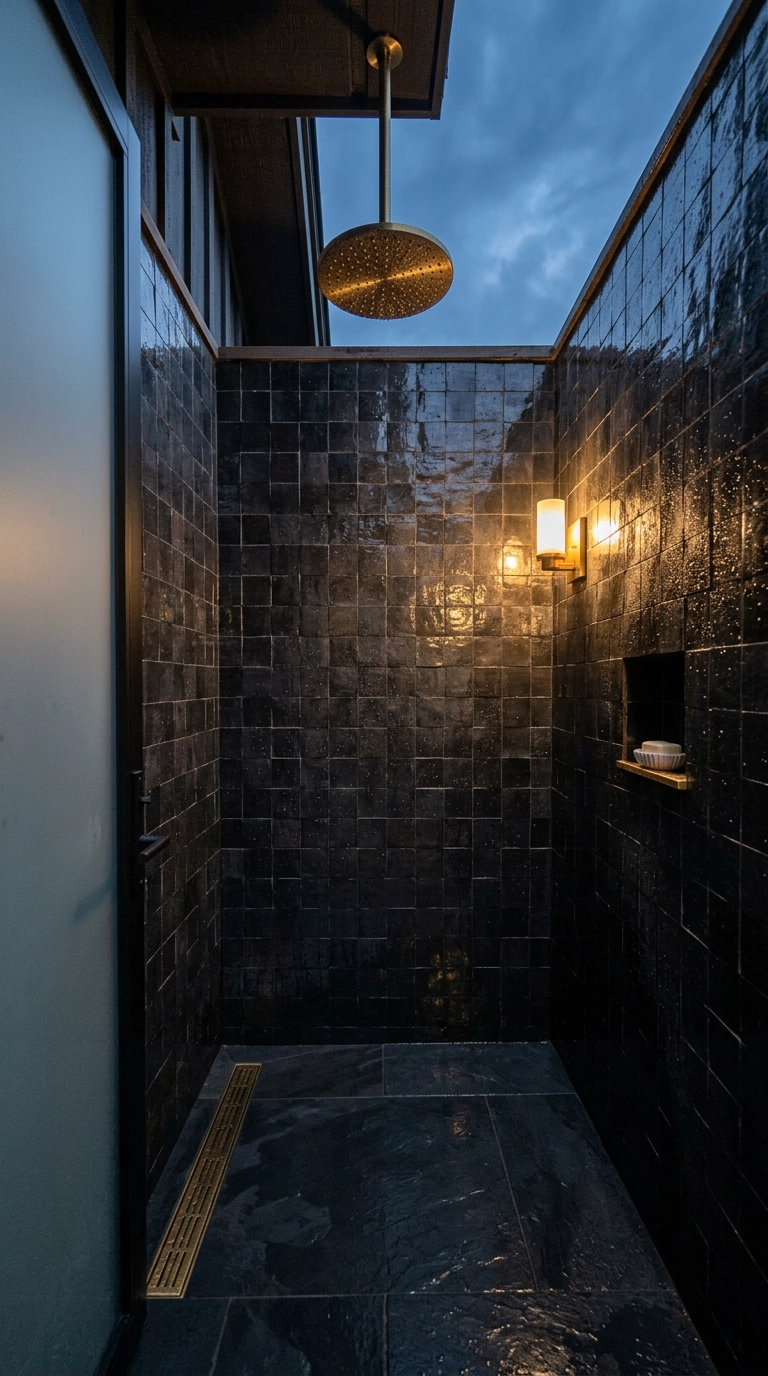
Tiling an outdoor shower is the version that needs a real contractor and probably a permit, because you’re building a waterproofed structure with a plumbed drain. Done right, though, an alcove off the bathroom is the most usable outdoor shower there is — you step out of it into a towel and a heated floor.
8. Reed Fencing Screen Rolled Onto a Simple Post Frame
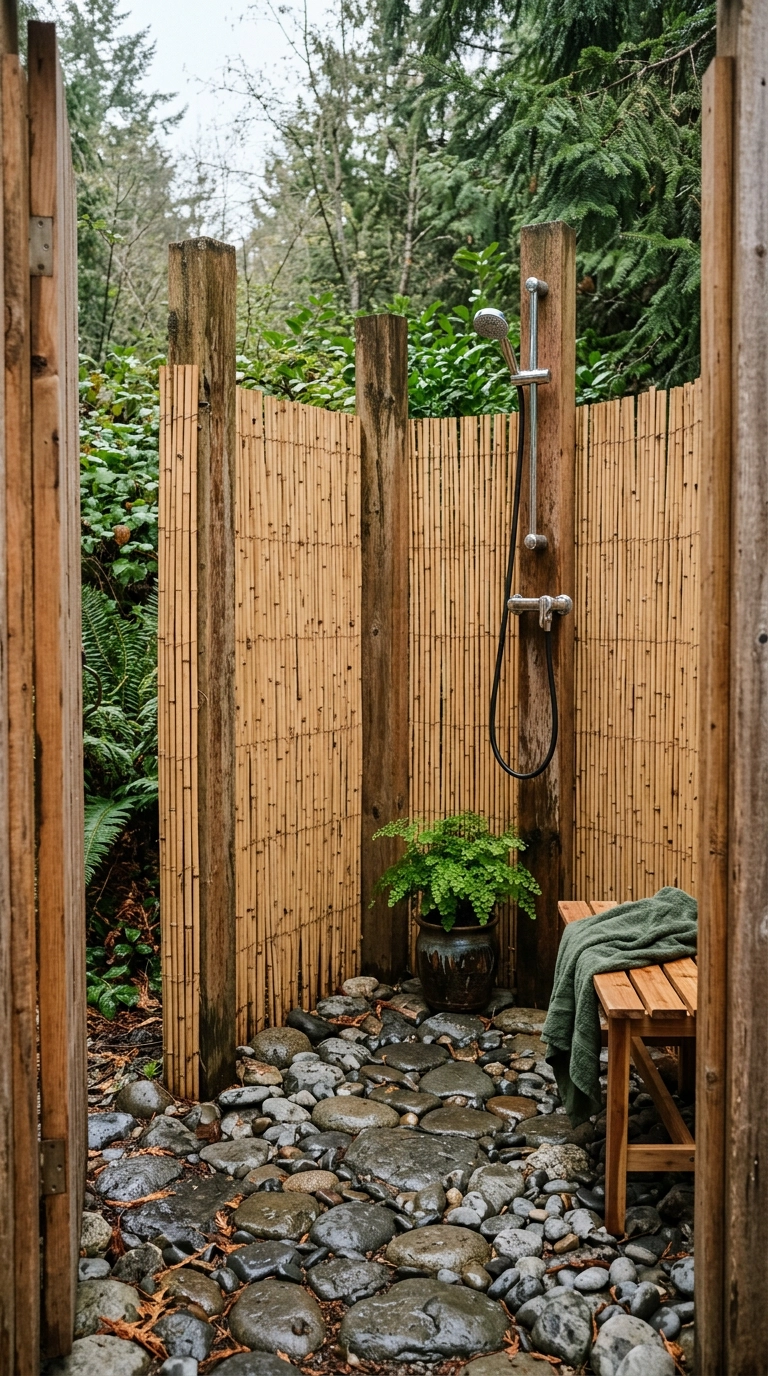
Reed fencing is the fastest privacy fix in this whole article. A roll covers about 16 feet of post frame, wires on in an afternoon, and instantly turns four bare posts into an enclosure.
9. Pool-Side Rinse Station with a Long Wall-Mounted Foot Spray
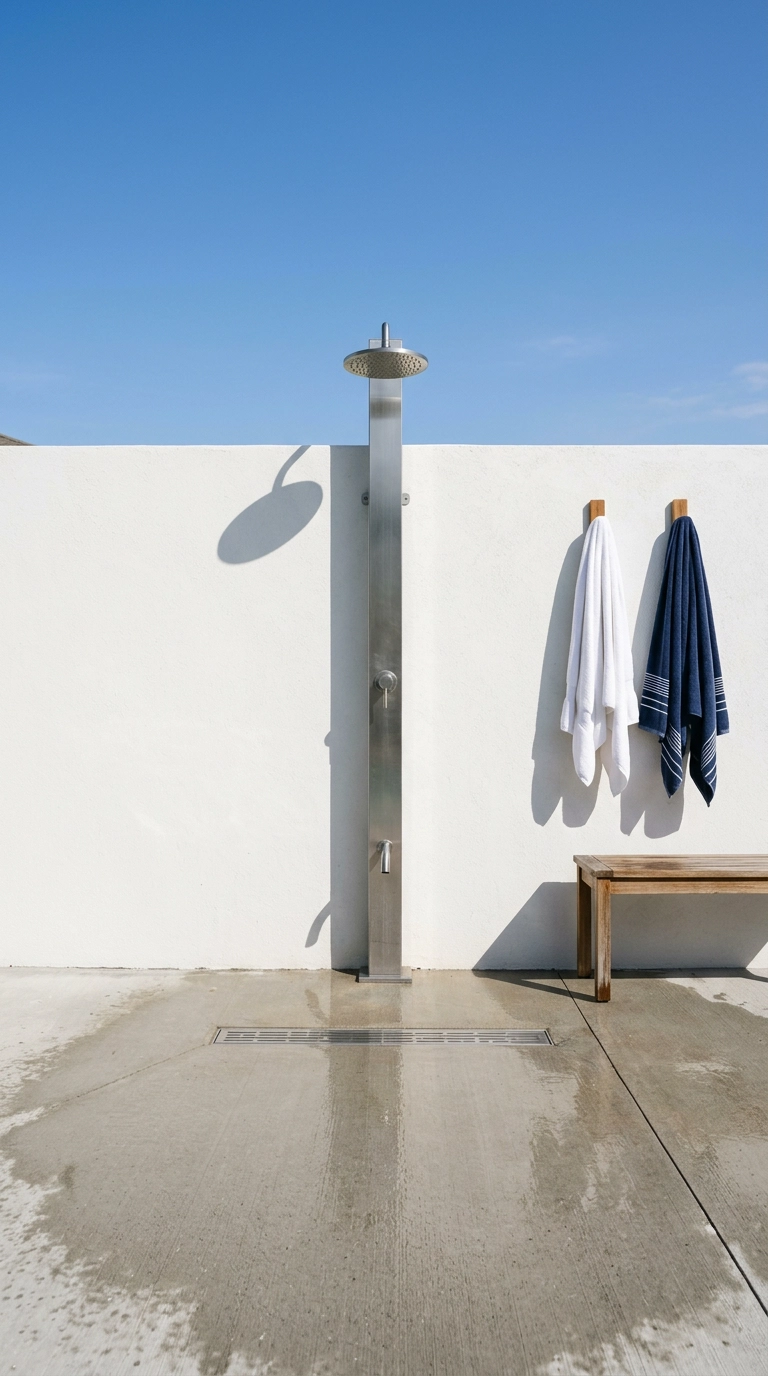
A pool rinse station is the easiest outdoor shower to justify because it keeps sunscreen and chlorine out of your house. The detail that makes it work is a separate low foot spout at about knee height — you’ll use it constantly and it costs almost nothing to add during the rough plumbing.
10. Glass Block Privacy Wall That Throws Light
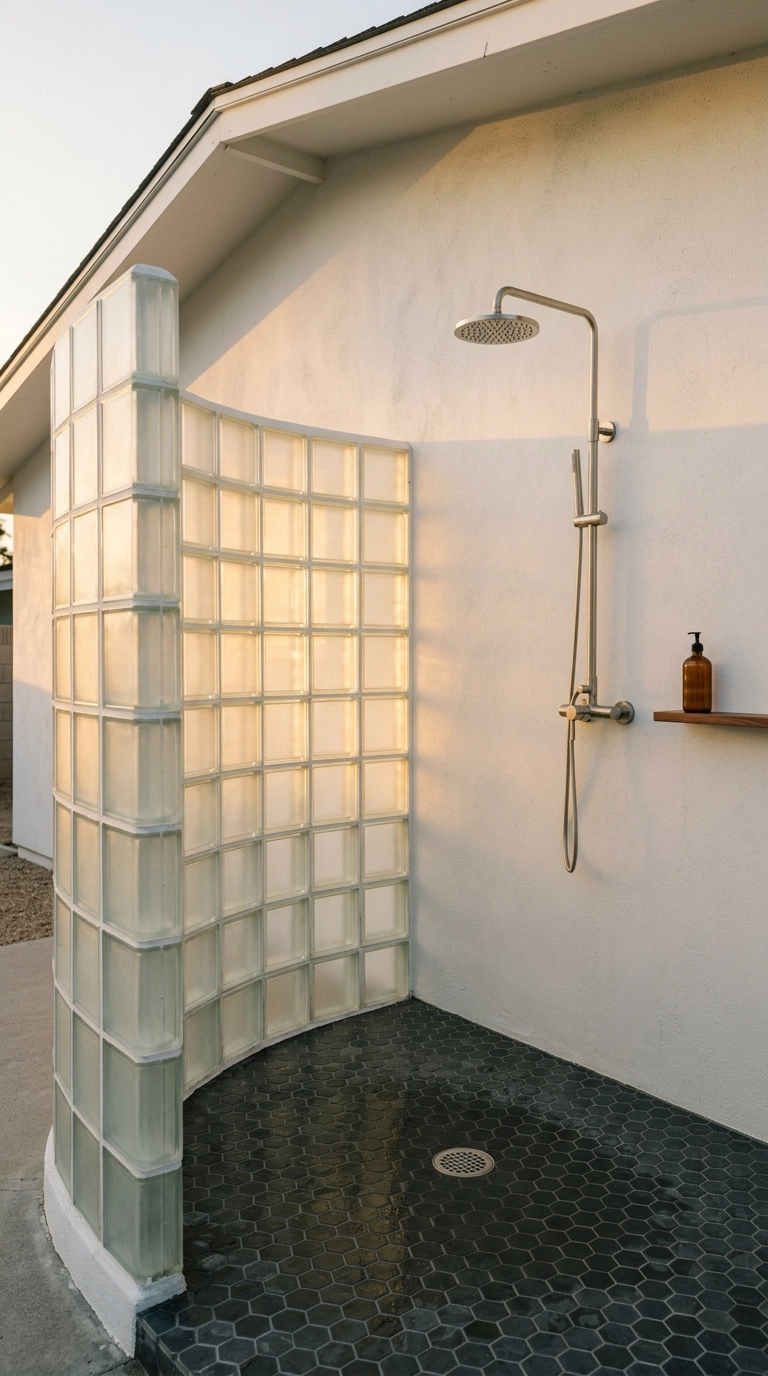
Glass block is having a real moment again, and outdoors is where it makes the most sense — you get complete privacy while the enclosure stays bright instead of feeling like a closet. At golden hour it throws a soft grid of light across the back wall that’s genuinely lovely.
11. Freeze-Proof Winterizing Setup with an Indoor Shutoff Valve
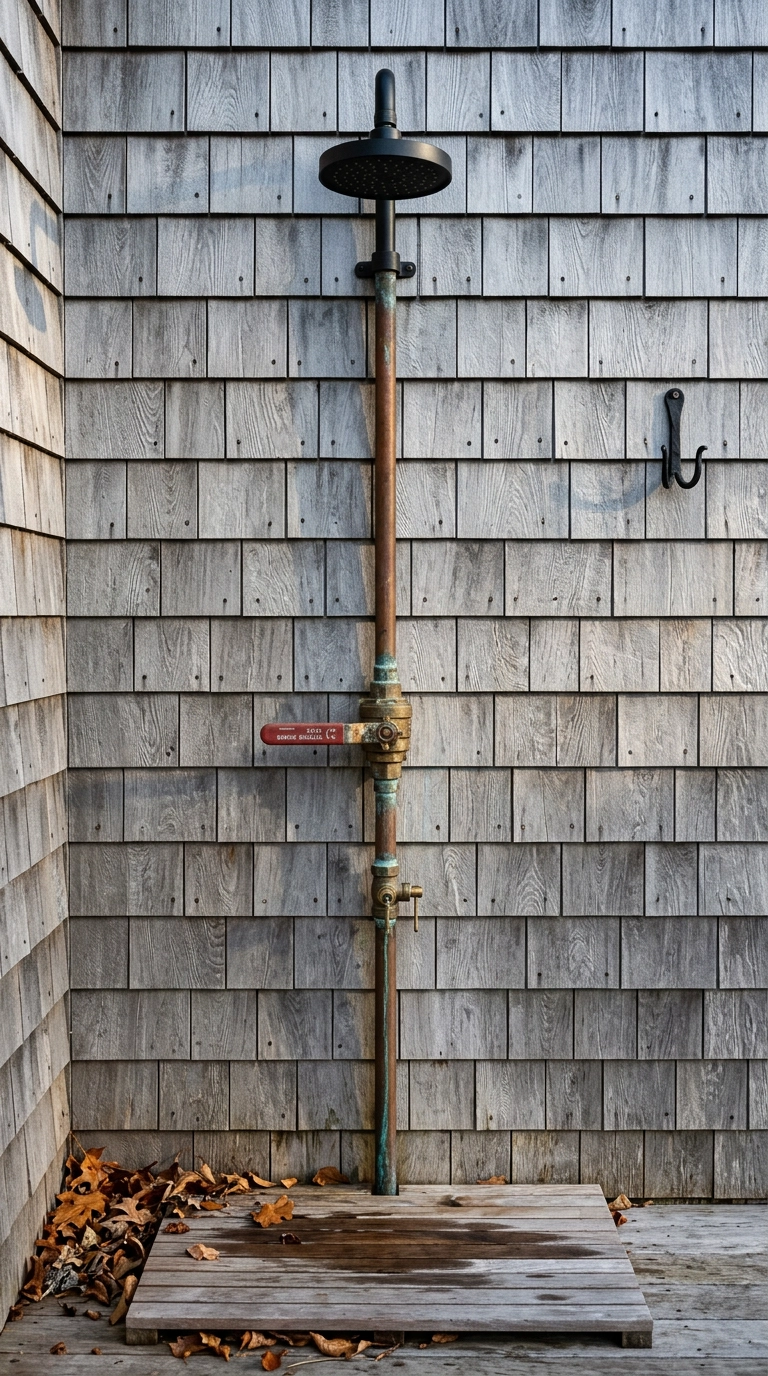
If you live anywhere that freezes, this is the idea that saves your house. Any water left in an outdoor line will expand and split the pipe, and you won’t find out until spring when it soaks a wall.
12. Off-Grid Solar Shower Bag Hung from a Simple Timber Arm
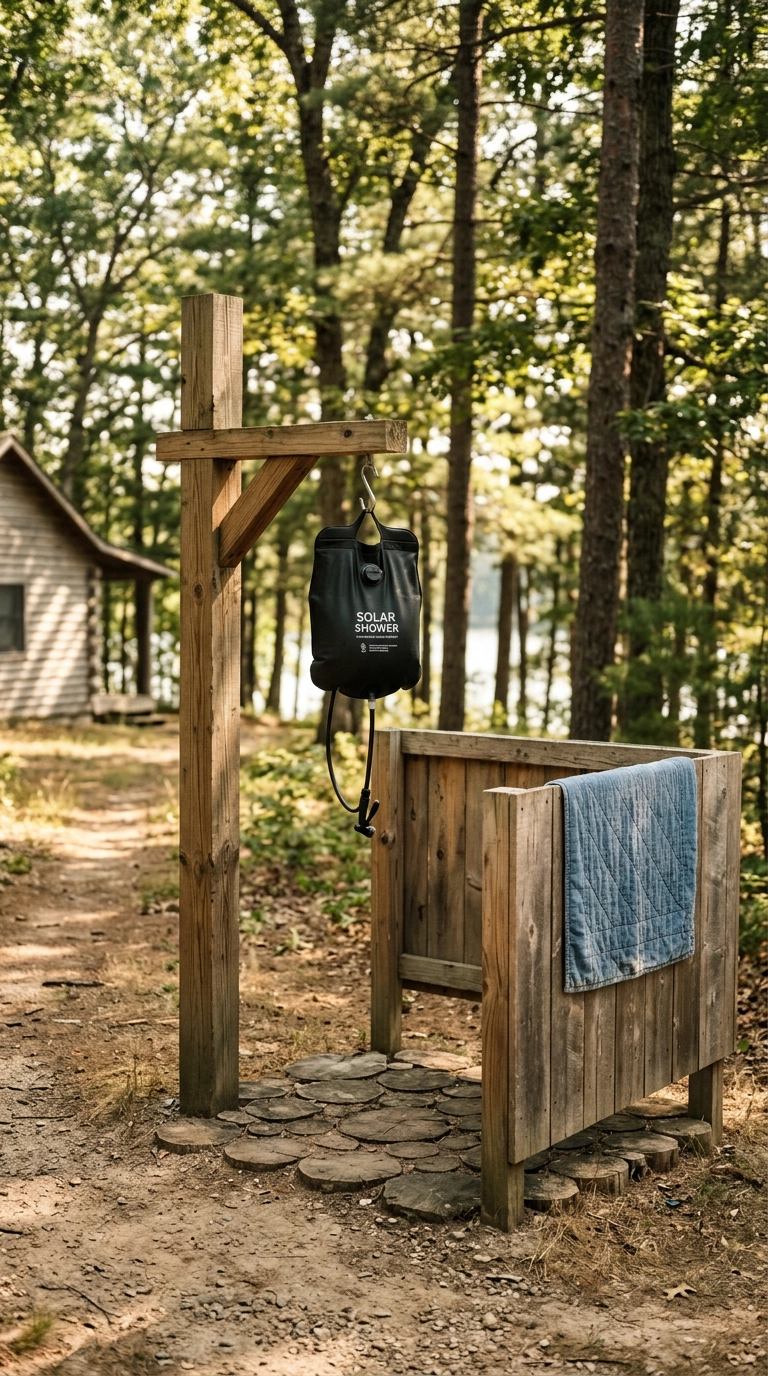
A black solar bag holds about 5 gallons and gets genuinely hot — 100 to 110 degrees after four or five hours in full sun. That’s a real shower with zero plumbing, which makes it the only option worth considering at a cabin with no water line.
13. Plumbed Hot Water with a Tankless Propane Heater Tucked Behind a Screen
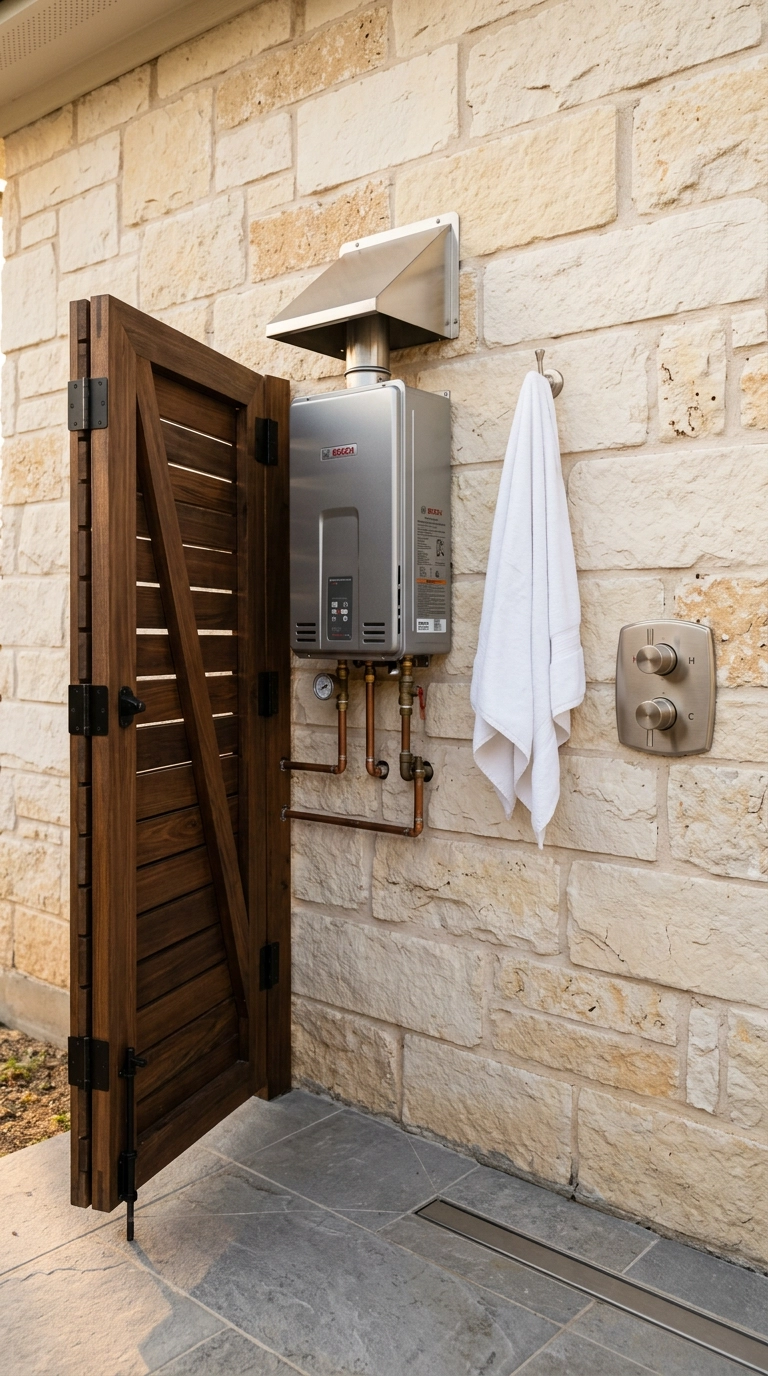
If you want hot water on demand outside, a small tankless propane unit is the standard answer and it’s dramatically cheaper than extending your house’s hot line across a yard. Get a thermostatic mixing valve while you’re at it — it holds temperature when someone flushes a toilet inside, which on a cold-water-only line means a genuinely painful surprise.
14. Warm Low Lighting with a Wet-Rated Sconce and Ground Uplights
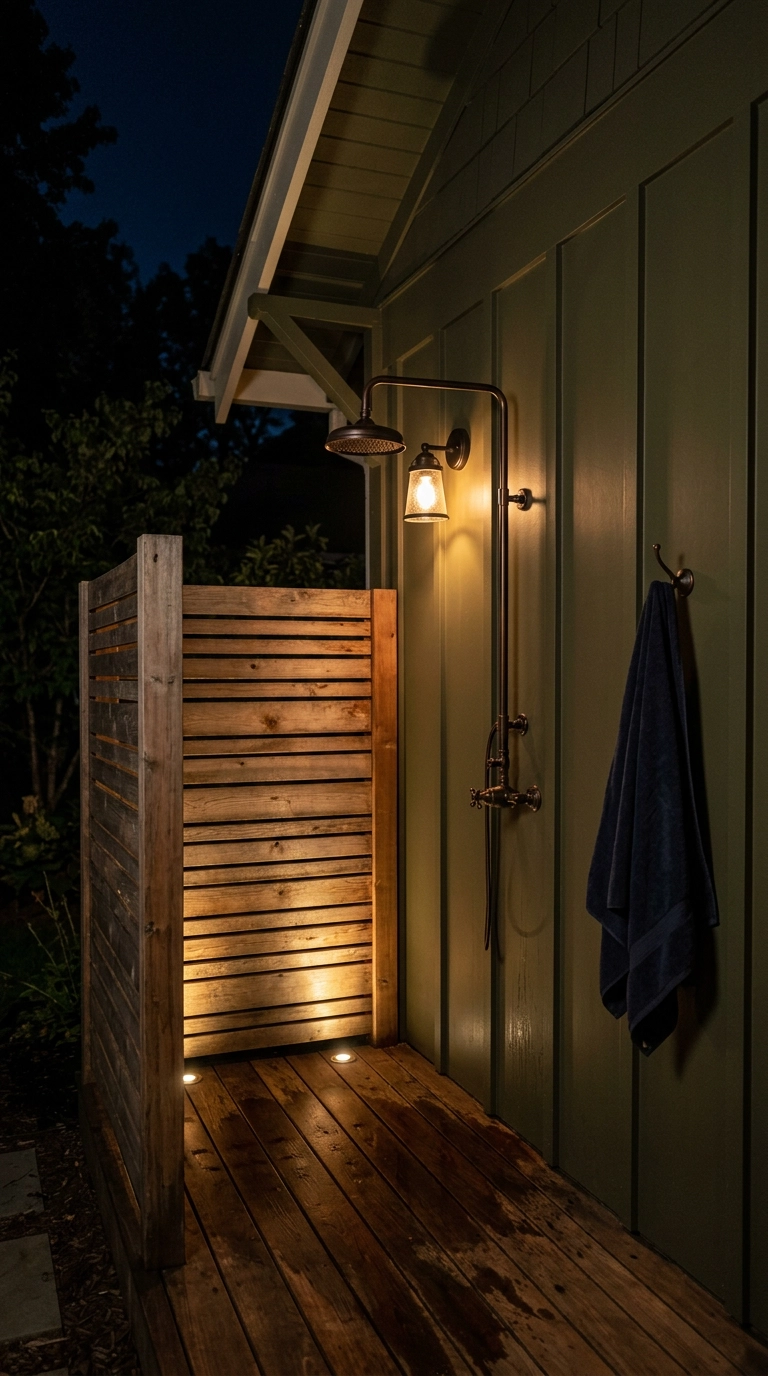
Lighting is what turns an outdoor shower from a summer utility into something you use in October at 9pm. Two rules only: everything must be wet-rated or damp-rated for a covered spot, and every bulb should be 2700K or warmer so your skin doesn’t read blue-green.
15. Teak vs Cedar Underfoot: A Removable Duckboard Platform
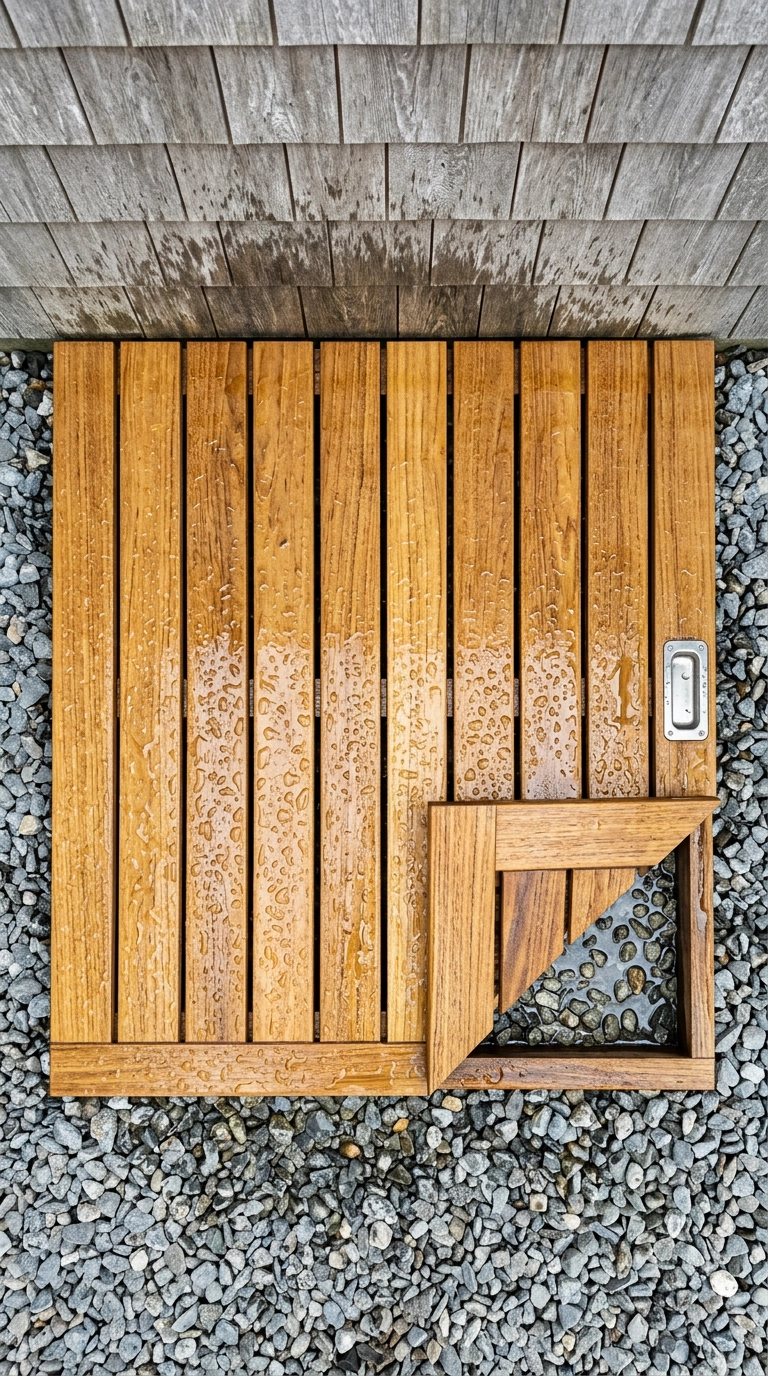
Here’s the honest comparison. Teak has natural oils that shrug off standing water and it will last 20-plus years underfoot, but it costs several times what cedar does. Cedar is beautiful and affordable, resists rot well, and realistically gives you 8 to 12 years on a shower floor before slats start going soft.
16. Marine-Grade Hooks, Rails, and a Towel Bar That Survives Winter
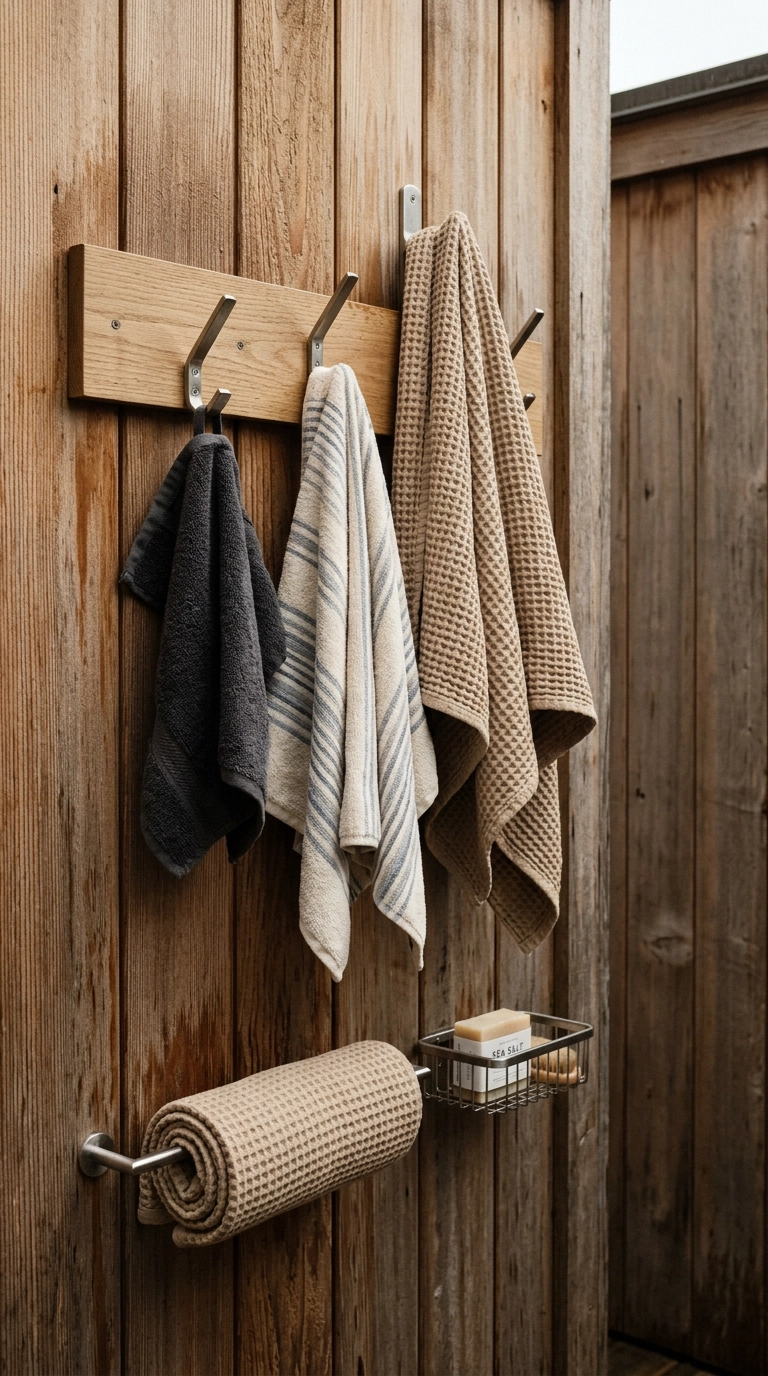
Every cheap hook I have ever installed outside has rust-bled a brown streak down the wall within one winter. Buy 316 marine-grade stainless, solid brass, or powder-coated aluminum, and check that the screws match the metal — a stainless hook with plain steel screws still stains.
17. Copper Trough Shower with a Rustic Ranch Character
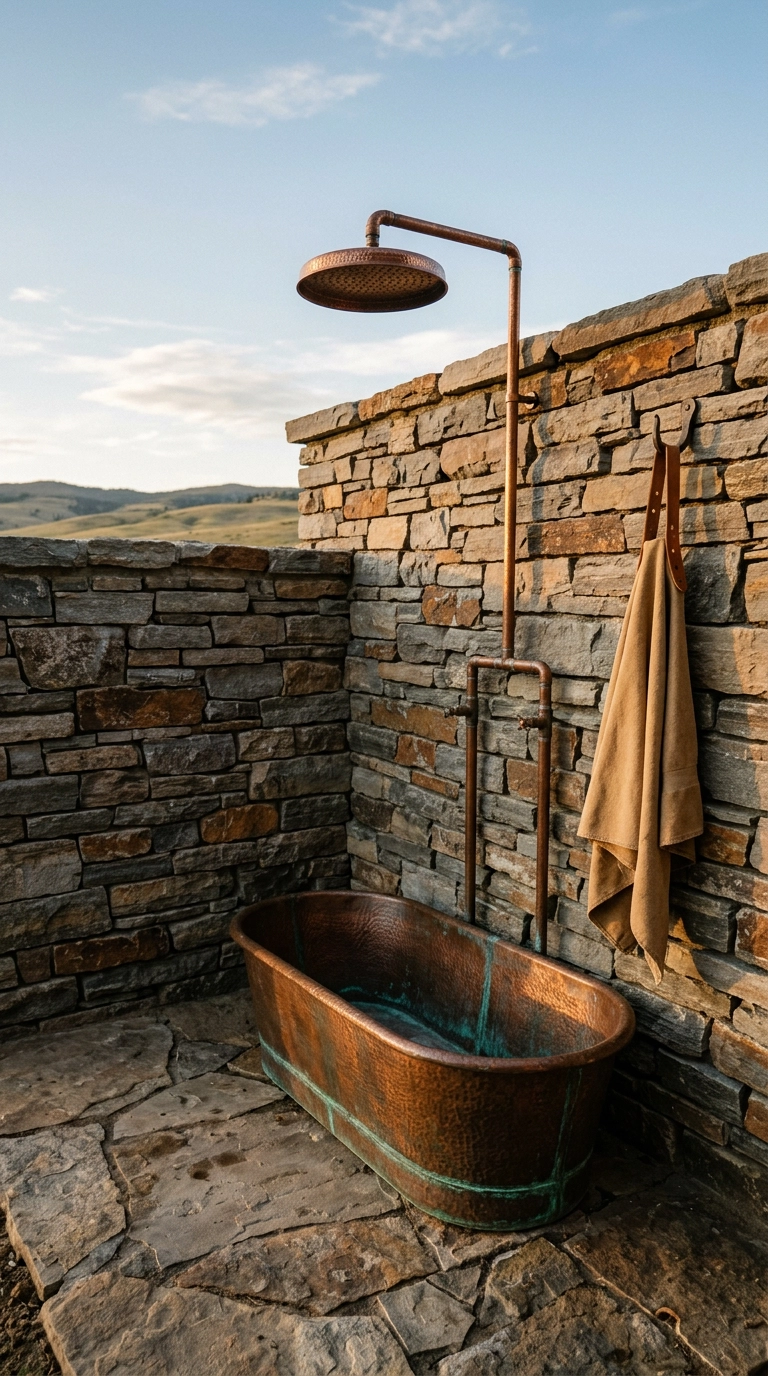
A copper trough basin catches the water so you can direct it somewhere useful — a French drain, a gravel bed, or a landscape bed if you’re using biodegradable soap. Hammered copper also hides scratches and water spots completely, which is more than smooth stainless can claim.
18. Louvered Screen Panels You Can Angle for Privacy and Airflow
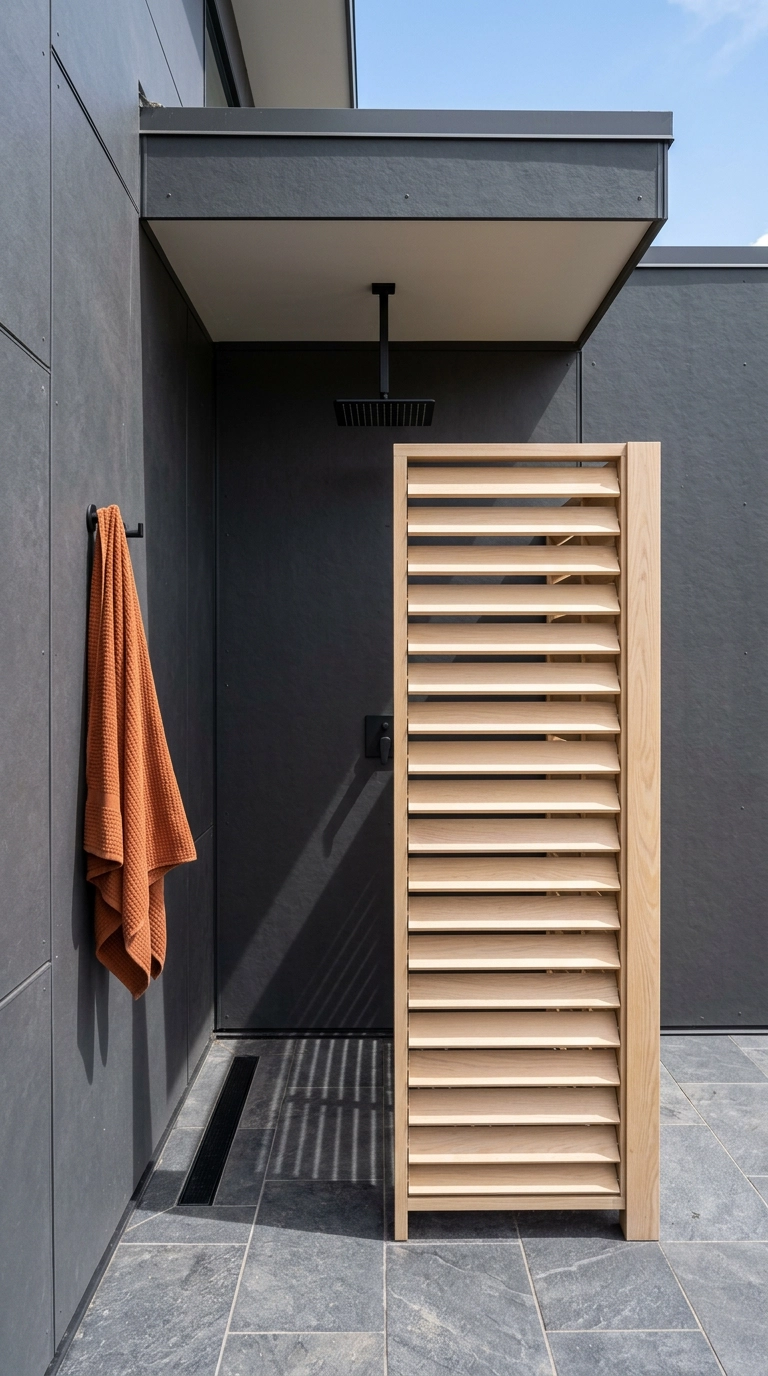
Louvers solve the argument between privacy and airflow. Angle the slats down and outward and someone standing at your fence line sees wood while you still see sky and get a cross breeze, which is exactly how you keep an enclosure from smelling musty.
19. Bluestone Slab Floor with a Slot Drain for Clay Soil Yards
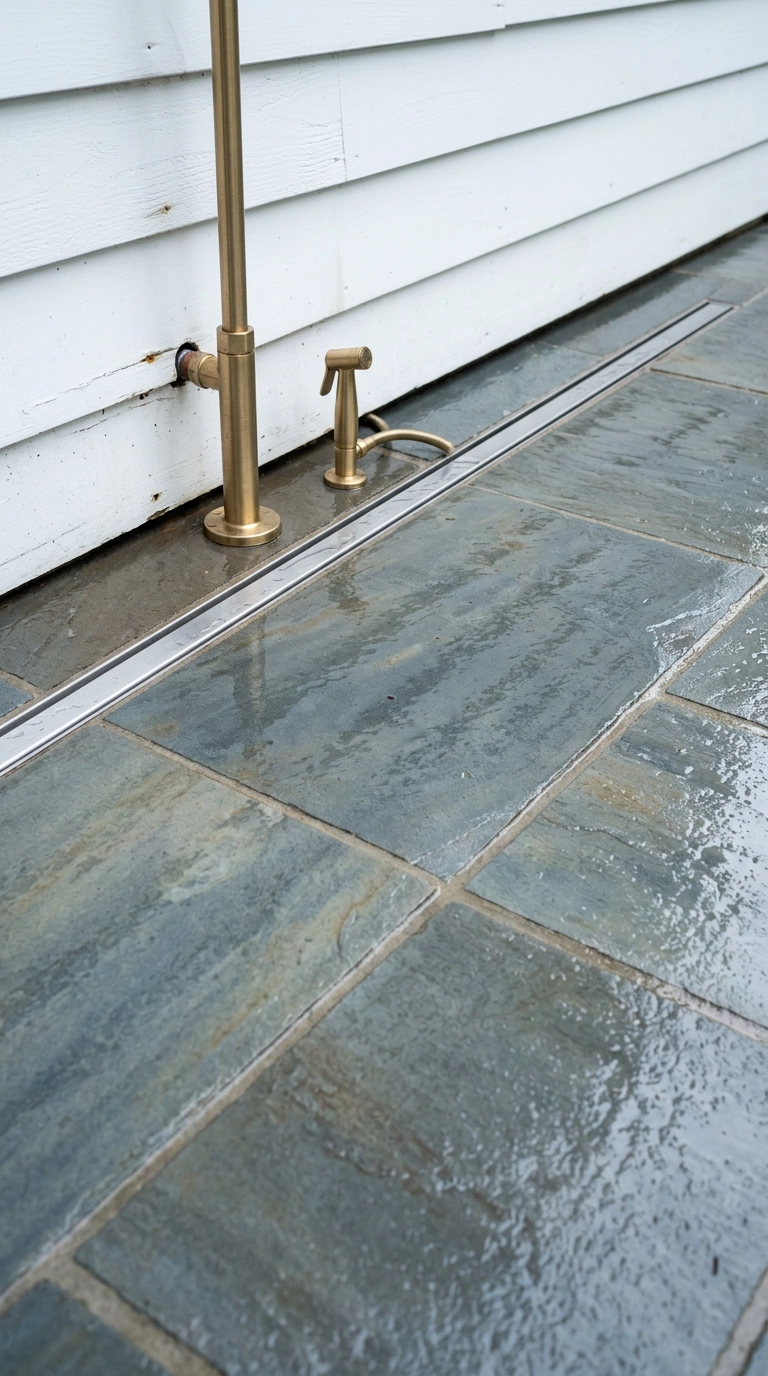
If your soil is clay, a gravel pit will fail — the water has nowhere to go and you end up with a permanent mosquito pond. The right build is a mortared stone floor pitched about a quarter inch per foot into a slot drain, tied into a proper drain line.
20. Canvas Curtain on a Curved Rod for a Soft, Portable Enclosure
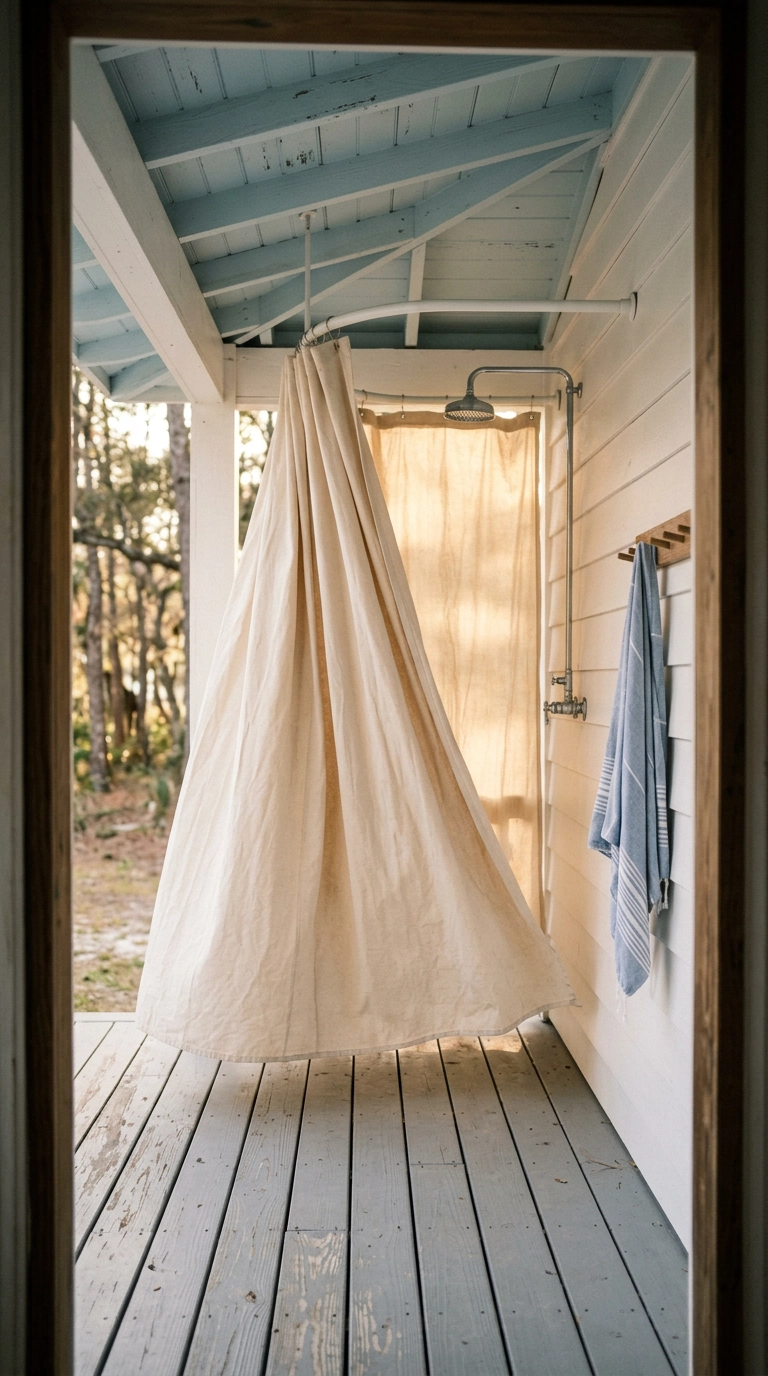
A curtain is the enclosure for anyone who doesn’t want a permanent structure blocking a view eleven months a year. Use a curved rod so the fabric doesn’t cling to you, and choose outdoor canvas or solution-dyed acrylic rather than a vinyl liner, which will mildew and stiffen fast.
21. A Small Ledge, Niche, and Bench Trio for Actual Usability
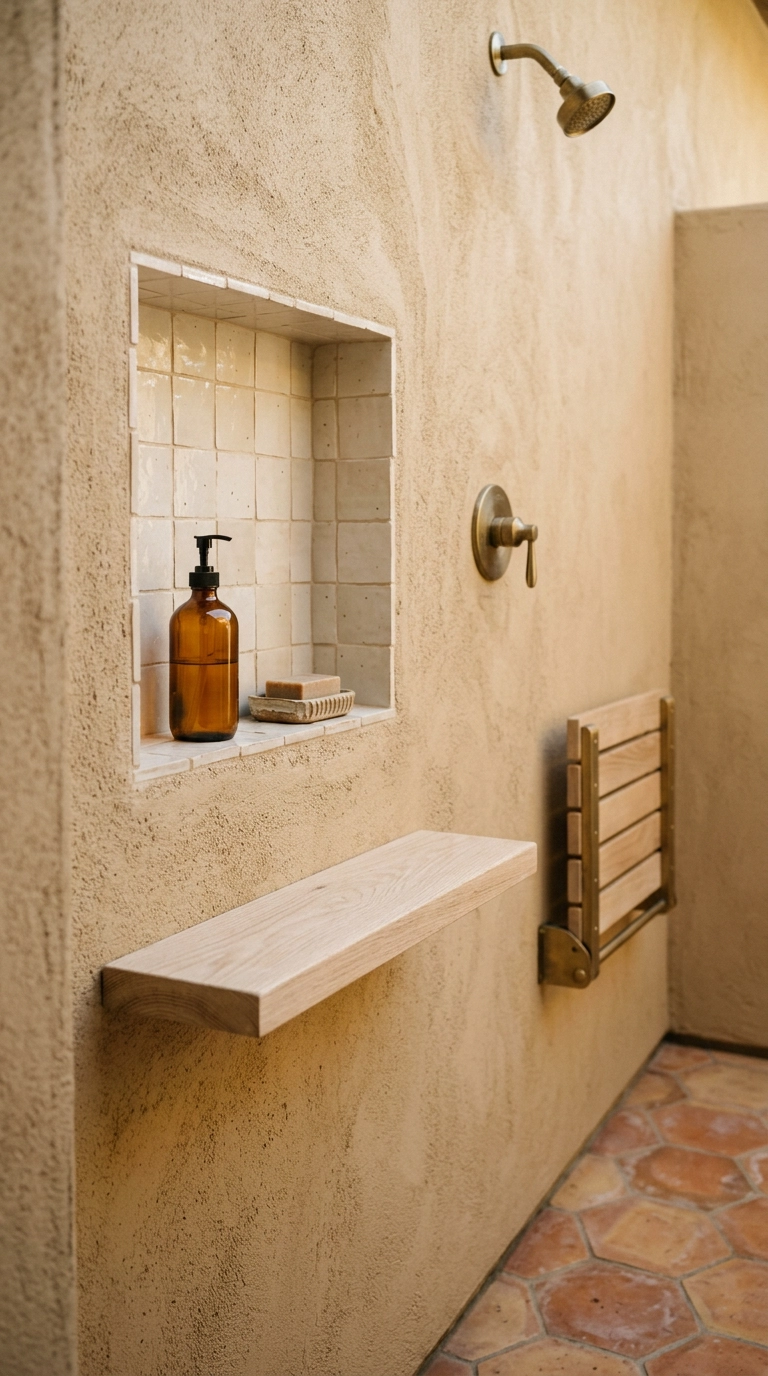
Three small pieces of joinery separate a shower you tolerate from one you love. A recessed niche at chest height for soap, a hip-height ledge for whatever you’re carrying, and a fold-down bench for shaving legs or just sitting after a swim.
22. Partial Roof Overhang So You Can Shower in the Rain and the Cold
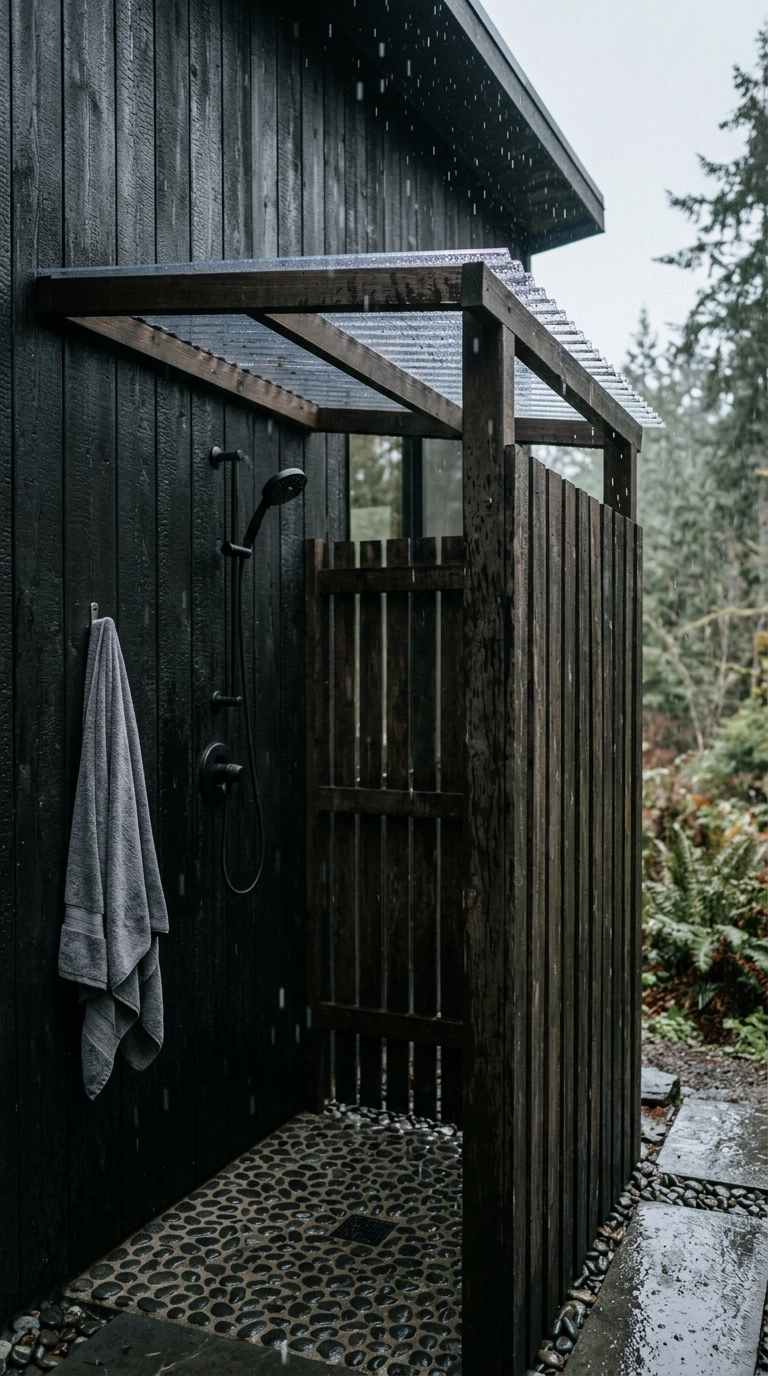
Covering half the enclosure is the move that extends your season by months. The towel, your clothes, and the light fixture stay dry under the roof while you still get open sky overhead where you’re actually standing — which is the entire reason to shower outside in the first place.
Now Go Turn On the Water
If you build only one thing from this list, make it the cedar slat enclosure from idea one with a proper gravel bed underneath — it’s the version I’ve seen hold up best across every climate I’ve worked in, and it looks better at year five than it does at year one. The unlacquered brass riser and the black zellige alcove are the two that get saved and re-pinned constantly, and I understand why. Both photograph beautifully, though only one of them is a weekend project.
What’s genuinely shifted in 2026 is that outdoor showers stopped being a beach-house thing. I’m specifying them in ordinary suburban backyards now, usually with a small tankless heater and a partial roof so they work in April and October instead of just July. The louvered screens and warm low lighting are doing a lot of that work — designers like Amber Lewis have made the case for years that outdoor rooms deserve the same material care as indoor ones, and a shower is the most convincing proof of that idea I know. Brands like Signature Hardware and Kohler now carry real outdoor-rated fixtures off the shelf, which was not remotely true a decade ago.
Just please don’t skip the unglamorous parts. Walk your neighbors’ sightlines before you set posts, be honest about your soil before you dig a gravel pit, and call a licensed plumber for anything involving a gas heater, a drain tie-in, or a winter shutoff valve. Get those right and the pretty part takes care of itself. If you want more of this — the real build notes alongside the pretty pictures — sign up for my weekly newsletter and I’ll send the next one straight to your inbox.


