
22+ Stunning House Number Decor Ideas that Instantly Lift Your Curb Appeal in 2026

I’ll be honest with you – I ignored my own house numbers for six years, until a delivery driver circled my block three times and I watched the whole thing from the window like a fool. That weekend I swapped four inches of tarnished brass for six-inch matte black numerals and the front of my house looked intentional for the first time. House numbers are the cheapest, fastest facade upgrade there is, and almost everybody gets them slightly wrong – too small, too low, too close in color to the siding they’re screwed into.
House Number Decor Ideas
1. Oversized Floating Numerals in Matte Black Powder-Coated Steel
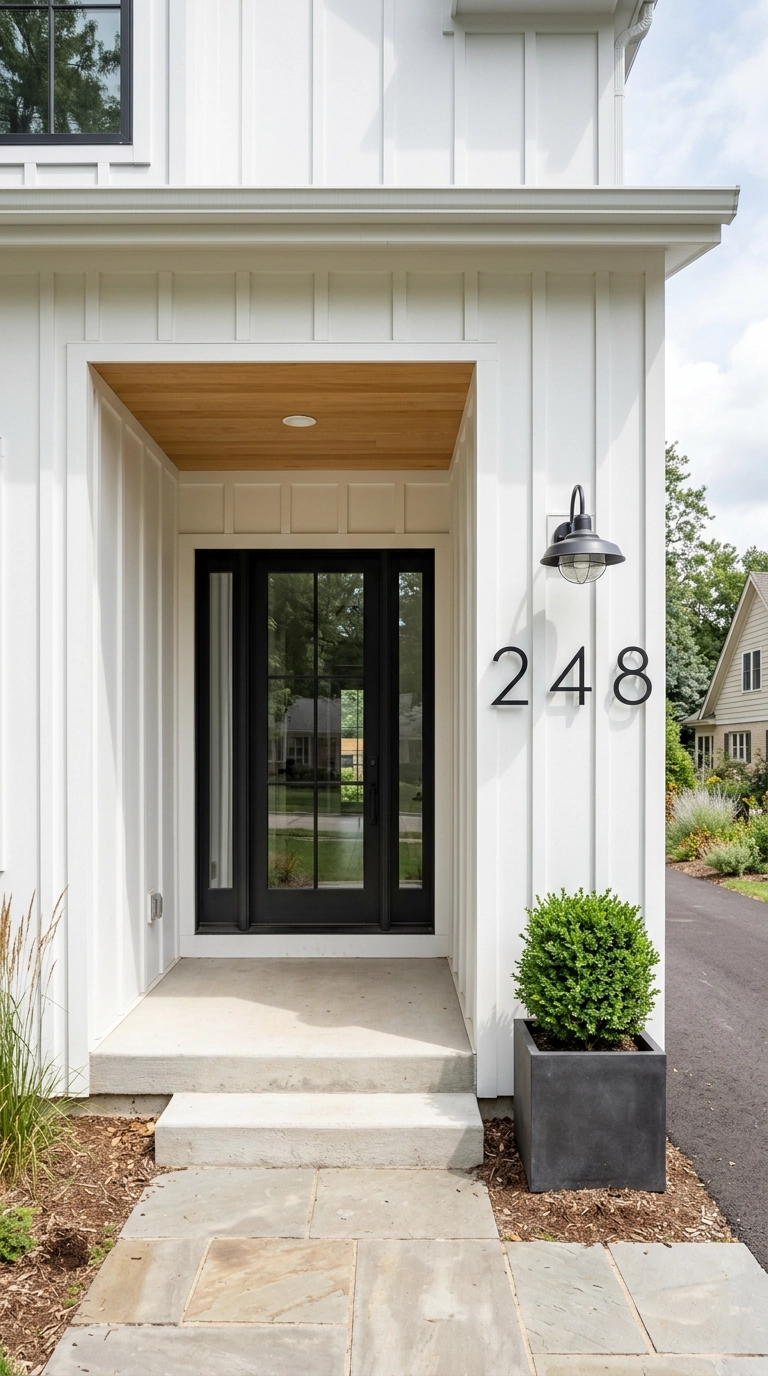
This is the one I recommend most, and it’s the one people notice from the car. Go bigger than feels reasonable – six inches minimum, eight if your house sits more than 40 feet back from the street, because a 4-inch numeral disappears past about 25 feet.
2. A Vertical Cedar Slat Backer Board with Slim Stainless Numbers
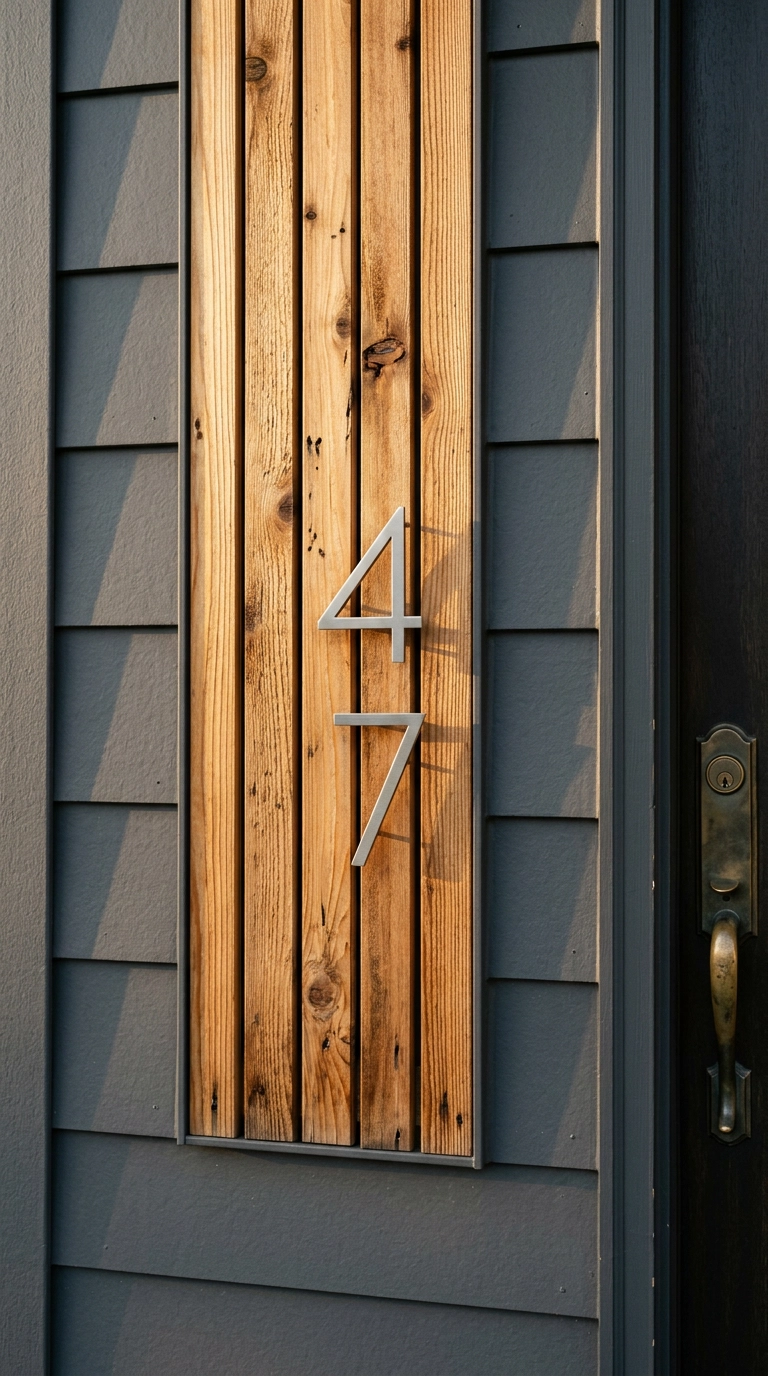
A backer board solves the contrast problem in one move. If your siding is a mid-tone – grey, tan, sage, anything that isn’t clearly light or dark – numerals of any color will get visually swallowed, so you give them their own background instead.
3. Stacked Vertical Numerals Down a Craftsman Porch Column
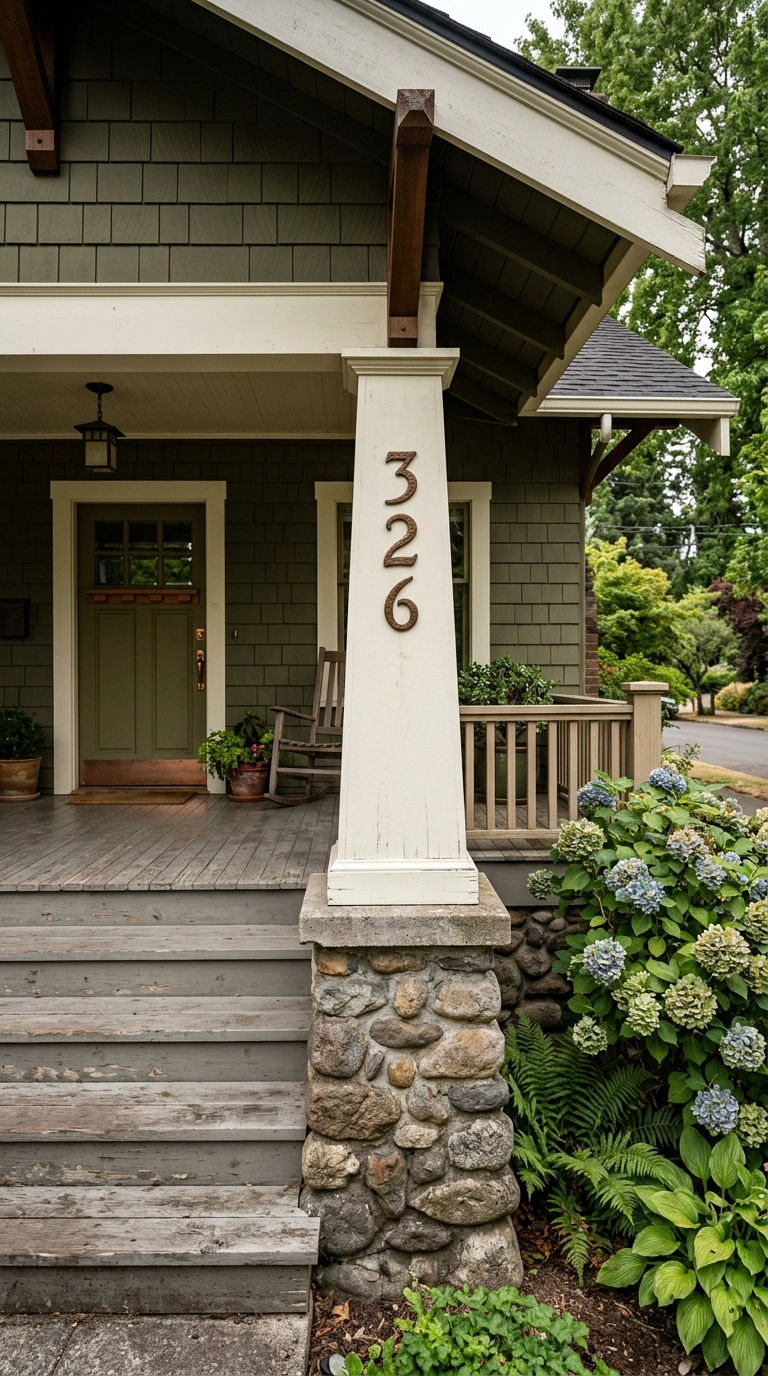
Vertical stacking works when you have a narrow surface and nowhere horizontal to go, which is basically every porch column in America. The rule is simple: keep the gap between digits equal to about half a numeral height, so 6-inch numbers get roughly 3 inches of air between them.
4. Numbers Directly on the Door in Polished Brass
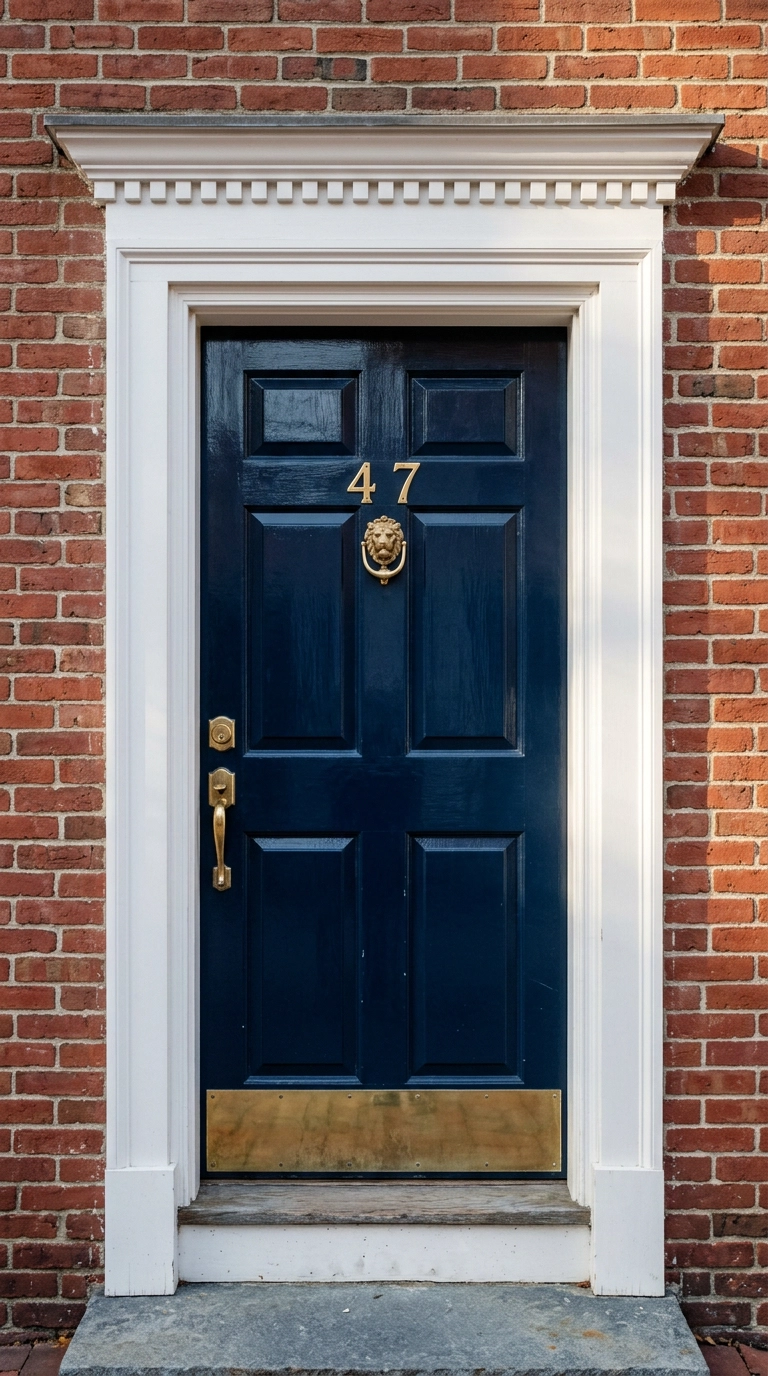
Putting numbers on the door itself is the most traditional placement and the most commonly botched. It only works if your door is a solid contrasting color and the door is visible from the street – if a deep porch or a storm door blocks it, the numbers are decorative, not functional.
5. A Blackened Steel Plate Beside the Door with Cut-Out Numerals
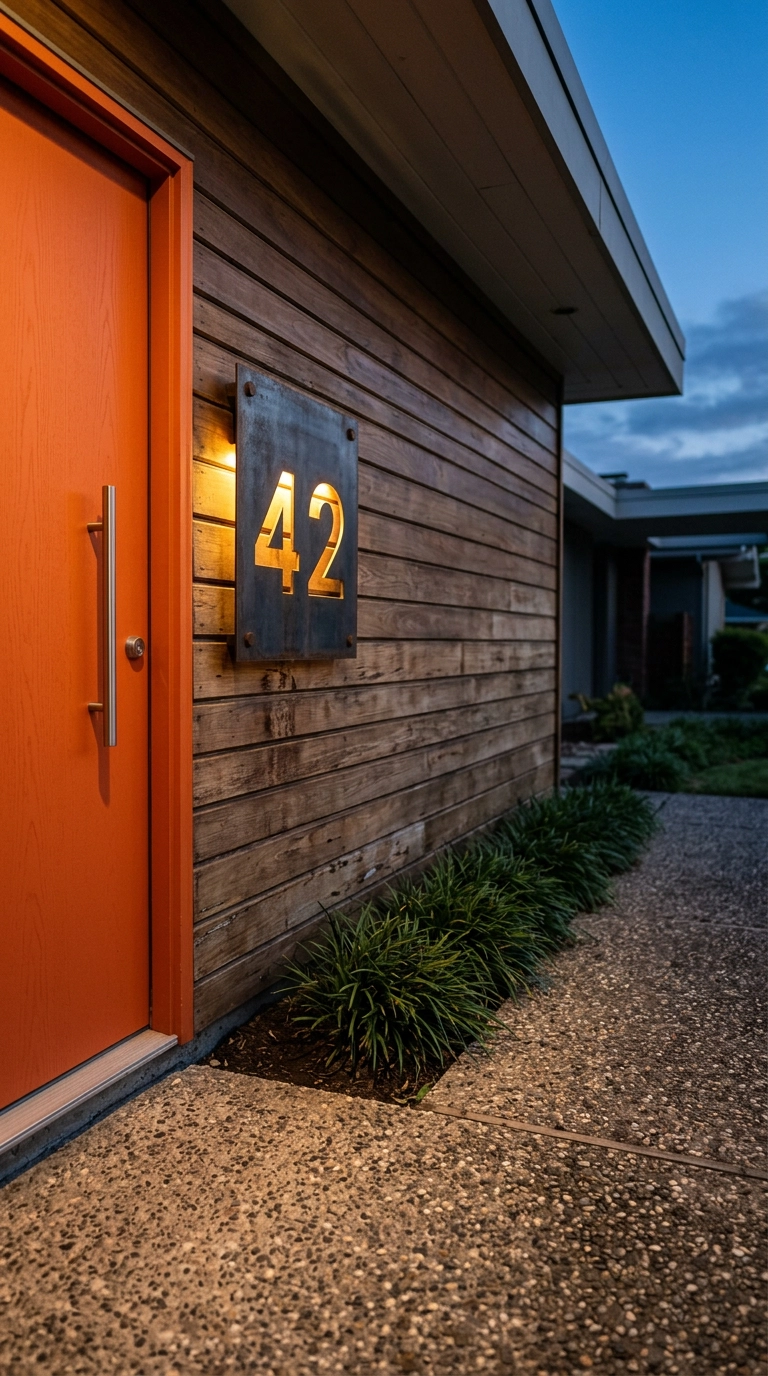
Cut-through numerals with a light behind them are my favorite trick for mid-century and modern facades, because at night the number reads as light rather than as an object. You get a fully legible address in the dark without a single glaring fixture.
6. Painted Curb Numbers with a Reflective Border
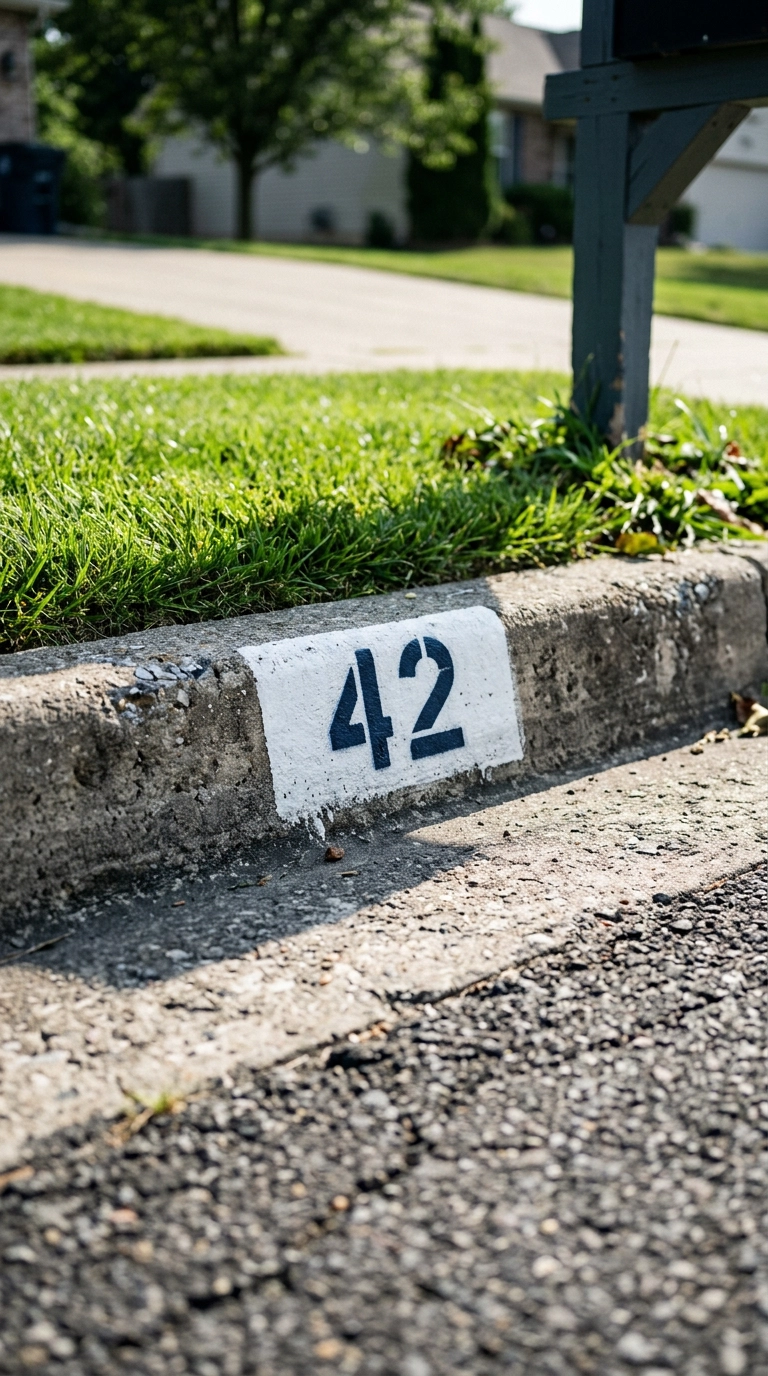
Curb numbers are unglamorous and genuinely the most useful thing on this list for emergency responders, who are scanning at the ground plane from a moving vehicle. A stencil kit and two cans of exterior spray paint runs under $25 and takes about 40 minutes including drying time.
7. Numbers Set Into a Low Garden Bed on a Corten Steel Marker
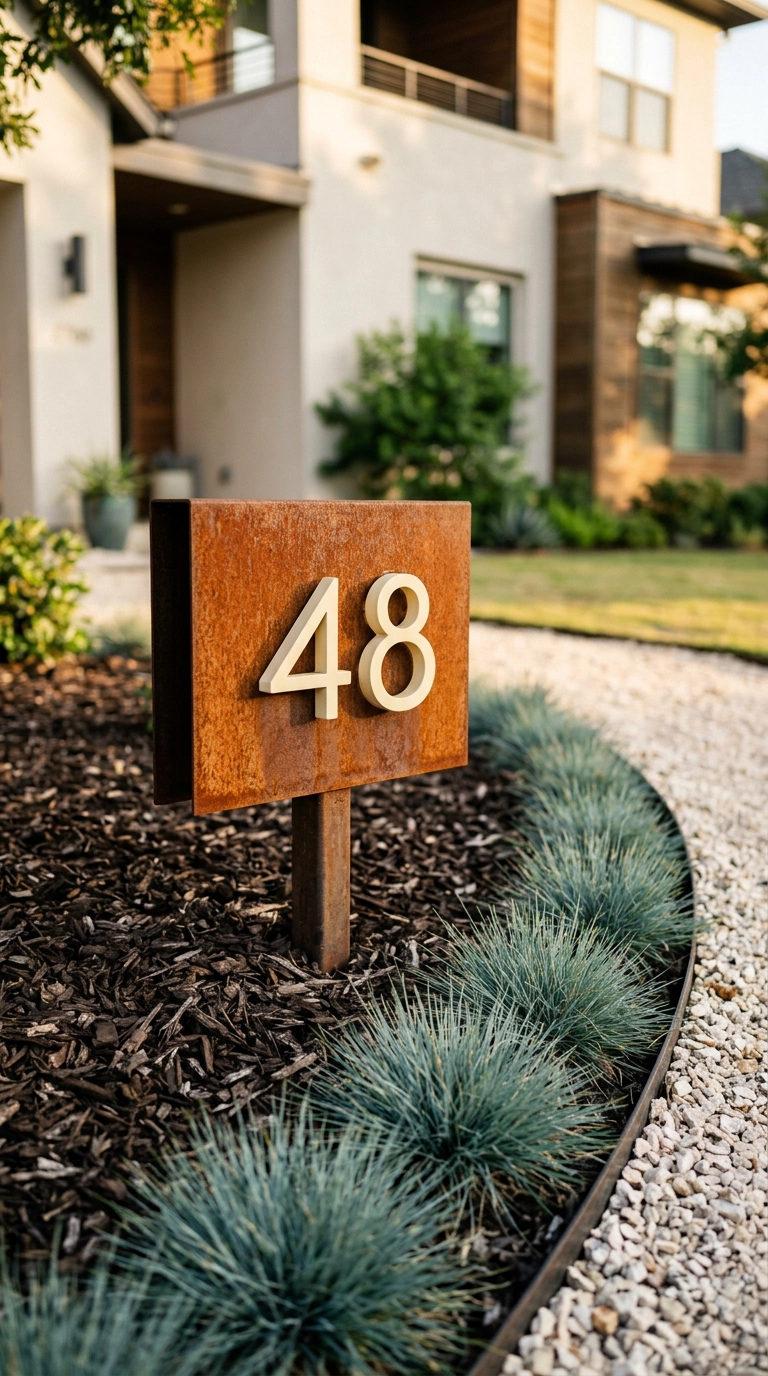
A garden marker gets your numbers out from under the porch roof and into open sightline from the street, which matters enormously on houses with a deep setback or heavy front landscaping. Corten weathers to a stable rust in about six months and then stops – it doesn’t disintegrate, despite what it looks like.
8. Vinyl Numerals Applied to a Glass Transom Above the Door
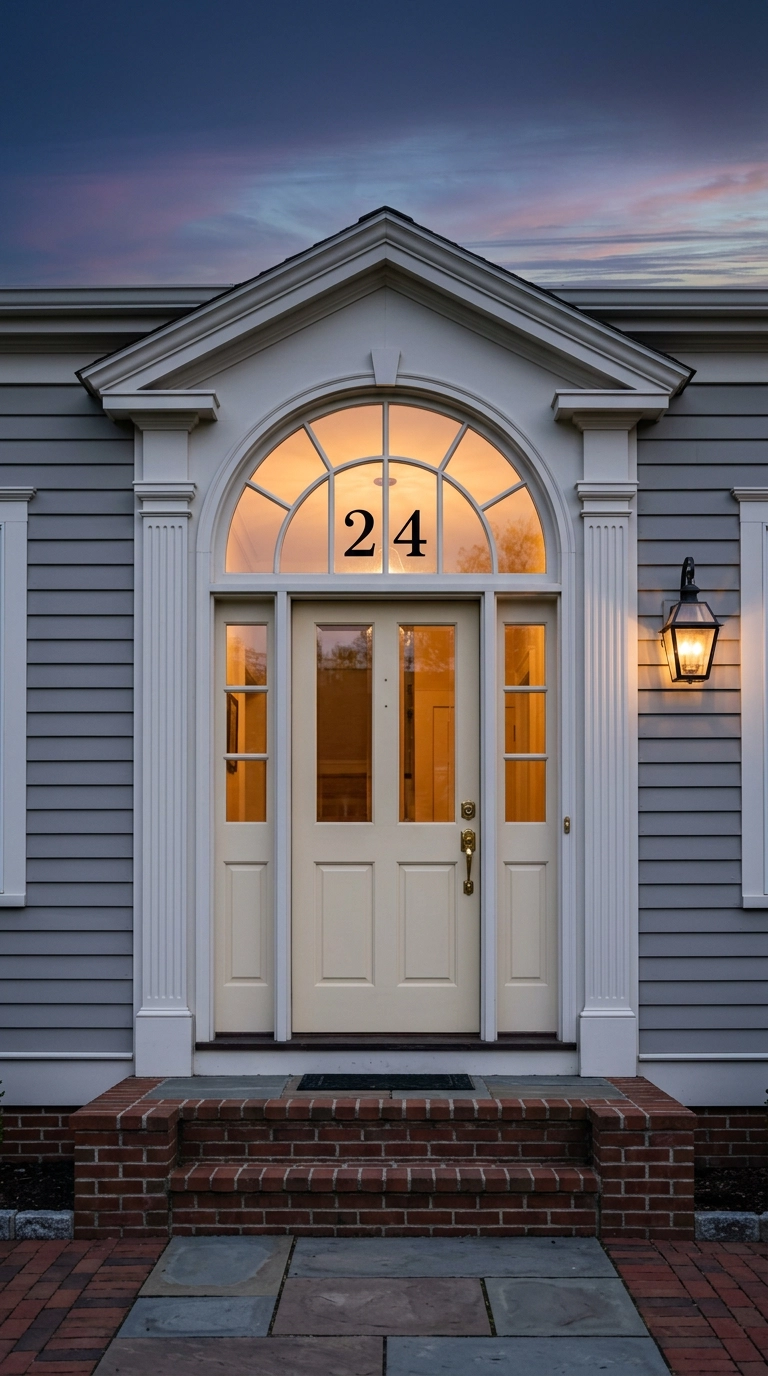
This is the renter’s dream and the historic homeowner’s compromise: zero drilling, fully reversible, and it looks like it came with the house. Order die-cut exterior vinyl in your numerals for around $15 to $30.
9. Handmade Ceramic Tile Numbers in a Spanish-Inspired Frame
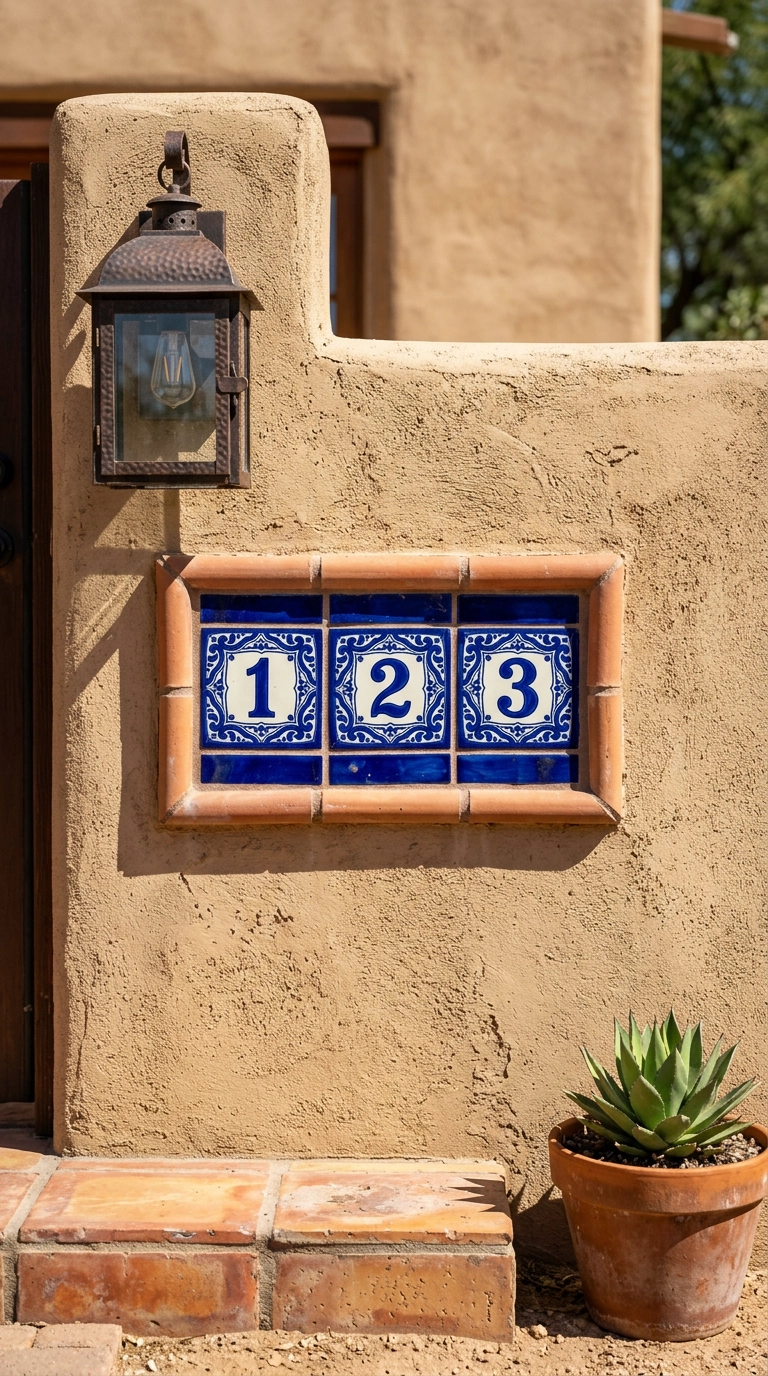
Tile numbers are the right answer for stucco, adobe, and Mediterranean facades where a metal numeral looks imported from a different house. Hand-glazed tiles run $12 to $25 each and you can buy them individually.
10. Backlit Halo Numerals on a Modern Stucco Wall
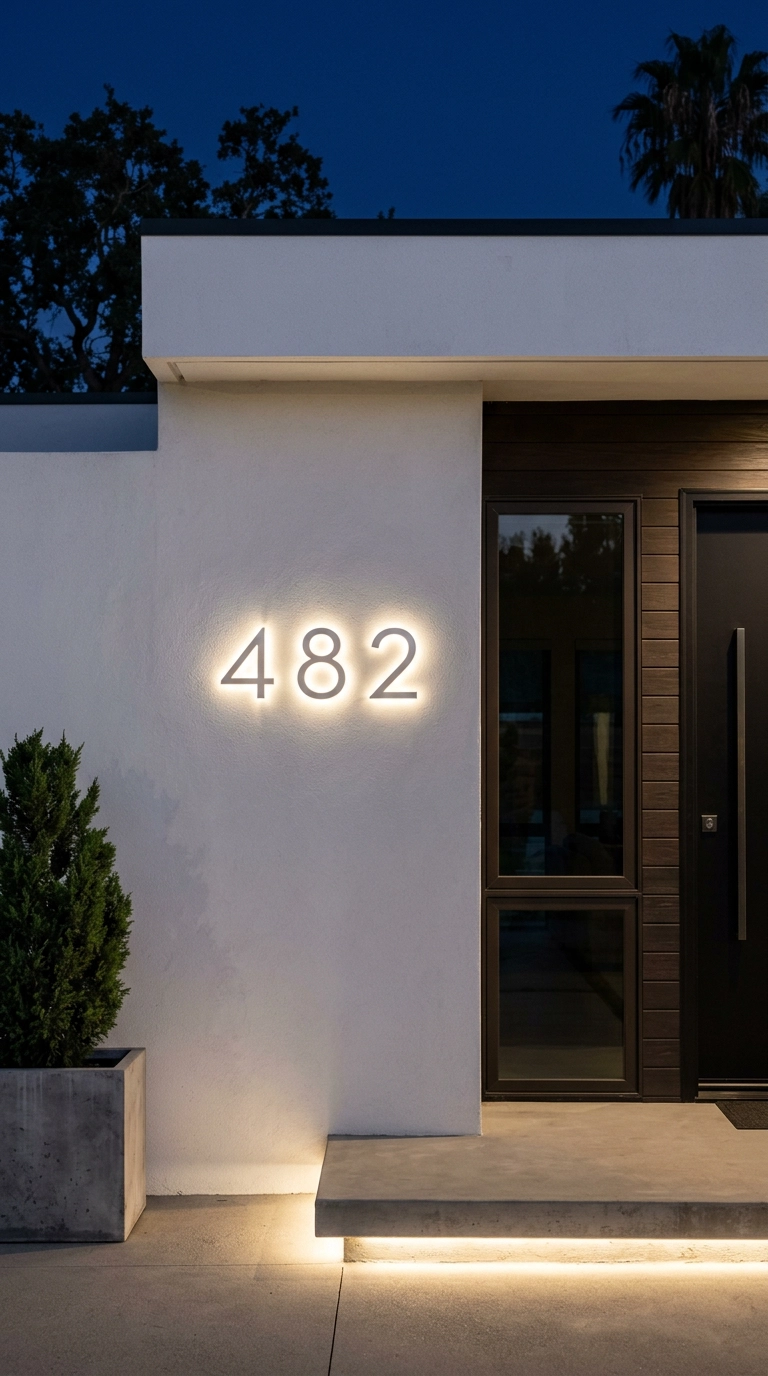
Halo-lit numerals are the single most expensive idea on this list and also the one that makes visitors say something out loud. Expect $250 to $600 for a quality set, plus an electrician if there’s no power at that wall.
11. Numbers on the Mailbox Post with a Small Solar Cap Light
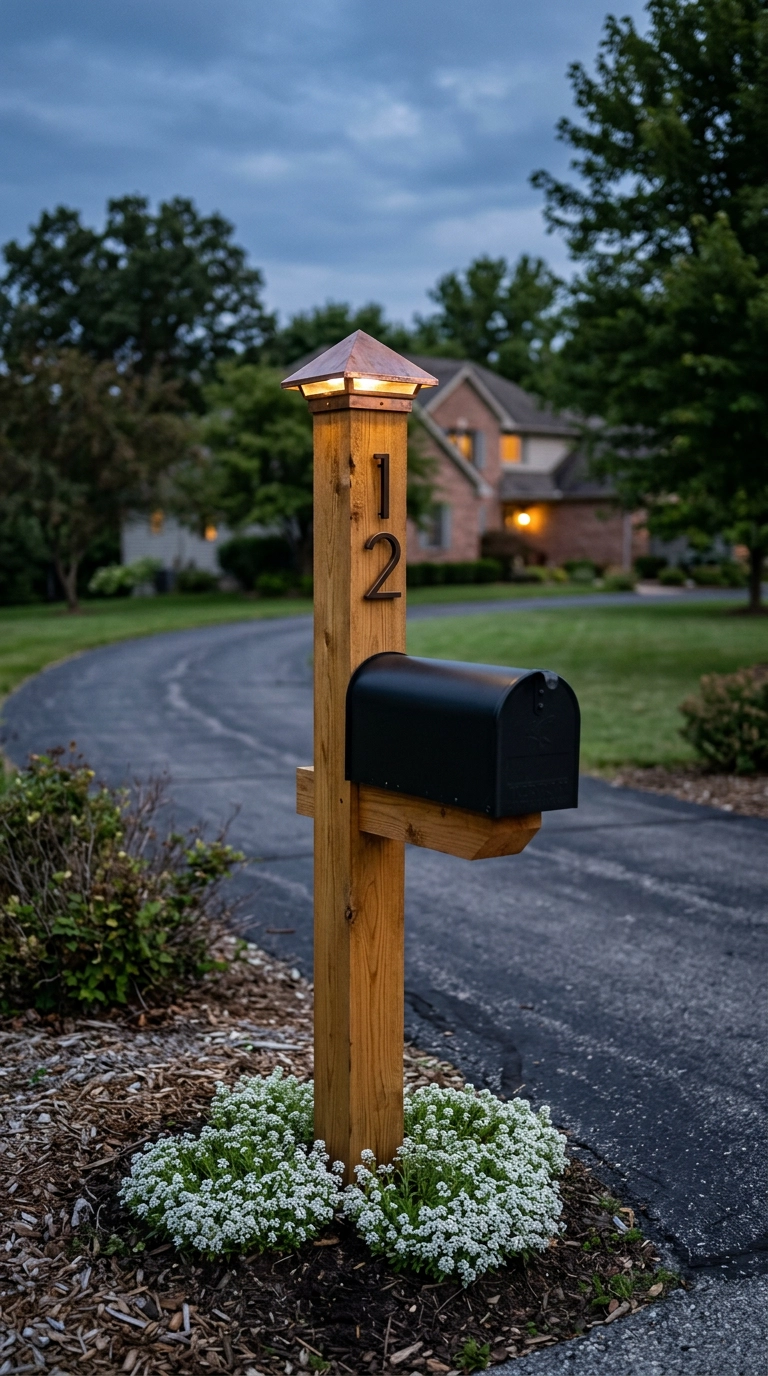
If your house sits far back or behind trees, the mailbox post is doing more addressing work than your front door ever will. Put the numbers on both sides of the post so drivers coming from either direction can read them.
12. Cast Bronze Numerals Left to Patina on Natural Stone
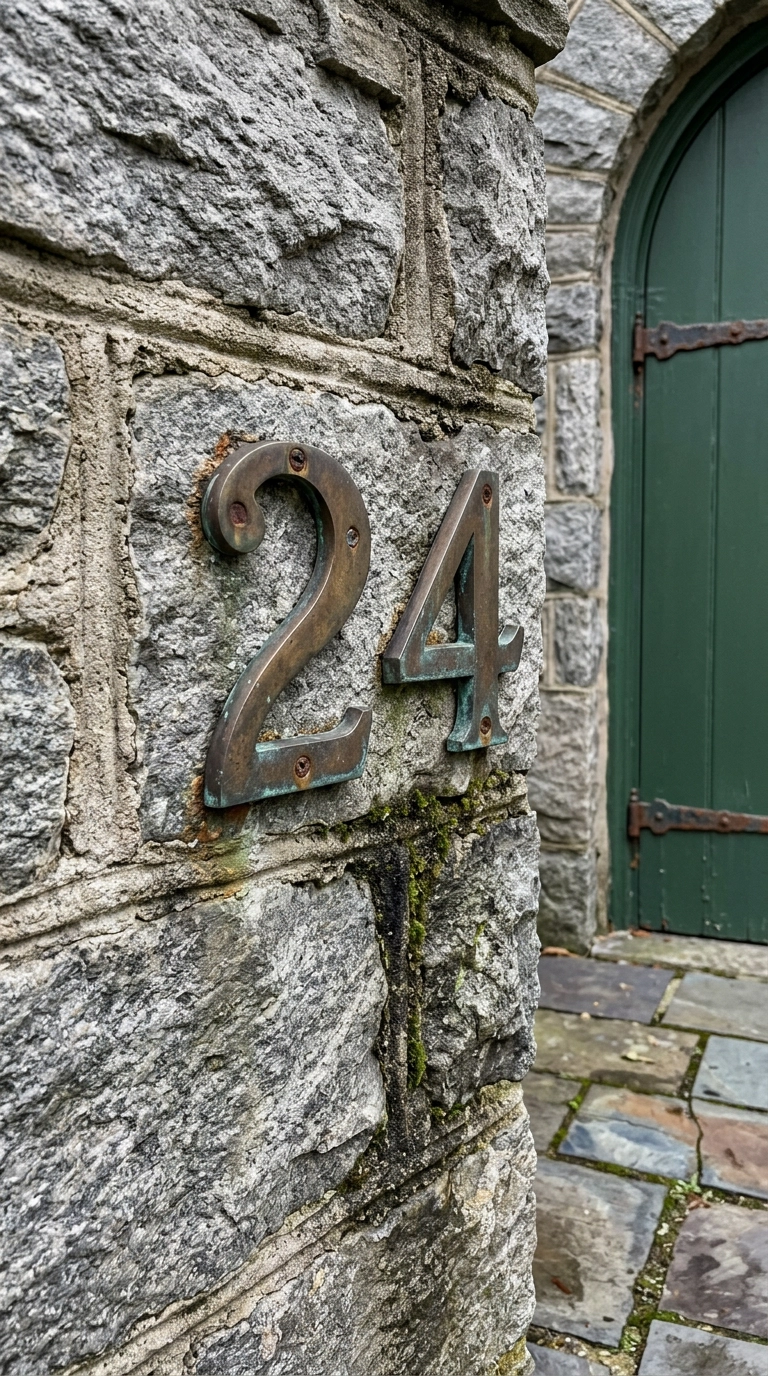
Solid cast bronze is the splurge that ages into something better than what you bought. Unlacquered bronze will go from bright penny to deep chocolate over about three years, and the recessed areas darken faster than the raised faces, which gives the numerals depth.
13. A Painted Riser on the Front Steps
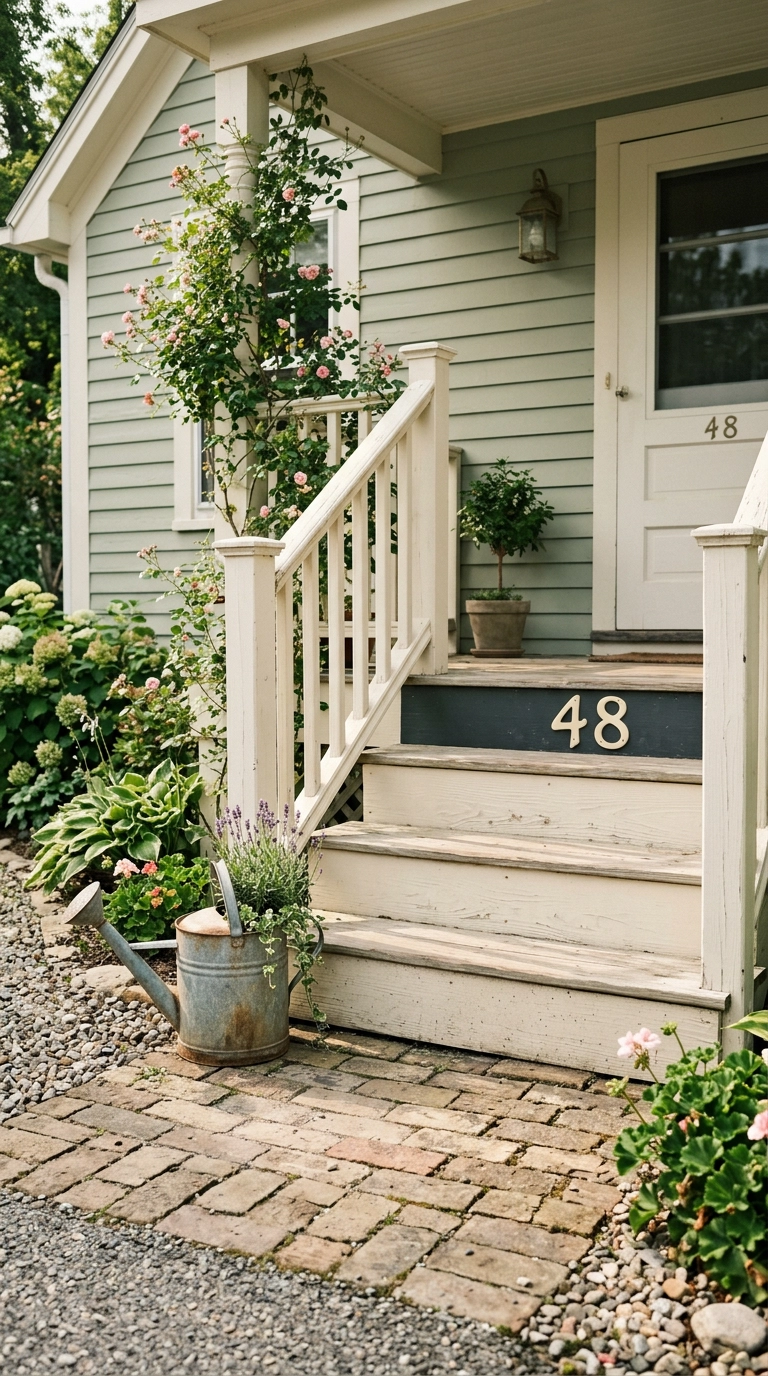
Painting the number onto a step riser costs about $12 in sample-pot paint and reads as charming rather than cheap, which is a rare combination. It works best on a house where the steps face the street directly.
14. Numerals Mounted on a Horizontal Blackened Wood Plank
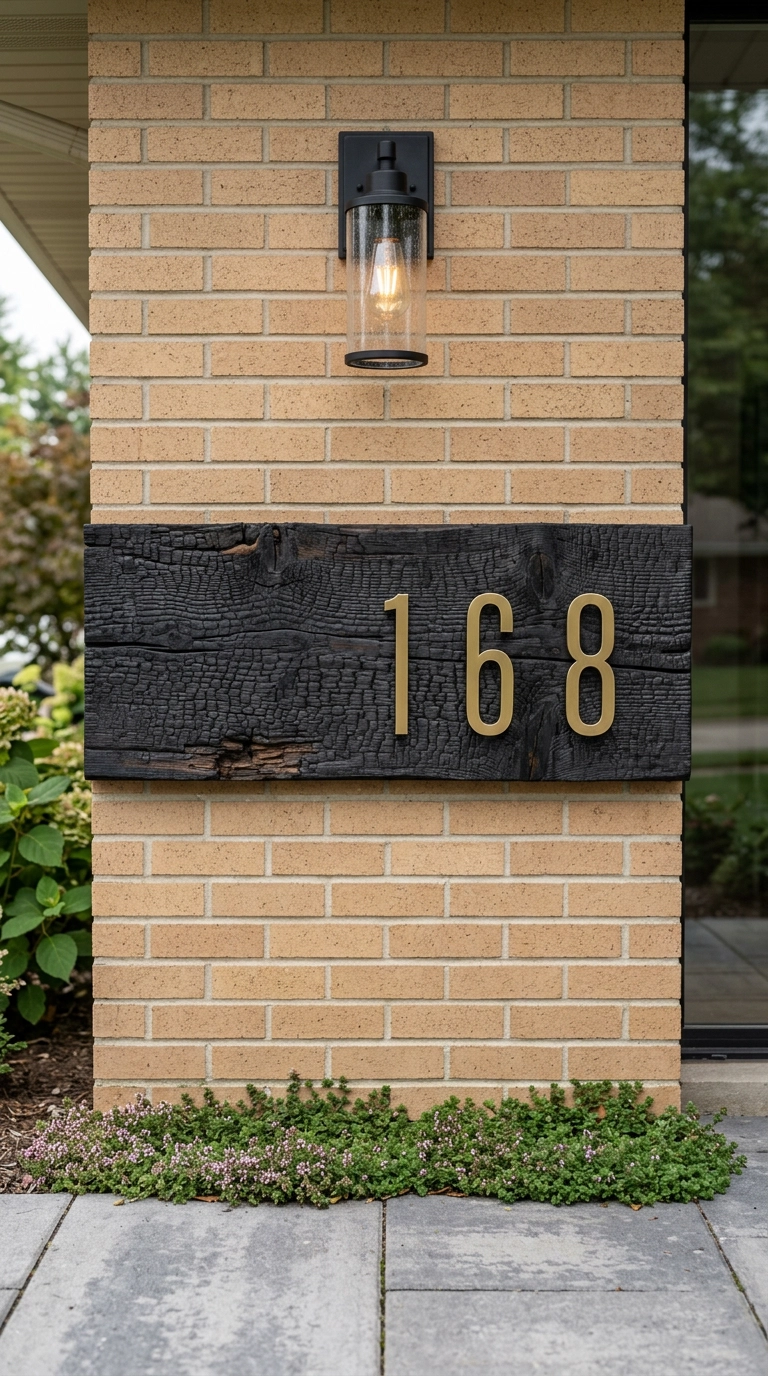
Brick is the hardest surface to mount numbers on and the easiest to solve with a plank. The mortar lines fight with the numeral edges visually, and drilling into brick face is a commitment – a plank gives you four anchors instead of a dozen.
15. Zinc Numerals Bolted to an Oversized Entry Planter
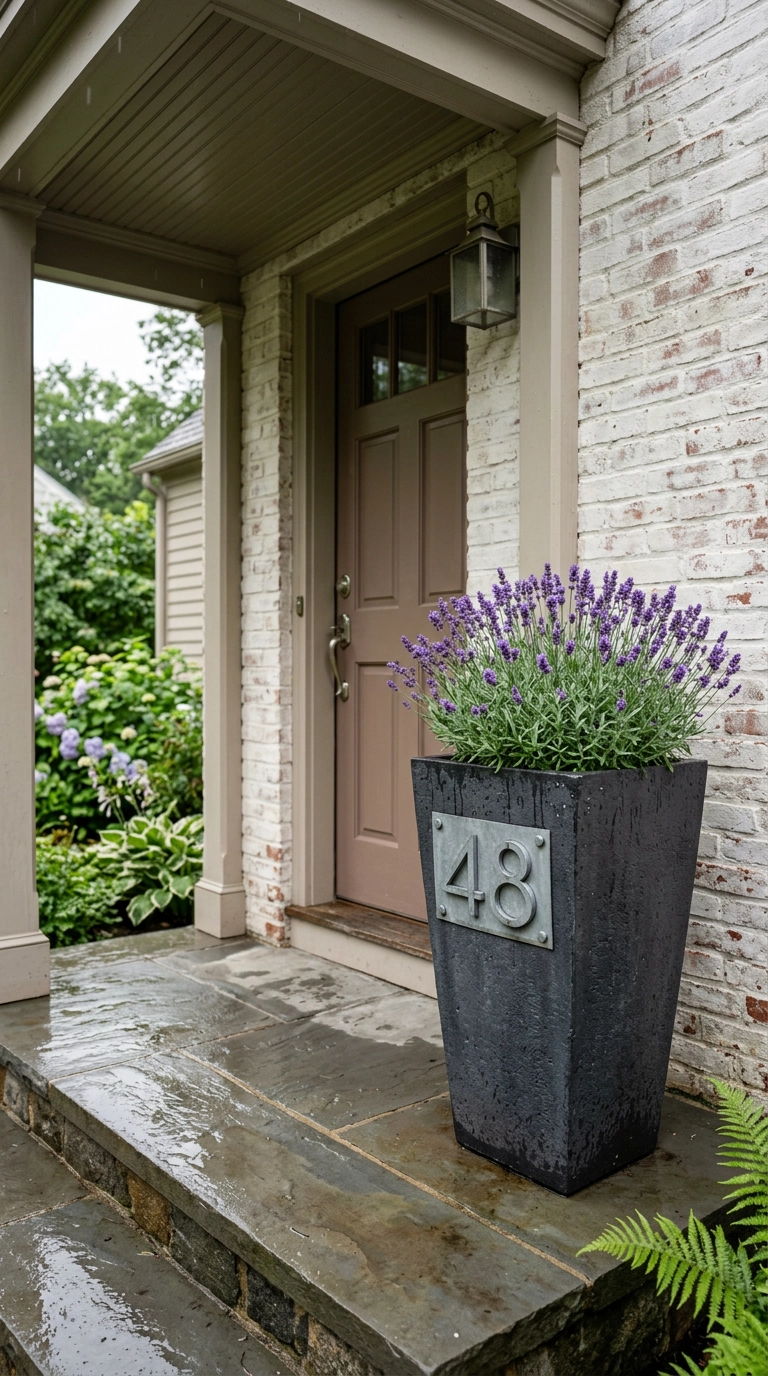
Nobody expects the numbers to be on the planter, which is exactly why this one works. It’s also the best no-drill option I know for renters – nothing touches the building, and the whole thing walks out the door with you when the lease ends.
16. Cast Iron Numbers on a White Picket Garden Gate
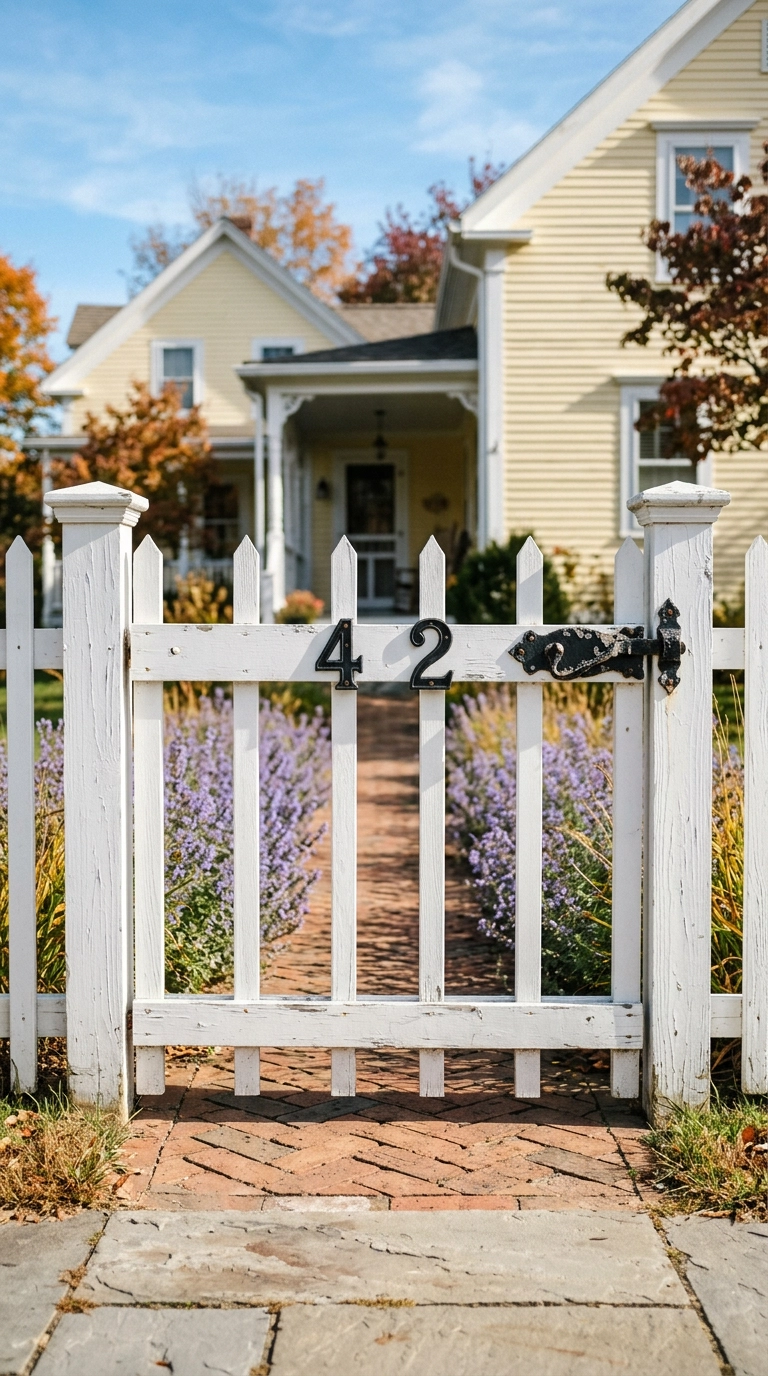
If your yard is fenced, the gate is the first thing a visitor touches and the last place most people think to put an address. Mount the digits on the top rail at roughly 42 to 48 inches off the ground so they land at natural eye level for someone walking up the sidewalk.
17. Solar Uplights Aimed Up a Slate Address Panel
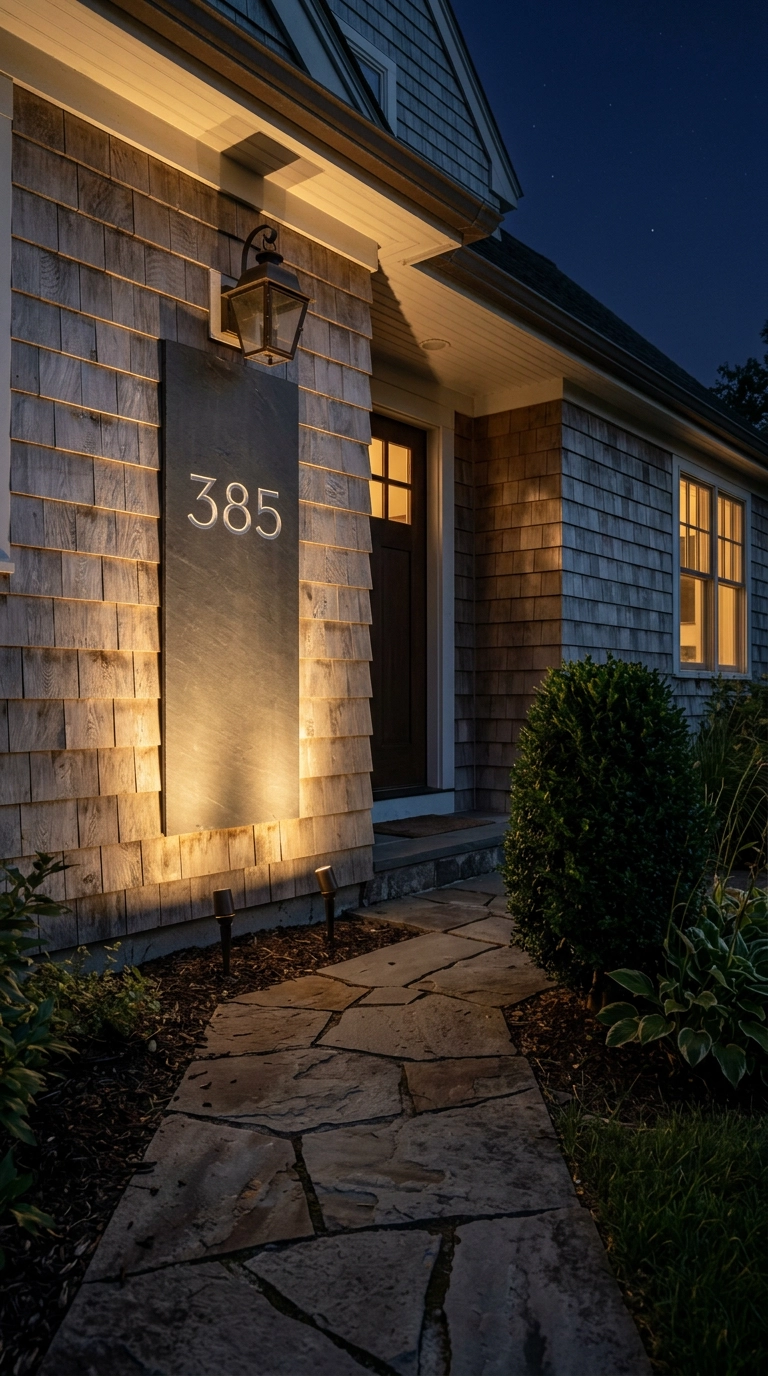
Uplighting is the cheap cousin of backlit numerals and it gets you 80 percent of the effect for about a tenth of the price. Two solar spike lights run $30 to $50 for the pair, and staking them 12 to 18 inches out from the wall gives you a wide even wash instead of two hot spots.
18. Pebble Mosaic Numbers Set Into a Walkway Landing
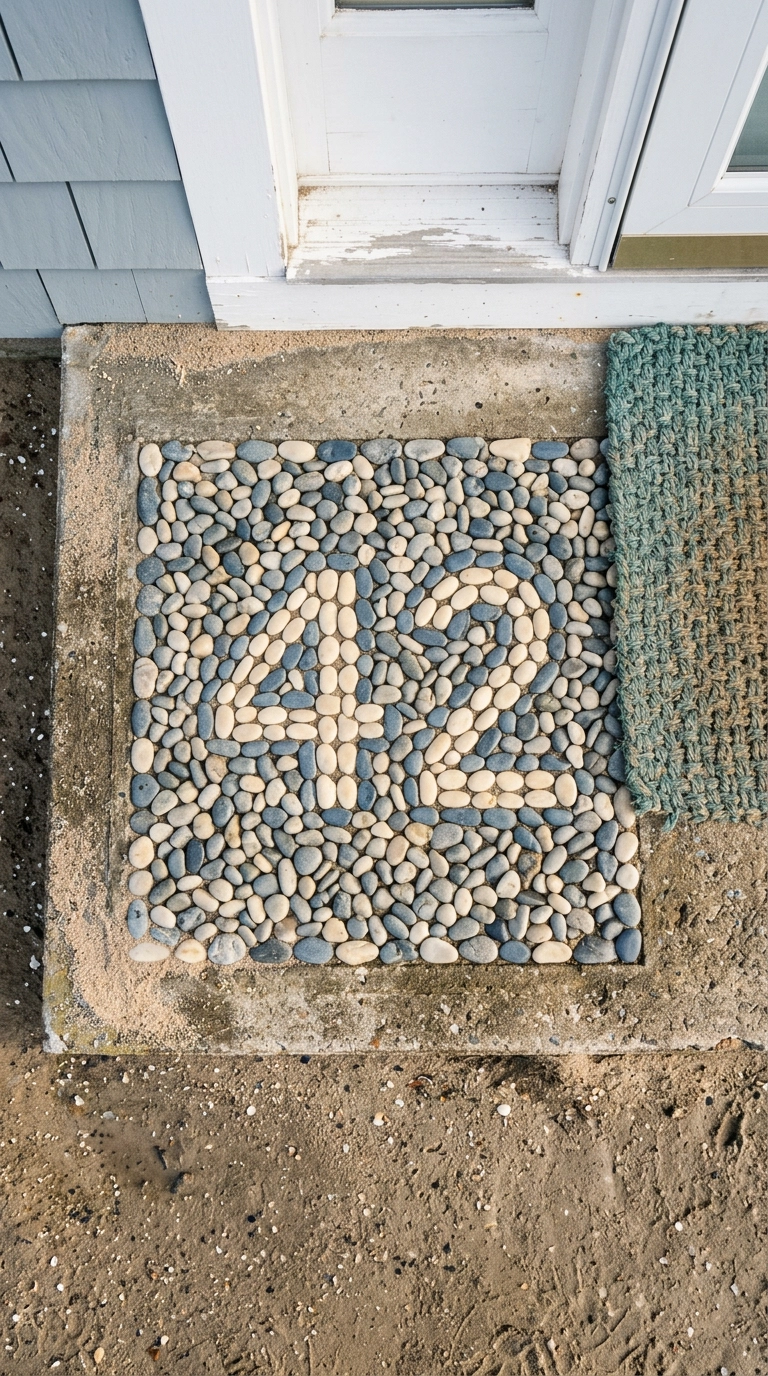
A mosaic landing is a slow, meditative weekend project and one of the few address ideas that survives a repaint of the entire house. Set the pebbles into a bed of exterior thinset, tap them level with a scrap board, then grout with sanded exterior grout.
19. Frosted Vinyl Numerals Running Down a Door Sidelight
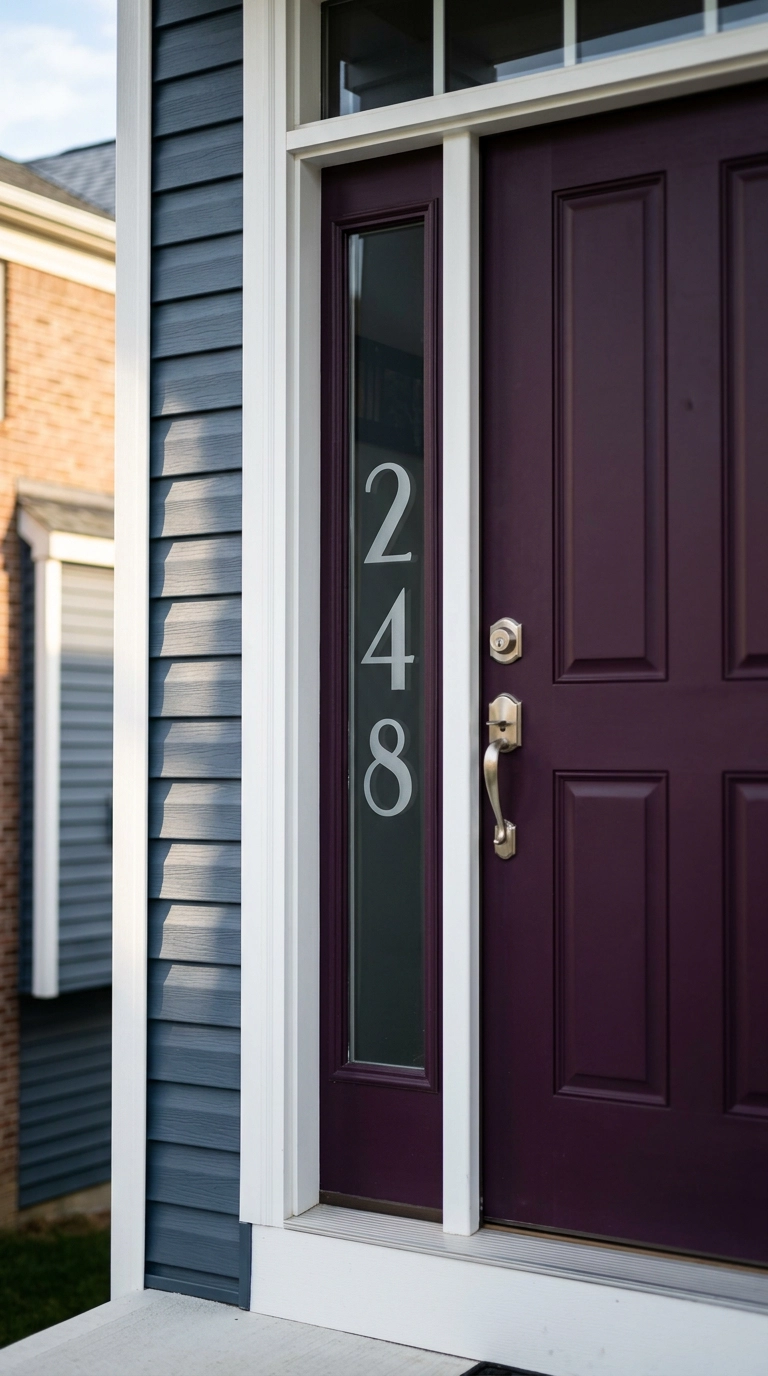
Sidelights are narrow, usually four to eight inches of usable glass, so the digits have to run vertically and stay slim. Frosted vinyl is the smarter choice over solid black here because it reads light against the dark interior by day and glows softly when the entry light is on at night.
20. Atomic-Era Numerals on a Concrete Breeze Block Screen
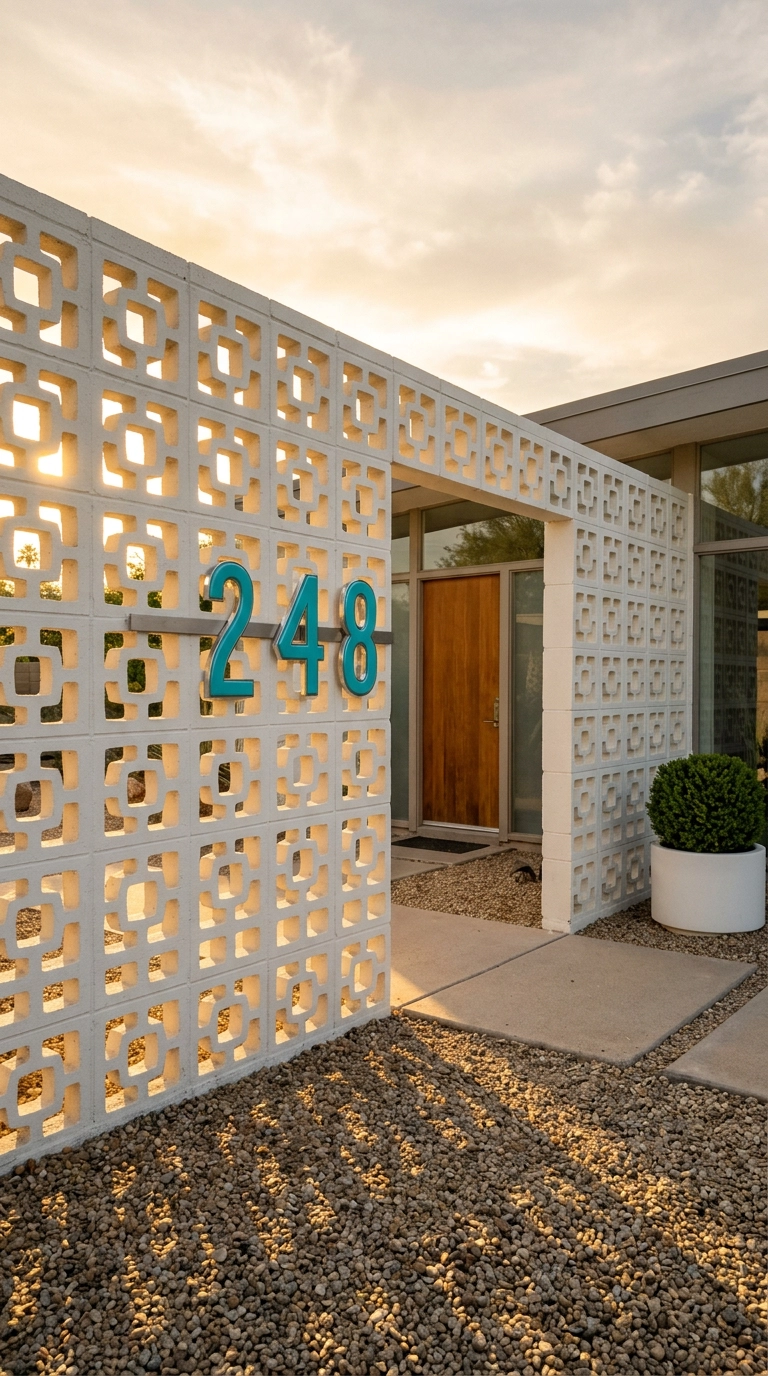
If you own a mid-century house, the numerals are one of the few places you can be genuinely playful without tipping into theme-park territory. Look for the wide, geometric, slightly quirky faces from that era rather than a generic modern sans-serif, and pick a saturated period color – turquoise, mustard, coral.
21. Numerals Carved Into a Low Limestone Entry Pier
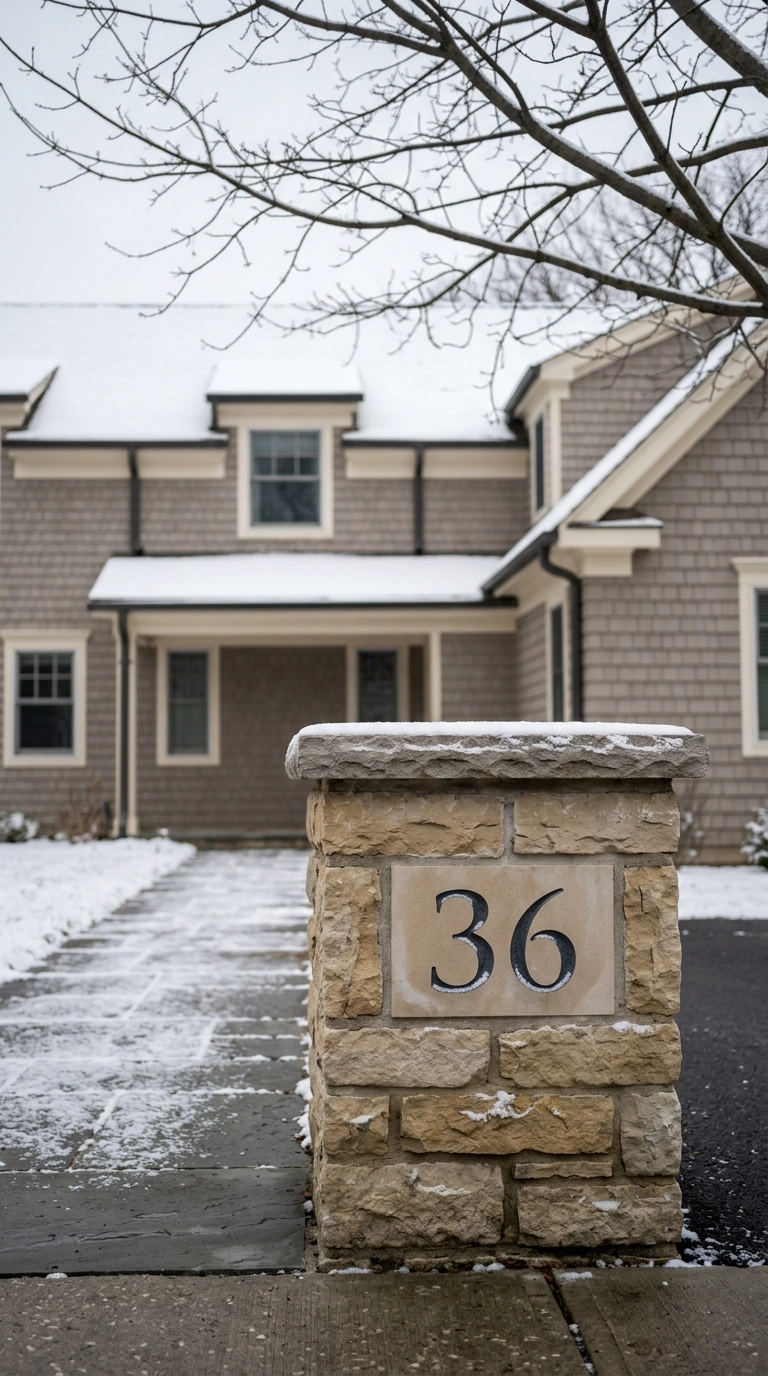
Carved stone is the permanent option, the one that outlives every trend on this list and probably you. A local monument or stone shop will sandblast numerals into a dressed block for roughly $150 to $350, and a painted or leaded fill in the recesses is what keeps them legible from the street.
22. Extra-Large Brushed Copper Numbers on the Garage Elevation
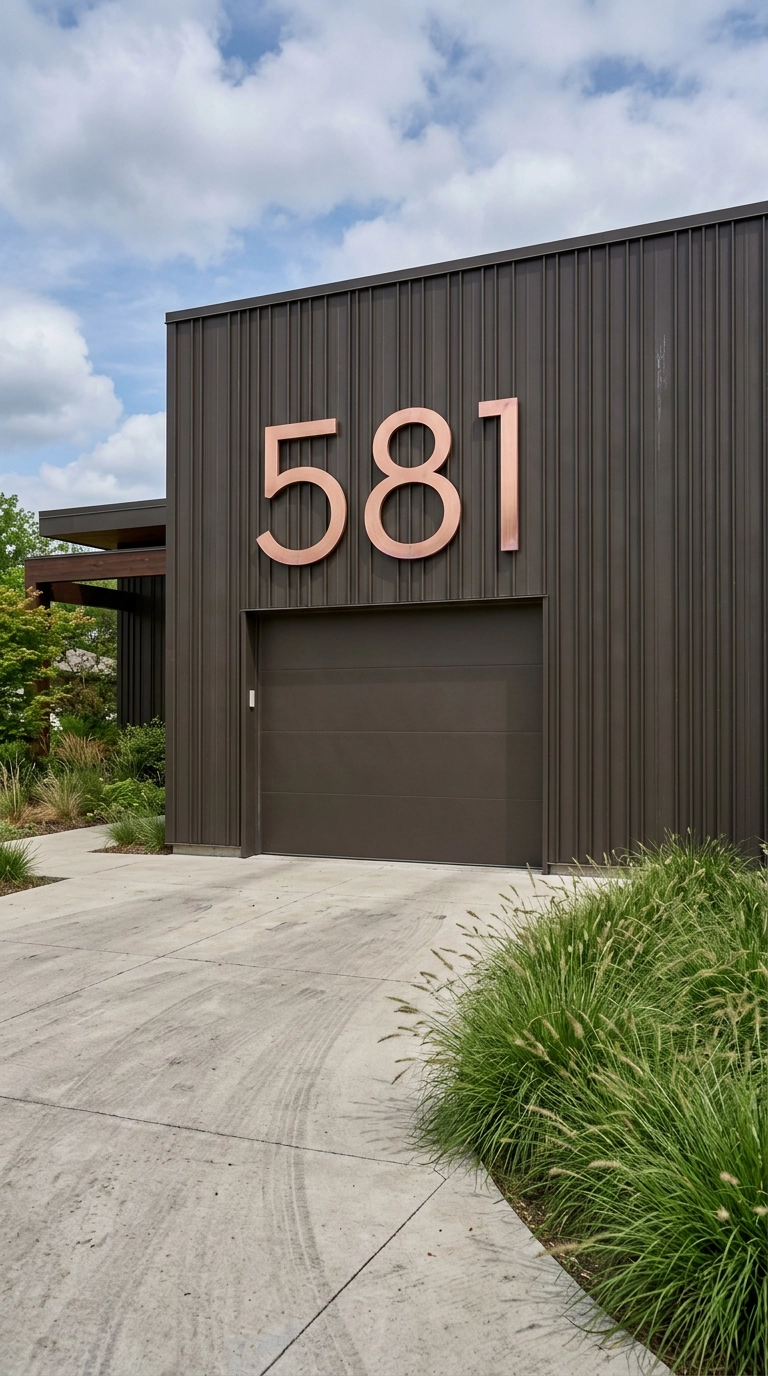
On a lot of newer houses the garage faces the street and the front door doesn’t, so putting the address anywhere else is wishful thinking. This is where you go big – ten to twelve inches, sized for a driver at 25 miles an hour rather than a guest on your walkway.
Small Numbers, Loud First Impression
Of everything I’ve listed here, the two I’d hand a friend on a Saturday morning are the oversized floating numerals with standoff hardware and the cedar slat backer board. They cost less than a nice dinner out, they take a couple of hours, and they fix the single most common curb appeal mistake I see – numbers that are too small and too close in color to whatever they’re screwed into.
What I’m seeing everywhere heading into 2026 is the move away from shiny and toward material honesty: raw and blackened steel, unlacquered brass and cast bronze that are allowed to patina, zinc going soft grey, copper turning pink at the edges. Rejuvenation and Schoolhouse have been quietly pushing that unlacquered look for years, and it’s finally reached the front of the house. On the other end, halo-lit numerals and cut-through steel plates keep showing up on modern facades, and honestly they earn their price at night. If your house is stucco or adobe, hand-glazed tile still beats every metal option, and I’ll die on that hill.
Start with a tape measure and a walk to the curb. Stand where a delivery driver would stand, look back at your house, and if you have to squint, you already know your answer. If you want more front-of-house projects like this one – the small, cheap, high-impact kind – come sign up for my weekly newsletter and I’ll send the good ones straight to your inbox.


