
20+ French Cottage Garden Ideas That Bring Provence to Your Backyard
The French cottage garden aesthetic has a specific quality that’s hard to manufacture directly: it looks simultaneously abundant and effortless, as if the garden grew this way without much intervention. In reality, it’s the result of choosing the right plants, arranging them with deliberate looseness, and creating the structural bones that allow that looseness to read as romance rather than neglect.
Here are 20+ ideas for bringing this aesthetic to your own outdoor space.
1. Climbing Roses on Stone Wall
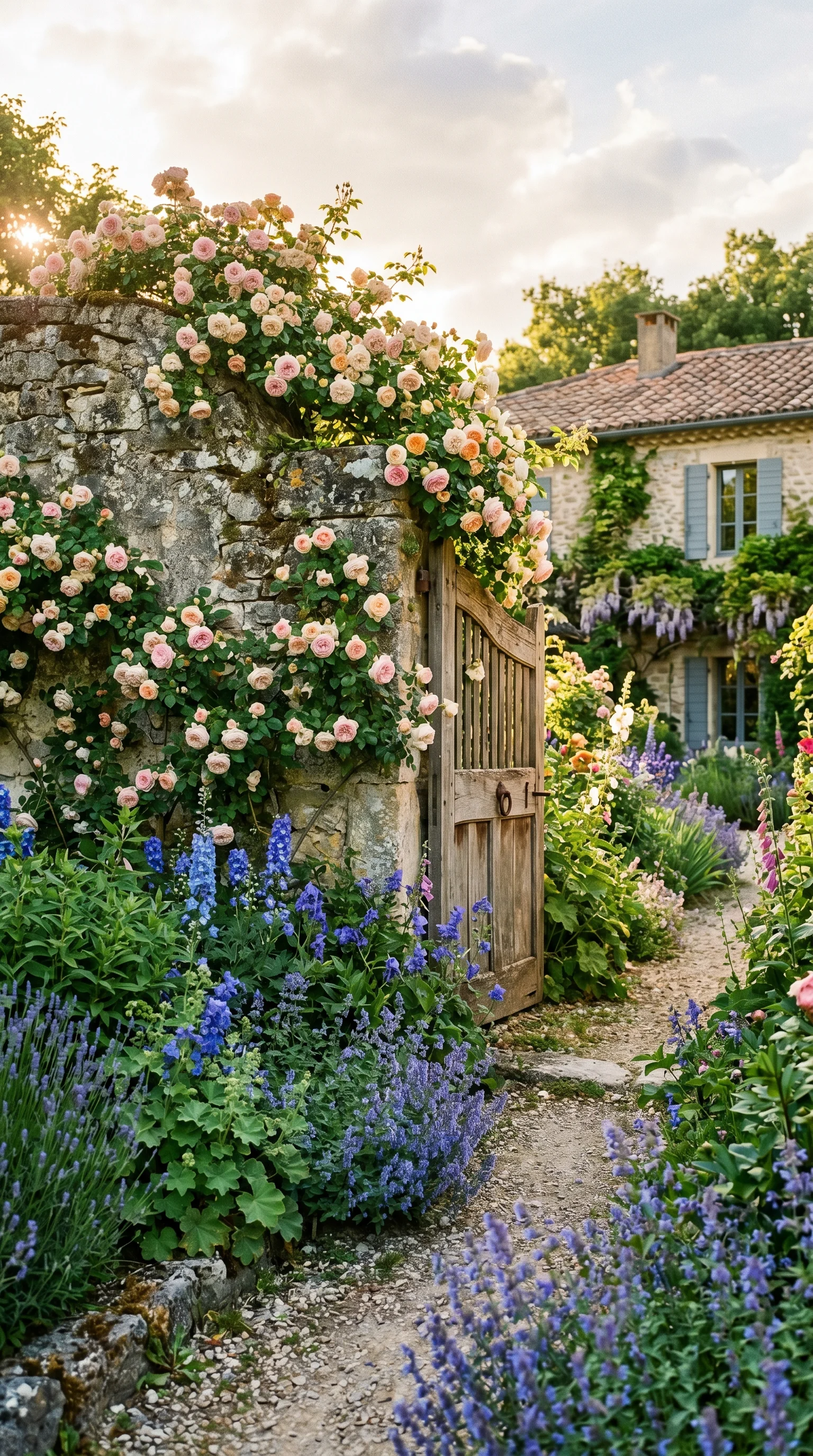
A climbing rose on a stone wall is the most iconic French cottage garden image and the most achievable. Choose a repeat-flowering variety in soft pink, cream, or apricot. The rose doesn’t need to cover the wall completely — the interplay between stone and bloom, with gaps and variations, is more interesting than complete coverage.
2. Lavender Borders
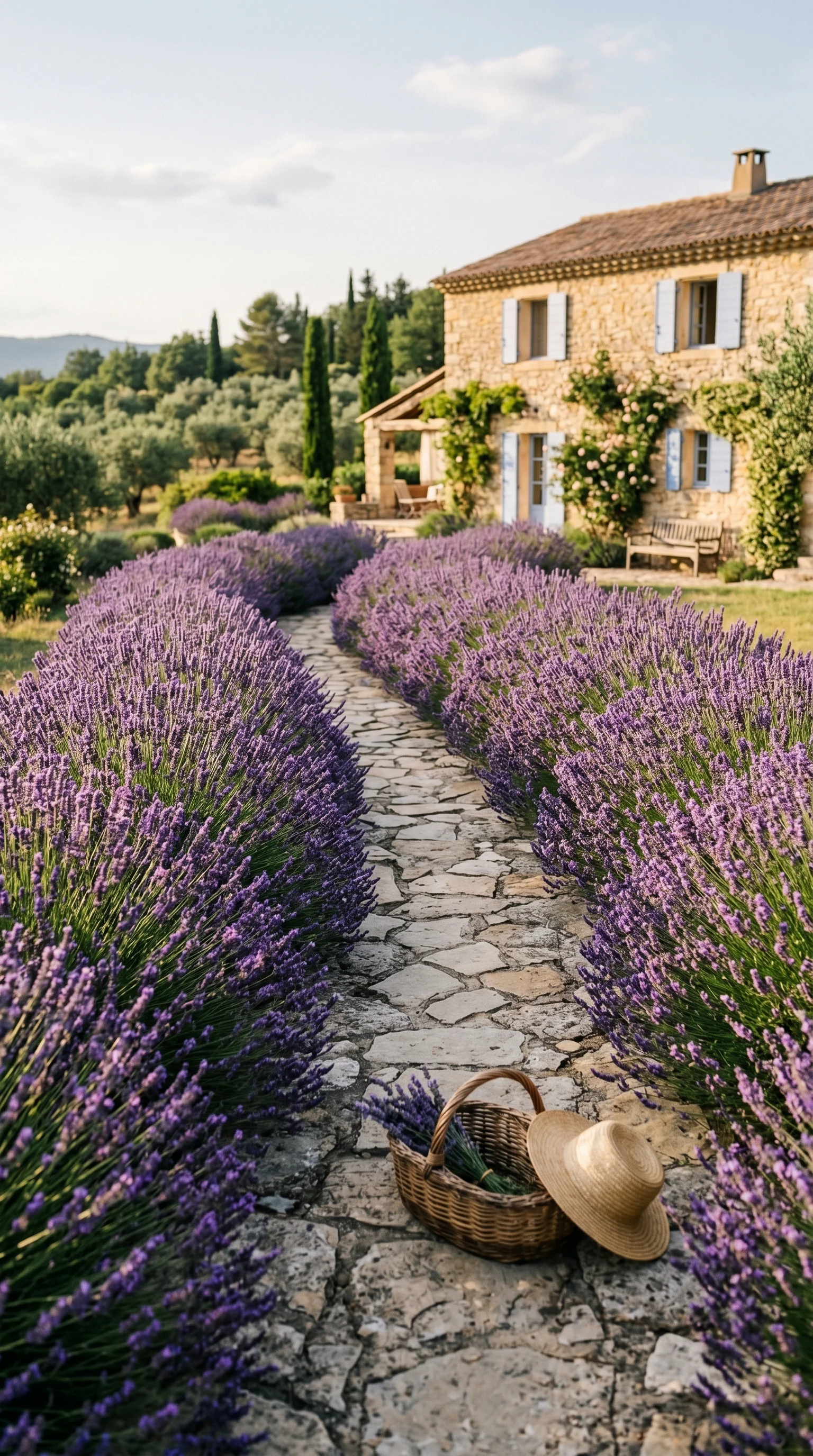
Lavender is the defining plant of Provence and the easiest way to import French cottage atmosphere to any garden. Plant it in masses rather than singles — a row of lavender along a path, a hedge of it below a window, or a drift of it in front of roses. The silver-green foliage earns its keep even when the purple flowers aren’t present.
3. Mixed Cottage Border with Peonies and Foxgloves
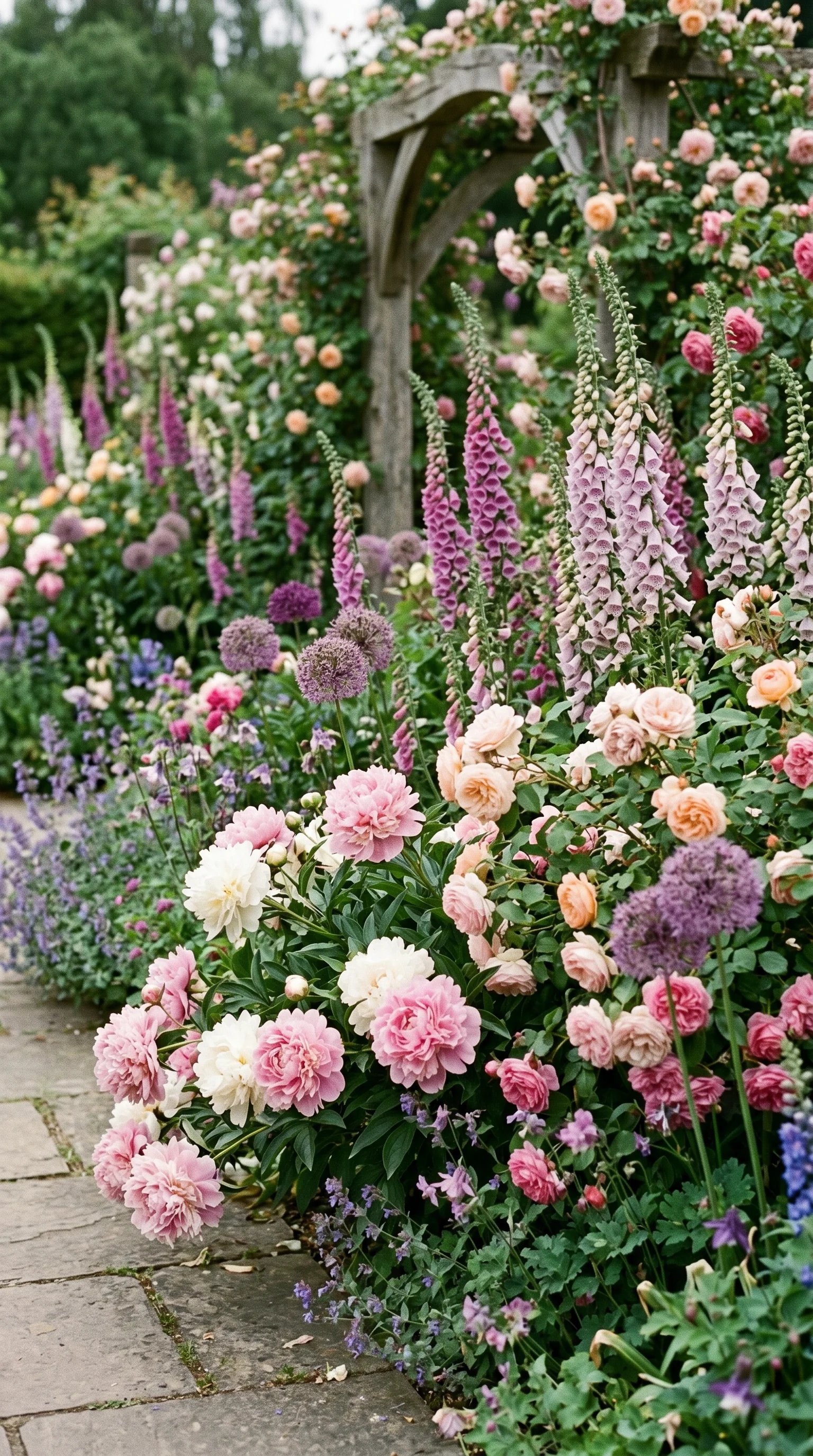
A mixed border that combines peonies, foxgloves, alliums, and roses creates the layered abundance that defines the French cottage style. Plant tall at the back, medium in the middle, low at the front, and allow some plants to self-seed and colonize gaps. The slight disorder is the point.
4. Wisteria Over an Arch or Pergola
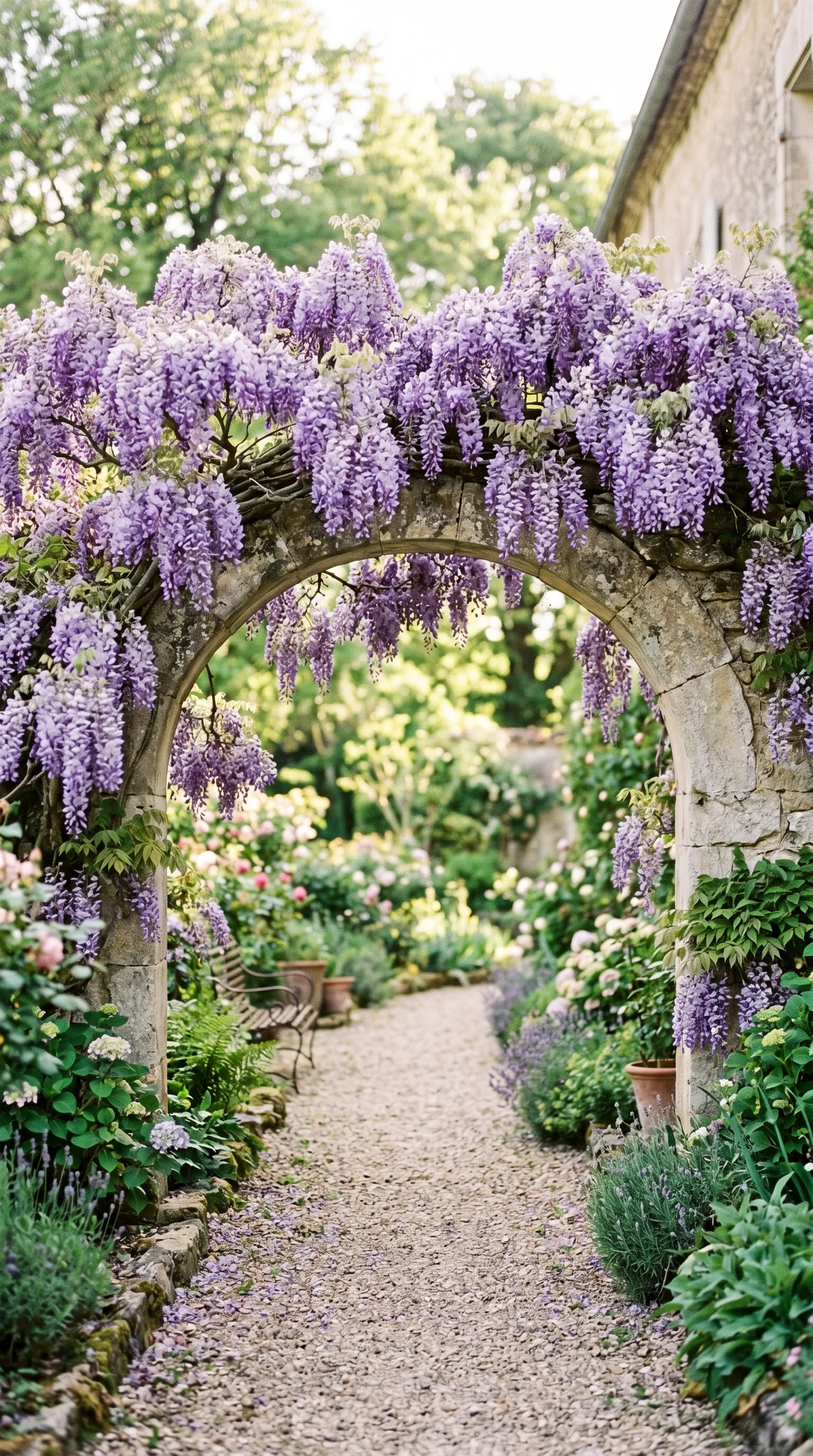
Wisteria in full bloom is one of the most dramatic flowering spectacles in any garden. Train it over an arch, pergola, or house facade and allow it to cascade freely downward. It takes several years to establish but then flowers reliably every spring with minimal intervention — exactly the effortless abundance that French cottage gardens project.
5. Herb Garden with Boxwood Edging
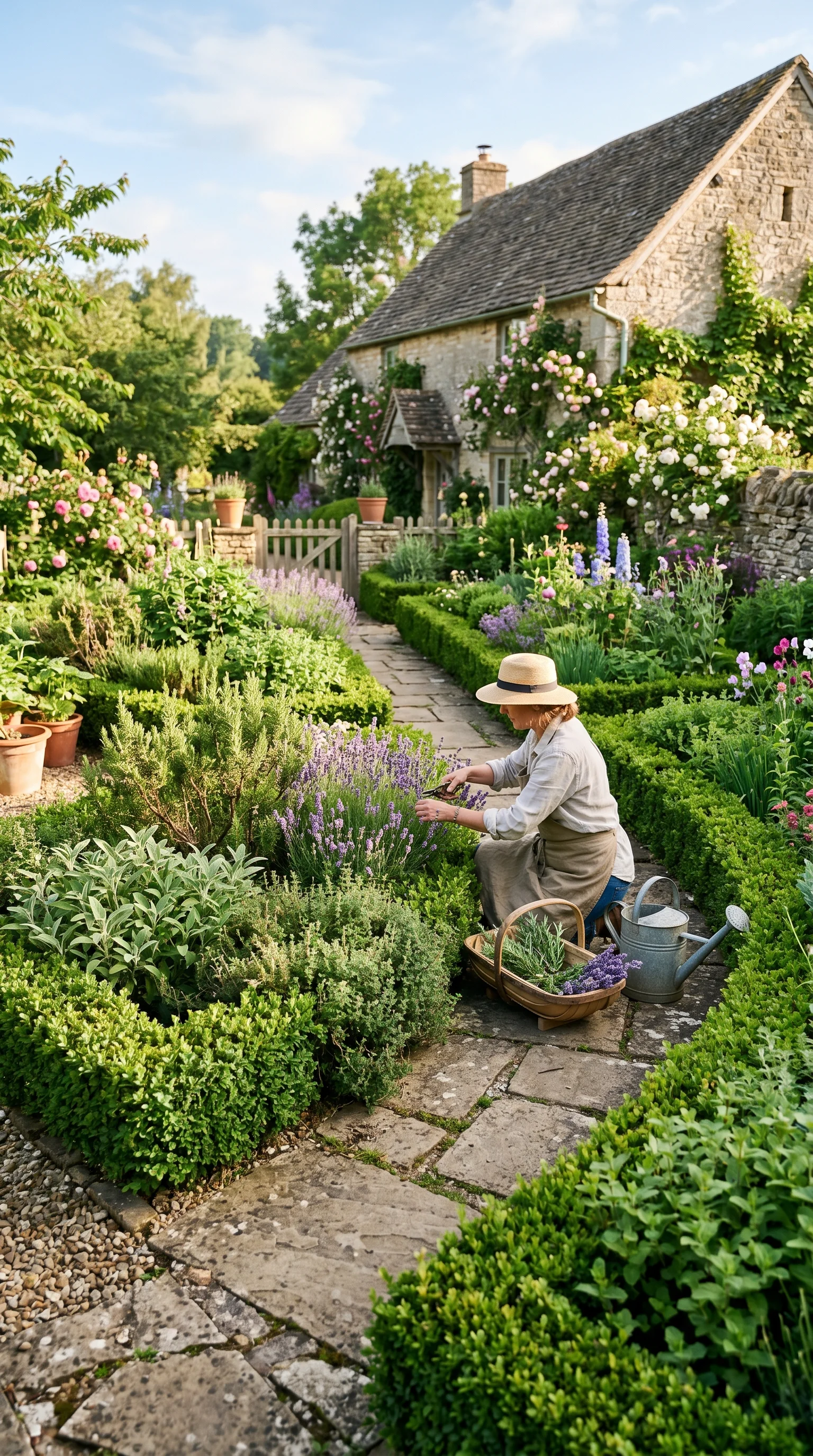
The French potager — kitchen garden — combines formal structure (the boxwood edges, the geometric layout) with informal planting within each section. Herbs spill slightly over the edges, flowers mix with vegetables, and the whole creates an order that reads as civilization imposed on abundance.
6. Hollyhocks Against a Cottage Wall
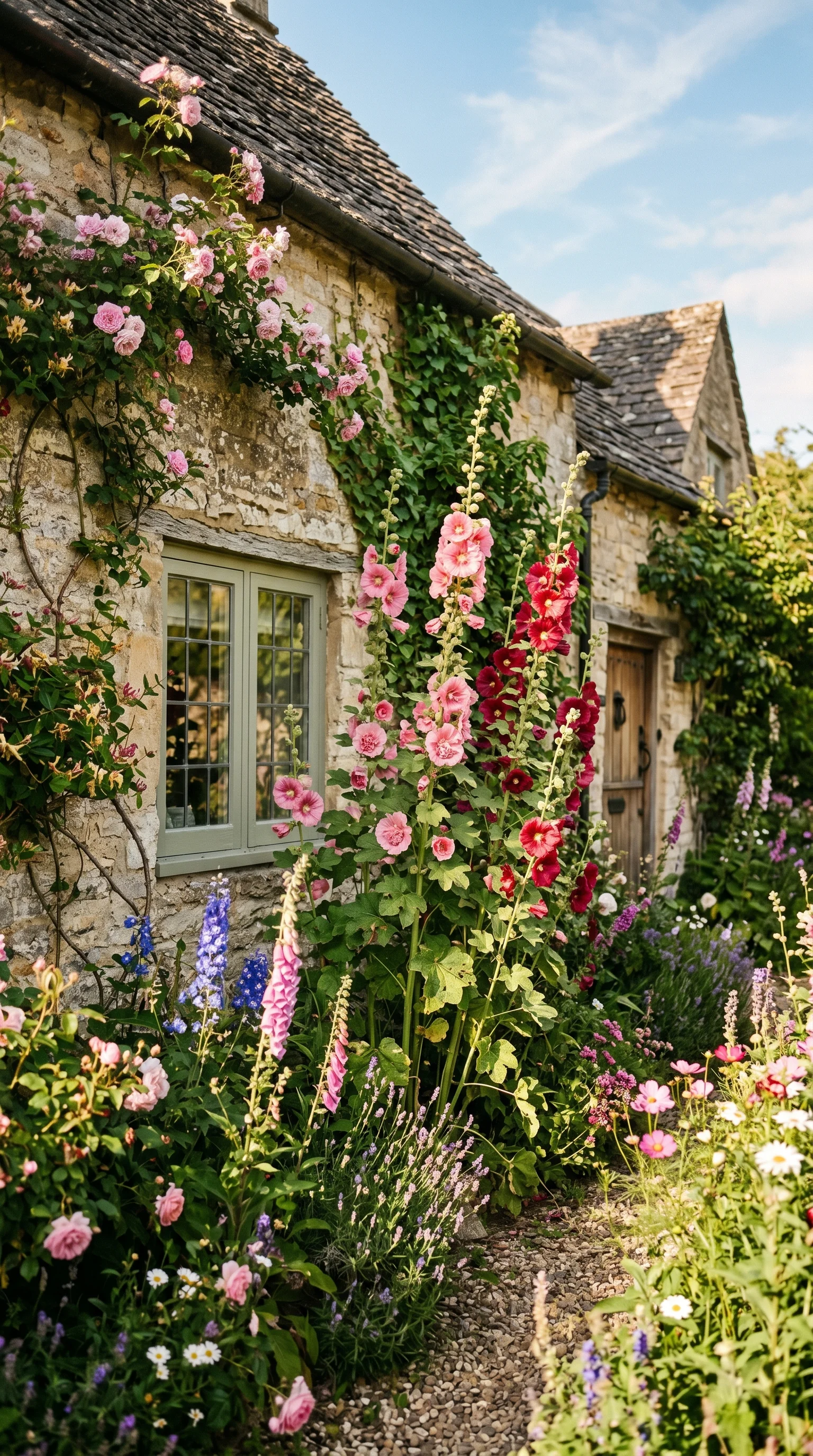
Hollyhocks self-seed prolifically once established, colonizing walls and paths in a way that looks genuinely self-willed. Allow them to seed where they choose along walls and pathways — their placement will always be more interesting than anything you’d plan deliberately.
7. Stone or Gravel Path with Creeping Thyme
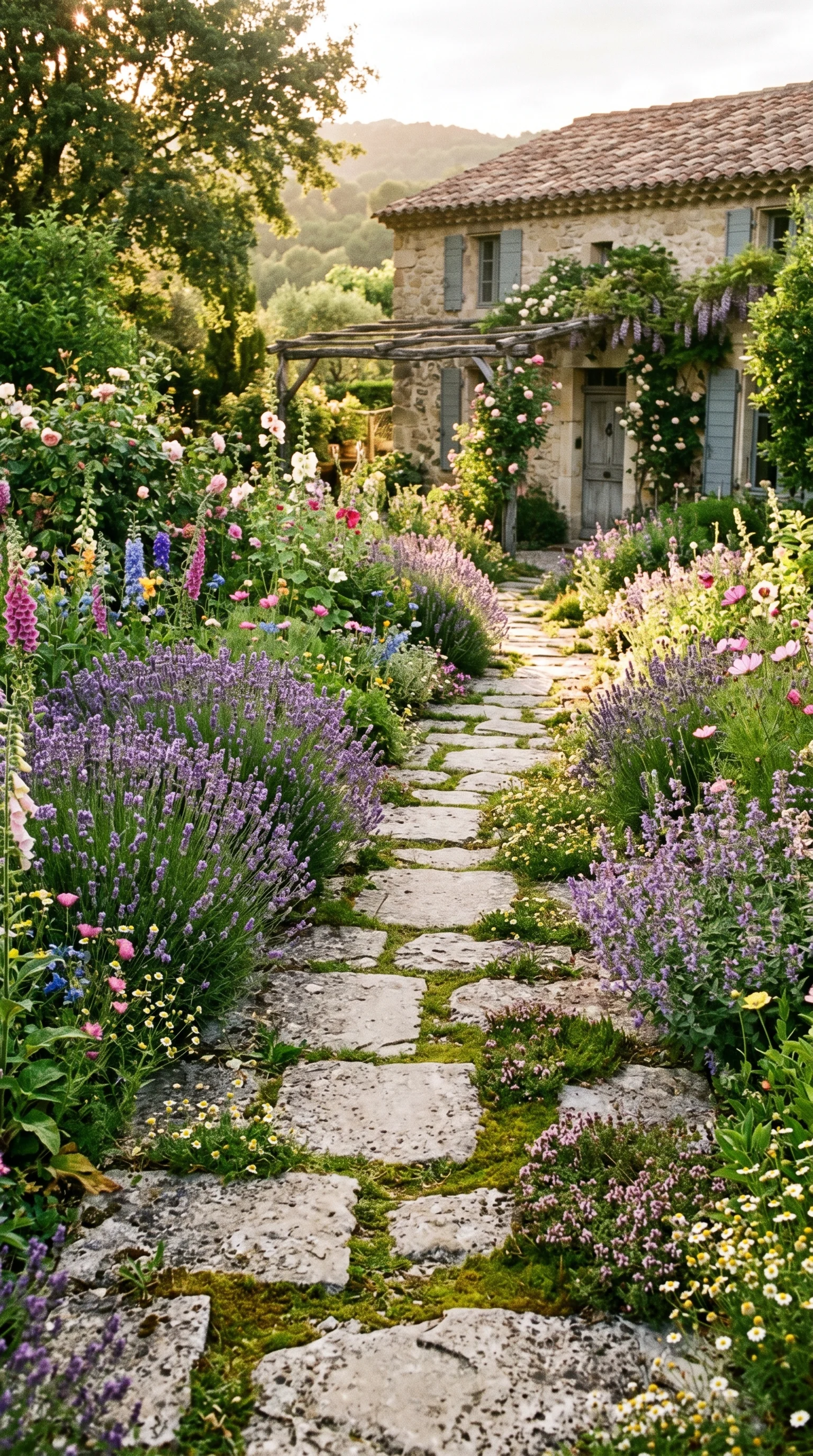
Allow low-growing plants — creeping thyme, chamomile, mind-your-own-business — to colonize the gaps between path stones. The plants soften the hardscape and release fragrance when walked on. This is one of the easiest ways to give a path the lived-in, established quality that French cottage gardens project.
8. Rustic Wooden Garden Gate
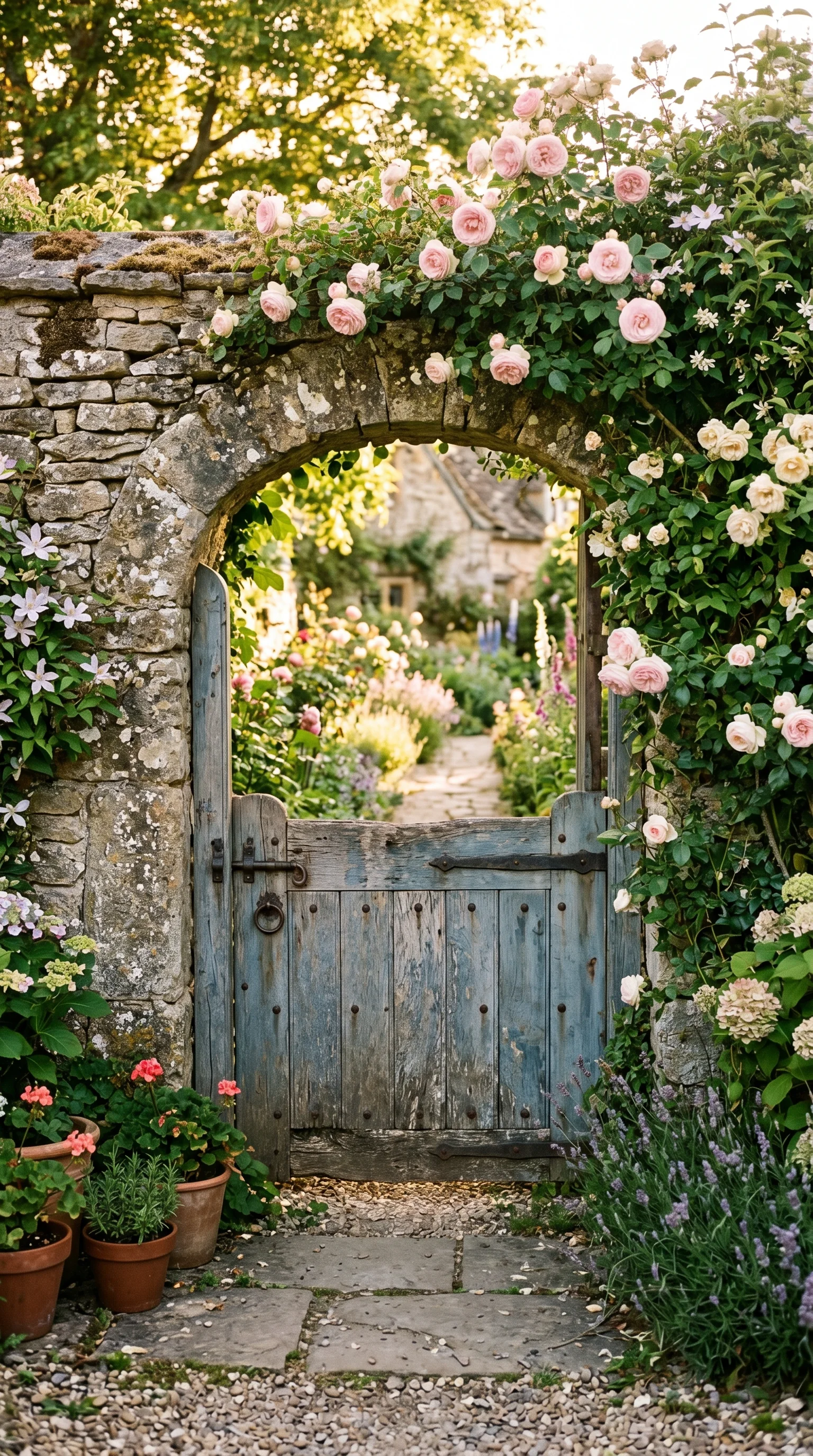
A gate doesn’t just provide access — it creates anticipation. A wooden gate, slightly weathered, framed by climbing roses or wisteria, and offering a glimpse of garden beyond, creates the sense of a garden that has a story and a private character worth discovering.
9. Stone Fountain or Birdbath as Focal Point
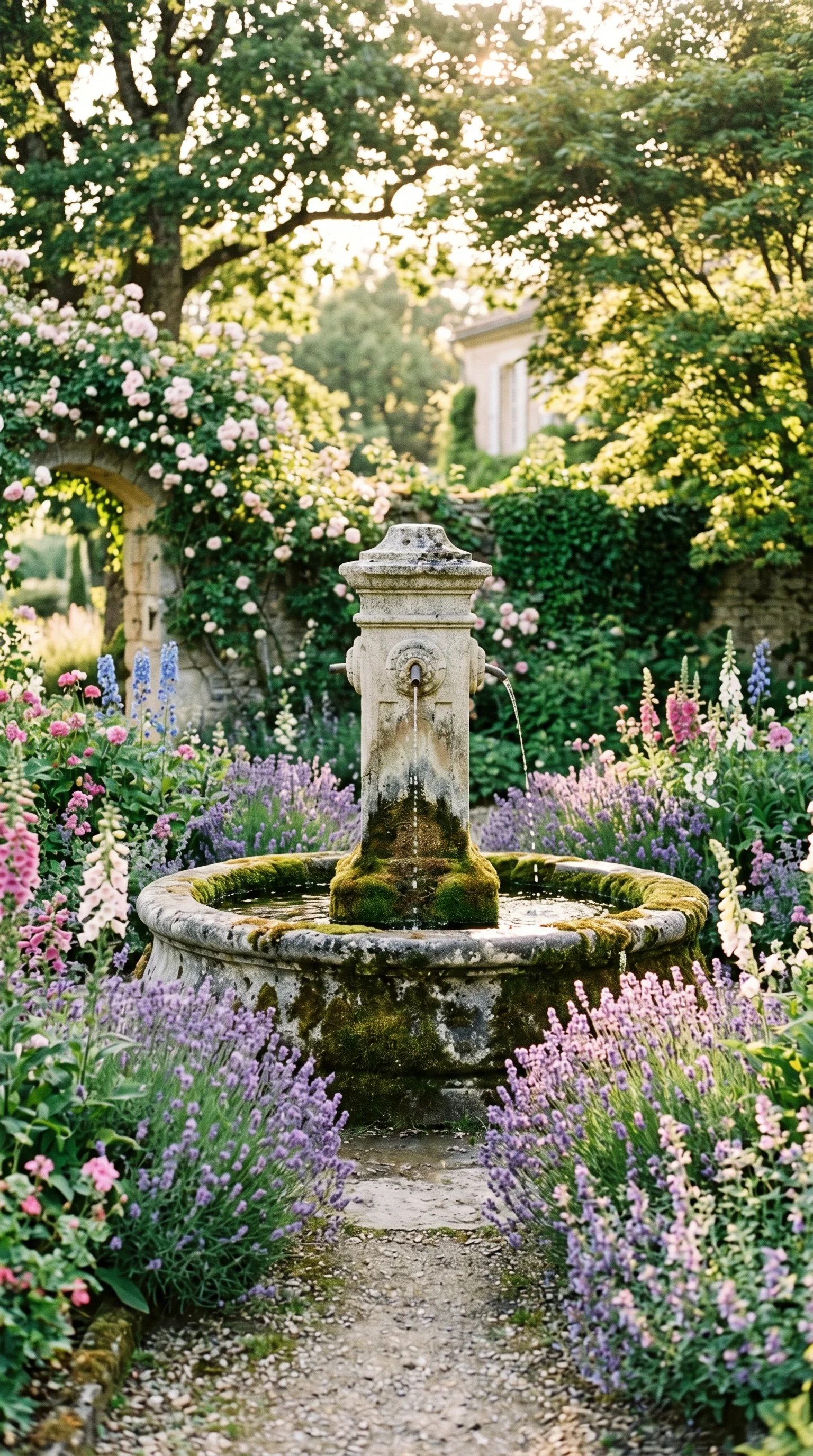
A stone fountain or birdbath positioned at the junction of garden paths creates a focal point that works in every season. The moss that grows on aged stone over time is an aesthetic asset rather than something to clean — it signals permanence and genuine establishment.
10. Wrought Iron Garden Furniture
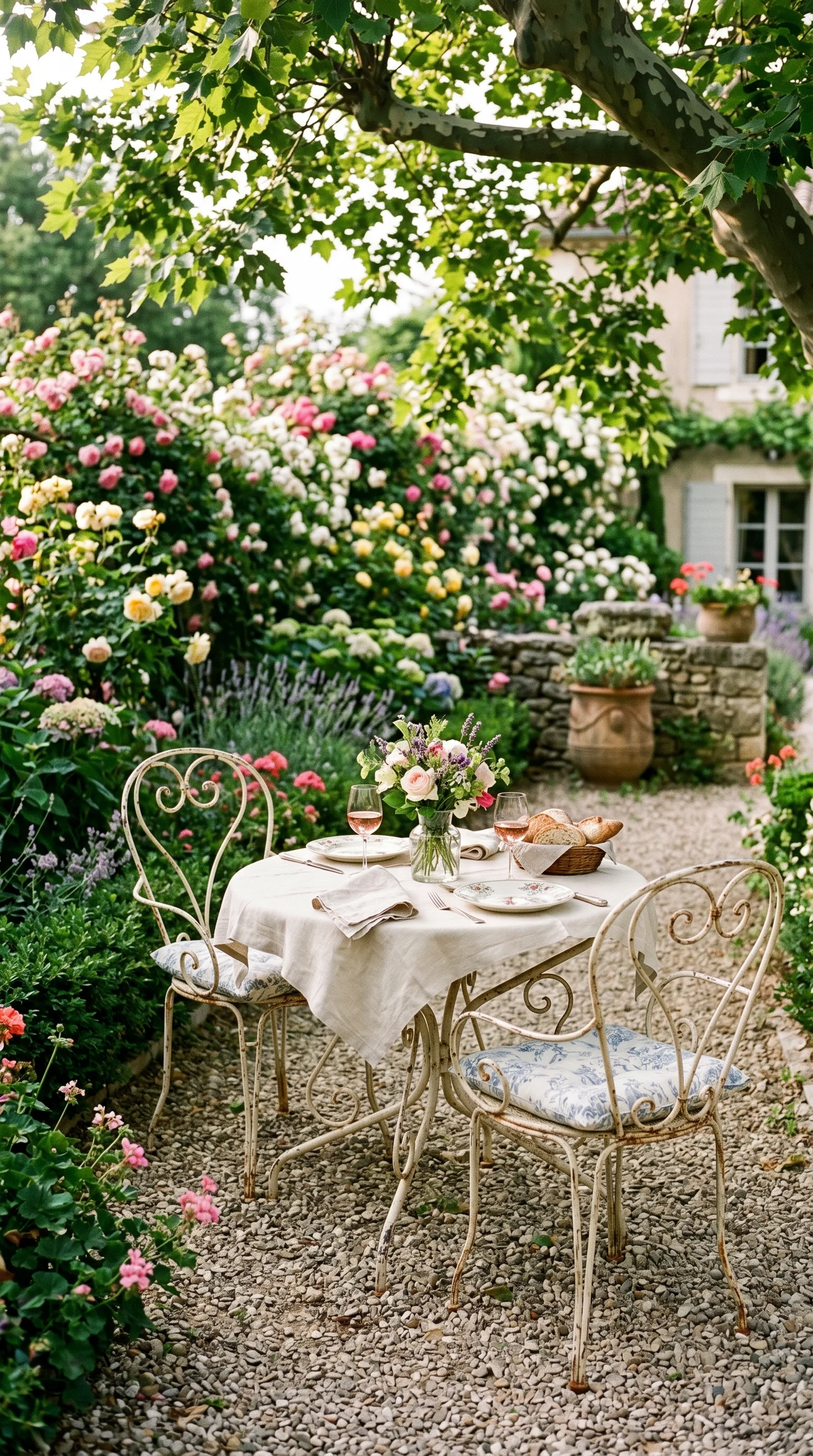
Wrought iron garden furniture — a table and two chairs, or a small bench — suits the French cottage aesthetic far better than contemporary aluminum or synthetic weave. The furniture should look as if it has been in this garden for decades, positioned for a specific view or pleasure rather than convenience.
11. Soft Pink, Lavender, and White Palette
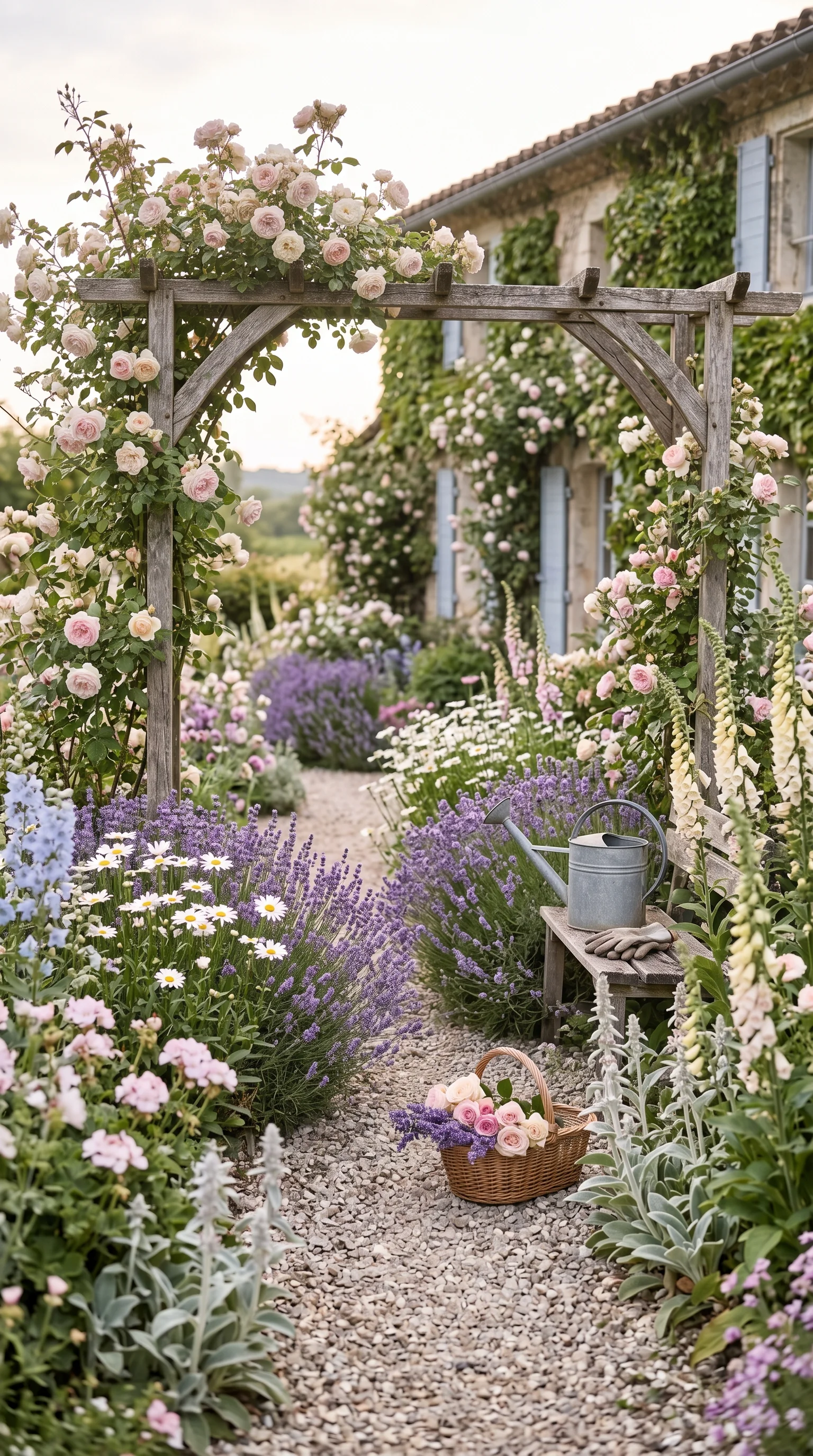
The French cottage palette is soft: dusty pink, lavender, cream, sage green, and the silver of lavender foliage. Avoid saturated primary colors — the effect relies on the faded, sun-washed quality of tones that have been gentled by time and climate.
12. Terra Cotta Pots Clustered by a Door
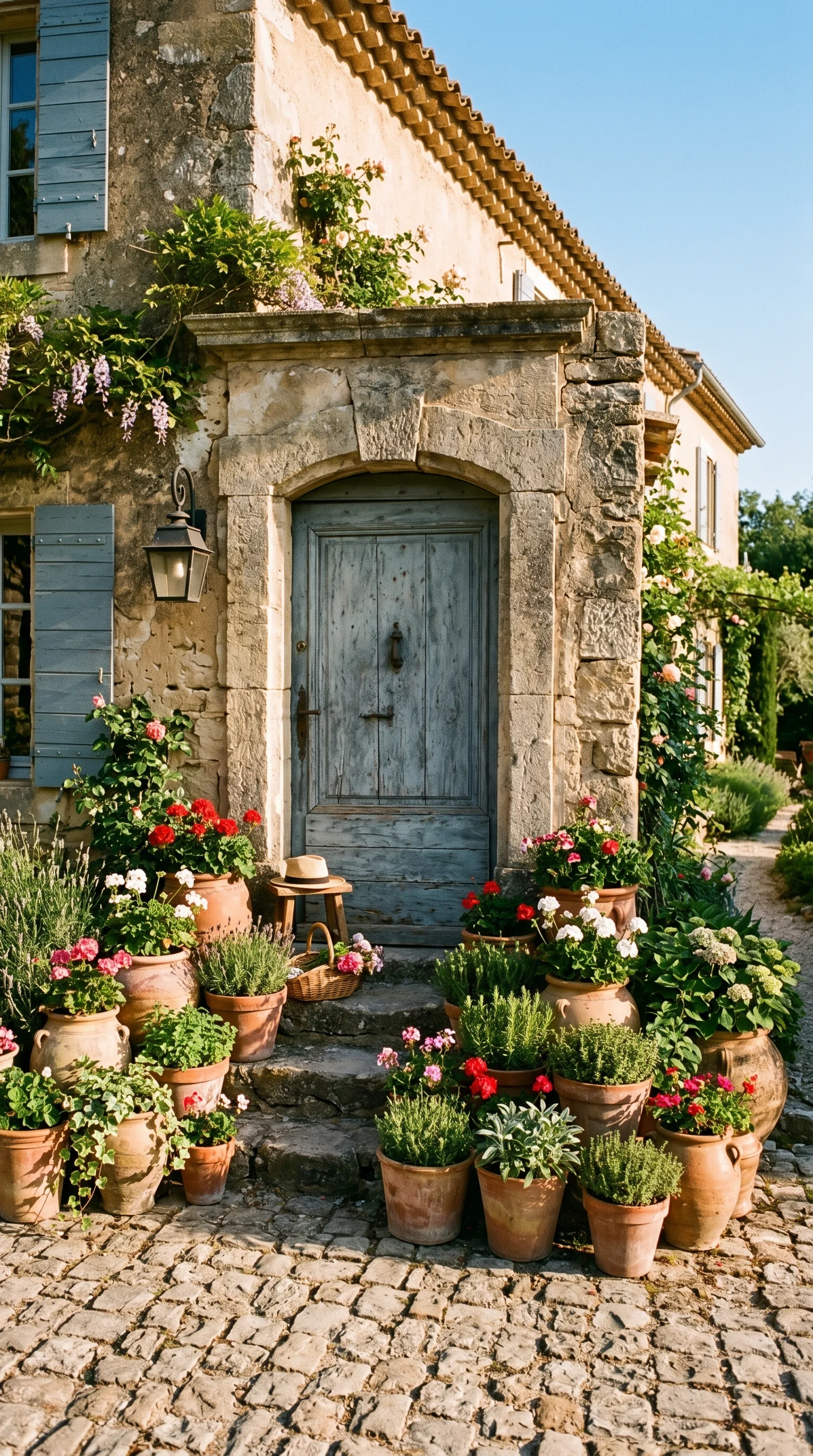
A cluster of terracotta pots at a door — different sizes, different heights, different plants — creates the impression that someone who genuinely loves plants lives here and has been collecting pots for years. The collection should look accumulated rather than coordinated.
13. Vintage Garden Tools as Decoration
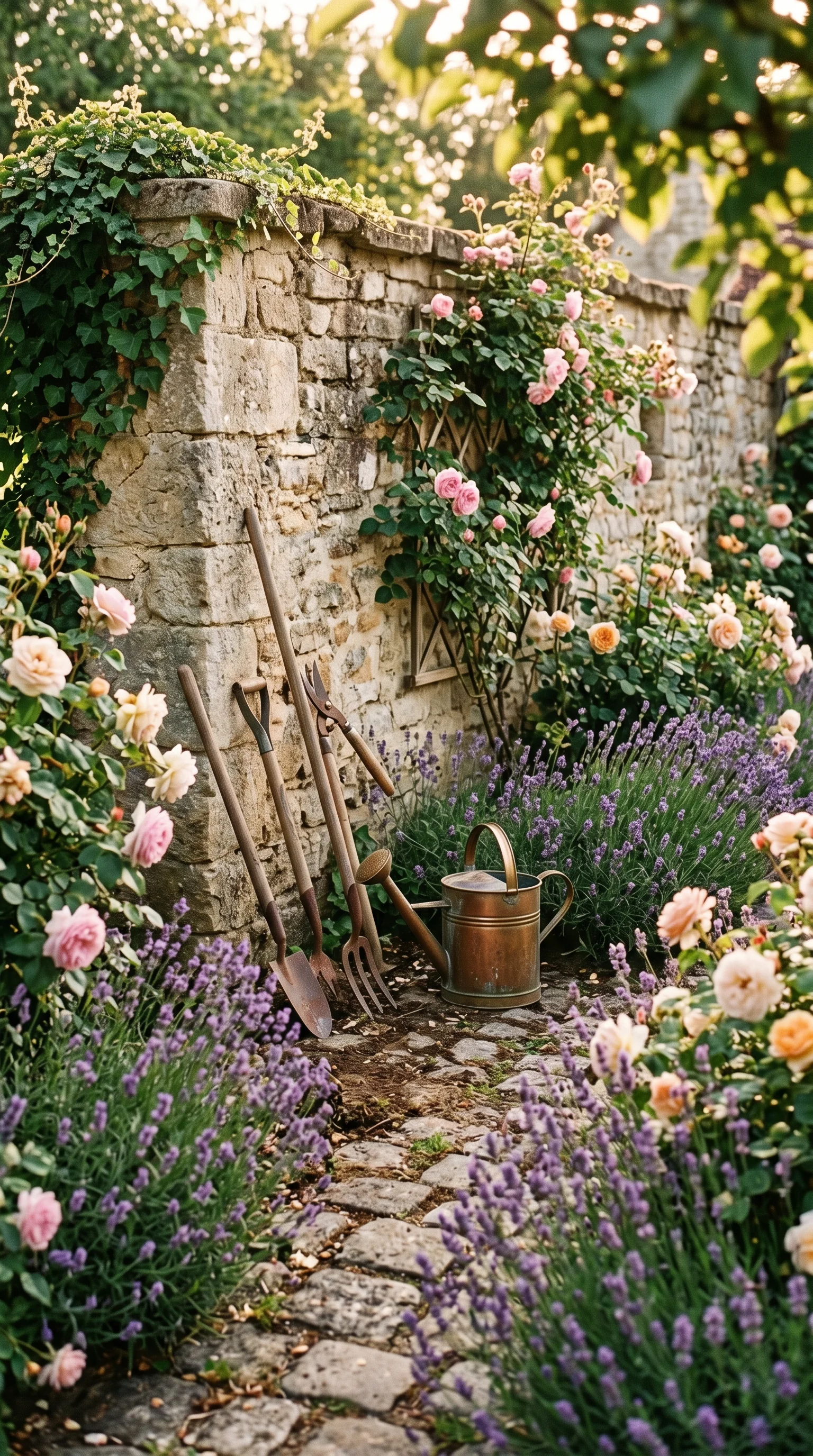
Vintage tools left leaning against a wall or hanging from hooks — an old wooden-handled fork, a zinc watering can, a trug basket — communicate that this is a working garden cared for by someone rather than a stage set. The worn quality of old tools is an aesthetic asset in this context.
14. Informal Meadow Area with Wildflowers
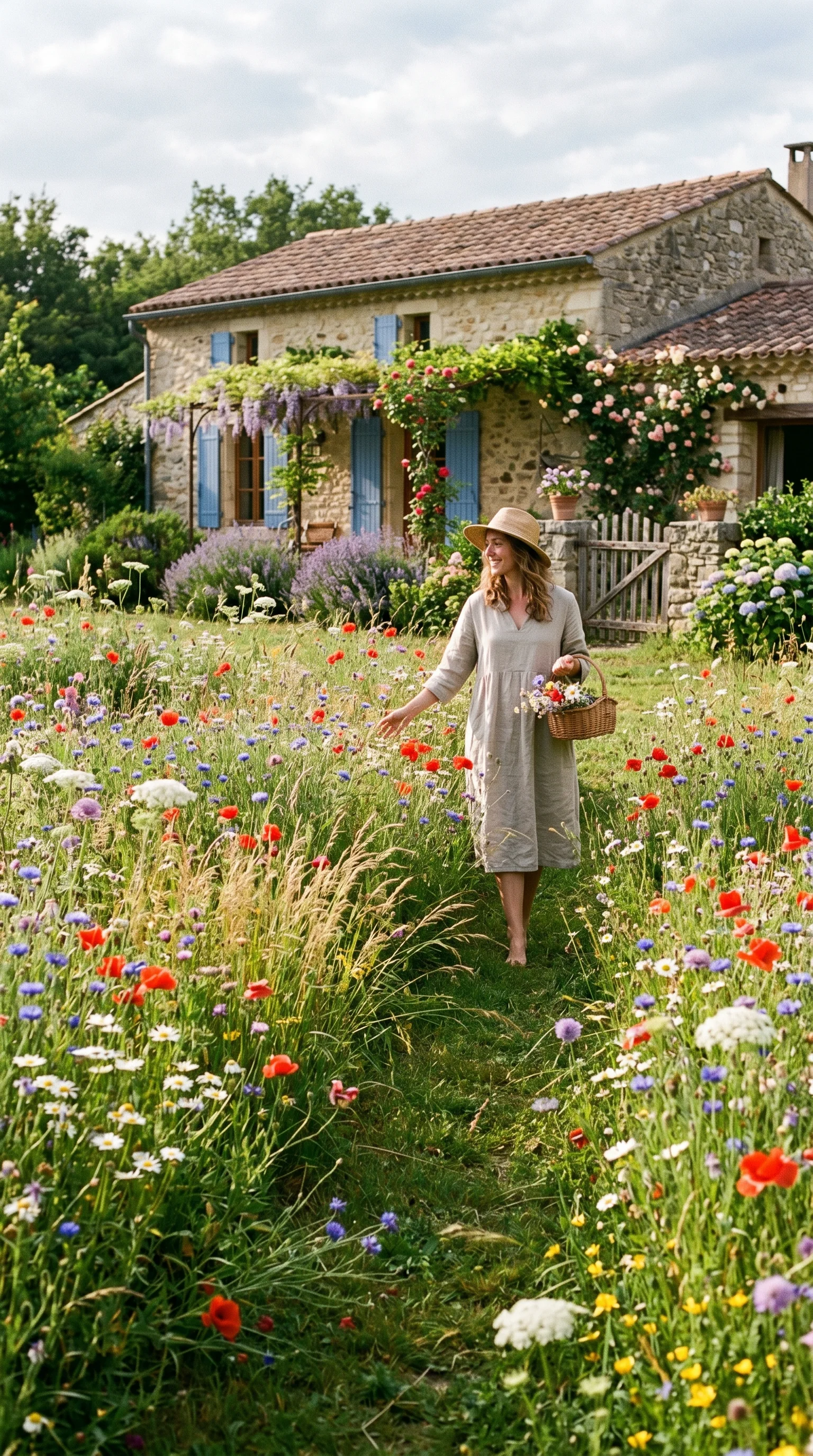
Allow one area of the garden to grow as a wildflower meadow — poppies, cornflowers, ox-eye daisies, field scabious. This requires less maintenance than a conventional border and produces the most authentic French countryside quality of any planting approach.
15. String Lights in a Garden Tree
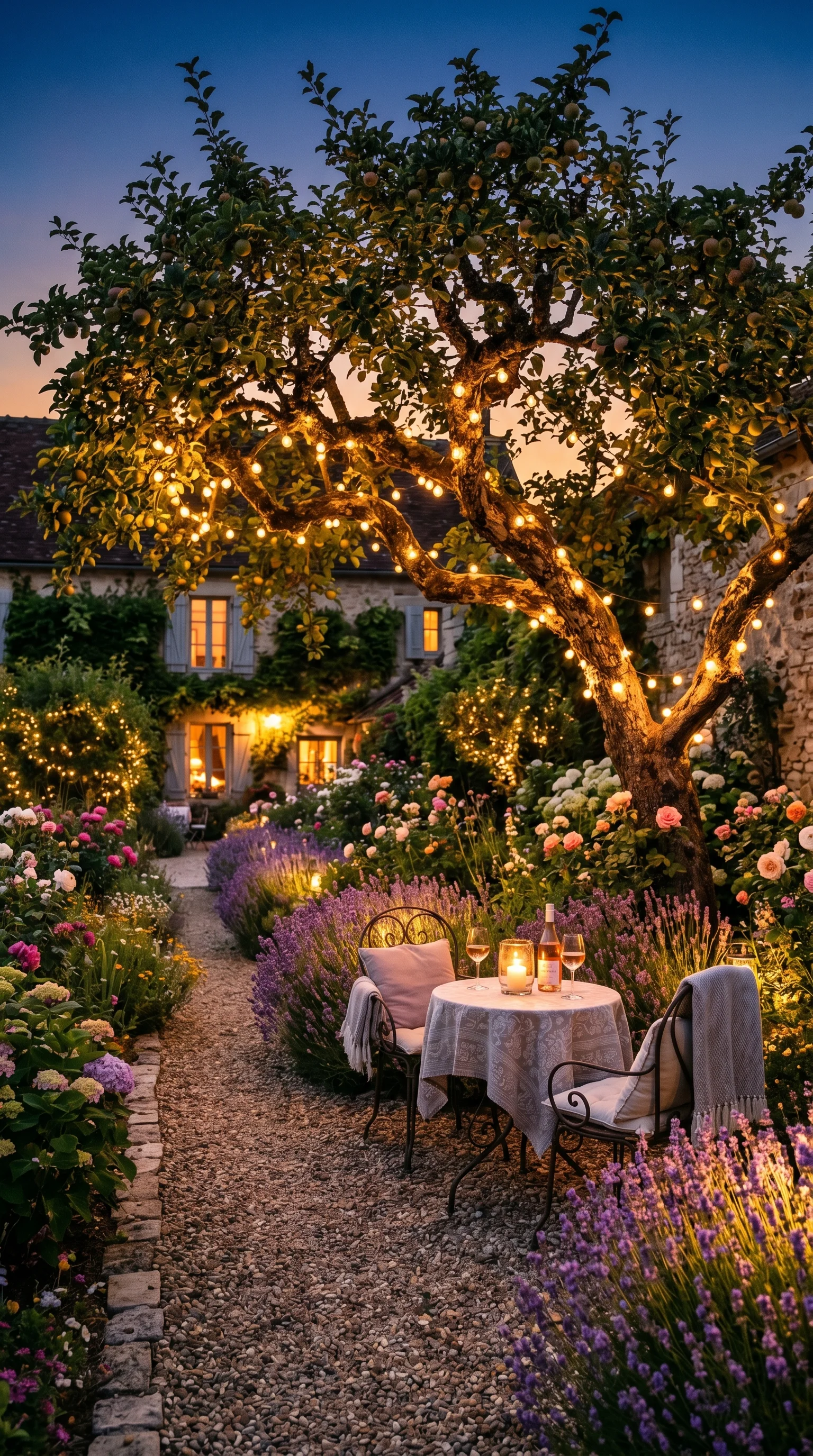
String lights wound through the branches of a garden tree create the quintessential French garden evening atmosphere. The warm amber light filtering through leaves and landing on the garden below has a quality of enchantment that no installed garden lighting can fully replicate.
16. Espaliered Fruit Trees on Walls
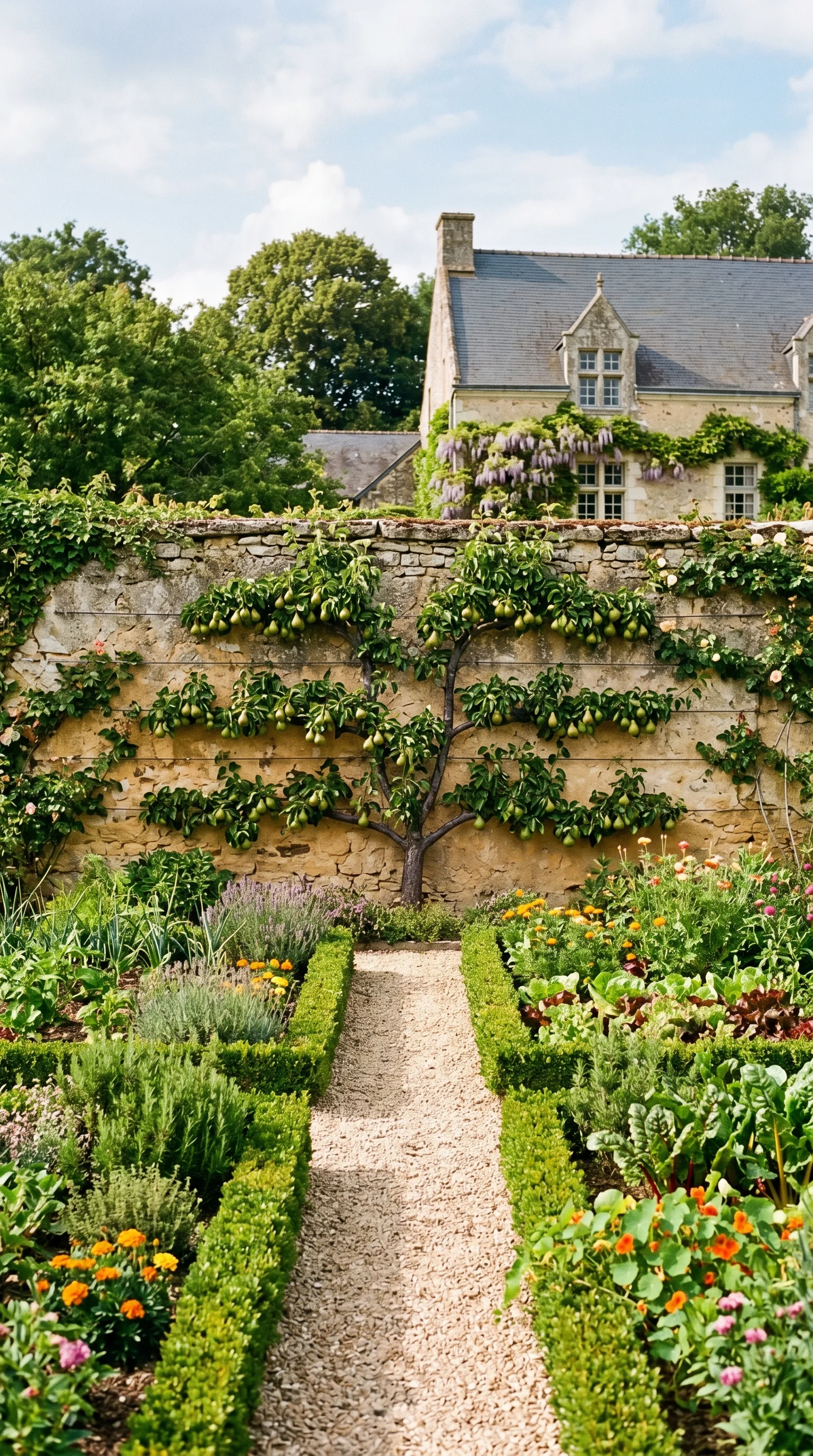
Espalier — training fruit trees flat against a wall — is a classic French horticultural technique that solves the practical problem of growing fruit in small spaces while producing one of the most beautiful garden features available. A south-facing stone wall with espaliered pears or apples is genuinely extraordinary.
The Essential Principle
French cottage gardens look effortless because they work with the natural growth habits of plants rather than against them. Allow self-seeding. Allow roses to send out long arching canes. Allow thyme to spread across path edges. Allow the stone to moss over. The garden’s job is to be generous and alive, not tidy and controlled. Your job is to choose the right plants for the conditions, establish them well, and then stand back.


