
21+ Moody Dark Academia Bedroom Decor Ideas that are Cozy and Gorgeous in 2026

I’ll be straight with you – dark academia is the easiest aesthetic in the world to get wrong, and I’ve stood in enough sad, brown, under-lit bedrooms to prove it. The look lives or dies on light, not paint, and once I started treating every dark room as a lighting project first and a color project second, my clients stopped calling their bedrooms “the cave.” So here’s everything I’ve learned about oxblood walls, thrifted mahogany, brass picture lights, and how to pull all of it off even if your lease says you can’t touch the paint.
Dark Academia Bedroom Decor Ideas
1. Color-Drench the Whole Room in Oxblood
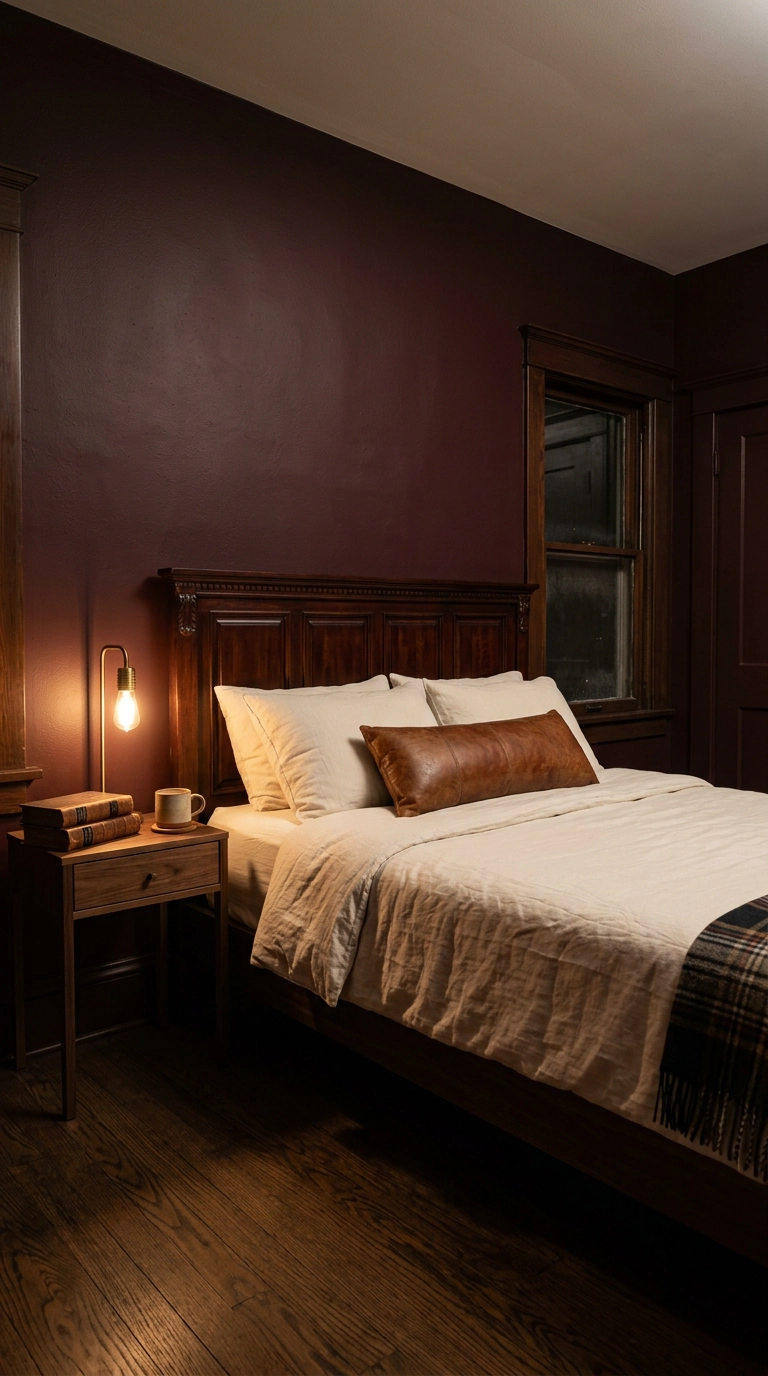
Color drenching just means walls, trim, and door all in one shade, and it’s the single fastest way to make dark academia read intentional instead of accidental. When the trim stays white, your eye keeps catching the break and the room looks like a half-finished project. Oxblood is my favorite entry point because it’s warm-based, so it flatters skin and lamplight in a way charcoal never does – Farrow & Ball Preference Red and Benjamin Moore Pottery Red are both worth sampling.
2. Kill the Overhead Light and Build Three Pools of Lamplight Instead
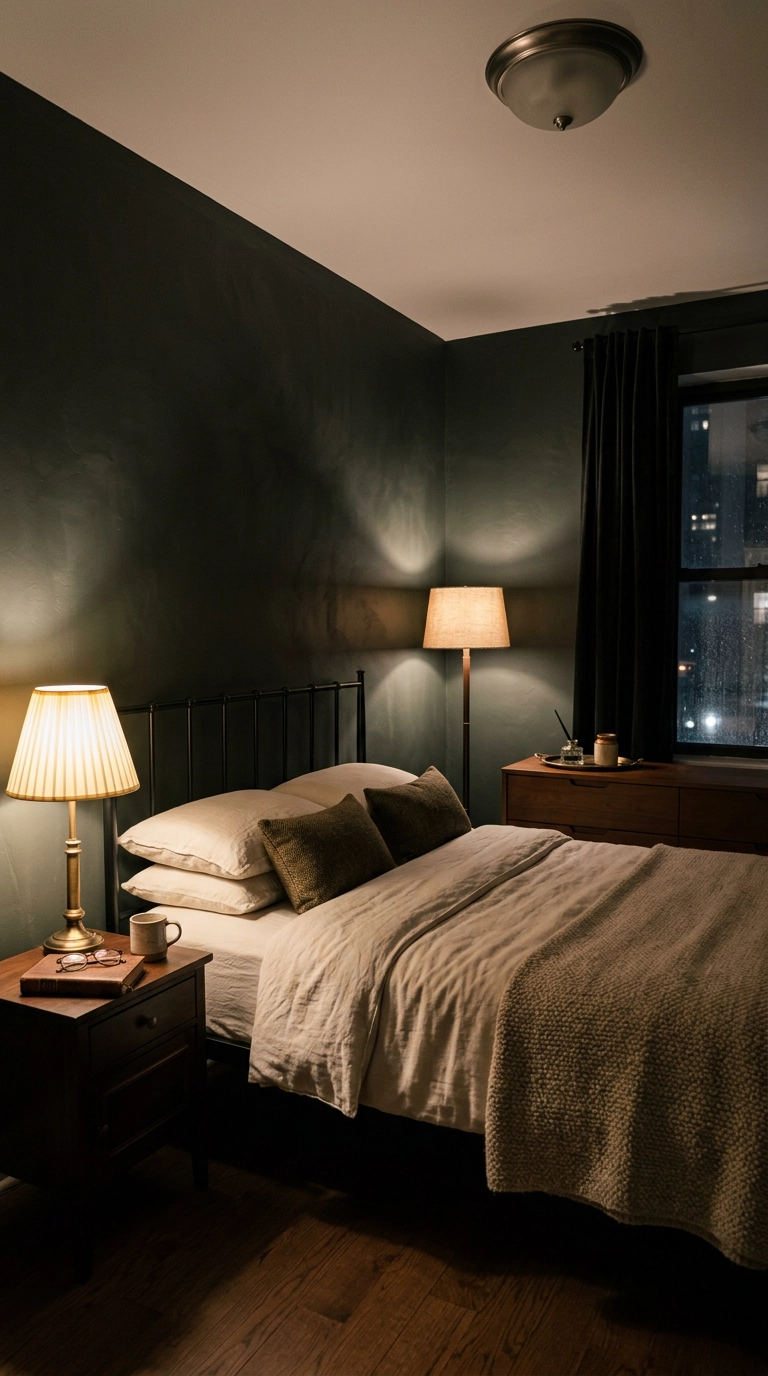
Here’s the number I give every client: a dark bedroom needs at least three separate light sources at three different heights, and none of them should be the ceiling fixture. Overhead light flattens saturated paint into something that looks like wet cardboard, while low lamplight makes the same color glow. Aim for two bedside lamps around 24 to 28 inches tall plus one floor lamp in a far corner, all on warm bulbs at 2700K or lower.
3. Hang a Brass Picture Light Over the Bed Instead of Art Alone
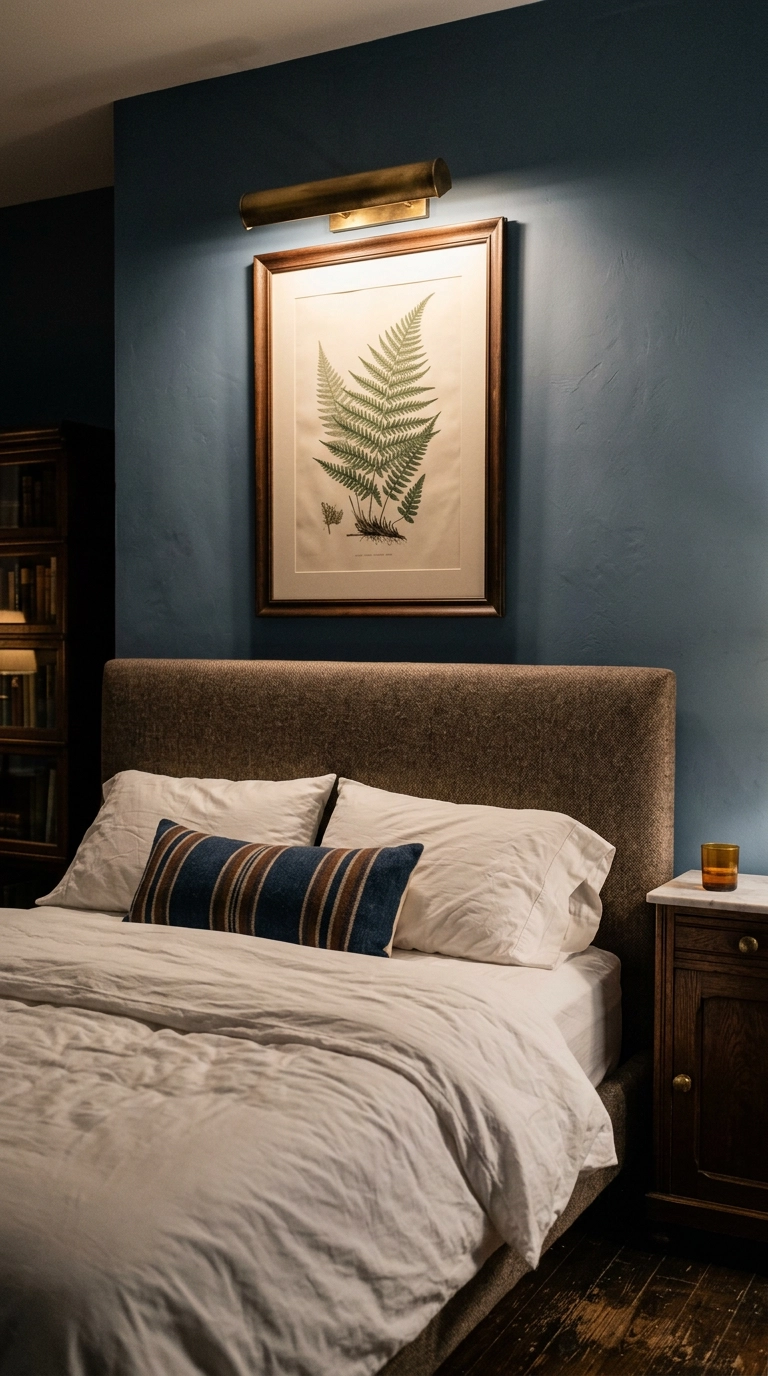
A picture light is the most dark-academia object you can buy, and it solves a real problem: it lights the wall, not your face, which is exactly what a moody bedroom needs. Hardwired versions start around $100 and up, but battery-operated brass picture lights with a remote run $30 to $60 and stick on with adhesive strips, so renters are covered.
4. Thrift a Brown Wood Dresser Right Now, While Nobody Wants Them
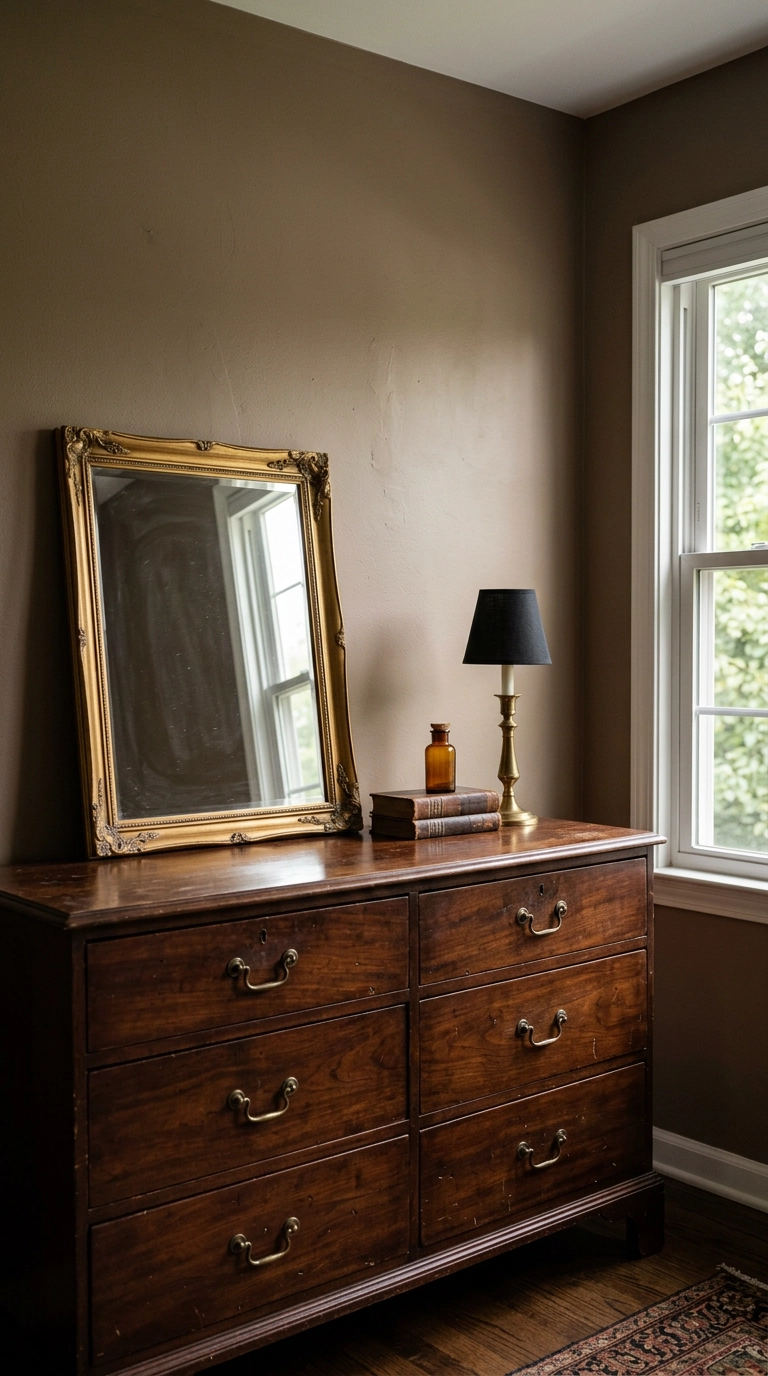
Brown furniture is genuinely the best value in the resale market right now. Solid mahogany and walnut dressers that would cost $1,500 new are sitting on Facebook Marketplace and in estate sales for $80 to $250 because a decade of gray-and-white interiors trained everyone to skip them.
5. Get the Mood With Zero Paint Using Heavy Wool Curtains
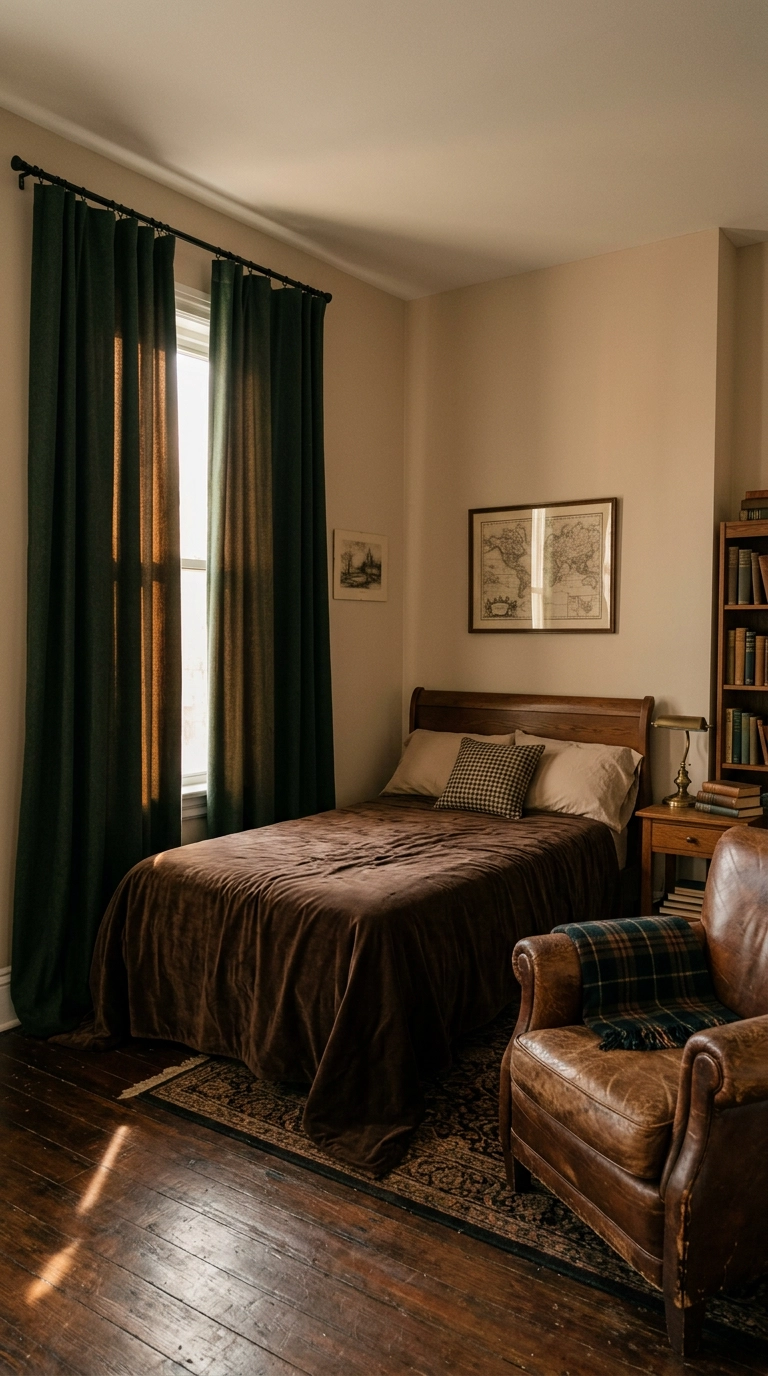
If you can’t paint, drape. Floor-length wool or velvet curtains in forest green, aubergine, or deep brown cover more square footage than any accent wall and they absorb light the same way saturated paint does, which is the actual mechanism behind the mood.
6. Build a Real Bookshelf Wall, Not a Styled One
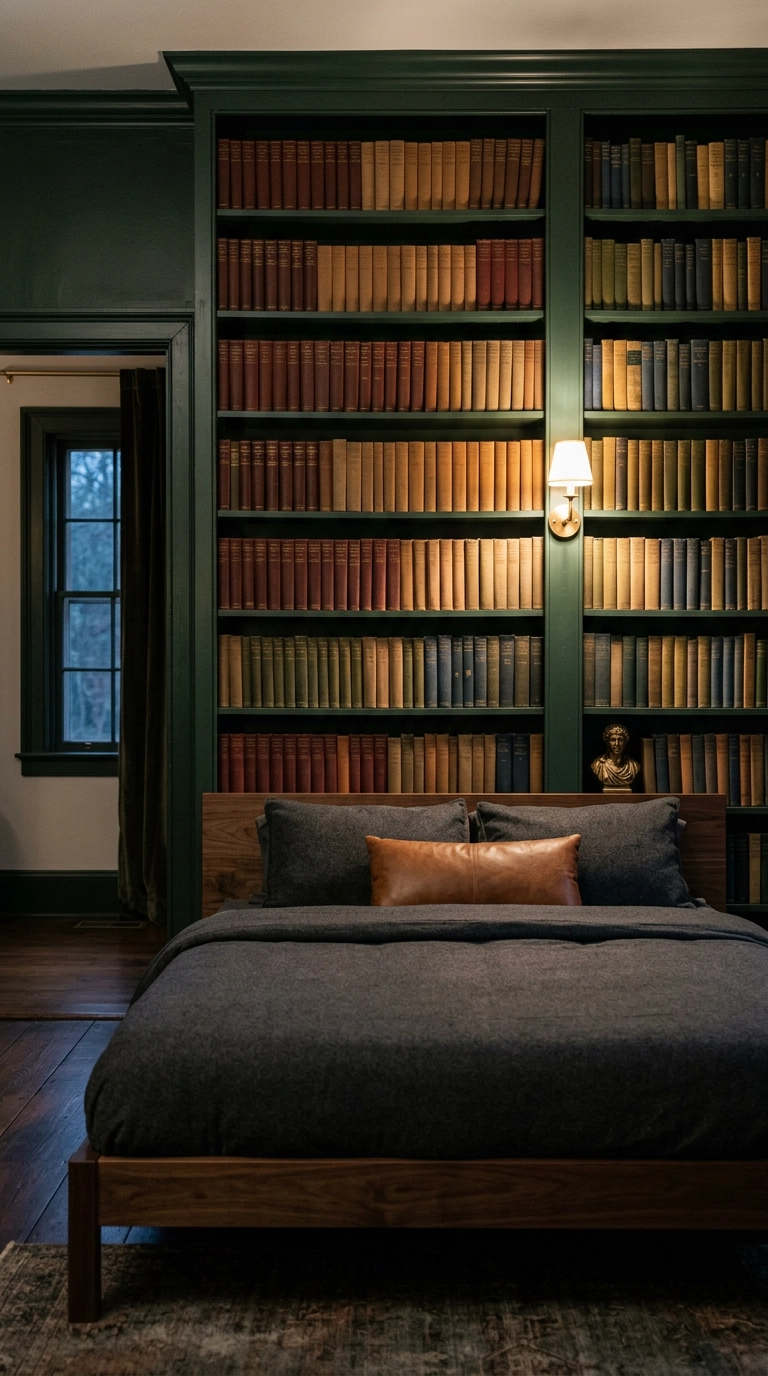
Dark academia without real books is just a brown room. The trick is volume – a few artfully spaced novels look like a set dressing, while 200 densely packed spines look like a life. Thrift stores and library sales sell hardcovers for a dollar or two, and church sales often do bag pricing.
7. Choose Deep Green if Your Bedroom Faces North
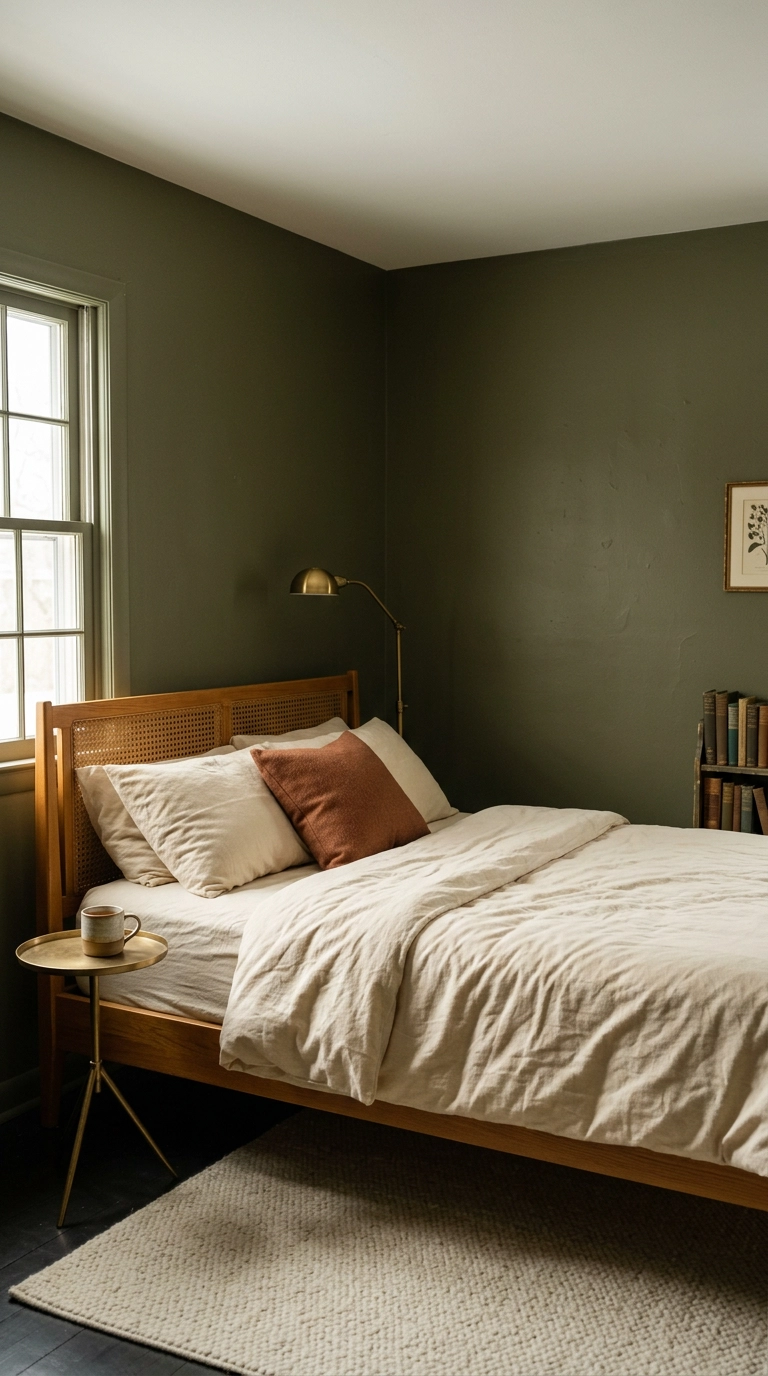
North-facing rooms get flat, blue-toned light all day, and that cold cast turns most dark paints muddy. Warm-based deep greens like Farrow & Ball Studio Green or Sherwin-Williams Rosemary hold their character in that light because the yellow in the pigment fights the blue in the daylight.
8. Frame Antique Maps as an Odd-Numbered Grid
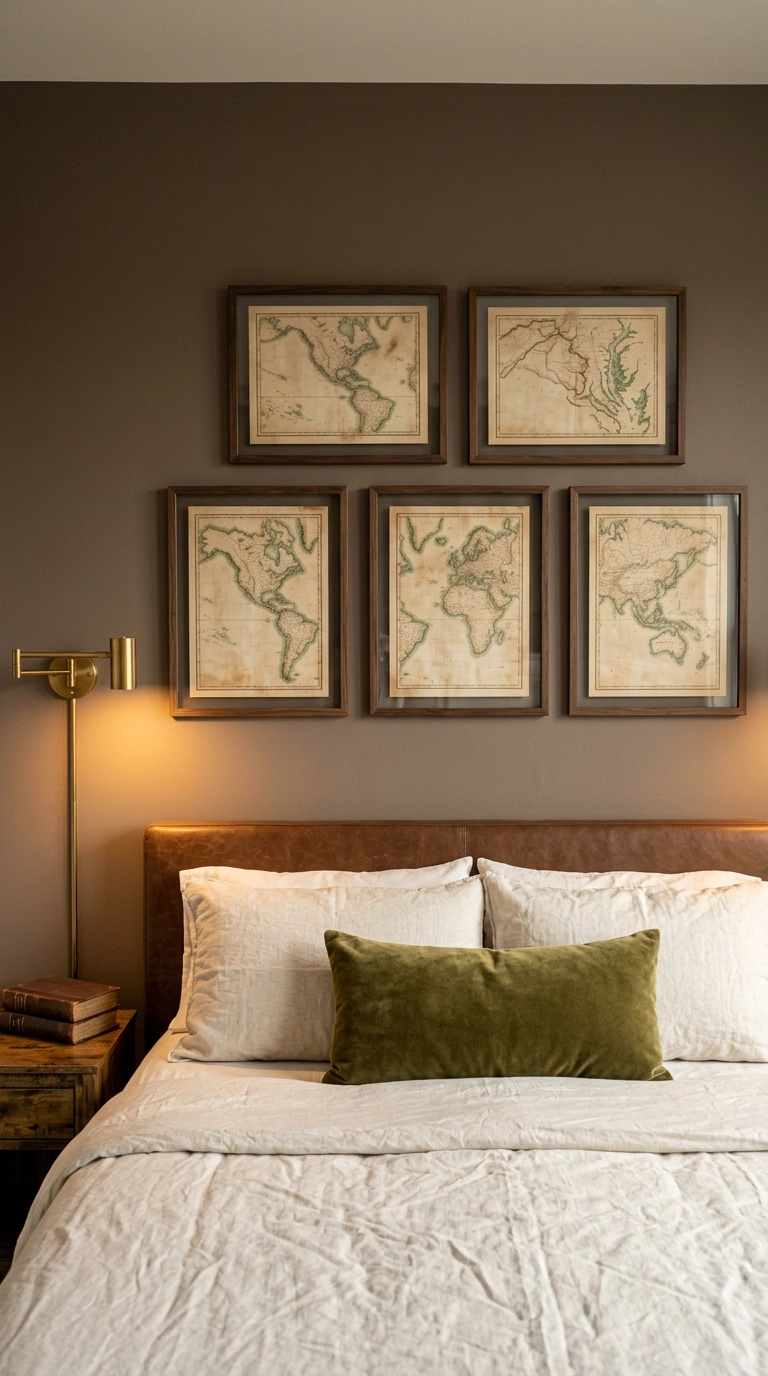
Antique maps are the cheapest way into this look. Old atlases from the thrift store run a few dollars, the pages pull out cleanly, and standard 11×14 frames make them look like something from a rare books room.
9. Add One Aged Leather Chair for the Reading Corner
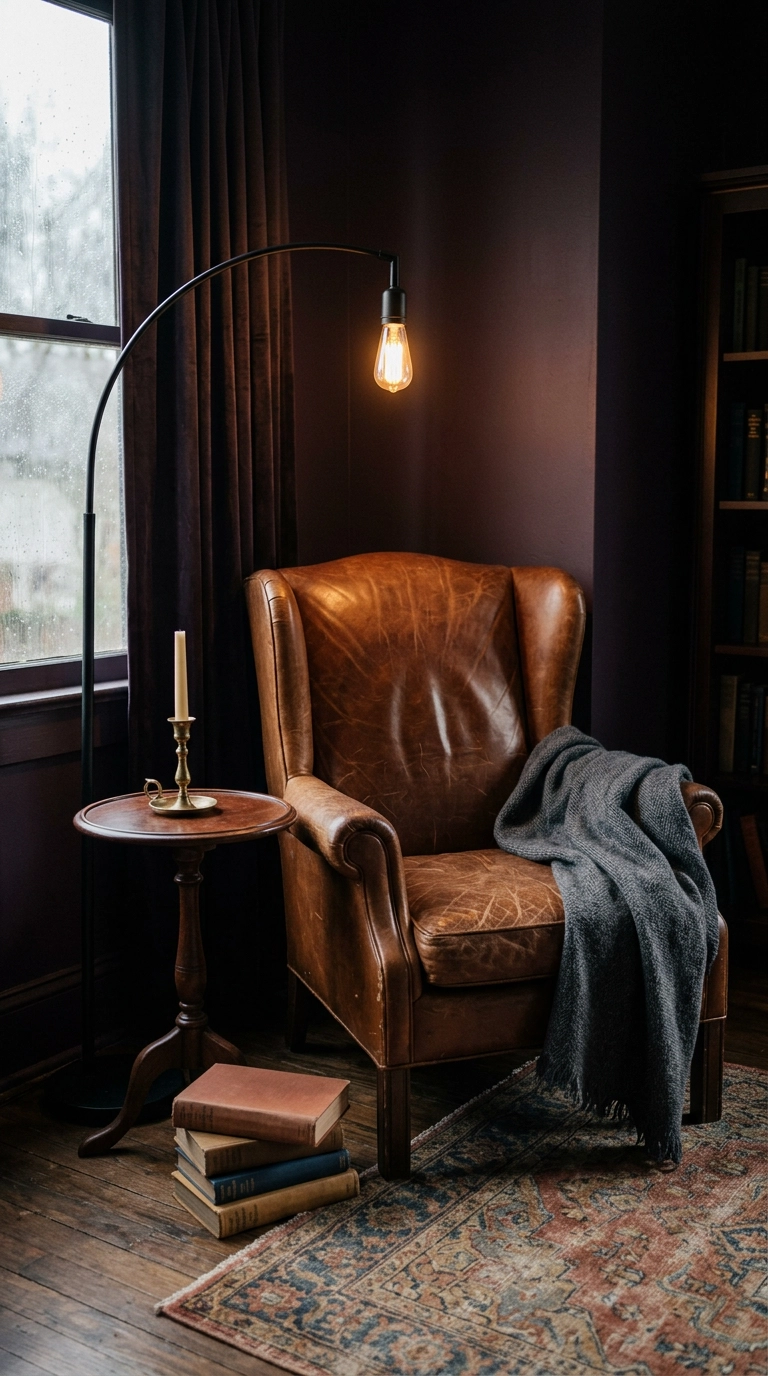
A reading chair makes a bedroom feel like a study, which is the entire point of this aesthetic. Real vintage leather – cracked, creased, patinaed – is what sells it, and secondhand wingbacks and club chairs routinely land in the $150 to $400 range while new full-grain versions start well north of $1,200.
10. Try Peel-and-Stick Wainscoting Panels for Renter Molding
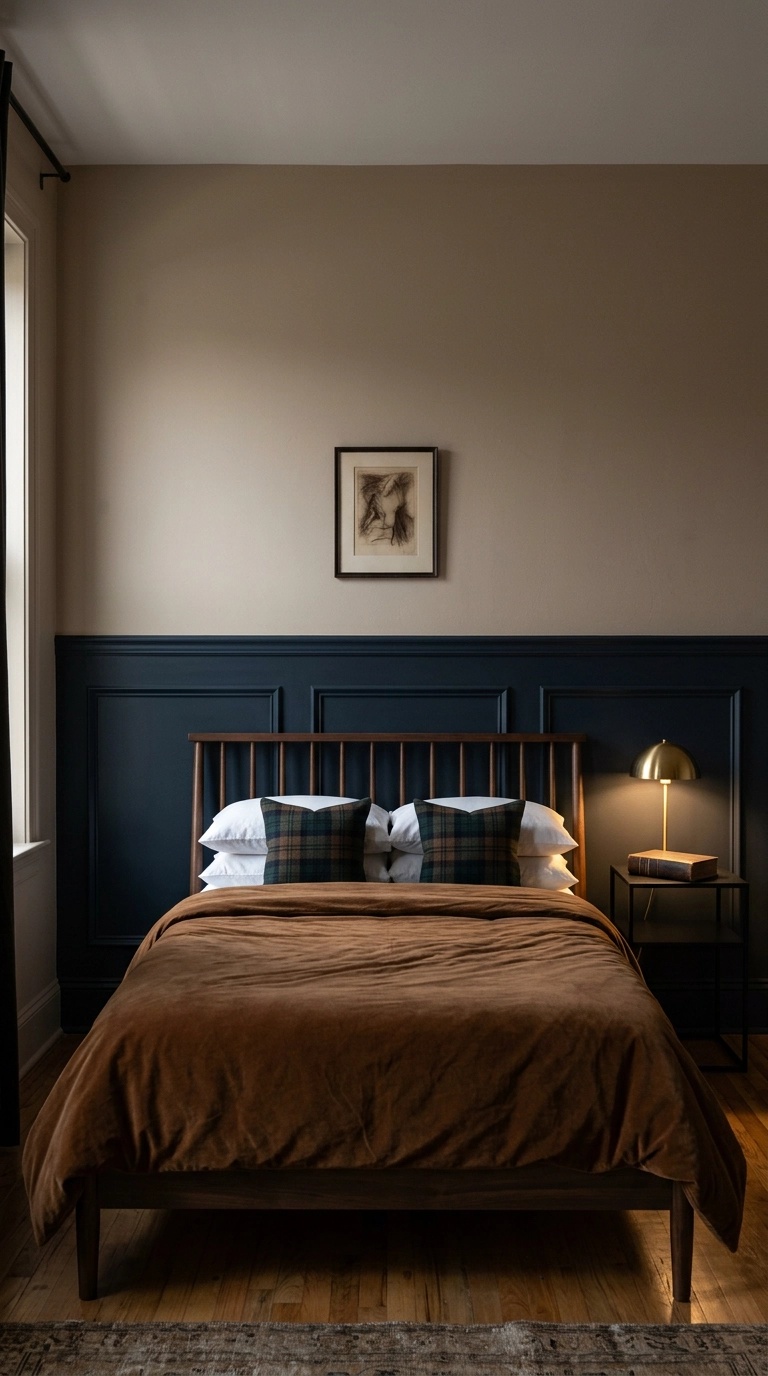
Architectural molding is what gives dark academia its old-building bones, and you don’t need a miter saw. Lightweight polystyrene or foam molding kits attach with removable adhesive and come off with a heat gun, and pre-cut peel-and-stick panel kits run roughly $100 to $200 for one wall.
11. Layer Tweed, Wool, and Flannel Instead of Buying More Color
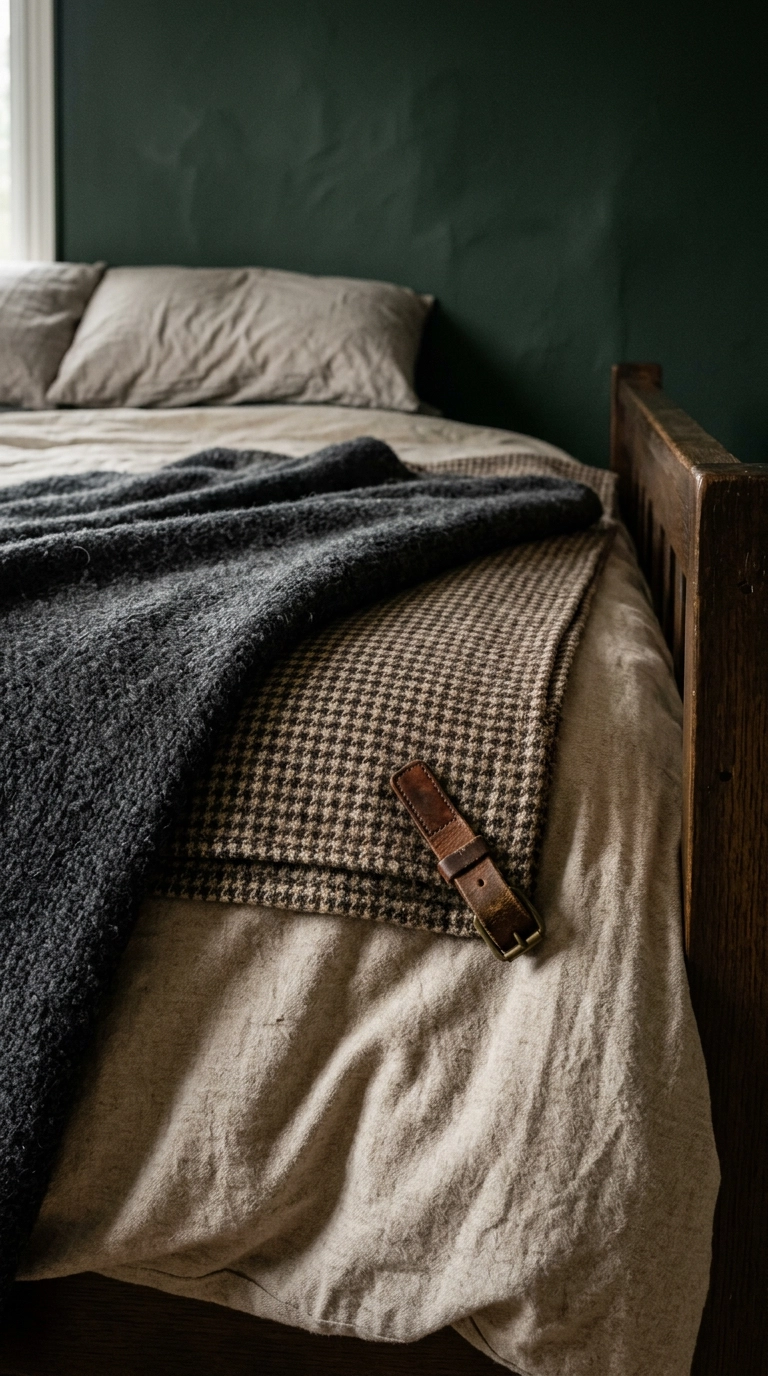
Dark rooms live on texture because color stops doing the heavy lifting once everything is deep-toned. Wool, tweed, flannel, and corduroy all read differently under lamplight even in the same brown family, and that variation is what keeps the bed from looking like a flat rectangle.
12. Use One Faded Persian Rug to Warm the Floor
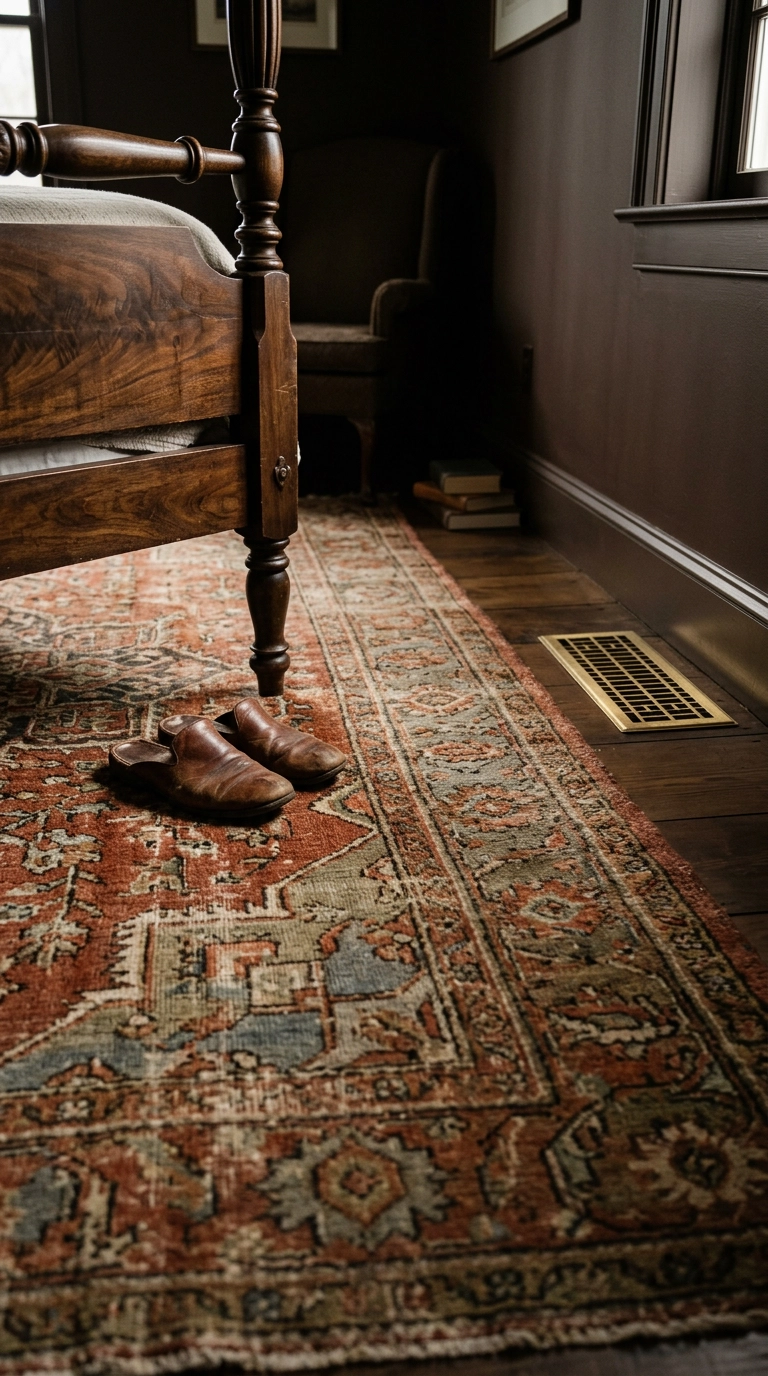
A worn Persian or Heriz-style rug is the one place I’ll allow pattern in a dark academia bedroom, because the muted, sun-faded palette already sits in the same family as everything else. Machine-woven versions with a low pile run $150 to $400 for a 8×10, and genuinely old handmade ones show up at estate sales for less than you’d expect.
13. Paint Only the Headboard Wall if Your Room Is Small or Bright
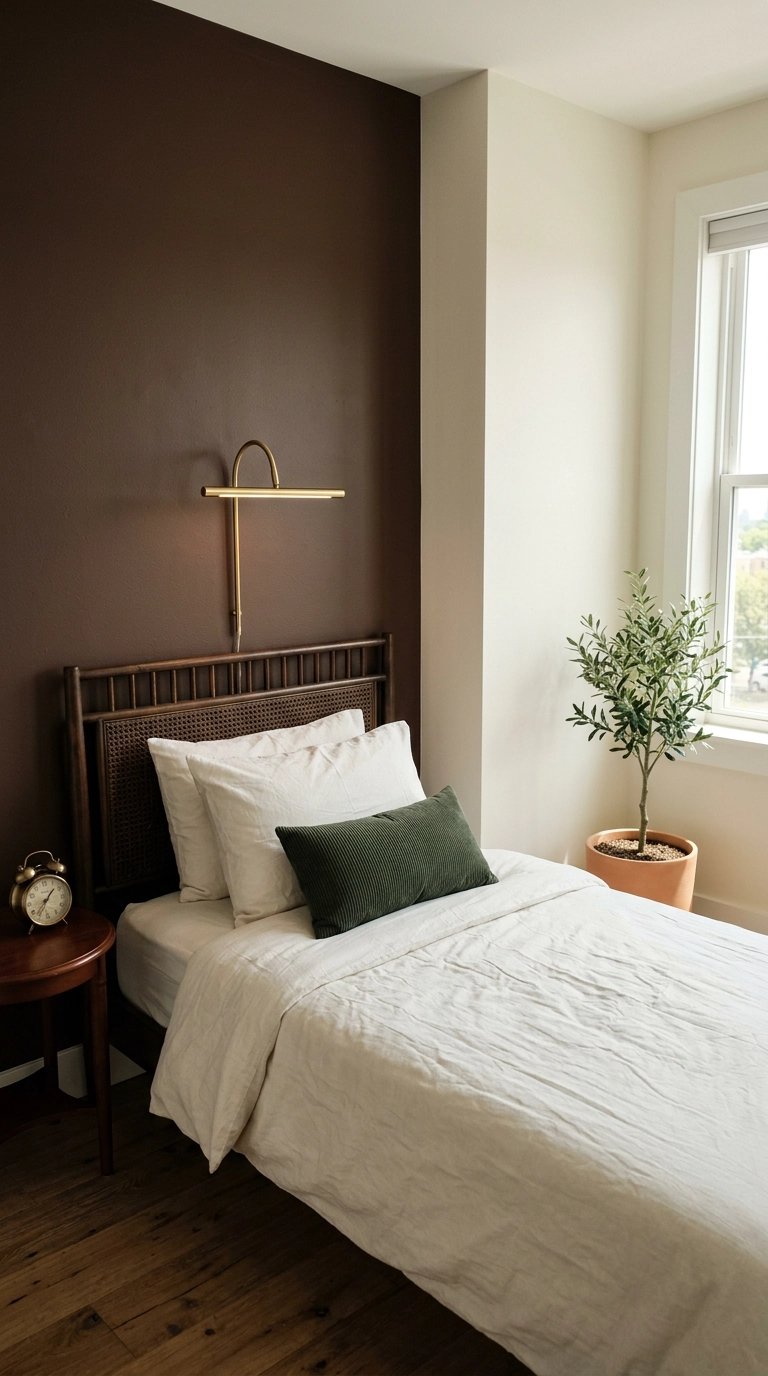
Not every bedroom can take a fully saturated room, and I’d rather you hear that from me than find out after two coats. Rooms under about 110 square feet, rooms with only one small window, and rooms you use for morning routines all do better with a single dark wall behind the bed and light paint everywhere else.
14. Stack Antique Trunks as a Nightstand
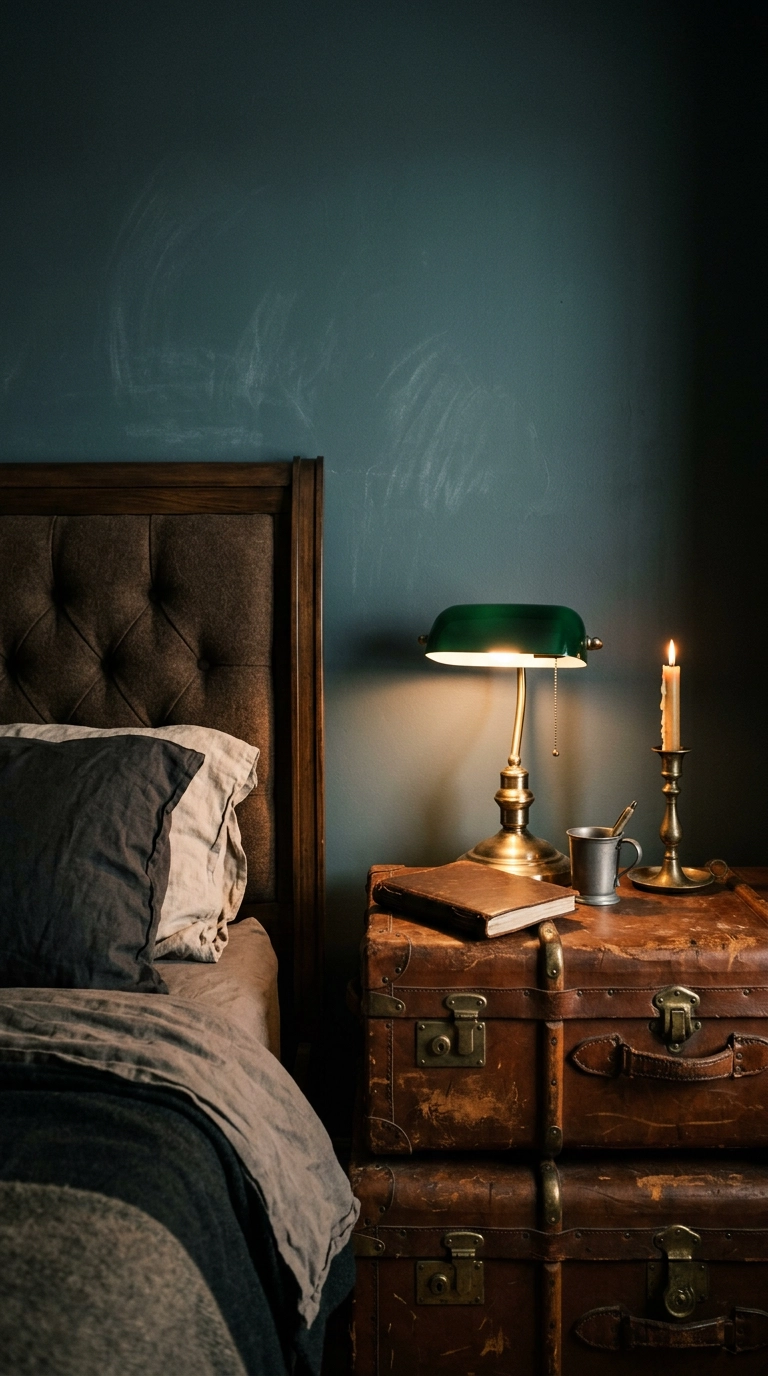
Two stacked trunks hit about 26 inches, which is right in the sweet spot for a nightstand next to a standard mattress, and they give you hidden storage for off-season blankets. Look for real leather and intact brass corners – the cardboard-and-vinyl reproductions look exactly like what they are once light hits them.
15. Hang Framed Botanical Prints in Mismatched Vintage Frames
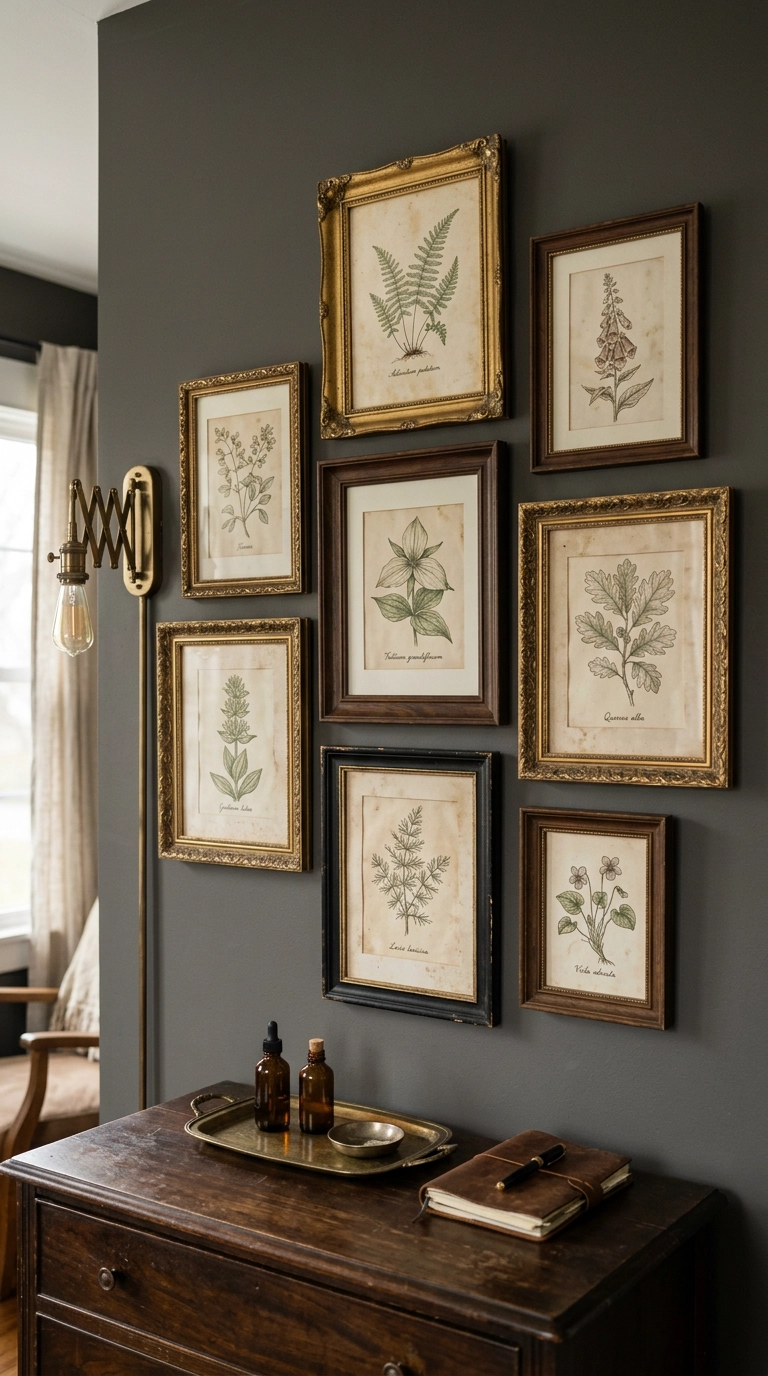
Botanical plates are the other classic dark academia art source, and mismatched frames are the whole trick – matching sets look like they came from one store, which breaks the collected-over-time illusion. Thrift the frames, keep the golds and dark woods, skip anything silver or chrome.
16. Swap Every Bulb to 2700K or Lower, Today
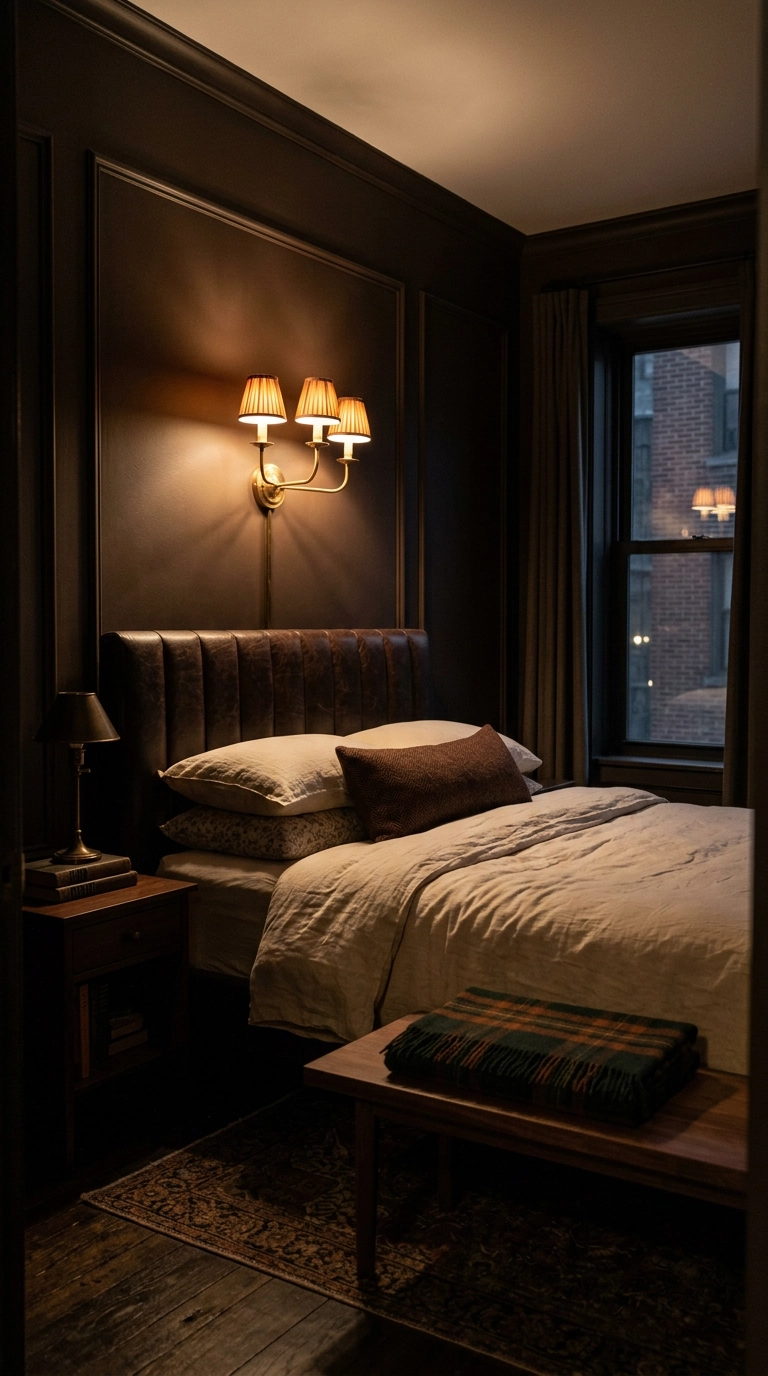
This is a 20-minute fix and it’s the highest-impact thing in this entire article. Most builder-grade bulbs are 3000K or 4000K, which throws a bluish-white light that turns oxblood grey and makes walnut look like plastic.
17. Set Up a Small Writing Desk Under the Window
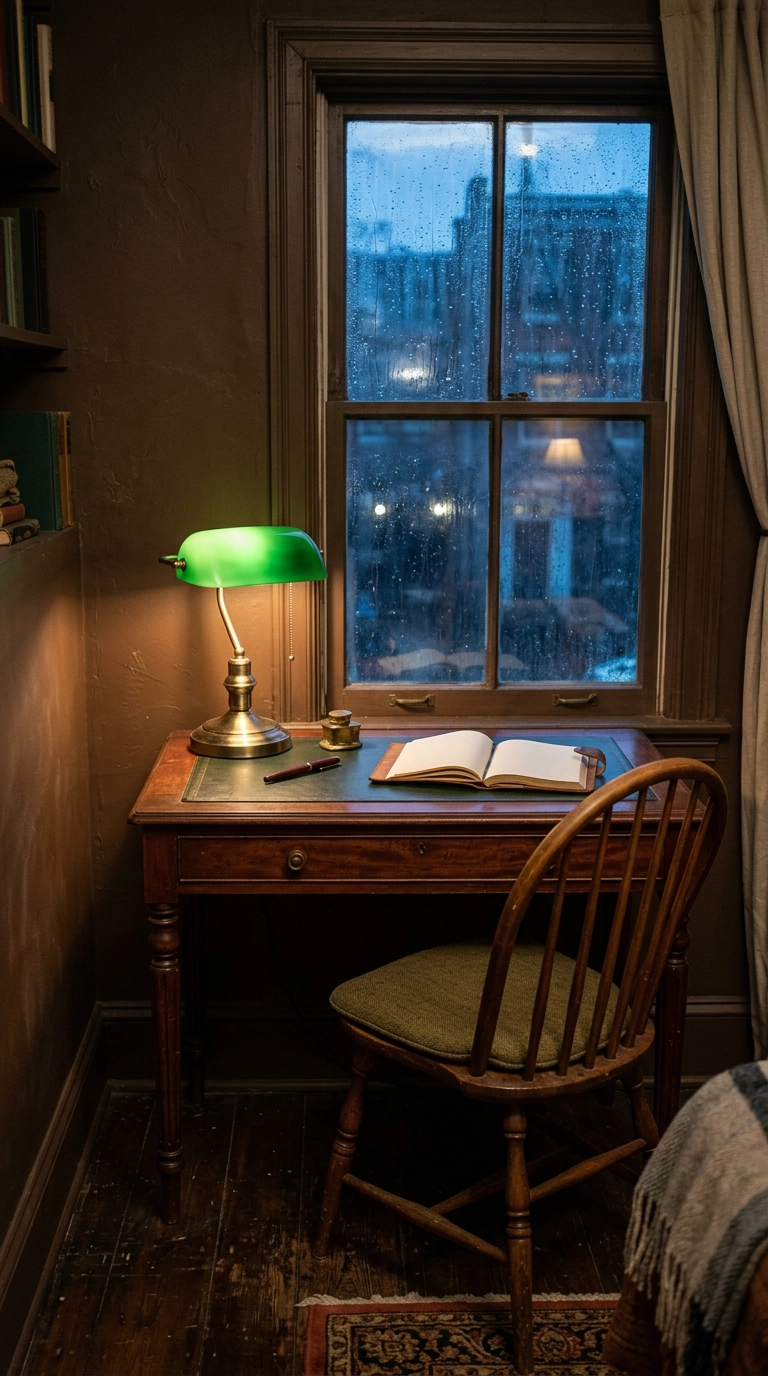
The scholarly part of dark academia needs somewhere to actually study, and a compact 36 to 42 inch desk fits in most bedrooms without eating the walkway. Under the window is the right spot because you get daylight on the page and you don’t lose usable wall.
18. Lean a Big Gilt Mirror Instead of Hanging It
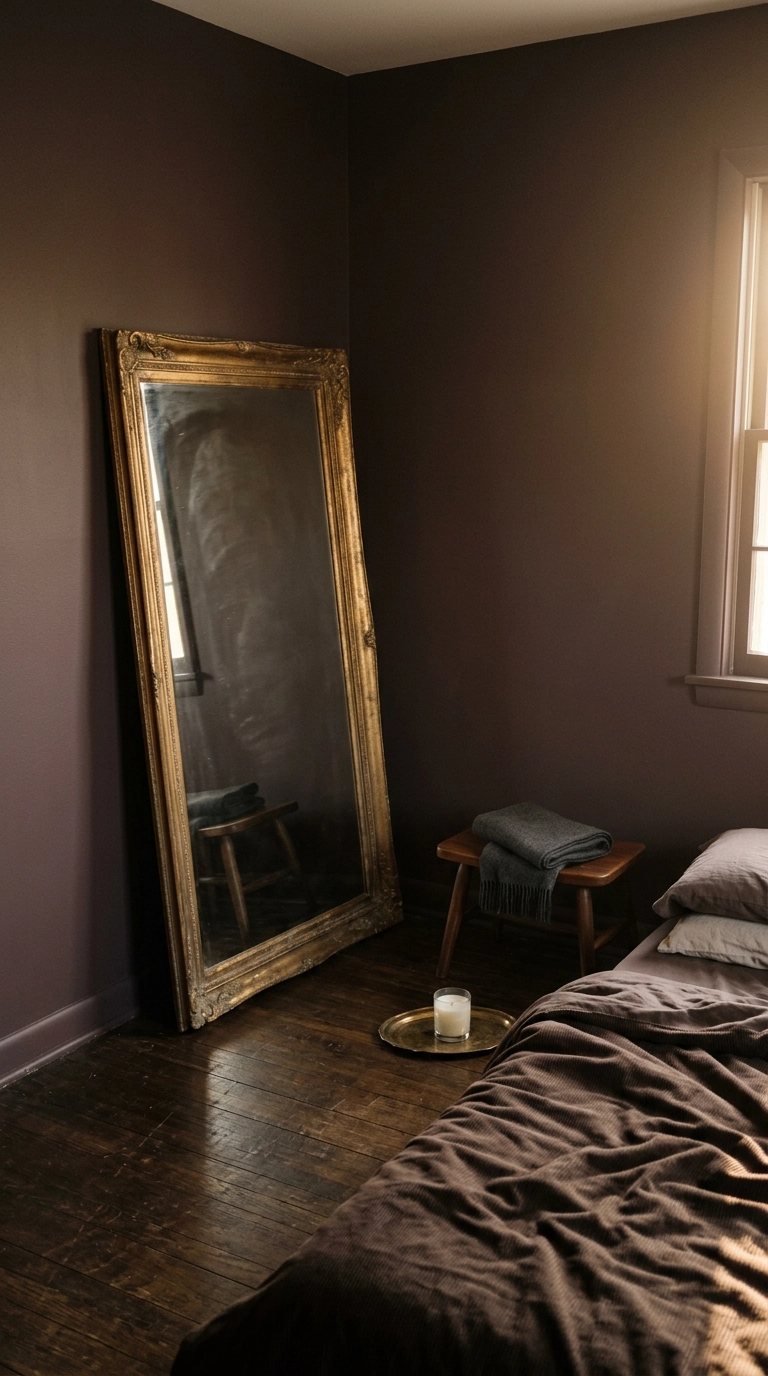
Leaning a full-length mirror does two things at once: it bounces light back into a dark room and it requires zero holes in the wall. Aim for something at least 60 inches tall and lean it opposite or perpendicular to your window so it catches the daylight.
19. Paint the Ceiling Too, But Only if You Have 9 Feet
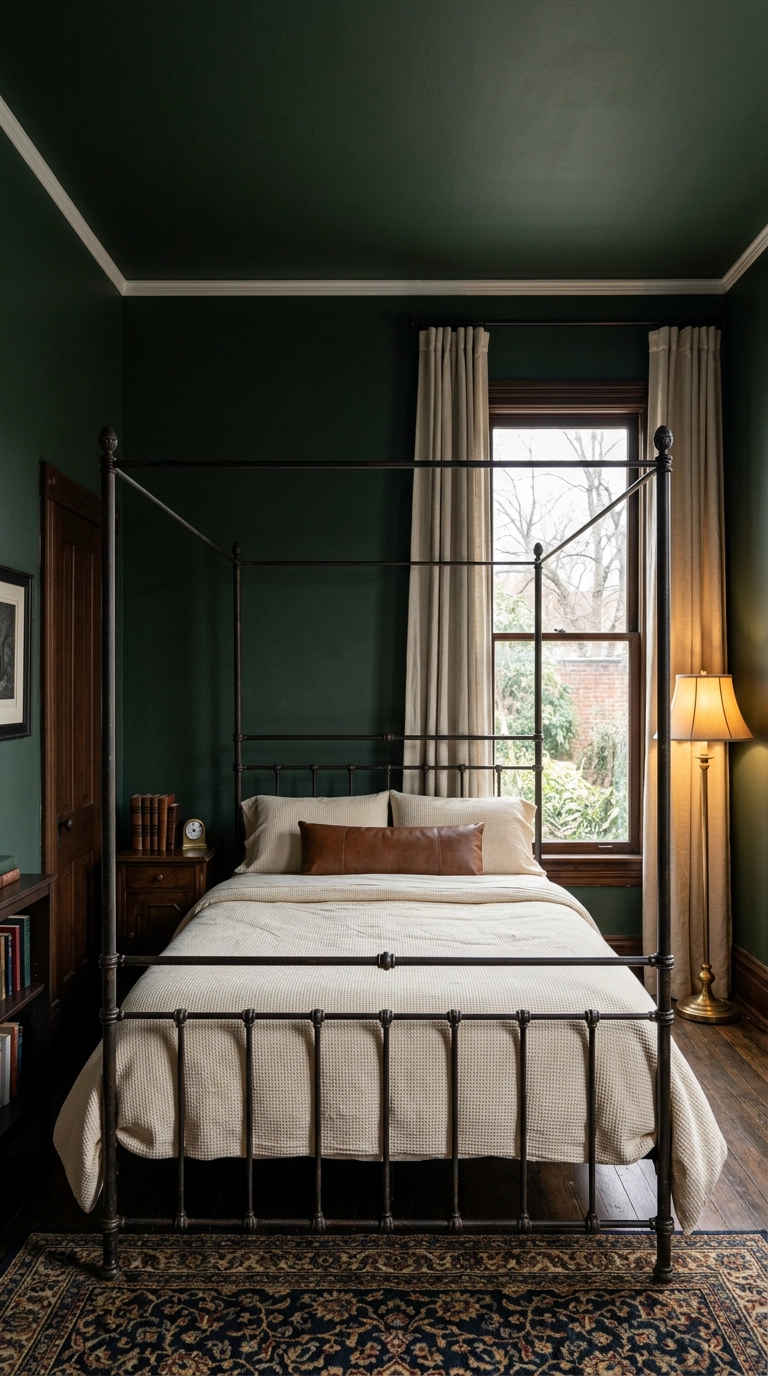
A dark ceiling is gorgeous and it is also the fastest way to make an 8-foot room feel like a submarine. My rule: 9 feet or taller, go for it; 8 feet, leave the ceiling in a soft warm white and let the walls do the work.
20. Skip the Fabric Canopy, Keep the Four-Poster Frame
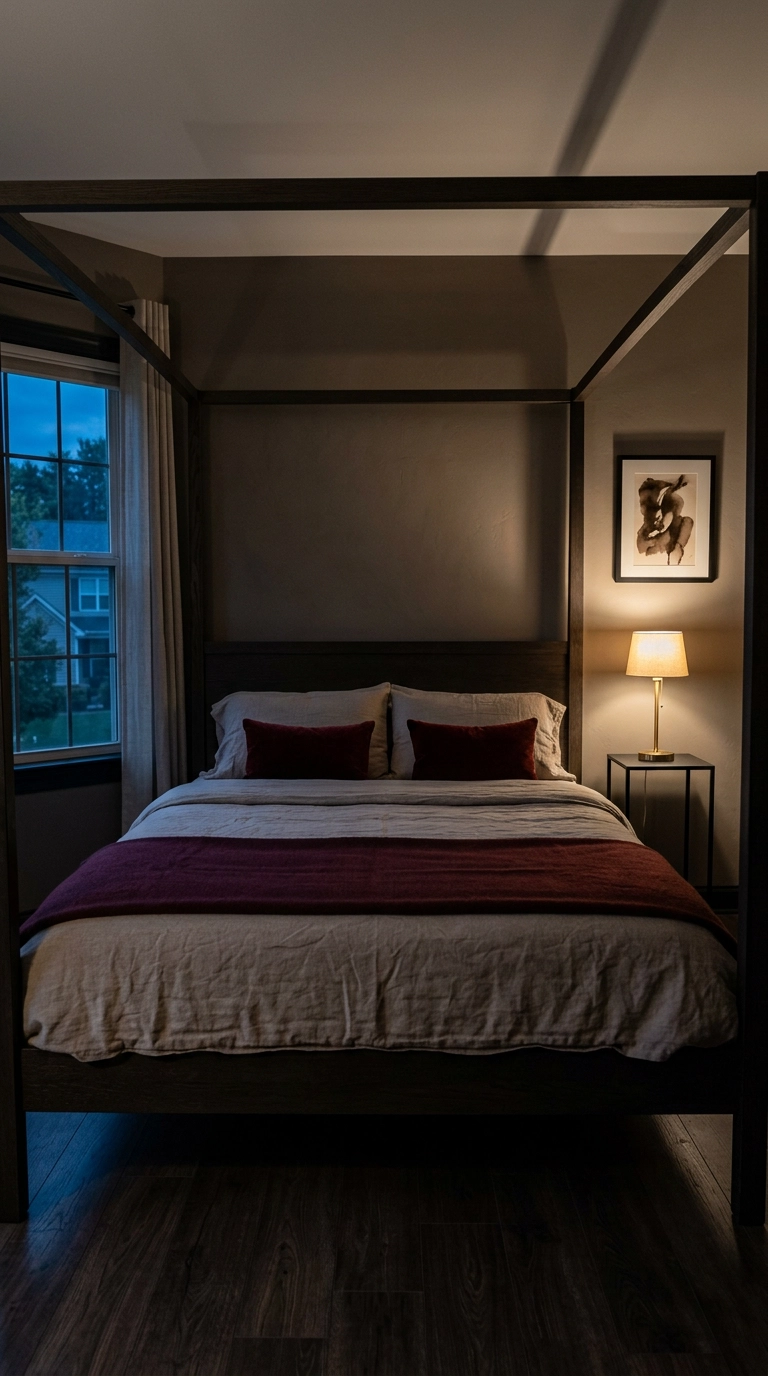
Four-posters are peak dark academia, but draping fabric across the top makes an already-dark room genuinely oppressive and traps dust. Bare posts give you the vertical drama and the architectural frame without stealing another ounce of light.
21. Collect Brass Objects, But Only Three of Them
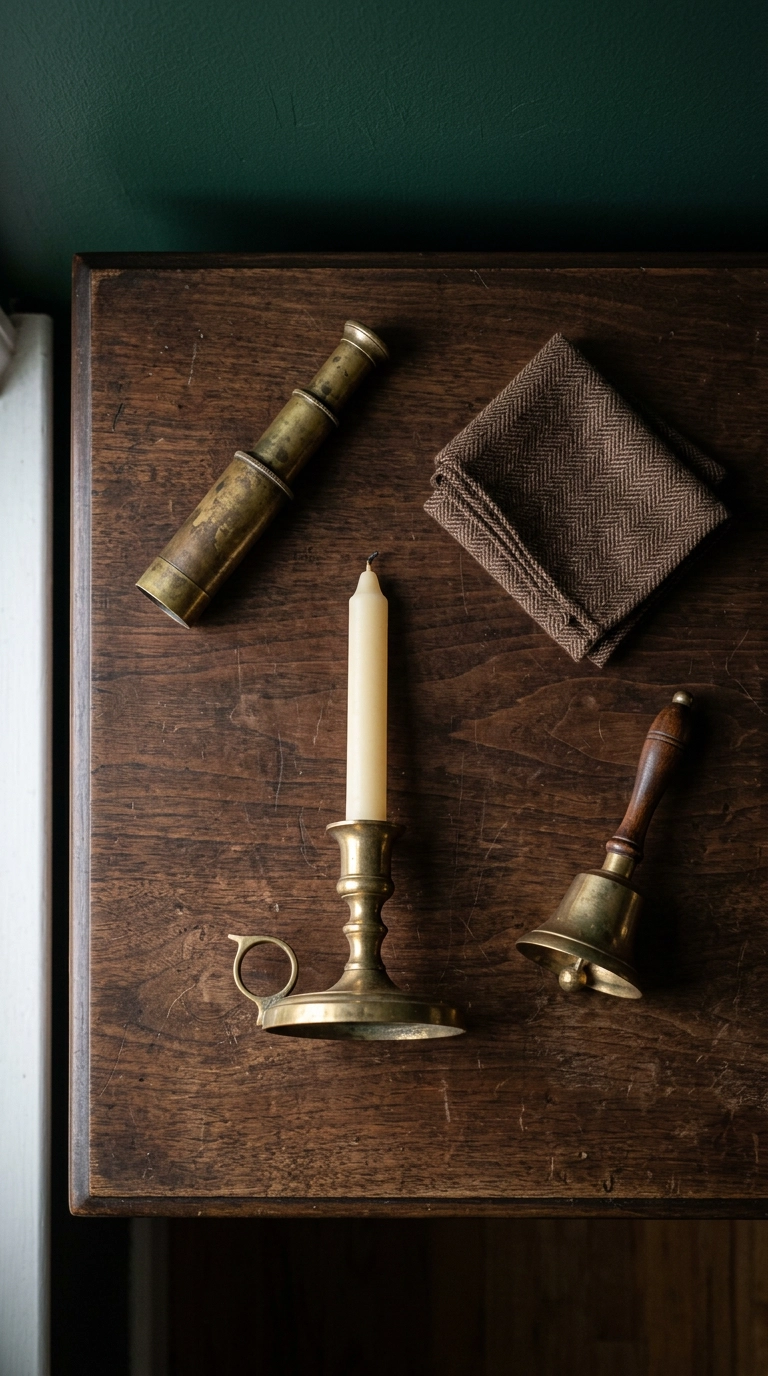
Unlacquered brass is the metal of this whole aesthetic because it tarnishes, and tarnish reads as age. The mistake is quantity – I see people line up a dozen brass trinkets and the dresser turns into a gift shop.
22. End on One Deep, Unexpected Color Nobody Else Is Using
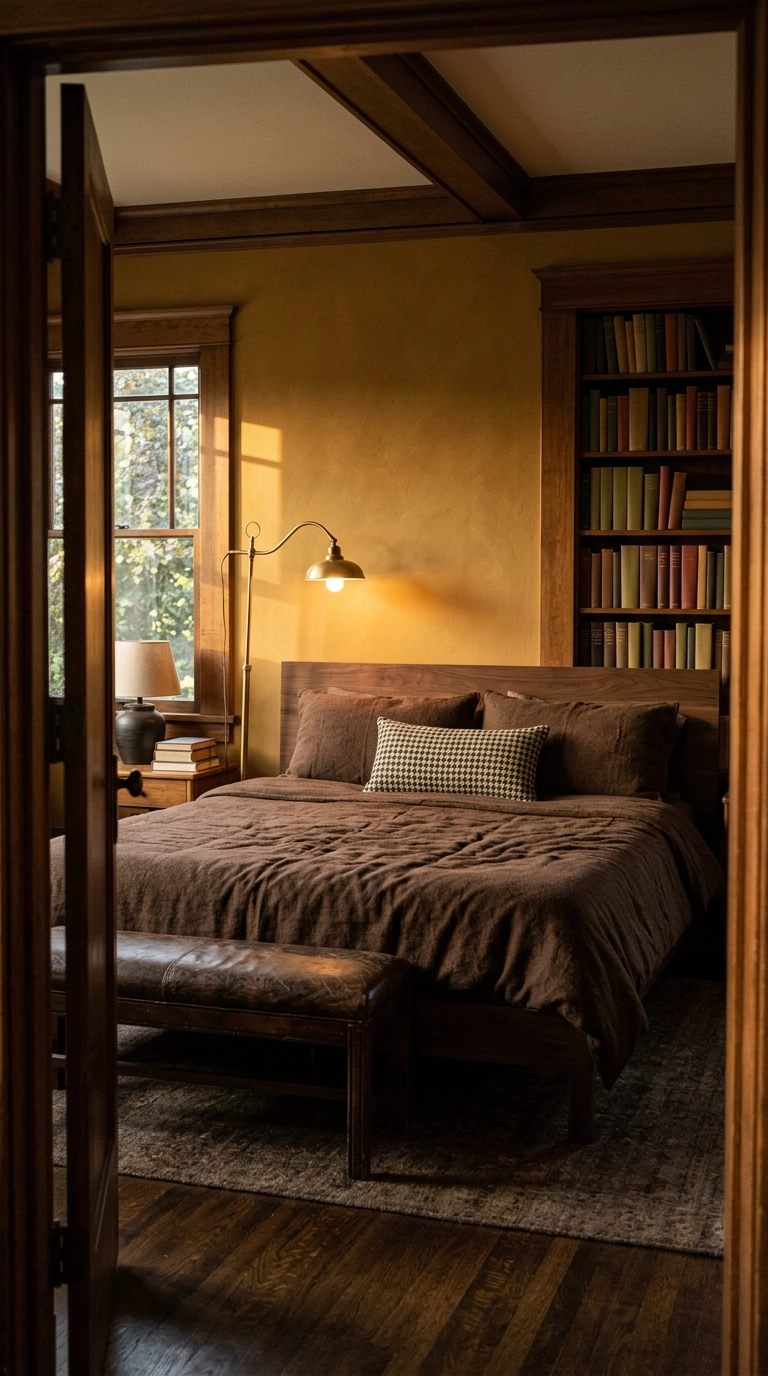
Everyone does green and oxblood, so if you want a room that doesn’t look like the first page of search results, try deep mustard ochre, saturated tobacco, or a dark warm clay. They sit in the same aged-library family but they hold light far better than the standard picks.
Turning Down the Lights on This One
If you take one thing from all twenty-two of these, make it the lighting. I’ve watched a client’s oxblood color-drenched bedroom go from grim to gorgeous purely by killing the overhead fixture, adding a brass picture light over the bed, and swapping to 2700K bulbs – same paint, same furniture, completely different room. Dark academia is not about how dark you can go, it’s about how well you light the dark you chose.
The other thing I’d push you toward is the secondhand market, because it will not stay this cheap. Brown furniture is having its quiet moment before the correction, and the mahogany dresser, the leather wingback, and the stacked steamer trunks in this list are all findable for a fraction of new. Meanwhile the moody-and-scholarly look keeps spreading – Farrow & Ball’s deep greens are everywhere, Studio McGee’s warmer, wood-heavy rooms have nudged the whole market away from gray, and half of Pinterest is currently trying to recreate a candlelit library. Layered wool and tweed, antique maps in odd-numbered grids, and one great reading chair will get you further than any single expensive purchase.
And please, be honest with yourself about your room before you open a paint can. Eight-foot ceiling and one small window? Do the headboard wall, not the ceiling. Rental with beige walls and a strict lease? Heavy wool curtains and a leaning gilt mirror will get you eighty percent of the way there for a couple hundred dollars. If you want more of this kind of straight-talking styling advice – plus the paint shades and thrift finds I’m testing in real rooms each week – sign up for my weekly newsletter and I’ll send it right to you.


