
22+ Chinese Bedroom Decor Ideas that are Serene, Timeless and Gorgeous in 2026

I’ll be straight with you – most of what gets sold online as “Chinese bedroom decor” is a costume, not a design tradition, and I’ve spent years unlearning that. The real vocabulary is quieter and much better: Ming-style hardwood joinery, celadon glaze, ink-wash brushwork, red used like a spice rather than a base coat. So I’ve put together 22 ideas that pull from actual Chinese design history, some restrained and modern, some richly traditional, all of them things you can genuinely build in an American bedroom without it looking like a themed restaurant.
Chinese Bedroom Decor Ideas
1. A Ming-Style Hardwood Bed Frame as the Whole Room’s Anchor
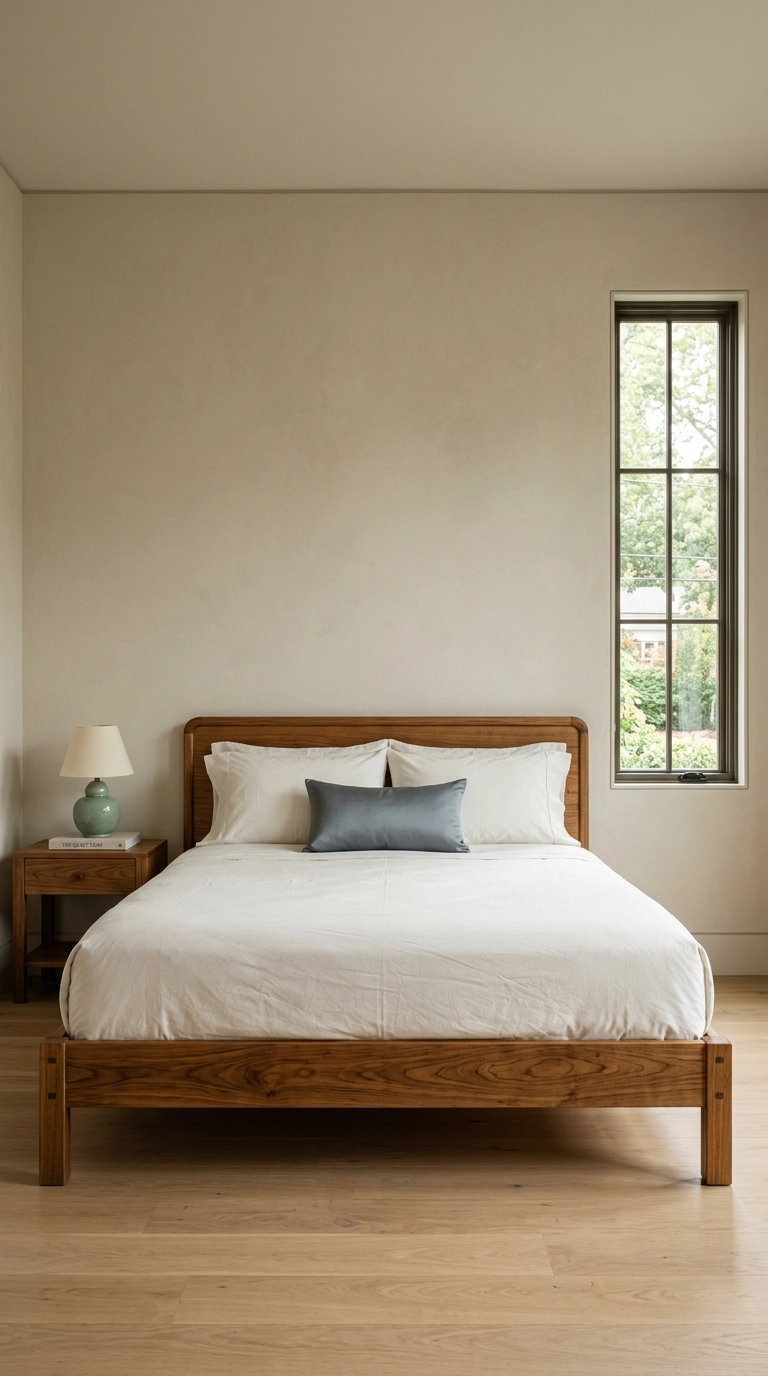
If you only do one thing from this list, make it the bed. Ming-dynasty furniture (roughly 1368–1644) is built on mortise-and-tenon joinery, no visible hardware, with legs that taper and rails that curve just slightly – it’s the reason those pieces still look modern six centuries later.
2. Red and Gold, Used at Ten Percent Instead of Ninety
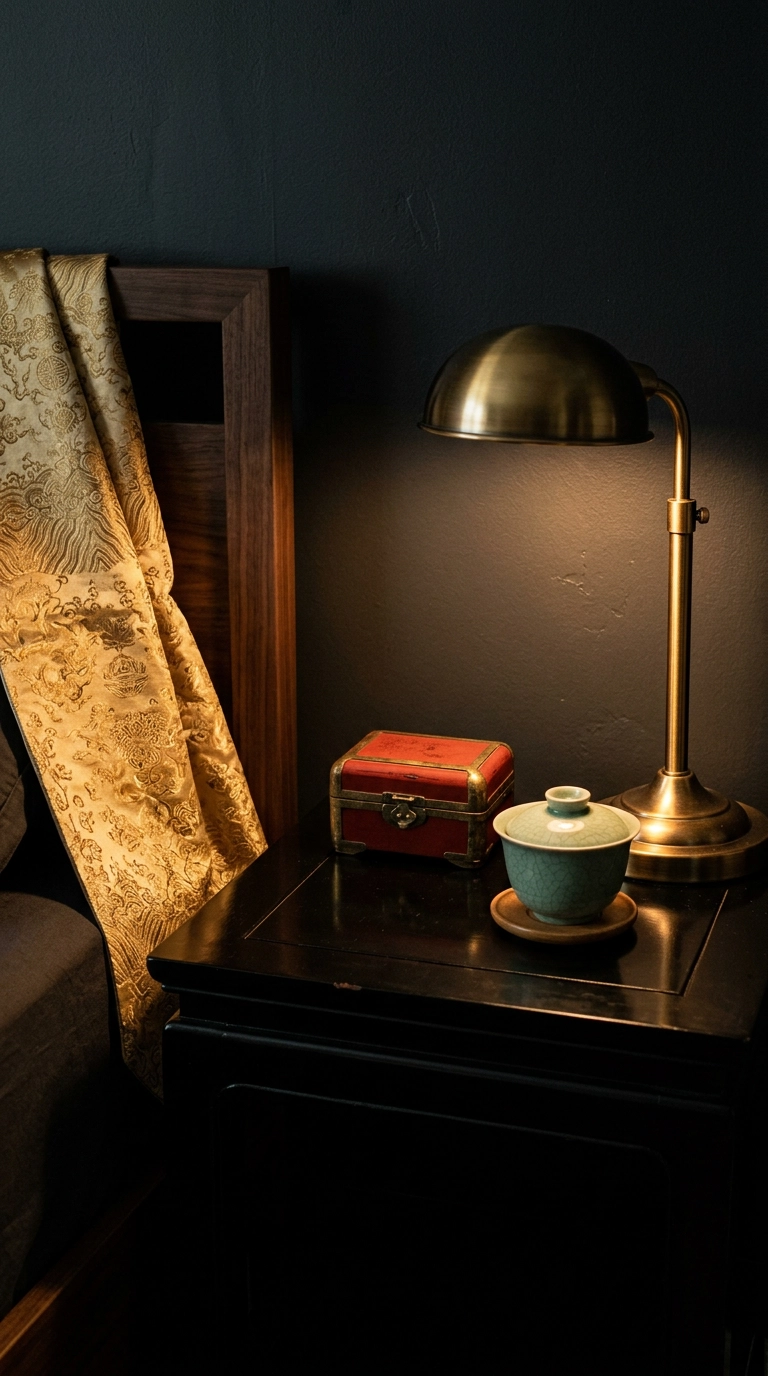
Red and gold is the pairing everyone reaches for and almost everyone overdoes. In Chinese interiors that combination historically appeared on specific objects – a lacquer chest, a wedding textile, a shrine niche – not smeared across all four walls.
3. A Pair of Blue-and-White Porcelain Lamps Flanking the Bed
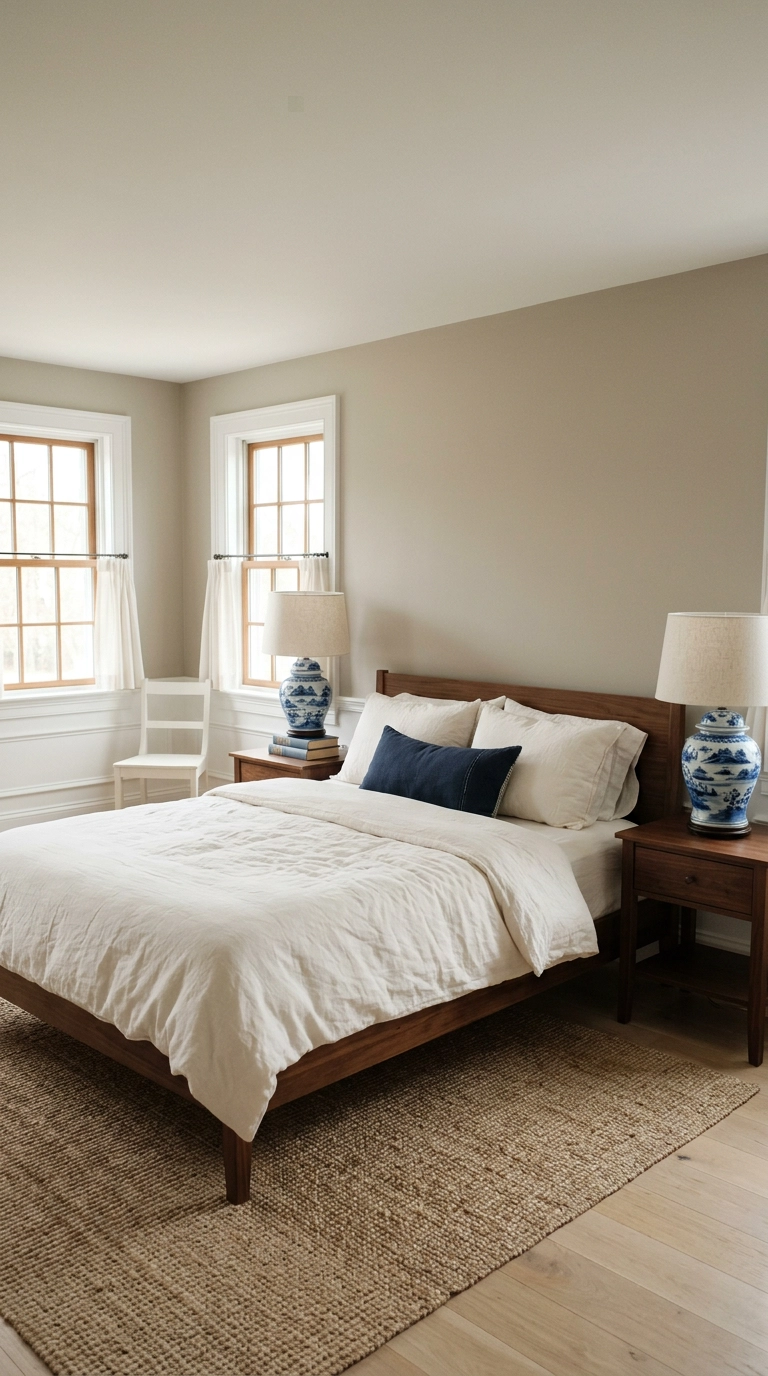
Blue-and-white porcelain is the single easiest entry point, partly because it has been crossing between China and American homes since the China trade era, so it already looks at home next to a double-hung window and a painted baseboard.
4. Celadon Green Walls for a Room That Never Gets Direct Sun
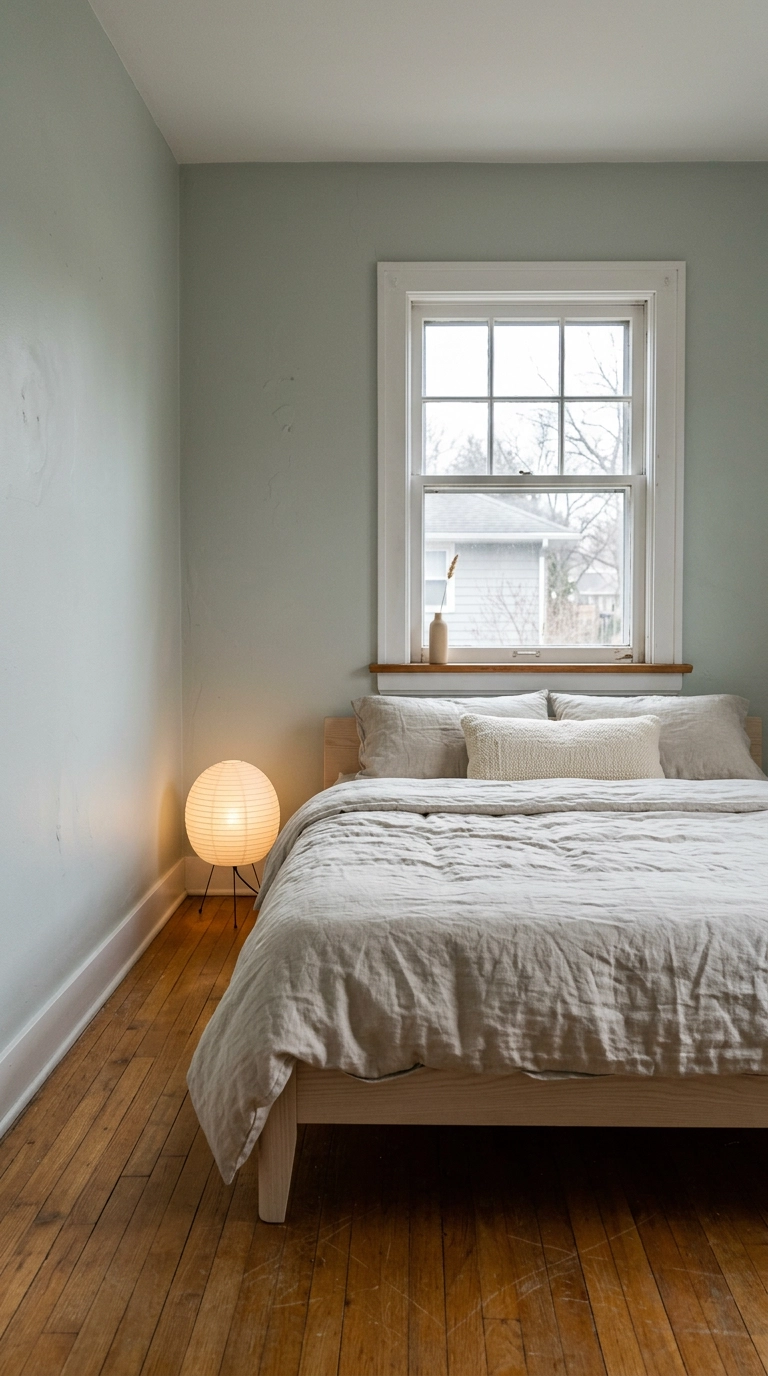
Celadon is a glaze color before it’s a paint color – Longquan kilns spent centuries chasing that grey-green that sits exactly between jade and water. As wall paint it does something specific: it warms a north-facing room without going yellow, because the grey in it neutralizes cold blue light.
5. A Folding Screen Instead of a Headboard
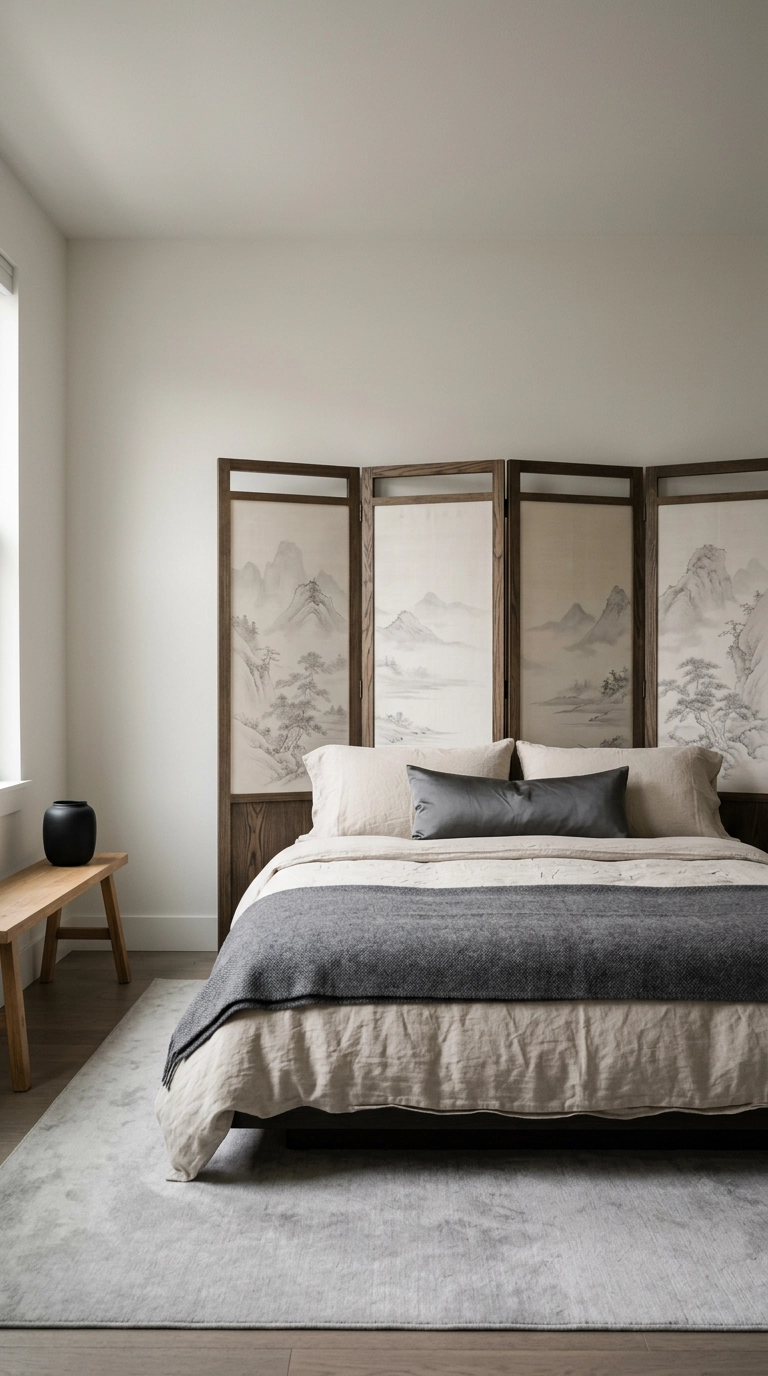
Folding screens have been dividing and softening Chinese rooms for well over a thousand years, and they solve a very modern problem: a bed floating against a boring drywall wall. Stand a four-panel screen behind the headboard and you get instant architecture with zero drilling, which is why I put this near the top for renters.
6. One Ink-Wash Landscape, Hung Low and Left Alone
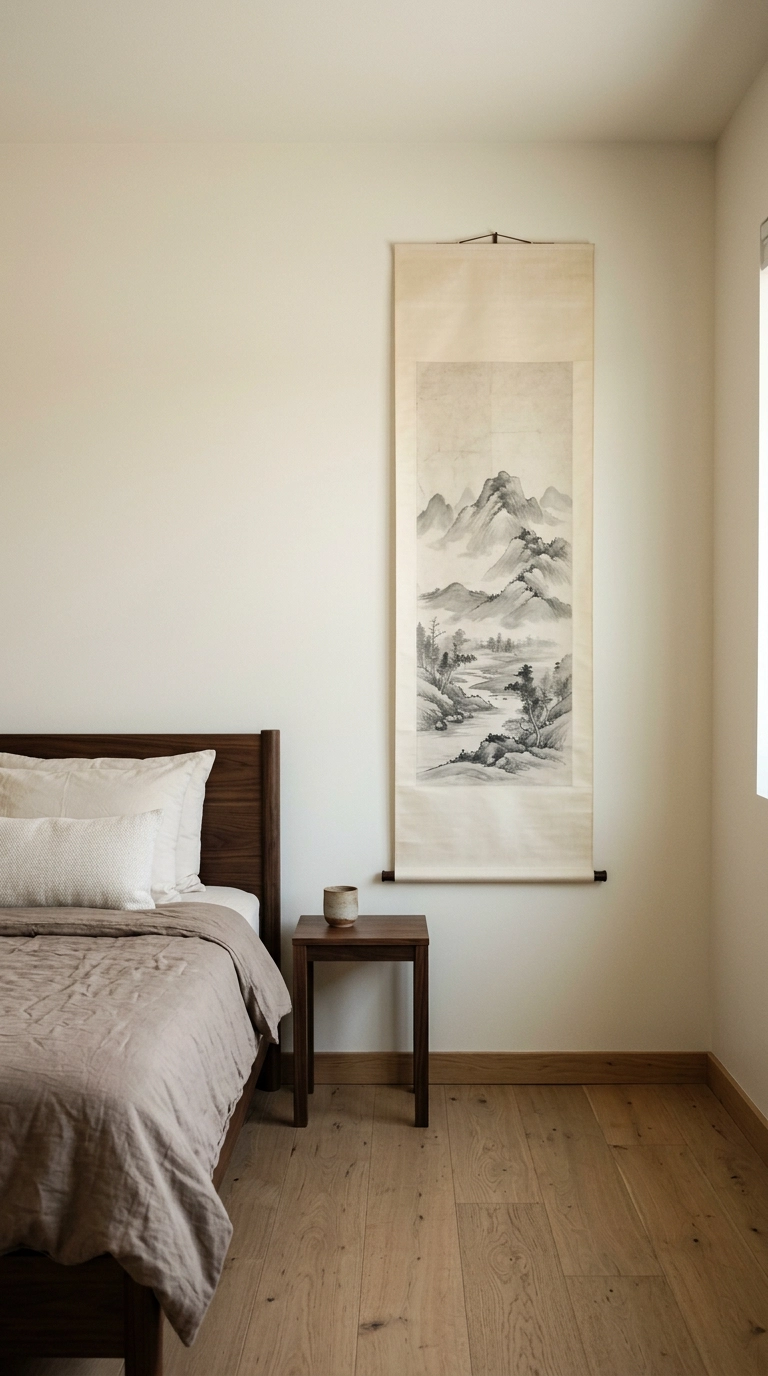
Shan shui ink painting is built on empty space – the unpainted paper is doing as much work as the brushstrokes. So the worst thing you can do is crowd one into a gallery wall. Give it a whole wall and let it breathe.
7. Lattice Fretwork Panels on Closet Doors
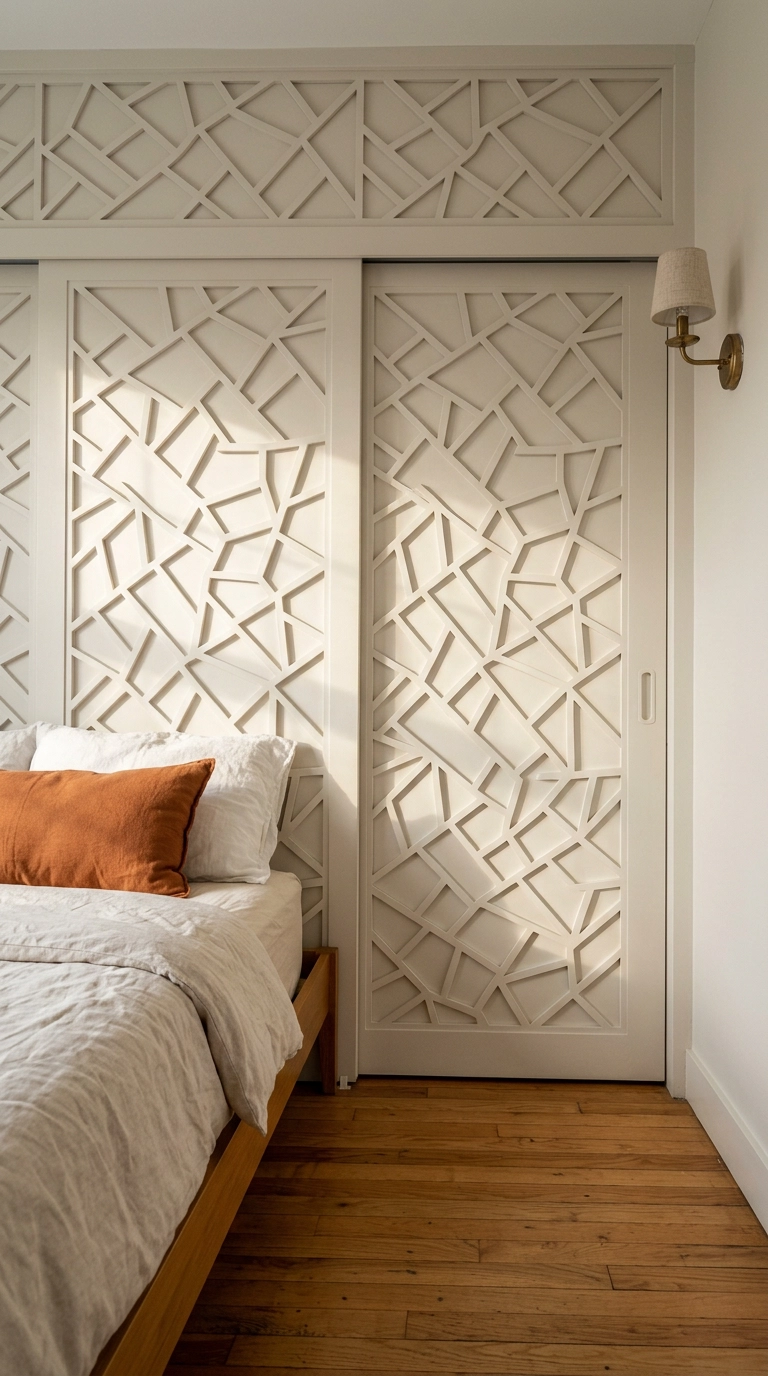
Lattice window and screen patterns – cracked-ice, hexagonal, the endless-knot grids you see in Suzhou garden pavilions – are the cheapest way to bring real Chinese geometry into a bedroom. Applied to hollow builder-grade closet doors, they turn dead surface into pattern.
8. A Moon Gate Arch Painted Behind the Bed
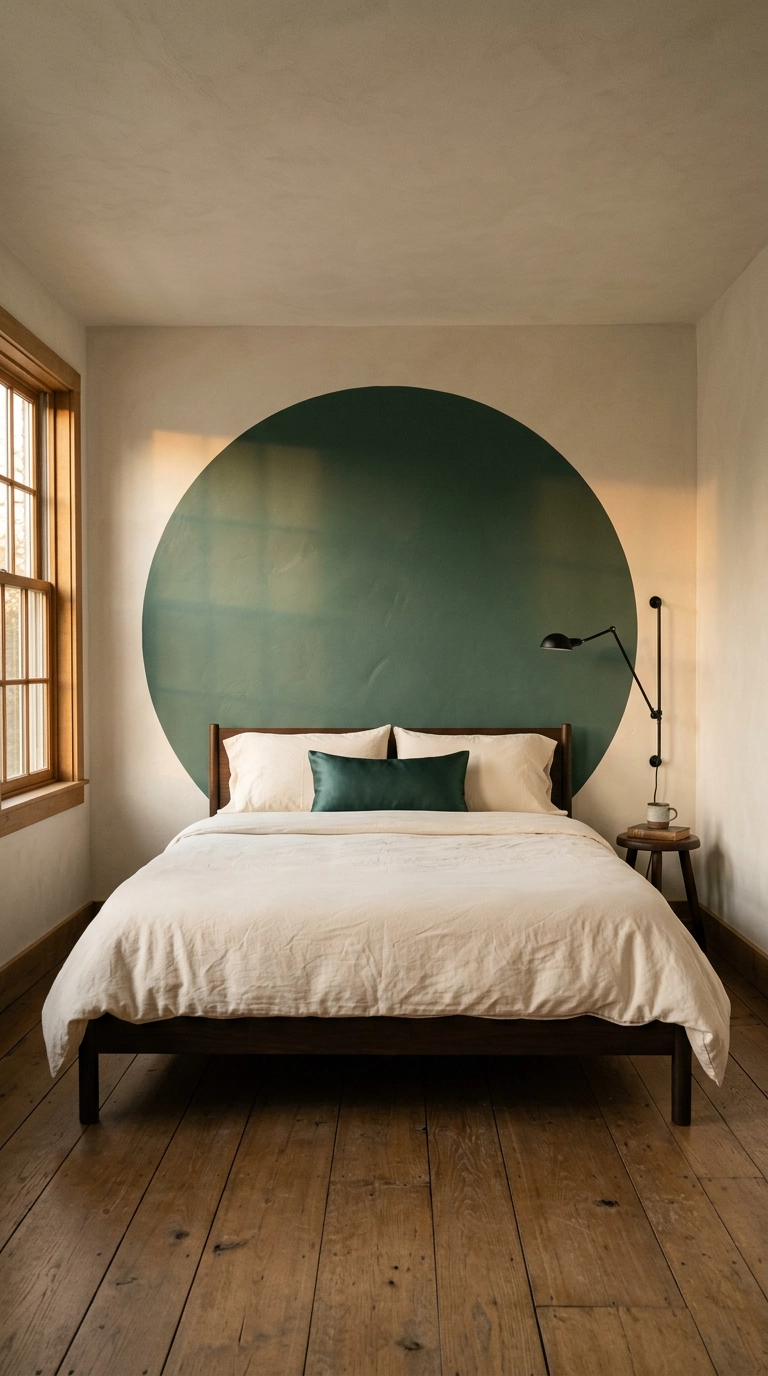
The moon gate is a circular doorway from classical Chinese garden architecture, and the circle is the point – it frames whatever is beyond it and signals a transition. You cannot cut one into drywall, but you can paint the shape, and it works surprisingly well behind a bed.
9. A Silk Brocade Bed Runner Instead of a Full Silk Bed
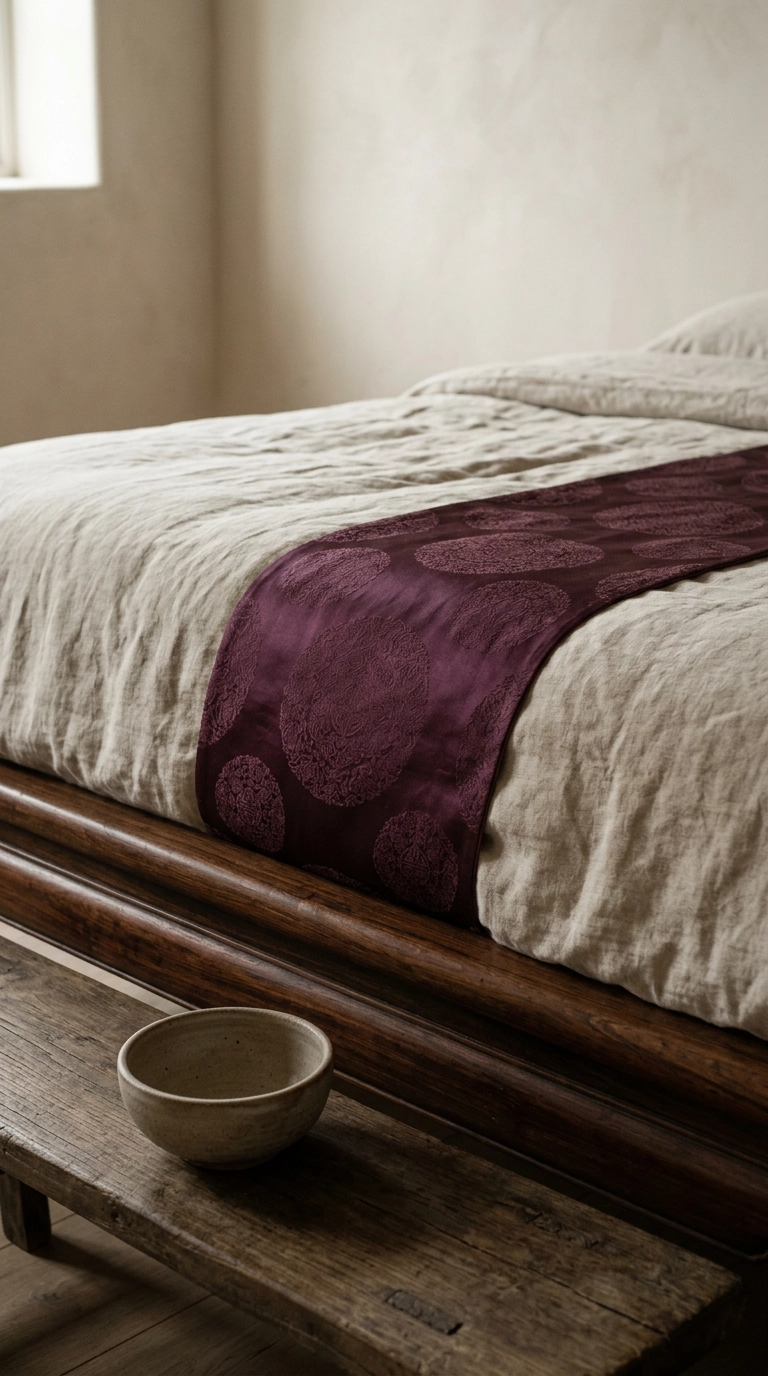
Silk is central to Chinese textile history, but a fully silk-dressed bed looks like a hotel lobby and feels like sleeping on a slide. Use it as a runner instead – one wide band of brocade across the foot of the bed, everything else matte cotton or linen.
10. A Black Lacquer Cabinet as the Nightstand
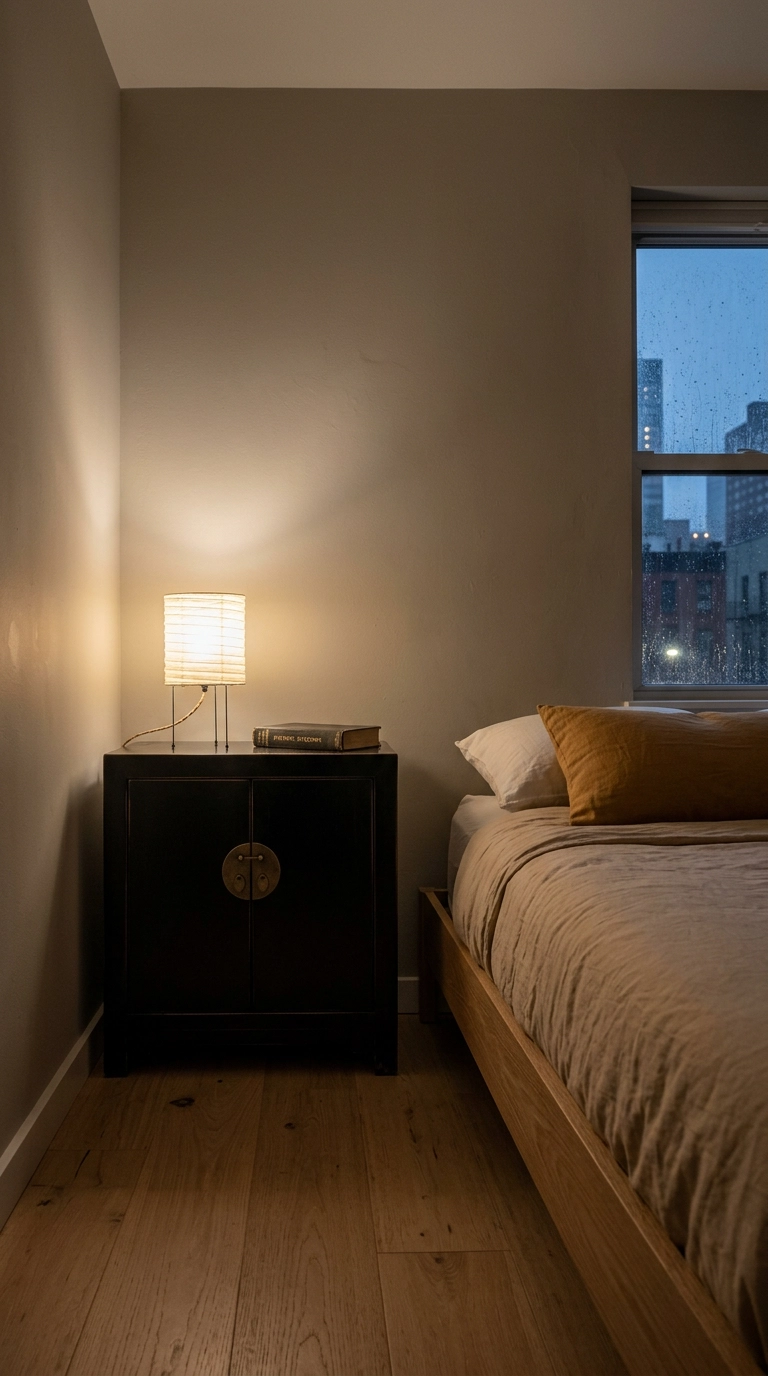
Traditional Chinese lacquer is dozens of thin layers of tree sap polished between coats, which is why an old piece has depth you can see into rather than a plastic gloss sitting on top. A small two-door lacquer cabinet makes a far better nightstand than an open table – it hides the charger cables and the hand cream.
11. Chinoiserie Wallpaper on One Wall, Named for What It Actually Is
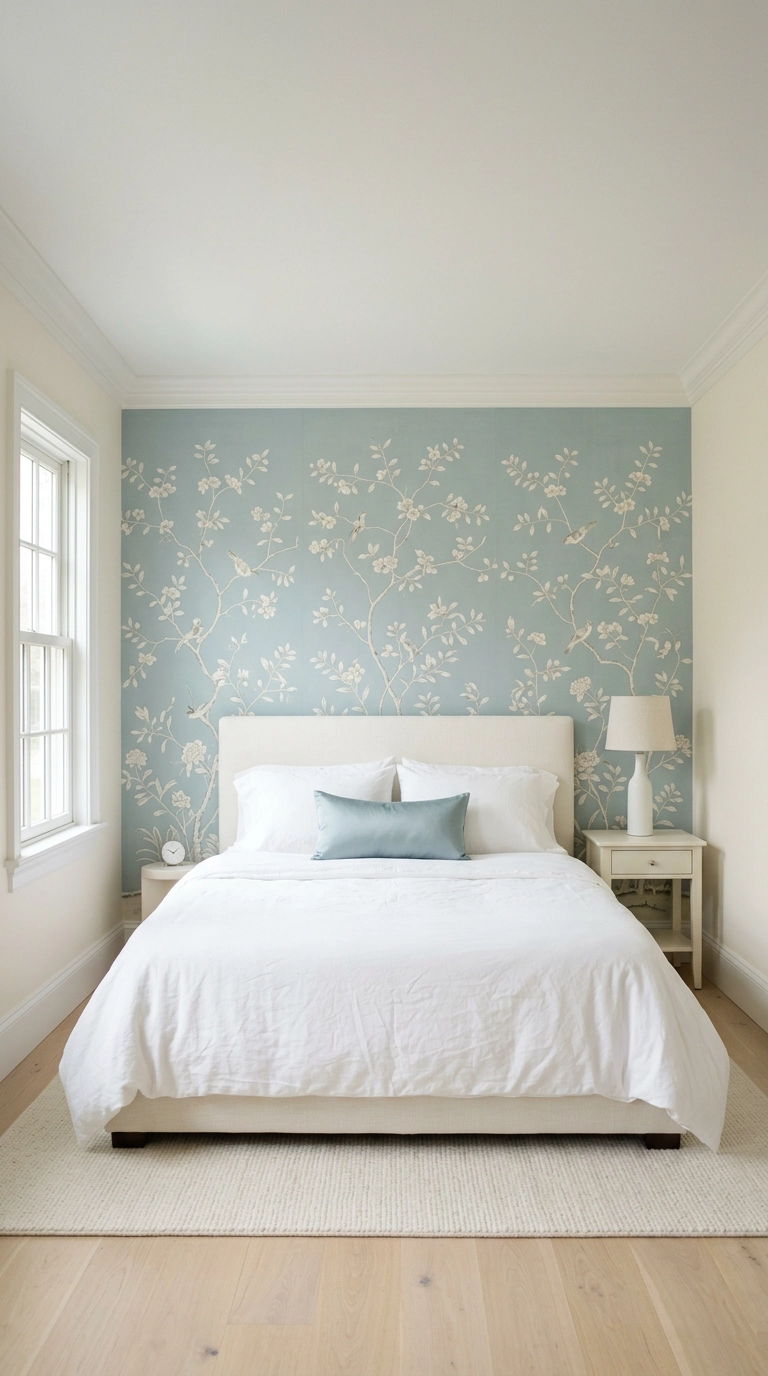
Let’s be precise, because this trips people up constantly: chinoiserie is a European fantasy of China, developed in 18th-century French and English decorative arts. It’s genuinely beautiful and it belongs in this article, but it is not Chinese design – it’s Europe’s imagination of it, and calling it by the right name is basic respect.
12. Jade and Ivory as the Whole Color Story
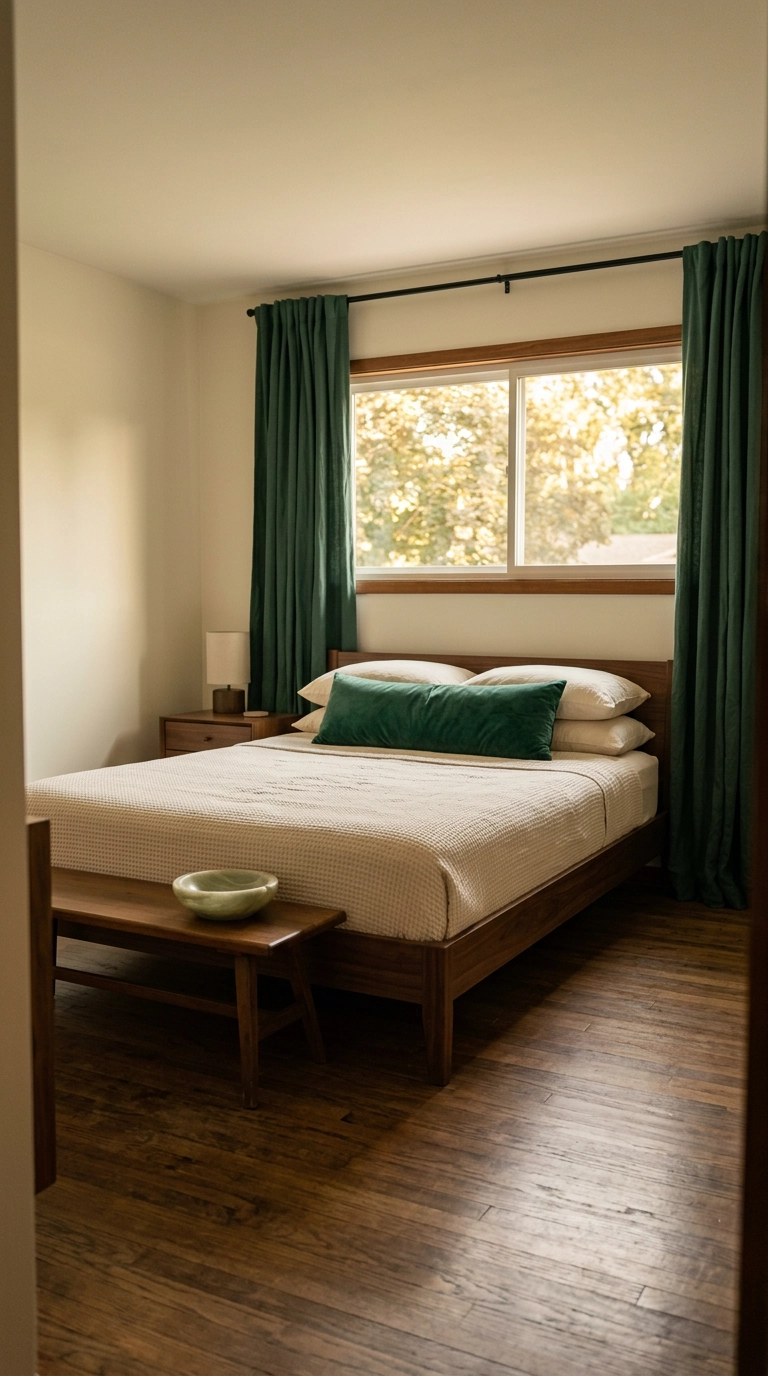
Jade carries real cultural weight in China – it’s associated with virtue and longevity, and it was valued above gold for centuries. As a palette, jade plus ivory plus one warm wood is about as foolproof as color gets, because the green is desaturated enough to behave like a neutral.
13. A Rice Paper Lantern Pendant Instead of the Builder Dome Light
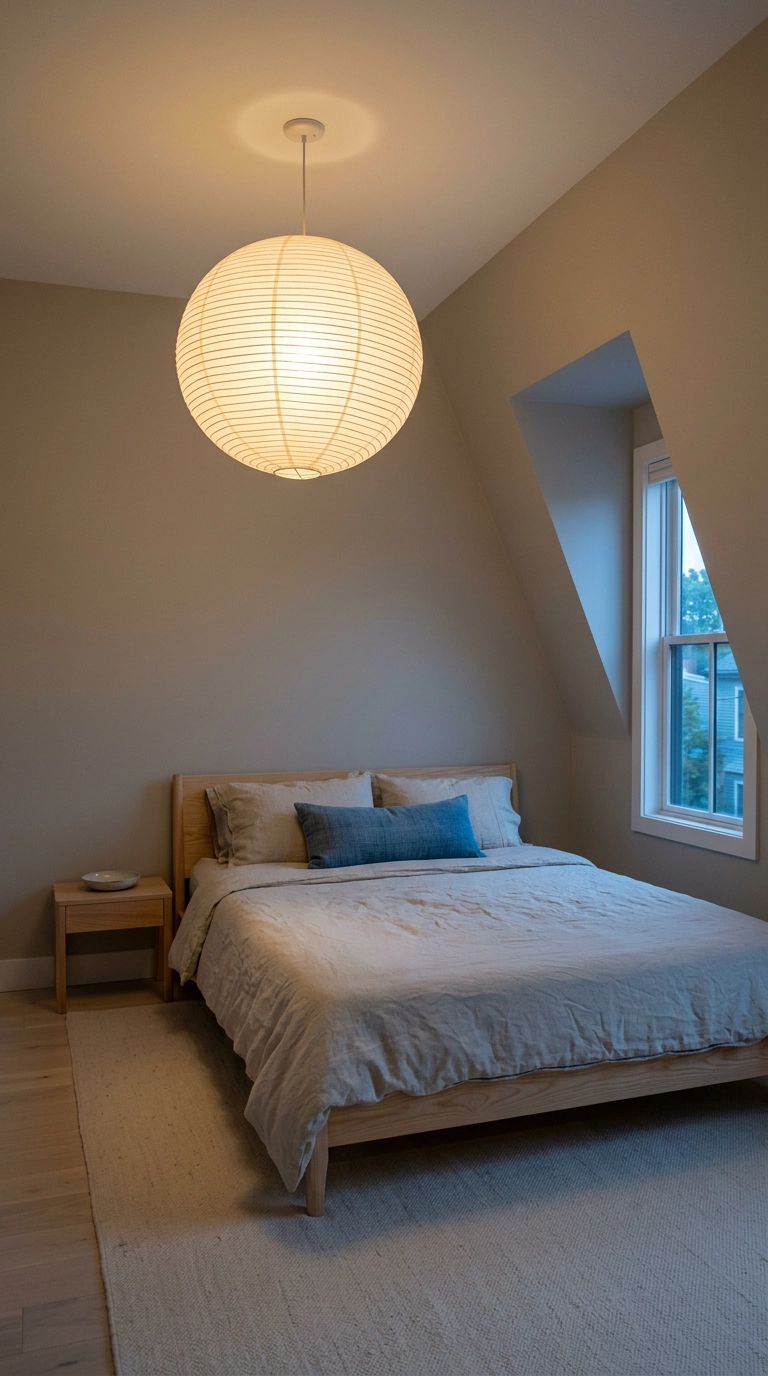
Paper lanterns have a long practical history across China and East Asia, and a big one solves a real American problem: the flush builder dome light that flattens every bedroom it touches. Swapping to a low, oversized paper globe turns hard overhead light into something soft and directional.
14. A Low Elm Bench at the Foot of the Bed for Actual Storage
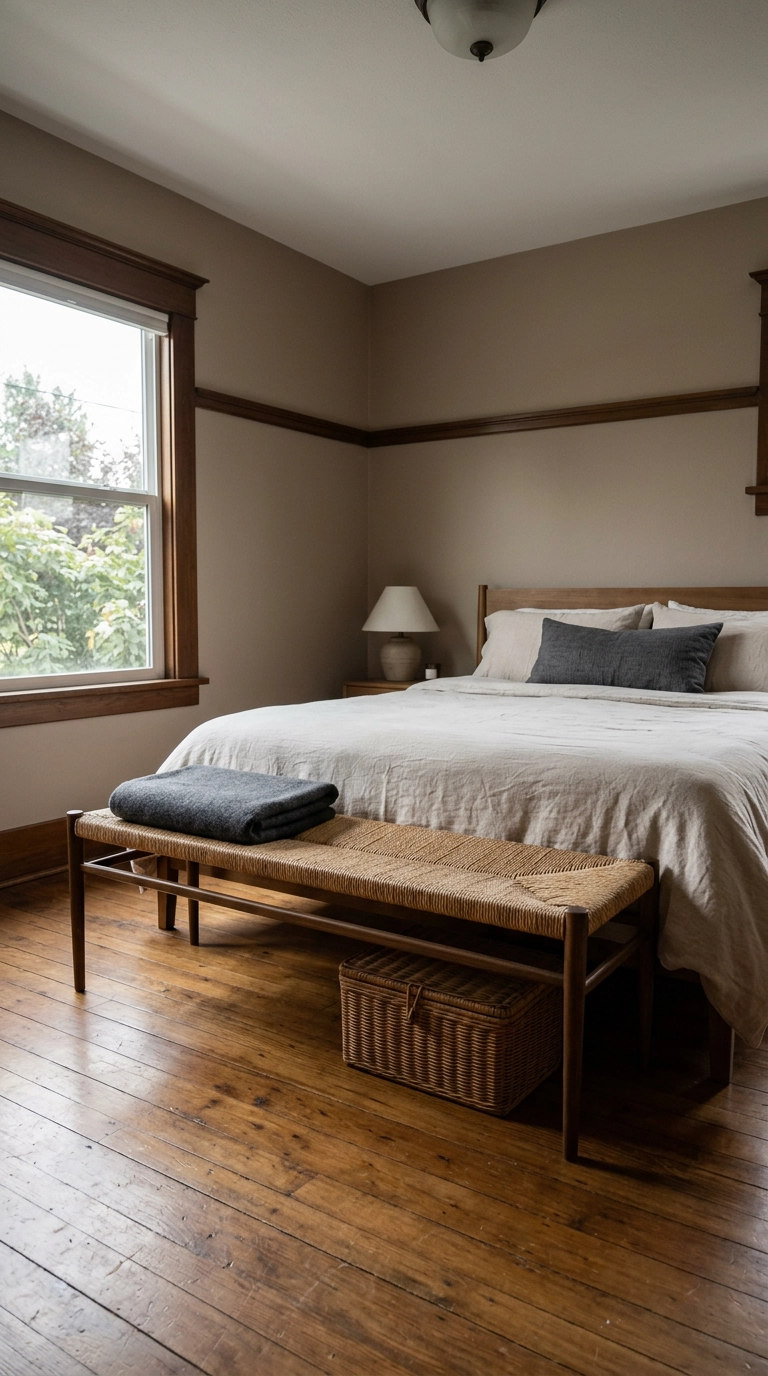
The low bench or daybed-style stool is a workhorse in traditional Chinese interiors, and it’s the piece I recommend most often because it earns its footprint. It gives you a place to sit, a landing spot for the blanket you kick off at 2 a.m., and room for one basket underneath.
15. A Single Piece of Calligraphy, Framed Like Fine Art
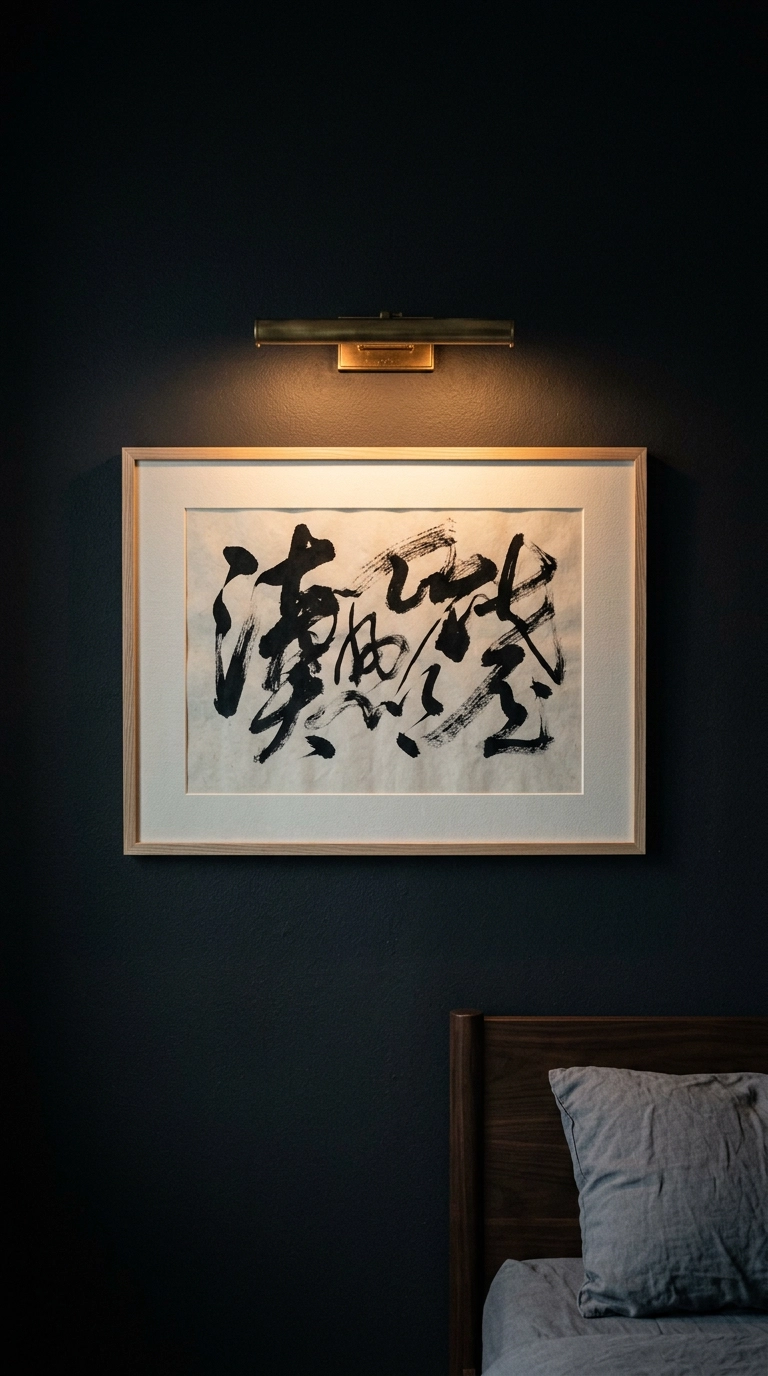
Calligraphy is treated as the highest of the visual arts in China, ranked above painting, and it’s judged on the movement of the brush rather than the words themselves. Frame one piece properly – wide mat, simple frame, picture light above – and it holds a wall the way a good abstract does.
16. Cracked-Ice Ceramic Vessels in Place of Nightstand Clutter
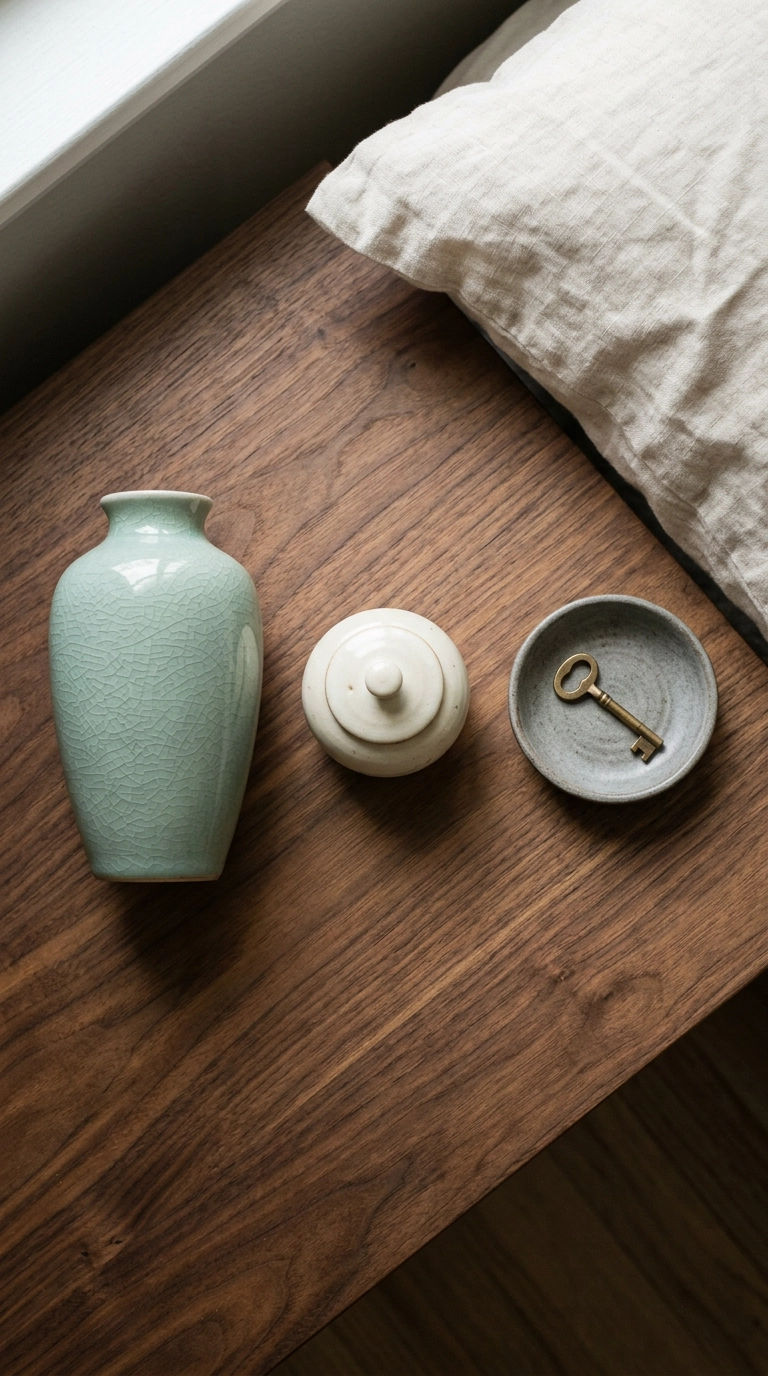
Crackle glaze – the fine web of cracks the Ge kilns turned into a deliberate feature – is the detail I’d chase over any decorative motif. It gives you texture and age without pattern, which matters in a bedroom where you want your eyes to slow down.
17. A Canopy Bed Frame Left Bare Instead of Draped
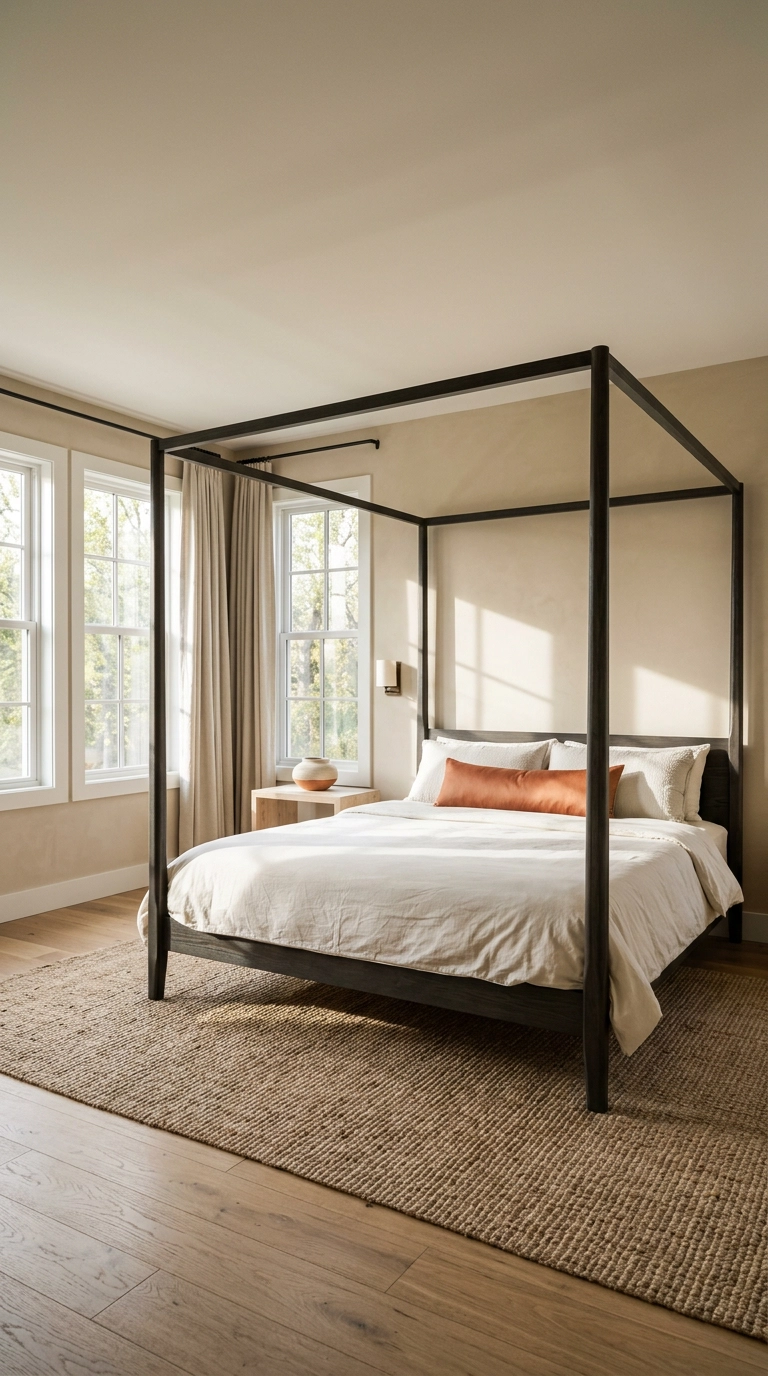
Traditional Chinese canopy beds, the ones with the enclosed frame and often a full latticed alcove, were essentially rooms within rooms. The modern translation I love is the frame with nothing on it – you get the geometry and the sense of enclosure without turning your bed into a tent.
18. Brass Hardware Swapped In and Left to Age
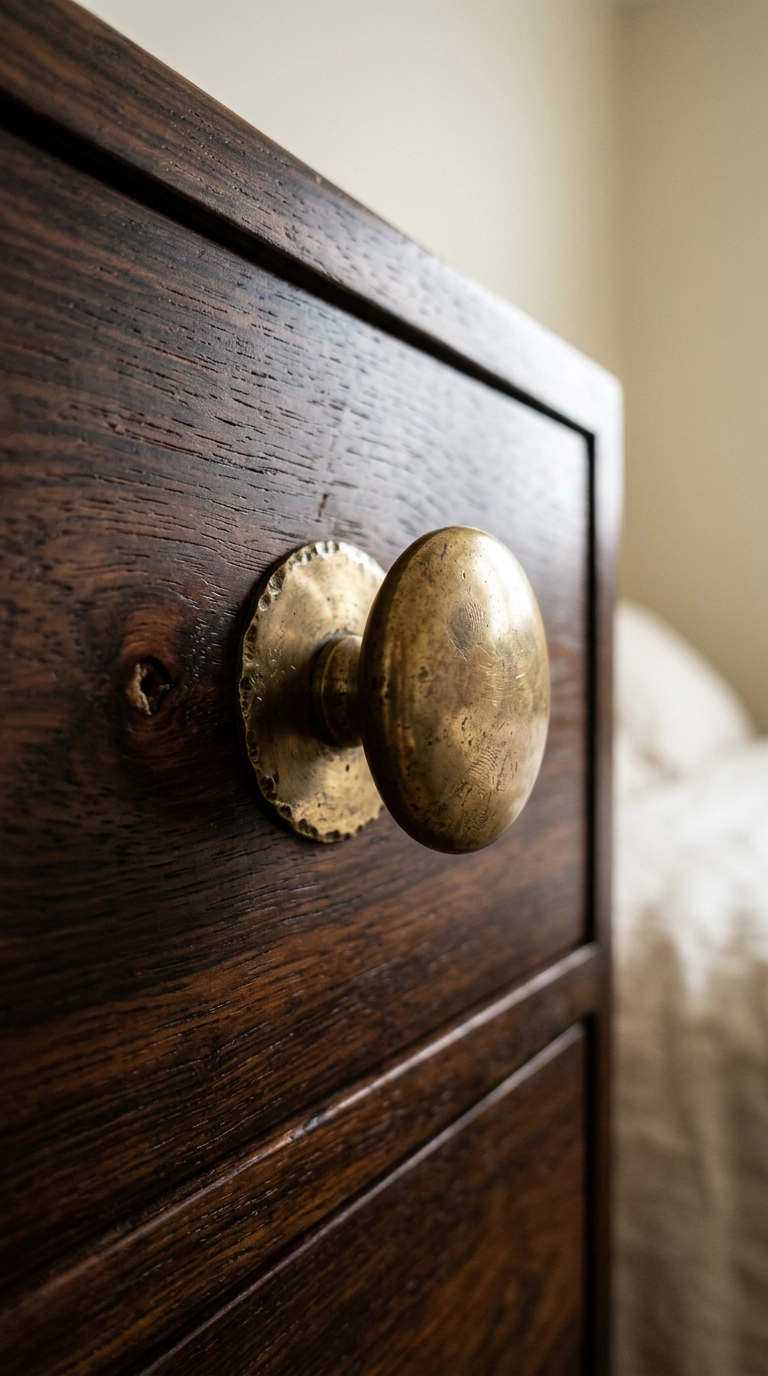
Brass hardware on hardwood is the quiet signature of good Chinese case furniture – round pulls, simple backplates, nothing fussy. Swapping the shiny nickel knobs on an existing dresser for unlacquered brass is the highest return-per-dollar move in this entire list.
19. A Porcelain Garden Stool Doing the Job of a Nightstand
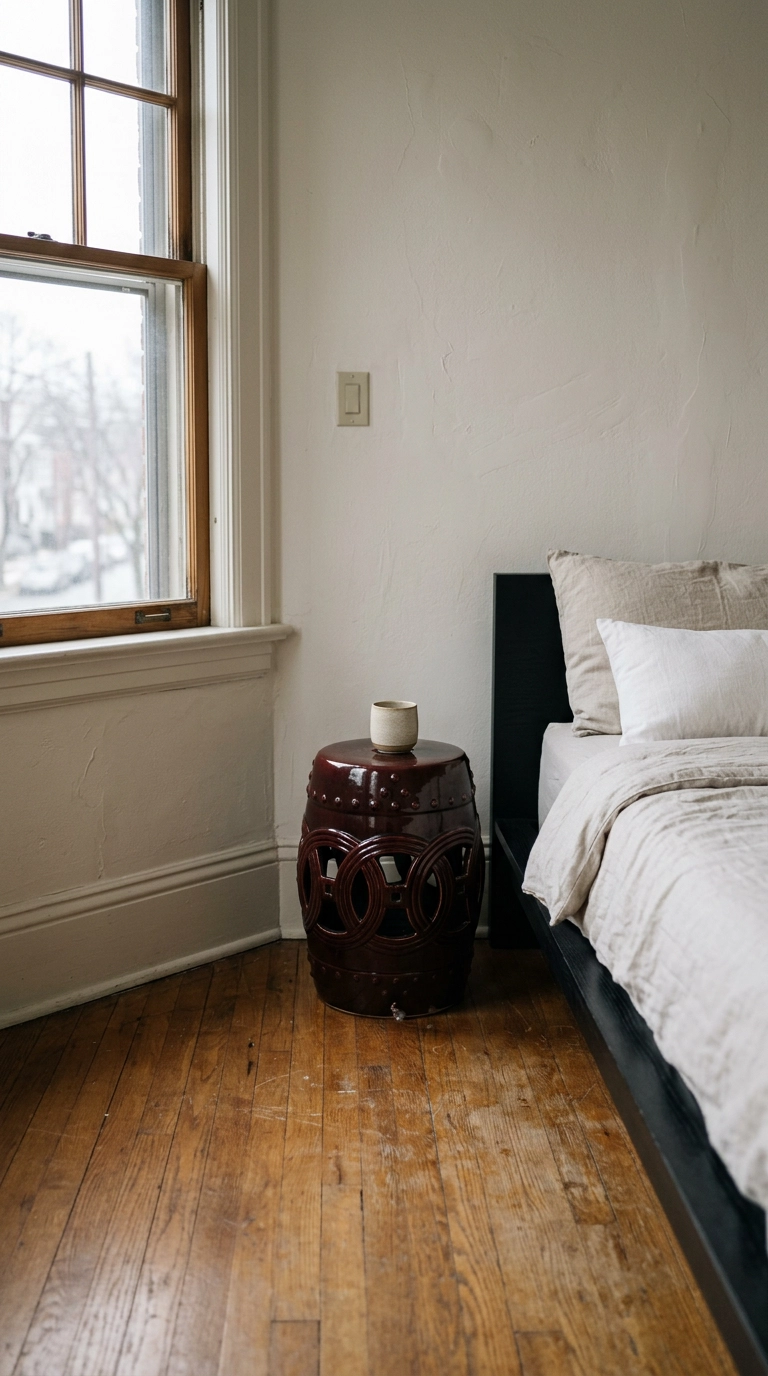
The ceramic garden stool is one of those pieces that has been quietly useful for centuries, originally for courtyards and garden pavilions, and it works beautifully in a bedroom because it has no drawers to fill with junk. It holds a lamp or a cup and that’s the end of it, which is exactly what a small room needs.
20. Woven Bamboo Blinds Instead of Anything Made of Plastic
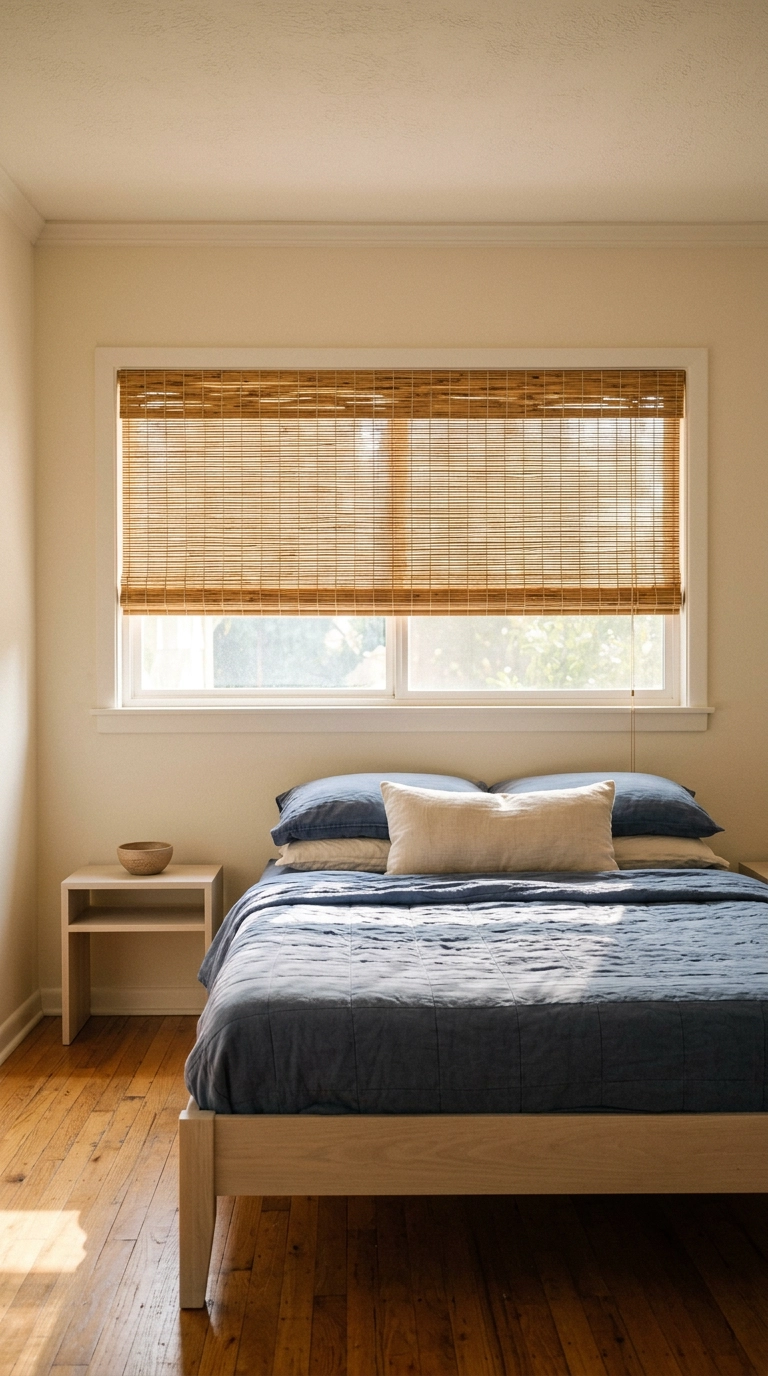
Split-bamboo and reed blinds have shaded Chinese windows for a very long time, and they solve something vinyl blinds never will: they filter light rather than blocking it, so the room stays bright while the glare drops. The horizontal light bands they throw across a floor in late afternoon are the best free decoration in this article.
21. A Chinese Art Deco Rug, the Most Underrated Thing on This List
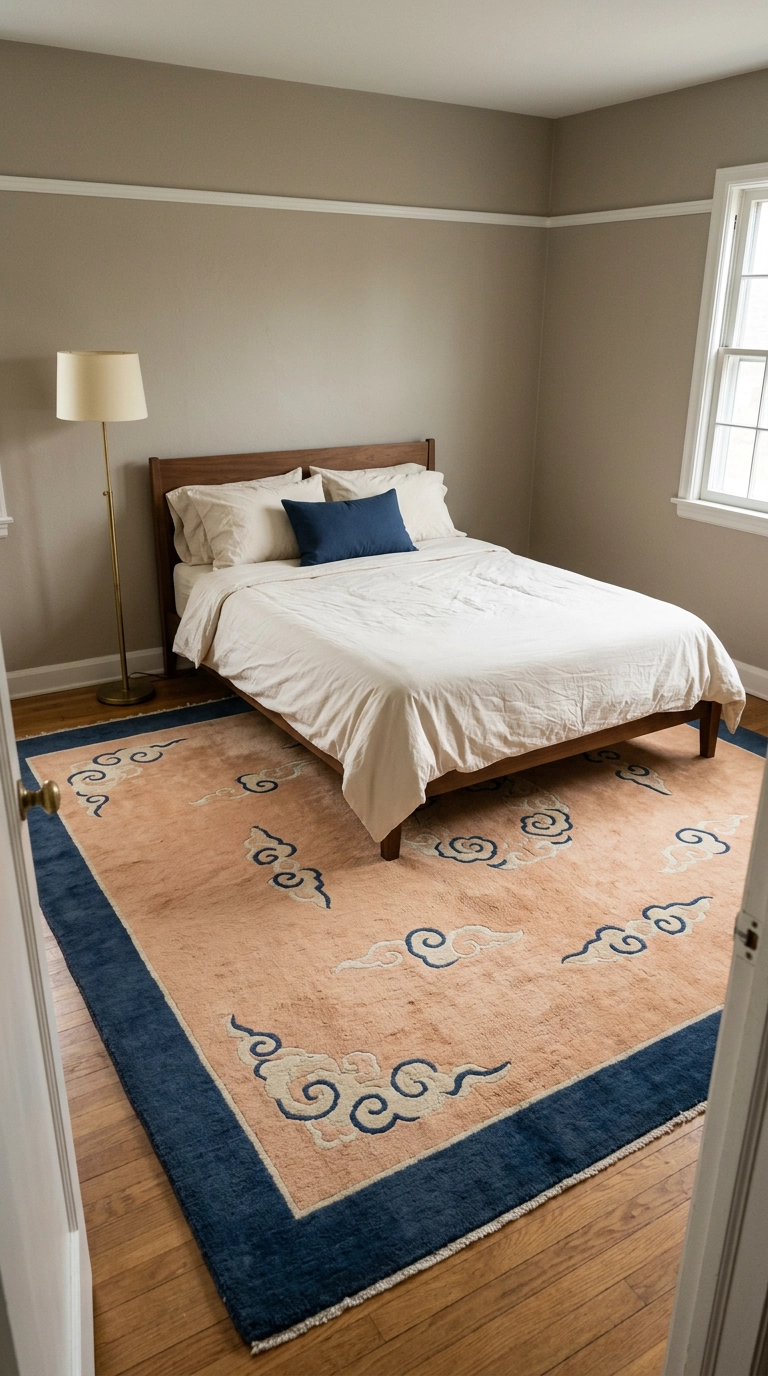
These come from Tianjin workshops in the 1920s and 30s, often sold as Nichols rugs, and they are the strangest, best bridge between Chinese motif and Western room. Thick wool pile, open fields of apricot or dusty gold, a few stylized clouds or blossoms, and a plain wide border — sparse enough to sit under a modern bed without fighting it.
22. A Small Tea Corner, Because a Bedroom Should Have Somewhere to Sit
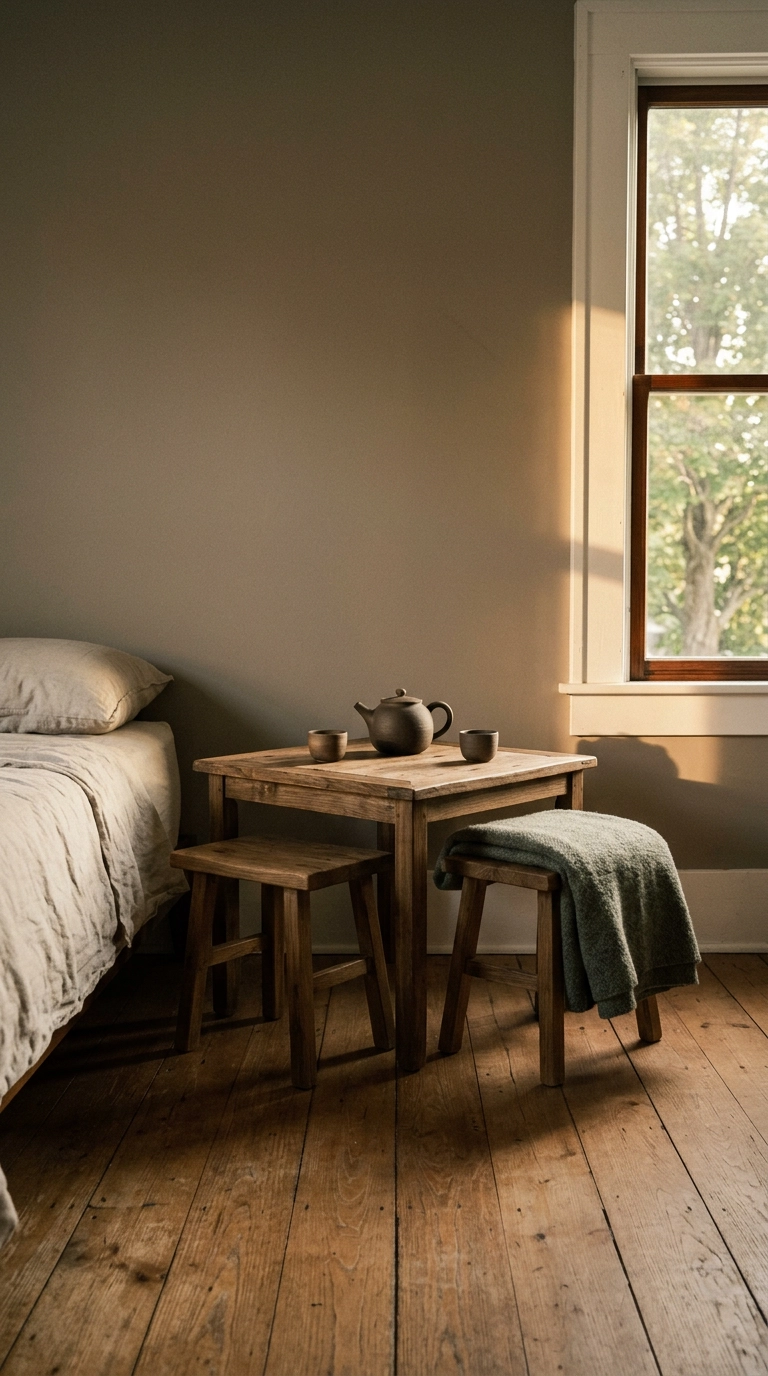
Tea culture is woven through Chinese domestic life in a way that’s hard to overstate, and a low table with two stools is a far better use of a bedroom corner than the armchair nobody sits in. Low is the whole point: at 16 inches you sit slightly cross-legged and the corner feels like a separate room, which is the same trick the moon gate pulls with a doorway.
Where I’d Actually Start
If this list feels long, start with one object rather than one wall. Buy a single good thing — a pair of blue-and-white lamps, a lacquer cabinet, one hand-painted scroll — and live with it for a month before adding anything. Chinese interiors have never been about accumulation; the classical rooms that still look right today are mostly empty space with a few very considered pieces in them. That’s the actual lesson, and it happens to be the cheapest one.
The mistake to avoid is buying the theme in one shopping trip. A dozen mass-market items with the same generic motif on them will read as costume no matter how much you spend, while one real piece of joinery next to plain white bedding reads as intention. Buy fewer, better things, from working makers where you can, and use the right names for what you’re buying — Ming-style, chinoiserie, Jingdezhen porcelain, Tianjin Art Deco. Knowing which tradition a piece comes from is what separates decorating with a culture from decorating at it. And if you buy calligraphy, ask what it says.
Mostly, let the room stay quiet. Red at ten percent, one pattern, one piece of art with a whole wall to itself, and enough bare surface that your eye has somewhere to rest — that combination is what makes a bedroom feel serene rather than merely decorated, and it costs nothing to restrain yourself. If you’d like more room-by-room breakdowns like this one, along with the paint colors, sources, and pieces I actually use, join my newsletter and I’ll send new ideas straight to your inbox.


