
23+ Cool Arcade Room Decor Ideas That Glow, Wow, and Actually Work in 2026

I got talked into designing my first home arcade by a client who owned exactly one cabinet and had it shoved against a wall like a filing cabinet, and honestly, that room changed how I think about game spaces. An arcade room is one of the only rooms in an American house where the furniture glows, makes noise, and weighs three hundred pounds, which means the usual decorating rules bend a little. I’ve since done basements, bonus rooms over garages, one very tight Chicago apartment corner, and a full-blown dedicated arcade with a token machine, and the ideas below are the ones that survived real life.
Arcade Room Decor Ideas
1. Line Every Upright Cabinet Along One Dark Wall
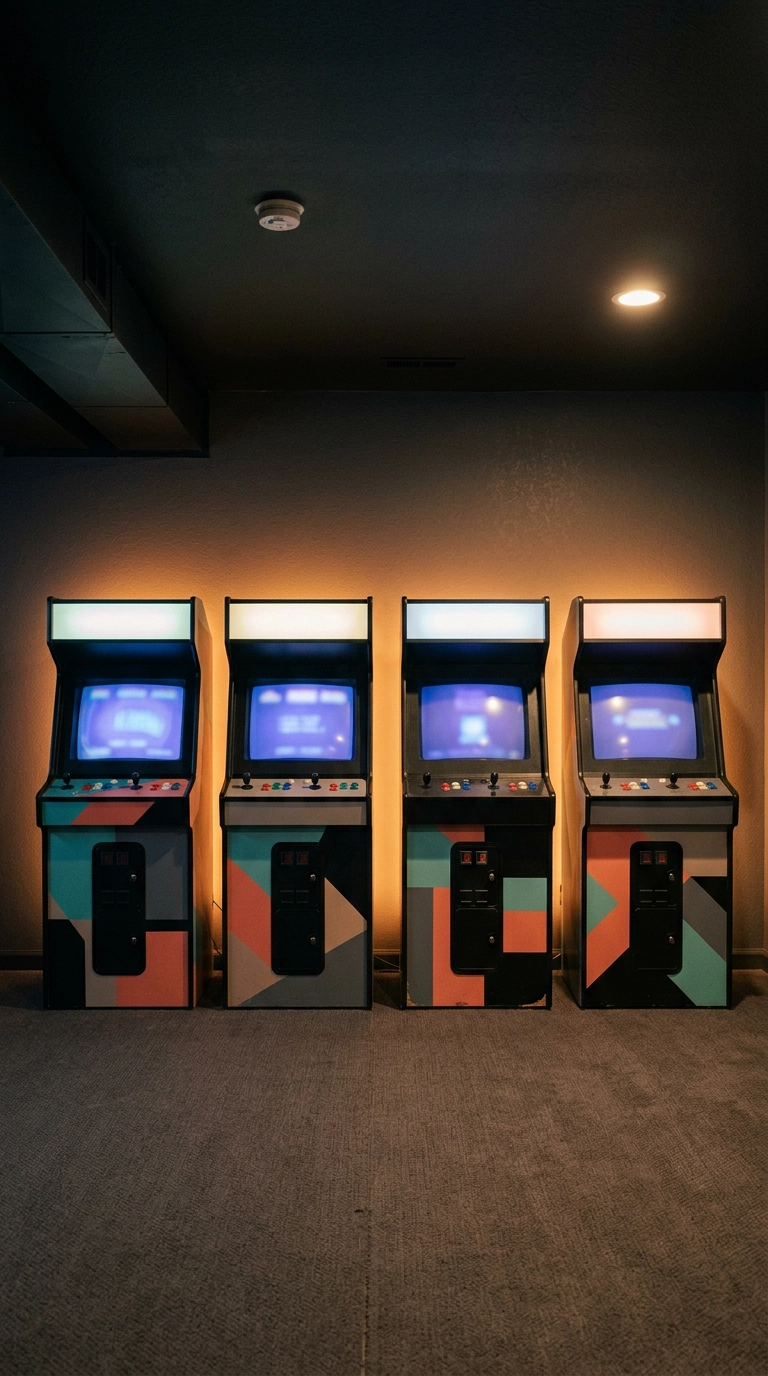
Scattering cabinets around a room makes them read as storage. Put them shoulder to shoulder in one straight row against your darkest wall and suddenly you have a designed space, because the eye reads a repeating vertical rhythm as intentional.
2. The Single-Cabinet Living Room Corner
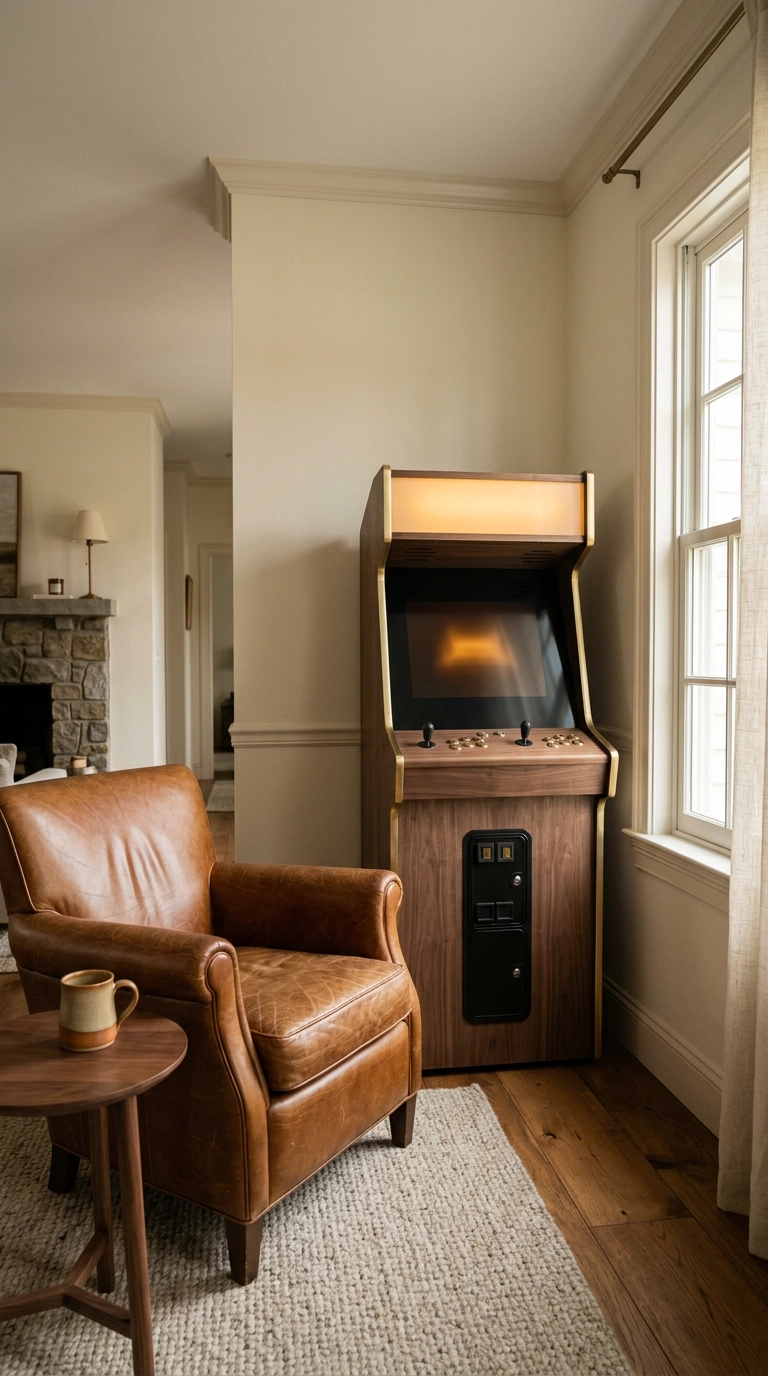
Most people do not want a dedicated arcade. They want one machine that does not make the living room look like a rec center, and a wood-grain vinyl wrap or a matte black repaint handles that in an afternoon.
3. One Big Neon Piece as the Room’s Anchor
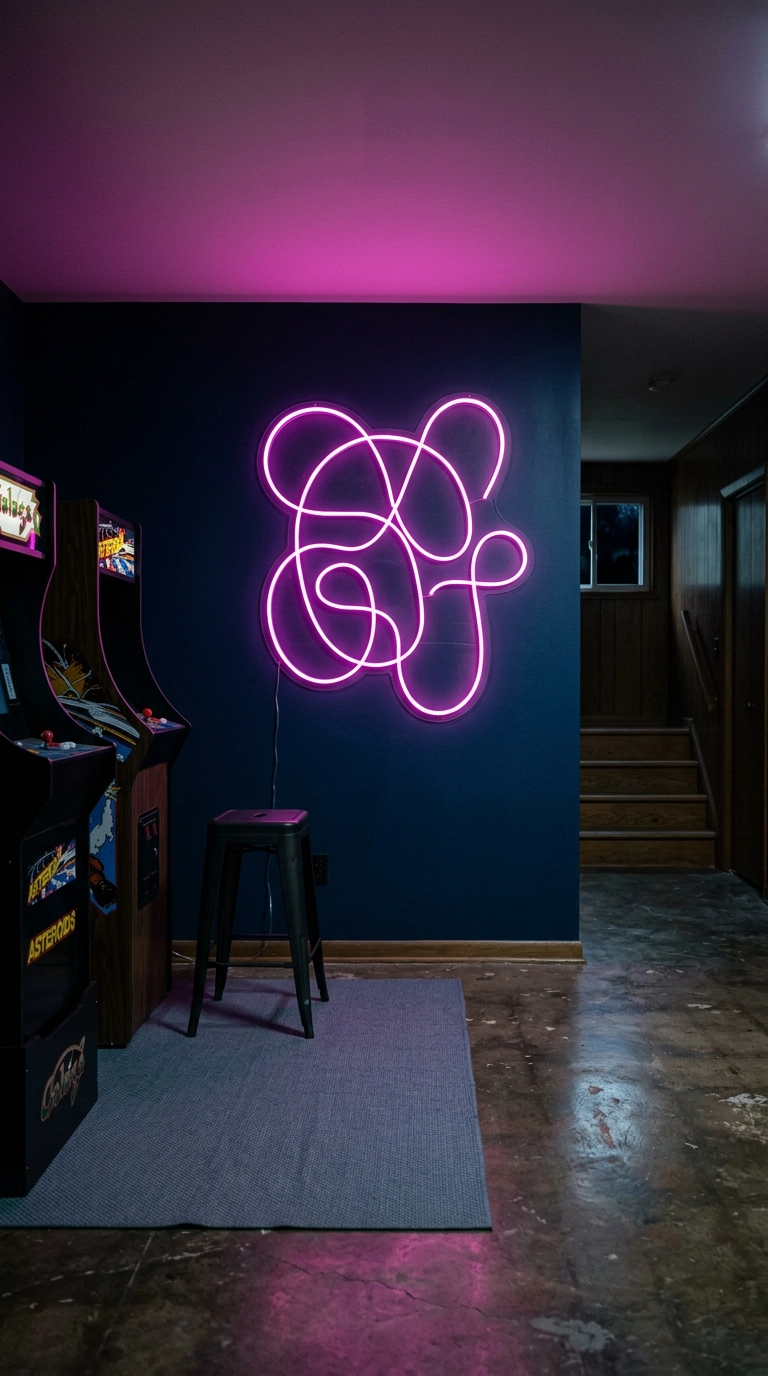
One large neon piece beats five small ones every time. Visual weight matters here, meaning a single 30-inch glowing shape holds a wall the way a piece of art does, while a scatter of little signs reads as clutter that happens to be electrified.
4. Hide LED Strips Behind and Under the Cabinets
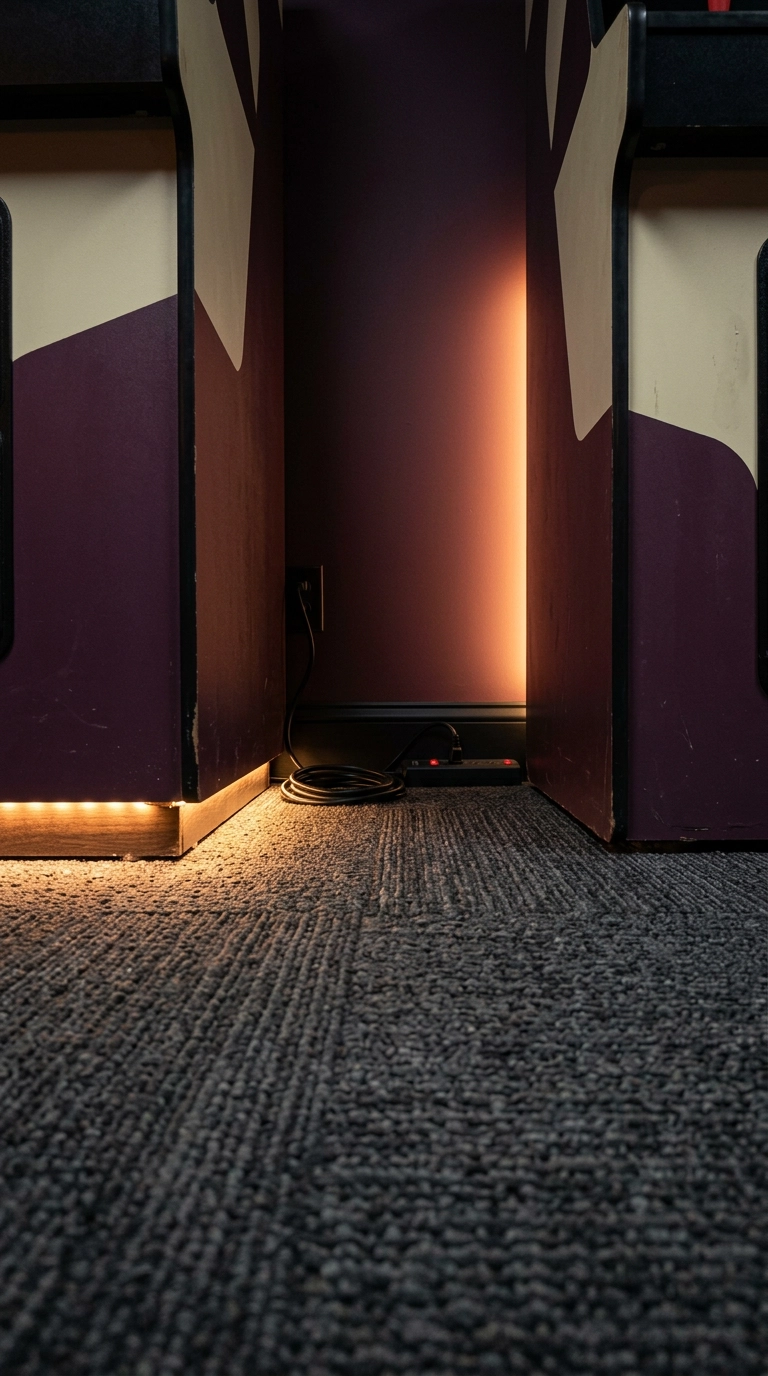
The trick that makes a home arcade look designed instead of assembled is uplighting the wall behind the cabinets and underlighting the kick plate so the machines appear to float slightly. It also solves a real problem, which is that a pitch-dark room means stubbed toes.
5. Go Dark on the Walls, But Not Blind Dark
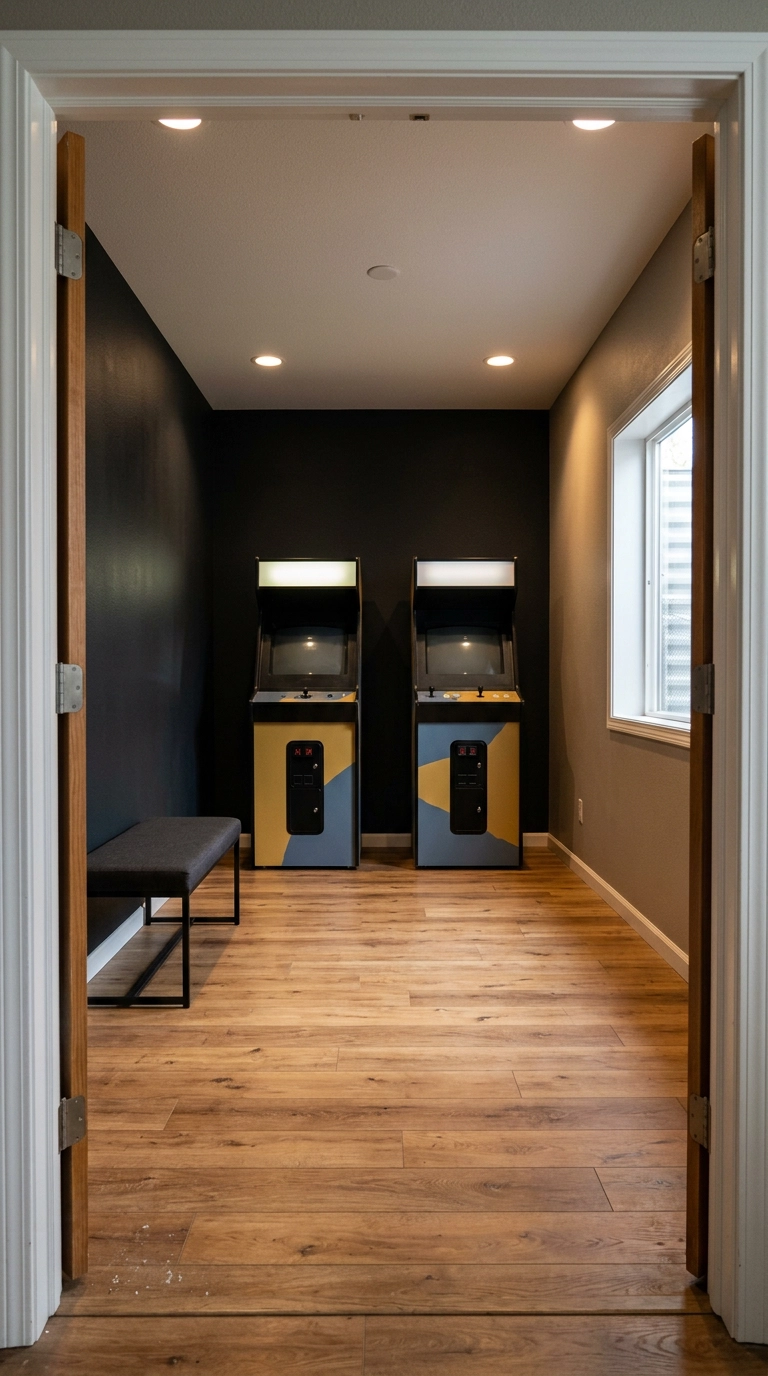
Dark walls make glowing screens look ten times better, which is why every commercial arcade is painted black. The catch is that an all-black basement with one small egress window feels like a cave at 2 p.m. on a Sunday.
6. Build a Backlit Marquee Ledge Above the Cabinets
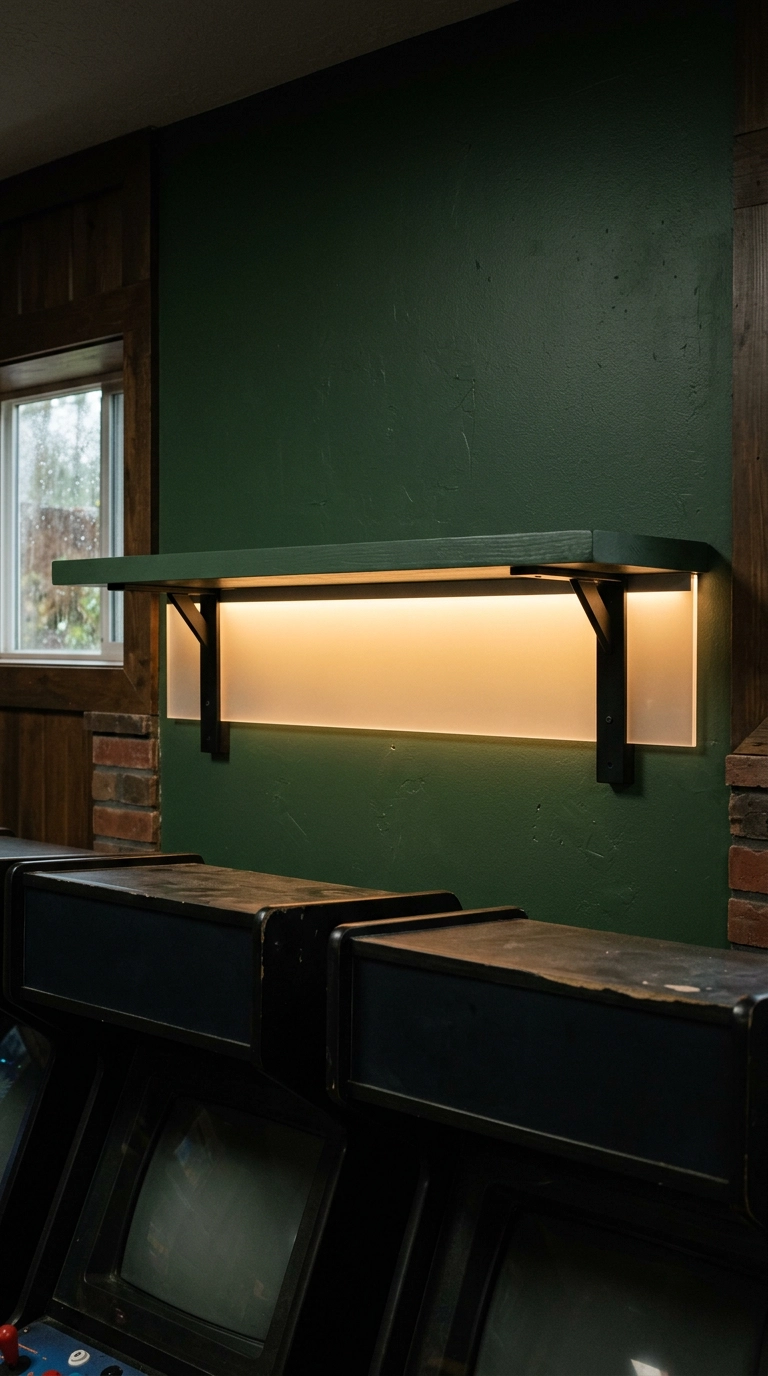
A horizontal band of glow above the cabinets does what crown molding does in a formal room, which is give the wall a top edge so it does not just run out of ideas at the ceiling. Frosted acrylic over LED tape on a 1×6 ledge is a solid weekend project for anyone who owns a drill.
7. A Tight Grid of Framed Abstract Art Instead of a Poster Pile
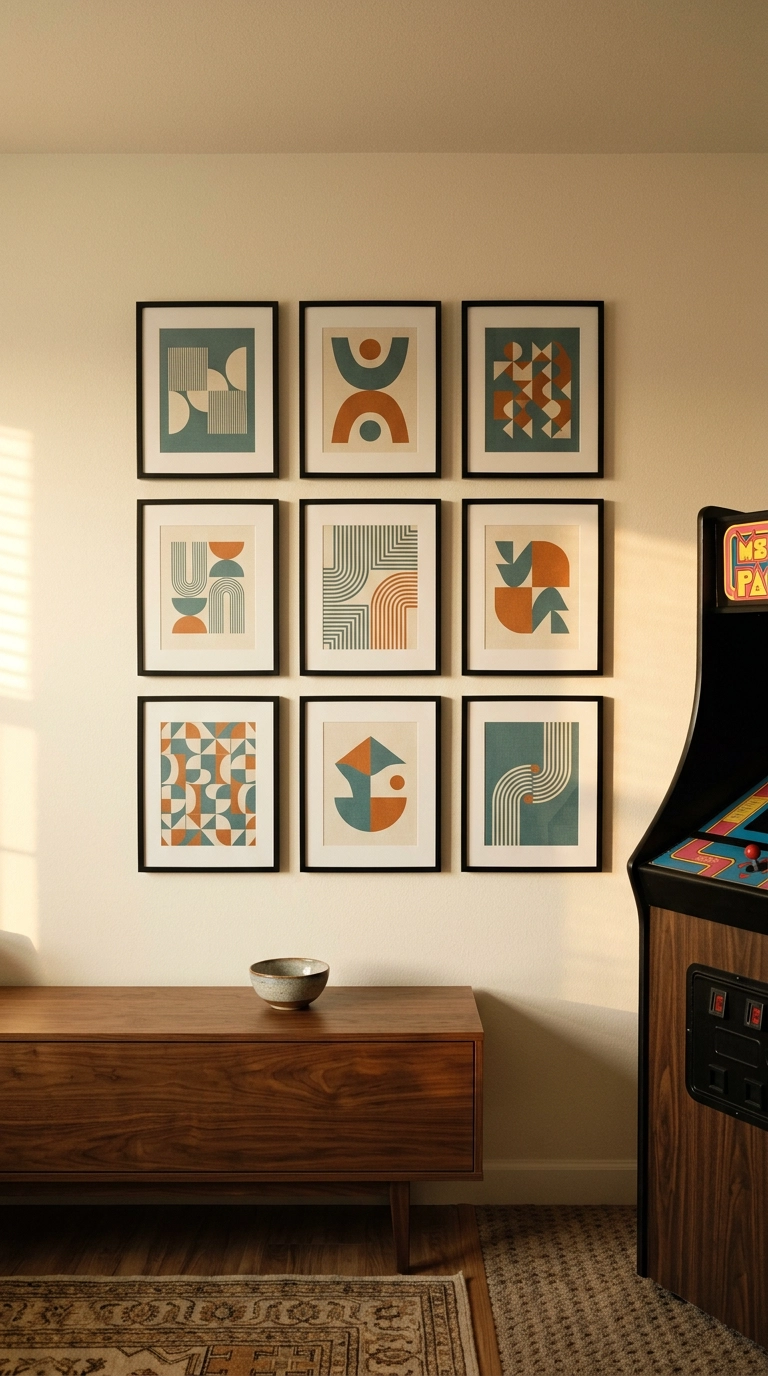
Everybody’s instinct is to tape up posters, and everybody’s arcade room ends up looking like a teenager’s locker. The fix is uniformity: identical frames, identical mats, a strict grid with two-inch gaps, and the chaos inside the frames stops reading as chaos.
8. Commercial Carpet Tiles on the Floor
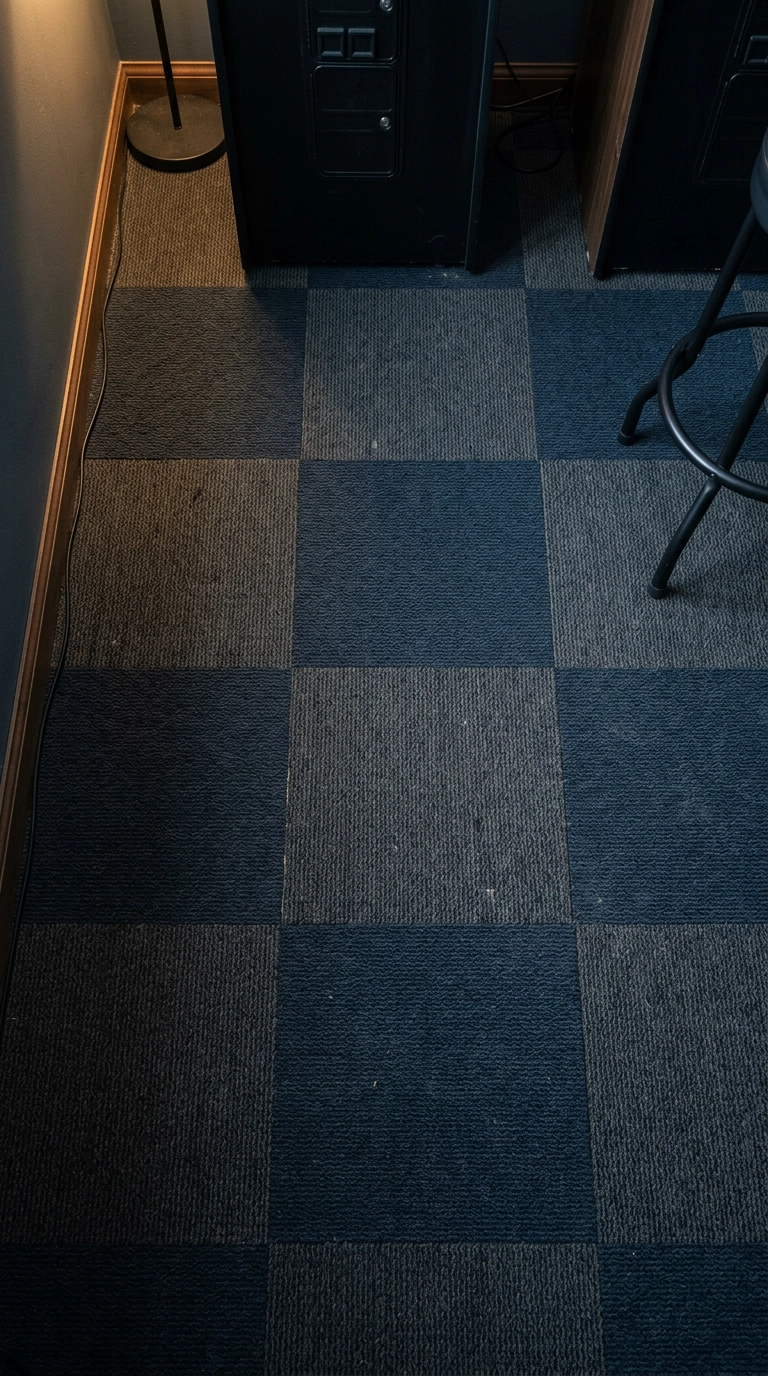
Carpet tiles are the unglamorous hero of every basement arcade I have done. They absorb the noise a concrete floor bounces around, they are warm underfoot in a below-grade room, and when a soda goes over you pull up one 20-inch square and replace it instead of the whole floor.
9. Kill the Window Glare Before You Buy Anything Else
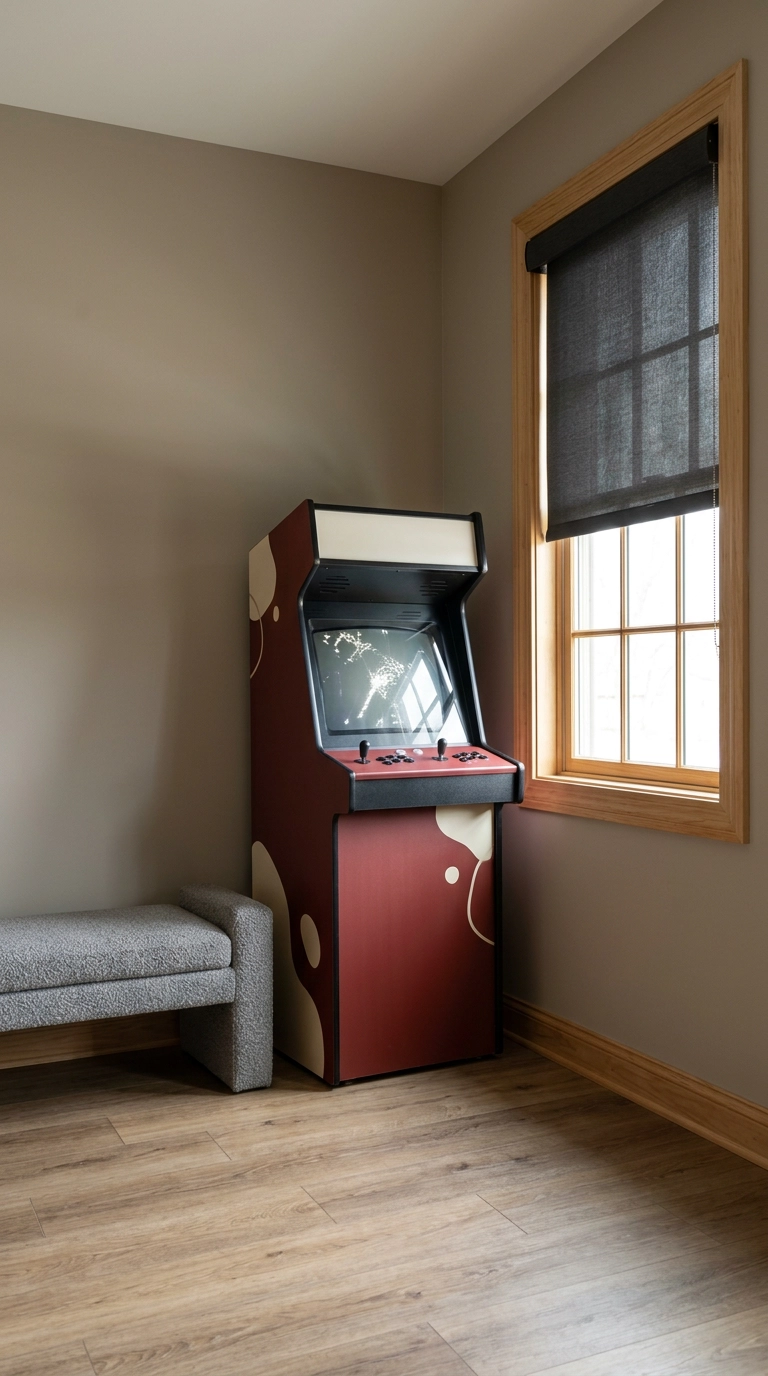
Nobody talks about this and it ruins more arcade rooms than bad paint. An arcade screen sits nearly vertical, so any window across from it turns into a mirror by mid-morning.
10. Soft Panels on the Walls So It Does Not Sound Like a Gymnasium
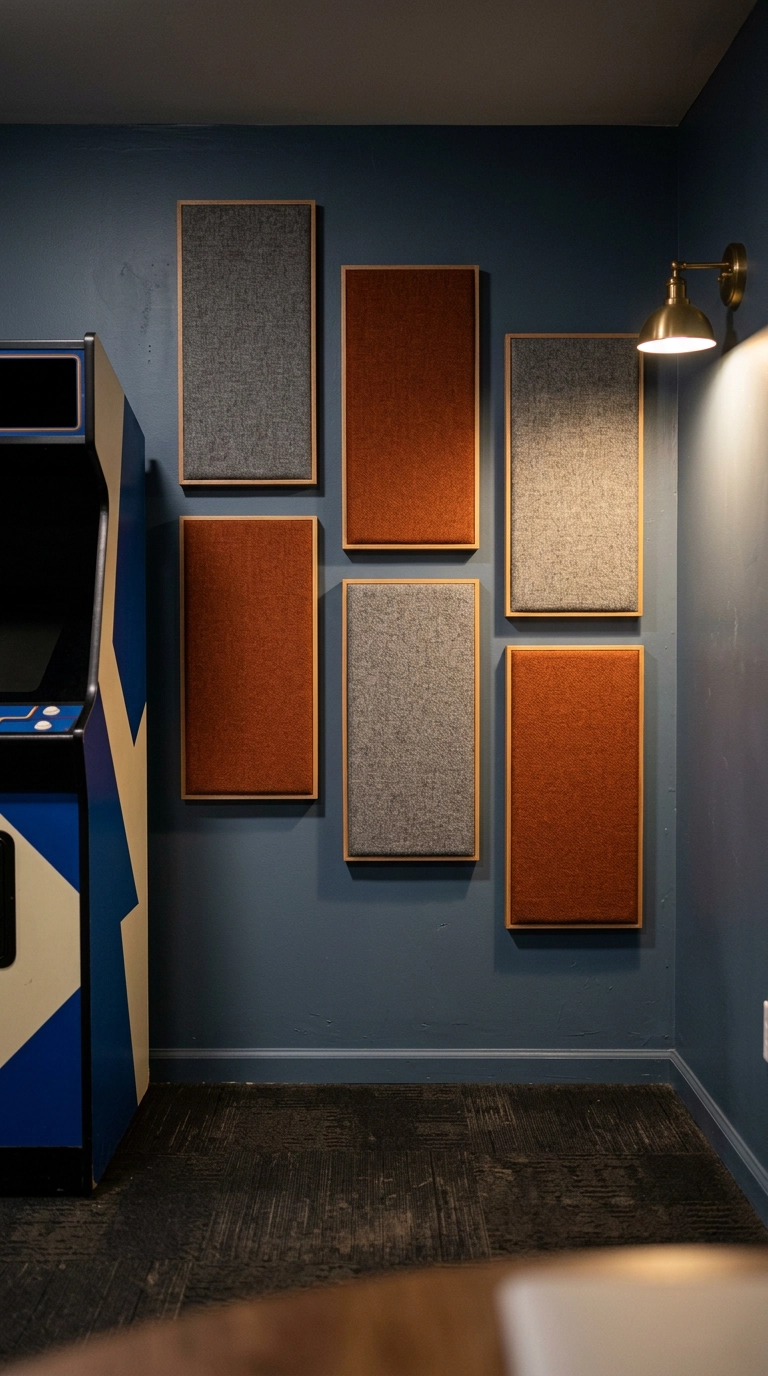
A basement is a concrete box, and cabinet speakers plus hard floors equals a headache by hour two. Fabric-wrapped acoustic panels on the first reflection points, meaning the wall areas directly beside and behind the machines, take a startling amount of harshness out of the room.
11. Give Drinks a Home That Is Not the Cabinet
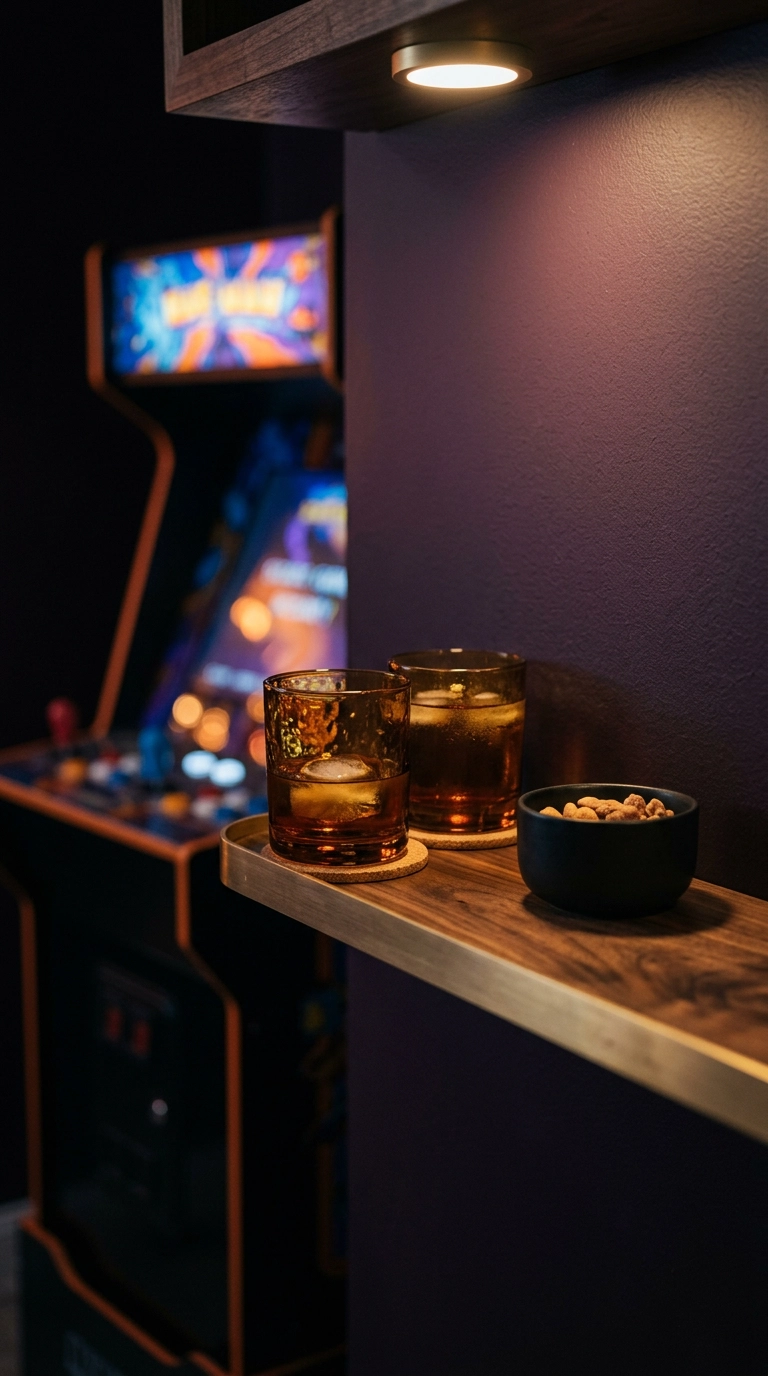
Ask anyone who owns a real cabinet what they fear and it is a full drink set on the control panel. Liquid in a control panel is a genuinely expensive mistake, not a hypothetical one.
12. A Proper Shelf Wall for Consoles and Controllers
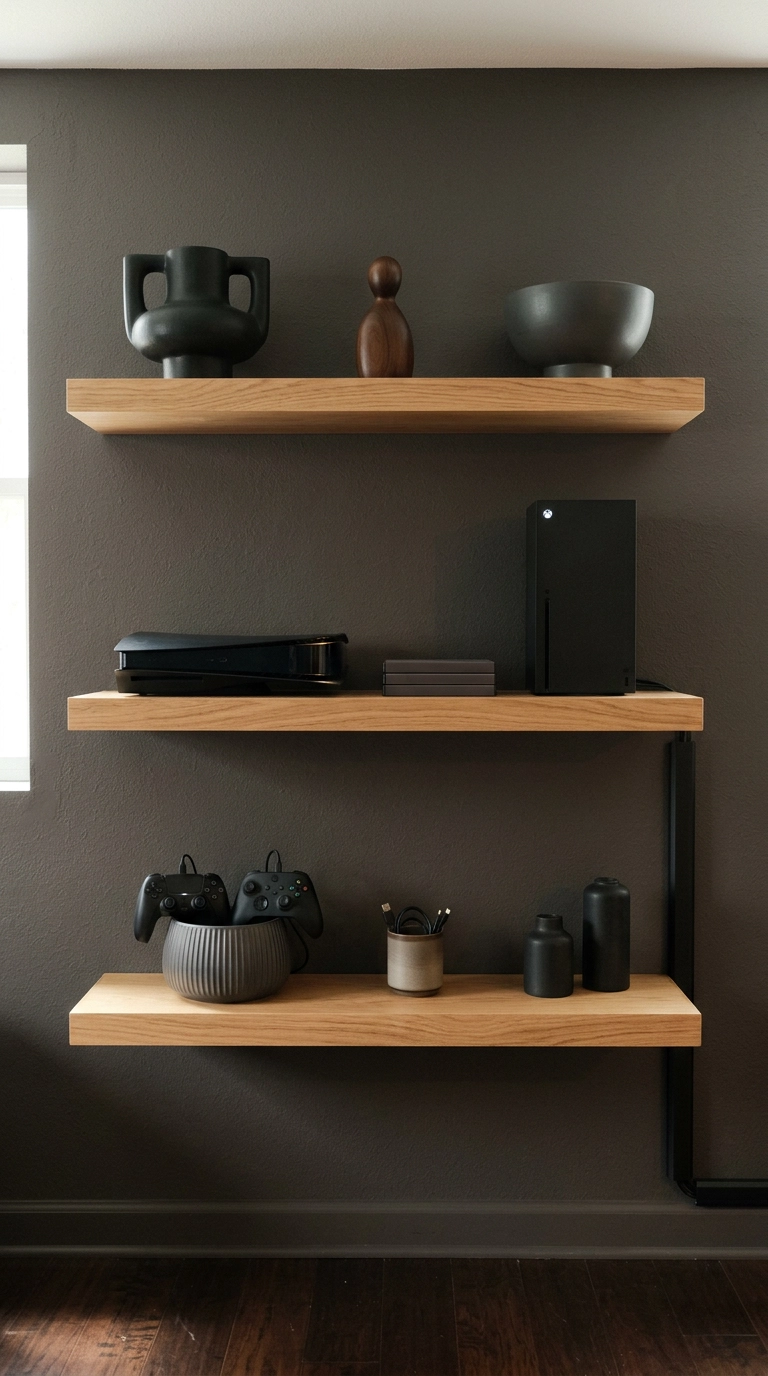
Consoles are ugly little boxes with a lot of cable, so treat them like objects on a shelf rather than gear on a table. Three floating white oak shelves, three or four items per shelf, visible gaps between everything.
13. Seating That Works for Standing Games
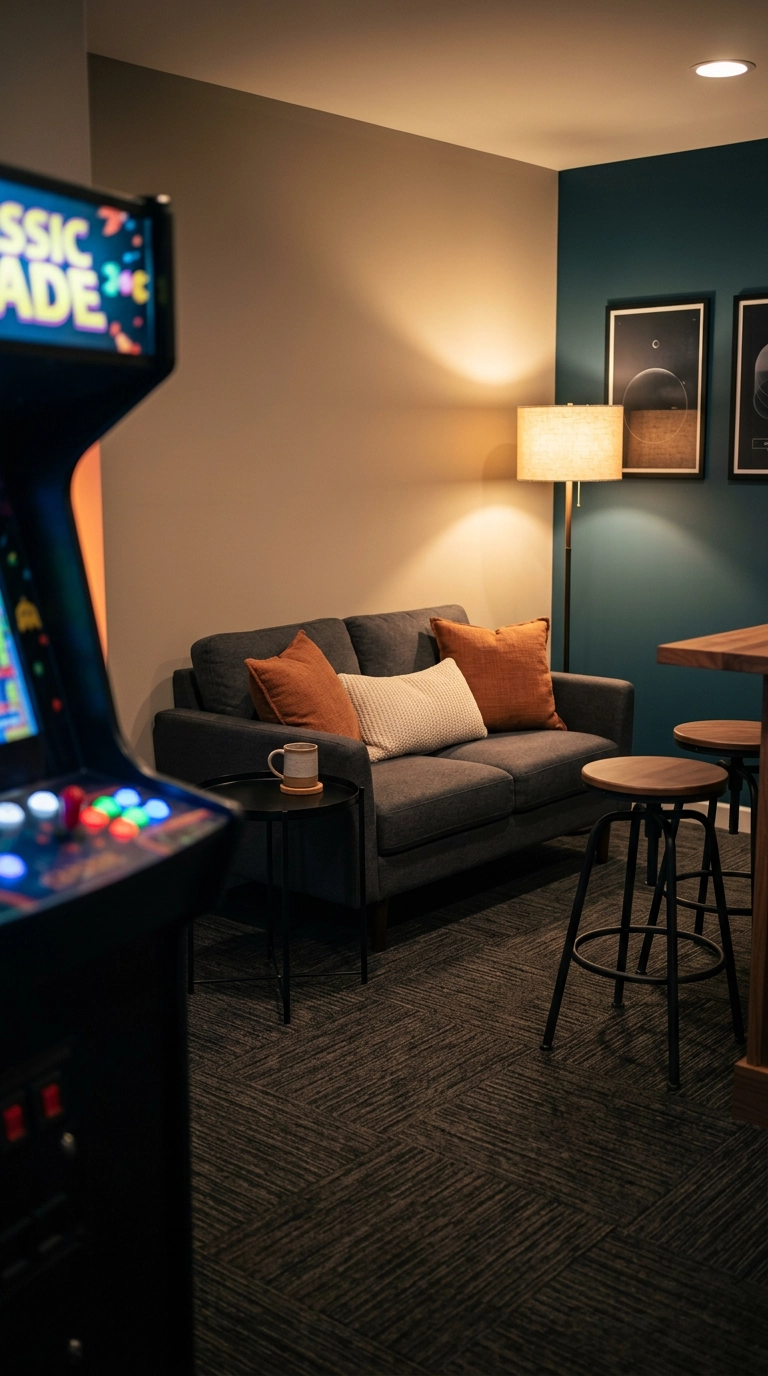
Arcade games are played standing, which means a deep sectional you sink into is the wrong furniture. You want low seating that keeps sightlines to the machines open, plus a couple of swivel stools at roughly counter height so spectators sit at eye level with the player.
14. Use a Cocktail Table Cabinet as an Actual Coffee Table
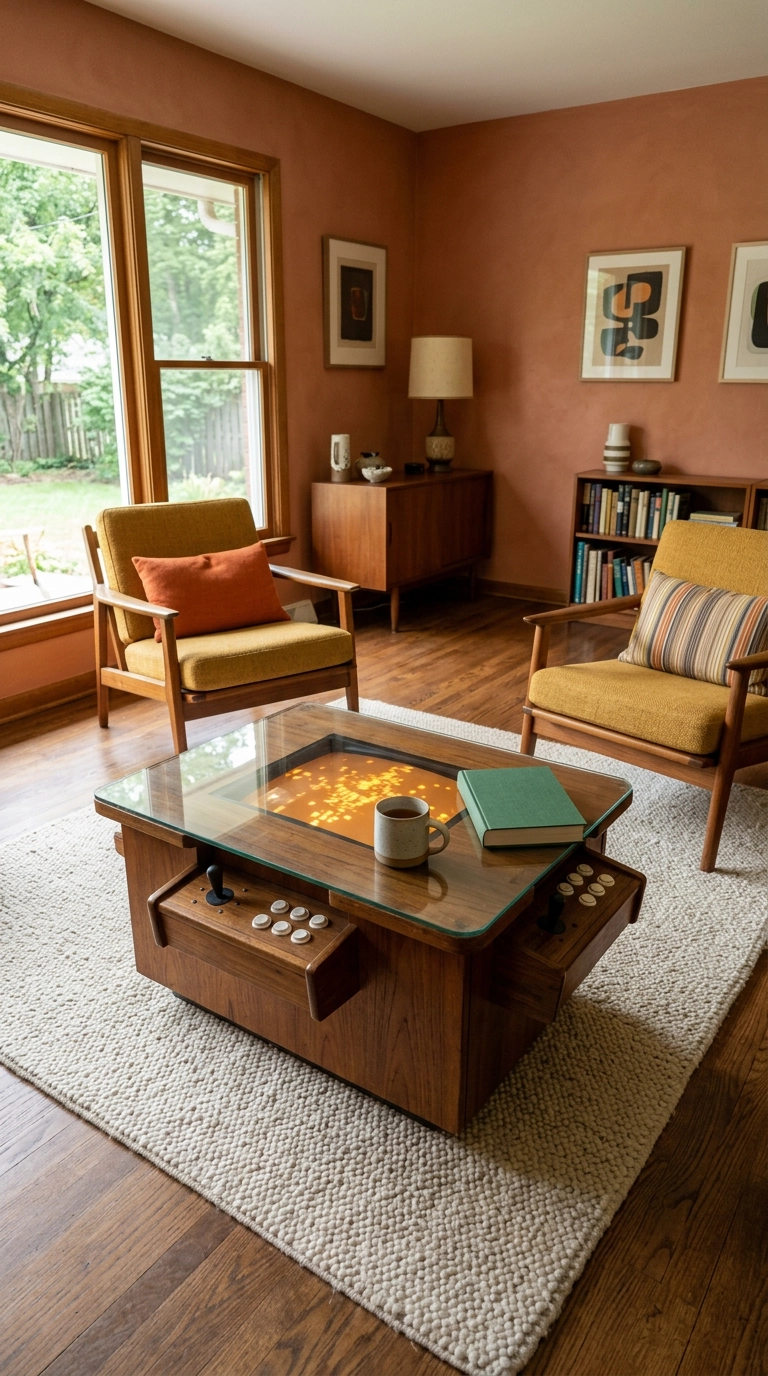
Cocktail cabinets are the sleeper pick for anyone who cannot spare wall space. They sit about 30 inches tall with a glass top, so they genuinely function as a coffee table with two chairs pulled up.
15. The Apartment Version: A Bartop Cabinet on a Credenza
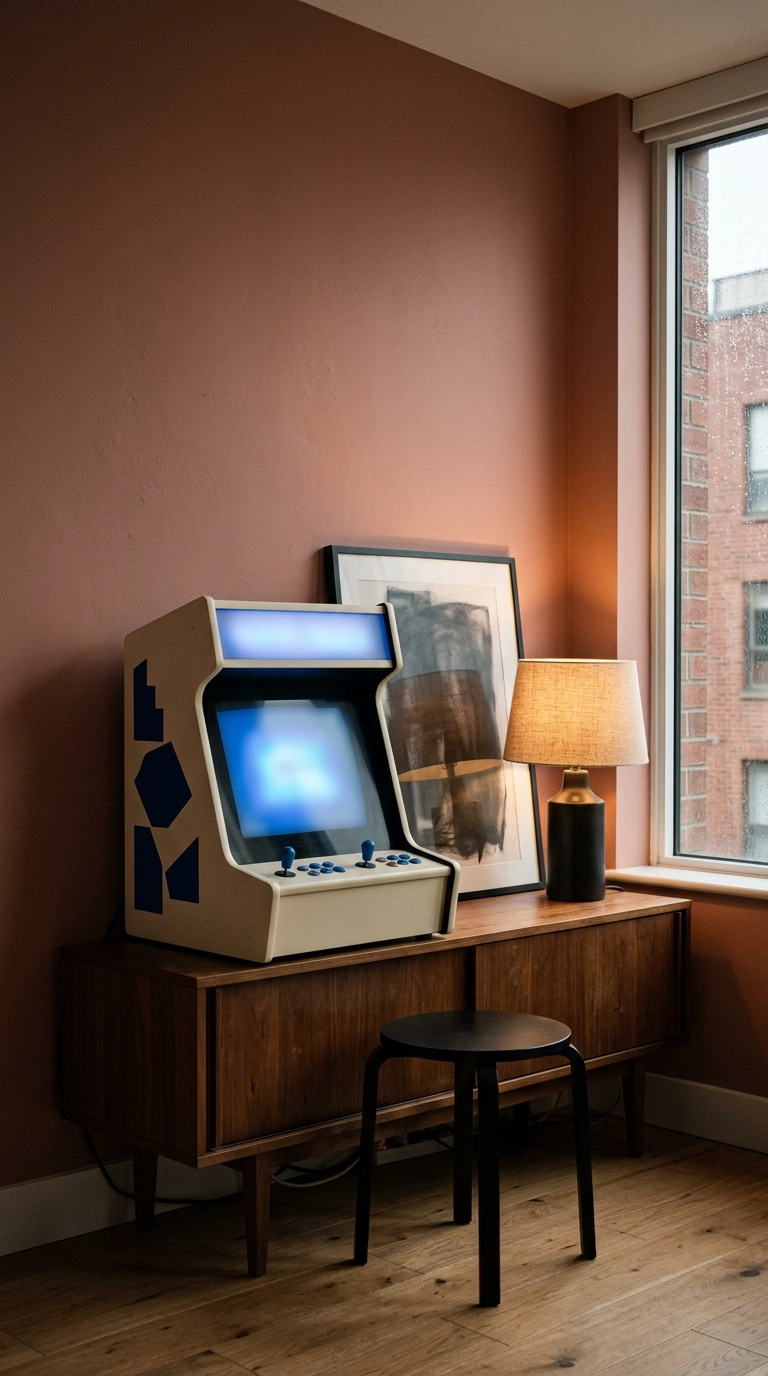
If you live in 600 square feet, a full upright is a non-starter. A bartop unit is roughly the size of a large microwave and sits on furniture you already own, which is why it is the version I recommend most often to renters.
16. A Big Abstract 80s Geometric Wall Mural
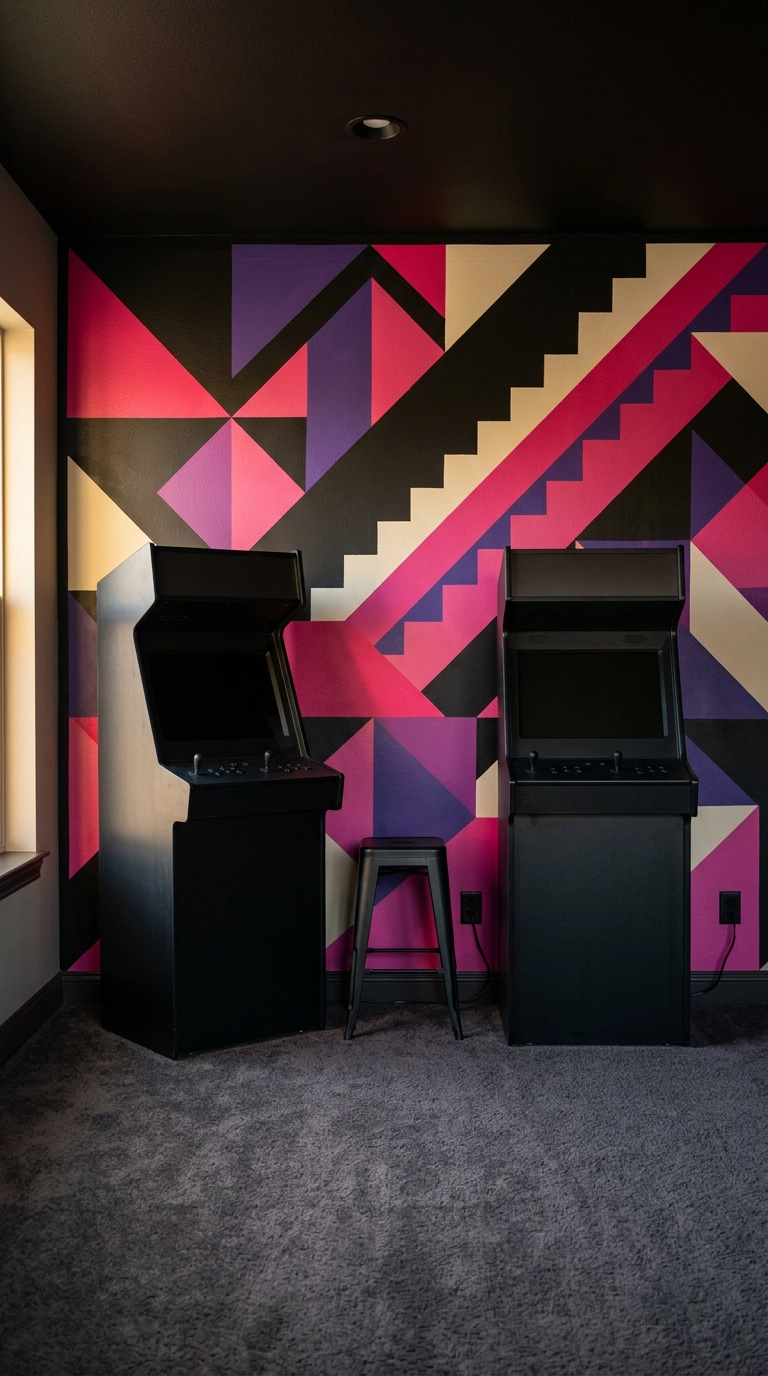
This is the full retro-80s swing, and the reason it works is that the mural does the loud talking so the cabinets can be plain black. Hard-edged triangles and stepped diagonal bands in two colors plus cream is the whole recipe.
17. Paint the Ceiling Black and Double the Perceived Height
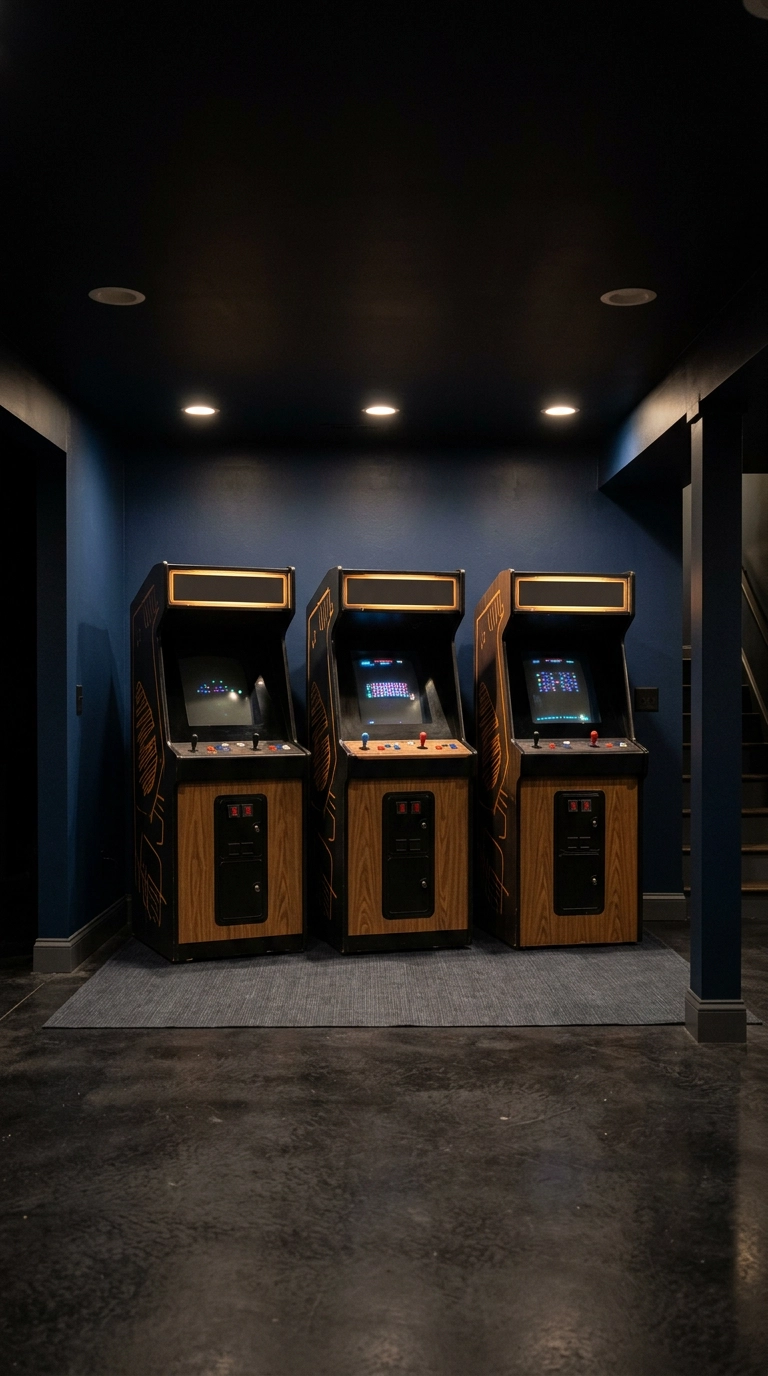
Black ceilings in a basement arcade are counterintuitive and almost always right. The ceiling disappears into shadow, the recessed downlights become the stars, and the visual weight shifts down to the room where the machines are.
18. A Pinball Machine as the Room’s Sculpture
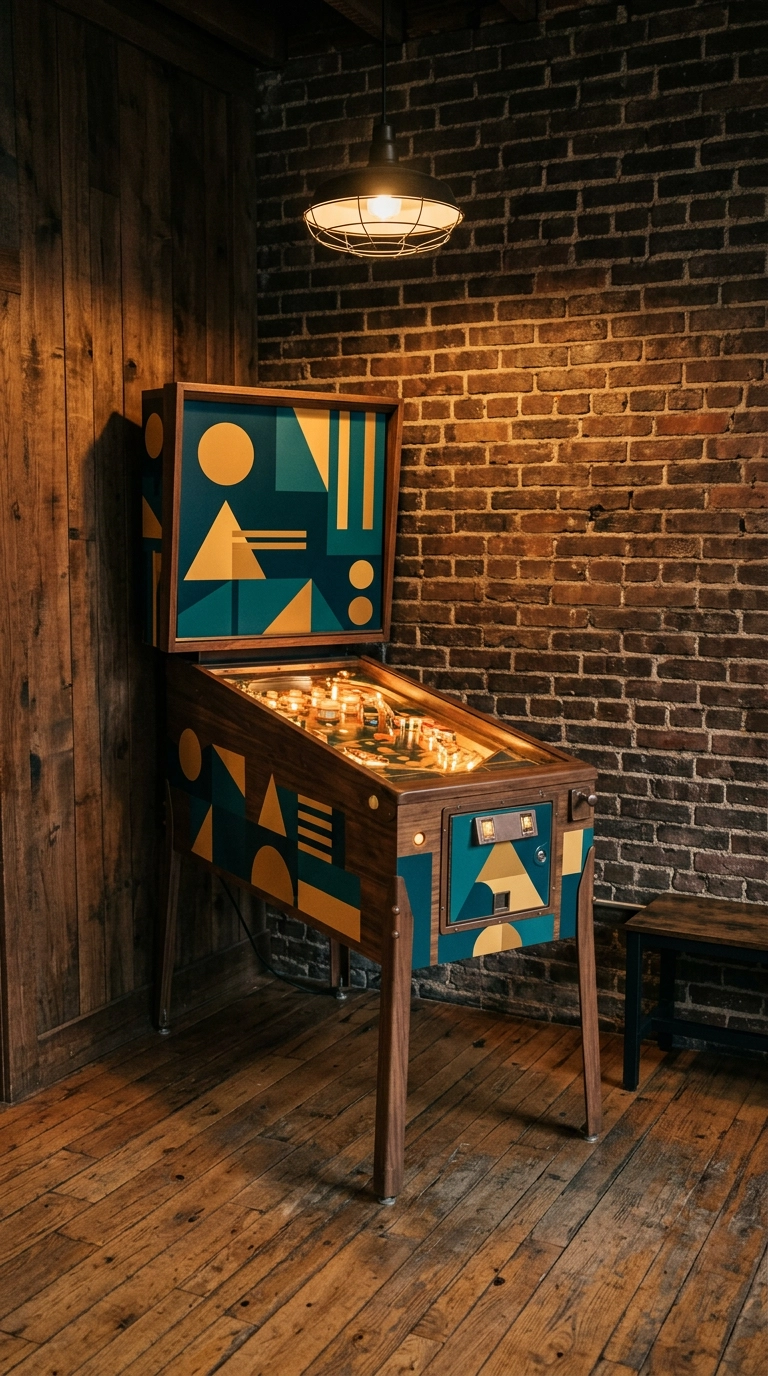
Pinball machines are the arcade equivalent of a statement fireplace. They are wide, luminous, complex-looking objects that command a corner entirely on their own.
19. Wrap Cabinets in Built-In Millwork So They Read as Furniture
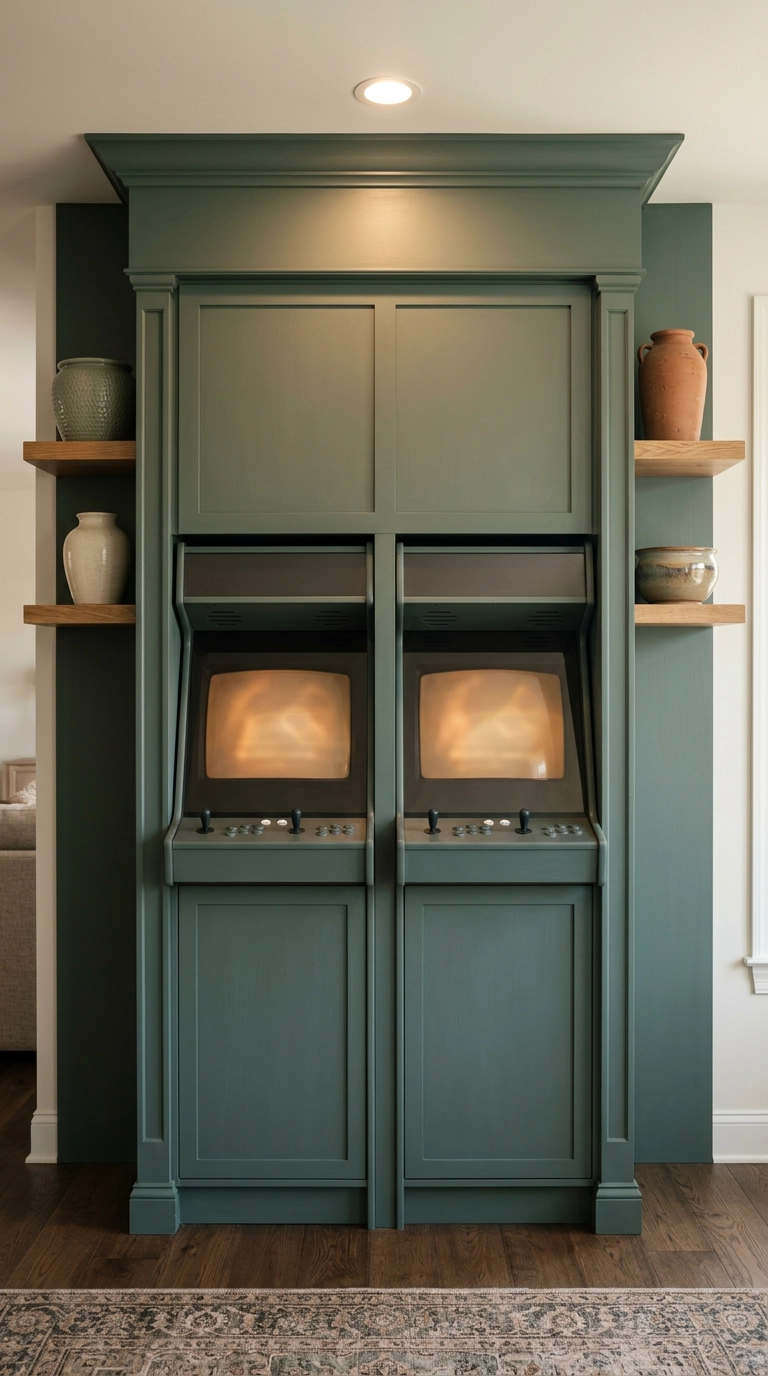
This is the high-end move: surround the cabinets in custom millwork with pilasters and a crown header so they look like a built-in credenza or entertainment center rather than standalone machines. The millwork can be painted MDF, which runs far cheaper than wood, and the paint color ties the whole wall together.
20. Run a Dedicated Circuit Before You Run Anything Else
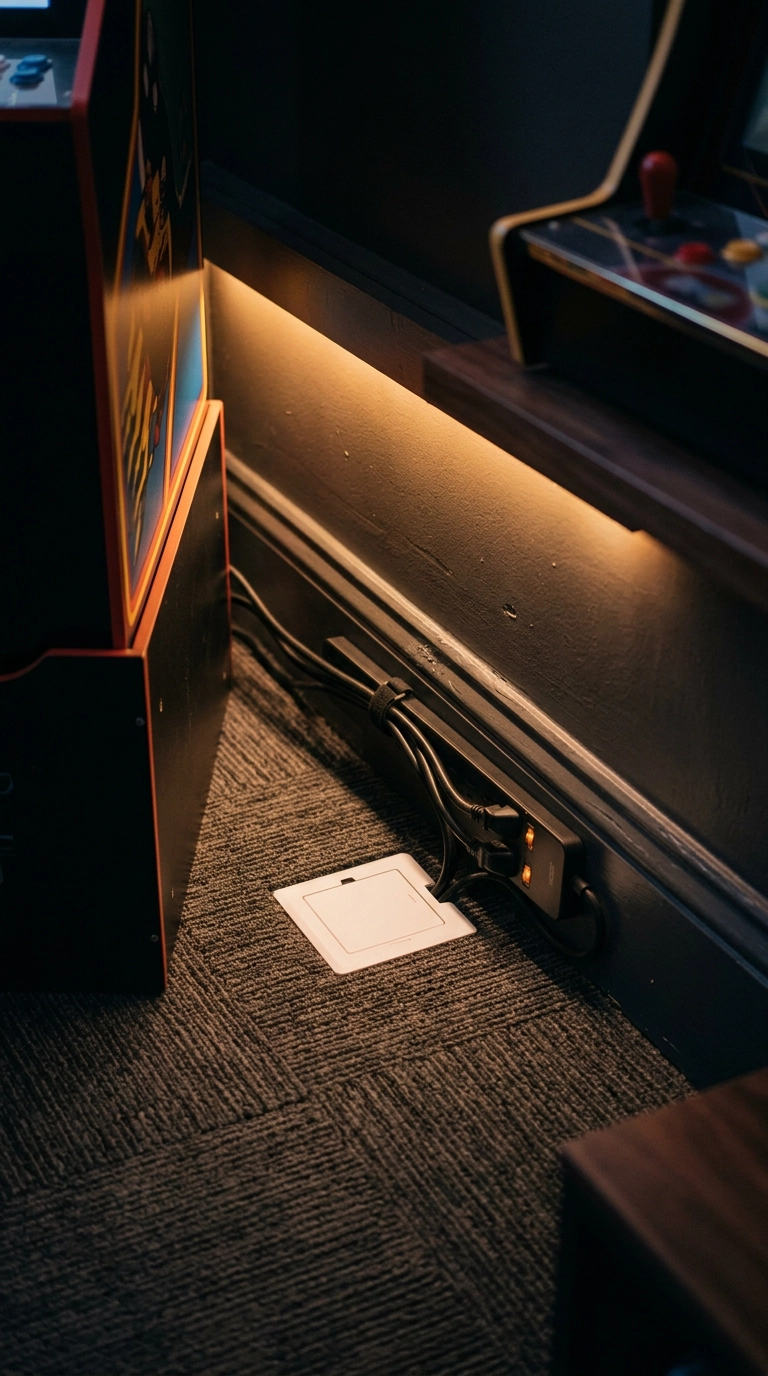
Four upright cabinets on one 15-amp circuit will trip your breaker, probably during the best game of the night. A licensed electrician adding a dedicated 20-amp circuit to the game area is a half-day job and the single highest-return infrastructure investment in any home arcade build.
21. Ship-Lap One Wall in Deep Walnut Stain
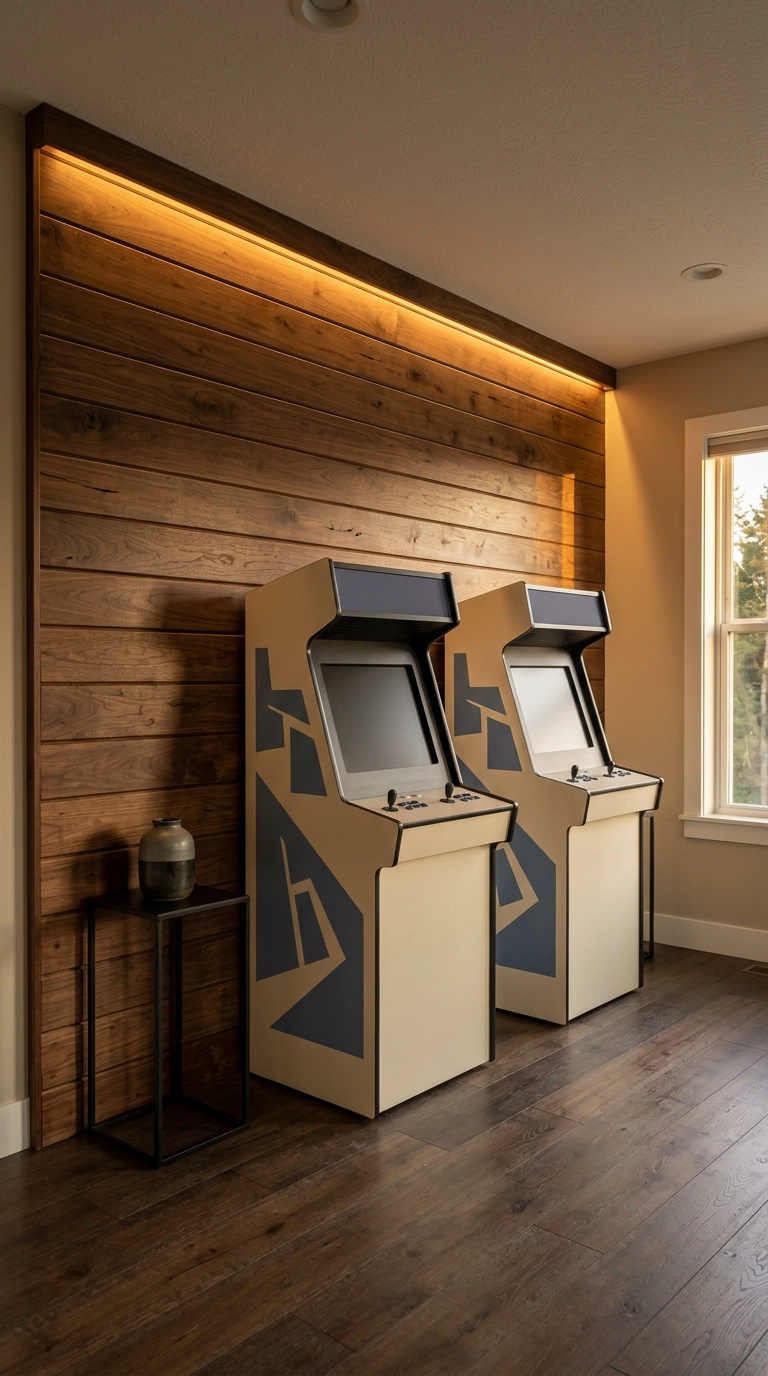
Ship-lap behind the cabinets does the warmth work that paint alone can’t, because the wood grain reads as texture from across the room. A deep walnut stain rather than white-painted ship-lap puts this firmly in the moodier direction, which is exactly right for a game space.
22. Mirror the Front Bar Rail Look With a Standing Ledge at Playing Height
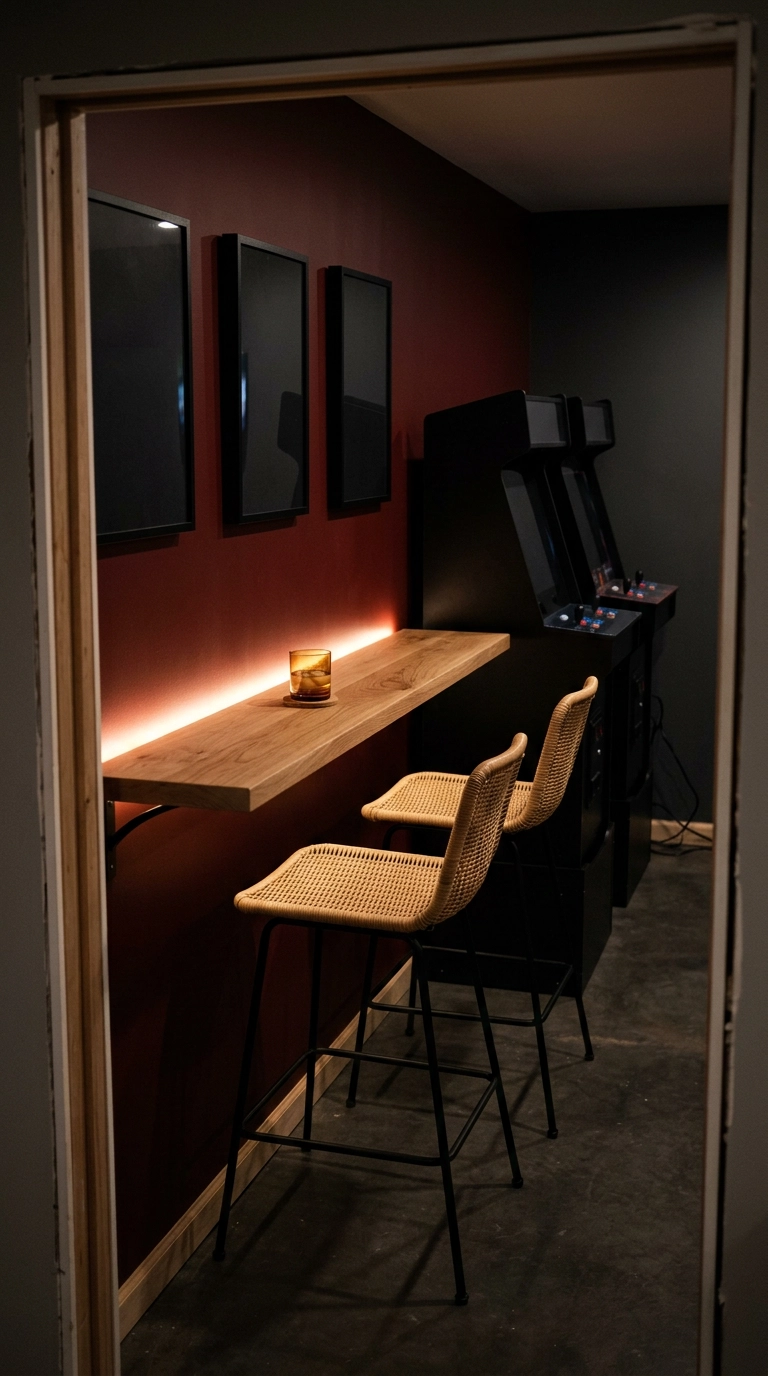
A continuous bar shelf at 42 inches along one wall solves two problems at once: it gives players somewhere to set things down between games, and it gives the wall a strong horizontal line that grounds the space.
23. A Modern Minimal All-Black Setup for Small Spaces
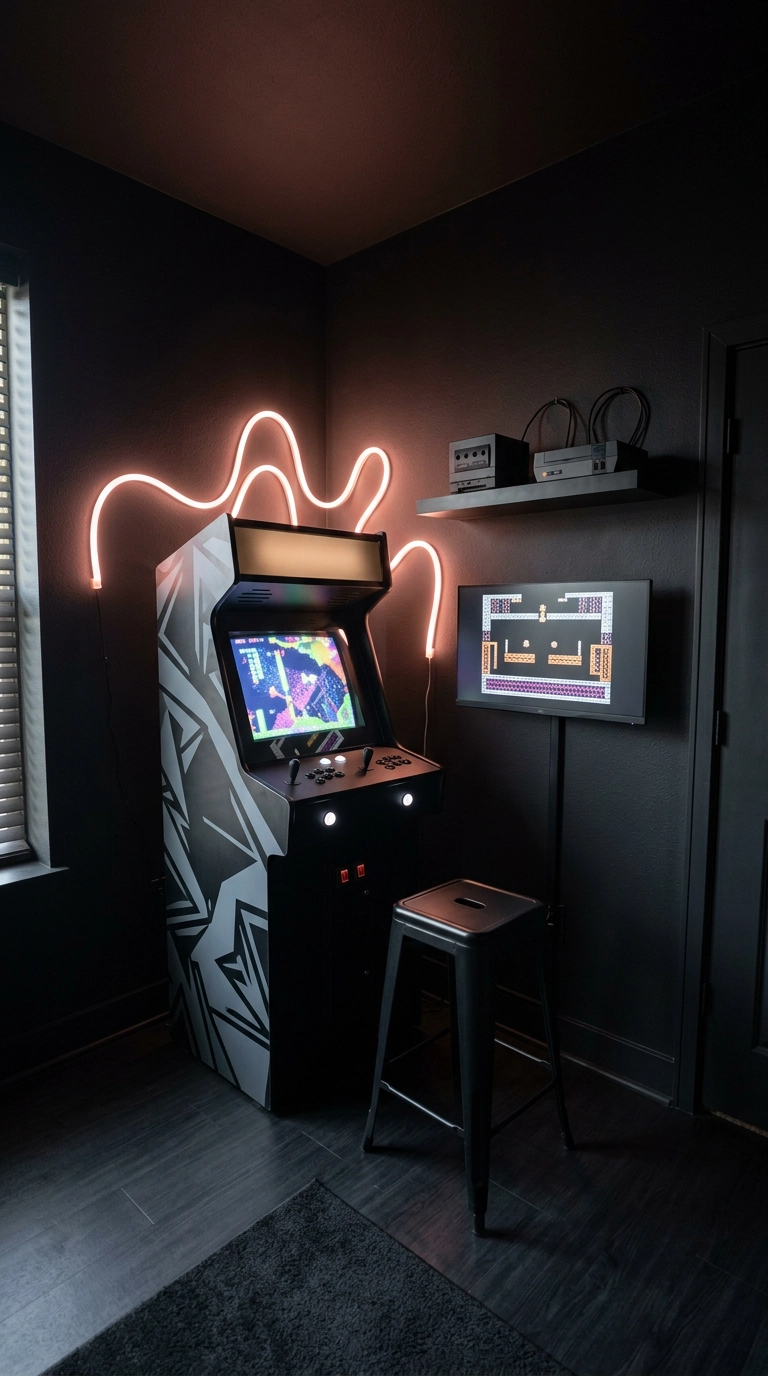
Not every home arcade needs to be a basement full of machines. This is the one for a spare bedroom in a condo: all four walls in flat black, one cabinet, one wall-mounted monitor, and one abstract neon flex installation — total footprint under 40 square feet, total look very intentional.
24. Treat the Token Machine Like a Console Table
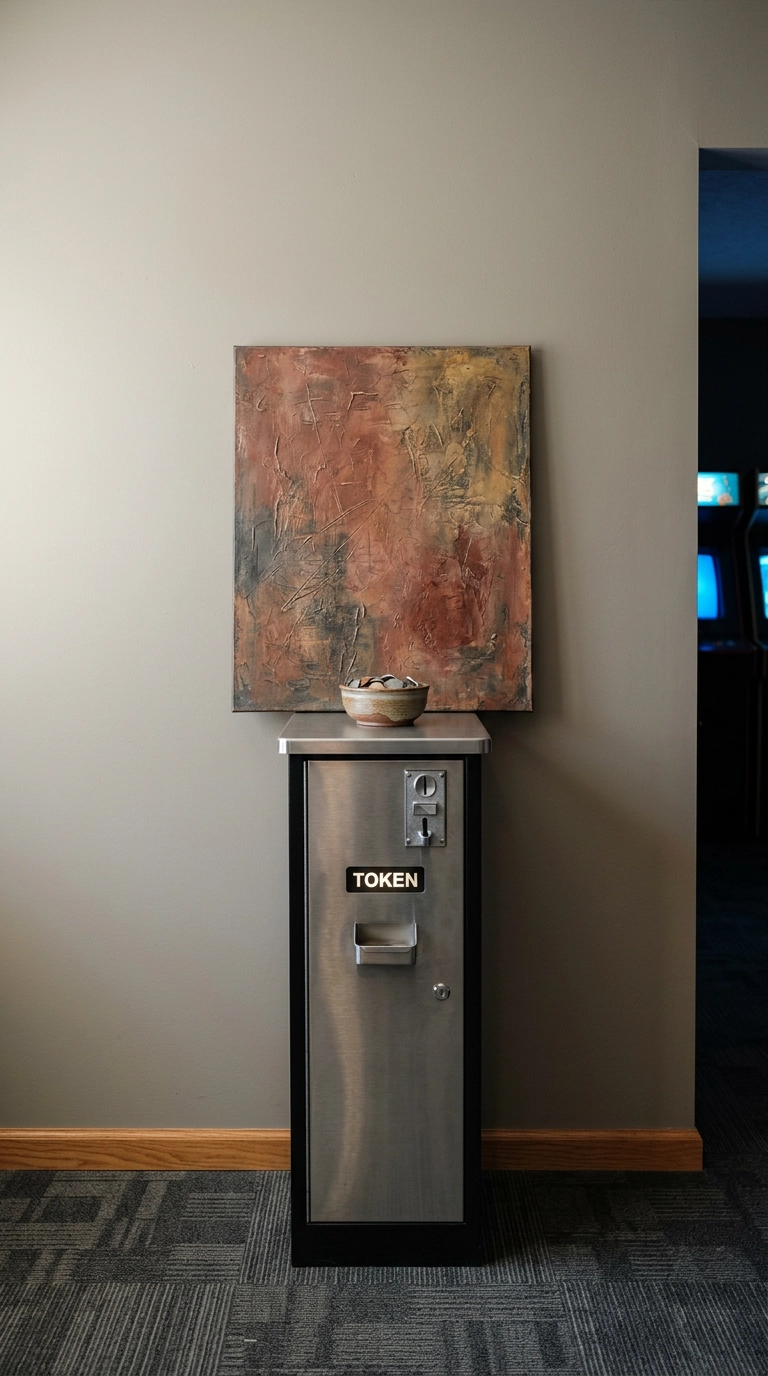
If you go the token route rather than free play, the machine itself is a piece of furniture and deserves to be treated like one. Park it near the room entrance at the natural first stop, put a small dish for coins on top, and lean one abstract canvas above it.
25. End on a Marquee Wall of Backlit Blank Panels
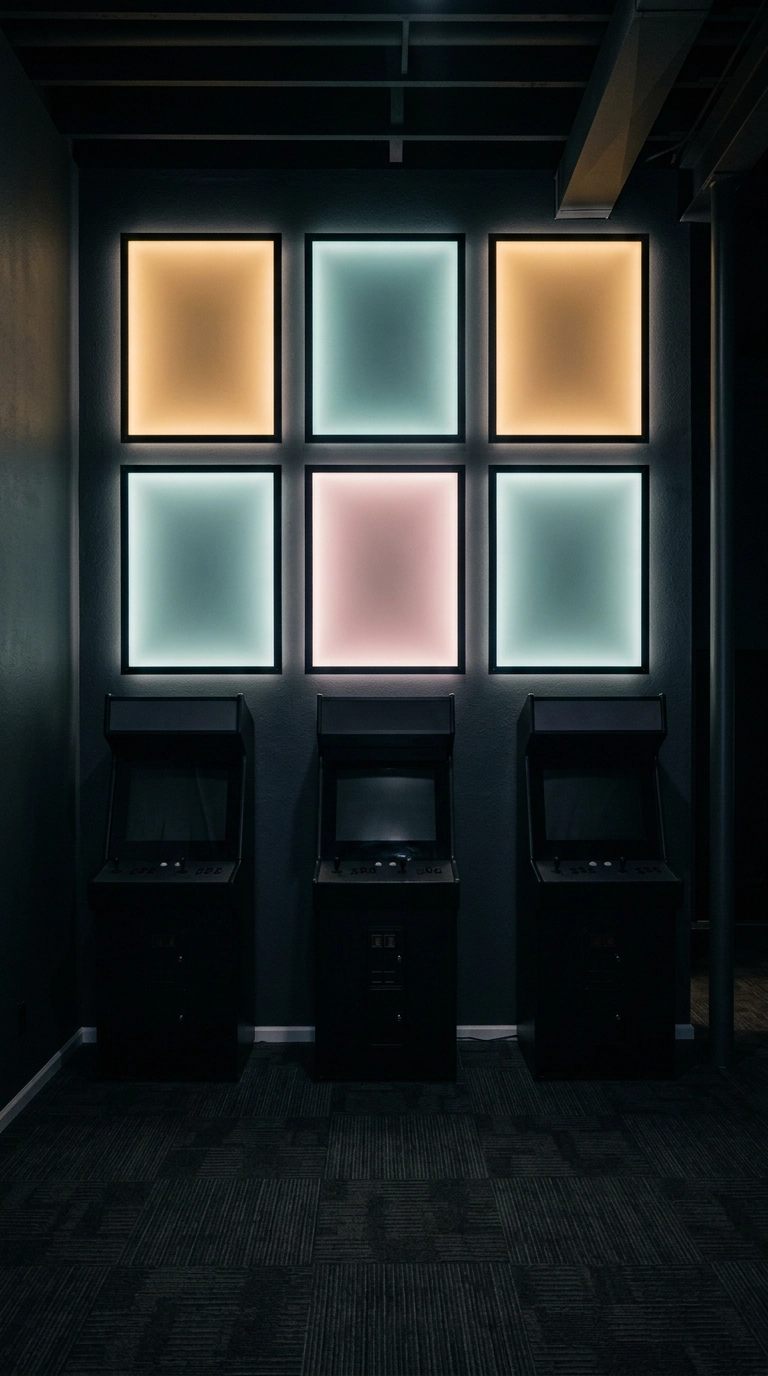
This is the finale, and it is the single most photographed thing I have ever built in a game room. Six backlit acrylic panels in two rows of three, each glowing a different muted color field, mounted above the cabinets on a charcoal wall.
Press Start on Your Own Room
Of everything above, the ideas that changed rooms the most were the least glamorous ones: the dedicated 20-amp circuit, the carpet tiles, the drink rail that saved a control panel. The glow gets the attention, but the infrastructure is what makes a home arcade a room you actually use in year three instead of a room you show people once.
What I am seeing take over in 2026 is the built-in millwork approach — cabinets wrapped in painted MDF surrounds so they read as furniture, which is how arcade rooms finally made it out of the basement and into family rooms. The other trend is restraint in the lighting: one or two saturated colors held steady rather than the whole RGB spectrum cycling. It is the same instinct behind color drenching that designers like Kelly Wearstler have pushed for years, just applied to light instead of paint. Even the retro-80s geometric mural crowd has calmed down to two colors plus cream, and it looks so much better for it.
Start with one thing. Paint the ceiling black, or wrap one cabinet in walnut vinyl, or mount a five-inch ledge for drinks, and see how much the room shifts before you commit to the full build. If you want more of this — the stuff that actually works, plus the mistakes I have made so you can skip them — sign up for my weekly newsletter and I will send new ideas straight to your inbox.
