
20+ Terrazzo Kitchen Floor Ideas for a Bold, Durable Statement Underfoot

Terrazzo has a way of making a kitchen floor feel like a decision rather than an afterthought. That speckled, chip-in-cement look has been quietly working its way back into homes for a reason: it’s tough enough for daily traffic, forgiving enough to hide the occasional spill, and distinctive enough that no two floors ever look quite the same.
Whether you’re drawn to a soft neutral base or something loud enough to anchor the whole room, terrazzo bends toward almost any style. Below are 22 terrazzo kitchen floor ideas, each built around a different mood, palette, or finish, so you can find the version that actually fits how your kitchen lives.
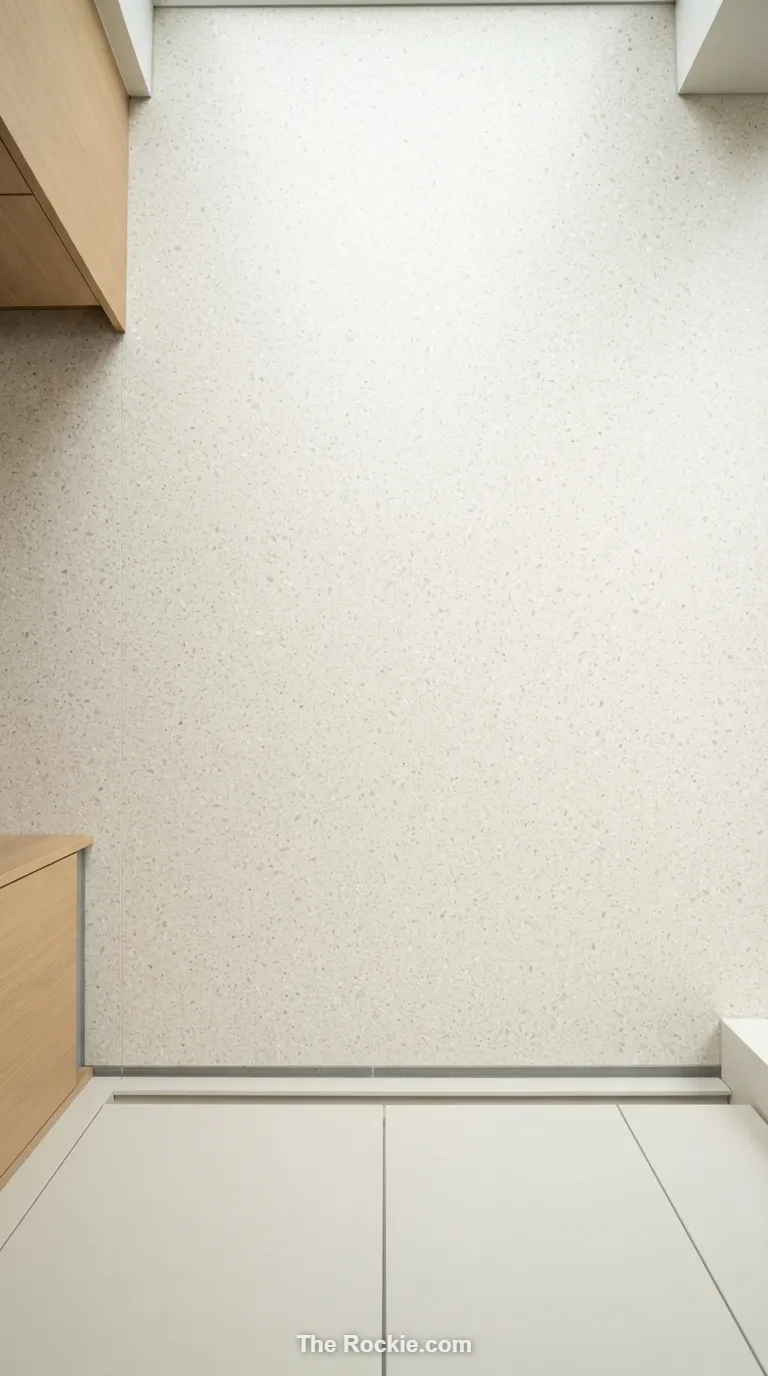
1. Modern Minimalist Terrazzo
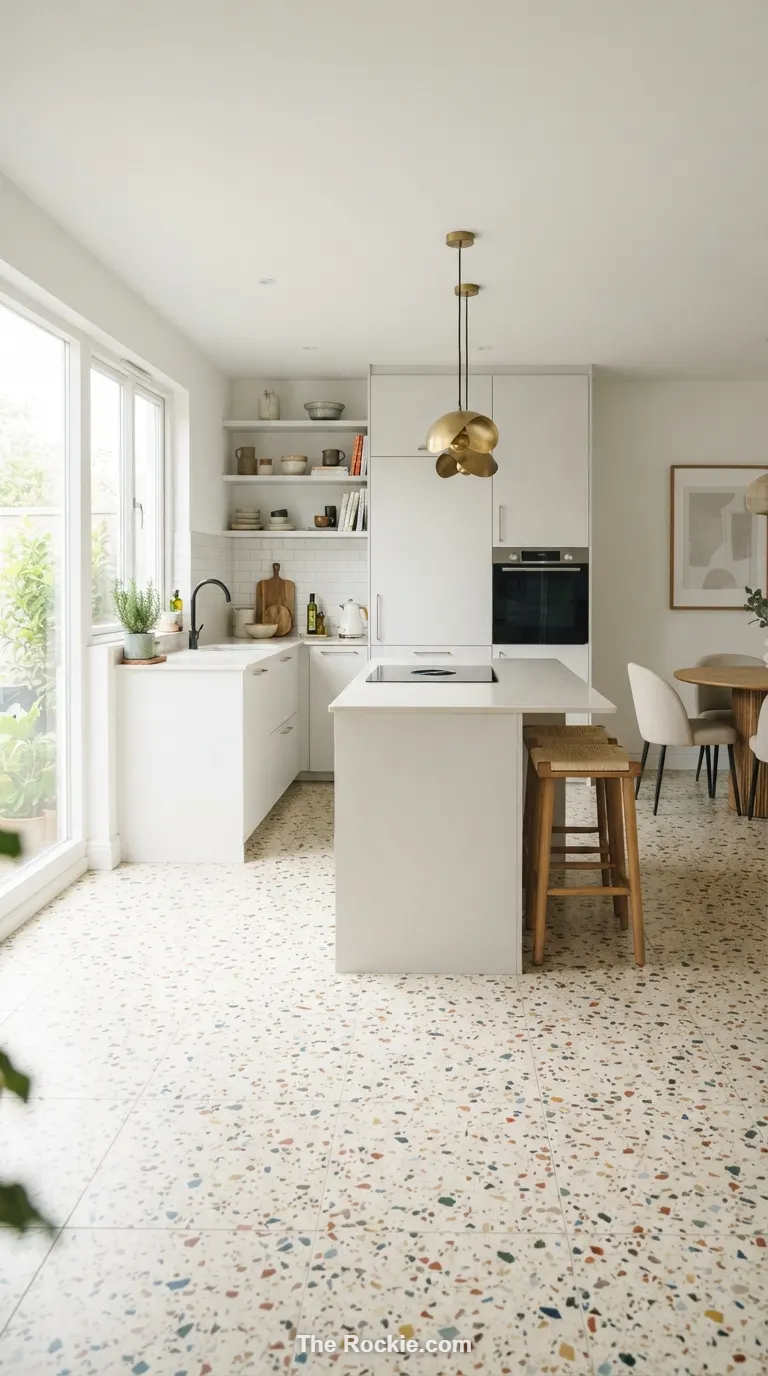
For a calmer take on terrazzo, keep the chips small, the palette tight, and the base a soft neutral. The restraint is the point — a few muted flecks of color scattered across a pale ground read as quietly sophisticated rather than busy. It’s an easy pairing with sleek cabinetry and stainless appliances, and it does a lot to make a compact kitchen feel more open.
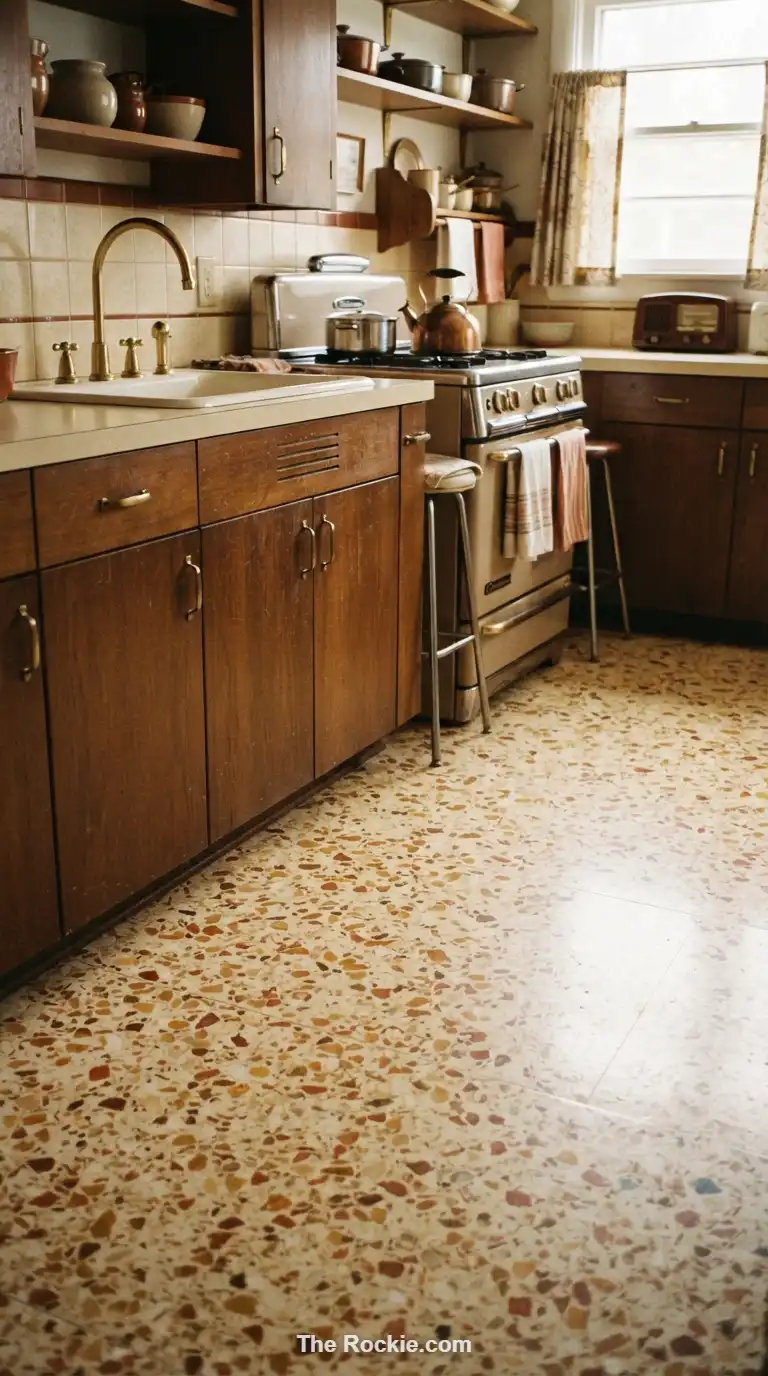
2. Vintage-Inspired Terrazzo
Bigger, warmer-toned chips set in a slightly deeper base bring an old-world feel that pairs beautifully with brass fixtures and wood cabinetry. This is terrazzo doing what it did in mid-century Italian kitchens — grounding the room with texture and a sense of history, without asking for constant upkeep.
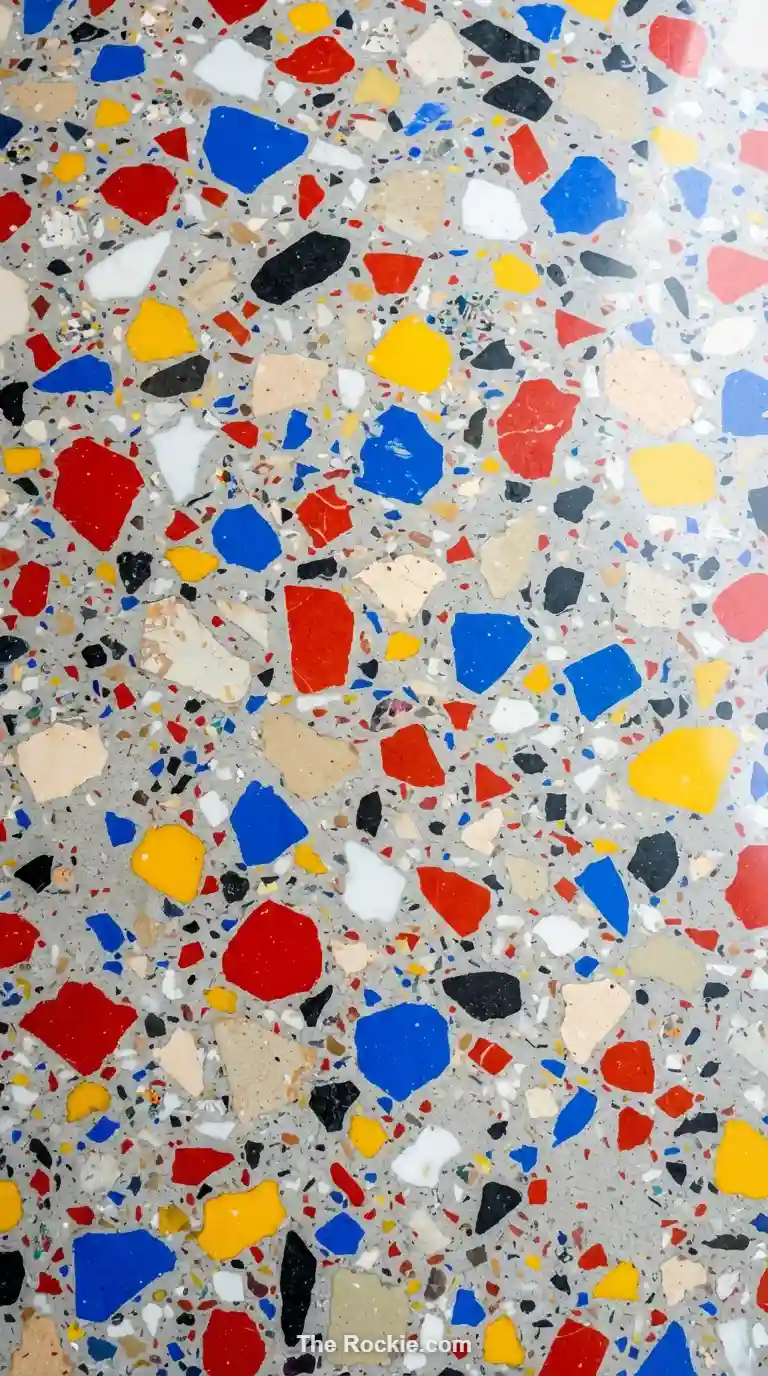
3. Bold Color-Block Chips
If your kitchen could use a jolt of personality, oversized colored chips scattered against a neutral base do the job instantly. Reds, cobalt blues, and mustard yellows mixed in create a floor that acts like art — a genuine conversation piece that still holds up to daily cooking chaos.
4. Soft Neutral Terrazzo
A gentler approach layers whisper-soft grays, taupes, and creams with just a hint of color breaking through. It’s the easiest terrazzo style to build a kitchen around because it plays well with almost any cabinet finish, and it keeps the whole room feeling calm rather than busy.
5. Custom Patterned Terrazzo
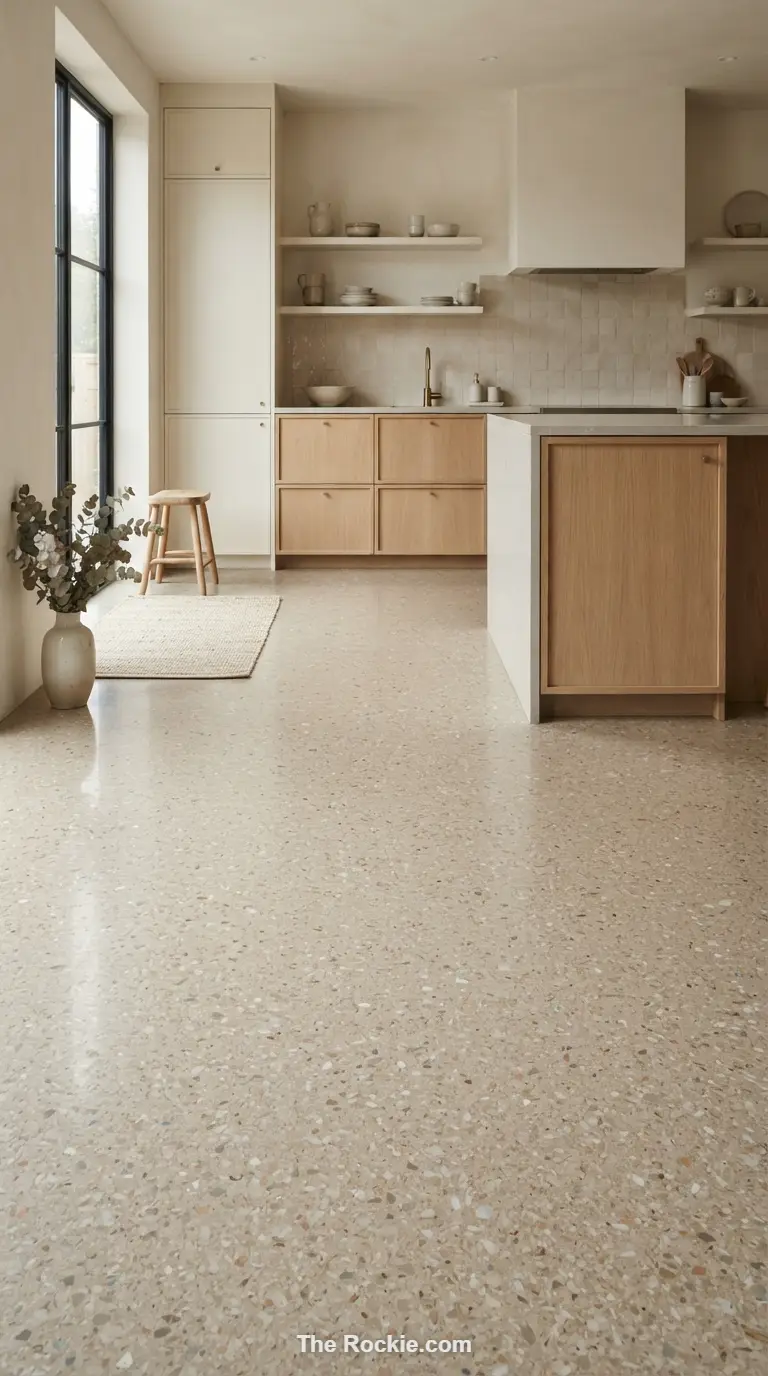
Terrazzo doesn’t have to be random. Poured in sections or set with inlays, it can form deliberate patterns — borders, medallions, even simple geometric fields — that turn the floor into a genuinely custom design element rather than a material choice.
6. Eco-Friendly Terrazzo
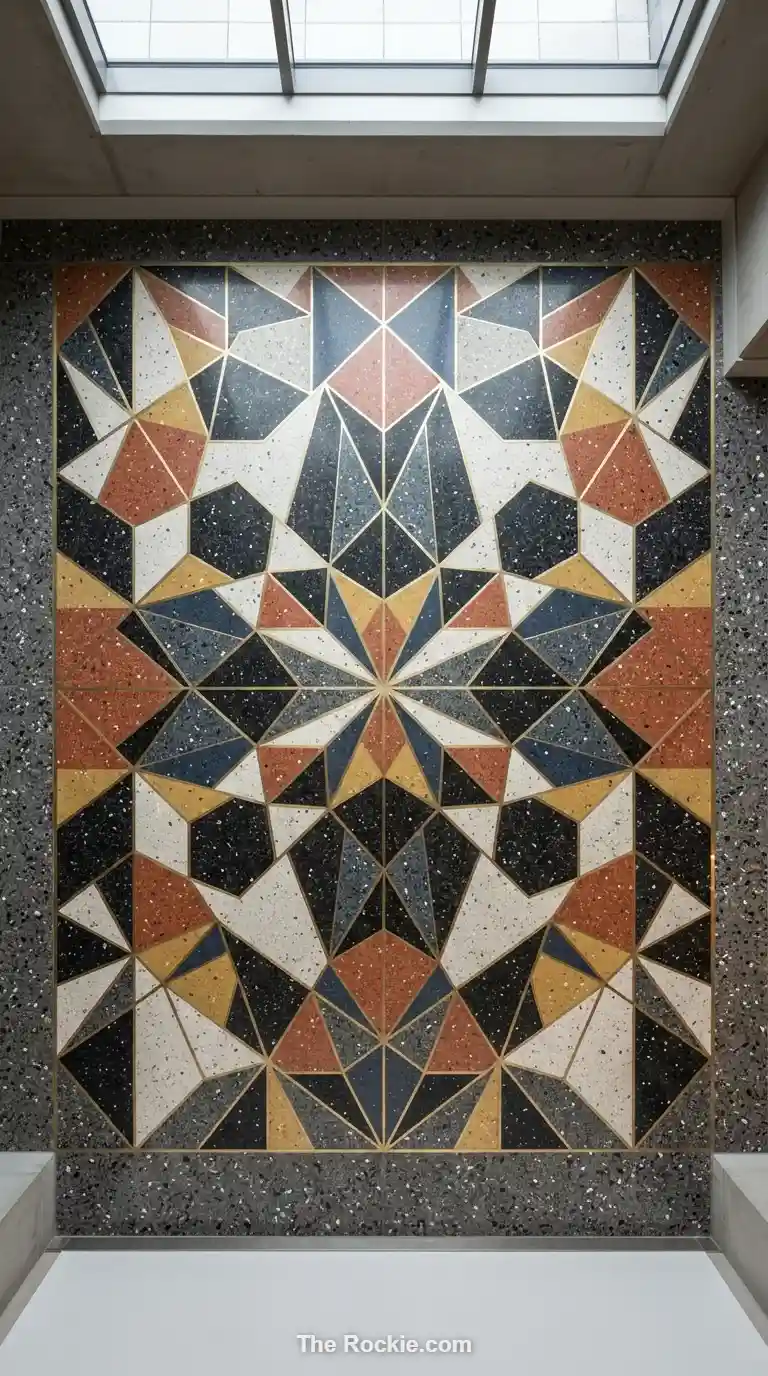
Made with recycled glass, reclaimed stone, or salvaged marble chips, eco-conscious terrazzo delivers the same durability with a lower environmental footprint. Earthy, muted tones tend to dominate this style, giving the floor a grounded, natural warmth.
7. Geometric Terrazzo Layouts
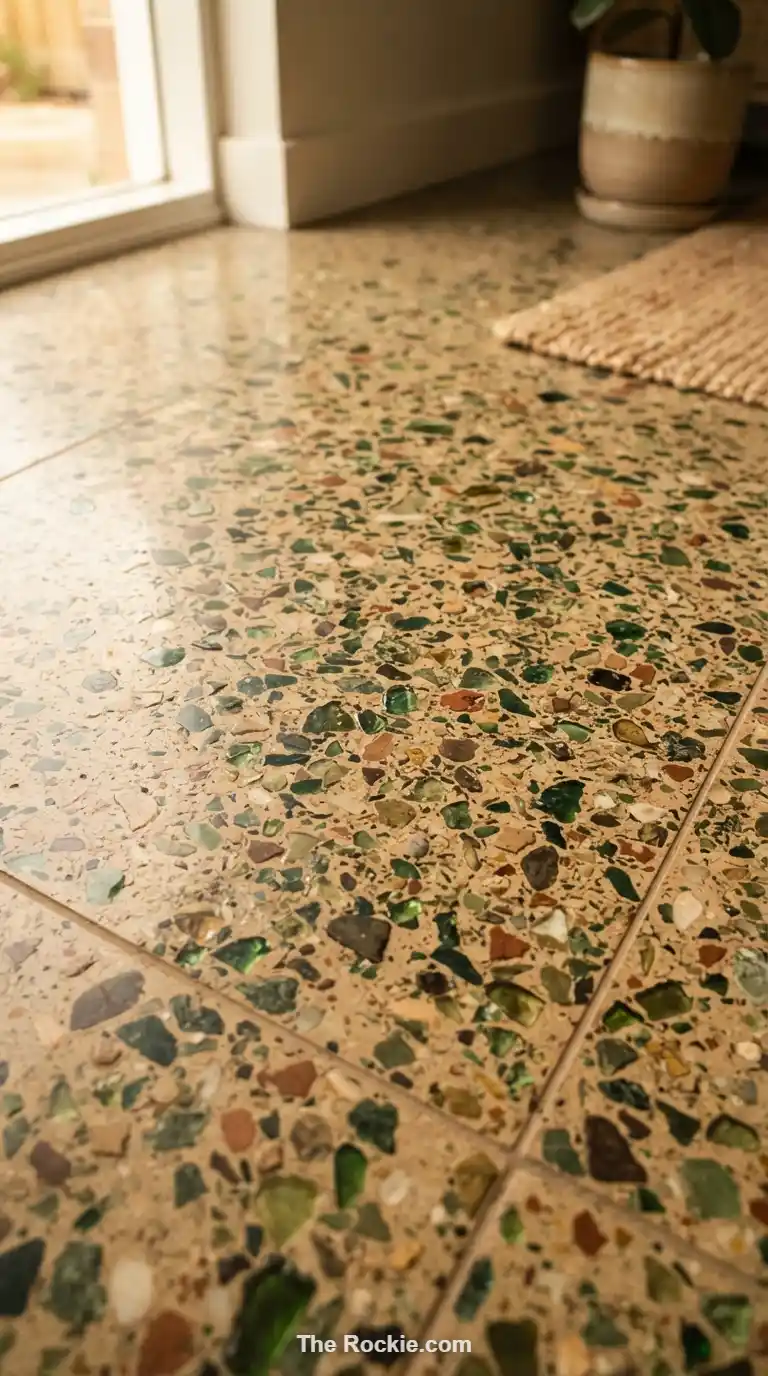
Cutting terrazzo into geometric fields — triangles, hexagons, chevrons — adds structure that a single continuous pour can’t. The shapes create rhythm across the floor and give the eye somewhere to travel, especially effective in open, sightline-heavy kitchens.
8. Mixed-Material Terrazzo
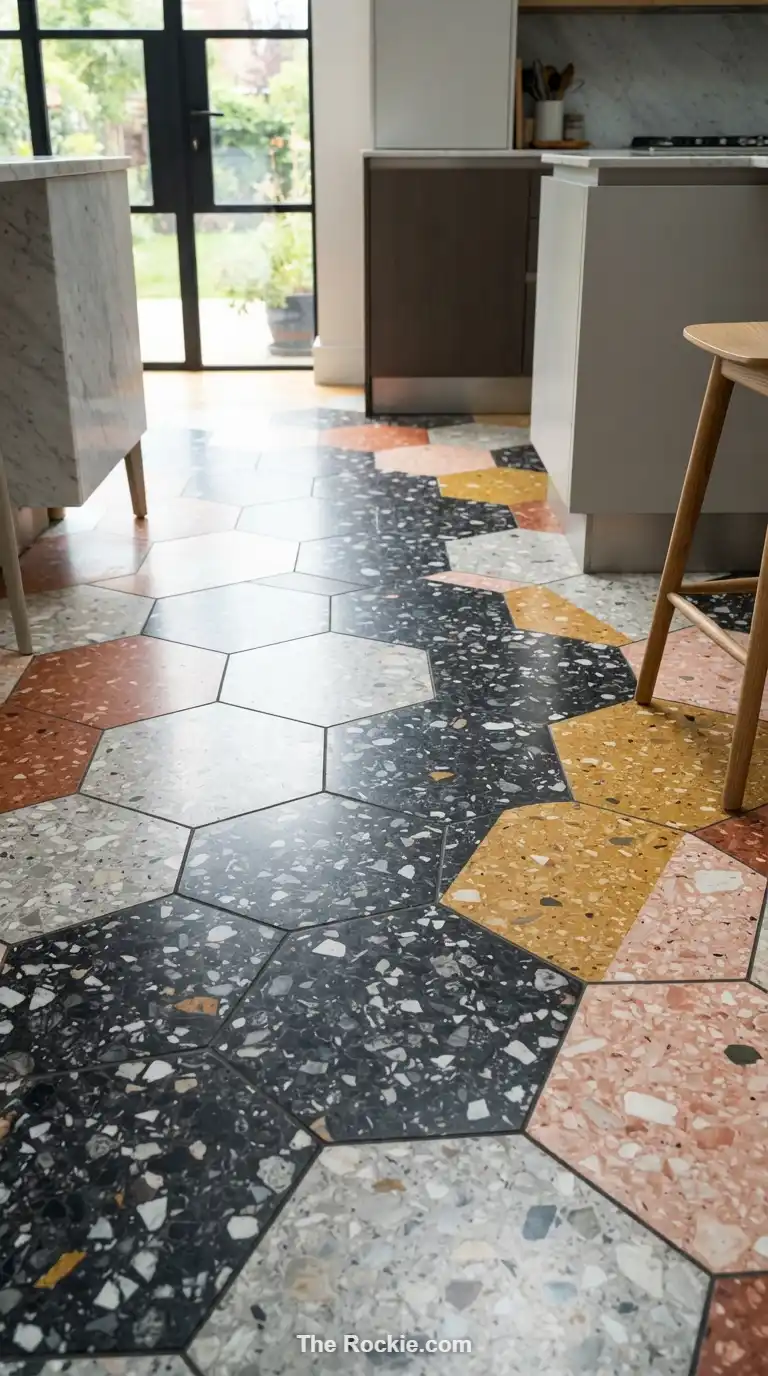
Terrazzo doesn’t need to stand alone. Bordering it with wood strips or stone inlays creates a layered floor that blends textures without losing terrazzo’s signature speckle. It’s a subtle way to tie the floor into wood cabinetry or stone countertops elsewhere in the room.
9. High-Gloss Terrazzo
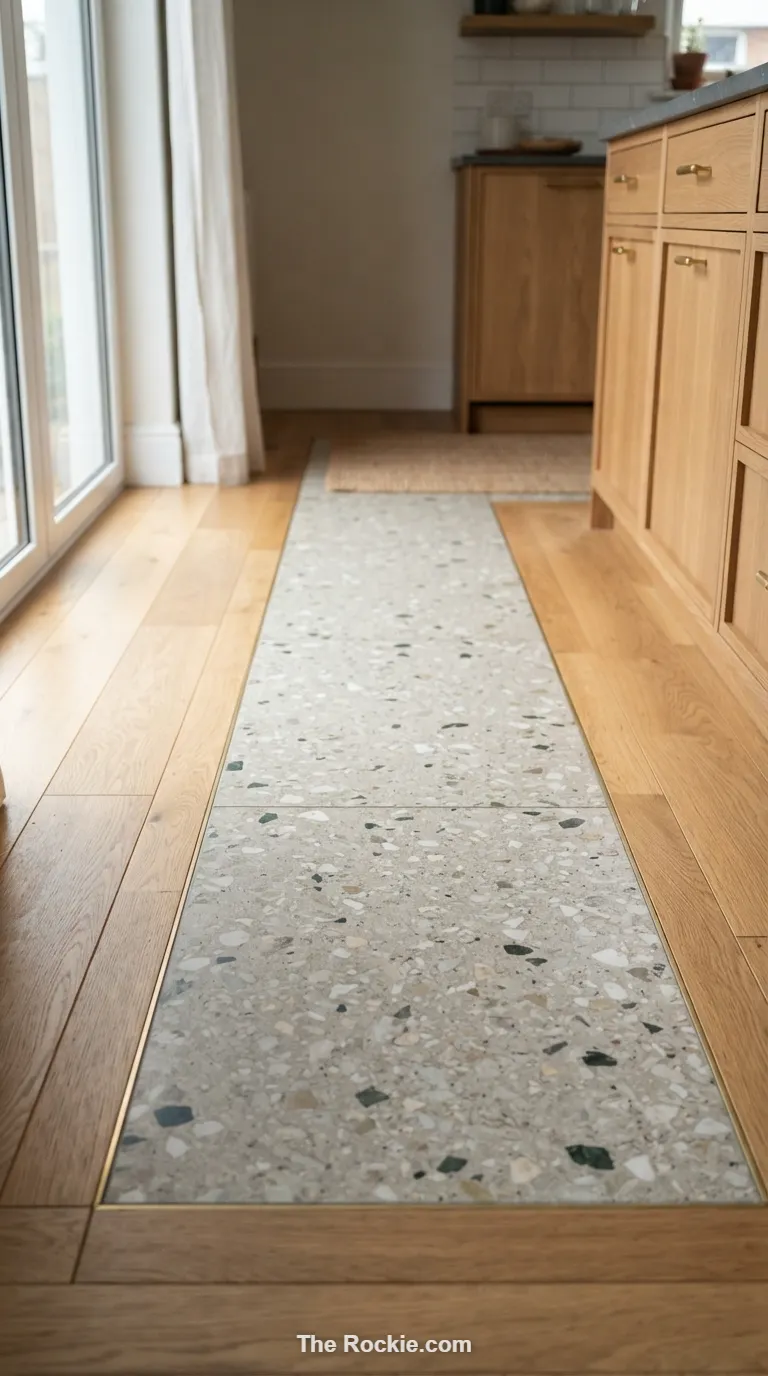
A polished, glossy finish amplifies everything terrazzo does well — the chips catch light, colors deepen, and the whole floor reflects the room back at itself. It reads as more formal and adds a layer of brightness that’s especially useful in kitchens with limited natural light.
10. Rustic Terrazzo Charm
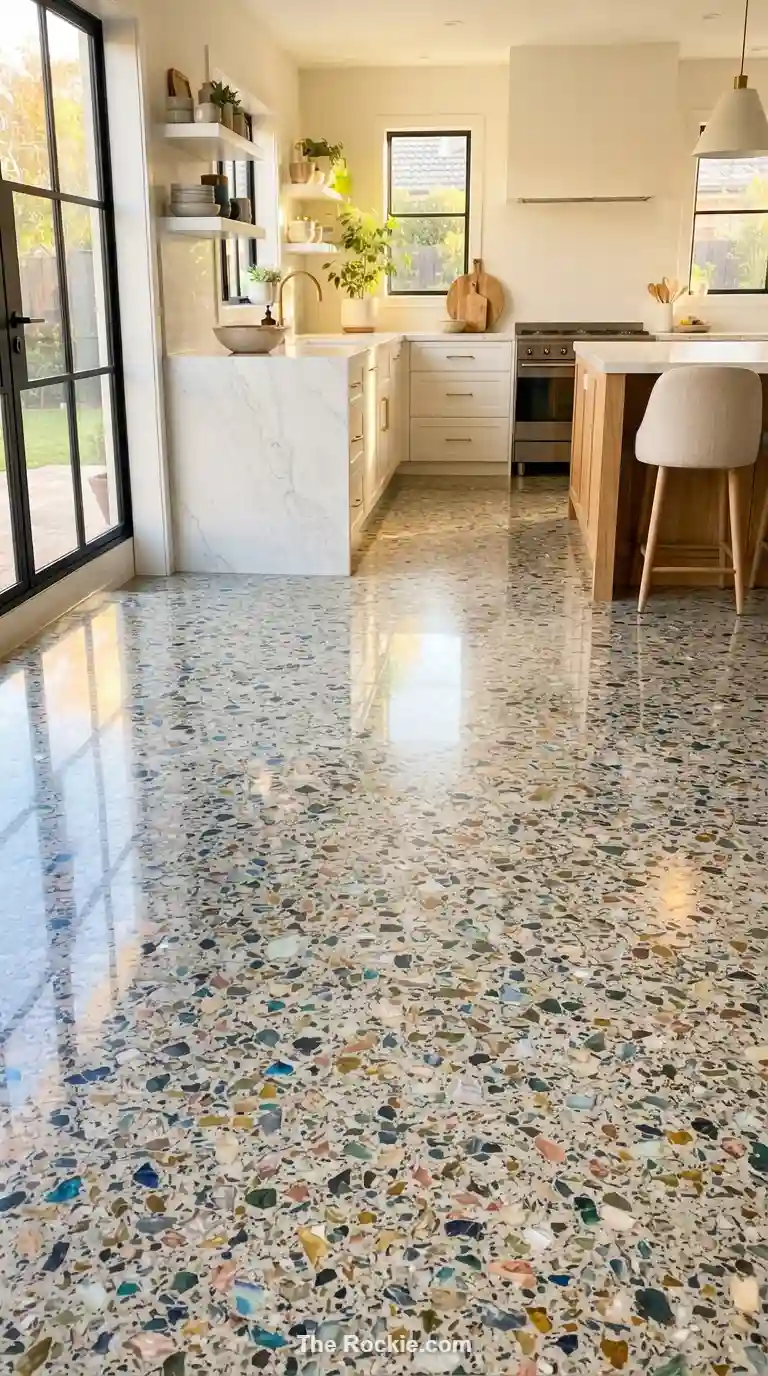
Larger, roughly hewn chips in warm earth tones give terrazzo a more countryside feel. Paired with wood beams or vintage hardware, it softens the material’s usual polish into something that feels collected over time rather than freshly installed.
11. Sophisticated Monochrome Terrazzo
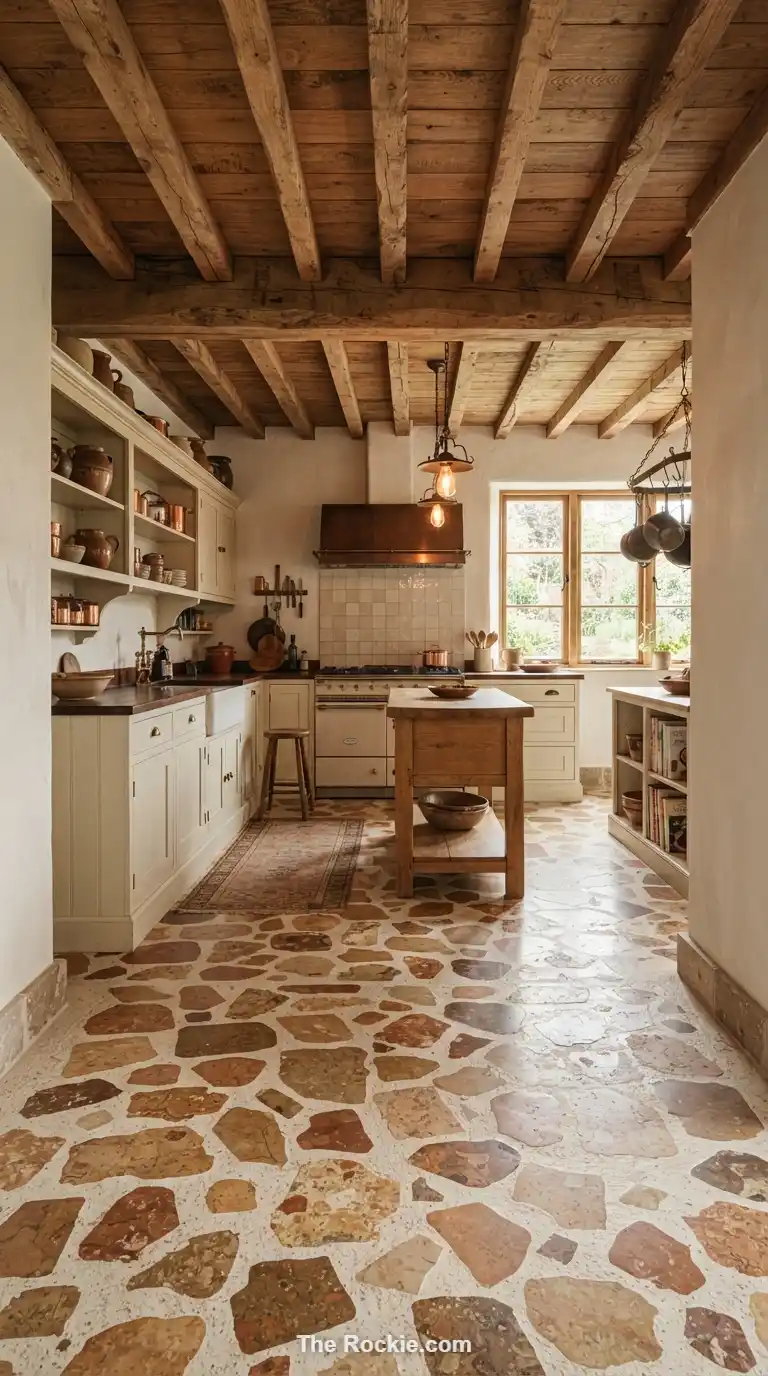
Keeping every chip within a single color family — just varying shades of gray, or every tone of blush — creates a floor that feels intentional and calm without sacrificing terrazzo’s characteristic texture. It’s a favorite for kitchens that want depth without visual noise.
12. Playful Fragmented Terrazzo
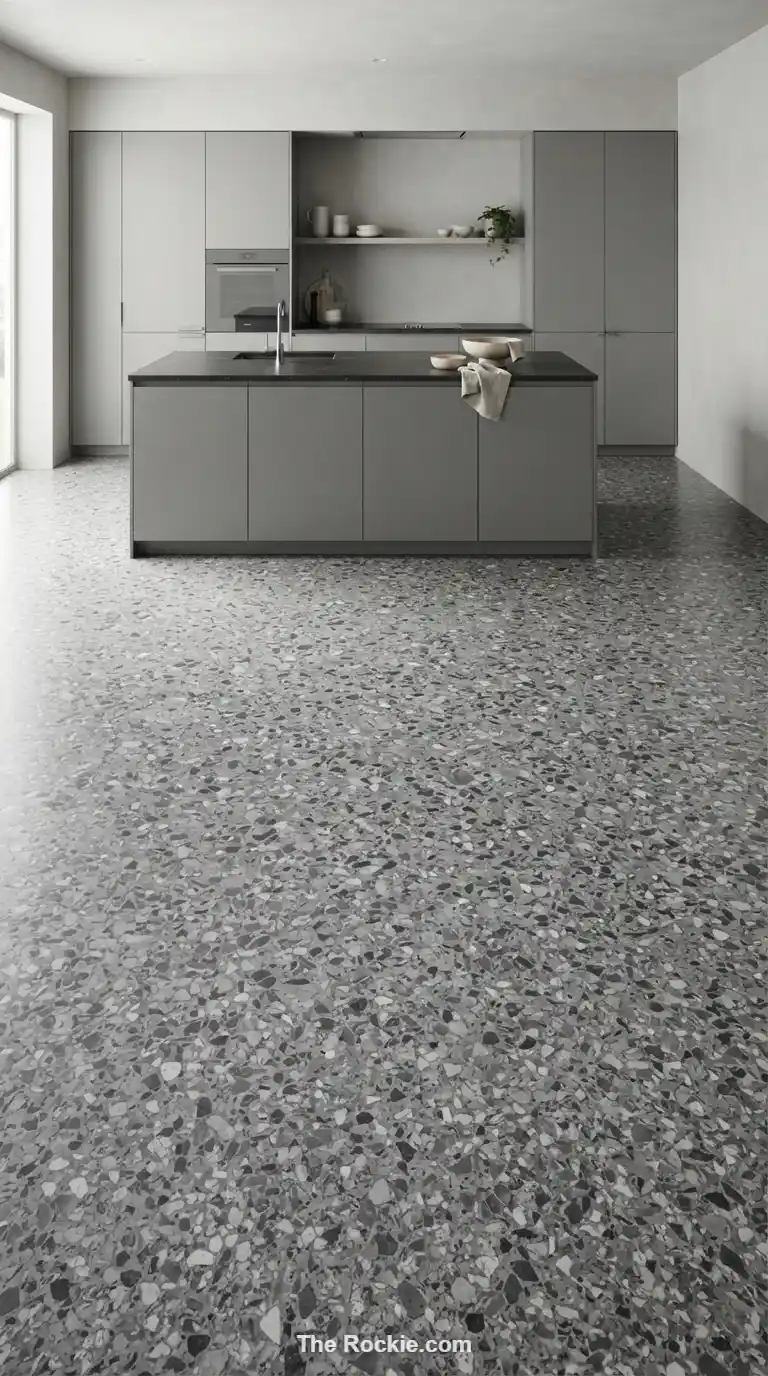
Scatter chips of many colors in irregular clusters rather than an even mix, and the floor takes on a looser, more spontaneous energy. It works especially well in kitchens that already lean creative or eclectic, where a little visual chaos feels at home.
13. Timeless Classic Terrazzo
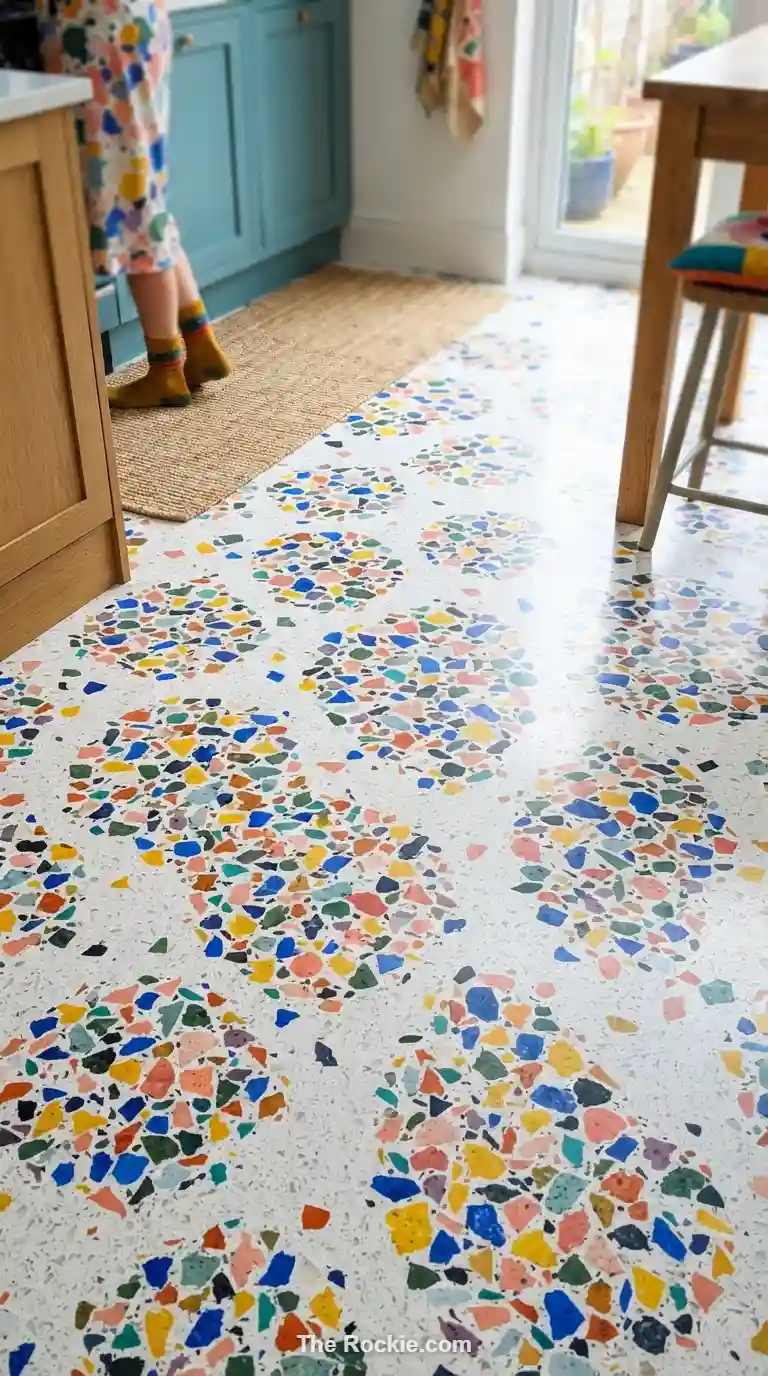
A balanced, evenly distributed mix of neutral and mid-tone chips is the terrazzo that never really goes out of style. It’s the version most people picture first, and for good reason — it pairs with nearly every cabinet color and countertop material without a fight.
14. Textured Terrazzo Surfaces
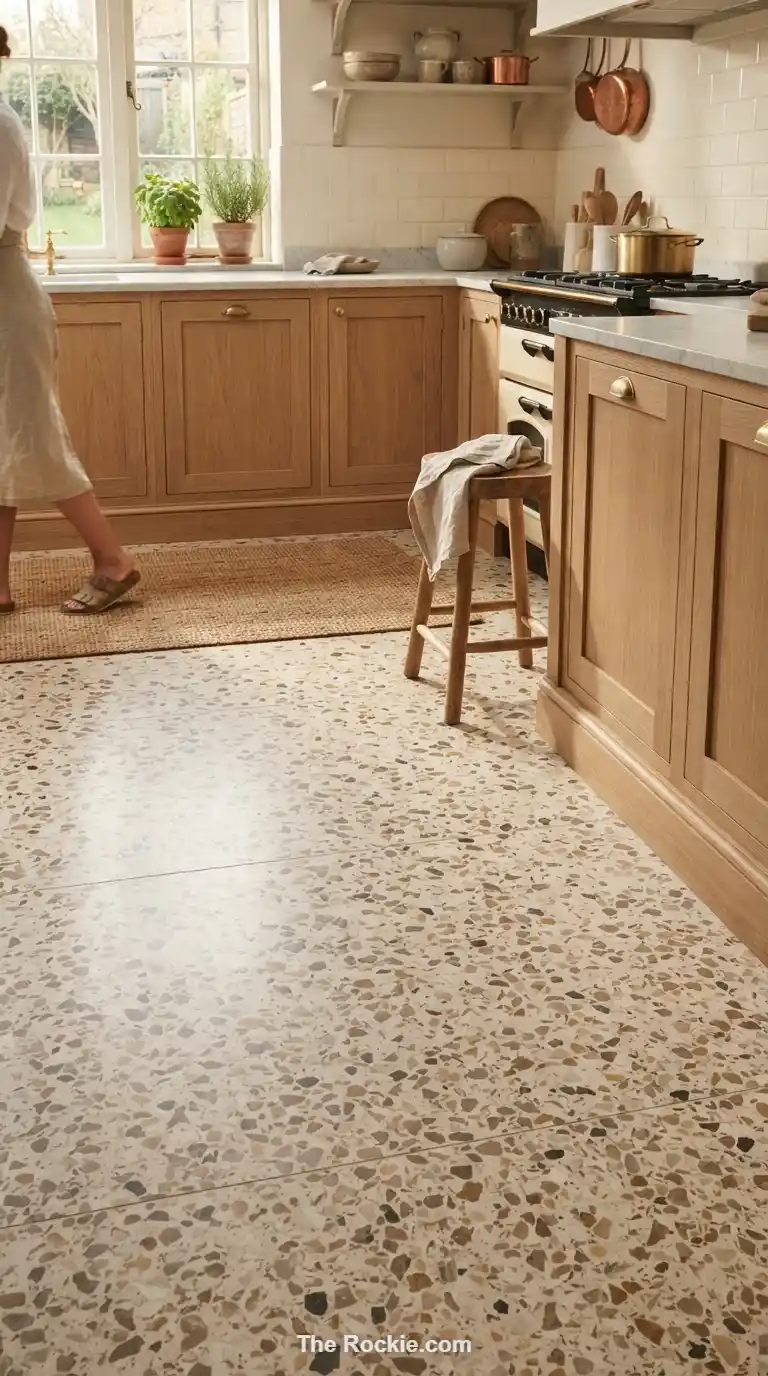
Not every terrazzo floor needs a glassy polish. A more textured, slightly matte or hand-troweled finish adds grip underfoot and a tactile quality that catches light differently across the surface — practical for households that want a bit more traction near the stove and sink.
15. Luxe Metallic-Flecked Terrazzo
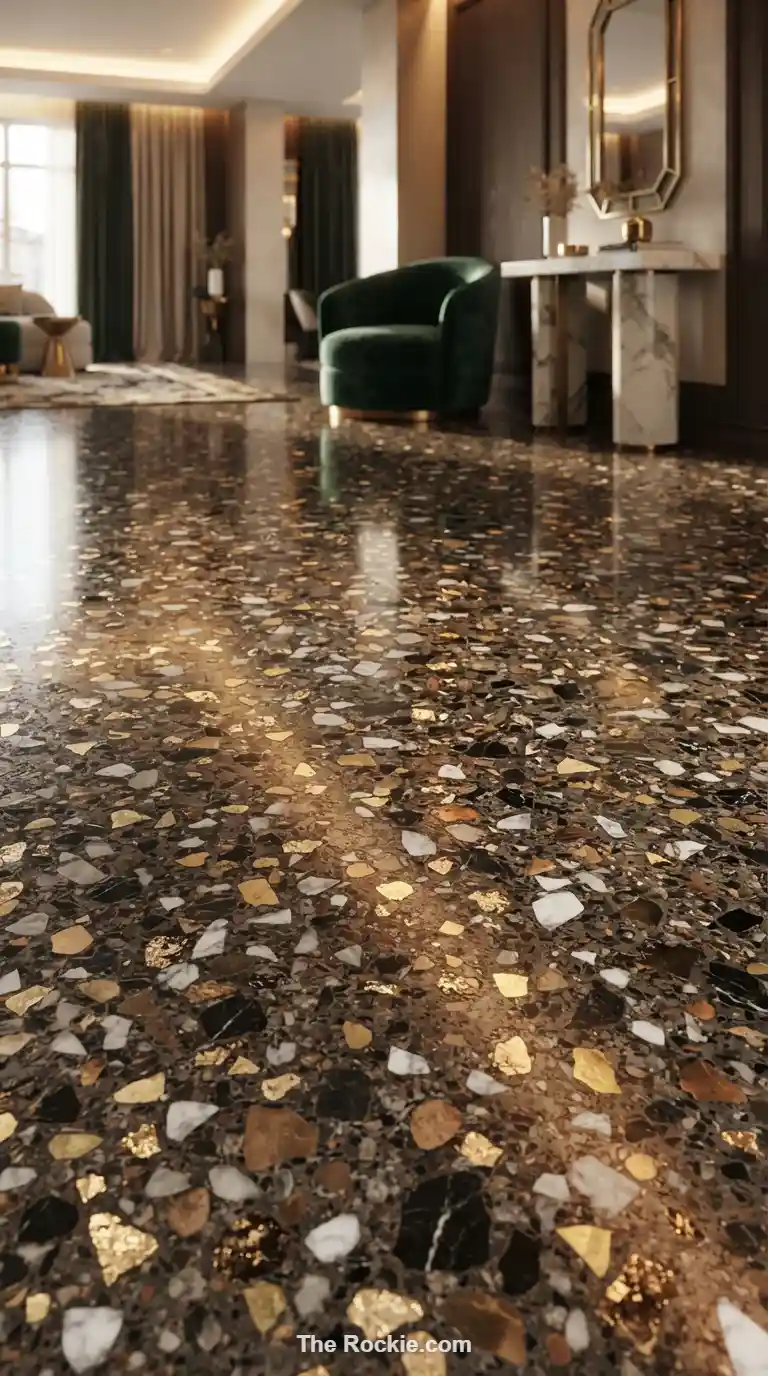
Mixing in brass, copper, or gold-toned chips alongside the usual stone fragments gives terrazzo an unexpected shimmer. It catches ambient light throughout the day and pairs naturally with brass fixtures or warm-toned cabinetry for a cohesive, upscale finish.
16. DIY Terrazzo Projects
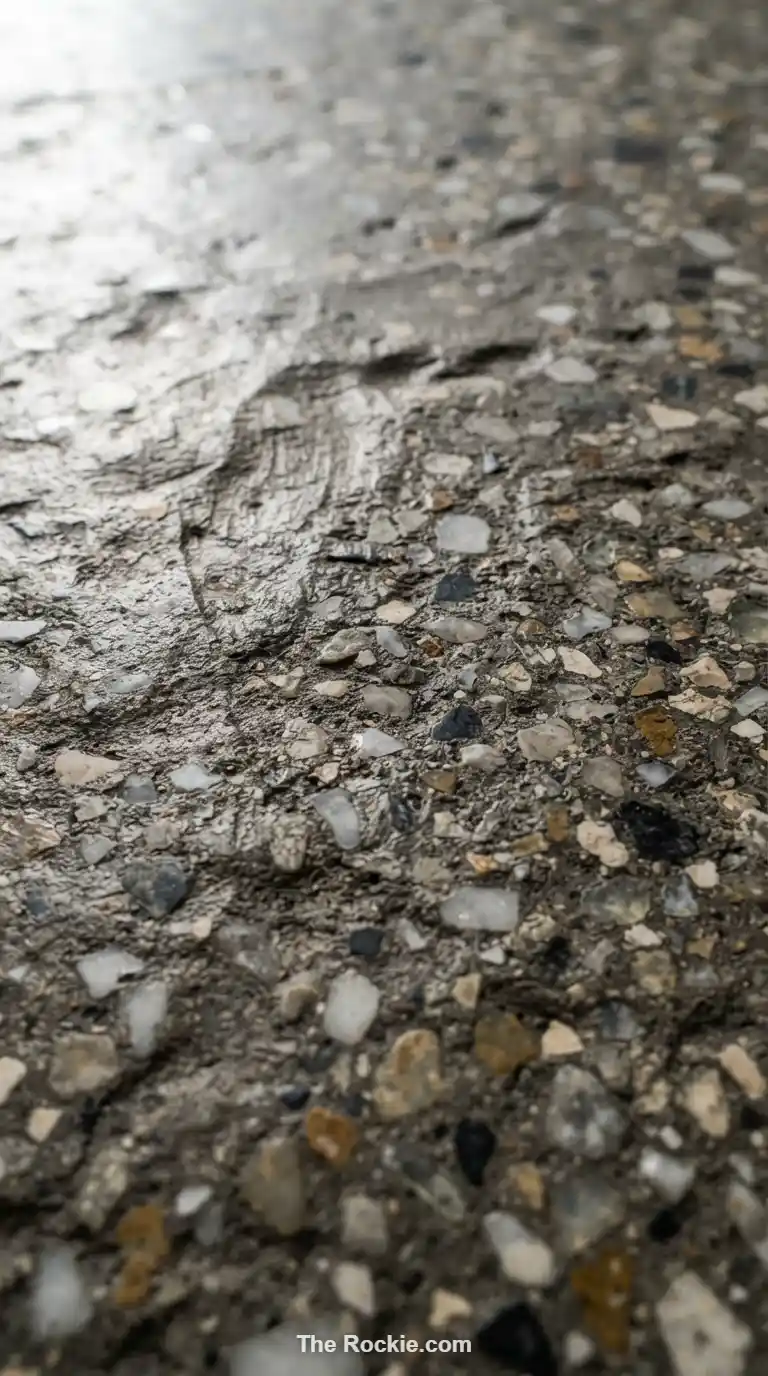
For the hands-on homeowner, small-batch terrazzo — poured tiles or accent panels — is an accessible weekend project. Mixing your own chip colors and binder ratio means the result is genuinely one-of-a-kind, even if it’s confined to a small accent area rather than the whole floor.
17. Artistic Mosaic-Inspired Terrazzo
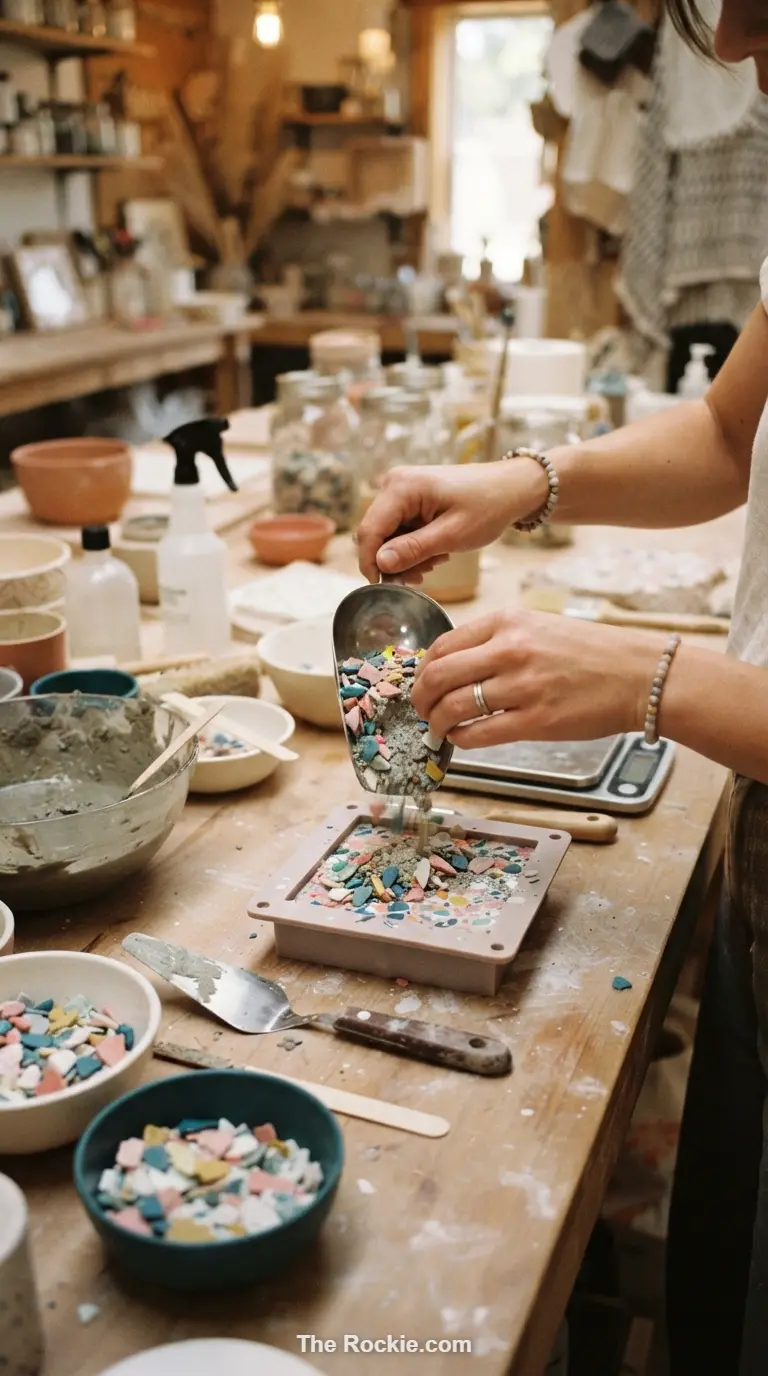
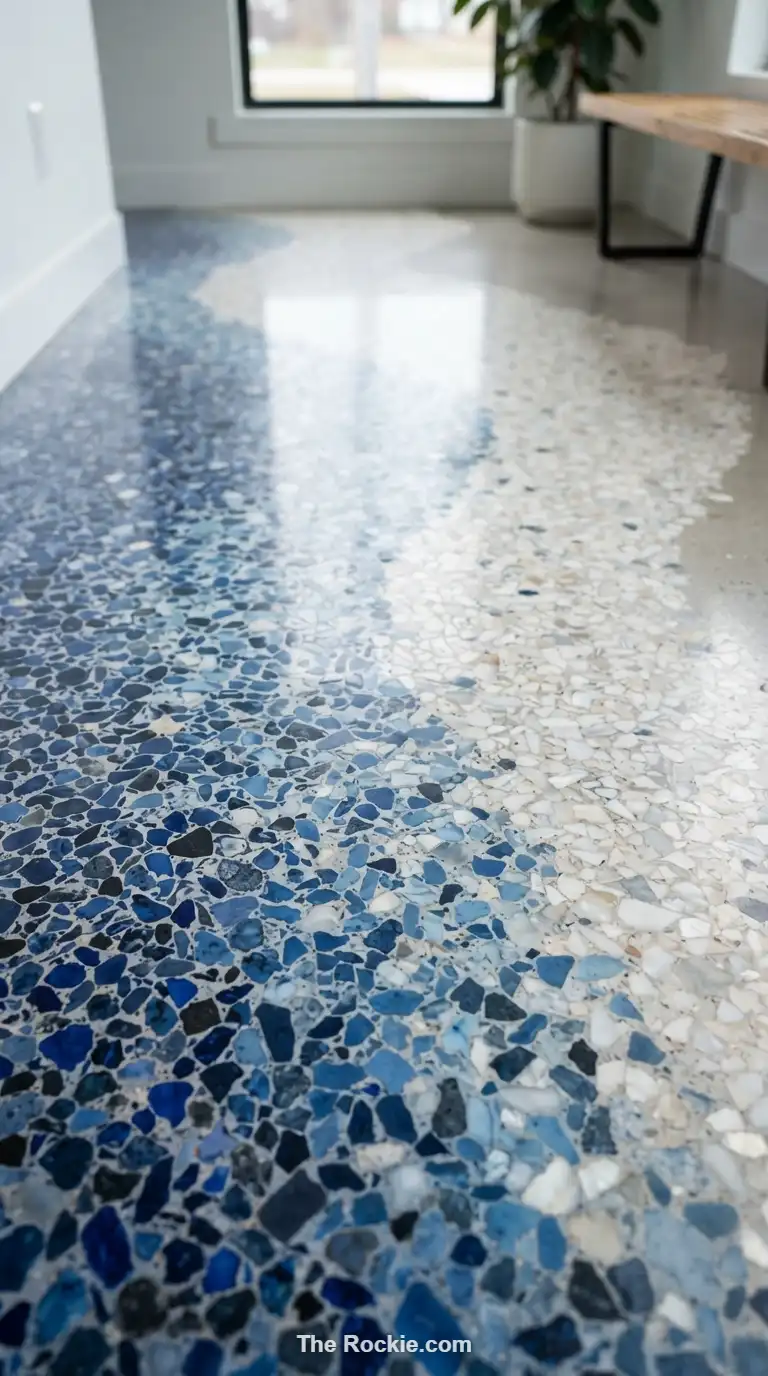
Pushing chip placement toward deliberate imagery — a subtle motif, a gradient, a wave-like flow — turns the floor into something closer to mosaic art than standard terrazzo. It takes more planning, but the payoff is a floor that functions as a genuine focal point.
18. Sleek Contemporary Terrazzo
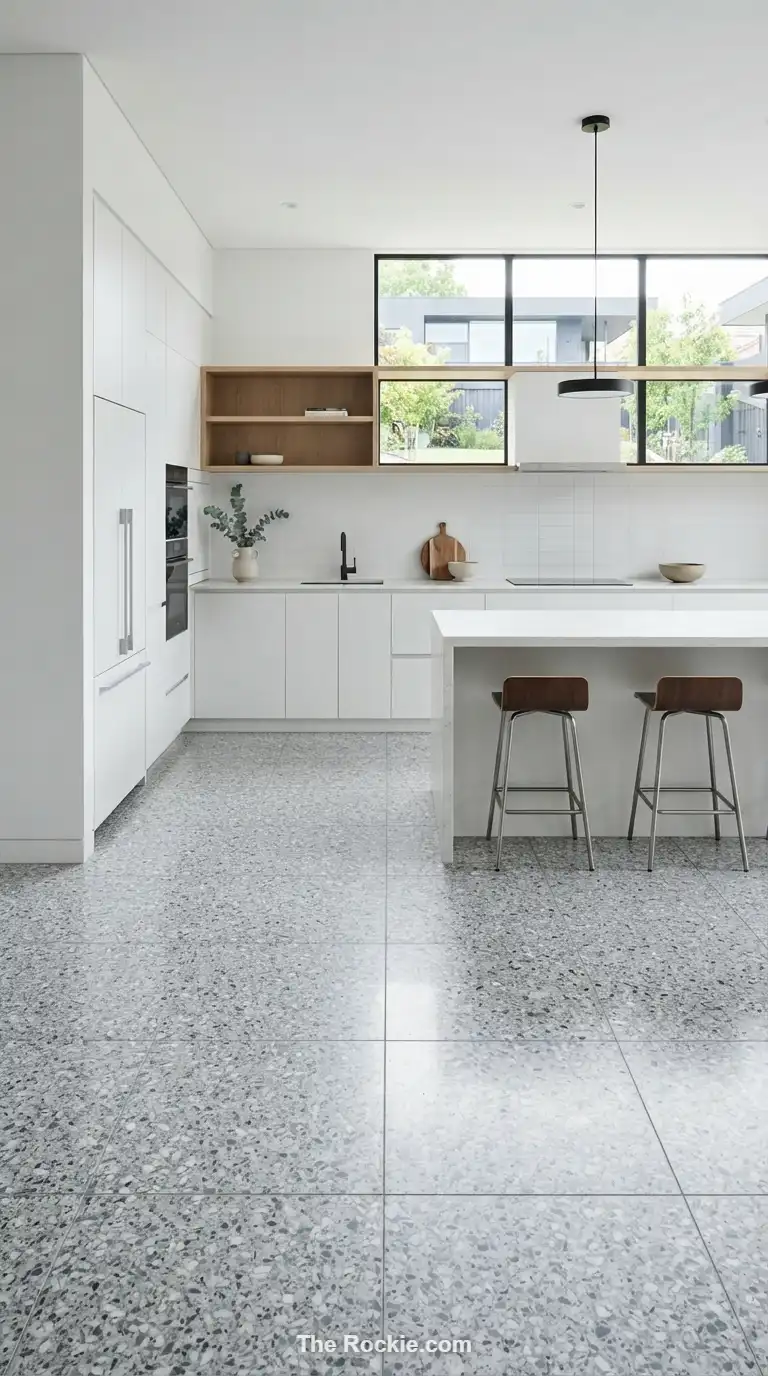
A tight, uniform blend of cool grays and whites with minimal color variation gives terrazzo a distinctly modern edge. It’s the version most likely to show up in a newly built kitchen with flat-panel cabinetry and integrated appliances — clean, quiet, and confidently understated.
19. Earthy Organic-Toned Terrazzo
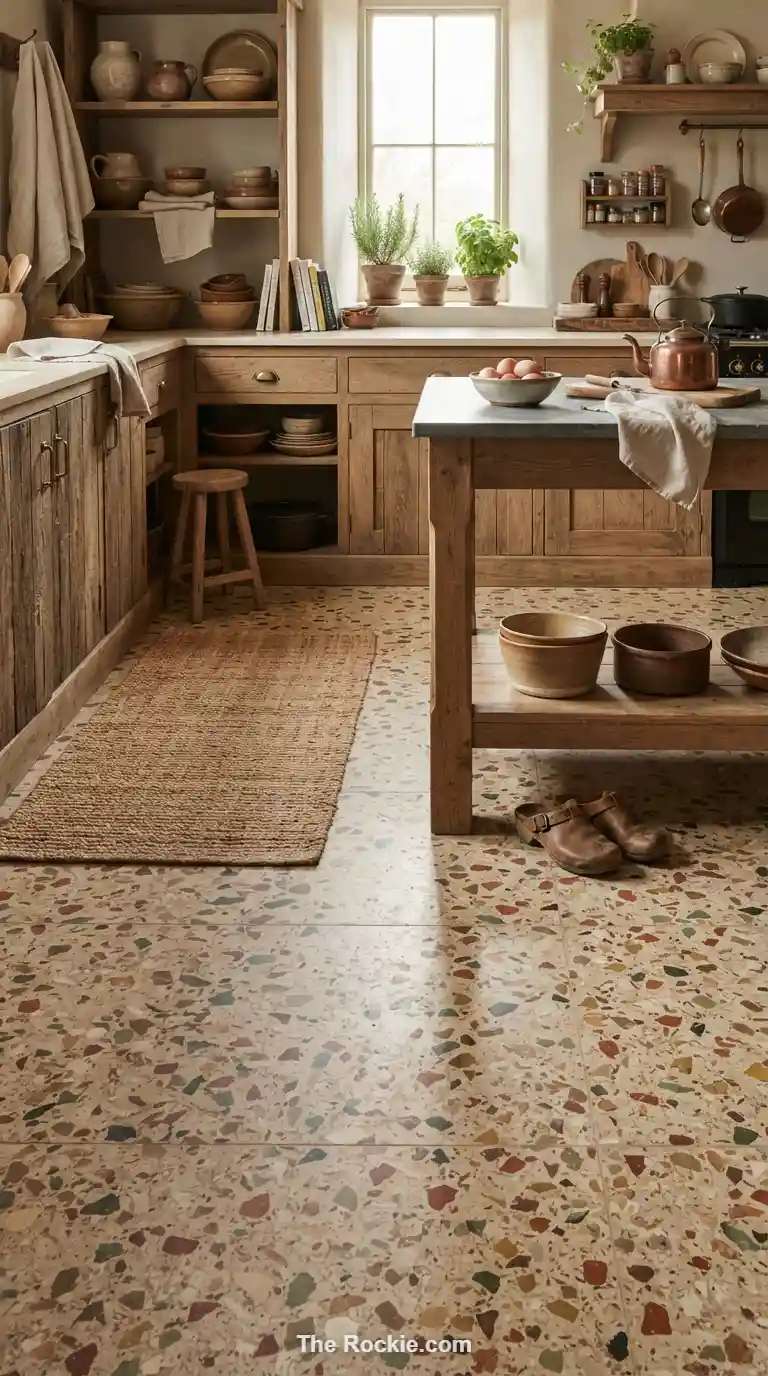
Leaning into natural pigments — clay reds, moss greens, sandy beiges — softens terrazzo’s usual polish into something that feels closer to a natural stone floor. It’s a good fit for kitchens built around organic materials and warm, textured decor.
20. Terrazzo With Integrated Lighting
Recessed LED strips along the floor’s edge or beneath open shelving can make terrazzo’s colors shift and glow between day and evening use. It’s a more technical install, but it turns the floor into an active part of the room’s lighting design rather than a passive surface.
21. High-Gloss Modern Terrazzo
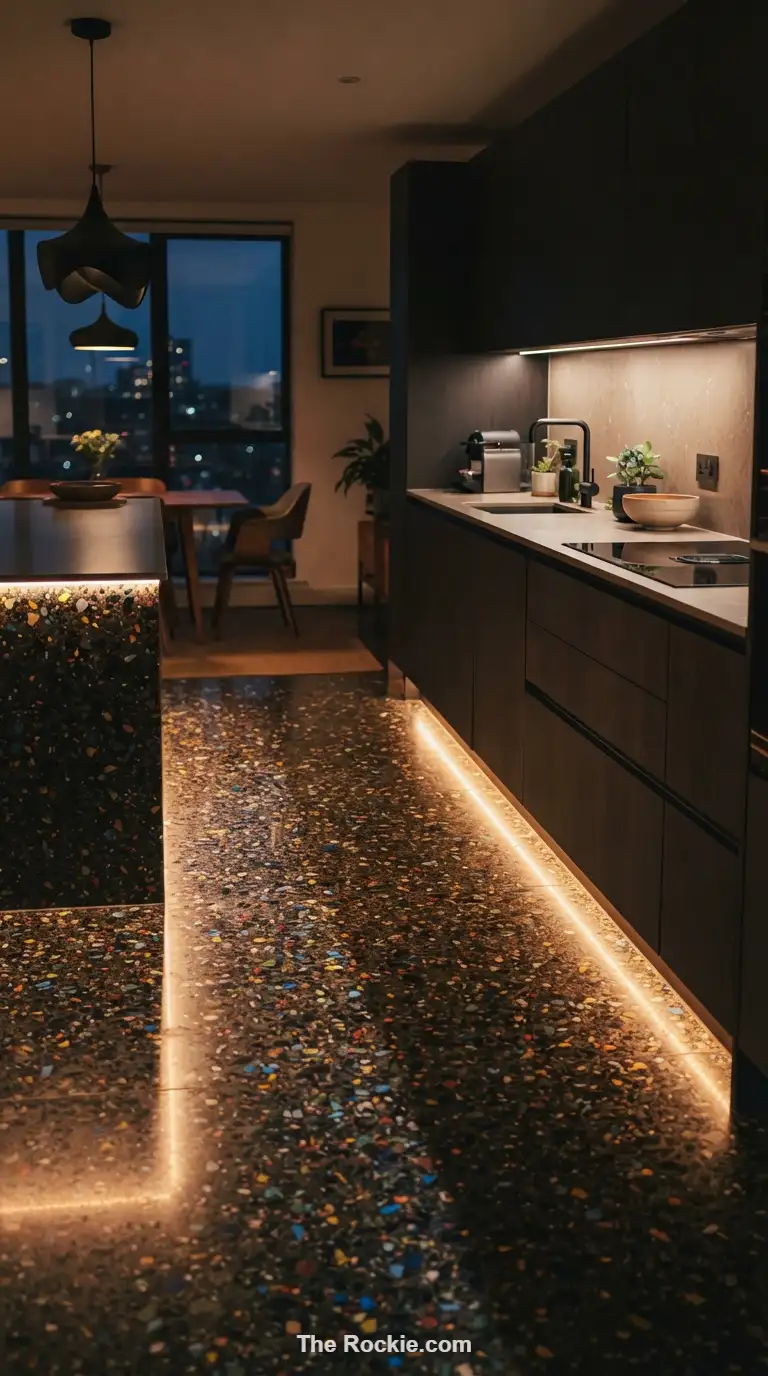
A more saturated cousin of the classic polished finish, this version leans into deeper base colors — charcoal, navy, forest green — with a mirror-like sheen. It reads as bold and a little futuristic, especially under pendant lighting that reflects off the surface.
22. Low-Maintenance, Long-Life Terrazzo
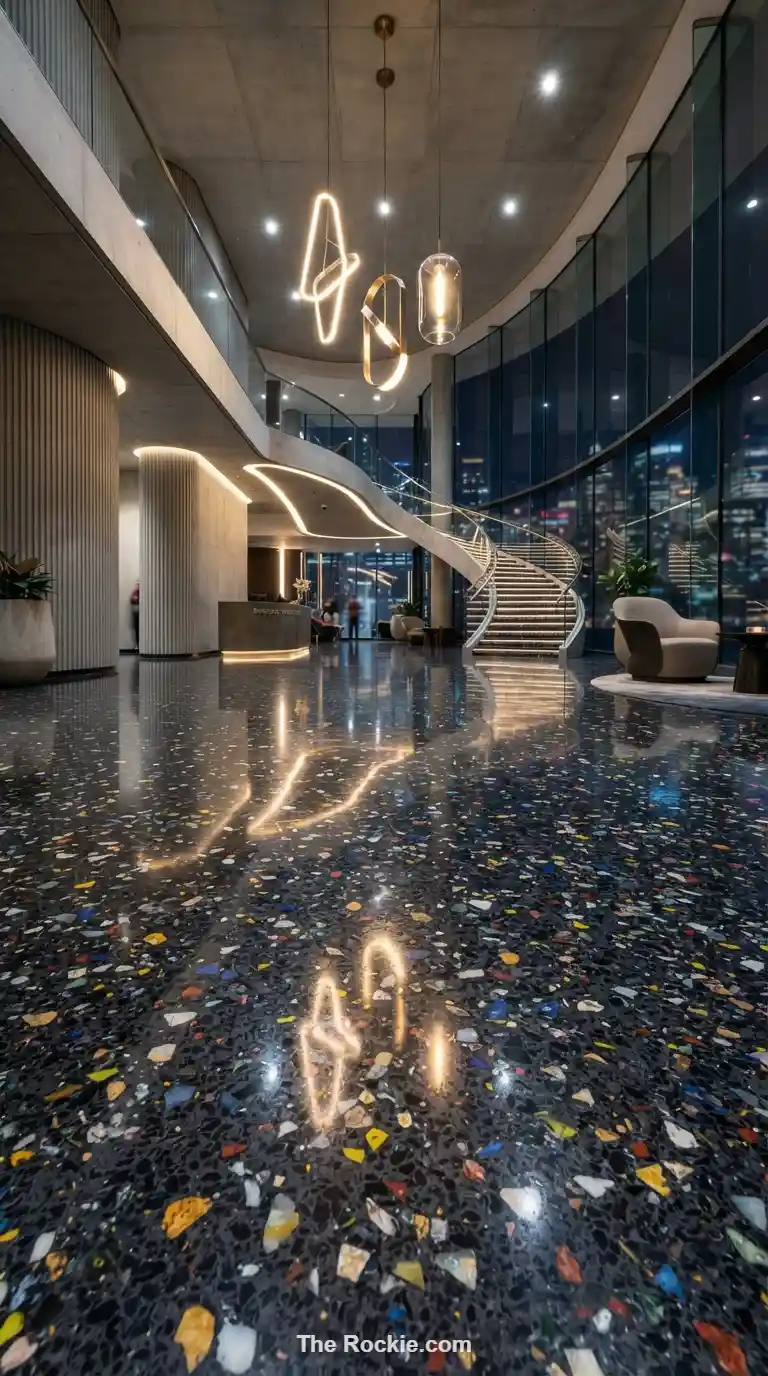
The most practical version of all: a sealed, well-finished terrazzo floor built for decades of daily use with minimal upkeep. The chip pattern is almost secondary here — the real feature is a surface that resists stains, scratches, and moisture without demanding constant care.
Bringing It All Together
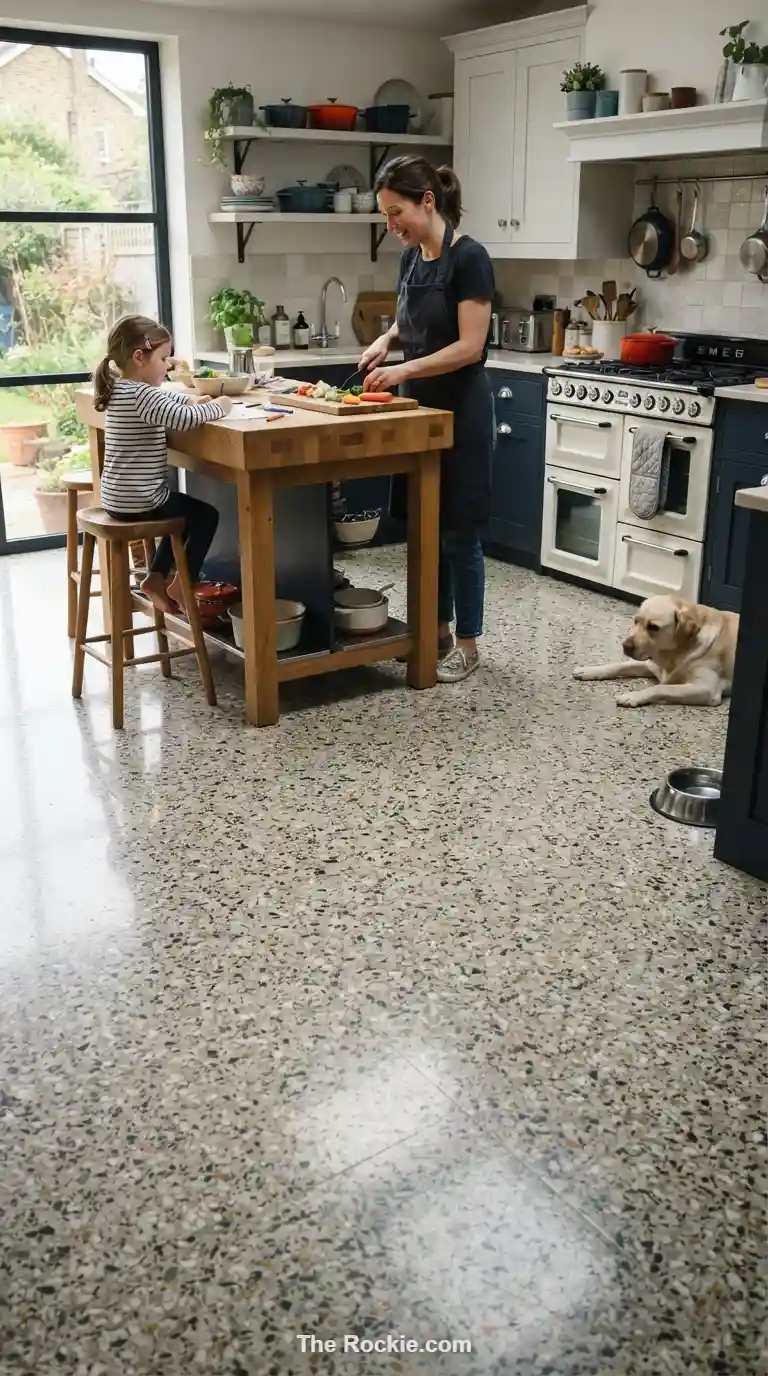
Terrazzo earns its comeback honestly — it’s one of the few flooring materials that can be quiet or loud, rustic or futuristic, and still hold up to decades of foot traffic and spilled coffee. Whether you go with a soft neutral base for a calm kitchen or full color-block chips for something louder, the material rewards a little intention in the planning. These 22 ideas are a starting point, not a checklist — pick the one that matches how your kitchen actually feels, not just how it photographs.


