Outdoor Kitchen on Deck for Effortless Alfresco Cooking

Building a kitchen onto a deck sounds simple in theory — add a grill, maybe a counter — until you actually start planning it and realize how many decisions go into making the space genuinely usable. Weather, wiring, ventilation, storage, and structural support all matter a lot more outdoors than they do inside four walls. Get those fundamentals right, though, and a deck kitchen becomes one of the best upgrades a house can get: an entire extra room, built for the part of summer everyone actually wants to be outside for.
What separates a deck kitchen that gets used constantly from one that turns into an expensive lawn ornament usually comes down to planning. The good ones account for real cooking workflow, real weather exposure, and real storage needs before a single grill gets bolted down. Here are 22 ways to think through building an outdoor kitchen on your deck, from the big structural decisions to the details that make it genuinely comfortable to cook in.
1. Planning the Layout
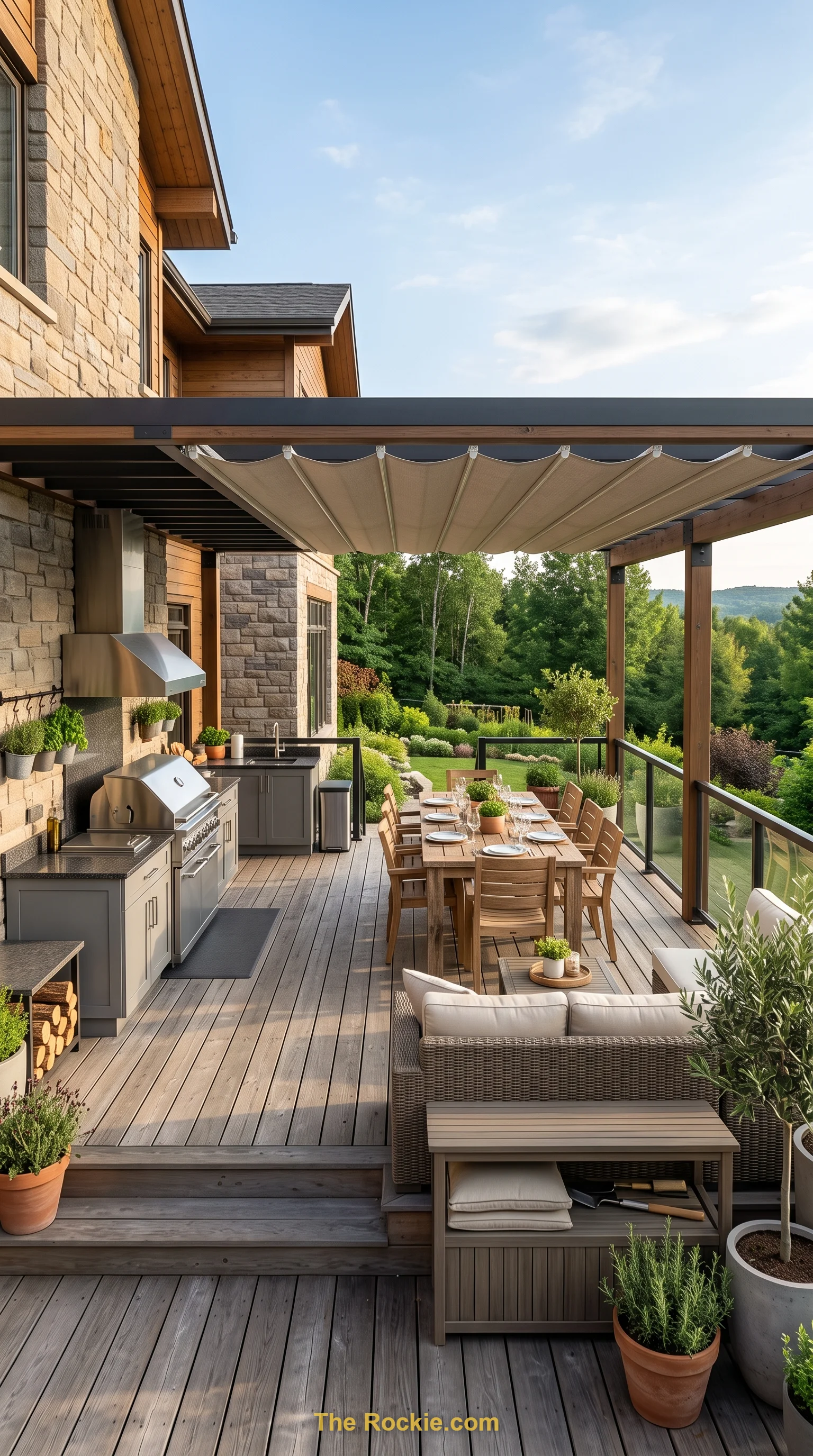
A well-conceived layout is the real foundation of a successful deck kitchen, making sure every element sits exactly where it’s needed. Dedicating clear zones for cooking, dining, and storage keeps the space efficient and encourages smooth movement between prepping and entertaining. Careful planning up front — accounting for structural support and weather exposure — also helps the whole setup hold up for years rather than needing early repairs.
2. Grilling Station Excellence
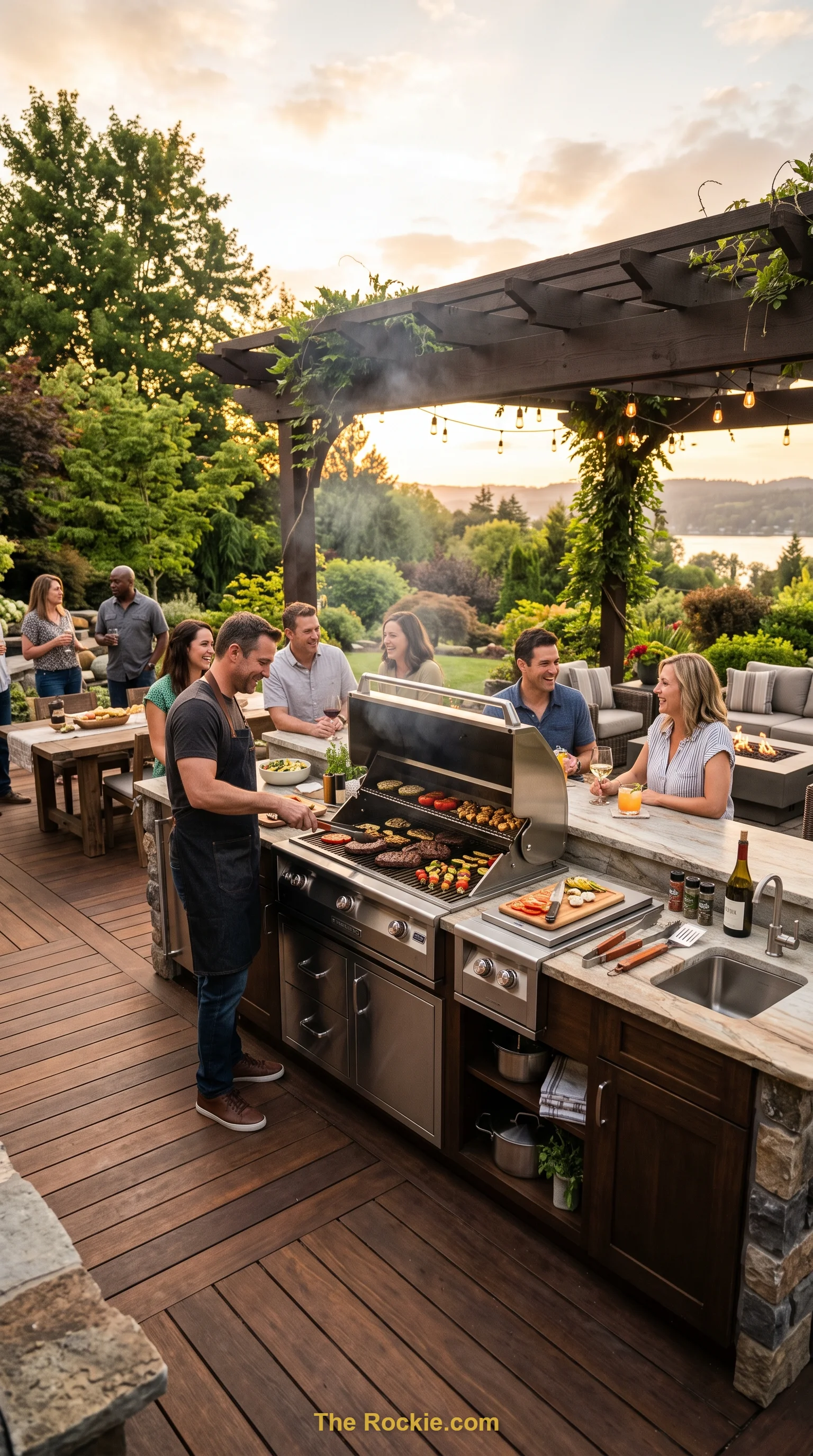
A dedicated grilling station brings real energy to a deck kitchen, combining efficiency with genuine style. Pairing a quality grill with generous surrounding counter space keeps cooking smooth and social, letting the person at the grill stay part of the conversation rather than working in isolation. Done right, it becomes the natural gathering point for the whole outdoor space.
3. Durable Material Selection
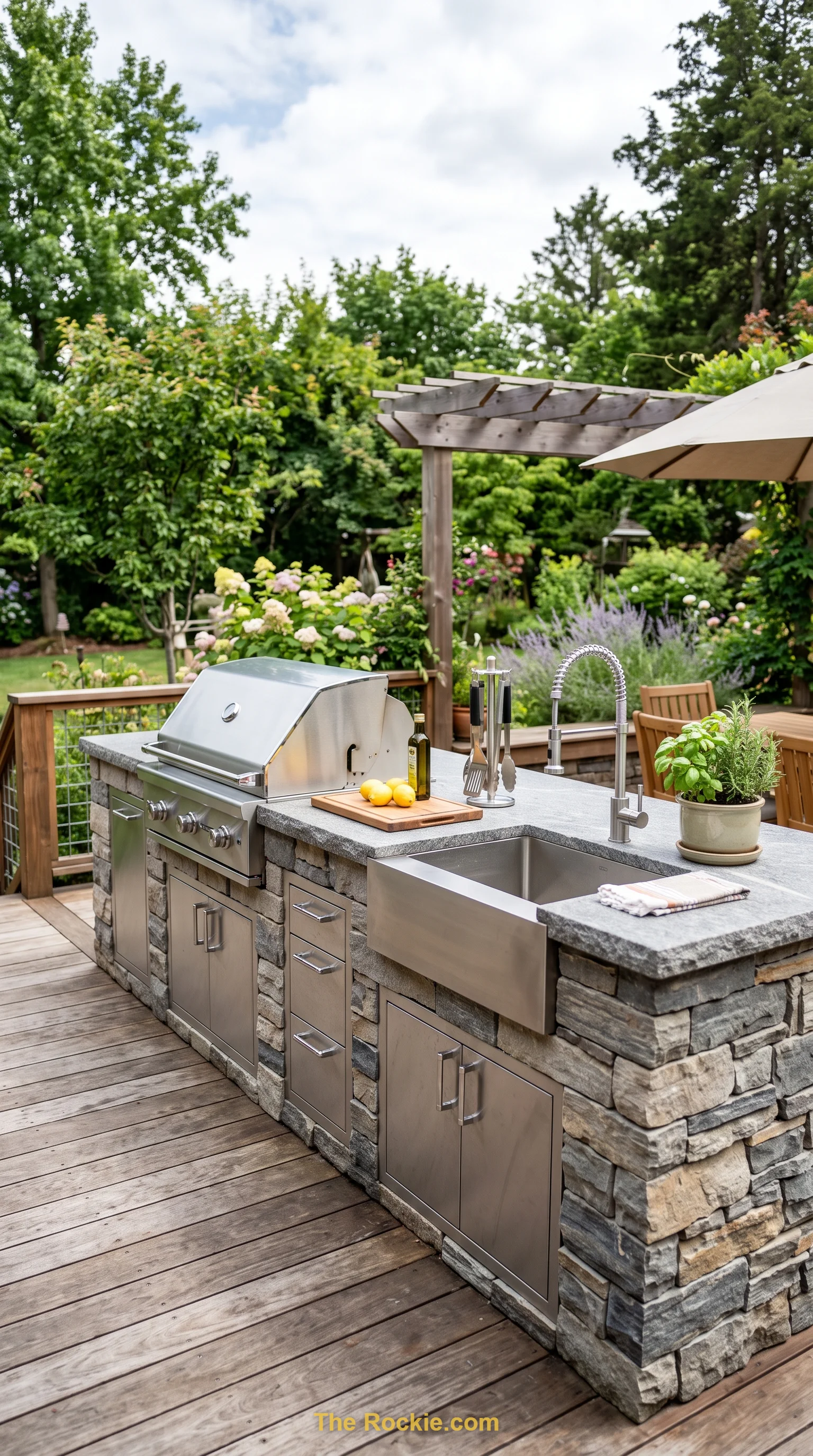
Weather-resistant materials — stone, stainless steel, quality composites — are what keep a deck kitchen looking good years after installation. These surfaces hold up to heat, moisture, and daily wear without losing their finish, cutting down significantly on maintenance and repair costs over time. Choosing durability up front pays off every season that follows.
4. Weatherproof Appliances Integration
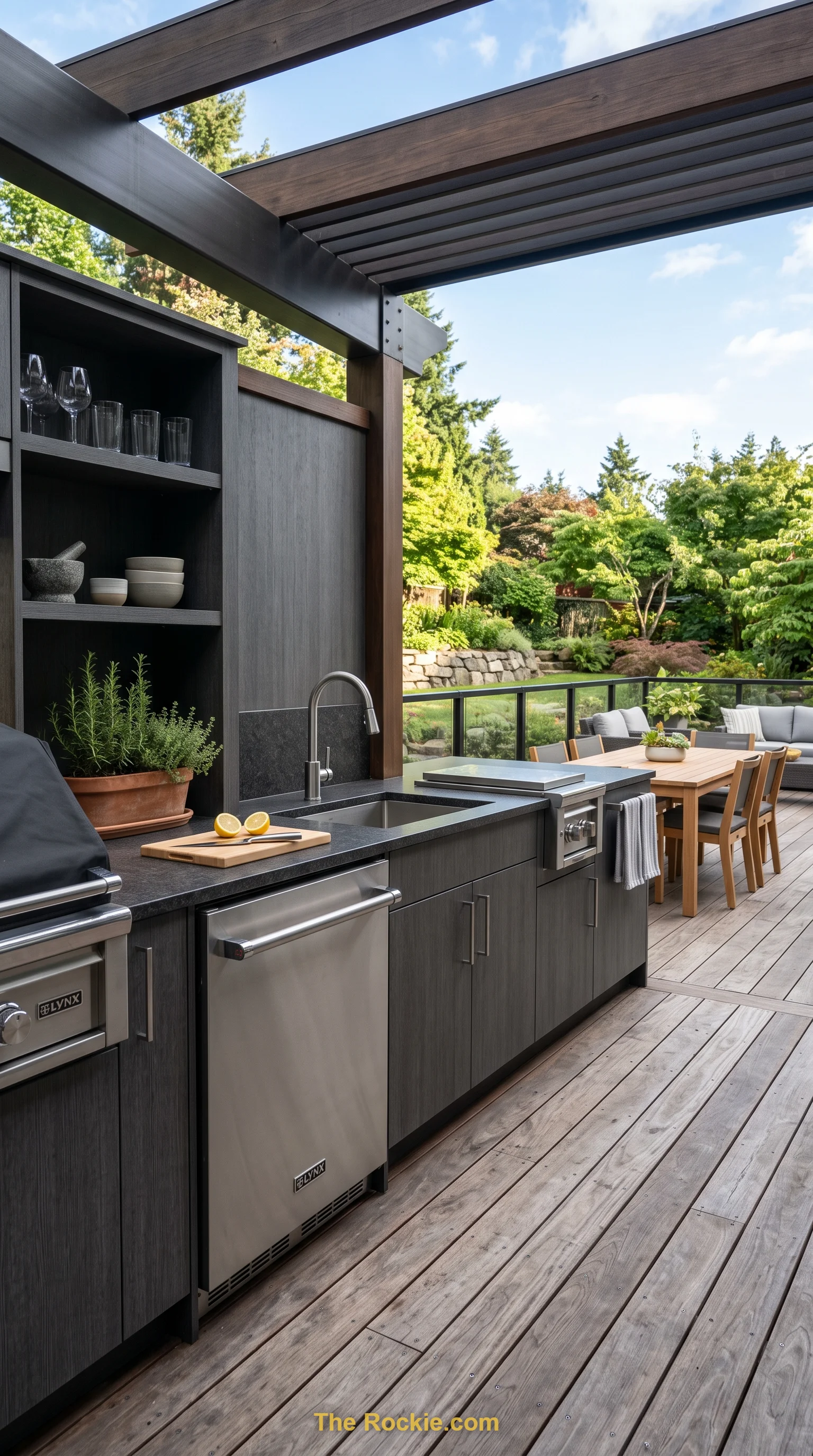
Grills, refrigerators, and sinks built specifically for outdoor use resist rain, humidity, and UV exposure in ways standard indoor appliances simply can’t. Choosing units with proper external certifications ensures real reliability, letting the kitchen function safely and efficiently even through less-than-ideal weather. It’s an investment that keeps the space usable across every season.
5. Integrated Seating Areas
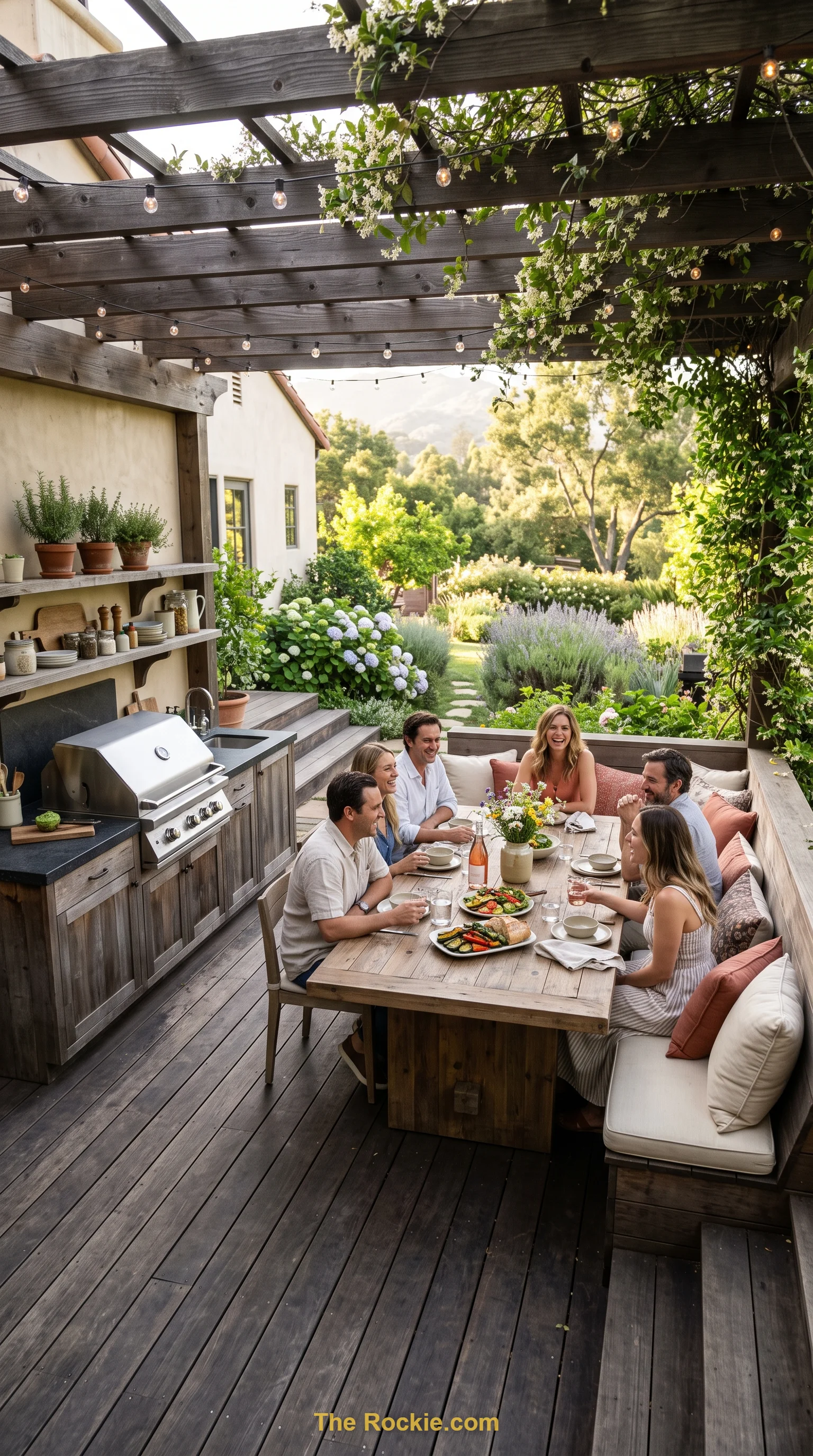
Comfortable, well-placed seating turns a deck kitchen from a purely functional cooking zone into a genuine gathering space. Weather-resistant furniture and ergonomic layouts keep every seat close to the action, extending the living space outdoors and making the area versatile enough for both quiet family dinners and larger get-togethers.
6. Cooking Surface Design
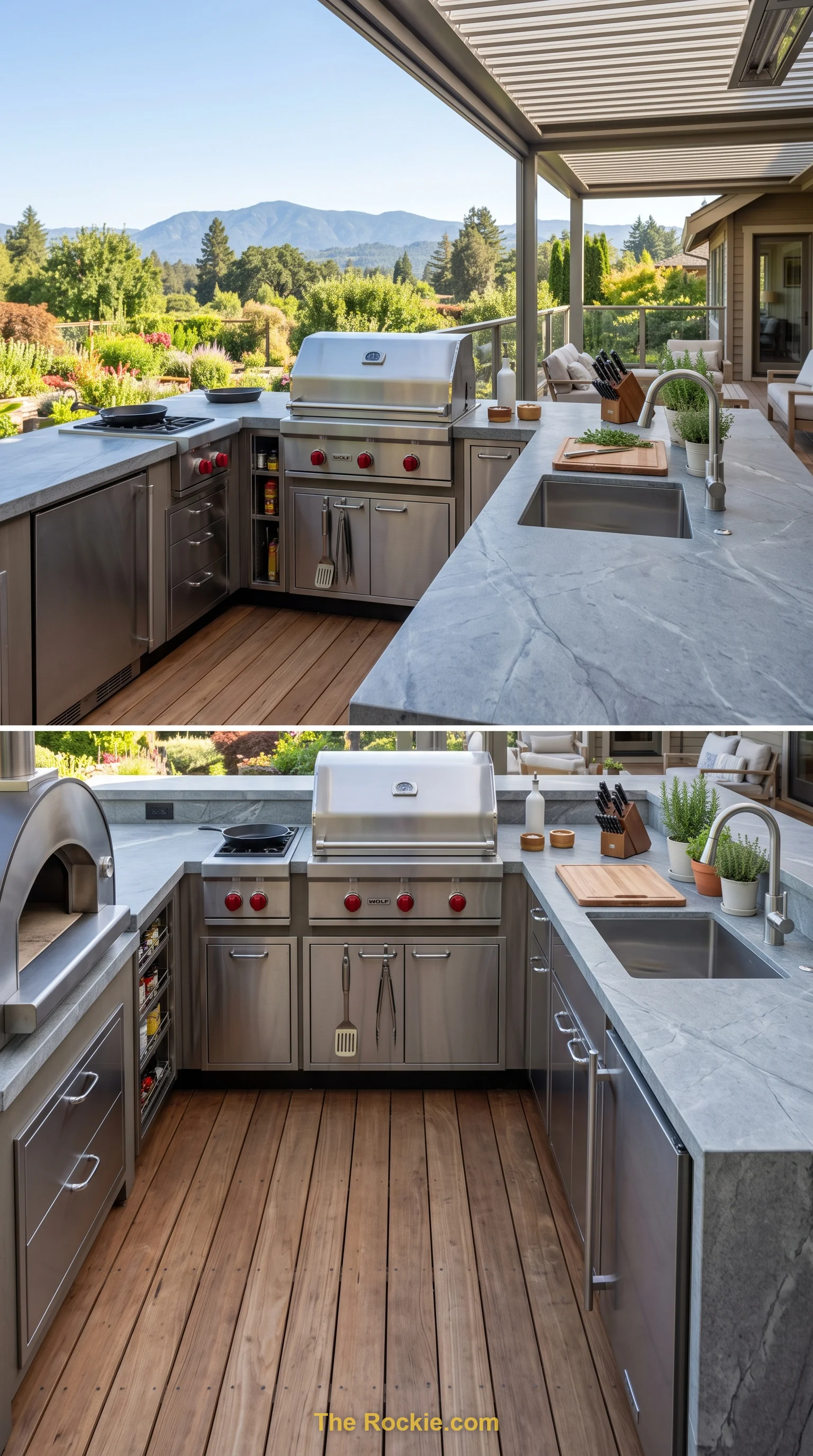
Generous, well-planned countertops give a deck kitchen the room it needs for real ingredient prep and assembly. Heat-resistant materials like natural stone or engineered quartz hold up to outdoor conditions while keeping the workflow clean and uncluttered. A structured, well-organized surface makes cooking outdoors feel just as capable as cooking inside.
7. Ample Storage Solutions
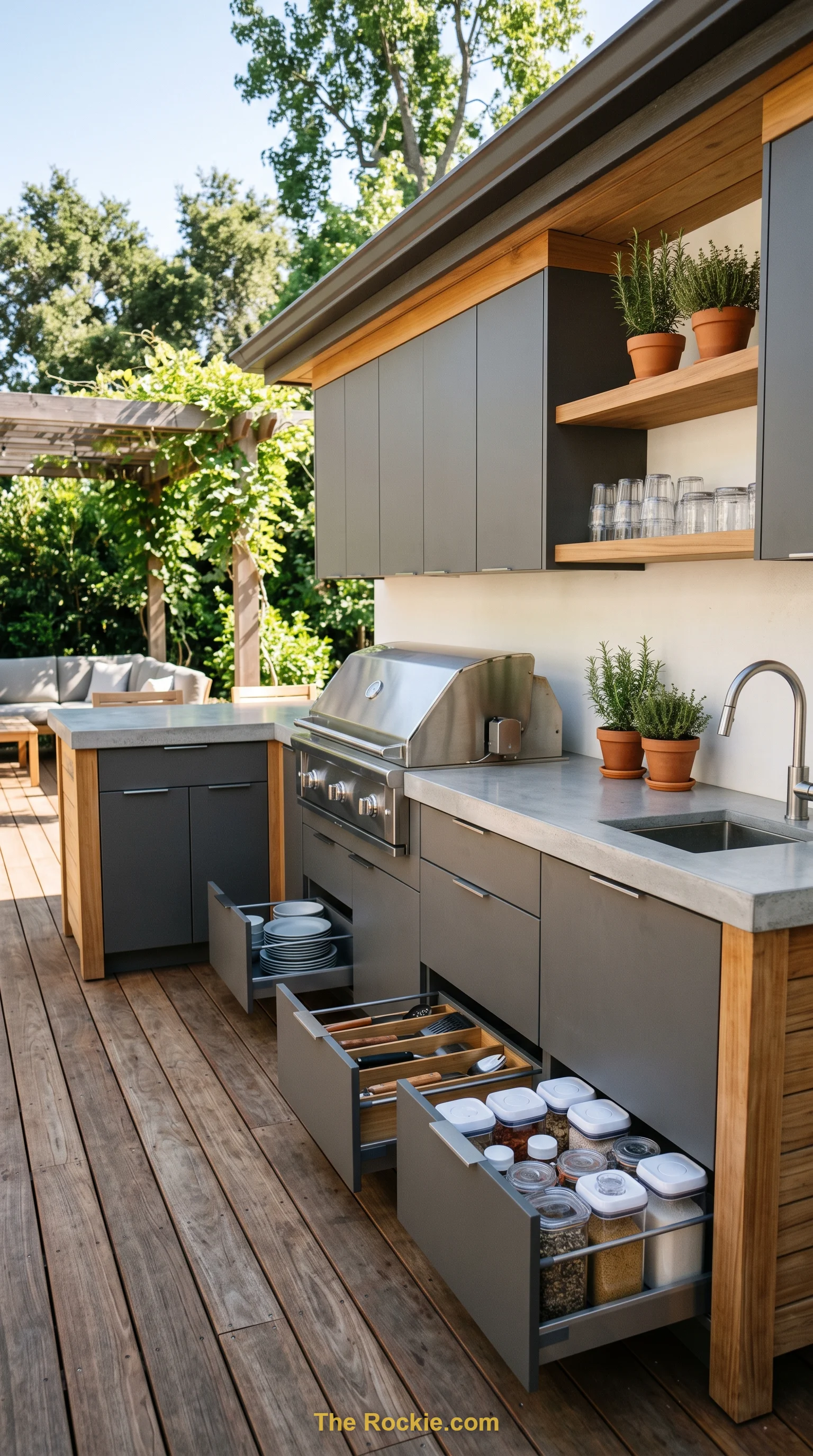
Cabinets, drawers, and shelving built from weather-resistant materials keep a deck kitchen organized and free of clutter. Giving every tool and piece of cookware a dedicated home streamlines the cooking process while preserving the overall look of the space. It’s a detail that makes the difference between a kitchen that feels chaotic and one that runs smoothly.
8. Lighting and Ambiance
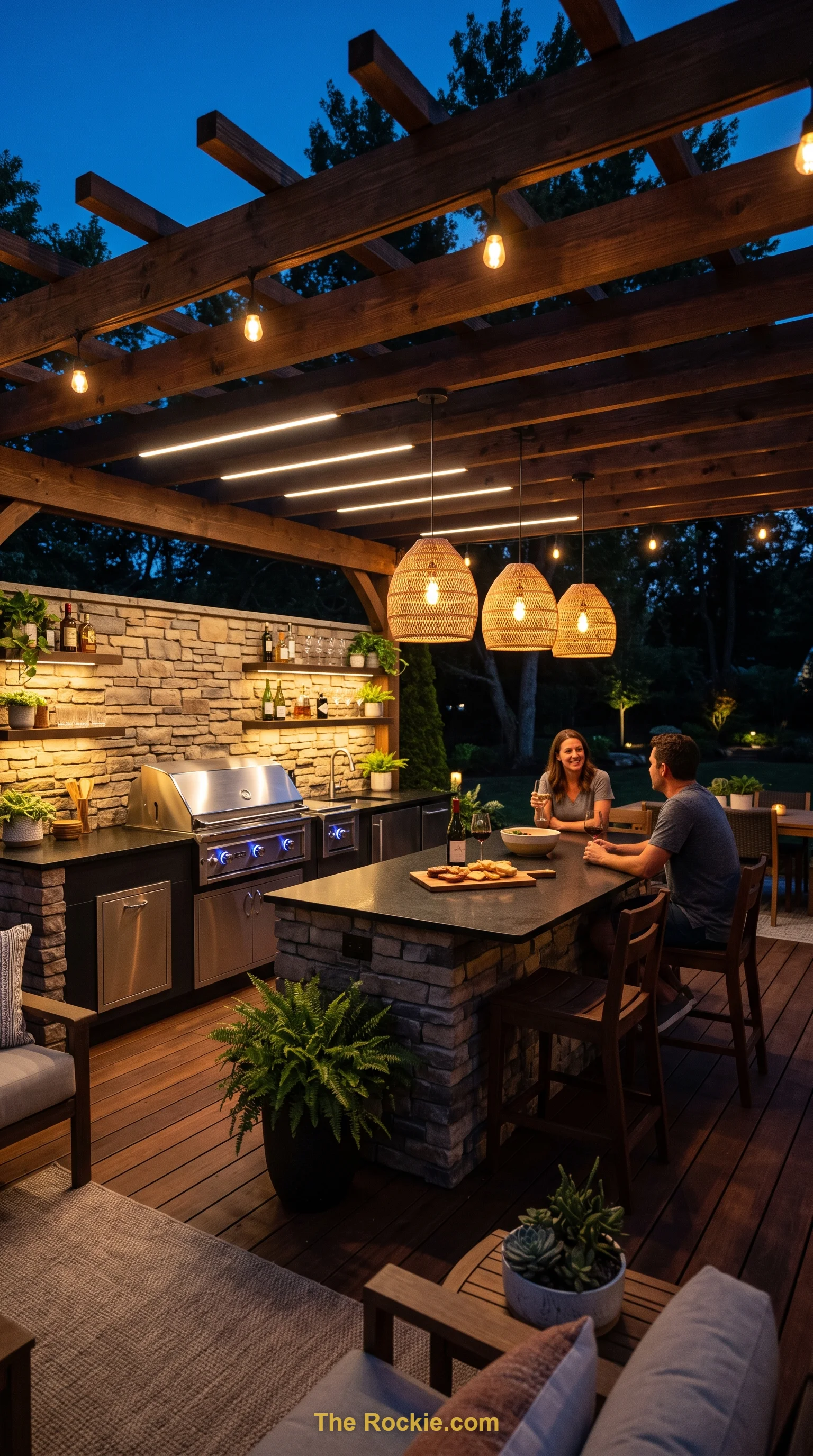
A thoughtful mix of task and accent lighting brings a deck kitchen to life after the sun goes down. Dimmable LED fixtures, pendant lights, and subtle path lighting keep the space both safe and visually appealing, highlighting key design details while supporting evening gatherings. Good lighting is often what turns a daytime cooking spot into a genuine evening destination.
9. Ventilation Strategies
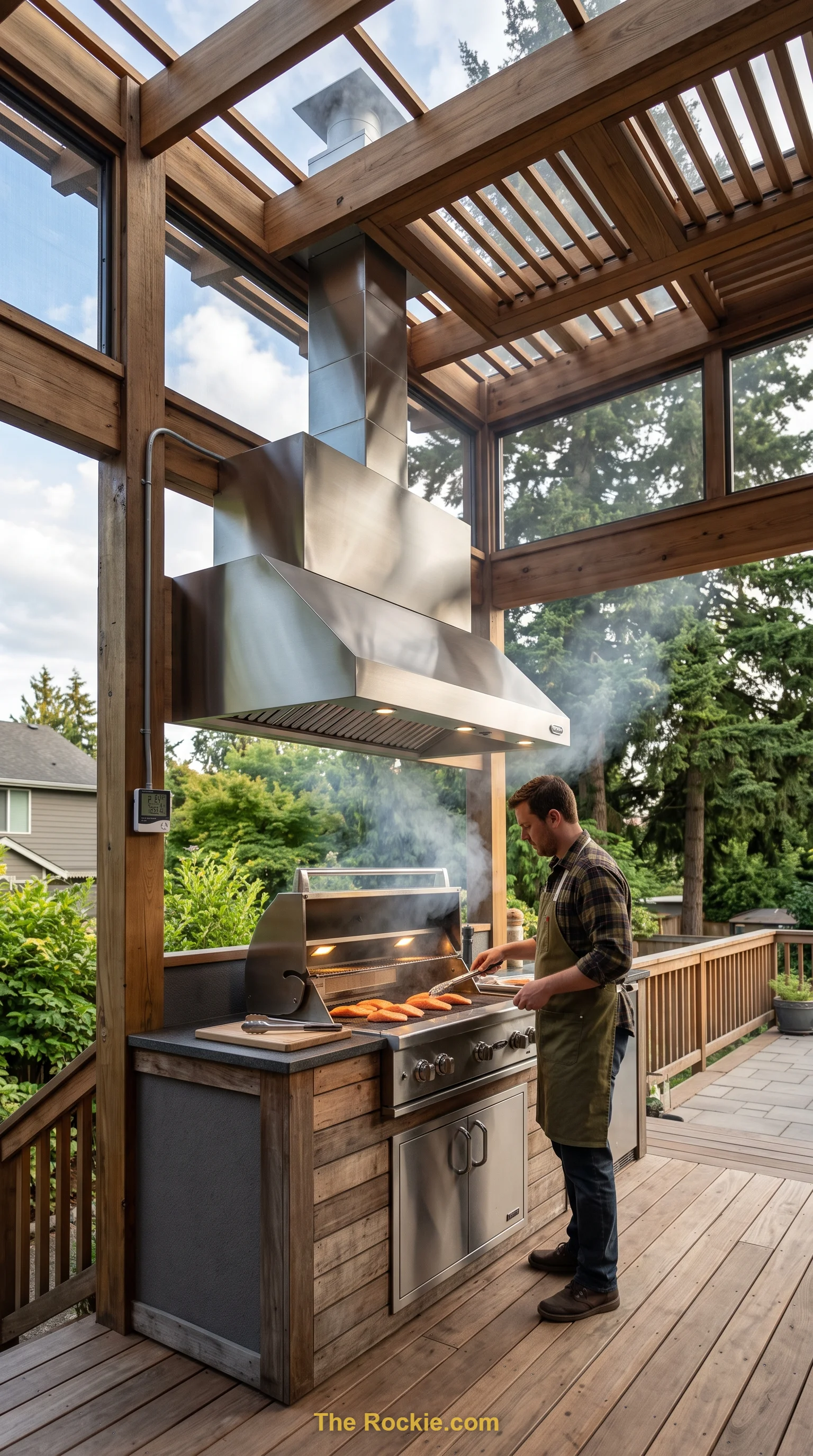
Exhaust hoods, well-placed vents, and thoughtful open-air design all help smoke and heat dissipate efficiently in a deck kitchen. Proper ventilation prevents fumes from building up, extends the life of appliances, and keeps the whole space comfortable to cook in regardless of what’s on the grill. It’s an easy detail to overlook in planning, and a genuinely important one in practice.
10. Countertop Materials
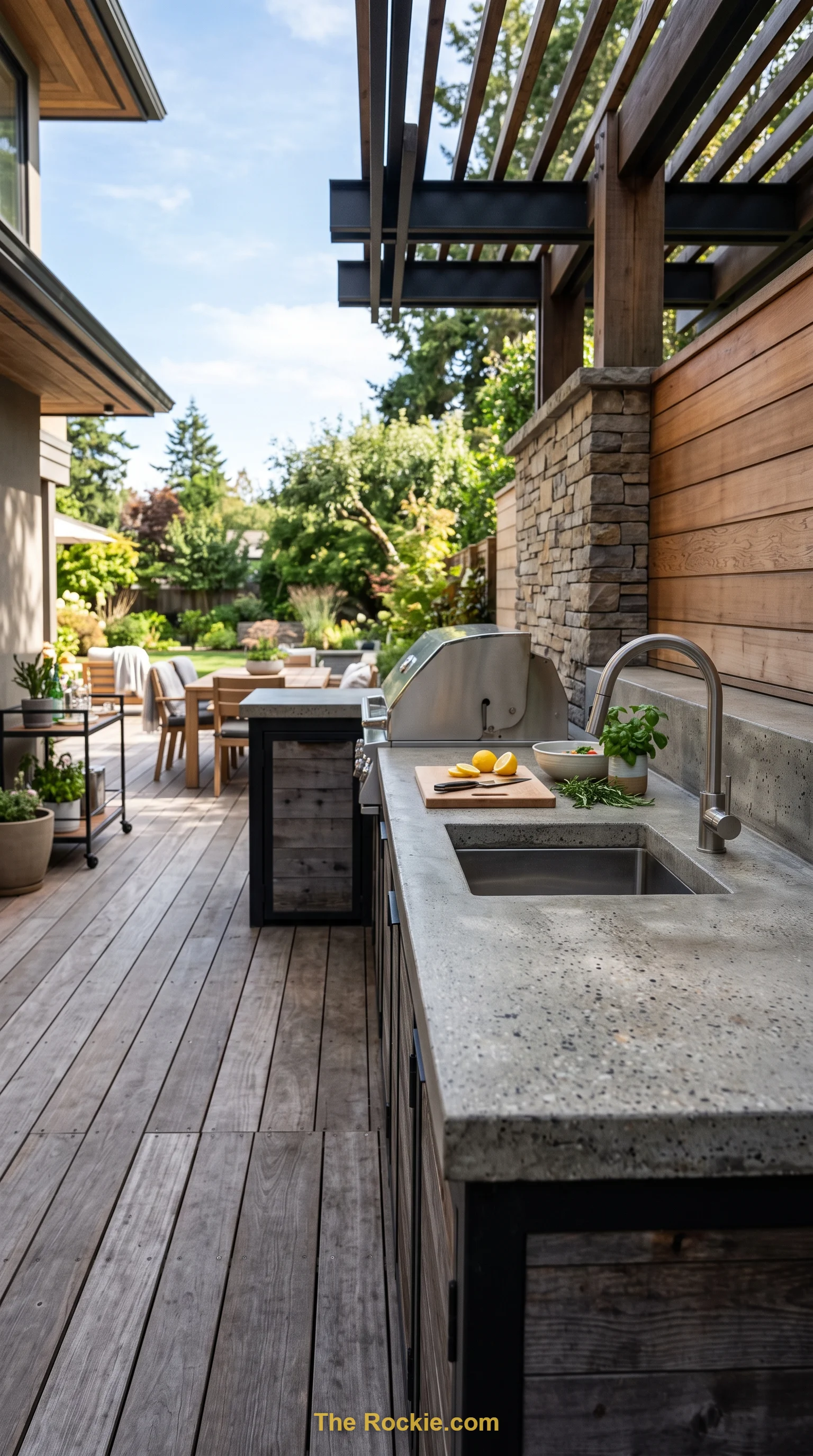
Granite, concrete, and recycled composite all offer real durability against weather and heat while adding visual character through varied textures and hues. These materials are also genuinely easy to clean and maintain, making them a popular choice for anyone who wants a deck kitchen that looks sharp without constant upkeep.
11. Electric Setup and Outlets
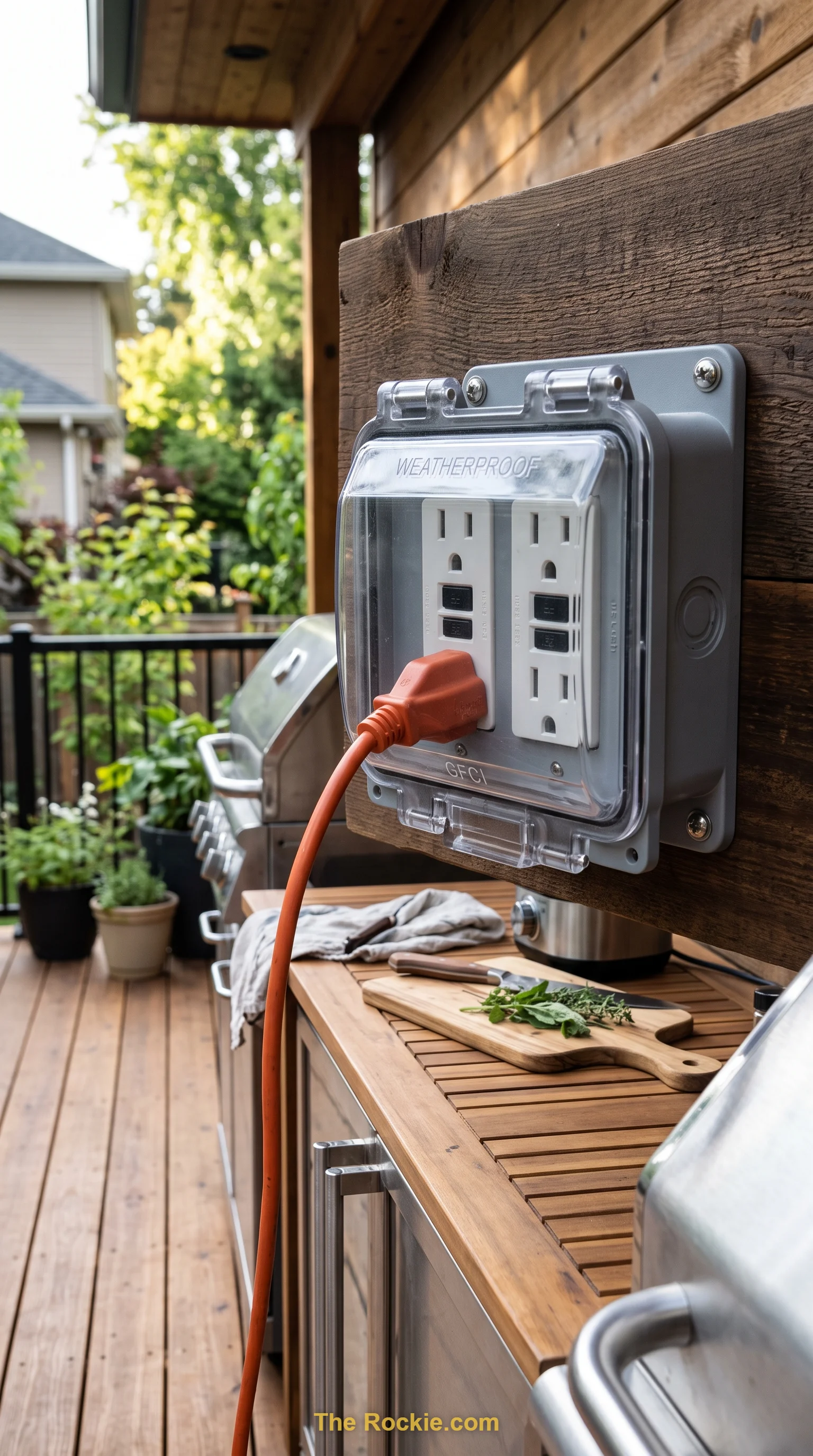
A reliable, weatherproof electrical setup with strategically placed outlets makes daily use of a deck kitchen genuinely convenient. Sufficient power for appliances, lighting, and device charging keeps the whole space functional without any risk of moisture interference. Getting this right during initial planning avoids a lot of frustration down the line.
12. Innovative Dining Spaces
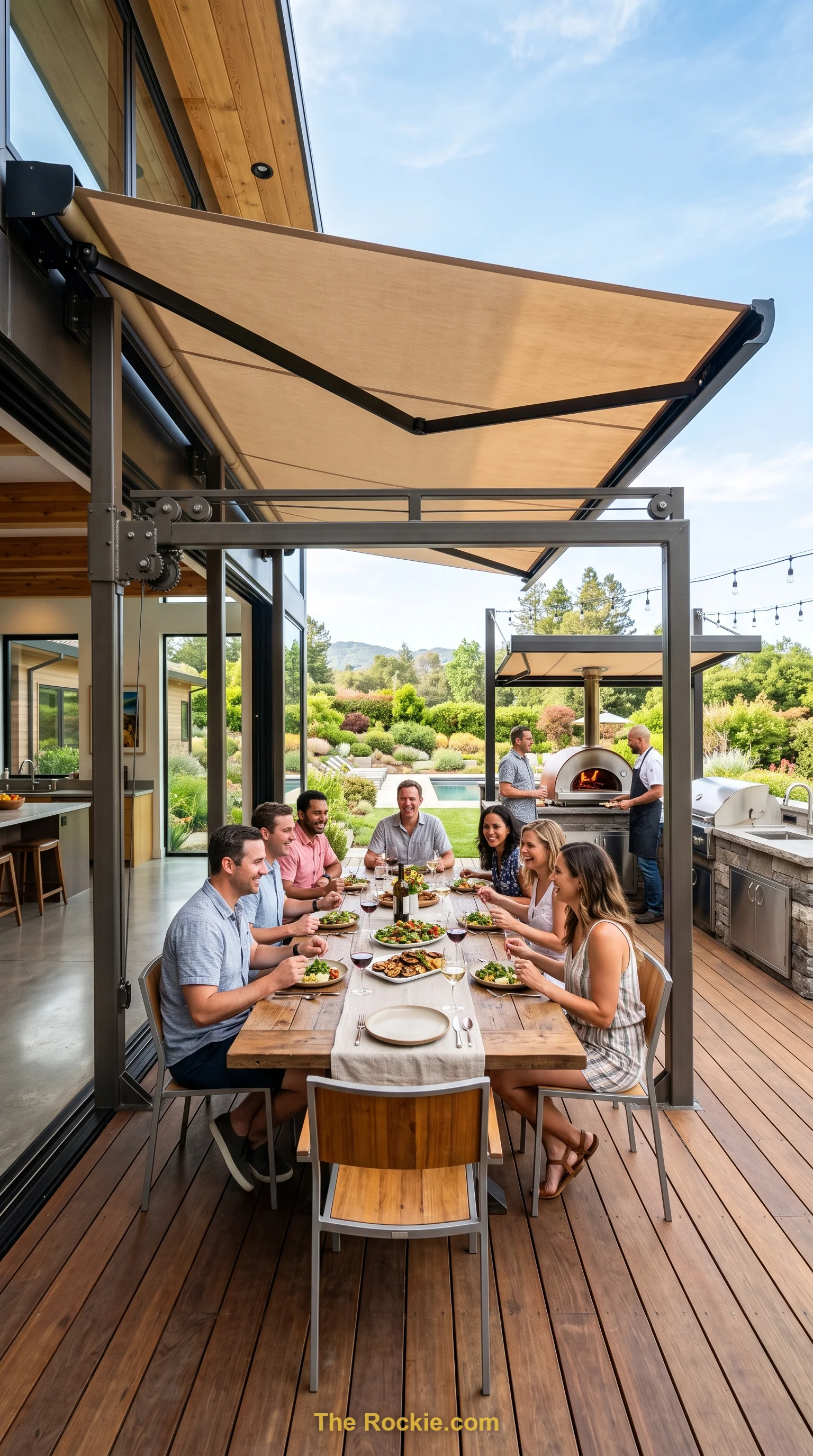
A dedicated dining area transforms a deck kitchen into a genuine entertaining destination rather than just a cooking station. Retractable awnings, custom tables, and weather-resistant materials all combine to create a space flexible enough for both relaxed family meals and more formal gatherings, adapting easily to whatever the occasion calls for.
13. Eco-Friendly Options
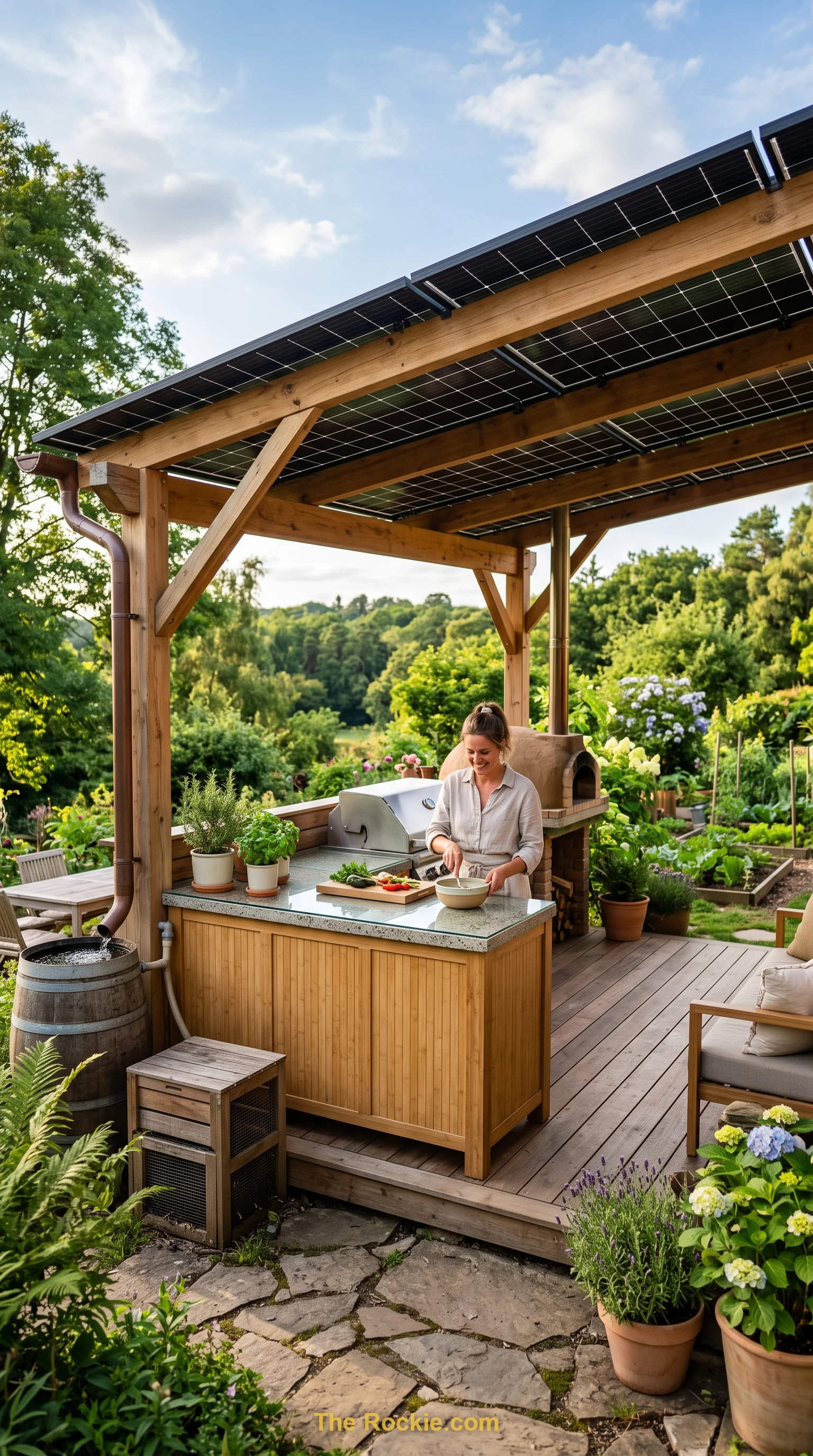
Solar panels, energy-efficient appliances, and sustainable materials reduce a deck kitchen’s environmental footprint without compromising on durability. This kind of responsible design lowers long-term costs while setting a genuinely positive example for eco-conscious outdoor living, proving sustainability and performance can coexist even in a demanding outdoor setup.
14. Protection from Elements
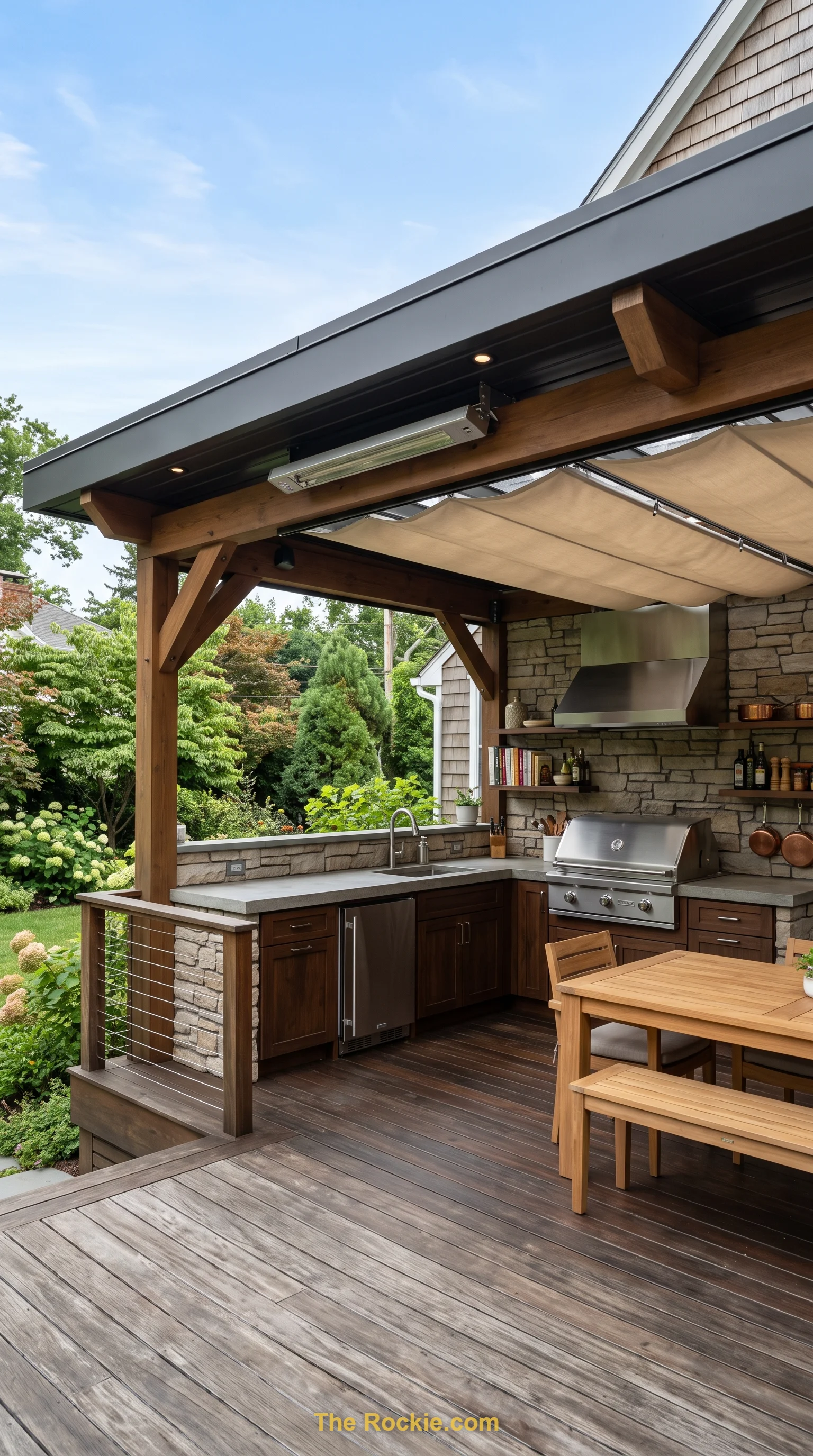
Retractable canopies, durable overhangs, and weather-resistant materials give a deck kitchen real shelter against rain, sun, and wind. This kind of protective architecture safeguards both appliances and surfaces, letting the kitchen function consistently regardless of season. It’s one of the details that determines whether a deck kitchen gets used year-round or only on perfect days.
15. Stylish Finishing Touches
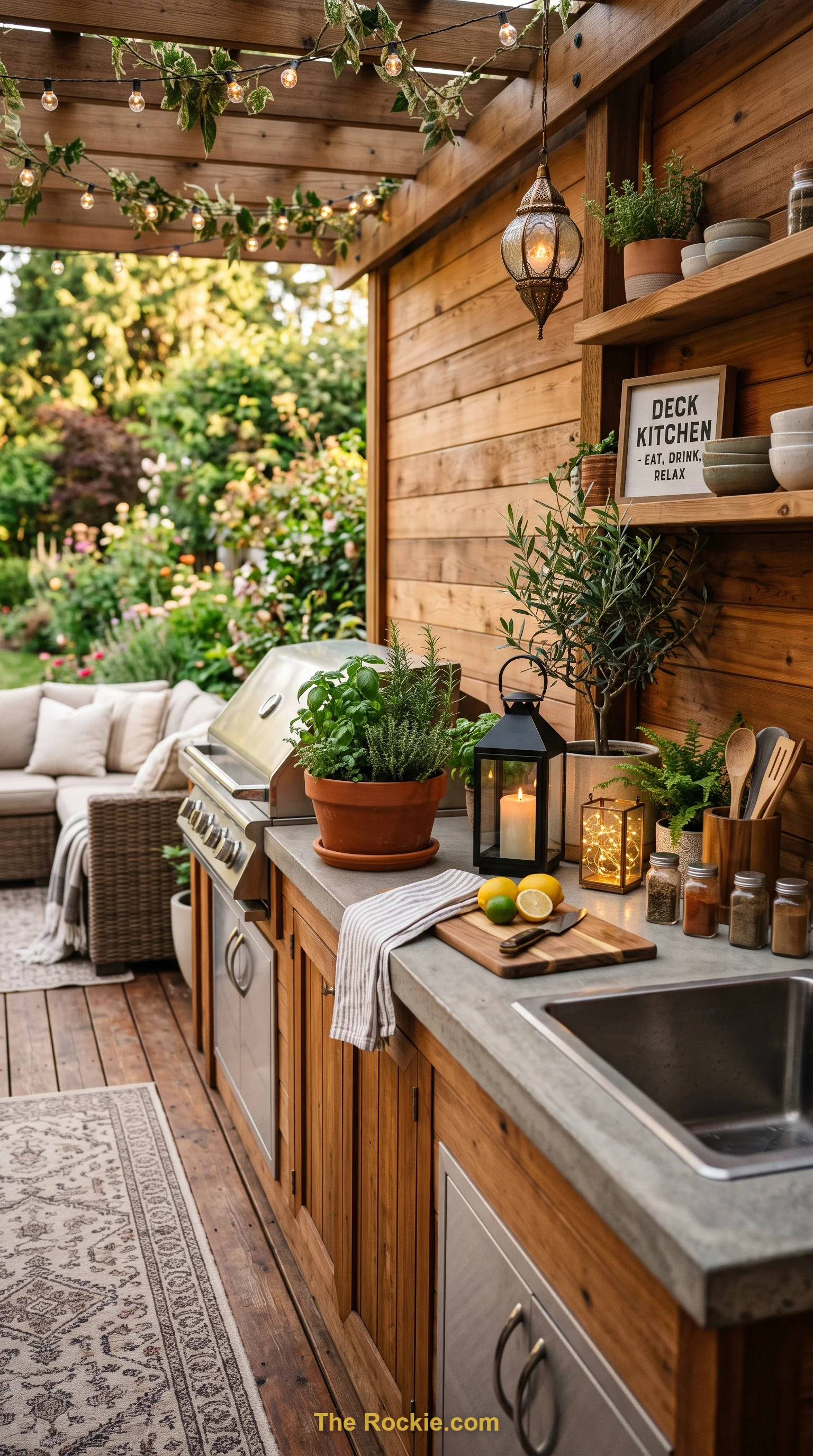
Decorative potted plants, artful table settings, and ambient lanterns give a deck kitchen genuine personality once the functional groundwork is in place. These small, considered details tie the whole space together, enhancing both aesthetics and comfort without needing any major structural changes.
16. Smart Technology Features
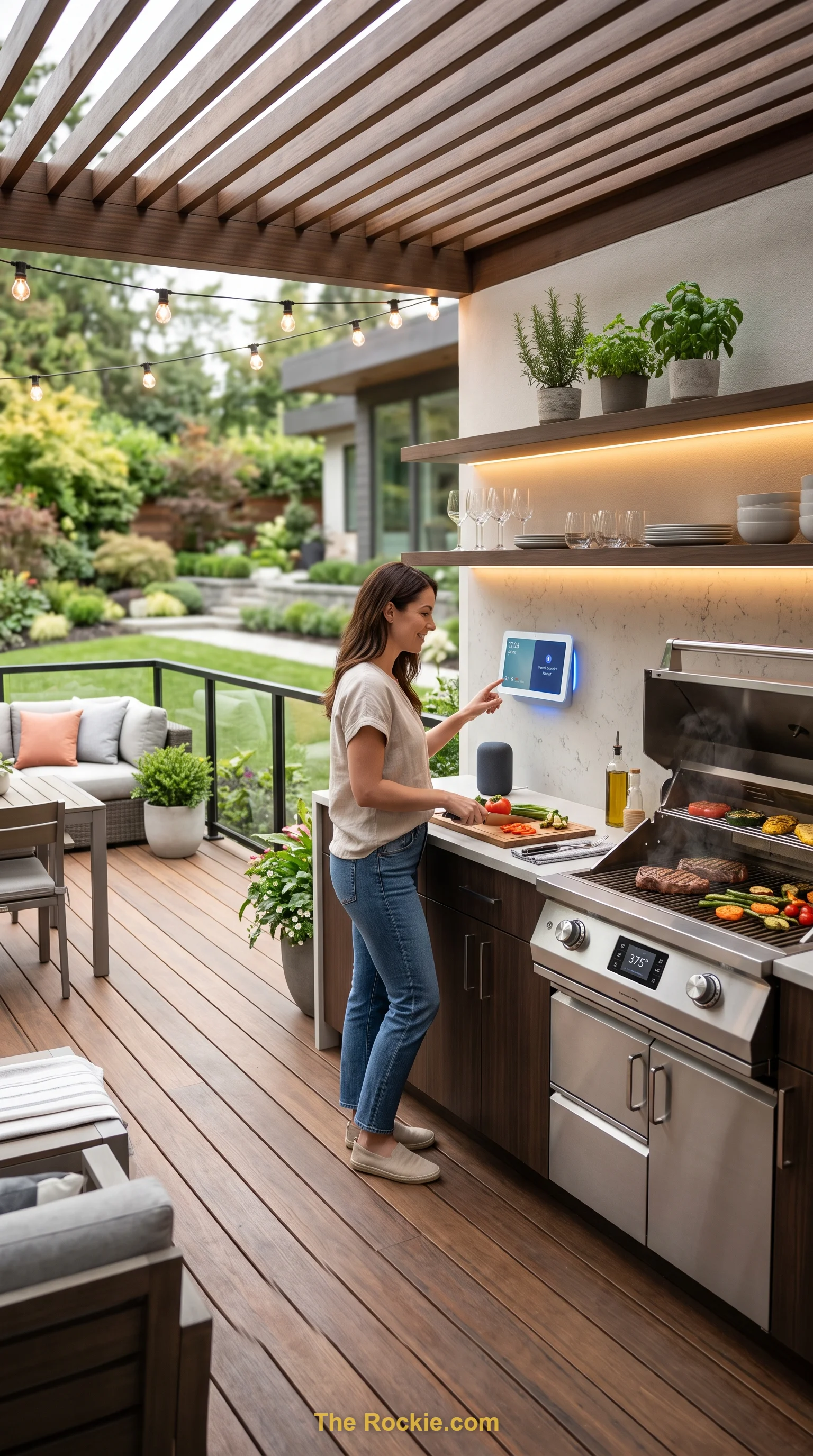
Voice-activated appliances, programmable lighting, and automated temperature controls bring genuine modern convenience into a deck kitchen. These features streamline daily tasks and improve energy management, turning the space into a responsive, forward-thinking environment for outdoor cooking rather than just a fixed setup.
17. Fire Safety Precautions
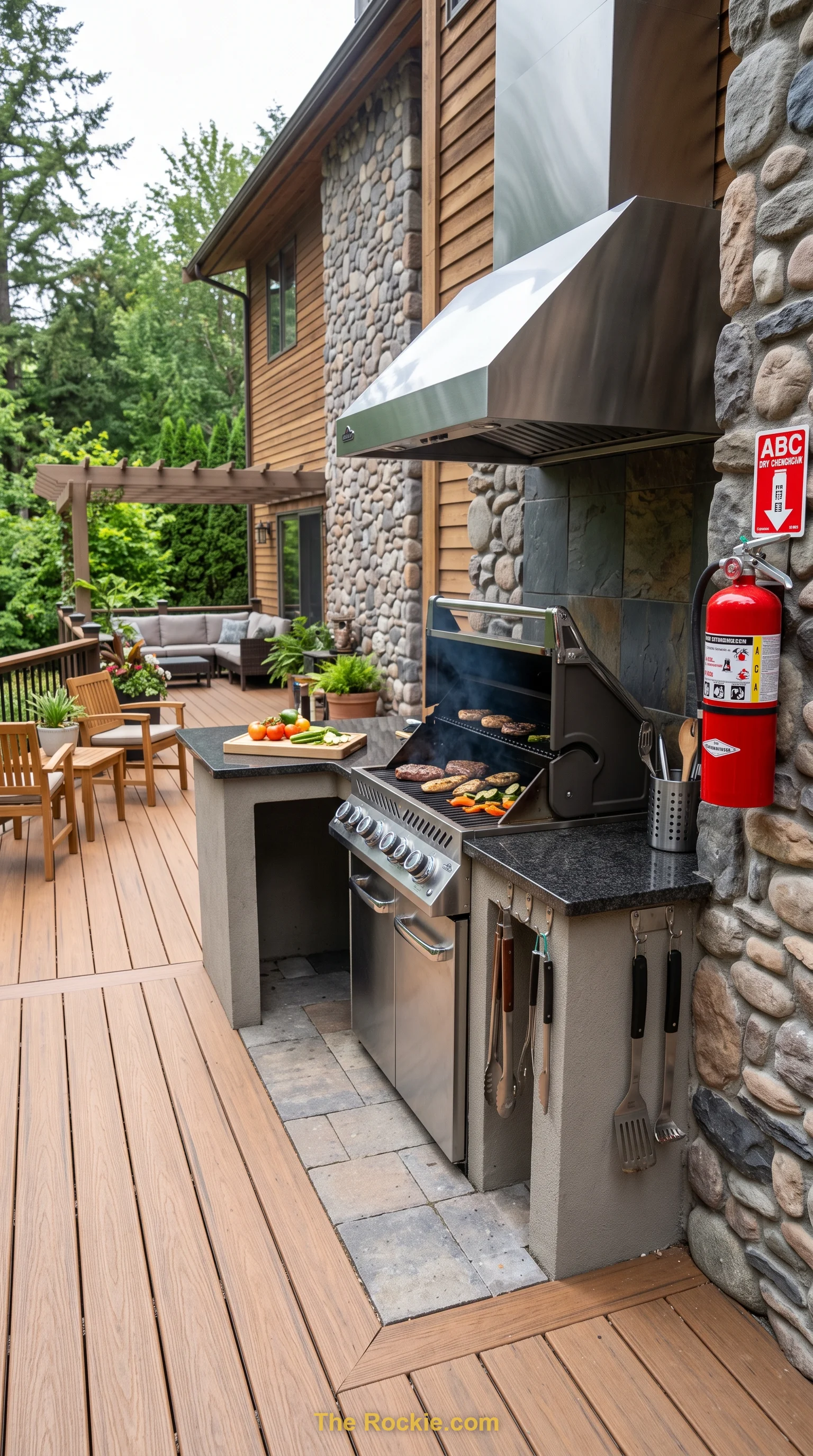
Fire-resistant materials, accessible fire extinguishers, and secure grill placement all significantly reduce risk in a deck kitchen. Taking safety seriously from the start means the space stays enjoyable without compromising protection, giving everyone real peace of mind while cooking outdoors.
18. Custom Cabinetry Ideas
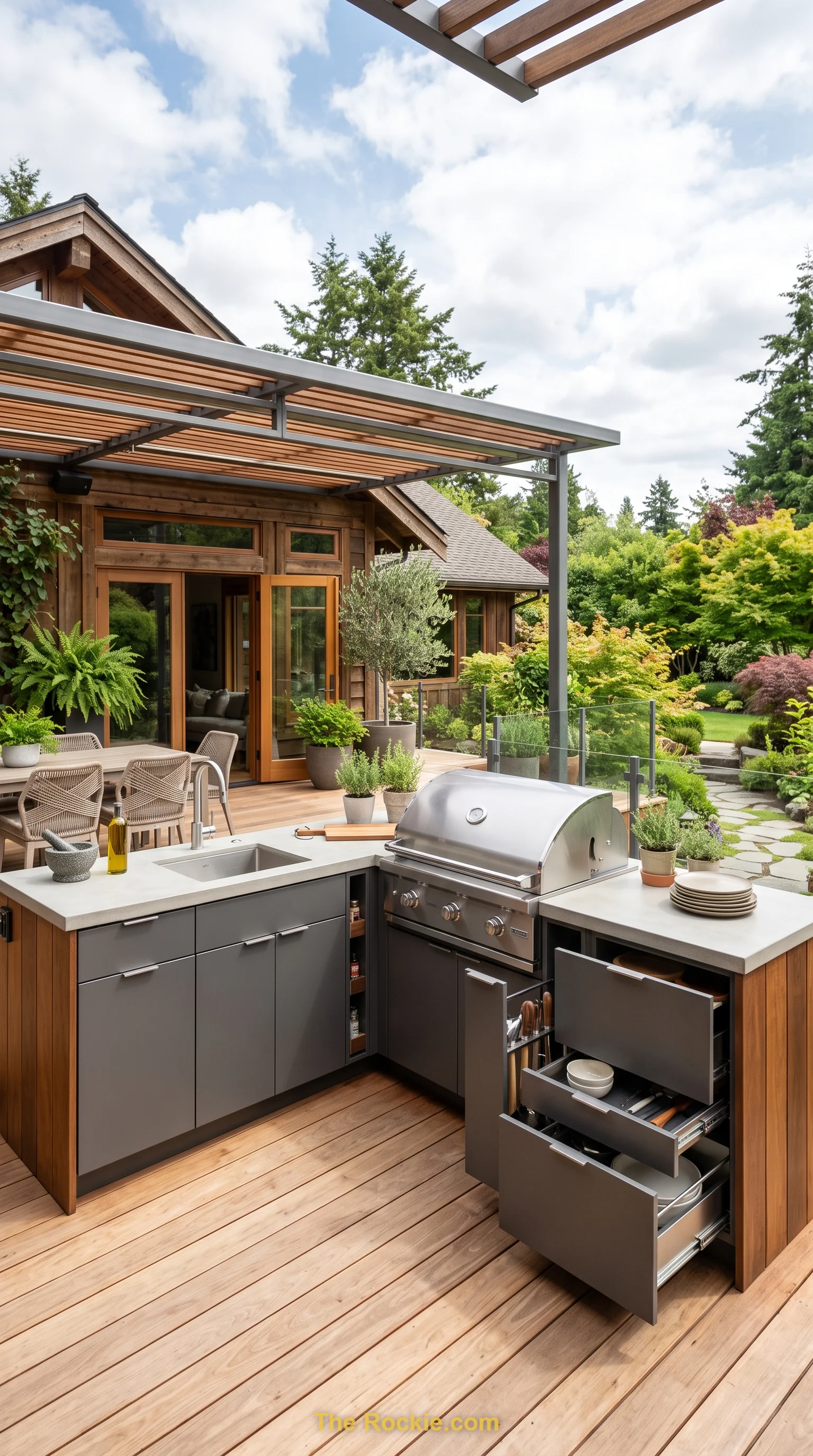
Personalized cabinetry crafted from weatherproof materials turns storage into a genuine design statement in a deck kitchen. Tailor-made solutions give every culinary tool a dedicated space while blending seamlessly with the overall look, resulting in a setup that’s as refined as it is functional.
19. Seamless Indoor-Outdoor Transition
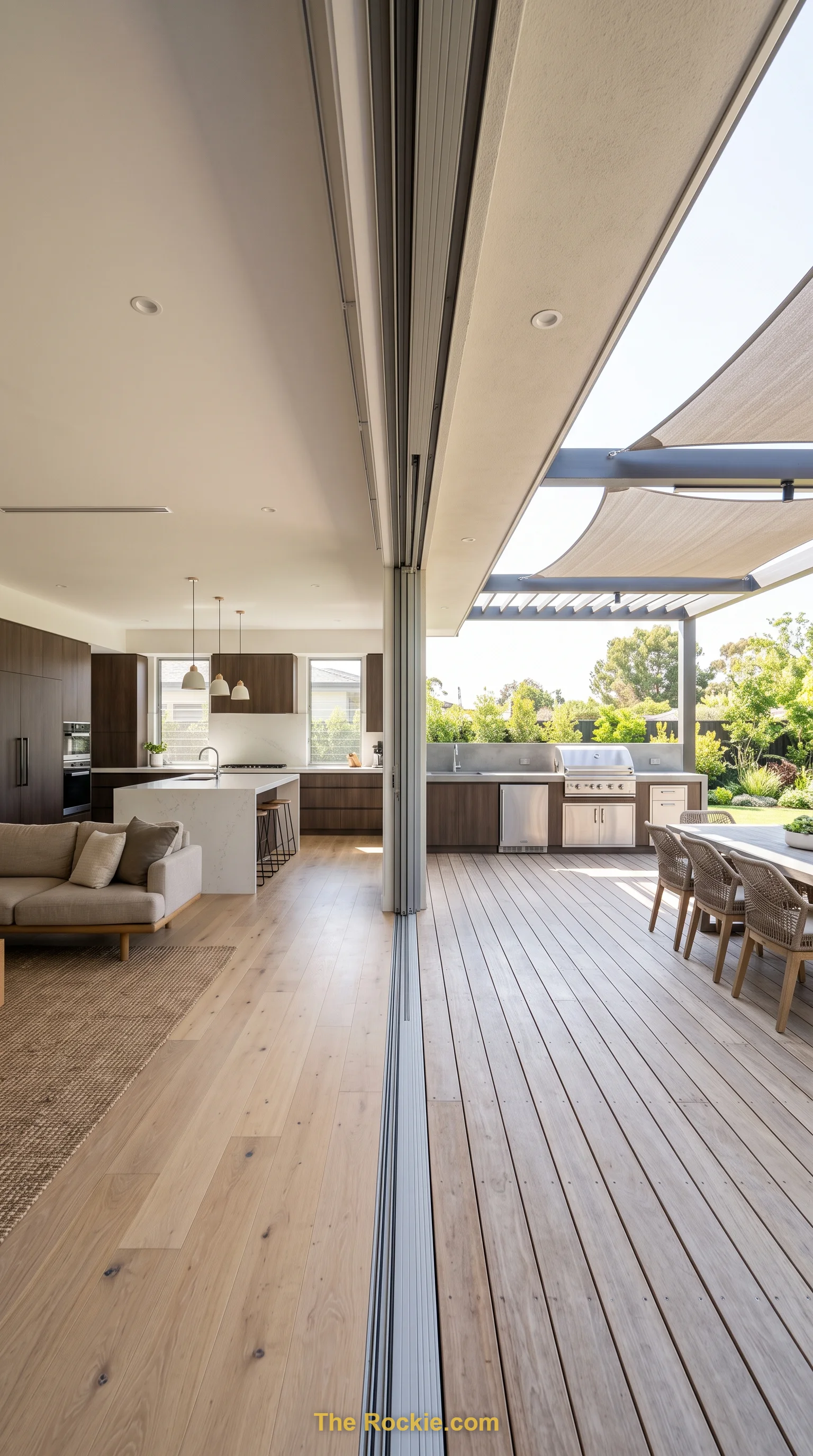
Large sliding doors and connected flooring create a fluid boundary between an indoor kitchen and a deck kitchen, letting the two spaces function as one cohesive whole. This kind of integration optimizes the layout for both entertaining and daily use, adapting easily to shifting weather and different social occasions throughout the year.
20. Refreshing Beverage Stations
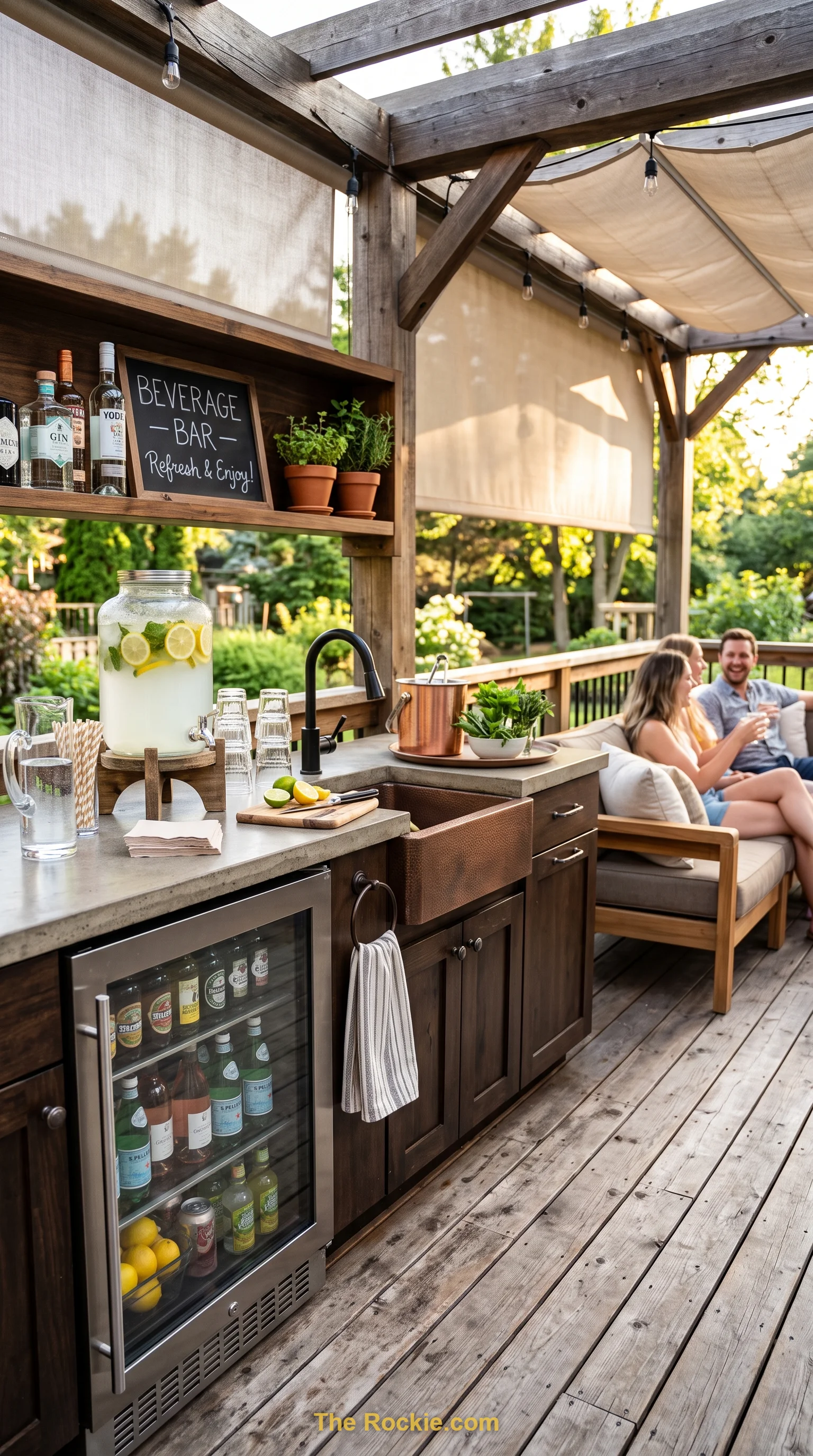
A dedicated beverage station, equipped with a small refrigerator, sink, and ample counter space, adds real convenience and a bit of luxury to a deck kitchen. It becomes a natural focal point for entertaining, letting guests mix drinks or grab a cold refreshment without disrupting the main cooking area.
21. Budget-Conscious Design
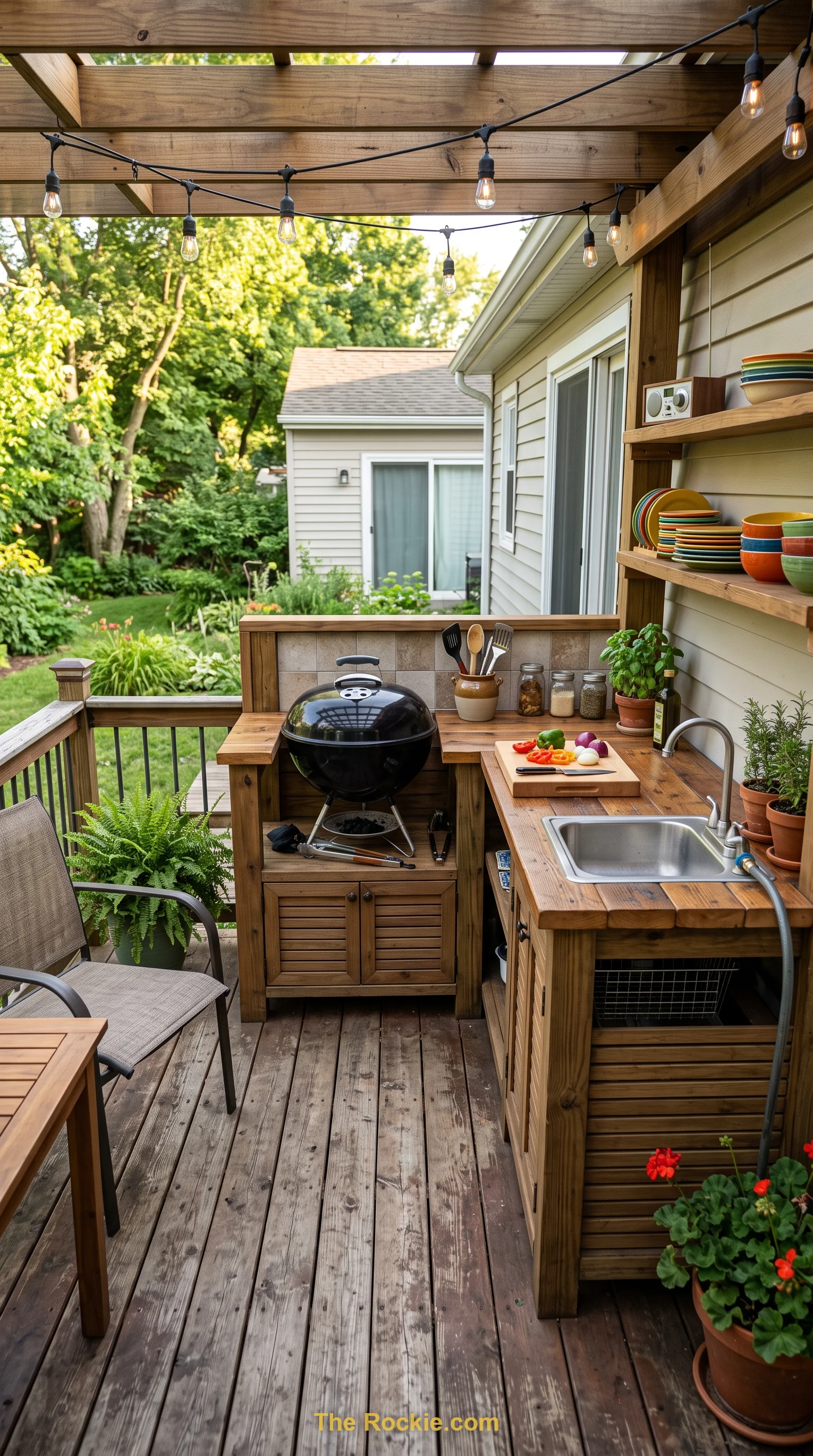
Focusing spending on durable materials, smart appliances, and multipurpose spaces keeps a deck kitchen build financially manageable without sacrificing quality. Prioritizing the features that matter most, while finding affordable alternatives elsewhere, delivers a genuinely high-end look without an unlimited budget.
22. Maintenance and Longevity
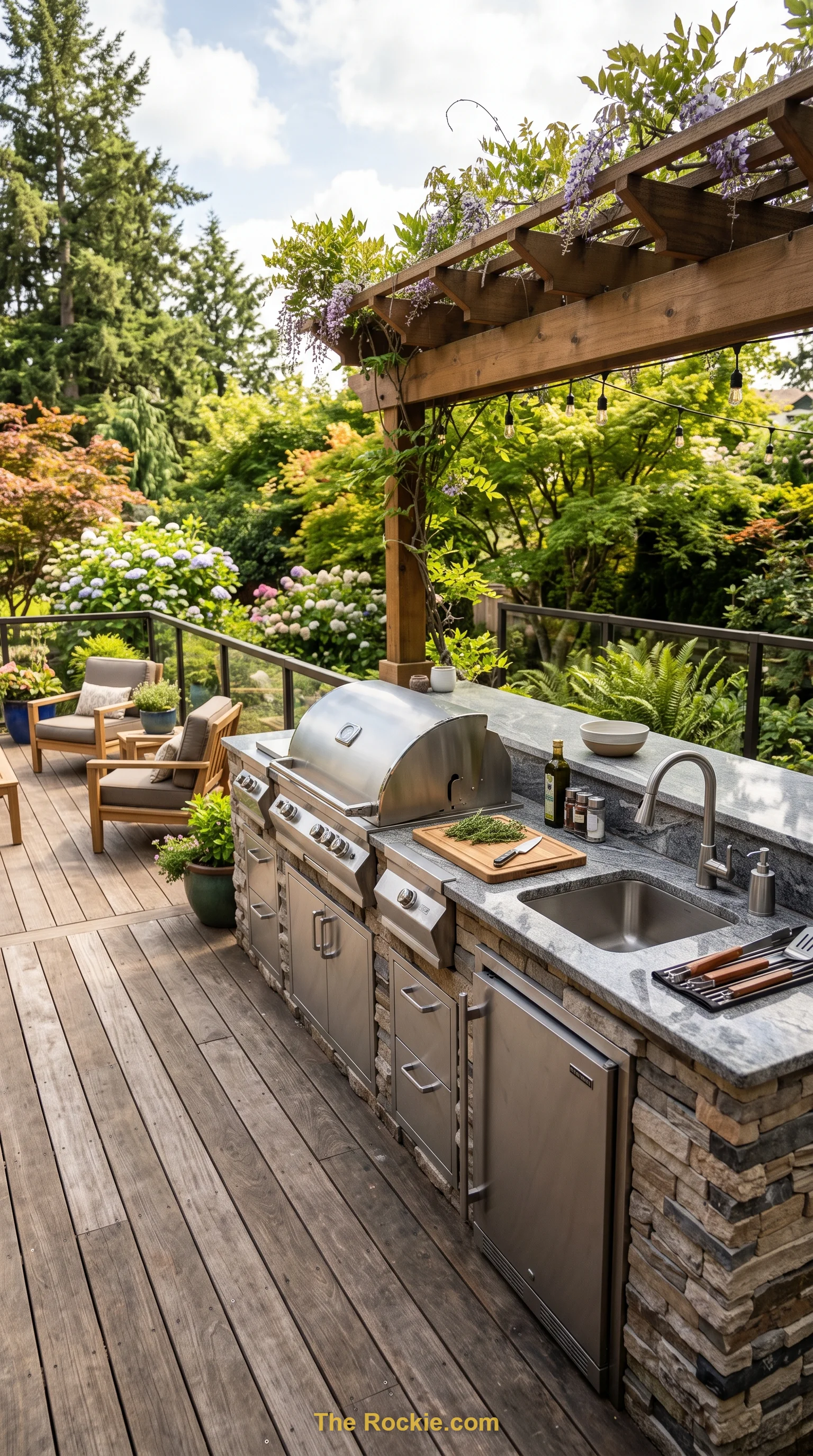
Routine cleaning, timely repairs, and genuinely high-quality weather-resistant materials all contribute to keeping a deck kitchen functional and good-looking for years. A proactive approach to upkeep extends the life of every component, protecting the overall investment and ensuring the space keeps performing season after season.
Final Thoughts
Twenty-two considerations, and the throughline is consistent: an outdoor kitchen on a deck only works long-term when the fundamentals — layout, weatherproofing, ventilation, storage — get real attention before anything decorative gets added. Get those right, and the space becomes genuinely functional rather than just a nice-looking addition, turning your deck into the kind of room where actual cooking, gathering, and everyday life happen, not just the occasional summer barbecue.