
15+ Deep Green Bedroom Ideas That Actually Work
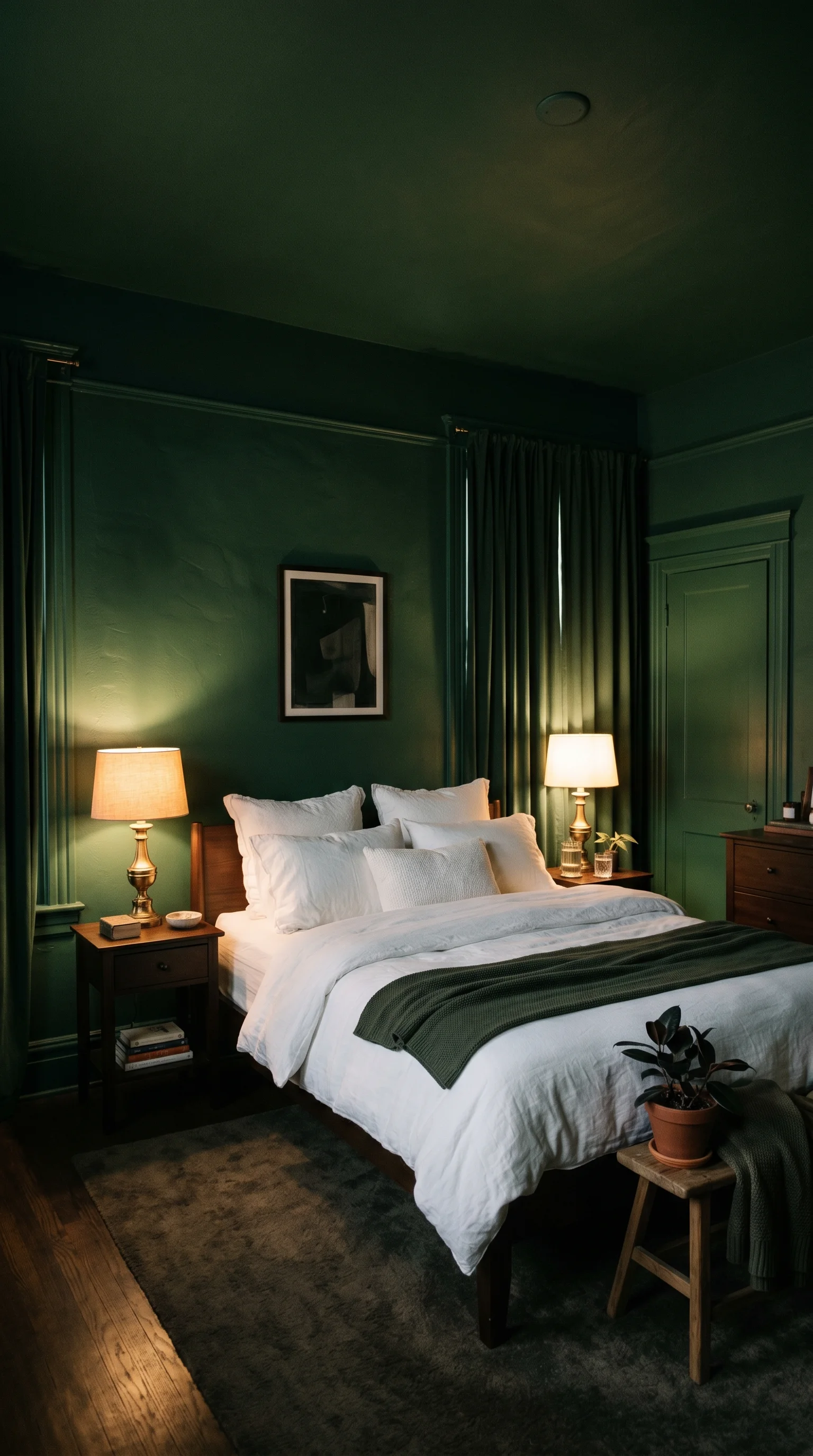
Deep green is having a moment. Actually, it’s been having a moment for the past two years and keeps refusing to leave — which is usually a sign it’s not a trend so much as a correction. After a decade of white walls and gray everything, people want a bedroom that feels like somewhere.
Dark green — whether forest green, emerald, or something muddier and harder to name — creates a cocooning retreat that pulls you toward sleep rather than away from it. That’s not an accident. Green is what your nervous system expects to see when it’s trying to unwind.
Here’s how to use it without turning your bedroom into a cave.
1. The Full Color Drench
Painting the ceiling the same dark green as the walls creates a seamless, dramatic effect — the color wraps around from floor to ceiling, enhancing the sense of intimacy and coziness.
This is the most committed version of deep green, and it’s also the most rewarding when done right. The trick is contrast: crisp white trim around doors, windows, and baseboards prevents the room from feeling too dark and adds a clean architectural element that makes the green pop.
Use this in rooms with at least one decent-sized window. Natural light during the day balances the depth of the color. At night, warm lamp light makes it feel like the coziest room in the house.
2. The Headboard Accent Wall
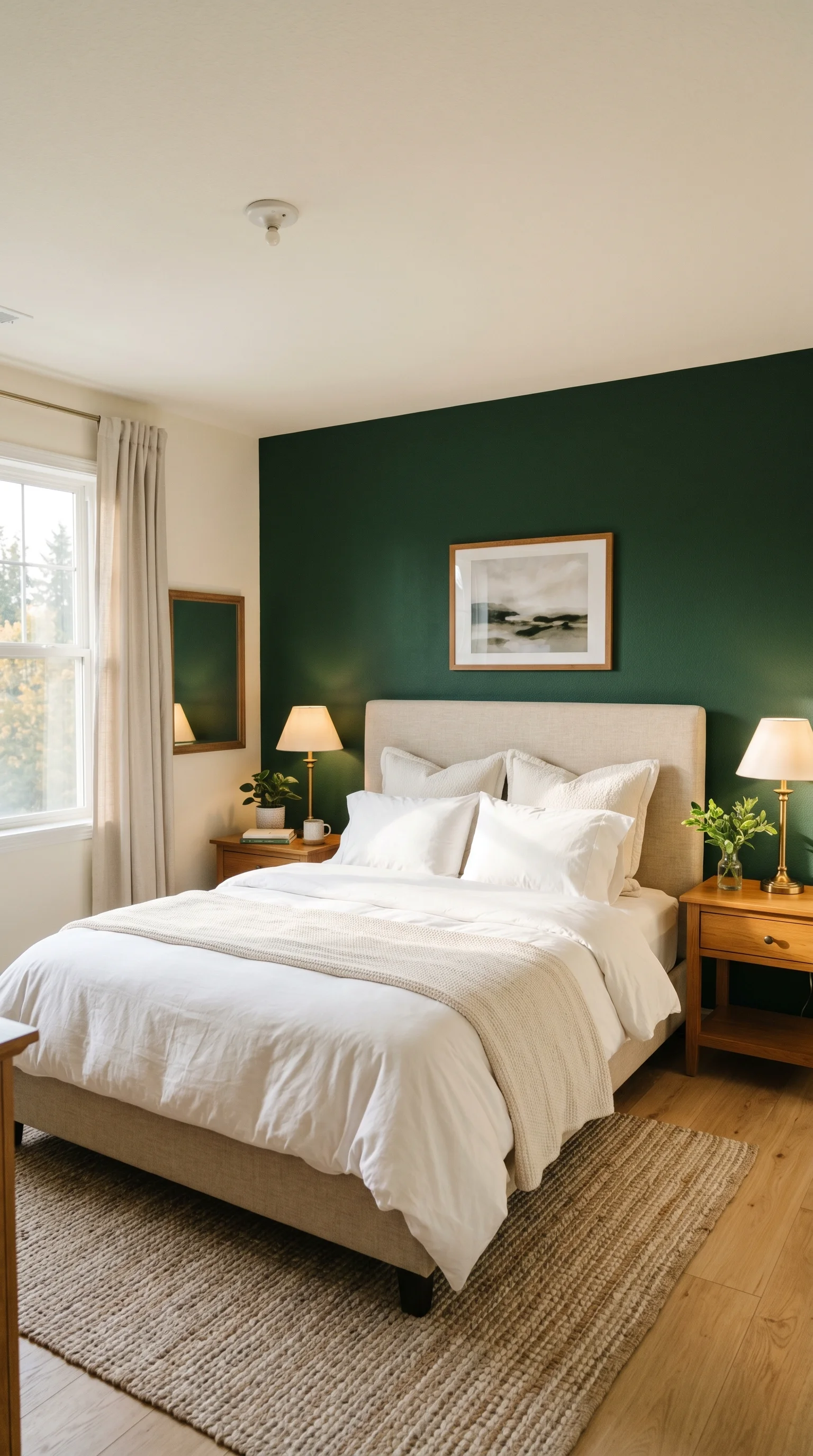
Starting with an accent wall is the smartest move if you’re nervous about commitment — pick the wall behind your bed, paint it a rich forest green, and keep the other walls neutral like cream or soft gray. It gives you the moody look without overwhelming the space.
This is the most sensible entry point. It also makes the bed the focal point of the room, which is what a bedroom should do anyway. Go for a genuinely deep shade — not sage, not olive. Hunter green, bottle green, or deep forest.
3. Emerald Velvet Bedding
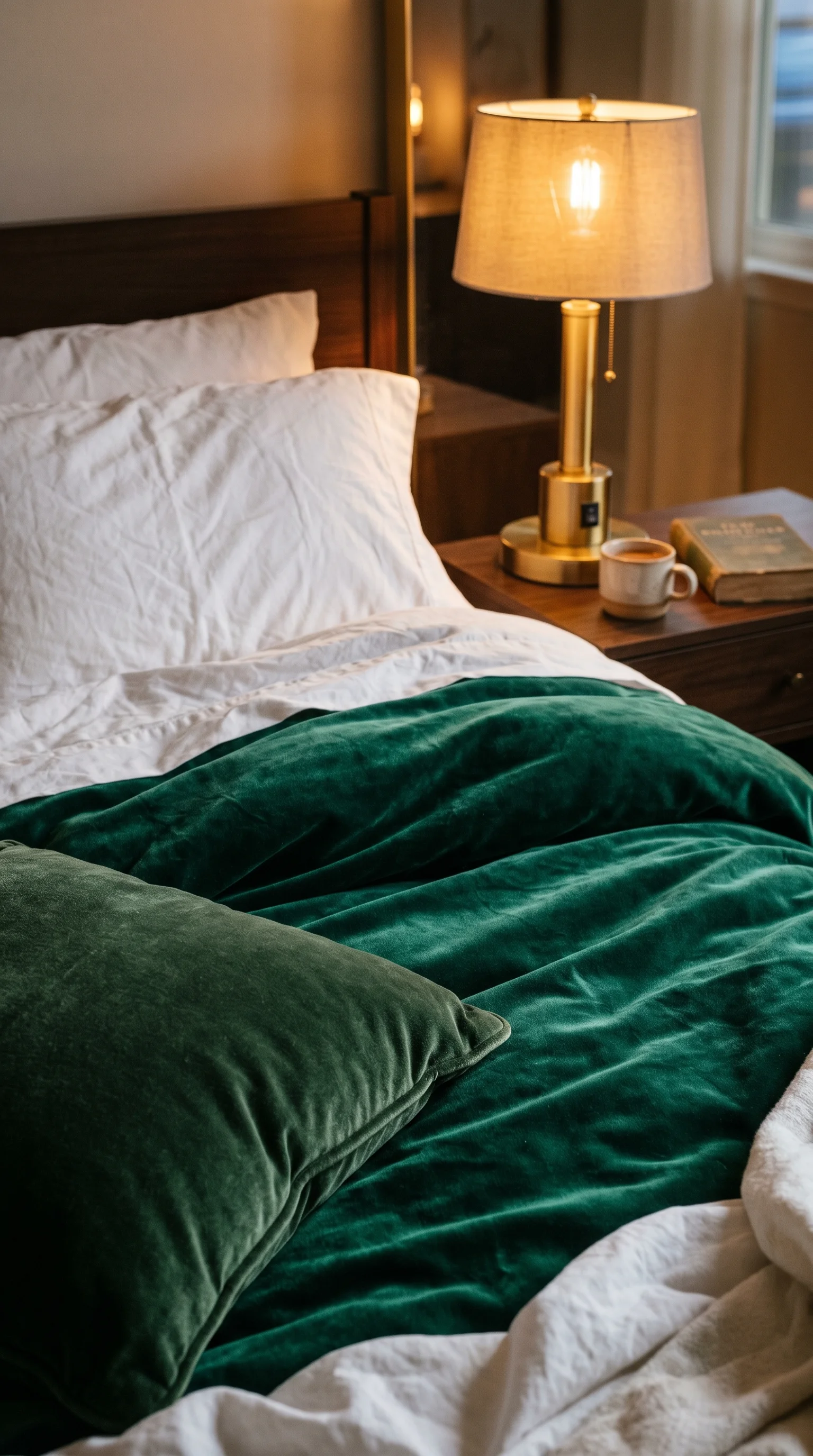
You don’t have to touch a wall to bring deep green into a bedroom. Emerald green bedding instantly transforms a space with jewel-toned richness — it’s why boutique hotels keep coming back to it.
Velvet is the fabric that carries the color best. The way velvet shifts from darker to lighter as light hits it at different angles gives emerald green a depth that cotton or linen can’t quite replicate. Mix in darker and lighter greens for depth rather than matching everything exactly.
This is also the easiest thing to undo if you change your mind. No painter required.
4. Botanical Wallpaper
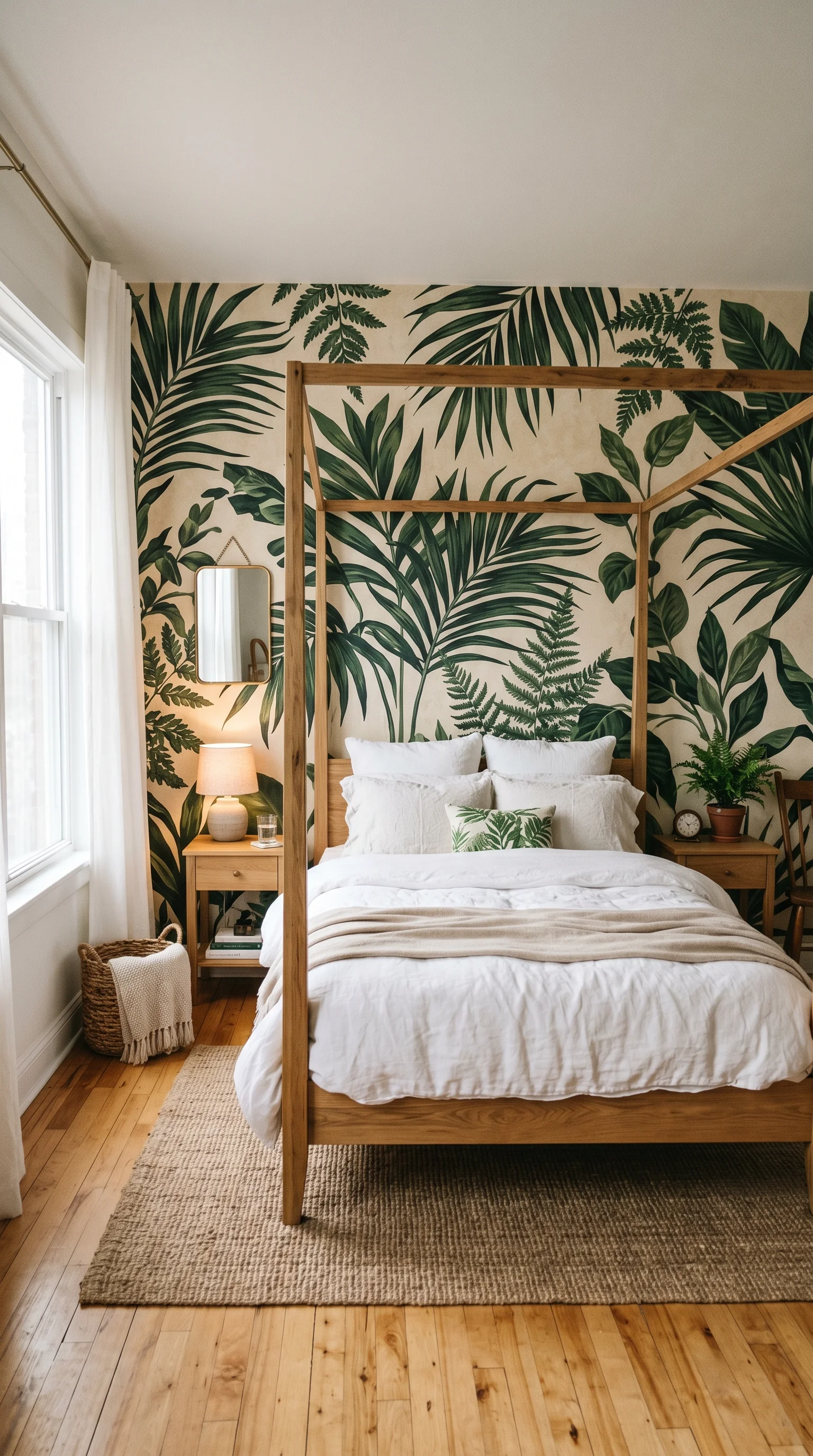
Botanical wallpaper with intricate leaf patterns brings the outdoors in, creating depth and a sense of lush, forest-like quiet — the kind of texture that flat paint can’t achieve.
The key is scale. Small, busy leaf prints tend to read as chaotic up close. Large-scale botanical patterns — oversized monstera leaves, trailing vines, palm fronds — feel more considered and are easier to live with long-term.
Keep the rest of the room simple: white or cream bedding, natural wood, nothing competing.
5. Deep Green Curtains Floor to Ceiling
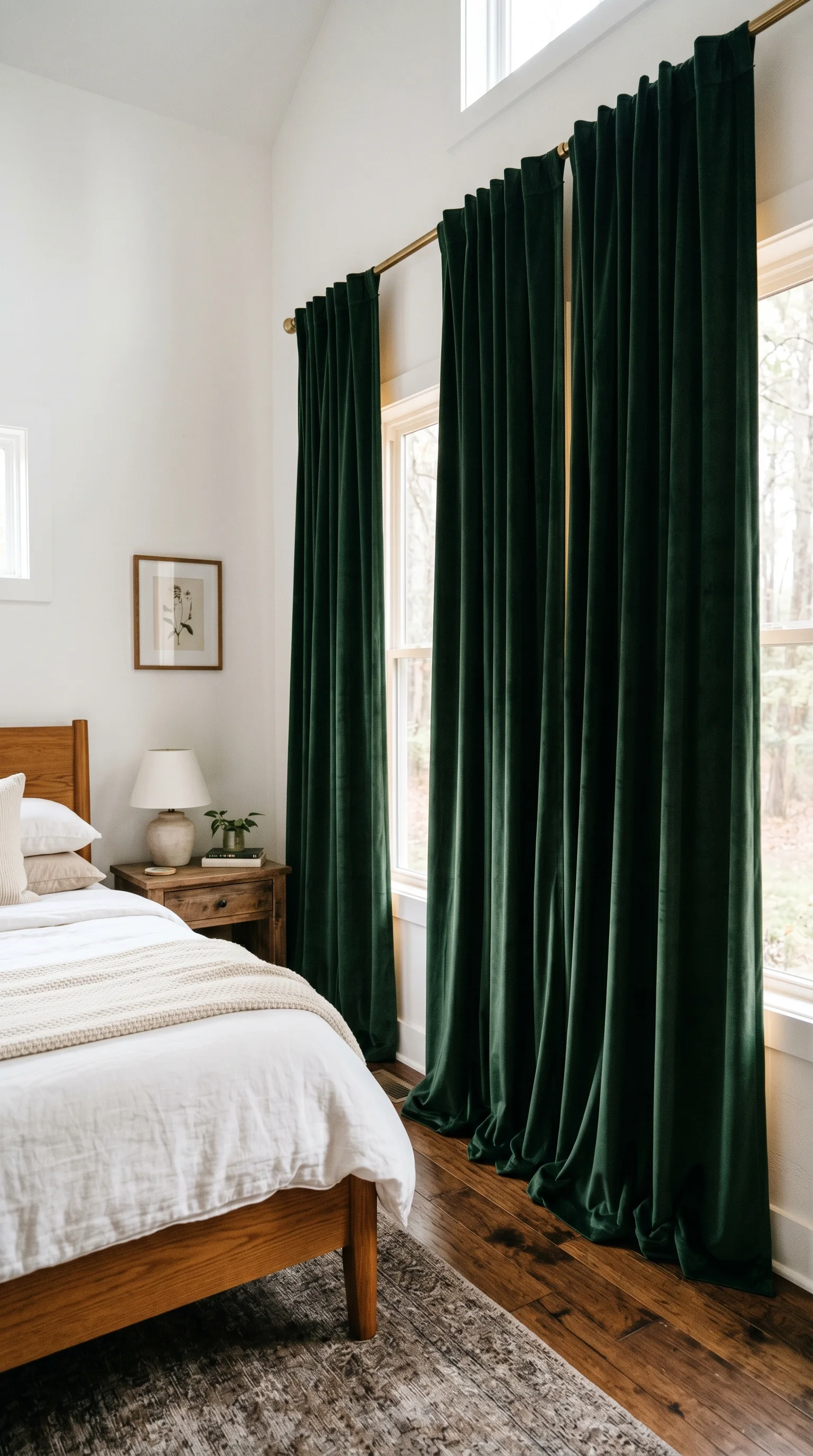
Curtains are an underused design element in bedrooms. Most people hang them too short and too narrow — which just makes the windows look smaller.
Hang deep green curtains from as close to the ceiling as possible, and let them extend well past the window frame on both sides. The effect is dramatic in the best way: the room feels taller, the windows feel larger, and the green grounds the entire space without requiring any paint.
Velvet curtains in bottle green or deep forest are particularly good — they block light effectively, and the texture catches beautifully in low morning sun.
6. Layering Multiple Shades of Green
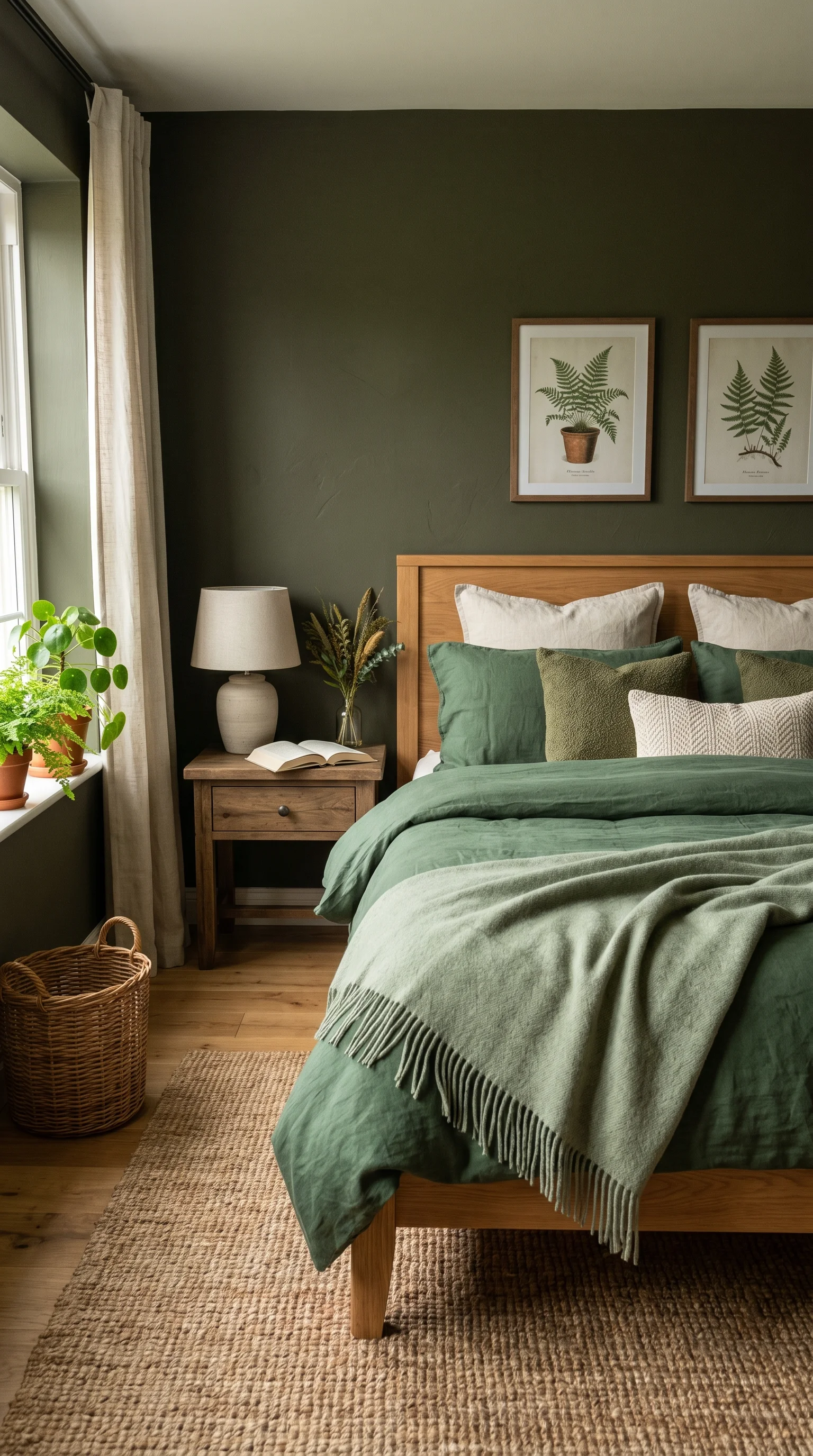
Using a darker green on the walls — olive or hunter green — then layering lighter shades in bedding, curtains, or rugs creates dimension without overwhelming the space. For a cohesive result, keep shades within the same tonal family, like combining forest green with moss accents.
This approach avoids the flat, one-note look that can happen when you pick one shade and repeat it everywhere. The bedroom ends up feeling more like a room that evolved thoughtfully than one that was styled in an afternoon.
7. Deep Green with Warm Brass Accents
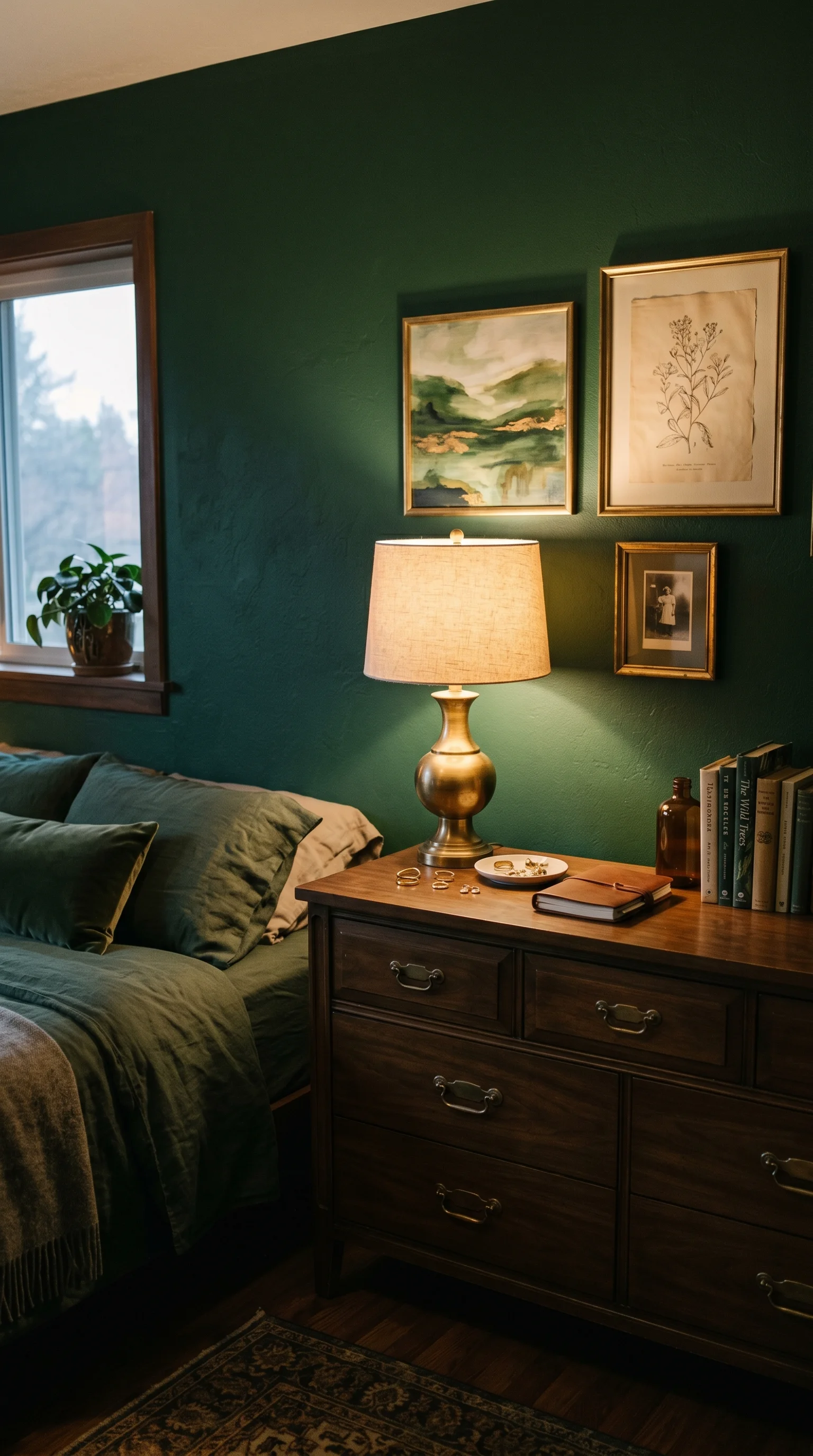
Brass accents are a natural companion to deep greens — the warm metallic tone plays beautifully against rich, dark hues, bringing sophistication and warmth to the combination.
The pairing works because brass reads warm while deep green reads cool, and that tension keeps the room visually interesting. Stick to brass for lamps, hardware, and small accents rather than everywhere. Two or three brass elements is a design choice. Ten is something else.
Unlacquered brass (the kind that develops a patina over time) tends to look better with deep greens than the shiny polished version.
8. Dark Green Ceiling, Neutral Walls
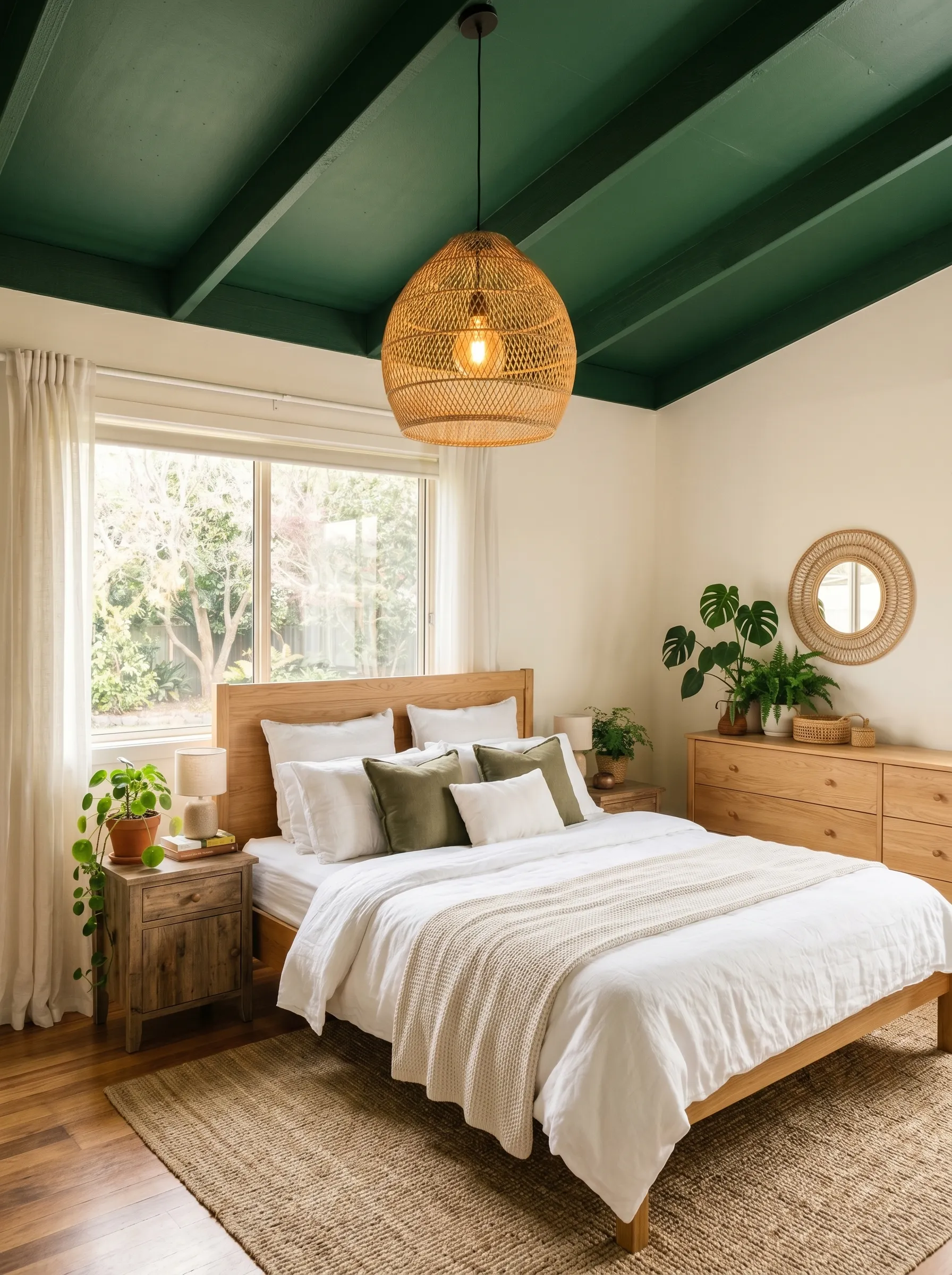
This one surprises people. The instinct is always to put bold color on the walls — but a deep green ceiling above neutral walls creates something more unexpected and, often, more beautiful.
Carrying the deep tone all the way across the ceiling dramatically increases the sense of intimacy and draws the eye upward, especially when paired with a chandelier or pendant.
The ceiling becomes the statement. The walls stay calm. It works especially well in rooms with good ceiling height — 9 feet or more.
9. Green-and-White Monochromatic Scheme
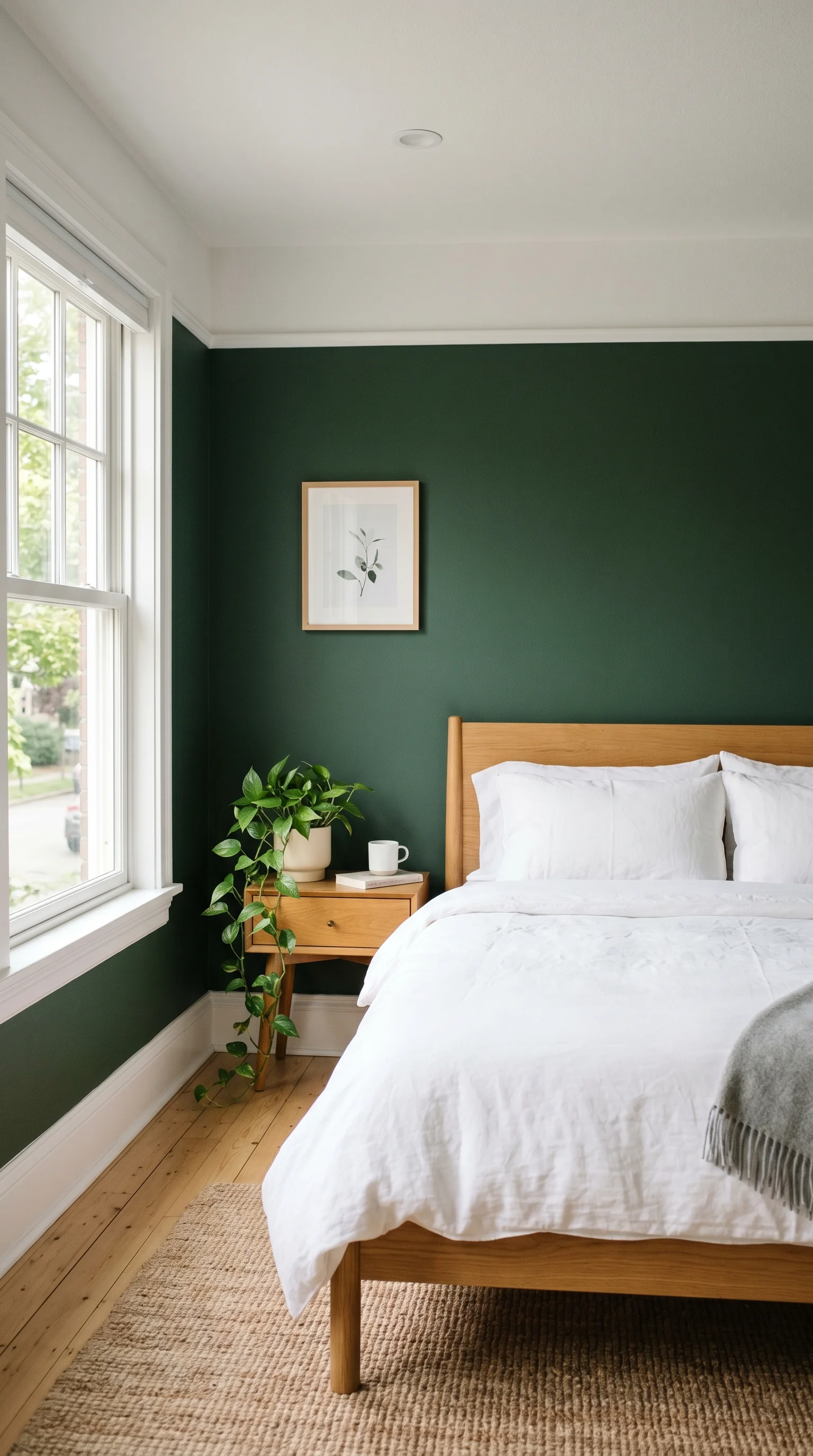
Off-white and ivory balance a deep emerald green naturally, and the combination works across every season. It’s also the easiest scheme to get right: pick your green, keep everything else white or near-white, and let the contrast do the work.
The risk with green-and-white is that it can feel stark if the white is too cold. Warm whites — Benjamin Moore White Dove, Farrow & Ball All White — work better against deep greens than bright optical whites, which can make the green look slightly sour.
10. Forest Green with Natural Wood
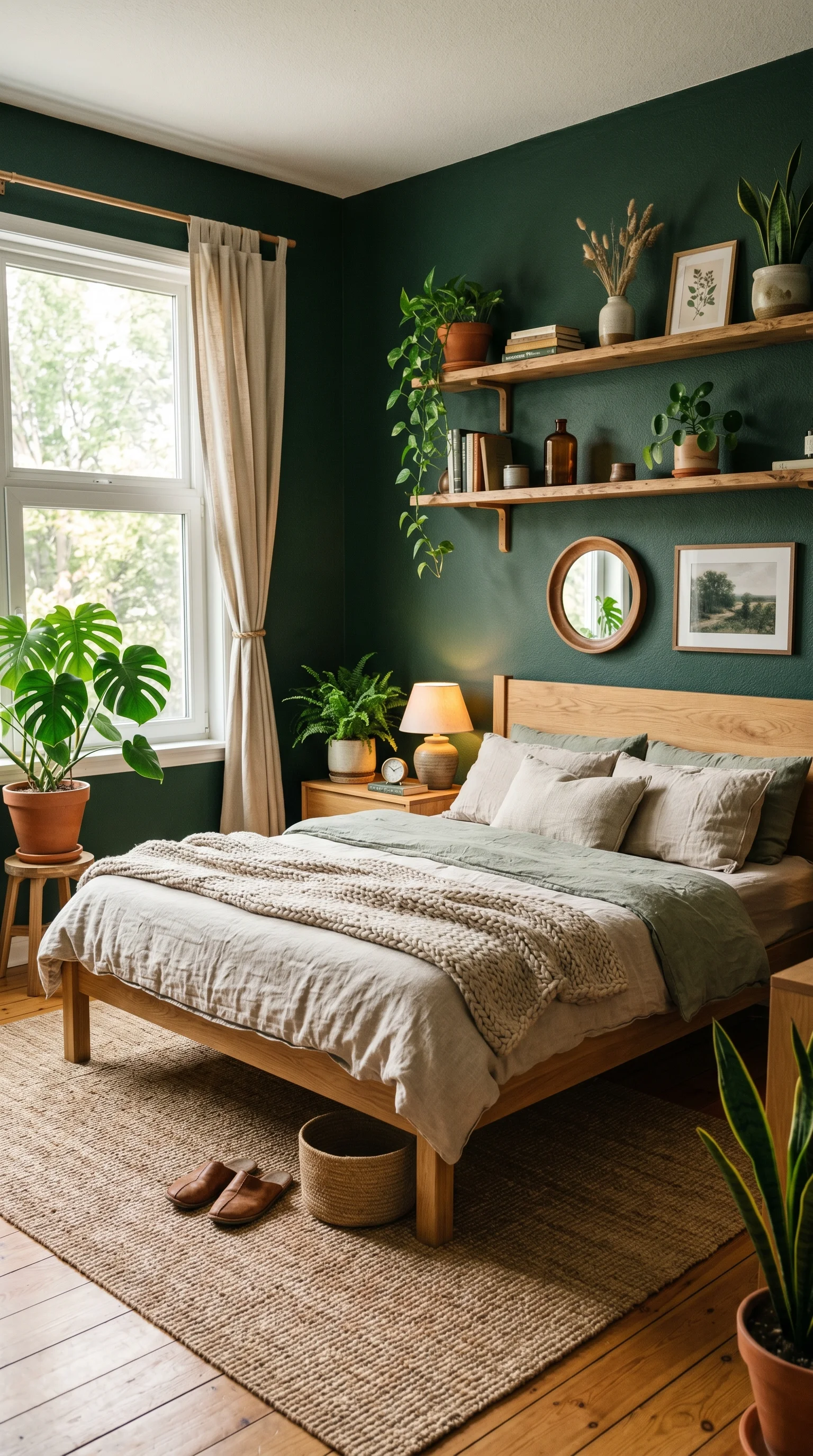
Forest green walls paired with rustic wood furniture and weathered beams bring warmth and character — the natural materials soften the depth of the color and keep the room grounded rather than dramatic.
Medium-toned woods — oak, walnut, teak — sit better against deep green than very pale or very dark woods. Pale wood can look washed out against a strong green. Very dark wood can make the room feel heavy.
Rattan and wicker also work surprisingly well here: the organic, textured quality of the material complements the earthy side of deep green rather than fighting it.
11. Moody Green with Dark Furniture
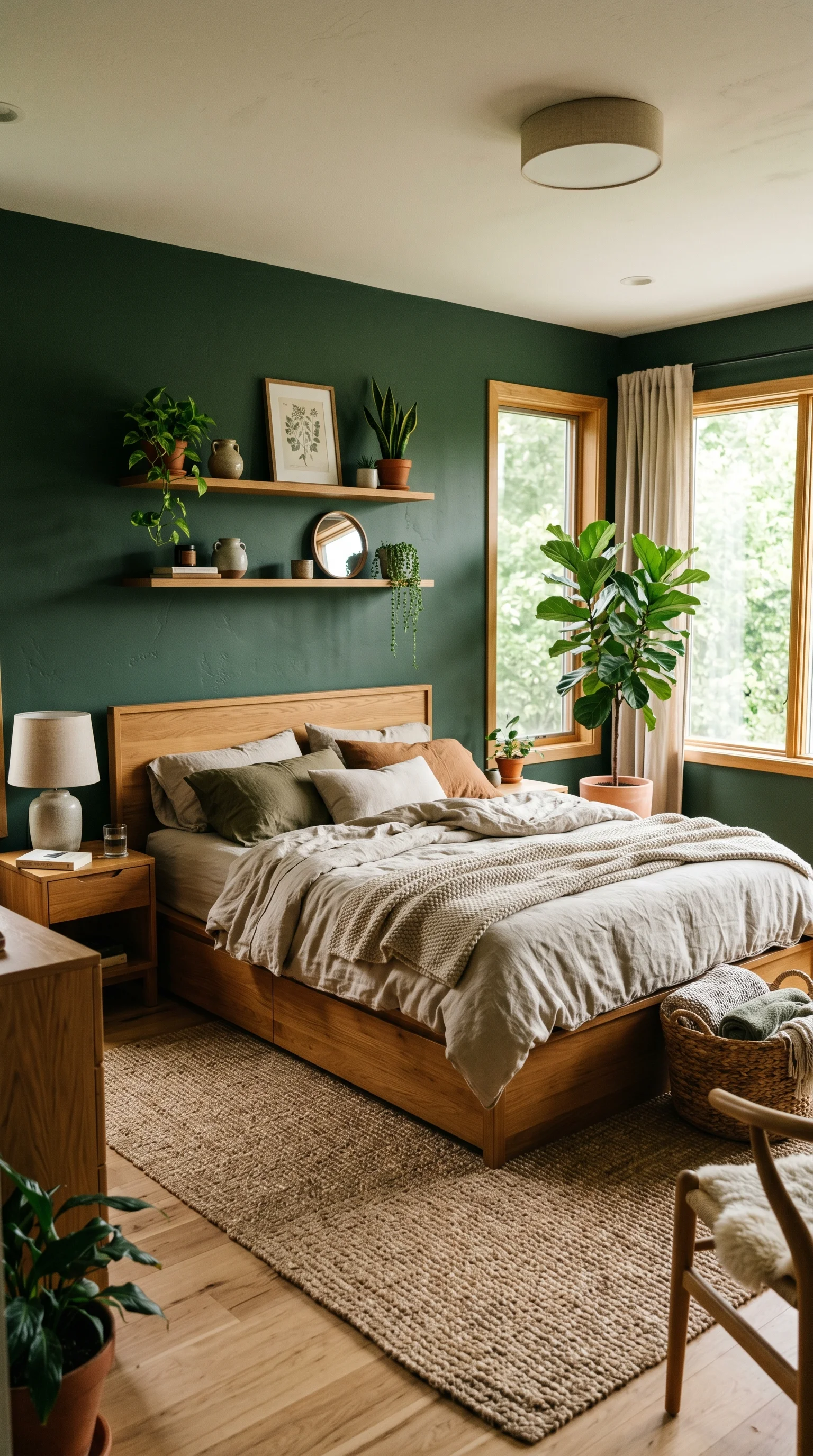
Dark-on-dark is a risk, but it’s one worth taking in bedrooms because the goal isn’t to feel spacious — it’s to feel enclosed and restful.
A dark bedroom creates a warm, cocooning effect. Darker tones interact with light by softly refracting rather than reflecting it, creating a nurturing ambience — like being wrapped in something protective.
The key to making dark furniture and dark walls work together: keep the bedding white or cream. You need one anchor of lightness, and the bed is the right place for it.
12. Emerald Green Lamps and Lighting
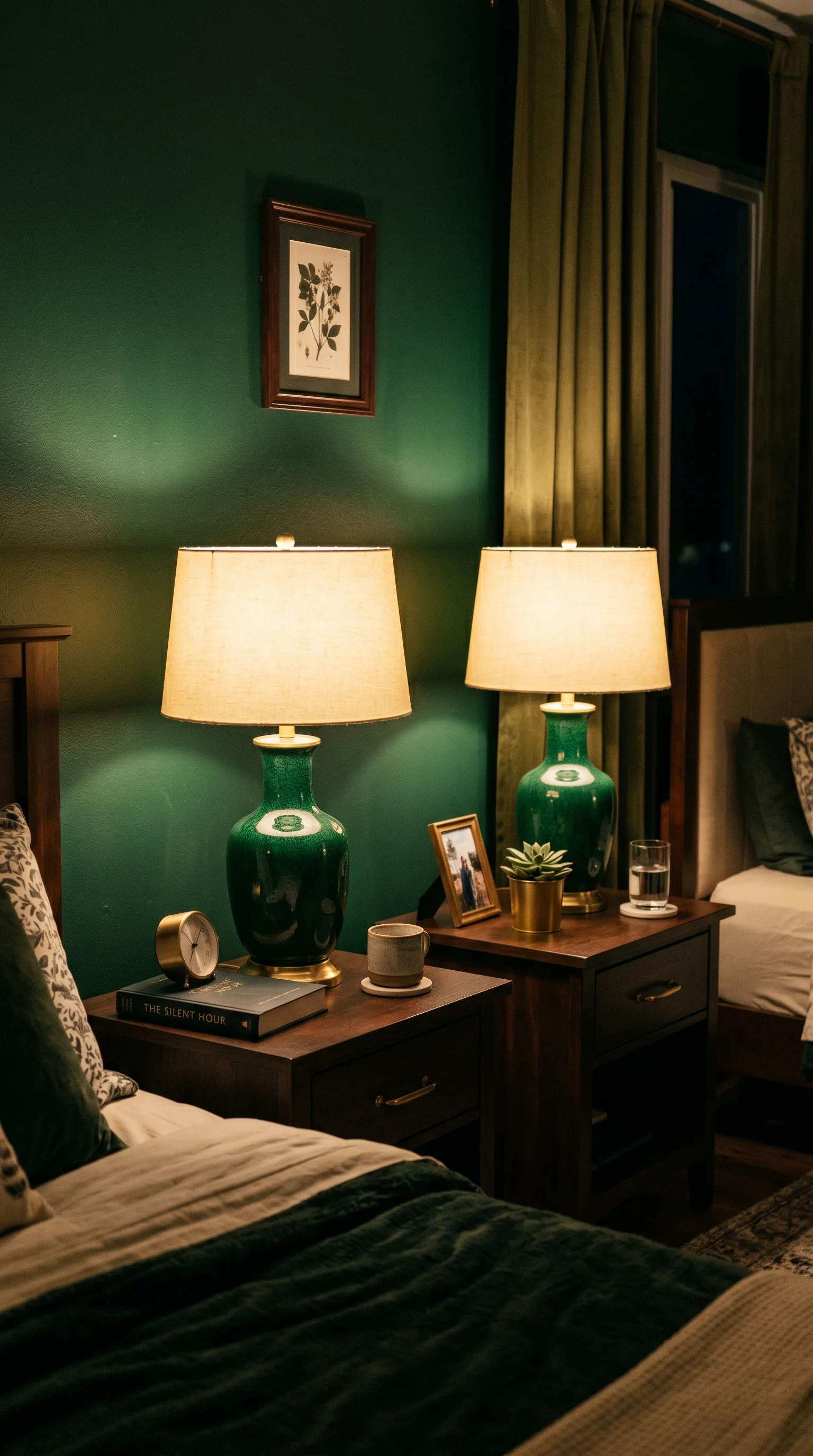
Light fixtures in deep green are an underrated move. Green lamps with brass accents tie a whole room together — and light shining through or near colored ceramics creates an ambient glow at night that’s far more interesting than a standard beige lamp.
This works as a standalone idea even in rooms without green walls. A pair of emerald ceramic lamps on dark wood nightstands in an otherwise neutral bedroom is enough to anchor the whole color story.
13. Green Plaster or Textured Wall Finish
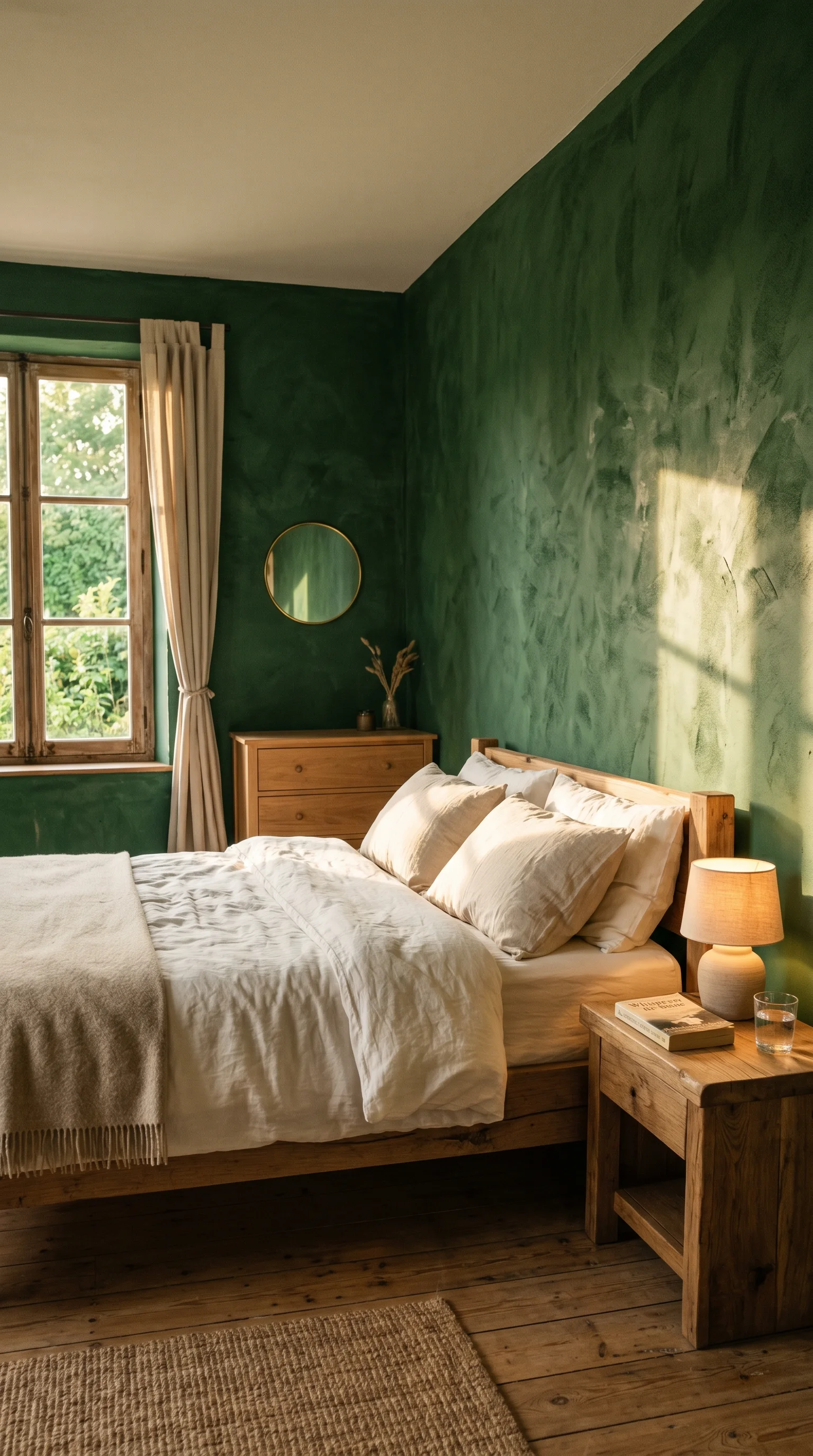
Paint is flat. Plaster and limewash finishes aren’t.
Going for a plaster finish adds texture to green walls — the resulting depth and variation makes even a single color look layered and hand-crafted.
Limewash in particular does something interesting with deep greens: the tonal variation means the color shifts from almost sage in bright patches to near-black in shadows. It looks better in real life than in photos, which is rare for an interior finish.
It’s not a DIY-friendly technique. Worth hiring someone who’s actually done it before.
14. Deep Green with Terracotta and Earth Tones
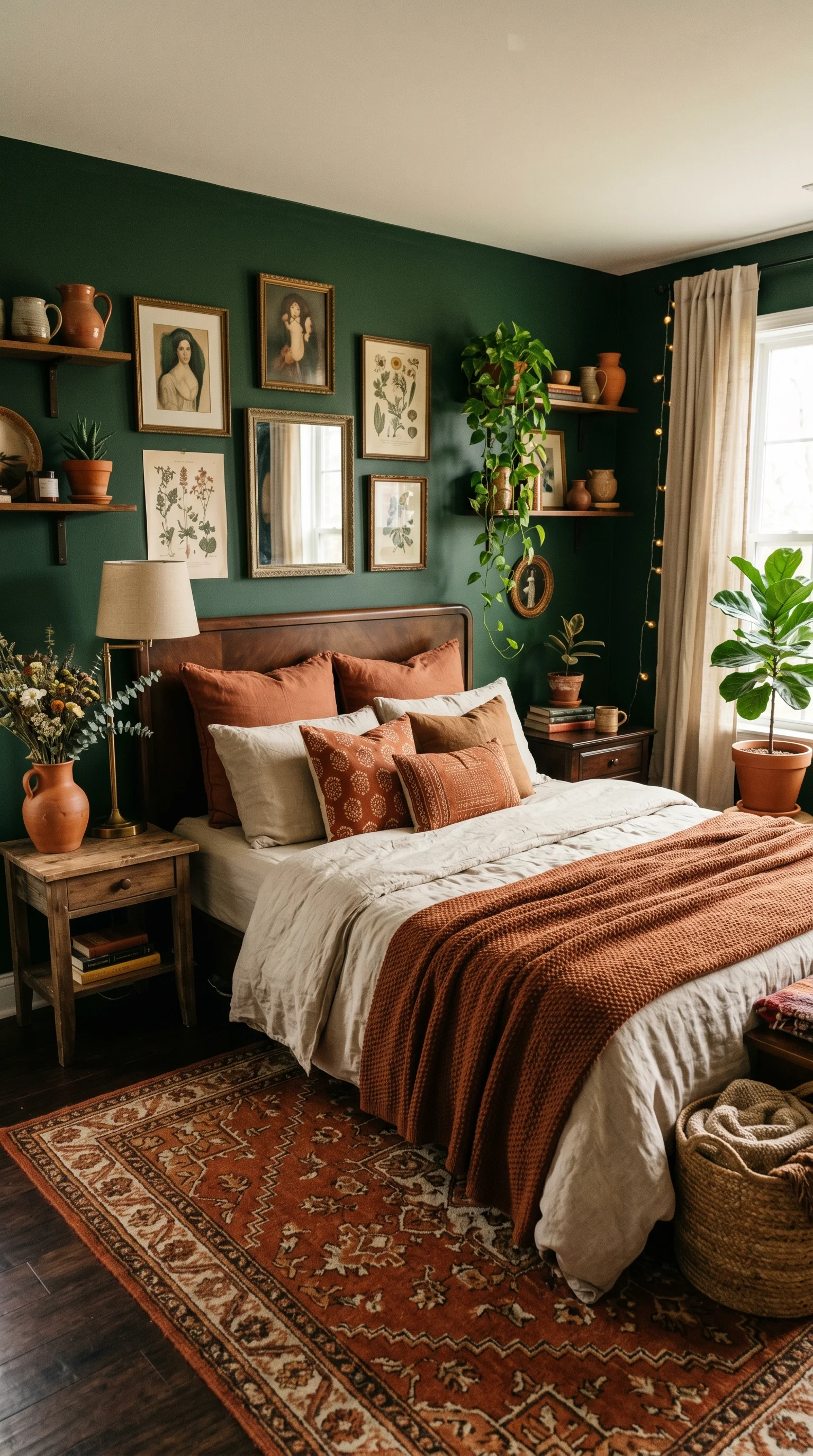
Deep green sits naturally alongside earthy tones — mocha brown, terracotta, and clay pink. These combinations create rooms that feel grounded and connected to the natural world.
The pairing that works best is deep green walls with terracotta accessories: a rust-colored ceramic lamp, earthy throw pillows, a warm-toned rug. The contrast isn’t as stark as green-and-white, which makes it feel less formal and more like a room someone actually lives in.
Keep the textiles natural — linen, wool, cotton — and the whole combination takes on an organic quality that’s hard to achieve with synthetic fabrics.
15. One Deep Green Object in a Neutral Room
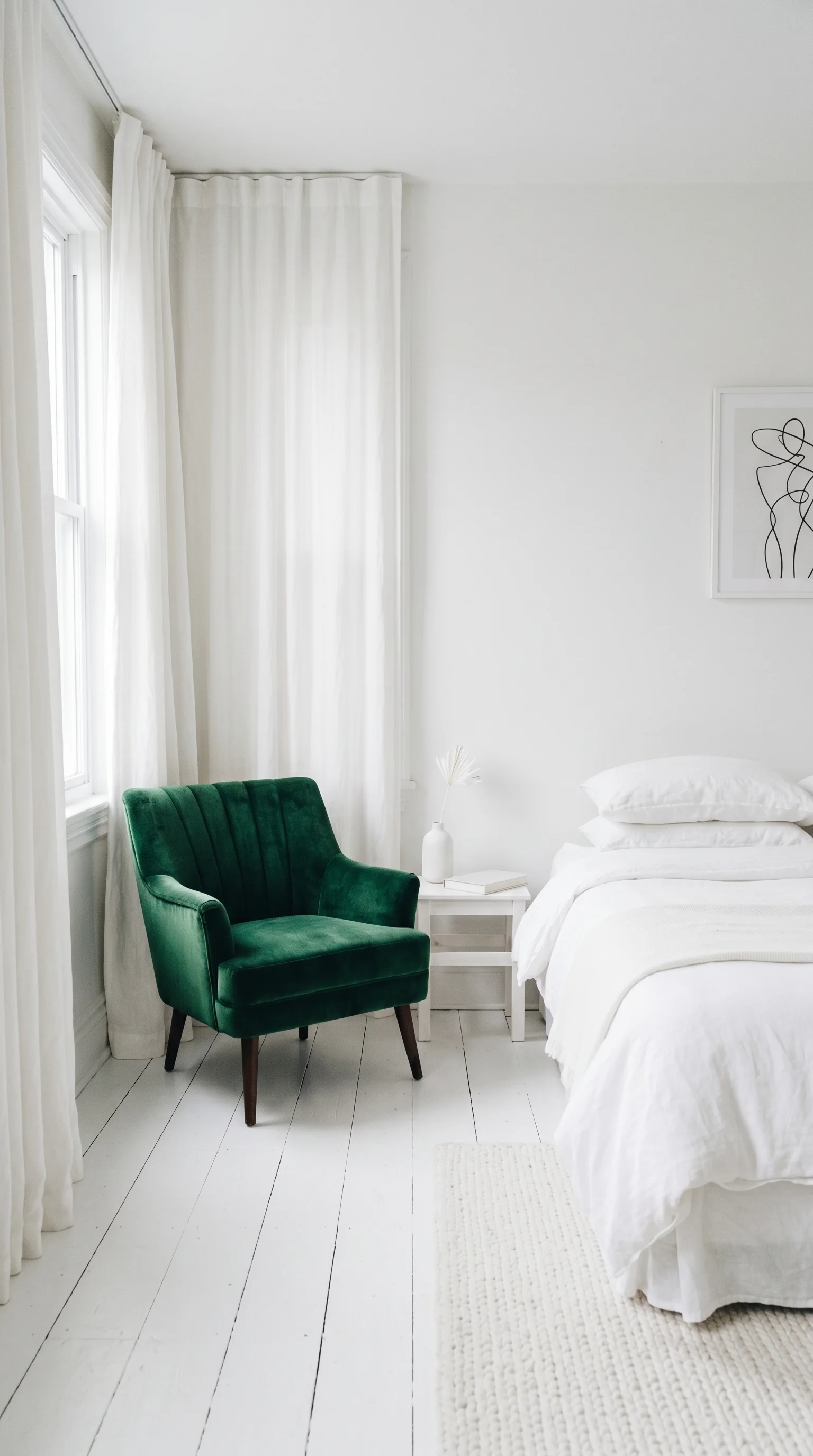
Not every deep green bedroom has to be about green.
Sometimes one piece is enough. A deep green velvet armchair in the corner of an otherwise white bedroom. A hunter green lacquered dresser against pale walls. A single olive green throw across the foot of the bed.
The restraint makes the color more noticeable, not less. When one thing in a room is a deep, saturated green and everything else is calm, the eye goes straight to it. That’s usually more effective than spreading the color around and diluting it.
Start here if you’re genuinely unsure about deep green. If you love it — and you probably will — you can always add more.
A Few Practical Notes
Deep green reads differently depending on light. The same color can look almost black in a north-facing room with no direct sun, and relatively bright in a room that gets afternoon light. If possible, test a large swatch — at least A3 size — on the actual wall before committing.
The shades people tend to love most: Farrow & Ball Studio Green, Dulux Hunter Green, Sherwin-Williams Cascades. All three have enough depth to feel genuinely rich without going so dark they lose the green entirely.
And if the whole thing feels like too much — start with the bedding.


