
10 Bay Window Decorating Ideas That Make the Most of Your Space
Bay windows are one of the most architecturally distinctive features a room can have, and one of the most consistently underused. Left bare, they collect clutter and become awkward architectural gaps in the room. Given intentional treatment, they become the room’s best feature — a place that earns its keep both visually and functionally.
Here are 10 approaches that make bay windows genuinely work.
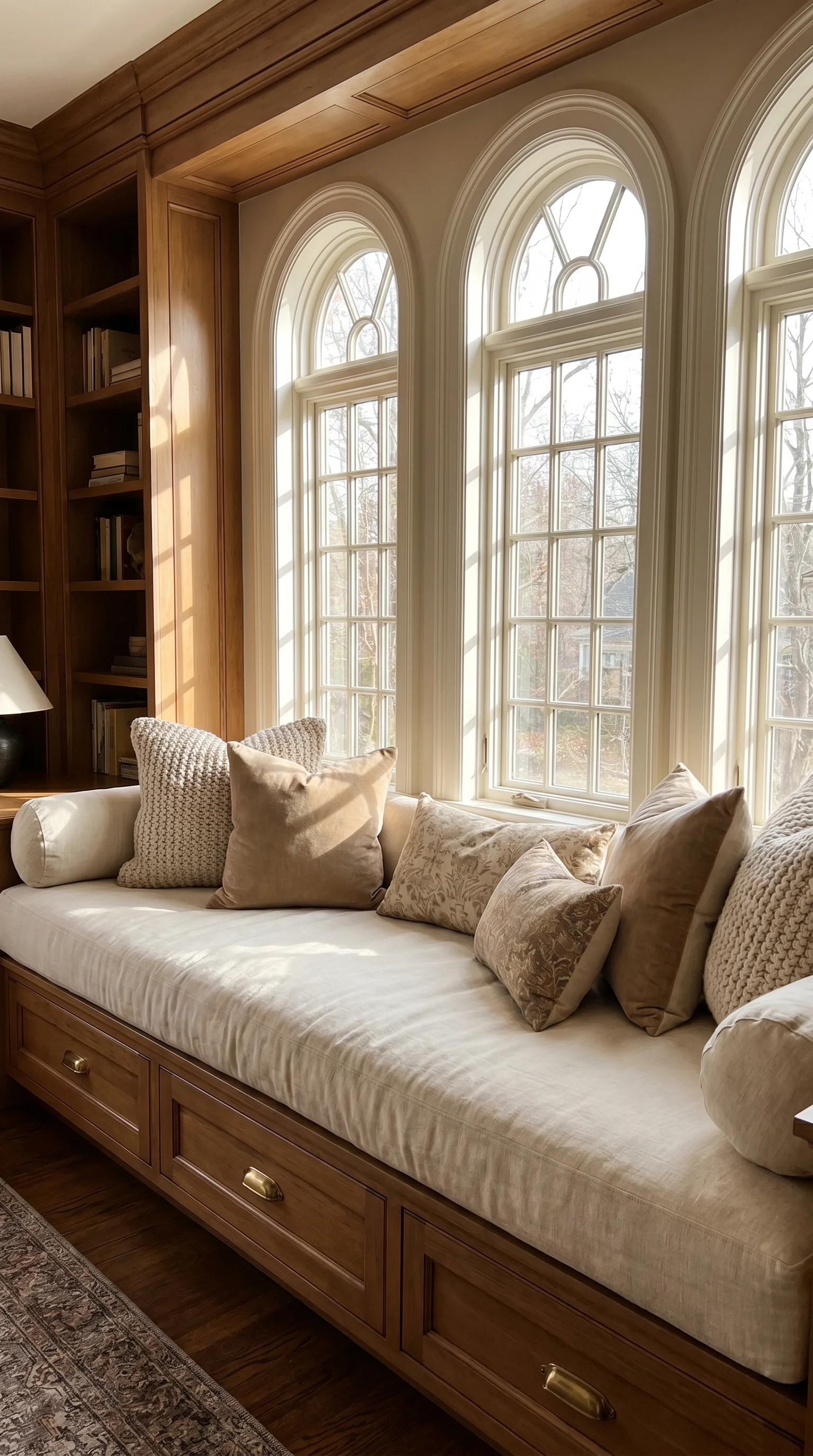
1. Plush Built-In Window Seat
A built-in window seat is the single most transformative thing you can do with a bay window. The seat follows the exact angle of the bay, filling the nook completely and turning dead transitional space into the most wanted spot in the house. Build storage drawers underneath, add a thick cushion in a durable fabric, and fill with pillows in mixed textures — cable knit, linen, boucle.
The seat is genuinely functional in every season: morning coffee spot, reading retreat, extra guest seating when entertaining. Done well, it becomes the room’s focal point and the conversation starter for every guest.
2. Built-In Breakfast Banquette
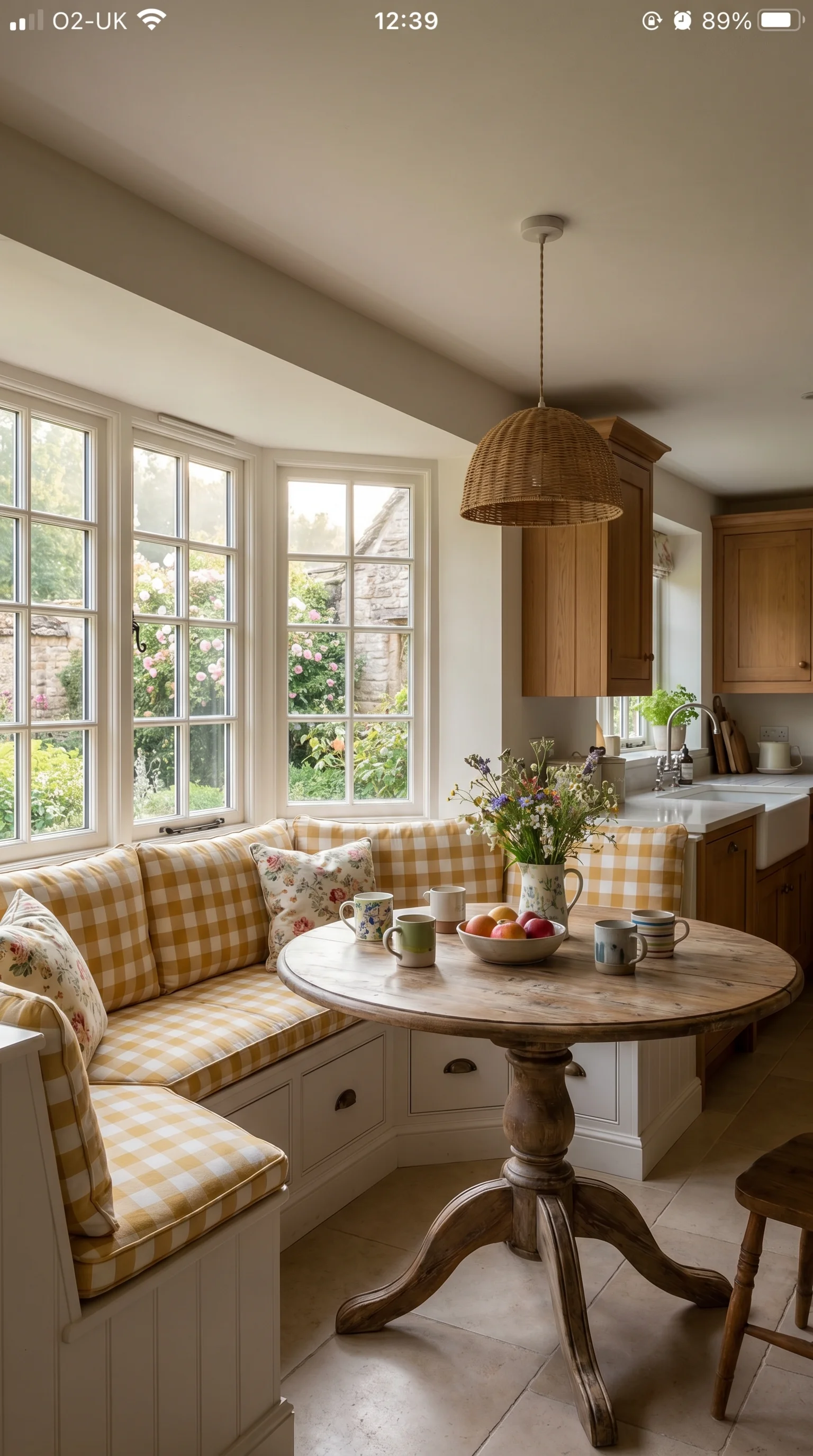
In a kitchen or dining room, transforming the bay into a breakfast banquette creates the most charming and practical small dining nook imaginable. The bay’s angled walls provide natural enclosure; the built-in bench maximizes seating in the footprint; and the window creates the best table in any home — naturally lit, with a view.
Install storage drawers under the bench for tablecloths, serving pieces, or seasonal items. Top with seat cushions in a wipeable indoor-outdoor fabric. Add a round table (round works better than rectangular in a bay), and this nook will become the default location for every meal.
3. White Holiday Lights for Evening Atmosphere
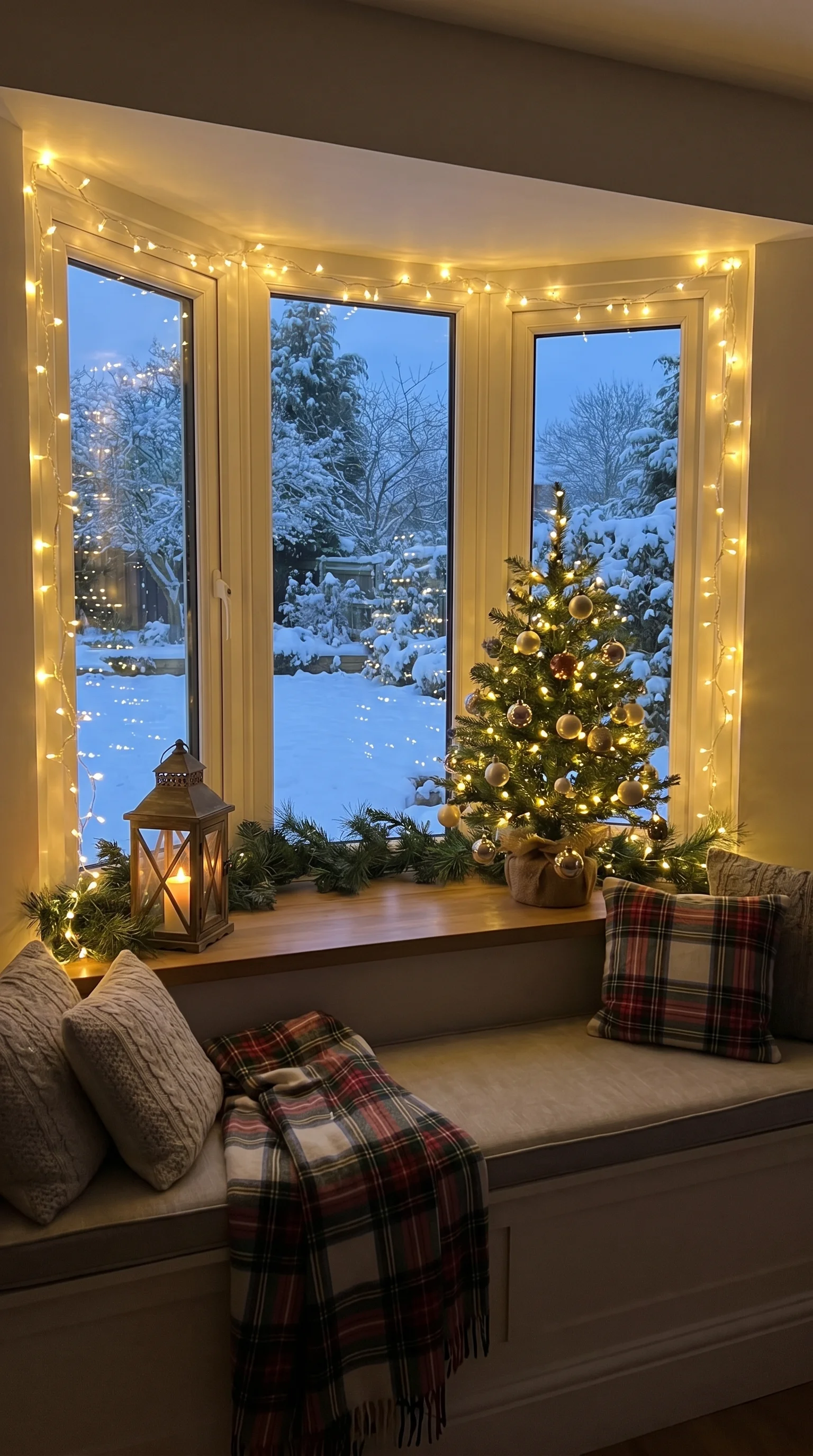
Bay windows are natural display platforms, and no display creates more atmosphere than white string lights strung around the frame. In the evening, they cast warm amber light across the bay’s architectural angles and reflect beautifully in the glass. Seasonally, add miniature trees, poinsettias, or greenery for a vignette that looks designed from both inside and out.
The trick is restraint: string the lights around the frame rather than across the glass, keep other decorative objects minimal, and let the light itself do the work.
4. Vibrant Patterned Roller Shades
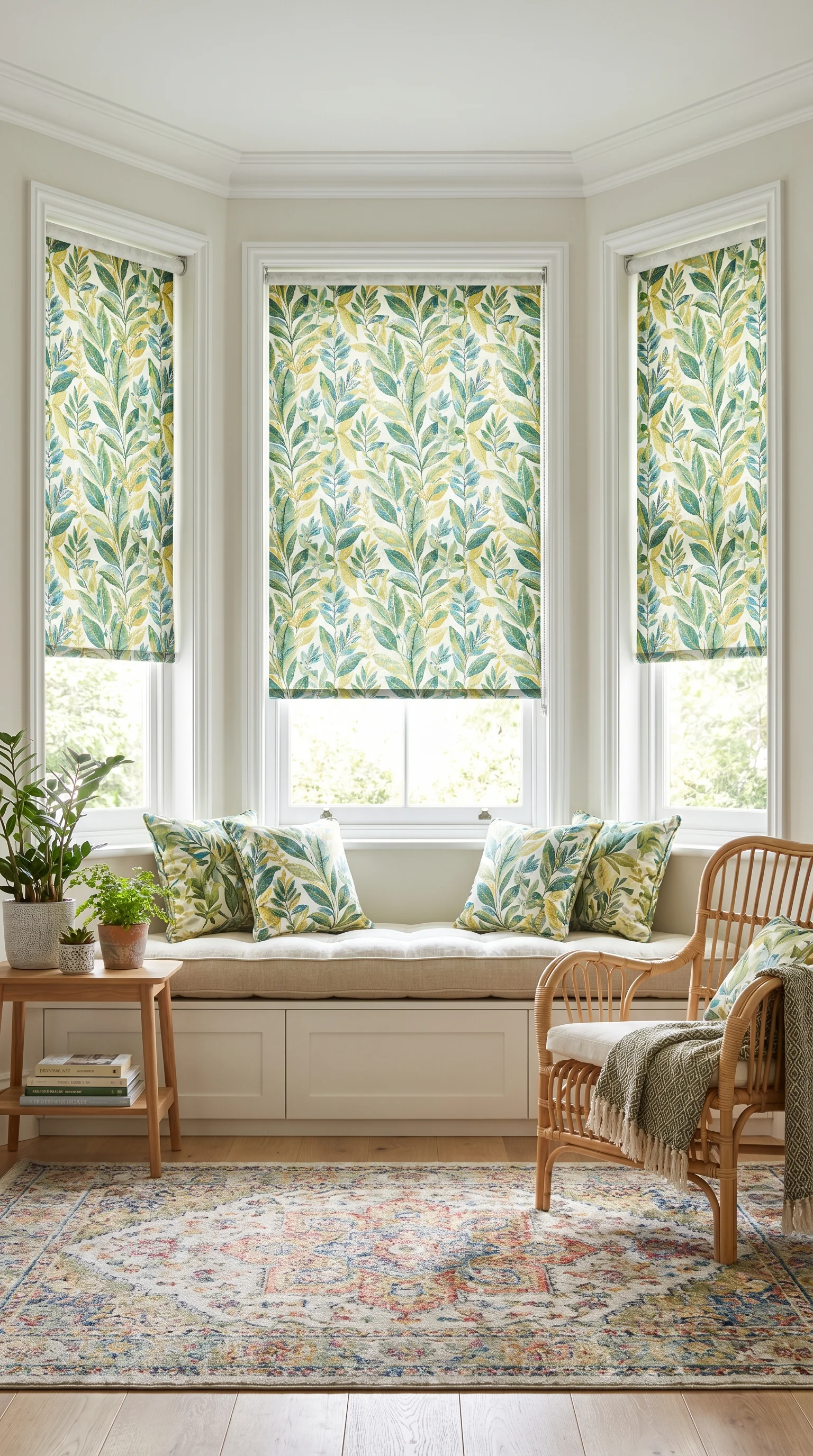
Custom roller shades cut to fit each section of the bay — which almost always requires custom ordering, since bay angles are rarely standard — bring pattern and privacy control to the nook simultaneously. Choose a fabric with a bold botanical, geometric, or tropical print and the bay immediately becomes the most colorful corner of the room.
The key is consistency: all three or five sections of the bay should use the same fabric, creating a unified treatment that looks intentional rather than improvised.
5. Roman Shades and Botanical Art
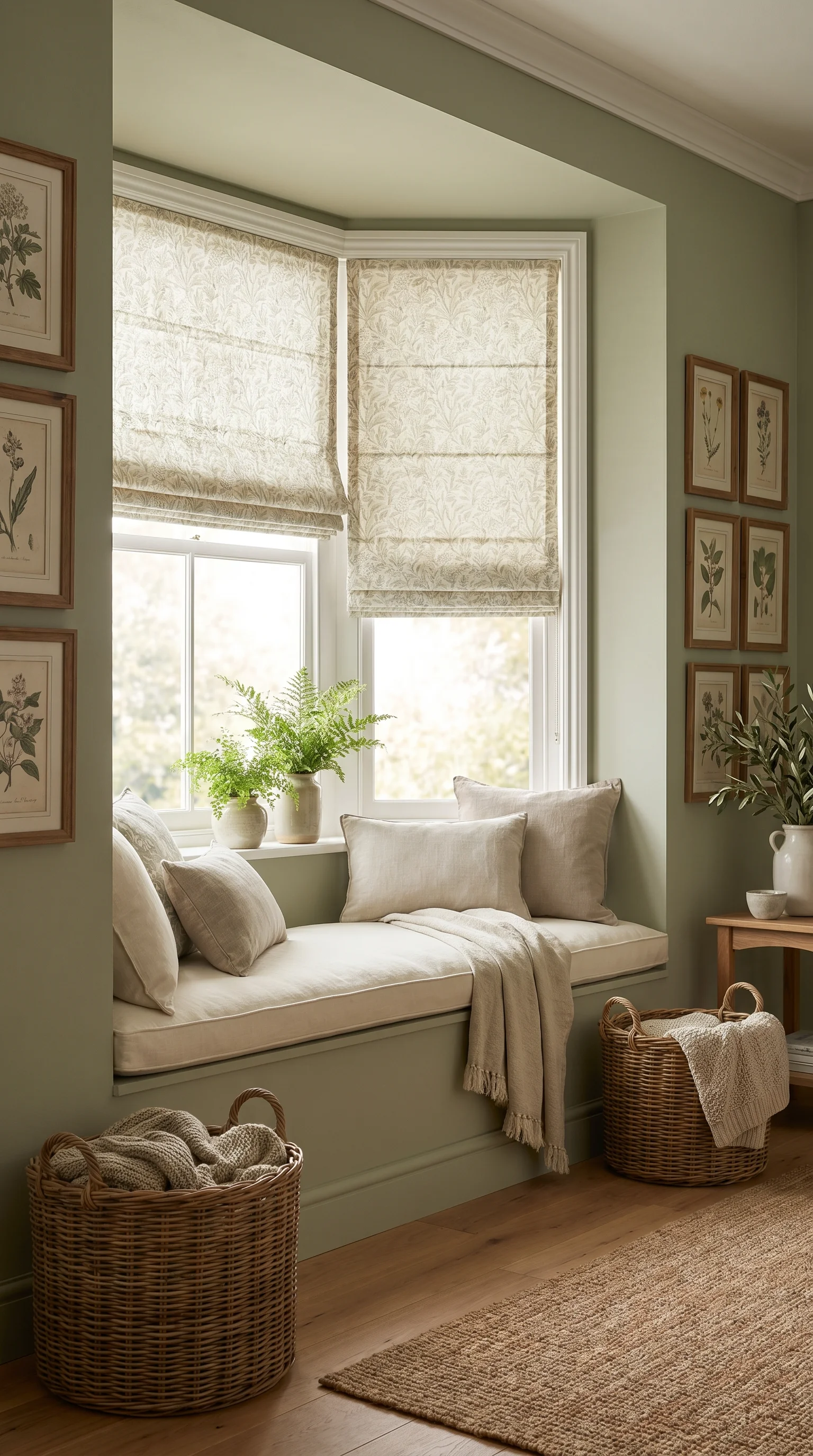
Roman shades in a botanical print — installed across all panels of the bay — paired with framed botanical art on the surrounding walls create a living room corner with genuine cohesion. The natural world theme runs through textile and art consistently, and the visual richness of the botanical pattern gives the bay presence even when no one is sitting in it.
Add woven baskets and natural fiber textiles to extend the organic quality.
6. Floating Plant Shelf Display
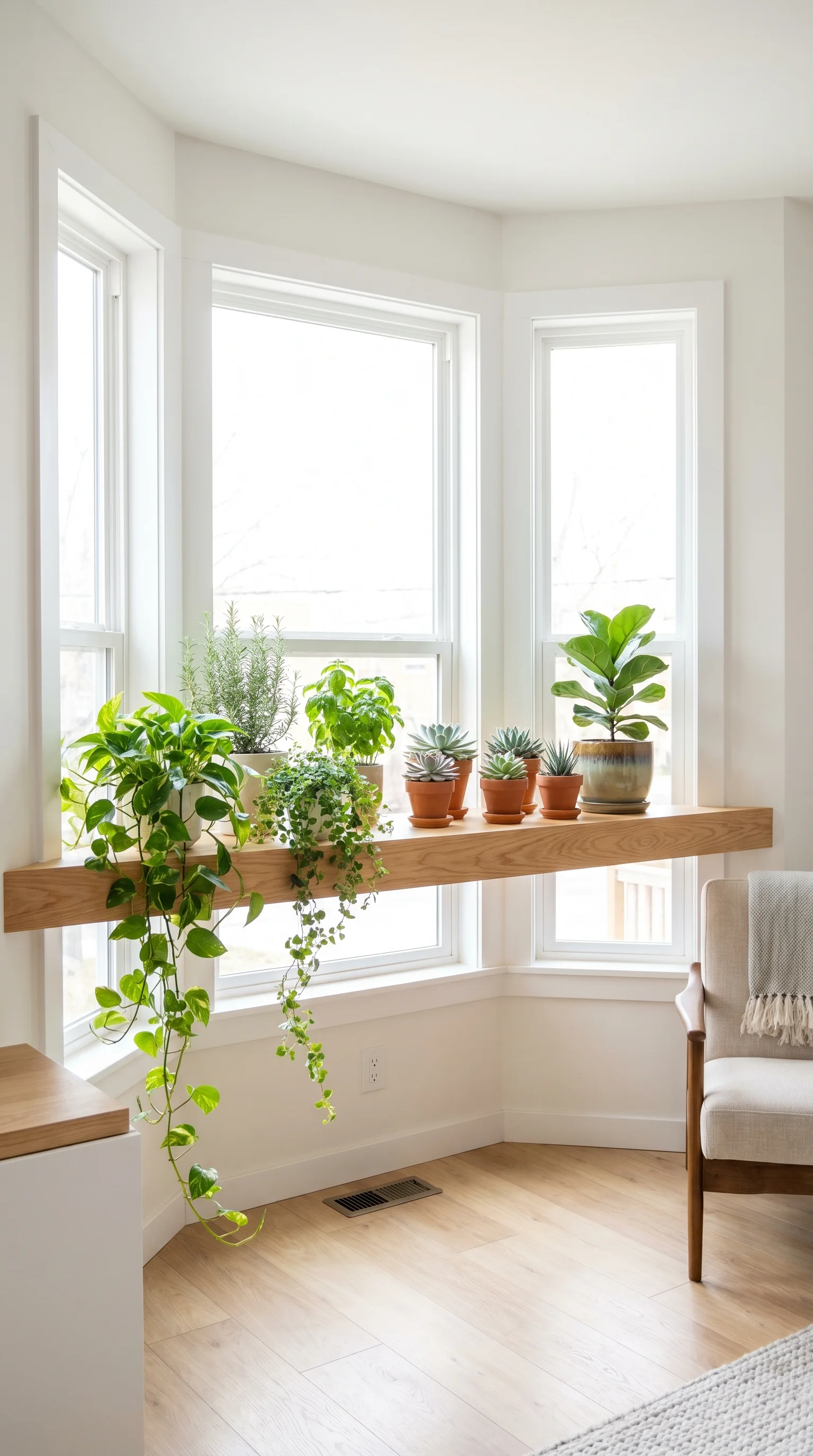
Instead of seating, install a floating shelf across the bay’s full width and use it as a plant display. The bay window provides the best natural light in the room — you might as well leverage it for plants that actually need it. Herbs, trailing plants, succulents, and orchids all thrive in this position.
The shelf converts the bay into an indoor garden feature that’s visible from the room and from the street, and it requires no cushions, no storage, and no furniture investment.
7. LED Strip Lighting Along the Frame
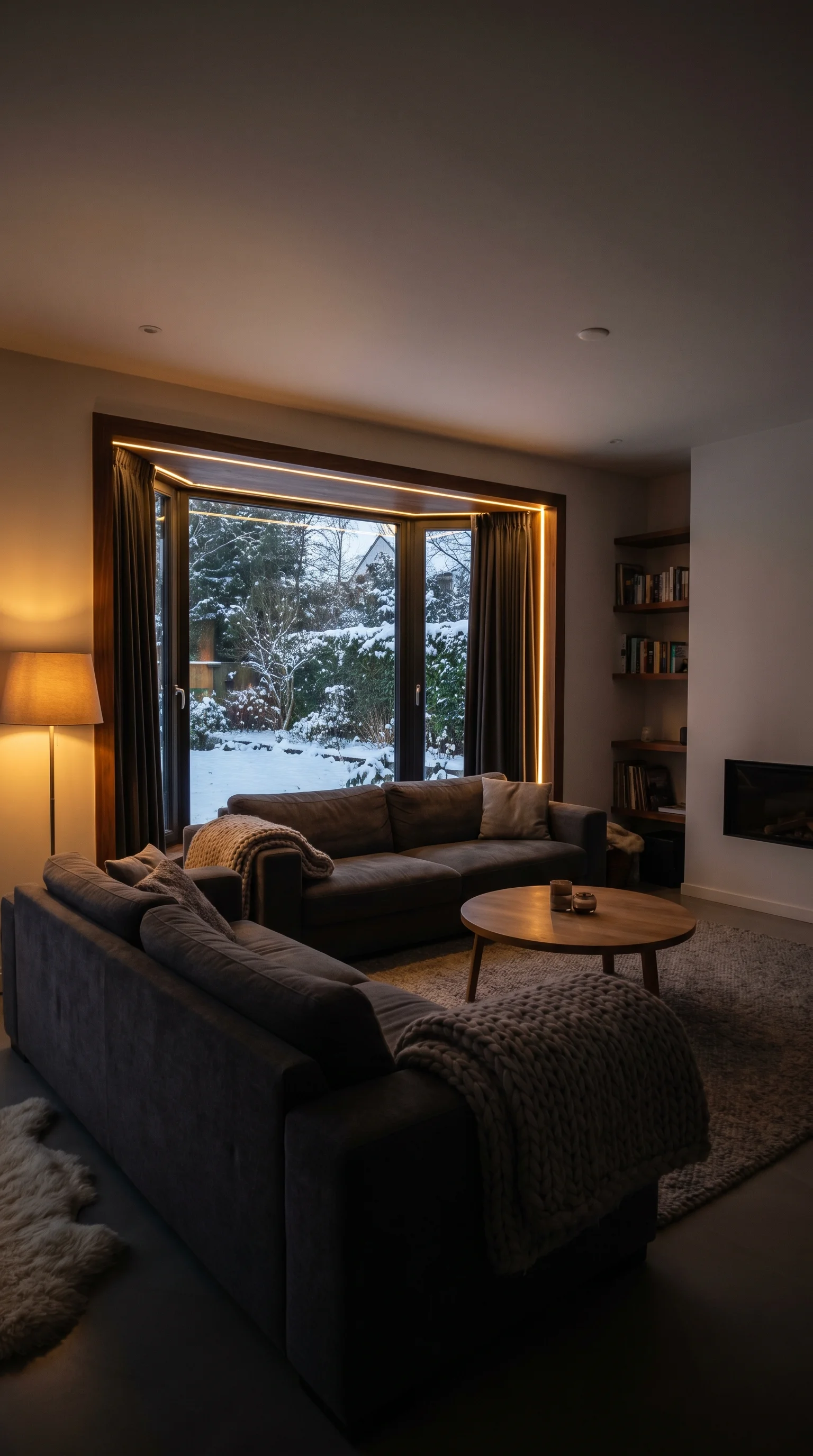
Fitting LED strip lights along the inside of the bay window frame — tucked into the frame’s reveal so the source is hidden — creates an architectural glow effect that makes the bay the room’s evening focal point. The light outlines the angles of the bay, emphasizing the three-dimensional quality of the form.
This works year-round and costs very little once installed. It’s the lighting treatment that makes guests stop and ask what you did — because the light feels special without any obvious source.
8. Home Office or Study Nook
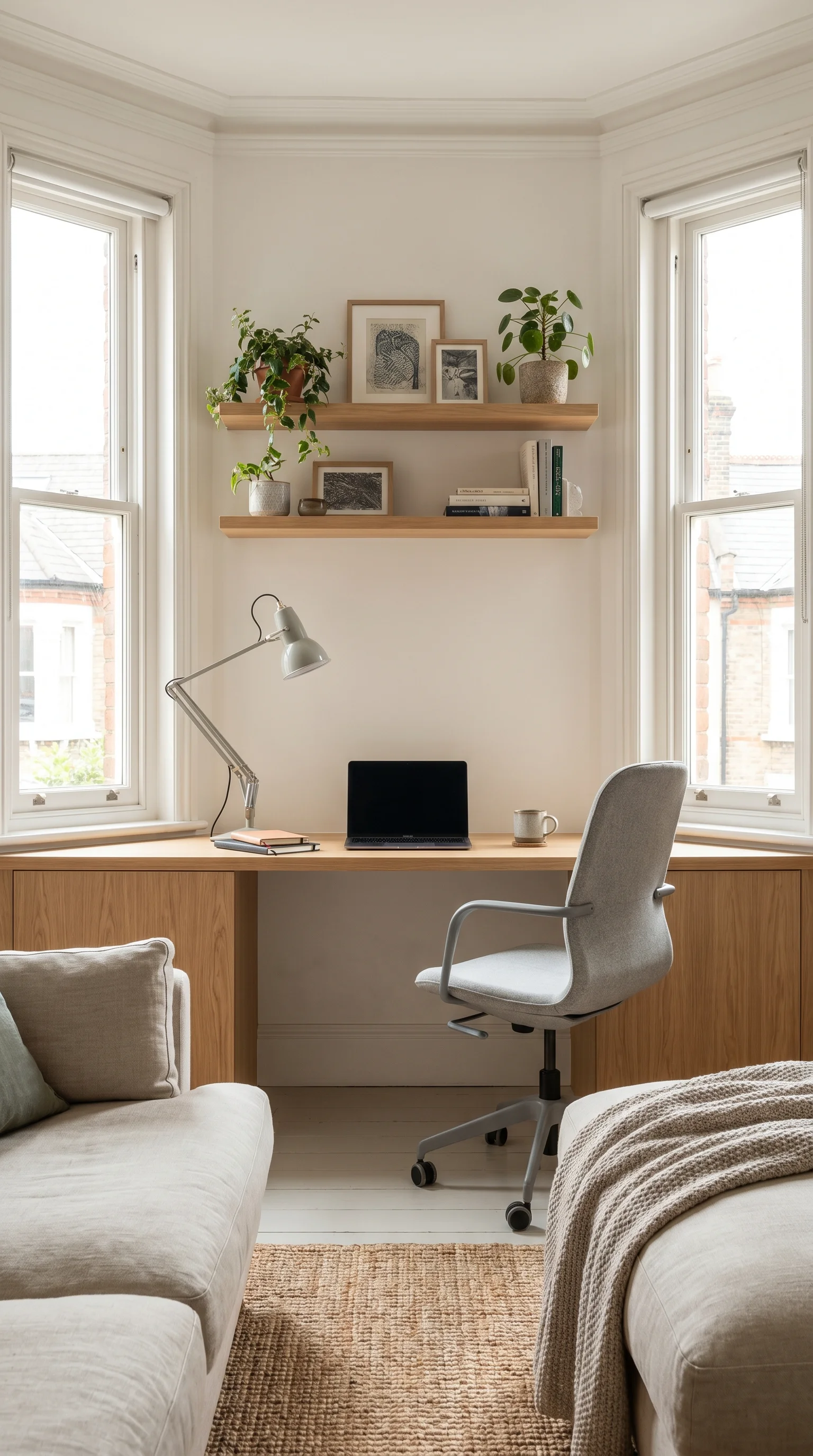
A bay window is the natural location for a home office corner in an otherwise residential room. The three-angled walls create a semi-enclosed zone; the windows provide natural light in the best position; and the depth of the bay accommodates a desk that doesn’t cut into the main room.
Build a custom desk surface spanning the bay’s width, add floating shelves above for books and equipment, and use the drawers under a window seat for office storage. The workspace feels separate from the living room without requiring a separate room.
9. Cozy Armchair Arrangement for Reading
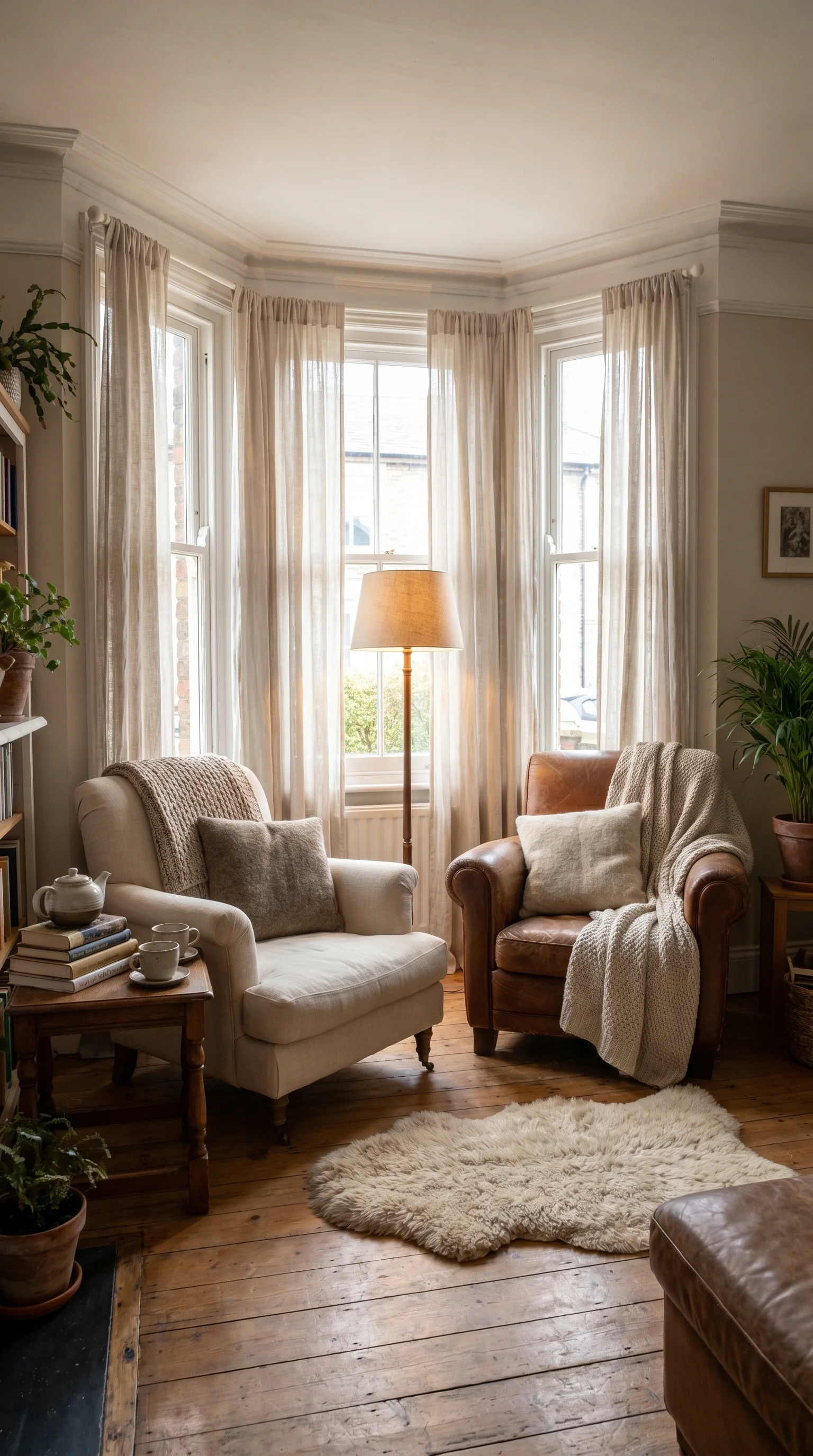
Not every bay window needs a built-in. Two armchairs positioned facing each other within the bay, flanking a small table or floor lamp, create the most intimate reading or conversation corner in the house with no construction at all.
Choose chairs that fit the bay’s depth (you need to be able to pass through comfortably), add a floor lamp centered between them, and the vignette suggests itself. The bay’s natural enclosure does the rest.
10. Seasonal Showcase Vignette
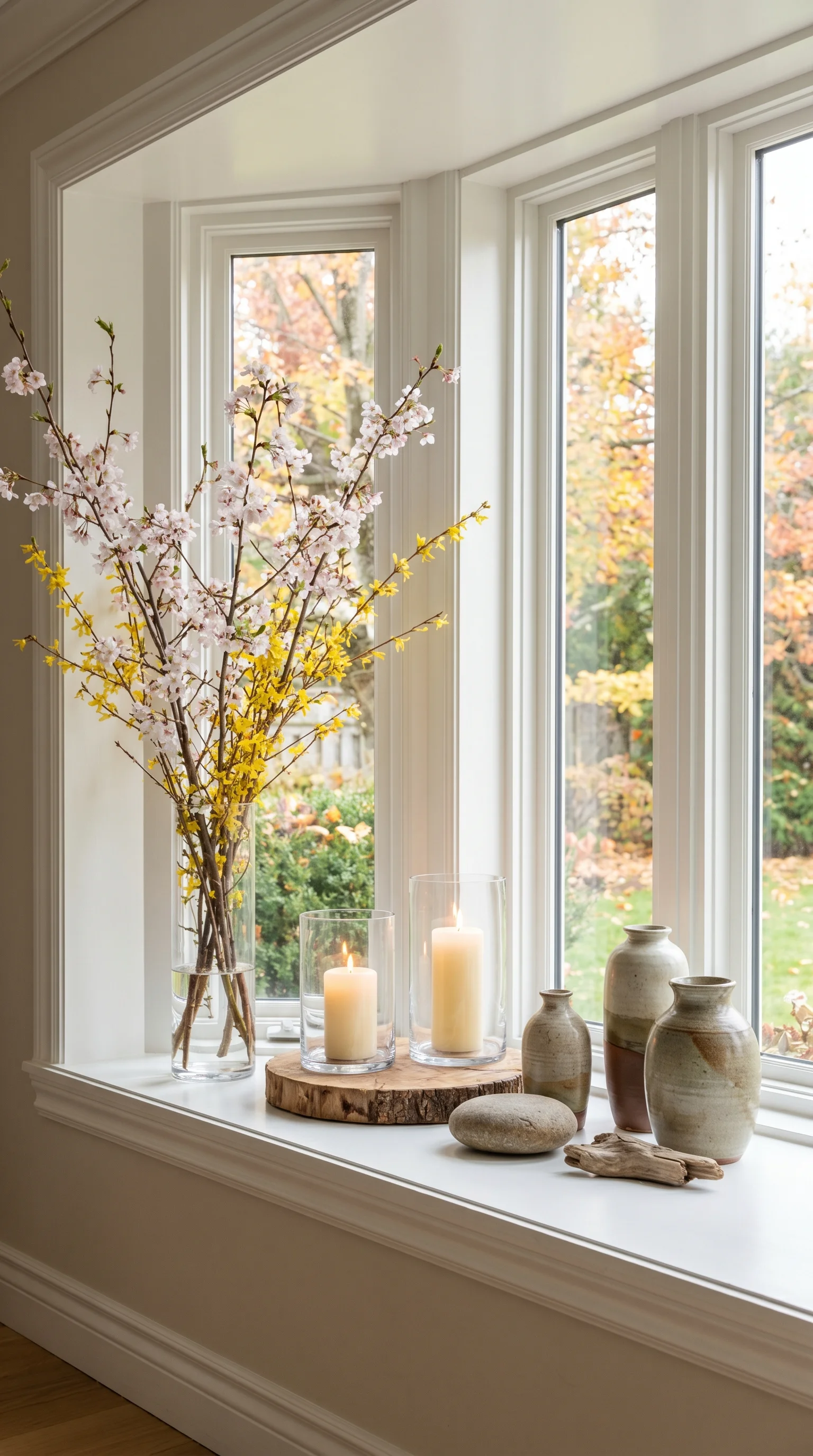
The bay window sill — even without a seat — can become a curated seasonal display platform. Large glass vases with branches, hurricane lanterns, ceramic objects, and natural elements arranged as a vignette create something that reads as a considered display from both inside and from the street.
Change it seasonally: spring branches and tulips in April, summer herbs and shells in July, autumn pumpkins and dried botanicals in October, winter greenery and candles in December. The bay earns its keep all year with minimal investment each season.
A Note on Window Treatments
The most common mistake with bay windows is over-treating them. Heavy curtains on every panel make the bay feel smaller and darker, defeating its architectural purpose entirely. If you use curtains, hang them at the outer edges of the bay only — one panel each side — and keep them pulled back during daylight hours. The glass is the point of a bay window. Let it do its job.
For privacy without blocking light, Roman shades or roller shades fitted precisely to each panel are the right solution. They disappear when up and provide full coverage when down, without the visual weight of curtains that fight against the architecture.


