
23+ Stunning Dark Wood Bedroom Decor Ideas that Feel Warm, Not Heavy in [year]

I’ll be straight with you – most people don’t choose their dark wood bedroom furniture, they inherit it. A sleigh bed from a grandmother, a mahogany dresser that came with the house, a cherry set someone’s parents bought in 1998 and refuse to let go of. I’ve spent years styling around furniture my clients didn’t pick, and here’s what I’ve learned: dark wood isn’t the problem, the six inches of wall color behind it usually is. Fix the backdrop, break up the matching set, and that heavy brown furniture starts looking like the most expensive thing in the room.
Dark Wood Bedroom Decor Ideas
1. Warm Putty Walls Instead of Crisp White
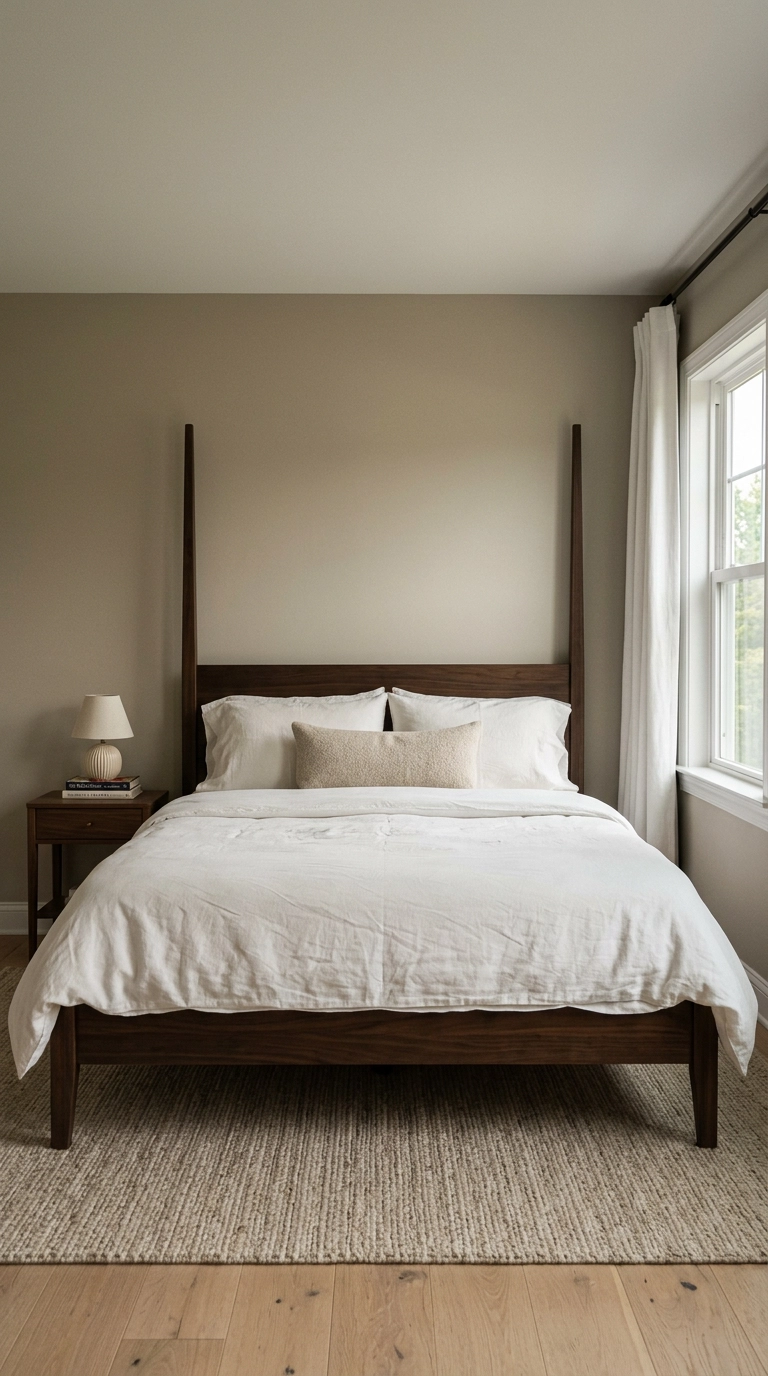
If you do one thing from this entire list, do this. Crisp white walls fail behind dark wood because pure white has a cool blue base, and next to a warm brown you get maximum contrast with zero relationship – the furniture reads as a dark blob stuck on a bright wall. Warm putty, greige, and mushroom tones share the same underlying warmth as the wood, so your eye reads them as one family instead of two arguing ones.
2. Break Up the Matching Bedroom Set on Purpose
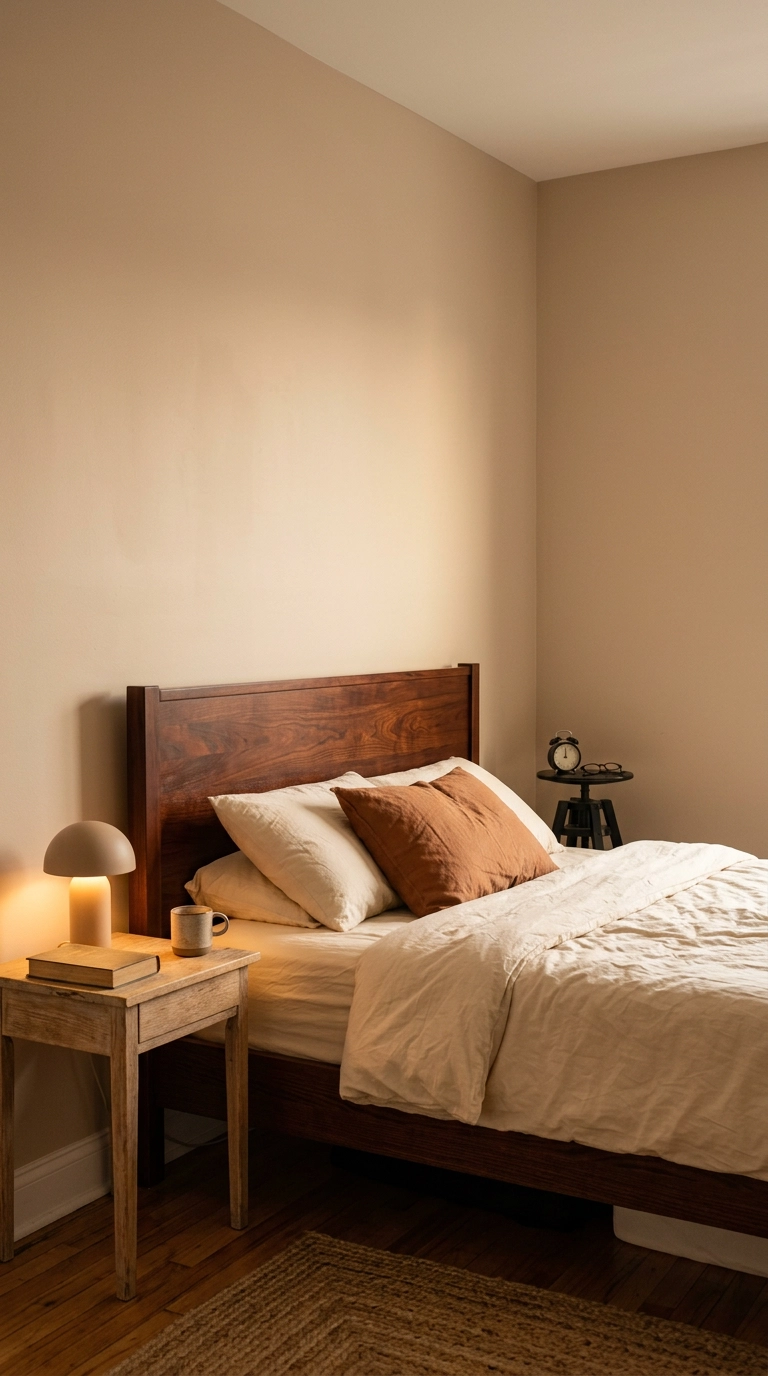
The five-piece matching suite is what makes dark wood look dated, not the wood itself. When the bed, both nightstands, the dresser, and the mirror all share one finish and one silhouette, the room reads like a showroom floor from twenty years ago.
3. Figure Out Whether You Have Walnut, Mahogany, or Cherry
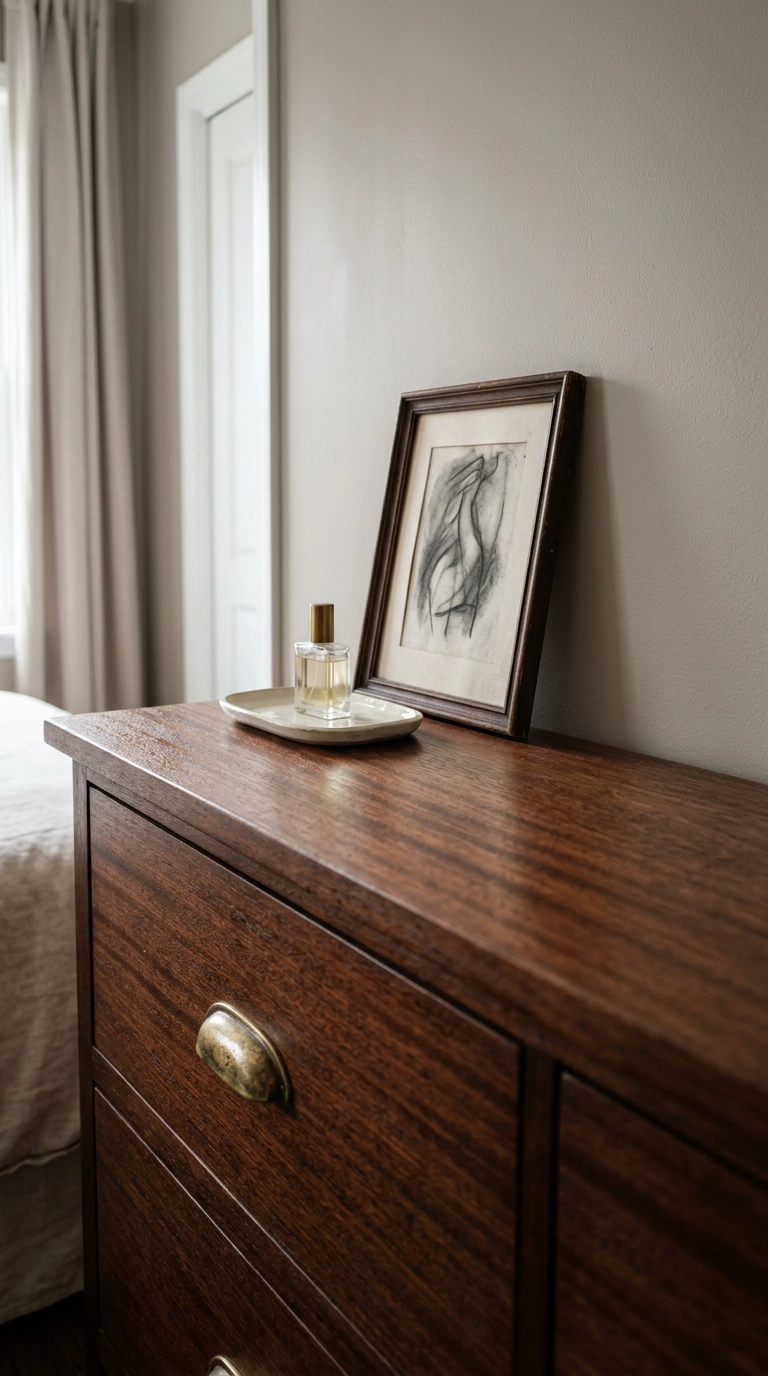
These three woods get lumped together as “dark brown,” but they behave completely differently and that’s why generic advice fails people. Walnut leans cool and slightly grey-purple, mahogany runs distinctly red, and cherry starts orange-pink and deepens toward rust as it ages in sunlight.
4. Deep Green Walls for a Room That Can Handle Drama
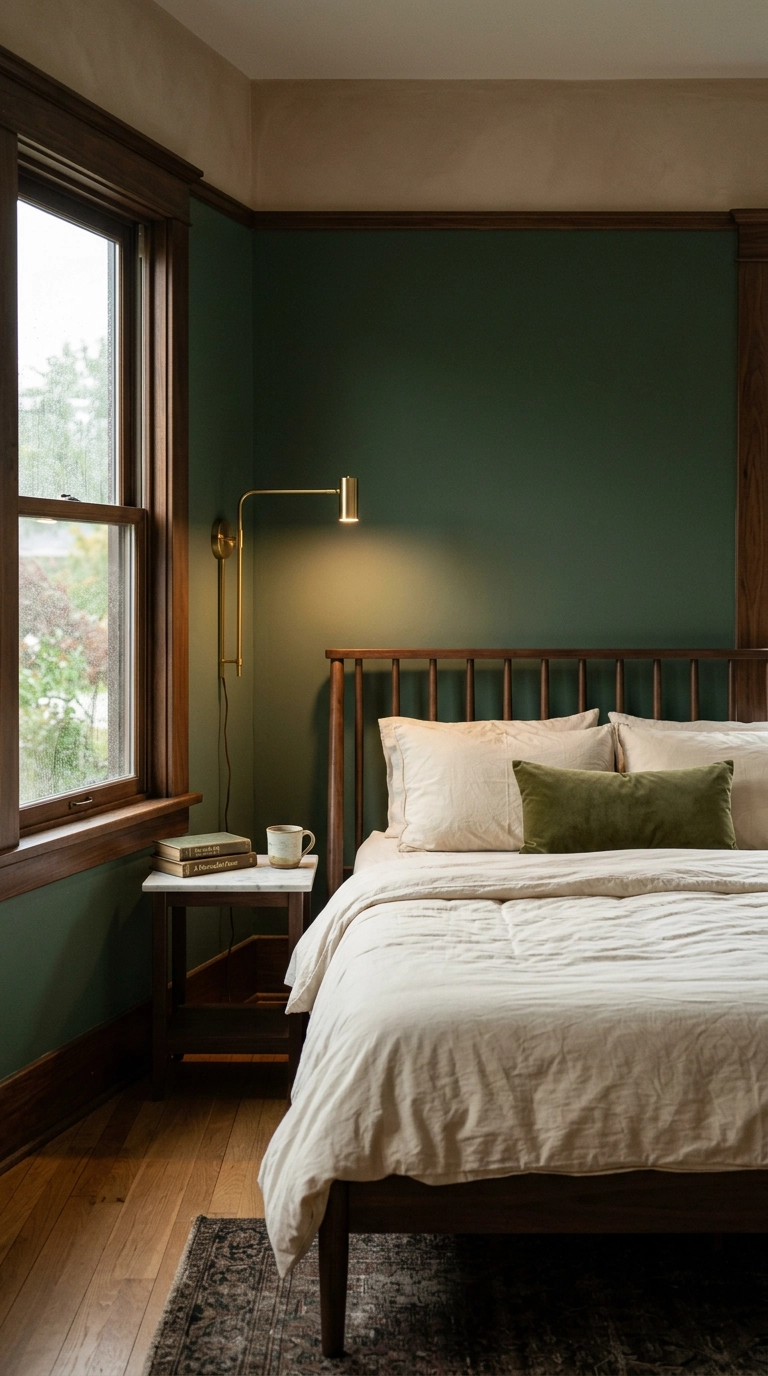
Deep green works behind dark wood for a reason people rarely explain – green sits opposite red on the color wheel, so it neutralizes the red flare in mahogany and cherry instead of amplifying it the way beige-pink or peachy tones do.
5. Layer Pale Textiles to Cut the Visual Weight
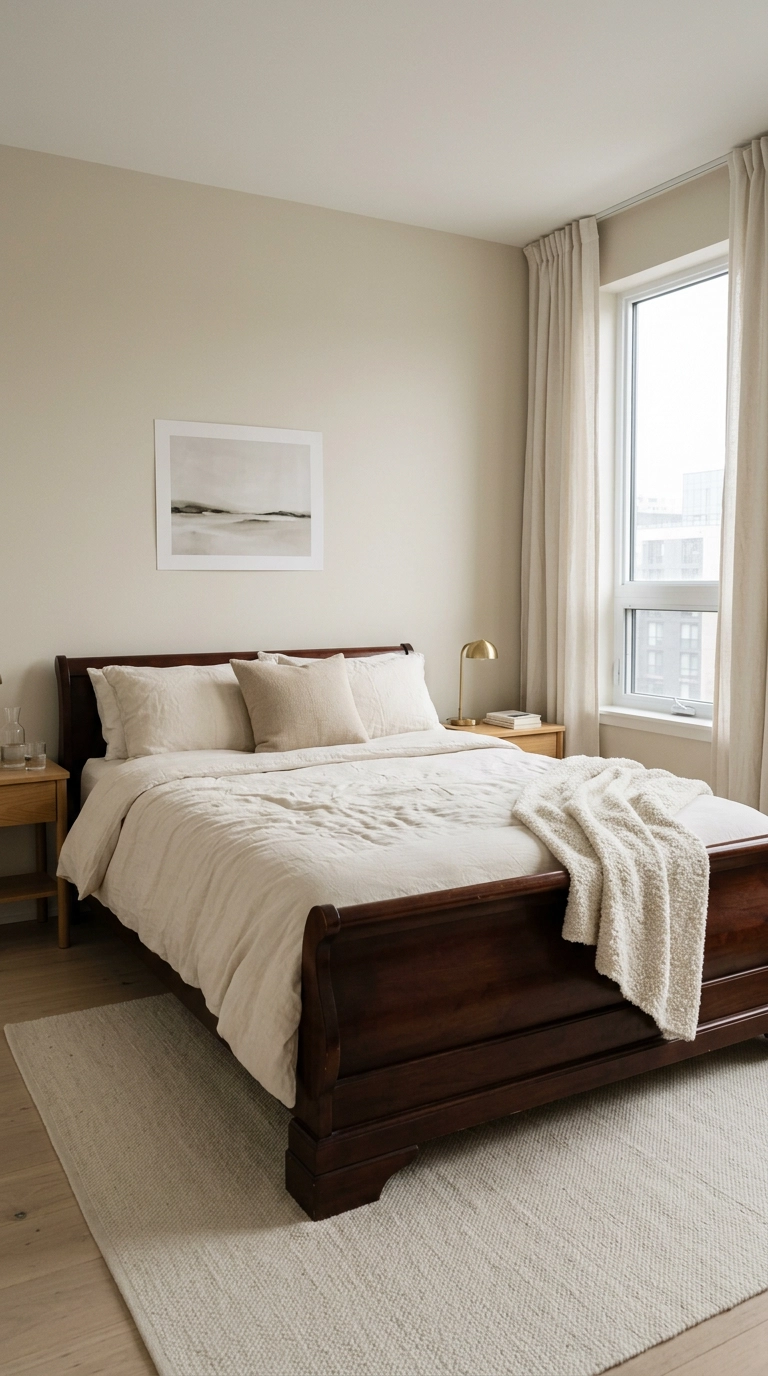
Dark wood carries enormous visual weight – designer shorthand for how much your eye reads a thing as heavy and solid. You can’t reduce the wood, so you counterbalance it with soft pale surfaces that read as almost weightless.
6. Swap Every Bit of Silver Hardware for Warm Brass
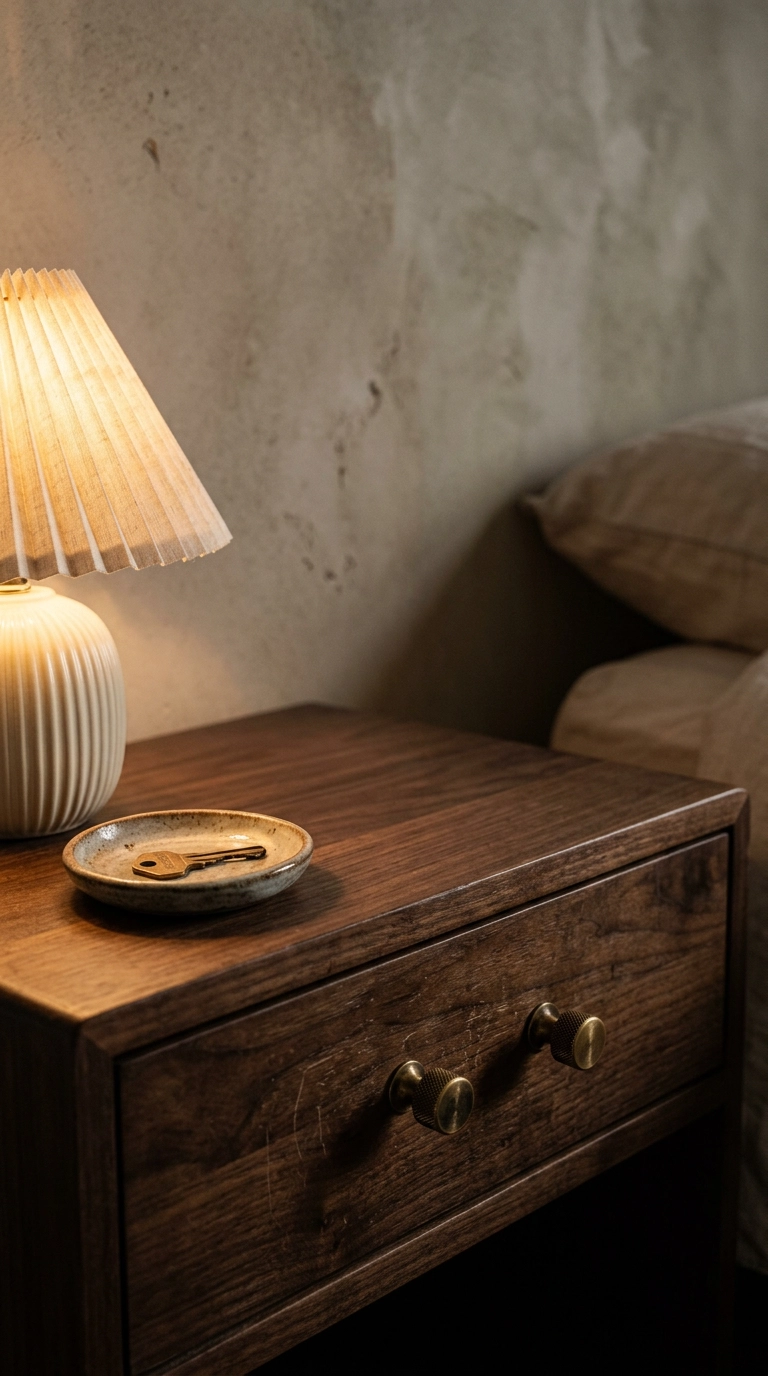
Brushed nickel and chrome against dark brown wood is the single most common reason inherited furniture looks tired. Cool metal plus warm wood creates a temperature clash your brain registers as “mismatched” even if you can’t name it.
7. Three Light Sources at Three Different Heights
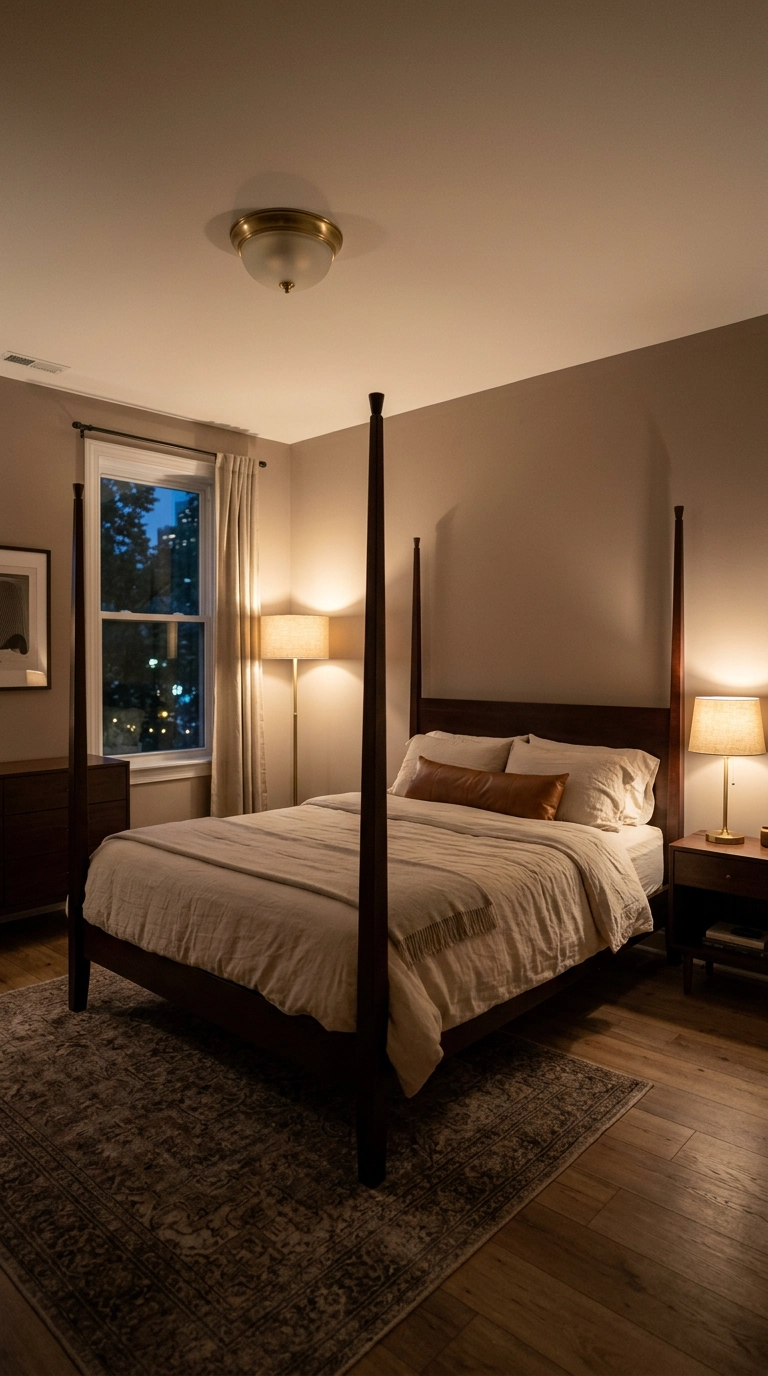
Dark wood absorbs light instead of bouncing it, so a single overhead fixture leaves you with a cave and a hot spot on the ceiling. The fix is three sources at three heights – overhead, bedside, and floor level – so light wraps the room instead of dropping straight down.
8. Move the Big Dresser Out of the Bedroom Entirely
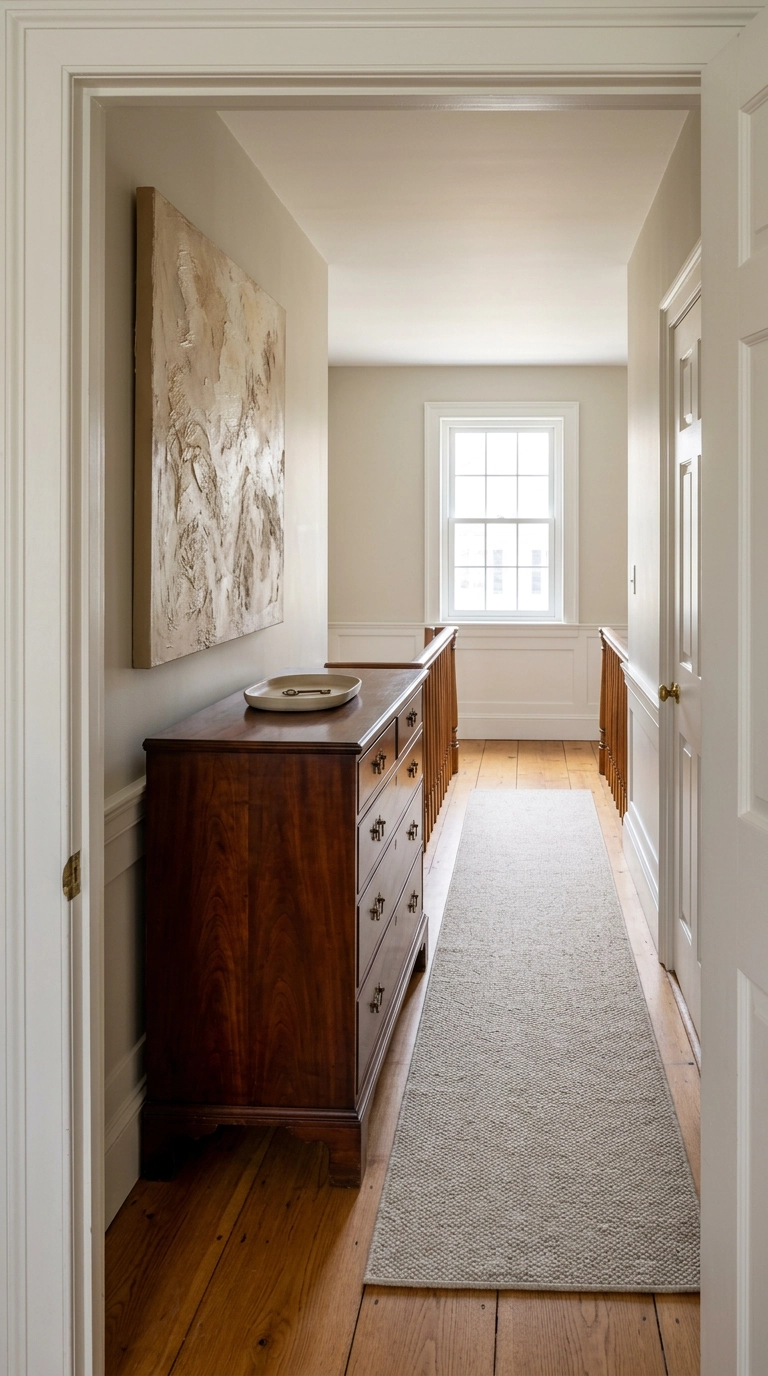
Here’s the move nobody suggests: when four heavy dark pieces crowd one bedroom, take one out. A tall dresser reads completely differently in a hallway, an entry, or a dining room, where it becomes a deliberate statement piece instead of one quarter of a suite.
9. Renter Fix: Peel-and-Stick Wallpaper on the Bed Wall Only
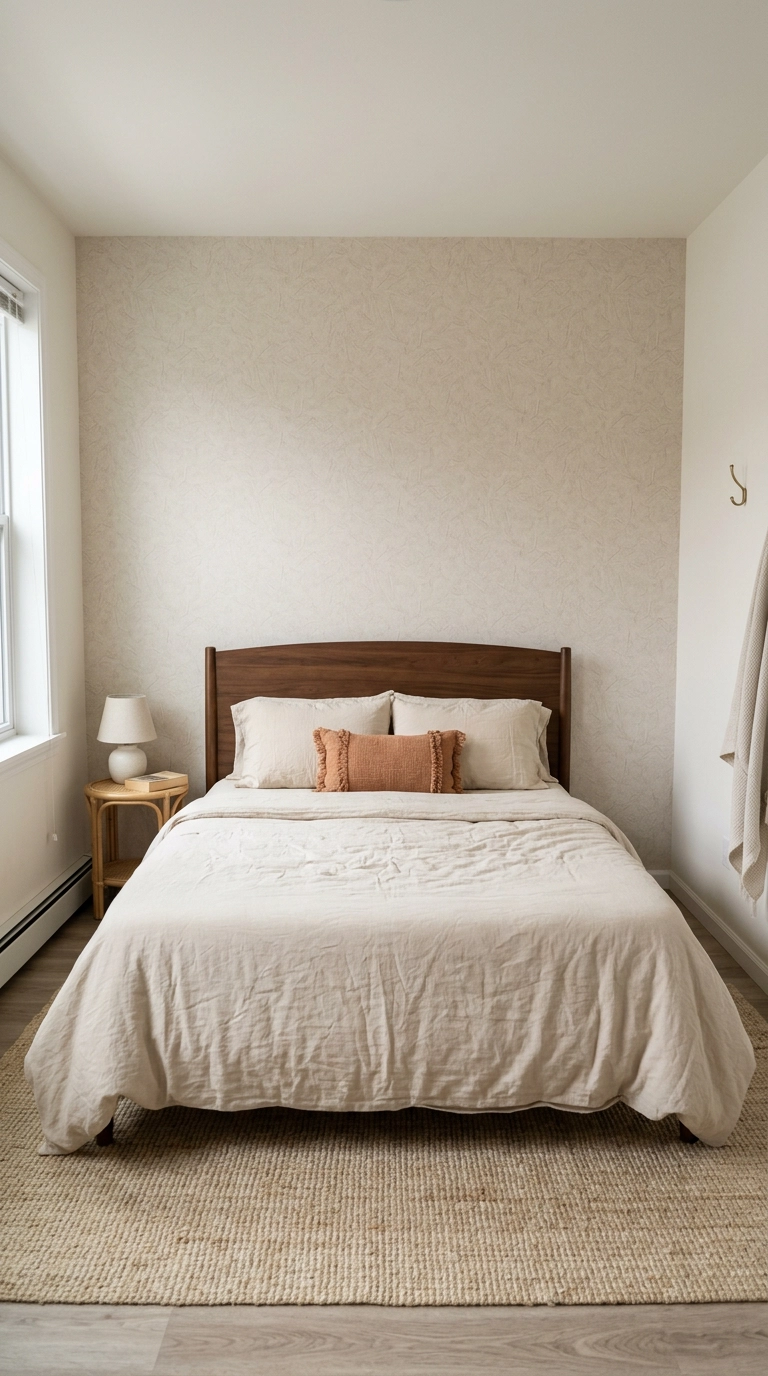
You don’t need to paint the whole room, and if you’re renting you may not be allowed to. Papering only the wall behind the bed gives dark wood a textured backdrop that keeps it from floating on flat builder white.
10. Paint the Trim and Ceiling the Same Color as the Walls
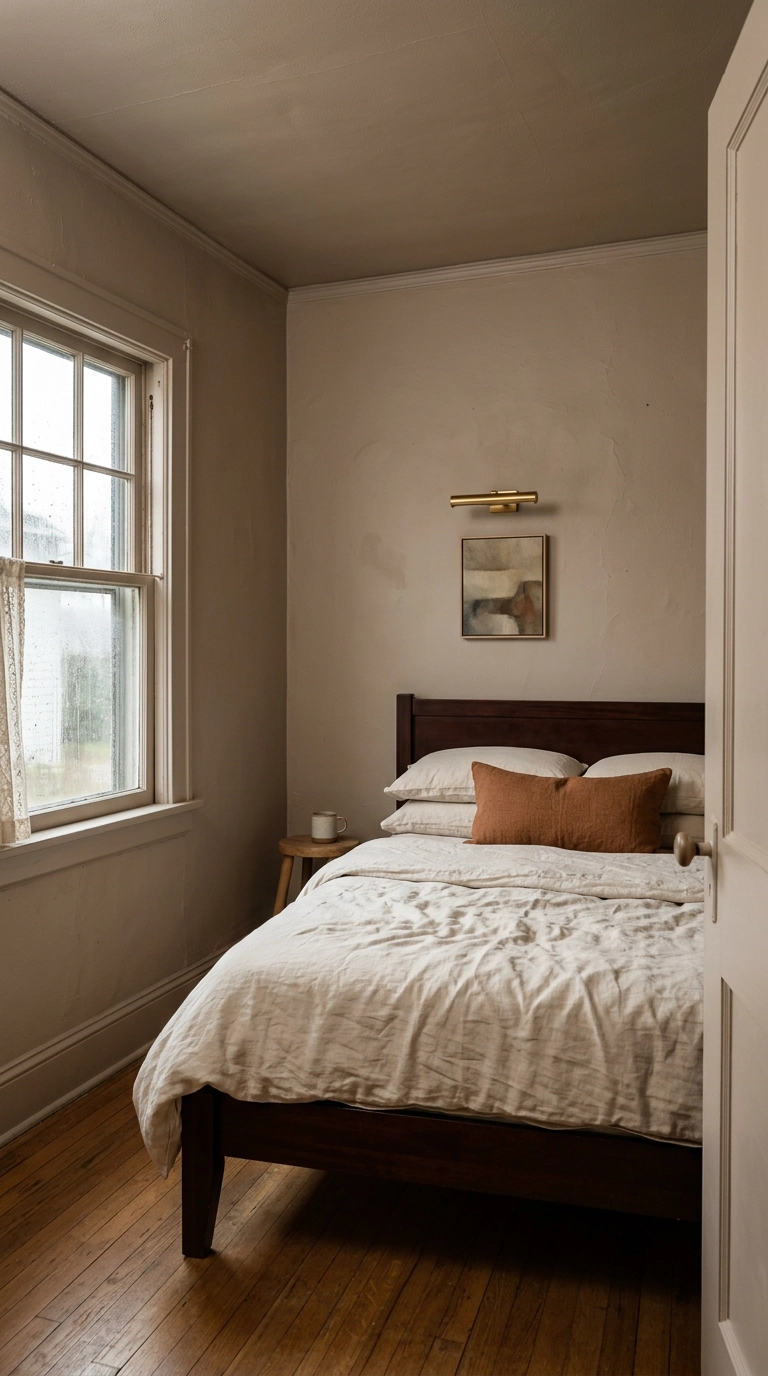
Color drenching means taking one shade across walls, trim, and ceiling. It works especially hard in rooms with dark furniture because bright white trim creates hard edges that chop the room into pieces, making the wood look like it’s sitting in a smaller, busier box.
11. Paint Just One Piece and Keep the Rest Wood
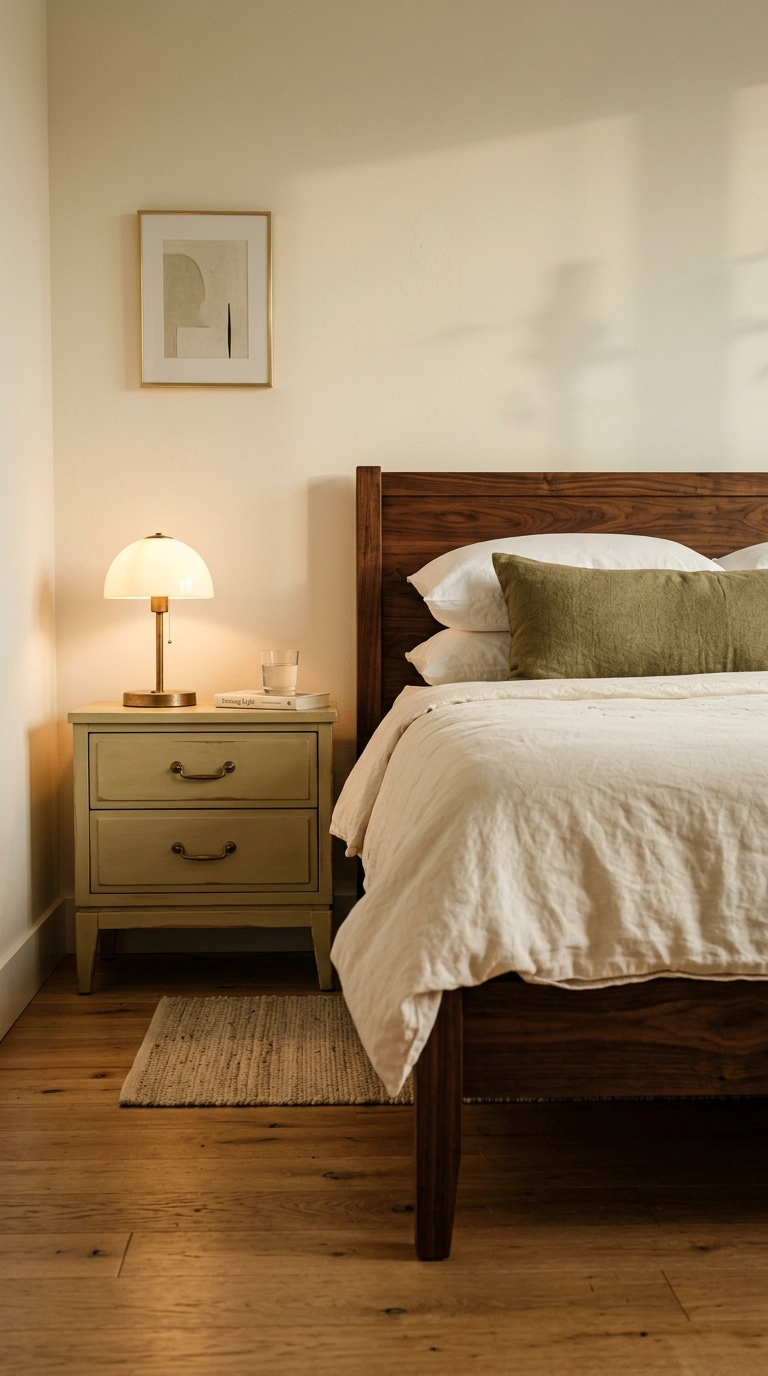
Painting an inherited set feels like sacrilege, so don’t do all of it. Paint one nightstand, or the smaller chest, and leave the beds and dressers in their original finish.
12. Hang Pale Curtains High and Wide
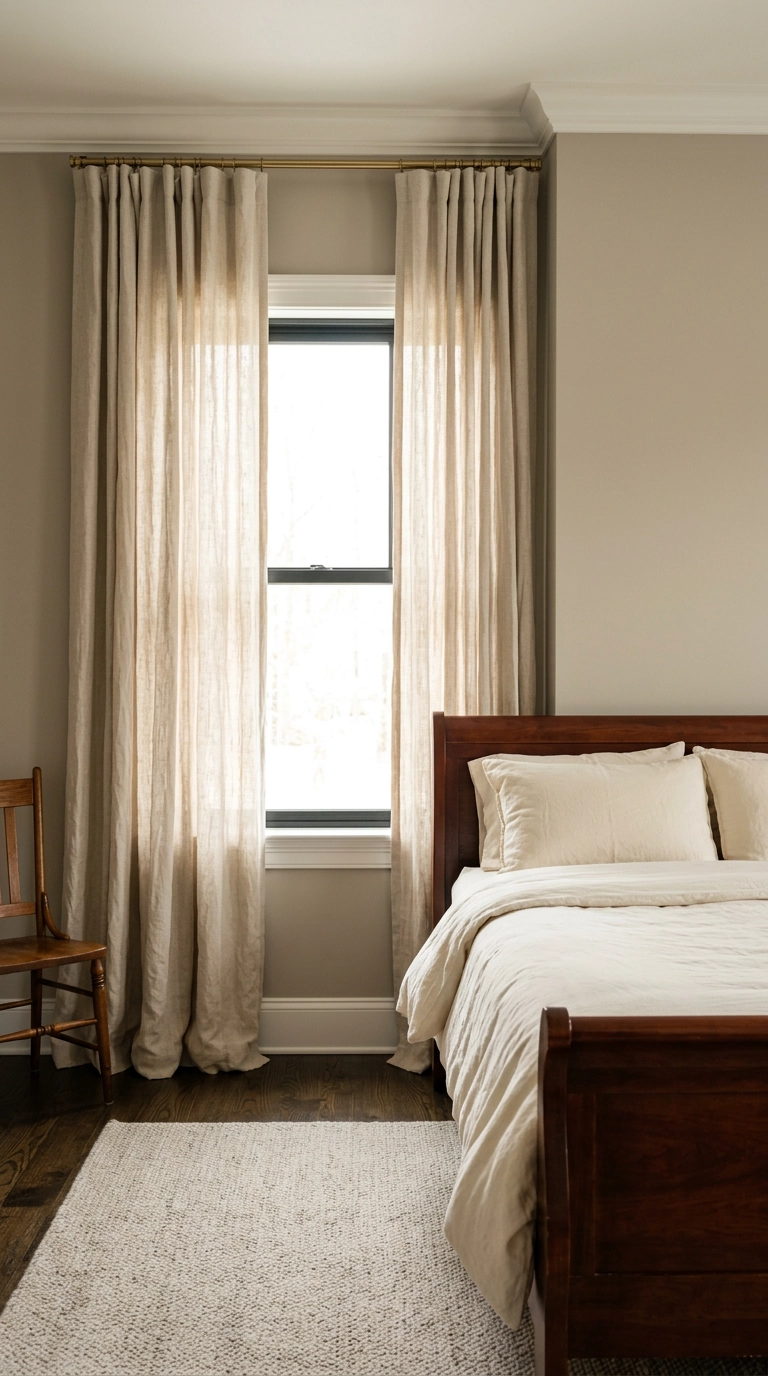
Mount the rod four to six inches below the ceiling and extend it eight to ten inches past the window frame on each side. Your eye reads the full height of the fabric as the window, so the ceiling feels taller and the room feels less compressed by all that dark furniture.
13. Lean an Oversized Mirror Opposite the Window
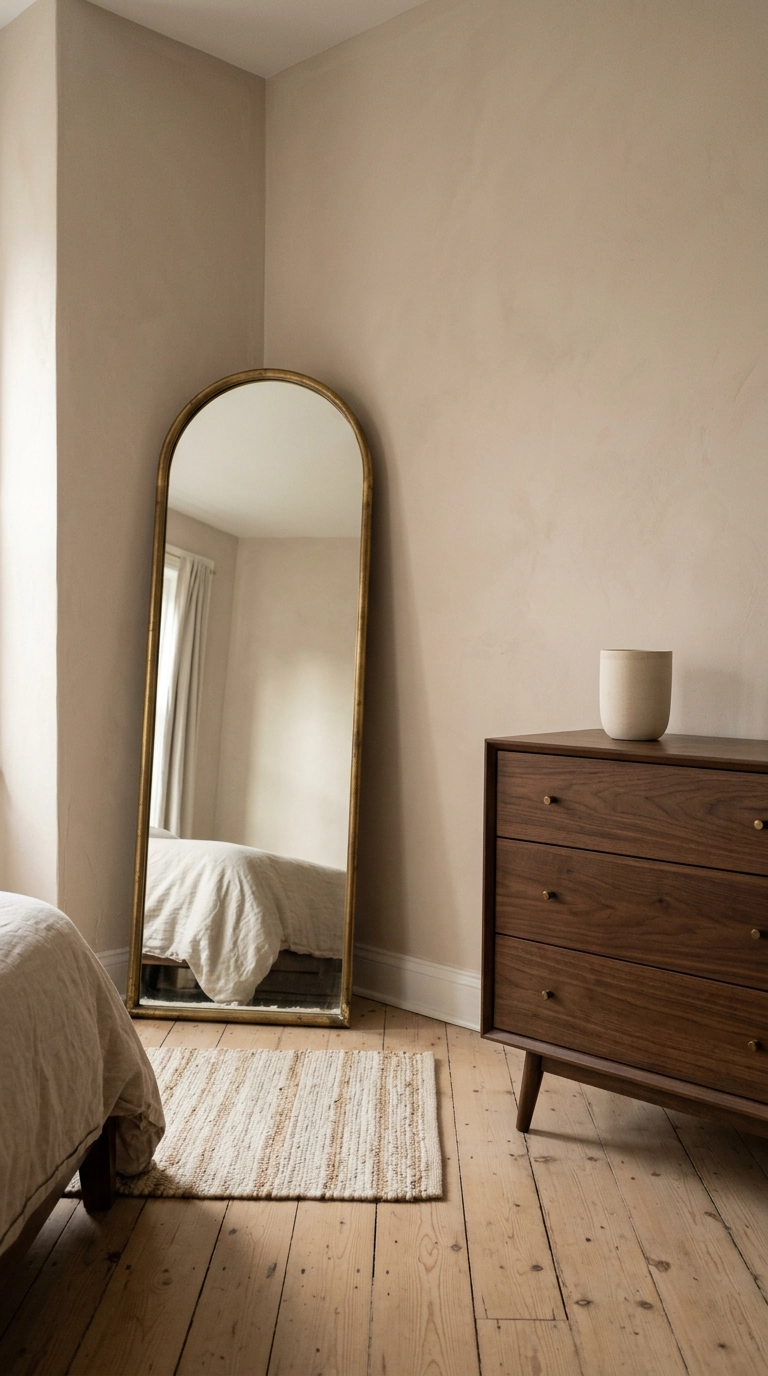
A big mirror across from your window essentially doubles your daylight, which is the whole game in a dark-wood room. Go bigger than feels reasonable – at least 60 inches tall and leaned rather than hung.
14. Introduce a Second, Much Lighter Wood Tone
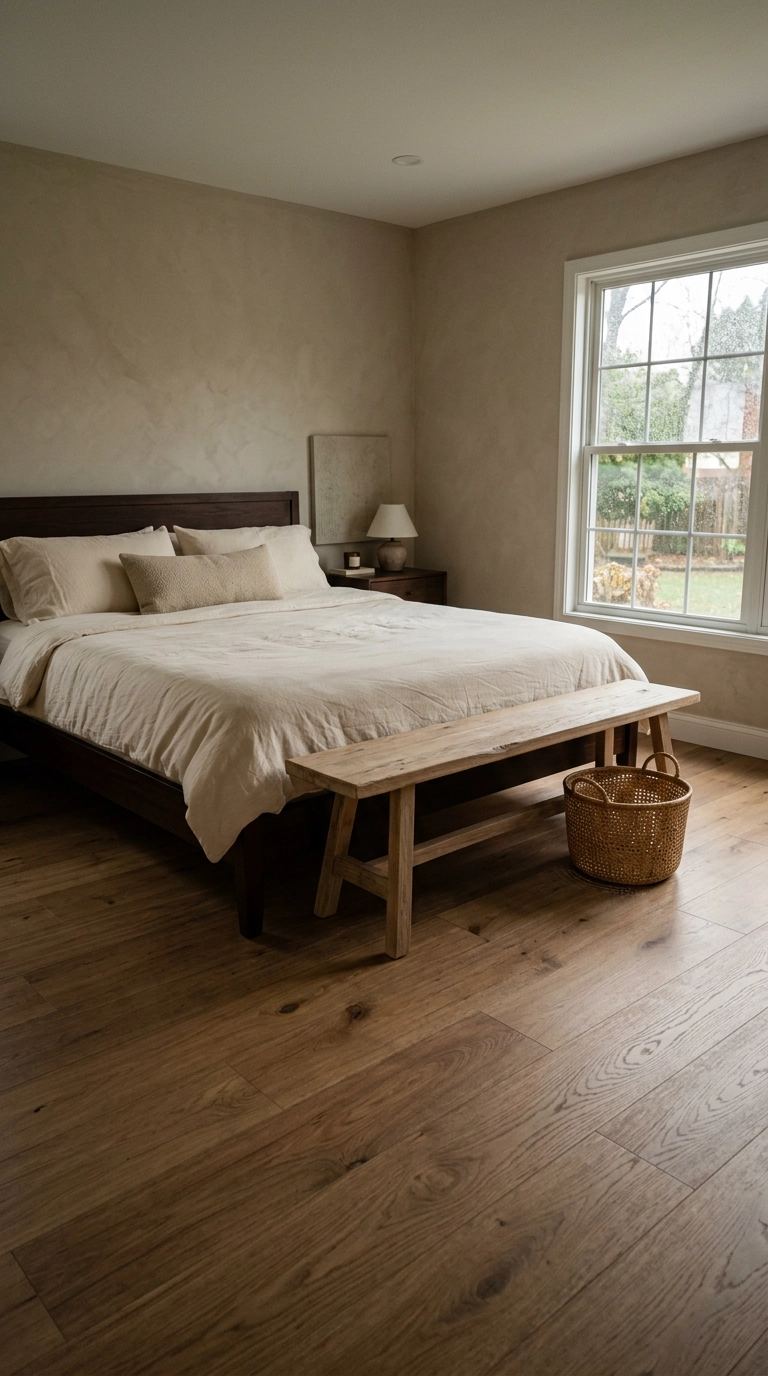
Mixing woods is not only allowed, it’s the fix. What looks wrong is two woods that are almost the same tone – near-matches read as a failed attempt. Real contrast reads as a choice.
15. One Big Piece of Art Above the Headboard, Not a Gallery Wall
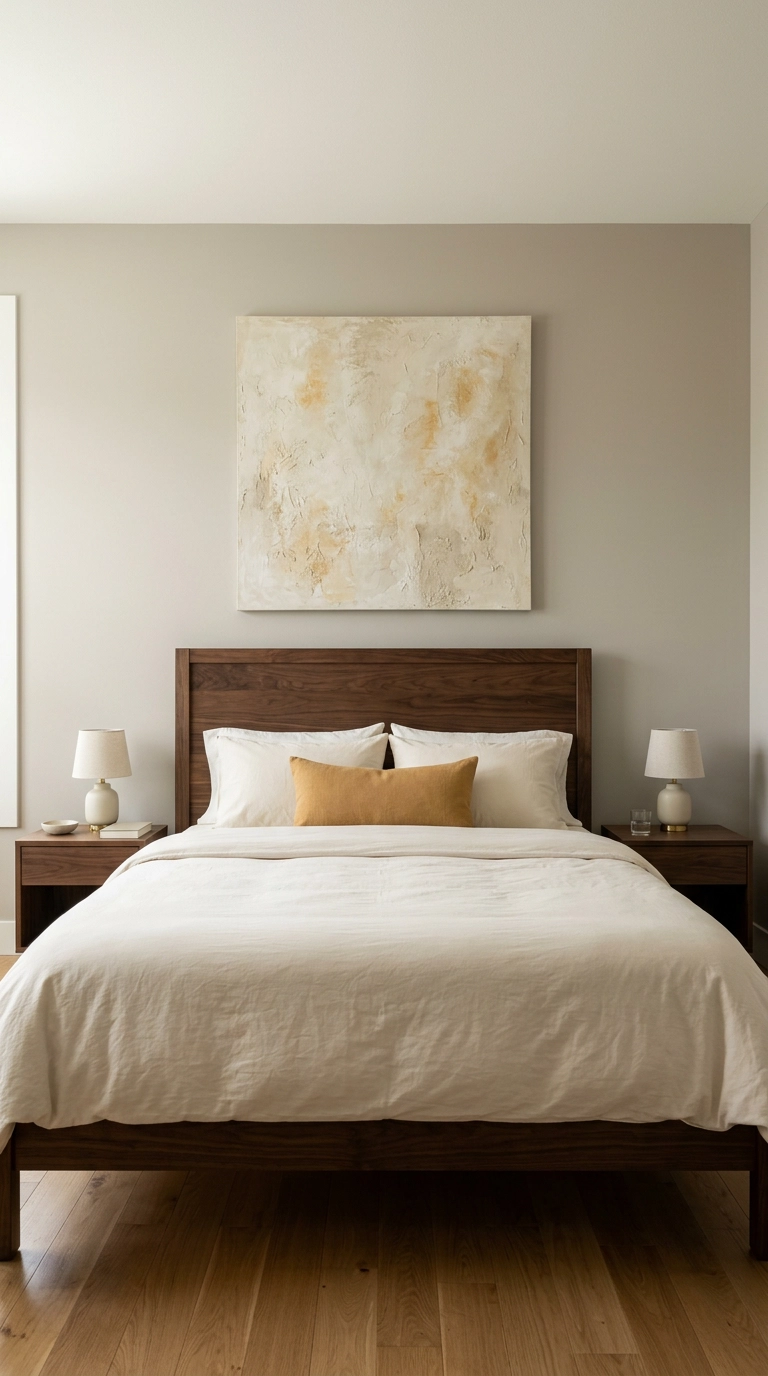
A busy gallery wall above dark furniture gives you two competing focal points and a headache. One large piece – roughly two-thirds the width of the bed – gives the wood a partner instead of a rival.
16. Go One Rug Size Bigger Than You Think
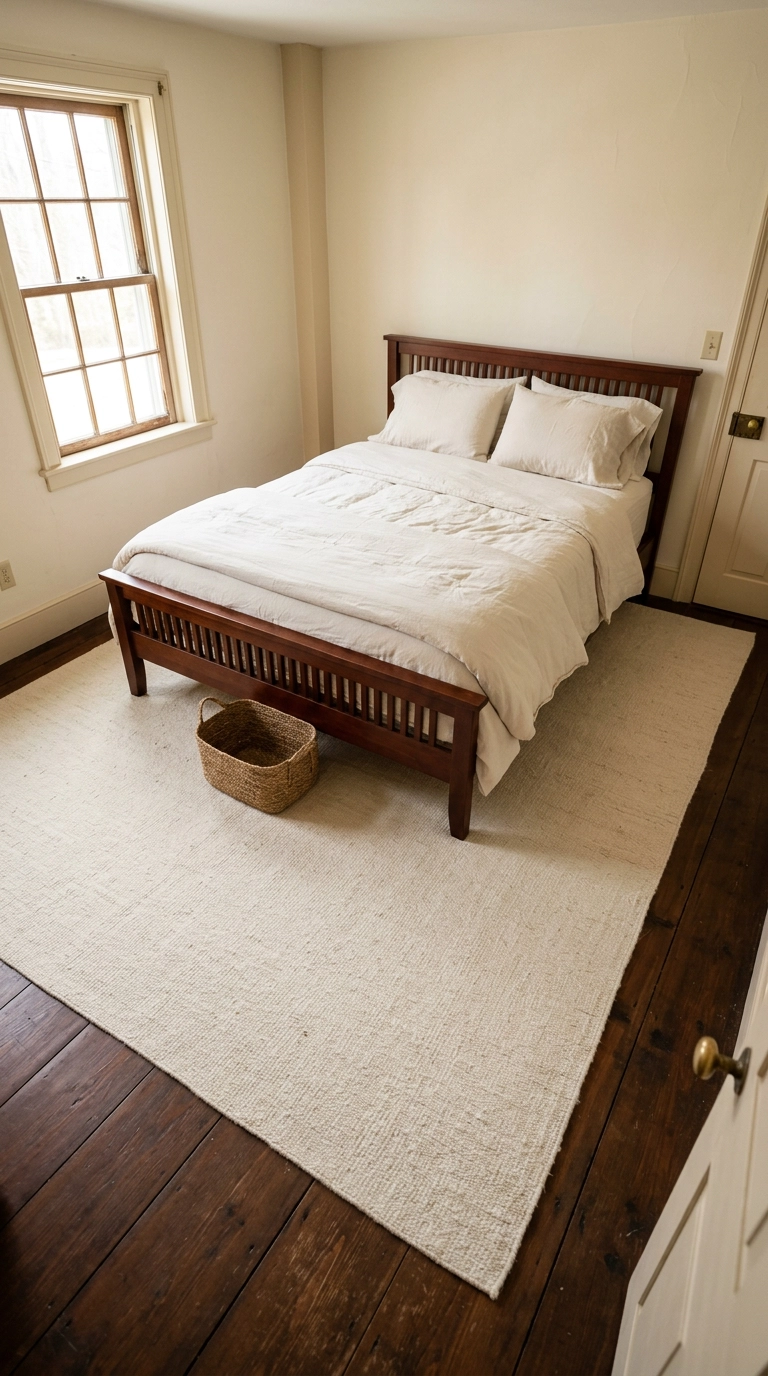
Under-sized rugs are epidemic in bedrooms with dark furniture, and they make the problem worse – a small pale rectangle in a sea of dark floor and dark wood just emphasizes how dark everything else is.
17. Upholster the Headboard Panel and Keep the Wood Frame
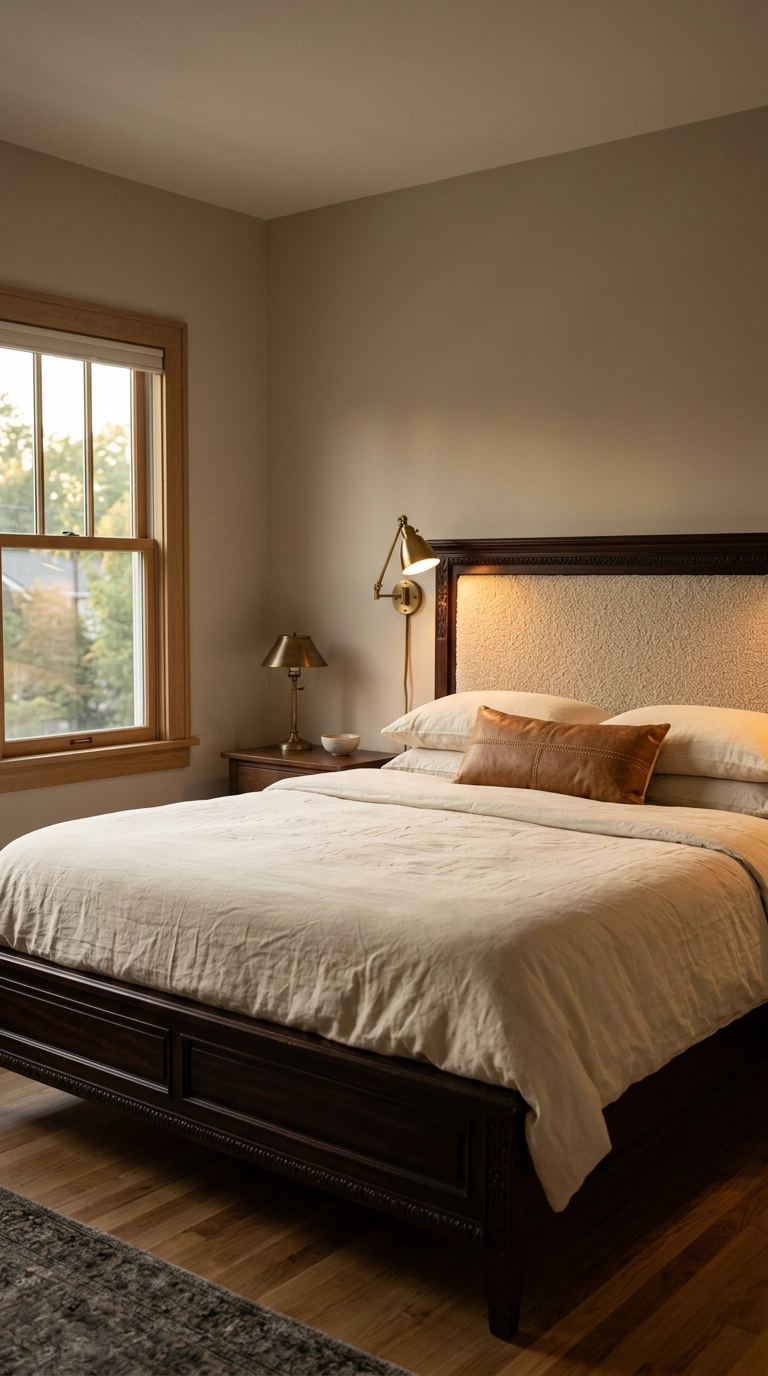
This is my favorite trick for an ornate inherited bed. The carved frame is usually the beautiful part, and the large flat dark panel in the middle is what makes it feel heavy.
18. Lean Into It with Deep Charcoal Walls
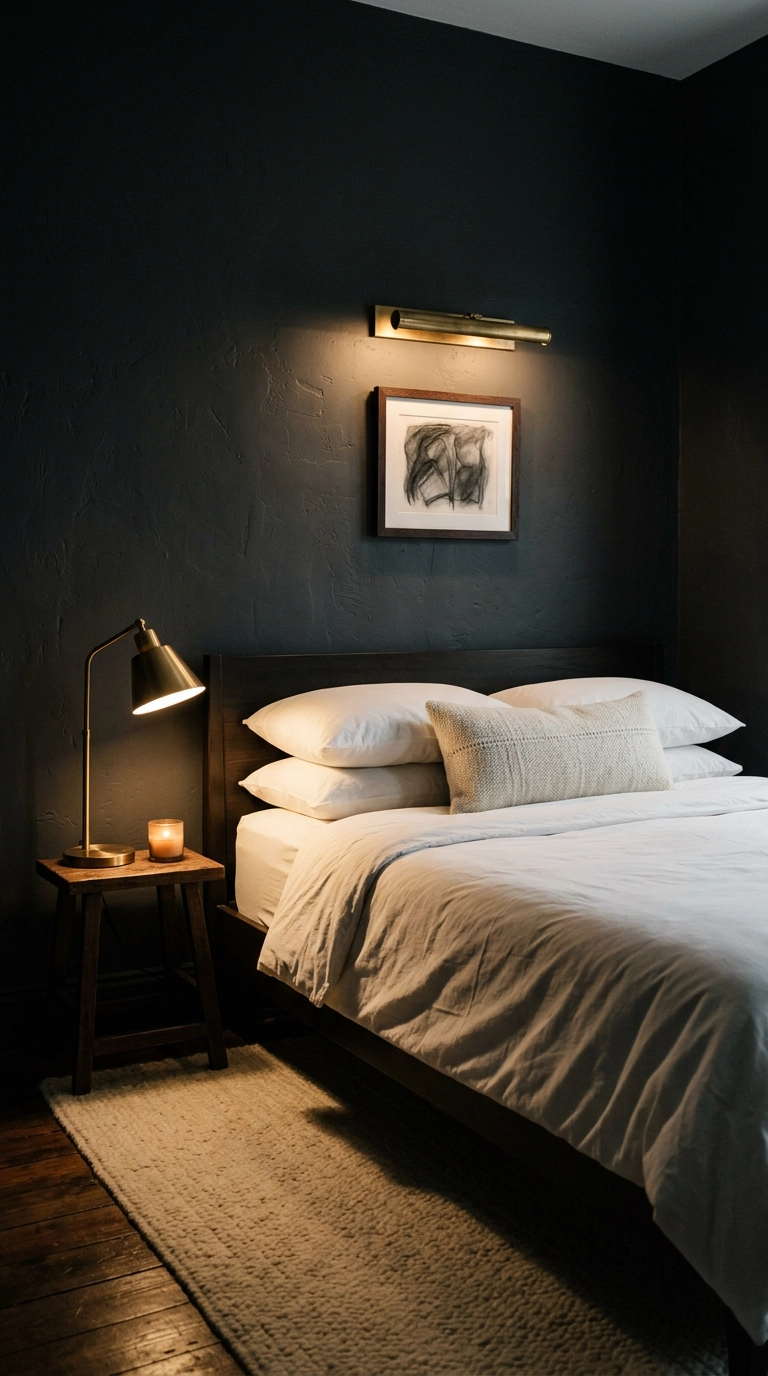
The opposite strategy to putty walls, and it works for a completely different reason. When the wall goes as dark as the furniture, the wood stops being a heavy silhouette against a light backdrop and dissolves into the envelope of the room.
19. Style the Nightstand in Three Objects, All Pale
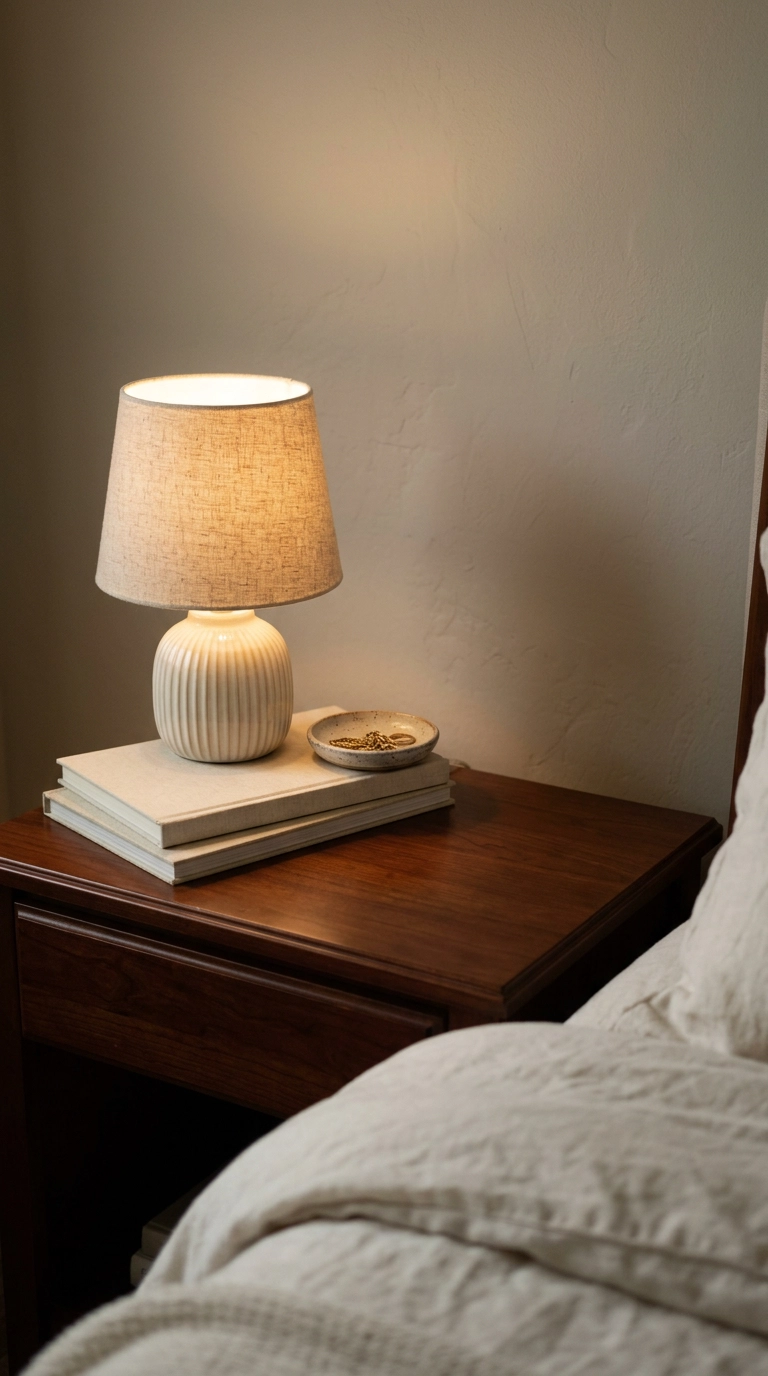
Three objects at three different heights, and every one of them light in color. Odd numbers read as more natural to the eye than even ones, which is why two matched objects look posed and three look collected.
20. Clean Off Forty Years of Wax Before You Do Anything Else
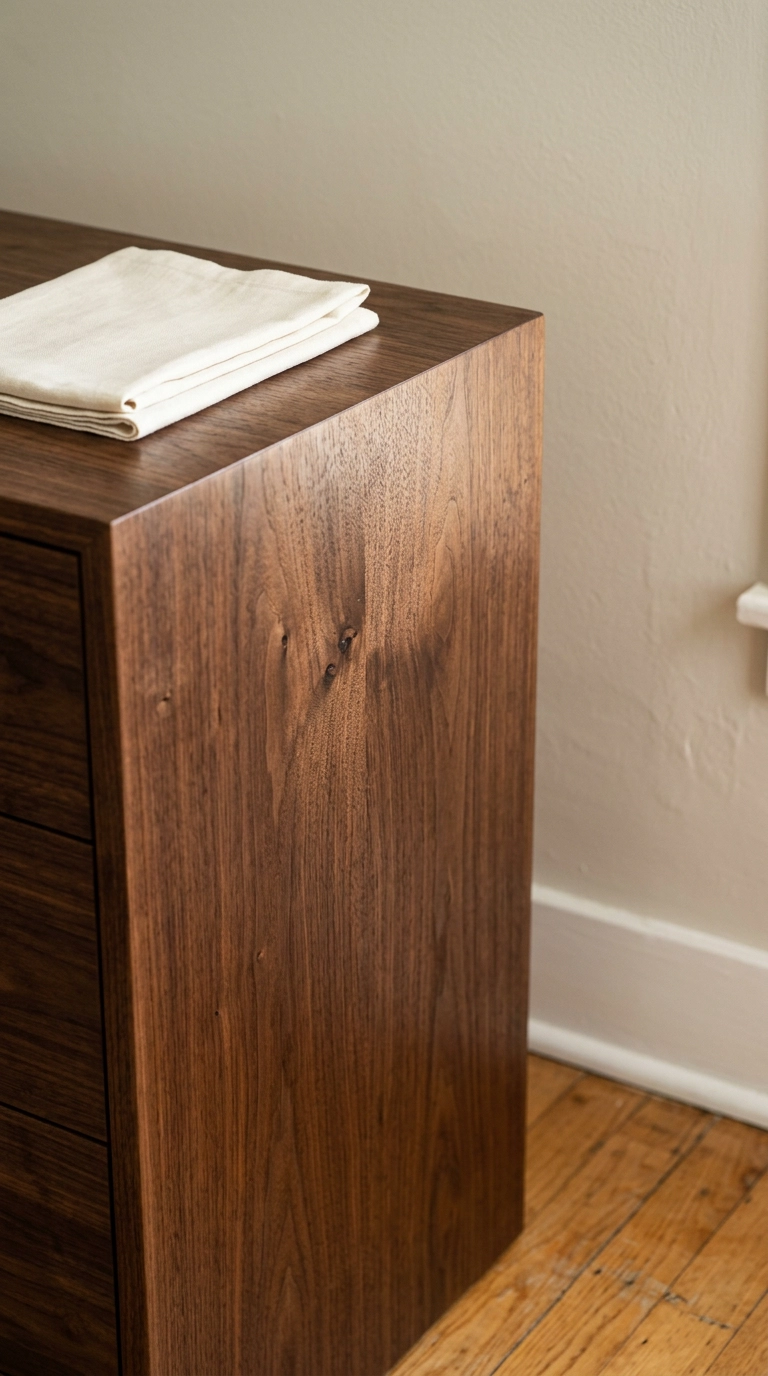
Half the inherited furniture I get called about isn’t dark and dated, it’s dark and dirty. Decades of spray polish build into a dull, slightly sticky film that flattens the grain and adds a grey cast.
21. Splurge on Wall Sconces and Reclaim Both Nightstands
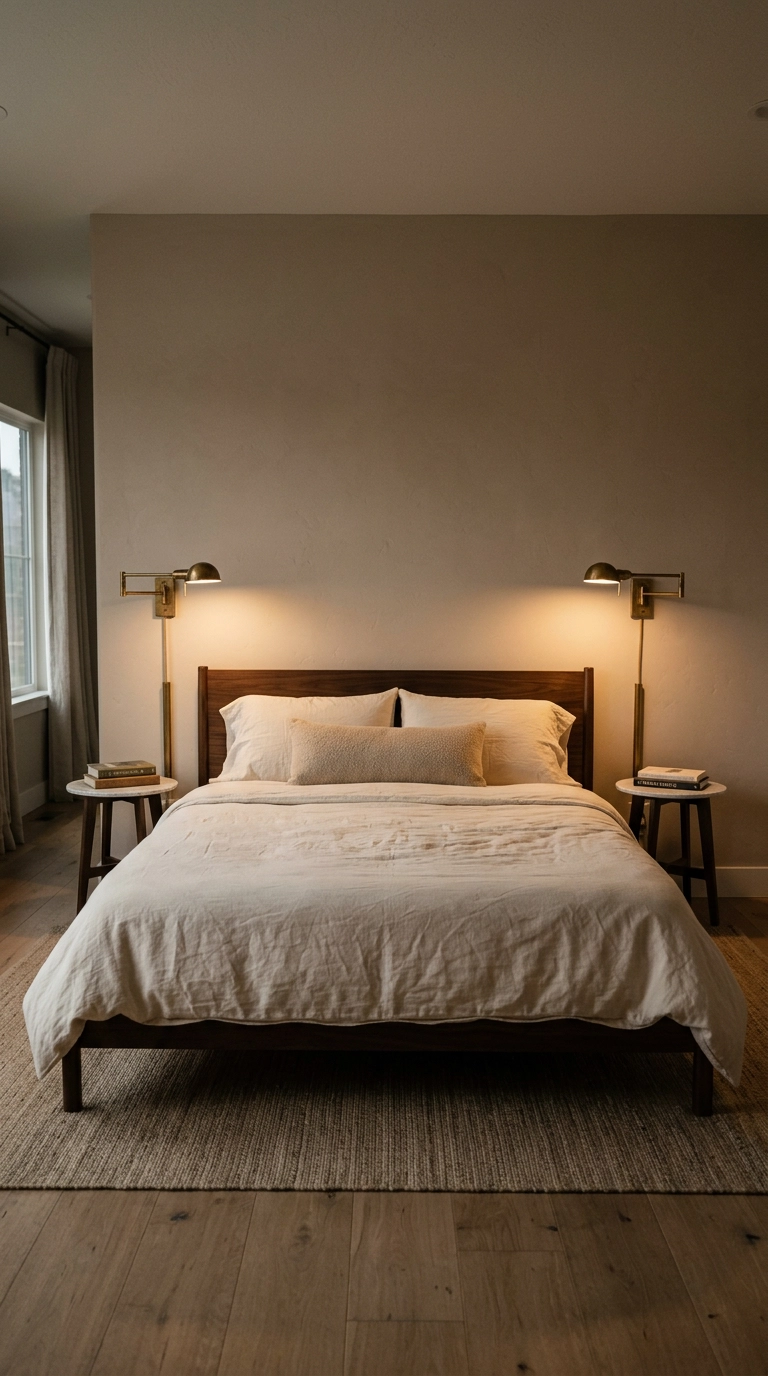
This is the splurge on the list – expect $150 to $400 a pair for something with real weight, plus an electrician if you hardwire. Worth it for two reasons: the light source moves up to eye level where it flatters the room, and your nightstands lose the lamp footprint.
22. Pull the Bed Off the Wall by Six Inches
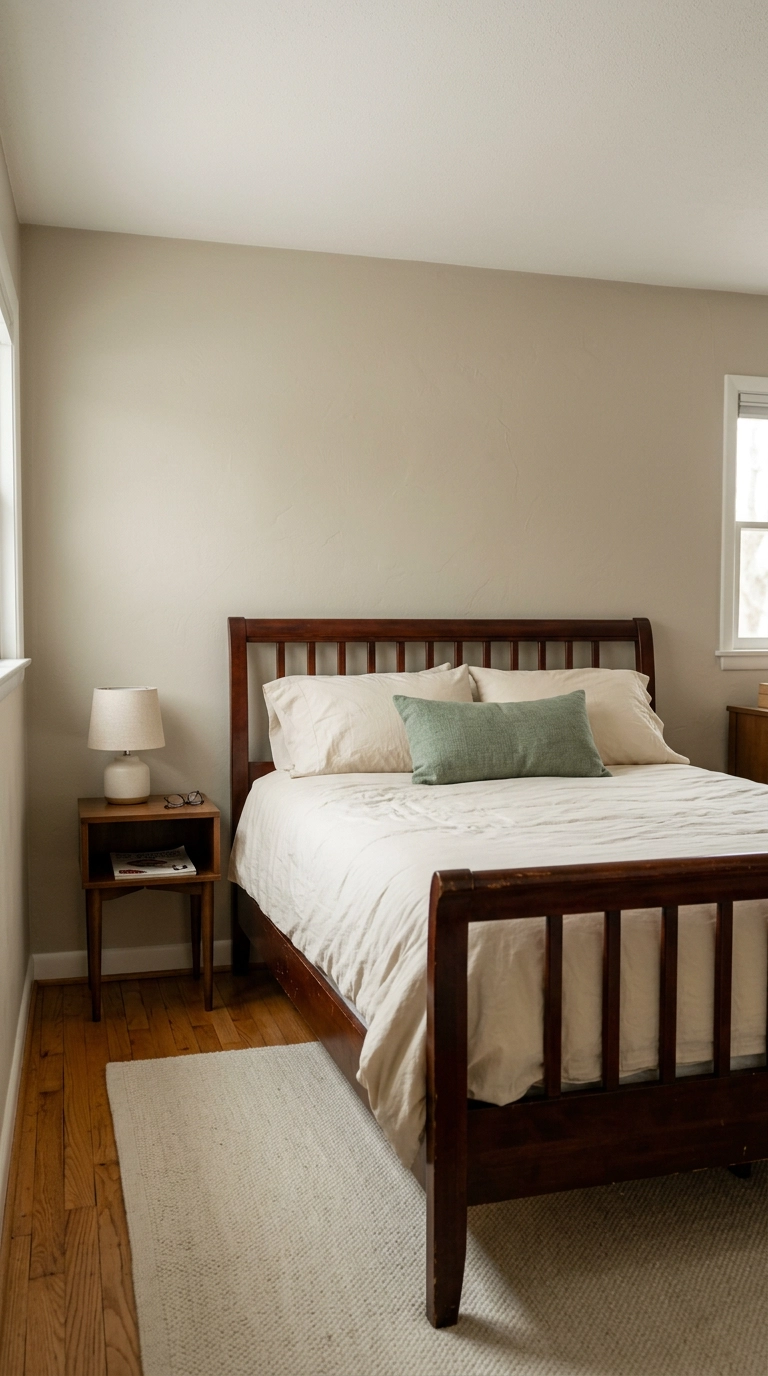
Free, takes two minutes, and almost nobody does it. Shoving a heavy dark headboard flat against the wall makes it read as part of the wall – a big brown mass with no edges.
23. Give the Room One Deliberate Note of Rust or Ochre
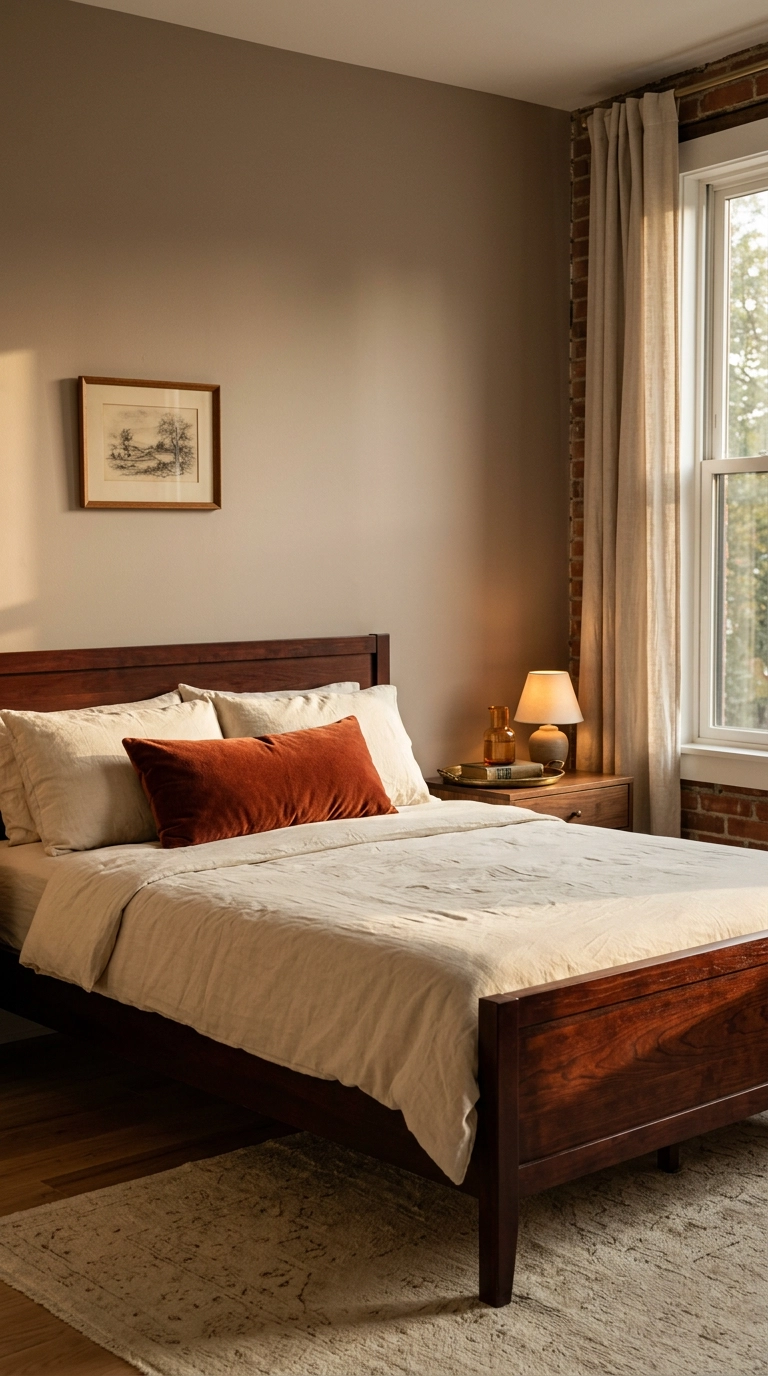
End on this one because it’s the difference between a room that looks careful and a room that looks alive. Everything else on this list is about calming dark wood down, and if you only do that you get somewhere quiet but slightly bloodless.
Living Happily With the Wood You Didn’t Choose
I’ve styled a lot of bedrooms around furniture nobody actually picked out, and the pattern is always the same – people come to me convinced they need to replace a whole bedroom set, and they leave having spent $200 on paint, brass pulls, and a bigger rug. The warm putty walls from idea one and the three-height lighting from idea seven do most of the heavy lifting. Break up the matching suite, get one pale rug that’s genuinely too big, and the same furniture you resented starts looking like an inheritance instead of a burden.
Dark wood has quietly come back around, which I find very satisfying after a decade of everyone stripping and whitewashing everything. Deep walnut and moody envelope colors are all over the [year] shelter magazines, and designers like Nate Berkus have been pairing rich brown case goods with warm plaster walls for years while the rest of us were painting perfectly good mahogany chalk white. Even the big retailers have swung back toward warm brass hardware and darker finishes, so sourcing complements is easier than it was three years ago.
Start with the two-minute version: pull the bed off the wall, restyle the nightstand in three pale objects, and swap in warmer bulbs tonight. If it looks better – and it will – graduate to the paint and the rug next weekend. I send out one honest, non-salesy email a week with the projects I’m actually working on, before-and-afters from client rooms, and the paint colors that turned out to be worth it. Sign up for the weekly newsletter and I’ll see you in your inbox.


