22+ Small Pantry Decor Ideas that are Easy and Gorgeous in [year]

I’ll be honest with you – I’ve spent more hours inside other people’s pantry closets than any reasonable adult should, and the thing I’ve learned is that a small pantry doesn’t fail because it’s small. It fails because nobody ever decided what goes where. Fix that, add one coat of paint and some light, and a 30-inch reach-in closet can look better than a walk-in three times its size.
Small Pantry Decor Ideas
1. Peel-and-Stick Wallpaper on the Back Wall Only
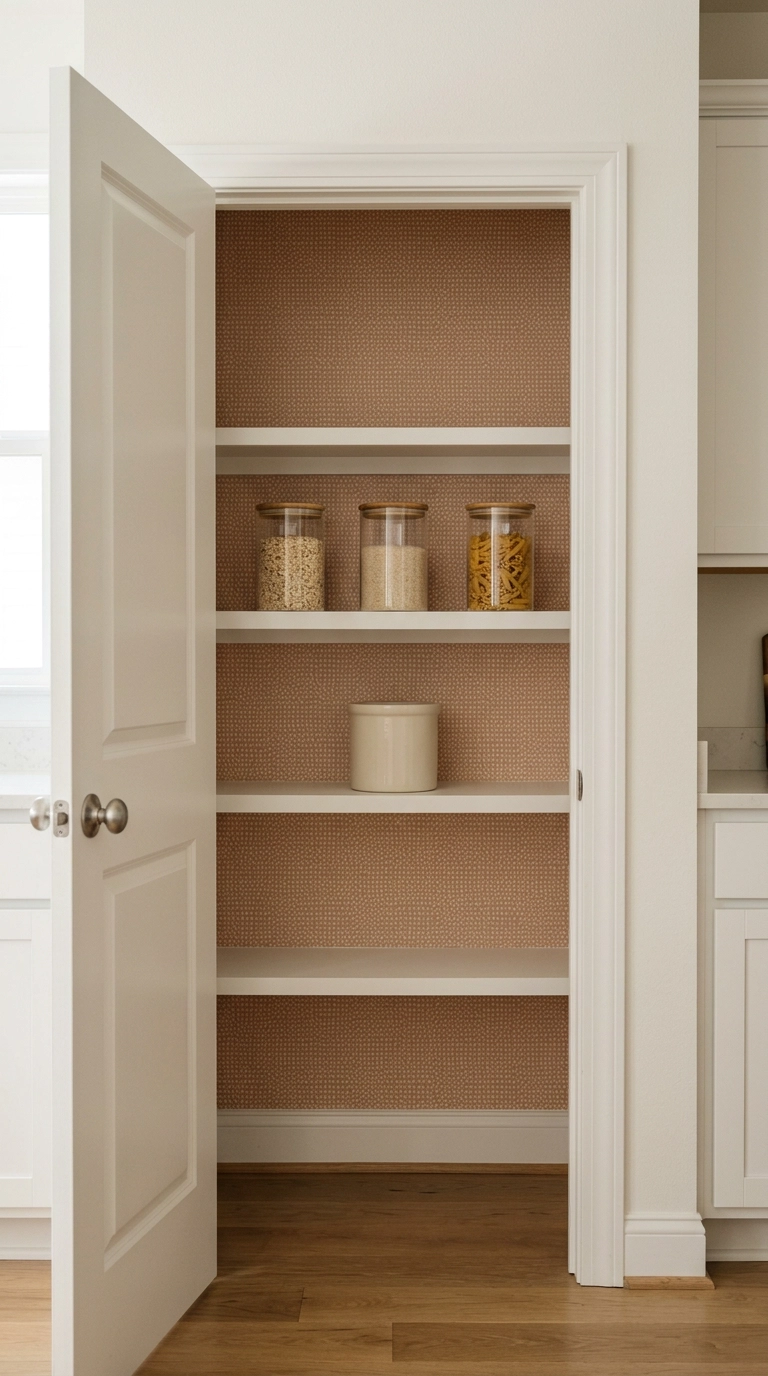
This is the single highest-impact thing you can do to a small pantry, and it costs about the same as a takeout dinner. You only paper the back wall, which in a reach-in closet is usually 24 to 36 inches wide, so one roll covers it with room to spare.
2. Paint the Whole Inside One Saturated Color
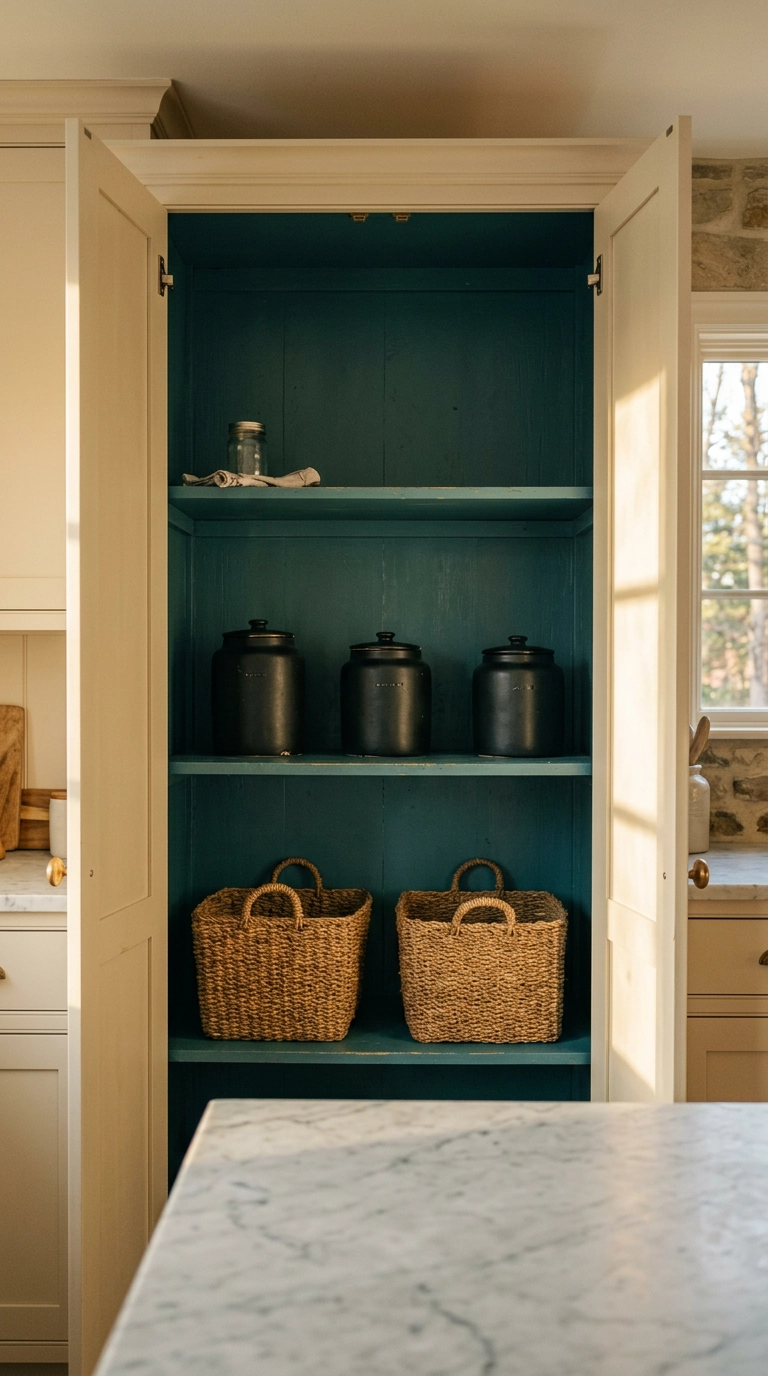
Color drenching just means walls, shelves, and trim all in one shade – and inside a pantry it’s genius, because the paint erases the visual breaks that make a tiny box feel choppy. Deep teal, oxblood, or Farrow & Ball Hague Blue all work; the food does the color-popping for you.
3. Swap Fixed Shelves for Adjustable Tracks
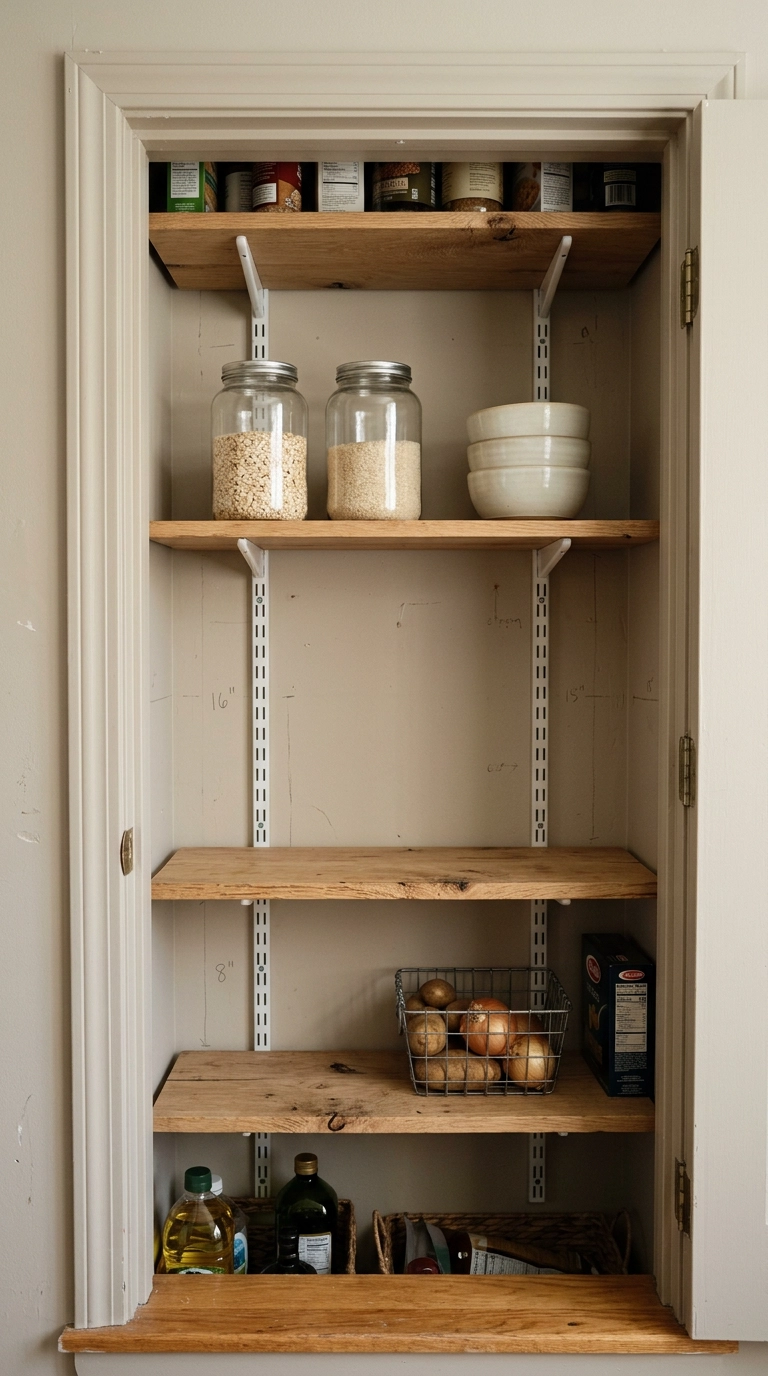
Builder-grade pantries almost always come with shelves spaced evenly at 12 inches, which is the worst possible setup. You need one 16 to 18-inch bay for cereal boxes and tall bottles, a couple of 8 to 10-inch bays for cans and jars, and one deep bay at the bottom for bins.
4. Clear Bins Only, Never Opaque Ones
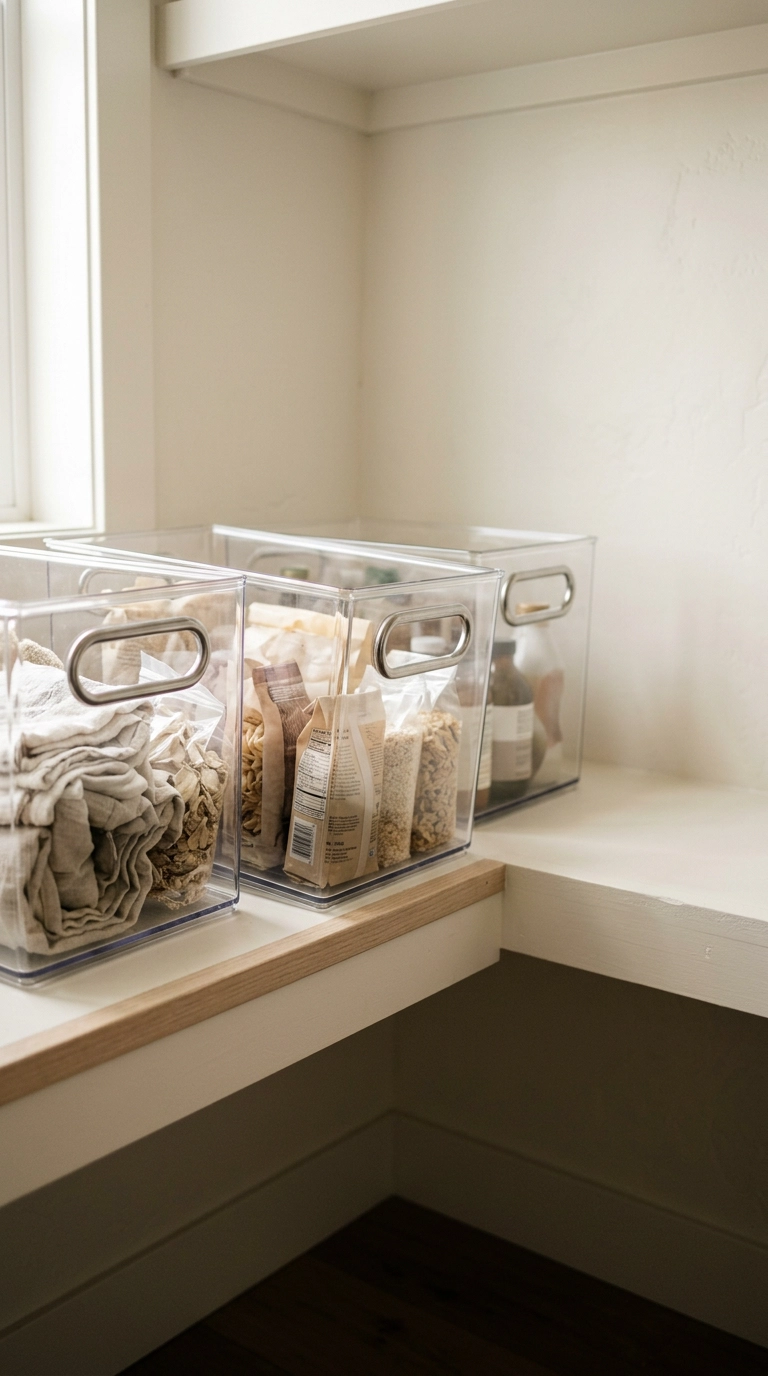
I know the woven baskets photograph better. I also know exactly what happens in them – three months later there’s a fossilized granola bar at the bottom and you’ve bought four replacement boxes. If you can’t see it, you don’t own it.
5. Turntables to Kill the Corner Dead Zone
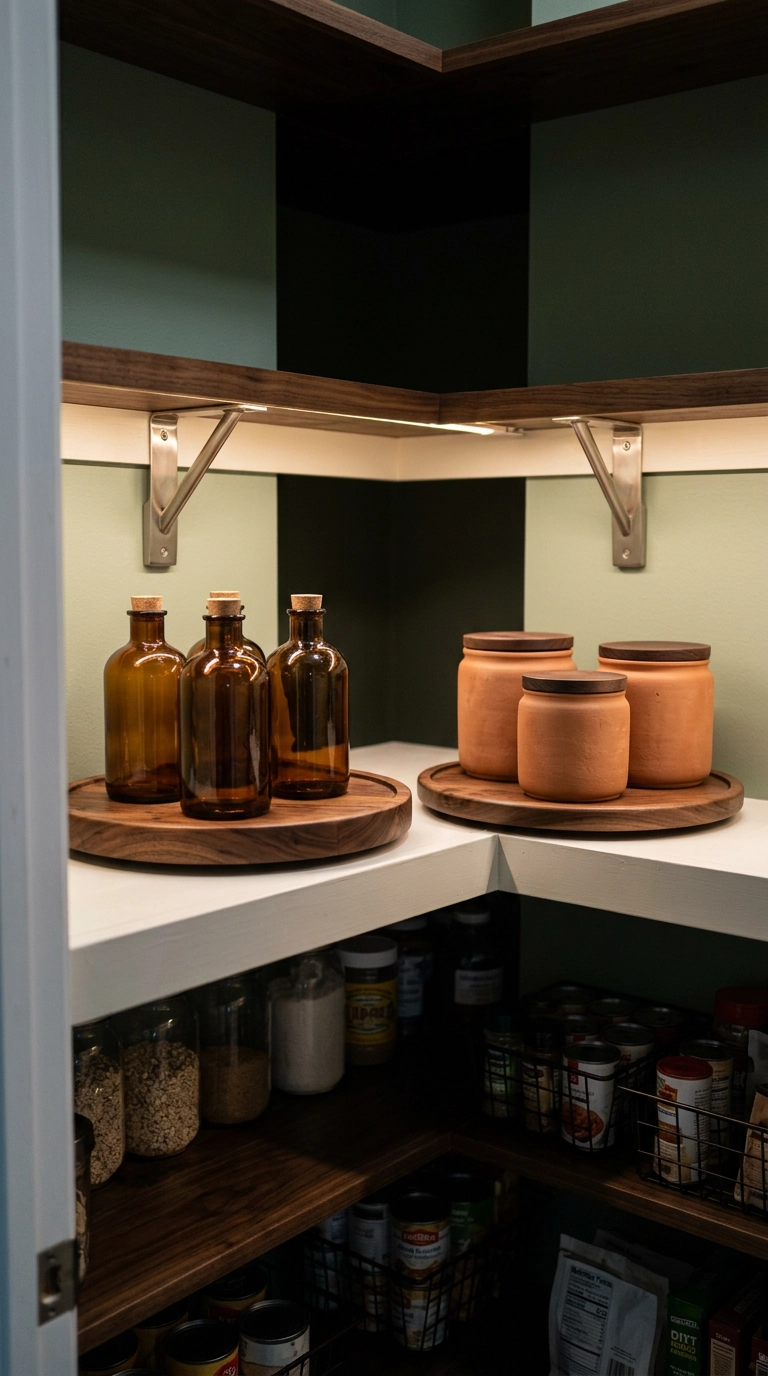
Every pantry has a corner where things go to die, usually the back left of an L-shaped closet. A 12-inch turntable turns that unreachable square foot into something you can spin toward you with one finger.
6. Tiered Risers So You Can See the Back Row
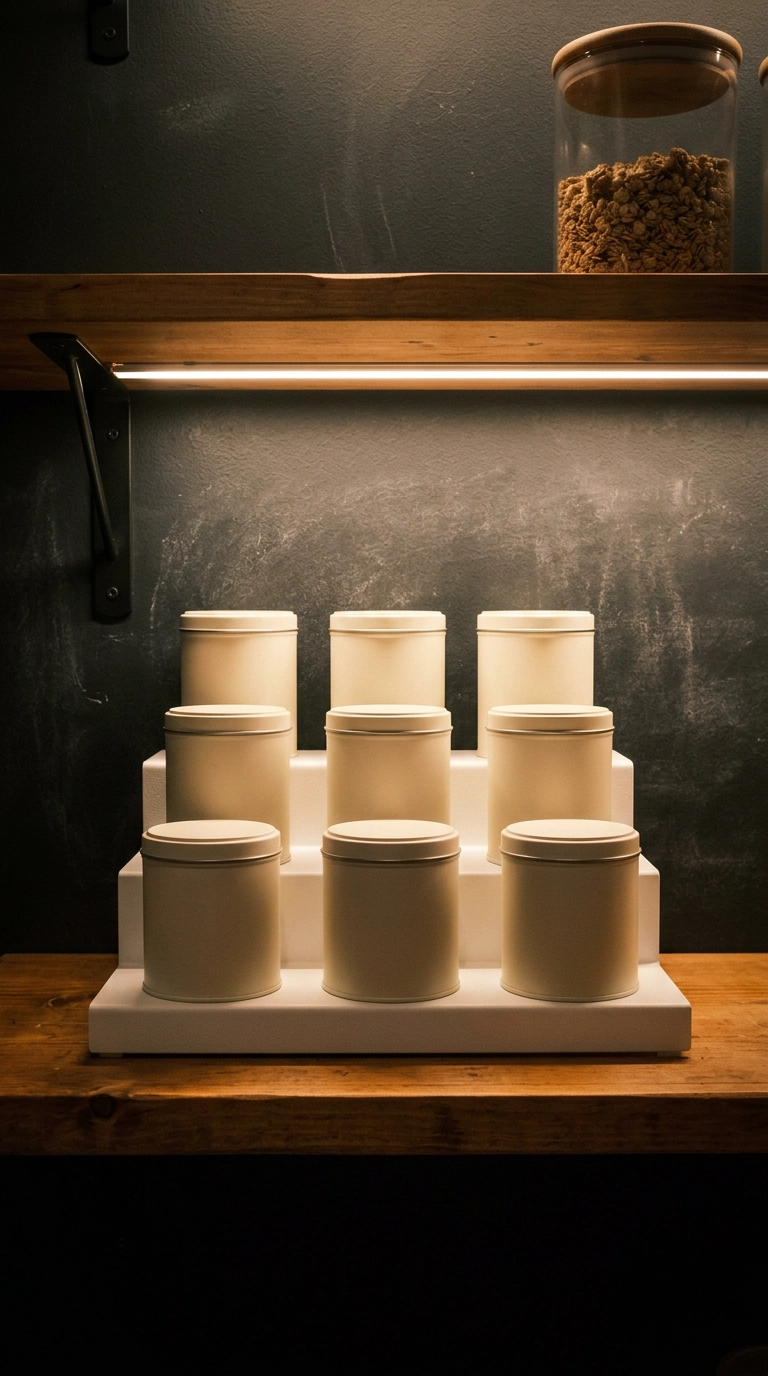
A flat shelf two cans deep means the back can is invisible, and invisible food expires. A three-step riser lifts the back row about four inches so you read the whole shelf in one glance.
7. Decant Only the Five Things You Use Daily
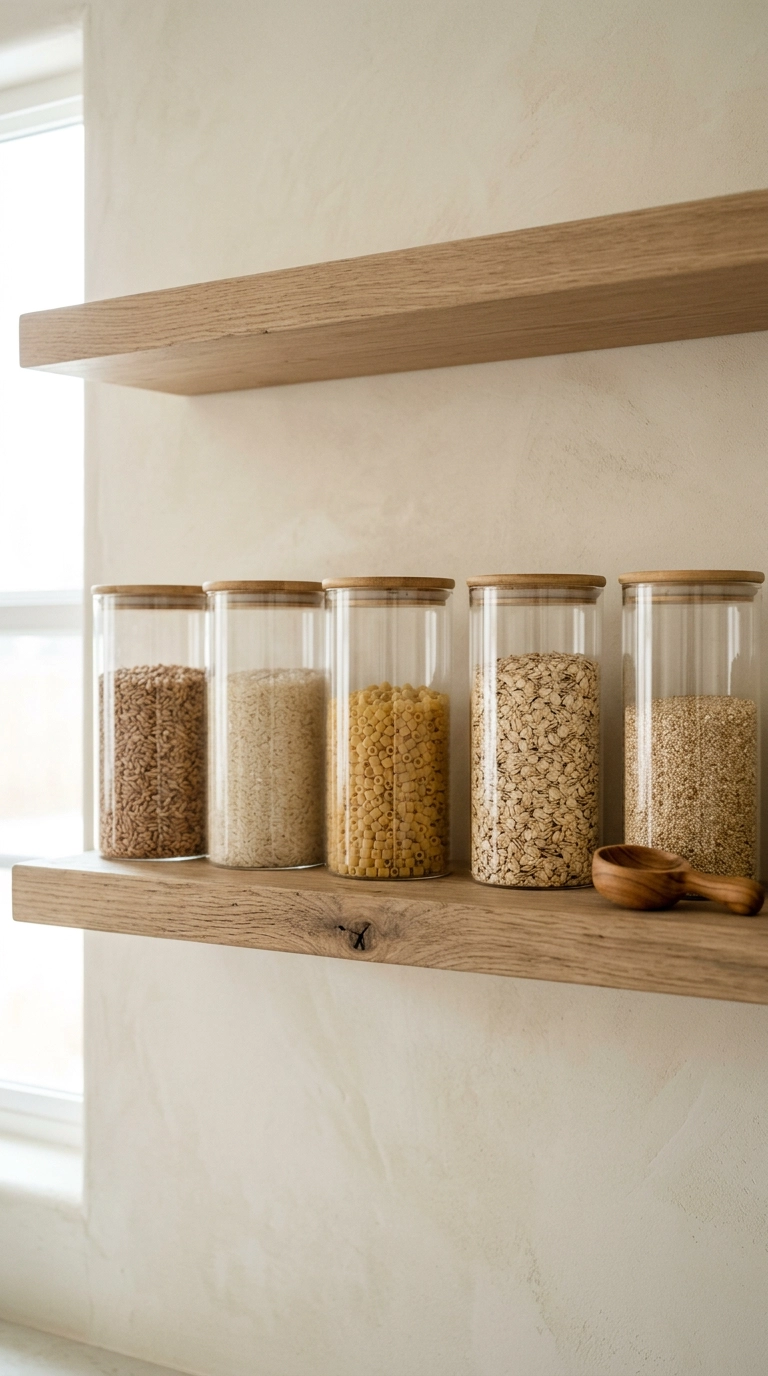
Full decanting is the most beautiful and most oversold idea in pantry design. It’s genuinely lovely, and it is also a chore you re-do every single grocery trip, plus you have to keep the expiration date – I cut the date off the box with scissors and drop the scrap in the jar.
8. Door-Mounted Wire Racks for the Skinny Stuff
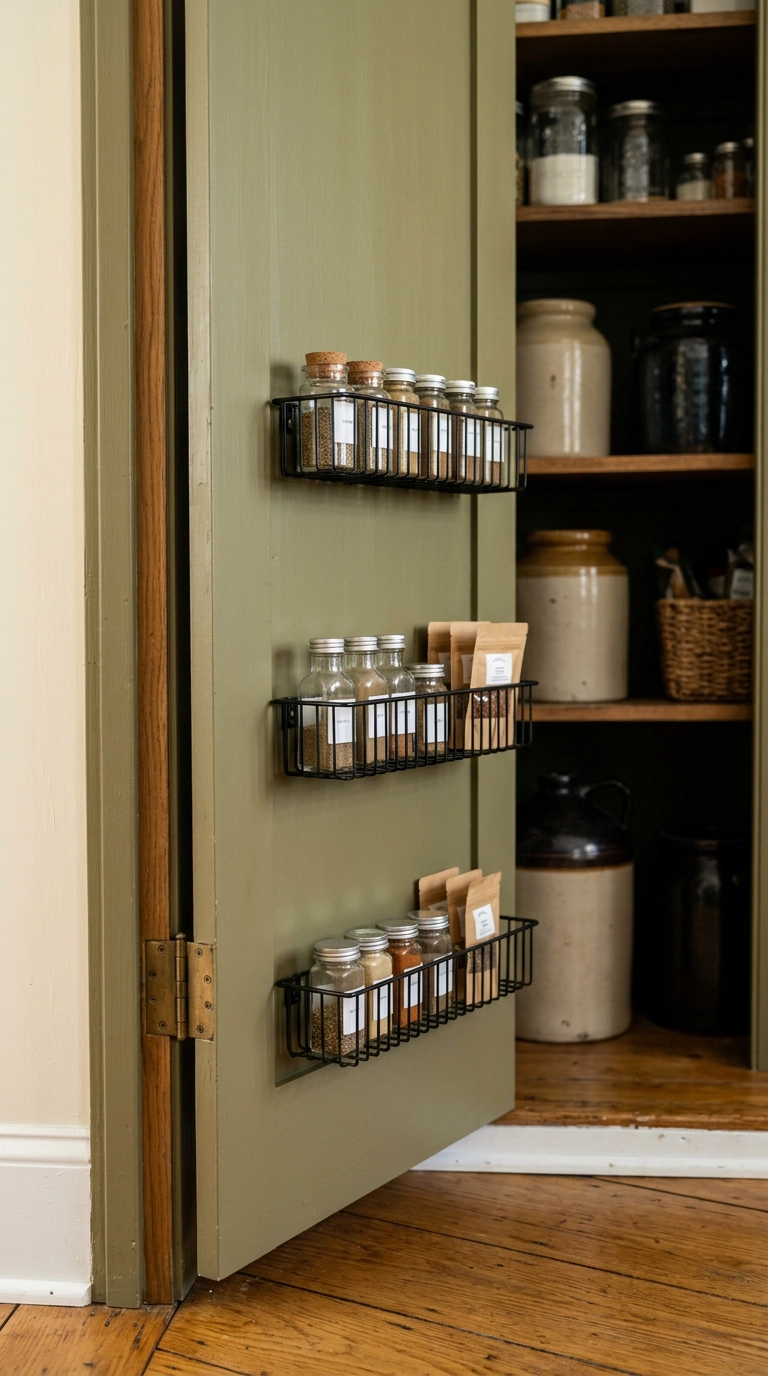
The back of a pantry door is roughly six square feet of storage nobody uses, and it’s perfect for the flat annoying things – spice jars, foil boxes, drink packets, oil bottles.
9. Motion-Sensor Puck Lights Inside a Dark Closet
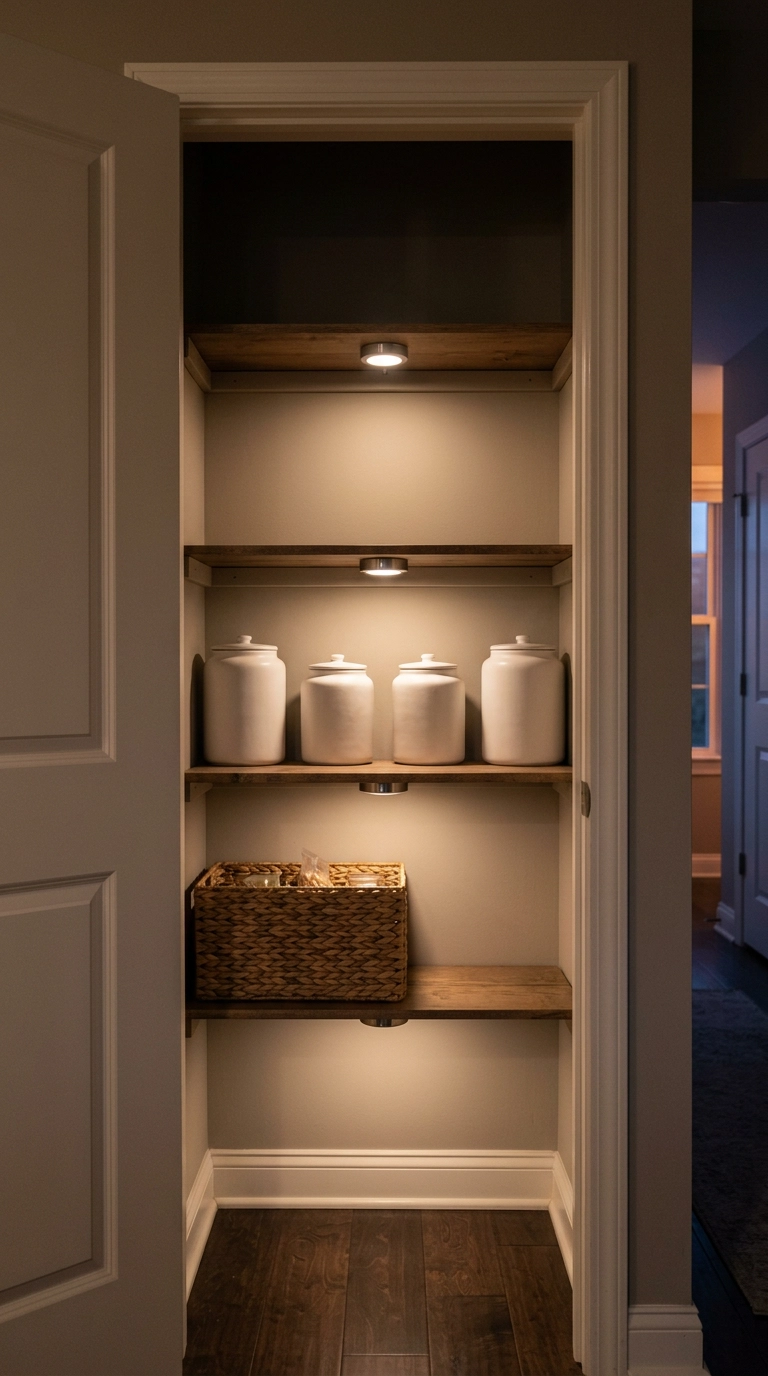
Most pantry closets have exactly zero light, which is why you’re standing there with your phone flashlight in your teeth. Battery-powered motion-sensor pucks stick on with adhesive, cost fifteen to thirty dollars for a three-pack, and take about four minutes to install.
10. Keep Shelves 12 to 14 Inches Deep, No Deeper
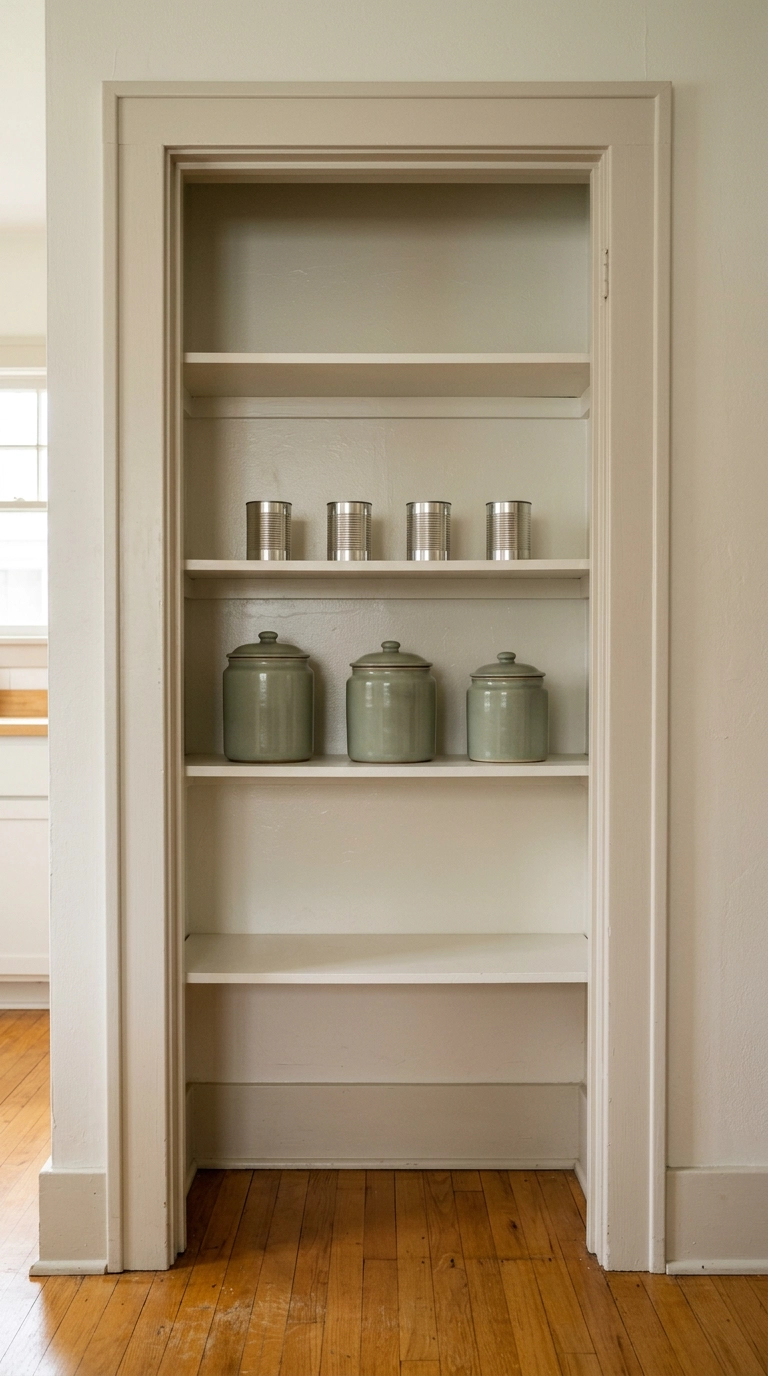
Here’s the rule I’d tattoo on a contractor: anything past about 14 inches deep becomes a black hole. You stack two rows deep, the back row disappears, and you’re buying your third jar of cumin.
11. A Narrow Pull-Out Between the Fridge and the Wall
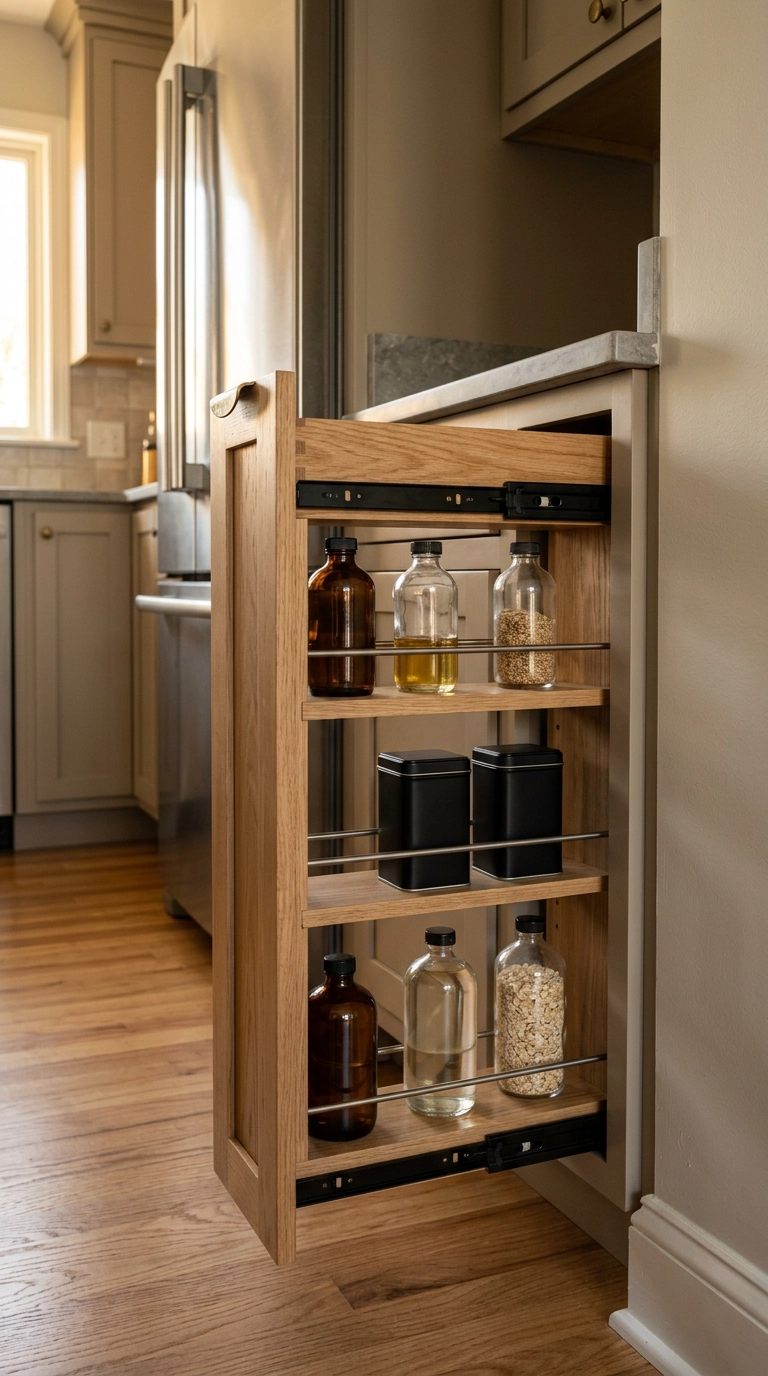
That six-to-nine-inch gap beside your fridge is prime real estate. A slim pull-out on full-extension glides brings four tiers of oils, vinegars, and spices out into the light instead of leaving them buried.
12. Vertical Beadboard on the Back of a Converted Hall Closet
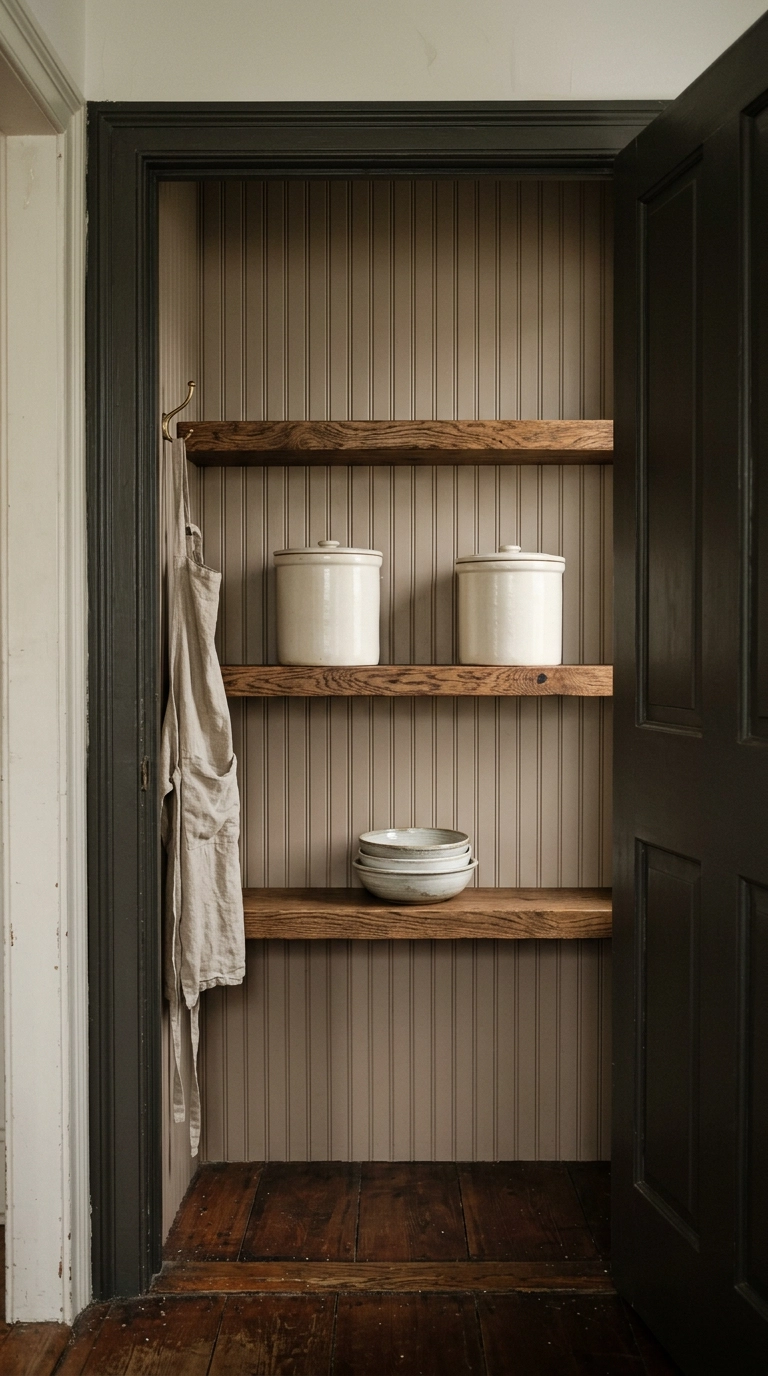
A hall closet next to the kitchen is the most common pantry conversion I do, and narrow vertical paneling on the back wall is what keeps it from reading like a coat closet with food in it. The vertical lines also stretch the height, which matters in a shallow box.
13. Grasscloth-Look Shelf Liner Instead of Contact Paper
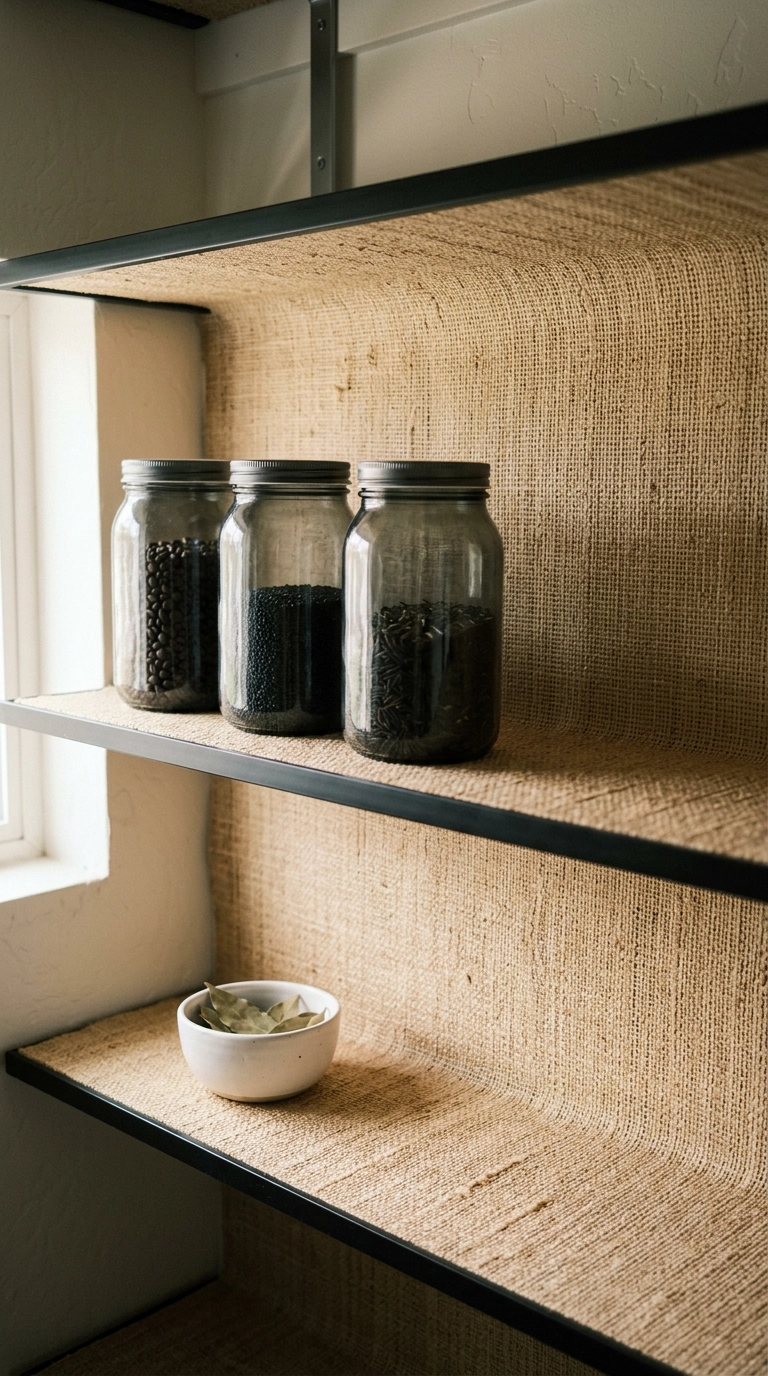
Shelf liner is the twenty-minute, twenty-dollar move that makes a pantry look considered instead of leftover. Skip glossy contact paper – it telegraphs every crumb and bubbles at the corners within a month.
14. Chalkboard Paint on the Inside of the Door
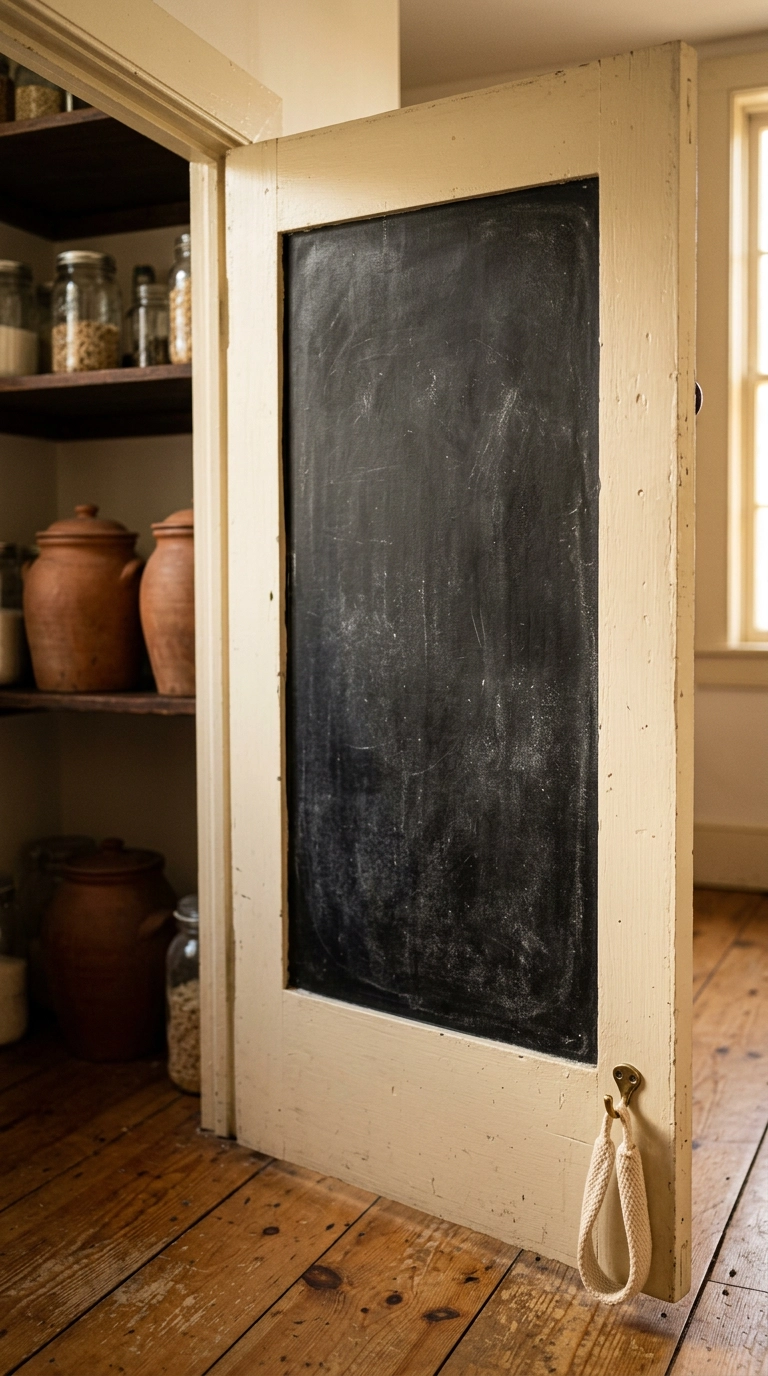
The inside of the door is the only place in a small pantry where you can add function without stealing an inch of shelf depth. Chalkboard paint turns it into your running grocery list, which is where a list actually belongs – at the point you notice the flour is gone.
15. One Big Basket for the Bulk Ugly Stuff
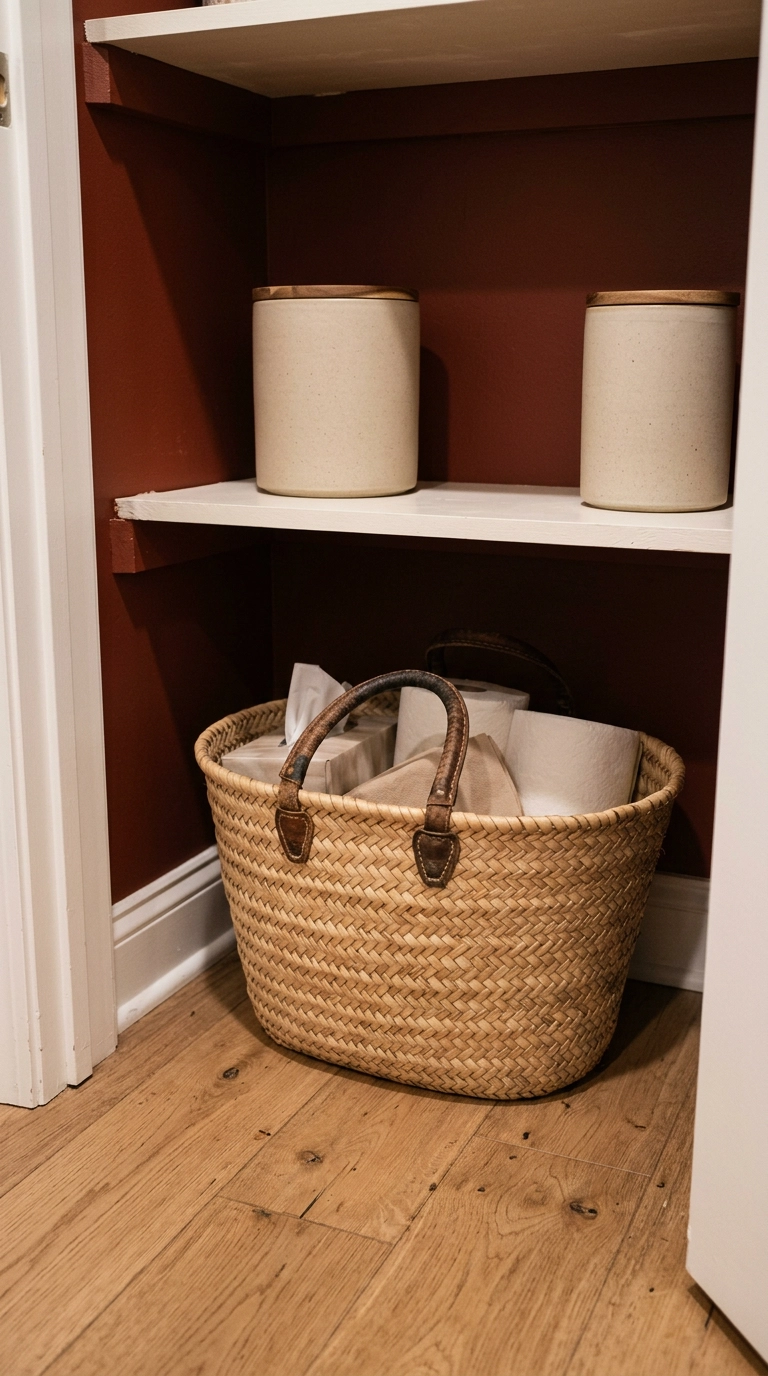
Every pantry has a category that will never look good: bulk paper towels, the backup mega-bag of chips, the eleven reusable grocery bags. Give it one large basket on the floor and stop trying to style it.
16. Skip the Label Maker, Tie On Wooden Tags
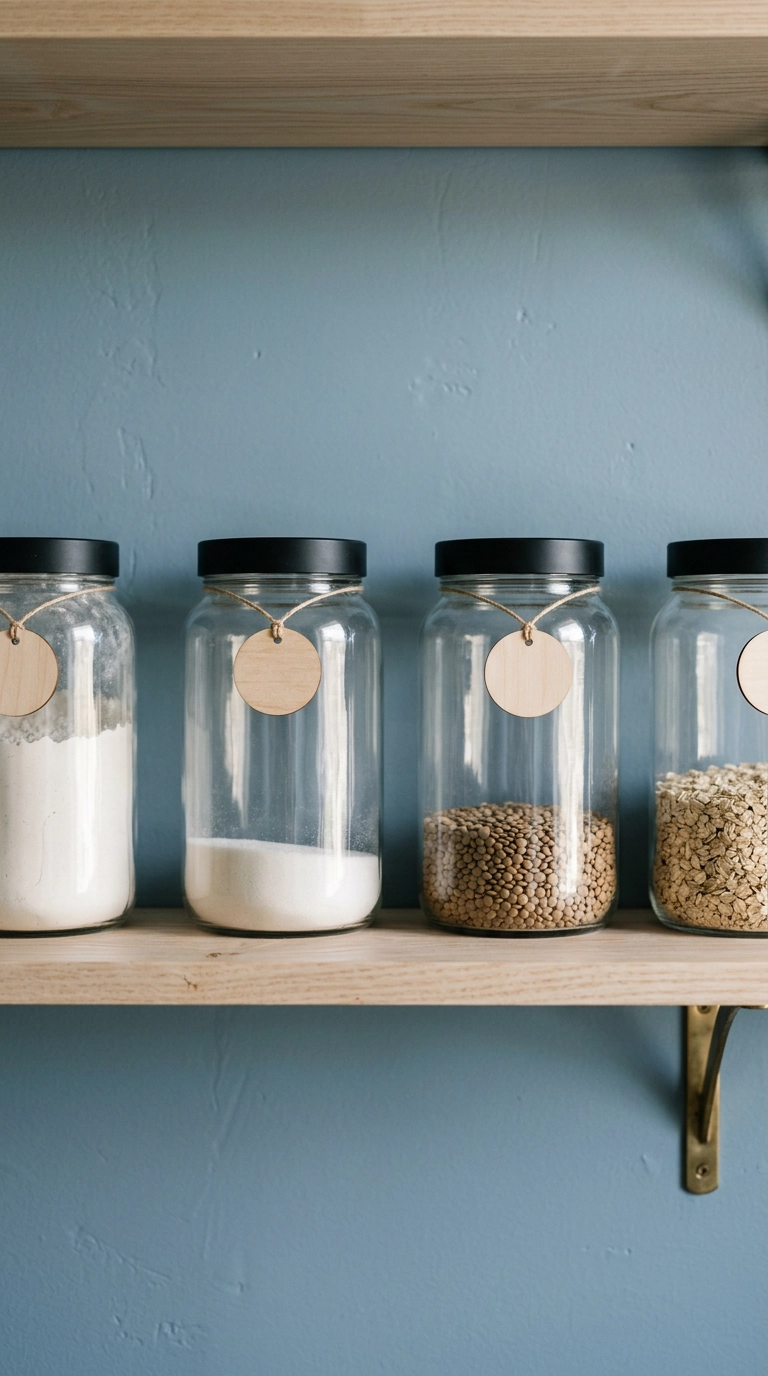
Vinyl labels look sharp for a year, then the edges lift and you can’t get them off without a heat gun. Small wooden or brass tags on cord move with the contents – when the jar becomes rice instead of quinoa, you rewrite one tag instead of scraping vinyl.
17. Put the Rarely-Used Things Above Eye Level
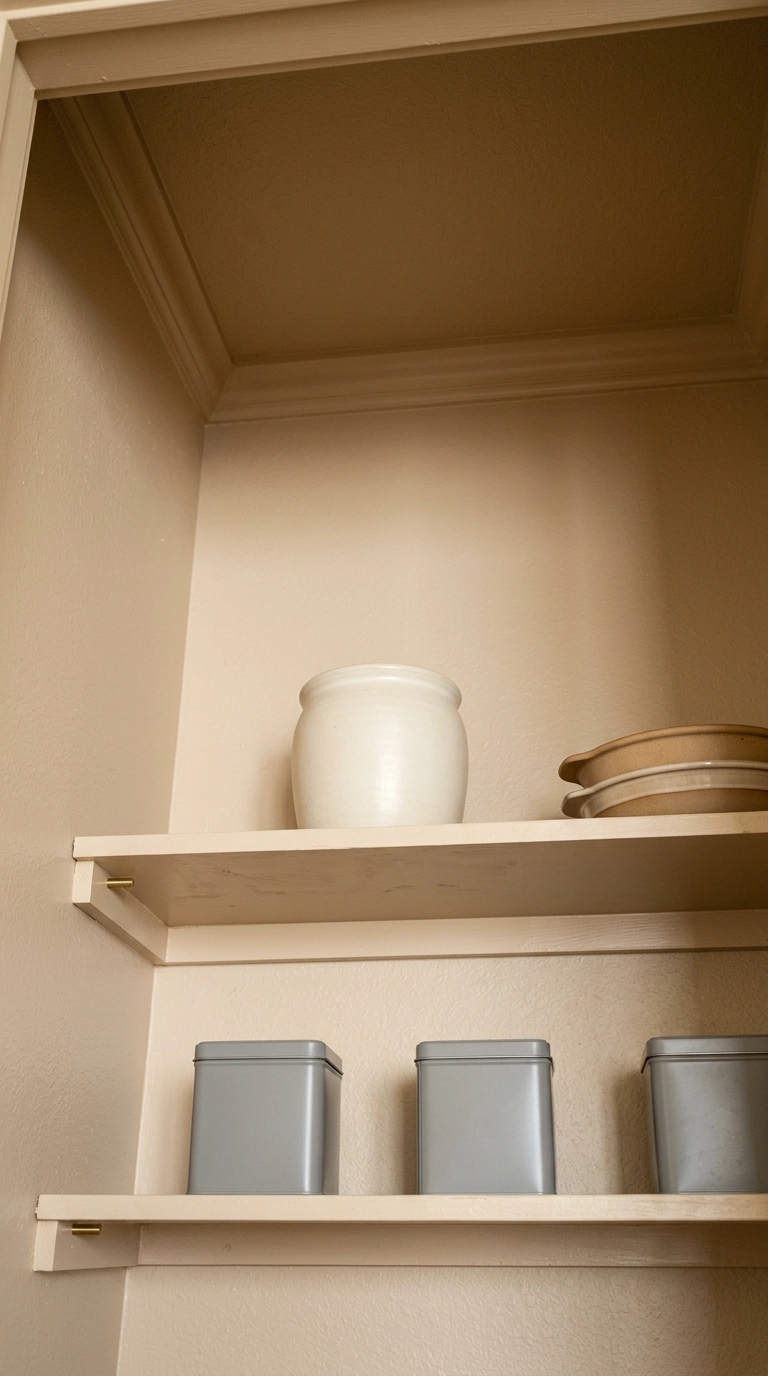
Anything above about 60 inches is out of your natural sightline, meaning you won’t see it without deliberately looking up. That’s a feature, not a flaw – it’s exactly where the holiday roasting pan and the backup bag of flour belong.
18. A Freestanding Hutch for a Kitchen With No Pantry
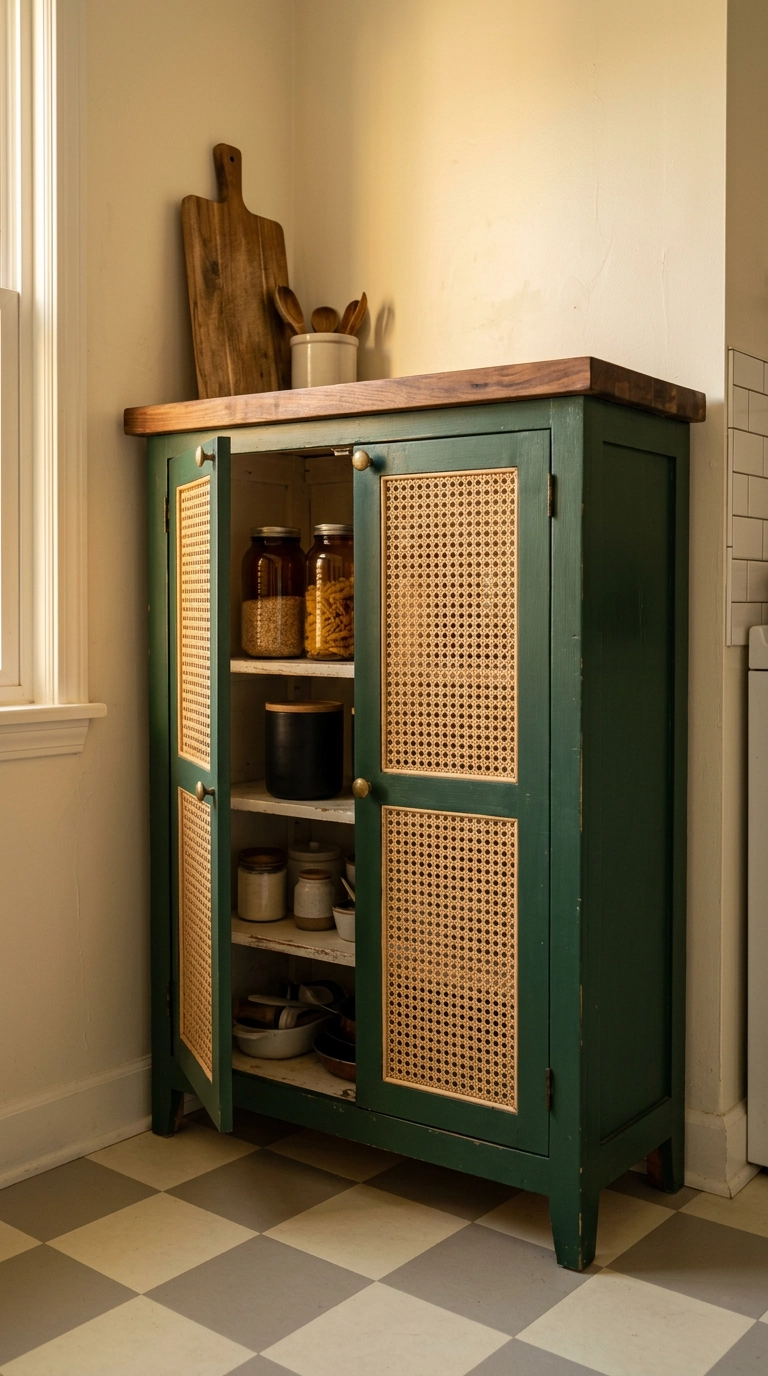
If your kitchen has no pantry at all, a shallow hutch or armoire in an unused corner does the job and doubles as the room’s one piece of real furniture. Look for something 14 to 18 inches deep so it doesn’t crowd the walkway – you want at least 36 inches of clear floor to pass by.
19. Trade the Door for a Linen Curtain on a Tension Rod
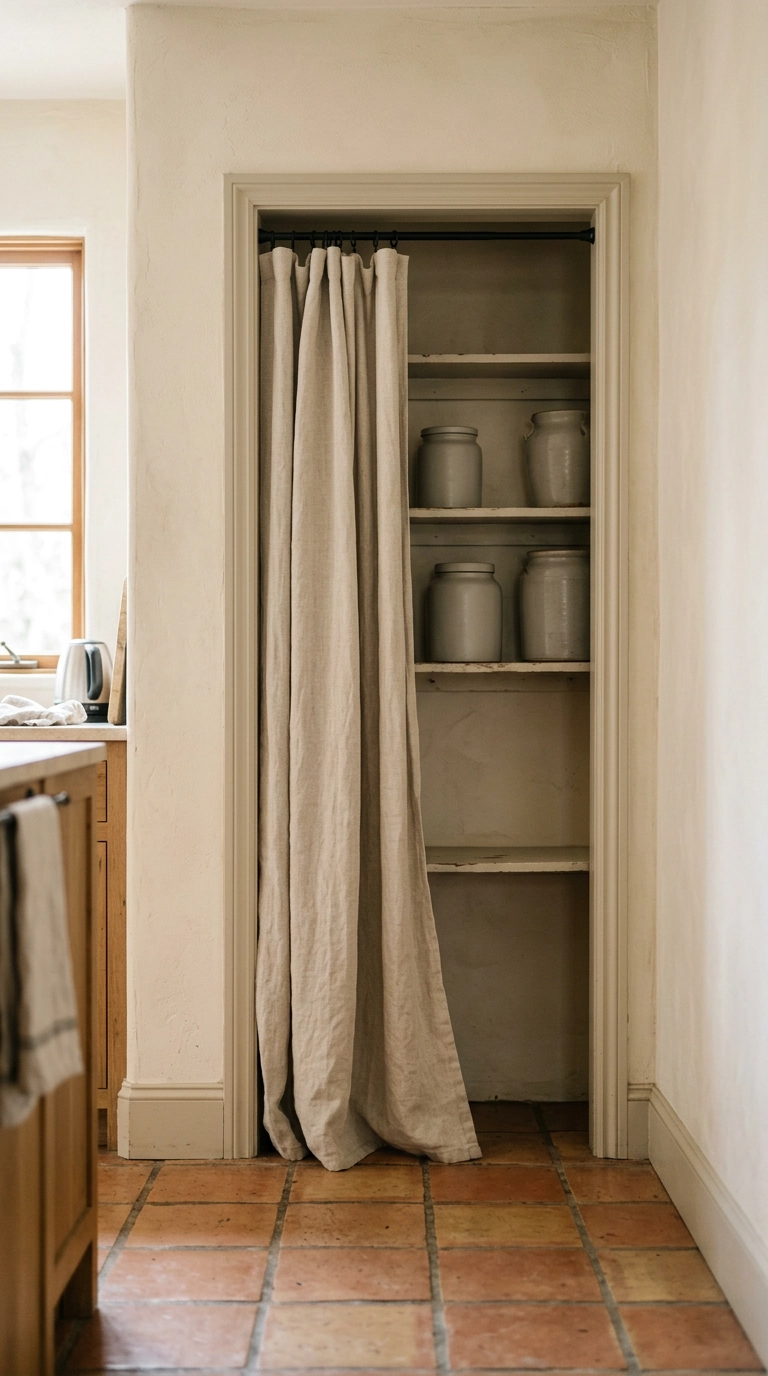
A hinged pantry door needs about two feet of swing clearance, which in a tight galley is two feet you do not have. A curtain gives you the whole opening back, softens a hard-edged kitchen, and costs less than a doorknob.
20. Swap the Flat Door for Reeded Glass
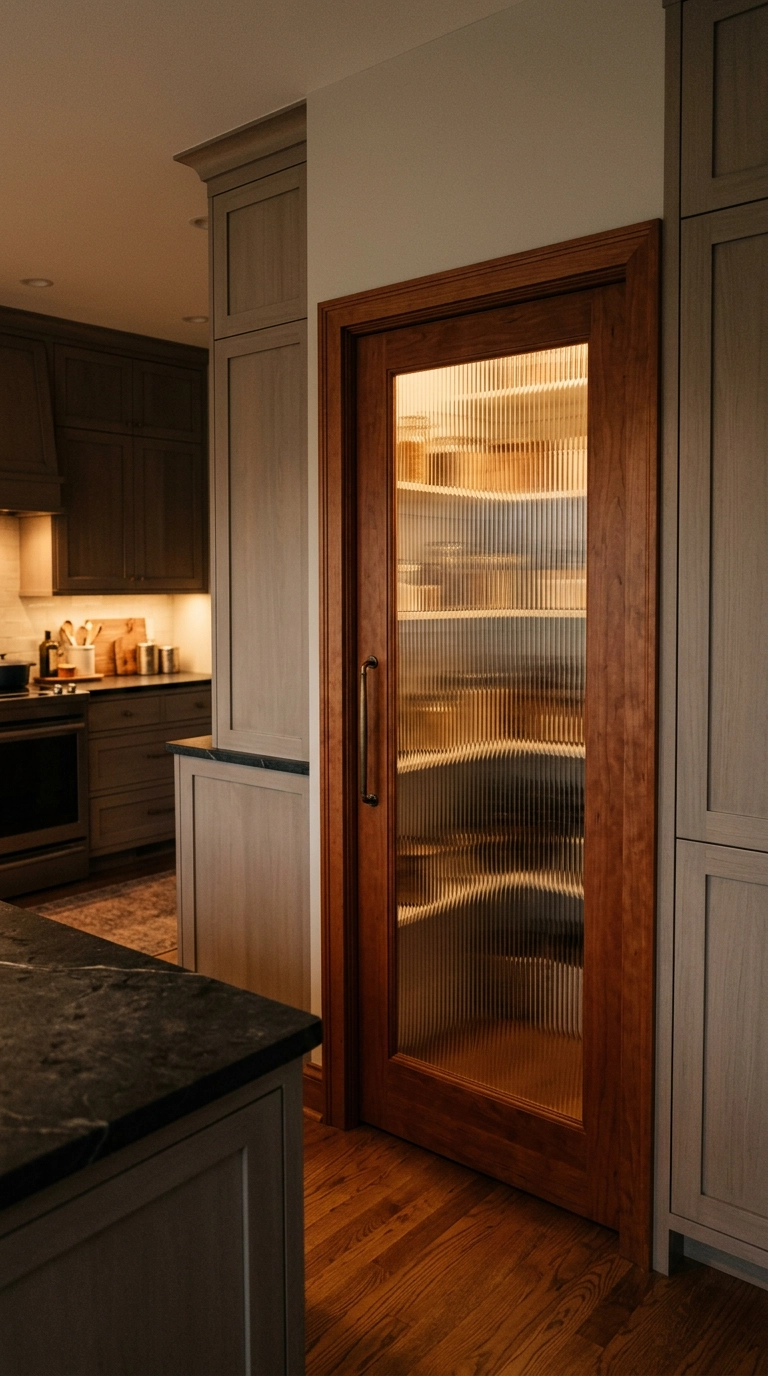
Reeded glass – the vertical ribbed kind you see on 1930s office doors – hides the mess while letting light move both directions. That two-way light is the real trick: a dark closet borrows brightness from the kitchen, and the kitchen gets a panel that glows instead of a blank slab.
21. Give Up One Shelf to a Coffee Station
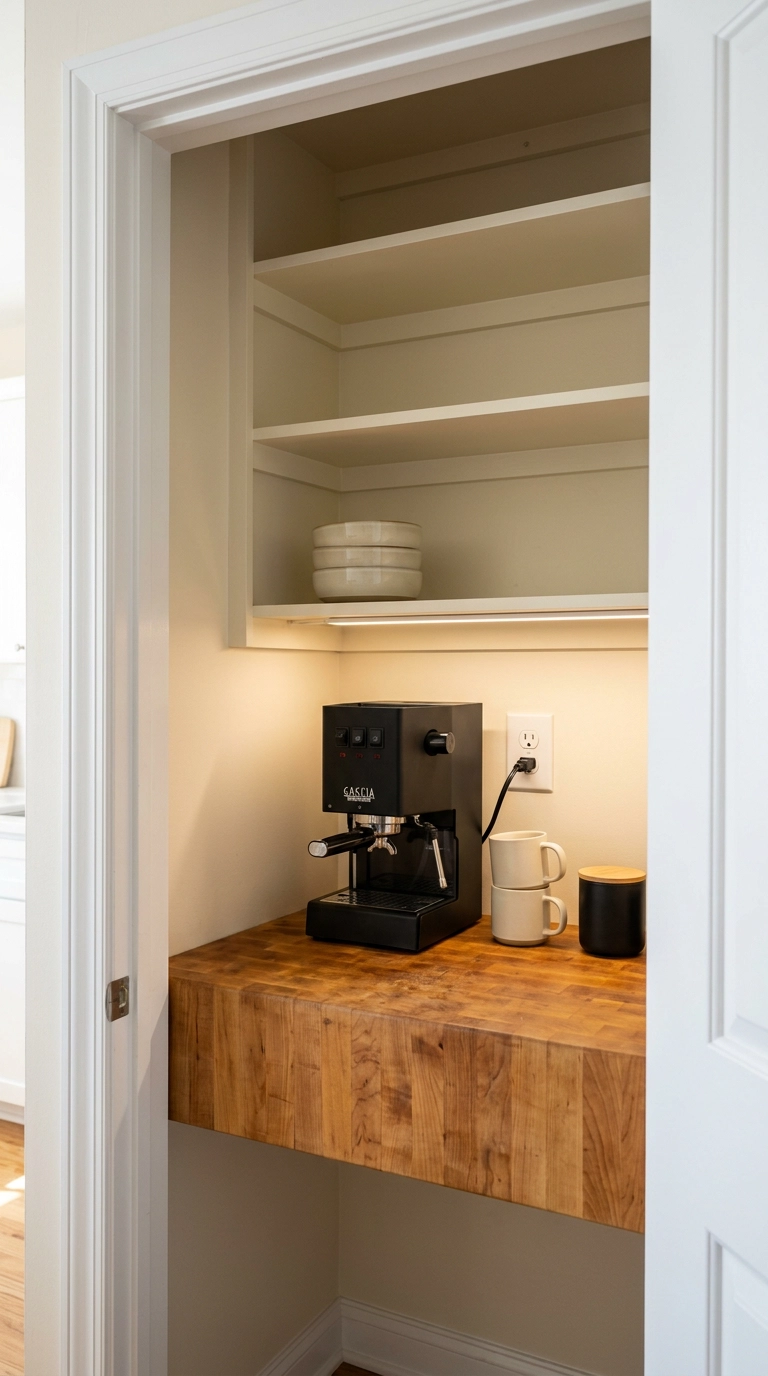
Sacrificing a shelf feels wrong until the morning your coffee mess lives behind a door instead of on your counter. Set the working surface at roughly 36 inches, the same height as your kitchen counter, so it feels like a real station and not a shelf you are hunching over.
22. Roll a Faded Vintage Runner Across the Pantry Floor
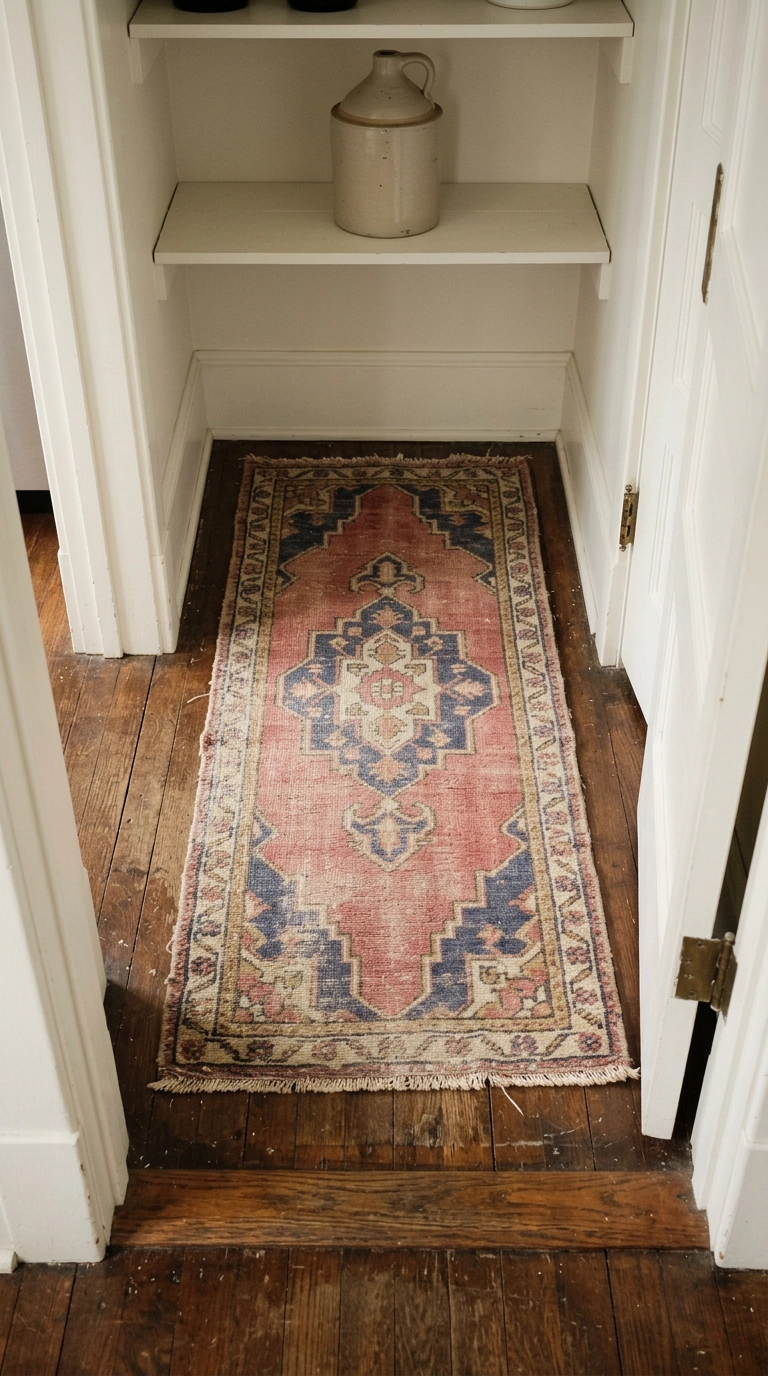
This is the idea nobody expects and everybody copies. A two-by-three-foot piece of an old wool rug on the pantry floor turns a utility box into a tiny room, and worn vintage wool hides crumbs better than anything you can buy new.
Where I’d Actually Start
If you only do three things, do these: pull everything out and re-space the shelves, stick a set of motion-sensor puck lights under the front edges, and put the daily stuff between 40 and 60 inches. That is one Saturday and maybe eighty dollars, and it fixes ninety percent of what makes a small pantry miserable.
The decorative layer is the fun part, and it is where the trend is heading right now – pantries have stopped being closets and started being tiny rooms. Color-drenched interiors in shades like Farrow & Ball Hague Blue, reeded glass doors, and butcher block coffee zones are showing up in every kitchen renovation I get tagged in, and Nate Berkus has been quietly pushing that same idea for years: treat the spaces nobody sees exactly like the ones everybody does.
My honest favorite is still the vintage runner on the floor. It costs almost nothing, it makes zero practical sense, and every single client who has let me do it has sent me a photo of it later. If you try one thing from this list, make it that one – and if you want more small-space ideas like these landing in your inbox every week, come sign up for my newsletter. I share the projects that actually worked, and the ones that very much did not.